Summary
Electric vehicle ecosystems increasingly depend on intelligent mobile platforms connecting drivers, charging networks, payments, and energy data. Businesses entering this sector must understand EV app development processes, market opportunities, and monetization strategies that enhance user experience and support the rapidly expanding electric mobility infrastructure.
Quick Overview
- Electric mobility growth is accelerating demand for intelligent EV applications across industries.
- The global EV charging infrastructure market is projected to reach $238.82 billion by 2033.
- EV mobile app development costs typically range between $20,000 and $400,000.
- EV applications integrate IoT, cloud infrastructure, GPS mapping, and AI technologies.
- Strategic EV app development improves charging accessibility, convenience, and energy management.
- Early investment in EV software positions startups within the rapidly expanding mobility ecosystem
Electric vehicles are no longer a futuristic concept. They are rapidly becoming the backbone of global mobility. As governments push for sustainability and businesses adopt green transportation, the demand for electric vehicle (EV) infrastructure and digital emobility solutions is growing exponentially. But hardware alone cannot power this transformation.
Charging stations, fleets, and EV ecosystems rely heavily on intelligent mobile applications that connect drivers, charging networks, payment systems, and energy management platforms. This is where EV mobile app development becomes essential.
Businesses entering the EV space, building a scalable EV software and application, can unlock new revenue streams, improve user experience, and create competitive advantages in an evolving mobility market. Whether you are a startup founder, mobility entrepreneur, or technology investor, this guide will help you understand how to build a successful EV application.
What Is EV App Development?
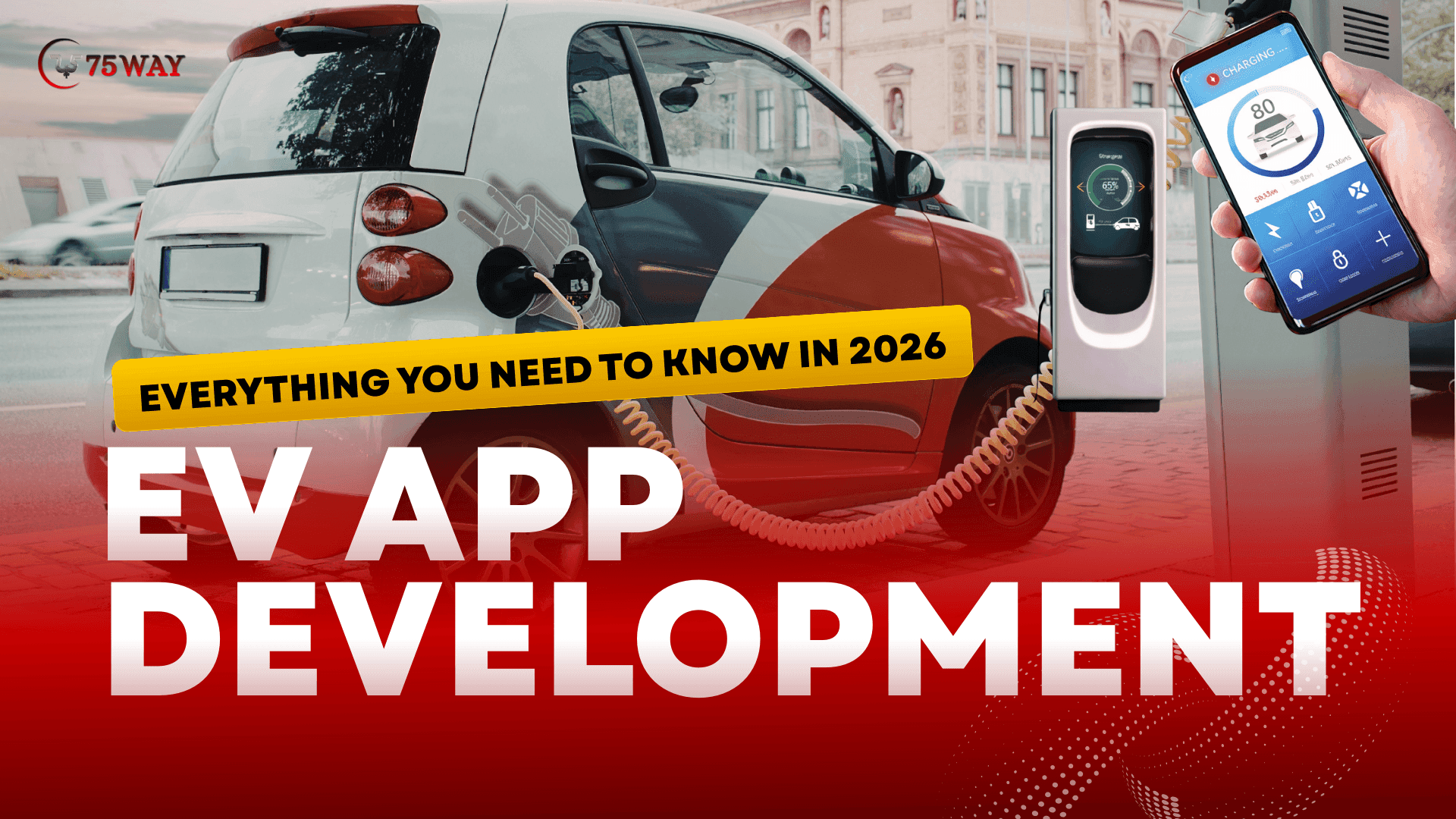
EV app development refers to the process of designing and building mobile or web applications that support the electric vehicle ecosystem. These applications help EV drivers and businesses interact with charging infrastructure and vehicle systems through a digital platform. With an EV app, users can easily locate nearby charging stations, reserve charging slots, monitor battery levels, make secure digital payments, manage EV fleets, track charging history, and optimize routes based on battery range and station availability.
In simple terms, EV apps serve as the digital bridge connecting electric vehicles, charging networks, and users. To enable these capabilities, EV platforms integrate advanced technologies such as IoT (Internet of Things) for connecting charging devices, cloud computing for scalable data management, GPS navigation for route planning, AI-powered analytics for energy optimization, and secure payment systems. Together, these technologies create a smart, connected mobility ecosystem that improves the efficiency and convenience of electric vehicle usage.
Read Too: How to Build an Astrology App Like Astra in 2026: Step-by-Step Guide
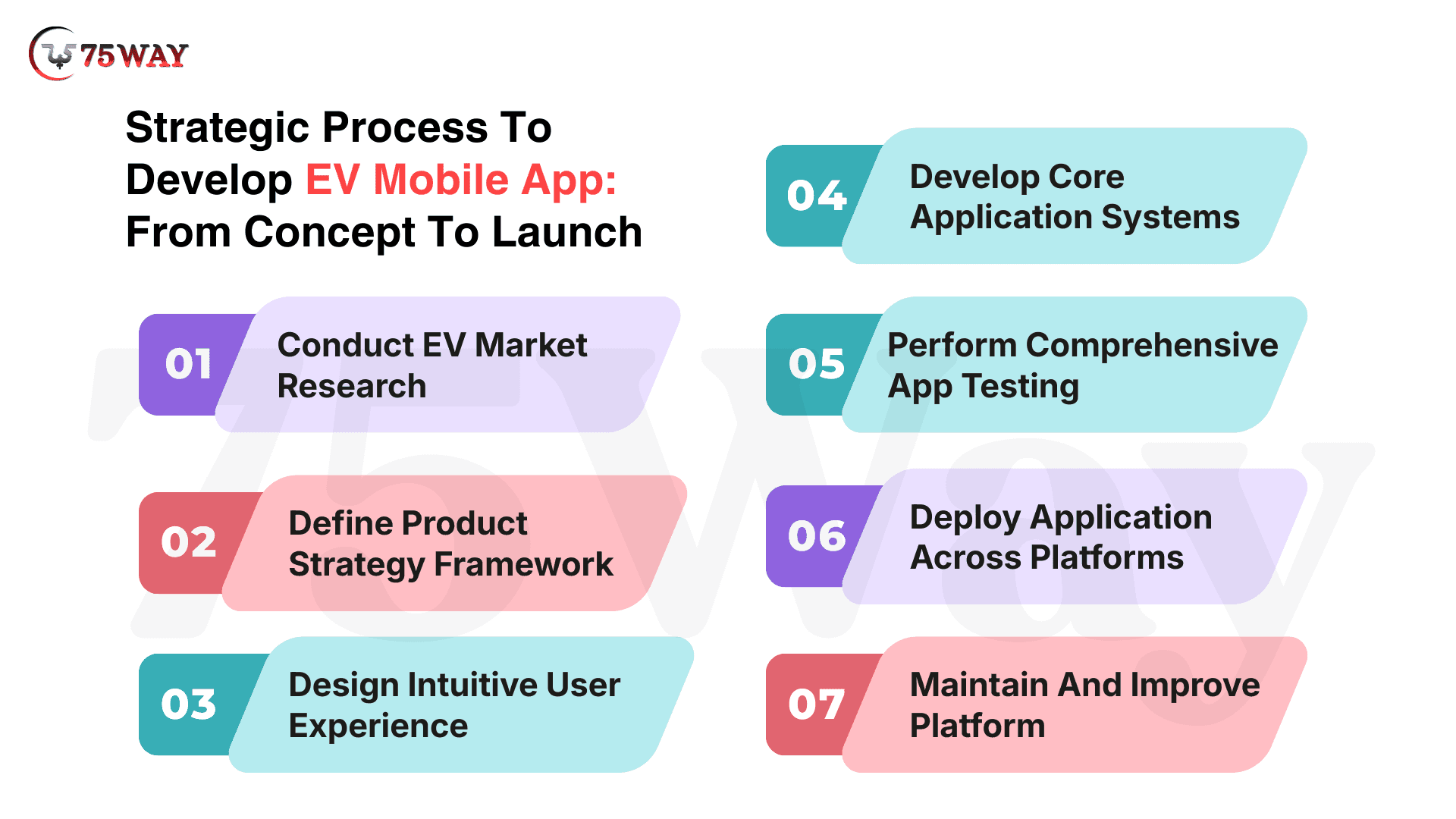
Strategic Process To Develop EV App: From Concept To Launch
A strategic and well-structured approach is required to build an EV mobile application. Businesses must combine strong market understanding, intuitive design, and scalable technologies to build reliable EV platforms. From initial concept and research to app development, testing, deployment, and continuous improvement, each stage plays a critical role in delivering a high-performing EV solution.
Conduct EV Market Research
The first step involves understanding EV industry trends, user expectations, and charging infrastructure requirements. Market research helps businesses identify gaps in existing EV applications and determine the features users need most. It also helps founders validate whether their EV app idea solves a real mobility problem.
- Industry Analysis: Study current EV market trends, charging infrastructure growth, and emerging technologies. This helps businesses understand demand patterns, identify innovation opportunities, and position their EV application strategically within the rapidly expanding electric mobility ecosystem.
- User Insights: Analyze the needs, behaviors, and expectations of EV drivers and fleet operators. Understanding how users search for charging stations, monitor battery levels, and manage trips helps businesses design practical and user-focused EV applications.
- Competitor Evaluation: Review existing EV apps and platforms to identify their strengths, weaknesses, and feature gaps. This evaluation allows businesses to build differentiated solutions that offer improved functionality, better user experience, and stronger value propositions.
- Opportunity Identification: Market research helps uncover unmet needs in EV charging, fleet management, and navigation services. Identifying these opportunities enables startups to develop innovative applications that solve real mobility challenges and attract long-term users.
Define Product Strategy Framework
Once research is completed, businesses must define a clear product strategy. This includes identifying target users, selecting app features, defining revenue models, and planning long-term scalability. A strong product design and development strategy ensures the EV app aligns with business objectives and user needs
- Target Audience Identification: Define primary users, including EV drivers, fleet operators, and charging providers, to guide product design and development decisions effectively.
- Feature Prioritization: Identify essential EV app functionalities such as charging station locator, payment integration, navigation tools, and battery monitoring.
- Revenue Model Planning: Determine how the EV application will generate income through subscriptions, charging commissions, advertisements, or enterprise fleet services.
- Platform Strategy: Choose whether the EV application will launch on Android, iOS, or cross-platform environments based on audience preferences.
- Scalability Planning: Design architecture that supports future growth, additional charging networks, new integrations, and increasing EV users.
- Product Roadmap Creation: Outline development milestones, feature releases, and improvement cycles to guide long-term product design and development execution.
Design Intuitive User Experience
EV apps must be easy to use and highly intuitive. Drivers should be able to quickly locate charging stations, track battery levels, and complete payments without friction. Effective UI/UX design ensures smooth navigation, clear interactions, and a seamless experience for EV users. Designing a user-friendly interface improves engagement and increases adoption among EV drivers
- User-Centered Interface: A user-focused UI/UX design prioritizes simplicity and clarity. Clean layouts, readable icons, and intuitive navigation help EV drivers quickly access features like charging station discovery, battery monitoring, and trip planning without confusion or unnecessary steps.
- Simplified Navigation Flow: An effective EV application should guide users effortlessly between key functions. Structured menus, logical screen transitions, and quick-access buttons help drivers locate charging stations, start charging sessions, and track battery performance efficiently
- Interactive Map Integration: Integrating smart maps within the UI/UX design allows users to view nearby charging stations, real-time availability, and route directions. Interactive map elements enhance usability while making EV trip planning faster and more convenient.
- Seamless Payment Experience: The payment interface should be secure and simple. Smooth UI/UX design ensures drivers can start charging sessions, make digital payments, and receive billing confirmations quickly without complicated processes or delays.
- Personalized User Dashboard: A personalized dashboard improves engagement by displaying charging history, battery statistics, trip insights, and recommended stations. Well-designed UI/UX layouts make this data easy to understand, helping drivers manage their EV usage more effectively.
Develop Core Application Systems
During this phase, developers build the frontend and backend infrastructure of the application. This includes integrating APIs, cloud databases, mapping systems, and charging station networks. The goal is to create a robust platform capable of handling real-time data and high user traffic
- Frontend Application Development: Developers create the user-facing interface where EV drivers interact with the application. This includes building responsive screens, charging station maps, battery monitoring dashboards, and navigation tools that ensure smooth interaction across Android, iOS, and cross-platform devices.
- Backend System Architecture: The backend infrastructure manages data processing, business logic, and communication between systems. Developers build secure servers that handle user requests, charging sessions, payment processing, and large volumes of real-time operational data efficiently.
- API Integration Systems: APIs connect the EV app with external platforms such as charging networks, payment gateways, and mapping services. Proper API integration ensures accurate station availability, seamless transactions, and reliable data synchronization across the ecosystem.
- Cloud Database Management: Cloud-based databases store essential application data, including user profiles, charging history, station details, and analytics insights. Scalable cloud infrastructure allows the platform to support growing EV user bases without performance limitations.
- Real-Time Data Processing: EV platforms rely on continuous real-time updates such as charging station availability, battery status, and navigation adjustments. Advanced data processing systems ensure users receive accurate information instantly without delays or disruptions.
- Charging Network Connectivity: The application must connect with EV charging station networks through IoT-enabled systems and communication protocols. This integration allows drivers to discover stations, start charging sessions, and monitor charging progress directly from the mobile application.
Perform Comprehensive App Testing
Before launching the EV application, thorough testing is essential to ensure stability, performance, and security. Developers evaluate every component of the platform to confirm that features work correctly across devices and operating systems. Comprehensive testing helps identify technical issues, eliminate bugs, strengthen security measures, and optimize system performance. This stage ensures the EV app delivers a reliable, smooth, and user-friendly experience for drivers and businesses before public deployment.
- App functionality testing ensures all EV features perform accurately across devices.
- Security testing protects sensitive user data, payments, and charging session information.
- Performance testing evaluates application speed, scalability, and stability under heavy traffic.
- Compatibility testing confirms the app works smoothly on Android and iOS devices.
- Bug fixing and optimization improve overall user experience and application reliability.
Deploy Application Across Platforms
After successful testing, the EV application is deployed across major mobile platforms such as Android and iOS to reach a wider audience of EV drivers and businesses. Developers publish the application on app stores, configure cloud infrastructure, and ensure the platform functions smoothly in a real-world environment.
In addition to mobile deployment, businesses may also launch web-based dashboards for fleet operators, charging station managers, or administrators. These dashboards allow organizations to monitor charging sessions, manage users, analyze data insights, and control platform operations efficiently from centralized systems.
Maintain And Improve Platform
Post-launch, maintaining and improving the EV application is crucial for long-term success. Continuous monitoring, bug fixing, performance optimization, and feature updates ensure the app remains reliable, secure, and user-friendly. Regular updates based on user feedback and emerging technologies help businesses stay competitive, enhance user engagement, and support growing EV infrastructure, ensuring the platform evolves to meet changing market demands and driver expectations.
- Monitor app performance continuously for stability, speed, and reliability across platforms
- Fix bugs promptly to prevent disruptions and maintain a smooth user experience
- Update features regularly to meet evolving EV driver and business needs
- Enhance security protocols to protect sensitive user and payment information
- Analyze user feedback for improvements, usability enhancements, and feature additions
Read More: Top 50 Startup Business Ideas in USA: Complete 2026 List
Why Invest in EV Mobile App Development in 2026?
For startups and enterprises, investing in EV mobile app development in 2026 offers immense growth potential and a competitive advantage. The rapidly expanding EV industry demands intelligent digital solutions for charging, fleet management, navigation, and energy optimization. Startups and technology companies can capitalize on increasing EV adoption, generate new revenue streams, and enhance user engagement. Building scalable, user-centric EV applications positions businesses at the forefront of the evolving mobility ecosystem while addressing critical driver and infrastructure needs.
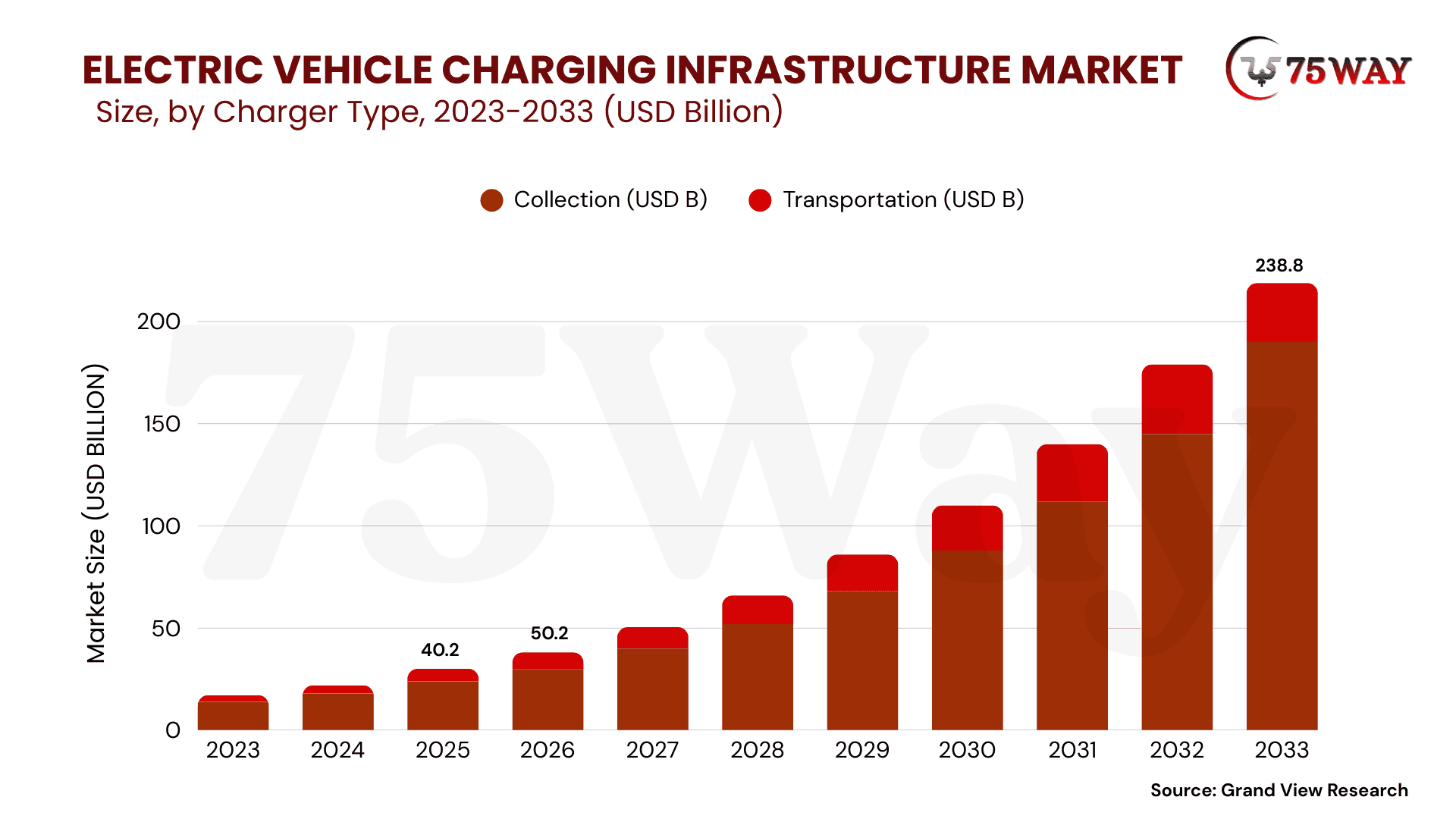
- The global electric vehicle charging infrastructure market is forecasted to reach $238.82 billion by 2033, expanding at a 25.0% CAGR, according to Grand View Research.
- The EV charging station market worldwide is expected to grow to $76.31 billion by 2032, progressing at a compound annual growth rate of 15.1%.
- Around 32% of EV drivers now rely on their vehicle’s companion mobile app during every trip, nearly doubling from the earlier 17% usage level.
- Approximately 68% of EV owners frequently use OEM mobile apps to track battery charge levels and monitor vehicle performance.
Explore More: Hire AI Engineer To Build An Advanced Chatbot & AI Receptionist Platform
Types of Electric Vehicle (EV) Apps Businesses Can Build
The EV ecosystem supports a wide range of digital platforms designed to enhance driver convenience, optimize fleet operations, and improve charging infrastructure efficiency. These applications cater to individual drivers, fleet operators, and service providers, enabling smarter, connected mobility.
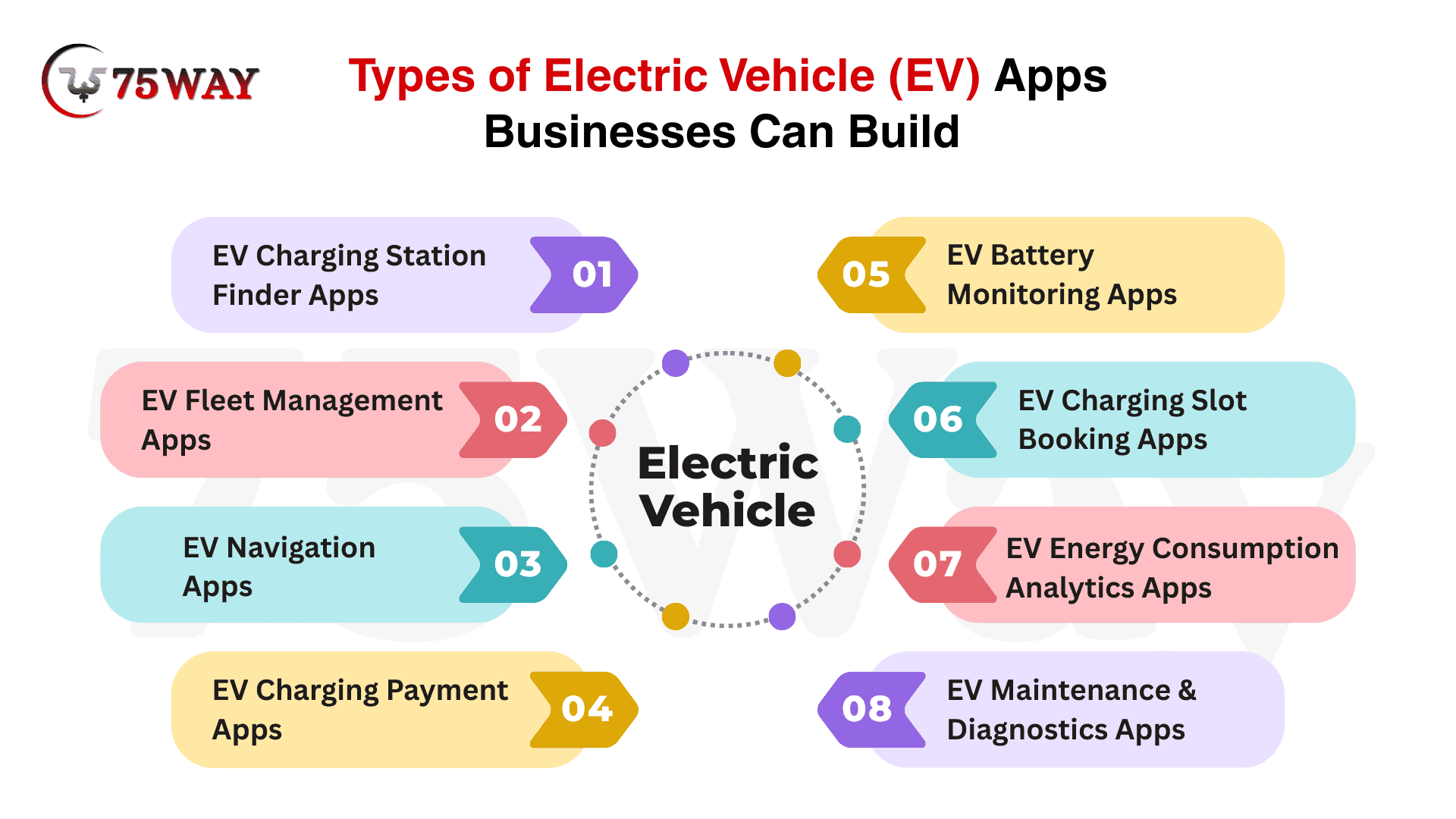
EV Charging Station Finder Apps: These apps help EV drivers locate nearby charging stations, view availability, check charging speeds, and ensure vehicle compatibility. They reduce range anxiety and make trips more convenient. For instance, PlugShare is a widely used EV charging station finder app that helps drivers find EV charging stations.
EV Fleet Management Apps: Fleet operators track multiple vehicles, monitor battery levels, optimize routes, and manage schedules efficiently. They improve fleet performance, reduce operational costs, and enhance overall logistics management for commercial EV operations.
EV Navigation Apps: EV navigation applications plan optimal routes considering battery range, charging stations, and traffic conditions. Drivers can avoid running out of charge while minimizing travel time and improving overall trip efficiency.
EV Charging Payment Apps: These apps simplify payments for EV charging through secure digital wallets, subscriptions, and automated billing. Users can complete transactions quickly and safely, enhancing convenience and encouraging regular charging station usage.
EV Battery Monitoring Apps: Battery monitoring applications provide real-time insights into battery health, energy consumption, and charging performance. Drivers can track efficiency, predict maintenance needs, and optimize battery longevity for better EV usage.
EV Charging Slot Booking Apps: Slot booking apps allow users to reserve charging stations in advance to minimize waiting times. They ensure a seamless and convenient charging experience for drivers, particularly during peak hours or in busy locations.
EV Energy Consumption Analytics Apps: These apps analyze electricity usage, charging patterns, and vehicle performance, providing actionable insights. Businesses and drivers can use the data to optimize energy efficiency, reduce costs, and plan future EV operations effectively.
EV Maintenance & Diagnostics Apps: Maintenance and diagnostic applications detect potential vehicle issues early and notify drivers of required service. They provide battery diagnostics, track vehicle health, and ensure reliability, safety, and long-term EV performance.
Read Too: Managed IT Services for Manufacturing: Step-by-Step Guide for Businesses
Must-Have Features of a Successful EV Application
To provide maximum value for EV drivers and businesses, your electric vehicle applications must include essential features that enhance convenience, efficiency, and safety. A well-designed EV app combines real-time data, AI-powered insights, and seamless user interactions to create a smooth and reliable user experience
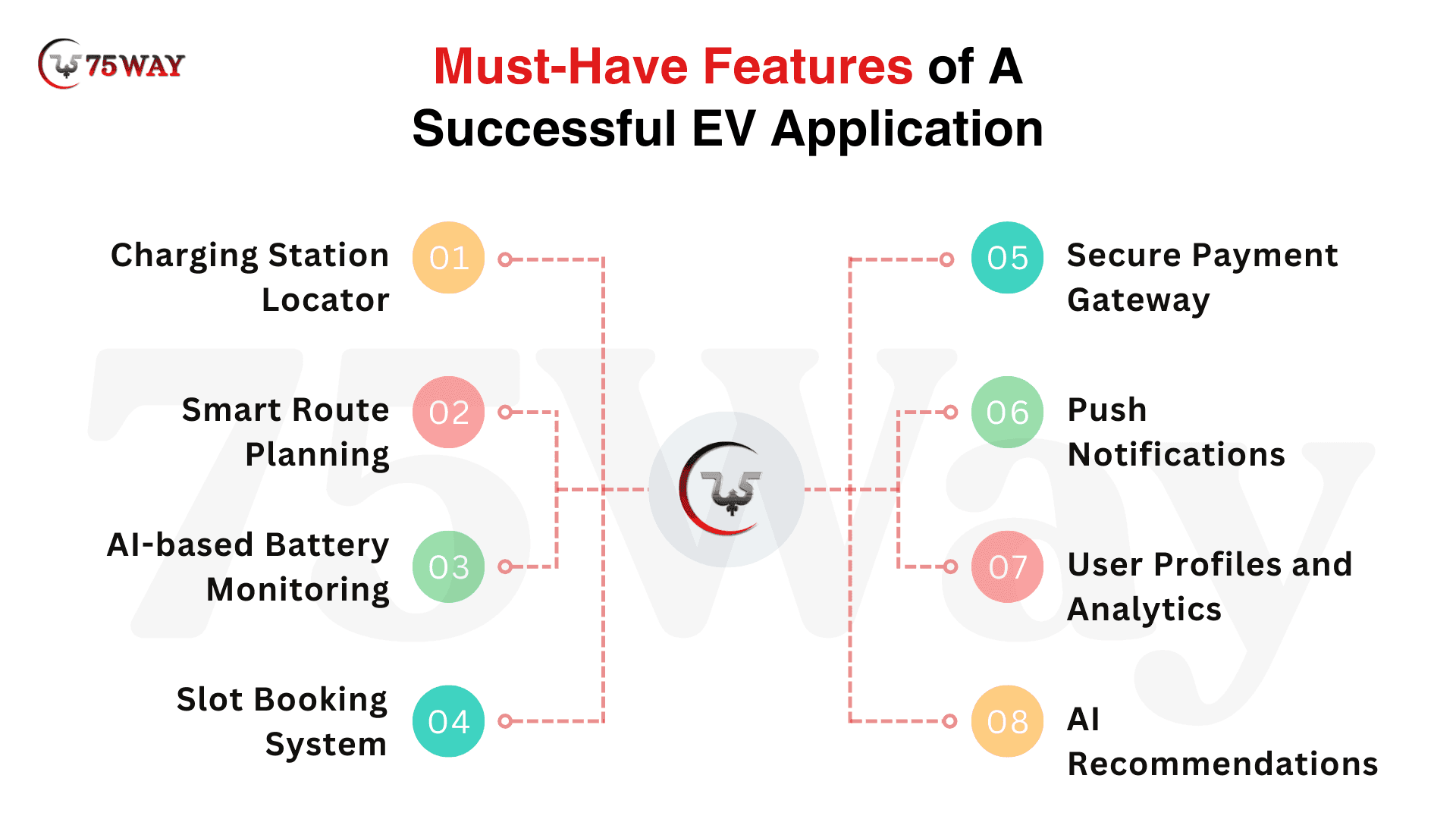
Charging Station Locator: This feature helps drivers locate nearby charging stations using real-time GPS data. It provides station availability, connector types, and charging speed information, ensuring EV drivers can plan trips efficiently without delays or range anxiety.
Smart Route Planning: Smart route planning calculates optimal paths based on battery levels, charging stops, traffic, and driving conditions. It helps drivers minimize travel time, avoid unnecessary detours, and reach destinations efficiently while maintaining sufficient battery charge.
AI-based Battery Monitoring: Artificial intelligence apps for EVs track energy consumption patterns, battery health, and charging cycles. Using predictive algorithms, it informs drivers about potential battery issues and suggests strategies to maximize efficiency and prolong battery life.
Slot Booking System: This feature allows users to reserve charging stations in advance, preventing waiting time at busy locations. It ensures a seamless charging experience, enhances convenience, and optimizes station utilization for EV drivers.
Secure Payment Gateway: Secure payment gateways in the EV app enable fast and safe digital transactions for charging sessions. They support multiple payment methods, encrypt sensitive data, and ensure seamless, reliable, and trustworthy payments for EV drivers.
Push Notifications: This functionality alerts drivers about charging completion, station availability, upcoming maintenance, or app updates. Timely notifications improve user engagement, inform decision-making, and ensure drivers stay connected to essential EV services.
User Profiles and Analytics: User profiles store charging history, energy usage, and payment records. Analytics provide insights into driving habits, energy consumption, and spending patterns, helping users make informed decisions and optimize EV usage.
AI Recommendations: AI models with recommendations suggest optimal charging stations, travel routes, and energy-saving strategies based on past behavior. This enhances efficiency, reduces downtime, and provides personalized guidance for EV drivers in real-time.
Also Read: How to Build an AI-Driven Anonymous Messaging App?
Robust Technology Stack for EV App Development
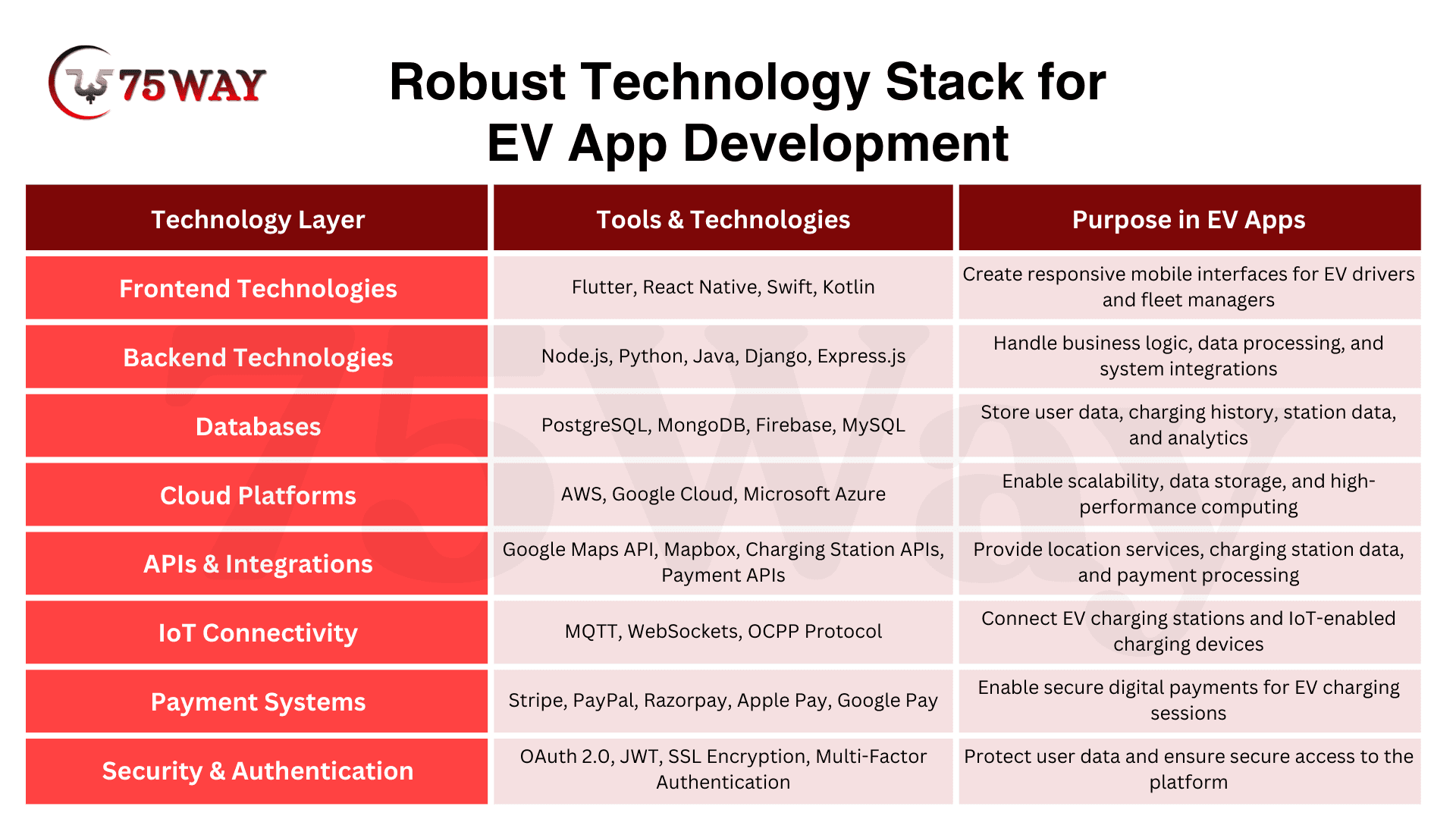
Building a secure EV platform requires a powerful technology stack capable of handling real-time data, secure transactions, and seamless connectivity between vehicles, charging stations, and users. You must select the right tools for reliability, performance, and future scalability for EV applications.
Frontend Technologies: Tools like Flutter, React Native, Swift, and Kotlin create responsive, interactive interfaces for drivers and fleet managers. These frameworks support cross-platform development while maintaining smooth user experiences across mobile devices.
Backend Technologies: Backend frameworks such as Node.js, Python, Java, Django, and Express.js handle business logic, data processing, and system integration. They ensure seamless communication between the frontend, databases, APIs, and external services.
Databases: Databases like PostgreSQL, MongoDB, Firebase, and MySQL store user data, charging history, station information, and analytics. Scalable database architecture supports high-volume operations without affecting performance or reliability.
Cloud Platforms: Cloud services such as AWS, Google Cloud, and Microsoft Azure enable scalable storage, high-performance computing, and global accessibility. Cloud integration ensures the app can manage real-time EV data efficiently.
APIs & Integrations: APIs connect the EV app with charging station networks, mapping tools, and payment gateways. Integrations with Google Maps, Mapbox, and payment APIs ensure location accuracy and smooth transaction processing.
IoT Connectivity: Smart EV apps talk to smart charging stations. Protocols like MQTT, WebSockets, and OCPP allow communication between EV apps and IoT-enabled charging stations. IoT-powered apps for EVs offer real-time monitoring, charging control, and smart energy management.
Payment Systems: Payment solutions, including Stripe, PayPal, Razorpay, Apple Pay, and Google Pay, enable secure, convenient, and fast transactions for EV charging sessions. Multiple options improve user adoption and trust.
Security & Authentication: Technologies like OAuth 2.0, JWT, SSL encryption, and multi-factor authentication protect user data, payments, and app access. Strong security measures maintain compliance and ensure driver trust in the platform.
Explore More: AI App Development Partner for Health and Wellness Startup
How to Choose the Right EV App Development Partner
A technology partner can make or break your EV app project. Among leading mobile app development companies, you need a team that understands the EV ecosystem, has proven experience, and can guide you from planning to launch smoothly. Here’s how to make the right choice:
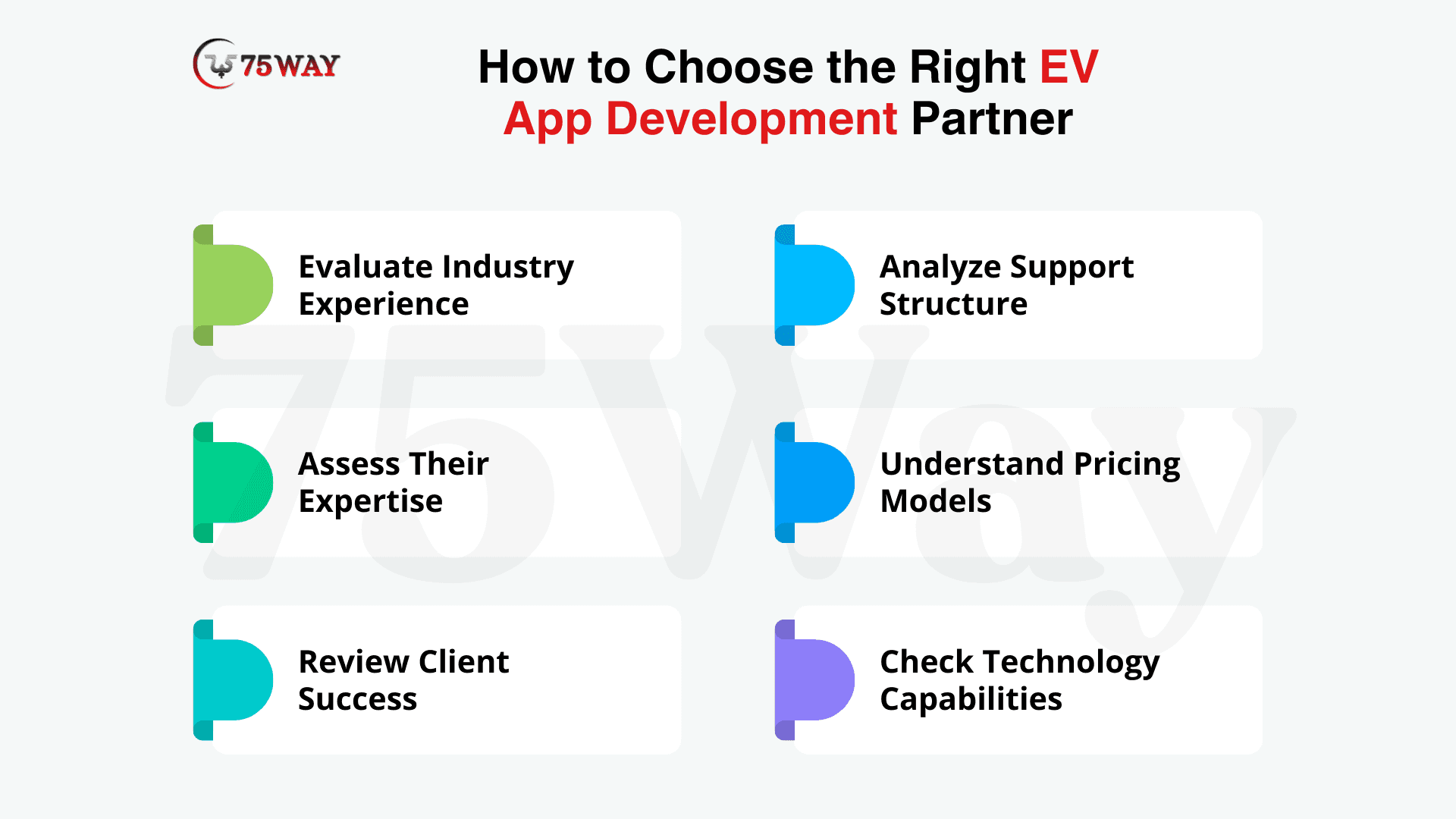
Evaluate Industry Experience: You should look for partners who have hands-on experience in mobility, IoT, and automotive software. Their background ensures they understand the unique challenges of EV applications and can apply best practices to deliver a high-quality, reliable platform for your business.
Assess Their Expertise: Check whether the team has strong skills in mobile technologies, cloud infrastructure, and EV platform integrations. You need a partner whose technical expertise guarantees your app will be scalable, secure, user-friendly, and capable of handling real-time data and high user traffic.
Review Client Success: Take time to analyze their past projects and case studies. By reviewing their proven success with complex platforms, you can be confident they are capable of handling your project’s requirements and delivering results that meet both your business and user expectations.
Analyze Support Structure: Post-launch support is essential for long-term success. Make sure your partner offers ongoing maintenance, updates, and scalability planning so you can keep your app running smoothly, fix issues promptly, and adapt to evolving EV market demands over time.
Understand Pricing Models: You need to compare pricing structures, delivery timelines, and development approaches carefully. A transparent and fair pricing model helps you avoid unexpected costs, ensures project feasibility, and allows you to plan resources effectively without compromising quality or functionality.
Check Technology Capabilities: Confirm that your development partner can work with advanced technologies like AI, IoT, cloud platforms, and API integrations. You want a team that ensures your EV app remains modern, competitive, and capable of evolving with the rapidly growing electric mobility ecosystem.
Read More: How AI Agents Automate Sales, Support & Operations in US Companies
What Is EV App Development Cost in 2026?
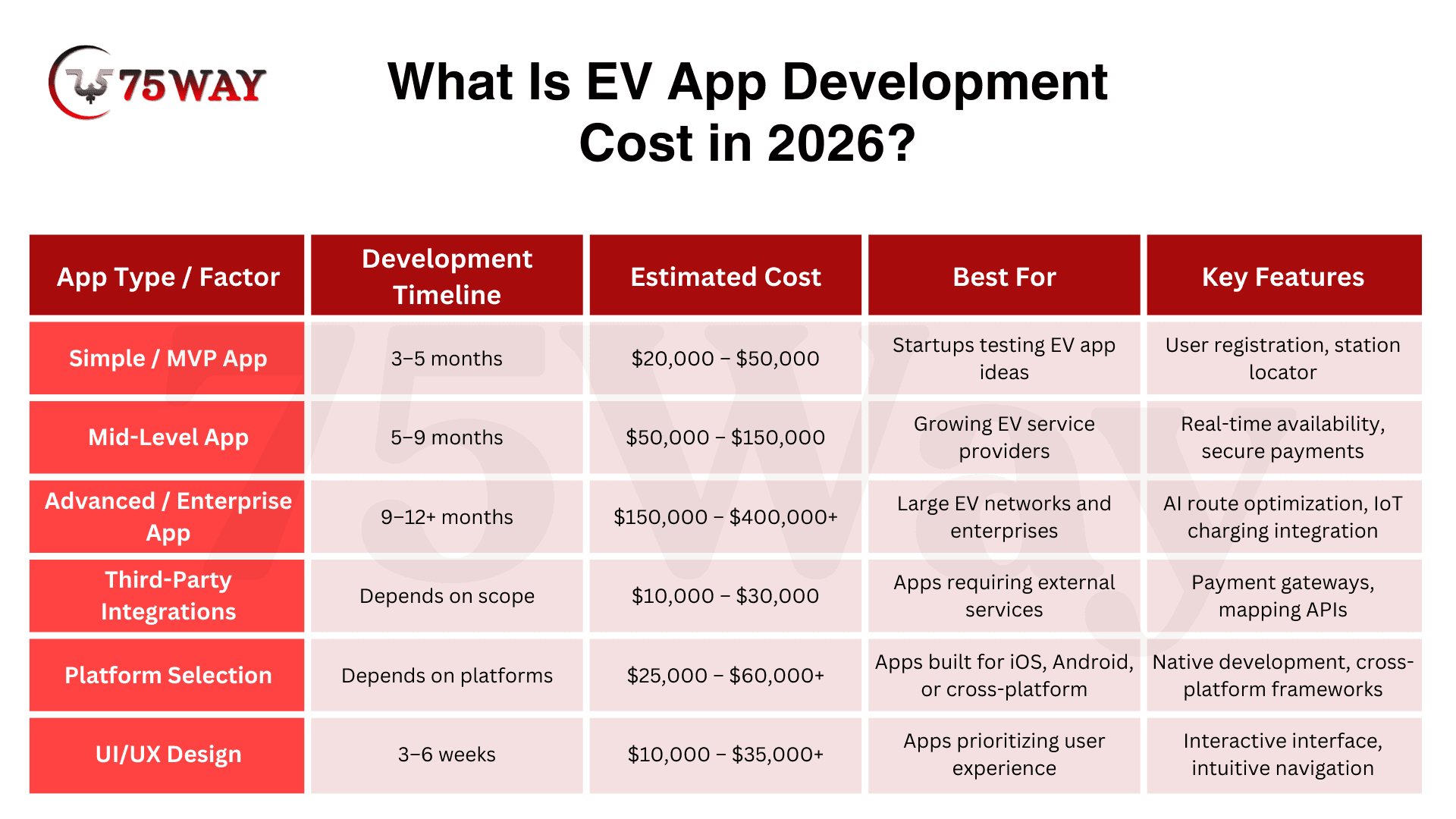
In 2026, the EV mobile app development cost varies depending on complexity, features, integrations, and platform requirements. You can expect prices to range from basic MVP apps for startups to advanced enterprise-level solutions for large EV networks.
Simple/MVP EV App Cost: A simple or MVP EV app typically takes 3–5 months to develop and costs between $20,000 and $50,000. You get core features in MVP development like user registration, basic charging station locator, and simple navigation, ideal for testing ideas and entering the market quickly.
Mid-Level EV App Cost: Moderate EV apps generally require 5–9 months of development and cost $50,000–$150,000. These apps include real-time charging availability, secure payment gateways, AI-based battery monitoring, and improved UI/UX, making them suitable for growing EV service providers.
Advanced / Enterprise EV App Cost: Advanced or enterprise EV applications can take 9–12+ months to develop and cost $150,000–$400,000 or more. They include AI route optimization, IoT-enabled charging integration, fleet management tools, and advanced analytics, designed for large EV networks or corporate platforms.
Third-Party Integrations: Apps requiring external services, such as payment gateways, mapping APIs, or partner charging networks, can add $10,000–$30,000 to your project. Integration ensures your app functions seamlessly within the wider EV ecosystem.
Platform Choice: Developing for iOS, Android, or cross-platform frameworks typically costs $25,000–$60,000+. Platform choice impacts development complexity, device compatibility, and overall project timeline, so you should choose based on your target audience.
UI/UX Design: UI/UX design is critical for user adoption and engagement. Costs range from $10,000–$35,000+ and cover interactive interfaces, intuitive navigation, and personalized dashboards to make the app user-friendly and visually appealing.
Factors Affecting The Cost To Build An EV App
Several factors influence the costs to develop an EV app. You should consider features, integrations, platforms, security, and your development team’s expertise, as each of these directly impacts time, resources, and overall project budget.
Number of Features: The more features your app includes, such as route planning, battery monitoring, or slot booking, the higher the development cost. You need to balance functionality with budget to ensure you get value without unnecessary complexity.
Technology Integrations: Integrating APIs, IoT devices, AI chatbots, cloud platforms, agentic AI, and payment gateways adds complexity and cost. You should plan these integrations carefully, as they ensure your app works seamlessly within the wider EV ecosystem.
Platform Compatibility: Building your app for iOS, Android, or cross-platform frameworks affects development time and cost. You want to reach your audience efficiently while keeping maintenance manageable across multiple devices and operating systems.
Security Requirements: Apps handling sensitive data, digital payments, or fleet information require advanced security measures. Implementing encryption, multi-factor authentication, and secure servers increases development cost but is essential for user trust and regulatory compliance.
Development Team Expertise: Hiring an experienced development team ensures your app is reliable, scalable, and high-quality. Teams with proven EV, IoT, or mobility expertise may charge more but deliver faster and reduce long-term maintenance risks.
Development Team Location: Where your development team is located can influence your project’s workflow, communication, and delivery speed. You should choose a location that aligns with your project’s needs, collaboration style, and long-term support requirements to ensure smooth development and timely delivery.
- Development teams in Western Europe typically charge the highest rates, ranging from $100 to $200+ per hour.
- Teams located in Eastern Europe usually offer mid-range pricing, with hourly rates between $40 and $80.
- Development services in India and other Asian regions are generally the most cost-effective, with rates averaging $20 to $50 per hour.
Learn More: How to Build a Self Driving Car Software: A Complete Roadmap
Monetization Strategies For EV Apps To Generate Revenue
EV applications offer multiple ways to generate revenue while providing value to drivers and businesses. By leveraging smart features, partnerships, and enterprise solutions, you can create sustainable income streams and grow your EV platform effectively.
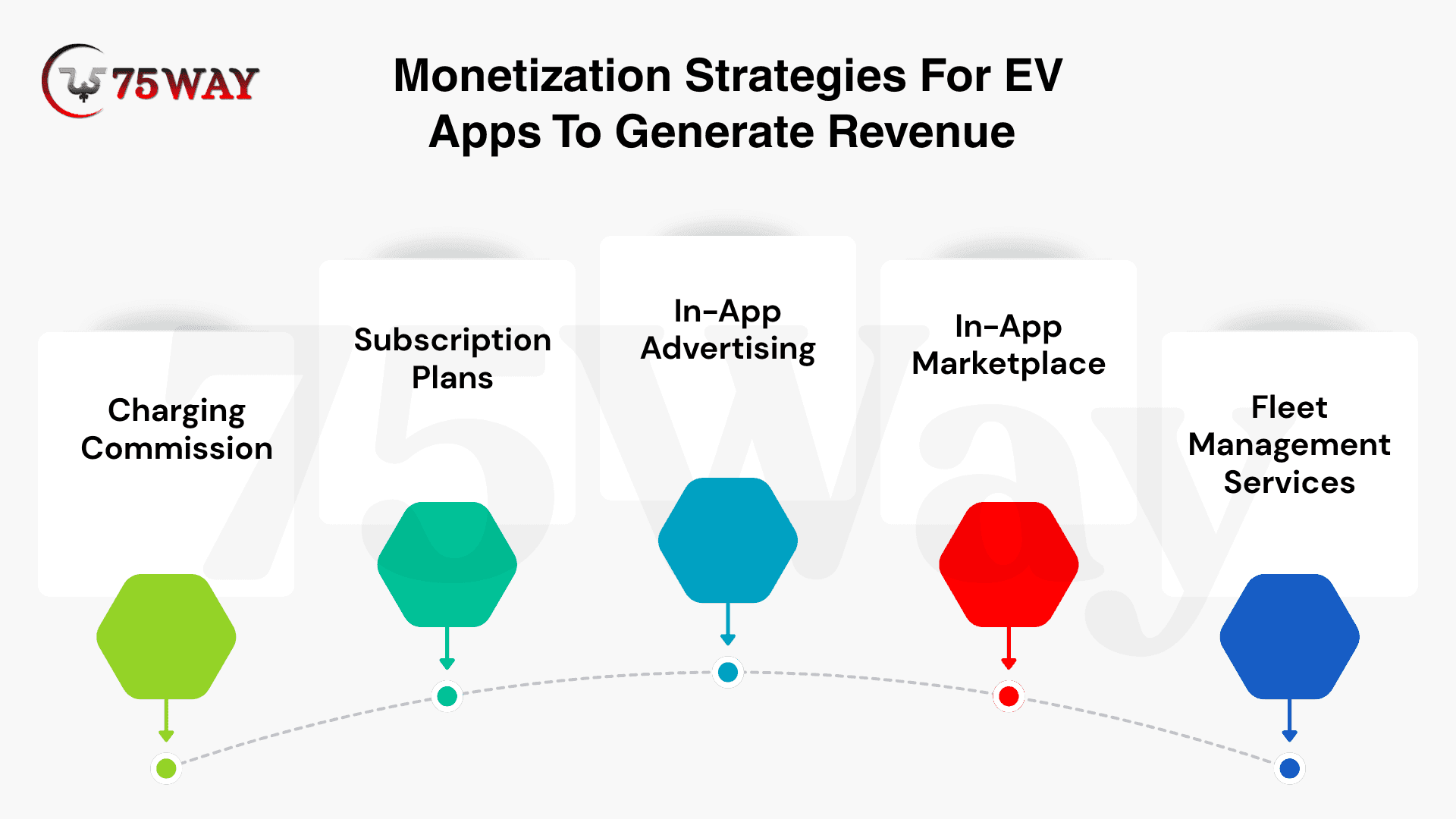
Charging Commission: You can earn revenue by charging a small transaction fee for every completed charging session. This model ensures a steady income while keeping your platform affordable and attractive to EV drivers.
Subscription Plans: Premium subscription plans allow users to access priority charging, advanced analytics, and personalized recommendations. You can create recurring revenue while giving subscribers a more convenient and enhanced EV experience.
In-App Advertising: You can partner with automotive brands, energy providers, and charging networks to display targeted advertisements. This generates additional income without disrupting the user experience when implemented thoughtfully.
In-App Marketplace: An integrated marketplace enables you to sell EV-related products, accessories, and energy services directly within the app. Users benefit from convenience, while your platform earns commission or product sales revenue.
Fleet Management Services: Providing enterprise tools for fleet operators allows you to charge for advanced fleet management, analytics, and monitoring services. This creates recurring revenue while helping businesses optimize their EV operations efficiently.
Read More: Best iOS App Development Companies in USA Founders Must Know
Challenges in EV App Development
Developing EV applications offers tremendous opportunities, but it also comes with unique challenges. To succeed, you must address technical, security, and scalability issues while ensuring seamless user experiences and reliable connections with vehicles and charging infrastructure.
Charging Infrastructure Compatibility: EV apps must work across different charging networks that use varied communication protocols. Ensuring compatibility is critical so drivers can reliably access stations without frustration, regardless of the provider or hardware type.
Real-Time Data Management: Handling live data like charging availability, battery status, and user locations requires advanced backend systems. You need robust infrastructure to process and deliver real-time information quickly and accurately for a smooth app experience.
Security and Privacy: EV applications collect sensitive user data, including payment details and location history. Protecting this information with strong encryption, authentication, and privacy measures is essential to maintain trust and comply with regulations.
Scalability: As EV adoption grows, your platform must support millions of users, vehicles, and charging devices simultaneously. Planning for scalability ensures the app remains fast, stable, and capable of handling increasing demand without performance issues.
Get More Insights: How to Build IoT Apps in 2026: A Guide for Startups, Founders & Business Owners
Future Trends in EV App Development in 2026 & Beyond
The future of EV applications is poised for significant transformation, reshaping interactions between drivers, fleets, and charging networks. Advanced technologies will be critical to enhancing operational efficiency, ensuring security, and delivering a seamless user experience.
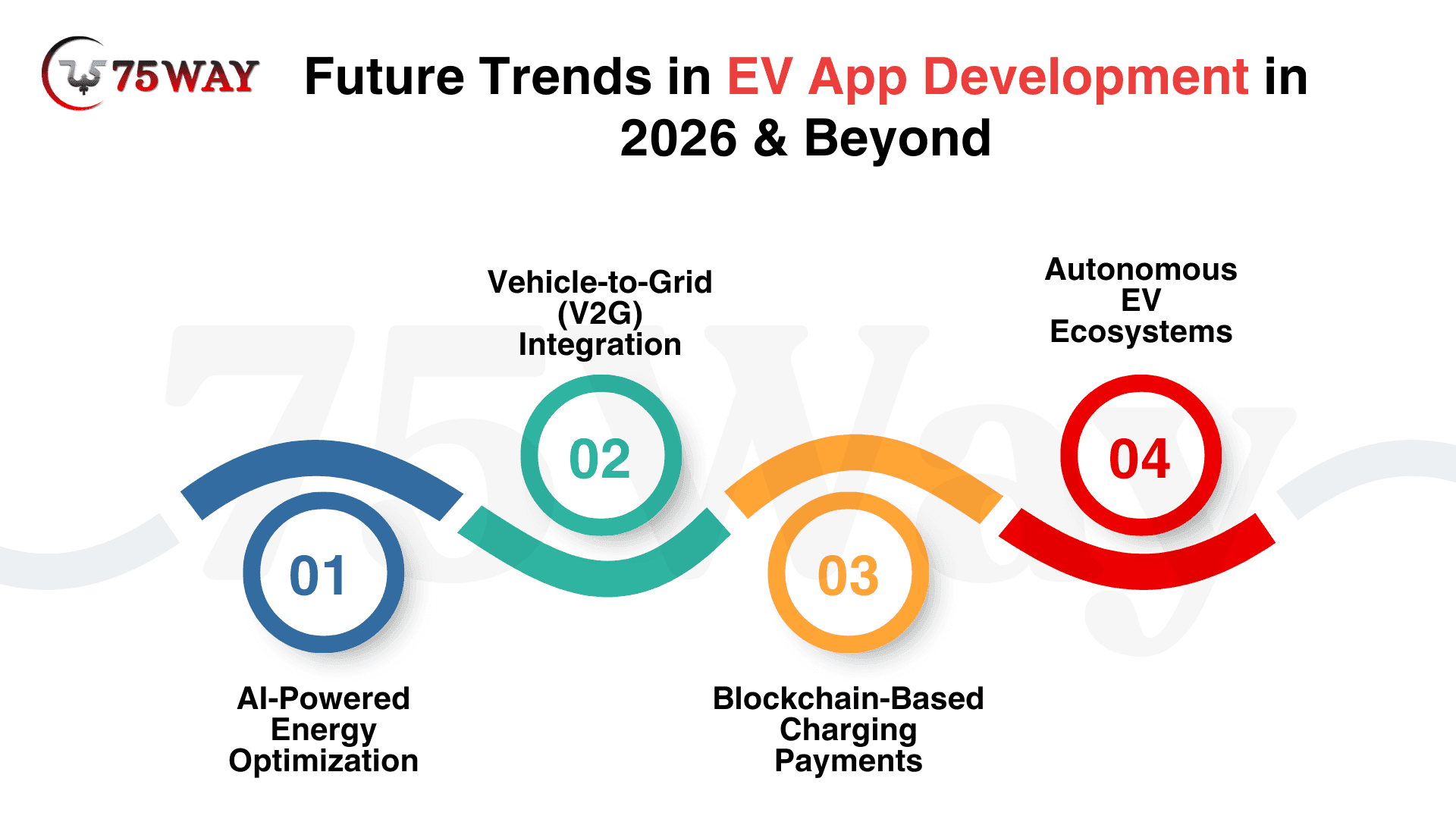
AI-Powered Energy Optimization: AI algorithms will analyze energy demand patterns and predict optimal charging schedules. By intelligently managing power distribution, your app can reduce costs, minimize downtime, and help drivers charge efficiently without overloading the grid.
Vehicle-to-Grid (V2G) Integration: Future EV apps will enable vehicles to return electricity to the grid during peak demand. This technology allows drivers to earn revenue, support energy sustainability, and stabilize grid performance in real-time.
Blockchain-Based Charging Payments: Blockchain technology will ensure transparent, secure, and tamper-proof charging transactions. By providing trustless payment systems, EV apps can reduce fraud, simplify billing, and enhance user confidence in digital energy services.
Autonomous EV Ecosystems: Self-driving cars and electric vehicles will depend heavily on connected applications and intelligent infrastructure. EV apps will play a central role in routing, fleet coordination, and real-time vehicle monitoring, making autonomous mobility efficient and safe.
Quick Insights: How Much Does Dating App Development Cost in 2026?
Final Remarks
The electric vehicle industry is accelerating rapidly, and having a robust EV application is no longer optional. It is essential for staying competitive. From charging station locators and smart route planning to AI-powered battery monitoring and fleet management tools, a well-designed app enhances convenience, efficiency, and overall user satisfaction. Advanced technologies and user-focused design allow businesses and startups to unlock new revenue streams, improve operational efficiency, and strengthen customer loyalty. By focusing on scalability, security, and future-ready features like V2G integration and blockchain-based payments, your EV platform can meet evolving market demands. If you need a feature-rich EV app for your business, contact a leading app development company today.
Frequently Asked Questions (FAQs)
Are EV Apps Profitable?
Yes, EV apps can be highly profitable as the electric mobility ecosystem continues expanding worldwide. Businesses generate revenue through charging commissions, subscription plans, fleet management services, and in-app marketplaces. As EV adoption grows, the demand for reliable charging and mobility platforms also increases, creating long-term revenue opportunities.
Who Should Invest In EV App Development?
Startups, mobility companies, EV charging station providers, fleet operators, and automotive manufacturers can benefit from EV app development. These businesses can use EV applications to offer digital charging services, improve fleet efficiency, collect valuable mobility data, and create new revenue streams within the expanding electric vehicle ecosystem.
How Do EV Apps Improve Charging Convenience?
EV apps allow drivers to easily locate charging stations, check real-time availability, reserve charging slots, and complete digital payments. These capabilities eliminate uncertainty during long trips and make EV charging more accessible and convenient for users.
What Role Does IoT Play In EV Apps?
IoT enables EV apps to communicate with charging stations, vehicles, and energy management systems. This connectivity allows apps to monitor battery levels, track charging sessions, and provide real-time charging data to users and businesses.
How Do EV Apps Support Charging Networks?
EV apps connect drivers to charging networks through mapping systems, station data APIs, and reservation systems. They help charging providers manage station usage, monitor infrastructure performance, and deliver seamless services to EV drivers.
Why Are EV Apps Important For EV Drivers?
EV apps simplify the entire electric vehicle experience. They help drivers find charging stations quickly, monitor battery health, optimize travel routes, and manage charging payments, making EV ownership more convenient and efficient.