Summary
Finding the right AI app development partner for health and wellness startups ensures HIPAA compliance, FDA readiness, EHR integration, patient engagement, and scalable AI models. With the U.S. digital health AI market expected to reach $1,033 billion by 2034, strategic partnerships drive adoption, investor confidence, and long-term growth.
Key Overview:
- U.S. digital health AI market projected to reach $1,033B by 2034, CAGR 43.96%.
- Partner must understand clinical workflows, patient journeys, and digital health compliance requirements.
- Ensure app aligns with HIPAA, HITECH, state laws, and FDA SaMD guidance.
- Build proprietary AI models instead of relying solely on third-party APIs.
- Healthcare app development costs range from $12,000 to $250,000+ based on requirements.
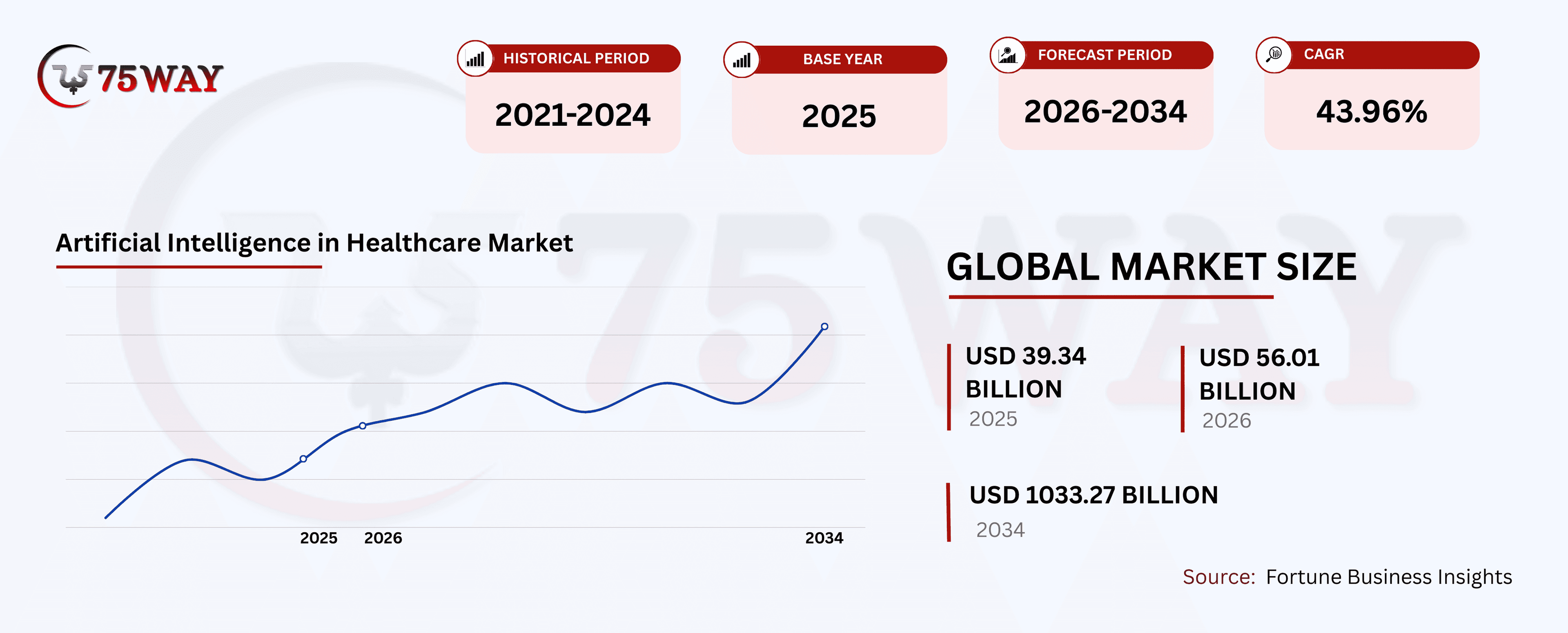
Artificial Intelligence adoption in the healthcare market is projected to reach $1,033.27 billion by 2034. This global market opportunity seems massive for businesses, especially for growing businesses.
However, these startups need a suitable AI app development partner for health and wellness to grow their online presence. Their decision directly impacts HIPAA compliance, FDA eligibility, insurance integrations, and long-term scalability.
In 2026, AI-driven health apps require secure PHI architecture, bias-controlled model development, EHR integration, and continuous monitoring to meet U.S. healthcare standards. A traditional app development agency cannot deliver this level of specialization.
So, how to find the ideal AI development partner to build a secure health and wellness app? What factors should be considered? This guide provides a structured evaluation framework, cost analysis, outsourcing comparison, and practical decision criteria. Without wasting any time, let's dive in.
10 Factors to Evaluate Before Hiring an AI Healthcare App Development Partner
The initial stage to build an AI app for a healthcare startup is to select a trusted AI healthcare app development company. Now, many have a question, “Why is it required?” The answer is that an ideal partner is essential because digital health products operate under strict U.S. regulations, sensitive patient data standards, and investor assessment. A single misstep in compliance and AI accuracy can delay approvals and weaken valuation. Thus, we provide a strategic evaluation process with core considerations that protect startups from falling into costly compliance gaps.
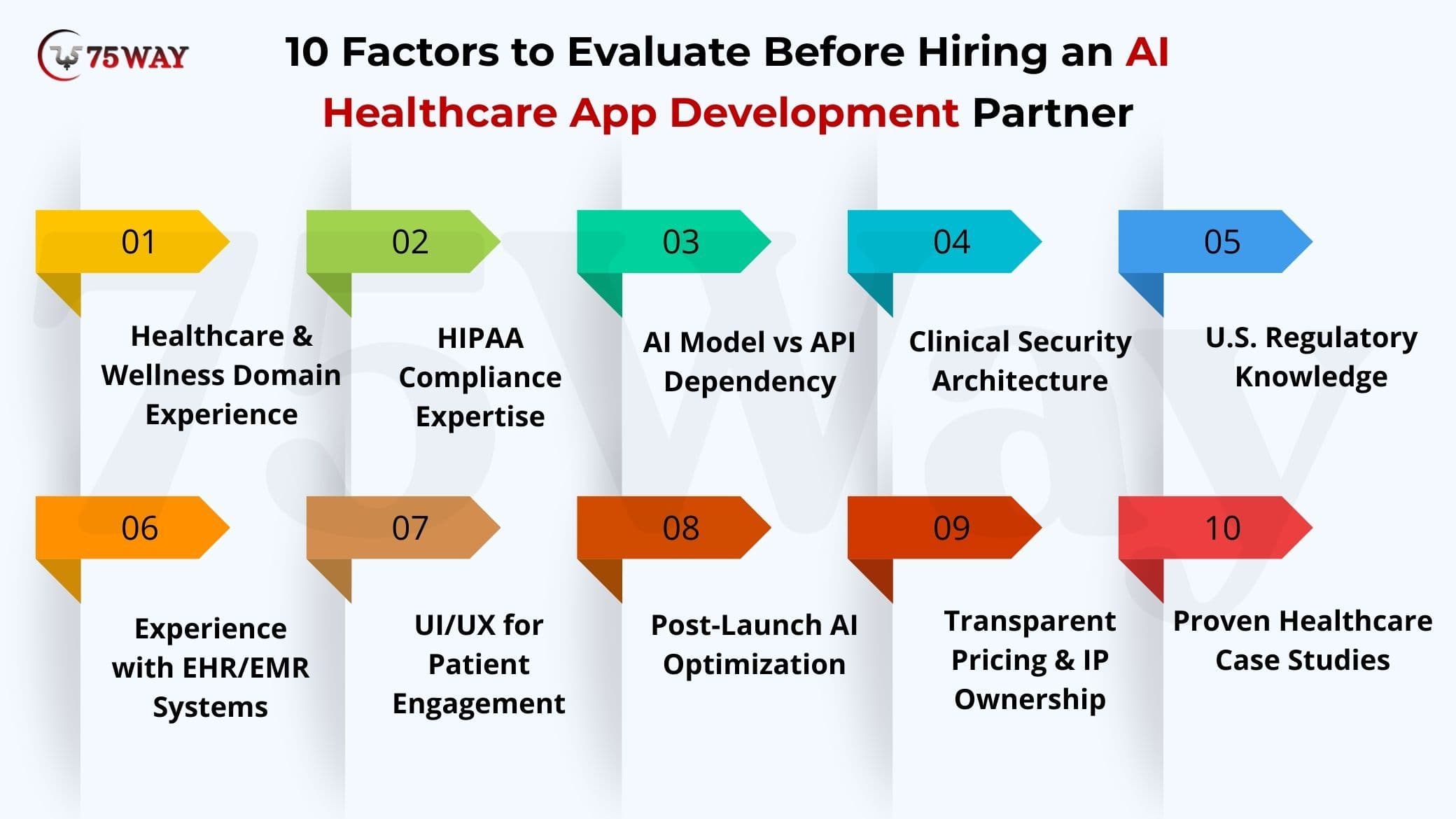
Healthcare & Wellness Domain Experience
AI in Healthcare is totally different from fintech, retail, or eCommerce apps. Digital healthcare products, such as apps and software, must align with clinical workflows, patient safety standards, HIPAA regulations, and, in some cases, FDA frameworks.
A partner without real expertise in healthcare app development may build technically sound software, but fail in real-world clinical environments. On the contrary, an experienced AI healthcare app development company can understand:
- Care delivery models (in-person, telehealth, hybrid)
- Chronic disease management systems
- Remote patient monitoring workflows
- Behavioral and mental health engagement models
- Preventive wellness ecosystems
- Data interoperability standards like FHIR
This domain depth reduces compliance risks, shortens iteration cycles, and improves investor confidence during technical due diligence.
HIPAA Compliance Expertise
For any healthcare app, HIPAA compliance is a legal requirement. If your AI-powered healthcare app collects, stores, analyzes, or transmits Protected Health Information (PHI), it must align with the HIPAA standards. You may face civil penalties of millions of dollars, reputational damage, and loss of investor trust in case your healthcare app fails to meet these requirements.
An experienced app partner for a health and wellness startup should design compliance into the architecture from day one. To evaluate their proficiency, you must consider
- Whether they provide a high-level, HIPAA-compliant system architecture that explains encryption layers and monitoring tools.
- Ask whether they sign Business Associate Agreements (BAA) and whether their cloud infrastructure supports HIPAA-eligible services.
- Verify encryption protocols (AES-256, TLS 1.2+) and key management processes.
- Check if they implement access controls, multi-factor authentication, and intrusion detection systems.
- Ask for real examples of healthcare apps they have built under HIPAA compliance.
- Request details about security audits, third-party penetration testing, or compliance assessments conducted before launch.
AI Model Vs API Dependency
Many healthcare and telemedicine app development agencies market “AI-powered healthcare apps,” but in reality, they simply integrate third-party APIs. No doubt, APIs can complete MVP development fast. But overusage of external models may limit scalability. For a health and wellness startup, AI should be a strategic asset, not a rented feature in your app. A reliable AI app development partner focuses on building defensible AI systems that include:
- Custom AI model training aligned with your specific use case
- Fine-tuning on healthcare-specific datasets
- Clinical-grade validation and bias testing
- Continuous performance monitoring and model drift detection
- Secure data pipelines for PHI-safe training workflows
Generic APIs may not meet strict healthcare accuracy thresholds or regulatory expectations, especially if your solution qualifies under FDA Software as a Medical Device (SaMD) guidelines.
Clinical Security Architecture
In AI-driven health and wellness apps, security is foundational infrastructure. Digital health platforms must handle Protected Health Information (PHI), biometric data, diagnostic outputs, and behavioral insights. A single data breach can trigger HIPAA penalties, federal investigations, class-action lawsuits, and brand damage.
Healthcare apps cannot afford reactive security. Thus, your app must integrate clinical-grade security protocols from day one. A qualified AI healthcare app partner designs security using:
- Zero-trust frameworks (no user or system is automatically trusted)
- Confirm multi-factor authentication (MFA), RBAC policies, and least-privilege access design.
- End-to-end encryption for data in transit and at rest
- Ensure they use real-time intrusion detection, automated alerts, and centralized logging.
- Automated security logging and anomaly alerts
Unlike standard consumer apps, healthcare AI systems must secure both the application layer and the AI model pipelines. This includes safeguarding training datasets, API endpoints, and prediction outputs from unauthorized access.
U.S. Regulatory Knowledge
Building an AI-powered health or wellness app in the United States requires navigating one of the world's most complex regulatory environments. If your partner ignores regulatory compliance, it delays partnerships, funding rounds, insurance integrations, and market expansion. While choosing mobile app development agency for a health and wellness app, you must check whether their apps are complaint to below given standards:
HIPAA: Require in healthcare apps to securely protect, store, and transmit Protected Health Information without unauthorized access.
HITECH Act: Supports HIPAA enforcement and mandates breach notifications for electronic health data security incidents.
State-Level Privacy Laws: Grant consumers rights over personal data collection, sharing, deletion, and transparency practices.
FDA: AI/ML Software as a Medical Device (SaMD) guidance regulates AI-driven software influencing diagnosis, treatment decisions, or clinical patient monitoring.
A weak regulatory positioning of your health and wellness mobile app can stall Series A or enterprise sales conversations.
Experience with EHR/EMR Systems
In the healthcare ecosystem, interoperability determines whether your AI-powered health app will be adopted or rejected by clinics, hospitals, and provider networks. A healthcare application that cannot integrate with Electronic Health Records (EHR) or Electronic Medical Records (EMR) systems creates workflow friction. So, you must choose an app development partner who has expertise in integrating apps with existing systems.
FHIR (Fast Healthcare Interoperability Resources) enables the secure exchange of clinical data between systems. Without FHIR-based APIs or structured interoperability frameworks, your AI app may struggle to access patient records, lab reports, or care plans in real time.
UI/UX for Patient Engagement
Technical accuracy in building a healthcare app alone does not guarantee success. Even the most advanced algorithm fails if patients abandon the app after initial use. For health and wellness startups, patient engagement directly influences retention metrics, funding, and investor valuation.
An experienced AI app development partner for a health and wellness app understands that user experience must align with behavioral psychology, accessibility standards, and healthcare usability expectations. Effective patient-facing AI apps prioritize:
- Accessibility compliance (WCAG standards, ADA alignment, readable typography, voice support)
- Behavior-driven engagement flows that guide users step-by-step
- Simplified health data visualization for non-clinical audiences
- Clear consent and privacy transparency interfaces
- Low cognitive load design for elderly or chronic care patients
Healthcare users include seniors, patients managing chronic conditions, and individuals under stress. Thus, complex dashboards, technical jargon, or confusing navigation reduce trust and long-term engagement. Strong UI/UX design increases engagement consistency, improves adherence outcomes, strengthens payer and provider negotiations, and ultimately drives higher lifetime user value (LTV), a key metric in funding and acquisition discussions.
Post-Launch AI Optimization
Launching an AI-powered healthcare app is the start of a continuous journey. In real-world clinical environments, AI models naturally degrade over time due to changes in patient behavior, new clinical data, or population changes. Without ongoing support from a healthcare application development firm, predictive accuracy declines, patient trust diminishes, and engagement and clinical adoption reduce.
The right partner provides long-term reliability through continuous learning pipelines, model drift detection, and performance analytics. By actively monitoring and refining AI models after launching an app, startups maintain clinical relevance, regulatory compliance, and patient engagement. This proactive approach transforms AI from a static feature into a defensible, scalable digital health asset that supports sustainable growth and investor confidence.
Transparent Pricing & IP Ownership
For healthcare and wellness startups, transparency in pricing and intellectual property (IP) ownership is critical while creating an AI-powered app. Complete development is not just about coding but also about proprietary models, specialized datasets, and long-term infrastructure investments. Without clear agreements, startups risk losing control over AI assets, facing unexpected costs, or encountering restrictions on scaling and commercialization. You must have clarity on pricing before selecting an app development partner to protect both financial and strategic interests. Its key considerations are:
AI Model Ownership: Confirm that your startup retains full rights to all AI models developed, including custom-trained predictive algorithms.
Training Dataset Ownership: Ensure that datasets used for model training are either fully owned or licensed in a way that allows unrestricted use.
Recurring API or Licensing Fees: Identify any third-party API dependencies and associated costs to prevent hidden or ongoing expenses.
IP Protection Agreements: Formalize intellectual property and data ownership in contracts to safeguard future product iterations, investor pitches, and potential acquisitions.
Proven Healthcare Case Studies
When evaluating an AI app development partner for a health and wellness startup, real-world results speak louder than promises. Founders should request case studies demonstrating measurable outcomes, such as reduced patient readmission, increased engagement rates, improved diagnosis accuracy, and successful regulatory compliance. Evidence of these results shows that the partner can translate AI technology into practical, clinically meaningful solutions.
A partner with documented healthcare success not only proves technical expertise but also builds trust with investors, hospitals, and enterprise clients. You must analyze their previous projects to assess their ability to deliver compliant and patient-centric AI solutions. This minimizes the risk and increases adoption and market growth. Proven results provide both credibility and a roadmap for achieving similar outcomes in your startup’s AI-powered health platform.
Also Read: How to Build an AI-Driven Anonymous Messaging App?
Why Health & Wellness Startups Need Specialized AI Partners?
Standard software development teams may excel at building apps, but healthcare AI requires a specialized approach that balances technical innovation, patient safety, and regulatory compliance. Without the right expertise, startups risk delayed launches, compliance violations, or reduced investor confidence.
State-Level Compliance: Healthcare privacy regulations differ across U.S. states, and a generic team may overlook regional laws. Specialized partners ensure apps meet local HIPAA, CCPA, and state-specific privacy requirements to reduce legal risk and enable smooth market entry.
Insurance Integration: Digital healthcare apps often require integration with insurance claims or reimbursement workflows. Experienced AI partners understand healthcare billing systems and payer requirements for smooth automation and faster adoption by providers and insurers.
Patient Data Sensitivity: Health information is among the most sensitive personal data. AI solutions must implement secure storage, de-identification, and privacy-preserving training to protect PHI and maintain patient trust while complying with federal and state regulations.
Investor Scrutiny: Investors evaluate AI architecture, model ownership, and compliance during funding rounds. A right partner with proven healthcare AI experience can strengthen credibility, reduce technical risk, and increase startup valuation by demonstrating defensible, scalable solutions.
FDA Frameworks: AI apps influencing clinical decisions may fall under FDA SaMD guidelines. Specialized partners navigate regulatory pathways, clinical validation, and reporting requirements, ensuring apps meet U.S. standards and avoid costly approval delays.
Know More: How AI Development Help US Companies Scale Faster
Explosive Growth of AI in Healthcare: Why Build Healthcare Apps in 2026
Startups and enterprises that invest in healthcare apps now can deliver personalized, efficient, and secure solutions that improve patient outcomes and streamline clinical workflows. Choosing the right AI partner ensures compliance, scalability, and long-term reliability, giving founders a strategic advantage in a competitive market.
- The generative AI market in medicine is expected to expand from $1.55 billion in 2025 to approximately $45.82 billion by 2034.
- Almost 400 out of more than 520 FDA-cleared AI algorithms are currently applied in radiology.
- The global AI in healthcare market is expected to reach $1,033.27 billion by 2034, growing at a CAGR of 43.96% during the forecast period.
Learn More: How to Start a Taxi Business? Guide for Beginners
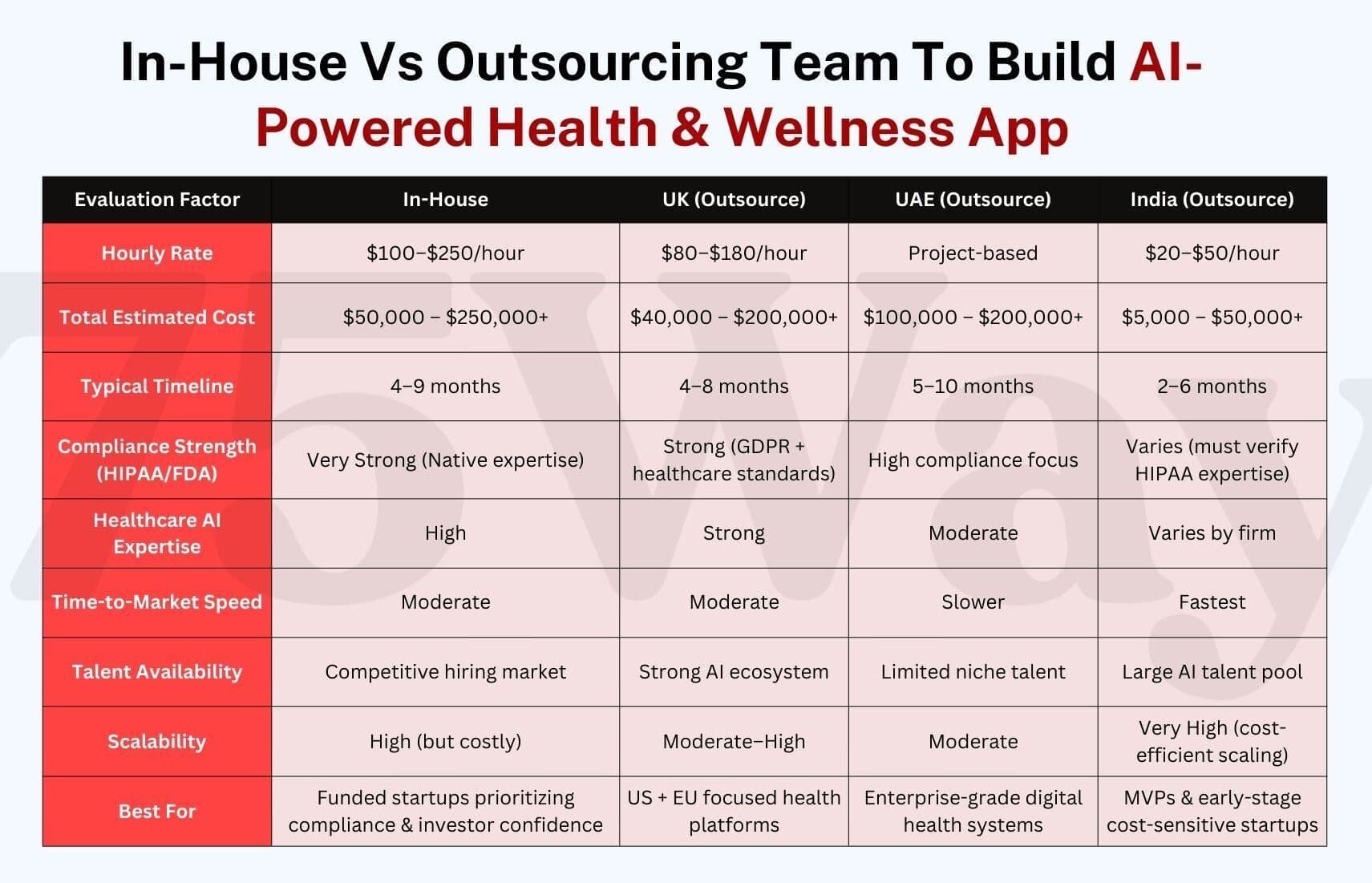
In-House Vs Outsourcing Team To Build AI-Powered Health & Wellness App
Choosing between an in-house team and an outsourcing partner is one of the most critical decisions for health and wellness startups who developing AI-powered applications. The decision directly impacts cost, time-to-market, scalability, regulatory compliance, and the long-term defensibility of your AI models.
In-house teams offer deep control over intellectual property, close collaboration, and seamless alignment with your company culture. However, hiring specialized talent, AI engineers, data scientists, clinical advisors, and HIPAA-compliant security experts, can be time-consuming, costly, and competitive.
On the contrary, outsourcing allows startups to tap into established healthcare AI expertise across geographies and reduce upfront hiring challenges. Experienced outsourcing teams often have prior exposure to HIPAA-compliant architecture, FDA SaMD guidance, and integration with EHR/EMR software like Healthray, Epic or Cerner. They bring ready-to-use development pipelines, scalable AI infrastructure, and domain-specific knowledge that would take months to cultivate internally.
Read Also: Top 10 IoT Development Companies in USA
Health & Wellness App Development Cost Breakdown
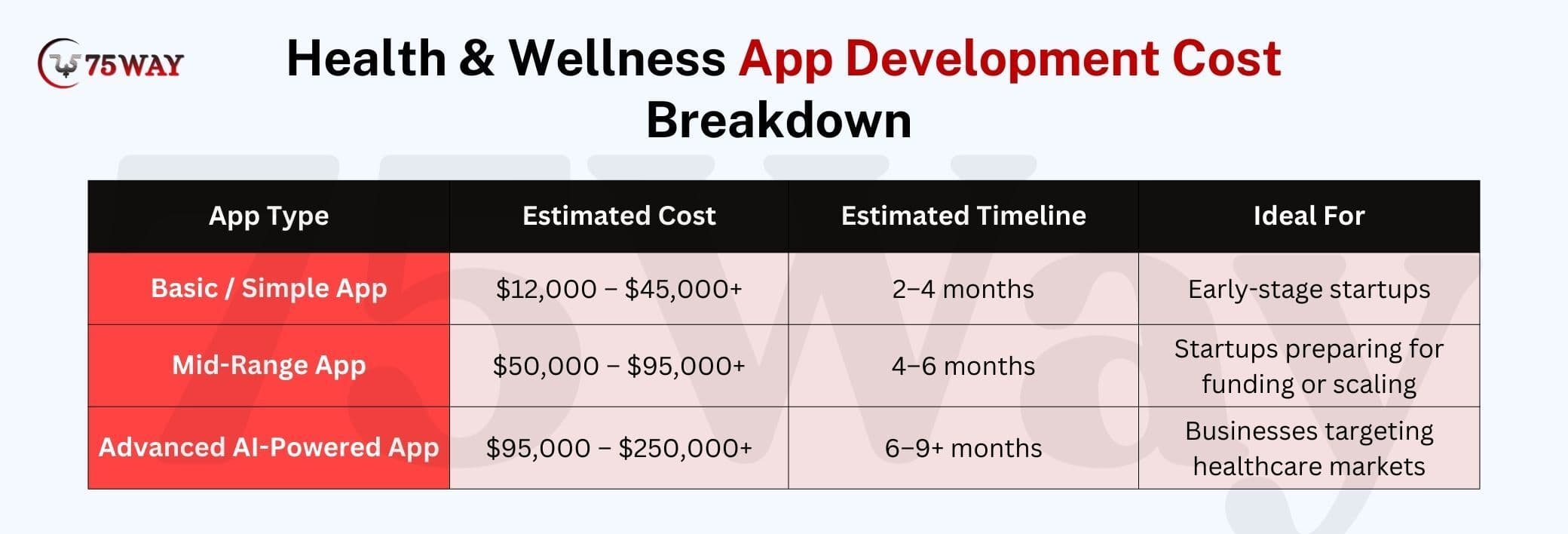
A deep understanding of AI healthcare development costs is critical for health and wellness enterprises planning AI-powered applications. These costs may vary based on app complexity, AI integration, regulatory compliance, platform choice, and development location. Accurate budgeting ensures realistic timelines, investor confidence, and scalable product design.
Basic Healthcare App Cost: A standard healthcare app provides essential functionality, like user registration, activity tracking, appointment scheduling, and simple analytics. Development typically costs $12,000 – $45,000 and takes 2–4 months. This level is ideal for early-stage startups testing product-market fit or launching pilot programs. While AI integration may be minimal, it establishes a foundation for patient engagement and data collection.
Moderate Healthcare App Cost: Its development usually ranges from $50,000 – $95,000 with a timeline of 4–6 months. This tier suits startups preparing for funding or initial scaling, offering a balance between functional richness, regulatory compliance, and cost-effectiveness. AI models may be integrated for personalization and basic clinical decision support.
Advanced Healthcare App Cost: The cost to build an advanced health and wellness app ranges from $95,000 – $250,000+, taking 6–9+ months. This tier targets startups aiming for large-scale adoption, FDA SaMD readiness, and enterprise or payer partnerships. Full HIPAA compliance, bias mitigation, and post-launch AI optimization are built into the architecture.
Other Factors That Influence Health & Wellness App Development Cost
Platform Cost: The selection of a platform for your app directly affects your total development budget.
- Native healthcare apps for iOS and Android typically cost between $40,000 and $90,000+ because separate codebases are required for each platform.
- Cross-platform apps are cost-effective and range from $25,000 to $70,000 because a single codebase supports multiple platforms.
Development Team Location: The location of your development team significantly affects overall costs.
- In Asia, hourly rates generally range from $25 to $40 per hour, making it a more affordable option.
- In Western Europe, rates are much higher, usually between $80 and $90 per hour.
Features: Feature complexity plays a major role in determining both timeline and cost. Core functionalities such as user registration, activity tracking, and social sharing require 60 to 110+ development hours each.
Compliance & Security: Apps that handle sensitive user data must meet strict compliance standards, such as HIPAA, which can raise costs by 20–30%.
Maintenance: Post-launch maintenance is an ongoing expense that many businesses overlook and typically adds $30,000 to $50,000 or more to the total cost. Annual updates, bug fixes, performance improvements, and OS compatibility adjustments.
Read More: How AI Agents Automate Sales, Support & Operations in US Companies
Why Choose 75way to Develop Your Health & Wellness App?
75way is a reliable AI-powered healthcare app development company. They offer compliant and scalable AI solutions designed for patient engagement, regulatory adherence, and long-term business growth.
Healthcare-Focused AI Expertise: We excel in integrating AI into healthcare apps and combine predictive analytics, patient engagement, and clinical workflow integration. HIPAA-ready architecture and secure PHI handling ensure digital health apps meet U.S. regulatory standards while enhancing usability and adoption.
Compliance-First Approach: Every app follows strict AI development protocols for U.S. healthcare compliance. The encrypted cloud storage (AWS/Azure), role-based access control, and audit logging guarantee regulatory adherence, data security, and trust for patients, providers, and investors.
AI-Integration: Our AI development goes beyond API wrappers. We build custom AI models, deliver predictive analytics, generate personalized health recommendations, continuously monitor performance, and mitigate bias, ensuring scalable, reliable, and defensible AI-powered health and wellness solutions.
Cost-Effective Solutions: 75way optimizes AI development costs through efficient workflows, global talent, and technology reuse. Startups receive high-quality, compliant, and scalable healthcare apps without compromising performance or regulatory standards, balancing innovation with financial efficiency.
Post-Launch Support: We provides ongoing AI development support, including model optimization, system updates, security monitoring, and compliance checks. This ensures your health app remains effective, scalable, and aligned with evolving U.S. healthcare regulations and user expectations.
Know More: Top AI Trends Businesses Must Follow in 2026
Conclusion
To summarize, the right AI app development partner for a health and wellness startup goes beyond coding. They must have deep healthcare domain expertise, knowledge of HIPAA and FDA compliance, EHR/EMR integration experience, patient-focused UI/UX, and robust post-launch AI optimization. Startups that treat AI as a core asset, build proprietary models, and prioritize long-term scalability position themselves for sustainable growth in the fast-expanding U.S. digital health market. For startups ready to transform healthcare with AI, connect with an expert AI consulting company today to evaluate your strategy, optimize development, and scale your health and wellness platform confidently.
FAQs
What Regulations Govern AI In Digital Health Platforms?
AI healthcare apps in the U.S. must comply with HIPAA for patient privacy, HITECH for electronic health data, and state-level laws like CCPA/CPRA for consumer data protection. Apps classified as Software as a Medical Device (SaMD) also require adherence to FDA AI/ML guidance, ensuring safe, clinically validated AI predictions.
How Is Patient Data Protected In AI Health Systems?
Patient data is secured through encryption at rest and in transit, role-based access controls, secure cloud infrastructure (HIPAA-eligible services), audit logging, and anonymization techniques. AI models are trained on de-identified datasets, ensuring PHI is never exposed, maintaining privacy, and meeting regulatory standards across states.
What Risks Are Associated With AI In Healthcare Apps?
AI in healthcare carries risks, including model bias, inaccurate predictions, PHI breaches, regulatory non-compliance, and integration failures with EHR/EMR systems. Poorly monitored AI can compromise patient safety, reduce clinical adoption, and trigger legal penalties, delayed funding, or loss of investor confidence.
How Is AI Bias Managed In Health Applications?
AI bias is managed with diverse, representative training datasets, fairness testing, continuous performance monitoring, and model retraining. Developers implement algorithmic audits and validation metrics to ensure predictions remain equitable across demographics like age, gender, ethnicity, and socioeconomic status.
What Integrations Are Required For AI Healthcare Solutions?
AI healthcare apps often require EHR/EMR integration (Epic, Cerner, FHIR), telehealth platforms, insurance claims systems, wearable device APIs, and secure cloud services. Seamless interoperability ensures real-time patient data access, accurate AI analytics, regulatory compliance, and adoption by clinics, hospitals, and insurers