Summary
Explore 50 best startup business ideas in the United States across technology, ecommerce, AI, healthcare, food, and sustainability sectors. Each idea includes startup costs, ideal audience, and practical insights for founders. The guide highlights emerging trends, fast-growing industries, and actionable steps to evaluate, plan, and launch a successful business, helping entrepreneurs make informed decisions in 2026.
Key Takeaways
- Technology and AI startups are among the most profitable in the USA.
- Ecommerce, digital marketing, and SaaS provide scalable opportunities for startup founders.
- Startup success requires analyzing market demand, investment, competition, and profit potential.
- Average startup costs range from $500 to $500,000, depending on the industry.
- Over 330 million consumers create a massive market for new businesses.
Starting a business in the United States has never been more exciting than it is in 2026. With rapid advancements in artificial intelligence, digital platforms, ecommerce platforms, and sustainable technologies, entrepreneurs have access to more startup opportunities than ever before.
However, choosing the right business idea remains one of the biggest challenges for founders. A great startup idea should align with market demand, investment capacity, and long-term profitability.
In this guide, we present 50 profitable startup business ideas in the USA for 2026, categorized across multiple industries such as technology, digital services, healthcare, ecommerce, and sustainability. Each idea includes estimated startup costs, market demand, profit potential, and who the business is best suited for.
Whether you are a first-time entrepreneur, startup founder, or business owner looking for your next venture, this profitable startup business ideas list will help you identify opportunities with strong growth potential in the United States.
Why the USA is the Best Country to Start a Startup in 2026?
The United States continues to be a global leader in innovation, technology, and entrepreneurship. Its vibrant startup ecosystem makes it one of the most attractive countries for founders looking to launch scalable and profitable businesses. Entrepreneurs benefit not only from strong market demand but also from an infrastructure that supports growth at every stage, from ideation to expansion. Several key factors contribute to its thriving startup environment:
Strong Startup Ecosystem: According to the Global Startup Ecosystem Report 2023, the USA accounts for over 50% of the world’s top 100 startup ecosystems. This demonstrates the concentration of resources, funding, and talent available to founders. This strong ecosystem ensures that startups not only survive but thrive, increasing their chances of long-term success.
In the USA, this ecosystem is exceptionally robust, with cities like San Francisco, Austin, Boston, and New York acting as global innovation hubs. These cities offer access to skilled professionals, coworking spaces, accelerators, and networking events, which help startups solve problems faster and scale efficiently.
Growing AI Economy: The growing AI economy refers to the rapid expansion of artificial intelligence applications across industries, including healthcare, finance, marketing, and logistics. In the USA, AI adoption with AI chatbots, AI voice agents, machine learning solutions, and advanced data analytics drives innovation, efficiency, and new business opportunities, generating billions in revenue and creating demand for startups focused on AI solutions and automation.
Massive Consumer Market: With over 330 million consumers and a diverse economy, the USA offers startups a massive market across multiple sectors. From tech products and healthcare services to food and ecommerce, entrepreneurs have access to an audience that is both willing and able to adopt new solutions. This size and diversity allow businesses to test, iterate, and scale quickly, making it easier to identify profitable niches.
Access to Venture Capital: The United States hosts some of the largest and most active venture capital networks in the world. Startups can tap into funding sources ranging from angel investors to multi-million-dollar VC firms. This access to capital allows businesses to accelerate growth, expand operations, and bring innovative products to market faster than in many other countries. For early-stage founders, it’s a huge advantage that can turn promising ideas into industry-leading companies.
Rapid Digital Transformation: Companies in the USA are increasingly adopting digital tools, AI applications, and automation technologies. This widespread digital transformation drives demand for tech-enabled products and services, from developing mobile apps and AI SaaS platforms to digital marketing solutions and cloud services. Startups that leverage these trends can position themselves as essential partners in their clients’ digital journeys.
Strong Technology Ecosystem: Cities like San Francisco, Austin, Boston, and New York are global hubs for innovation, fintech, artificial intelligence, agentic AI, and software development. These tech ecosystems provide access to talent, networking opportunities, mentorship, and collaborative communities, helping startups stay competitive in fast-moving industries. For technology-driven businesses, being part of this ecosystem is invaluable.
Also Read: How to Build an AI-Driven Anonymous Messaging App?
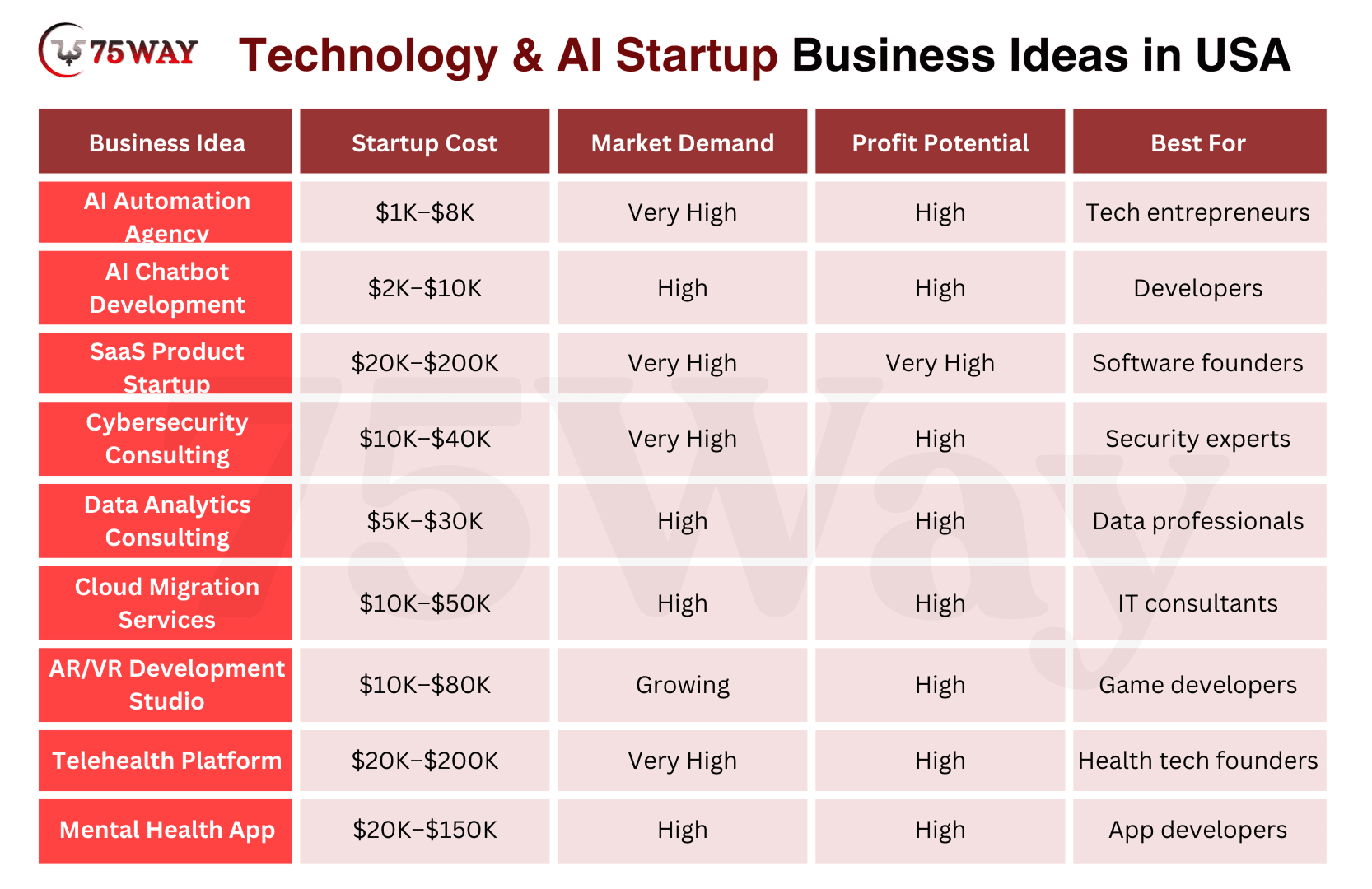
Technology & AI Startup Business Ideas in USA
1. AI Automation Agency
AI automation agencies help businesses streamline repetitive tasks, reduce operational costs, and increase efficiency using machine learning, AI-powered tools, AI assistants, and AI copilots, enabling companies to scale faster and focus on strategic initiatives.
Startup Cost: $1K–$8K
2. AI Chatbot Development
AI chatbot development focuses on creating intelligent conversational tools that enhance customer support, lead generation, and user engagement across websites, apps, and social media platforms for businesses of all sizes.
Startup Cost: $2K–$10K
3. SaaS Product Startup
SaaS startups build subscription-based cloud software solutions that solve specific business challenges, generate recurring revenue, and provide scalable value to organizations across industries, including CRM, productivity, and project management platforms.
Startup Cost: $20K–$200K
4. Cybersecurity Consulting
Cybersecurity consulting firms protect organizations from cyber threats, data breaches, and digital attacks by offering risk assessments, audits, and customized security strategies to safeguard sensitive information and maintain business continuity.
Startup Cost: $10K–$40K
5. Data Analytics Consulting
Data analytics consulting helps companies collect, analyze, and interpret large datasets to improve decision-making, optimize operations, enhance marketing strategies, and increase profitability using advanced analytics tools and insights.
Startup Cost: $5K–$30K
6. Cloud Migration Services
Cloud migration startups assist businesses in moving IT infrastructure, applications, and data to cloud environments, improving scalability, cost-efficiency, security, and enabling seamless access to cloud-based resources.
Startup Cost: $10K–$50K
7. AR/VR Development Studio
AR/VR development studios create immersive augmented and virtual reality experiences for gaming, education, training, marketing, and simulation, helping brands and businesses engage customers with interactive, next-generation technology solutions.
Startup Cost: $10K–$80K
8. Telehealth Platform
Telehealth platforms and telemedicine apps provide remote medical consultations, appointment scheduling, and healthcare management through digital tools, increasing access to quality healthcare while reducing costs and improving patient experience.
Startup Cost: $20K–$200K
9. Mental Health App
Mental health and therapy apps offer digital therapy, meditation, stress management, and emotional wellness tools to individuals and organizations, helping improve mental health outcomes and accessibility to professional support.
Startup Cost: $20K–$150K
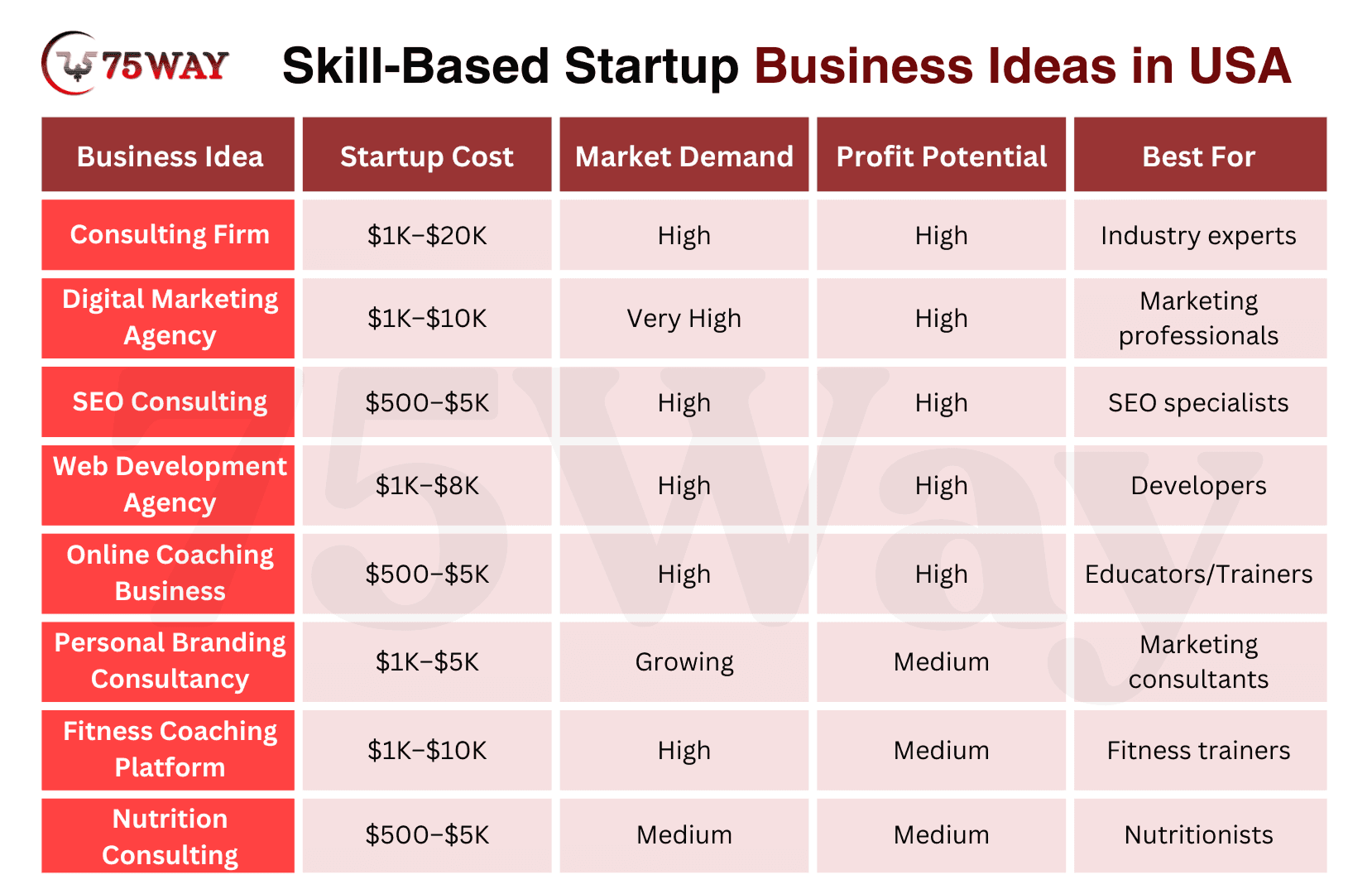
Skill-Based Startup Business Ideas in USA
10. Consulting Firm
Consulting firms help businesses optimize operations, improve strategy, and solve complex problems. They provide expert advice in areas like finance, marketing, or management. Entrepreneurs with industry experience can guide organizations toward efficiency and growth. Consulting is highly flexible, scalable, and profitable for professionals who want to leverage their expertise.
Startup Cost: $1K–$20K
11. Digital Marketing Agency
Digital marketing agencies assist businesses in building online presence, increasing visibility, generating leads, and driving sales. Services include social media marketing, SEO, Louisville PPC services, PPC campaigns, and content creation. This startup suits marketing experts aiming to help brands grow digitally while building a recurring revenue model with flexible service offerings.
Startup Cost: $1K–$10K
12. SEO Consulting
These businesses help companies improve organic search rankings, drive targeted traffic, and enhance online visibility. By auditing websites, optimizing content, and implementing backlink strategies, consultants can significantly impact client performance. Ideal for professionals with digital marketing expertise who want scalable, high-demand services in a competitive online market.
Startup Cost: $500–$5K
13. Web Development Agency
Web development agencies design and build responsive websites and web applications for businesses, enhancing user experience and brand identity. Services include UI/UX design, coding, and website maintenance. This business is suitable for skilled developers or tech teams aiming to provide essential digital solutions in a high-demand market.
Startup Cost: $1K–$8K
14. Online Coaching Business
Online coaching businesses provide personalized training and guidance in areas like career, entrepreneurship, fitness, or skills development. Using virtual platforms, coaches can reach clients globally, scale programs, and create subscription models. This business suits experienced professionals passionate about teaching and helping others achieve measurable growth and success.
Startup Cost: $500–$5K
15. Personal Branding Consultancy
Personal branding consultancies help individuals build strong online identities, increase visibility, and enhance professional reputation. Services include social media strategy, content creation, and personal marketing. Entrepreneurs with marketing or communications expertise can monetize their skills while assisting professionals, influencers, and executives in achieving authority and recognition in their industries.
Startup Cost: $1K–$5K
16. Fitness Coaching Platform
Fitness coaching platforms offer remote or hybrid workout programs, nutrition guidance, and personalized fitness plans. Trainers can scale services with AI-powered fitness apps to multiple clients online while improving engagement through apps or video sessions. This business is perfect for certified fitness experts seeking flexibility, recurring revenue, and high-demand health-focused clientele.
Startup Cost: $1K–$10K
17. Nutrition Consulting
Nutrition consulting businesses provide personalized meal plans, dietary advice, and wellness coaching to individuals or organizations. Consultants help clients achieve health goals, manage weight, or improve lifestyles. This startup suits certified nutritionists or dieticians who want to offer professional guidance in a growing wellness-focused market. They can launch nutrition apps to enhance online visibility across the globe.
Startup Cost: $500–$5K
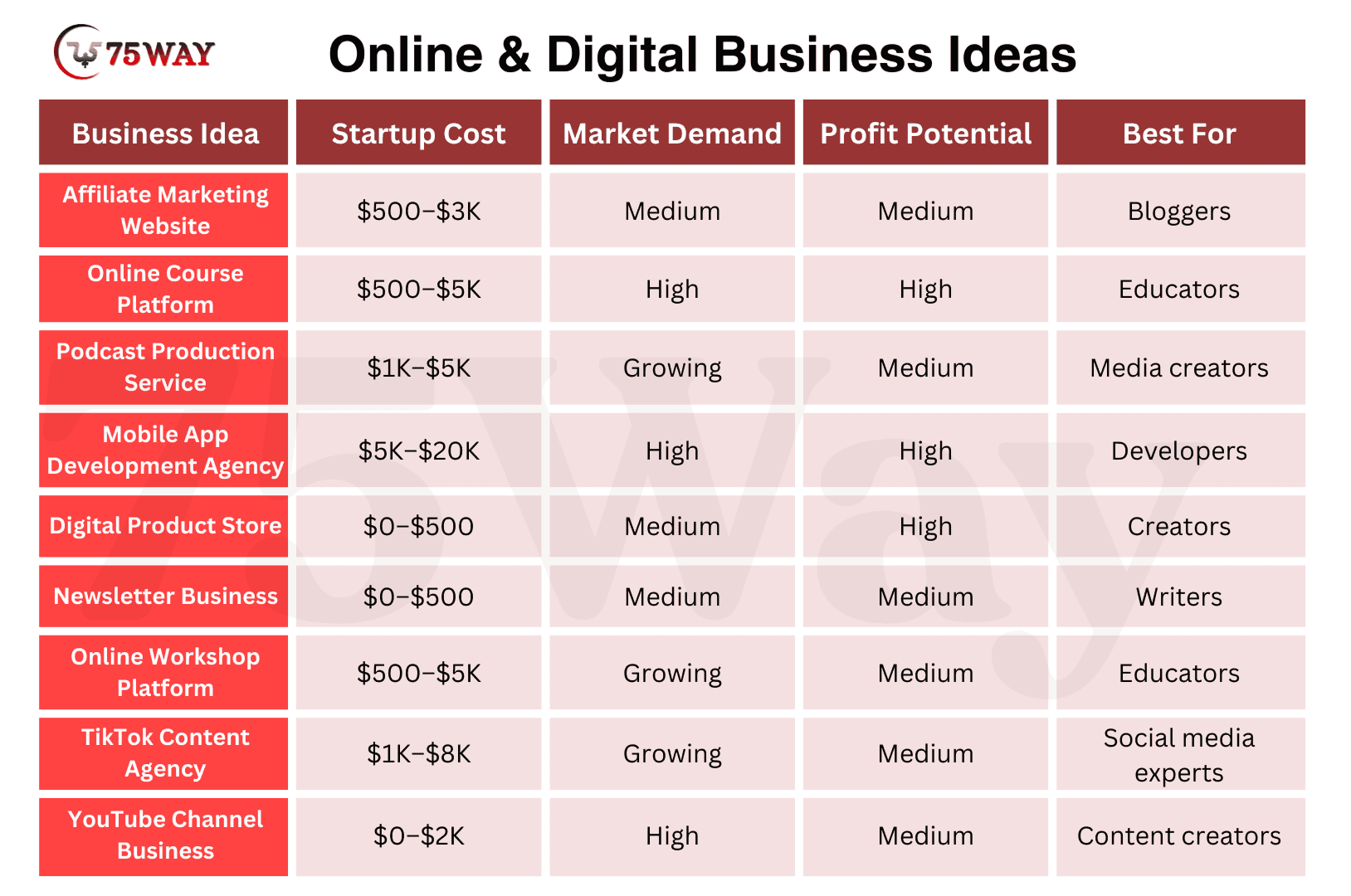
Online & Digital Business Ideas
18. Affiliate Marketing Website
Affiliate marketing websites earn revenue by promoting other companies’ products and earning commissions on sales. Entrepreneurs create niche-focused content, build traffic through SEO or social media, and recommend relevant products to audiences. This business suits marketers and content creators seeking low-cost, scalable online income streams.
Startup Cost: $500–$3K
19. Online Course Platform
Online course platforms allow educators and experts to create, host, and sell courses on various subjects. Courses can include video lessons, quizzes, and assignments, reaching global students. Ideal for professionals with specialized knowledge who want to monetize expertise and build recurring revenue through digital education.
Startup Cost: $500–$5K
20. Podcast Production Service
Podcast production services support individuals or businesses in creating, editing, and publishing professional podcasts. Services include audio editing, script development, and distribution. This business is perfect for media-savvy entrepreneurs or audio specialists helping clients leverage podcasts for branding and audience engagement.
Startup Cost: $1K–$5K
21. Mobile App Development Agency
Mobile app development companies design, develop, and maintain apps for iOS and Android devices. Services include UI/UX design, coding, and post-launch support. This business suits developers or teams skilled in mobile technology, targeting clients who want custom, scalable mobile solutions.
Startup Cost: $5K–$20K
22. Digital Product Store
Digital product stores sell downloadable products such as templates, software, graphics, or ebooks. Entrepreneurs can reach global audiences without inventory costs. Ideal for creative professionals or developers looking to monetize digital assets with minimal overhead and scalable revenue.
Startup Cost: $0–$500
23. Newsletter Business
Newsletter businesses provide curated content or insights to subscribers via email, often monetized through subscriptions, sponsorships, or affiliate partnerships. This business suits writers or niche experts aiming to engage an audience and generate recurring revenue online.
Startup Cost: $0–$500
24. Online Workshop Platform
Online workshop platforms host interactive sessions, classes, or training events. Entrepreneurs can deliver educational experiences, webinars, or skill-based workshops globally. This business suits educators, trainers, and professionals looking to scale knowledge-sharing initiatives and monetize expertise.
Startup Cost: $500–$5K
25. TikTok Content Agency
TikTok content agencies help brands create short, viral videos, manage campaigns, and grow social media presence. With TikTok’s rapidly growing user base, this business targets marketers and influencers seeking engagement and visibility across platforms.
Startup Cost: $1K–$8K
26. YouTube Channel Business
YouTube channel businesses produce video content for entertainment, education, or niche topics. Revenue comes from ads, sponsorships, and affiliate marketing. This business suits content creators aiming to build a digital brand and reach global audiences through engaging, monetizable videos.
Startup Cost: $0–$2K
Service-Based Business Ideas
27. Virtual Assistant Agency
Virtual assistant agencies provide remote administrative, marketing, and operational support to businesses. Services include email management, scheduling, and social media management. This business suits organized professionals who want a low-cost, scalable venture while helping clients improve productivity and efficiency without hiring in-house staff.
Startup Cost: $500–$3K
28. Mobile Car Detailing
Mobile car detailing businesses offer on-site cleaning and detailing services for vehicles, providing convenience to customers at their location. This business is ideal for entrepreneurs passionate about automotive care and seeking a high-demand, flexible, and low-investment service startup.
Startup Cost: $2K–$10K
29. Pet Sitting Business
Pet sitting businesses provide care, feeding, walking, and companionship for pets while owners are away. This startup suits animal lovers seeking a flexible, low-investment service with consistent demand from busy pet owners and households.
Startup Cost: $500–$5K
30. Home Cleaning Service
Home cleaning services offer residential or commercial cleaning, organization, and maintenance. Entrepreneurs can scale by hiring additional staff or offering specialized services such as eco-friendly cleaning. This business is perfect for individuals seeking consistent demand and steady income.
Startup Cost: $2K–$10K
31. Property Management
Property management businesses oversee rental properties, including tenant management, maintenance, and rent collection. This startup suits real estate professionals or entrepreneurs aiming to earn recurring income while leveraging organizational and communication skills in a growing housing market.
Startup Cost: $5K–$25K
32. Influencer Marketing Agency
Influencer marketing agencies connect brands with social media influencers, designing campaigns to increase visibility, engagement, and sales. This business is ideal for marketing professionals or social media experts seeking to capitalize on the booming digital influencer economy.
Startup Cost: $2K–$10K

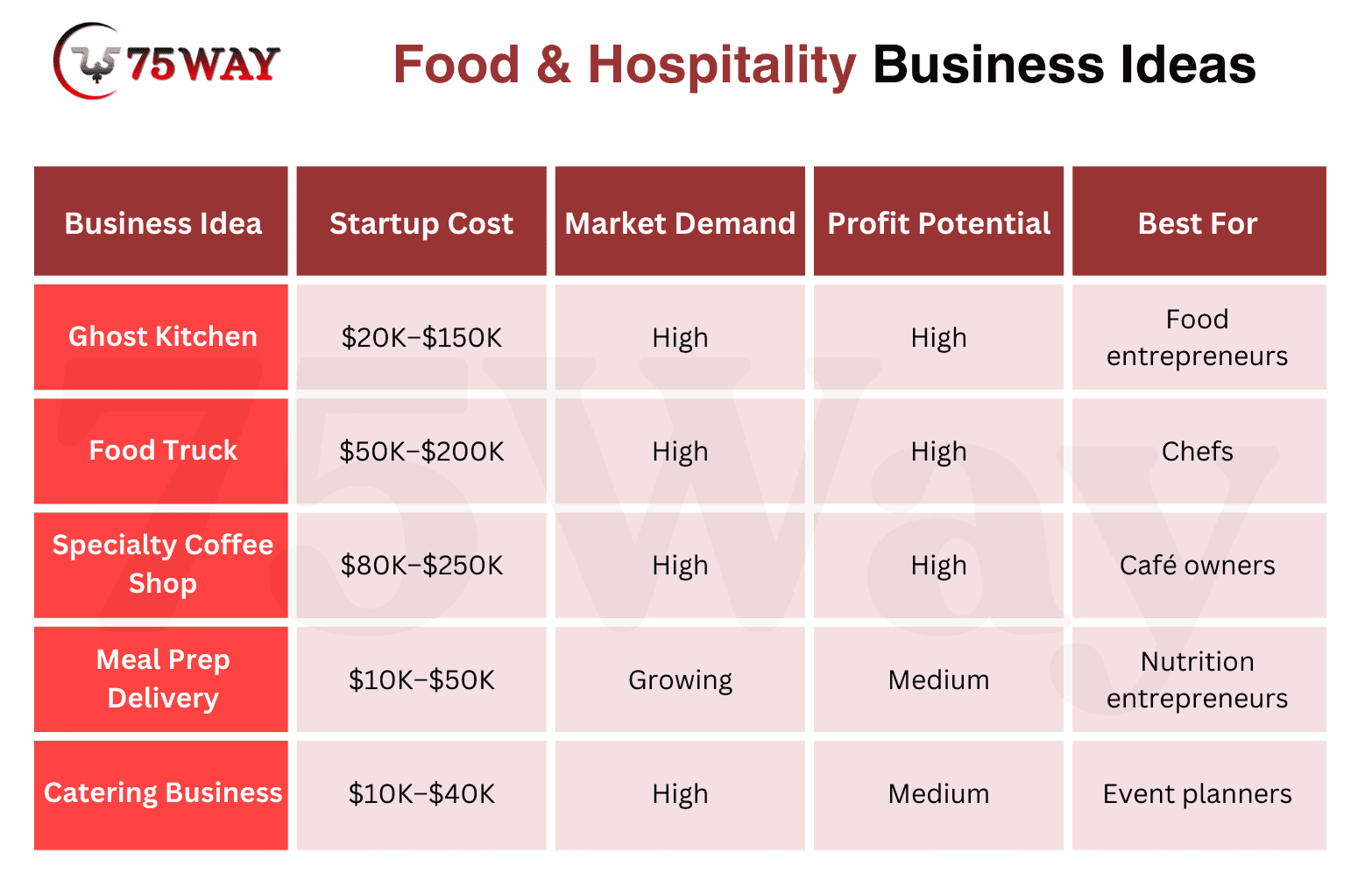
Food & Hospitality Business Ideas
34. Ghost Kitchen
Ghost kitchens operate delivery-only restaurants without dine-in facilities, focusing on online orders through apps and platforms. They reduce overhead costs while reaching a wide audience. This model suits chefs or entrepreneurs looking to start a food business efficiently with scalable growth potential.
Startup Cost: $20K–$150K
35. Food Truck
Food trucks offer mobile culinary experiences, serving niche or popular cuisines at different locations and events. This flexible startup allows entrepreneurs to test markets and build a loyal customer base without the high costs of a traditional restaurant.
Startup Cost: $50K–$200K
36. Specialty Coffee Shop
Specialty coffee shops provide premium beverages, unique experiences, and cozy environments for customers. This business appeals to coffee enthusiasts and entrepreneurs seeking a profitable venture with opportunities for branding, community engagement, and repeat clientele.
Startup Cost: $80K–$250K
37. Meal Prep Delivery
Meal prep delivery services provide ready-to-eat, healthy meals for busy individuals or families. Entrepreneurs can create niche-focused menus, subscription models, and online ordering systems to meet growing demand for convenient, nutritious food options.
Startup Cost: $10K–$50K
38. Catering Business
Catering businesses serve food for events, parties, corporate functions, and weddings. This startup is ideal for chefs or food entrepreneurs aiming to generate high-margin revenue through customized menus and scalable event services.
Startup Cost: $10K–$40K
Green & Sustainable Business Ideas
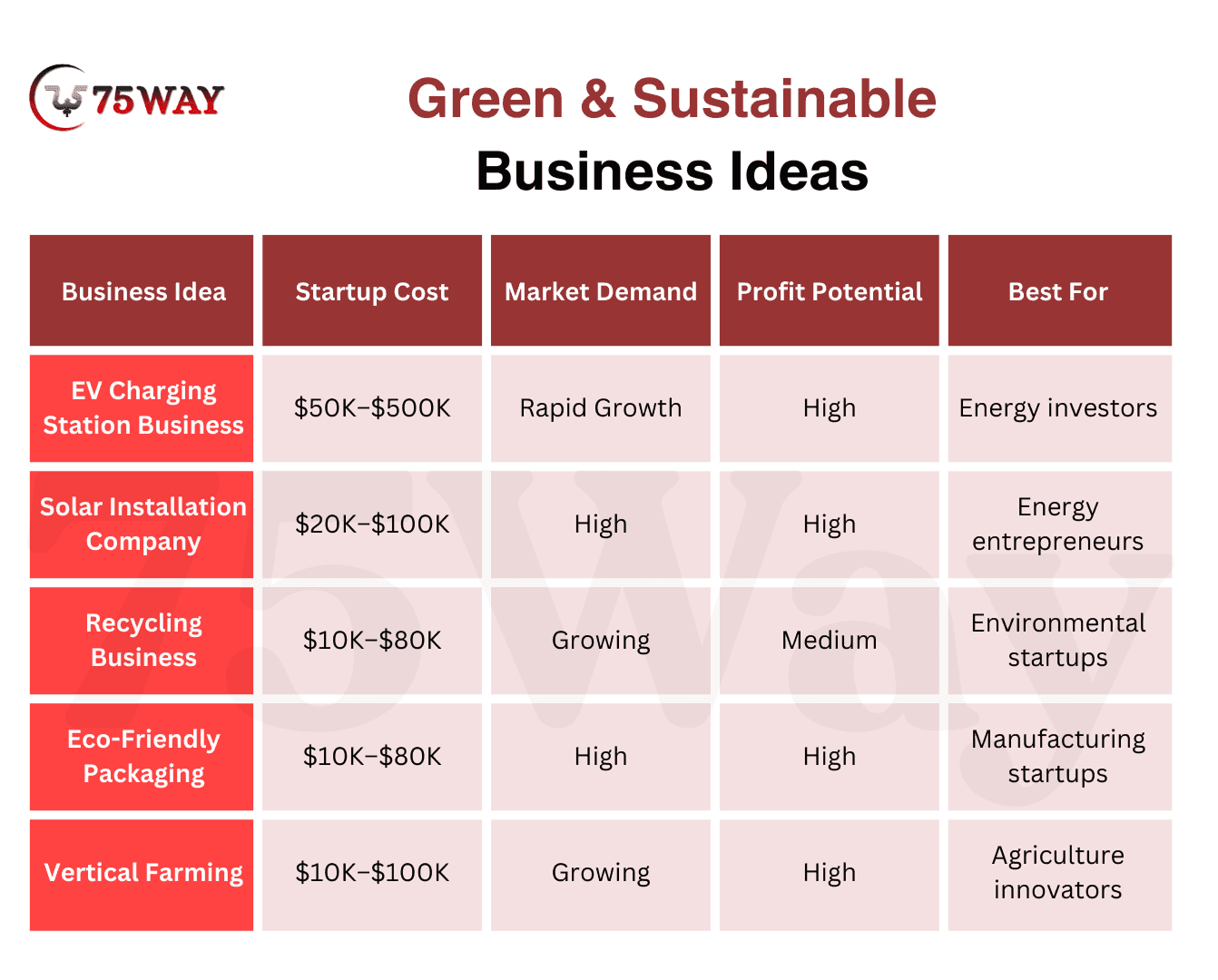
39. EV Charging Station Business
EV charging station businesses provide infrastructure for electric vehicles, supporting the growing adoption of clean transportation. Entrepreneurs can set up charging networks in high-traffic areas, commercial spaces, and highways. This startup benefits from government incentives and increasing EV demand, offering recurring revenue and contributing to sustainable mobility solutions.
Startup Cost: $50K–$500K
40. Solar Installation Company
Solar installation companies design, install, and maintain solar energy systems for homes, businesses, and public facilities. With renewable energy demand rising, this startup offers opportunities for recurring service contracts, government incentives, and environmental impact while helping clients reduce energy costs and carbon footprints.
Startup Cost: $20K–$100K
41. Recycling Business
Recycling businesses collect, sort, and process waste materials to create reusable products or raw materials. Entrepreneurs can focus on plastics, metals, electronics, or paper. This sustainable venture meets growing environmental regulations, reduces landfill waste, and appeals to eco-conscious consumers and organizations.
Startup Cost: $10K–$80K
42. Eco-Friendly Packaging
Eco-friendly packaging businesses provide sustainable alternatives to traditional packaging, using biodegradable, compostable, or recyclable materials. This startup targets manufacturers, retailers, and e-commerce companies, aiming to reduce environmental impact and appeal to environmentally conscious consumers.
Startup Cost: $10K–$80K
43. Vertical Farming
Vertical farming businesses grow crops in vertically stacked layers using controlled environments, reducing land usage and water consumption. Entrepreneurs can supply fresh produce locally, improve food security, and meet growing urban demand for healthy, sustainable food solutions.
Startup Cost: $10K–$100K
Ecommerce Startup Business Ideas
44. Dropshipping Store
Dropshipping stores sell products online without holding inventory. Entrepreneurs partner with suppliers who ship directly to customers, reducing overhead costs. This business allows testing multiple niches, scaling quickly, and targeting global markets. Ideal for beginners seeking low-investment ecommerce opportunities with flexible operations and profit potential.
Startup Cost: $500–$5K
45. Print-on-Demand Store
Print-on-demand stores sell customized merchandise like t-shirts, mugs, and phone cases without inventory. Products are created only when orders are placed, minimizing upfront costs. Entrepreneurs can leverage creative designs, social media marketing, and global platforms to generate revenue from a scalable, low-risk business model.
Startup Cost: $500–$3K
46. Subscription Box
BusinessSubscription box businesses deliver curated products regularly to customers, creating predictable recurring revenue. Boxes can focus on niches like wellness, food, beauty, or hobbies. This model appeals to entrepreneurs seeking customer loyalty, personalized experiences, and scalable ecommerce opportunities with high engagement.
Startup Cost: $2K–$10K
47. Niche Ecommerce Brand
Niche ecommerce brands focus on specialized products targeting a specific audience. Entrepreneurs can differentiate with unique offerings, marketing, and branding. This approach allows higher margins, loyal customers, and a competitive edge in saturated online marketplaces.
Startup Cost: $1K–$10K
48. Handmade Product Store
Handmade product stores sell artisanal items like jewelry, crafts, or home décor. Entrepreneurs can reach global audiences via online platforms, emphasizing quality, uniqueness, and craftsmanship. This business is perfect for creative individuals aiming to monetize skills and create a personalized brand.
Startup Cost: $500–$5K

Emerging & Trendy Business Ideas
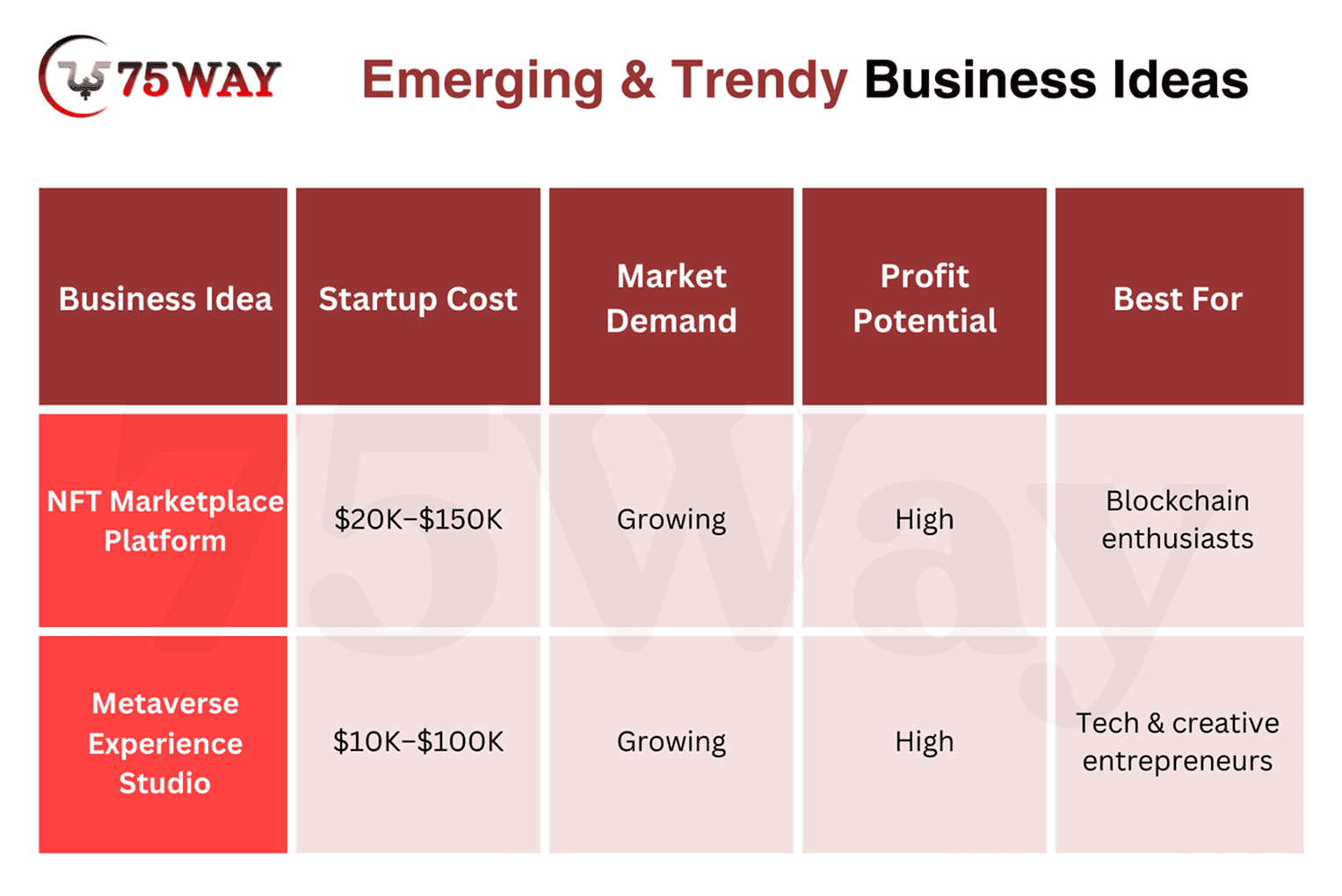
49. NFT Marketplace Platform
NFT marketplace platforms allow users to create, buy, and sell digital assets like art, collectibles, and music on blockchain networks. Entrepreneurs can generate revenue through transaction fees, minting, and premium features. This business suits tech-savvy founders leveraging the growing demand for digital ownership and decentralized marketplaces.
Startup Cost: $20K–$200K
50. Metaverse Experience Studio
Metaverse experience studios design immersive virtual environments, games, and social experiences using AR/VR and 3D technologies. Businesses can create branded metaverse spaces, entertainment, or training simulations. Ideal for creative tech entrepreneurs aiming to capitalize on the rapidly expanding digital interaction economy.
Startup Cost: $30K–$250K
Read More: AI Automation vs AI Agents: A Complete Guide
How to Choose the Right Startup Idea Before Launching?
The selection of a precise startup idea is critical to ensure long-term success. Not every idea will thrive, so it’s important to analyze key factors before investing time and resources. Here’s what smart entrepreneurs consider when evaluating potential business opportunities:
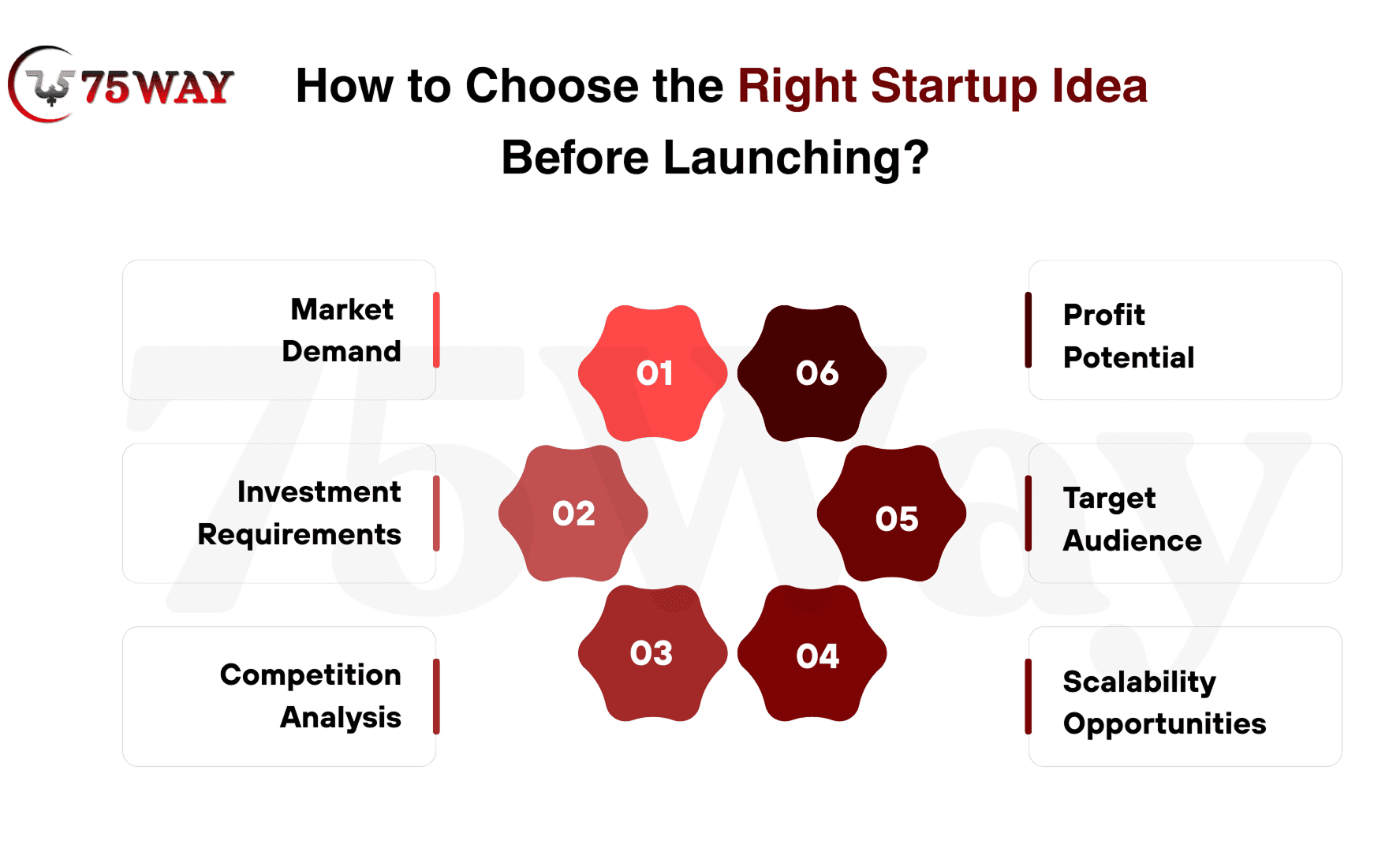
Market Demand: A great startup solves real problems for a large or growing audience. Evaluate whether people genuinely need your product or service, and consider trends, search volumes, and customer pain points. High demand ensures your business has a ready market, increasing the chance of early adoption and sustainable growth.
Investment Requirements: Startup costs vary widely depending on industry, technology, and operational needs. Awareness of expenses for infrastructure, staffing, marketing, and inventory ensures financial planning aligns with available resources. Adequate funding contributes to smoother operations, reduces early-stage risk, and supports strategic growth over time.
Competition Analysis: A clear understanding of existing players helps uncover market gaps and differentiation opportunities. Analysis of competitors’ products, pricing, and customer experiences provides insight into what works and what doesn’t. Unique positioning and value propositions emerge from recognizing these patterns, making it easier to attract and retain customers.
Profit Potential: Revenue generation and sustainability are vital for long-term success. Evaluation of pricing strategies, recurring revenue opportunities, and cost structure indicates whether the business can remain profitable while expanding. Solid profit potential not only strengthens growth prospects but also makes the startup more attractive to investors.
Target Audience: Well-defined customer profiles improve product-market fit and marketing efficiency. Knowledge of demographics, preferences, challenges, and purchasing behaviors ensures solutions address genuine needs. Focused targeting enhances engagement, builds trust with the audience, and increases conversion rates, creating loyal customers over time.
Scalability Opportunities: Growth potential determines the long-term impact of a business idea. Expansion into new markets, diversification of offerings, or adoption of automation technologies can significantly increase reach and revenue. Startups that scale effectively are better positioned for investor interest and sustained success across multiple regions or sectors.
Read Too: Dating App Development Cost in 2026: A Complete Guide
Step-by-Step Approach to Start a Business in the USA
Starting a business requires careful planning, research, and execution. Following structured steps can help entrepreneurs build a strong foundation, minimize risks, and maximize growth potential. The essential steps include:
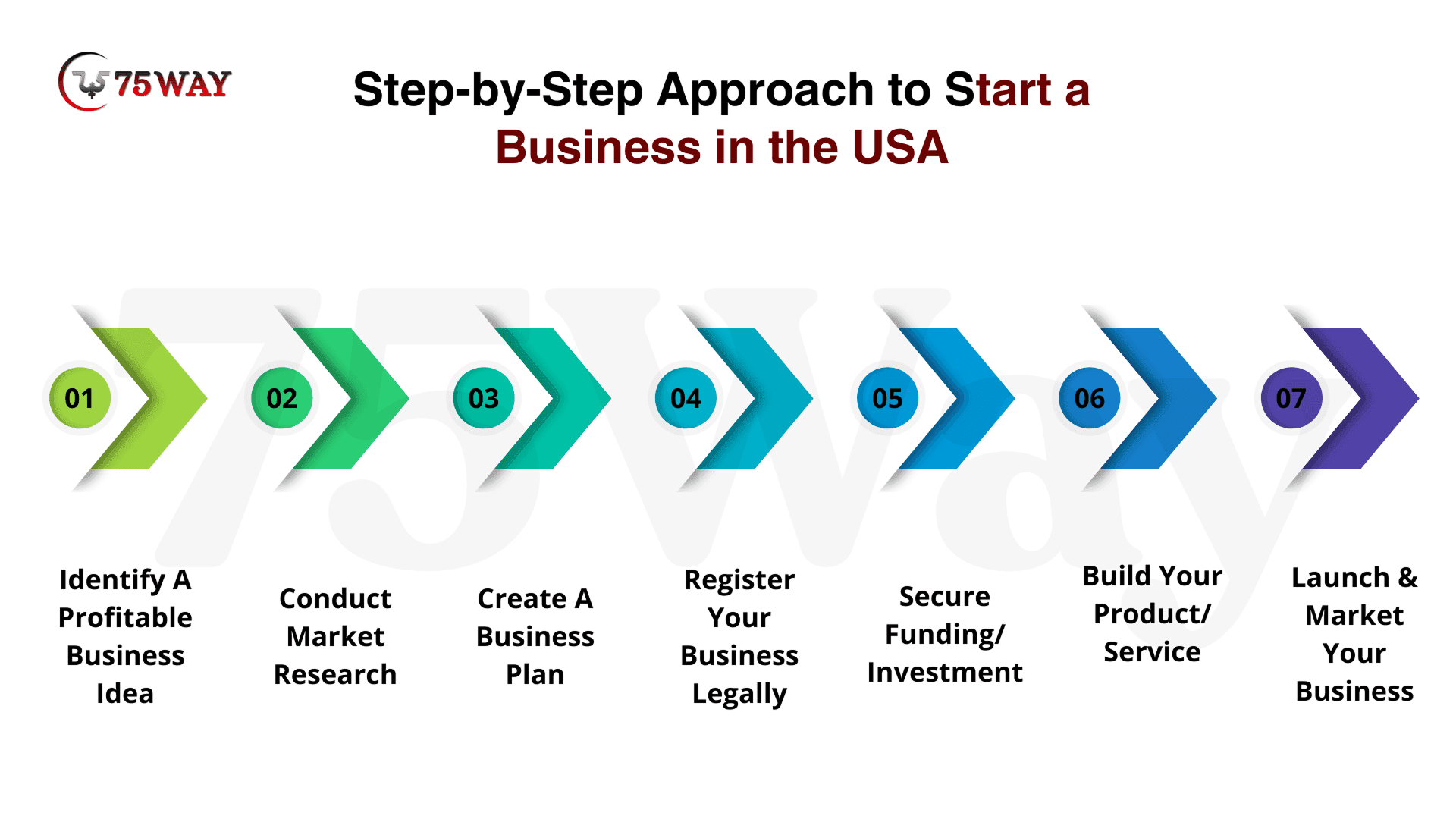
Identify A Profitable Business Idea
A profitable business idea solves real problems or meets an unmet need in the market. Emerging sectors such as AI, e-commerce, digital services, and sustainable products present opportunities for growth. Entrepreneurs can explore personal strengths, industry experience, and market gaps to generate viable concepts. Small experiments, such as pre-selling products or collecting survey feedback, can validate ideas before full-scale investment.
Evaluating potential profitability involves analyzing market trends, target audience demand, and scalability. Consider whether the business can generate recurring revenue or capitalize on growing niches. Observing competitors, reviewing industry reports, and monitoring social media trends helps refine ideas. A well-researched, profitable concept increases investor confidence and lays the foundation for a successful, sustainable startup journey.
Conduct Market Research
Market research provides a clear understanding of customer needs, behaviors, and expectations. Using tools like Google Trends, Statista, and social media analytics can uncover patterns and emerging demands. In-depth research also identifies competitors’ strengths and weaknesses, helping entrepreneurs position their offerings strategically in crowded markets and address gaps that others may overlook.
Local market factors, regulations, and industry-specific trends also influence feasibility. Collecting data through surveys, focus groups, and online polls gives actionable insights to refine products or services. Accurate research ensures marketing campaigns target the right audience, messaging resonates effectively, and the startup is prepared to meet real-world demands.
Create A Business Plan
A business plan acts as a roadmap for the startup, outlining objectives, strategies, financial projections, and operational workflows. It communicates the business vision to investors, partners, and team members, while providing clarity for internal decision-making. Many founders in the USA follow an SBA business plan format, which is widely accepted by lenders and investors and provides a clear structure for outlining goals, financials, and growth strategies. A thorough plan includes contingency strategies to handle risks such as cash flow shortages or market fluctuations.
Financial planning within the business plan defines budgets for staffing, marketing, and operations. Setting measurable goals allows tracking progress and adjusting strategies when necessary. A robust plan demonstrates professionalism, builds credibility, and ensures the entrepreneur is prepared to navigate challenges while scaling the business efficiently.
Register Your Business Legally
Legal registration establishes the business as a recognized entity, protecting personal assets and intellectual property. Entrepreneurs must choose the right structure, LLC, corporation, or sole proprietorship, based on liability, taxation, and growth plans. Securing required permits and licenses ensures compliance with federal, state, and local regulations. If opting for an LLC, you’ll need to follow general legal requirements as well as state-specific rules where you register. For example, when starting an LLC in California, you must comply with regulations set by state authorities along with other applicable legal obligations.
Proper legal registration also increases credibility with investors, customers, and partners. Obtaining an Employer Identification Number (EIN) and adhering to tax requirements streamlines operations. Early attention to legal details avoids fines, delays, or operational disruptions, creating a strong foundation for sustainable business growth.
Secure Funding/Investment
Access to capital allows businesses to hire staff, develop products, and execute marketing strategies effectively. Entrepreneurs can explore options such as personal savings, bank loans, angel investors, venture capital, or government grants. A clear financial plan and pitch increase the chances of securing investors or lenders.
You must evaluate funding needs, which involves calculating startup costs, operating expenses, and growth projections. Proper allocation ensures resources are efficiently used to achieve milestones. Adequate funding reduces operational risks, accelerates scaling, and enables the business to adapt to unexpected challenges without compromising quality or customer experience.
Build Your Product/Service
Product or service development involves designing, prototyping, testing, and refining solutions to meet customer expectations. Early-stage feedback from pilot users or beta testers helps identify improvements and ensures market readiness. This process reduces risks, enhances quality, and strengthens the value proposition.
Consistency in quality, functionality, and usability builds brand trust and competitive advantage. Iterative improvements and feature updates based on customer insights increase satisfaction and retention. A well-built product or service positions the startup for growth, repeat business, and positive referrals in the market.
Launch & Market Your Business
Launching effectively requires a coordinated marketing strategy across channels such as social media, email campaigns, PR, and partnerships. Clear communication of value propositions, offers, and benefits attracts early customers and builds initial traction. Monitoring engagement metrics allows entrepreneurs to adjust messaging and campaigns for maximum impact.
Post-launch, consistent engagement with customers through feedback, promotions, and loyalty programs strengthens relationships and enhances brand reputation. Iterative improvements, content marketing, and customer-centric approaches maintain momentum and drive long-term growth, ensuring the startup can scale sustainably and generate recurring revenue.
Read Also: Top 10 IoT Development Companies in USA
Final Thoughts
Starting a successful business requires a combination of the right idea, thorough research, strategic planning, and effective execution. The Top 50 startup ideas listed in this guide provide inspiration across multiple industries, from AI and technology to healthcare, ecommerce, and sustainable ventures. Careful evaluation of market demand, investment needs, and target audience ensures that your business is built on a strong foundation and ready for long-term growth.
Every idea has the potential to transform into a profitable, scalable business with the right approach. Leveraging expert guidance, advanced digital solutions, and cutting-edge technology can accelerate your journey from concept to launch. For entrepreneurs looking to turn ideas into reality efficiently, 75way Technologies offers tailored digital solutions, development expertise, and end-to-end support to bring your startup vision to life.
Frequently Asked Questions (FAQ)
What Is The Most Profitable Startup Business In The USA?
Technology startups, SaaS platforms, AI services, and digital marketing agencies are among the most profitable startup models. These businesses benefit from high demand, scalable operations, and recurring revenue streams, making them attractive for both founders and investors.
What Business Can I Start With $5,000?
Some of the best options include SEO consulting, dropshipping, online coaching, and digital marketing services. These businesses require minimal upfront investment, have low overhead costs, and allow rapid scaling through digital platforms and online marketing strategies.
Which Industries Are Growing Fastest In The USA?
Artificial intelligence, clean energy, healthcare technology, and ecommerce are among the fastest-growing industries. These sectors are driven by innovation, high consumer demand, and favorable investment conditions, providing significant opportunities for new startups.
How Can I Validate My Startup Idea Before Launching?
Validating a startup idea involves conducting surveys, analyzing competitors, testing with a small audience, and using platforms like social media or landing pages. Feedback from early users ensures market fit, reduces risk, and guides product refinement before full-scale launch.
What Are The Key Challenges For New Startups In The USA?
New startups often face challenges like funding limitations, intense competition, marketing strategy development, and regulatory compliance. Effective planning, proper research, and leveraging digital solutions can help overcome these obstacles and ensure sustainable growth.
How Long Does It Take To Start A Profitable Startup?
The timeline varies by industry, business model, and resources. While some digital services or consulting startups can become profitable within months, product-based or tech startups may take 12–24 months to reach steady revenue, depending on market adoption and investment scale.