Summary
Manufacturing operations depend on reliable technology systems, secure data management, and continuous production uptime. Managed IT services provide dedicated monitoring, infrastructure support, cybersecurity protection, and scalable technology resources. Businesses gain stable systems, reduced operational disruption, stronger data security, and better visibility across production processes.
Key Takeaways
- The global IT services market is expected to reach $3.2 trillion with steady growth.
- Managed IT services support manufacturing operations through monitoring, cybersecurity, integration, and data management.
- Stable technology infrastructure reduces operational interruptions across connected production environments.
- Real-time monitoring and analytics strengthen decision processes within manufacturing leadership teams.
- Scalable technology frameworks support long-term production growth and operational expansion.
Factory floors once depended mainly on machines and manual oversight. Modern manufacturing facilities operate through connected systems, data platforms, automated processes, and digital communication networks. Any disruption within these systems slows production, delays deliveries, and increases operational costs. Technology reliability now determines the stability of daily manufacturing operations.
Managed IT services introduce structured technology management across production environments. Dedicated teams monitor systems, secure operational data, maintain infrastructure, and maintain uninterrupted connectivity between digital platforms and industrial equipment. Manufacturing organizations can attain stronger operational control and predictable technology performance. The guide outlines essential concepts, operational advantages, and implementation processes that support manufacturing businesses adopting managed IT services.
What Are Managed IT Services in Manufacturing?
Managed IT services refer to outsourced technology management delivered by specialized IT professionals responsible for maintaining digital infrastructure, monitoring systems, protecting data, and supporting industrial technology platforms. Manufacturing organizations use these services to maintain production systems, protect operational networks, and maintain consistent technology performance.
Industrial environments rely on interconnected systems such as enterprise resource planning platforms, manufacturing execution systems, IoT sensors, data platforms, and operational networks. Managed IT service providers supervise these systems through proactive monitoring, infrastructure management, cybersecurity oversight, and performance optimization. Reliable technology management supports stable production workflows and protects valuable industrial data across connected manufacturing environments.
Why Businesses Should Invest In Managed IT Services?
The global IT services market is forecasted to expand to around $3,299.78 billion by 2033, registering a CAGR of 8.9% between 2026 and 2033. Not only this, North America is anticipated to maintain a leading position in the IT services market, capturing more than 35% of the global revenue share. Technology adoption across industrial sectors contributes strongly to this expansion as manufacturers rely increasingly on digital infrastructure to support production operations.

Cost Reduction: Unexpected system interruptions generate production delays, equipment downtime, and increased operational expenses. Managed IT services provide continuous monitoring and preventive maintenance that reduces the frequency of technical disruptions. Lower operational interruptions lead to stable production output and controlled technology spending.
Operational Efficiency: Production environments depend on integrated digital platforms and reliable network connectivity. These services maintain system stability across machines, software platforms, and data networks. Consistent infrastructure performance improves coordination between production departments and operational teams.
Competitive Advantage: Manufacturing organizations adopting modern IT infrastructure gain faster access to operational insights and improved production visibility. Managed IT services support advanced analytics platforms, automation technologies, and real-time monitoring systems. Strong technology capabilities help businesses maintain operational competitiveness in evolving industrial markets.
Risk Mitigation: Industrial networks handle sensitive production data, intellectual property, and operational information. Cybersecurity frameworks within managed IT services protect manufacturing systems from unauthorized access, cyber threats, and operational disruptions. Strong security oversight reduces financial and reputational risks.
Scalable Support: Production expansion introduces new systems, devices, and data platforms. Managed IT services provide scalable infrastructure support capable of accommodating operational growth. Technology frameworks adapt to changing production requirements without complex internal resource expansion.
Key Benefits Manufacturers Get From Managed IT Services
Modern manufacturing environments depend on interconnected machines, digital platforms, and operational software. Managed IT services introduce structured technology management that supports stable infrastructure, strong cybersecurity, and data-driven operations. A dedicated technology framework strengthens production systems, protects industrial data, and supports long-term business performance across manufacturing environments.
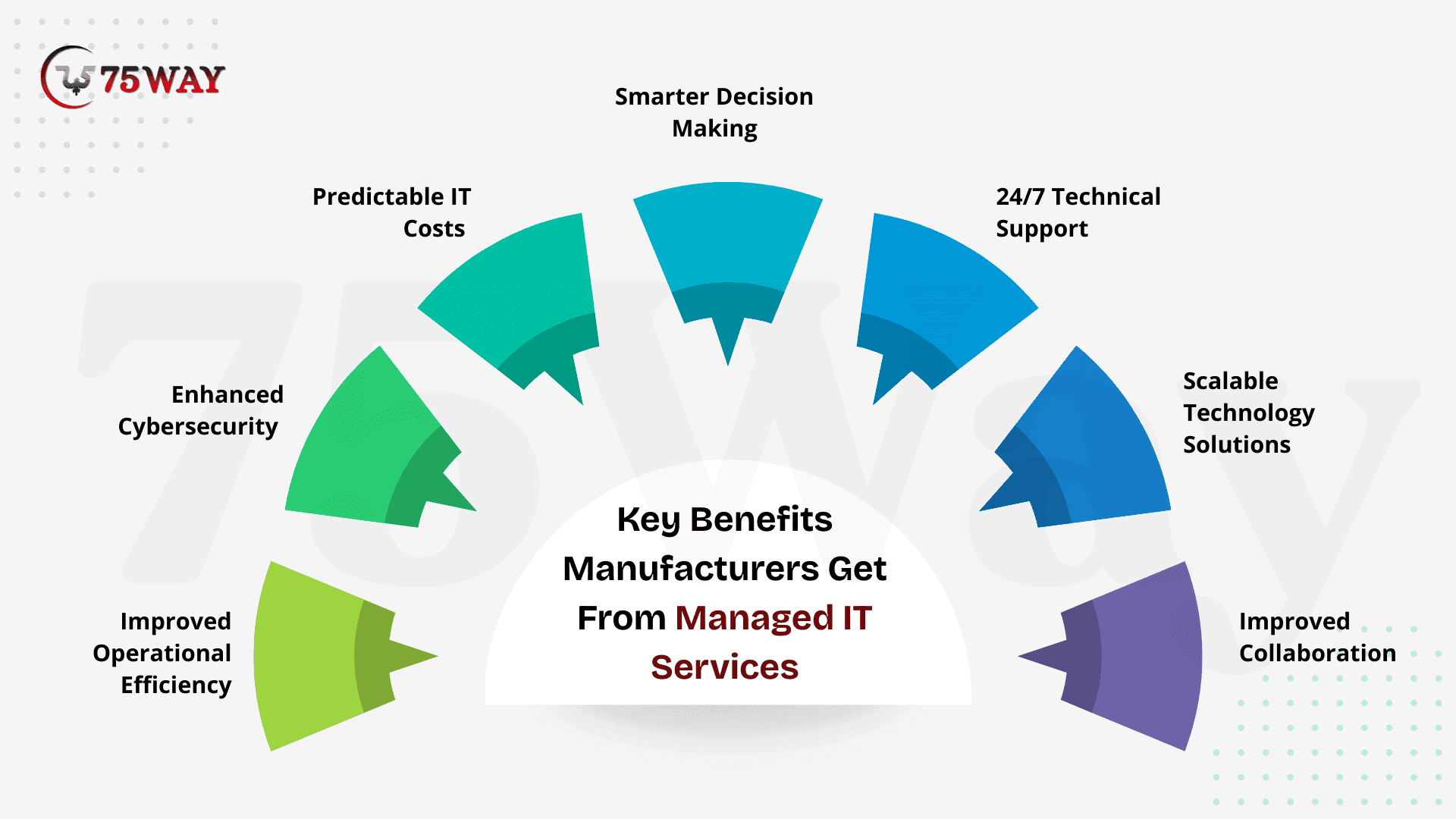
Improved Operational Efficiency: Manufacturing facilities operate through coordinated activity between machines, production software, and operational management platforms. These services support this connectivity through continuous monitoring of infrastructure, network systems, and operational platforms. Manufacturing teams gain confidence in digital systems that support daily production tasks, equipment coordination, and operational planning.
Enhanced Cybersecurity: Digital transformation within manufacturing environments introduces advanced capabilities, yet it also expands exposure to cyber threats. Industrial networks contain valuable operational information, product designs, and proprietary manufacturing processes. These services introduce structured cybersecurity protection across these digital systems. Manufacturing organizations benefit from stronger protection across production networks, operational platforms, and enterprise systems that store sensitive business information.
Predictable IT Costs: Technology systems within manufacturing facilities require regular maintenance, infrastructure updates, and technical oversight. Such situations complicate financial planning and create uncertainty within technology budgets. These services introduce structured service models that stabilize technology expenses. Service agreements define operational responsibilities and monthly management costs in advance.
Smarter Decision Making: Manufacturing environments generate a constant stream of operational data through machines, sensors, and enterprise platforms. Without proper organization, this data remains underutilized within daily operations. Managed IT services introduce centralized data management systems that organize and interpret operational information. Advanced data analytics platforms convert production data into actionable insights for business leaders.
24/7 Technical Support: Production facilities operate across extended production hours that depend on stable digital infrastructure. Technical interruptions during active operations influence production timelines and workforce productivity. Managed IT services maintain continuous monitoring and technical oversight, allowing specialists to respond quickly when system alerts appear.
Scalable Technology Solutions: Growing production capacity introduces additional machines, software platforms, and operational networks. Technology infrastructure must support expansion without creating instability across existing systems. Bluetally can also support structured IT asset tracking as new devices and systems are added. Managed IT services provide scalable environments that support new operational requirements as businesses expand production capabilities and digital operations.
Improved Collaboration: Production teams, supply chain partners, and management systems rely on shared operational information. Disconnected communication channels slow coordination across departments. Managed IT services maintain integrated collaboration platforms that allow teams to access shared data, supporting stronger coordination across production operations and business functions.
Use Cases Demonstrating Managed IT Services Impact
Modern manufacturing relies on connected machines, digital platforms, and operational data systems. Technology management across these environments supports stable production activity and operational visibility. Several real-world applications demonstrate the practical value of structured IT oversight across manufacturing environments, ranging from network stability and predictive maintenance to cybersecurity protection and business continuity.
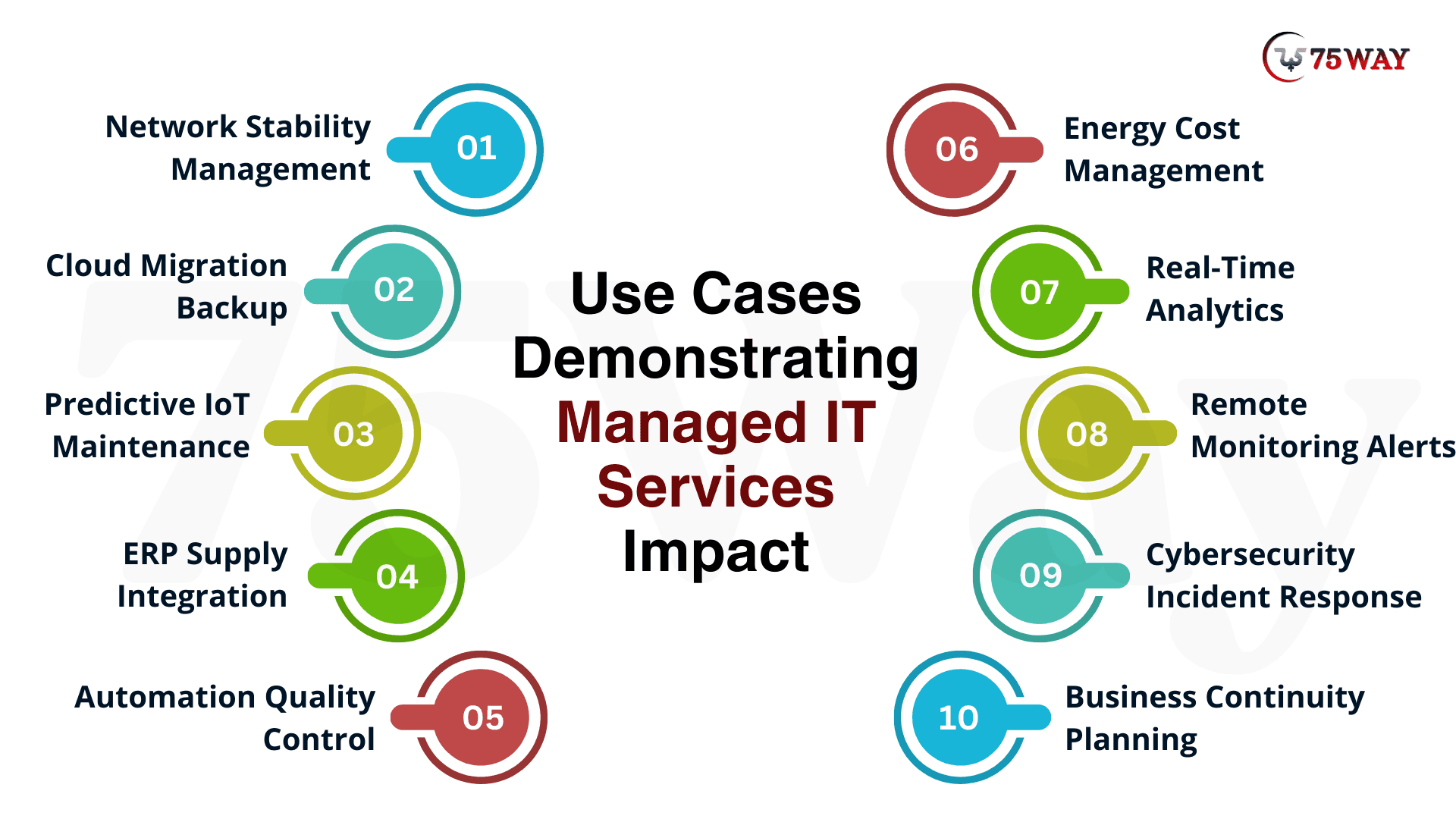
Network Stability Management
Industrial production depends on continuous communication between machines, control systems, and enterprise software platforms. Network supervision maintains stable connectivity across these systems. For example, a production facility with multiple automated assembly lines relies on uninterrupted network communication between machines and monitoring dashboards. Stable network oversight allows machines to exchange operational data consistently, preventing production interruptions caused by unstable connectivity.
Cloud Migration Backup
Digital infrastructure increasingly relies on cloud environments for storing production data and operational records. Secure backup frameworks protect information from hardware failures or accidental system issues. A manufacturing facility storing production schedules and inventory records in cloud platforms can retrieve data instantly after a system outage. Reliable backup infrastructure protects critical operational information and supports faster system recovery.
Predictive IoT Maintenance
IoT sensors collect performance data from machines across production floors. Continuous monitoring of temperature, vibration, and operational load helps identify equipment irregularities. For instance, vibration sensors installed on industrial motors can indicate unusual activity before mechanical failure occurs. Early detection allows maintenance teams to address equipment issues before they interrupt production schedules.
ERP Supply Integration
Enterprise resource planning or ERP platforms connect production planning, inventory data, procurement activities, and logistics coordination. Integrated data flow supports accurate operational visibility. Manufacturers can also manage IT inventory to keep track of hardware and software assets across their facilities. For example, production teams can monitor inventory levels and adjust manufacturing schedules instantly when supply levels change. Connected ERP systems support consistent coordination between production operations and supply chain activities. For smaller manufacturers looking to centralize these processes, MRPeasy’s integrated manufacturing software brings production planning, inventory, procurement, and sales management together in one system
Automation Quality Control
Digital inspection systems monitor product specifications and manufacturing standards during production cycles. Automated quality analysis evaluates product dimensions, material consistency, and assembly accuracy. A packaging production line using automated cameras can identify defective items during the manufacturing process. Early detection reduces product waste and maintains consistent product standards.
Energy Cost Management
Energy monitoring systems track electricity consumption across machines, production equipment, and facility infrastructure. AI-powered analytics insights highlight areas with excessive energy usage. For example, monitoring platforms may reveal that specific machines consume higher electricity during idle periods. Operational teams can adjust equipment usage patterns to reduce unnecessary energy expenses.
Real-Time Analytics
Operational dashboards present manufacturing data collected from machines, sensors, and production systems. Performance metrics become visible through centralized reporting platforms. A production supervisor reviewing real time dashboards can monitor output levels, equipment utilization, and operational delays during active production cycles. Immediate visibility supports faster decision-making within manufacturing operations.
Remote Monitoring Alerts
Digital monitoring platforms track system performance and generate automated alerts when unusual behavior appears within machines or networks. Notification systems allow technical teams to respond quickly to operational anomalies. For instance, temperature spikes detected within a production server room may trigger an alert, allowing maintenance teams to resolve cooling issues before equipment damage occurs.
Cybersecurity Incident Response
Industrial networks face constant exposure to digital threats due to connected production systems and enterprise platforms. Security monitoring tools analyze network traffic and identify suspicious activities. For example, unusual login attempts within production control systems may trigger security alerts. Immediate response protocols isolate affected systems and protect sensitive production data from unauthorized access.
Business Continuity Planning
Backup infrastructure and disaster recovery frameworks protect production environments during unexpected disruptions. Recovery systems restore operational platforms and data after equipment failures or natural incidents. A manufacturing facility experiencing server damage due to electrical failure can restore production data from backup systems. Operational recovery allows production activities to resume with minimal downtime.
Step-by-Step Plan To Implement Managed IT Services
A structured technology plan supports stable digital operations within modern production environments. Industrial networks, enterprise platforms, and operational systems function together across daily manufacturing activity. Careful implementation allows businesses to introduce managed IT services without interrupting production workflows or existing digital infrastructure.
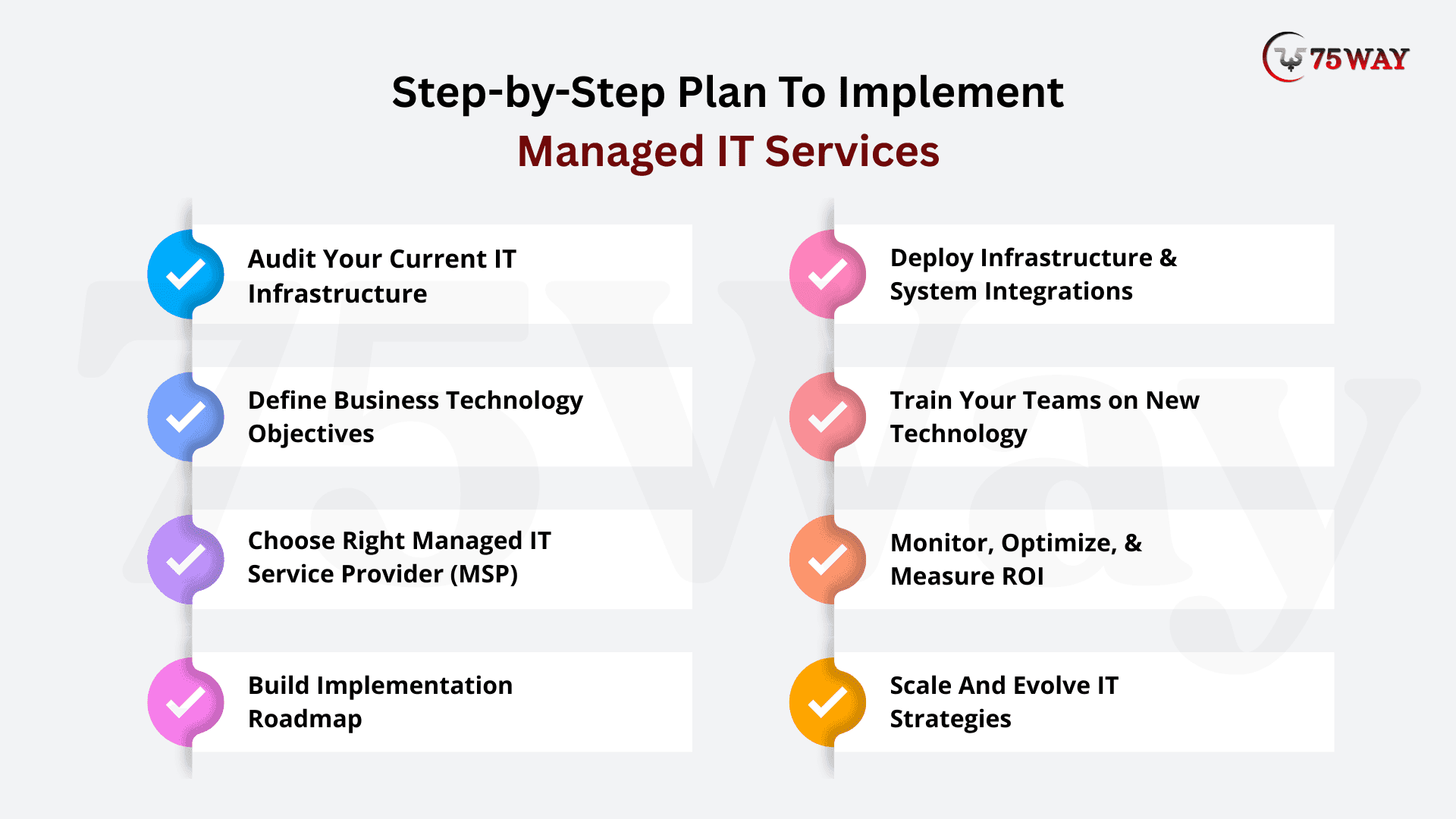
Audit Your Current IT Infrastructure
Implementation begins with a detailed evaluation of the existing technology environment. Production networks, servers, cybersecurity policies, and connected machines require thorough review. This initial assessment highlights infrastructure limitations, performance bottlenecks, and security gaps that may influence operational stability.
A structured audit provides the technical foundation for later planning decisions. Important areas typically reviewed include:
- Network architecture
- Server capacity
- Security controls
Insights gathered during this stage guide the next phase of technology planning and help establish realistic improvement priorities.
Define Business Technology Objectives
After reviewing the existing infrastructure, attention naturally moves toward defining the technology outcomes that matter most for your production environment. Leadership teams consider operational goals, production targets, and long-term growth plans when setting these objectives.
A well-defined technology vision gives direction to every following step. Your team gains a shared understanding of the role digital systems will play in improving production visibility, protecting operational data, and supporting future expansion. These priorities guide the search for the right service partner.
Choose The Right Managed IT Service Provider (MSP)
Once technology goals become clear, the next decision involves selecting a partner capable of supporting those ambitions. Experience with industrial environments becomes an important consideration during this stage. Production systems operate through complex networks that connect machines, enterprise software, and operational platforms. A partner with strong knowledge of these environments understands the importance of stable connectivity, system security, and reliable technical oversight.
Your team evaluates technical expertise, service reliability, and familiarity with production networks before making a final choice. Discussions often include service capabilities, monitoring practices, and response timelines for technical concerns. Transparency in communication and a structured service approach help build long-term trust between both teams. Key evaluation areas often include:
- Industry Experience: Deep familiarity with manufacturing environments, production systems, industrial networks, and operational technology challenges within modern digital factories.
- Technical Capabilities: Strong expertise across network management, cybersecurity frameworks, cloud platforms, infrastructure monitoring, and enterprise system integrations.
- Support Availability: Continuous technical assistance that addresses infrastructure issues quickly and maintains operational stability across production environments.
- Service Reliability: Consistent service delivery supported by defined response timelines, stable system monitoring practices, and dependable technical management.
Clear communication, well-defined service responsibilities, and proven operational knowledge strengthen confidence during the selection process. The right partnership allows leadership teams to focus on production goals, knowing that the digital infrastructure supporting those operations receives consistent technical attention.
Build Implementation Roadmap
After selecting a technology partner, planning moves toward developing a structured roadmap for implementation. This roadmap establishes the sequence in which digital systems, infrastructure upgrades, and monitoring platforms will be introduced across the production environment. Careful planning at this stage creates alignment between technology deployment and daily operational requirements.
The roadmap typically identifies key priorities such as network stabilization, cybersecurity frameworks, and data management systems. Each stage receives a defined timeline so that technology improvements occur in a controlled manner rather than appearing all at once. This approach supports continuity within production environments that depend on stable digital infrastructure.
A structured plan prevents sudden disruption within daily operations. Technology improvements appear gradually, allowing teams to adapt to new platforms without interrupting production schedules. Production managers, technical teams, and leadership remain informed about upcoming changes through clearly documented implementation phases.
Well-organised planning also supports better coordination between operational systems and enterprise platforms. When every stage of deployment follows a clear roadmap, infrastructure upgrades become easier to manage, and technology adoption progresses smoothly across the production environment.
Deploy Infrastructure & System Integrations
The next stage connects new technology platforms with the systems already running across your production environment. Operational software, machine data systems, and monitoring tools begin communicating within a unified digital network.
These integrations strengthen data visibility and improve coordination between operational platforms. As systems begin working together, your team gains better awareness of production performance and system activity across the entire facility.
- Production machines connect with monitoring systems for continuous operational performance visibility
- Enterprise software integrates with operational platforms, supporting centralized production data access
- Security frameworks activate across networks, protecting connected devices and digital systems
- Data platforms collect machine information supporting analytics and operational reporting
- Network infrastructure stabilizes communication between production equipment and enterprise applications
Train Your Teams on New Technology
Technology systems deliver meaningful results when your team understands how to use them in daily operations. Training programs introduce your employees to monitoring platforms, system alerts, and digital dashboards used across the production environment. Your staff learns the purpose of each system and the role it plays in supporting production activities. This familiarity helps your team recognize notifications, review operational data, and respond to routine technical situations with greater confidence.
Confidence grows as you and your workforce become comfortable interacting with these technology tools. Regular use of monitoring platforms and digital interfaces gradually makes these systems part of everyday routines. As your team gains experience, communication with technical support improves, and operational coordination becomes smoother. This understanding allows digital platforms to support your production activities in a practical and dependable manner across the entire facility.
Monitor, Optimize, & Measure ROI
After deployment and training, continuous observation of technology systems becomes an essential responsibility for your business. Monitoring platforms provide visibility into infrastructure performance, cybersecurity activity, and operational data generated across production systems. These insights help you understand whether digital platforms support daily operations as expected. You must consider:
- Infrastructure performance across networks, servers, and connected production systems
- Security alerts related to suspicious activity within operational technology environments
- Operational data generated from machines, sensors, and production platforms
Leadership teams review system reports to understand the business value delivered through the new digital framework. Performance insights allow you to recognize operational improvements and areas requiring further optimization. These observations guide future technology decisions and help your business strengthen digital infrastructure across the production environment.
Scale And Evolve IT Strategies
Insights gathered from continuous monitoring and performance evaluation naturally guide the next stage of technology growth. As you observe system performance and operational data, it becomes easier to recognize areas where digital infrastructure must expand to support increasing production demands. Additional machines, connected devices, and advanced automation systems gradually place greater pressure on networks, servers, and data platforms.
A flexible digital framework allows you to expand technology capabilities without creating instability across existing systems. Your team can introduce new platforms, integrate additional production equipment, and extend infrastructure across multiple facilities when required. This steady evolution keeps operational technology aligned with long-term production growth and supports future innovation initiatives within your manufacturing environment.
Core Operational Factors Powering Managed IT Services Effectiveness
Modern manufacturing environments depend on stable digital infrastructure, protected data systems, and reliable operational platforms. Several core factors support the effectiveness of managed IT services across production environments. These elements help maintain system stability, strengthen data protection, and support consistent technology performance across connected manufacturing systems.
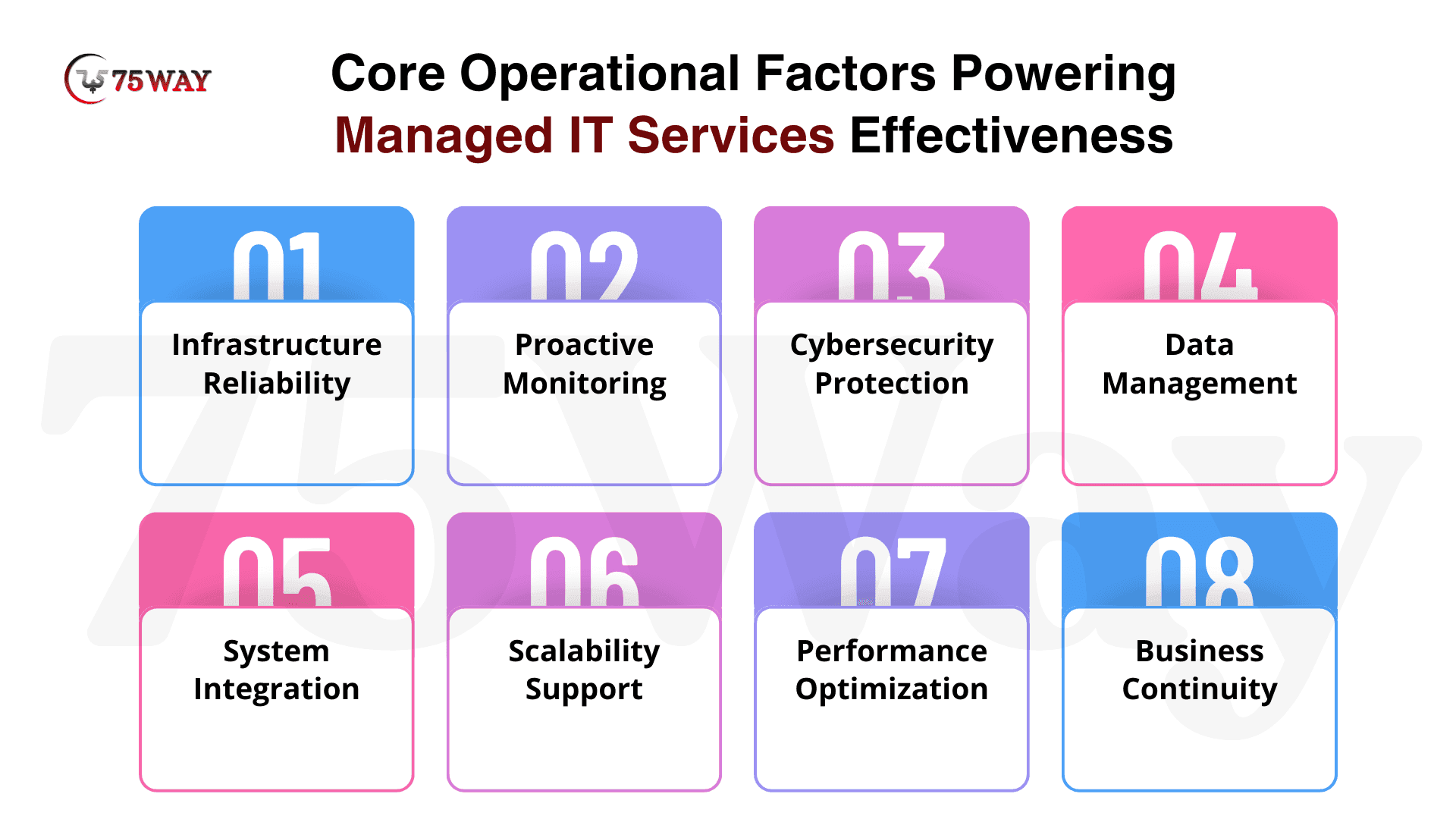
Infrastructure Reliability: Your production environment depends on stable networks, servers, and connected systems working together without interruption. Reliable infrastructure supports communication between machines, enterprise software, and monitoring platforms. When these systems operate consistently, you experience fewer technical disruptions and maintain smoother production activities across your facility.
Proactive Monitoring: Continuous monitoring allows you to observe system activity across networks, servers, and connected production equipment. Monitoring platforms highlight unusual patterns in system behavior before larger issues appear. This early visibility allows your technical team to address potential problems and maintain consistent operational performance.
Cybersecurity Protection: Your production systems manage valuable operational data and connected industrial technologies. Cybersecurity frameworks protect these environments from unauthorized access and digital threats. Security monitoring, access controls, and threat detection systems work together to protect production networks and sensitive operational information.
Data Management: Machines, sensors, and operational platforms produce large amounts of production data every day. Organized data management helps you store, access, and review this information in a structured way. Reliable data systems allow you to examine operational performance and support informed production decisions.
System Integration: Production operations often rely on several digital platforms working together. System integration connects production software, machine data systems, and enterprise applications into a unified environment. These connections allow information to move smoothly across platforms and give you better visibility into production activities.
Scalability Support: Technology environment must grow as production capacity expands and new digital systems appear. Scalable infrastructure allows you to connect additional machines, introduce new platforms, and expand data systems without disturbing existing operations. This flexibility supports steady growth across your production environment.
Performance Optimization: Digital systems require regular adjustments to maintain stable performance. Performance optimization helps improve network stability, system responsiveness, and processing capacity across operational platforms. These improvements allow your production technologies to support daily operations more reliably.
Business Continuity: Unexpected system interruptions can affect production schedules and operational data access. Business continuity planning prepares your infrastructure for such situations through backup systems and recovery processes. These safeguards allow you to restore technology systems quickly and continue production activities with minimal disruption.
Addressing Common Challenges And Misconceptions About MSPs
Technology adoption inside production environments often brings practical concerns for leadership teams and operational staff. Questions about integration, costs, compliance, and workforce readiness frequently appear during early discussions. Understanding these challenges helps you approach managed IT services with realistic expectations and stronger confidence.
Legacy System Integration: Many production environments still operate older machines connected to modern digital platforms. Managed IT services help you connect legacy equipment with newer systems so production data continues flowing across your infrastructure.
Internal Resistance to Change: Your operational teams may feel uncertain about unfamiliar digital platforms introduced into daily workflows. Structured training and technical guidance help your employees gradually adopt technology tools with greater comfort and confidence.
Cost Concerns: Technology investments sometimes appear costly at the beginning of adoption. However, stable infrastructure, fewer technical disruptions, and reduced downtime gradually help you recover costs through stronger operational stability.
Compliance Issues: Industrial sectors operate under strict regulatory and data protection requirements. Managed IT services help you monitor operational systems, maintain security standards, and support compliance across digital infrastructure and connected production platforms.
Vendor Management Simplification: Production environments often depend on multiple technology vendors supporting different systems. Managed IT services allow you to coordinate technical oversight through one centralized partner responsible for infrastructure management and system supervision.
Current Technology Trends Transforming Manufacturing Industry IT
Technology innovation continues influencing the way you manage production systems, digital infrastructure, and operational data. Modern manufacturing environments now rely on advanced digital tools that improve system visibility, automation capabilities, and operational control. These emerging trends help you strengthen production intelligence and maintain a stronger digital infrastructure across connected facilities.
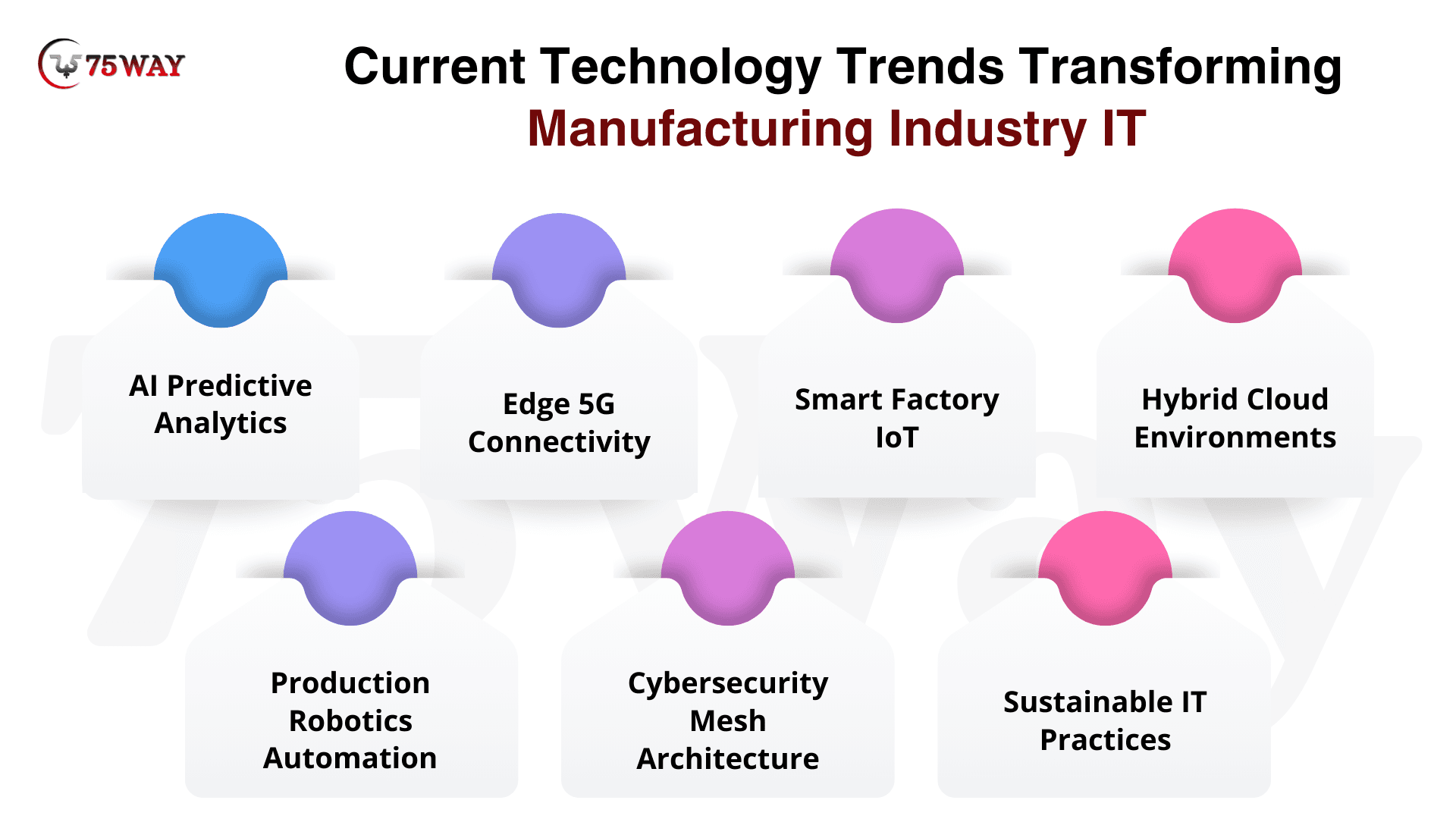
AI Predictive Analytics: Artificial intelligence platforms analyze machine data, operational patterns, and historical performance records. These insights help you identify equipment irregularities early and support predictive maintenance decisions that reduce unexpected production interruptions.
Edge 5G Connectivity: Edge computing combined with high-speed connectivity allows production systems to process operational data closer to machines. This faster communication improves response times and supports real-time monitoring across connected industrial devices.
Smart Factory IoT: IoT solutions connect machines, sensors, and production equipment into a unified digital ecosystem. These wearable apps and connected devices collect operational data continuously, allowing you to observe production performance and maintain stronger control over manufacturing processes.
Hybrid Cloud Environments: Hybrid cloud platforms allow you to store operational data across both on-site infrastructure and cloud environments. This approach supports secure data access, reliable backup systems, and scalable computing capacity for production analytics.
Production Robotics Automation: Robotic process automation supports repetitive production tasks and reduces manual operational workload. These automated systems improve production consistency and allow your workforce to focus on strategic operational responsibilities.
Cybersecurity Mesh Architecture: Distributed security frameworks protect connected production environments across multiple digital systems. Cybersecurity mesh architecture allows you to secure networks, devices, and data platforms without relying on a single centralized defense point.
Sustainable IT Practices: Energy-conscious technology strategies help you manage digital infrastructure with reduced environmental impact. Modern monitoring tools and AI software development solutions allow you to track power usage across servers, networks, and production systems to support responsible technology operations.
Top Questions Businesses Ask Before Choosing MSPs
Selecting a managed IT services partner often raises several practical questions for leadership teams responsible for production systems and digital infrastructure. Decision makers usually evaluate service scope, technical capabilities, long-term reliability, and operational support before forming a partnership. These questions help you understand whether the provider can support your technology environment, protect operational data, and maintain stable infrastructure across connected production systems.
- Which services are included in MSP agreements?
- How does MSP improve ROI in manufacturing?
- Can MSPs support Industry 4.0 adoption?
- What KPIs track IT performance effectively?
- How much do managed IT services cost?
Final Remarks
Modern manufacturing environments depend heavily on stable digital infrastructure, connected production systems, and protected operational data. As production technologies continue expanding, many businesses recognize the value of partnering with a reliable managed IT service provider to maintain system stability and operational visibility. Strategic planning, continuous monitoring, and strong cybersecurity frameworks allow your digital systems to support long-term production growth. When these elements work together, your team gains better control over operational data, production performance, and technology investments. If your production environment requires stronger infrastructure management, cybersecurity protection, and system integration support, connecting with an experienced managed IT service provider can help you build a reliable digital foundation for future growth.
Frequently Asked Questions (FAQs)
What Services Do MSPs Provide For Manufacturers?
A managed IT service provider supports production environments through infrastructure monitoring, cybersecurity protection, cloud management, data backup, and system integration. These services help you maintain stable networks, protect operational data, and keep production systems connected across machines, enterprise platforms, and digital monitoring tools.
How Do Managed IT Services Reduce Operational Costs?
Stable technology systems reduce unexpected downtime that often interrupts production schedules. Continuous monitoring, preventive maintenance, and structured infrastructure management help you avoid costly emergency repairs and unplanned system failures, allowing your business to maintain predictable technology expenses over time.
Can MSPs Support Smart Manufacturing Adoption?
Yes, smart manufacturing relies on connected machines, IoT sensors, automation systems, and real-time production monitoring. A managed IT service provider helps you connect these technologies within a secure digital environment so operational data flows smoothly across production platforms and enterprise systems.
What KPIs Should Manufacturers Track Using MSPs?
Several operational indicators help you evaluate technology performance across production environments. Important KPIs include production downtime, system response time, cybersecurity incident frequency, equipment performance data, and operational system availability across connected machines and digital platforms.
How Much Do Managed IT Services Typically Cost?
Service costs vary based on infrastructure size, number of connected systems, cybersecurity requirements, and level of technical support required. Many businesses adopt subscription-based service agreements that provide predictable monthly technology management costs instead of irregular maintenance expenses.
- Small Businesses & Startups: These services typically cost between $500 and $2,000 per month for teams of 5 to 10 users, providing essential IT monitoring, basic cybersecurity, and system support.
- Mid-sized Businesses: For 10 to 50 users, monthly costs generally range from $2,000 to $10,000, covering network management, cloud integration, data backup, and proactive technical support.
- Large Businesses: Organizations with 50 or more users can expect costs above $10,000 per month, including full-scale infrastructure oversight, advanced cybersecurity, system integration, and 24/7 support.
How Do Managed IT Services Improve Manufacturing Productivity?
Stable networks, secure data systems, and connected production platforms allow your team to monitor operations more effectively. Reliable technology environments support faster communication between machines, operational software, and management systems, helping you maintain smoother production workflows.