AI Summary
Launching a streaming platform requires more than a library of popular shows. This guide explores STARZPLAY-inspired app development, from features and technology to content licensing. Discover development stages, monetisation options, and estimated costs. Learn what it takes to compete in the UAE’s streaming market.
Key Takeaways
- STARZPLAY-inspired apps require strategic planning, licensing, technology, and market research.
- Streaming platforms need subscriptions, video-on-demand, live TV, and personalisation features.
- Development costs range from $20,000 to $500,000+, depending on complexity.
- STARZPLAY serves over 2.3 million active, paid subscribers across 19 markets.
- Dubai-focused streaming apps benefit from Arabic content, regional insights, and localisation.
One gripping episode can keep viewers watching for hours, but a clunky streaming app can make them cancel before the next one begins. For businesses entering the OTT market, building a streaming app like STARZPLAY means creating an experience that makes discovering, streaming, and returning to content feel effortless.
From personalised recommendations and seamless playback to flexible subscriptions and multi-device access, every feature influences how viewers use the platform. Content licensing, streaming infrastructure, and playback quality also determine how much the service costs to build and operate.
So, what does it take to turn a streaming concept into a platform people want to use? This guide covers how to build an OTT app like STARZPLAY from scratch, including essential features, development stages, technology choices, costs, and revenue models.
What is STARZPLAY Clone?
STARZPLAY is a subscription-based streaming service that does exactly that, serving audiences across the Middle East and North Africa through on-demand entertainment and other premium content.
If you’re planning to build a STARZPLAY clone app, the goal is to recreate the core streaming experience while shaping it around your target audience.
You can include on-demand video streaming, subscription plans, personalised recommendations, watchlists, and an admin panel for managing content.
With the right features, content partnerships, and monetisation strategy, your platform can establish its own identity in the competitive streaming market.
To learn more, the story began with Maaz Sheikh, STARZPLAY’s co-founder and CEO, who helped establish the business in 2014. The streaming service launched in 2015, initially bringing premium international entertainment to viewers across the region.
Early backing from STARZ, the entertainment brand associated with Lionsgate, helped support its entry into the market.
Over time, STARZPLAY broadened its offering with regional productions, sports, and support for more viewing devices. A significant business milestone followed in March 2022, when E-Vision, part of e&, and Abu Dhabi-based ADQ agreed to acquire a majority stake of approximately 57% in STARZPLAY Arabia.
STARZPLAY-Like App Development Growth Across Global Markets
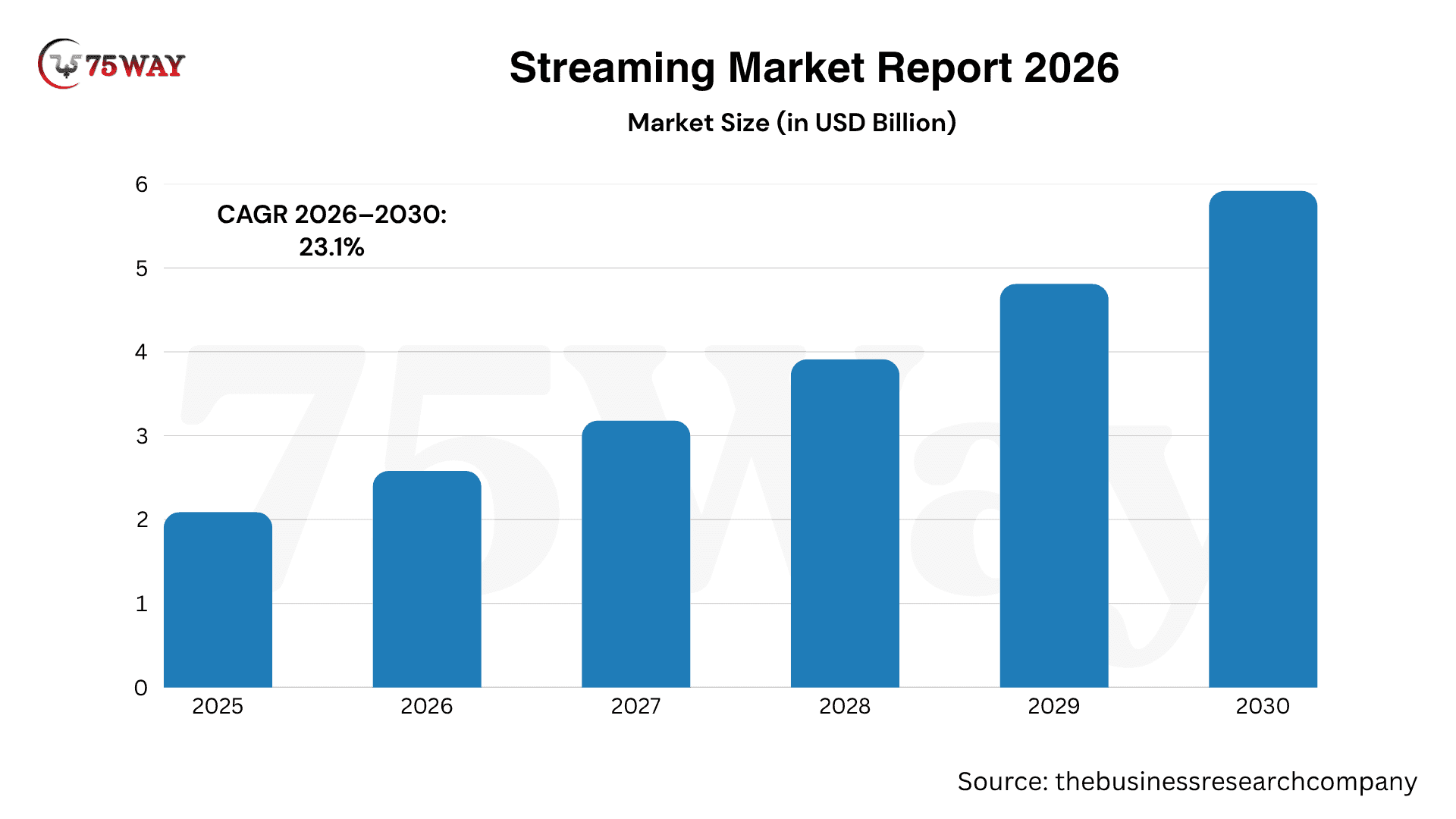
Regional entertainment preferences, internet access, and demand for on-demand viewing all shape where a STARZPLAY-like platform may find room to grow. The global market insights below explore these opportunities and the factors businesses should assess before expanding.
- Lifetime Downloads: STARZPLAY surpassed 18 million total app downloads, with average month-over-month download growth of approximately 26.7%.
- Paid Subscribers and Market Share: The platform has over 2.3 million active paid subscribers across 19 markets, representing roughly 18% of the MENA video-streaming market.
- 2024 Revenue: STARZPLAY generated more than $100 million (AED 370 million) in revenue, marking a 2.5x growth milestone.
- Q2 2026 Subscriber Growth: CEO Jeffrey Hirsch reported continued subscriber growth through Q2 2026, despite an April price increase to $11.99 per month.
- Previously Disclosed Subscriber Base: The platform’s last publicly reported figures stood at 17.6 million total subscribers, including 12.7 million U.S. streaming users, at the start of the year.
- Global Streaming App Growth: The global video streaming application market is projected to reach $381.6 billion by 2034.
How Does A Streaming App Like STARZPLAY Work?
A streaming platform connects viewers, licensed content, payment services, and video delivery infrastructure in one digital ecosystem. Although the interface may look straightforward, several systems work together whenever someone opens a title and presses play.
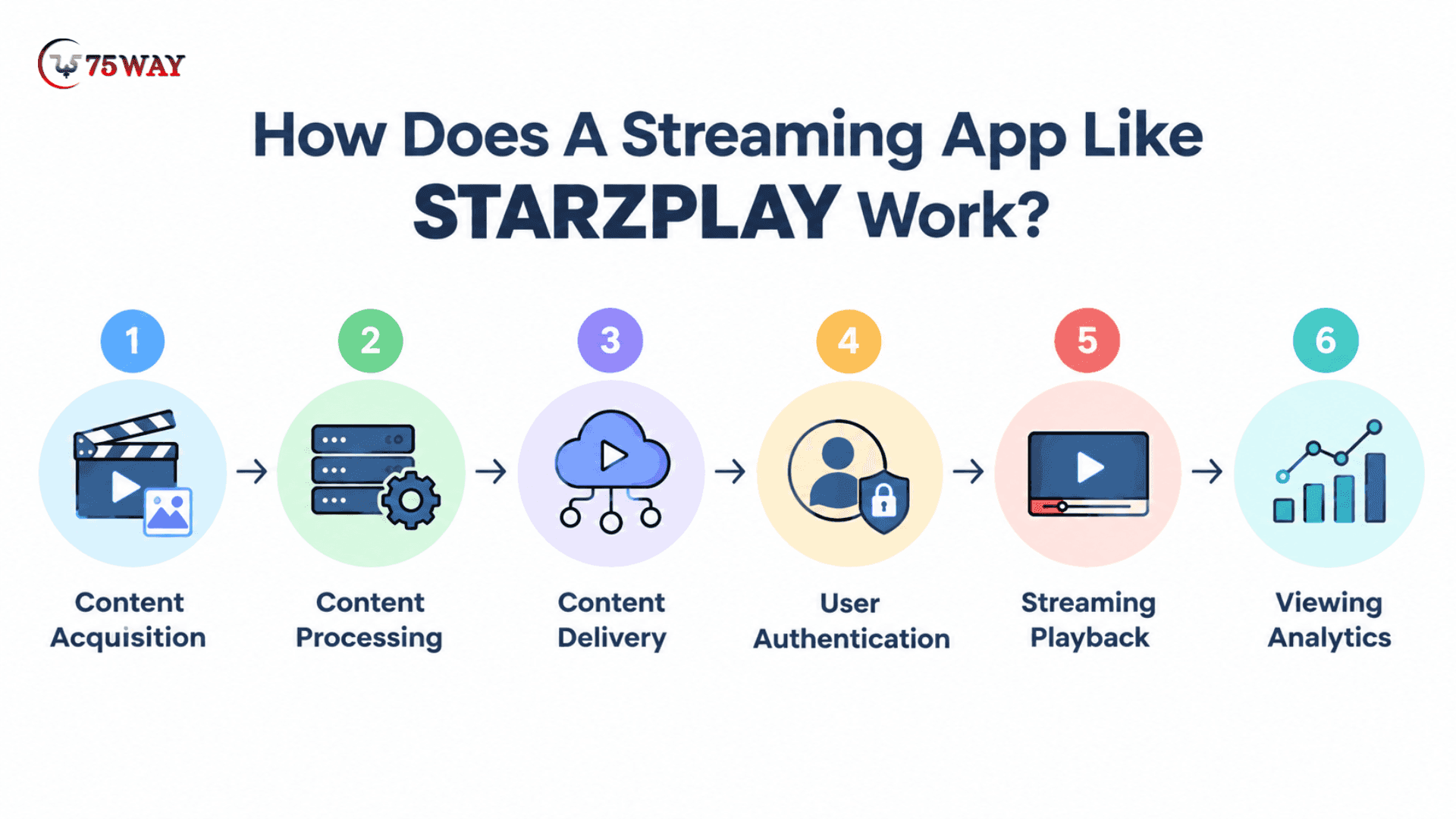
1. Content Acquisition
The platform obtains distribution rights for films, series, live sports, or original productions.
2. Content Processing
Video files are encoded into suitable formats and resolutions for different internet speeds and devices.
3. Content Delivery
A content delivery network (CDN) distributes video from servers closer to viewers, helping reduce buffering.
4. User Authentication
The app verifies accounts, subscription status, device permissions, and viewing entitlements.
5. Streaming Playback
The video player selects an appropriate stream quality based on the device and available bandwidth.
6. Viewing Analytics
The system records permitted viewing events, playback issues, and engagement patterns to guide improvements.
This process needs careful coordination. A beautiful catalogue cannot compensate for repeated buffering, while reliable streaming alone will not retain subscribers if the content feels irrelevant.
A Comprehensive Process To Build An App Like STARZPLAY
A successful OTT platform starts with clear product decisions, not a long feature list. Each development stage should address a specific business requirement, from securing content to delivering a smooth viewing experience.
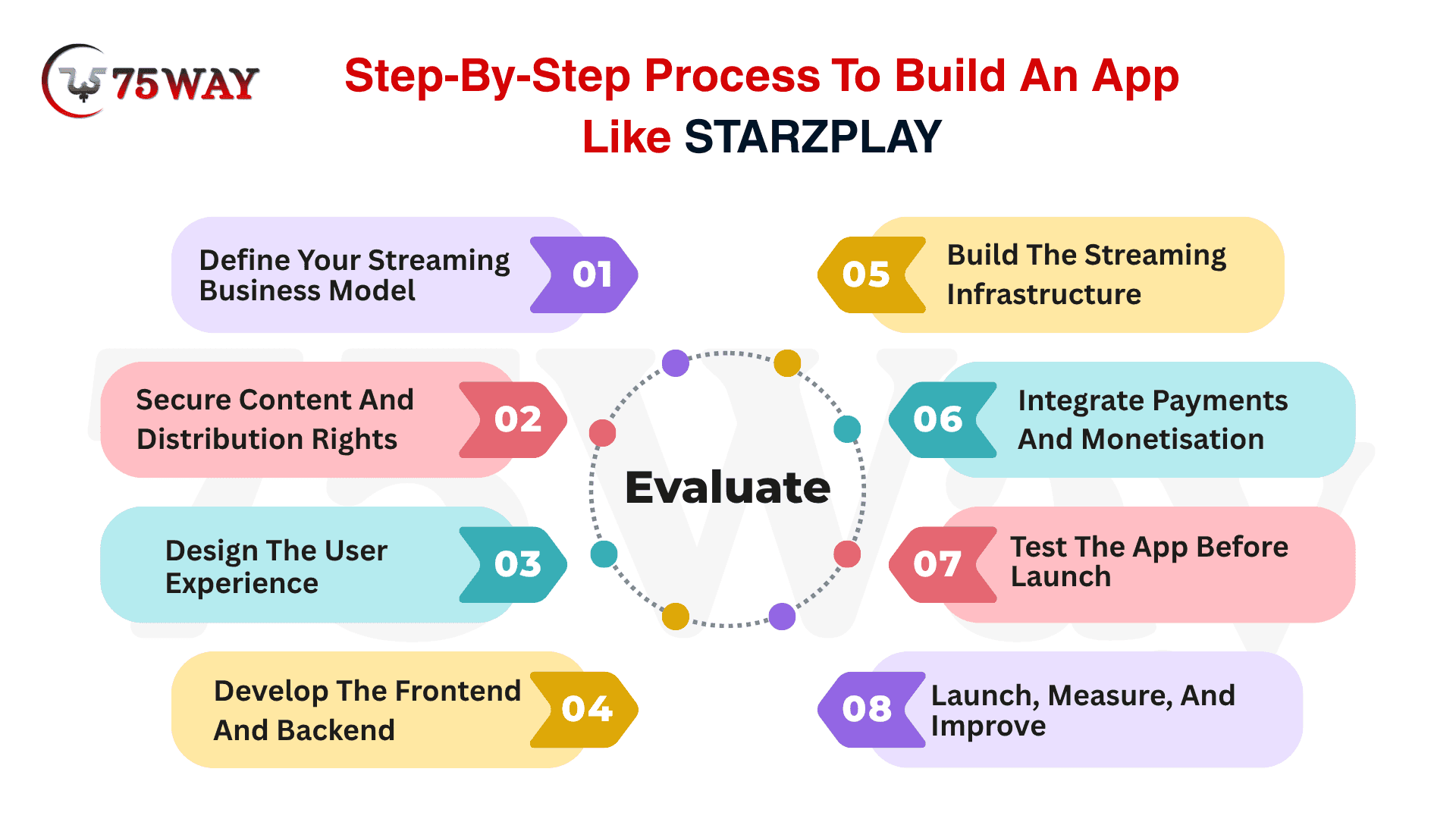
Step 1: Define Your Streaming Business Model
Your first decision is what viewers will pay for and why they will choose your platform. A subscription service, an advertising-supported app, and a platform combining both require different payment systems, content strategies, and operating budgets.
- Target Audience: Identify viewer groups, preferred genres, language choices, and viewing habits.
- Content Category: Decide whether to focus on films, series, sports, children's entertainment, or regional productions.
- Device Strategy: Select the initial platforms, such as Android, iOS, web, and smart TVs.
- Business Objectives: Set measurable targets for subscriptions, viewing time, retention, and customer acquisition.
For a new venture, a focused content category and a limited initial device range can help control development costs before broader expansion.
Step 2: Secure Content And Distribution Rights
Content is one of the biggest commercial considerations in streaming app development. A technically strong platform cannot legally distribute films, series, or sporting events without the appropriate permissions.
Your content strategy should distinguish between licensed third-party titles, commissioned productions, and content you already own. Each option has different financial and contractual implications.
Important considerations include:
- Licensing Territory: Confirm where each title can legally be streamed.
- Distribution Period: Establish when rights begin and expire.
- Viewing Permissions: Clarify whether content can be downloaded, streamed live, or offered on demand.
- Language Rights: Confirm permitted audio tracks, subtitles, and dubbing.
- Commercial Terms: Review minimum guarantees, royalties, and other licensing fees.
For audiences in the UAE, a catalogue combining internationally recognised titles with relevant Arabic-language entertainment may help the platform stand out. Content partnerships should be explored early because licensing expenses can substantially change the total project budget.
Step 3: Design The User Experience
The design should make finding something worth watching feel effortless. Viewers should be able to open the app, discover a relevant title, and start playback without navigating through confusing menus.
The main screens usually include a home page, content details, search results, a video player, subscription management, and user profiles.
A practical design approach includes:
- Homepage Layout: Place trending titles, new releases, and personalised collections where viewers can find them quickly.
- Content Pages: Display descriptions, cast details, ratings where available, language options, and episode lists.
- Navigation: Keep search, categories, watchlists, and account settings easy to reach.
- Accessibility: Provide readable text, caption controls, and interfaces suited to different viewing needs.
- TV Navigation: Support remote-control navigation and readable layouts on larger screens.
Interactive prototypes should be tested with potential viewers before development begins. Early feedback can uncover confusing navigation and unnecessary steps before they become expensive to change.
Step 4: Develop The Frontend And Backend
The frontend is the part viewers interact with, while the backend manages the data and services behind the experience. Both layers need to work together to support account access, content discovery, payments, and playback.
Frontend development covers the mobile applications, web interface, and smart TV experience. Backend development handles account management, subscription entitlements, catalogue information, viewing history, recommendations, and administrative operations.
The backend should also support role-based access for content managers, customer support teams, and platform administrators. This structure becomes particularly important when several people manage releases, subscriptions, and customer issues.
The development team should build a modular architecture that allows new features and devices to be introduced without requiring a complete rebuild.
Step 5: Build The Streaming Infrastructure
Video delivery requires a different technical approach from ordinary app content. Large video files must be processed, stored, protected, and delivered in formats suitable for different devices and internet conditions.
A typical streaming workflow includes encoding, packaging, storage, CDN delivery, and playback. Technologies such as HTTP Live Streaming (HLS) and MPEG-DASH are supported.
The infrastructure should account for:
- Adaptive Bitrate Streaming: Adjusts video quality to help maintain playback as network conditions change.
- Content Delivery Network: Distributes video through geographically distributed servers to reduce delivery delays.
- Digital Rights Management: Protects licensed content through approved encryption and playback authorisation systems.
- Cloud Storage: Stores video assets, artwork, subtitles, and other content files.
- Monitoring: Tracks buffering, playback errors, startup delays, and delivery performance.
The right infrastructure depends on catalogue size, expected concurrent viewers, video quality, and geographic reach. These requirements should be tested under realistic viewing loads before launch.
Step 6: Integrate Payments And Monetisation
The payment experience should match the business model selected during planning. A subscription-only platform has different requirements from an app offering free content, advertising, rentals, and premium memberships.
Payment integration should cover checkout, renewals, failed transactions, refunds, subscription status, and cancellation. The app must also apply the relevant billing rules for each supported distribution channel.
For a UAE-focused service, payment options should reflect local customer preferences and the commercial arrangements available to the business. Pricing pages should clearly state subscription periods, renewal terms, and applicable charges.
Step 7: Test The App Before Launch
Streaming app testing must cover more than whether buttons work. A video may play perfectly on a developer's device but fail on a smart TV, under a weak network connection, or during a surge in concurrent viewers.
A staged release can expose technical problems before the service reaches a wider audience. The team should also prepare monitoring, support procedures, and a process for resolving playback incidents after launch.
Step 8: Launch, Measure, And Improve
An OTT app is not finished when it appears in an app store. Viewer behaviour, content performance, and technical issues will reveal where further investment is needed.
After launch, monitor metrics such as subscriber conversion, monthly active users, average viewing time, subscription cancellations, playback failures, and customer acquisition cost. These figures help identify whether problems stem from the catalogue, user experience, pricing, or streaming quality.
A useful improvement cycle includes regular content updates, app releases, customer feedback reviews, and experiments with homepage layouts or recommendations. Each change should address an observed issue or a measurable business opportunity rather than adding features simply to make the app bigger.
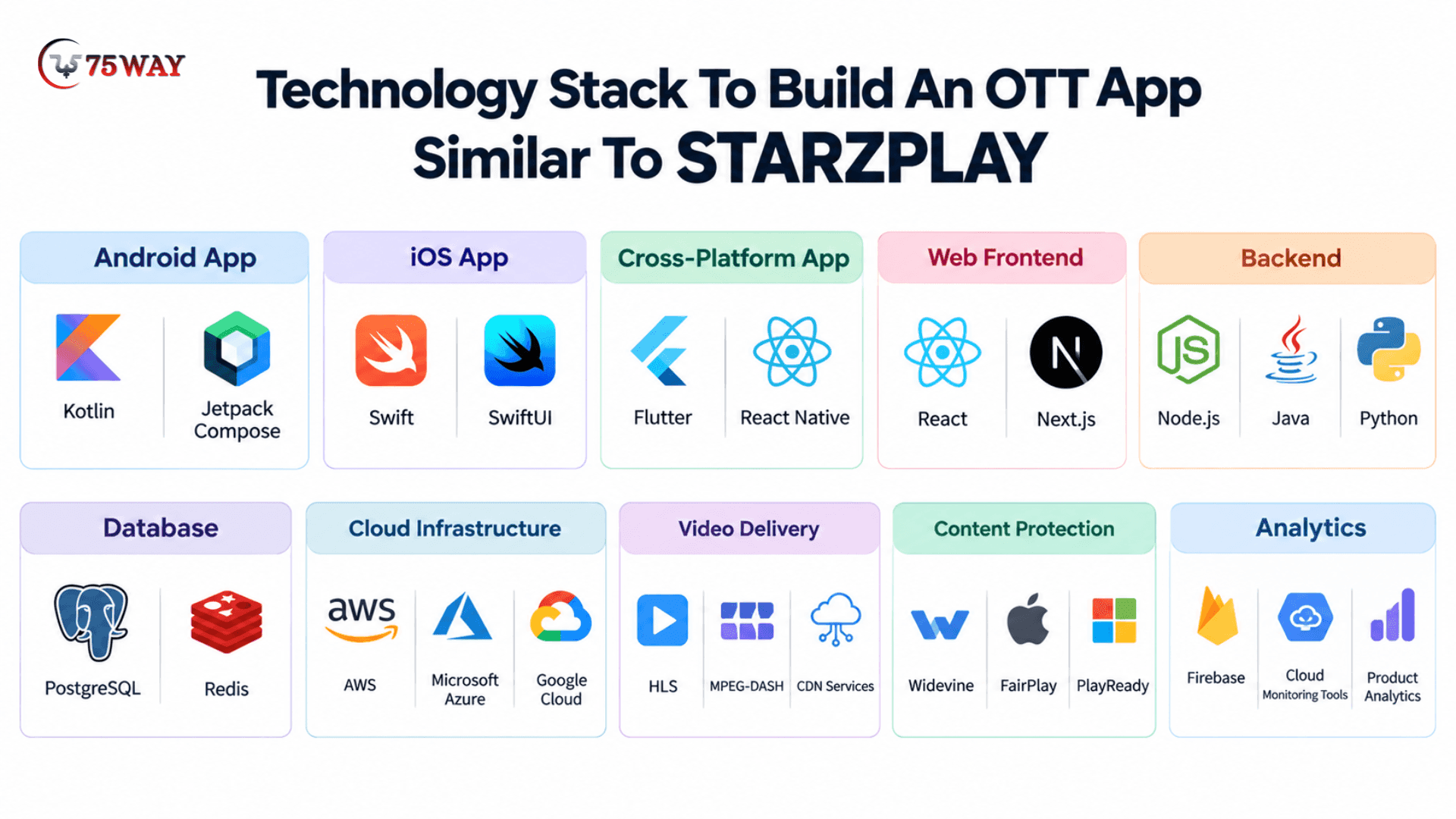
Technology Stack To Build An OTT App Similar To STARZPLAY
The technology stack is simply the set of tools and technologies that work together to run an OTT app like STARZPLAY. Think of it as the engine behind the platform: it controls how the app looks, how videos play, how subscriptions work, and how user data stays secure.
The right tools help create a viewing experience that feels smooth and reliable. For example, Kotlin or Swift can power mobile apps, while React can handle the web version.
Backend technologies such as Node.js manage accounts and subscriptions, and cloud platforms store data and support video delivery. Streaming protocols help videos play at suitable quality, even when internet speeds change.
Each technology has a specific role, and the right combination depends on your app’s features, budget, and target audience.
Major Features To Develop STARZPLAY-Like Mobile App
A competitive OTT app needs features that make discovery, playback, payments, and account management straightforward. The strongest feature set depends on whether your business plans to offer films on demand, live television, sports, original productions, or a combination of these services.
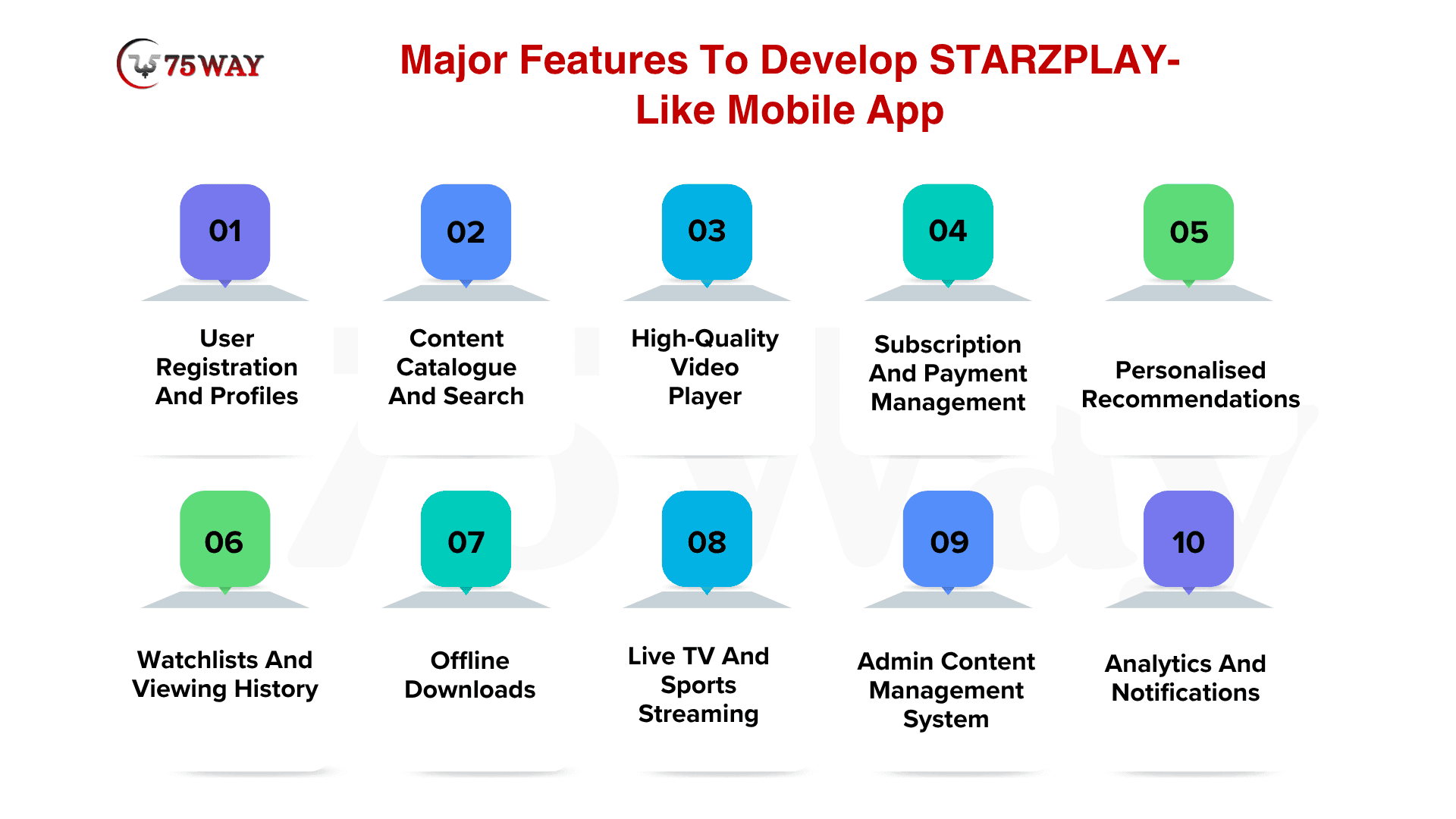
1. User Registration And Profiles
Simple registration should support email, mobile number, or approved social sign-in options. Individual profiles help family members maintain separate watchlists, viewing histories, language preferences, and recommendations. Profile controls can also support age-appropriate content restrictions.
2. Content Catalogue And Search
A well-organised catalogue lets viewers browse movies, series, genres, actors, release years, and featured collections. Search filters should help users find relevant titles without scrolling through a large library. Metadata management is essential because incomplete titles, missing artwork, and incorrect descriptions make discovery harder.
3. High-Quality Video Player
The video player is central to the viewing experience. It should support adaptive streaming, subtitles, audio-track selection, playback controls, and resume-watching functionality. Options such as Full HD or 4K depend on content rights, device capability, bandwidth, and production costs.
4. Subscription And Payment Management
Subscribers should be able to compare plans, pay securely, renew memberships, and cancel according to the service terms. The payment setup may include card payments, app-store billing, or approved local payment methods. Clear pricing and renewal information help reduce billing disputes.
5. Personalised Recommendations
Recommendations can suggest titles based on viewing history, preferred genres, search behaviour, and saved favourites. A new platform can begin with curated collections and simple recommendation rules before investing in more advanced machine-learning systems.
6. Watchlists And Viewing History
A watchlist lets users save titles for later, while viewing history makes it easier to resume unfinished episodes. These features become particularly useful when the app supports several devices and users expect their entertainment preferences to follow them.
7. Offline Downloads
Offline downloads allow eligible subscribers to watch selected content without a continuous internet connection. The feature requires secure local storage, expiry rules, and content-protection controls. Download permissions must follow the terms agreed with content owners.
8. Live TV And Sports Streaming
Live streaming supports scheduled channels, sporting events, and real-time broadcasts. It requires a delivery setup designed for live video, with careful attention to latency, traffic spikes, stream stability, and broadcast rights. This feature can add substantial complexity compared with standard video-on-demand playback.
9. Admin Content Management System
The administrative dashboard allows authorised staff to upload titles, manage categories, schedule releases, update descriptions, and control content availability. Separate permissions for content editors, customer support, and administrators reduce operational mistakes and improve accountability.
10. Analytics And Notifications
Analytics can track playback failures, active users, popular titles, subscription conversions, and cancellations. Push notifications can inform viewers about new episodes, saved-title releases, or upcoming events, provided users have given the required permissions.
Monetization Strategies For STARZPLAY-Like Streaming App Development
A streaming business needs a revenue model that supports both content investment and platform operations. The most suitable approach depends on whether viewers expect premium, ad-supported, or flexible access to entertainment.
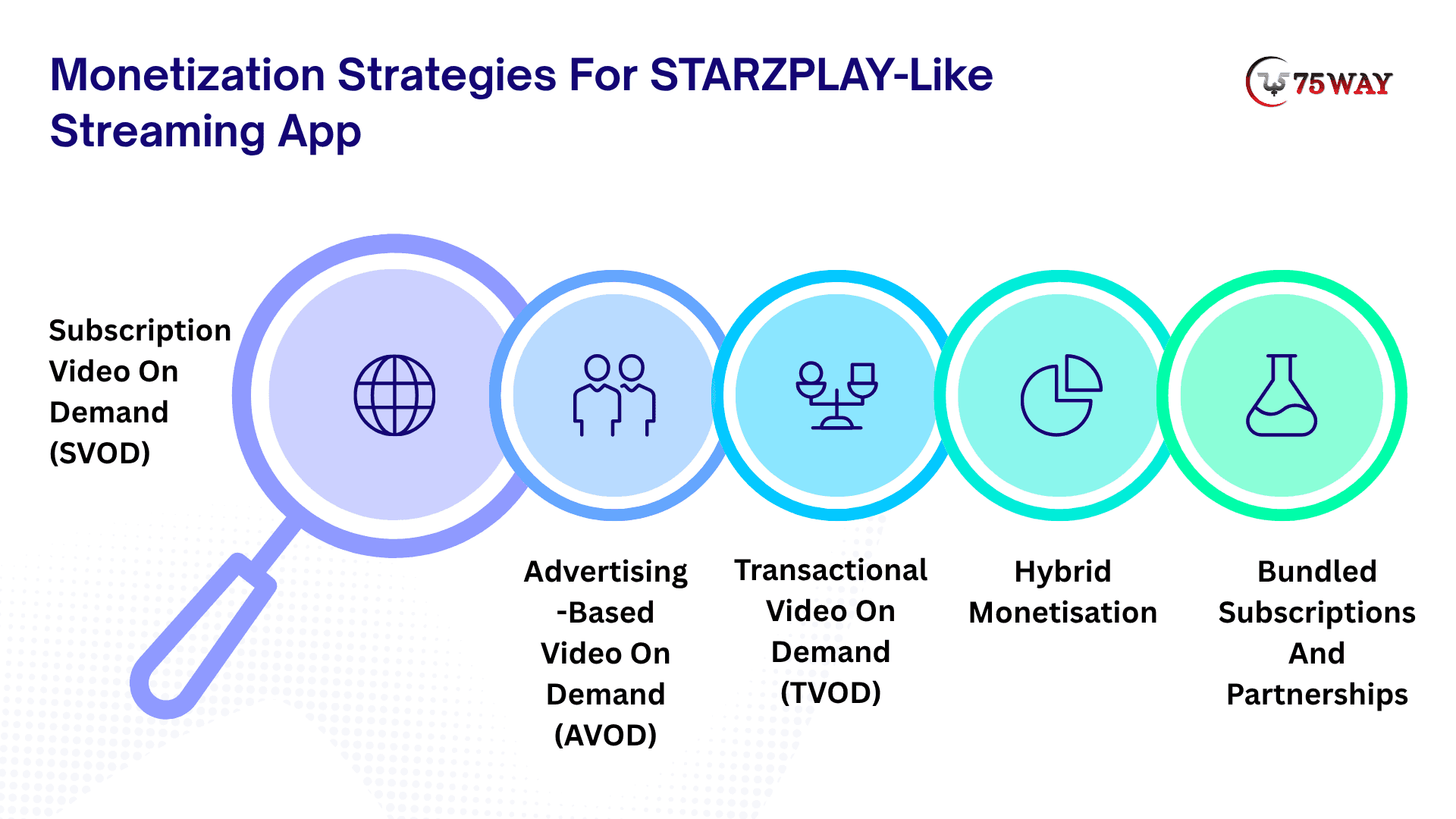
1. Subscription Video On Demand (SVOD)
Subscribers pay a recurring monthly or annual fee to access a defined content library. Different plans can offer varying levels of video quality, simultaneous streams, or access to premium titles.
2. Advertising-Based Video On Demand (AVOD)
Viewers access selected content for free while the platform earns advertising revenue. This model can help attract users who are not ready to pay for a subscription, although advertising inventory and audience size affect earnings.
3. Transactional Video On Demand (TVOD)
Users pay to rent or purchase individual titles. This model can suit newly released films, special events, or premium content that is not included in a standard subscription.
4. Hybrid Monetisation
A hybrid model combines free, advertising-supported viewing with paid subscriptions or premium rentals. This gives viewers several entry points while allowing the business to earn from different levels of engagement.
5. Bundled Subscriptions And Partnerships
Telecom operators, internet service providers, device manufacturers, and other businesses may bundle streaming access with their existing products. Such arrangements can widen distribution, although revenue sharing and partner requirements need careful negotiation.
For many new ventures, a subscription or hybrid model offers a practical starting point. The final decision should account for content costs, audience willingness to pay, advertising demand, and the resources required to manage each revenue stream.
How Much Does It Cost To Build An App Like STARZPLAY?
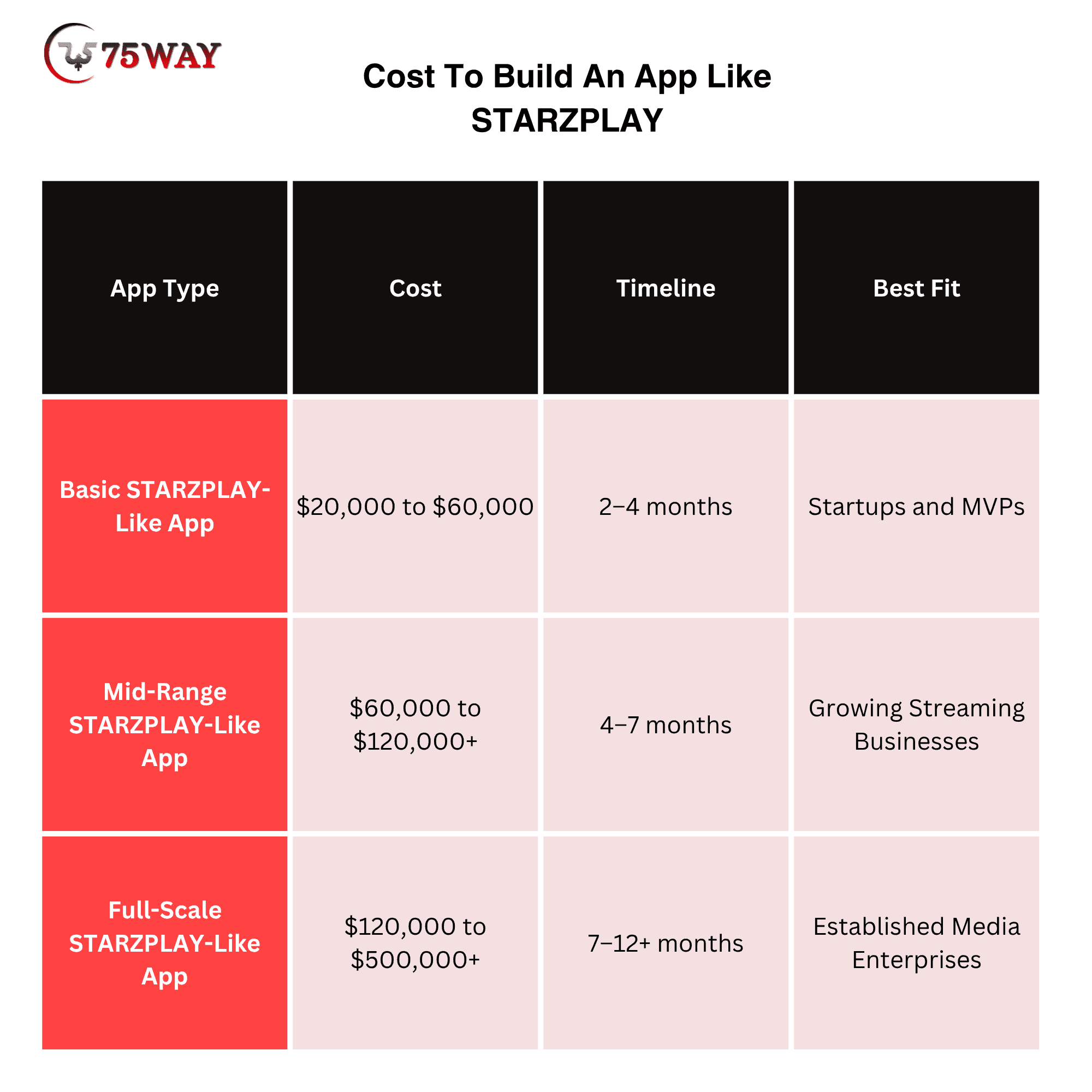
The cost of building a STARZPLAY-like app typically ranges from $20,000 to $500,000+, depending on platform coverage, streaming infrastructure, content protection, integrations, and feature complexity. These are indicative development estimates, not fixed market prices.
The total investment also depends on whether the project uses managed streaming services or requires more customised infrastructure. Content licensing, original productions, marketing, and ongoing streaming delivery can add substantial costs beyond initial app development.
1. Basic STARZPLAY-Like App Cost: $20,000 to $60,000
- Includes basic browsing and video playback.
- Supports one platform and simple subscriptions.
Timeline: Approximately 2 to 4 months.
2. Mid-Range STARZPLAY-Like App Cost: $60,000 to $120,000+
- Adds profiles, watchlists, payments, and notifications.
- Supports synced viewing across multiple devices.
Timeline: Approximately 4 to 7 months.
3. Full-Scale STARZPLAY-Like App Cost: $120,000 to $500,000+
Includes smart TV apps and streaming. Adds advanced analytics, DRM, and recommendations.
Timeline: Approximately 8 to 15 months or longer.
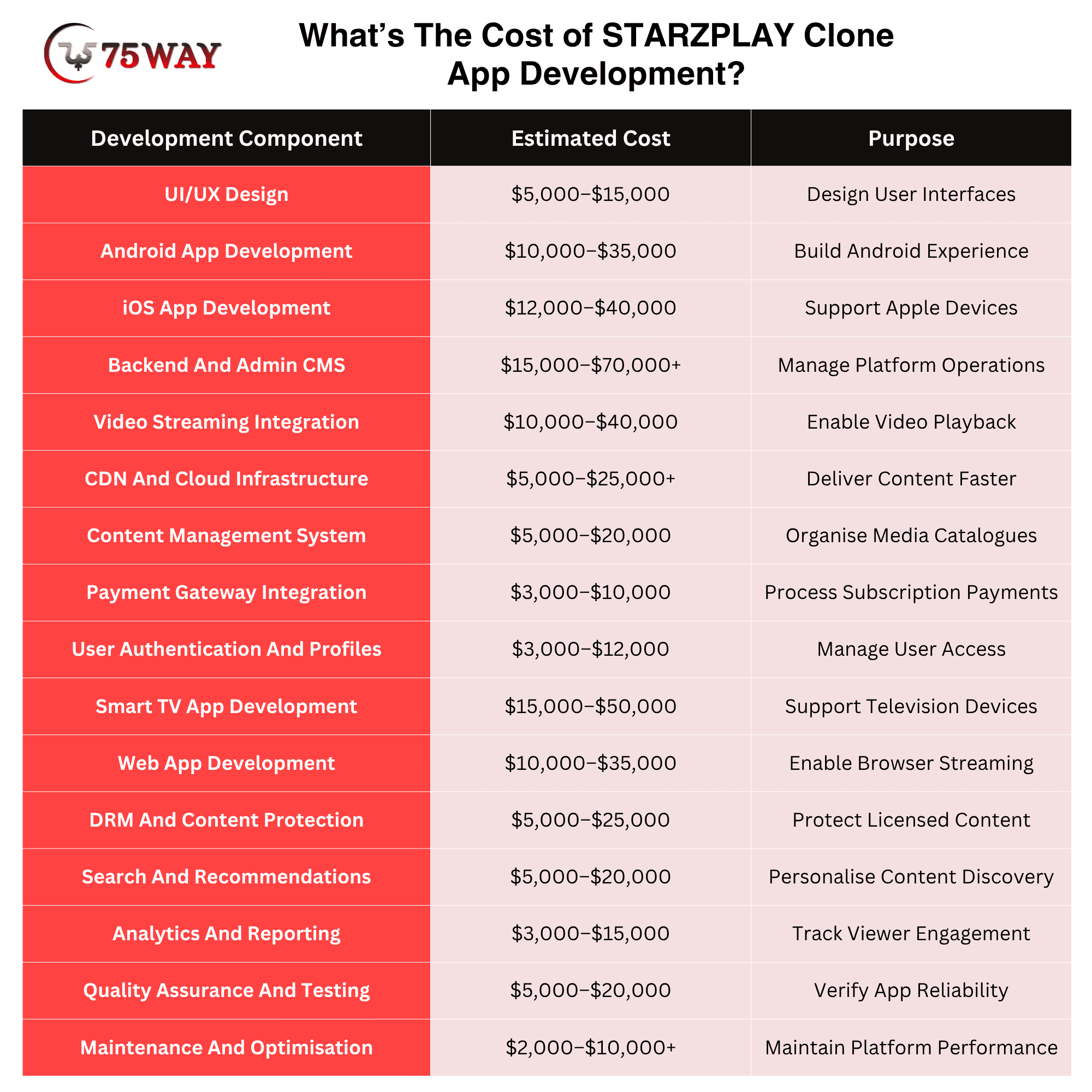
What’s The Cost of STARZPLAY Clone App Development Based On Components?
A streaming app’s budget goes far beyond its viewing interface, with each underlying component adding a different development expense. Video infrastructure, subscription management, content protection, and admin tools all contribute to the total cost of building a STARZPLAY-like platform. The component-wise cost breakdown below shows where your investment goes and which areas may require a larger budget.
What Costs Should You Budget For After Launching STARZPLAY-Style Video Streaming App?
The initial development budget is only one part of the financial plan. A streaming platform also has recurring expenses that increase as its catalogue and audience grow.
- Content Licensing: Payments for distribution rights, renewals, and selected premium titles.
- Cloud And CDN Usage: Storage, encoding, bandwidth, and delivery costs driven by viewing activity.
- Maintenance: Bug fixes, operating-system updates, security patches, and new device compatibility.
- Customer Support: Subscription questions, billing issues, account recovery, and playback troubleshooting.
- Marketing And Acquisition: Promotions, partnerships, advertising, and campaigns to attract paying viewers.
A smaller launch scope can help validate demand before major investment in live sports, original productions, or extensive smart TV support. However, a lower initial budget should not come at the expense of content rights, security, or basic playback reliability.
Challenges To Consider While Creating STARZPLAY-Style Application
Several business and technical challenges can affect the success of a streaming platform. Addressing them early helps reduce expensive changes after launch.
1. Content Licensing And Regional Rights
A title available in one country may not be licensed for another. Contract terms, distribution windows, language permissions, and exclusivity can affect what your app may offer to viewers.
2. Streaming Quality At Peak Times
Major sporting events and popular releases can increase concurrent viewing. Capacity planning, CDN configuration, monitoring, and load testing help the platform prepare for sudden demand.
3. Subscriber Retention
A large initial sign-up campaign does not guarantee recurring revenue. Viewers may cancel if new content is limited, recommendations are poor, or the app repeatedly interrupts playback.
4. Cross-Device Compatibility
Mobile phones, web browsers, and smart TVs have different playback capabilities and technical requirements. A phased device rollout can help the team prioritise the most valuable platforms without spreading the budget too thinly.
5. Content Security And Privacy
Premium content needs appropriate access controls and protection against unauthorised distribution. Account data, payment information, and viewing records also require careful handling under applicable privacy and security requirements.
How To Select A Reliable STARZPLAY-Like OTT App Development Company
The development partner you choose should understand video streaming as a complete service, not simply a mobile app with a video player. The following checks can help you assess whether a team is equipped for the project.
- Streaming Experience: Ask about previous work involving video-on-demand, live streaming, adaptive playback, and content delivery.
- Technical Approach: Request an explanation of the proposed architecture, video processing, CDN strategy, and content protection.
- Platform Coverage: Confirm experience with the specific mobile, web, and smart TV platforms in your launch plan.
- Cost Transparency: Request a breakdown of development, third-party services, testing, maintenance, and potential usage-based expenses.
- Post-Launch Support: Clarify response times, maintenance terms, monitoring responsibilities, and plans for scaling the platform.
A useful proposal should explain what will be delivered, what is excluded, which third-party services incur separate charges, and how success will be measured. Those details make it easier to compare agencies beyond their headline quotations.
Final Thoughts
To wrap up, STARZPLAY-like app development requires a coordinated plan for content licensing, product design, streaming infrastructure, payments, and long-term operations.
The development budget can range from $20,000 to $500,000+, but the right investment depends on your intended audience, content strategy, and launch scope.
For a new streaming business, a focused first release can help test demand before expanding into additional devices, premium content, live sports, or advanced personalisation. Strong content partnerships and dependable playback will matter just as much as the app's visible features.
If you are planning to build a streaming app like STARZPLAY, you can discuss your needs with an on-demand video streaming app development company to define your launch scope, content strategy, and budget before development begins.
Frequently Asked Questions (FAQs)
Can I Build A Streaming App Without Owning Movies Or TV Shows?
Yes. You can license content from studios, distributors, and independent producers. Each agreement should specify permitted territories, platforms, duration, and usage rights before the content becomes available to viewers.
Is A Video Streaming App The Same As An OTT Platform?
Not exactly. A streaming app is the viewer-facing interface, while an OTT platform includes the backend, content management, video processing, delivery infrastructure, billing, security, and analytics that support the service.
Do I Need Separate Apps For Smart TVs And Mobile Phones?
Not necessarily separate backend systems, but each device category may require its own application or interface. Smart TVs have distinct development and certification requirements, so platform support should be planned from the beginning.
Can I Add Live Sports After Launch?
Yes, provided your architecture supports live streaming and you secure the necessary broadcast rights. Live sports can require additional investment in low-latency delivery, traffic capacity, monitoring, and rights management.
What Is The Biggest Expense In Running A Streaming Platform?
Content licensing and video delivery can become major expenses, depending on the business model. The actual cost depends on the content catalogue, licensing terms, video quality, and how much subscribers watch.
How Can A New Streaming App Compete With Established Platforms?
A new platform can focus on a defined audience, distinctive content, reliable playback, and a clear pricing proposition. Strong regional programming or underserved genres may provide a more realistic entry point than trying to match a large competitor's entire catalogue.