Summary
AI healthcare mobile applications change diagnostics, virtual consultations, clinical documentation, medical imaging, and patient engagement. This guide explores leading AI apps in healthcare in USA, revenue-generating healthcare app ideas, and HIPAA-compliant development practices. You will also explore healthcare provider adoption trends, monetization strategies, and essential factors businesses evaluate before investing in AI healthcare solutions.
Quick Overview
- AI healthcare applications improve diagnostics and patient engagement.
- US healthcare providers adopt AI healthcare platforms for remote monitoring.
- The medical AI apps market will reach $4.8 billion by 2033.
- AI telemedicine apps reduce appointment delays and improve healthcare accessibility.
- Selecting right AI healthcare development partners directly impacts scalability and ROI.
- The average cost to build an AI healthcare app ranges between $40,000-$300,000+.
Healthcare is no longer running only inside hospitals and clinics anymore. It is already moving into AI-powered mobile apps, predictive systems, virtual AI assistants, and smart healthcare platforms. And honestly, patients now expect this convenience. Healthcare businesses ignoring this shift today may really struggle to compete tomorrow.
That’s exactly why AI-powered healthcare app development solutions are growing rapidly across the USA in 2026. Solutions with AI in healthcare use technologies like machine learning, natural language processing, predictive analytics, and computer vision to improve patient care and disease diagnosis.
From AI symptom checkers and virtual consultations to AI mental health assistants and AI remote patient monitoring platforms, these applications are transforming modern healthcare faster.
But, which AI apps in healthcare are best for medical professionals, patients, and hospitals? What’s the criteria for selecting a healthcare app development partner? How to build A Hipaa-compliant AI healthcare app in 2026?
This guide will explore everything from top AI healthcare tools to the app development process. You will learn about the top 10 AI healthcare apps in the USA, their features, business impact, and key development insights businesses should understand before investing in AI healthcare app development.
Why AI-Powered Healthcare Apps Are Growing Rapidly in the USA?
The healthcare industry generates enormous amounts of patient data daily. Managing appointments, diagnostics, prescriptions, insurance claims, medical imaging, patient communication, and treatment planning manually creates operational complexity for healthcare organizations. Here are current market growth insights:
- The global medical AI apps market, including digital therapeutics and mobile health applications, is projected to reach $4.8 billion by 2033, growing at a CAGR of 19.1%.
- Generative AI in healthcare is expected to reach $39.8 billion by 2035, expanding at a CAGR of 26.7%.
- North America leads the global medical AI apps market with a revenue share of 38.7%.
- AI-driven healthcare solutions are estimated to reduce annual U.S. healthcare costs by up to $150 billion through personalized care models.
- Around 66% of physicians currently use AI-powered healthcare tools in their practice.
- AI adoption in healthcare currently ranges between 10% and 30% and is projected to rise to 30%–45% by 2030.
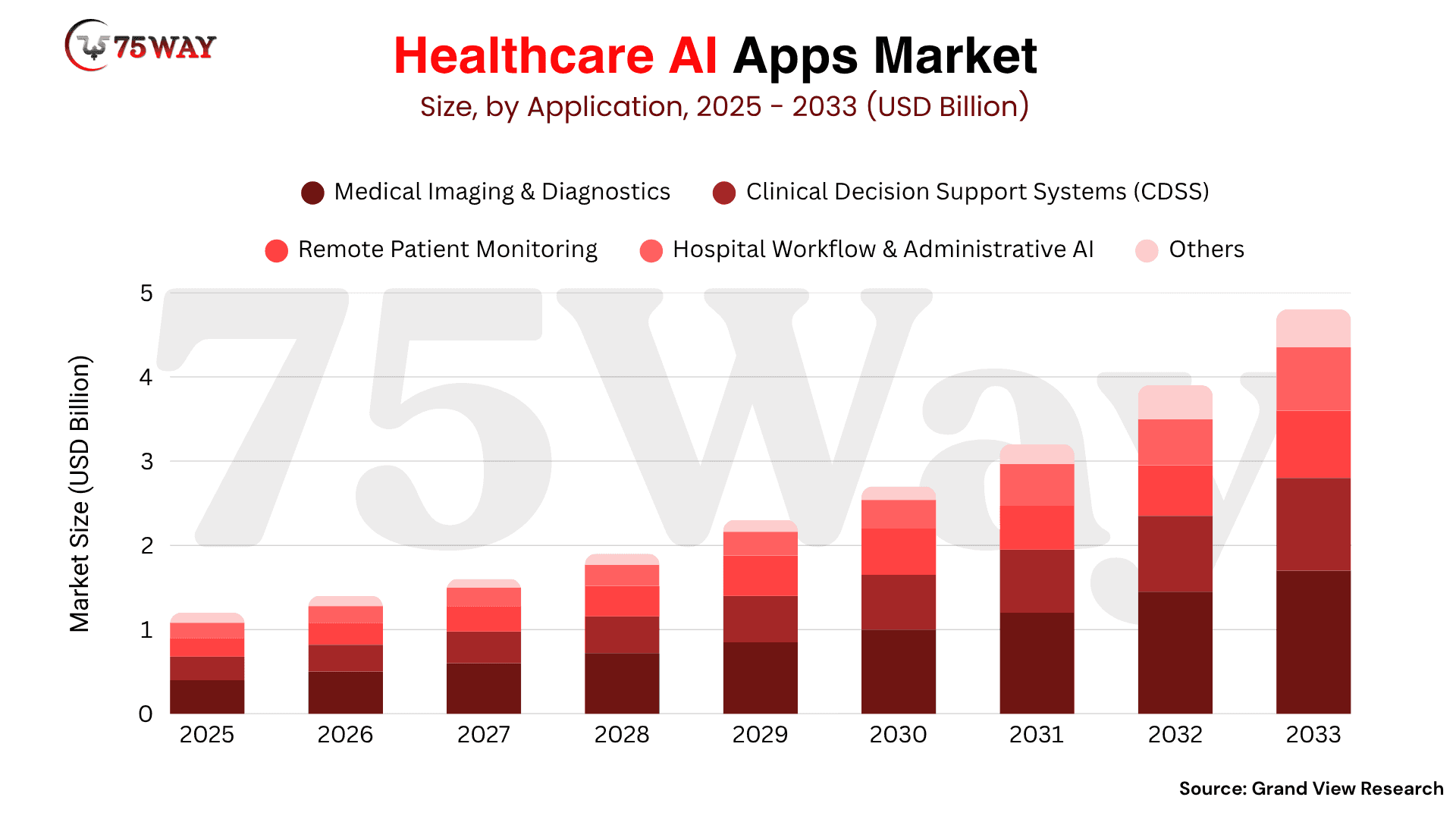
Not only these, but several factors are also accelerating AI healthcare adoption in the United States:
- Rising Demand for Telemedicine: Patients increasingly prefer remote healthcare access instead of visiting clinics physically for routine consultations.
- Physician Burnout Reduction: Healthcare professionals use AI automation to reduce repetitive administrative tasks and documentation workload.
- Increased Chronic Disease Cases: AI applications help healthcare providers monitor diabetes, cardiovascular conditions, respiratory diseases, and elderly care remotely.
- Healthcare Staffing Challenges: Hospitals use AI systems to optimize scheduling, workflow management, and patient triage.
- Growth of Wearable Devices: Connected healthcare devices with wearable apps generate valuable patient insights for AI-driven preventive care systems.
10 Best AI Apps in Healthcare Apps In USA In 2026
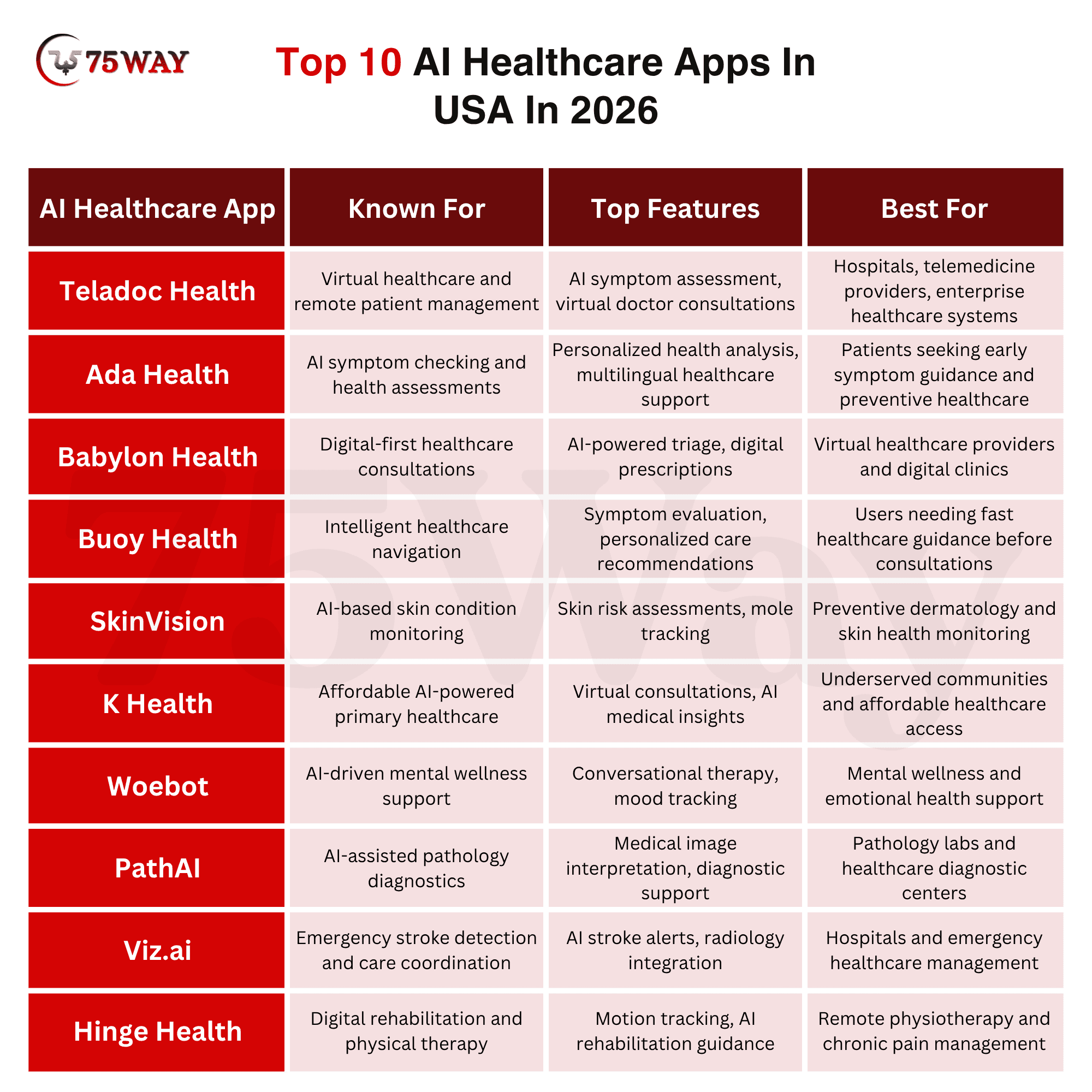
The top 10 AI-powered healthcare apps in United States are transforming patient care, diagnostics, and virtual healthcare experiences rapidly. Here, we define a list of leading AI apps in healthcare along with their features. Healthcare businesses are already investing heavily in these intelligent healthcare solutions now.
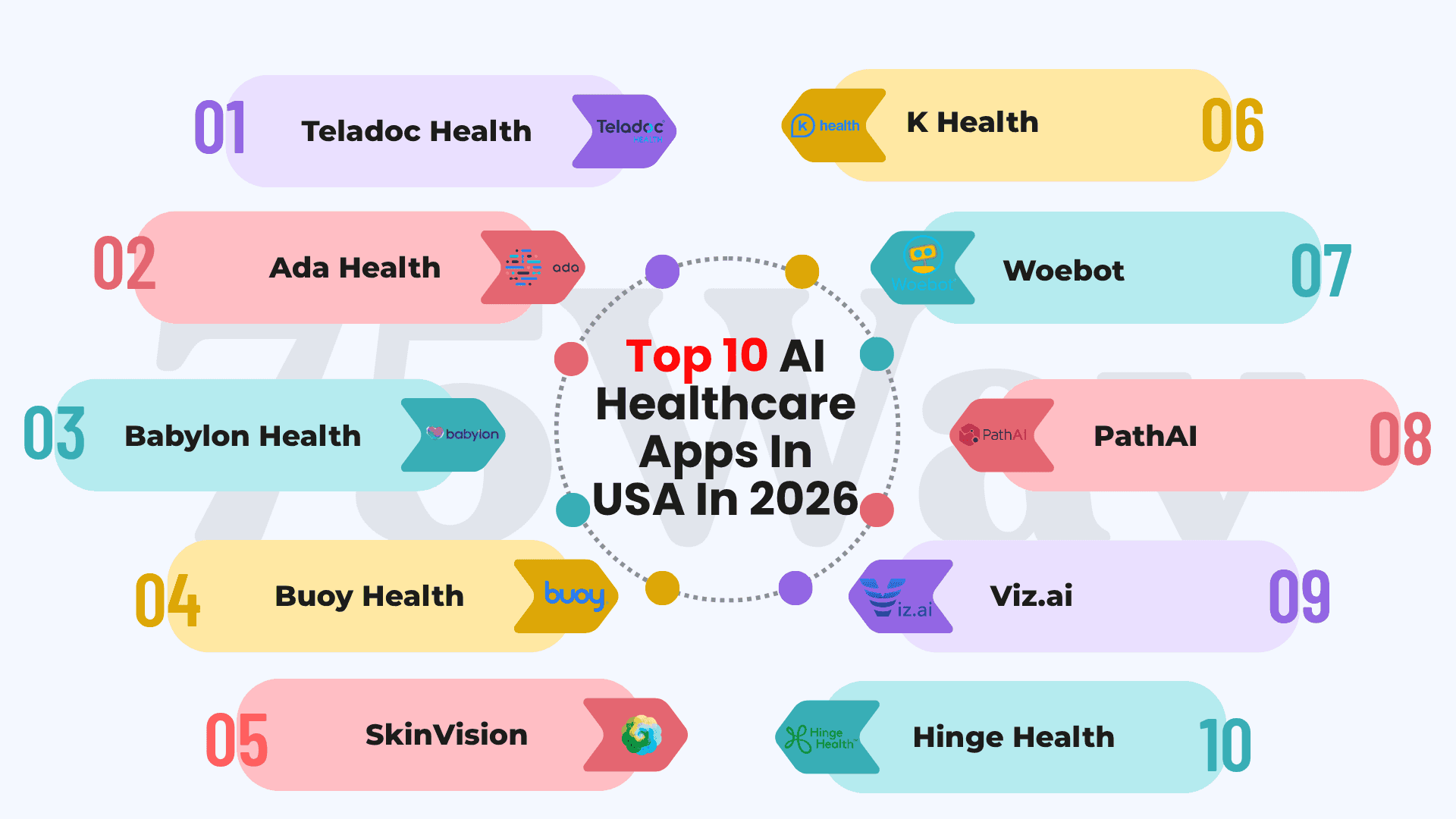
1. Teladoc Health
Teladoc Health is one of the most popular AI healthcare apps in the United States, helping patients access virtual healthcare services quickly. The platform combines telemedicine, AI-powered symptom analysis, chronic condition management, mental health services, and remote patient monitoring into a single healthcare ecosystem. Hospitals, employers, insurers, and healthcare providers use Teladoc Health to improve patient accessibility while reducing unnecessary in-person consultations and operational pressure on healthcare systems. Its key features are:
- Virtual doctor consultations
- AI symptom assessment
- Mental health support
- Chronic disease monitoring
- Prescription management
- Remote patient care
Teladoc Health improves healthcare accessibility for patients who need faster medical assistance without visiting clinics physically. Its AI-powered healthcare infrastructure supports personalized care delivery, continuous patient monitoring, and digital healthcare experiences across multiple healthcare specialties. The platform also demonstrates how AI healthcare apps are helping businesses scale healthcare operations efficiently in 2026.
- Platform Availability: iOS, Android, Web
- Monthly Active Users: Over 90 million users globally
- App Rating: 4.7/5
2. Ada Health
Ada Health is an AI-powered healthcare application designed to help users understand symptoms and receive personalized medical guidance before consulting healthcare professionals. The platform uses artificial intelligence, medical knowledge databases, and conversational assessments to analyze user-reported symptoms intelligently. Its user-friendly interface and accurate health assessment capabilities have made it one of the fastest-growing AI healthcare apps in the USA. Its core features are:
- AI symptom checker
- Personalized health assessments
- Medical guidance suggestions
- Health history tracking
- Multilingual healthcare support
Ada Health helps users make informed healthcare decisions while reducing confusion during early symptom identification stages. The application supports healthcare accessibility by guiding patients toward appropriate care pathways and encouraging timely medical consultations when necessary. Its conversational AI system also demonstrates how AI is simplifying healthcare interactions for modern users.
- Platform Availability: iOS, Android
- Monthly Active Users: Over 13 million users
- App Rating: 4.8/5
3. Babylon Health
Babylon Health combines AI consultations, telemedicine, digital prescriptions, and virtual healthcare assistance into a unified healthcare platform. The app focuses on improving healthcare accessibility through digital-first healthcare experiences, allowing patients to connect with healthcare professionals remotely while receiving AI-supported symptom guidance and medical insights. Its technology-driven approach helped accelerate virtual healthcare adoption across multiple healthcare segments. Its major features are:
- AI-powered triage
- Video consultations
- Digital prescriptions
- Patient health tracking
- Virtual healthcare assistance
Babylon Health supports healthcare providers by improving patient communication, streamlining digital consultations, and expanding access to healthcare services across remote and underserved communities. Positioned among the leading AI-powered healthcare platforms in US, it also highlights how AI in healthcare transforms traditional healthcare delivery models into more scalable and patient-centric systems.
- Platform Availability: iOS, Android, Web
- Monthly Active Users: Over 5 million users
- App Rating: 4.5/5
4. Buoy Health
Buoy Health is an AI-driven healthcare navigation platform designed to help users understand symptoms and identify suitable healthcare pathways quickly. Ranked among prominent AI apps for healthcare in USA, this mobile application asks users health-related questions through an intelligent conversational interface and then provides personalized recommendations based on symptom analysis and medical data patterns. Its simple user experience and fast healthcare guidance capabilities have made it increasingly popular among digital healthcare users. Its major features are:
- AI health assistant
- Symptom evaluation
- Healthcare recommendations
- Care pathway suggestions
- Personalized health insights
As one of the best AI healthcare apps, it helps users reduce uncertainty during early symptom identification while guiding them toward appropriate healthcare services efficiently. The platform also supports healthcare providers by reducing unnecessary clinical appointments and improving patient decision-making before consultations. Its AI-powered healthcare navigation system reflects the growing demand for intelligent healthcare assistance in 2026.
- Platform Availability: iOS, Android, Web
- Monthly Active Users: Over 1 million users
- App Rating: 4.6/5
5. SkinVision
SkinVision is an AI-powered healthcare app focused on skin condition assessments and early skin cancer risk detection through smartphone imaging technology. Users can scan skin spots or moles using their smartphone cameras, and the AI system analyzes image patterns to identify potentially high-risk skin conditions. The application has become increasingly valuable for preventive healthcare and early dermatology awareness. Its premium features are:
- AI image analysis
- Skin risk assessments
- Mole tracking
- Dermatology recommendations
- Preventive monitoring
SkinVision helps users monitor skin health proactively while encouraging early medical intervention for suspicious skin conditions. The app also demonstrates how computer vision and AI imaging technologies are transforming preventive healthcare and remote diagnostics. As preventive healthcare adoption grows rapidly, platforms like SkinVision are becoming more important across digital healthcare ecosystems.
- Platform Availability: iOS, Android
- Monthly Active Users: Over 3 million users
- App Rating: 4.7/5
6. K Health
K Health is an AI-powered healthcare platform that combines virtual doctor consultations with data-driven symptom analysis and personalized healthcare guidance. The app uses machine learning models trained on large healthcare datasets to provide users with health insights based on symptoms, medical history, and behavioral patterns. Its affordable healthcare accessibility model has contributed significantly to its growing adoption. Its major features are:
- AI-powered medical insights
- Virtual doctor consultations
- Health condition tracking
- Personalized treatment guidance
- Affordable healthcare access
K Health, as one of the leading AI healthcare mobile apps, improves healthcare accessibility by helping patients connect with healthcare professionals faster while reducing consultation barriers for underserved communities. The platform also supports digital healthcare scalability by delivering cost-effective virtual healthcare experiences powered by AI-driven medical intelligence.
- Platform Availability: iOS, Android, Web
- Monthly Active Users: Over 6 million users
- App Rating: 4.6/5
7. Woebot
Woebot is a conversational AI mental wellness app designed to support emotional health through cognitive behavioral therapy techniques and intelligent conversations. The application interacts with users through conversational AI agents, helping individuals track moods, manage stress, and improve emotional awareness through personalized mental wellness support. Mental health AI applications like Woebot are already becoming major contributors to digital healthcare innovation in 2026. Its widely-used features are:
- AI conversational therapy
- Mental wellness tracking
- Mood analysis
- Behavioral support exercises
- Emotional health insights
Woebot helps users access emotional wellness support conveniently without the pressure often associated with traditional therapy environments. The platform also reflects the growing role of AI-powered mental healthcare solutions in addressing rising mental health challenges globally. Its conversational healthcare model demonstrates how AI can strengthen patient engagement beyond traditional healthcare services.
- Platform Availability: iOS, Android
- Monthly Active Users: Over 1.5 million users
- App Rating: 4.8/5
8. PathAI
PathAI is an advanced AI healthcare platform focused on pathology diagnostics and medical image interpretation using machine learning technologies. The platform helps pathologists analyze tissue samples, improve diagnostic accuracy, and streamline pathology workflows through AI-assisted healthcare intelligence. Healthcare organizations increasingly use PathAI to strengthen precision diagnostics while improving clinical efficiency. Its main features are:
- AI pathology analysis
- Medical image interpretation
- Diagnostic support
- Clinical workflow optimization
- Data-driven pathology insights
PathAI helps healthcare providers improve diagnostic precision while reducing human error risks in pathology analysis. The platform also demonstrates how AI is supporting healthcare professionals rather than replacing them entirely. Its role in precision medicine and data-driven diagnostics continues to expand rapidly across healthcare ecosystems in 2026.
- Platform Availability: Web-Based Platform
- Monthly Active Users: Used by multiple healthcare institutions and pathology networks
- App Rating: 4.7/5
9. Viz.ai
Viz.ai is an AI-driven healthcare platform designed for stroke detection, emergency care coordination, and real-time healthcare communication. The platform uses artificial intelligence to analyze medical imaging scans rapidly and alert healthcare professionals immediately when stroke-related patterns are detected. Its emergency healthcare capabilities have made it highly valuable for hospitals and critical care teams. Its widely-used features are:
- AI stroke detection
- Emergency alert systems
- Radiology integration
- Care coordination workflows
- Real-time medical notifications
Viz.ai helps healthcare organizations accelerate emergency response times and improve patient outcomes during critical healthcare situations. The platform highlights how AI-powered healthcare systems are becoming essential for time-sensitive medical decision-making and emergency care management. Faster diagnosis and coordinated care can significantly improve stroke recovery outcomes, making AI increasingly important in emergency healthcare infrastructure.
- Platform Availability: Web, Hospital Systems Integration
- Monthly Active Users: Widely adopted across hospital networks
- App Rating: 4.7/5
10. Hinge Health
Hinge Health is a digital healthcare platform focused on AI-supported physical therapy, musculoskeletal care, and chronic pain management through remote healthcare programs. The application combines motion tracking, wearable technology integration, AI rehabilitation guidance, and personalized exercise programs to help users recover from injuries and manage long-term physical conditions. Its core features are:
- Motion tracking
- AI rehabilitation guidance
- Physical therapy programs
- Chronic pain management
- Remote care support
Hinge Health improves patient recovery experiences by making physical therapy more accessible, personalized, and convenient through digital healthcare technologies. The platform also reduces dependency on frequent in-person therapy visits while helping healthcare providers deliver scalable rehabilitation support remotely. As preventive healthcare and remote wellness programs continue growing, applications like Hinge Health are becoming increasingly important across modern healthcare ecosystems.
- Platform Availability: iOS, Android, Web
- Monthly Active Users: Over 1 million users
- App Rating: 4.8/5
Also Read:Best Healthcare App Development Firms for Startups and Enterprises
Top AI Healthcare Apps For Healthcare Providers in US in 2026
Healthcare providers across the USA are rapidly adopting AI healthcare apps across iOS and Android to improve patient outcomes, automate clinical workflows, reduce administrative burden, and strengthen healthcare decision-making. From diagnostics and medical imaging to patient engagement and workflow automation, AI is already transforming provider-focused healthcare operations in 2026.
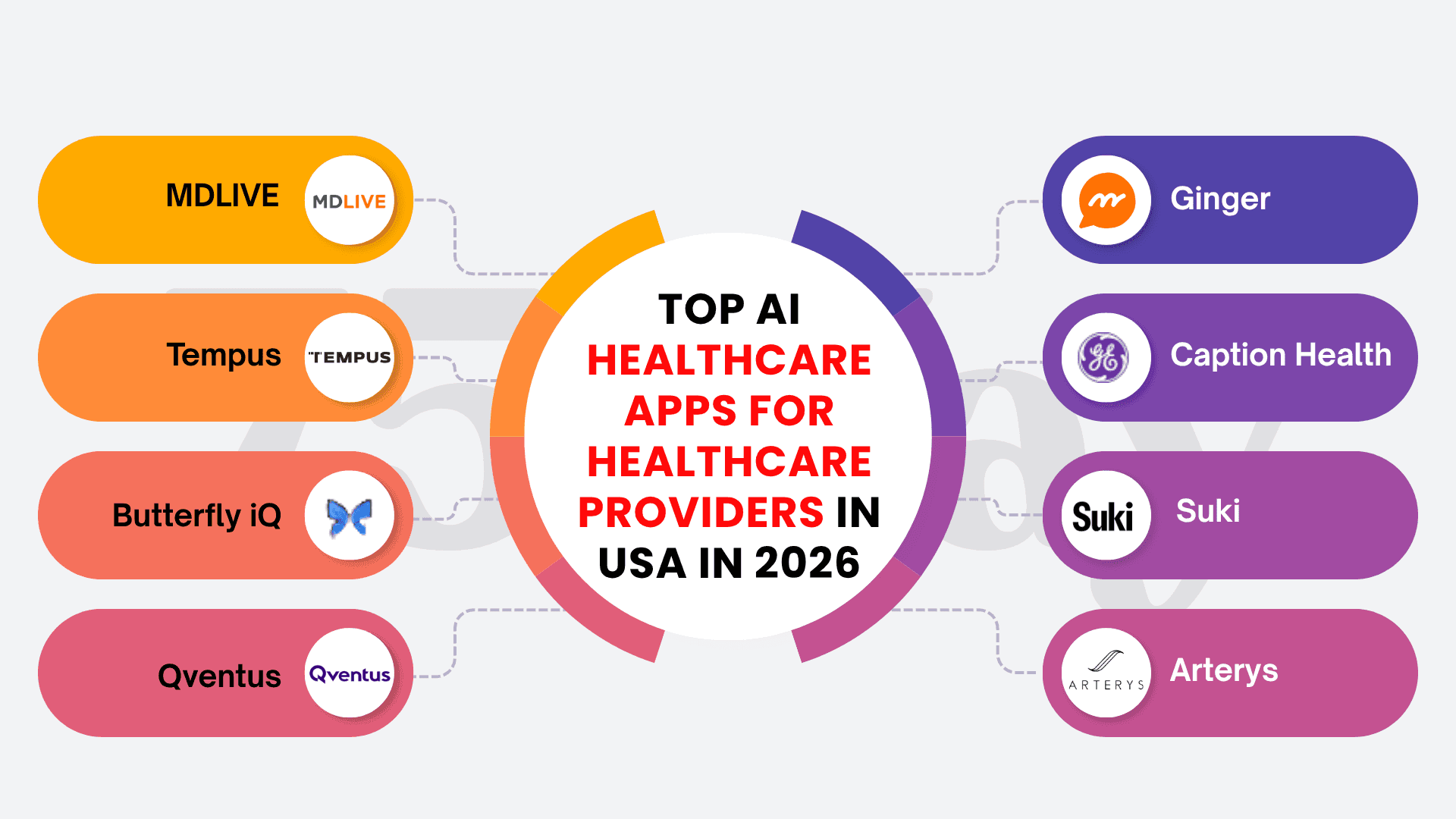
1. MDLIVE
MDLIVE is a popular AI-powered telehealth platform helping healthcare providers deliver virtual consultations, behavioral healthcare services, and urgent care support remotely. The platform improves healthcare accessibility while helping providers manage patient communication and consultations more efficiently through digital healthcare infrastructure.
Key Features:
- Virtual healthcare consultations
- Behavioral health services
- AI-assisted patient triage
- Digital prescription support
- Remote care management
2. Tempus
Tempus uses artificial intelligence and clinical data analytics to support precision medicine and personalized treatment planning for healthcare providers. The platform helps physicians analyze molecular, genomic, and clinical data to improve treatment decisions and patient care strategies across complex healthcare conditions.
Key Features:
- AI clinical analytics
- Genomic data interpretation
- Precision medicine insights
- Personalized treatment planning
- Healthcare data management
3. Butterfly iQ
Butterfly iQ is an AI-powered portable ultrasound platform helping healthcare providers perform imaging diagnostics directly through mobile-connected devices. The application simplifies medical imaging accessibility while improving point-of-care diagnostics across hospitals, emergency care units, and remote healthcare settings.
Key Features:
- Portable ultrasound imaging
- AI imaging assistance
- Mobile healthcare diagnostics
- Real-time image analysis
- Point-of-care support
4. Qventus
Qventus helps healthcare providers optimize hospital operations using artificial intelligence and predictive healthcare analytics. The platform supports patient flow management, discharge coordination, scheduling optimization, and operational decision-making to reduce inefficiencies across healthcare systems.
Key Features:
- Predictive operational analytics
- Patient flow optimization
- Discharge management
- Scheduling automation
- Hospital workflow intelligence
5. Ginger
Ginger provides AI-supported mental healthcare services for healthcare providers through behavioral health coaching, virtual therapy, and emotional wellness support. The platform helps healthcare organizations expand access to mental healthcare while improving patient engagement and emotional support accessibility.
Key Features:
- AI behavioral health support
- Virtual therapy sessions
- Emotional wellness tracking
- Mental health coaching
- Patient engagement tools
6. Caption Health
Caption Health uses artificial intelligence to guide healthcare providers during ultrasound imaging procedures and cardiac assessments. The platform helps clinicians capture accurate medical imaging through real-time AI guidance, improving imaging consistency and diagnostic reliability.
Key Features:
- AI-guided ultrasound imaging
- Cardiac assessment support
- Real-time imaging guidance
- Diagnostic accuracy improvement
- Clinical workflow assistance
7. Suki
Suki is an AI-powered medical assistant designed to help healthcare providers automate clinical documentation and reduce administrative workload. Physicians use the platform to generate medical notes through voice-enabled AI interactions, allowing providers to focus more on patient care instead of repetitive documentation tasks.
Key Features:
- AI medical voice assistant
- Clinical note generation
- Healthcare documentation automation
- EHR integration
- Workflow productivity support
8. Arterys
Arterys helps healthcare providers analyze complex medical imaging data using cloud-based artificial intelligence technologies. The platform supports radiologists and clinicians by improving imaging interpretation speed, diagnostic efficiency, and data-driven healthcare decision-making across multiple specialties.
Key Features:
- AI imaging analysis
- Cloud-based radiology workflows
- Diagnostic support tools
- Medical imaging visualization
- Clinical data insights
Leading AI Healthcare Apps For Medical Researchers in USA
Medical researchers across the USA are increasingly using AI healthcare applications to accelerate clinical studies, analyze large healthcare datasets, improve drug discovery processes, and strengthen medical research accuracy. These AI-powered platforms help researchers reduce manual analysis time while improving data-driven healthcare innovation in 2026.
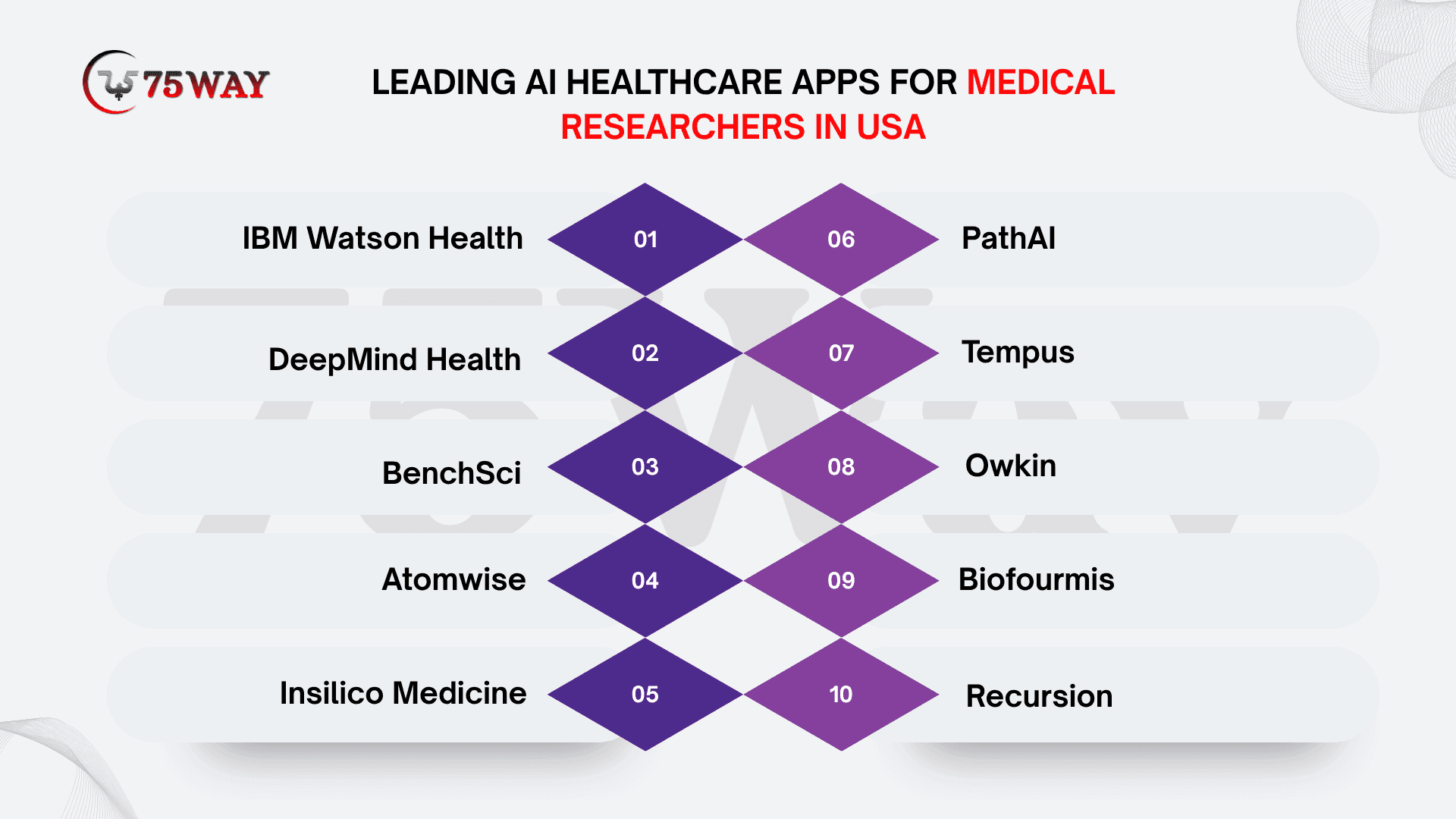
1. IBM Watson Health
IBM Watson Health supports medical researchers through AI-powered healthcare analytics, clinical research insights, and large-scale healthcare data processing. The platform helps researchers analyze medical records, identify healthcare trends, and accelerate evidence-based medical discoveries efficiently.
Major features of this AI healthcare app are:
- AI healthcare analytics
- Clinical research support
- Medical data analysis
- Predictive healthcare insights
- Research workflow optimization
2. DeepMind Health
DeepMind Health uses artificial intelligence and deep learning technologies to support medical research, diagnostics, and healthcare data analysis. Researchers use the platform to improve disease detection models and strengthen clinical decision-making through AI-powered healthcare intelligence.
High-impact features of this AI healthcare app are:
- Deep learning healthcare models
- Medical data interpretation
- Disease prediction support
- AI diagnostic analysis
- Clinical research insights
3. BenchSci
BenchSci helps medical researchers accelerate biomedical discoveries using artificial intelligence and scientific data analysis technologies. The platform assists researchers in identifying relevant experimental insights, antibodies, and biomedical evidence more efficiently.
Premium features of this AI-powered healthcare app are:
- AI biomedical analysis
- Scientific data discovery
- Research experiment insights
- Antibody identification support
- Research workflow automation
4. Atomwise
Atomwise focuses on AI-powered drug discovery and molecular research for healthcare and pharmaceutical organizations. The platform uses machine learning models to identify potential drug compounds and accelerate pharmaceutical research processes significantly.
Major features of this AI healthcare application are:
- AI drug discovery
- Molecular analysis
- Predictive pharmaceutical modeling
- Compound screening
- Research data processing
5. Insilico Medicine
Insilico Medicine supports healthcare researchers through AI-driven drug development, aging research, and biomarker analysis technologies. Researchers use the platform to improve clinical research efficiency and accelerate therapeutic discoveries.
Core features of this AI healthcare mobile application are:
- AI-driven drug development
- Biomarker analysis
- Aging research support
- Clinical data modeling
- Pharmaceutical research automation
6. PathAI
PathAI helps medical researchers improve pathology analysis and precision diagnostics through AI-powered medical imaging interpretation. The platform supports research organizations in analyzing tissue samples and strengthening pathology-based healthcare studies.
Powerful features of this AI healthcare mobile app are:
- AI pathology analysis
- Tissue sample interpretation
- Diagnostic research support
- Medical imaging insights
- Precision healthcare analytics
7. Tempus
Tempus provides AI-powered clinical and genomic data analysis tools for medical researchers working in personalized medicine and oncology research. The platform helps researchers identify treatment patterns and improve precision healthcare strategies using healthcare data intelligence.
Essential features of this AI healthcare app are:
- Genomic data analysis
- Precision medicine insights
- Oncology research support
- AI clinical analytics
- Personalized treatment research
8. Owkin
Owkin uses federated learning and artificial intelligence technologies to support collaborative healthcare research while maintaining healthcare data privacy. Medical researchers use the platform to analyze distributed healthcare datasets securely across institutions.
Premium features of this AI-driven healthcare app are:
- Federated healthcare learning
- Collaborative medical research
- AI predictive analytics
- Healthcare data privacy
- Clinical research modeling
9. Biofourmis
Biofourmis supports medical researchers through AI-powered digital therapeutics, remote patient monitoring, and predictive analytics in healthcare. The platform helps researchers analyze patient-generated health data and improve clinical study outcomes.
Significant features of this AI healthcare app are:
- Remote patient monitoring
- AI predictive analytics
- Digital therapeutics support
- Clinical trial monitoring
- Healthcare data insights
10. Recursion
Recursion combines artificial intelligence, automation, and biotechnology research to accelerate drug discovery and healthcare innovation. The platform helps researchers analyze biological relationships and identify therapeutic opportunities through AI-powered scientific modeling.
Prominent features of this AI healthcare app are:
- AI biotechnology research
- Drug discovery automation
- Biological data analysis
- Predictive therapeutic modeling
- Scientific research intelligence
Read More:Top AI Agent Developers for Healthcare Industry in 2026
Cost-Effective AI Healthcare Apps For US Startups in 2026
Healthcare startups in the USA are increasingly adopting cost-effective AI healthcare apps to launch digital healthcare services faster without investing heavily in complex infrastructure initially. These platforms help startups validate ideas, improve patient experiences, automate operations, and scale healthcare services efficiently while controlling development and operational costs in 2026.
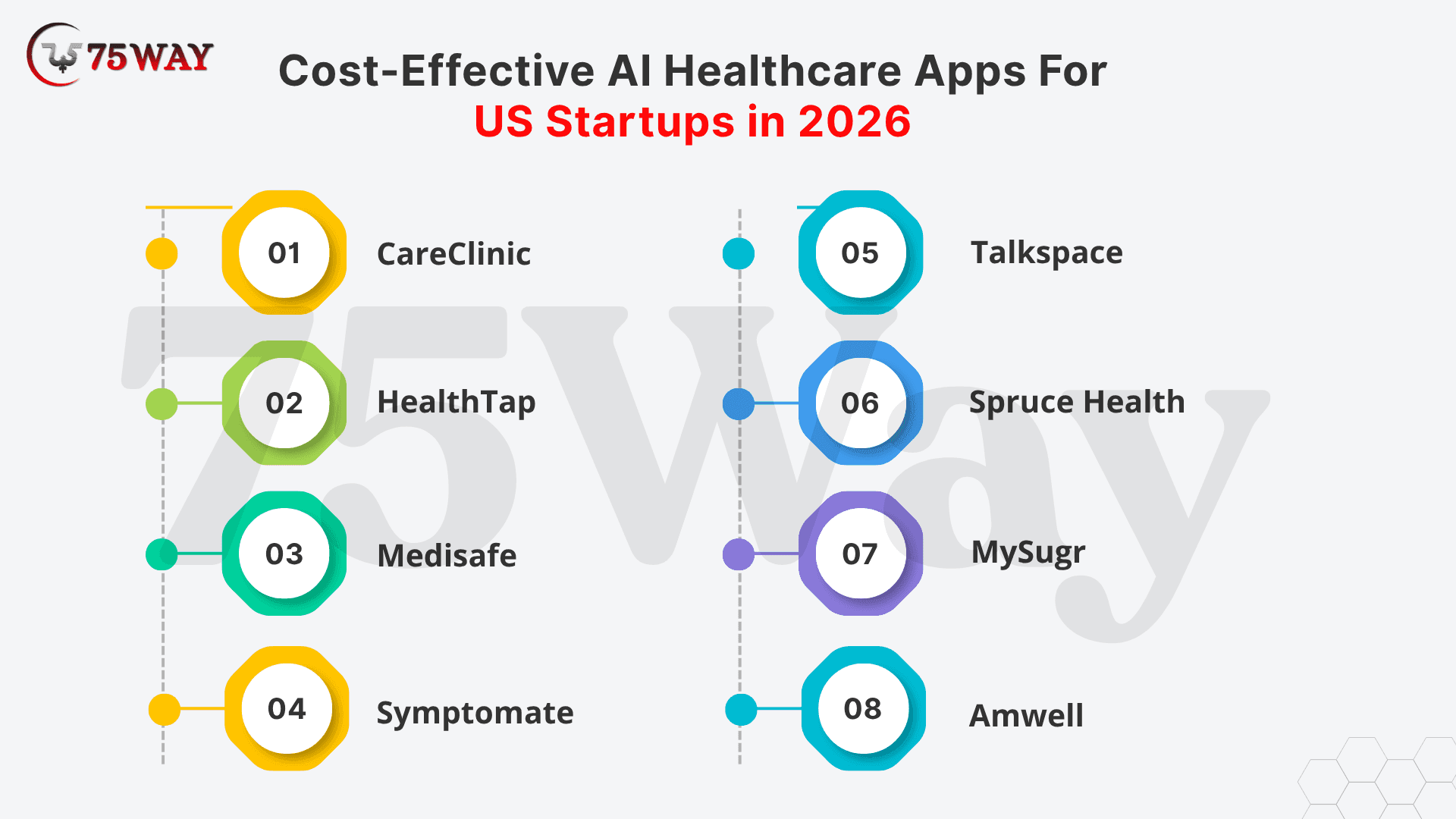
1. CareClinic
CareClinic is a cost-effective healthcare management platform helping startups offer medication tracking, symptom monitoring, appointment management, and wellness support through a user-friendly digital healthcare experience. Its customizable healthcare features make it suitable for early-stage healthcare businesses. Its major features are:
- Medication reminders
- Symptom tracking
- Appointment management
- Wellness monitoring
- Health data management
2. HealthTap
HealthTap allows healthcare startups to provide AI-supported virtual consultations and healthcare guidance through digital healthcare infrastructure. The platform supports affordable telemedicine adoption while improving patient accessibility and healthcare engagement. Its core features are:
- Virtual doctor consultations
- AI health guidance
- Healthcare messaging
- Prescription support
- Telemedicine services
3. Medisafe
Medisafe focuses on medication management and patient adherence tracking through AI-powered reminders and healthcare monitoring features. Healthcare startups use the platform to support chronic care management and patient engagement cost-effectively. Its main features are:
- Medication reminders
- Adherence tracking
- Health alerts
- Caregiver connectivity
- Prescription management
4. Symptomate
Symptomate provides AI-powered symptom analysis and healthcare recommendations through conversational healthcare assessments. Startups use the platform to integrate intelligent symptom-checking functionality without developing complex healthcare AI systems from scratch. Its major features include:
- AI symptom checker
- Health risk analysis
- Care recommendations
- Conversational assessments
- Healthcare guidance
5. Talkspace
Talkspace supports mental healthcare startups through AI-enhanced therapy services, virtual counseling, and emotional wellness support systems. The platform helps startups deliver scalable mental healthcare experiences digitally while reducing operational complexity. Its high-impact features are:
- Virtual therapy sessions
- Mental wellness support
- AI-driven engagement
- Behavioral health tracking
- Healthcare messaging
6. Spruce Health
Spruce Health helps healthcare startups improve patient communication through secure messaging, virtual consultations, appointment coordination, and digital healthcare collaboration tools. The platform supports HIPAA-compliant healthcare communication infrastructure. Its primary features are:
- Secure healthcare messaging
- Appointment coordination
- Telehealth consultations
- Team collaboration tools
- HIPAA-compliant communication
7. MySugr
MySugr is an AI-supported diabetes management platform designed to help healthcare startups provide chronic condition tracking and personalized healthcare insights. The app simplifies diabetes monitoring through data-driven healthcare experiences and connected health tracking. Its significant features are:
- Blood sugar tracking
- AI health insights
- Diabetes reports
- Medication logging
- Connected health monitoring
8. Amwell
Amwell provides healthcare startups with scalable telehealth infrastructure, virtual consultation capabilities, and AI-supported patient engagement systems. The platform allows startups to launch digital healthcare services quickly while reducing technical development complexity and operational expenses. Its essential features are:
- Virtual healthcare delivery
- AI-assisted patient engagement
- Telemedicine infrastructure
- Remote healthcare access
- Digital care coordination
Leading AI Apps in Healthcare For Diagnostic Centers in USA
Diagnostic centers across the USA are rapidly adopting AI healthcare applications to improve diagnostic accuracy, accelerate report generation, optimize imaging workflows, and reduce manual analysis time. These AI-powered platforms help diagnostic providers deliver faster, data-driven, and more precise healthcare services in 2026.
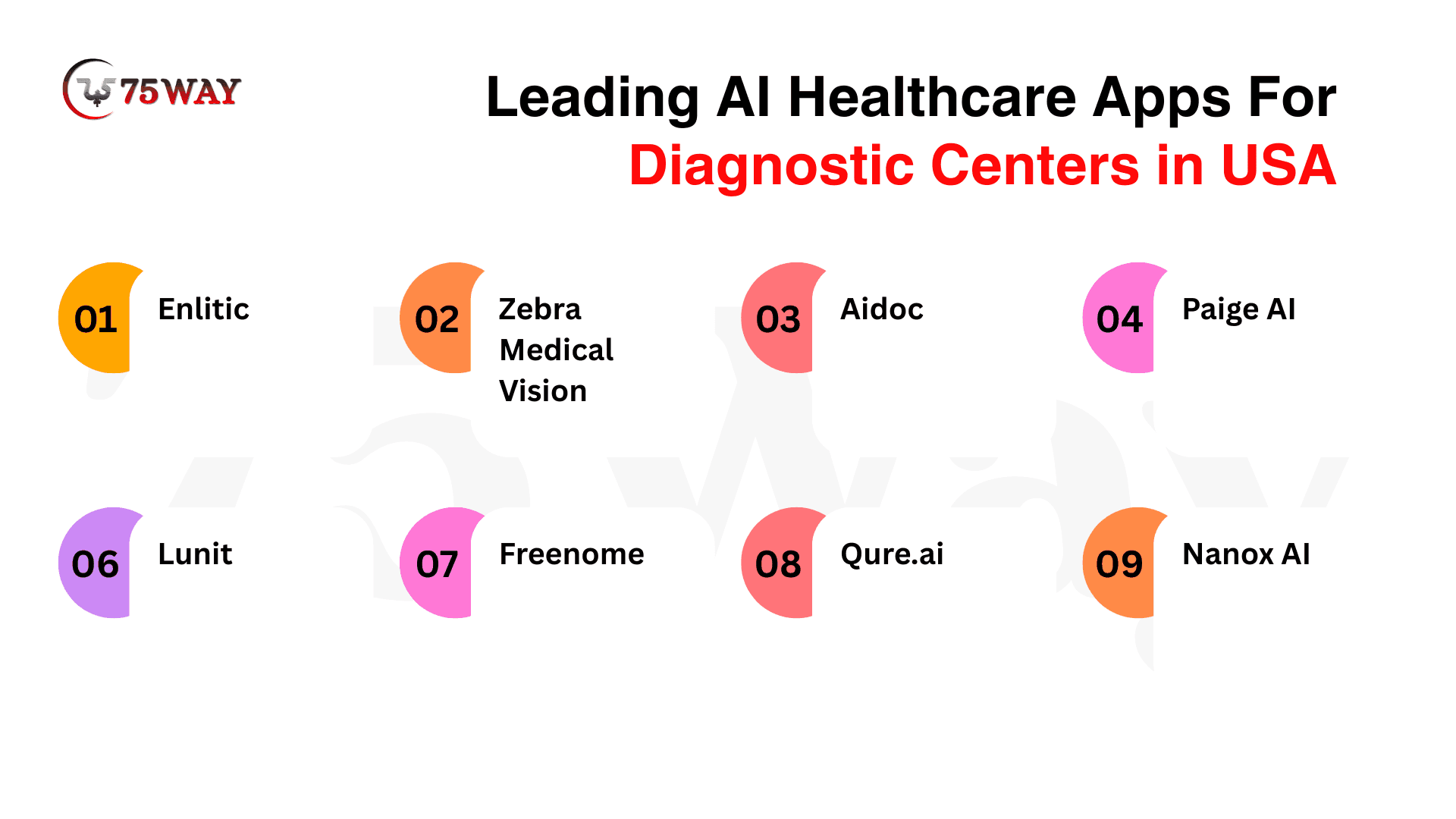
1. Enlitic
Enlitic uses deep learning and medical imaging intelligence to help diagnostic centers improve radiology analysis and clinical reporting accuracy. The platform assists healthcare professionals in identifying abnormalities faster while streamlining imaging workflows across diagnostic operations.
The platform helps radiologists improve diagnostic consistency while minimizing manual analysis workload during high-volume imaging procedures. Its AI-powered healthcare infrastructure also supports faster report generation and optimized diagnostic workflows, which become extremely important for diagnostic centers managing growing patient volumes in 2026.
2. Zebra Medical Vision
Zebra Medical Vision focuses on AI-driven medical imaging analytics for diagnostic centers and radiology providers across the healthcare industry. The platform analyzes CT scans, X-rays, and other medical images using artificial intelligence to identify diseases and abnormalities more. Its advanced imaging intelligence helps diagnostic teams improve accuracy while accelerating radiology review processes.
Diagnostic centers use Zebra Medical Vision to strengthen early disease detection and reduce diagnostic reporting delays during critical healthcare situations. The platform also demonstrates how AI imaging technologies are helping healthcare providers improve preventive healthcare and operational scalability.
3. Aidoc
Aidoc is an AI-powered radiology platform designed to help diagnostic centers analyze medical imaging scans faster and prioritize urgent healthcare cases automatically. The platform uses artificial intelligence to detect critical abnormalities in CT scans and other medical images, allowing radiologists and healthcare teams to respond more efficiently during emergency situations. Its real-time imaging intelligence has made it increasingly valuable for high-volume diagnostic environments across the USA.
Diagnostic centers use Aidoc to improve workflow efficiency, reduce reporting delays, and strengthen emergency care coordination during time-sensitive healthcare cases. The platform also helps radiologists manage growing imaging workloads without compromising diagnostic accuracy, which is becoming a major operational challenge for healthcare providers in 2026.
4. Paige AI
Paige AI is a digital pathology platform that uses artificial intelligence to help diagnostic centers analyze pathology slides and identify disease patterns more accurately. The platform supports pathologists through machine learning-based tissue analysis, helping healthcare providers improve cancer detection and pathology diagnostics across large-scale healthcare operations.
Healthcare organizations use Paige AI to reduce manual pathology review time while improving diagnostic consistency during complex pathology assessments. Its AI-powered pathology intelligence also supports precision medicine initiatives and data-driven diagnostics, making digital pathology increasingly scalable and efficient for modern diagnostic centers.
5. Lunit
Lunit is an AI healthcare platform focused on cancer diagnostics and radiology analysis through advanced medical imaging intelligence. The platform helps diagnostic centers identify abnormalities in chest X-rays, mammograms, and other diagnostic scans using deep learning technologies. Its predictive imaging capabilities support healthcare providers in detecting diseases earlier and improving diagnostic decision-making.
Diagnostic centers use Lunit to strengthen cancer screening accuracy and reduce diagnostic delays during imaging evaluations. The platform also improves workflow efficiency for radiologists handling large imaging volumes while supporting preventive healthcare initiatives through AI-driven diagnostic assistance.
6. Freenome
Freenome combines artificial intelligence and molecular diagnostics to improve early cancer detection and preventive healthcare screening processes. The platform analyzes biological signals and healthcare data patterns to help diagnostic centers identify potential disease risks through non-invasive screening technologies. Its data-driven healthcare approach is helping transform preventive diagnostics significantly in 2026.
Healthcare providers use Freenome to support early intervention strategies and improve cancer screening accessibility through AI-powered healthcare intelligence. The platform also demonstrates how artificial intelligence is expanding beyond traditional imaging diagnostics into predictive molecular healthcare analysis.
7. Qure.ai
Qure.ai is an AI-powered diagnostic imaging platform designed to help diagnostic centers analyze chest X-rays, CT scans, and neurological imaging studies more efficiently. The platform uses machine learning technologies to detect conditions like tuberculosis, lung diseases, and brain abnormalities while improving diagnostic turnaround times across healthcare operations.
Diagnostic centers use Qure.ai to strengthen healthcare accessibility, especially in environments managing high imaging volumes and limited radiology resources. Its AI-driven imaging analysis also supports faster healthcare decision-making while improving diagnostic consistency across multiple clinical specialties.
8. Nanox AI
Nanox AI focuses on AI-driven radiology analysis and preventive healthcare screening through intelligent imaging technologies. The platform helps diagnostic centers identify hidden disease patterns, improve imaging efficiency, and support population-level healthcare insights using predictive healthcare analytics and medical imaging intelligence.
Healthcare organizations use Nanox AI to strengthen preventive diagnostics and improve early disease identification before conditions become critical. The platform also supports scalable healthcare screening initiatives, helping diagnostic providers deliver more proactive and data-driven healthcare services in modern healthcare ecosystems.
Benefits of AI-Driven Healthcare Mobile Apps for the Medical Industry
AI healthcare applications are already transforming how healthcare organizations manage patient care, diagnostics, operations, and digital healthcare experiences. From improving efficiency to expanding healthcare accessibility, these intelligent healthcare systems help providers deliver faster, smarter, and more personalized healthcare services.
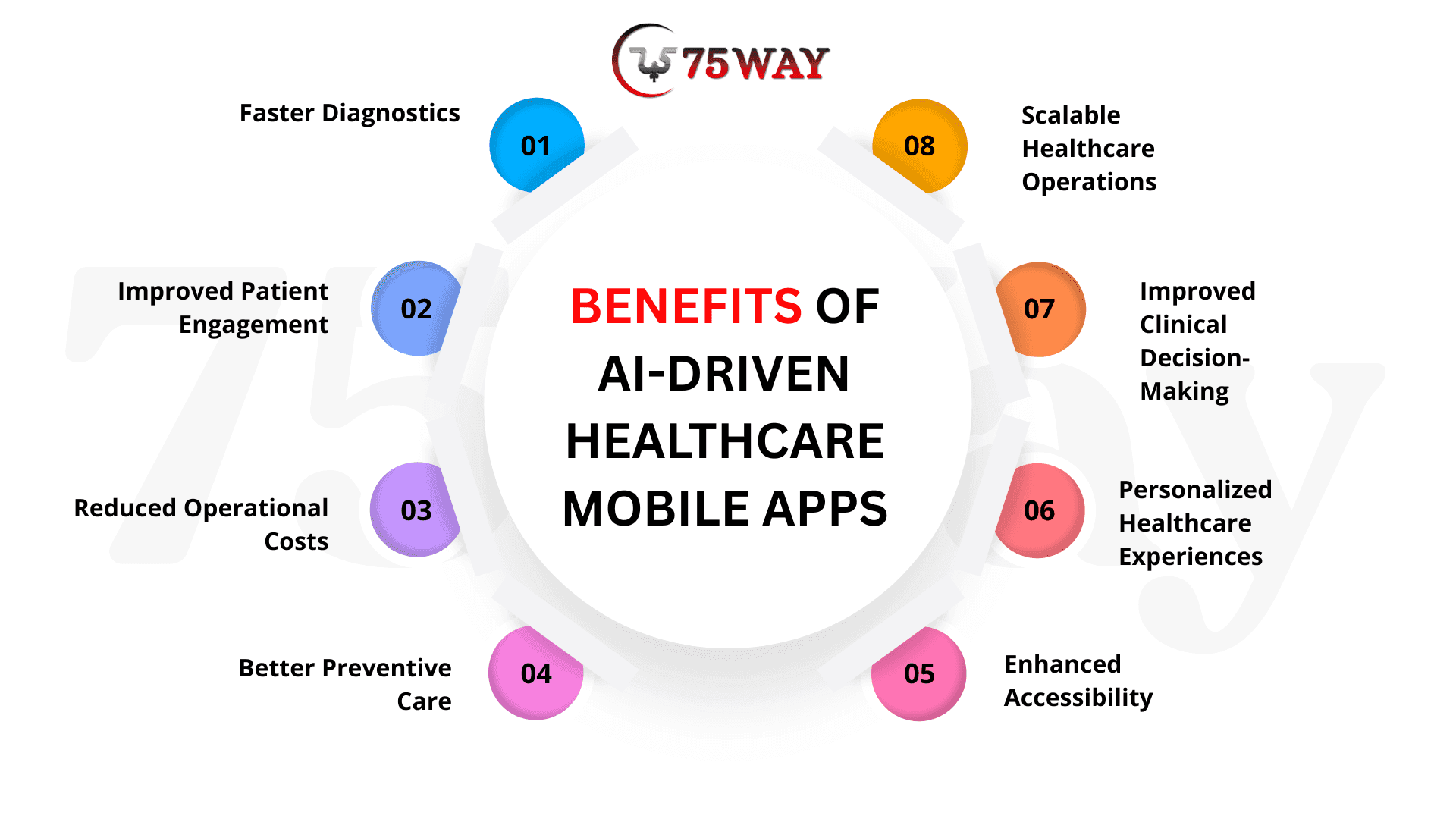
- Faster Diagnostics: AI systems analyze medical records, lab reports, and imaging scans rapidly. This helps healthcare providers reduce delays and improve diagnostic decision-making accuracy.
- Improved Patient Engagement: AI healthcare apps personalize patient communication through reminders, virtual assistance, and health tracking. Better engagement improves healthcare experiences and long-term patient satisfaction.
- Reduced Operational Costs: Healthcare automation minimizes repetitive administrative tasks like scheduling, documentation, and billing management. Organizations improve operational efficiency while lowering unnecessary resource utilization and overhead expenses.
- Better Preventive Care: AI-powered predictive analytics identify health risks before conditions become severe. Remote monitoring systems also support continuous preventive healthcare management for high-risk patients.
- Enhanced Accessibility: Virtual healthcare applications improve healthcare availability across rural and underserved communities. Patients receive faster consultations and digital healthcare support without frequent hospital visits.
- Personalized Healthcare Experiences: AI healthcare platforms analyze patient-specific health data and behavioral patterns continuously. This allows providers to recommend customized treatments and personalized healthcare pathways.
- Improved Clinical Decision-Making: AI-powered healthcare insights help physicians evaluate patient conditions using real-time healthcare data. Faster clinical intelligence supports more informed and accurate treatment decisions.
- Scalable Healthcare Operations: AI applications help healthcare organizations manage growing patient volumes efficiently. Automated workflows and intelligent healthcare systems improve scalability without affecting healthcare service quality.
Explore More:How AI in Healthcare Reduces Costs & Boosts Hospital ROI in 2026?
Revenue-Generating AI Healthcare App Ideas To Invest In 2026
Healthcare businesses are increasingly investing in intelligent digital solutions that automate clinical workflows across healthcare systems. Modern healthcare solutions are opening huge growth opportunities for startups, hospitals, healthcare providers, and digital health businesses in 2026.
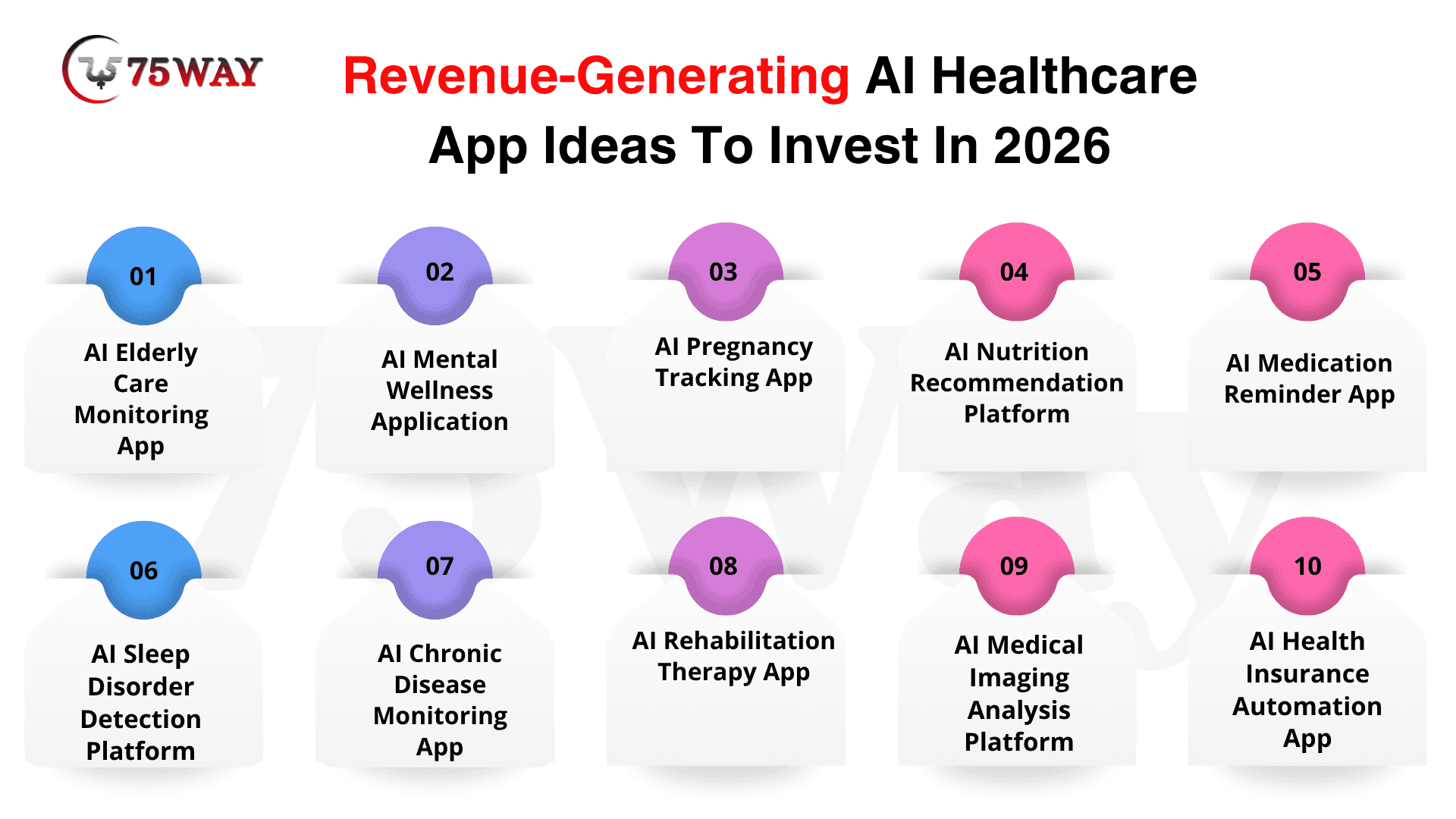
1. AI Elderly Care Monitoring App
An AI elderly care monitoring app helps families and healthcare providers track elderly patients remotely through wearable devices and health monitoring systems. The platform can detect abnormal movements, falls, medication delays, and emergency health situations instantly. Real-time alerts improve patient safety significantly. Healthcare providers also benefit from continuous remote care visibility.
2. AI Mental Wellness Application
AI mental wellness applications support emotional healthcare through conversational AI interactions, mood tracking, and behavioral health monitoring tools. These platforms provide personalized emotional wellness guidance based on user activity and mental health patterns. Mental healthcare accessibility has improved. Businesses are increasingly investing in AI-driven wellness platforms already.
3. AI Pregnancy Tracking App
AI-driven pregnancy tracking applications support prenatal healthcare through personalized health recommendations, appointment reminders, symptom monitoring, and fetal development tracking features. The platform helps expectant mothers manage pregnancy-related healthcare more efficiently throughout different stages. AI-driven insights improve healthcare engagement continuously. Preventive healthcare support becomes more accessible digitally.
4. AI Nutrition Recommendation Platform
AI nutrition recommendation platforms analyze dietary habits, health conditions, and lifestyle patterns to create personalized meal planning and nutrition guidance systems. These applications help users improve wellness outcomes through intelligent food recommendations and health tracking technologies. Personalized healthcare experiences increase user engagement. Preventive healthcare management also becomes more data-driven.
5. AI Medication Reminder App
AI medication reminder apps help patients manage prescriptions, medication schedules, and healthcare adherence through intelligent notification systems and health tracking capabilities. These applications reduce missed medications and improve treatment consistency for chronic healthcare conditions. Caregiver connectivity strengthens patient monitoring further. Healthcare organizations also improve patient adherence management.
6. AI Sleep Disorder Detection Platform
AI sleep disorder detection platforms use wearable integrations and health monitoring technologies to analyze sleep patterns and identify abnormal sleep behaviors. These applications support early detection of sleep disorders like insomnia and sleep apnea. Continuous health monitoring improves preventive healthcare significantly. Personalized sleep recommendations also enhance wellness outcomes.
7. AI Chronic Disease Monitoring App
AI-powered chronic disease monitoring applications support long-term healthcare management for diabetes, cardiovascular diseases, respiratory disorders, and other chronic conditions remotely. These platforms track patient health metrics and generate personalized healthcare alerts. Remote healthcare accessibility has improved greatly. Healthcare providers also gain better patient monitoring visibility.
8. AI Rehabilitation Therapy App
AI rehabilitation therapy applications provide virtual therapy programs using motion tracking, wearable integrations, and AI-powered movement analysis technologies. These platforms help patients recover from injuries and surgeries remotely through personalized rehabilitation exercises and progress monitoring systems. Physical therapy accessibility improves. Healthcare providers also reduce repetitive therapy coordination workload.
9. AI Medical Imaging Analysis Platform
AI medical imaging analysis platforms support radiologists and healthcare providers through machine learning-powered scan interpretation and abnormality detection systems. These applications analyze X-rays, CT scans, and MRIs faster while improving diagnostic consistency across healthcare operations. Emergency healthcare response improves. Diagnostic centers also optimize imaging workflow.
10. AI Health Insurance Automation App
AI health insurance automation applications streamline claims processing, patient verification, fraud detection, and policy management through intelligent workflow automation technologies. These platforms reduce manual administrative workload while improving healthcare insurance operational efficiency. Faster claim approvals improve customer satisfaction greatly. Insurance providers also strengthen fraud prevention capabilities.
AI Healthcare App Market Trends Widely Adopted in United States In 2026
Healthcare technology is evolving much faster than many organizations expected. AI automation in healthcare applications is no longer limited to virtual consultations or symptom checkers alone. Hospitals and healthcare providers are now adopting advanced AI capabilities to automate operations and build more personalized digital healthcare ecosystems.
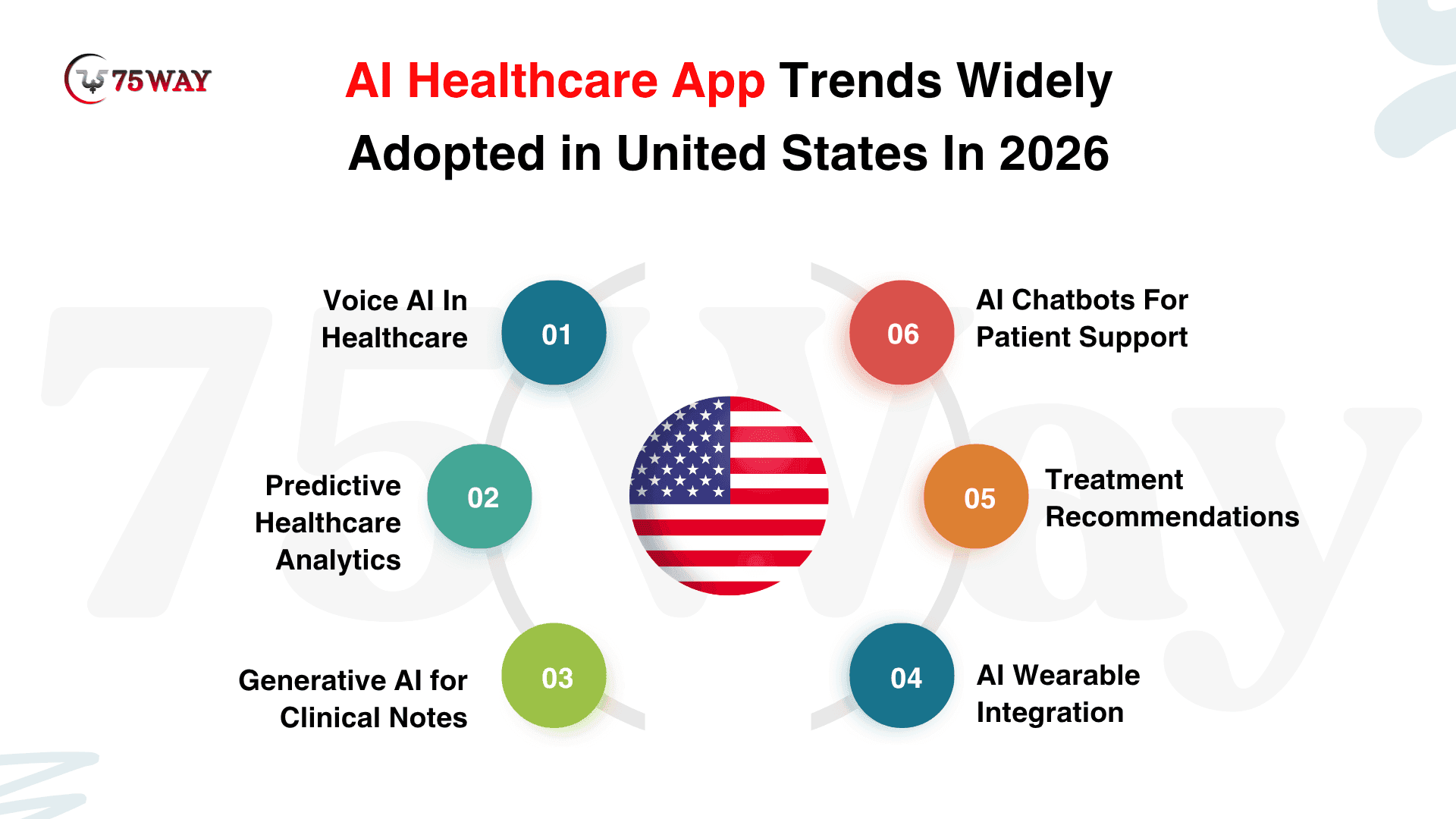
- Voice AI In Healthcare:Voice AI agents and assistants simplify patient communication and physician documentation.
- Predictive Healthcare Analytics: AI predicts disease risks using historical patient data analysis.
- Generative AI for Clinical Notes: Hospitals increasingly use generative AI systems for medical documentation.
- AI Wearable Integration: Healthcare apps integrate smartwatches and wearable devices for continuous monitoring.
- Treatment Recommendations: Machine learning models analyze patient histories for customized healthcare plans.
- AI Chatbots For Patient Support: Healthcare chatbots handle appointment scheduling, FAQs, and patient communication.
Know More:AI Healthcare Sales Agent: An In-Depth Guide For Healthcare Service Providers
How To Build A HIPAA-Compliant AI Healthcare App in 2026?
Building an AI healthcare application requires careful planning, secure infrastructure, healthcare compliance management, and intelligent AI integration from the beginning. Healthcare businesses cannot simply develop a standard mobile app and add compliance later. Every development stage directly impacts patient safety, healthcare data protection, scalability, and long-term operational success in the United States healthcare market.
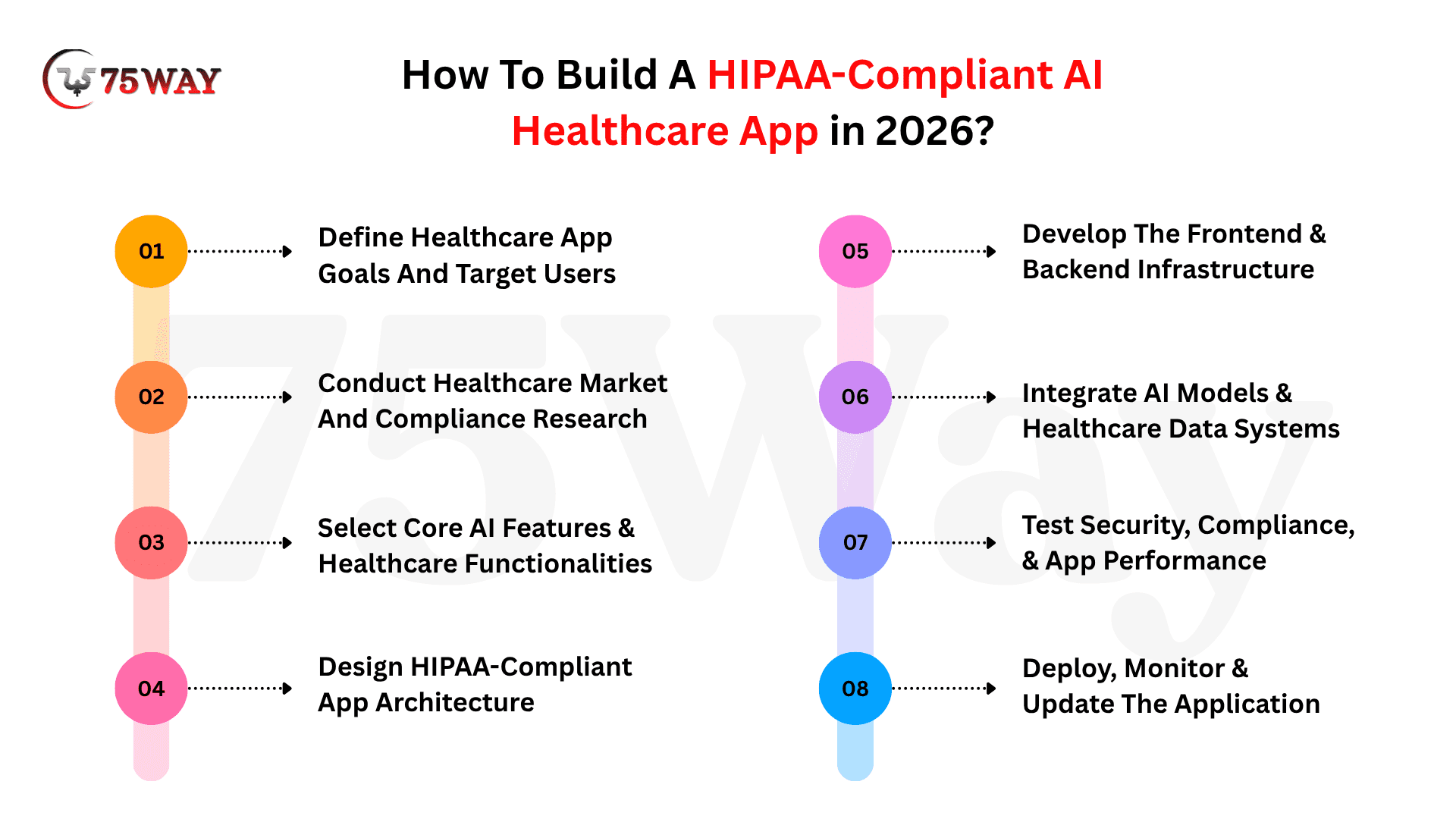
Step 1: Define Healthcare App Goals And Target Users
The development process starts with identifying the healthcare problem your application will solve and the audience it will serve. Businesses must clearly define whether the platform targets patients, hospitals, diagnostic centers, healthcare providers, or insurance organizations.
Clear healthcare objectives improve feature planning significantly. Early research also helps businesses avoid unnecessary development complexity later.
Step 2: Conduct Healthcare Market And Compliance Research
After defining business goals, healthcare organizations must analyze market trends, competitor platforms, healthcare workflows, and regulatory requirements.
This stage helps businesses understand patient expectations, operational gaps, HIPAA requirements, and potential compliance risks before development begins. Strong research improves product-market alignment. It also strengthens long-term healthcare business strategy.
Step 3: Select Core AI Features & Healthcare Functionalities
Once research is completed, businesses must finalize the AI capabilities and healthcare features required within the application ecosystem. These may include symptom checking, predictive analytics, remote patient monitoring, AI chatbots, medical imaging analysis, or appointment automation systems.
Feature prioritization reduces development confusion substantially. Focused functionality also improves healthcare user experiences.
Step 4: Design HIPAA-Compliant App Architecture
Before starting development, healthcare businesses must design a secure application architecture capable of protecting sensitive patient information continuously. HIPAA-compliant architecture includes encrypted databases, secure APIs, role-based access controls, protected cloud infrastructure, and healthcare-grade cybersecurity frameworks.
Security-focused architecture reduces future compliance challenges significantly. Strong foundations also improve healthcare platform scalability and reliability in the long term.
Step 5: Develop The Frontend & Backend Infrastructure
Following architecture planning, developers begin building the frontend interface and backend healthcare infrastructure supporting application functionality and data processing workflows. The frontend focuses on user experience.
The backend systems manage healthcare records, AI processing, authentication, APIs, and cloud communication. Development quality directly impacts application performance. Scalable infrastructure also supports future healthcare growth.
Step 6: Integrate AI Models & Healthcare Data Systems
After core development is completed, businesses integrate AI models, machine learning systems, and healthcare data management capabilities within the platform carefully. AI integration may include predictive healthcare analytics, NLP-based chatbots, diagnostic support systems, or wearable healthcare monitoring technologies.
Intelligent automation improves healthcare efficiency. Accurate AI systems also strengthen patient engagement and healthcare decision-making.
Step 7: Test Security, Compliance, & App Performance
Before deployment, healthcare organizations must test the application thoroughly for security vulnerabilities, compliance issues, AI accuracy, scalability, and operational stability across healthcare workflows.
Penetration testing, performance testing, and compliance validation help businesses identify weaknesses before public release. Early issue detection minimizes operational risks. Continuous testing also improves long-term healthcare platform reliability.
Step 8: Deploy, Monitor & Update The Application
Once testing is completed successfully, businesses deploy the healthcare application within secure cloud environments and begin continuous monitoring processes actively. Ongoing updates help organizations improve AI performance, strengthen cybersecurity, maintain healthcare compliance, and adapt to changing healthcare requirements over time.
Post-launch optimization remains essential for healthcare scalability. Continuous innovation also improves long-term business competitiveness.
Know In-Depth:Healthcare Mobile App Development: Strategy and Best Practices
Technologies Used In AI Healthcare App Development
Modern healthcare applications combine multiple advanced technologies:
- Artificial Intelligence
- Machine Learning
- Natural Language Processing
- Computer Vision
- Cloud Computing
- IoT Healthcare Devices
- Blockchain Security
- Big Data Analytics
- Voice Recognition
- Predictive Analytics
Popular development frameworks include:
- TensorFlow
- PyTorch
- React Native
- Flutter
- Node.js
- Python
- AWS Healthcare Services
- Google Cloud Healthcare APIs
Read Too: App Development for Mental Health Payroll Management in 2026
Criteria For Selecting A Healthcare App Development Partner AI/ML
Choosing the right AI healthcare app development partner is a critical decision that directly influences product quality, regulatory compliance, scalability, and long-term success. Healthcare and telemedicine applications deal with sensitive patient data and complex workflows, so the development team must combine technical expertise with deep healthcare domain understanding.
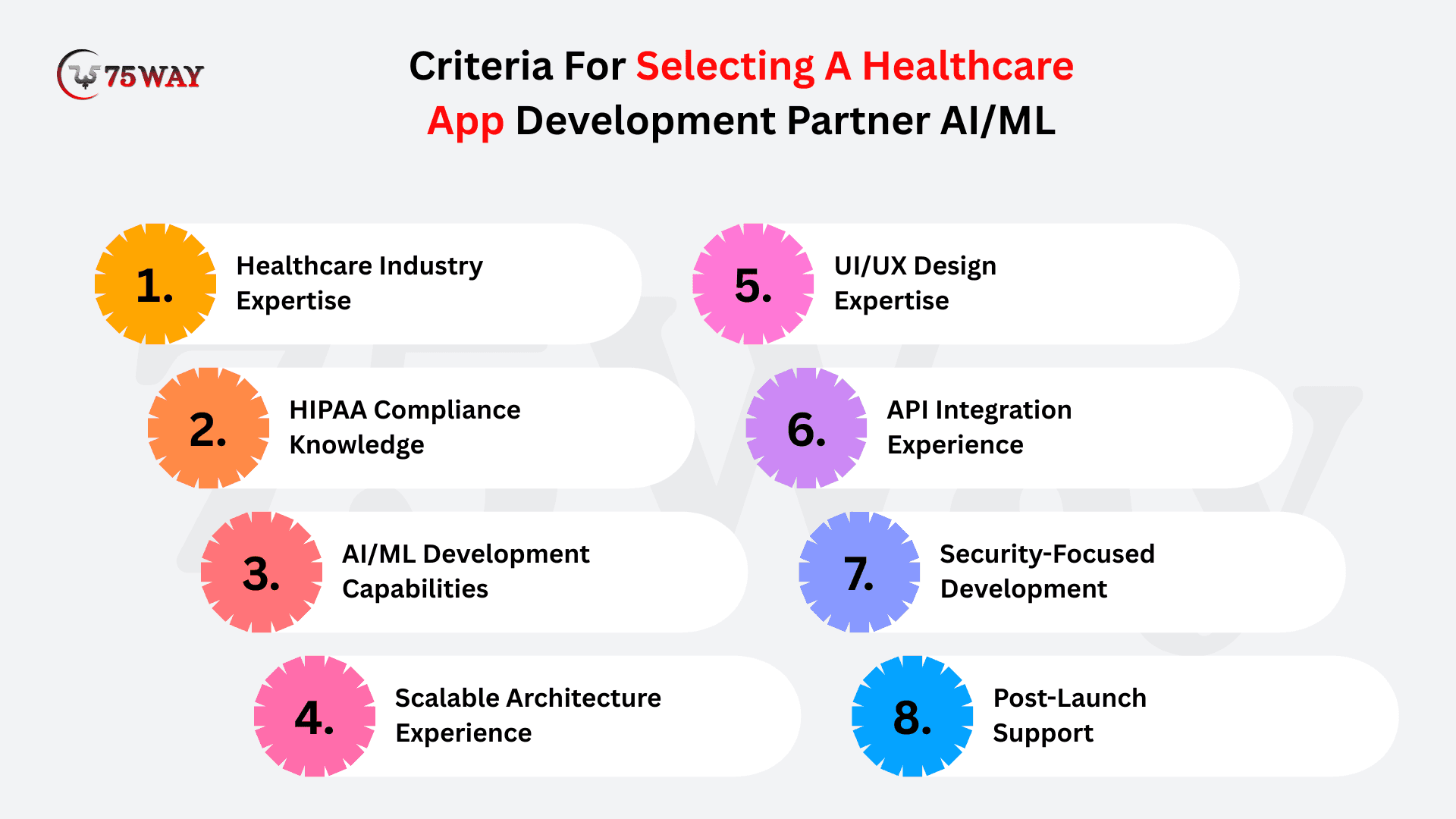
- Healthcare Industry Expertise
A strong development partner should have proven experience in building healthcare solutions for hospitals, clinics, or healthtech startups. This ensures they understand real clinical workflows, patient needs, and operational challenges. Industry expertise helps reduce development errors and improve product-market fit.
- HIPAA Compliance Knowledge
Healthcare app developers must have a solid understanding of HIPAA regulations and patient data protection standards. This includes secure handling of medical records, encryption practices, and access control mechanisms to meet legal requirements and avoid regulatory risks in the USA healthcare market.
- AI/ML Development Capabilities
A reliable partner should be skilled in machine learning, natural language processing, computer vision, predictive analytics, and conversational AI in healthcare. These technologies power modern healthcare applications like diagnostics, symptom checking, and patient monitoring.
- Scalable Architecture Experience
Healthcare applications must handle increasing patient data, user traffic, and system complexity over time. Development partners should design scalable cloud-based architectures that support long-term growth.
- UI/UX Design Expertise
Healthcare applications must be simple, intuitive, and accessible for both patients and medical professionals. Good UI/UX design reduces confusion and improves engagement across digital healthcare platforms.
- API Integration Experience
Modern healthcare systems rely on integrations with EHR platforms, wearable devices, telemedicine platforms and tools, and third-party APIs. Experienced developers ensure seamless and secure integration between systems.
- Security-Focused Development
Healthcare applications require strong security frameworks to protect sensitive patient information from breaches and cyber threats. Development teams must implement encryption, authentication, and secure coding practices consistently.
- Post-Launch Support
Healthcare apps require continuous updates, monitoring, and performance improvements after deployment. A reliable partner provides long-term technical support, bug fixes, and system enhancements.
What’s The Cost To Develop AI Healthcare Apps In 2026?
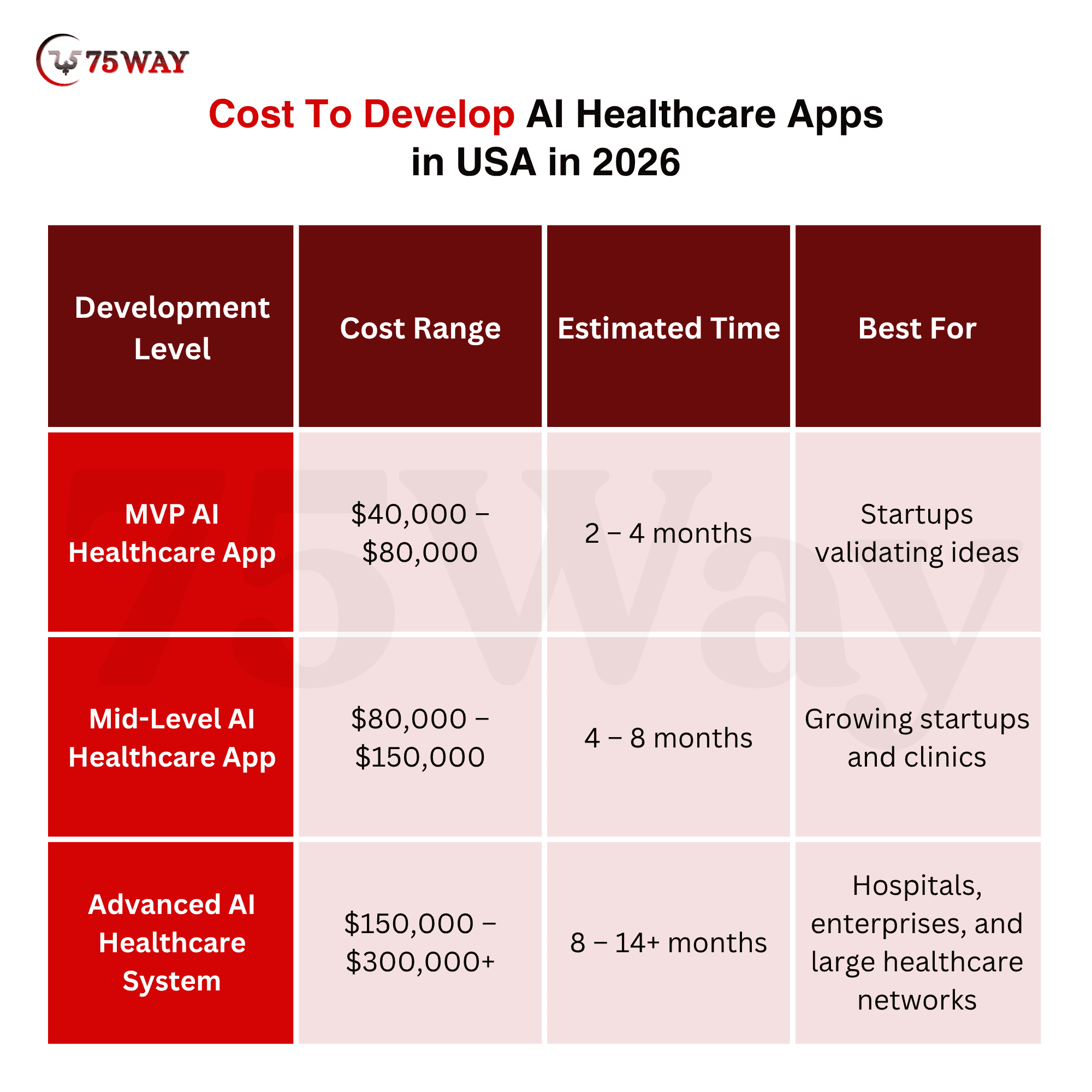
Healthcare app development costs vary depending on features, integrations, compliance requirements, and AI complexity. The average cost to build an AI-powered healthcare app ranges between $40,000-$300,000+.
- The Minimum Viable Product (MVP) for an AI healthcare application typically ranges between $40,000 and $80,000. At this stage, the application includes essential features such as basic symptom checkers, medication reminders, and simple AI chatbots.
- A mid-level AI healthcare application generally costs between $80,000 and $150,000. This development tier includes more advanced capabilities.
- An advanced AI healthcare system can cost $150,000 to $300,000+, depending on complexity, integrations, and compliance requirements.
Future of Artificial Intelligence (AI) in the Healthcare Industry
AI healthcare technologies will continue transforming diagnostics, preventive care, personalized treatment planning, robotic surgeries, virtual nursing, and clinical decision support systems. Future healthcare AI trends may include:
- Autonomous healthcare assistants
- AI-driven robotic surgeries
- AI Voice Agent in Healthcare
- Advanced predictive disease detection
- Personalized genomic healthcare
- Digital twin healthcare models
- Emotion-aware healthcare AI
- AI-powered medical research systems
Healthcare organizations investing in AI platforms today position themselves strongly for future digital healthcare ecosystems.
Final Thoughts
AI healthcare applications are no longer just an innovation trend. They become a core part of modern healthcare delivery in the USA and globally. From diagnostics and patient engagement to automation and predictive analytics, these solutions are reshaping how healthcare systems operate in 2026. However, success depends on choosing the right strategy, technology stack, compliance approach, and development partner from the very beginning. If you are planning to enter this space, working with an experienced AI-powered healthcare app development company can help you build future-ready solutions that actually perform in real clinical environments and generate long-term value.
Frequently Asked Questions (FAQs)
Why Are Healthcare Providers Investing In AI Applications?
Healthcare providers invest in AI applications to reduce administrative workload, improve patient engagement, strengthen diagnostics, optimize hospital operations, and support remote healthcare delivery. AI technologies also help organizations manage rising patient volumes, staffing shortages, healthcare costs, and increasing demand for digital healthcare experiences across multiple medical specialties.
Can AI Healthcare Apps Integrate Wearable Devices?
AI healthcare apps integrate wearable technologies like smartwatches, glucose monitors, ECG trackers, fitness bands, and sleep monitoring devices. These integrations provide continuous patient health data, enabling healthcare providers to monitor chronic conditions, detect health risks earlier, and support preventive healthcare strategies through real-time analytics and notifications.
Which Revenue Models Work Best For AI Healthcare Applications?
Healthcare AI applications commonly use subscription models, telemedicine consultation fees, enterprise licensing, freemium memberships, insurance partnerships, wearable integrations, and SaaS pricing strategies. Revenue generation depends on application categories, healthcare target audiences, feature complexity, partnerships with providers, and long-term patient engagement strategies within competitive healthcare markets.
Why Does UI/UX Design Matter In Healthcare Applications?
Healthcare applications require intuitive interfaces because patients and healthcare professionals expect simple navigation, faster interactions, accessible features, and minimal learning curves. Strong healthcare UX design improves patient engagement, appointment completion rates, healthcare accessibility, retention, and overall user satisfaction across mobile healthcare platforms and digital medical ecosystems.
Which Industries Benefit From AI Healthcare Application Development?
Hospitals, clinics, insurance providers, pharmaceutical companies, mental wellness platforms, elderly care organizations, fitness brands, telemedicine startups, rehabilitation centers, and diagnostic laboratories benefit from AI healthcare applications. These technologies improve patient management, operational workflows, predictive analytics, healthcare accessibility, and medical data analysis across diverse healthcare segments globally.
Why Is Cloud Infrastructure Important For Healthcare AI Platforms?
Cloud infrastructure supports secure data storage, scalability, real-time analytics, AI model deployment, remote healthcare access, and interoperability between healthcare systems. Modern healthcare applications depend on cloud technologies to manage growing patient datasets, wearable integrations, telemedicine services, and enterprise healthcare operations while maintaining performance and security standards.