Summary
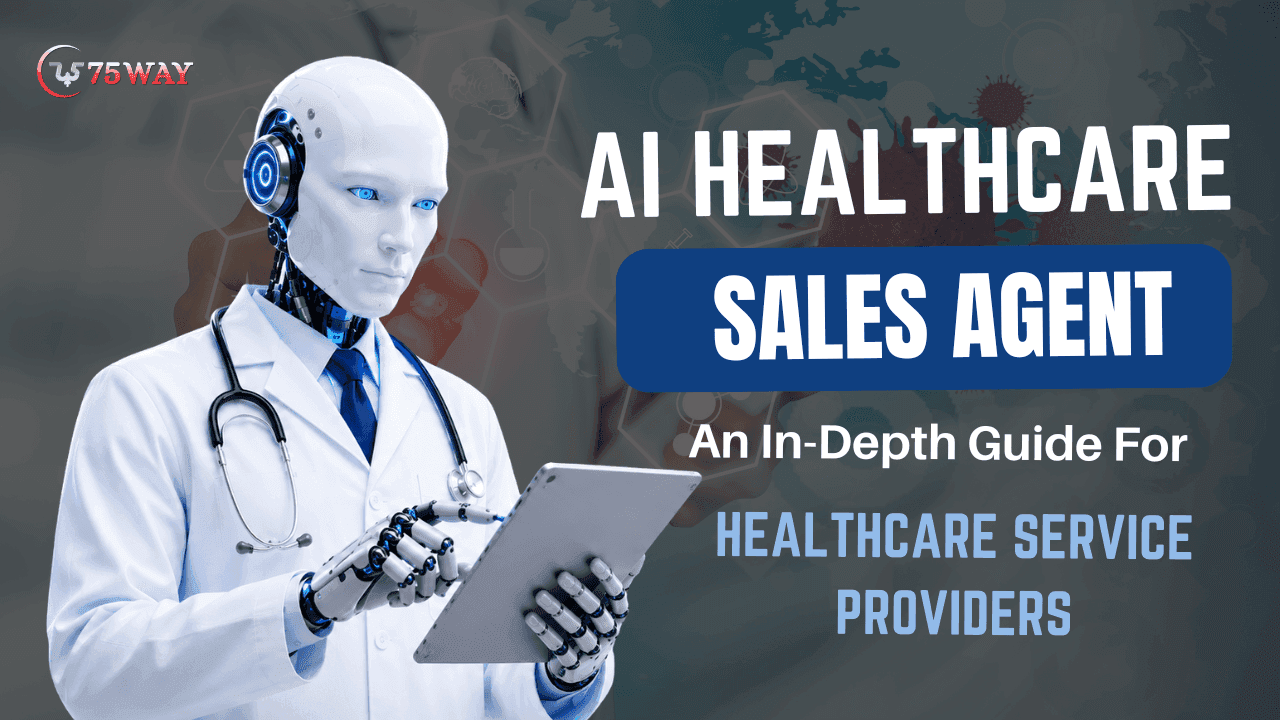
Healthcare organizations increasingly adopt AI healthcare sales agents to automate patient communication, lead qualification, follow-ups, and healthcare sales workflows. These agents improve operational productivity, customer engagement, and revenue growth. If you are a healthcare startup or founder, this guide helps you scale personalized communication and ROI with AI healthcare sales agents and development strategies across rapidly expanding digital healthcare ecosystems.
Quick Overview
- AI healthcare sales agents automate patient engagement workflows.
- Healthcare providers improve conversion rates using personalized AI systems.
- AI-driven automation reduces administrative workload and improves scalability.
- Healthcare startups use AI agents for patient acquisition growth.
- Compliance-focused AI systems ensure secure healthcare communication operations.
Healthcare providers now compete not only on treatment quality but also on accessibility, responsiveness, convenience, and communication efficiency. AI sales agents for healthcare emerged as a powerful solution for medical organizations to automate repetitive communication tasks while improving patient acquisition and engagement outcomes. The agentic AI in healthcare manages inquiries, qualifies leads, schedules appointments, nurtures prospects, and streamlines healthcare communication across multiple digital channels.
Healthcare startups and enterprise medical organizations increasingly use AI-powered healthcare mobile applications and platforms to improve conversion rates, reduce operational bottlenecks, and deliver faster patient experiences without expanding administrative overhead.
This guide explores AI healthcare sales agents and their operational framework. Moreover, you will get insights into core technologies, business benefits, implementation strategies, use cases, challenges, future trends, and opportunities for building scalable AI-powered healthcare ecosystems.
What Is An AI Healthcare Sales Agent?
An AI healthcare sales agent is an intelligent system that automates healthcare communication, patient engagement, lead management, appointment scheduling, and sales-related workflows using artificial intelligence. It helps healthcare providers manage interactions efficiently across digital channels.
Unlike basic chatbots, it uses natural language processing, machine learning, predictive analytics, CRM automation, and voice AI agents. It understands patient intent, responds contextually, and supports interactions across websites, healthcare apps, email, and voice systems, improving engagement and operational efficiency.
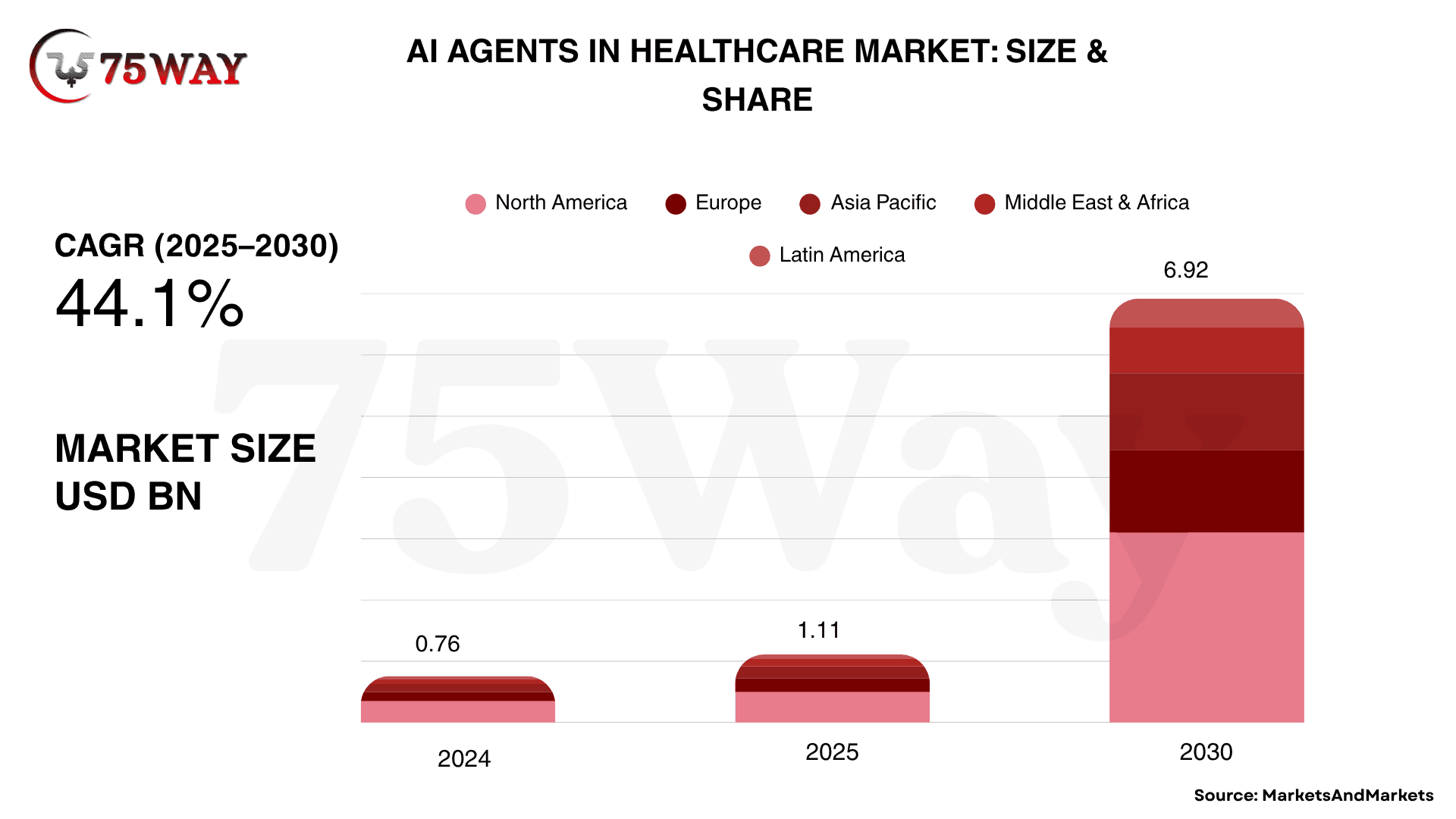
Why Healthcare Providers Need AI Healthcare Sales Agents?
Healthcare businesses often manage thousands of patient interactions every month. Manual communication processes create operational inefficiencies, delayed responses, and inconsistent patient experiences. AI healthcare sales agents help organizations solve these challenges through scalable automation.
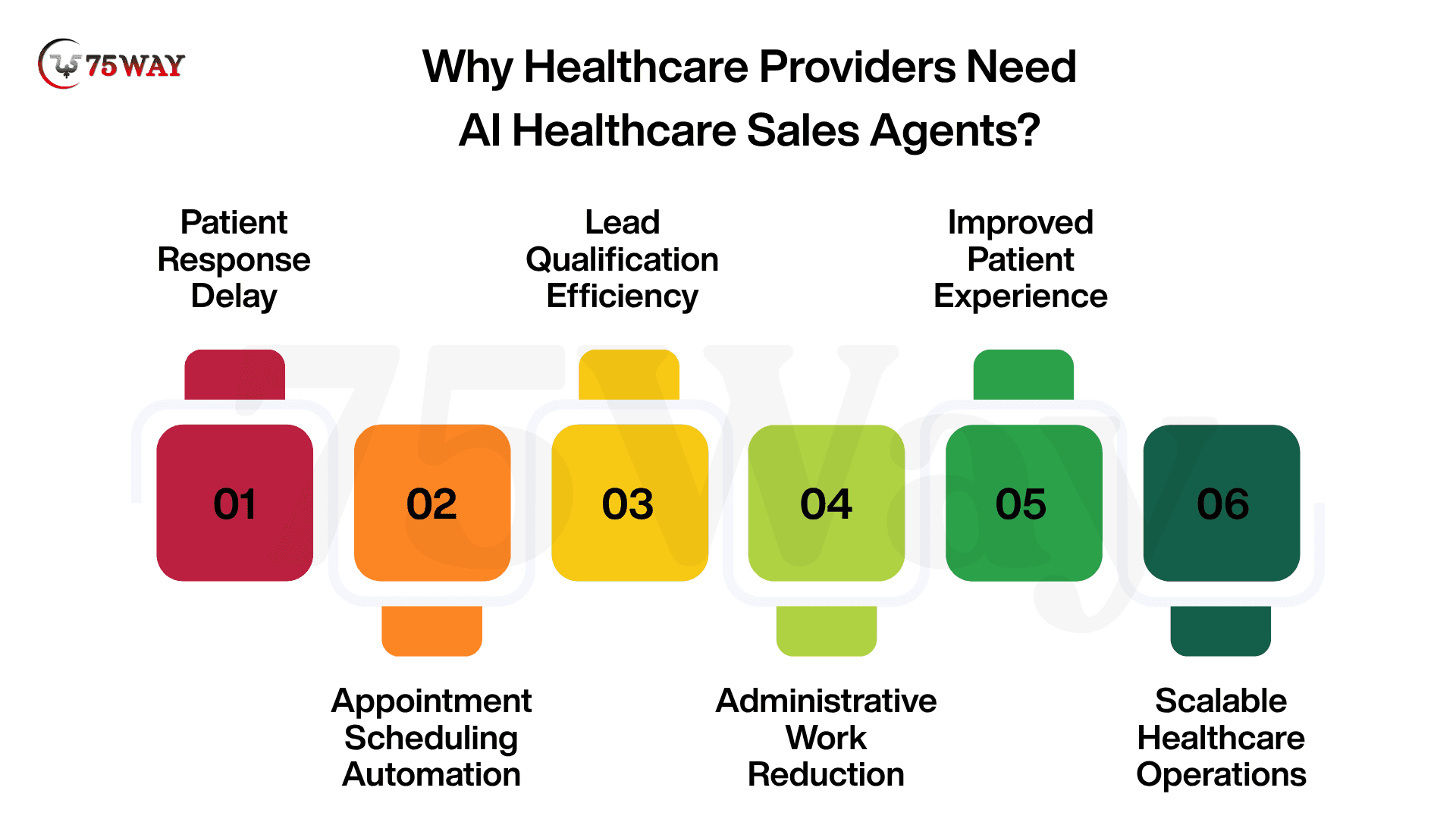
- Patient Response Delay: Manual systems slow patient replies, leading to missed appointments and reduced satisfaction levels. Instant conversational support helps healthcare teams maintain continuous engagement across all channels.
- Appointment Scheduling Automation: Staff spends excessive time handling bookings, cancellations, and rescheduling tasks daily. Automated scheduling tools manage calendars, reminders, and coordination without constant human intervention.
- Lead Qualification Efficiency: Healthcare providers struggle to quickly identify high-intent patients from large inquiry volumes. Intelligent systems analyze behavior signals and prioritize leads based on conversion potential.
- Administrative Work Reduction: Repetitive communication and data entry consume valuable staff time across departments. Workflow automation minimizes manual effort and allows teams to focus more on patient care delivery.
- Improved Patient Experience: Patients expect fast, personalized communication throughout their healthcare journey. Conversational systems deliver consistent, human-like interactions that improve trust and engagement.
- Scalable Healthcare Operations: Rising patient demand increases pressure on healthcare infrastructure and teams. Automation enables expansion of communication capacity without increasing staffing or operational complexity.
How AI Healthcare Sales Agents Work?
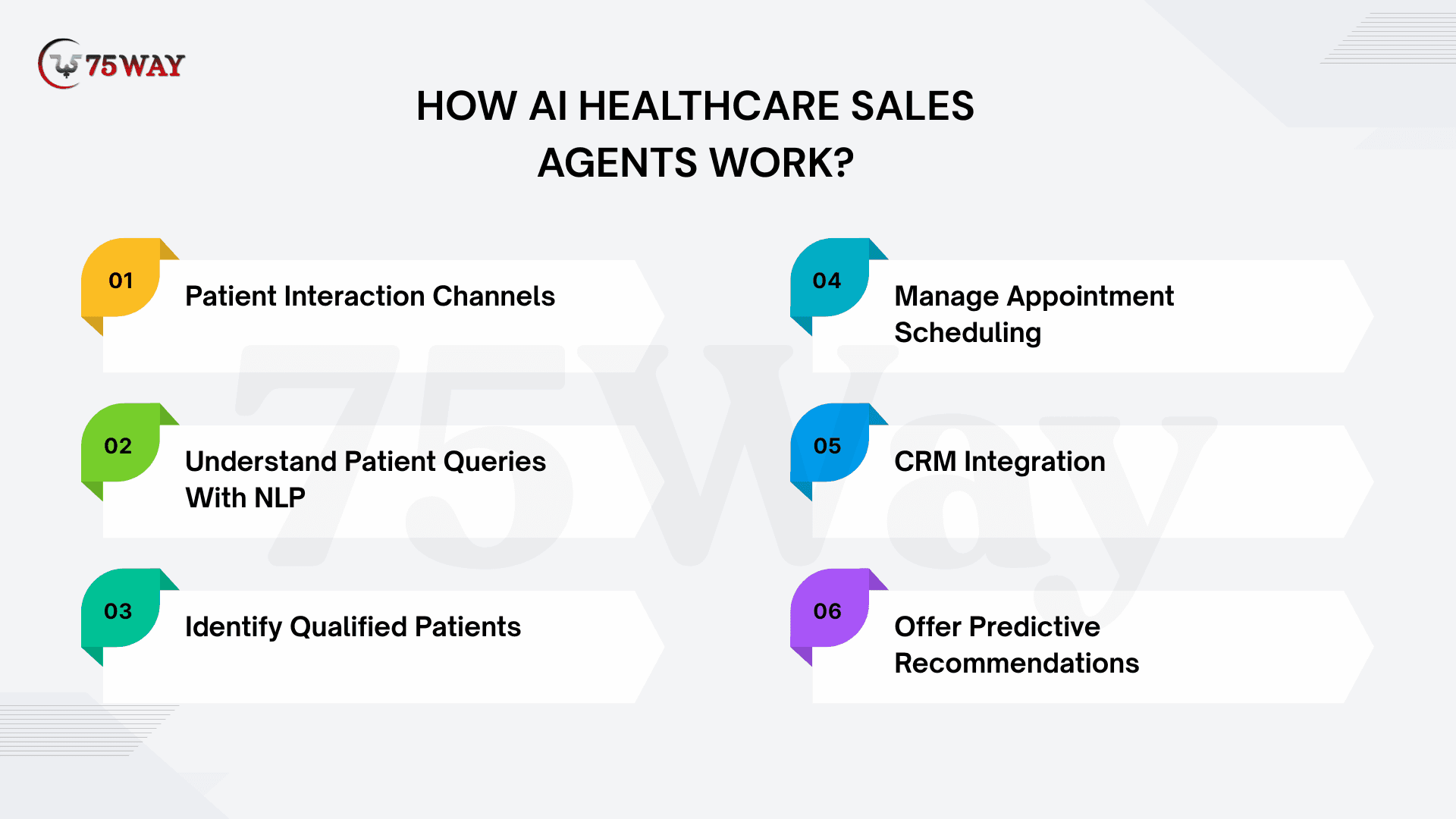
AI healthcare sales agents operate through a connected workflow where each stage feeds into the next, ensuring smooth patient communication, qualification, scheduling, and engagement. Every interaction is processed in real time, allowing healthcare organizations to manage patients efficiently across multiple digital channels while improving accuracy, responsiveness, and service delivery outcomes.
1. Patient Interaction Channels
AI healthcare sales agents begin by capturing patient interactions across multiple digital touchpoints, including websites, apps, WhatsApp, SMS, voice assistants, email, and telemedicine portals. Each incoming query is unified into a centralized system for processing. This ensures that no patient requests are missed and that all communication flows seamlessly into the next processing stage.
2. Understand Patient Queries With NLP
Once messages are collected, AI uses natural language understanding to interpret patient intent, symptoms, and service requests in conversational form. It goes beyond keyword matching by analyzing context and meaning. These interpreted insights are then forwarded to the lead qualification system for evaluation and prioritization.
3. Identify Qualified Patients
The system evaluates patient intent based on treatment needs, urgency, insurance preferences, and service interest levels. It identifies high-priority cases and filters low-intent queries automatically. Qualified leads are then passed directly to appointment scheduling systems for immediate action and booking coordination.
4. Manage Appointment Scheduling
After qualification, AI integrates with healthcare calendars to manage bookings, availability, rescheduling, and reminders in real time. It ensures efficient slot allocation and reduces manual coordination efforts. Scheduled appointments are then synchronized with CRM systems for complete patient record tracking.
5. CRM Integration
All patient interactions and appointment data are stored within CRM systems to maintain a centralized communication history. This enables healthcare providers to track patient journeys, engagement levels, and conversion stages. The collected data is then used for predictive analysis and recommendation generation.
6. Offer Predictive Recommendations
Using behavioral data and engagement patterns, AI generates personalized healthcare recommendations such as checkups, preventive care, or insurance plans. These insights are delivered back to patients through interaction channels, restarting the communication loop. This continuous cycle improves engagement, retention, and long-term healthcare service adoption.
How To Build AI Healthcare Sales Agent? Step-By-Step Process
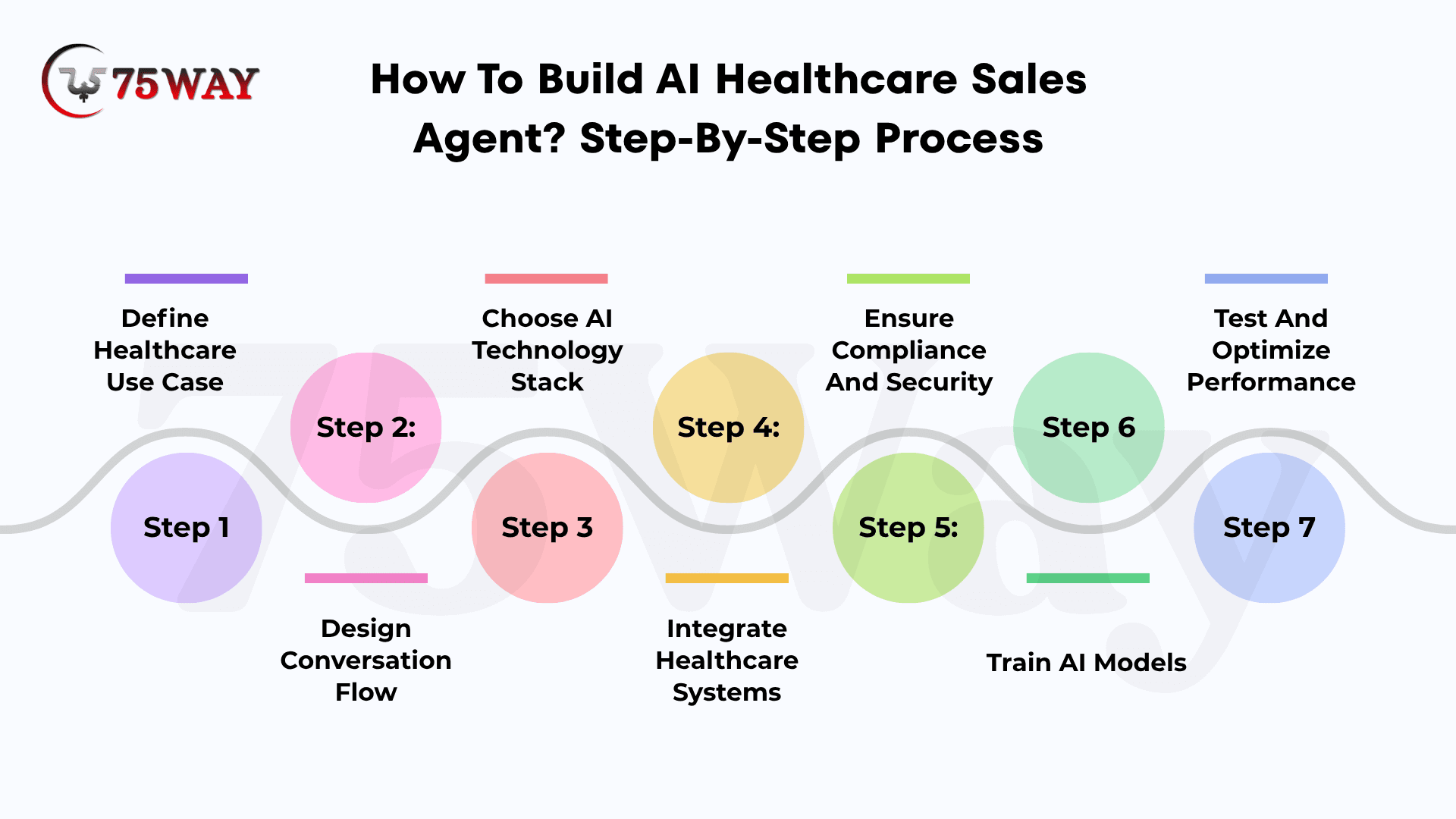
Building an AI healthcare sales agent requires a structured approach that combines healthcare workflows, AI technologies, compliance standards, and scalable system design. The goal is to create a system that can manage patient engagement, lead handling, and communication automation safely and effectively.
Step 1: Define Healthcare Use Case
Start by identifying the exact purpose of the AI agent, such as patient onboarding, appointment booking, or lead qualification. Clear use cases help design focused workflows and avoid unnecessary system complexity.
Step 2: Design Conversation Flow
Create structured patient interaction flows for inquiries, scheduling, and follow-ups. Well-planned conversation paths improve user experience and ensure consistent responses across all healthcare communication scenarios.
Step 3: Choose AI Technology Stack
Select technologies like natural language processing, machine learning models, voice AI, and CRM integration tools. A strong tech stack ensures accurate responses and smooth automation across healthcare workflows.
Step 4: Integrate Healthcare Systems
Connect the AI agent with hospital management systems, CRM platforms, and scheduling tools. This integration enables real-time data sharing and improves coordination between patients and healthcare teams.
Step 5: Ensure Compliance And Security
Implement healthcare compliance standards, including HIPAA and data protection regulations. Encryption, access controls, and secure APIs protect sensitive patient information across all interactions.
Step 6: Train AI Models
Train the system using healthcare data, patient queries, and historical interaction patterns. Continuous training improves accuracy, response quality, and intent understanding over time.
Step 7: Test And Optimize Performance
Run real-world testing to evaluate response accuracy, workflow efficiency, and patient experience. Regular optimization helps improve reliability, reduce errors, and enhance overall system performance.
Different Kinds of AI Medical Sales Agents Healthcare Organizations Can Adopt
Healthcare organizations are increasingly adopting AI medical sales agents to automate communication, improve patient engagement, and streamline operational workflows. These intelligent systems support sales, scheduling, and patient management across multiple healthcare touchpoints.
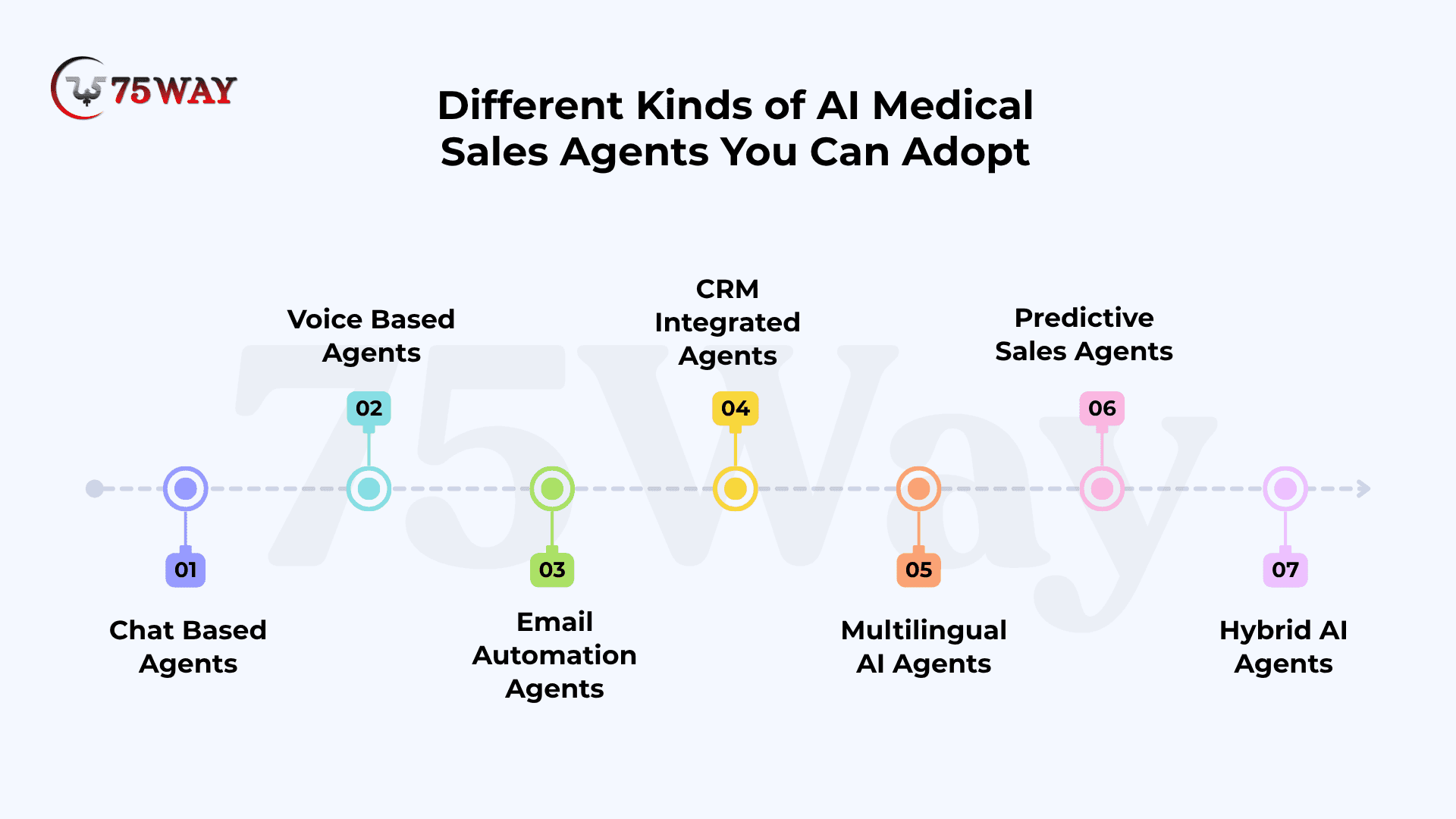
- AI Chatbot in Healthcare: These agents handle patient conversations through websites, apps, and messaging platforms. They answer queries instantly and guide users toward booking consultations or services.
- AI Voice Agents in Healthcare: AI voice agents for healthcare interact with patients through phone calls and voice assistants. They assist in appointments, reminders, and healthcare information delivery.
- Email Automation Agents: These agents manage patient follow-ups and communication through automated email workflows. They send reminders, updates, and personalized healthcare recommendations based on patient behavior.
- CRM Integrated Agents: CRM-based AI systems track patient interactions and manage healthcare pipelines. They organize data, improve follow-ups, and help providers understand patient journeys.
- Multilingual AI Agents: These systems communicate with patients in multiple languages. They improve accessibility and ensure better understanding among diverse patient populations across regions.
- Predictive Sales Agents: AI analyzes patient behavior to predict healthcare needs and interests. It recommends services like checkups, consultations, and preventive care at the right time.
- Hybrid AI Agents: Hybrid systems combine chat, voice, email, and CRM capabilities. They create unified healthcare communication experiences and improve engagement across all patient interaction channels.
Core Features of AI Medical Sales Agents You Must Include
Modern healthcare organizations prioritize AI agent development solutions to enhance operational flexibility, support compliance, and enable scalable automation.
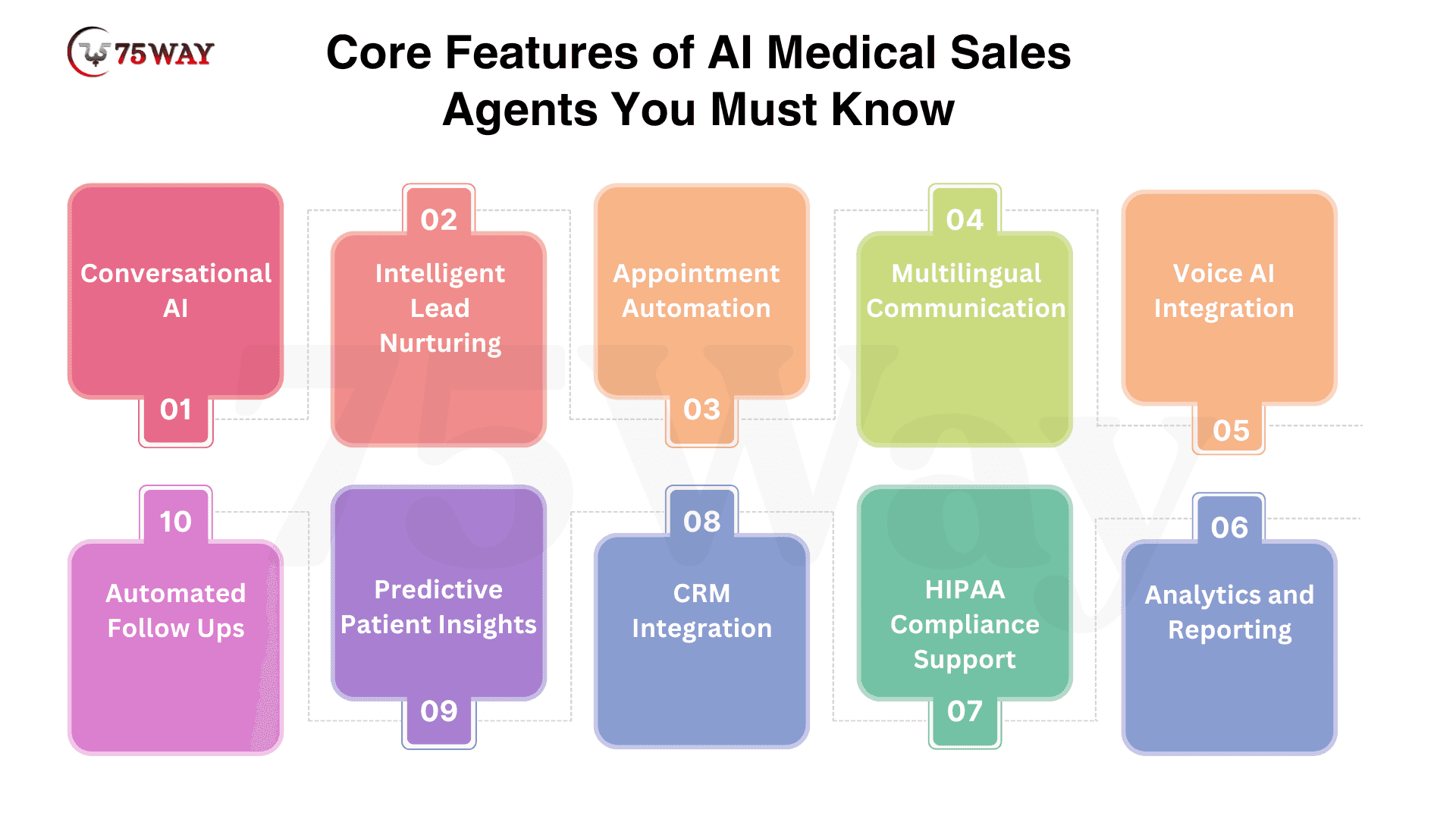
- Conversational AI:Conversational AI in healthcare enables human-like patient conversations across digital platforms. Patients ask questions naturally and receive contextual healthcare responses instantly without complex navigation steps.
- Intelligent Lead Nurturing: Healthcare AI follow-up intelligence agent communicates with potential patients using personalized messaging workflows. It improves engagement quality and increases healthcare consultation booking conversions significantly over time.
- Appointment Automation: Scheduling processes are automated across healthcare systems with AI chatbots in healthcare sales. Bookings, cancellations, and reminders are managed without manual coordination, reducing administrative workload and delays.
- Multilingual Communication: An AI assistant for healthcare supports multiple languages for diverse patient populations. This ensures clearer communication, better understanding, and improved access to healthcare across regions and communities.
- Voice AI Integration: Patients can easily interact with voice-based systems. AI voice agents in healthcare sales support hands-free communication for appointment booking, queries, and healthcare assistance in real time.
- Analytics and Reporting: Healthcare providers receive detailed insights into patient engagement performance with AI healthcare analytics. Metrics include conversion rates, response times, and retention patterns for data-driven decision-making.
- HIPAA Compliance Support: AI platforms maintain secure communication standards for healthcare data protection. They follow compliance protocols for patient privacy and regulatory safety across all interactions.
- CRM Integration: AI-driven healthcare CRM automation systems connect with healthcare CRM platforms. Patient data, interaction history, and engagement records are stored for improved tracking and follow-up management.
- Predictive Patient Insights: An AI patient communication system analyzes behavior patterns to predict healthcare needs. It suggests timely consultations, preventive care options, and personalized treatment recommendations for better outcomes.
- Automated Follow Ups: Clinical sales automation tools send reminders and follow-up messages automatically. This helps maintain continuous patient engagement and reduces missed consultations or treatment drop-offs.
Benefits of AI Healthcare Sales Agent Development Solutions For Providers
Healthcare providers adopting AI-driven automation gain both operational and financial advantages.
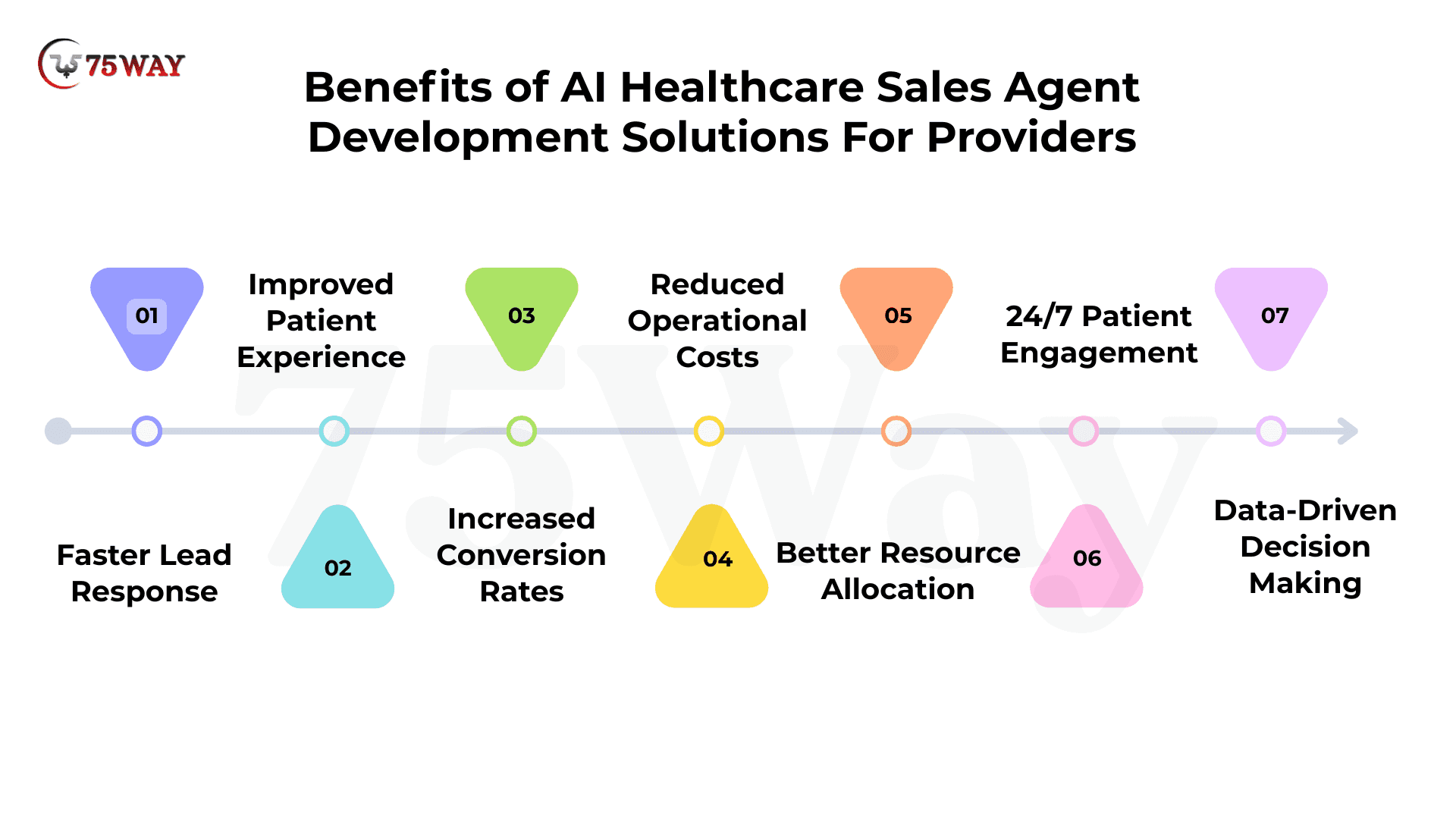
- Faster Lead Response: Healthcare conversion rates often decline when response times increase. AI healthcare sales agents respond instantly to patient inquiries.
- Improved Patient Experience: Patients receive faster communication, personalized assistance, and streamlined appointment coordination.
- Increased Conversion Rates: Automated follow-ups and personalized communication improve patient acquisition outcomes.
- Reduced Operational Costs: Healthcare organizations reduce administrative workload and support staffing pressure through automation.
- Better Resource Allocation: Medical staff can focus more on patient care instead of repetitive communication management.
- 24/7 Patient Engagement: AI healthcare sales agent software continues operating outside traditional business hours. These agents provide global healthcare accessibility and after-hours communication.
- Data-Driven Decision Making: Analytics dashboards help providers optimize marketing strategies, patient acquisition campaigns, and engagement workflows.
Practical Use Cases of Healthcare AI Assistant Solutions
AI healthcare sales agents are widely used across hospitals, clinics, telemedicine platforms, startups, dental practices, diagnostic centers, and insurance companies. These systems streamline patient communication, automate scheduling, and improve engagement across healthcare journeys. Each organization uses AI differently based on operational needs and service models.
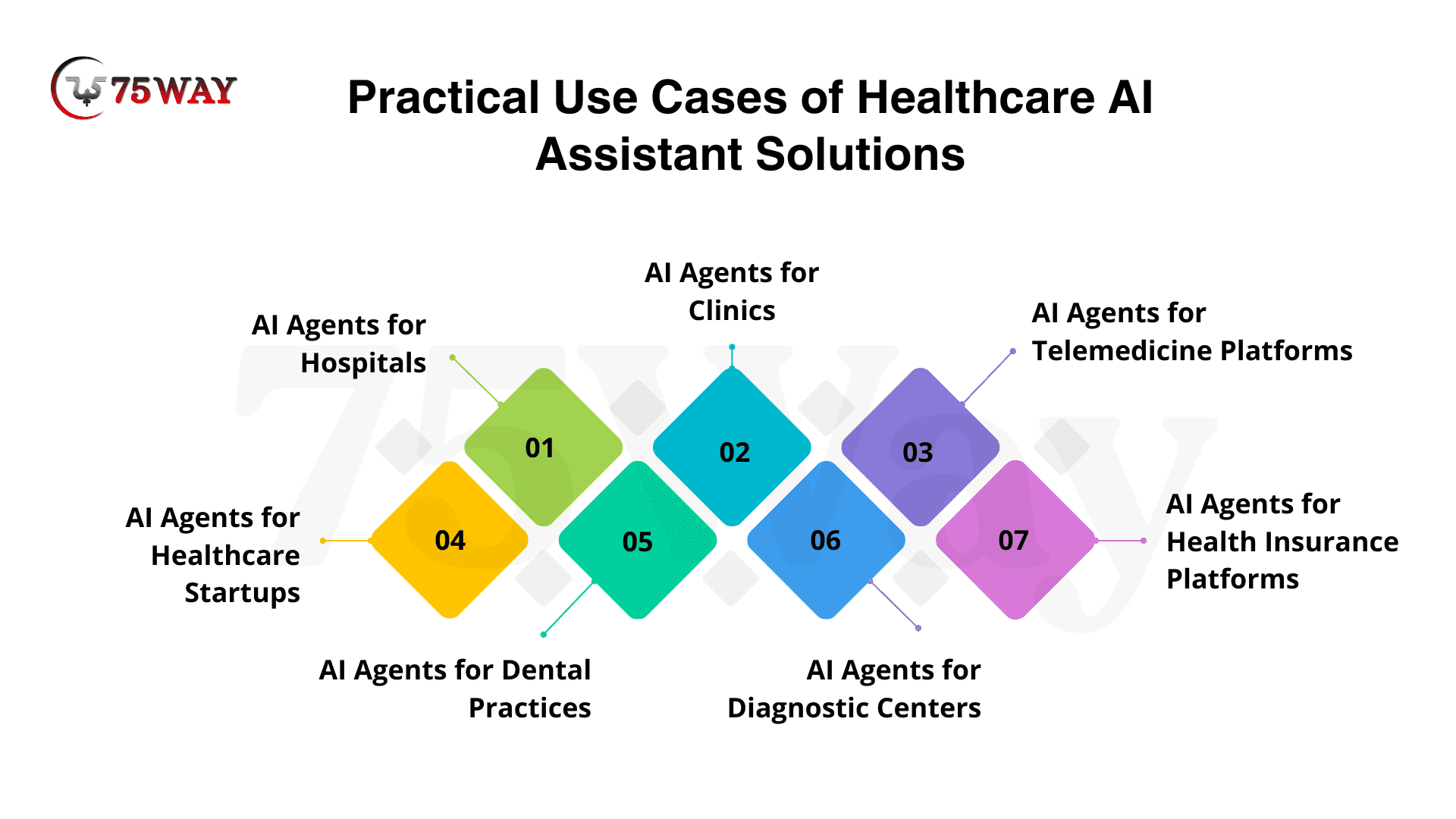
- AI Agents for Hospitals: AI agents for hospitals to manage patient inquiries, route cases to departments, and coordinate appointments. They also automate insurance communication, preventive care reminders, and patient follow-ups. This improves operational efficiency and reduces administrative workload significantly across large hospital networks.
- AI Agents for Clinics: Medical clinics and stores rely on custom AI medical sales development agents to automate consultation bookings, patient onboarding, and follow-up communication. These systems reduce manual scheduling efforts and improve patient engagement consistency. Clinics benefit from smoother daily operations and faster response times for patient interactions.
- AI Agents for Telemedicine Platforms:Telemedicine apps and platforms rely on AI to manage remote patient conversations and virtual consultations. AI medical sales agents support scheduling, symptom collection, and follow-up reminders. This ensures continuous digital engagement and improves patient experience across online healthcare delivery systems.
- AI Agents for Healthcare Startups: AI healthcare sales agents scale operations without large support teams. These systems automate patient acquisition, communication, and CRM workflows. Startups achieve faster growth while maintaining cost efficiency and operational flexibility in competitive healthcare markets.
- AI Agents for Dental Practices: Dental clinics adopt sales AI agents for appointment reminders, treatment promotion, and patient retention messaging. These tools reduce missed appointments and improve patient loyalty. Dental practices experience better scheduling efficiency and increased treatment conversion rates over time.
- AI Agents for Diagnostic Centers: Diagnostic centers use healthcare AI sales agents to manage test bookings, patient coordination, and result follow-ups. Automation improves communication speed and reduces administrative delays. These systems help streamline testing workflows and enhance patient satisfaction across diagnostic services.
- AI Agents for Health Insurance Platforms: Insurance companies use AI agents in healthcare insurance apps and software for policy recommendations, eligibility checks, and onboarding support. These tools simplify customer communication and reduce manual processing time.
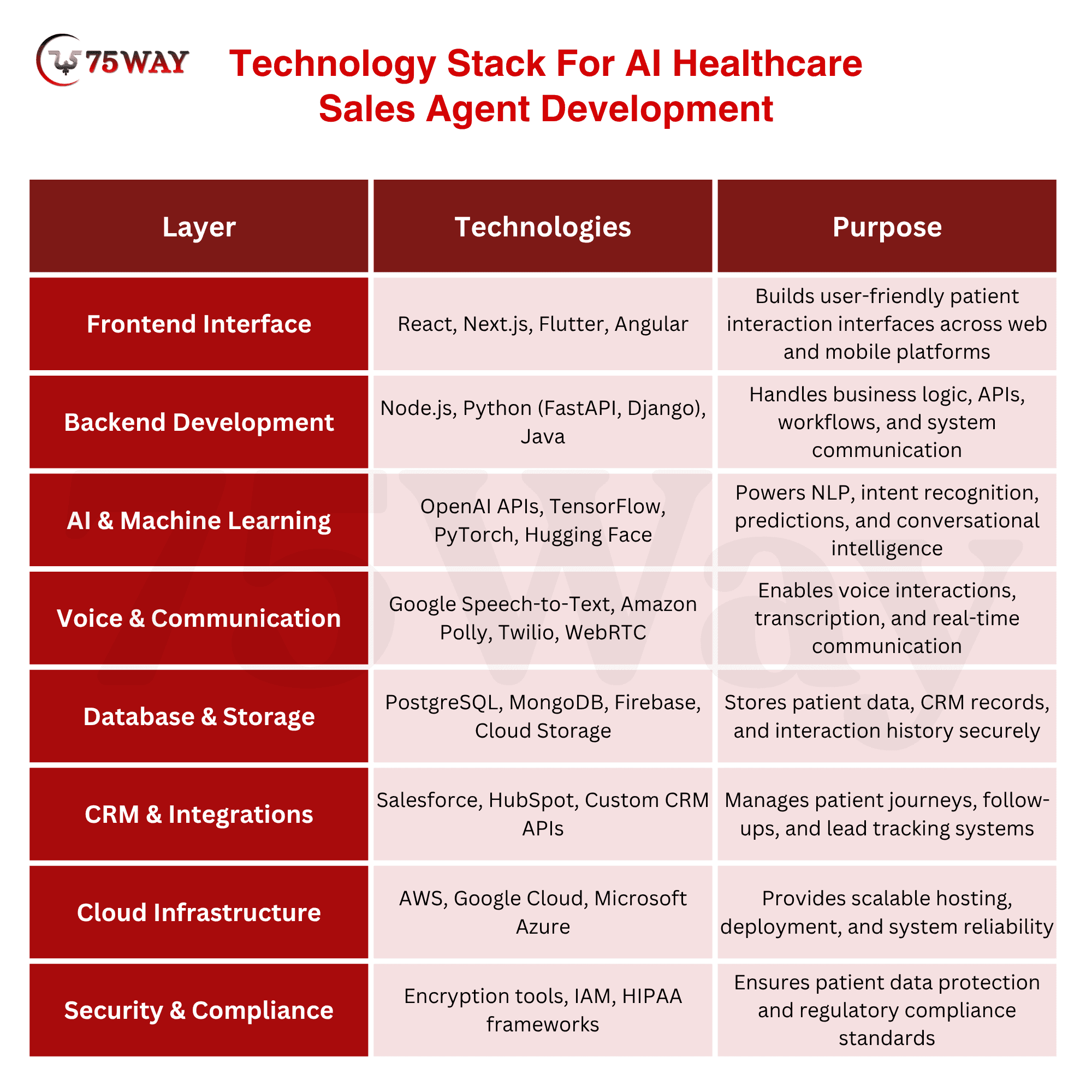
Technology Stack For AI Healthcare Sales Agent Development
Building an AI healthcare sales agent requires a secure, scalable, and intelligent technology stack that supports automation, communication, data processing, and compliance. Each layer plays a critical role in delivering accurate patient engagement and workflow efficiency.
- Frontend Interface: This layer handles patient interaction through websites, mobile apps, and chat interfaces. Common technologies include React, Next.js, Flutter, and Angular. It ensures a smooth user experience and real-time communication with AI systems.
- Backend Development: Backend systems manage workflows, business logic, and API requests. Technologies like Node.js, Python (FastAPI, Django), and Java are commonly used. This layer connects AI models with healthcare applications and databases.
- AI & Machine Learning Integration: AI integration is the core intelligence layer powering conversational understanding and predictions. It includes NLP models, LLMs, TensorFlow, PyTorch, OpenAI APIs, and Hugging Face frameworks for intent recognition and response generation.
- Voice & Communication: Voice-based interactions use speech recognition and synthesis tools. Technologies like Google Speech-to-Text, Amazon Polly, Twilio Voice API, and WebRTC enable real-time voice communication with patients.
- Database & Storage: Patient data, interaction logs, and CRM records are stored securely using databases like PostgreSQL, MongoDB, and Firebase. Cloud storage solutions ensure scalability and data accessibility.
- CRM & Integration: This layer connects healthcare systems with platforms like Salesforce, HubSpot, and custom CRMs. APIs enable seamless data exchange for patient tracking, follow-ups, and lead management.
- Cloud & Infrastructure: Cloud platforms ensure scalability, security, and high availability. AWS, Google Cloud, and Microsoft Azure provide hosting, serverless computing, and compliance-ready infrastructure for healthcare applications.
- Security & Compliance: Healthcare systems require strict data protection. Encryption tools, IAM systems, HIPAA-compliant frameworks, and secure APIs ensure patient data privacy and regulatory compliance at all levels.
Challenges of AI Healthcare Sales Agents And Solutions
Despite strong benefits, AI healthcare automation also introduces operational, technical, and compliance-related challenges that healthcare providers must carefully manage for safe and effective deployment.
- Data Privacy Concerns: Healthcare communication involves highly sensitive patient data, increasing risks related to privacy breaches and unauthorized access. Strong encryption, secure cloud infrastructure, and access control systems help protect patient information and maintain trust across digital healthcare interactions.
- Compliance Complexity: Healthcare organizations must follow strict regulations like HIPAA and regional data protection laws. Regular audits, compliant AI frameworks, and updated governance policies ensure legal alignment and reduce regulatory risks in patient communication systems.
- Integration Challenges: Many healthcare systems still rely on outdated legacy software, making AI integration complex and time-consuming. Middleware solutions, API-based architecture, and phased implementation strategies help ensure smoother system connectivity and operational continuity.
- Trust & Human Interaction: Some patients prefer direct human interaction, especially for sensitive or complex medical discussions. Hybrid AI models that combine automation with human support help maintain trust while still improving efficiency and response speed.
- AI Accuracy Risks: AI systems may sometimes misinterpret patient intent or generate incorrect recommendations if not properly trained. Continuous model training, human oversight, and feedback loops improve accuracy and reduce the risk of unreliable outputs.
Future Trends of AI Healthcare Sales Agents
The healthcare AI industry continues evolving rapidly. Healthcare organizations adopting scalable AI infrastructure early may gain long-term competitive advantages across digital healthcare markets. Future AI healthcare sales agents will likely integrate:
- Predictive healthcare analytics
- Emotion-aware conversational AI
- AI voice assistants
- Remote patient monitoring
- Personalized treatment pathways
- Wearable device integrations
- AI-driven healthcare recommendations
- Autonomous workflow orchestration
Sum Up
AI healthcare sales agents automate repetitive workflows while improving patient engagement, lead nurturing, appointment coordination, and healthcare marketing efficiency. As healthcare consumers increasingly expect personalized experiences, organizations adopting AI-driven automation gain measurable advantages across operational productivity and business growth. From CRM integration and predictive analytics to conversational AI and omnichannel engagement, AI healthcare sales agents continue to reshape how healthcare businesses interact with patients throughout the customer journey. If you're planning to modernize your healthcare workflow, connect with a custom AI agent development company that integrates with your existing systems and accelerates patient engagement from day one.
Frequently Asked Questions (FAQs)
How Do AI Healthcare Sales Agents Improve Patient Acquisition Efficiency?
AI healthcare sales agents improve acquisition efficiency by instantly responding to inquiries, qualifying leads, and guiding patients toward relevant services. This reduces delays, increases engagement speed, and helps healthcare providers convert more inquiries into confirmed appointments.
Can AI Healthcare Sales Agents Work With Existing Hospital Systems?
Yes, AI healthcare sales agents integrate with hospital systems including CRM, EHR, and scheduling tools. This integration enables seamless data exchange, centralized patient records, and automated workflow coordination across departments without disrupting existing operational infrastructure.
Are AI Clinical Sales Agents Suitable For Small Clinics?
Yes, small clinics benefit significantly from AI healthcare sales agents because they reduce administrative workload and improve patient communication. Clinics can handle more inquiries efficiently without hiring additional staff, enabling cost-effective scalability and improved service responsiveness.
What Makes AI Healthcare Sales Agents Different From Traditional Chatbots?
AI healthcare sales agents use advanced natural language processing, predictive analytics, and contextual understanding. Unlike rule-based chatbots, they manage complex conversations, personalize responses, and support end-to-end patient journeys including lead nurturing and appointment conversion processes.
How Do AI Healthcare Sales Agents Support Patient Follow-Up Processes?
AI healthcare sales agents automate follow-ups through reminders, personalized messages, and engagement sequences. They track patient interactions, send timely updates, and ensure continuity of care communication, improving retention and reducing missed appointments or abandoned inquiries.
Do AI Healthcare Sales Agents Require Technical Expertise To Operate?
No, most AI healthcare sales agents are designed with user-friendly dashboards. Healthcare staff can manage workflows, monitor performance, and configure communication settings without advanced technical skills, making adoption easier for non-technical medical teams and administrators.
Can AI Medical Sales Agents Handle Emergency Patient Requests?
Yes, AI medical sales agents can identify emergency-related keywords and immediately escalate cases to human medical professionals. They are not replacements for emergency services but act as intelligent triage systems to route urgent requests appropriately.
How Do AI Healthcare Sales Agents Impact Healthcare Revenue Growth?
AI healthcare sales agents increase revenue by improving patient conversion rates, reducing response time delays, and enhancing engagement quality. Better communication efficiency leads to higher appointment bookings, improved retention, and increased service utilization across healthcare organizations.