Summary
AI in healthcare is transforming hospitals by reducing operational costs, improving clinical efficiency, and increasing ROI through automation and predictive intelligence. From patient care to administration and diagnostics, AI systems optimize workflows and resource allocation. This guide explains how hospitals use AI to enhance financial performance and deliver better healthcare outcomes.
Quick Overview
- AI reduces hospital costs through automation, predictive analytics, and workflow optimization
- Hospitals improve ROI using data-driven clinical and operational decision systems
- Patient care quality increases while the administrative burden decreases significantly
- AI enables faster diagnosis, improving efficiency across healthcare delivery systems
- Healthcare organizations adopt AI for scalable, intelligent operational transformation
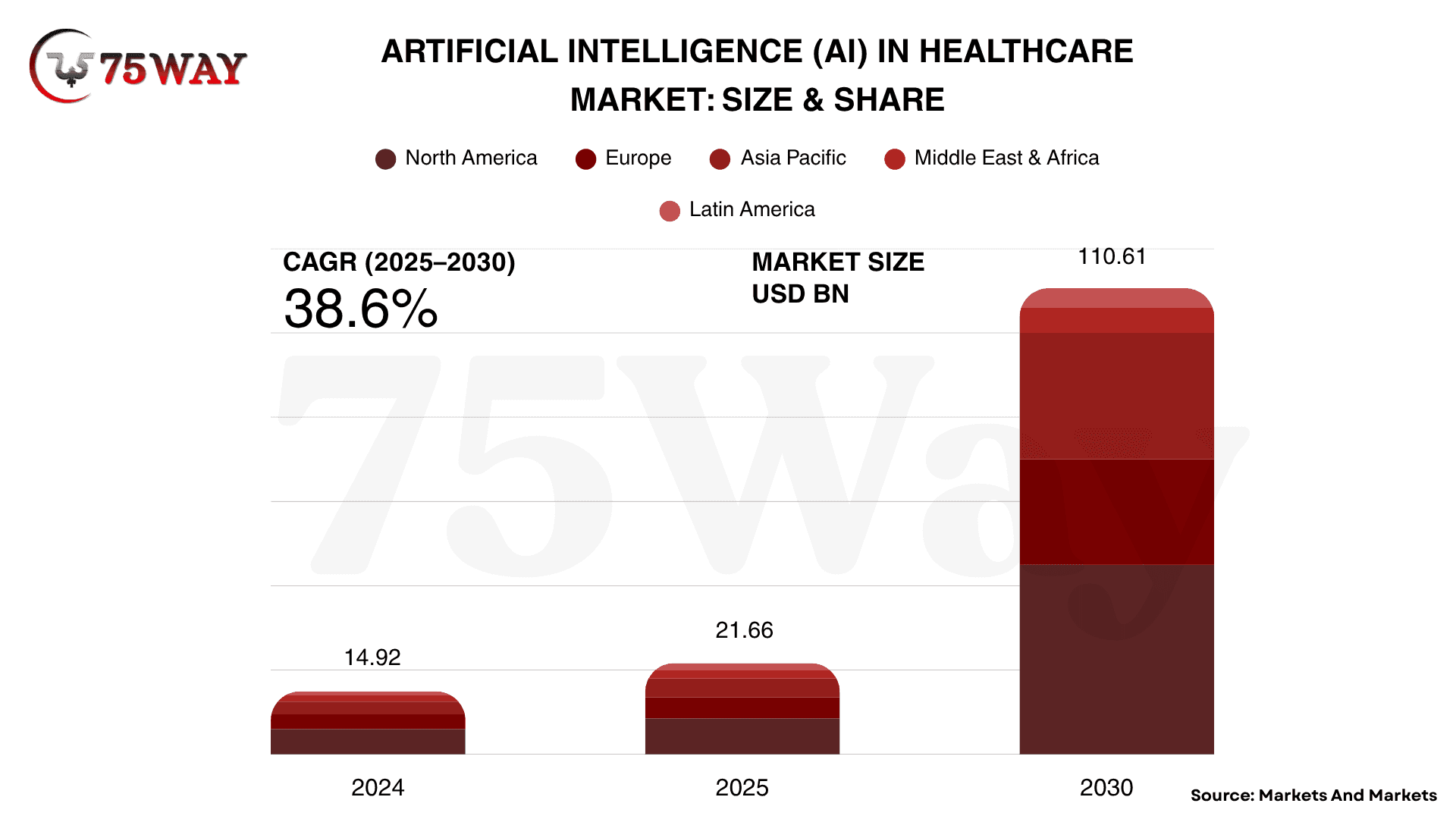
If you look closely at modern healthcare systems, you will notice a common struggle: hospitals are constantly trying to balance high-quality patient care with rising operational costs. They are under constant pressure to deliver more with fewer resources.To overcome this challenge, many medical organizations are adopting AI in healthcare. Even the global AI in healthcare market is projected to reach $505.59 billion by 2033, growing at a CAGR of 38.90%, reflecting the rapid shift of healthcare systems toward intelligent, data-driven operations.
Artificial intelligence is changing the healthcare landscape by introducing automation, AI-powered healthcare apps, predictive insights, medical imaging software, and real-time decision support that help hospitals operate with greater precision and lower cost pressure.
This transformation is no longer experimental. It is actively reshaping hospital ROI, improving operational efficiency, and redefining patient care outcomes across modern healthcare ecosystems.
This blog explores how AI in healthcare reduces costs, improves hospital performance, and drives measurable ROI growth in 2026.
What Is AI for Healthcare?
AI for healthcare refers to the use of intelligent systems that analyze medical data, support clinical decisions, and automate hospital operations. These artificial intelligence development solutions handle large volumes of patient information, identifying patterns that help doctors, nurses, and administrators make faster, more accurate decisions.
It combines machine learning, AI-powered analytics, and automation technologies to improve diagnosis, treatment planning, patient monitoring, and hospital management. Instead of relying only on manual processes, healthcare organizations use AI to process information in real time and support more informed medical actions.
AI in healthcare also extends beyond clinical care into operational areas such as billing, scheduling, and resource planning. By connecting data across departments, these health and wellness platforms help hospitals reduce inefficiencies, improve coordination, and enhance overall patient outcomes while controlling operational costs.
Why Healthcare Costs Are Rising Rapidly?
Rising healthcare expenses are largely driven by operational inefficiencies, dependence on manual workflows, increasing patient volumes, and stricter regulatory requirements. Hospitals often struggle to balance high-quality care delivery with sustainable financial performance amid ongoing operational pressure.
Financial strain further increases due to administrative burden, billing errors, delayed decision-making, and disconnected systems across departments. Inefficient resource utilization and lack of system integration lead to higher operational costs, reducing overall hospital efficiency and financial control.
How AI in Healthcare Reduces Hospital Costs?
AI is transforming hospital operations by removing inefficiencies, improving decision accuracy, and optimizing resource utilization. Healthcare systems adopt intelligent automation to reduce administrative burden, enhance clinical workflows, and improve financial control. These capabilities collectively help hospitals lower operational expenses while maintaining care quality and improving overall ROI performance.
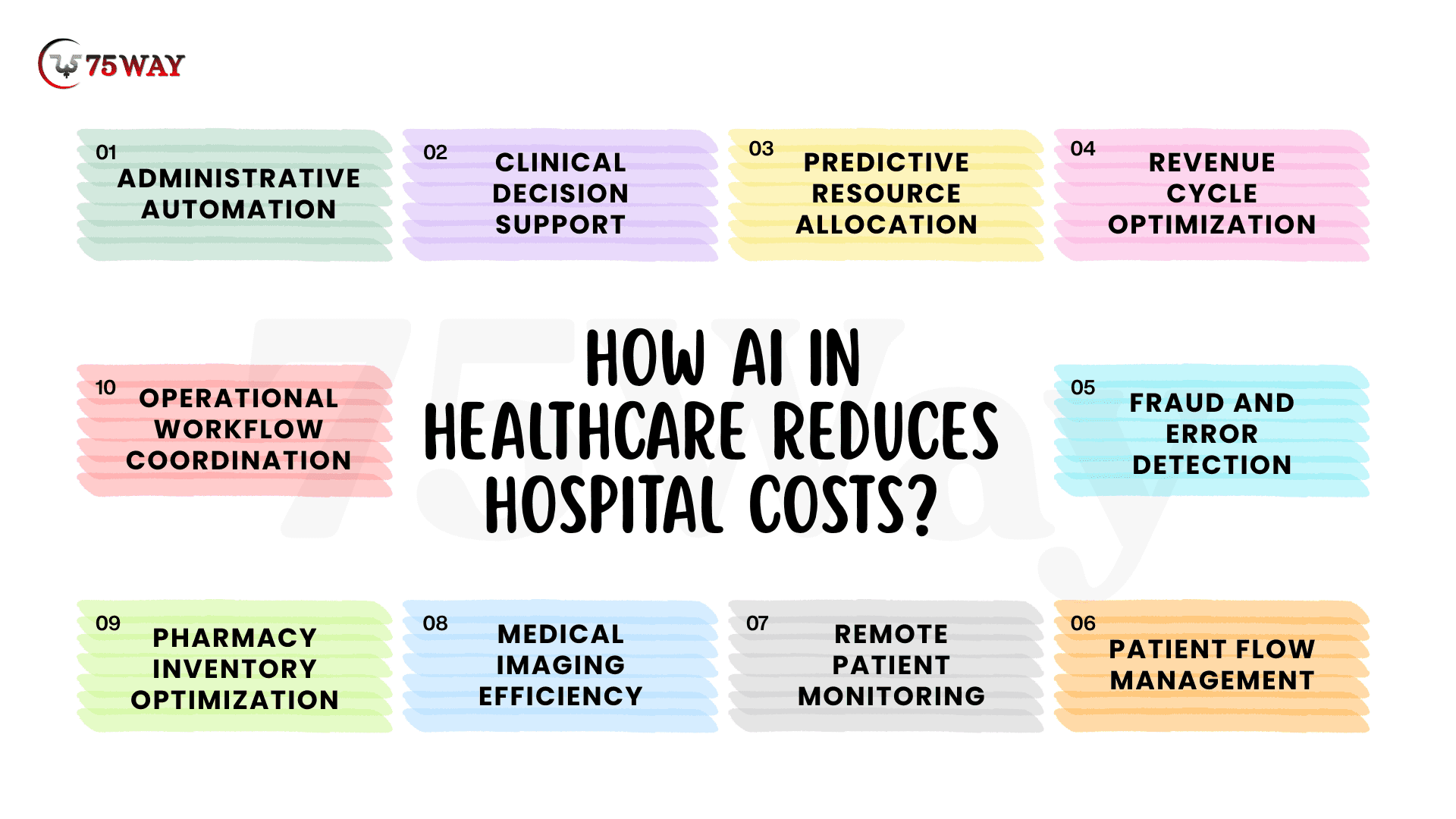
- Administrative Automation: Repetitive hospital tasks, such as scheduling, billing, and documentation, are streamlined by intelligent systems. Staff spend more time on patient care rather than on manual paperwork. Operational workload decreases while internal processes become faster and more organized.
- Clinical Decision Support: Patient data analysis supports doctors in faster diagnosis and treatment planning. Unnecessary tests reduce as recommendations become more precise. Clinical teams gain stronger confidence in decisions while treatment timelines improve across departments.
- Predictive Resource Allocation: Patient inflow patterns are analyzed to forecast demand across hospital facilities. Beds, staff, and equipment allocation are adjusted based on expected needs. Resource planning becomes more balanced, reducing shortages and overutilization.
- Revenue Cycle Optimization: Billing accuracy improves through automated verification and claim validation processes. Payment delays decrease as errors are identified early in workflows. Financial operations become more stable with reduced leakage and improved cash flow.
- Fraud and Error Detection: Irregularities in claims and medical records get flagged through continuous monitoring systems. Financial risks reduce as inconsistencies surface earlier in processing cycles. Hospitals maintain stronger compliance and reduce unnecessary financial losses.
- Patient Flow Management: Hospital admissions, discharges, and transfers get coordinated using real-time data insights. Waiting times reduce as departments align capacity with demand. Patient movement becomes smoother across emergency, inpatient, and outpatient services.
- Remote Patient Monitoring: Patient health data is tracked outside hospital settings with connected AI remote patient monitoring systems. Early warning signs get detected before conditions worsen. Readmission rates decline while long-term care becomes more proactive.
- Medical Imaging Efficiency: Imaging results get processed faster using intelligent analysis systems. Radiologists receive enhanced support in identifying abnormalities. Diagnostic speed improves while workload pressure on imaging departments reduces.
- Pharmacy Inventory Optimization: Medication demand gets predicted using usage patterns and treatment data. Stock levels adjust automatically to avoid shortages or overstocking. Pharmacy costs reduce while the availability of critical drugs improves.
- Operational Workflow Coordination: Department-level activities get synchronized through centralized data systems. Communication gaps are reducing between clinical and administrative teams. Hospital processes become more aligned, improving overall operational flow and efficiency.
Why Hospitals Are Investing in AI-Powered Healthcare Solutions in 2026?
Hospitals are adopting AI in patient care and AI-driven disease diagnosis systems in 2026 to reduce operational costs, improve clinical accuracy, and manage rising patient demand. These AI medical devices and SaMD systems support faster decision-making, automate administrative tasks, and enhance resource utilization. Hence, healthcare organizations deliver better outcomes while maintaining financial stability.
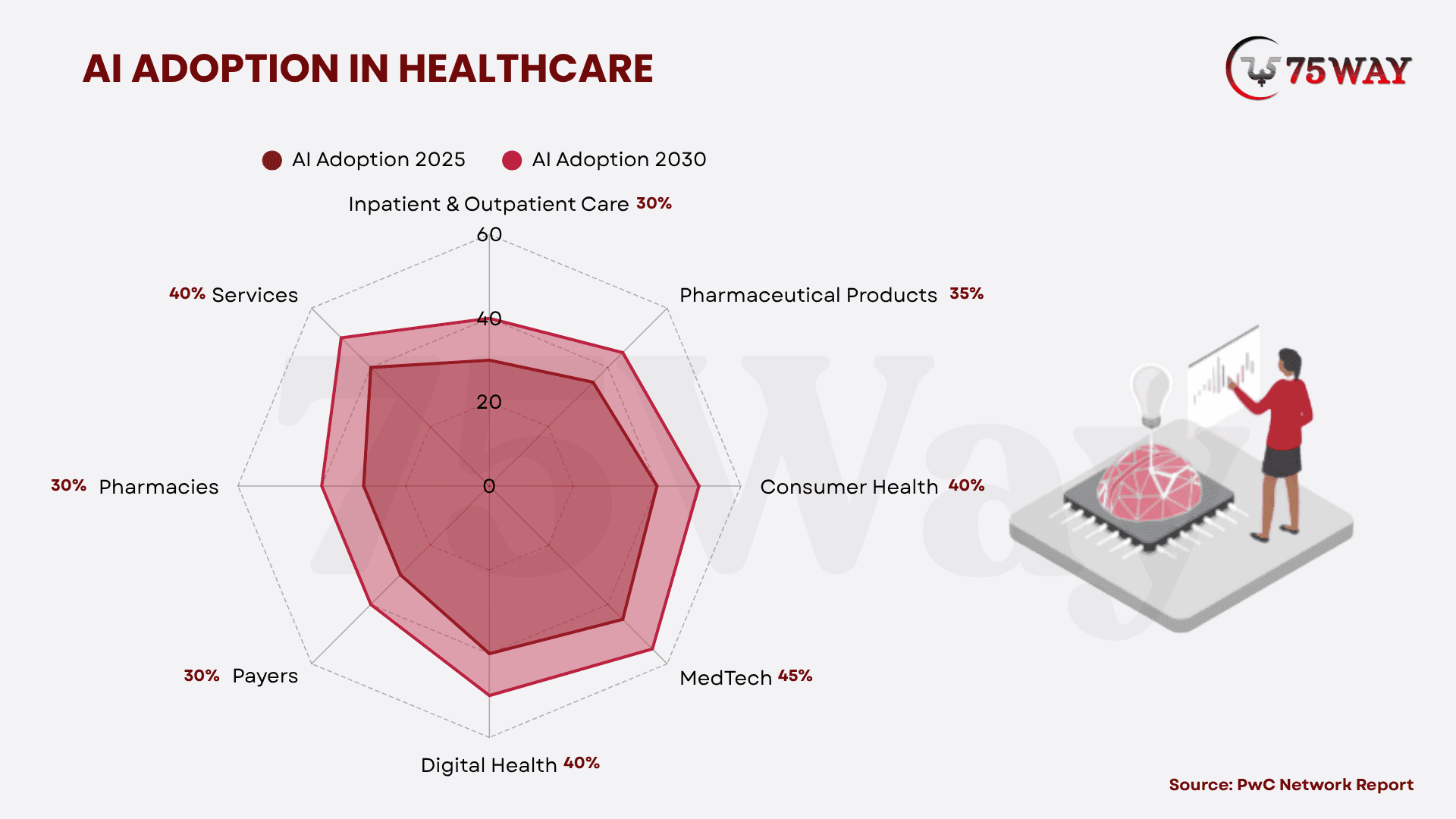
- Around 1 in 4 healthcare venture capital dollars are invested in AI-driven companies, contributing to $11.1 billion in U.S. VC funding.
- The AI healthcare market is projected to reach US$868 billion by 2030, including US$646 billion in cost savings and US$222 billion in revenue gains (PwC).
- North America holds the largest share in the AI healthcare market, accounting for over 54% of total revenue.
- Pharmaceutical and biotechnology companies lead by end use, contributing more than 30% of the market share.
- Robot-assisted surgery and AI-powered imaging diagnostics each hold significant shares, exceeding 13% of the market.
How AI Impacts Hospital ROI Performance?
Hospital ROI improves as intelligent systems reduce inefficiencies, optimize resource use, and strengthen revenue cycles across clinical and administrative operations. Better coordination between departments leads to faster decisions, controlled costs, and improved financial outcomes while maintaining consistent patient care quality.
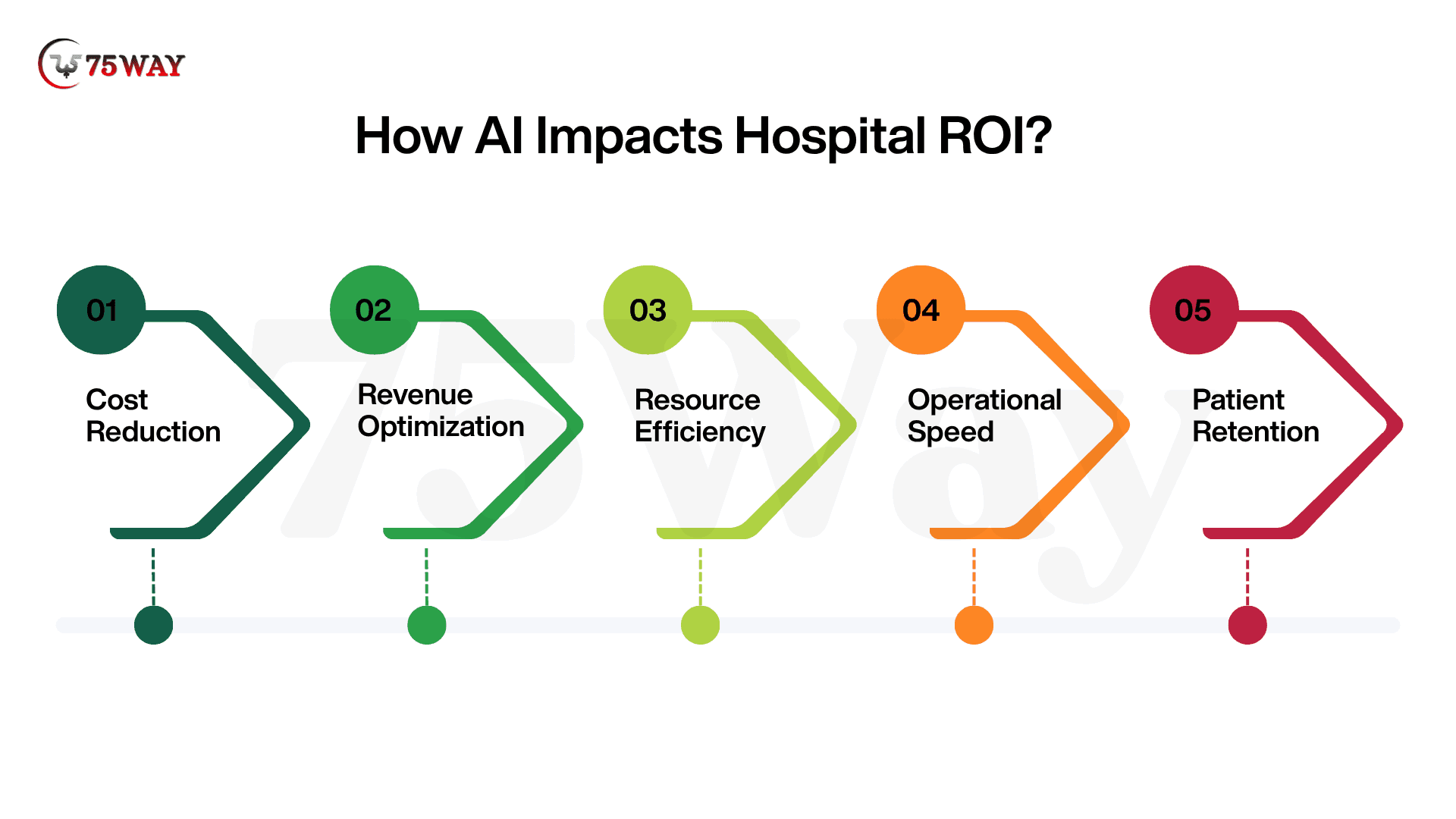
- Cost Reduction: Operational expenses decrease through automation of administrative tasks and reduced dependency on manual hospital workflows across departments.
- Revenue Optimization: Billing processes become more accurate, leading to quicker reimbursements and reduced financial leakage in healthcare operations.
- Resource Efficiency: Staff, beds, and medical equipment get allocated based on demand patterns and predictive utilization insights.
- Operational Speed: Faster data processing supports timely clinical and administrative decisions, improving overall workflow execution across hospital systems.
- Patient Retention: Improved service quality and faster care delivery strengthen patient trust and increase long-term engagement rates.
Major AI Solutions Healthcare Organizations Can Adopt
Healthcare organizations are adopting intelligent technologies to improve patient care, reduce operational costs, and enhance decision-making across clinical and administrative systems. These solutions support hospitals in managing complex workflows, improving accessibility, and delivering faster, more accurate medical services. From mental health support to automated communication systems, AI-driven tools are reshaping how healthcare services are delivered and managed at scale.
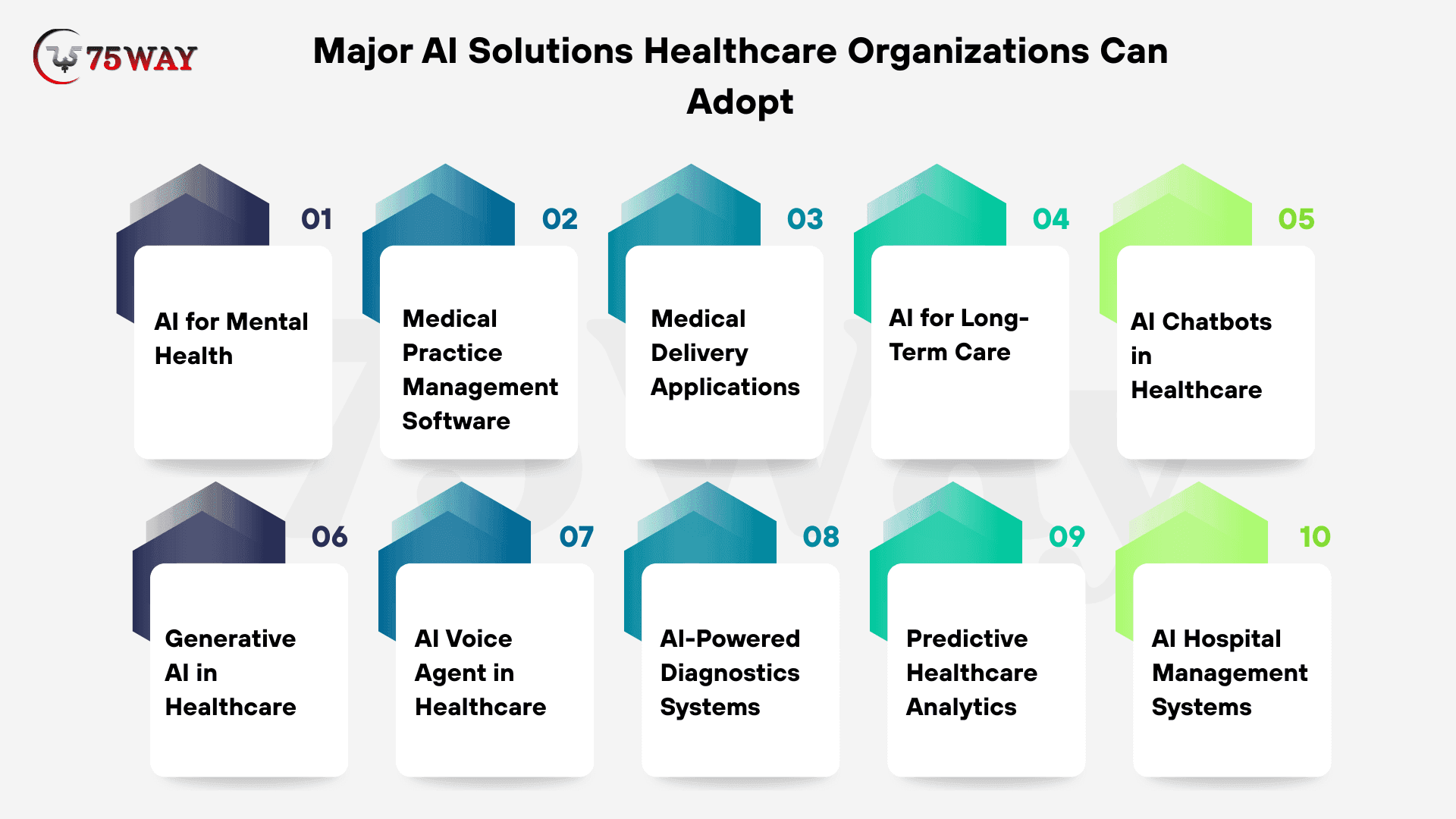
- AI for Mental Health
AI-based mental health systems analyze behavioral patterns, speech, and user interactions to identify early signs of stress, anxiety, or depression. These tools provide continuous monitoring and personalized recommendations. Patients receive timely support and guided interventions that improve emotional well-being and treatment outcomes.
- Medical Practice Management Software
Healthcare practice management systems streamline appointment scheduling, billing, patient records, and administrative workflows. These platforms reduce manual workload and improve coordination across departments. Medical staff focus more on patient care while operational efficiency increases across healthcare facilities.
- Medicine Delivery Applications
Medical delivery applications manage appointment bookings, medicine delivery, and remote consultations through digital platforms. Patients can access services more conveniently without frequent hospital visits. These systems improve service accessibility and reduce delays in treatment and medication delivery.
- AI for Long-Term Care
Long-term care solutions monitor patients with chronic conditions through continuous data tracking and predictive analysis. Healthcare providers receive insights into patient health trends and risks. AI for long-term care enables timely intervention and improves the quality of care for long-duration treatments.
- AI Chatbots in Healthcare
Healthcare AI chatbots handle patient queries, appointment scheduling, and basic medical guidance through conversational interfaces. These systems provide instant responses across digital platforms. They reduce workload on support staff and improve patient communication efficiency.
- Generative AI in Healthcare
Generative AI for healthcare assists in creating medical reports, treatment summaries, and clinical documentation. It supports healthcare professionals by reducing documentation time and improving accuracy. These systems also help in medical research and content generation for clinical insights.
- AI Voice Agent in Healthcare
Voice-enabled systems allow patients to interact with healthcare services using natural speech. AI voice agents for healthcare assist with appointment booking, reminders, and basic medical information. They improve accessibility for patients and enhance communication efficiency across healthcare systems.
- AI-Powered Diagnostics Systems
AI-powered diagnostic systems analyze medical images, lab reports, and patient history to support early disease detection. These tools help doctors identify conditions faster and with higher accuracy. They reduce diagnostic errors and improve treatment planning across healthcare facilities.
- Predictive Healthcare Analytics
Predictive analytics systems process patient data to forecast potential health risks and disease progression. Hospitals use these insights to plan preventive care and allocate resources effectively. This approach improves patient outcomes and reduces emergency treatment costs.
- AI Hospital Management Systems
Hospital management systems integrate clinical, administrative, and financial operations into a unified digital platform. These solutions streamline workflows, improve coordination, and reduce manual effort. Healthcare organizations achieve better operational control and improved service delivery efficiency.
Key Use Cases of AI For Healthcare Systems
Healthcare systems use intelligent technologies to improve clinical accuracy, streamline operations, and enhance patient experiences across multiple touchpoints. These applications support faster diagnosis, better resource utilization, and improved decision-making across hospitals, research, and patient care environments.
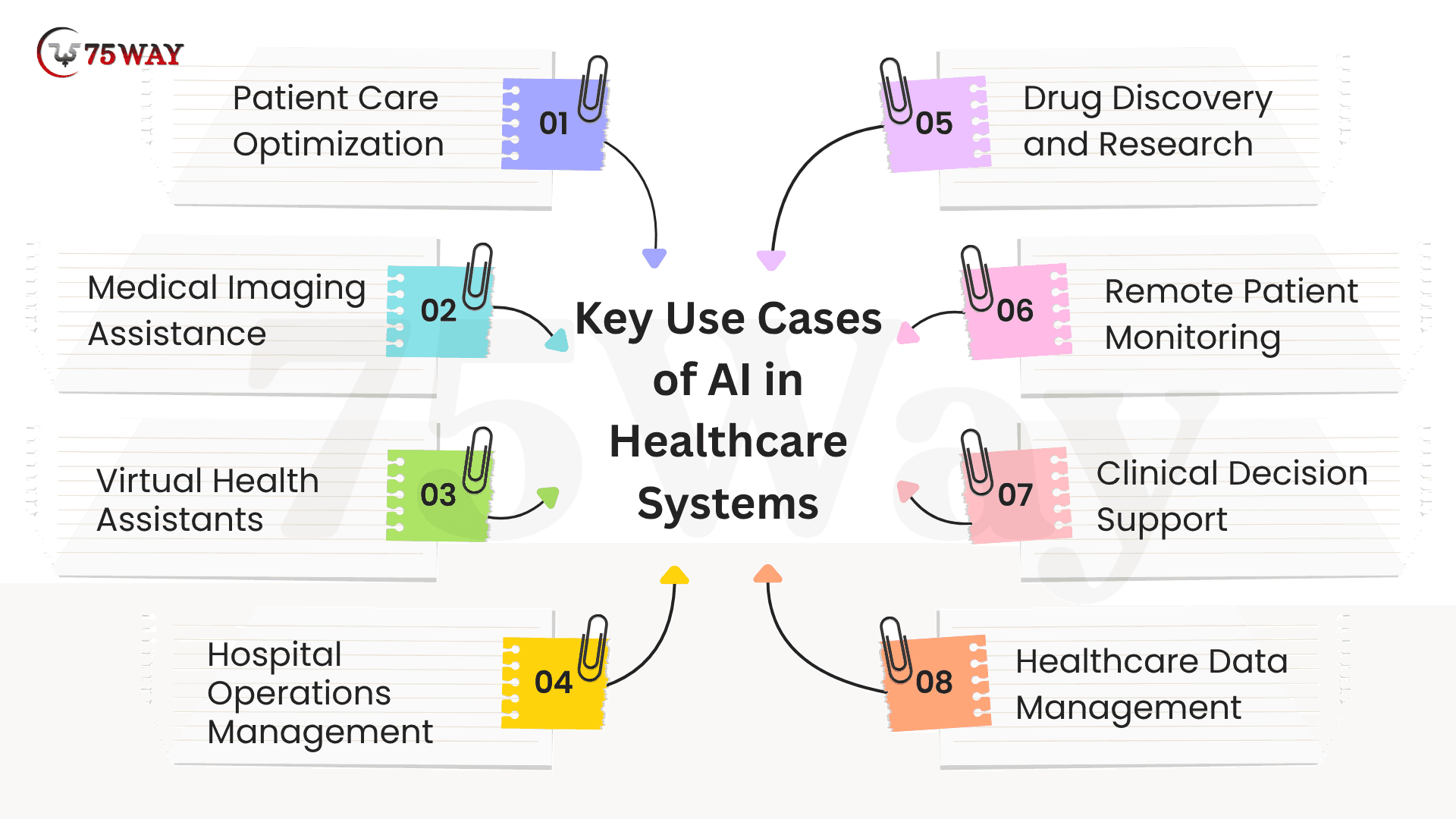
- Patient Care Optimization: AI analyzes patient records and symptoms to support faster diagnosis, treatment planning, and improved clinical decision-making across healthcare environments.
- Medical Imaging Assistance: AI improves radiology accuracy by detecting abnormalities in scans, reducing diagnostic errors, and supporting faster image interpretation by specialists.
- Virtual Health Assistants:AI assistants support patient communication by managing appointments, answering queries, and providing basic healthcare guidance across digital platforms.
- Hospital Operations Management: AI optimizes staffing, scheduling, and resource allocation, improving operational efficiency and reducing administrative workload in hospitals.
- Drug Discovery and Research: AI accelerates medical research by analyzing biological data, identifying patterns, and reducing the time required for drug development processes.
- Remote Patient Monitoring: AI tracks patient health data in real time, enabling early detection of risks and reducing hospital readmission rates.
- Clinical Decision Support: AI assists doctors by analyzing medical data and providing insights to support accurate, timely treatment decisions.
- Healthcare Data Management: AI organizes and processes large volumes of patient data, improving accessibility, accuracy, and efficiency in medical record handling.
How Can Hospitals Implement AI Systems?
Hospitals adopt AI systems through a structured implementation process that connects data infrastructure, clinical workflows, and predictive technologies. Each stage ensures smooth integration, accurate performance, and alignment with healthcare operations, enabling intelligent decision-making and improved patient care across medical environments.
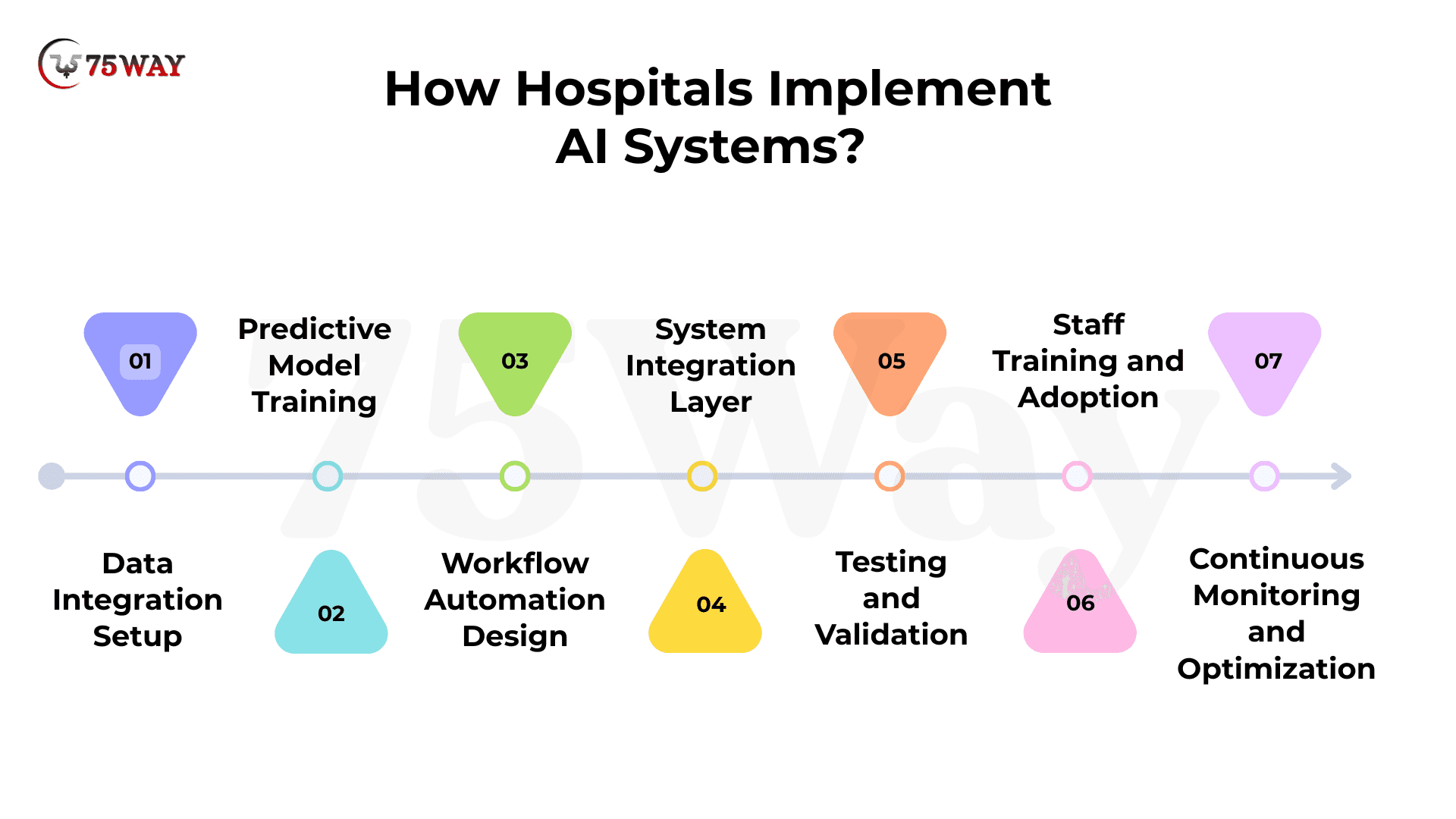
Step 1: Data Integration Setup
Hospitals connect patient records, EHR systems, and operational databases into a unified digital infrastructure. This ensures data availability across departments and supports consistent information flow. Proper integration forms the foundation for accurate AI model training and reliable healthcare insights.
Step 2: Predictive Model Training
Healthcare data is used to train machine learning models that identify patterns and forecast medical outcomes. These models learn from historical records and clinical inputs. Training improves accuracy in diagnosis, treatment recommendations, and operational predictions across hospital systems.
Step 3: Workflow Automation Design
Hospitals design automated workflows for administrative and clinical tasks such as scheduling, billing, and patient management. Automation reduces manual workload and improves process speed. This stage ensures consistent execution of routine hospital operations with higher efficiency.
Step 4: System Integration Layer
AI solutions are integrated into existing hospital management platforms and clinical software. This enables seamless communication between departments and tools. Integration ensures real-time data exchange and smooth operational coordination across healthcare functions.
Step 5: Testing and Validation
Hospitals test AI systems under controlled conditions to evaluate accuracy, reliability, and performance. Validation ensures models produce correct outputs in real-world scenarios. This step helps identify errors and refine system behavior before full deployment.
Step 6: Staff Training and Adoption
Medical and administrative staff receive training to use AI tools effectively in daily operations. Training focuses on system usability and workflow alignment. Proper adoption ensures a smooth transition and better utilization of AI capabilities across hospital teams.
Step 7: Continuous Monitoring and Optimization
After deployment, hospitals continuously monitor system performance and update models based on new data. Optimization improves accuracy and adaptability over time. This ensures long-term efficiency and alignment with evolving healthcare requirements.
Challenges in AI Adoption in Healthcare
- Data privacy and compliance risks
- Integration with legacy hospital systems
- High initial implementation investment
- Lack of skilled healthcare AI professionals
- Model accuracy and bias concerns
Future of AI in Healthcare (2026 & Beyond)
The future of healthcare is moving toward intelligent, predictive, and highly automated systems that support both clinical and operational decision-making. Hospitals will increasingly rely on advanced technologies to improve accuracy, reduce costs, and enhance patient experiences across all stages of care delivery. As data availability grows, healthcare systems will become more connected, responsive, and efficient, enabling real-time insights and personalized treatment approaches that redefine modern medical standards.
- Autonomous Clinical Systems: Healthcare operations shift toward self-operating systems that assist diagnosis, treatment planning, and patient monitoring with minimal manual intervention.
- Predictive Disease Management: Advanced analytics identify health risks earlier, enabling preventive care strategies and reducing emergency medical interventions across populations.
- AI-Driven Personalized Medicine: Treatment plans become highly personalized based on genetic data, patient history, and real-time health indicators for better outcomes.
- Integrated Healthcare Ecosystems: Hospitals, labs, and pharmacies connect through unified platforms for seamless data exchange and coordinated patient care delivery.
- Real-Time Patient Monitoring: Continuous tracking of patient vitals enables immediate alerts and faster medical response in critical healthcare situations.
- Intelligent Administrative Systems: Hospital administration becomes fully automated, reducing paperwork, optimizing resource allocation, and improving operational efficiency across departments.
Final Thoughts
AI in healthcare is no longer a future concept; it is a strategic necessity for hospitals aiming to reduce costs and improve operational performance. By automating administrative processes, supporting clinical decisions, and optimizing resource allocation, AI enables healthcare organizations to achieve higher efficiency with lower operational burden.
This directly improves hospital ROI while maintaining or improving patient care quality. As healthcare systems become more complex, AI-driven intelligence helps decision-makers respond faster, reduce errors, and manage resources more. If you are planning to transform your hospital operations, partner with a trusted AI-powered healthcare app development company now.
Frequently Asked Questions
What Makes AI Important For Modern Hospitals?
AI helps hospitals manage growing patient demand, reduce operational inefficiencies, and improve decision-making accuracy. It supports clinical workflows, administrative tasks, and resource planning, enabling healthcare systems to deliver better outcomes while maintaining financial stability across complex operational environments.
How Does AI Improve Hospital Financial Performance?
AI reduces unnecessary operational costs by automating repetitive tasks and optimizing resource usage. It also improves billing accuracy and revenue cycle management. These improvements strengthen financial control, reduce leakage, and support higher profitability across healthcare organizations.
Can Small Healthcare Providers Use AI Systems?
Yes, small healthcare providers can adopt scalable AI solutions based on their operational needs and budget. Cloud-based systems and modular tools allow gradual implementation, helping smaller facilities improve efficiency, reduce workload, and enhance patient care without large infrastructure investments.
Is AI Reliable For Clinical Decision Making?
Yes, AI supports clinical decision-making by analyzing large volumes of patient data and identifying patterns. While it assists doctors with insights, final decisions remain with medical professionals. This collaboration improves diagnostic accuracy and enhances treatment planning efficiency.
What Are The Main Risks Of AI In Healthcare?
Key risks include data privacy concerns, integration challenges, and potential model inaccuracies. These issues can be managed through strong security frameworks, regulatory compliance, and continuous system monitoring to ensure safe and reliable healthcare operations.
Does AI Replace Healthcare Professionals?
AI does not replace healthcare professionals. It supports them by handling repetitive tasks, improving data analysis, and providing decision support. This allows medical staff to focus more on patient care and complex clinical responsibilities.