Conversational AI in Healthcare
Redefine patient communication with conversational AI in healthcare solutions that deliver instant responses and personalized support. Improve patient engagement, reduce response delays, and optimize healthcare workflows for better operational performance and satisfaction.
What Is Conversational AI In Healthcare?
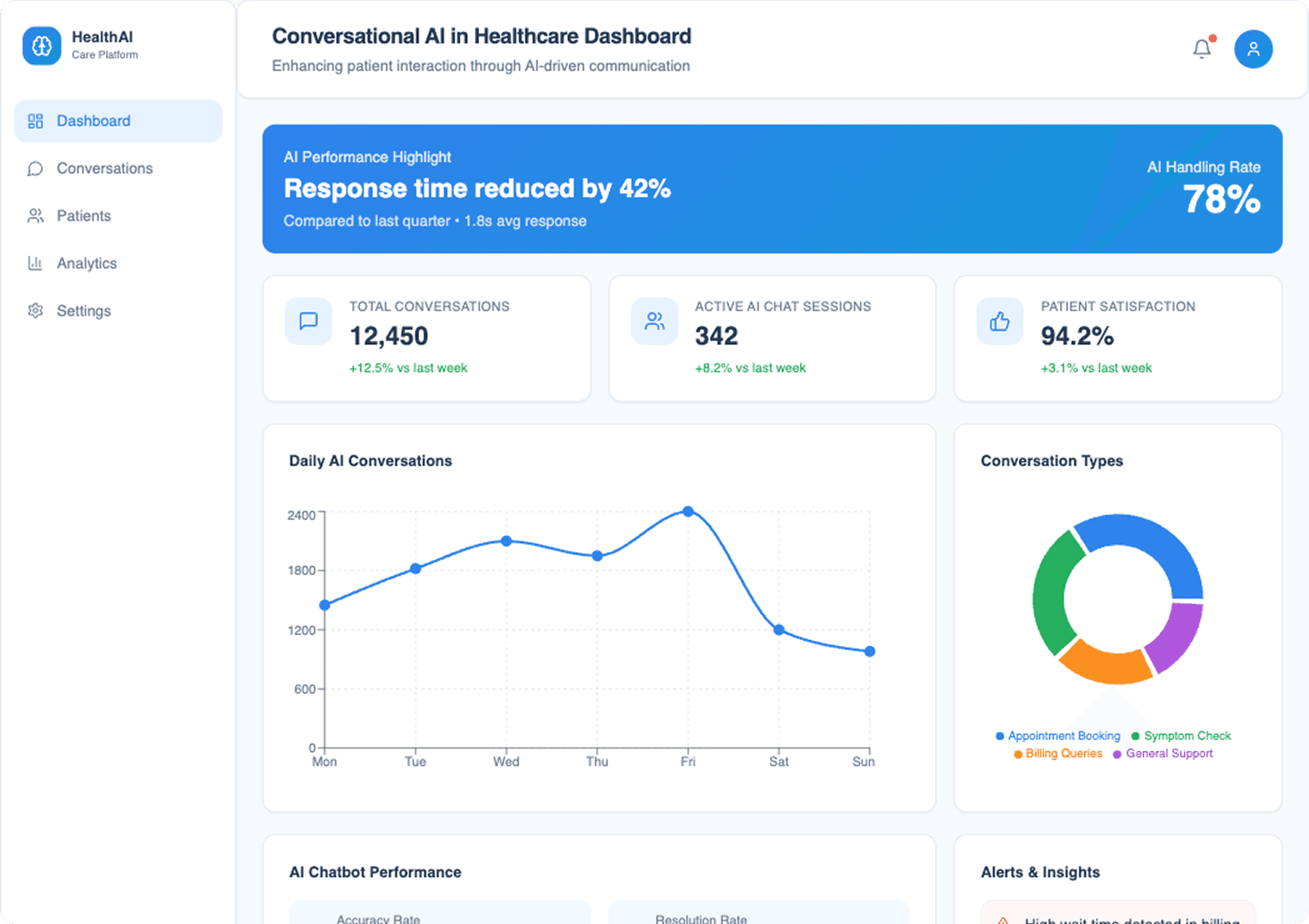
Conversational AI in healthcare uses GPT-powered LLMs, AI agents, and NLP technologies to enable human-like interactions between patients and healthcare systems across digital and voice channels. It facilitates appointment scheduling, patient support, symptom guidance, and real-time communication through chatbots and voice assistants. By analyzing patient queries and clinical data, conversational AI improves response accuracy, reduces wait times, and enhances patient engagement while supporting administrative and clinical workflows. Secure, cloud-based architectures enable continuous learning and seamless integration with EHRs and telehealth platforms. This allows conversational AI to deliver personalized interactions, adaptive responses, and scalable communication solutions across healthcare environments.
Transform Patient Communication And Engagement With AI
Discover how conversational AI in healthcare enhances patient interactions and streamlines communication processes. Our AI solution automates conversations, delivers real-time support, and improves accessibility while helping providers manage high volumes of patient inquiries with greater consistency.
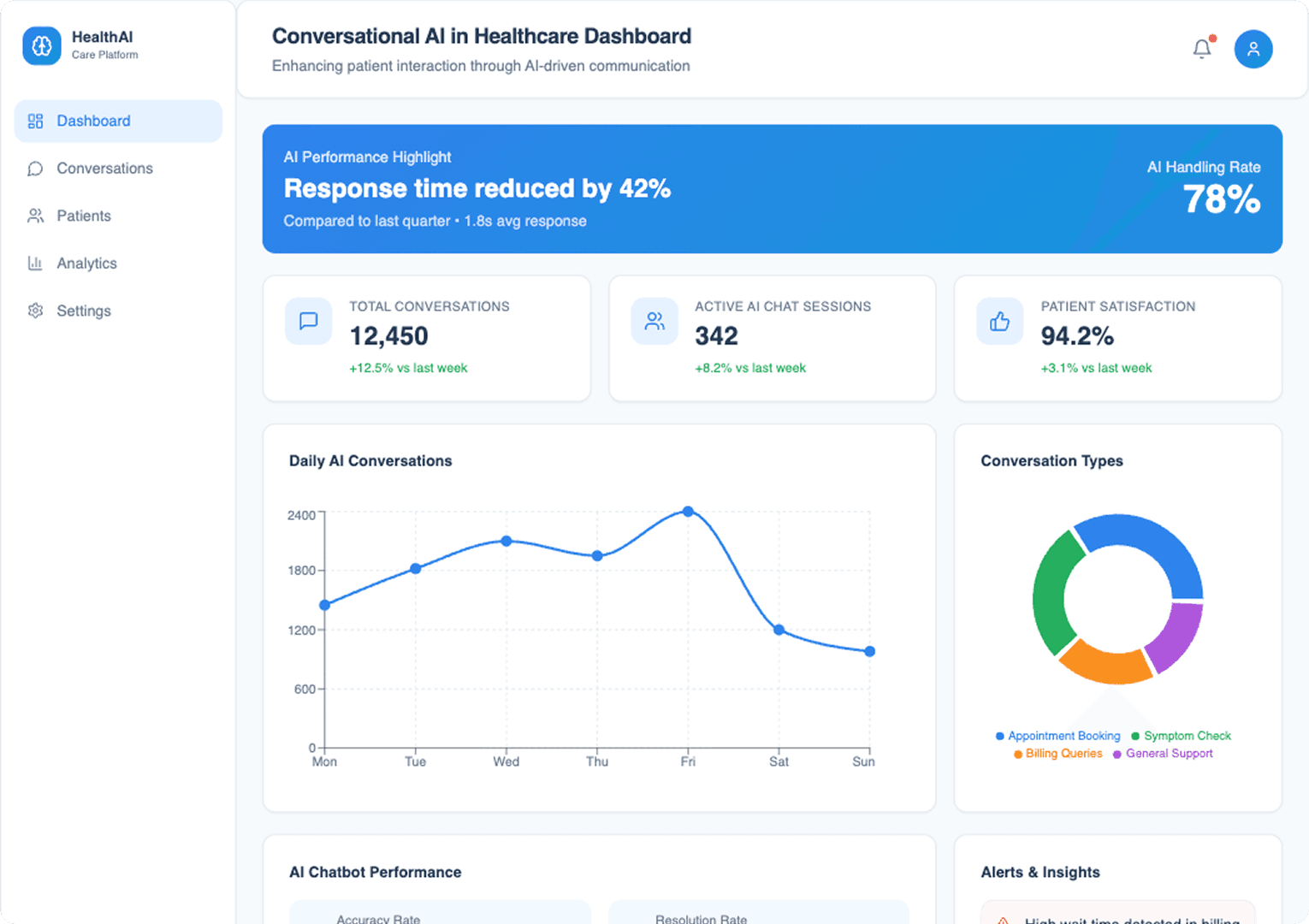
Healthcare providers adopting conversational AI often experience noticeable improvements in engagement and responsiveness. Many report up to 45% faster response times, 40% higher patient satisfaction, and 35% reduction in administrative workload across communication channels.
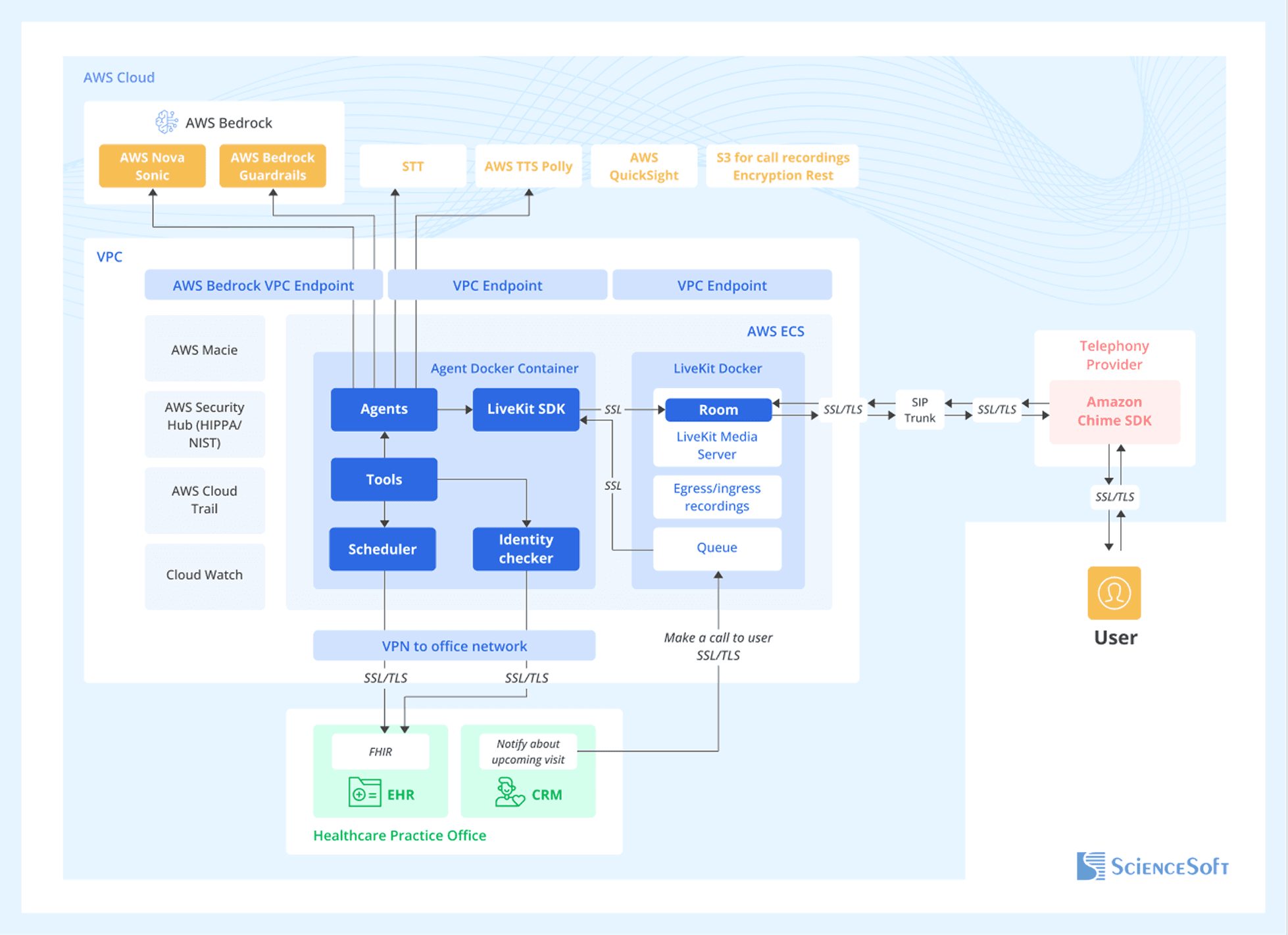
The solution uses GPT-powered LLMs, NLP frameworks, and hybrid AI agents to interpret patient queries and generate contextual responses. It processes structured and unstructured data to support appointment management, symptom guidance, and patient communication workflows. The architecture relies on cloud-based, modular systems with secure APIs and continuous learning capabilities. This enables seamless integration with EHRs, telehealth platforms, and communication tools while adapting to evolving patient needs and healthcare operational requirements.