Generative AI in Healthcare
Automate medical operations and patient engagement with generative AI healthcare solutions. Accelerate diagnostics, personalize treatment plans, and optimize workflows while improving outcomes for providers, patients, and stakeholders across hospitals and clinics.
What Is Generative AI In Healthcare?
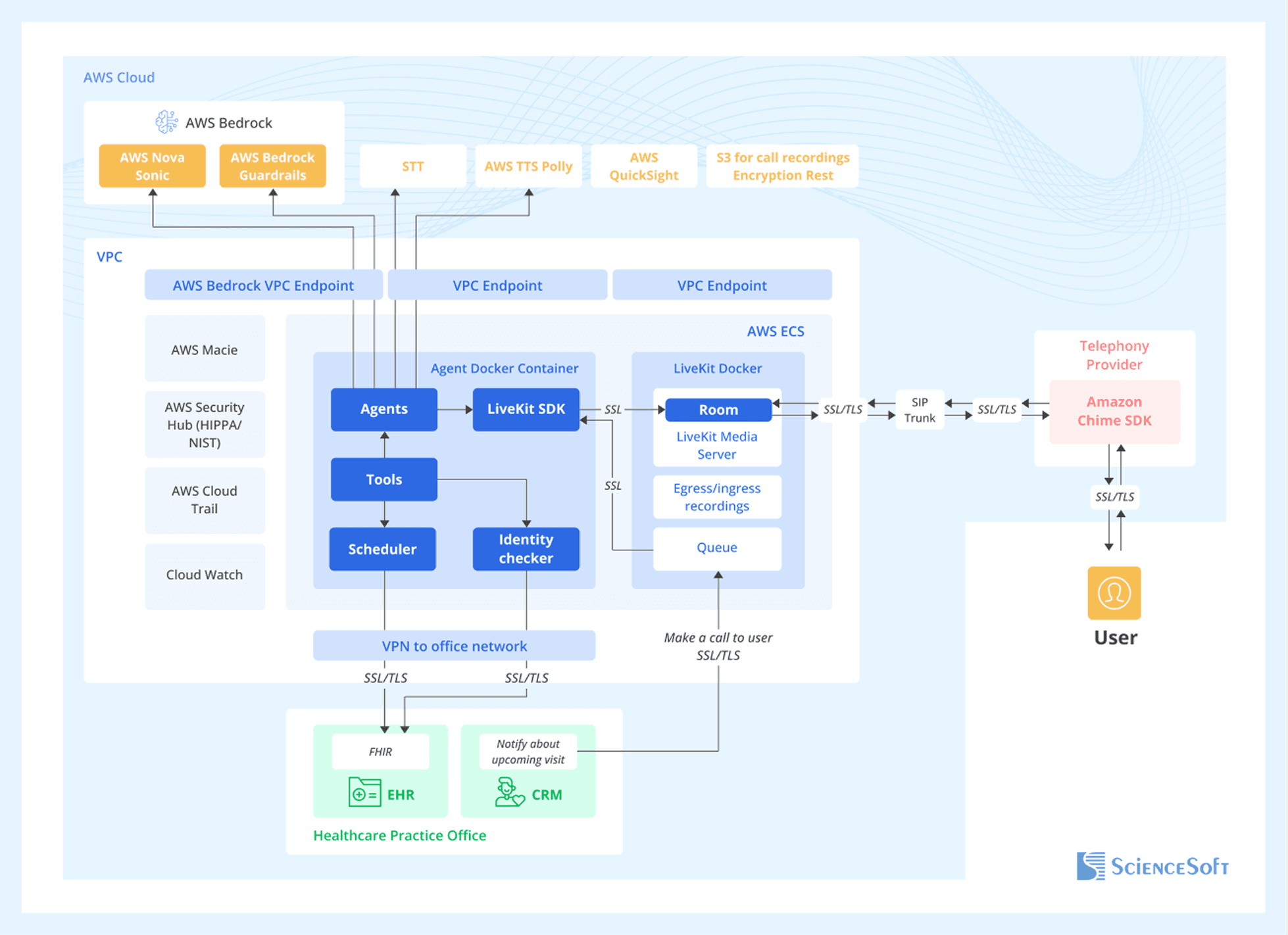
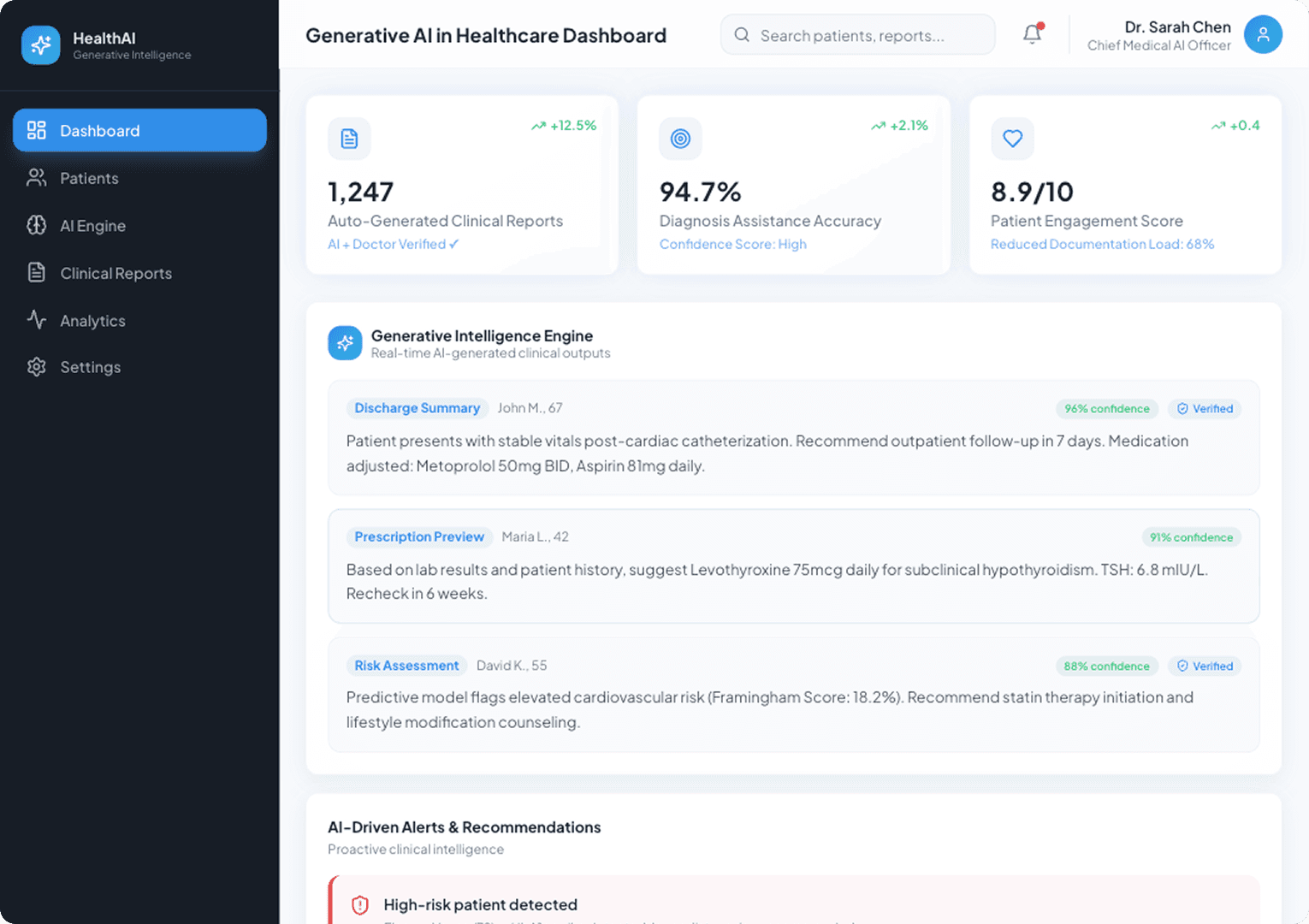
Generative AI in healthcare uses GPT-powered LLMs, AI agents, and predictive models to generate insights, optimize clinical decisions, and improve patient outcomes with accuracy and reliability. It also enables the creation of patient-specific recommendations, clinical simulations, and automated documentation for enhanced care delivery. It analyzes clinical data, patient histories, imaging, and real-time monitoring information to provide actionable recommendations. AI enhances treatment personalization, predicts complications, automates reporting, and supports both administrative and clinical processes with measurable results. Additionally, it identifies patterns across populations to inform preventive strategies and optimize resource allocation. Cloud-based architecture ensures secure data processing, scalability, and integration with hospital management systems. AI continuously adapts to evolving clinical data, enhancing patient engagement, diagnostic precision, and operational efficiency in modern healthcare environments. It also enables seamless collaboration between departments, improving workflow coordination and decision-making.
Revolutionize Clinical Insights And Patient Outcomes Today
Discover how generative AI in healthcare transforms clinical decision-making and patient care. Our AI solution generates insights, automates workflows, and enhances diagnostics to improve outcomes, engagement, and operational performance across modern healthcare environments.
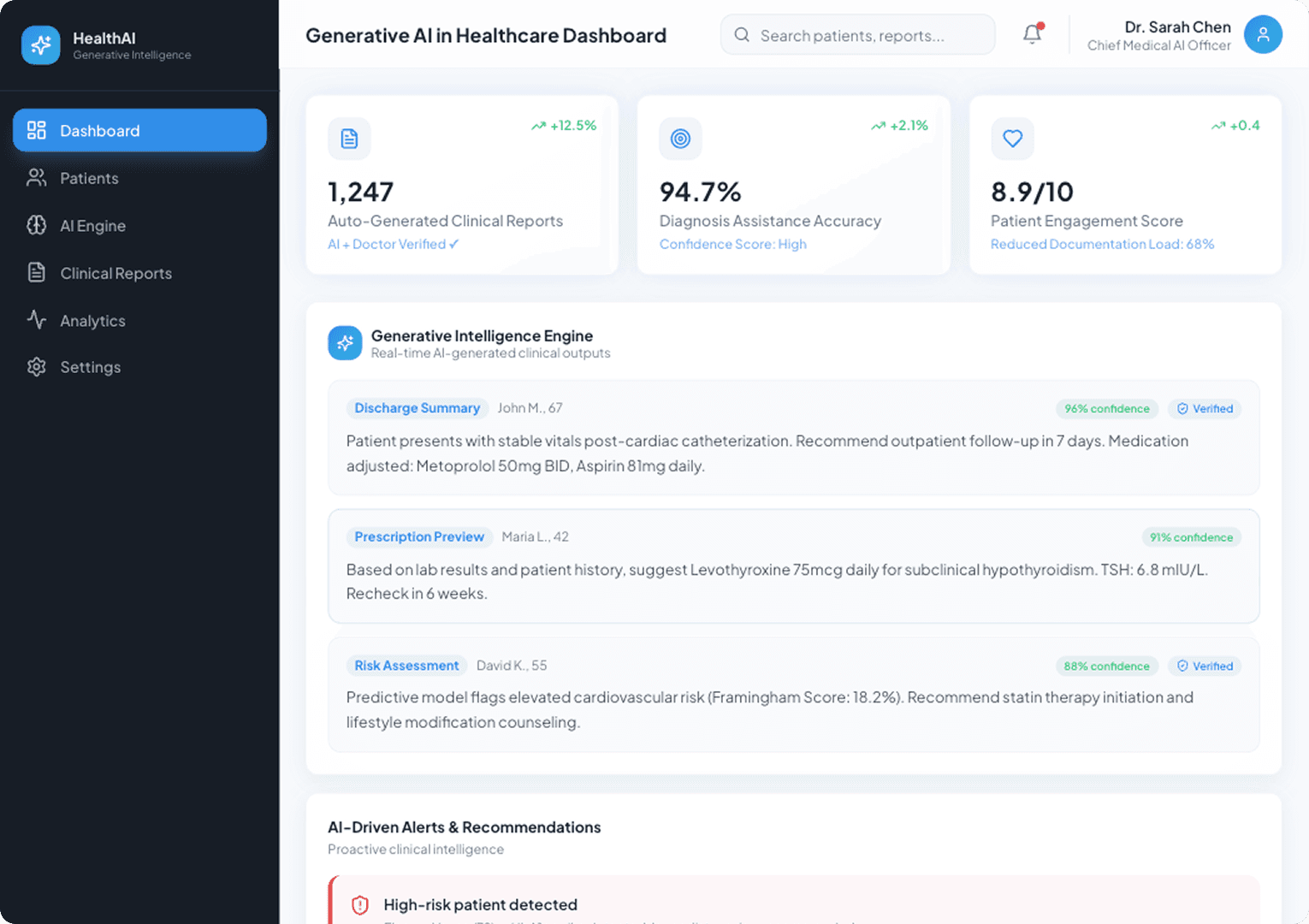
Organizations adopting this approach are already seeing measurable improvements in daily operations. On average, results include 50% faster decision-making, 40% improved treatment adherence, and 35% reduced diagnostic errors, helping providers deliver more timely and accurate care.