Summary
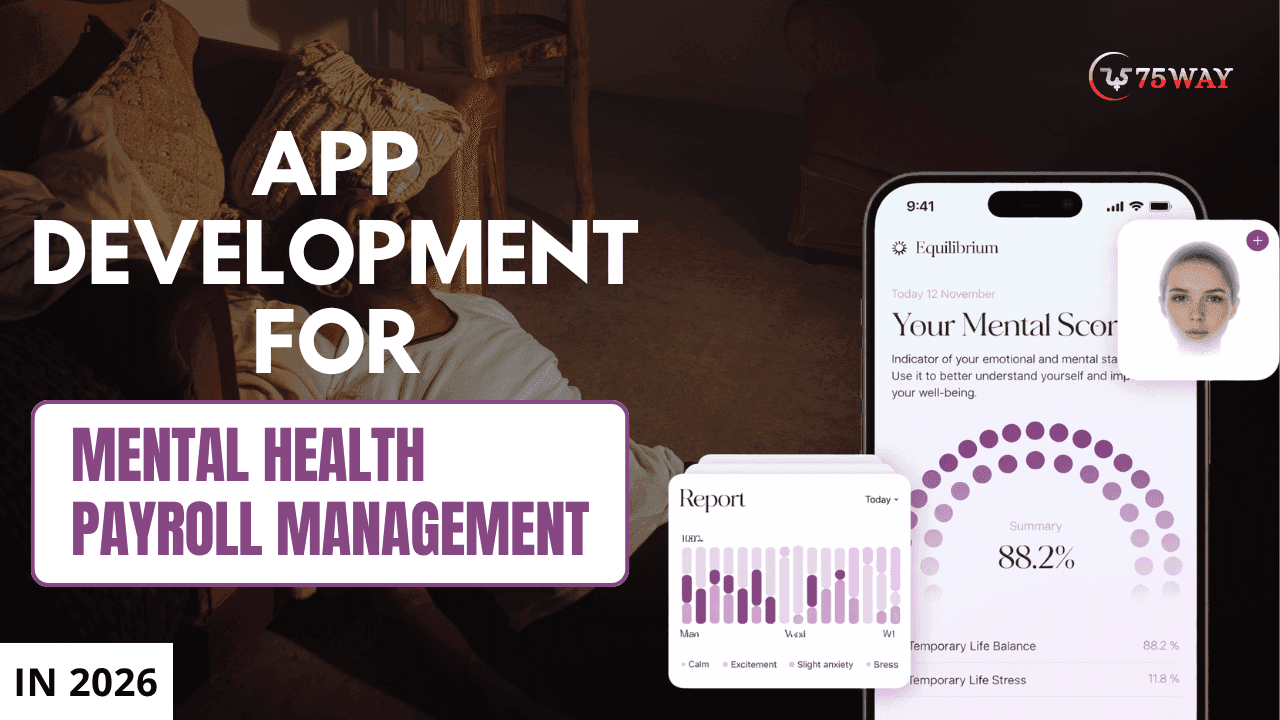
Mental health payroll management apps combine HR automation with employee wellbeing tracking to create healthier and more efficient workplaces. This guide explains the mental health payroll management development process, the cost structure, its key features, and the benefits. It helps businesses design secure, scalable platforms that support both financial operations and employee mental wellness programs.
Quick Overview
- Mental health payroll apps integrate HR, finance, and wellness tracking systems
- Secure data handling is critical due to sensitive employee information
- Automation reduces payroll errors and improves operational efficiency
- Mental health software market projected to reach $18 billion by 2035
- Mental health payroll app development cost ranges from $40,000 to $400,000+
Whether you are a startup or a large enterprise, you have to manage not only salaries and compliance but also employee wellbeing in a responsible way. This challenge has led to the rise of integrated digital platforms that connect payroll management with mental health support systems.
For HR leaders and decision-makers, the challenge is balancing financial accuracy with employee care. Modern app development solutions for workforce mental health management address this gap by combining automation, data intelligence, and wellbeing tracking in a unified platform.
Mental health payroll management apps are not designed to monitor personal emotions but to help organizations create supportive environments using structured insights, anonymous feedback, and responsible data handling.
This guide explains how such healthcare apps are built, what features they include, and how they deliver value to both organizations and employees. It also helps leaders understand how structured wellbeing data can support healthier, more productive workplaces over time.
What Is Mental Health Payroll Management App?
A mental health payroll management app is a unified digital system that connects salary processing with structured employee wellbeing support. It helps organizations manage payroll operations while also observing workplace wellness indicators through ethical, anonymized, and data-driven mechanisms that prioritize privacy and responsible usage of information.
These platforms do not replace human HR functions but strengthen them by offering meaningful insights into workforce engagement, attendance behavior, and overall satisfaction trends. By combining financial operations with wellbeing analytics, organizations can identify hidden workforce challenges earlier and make more informed, supportive decisions that improve both operational efficiency and employee experience.
Why Businesses Are Adopting Workforce Mental Health Payroll Apps?
Organizations are increasingly investing in integrated HR and wellbeing systems due to rising workforce challenges and operational complexity.
- Increasing focus on employee wellbeing in corporate environments
- Need for automation in payroll processing and compliance
- Demand for data-driven HR decision-making systems
- Growing importance of retention and employee satisfaction
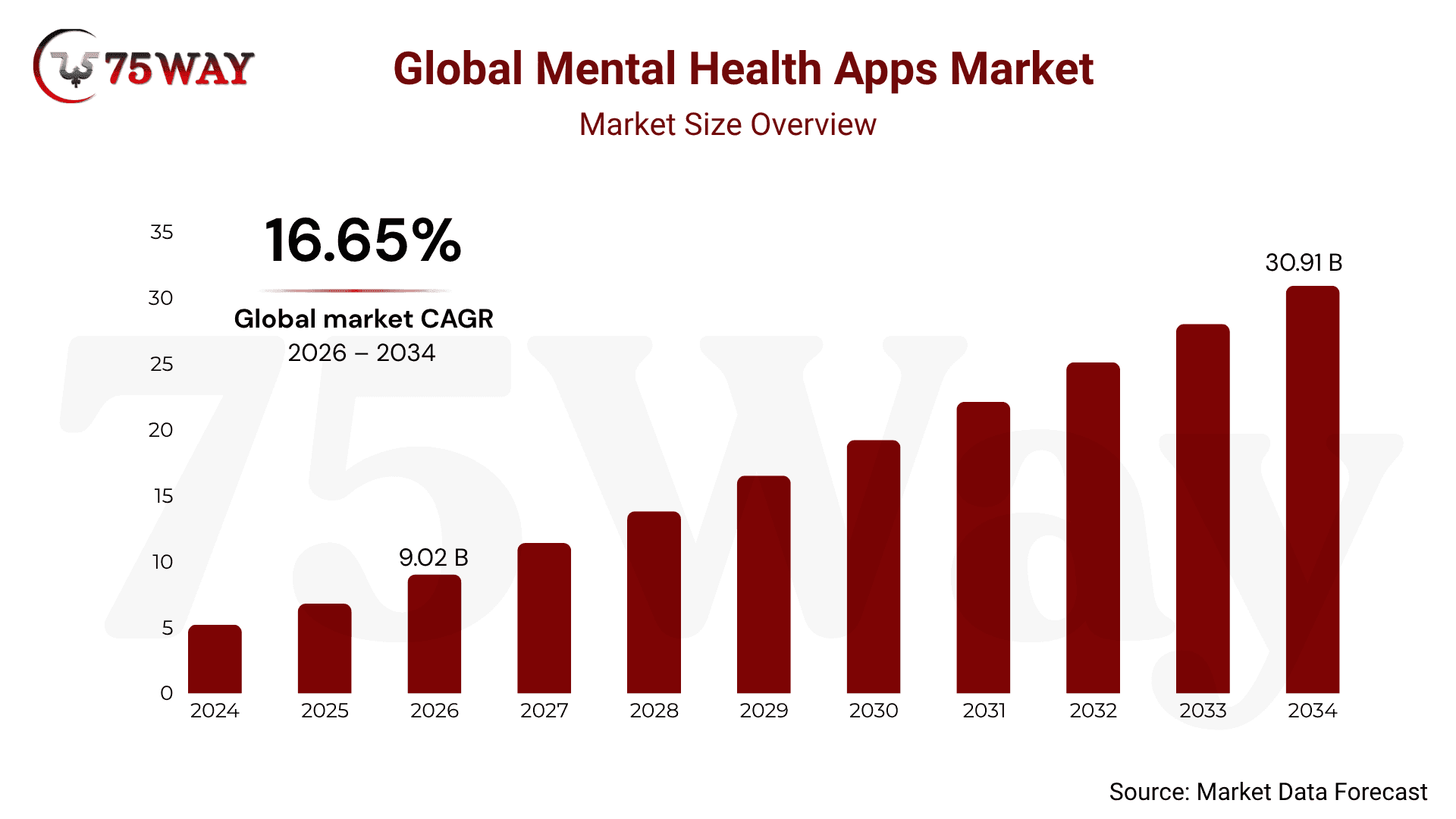
A key driver is the growing market and strong revenue potential. Businesses are leveraging this opportunity to scale operations, reach wider audiences, and maximize long-term profitability.
How to Build A Mental Health Payroll App?
Developing a mental health payroll application requires a structured approach that combines HR functionality with wellbeing intelligence. Each stage focuses on building accuracy, security, and usability while ensuring the system supports both payroll operations and employee mental wellness insights in a unified digital environment.
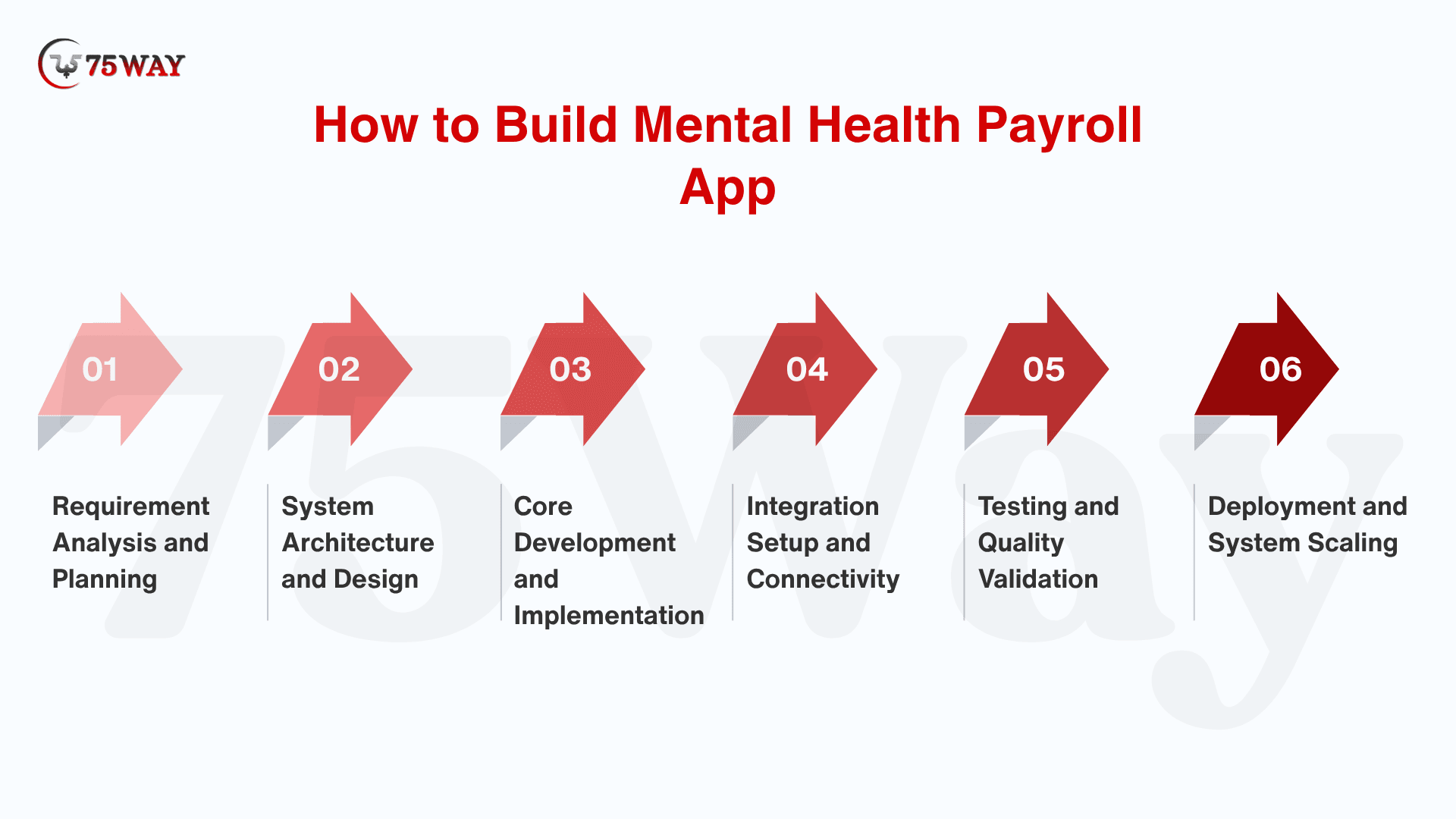
Step 1: Requirement Analysis and Planning
This stage focuses on understanding organizational needs before development begins. HR policies, payroll structures, employee categories, and wellbeing objectives are clearly identified. This foundation ensures the platform aligns with both financial operations and workplace support goals from the beginning.
Clear documentation of system expectations helps define features such as salary processing rules, attendance tracking, and wellness reporting. Proper analysis reduces development gaps later and ensures the final solution matches real business requirements across departments.
Step 2: System Architecture and Design
Architecture planning begins by structuring how payroll processing and wellbeing modules will interact. Data flow, security layers, and user roles are mapped to create a stable foundation for the application.
Design decisions focus on scalability, secure data handling, and smooth integration between HR operations and mental health insights. This ensures the system remains flexible for future expansion and feature enhancement.
Step 3: Core Development and Implementation
The development phase involves building payroll engines, employee dashboards, and reporting modules. Each component is designed to handle financial accuracy and generate meaningful workforce insights.
Coding focuses on automation, data validation, and real-time processing. This stage ensures both payroll execution and wellbeing analytics function seamlessly within a single system.
Step 4: Integration Setup and Connectivity
External systems such as banking APIs, HR platforms, and communication tools are connected during this phase. These integrations enable seamless salary transfers, data synchronization, and internal communication.
Proper integration ensures that payroll updates, employee records, and engagement data remain consistent across all connected systems without manual intervention.
Step 5: Testing and Quality Validation
System validation begins by checking payroll accuracy, security protocols, and application performance. Every module is tested under different usage conditions to identify potential issues.
Testing ensures data integrity, system stability, and a smooth user experience across HR teams and employees using the platform.
Step 6: Deployment and System Scaling
The application is launched in a controlled environment before full-scale rollout. Real usage data helps identify performance improvements and feature enhancements.
Scaling strategies are applied to handle growing employee data and organizational expansion while maintaining system speed, reliability, and consistency.
Key Features of Mental Health Payroll Apps
Modern mental health payroll systems integrate financial operations with employee wellbeing tools to create a unified HR ecosystem. These platforms improve payroll accuracy while also helping organizations understand workforce engagement, satisfaction, and stress patterns through structured and secure data-driven insights.
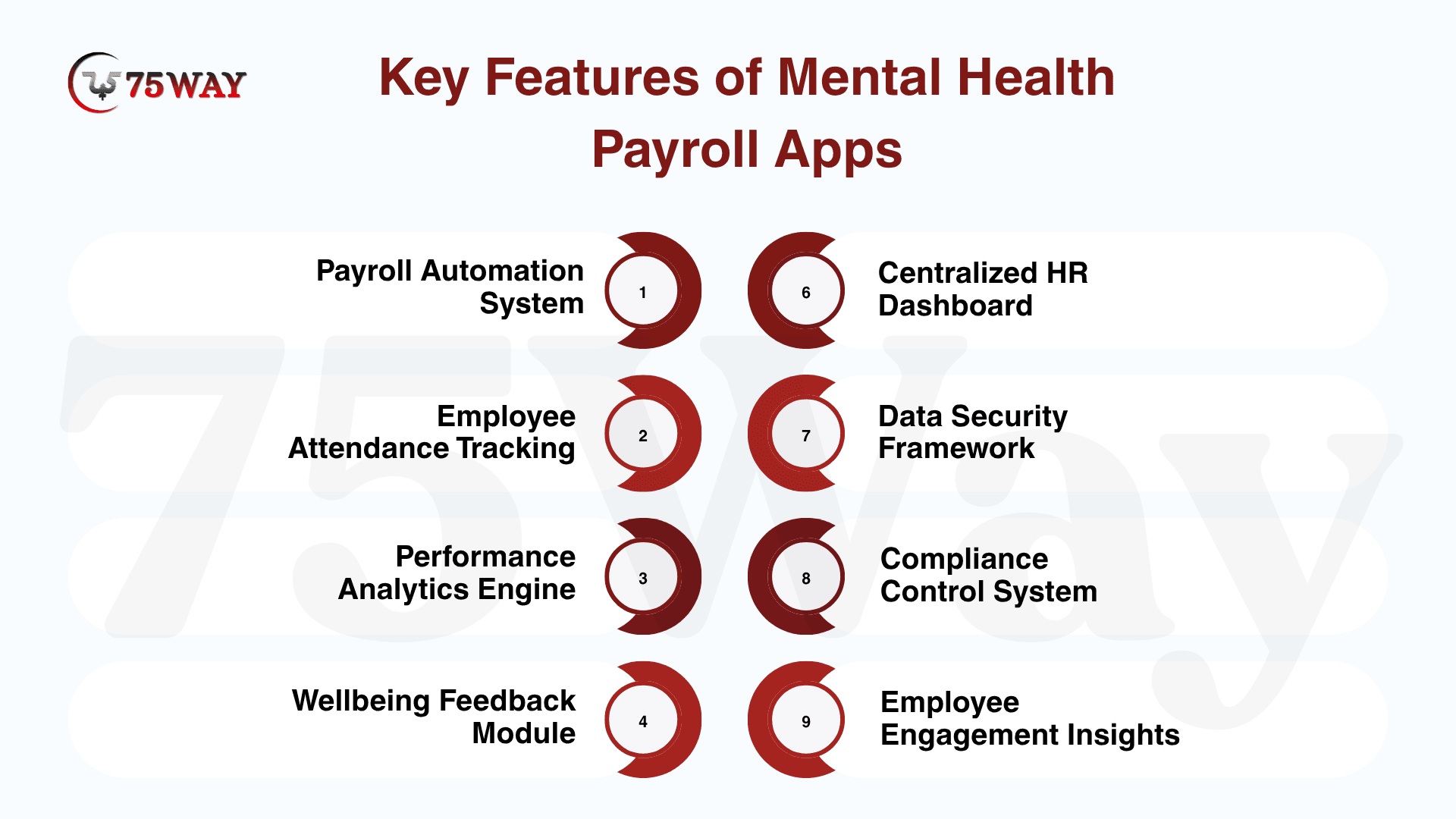
- Payroll Automation: The automated engine calculates salary, deductions, and bonuses accurately. Processing reduces manual workload and ensures consistent payout cycles across teams.
- Attendance Tracking: Digital tracking records employee working hours and presence data. Attendance insights support payroll accuracy and highlight absence patterns.
- Performance Analytics: Advanced analytics evaluates employee productivity and output quality. Results guide appraisal decisions and workforce planning strategies.
- Wellbeing Feedback: The anonymous survey module collects employee mental wellness responses securely. Feedback highlights stress levels and supports workplace improvement initiatives.
- HR Dashboard: The central dashboard presents workforce data through visual analytics tools. Insights assist HR leaders in faster and more informed decisions.
- Data Security: Encryption protocols safeguard sensitive employee payroll and personal records. Security layers prevent unauthorized access and data misuse risks.
- Compliance Control: Regulatory engine aligns payroll operations with labor law standards. Compliance tracking reduces legal risks and maintains documentation accuracy.
- Engagement Insights: Behavioral analytics studies employee interaction and participation patterns. Insights help improve workplace culture and engagement strategies.
Benefits of Building Mental Health Payroll Mobile Apps
Mental health payroll systems create a balanced approach between financial operations and employee wellbeing. They help organizations streamline payroll processes while also improving workforce satisfaction, engagement, and decision-making through structured data insights. This combination strengthens both operational efficiency and workplace culture.
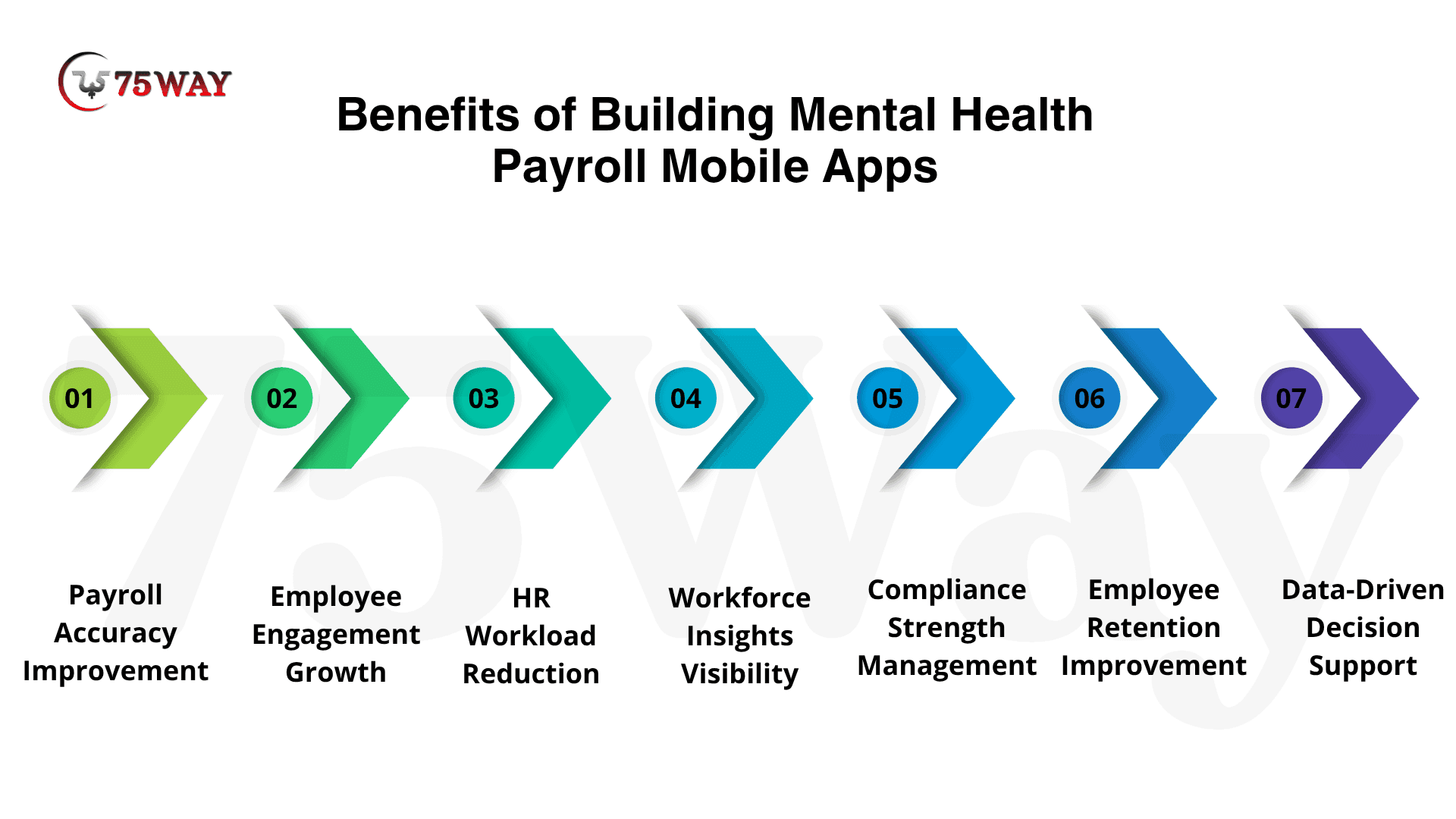
- Payroll Accuracy: Automated processing reduces salary errors and ensures consistent and timely employee payments across all departments.
- Engagement Growth: Structured wellbeing tools improve employee satisfaction and encourage stronger workplace participation and morale levels.
- Workload Reduction: Automated HR processes decrease manual administrative tasks and free teams for strategic responsibilities.
- Workforce Insights: Data analytics provide clear visibility into employee behavior, productivity, and organizational performance trends.
- Compliance Strength: Built-in regulatory alignment helps maintain financial accuracy and reduces risks related to labor laws.
- Retention Improvement: Wellbeing tracking supports early identification of disengagement and helps reduce employee turnover rates.
- Decision Support: Real-time insights assist HR leaders in making informed workforce planning and management decisions.
- Operational Efficiency: Integrated systems streamline payroll and wellbeing functions into a single coordinated platform structure.
Technology Stack To Build Mental Health Payroll Platform
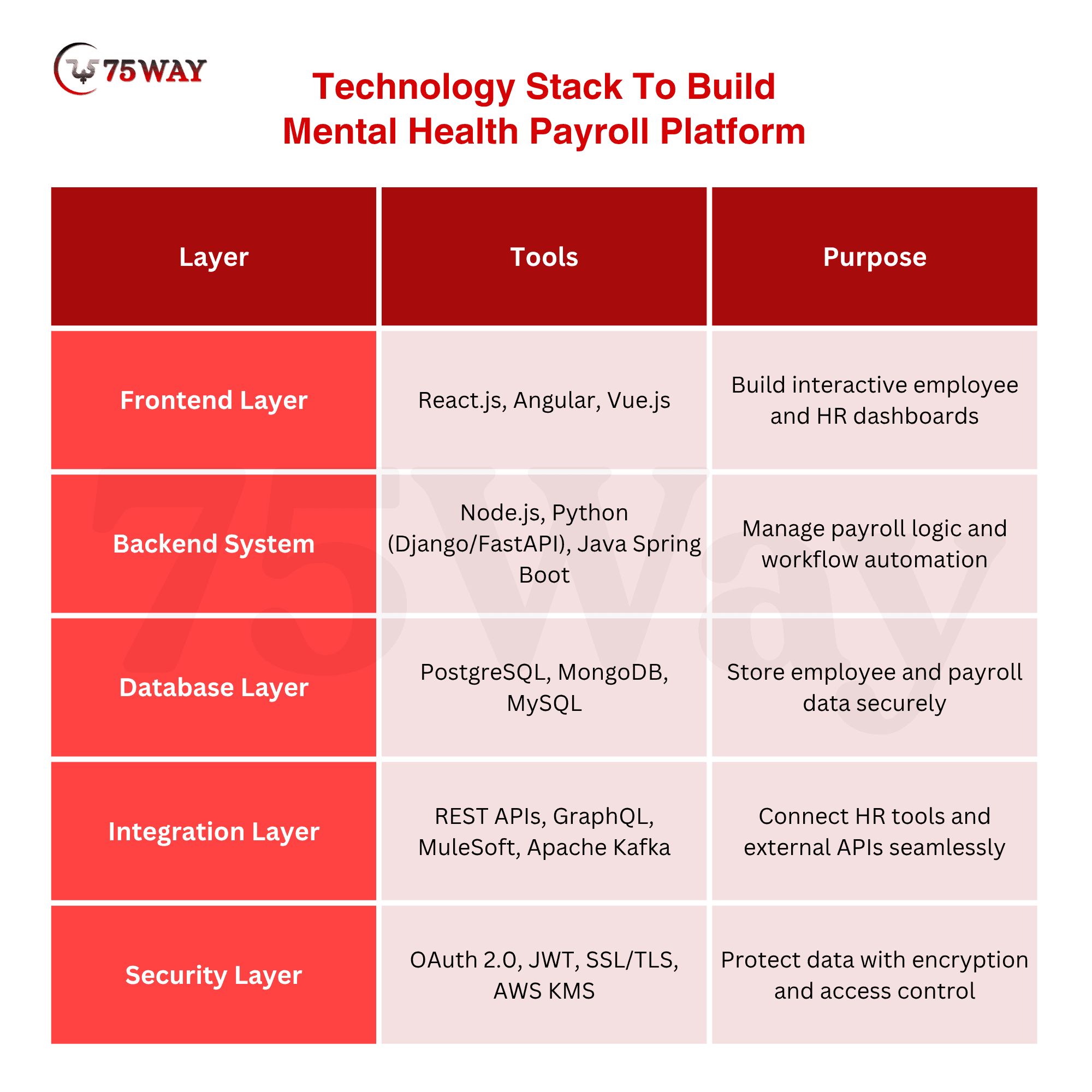
Building such systems requires a secure and scalable architecture. The platform must combine reliable frontend interfaces, strong backend logic, secure data storage, and multiple integrations while maintaining high standards of data protection and performance consistency across all operations.
- Frontend Layer: User dashboards for employees and HR teams are built using modern frameworks. React.js, Angular, and Vue.js are commonly used to create responsive and interactive interfaces.
- Backend System: This layer handles payroll logic, data processing, and workflow automation. Node.js, Python (Django/FastAPI), and Java Spring Boot are widely used for scalable backend development.
- Database Layer: Employee records, payroll data, and analytics are stored securely in this layer. PostgreSQL, MongoDB, and MySQL are commonly used database technologies.
- Integration Layer: This layer connects HR tools, banking APIs, and compliance systems for smooth data flow. REST APIs, GraphQL, MuleSoft, and Apache Kafka enable seamless integration.
- Security Layer: Data protection, encryption, and access control are managed in this layer. OAuth 2.0, JWT, SSL/TLS, and AWS KMS are used for secure system architecture.
What’s The Cost to Develop Mental Health Payroll App?
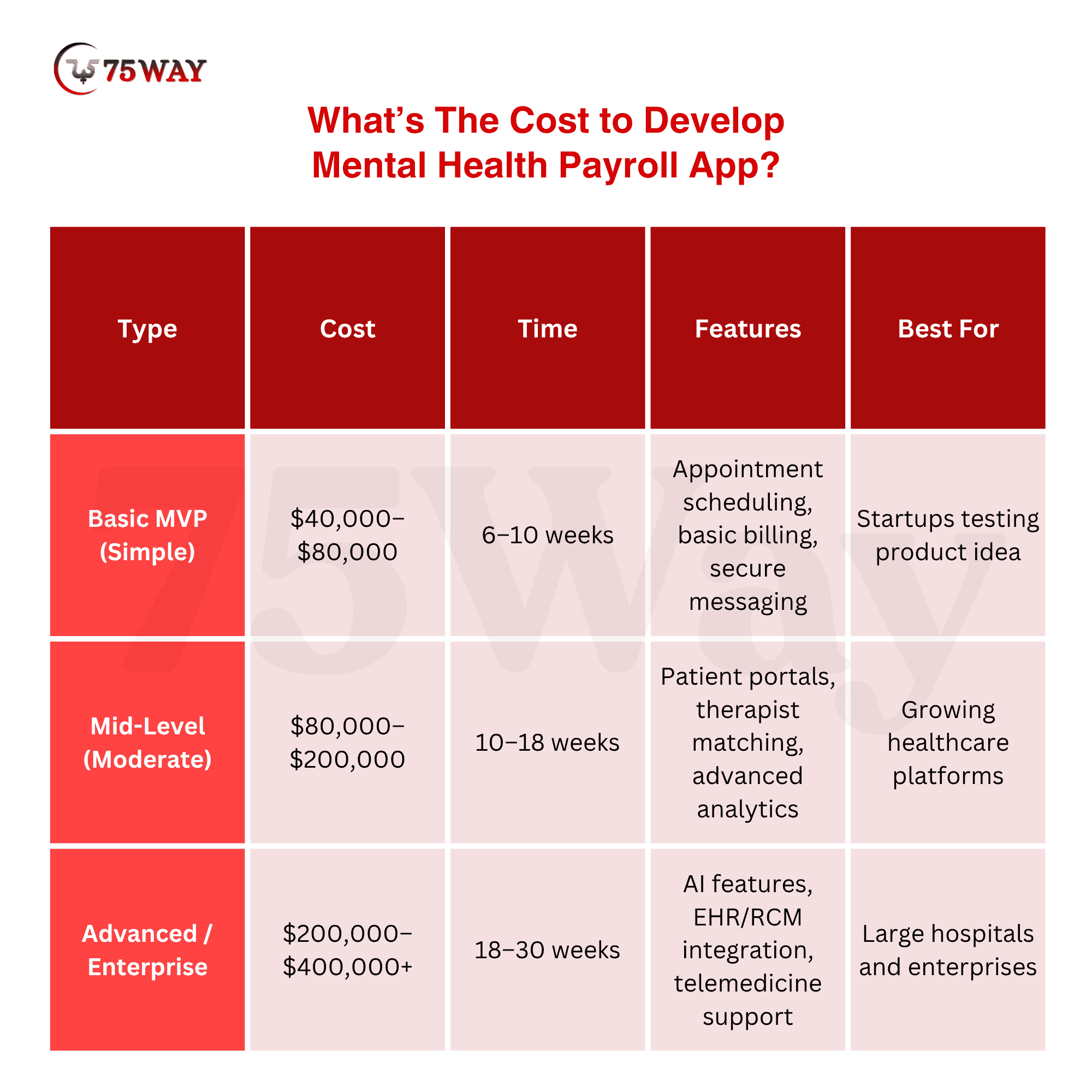
The cost to develop a mental health payroll application depends on feature depth, compliance requirements, integrations, and scalability needs. Overall development typically ranges between $40,000–$400,000+, depending on system complexity, AI capabilities, and integration scope with HR and financial tools. Basic solutions sit at the lower end, while enterprise-grade platforms with advanced analytics, security layers, and multi-system connectivity reach the higher range.
- Basic MVP (Simple): $40,000 – $80,000
Typically delivered within 6–10 weeks with core features for quick launch and validation.
- Mid-Level (Moderate): $80,000 – $200,000
Built over 10–18 weeks with advanced functionalities, integrations, and improved scalability.
- Advanced / Enterprise: $200,000 – $400,000+
Developed within 18–30 weeks for high-performance, scalable systems with complex features and enterprise-grade capabilities.
Future Trends of Mental Health Payroll App Development
As organizations shift toward digital-first HR ecosystems, these platforms will evolve beyond basic payroll processing into advanced decision-support systems that help leaders understand workforce health, productivity, and engagement patterns in real time. Increasing adoption of AI, automation, and analytics is expected to shape the next generation of HR technology solutions, making them more adaptive and insight-driven.
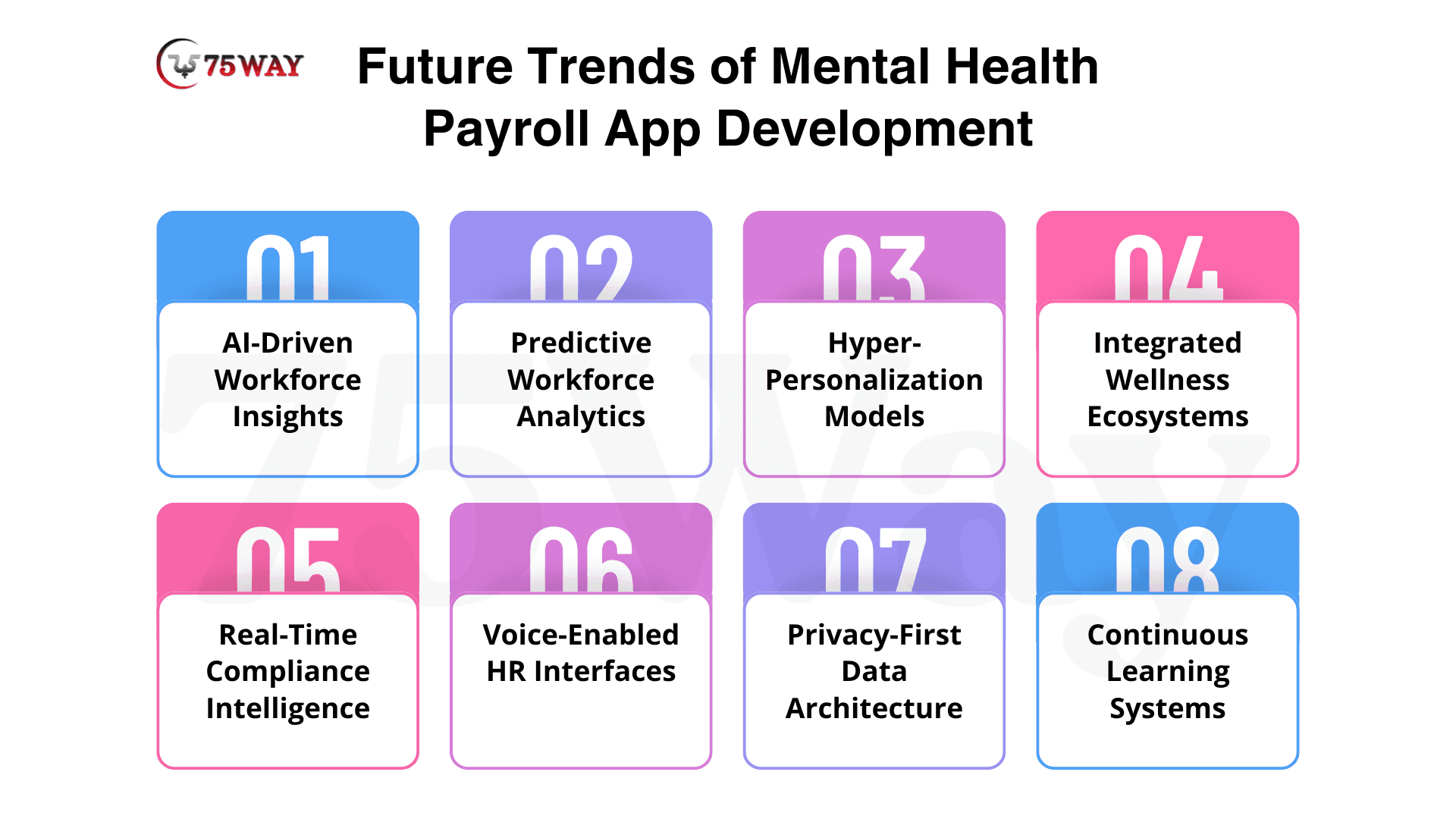
- AI Driven Insights: Advanced algorithms will analyze employee behavior patterns to detect stress signals, engagement levels, and workload imbalance for proactive HR decisions.
- Predictive Workforce Analytics: Systems will forecast absenteeism, burnout risks, and retention probability using historical payroll and engagement data patterns.
- Hyper Personalization Models: Employee benefits, payroll structures, and wellbeing recommendations will adjust dynamically based on individual behavior and role profiles.
- Integrated Wellness Ecosystems: Payroll platforms will connect with mental health tools, therapy apps, and wellness programs to provide unified employee support systems.
- Real-TimeComplianceIntelligence: Regulatory updates will be automatically monitored to ensure payroll accuracy and alignment with labor laws across regions.
- Voice-Enabled HR Interfaces: Natural language and voice-based interactions will allow employees and HR teams to access payroll and wellbeing data instantly.
- Privacy First Architecture: Stronger encryption, anonymization, and ethical data handling will become standard as employee wellbeing data sensitivity increases.
- Continuous Learning Systems: Platforms will evolve through ongoing data feedback loops, improving accuracy in payroll decisions and wellbeing recommendations over time.
Conclusion
Mental health payroll applications are reshaping how organizations manage both compensation and employee wellbeing in a unified system. By combining automation, analytics, and structured wellness insights, these platforms help businesses create more supportive, transparent, and efficient workplace environments. They reduce manual HR workload, improve payroll accuracy, and provide leaders with meaningful visibility into workforce health and engagement patterns.
As organizations continue to prioritize employee experience alongside operational efficiency, the adoption of such integrated systems will become increasingly important. The future lies in solutions that balance financial processes with human-centered care, enabling long-term organizational stability, productivity, and retention. Businesses planning to build such solutions can contact a reliable app development company for faster go-to-market execution.
Frequently Asked Questions (FAQs)
What Types Of Companies Typically Invest In Workforce Wellness Systems?
Companies in healthcare, IT services, finance, and large enterprises commonly invest in workforce wellness systems. These organizations manage large employee bases and require structured HR operations. Investment helps them improve productivity, reduce turnover, and maintain consistent employee satisfaction across departments.
How Do These Platforms Support Remote And Hybrid Teams?
These platforms support remote and hybrid teams by centralizing payroll, communication, and wellbeing data in one system. Employees can access services from any location while HR teams maintain visibility. This improves coordination, reduces delays, and ensures consistent workforce management across distributed teams.
What Challenges Do Businesses Face During System Implementation?
Businesses often face challenges like data migration complexity, system integration issues, and employee adaptation to new tools. Initial setup requires careful planning to avoid workflow disruptions. Training and phased deployment help organizations transition smoothly while maintaining operational continuity and data accuracy.
How Do These Systems Improve HR Decision Making?
These systems improve HR decision-making by providing structured data on employee behavior, attendance, and engagement trends. Real-time dashboards and analytics help identify workforce patterns. This allows HR leaders to take informed actions related to hiring, retention, and performance management.
What Role Does Data Privacy Play In Such Applications?
Data privacy plays a critical role as these systems handle sensitive employee information. Strong encryption, anonymization, and access controls protect user data. Compliance with regulations ensures ethical handling of payroll and wellbeing information while maintaining employee trust and organizational accountability.
How Do These Platforms Influence Employee Satisfaction Levels?
These platforms influence employee satisfaction by improving transparency, timely payroll processing, and access to wellbeing support. Employees feel more valued when organizations track engagement and provide structured care. This leads to higher morale, better retention, and improved overall workplace experience.