Summary
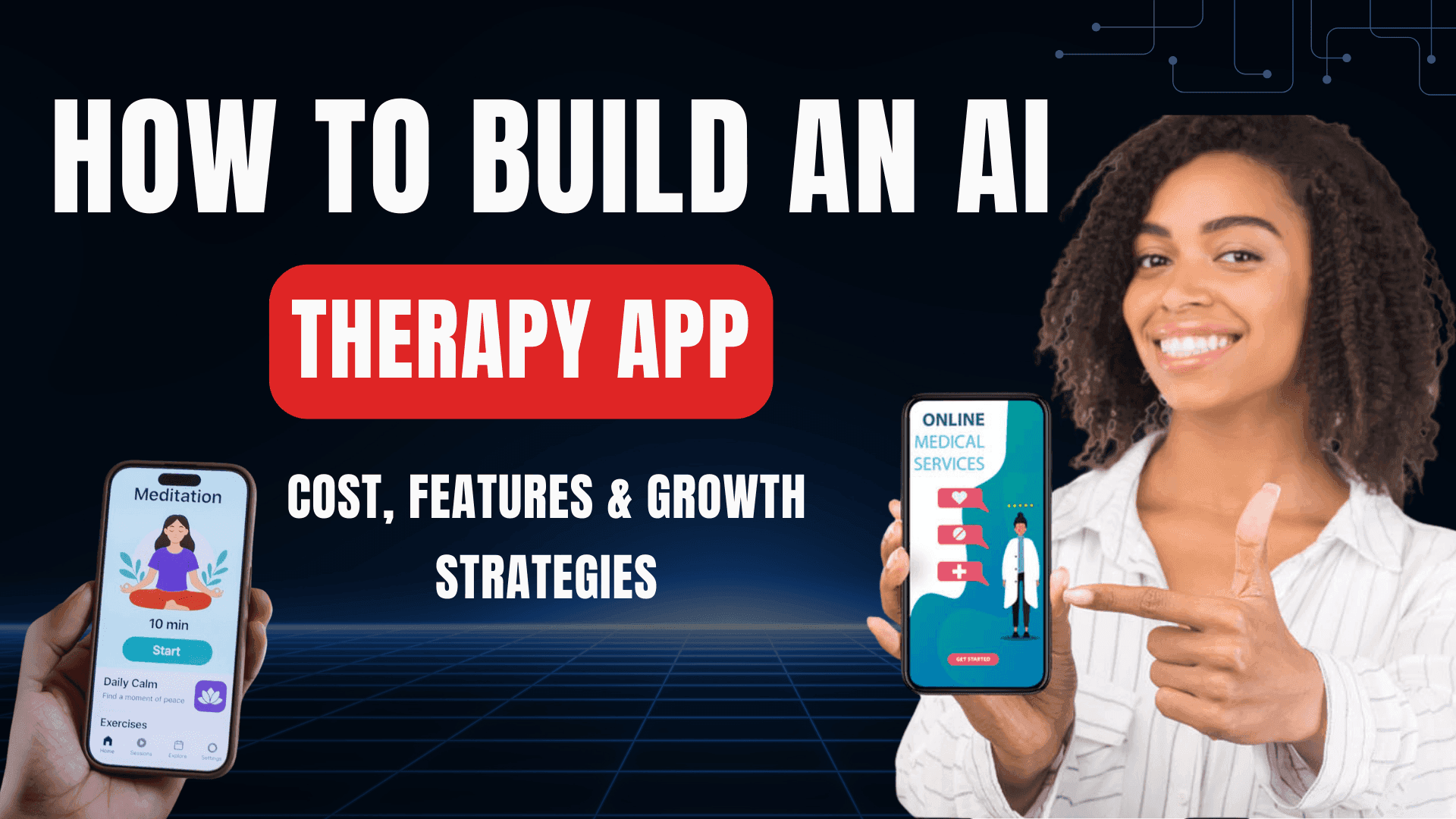
This guide explains AI therapy app development, covering features, cost, process, compliance, monetization, trends, and competitive apps for startups and businesses. It provides actionable insights for building scalable, secure, and user-focused AI-powered mental health solutions.
Quick Insights:
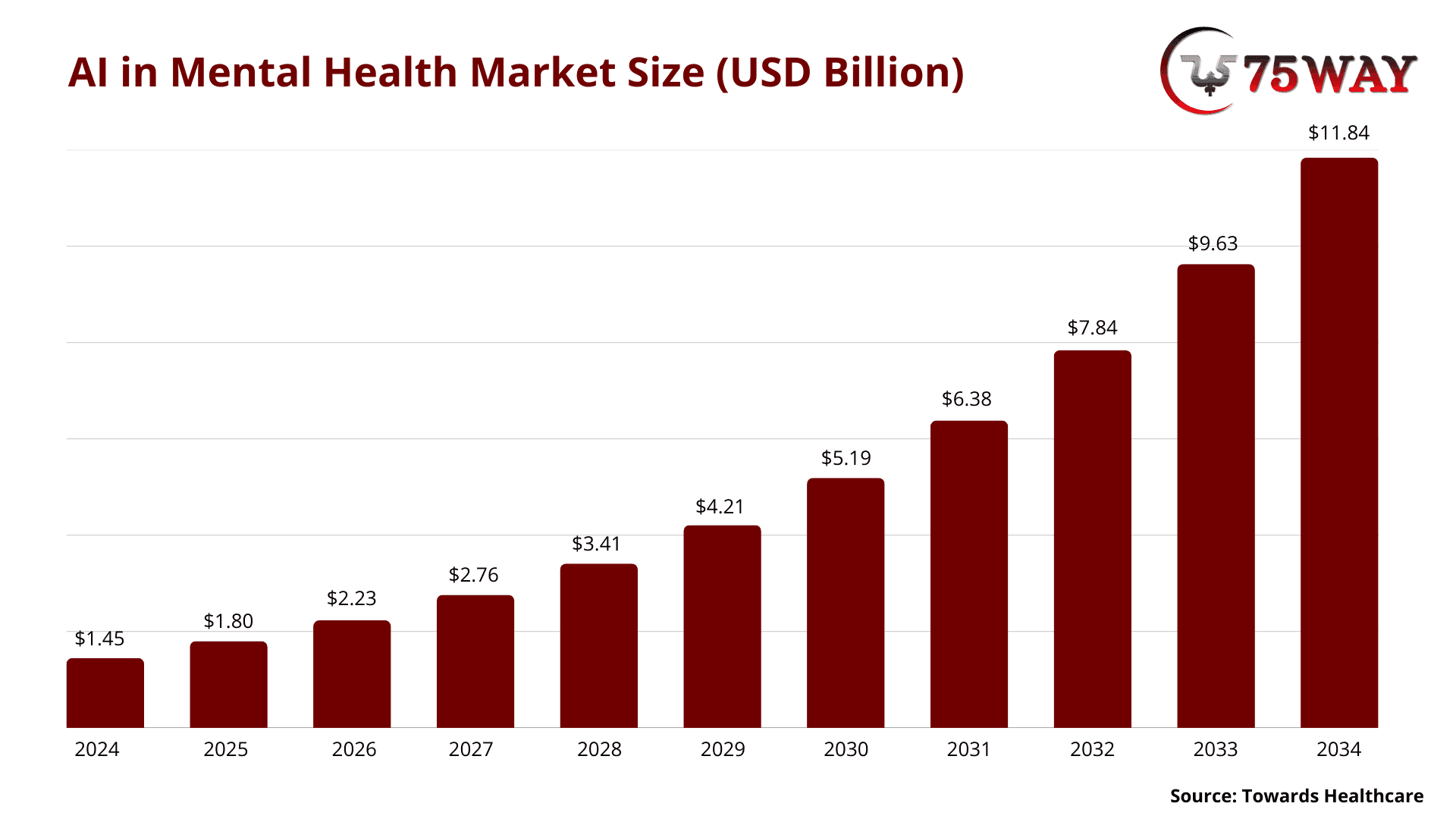
- Global AI mental health market projected to reach $11.84 billion by 2034.
- Step-by-step therapy app development process includes UX, AI integration, testing, deployment, and compliance with safety standards.
- Developing an AI therapy app ranges from $20,000 to $450,000 based on complexity.
- Core features include conversational AI, mood tracking, dashboards, safety protocols, analytics, and platform support.
- Monetization strategies include subscriptions, in-app purchases, B2B partnerships, SaaS, licensing, and data insights.
- Hybrid AI-human apps, predictive models, and LLM assistants shape future therapy app trends.
Over 970 million people worldwide suffer from mental health disorders, yet millions struggle to get timely access to professional care. The reason is limited availability of therapists 24 hours a day, long waiting lists, and high costs. So, many individuals do not avail timely support they desperately need, that worsen their stress, anxiety, and depression levels.
But when professional guidance is unavailable, technology can take over. AI therapy apps are doing the same. They are a powerful healthcare app development solution that offers personalized mental health support directly through smartphones or web platforms.
The therapy app development solutions integrate artificial intelligence, NLP, sentiment analysis, agentic AI, and machine learning to simulate therapeutic conversations. These apps track emotional well-being and provide guidance anytime, anywhere to meet mental health needs and connect users with professionals. But how do you build a therapy mobile app? How are these apps helpful for businesses?
This guide provides a complete roadmap for developing an AI therapy app, including a step-by-step development process, core features, cost estimation, monetization strategies, and emerging trends. Moreover, if you are a founder and business owner, you will get actionable insights to launch a successful AI-powered therapy platform.
What is an AI Therapy App?
An AI therapy app is a digital platform that provides mental health support by simulating therapeutic interactions and guiding users through structured psychological care. These apps understand a user’s inputs, such as messages, voice cues, or behavioral patterns, and respond in a way that mimics a real therapist. They help users manage stress, anxiety, depression, or other mental health concerns.
In simple terms, if someone feels anxious before an important meeting, an AI application of therapy and mental healthcare can chat with them, analyze their emotions, and suggest breathing exercises. It’s like having a personal mental health assistant in your pocket anytime you need support.
To deliver these capabilities, AI therapy apps rely on advanced technologies, including:
- Artificial intelligence (AI) for decision-making and personalized recommendations.
- Natural language processing (NLP) to understand and respond to user messages in human-like language.
- Sentiment analysis to detect emotions, stress levels, and behavioral patterns.
- Machine learning (ML) to continuously improve predictions and therapy suggestions based on user behavior.
- AI chatbots and AI voice agents for real-time conversational support to users.
- Wearable data integration to incorporate biometric signals such as heart rate, sleep patterns, or activity levels.
- LLM-Based assistants are large language models for deep contextual understanding and empathetic responses.
By combining these technologies, these AI therapy apps deliver personalized, scalable, and accessible mental health care. They become essential tools for startups, healthcare innovators, and wellness-focused businesses.
Explore More: AI App Development Partner for Health and Wellness Startup
Step-by-Step AI Therapy App Development Process
A structured methodology is required to build an AI therapy app that integrates AI precisely and employs user-centred design to offer effective mental health support. Here, we define a step-by-step process to help startups and businesses build a scalable mental health app while minimizing risk and meeting compliance requirements.
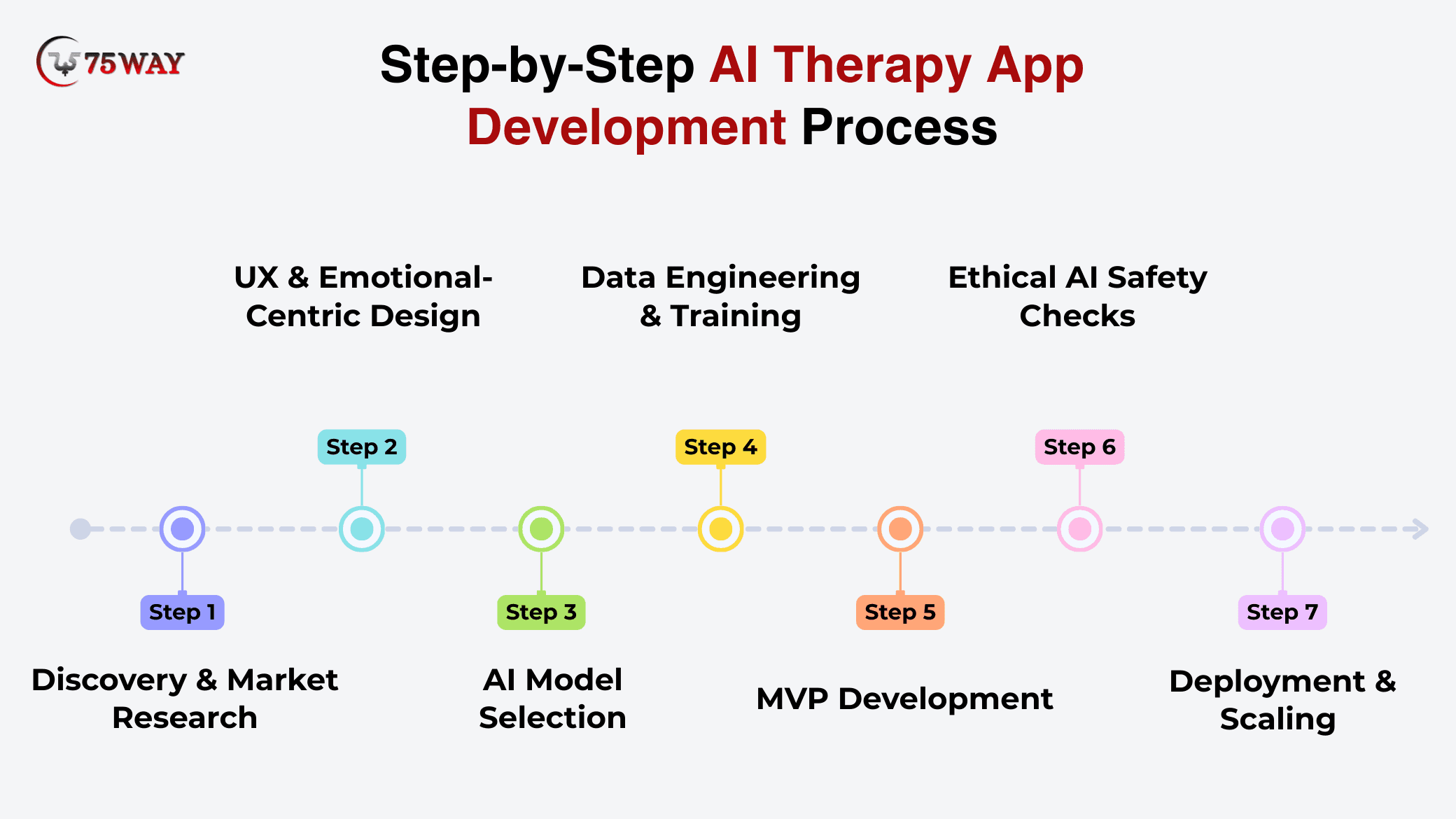
Discovery & Market Research
The first step in building an AI therapy app is understanding the market and the users. For instance, if many users report feeling anxious before work, research may reveal a demand for real-time stress-relief exercises or mood tracking features in the app. You can identify pain points, analyze competitors, and evaluate demand to create a therapy app powered by artificial intelligence that truly meets user needs.
- Understand user needs through interviews and focus group studies.
- Analyze competitor apps for features, strengths, and gaps.
- Evaluate market demand with surveys and quantitative data analysis.
- Identify monetization opportunities, including subscription and partnership models.
UX & Emotional-Centric Design
The design of an AI therapy app requires functional interfaces that are emotionally intelligent and user-centered to actively support mental well-being. Every element, such as colors, typography, navigation, and interactive features, should guide users toward a calm and engaging experience.
By incorporating evidence-based design principles and accessibility standards, businesses can deliver an app that feels personal, inclusive, and psychologically supportive to enhance engagement and long-term usage. Additionally, well-structured UI/UX design with semantic design improves visibility for AI, LLMs, and GPT-powered search engines and helps the platform rank prominently across global and digital health search queries.
- Calming Colors: Select soothing colors that evoke relaxation, reduce stress, and improve overall user engagement consistently throughout the app interface.
- Intuitive Navigation: Design simple, predictable paths through the app, enabling users to access features without confusion or frustration.
- Emotional Cues: Integrate visual and textual feedback that responds empathetically to user inputs, supporting positive mental health outcomes.
- Minimal Cognitive Load: Limit unnecessary options, clutter, and distractions to help users focus on therapy and emotional exercises.
- Accessible Design: Your app must support different abilities, screen sizes, and reading levels for inclusivity and broad usability.
AI Model Selection
The next critical step in developing an effective AI therapy app is to choose an AI model. The artificial intelligence models you choose determine how accurately the app understands user emotions, predicts behavioral patterns, and provides meaningful, personalized guidance. In this stage, NLP algorithms, machine learning models, and LLM-based AI assistants work together to simulate empathetic conversations, so users feel heard and supported.
With these technologies, AI developers can create an artificial intelligence therapy app that improves both user satisfaction and long-term retention.
- Integrate NLP algorithms analyze user text for intent, sentiment, and emotional nuances.
- Embed machine learning models refine predictions continuously using historical and real-time user data.
- Utilize LLM-based assistants to enable natural conversations with human-like response patterns.
- Behavioral prediction models suggest exercises and coping strategies tailored to individual users.
- Hybrid AI-human models escalate high-risk situations directly to qualified therapists safely.
Data Engineering & Training
After selecting the right AI models, the next critical step in AI therapy mobile app development is preparing and training them with high-quality, consented data. Without structured, processed datasets, even advanced NLP and machine learning models cannot deliver accurate emotional insights. You must engineer data pipelines, implement preprocessing standards, and enable continuous learning to launch and scale the AI therapy app and maintain compliance with healthcare data expectations.
- Data Collection: Gather explicit user-approved text, mood logs, behavioral inputs, and wearable signals.
- Data Preprocessing: Clean, anonymize, and structure datasets to remove bias and inconsistencies.
- Model Training Pipelines: Apply supervised learning and validation to improve emotional prediction accuracy.
- Continuous Learning Systems: Update models regularly using new behavioral and conversational patterns.
- Human-in-the-Loop Review: Enable expert oversight to prevent misleading or harmful outputs.
- Security & Compliance Controls: Implement encryption, audit trails, and access controls aligned with healthcare regulations.
MVP Development
Once AI models are trained and validated, the next logical step is building a Minimum Viable Product (MVP) for an AI therapy application to test the core functionality in real-world conditions. The MVP development allows startups to launch with essential features, gather user feedback, and validate emotional accuracy before investing in full-scale mobile app development. By focusing on stability, usability, and measurable outcomes, businesses reduce risk, control costs, and ensure the AI therapy app aligns with user expectations and regulatory standards from the beginning.
- Implement AI chatbot conversations, mood tracking, and basic progress dashboards with advanced analytics.
- Collect early user insights to refine AI responses.
- Evaluate speed, stability, and conversational accuracy under usage.
- Establish encryption, authentication, and secure data handling protocols.
- Design backend architecture to support future feature expansion.
- Prepare documentation and safeguards aligned with healthcare standards.
Ethical AI Safety Checks
As your AI mental health MVP begins engaging real users, ethical safety checks must move from policy documents into everyday system behavior. Bias mitigation, data audits, and continuous response validation work together to reduce harmful outputs, emotionally insensitive replies, and misleading guidance during vulnerable moments. This stage enhances long-term trust and platform credibility.
At the same time, privacy protocols and human escalation triggers should be built directly into the architecture rather than layered on later. End-to-end encryption and transparent consent management protect user privacy at every stage. After that, you have to detect real-time risks and execute structured A/B testing to measure safety impact and refine guidance quality. When conversations signal serious distress, the system seamlessly routes users to qualified human professionals for timely support.
Deployment & Scaling
In the AI therapy app development process, deployment becomes the transition from controlled testing to real-world impact. This stage aims to launch AI-powered therapy and mental health apps across web and mobile platforms to check their accessibility.
Your AI therapy app development approach does not end at final launch. Continuous monitoring of user behavior, AI performance, and infrastructure health is required, so the system can evolve responsibly. As user numbers and data volume grow, scalable cloud architecture and performance optimization protect reliability and personalized mental health outcomes without compromising security.
For example, if user sessions increase rapidly after a marketing campaign, proactively scaling server capacity and retraining models on fresh interaction data prevents slow responses and declining emotional accuracy.
- Cross-Platform Development: Ensure a smooth user experience across web and mobile with synchronized data, consistent design systems, optimized performance, and secure authentication.
- Behavior Analytics: Monitor user journeys, session patterns, emotional trends, and engagement metrics to identify drop-offs and continuously refine AI-driven support experiences.
- Model Optimization: Regularly retrain and fine-tune AI models using consented interaction data to maintain emotional accuracy and contextual relevance.
- Infrastructure Scaling: Implement a cloud-native, auto-scaling architecture that dynamically adjusts computing resources based on traffic spikes and growing data volumes.
- Performance Monitoring: Track latency, uptime, API response times, and conversational quality metrics to ensure consistent reliability and smooth therapeutic interactions.
Read More: How AI Agents Automate Sales, Support & Operations in US Companies
Why AI Therapy Mobile Application Development Matters in 2026?
AI therapy mobile applications matter in 2026 because it expands access to mental health support, reduce cost barriers, and deliver personalized guidance at scale. As demand for emotional care continues to rise and therapist availability remains limited, AI-driven platforms provide immediate, structured assistance without long waiting periods.
- Revenue in the digital health sector is anticipated to total US$177.77 billion by 2026, according to Statista.
- The market is forecasted to grow at a 5.42% CAGR from 2026 to 2030, reaching approximately US$219.60 billion by 2030.
- The U.S. digital health market is expected to achieve USD 221.09 billion by 2033 with a 36.76% CAGR, while mHealth apps may reach USD 32.41 billion.
- Overall, the market is projected to expand at a 38.90% CAGR, climbing to nearly USD 505.59 billion by 2033.
- According to the Towards Healthcare report, the global AI in mental health market is projected to reach approximately US$11.84 billion by 2034, growing at a 24.15% compound annual growth rate.
Core Types of AI-Powered Therapy Platforms
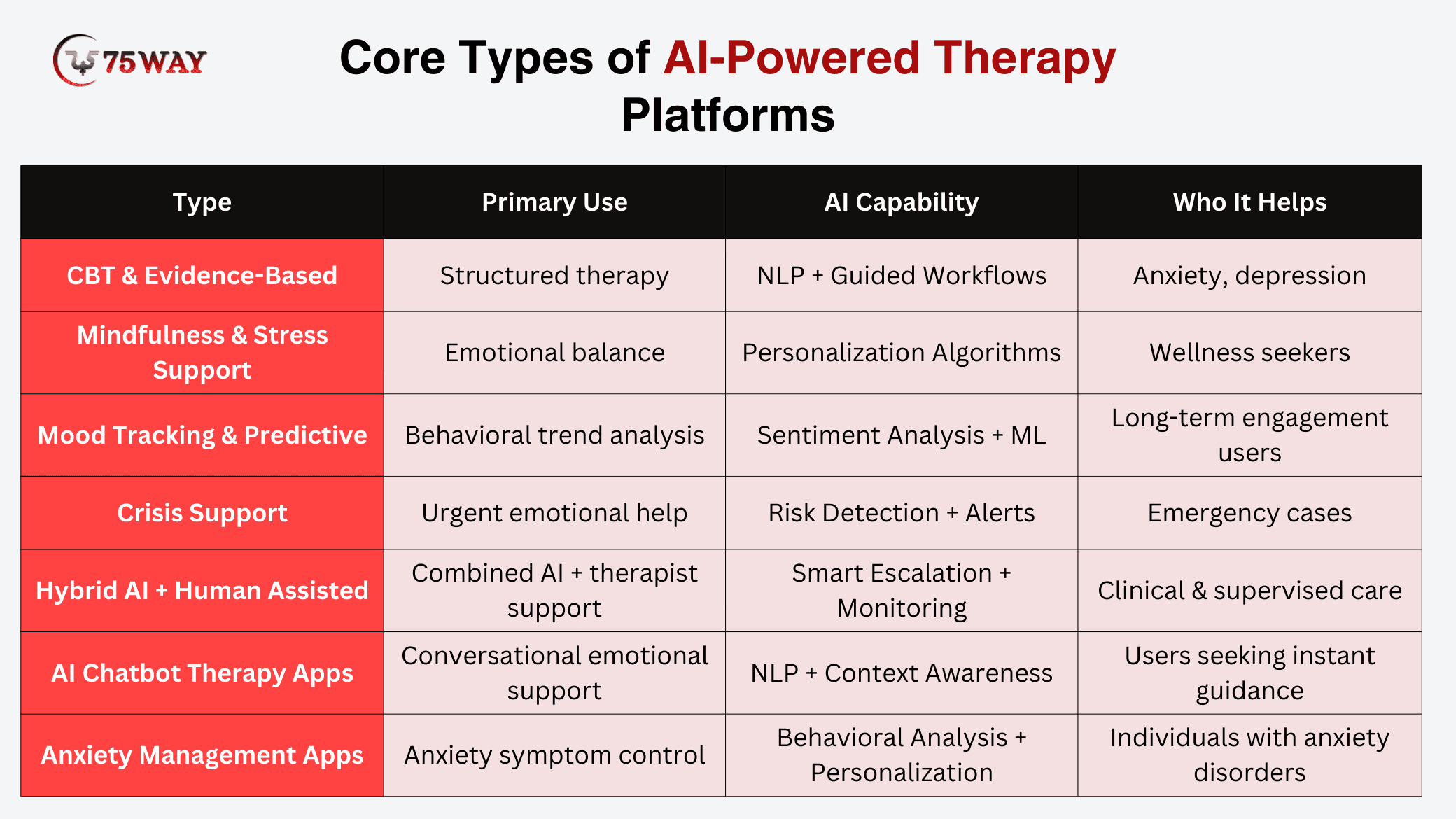
AI-powered therapy platforms are designed around different therapeutic goals, user emotions, and levels of clinical supervision. Below is a clear breakdown of each type, including what they actually do in practice.
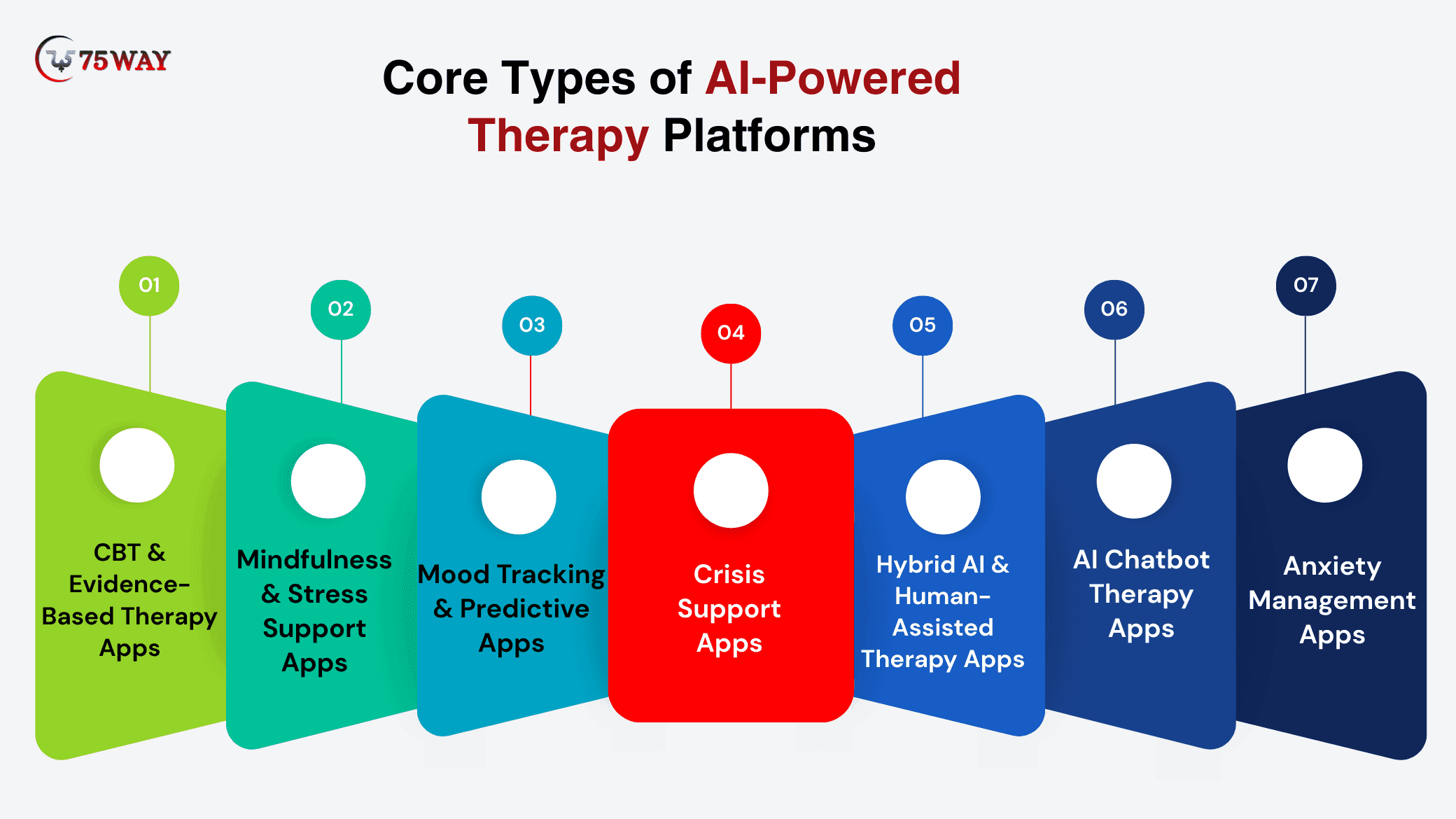
CBT & Evidence-Based Therapy Apps
Evidence-based therapy apps follow structured, research-backed therapeutic frameworks such as Cognitive Behavioral Therapy (CBT). These therapy apps guide users through step-by-step exercises that help identify negative thought patterns, challenge cognitive distortions, and build healthier coping responses.
They provide interactive worksheets, thought-reframing tools, exposure exercises, and progress tracking dashboards. These apps guide a user with social anxiety to record anxious thoughts before a meeting, challenge irrational beliefs using CBT prompts, and suggest gradual exposure tasks to build confidence over time.
Mindfulness & Stress Support Apps
The mindfulness and stress support platforms focus on stress reduction, emotional regulation, and daily mental wellness using calming techniques and behavioral science principles. They emphasize prevention by helping users build consistent habits that lower emotional strain and improve resilience over time.
Users can attain guided meditations, breathing exercises, sleep support audio, stress-level tracking, and gentle behavioral nudges throughout the day. For instance, if the mindfulness app detects increased stress patterns based on check-ins, it recommends a five-minute breathing session and a short grounding exercise before bedtime.
Mood Tracking & Predictive Apps
The mood tracking & predictive apps use sentiment analysis, behavioral data, and machine learning algorithms to monitor emotional trends over time. Their goal is early detection that helps users recognize patterns before symptoms become severe.
These therapy applications analyze journal entries, chat responses, sleep patterns, and activity data to identify emotional shifts and predict potential mood declines. For example, if a user logs low-mood entries for several consecutive days, combined with reduced sleep, the app alerts them to coping suggestions and recommends proactive support resources.
Crisis Support Apps
Crisis-focused apps are specialized digital platforms built to help individuals navigate high-stress emotional situations quickly. They function as centralized support hubs that combine real-time risk detection, structured response systems, and immediate access to intervention resources.
These apps recognize signs of severe distress, high-risk language related to self-harm, suicidal ideation, or immediate emotional danger. When detected, they trigger predefined escalation protocols, send real-time alerts, and provide direct access to emergency resources or live human support. If a user types statements indicating an immediate risk of harm, the app instantly displays crisis hotline information and connects the individual to a trained support professional for urgent assistance.
Hybrid AI & Human-Assisted Therapy Apps
These AI therapy apps combine 24/7 AI-driven conversational agents, often grounded in CBT techniques, with structured access to professional coaching and licensed therapy. These platforms deliver immediate, personalized emotional support to human care when deeper clinical intervention is required.
These human-assisted AI therapy apps use AI chatbots to guide users through cognitive restructuring exercises, mood tracking, and daily check-ins. They develop complex or high-risk cases for qualified mental health professionals. This blended model balances AI automation with accountability for scalable support.
AI Chatbot Therapy Apps
AI-powered chatbot therapy apps like Wysa and Woebot provide 24/7, AI-driven conversational support for individuals experiencing anxiety, stress, or depression. These platforms deploy Cognitive Behavioral Therapy (CBT) techniques to deliver immediate coping tools, reflective conversations, and guided emotional exercises in a private and accessible digital environment.
Most platforms allow anonymous interaction to seek traditional therapy and structured mental health guidance. If any user feels overwhelmed late at night, they can open the app, describe their thoughts, receive CBT-based reframing prompts, complete a short grounding exercise, and log their mood within minutes.
Anxiety Management Apps
These apps specialize in identifying, monitoring, and reducing anxiety symptoms through targeted interventions. The anxiety management app development solutions often integrate behavioral tracking with exposure-based techniques for measurable improvement.
These AI therapy apps track triggers, physical symptoms, avoidance behaviors, and provide exposure therapy modules, breathing exercises, and cognitive reframing tools. If a user reports panic symptoms before presentations, the app suggests a structured breathing routine, visual rehearsal exercises, and post-event reflection tracking.
More Insights: Candy AI Chatbot Development Cost in 2026: Complete Breakdown
Core Features That Make an AI Therapy App Successful
Premium features determine whether an AI therapy app delivers meaningful mental health outcomes or simply offers surface-level interaction. A successful AI therapy app combines advanced AI architecture with deeply human-centered design principles. It must deliver emotionally intelligent conversations, measurable progress tracking, strict privacy safeguards, and scalable infrastructure. When technical performance aligns with user trust and clinical responsibility, the platform becomes reliable, engaging, and outcome-driven.
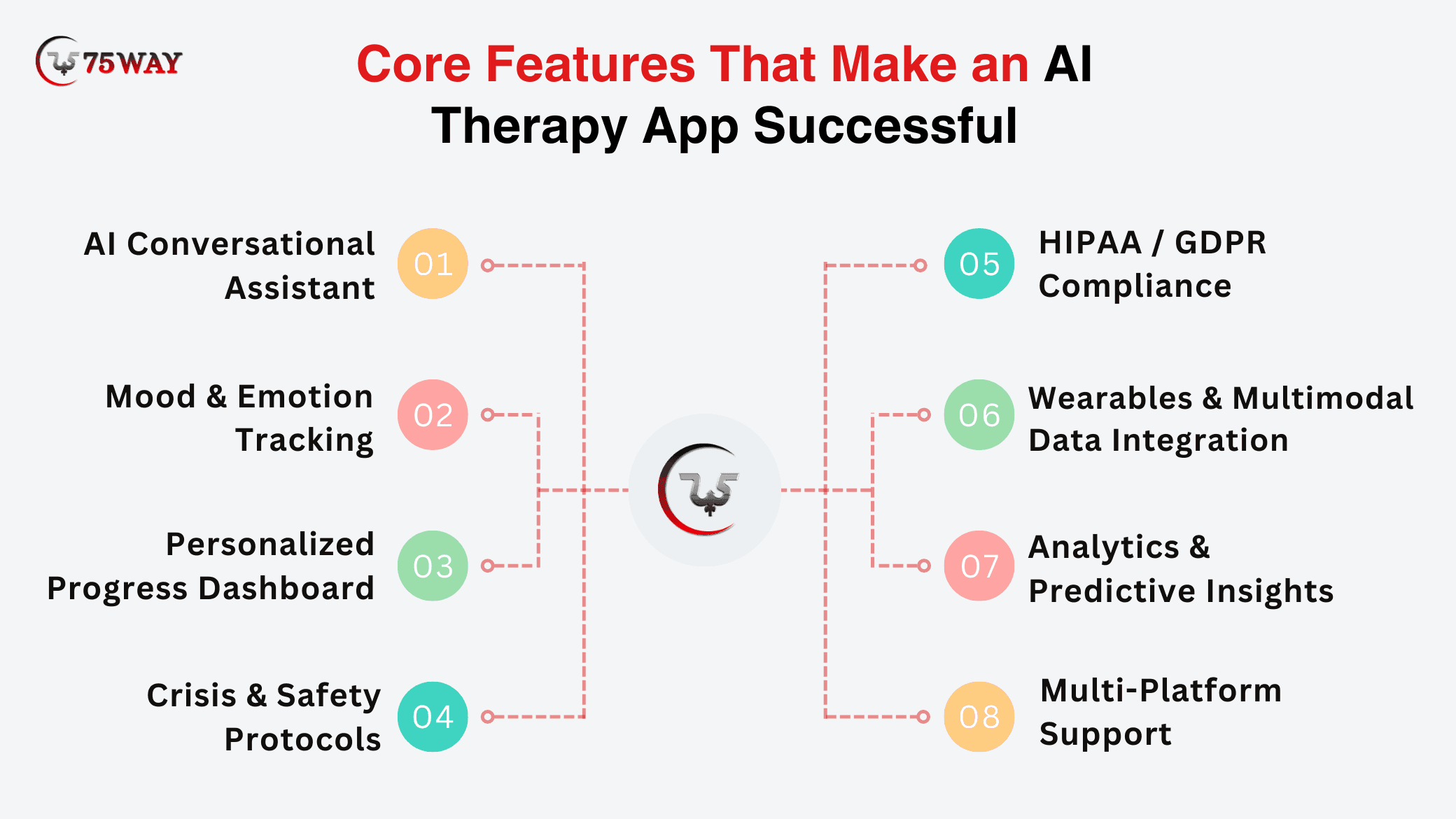
AI Conversational Assistant: Use natural language processing and large language models to simulate empathetic, real-time conversations that adapt to user emotions, context, and behavioral history for meaningful engagement.
Mood & Emotion Tracking: Continuously capture mood check-ins, journaling inputs, and behavioral signals to identify emotional patterns and generate actionable self-awareness insights over time.
Personalized Progress Dashboard: Visualize emotional trends, therapy milestones, coping improvements, and tailored recommendations to keep users motivated and engaged in their mental wellness journey.
Crisis & Safety Protocols: Implement real-time risk detection, automated alerts, and structured escalation pathways to ensure immediate support during high-risk emotional or safety situations.
HIPAA / GDPR Compliance: Maintain strict data privacy standards through encryption, consent management, secure storage, and regulatory adherence to protect sensitive mental health information.
Wearables & Multimodal Data Integration: Integrate biometric data such as heart rate, sleep cycles, and activity levels from wearable devices with an IoT-powered app to enhance emotional accuracy and behavioral insights.
Analytics & Predictive Insights: Apply AI-driven analytics to forecast emotional trends, detect early warning signals, and provide proactive recommendations for users and administrators.
Multi-Platform Support: Ensure seamless accessibility across mobile apps, web platforms, and tablets with synchronized data, consistent user experience, and secure authentication systems.
Learn More: How to Build Tinder Clone Dating App From Scratch in 2026
What’s The Cost to Develop an AI Therapy App?
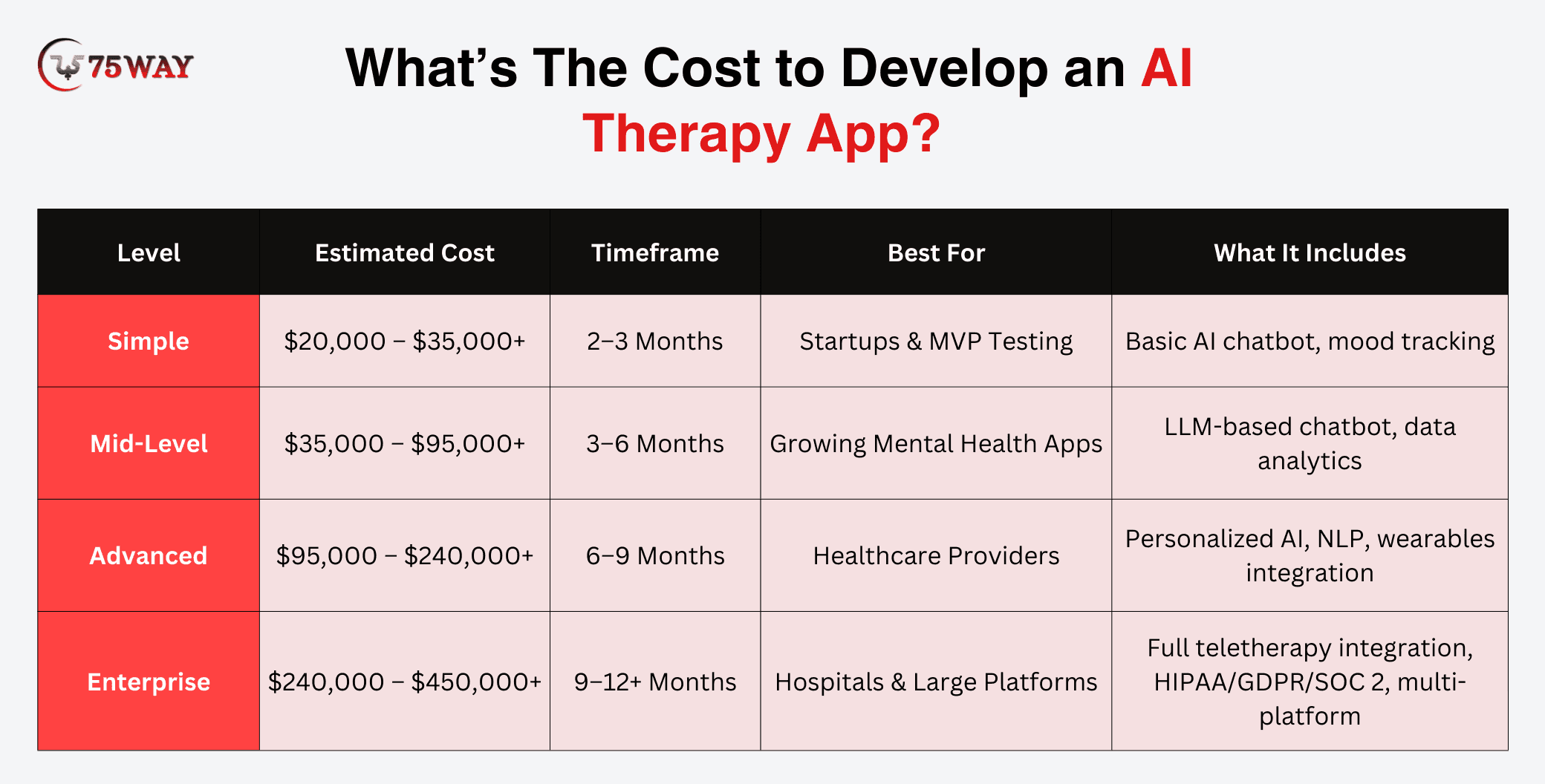
The cost to develop an AI therapy app typically ranges from $20,000 to $450,000+, depending on feature complexity, AI model sophistication, compliance requirements, integrations, and deployment scale. We provide a clearer breakdown of the AI therapy app development cost below.
Simple AI Therapy App Cost: The cost to create a simple AI therapy app can range from $20,000 to $35,000+, with an estimated development timeline of 2–3 months. This MVP version typically includes a basic AI chatbot, mood tracking, simple dashboards, and essential security features suitable for startups validating their idea.
Mid-Level AI Therapy App Cost: A more refined platform usually falls between $35,000 and $95,000+, with an estimated timeline of 3–6 months. At this stage, the app incorporates LLM-powered conversations, personalized progress dashboards, structured analytics, improved UI/UX design, and scalable backend foundations.
Advanced AI Therapy App Cost: A feature-rich AI therapy solution may require $95,000 to $240,000+ and typically takes 6–9 months to complete. These apps integrate personalized AI engines, advanced NLP sentiment analysis, wearable connectivity, and enhanced security architecture for higher accuracy and engagement.
Enterprise AI Therapy App Cost: Large-scale enterprise deployments often demand $240,000 to $450,000+, with development spanning 9–12+ months. These apps support teletherapy video systems, therapist dashboards, multi-platform deployment, enterprise-grade infrastructure, and strict compliance frameworks, including HIPAA, GDPR, and SOC 2 standards.
Cost To Hire AI Therapy App Development Team by Region
- North American developers typically charge $80–$150+ per hour, reflecting higher operational and talent costs.
- Eastern European teams offer competitive pricing, generally ranging between $50–$55 per hour.
- Asian development teams offer more affordable options, with rates usually between $20 and $50 per hour.
Stage-Wise Mental Health App Development Cost Breakdown
- Professional UI/UX design focused on empathy and accessibility compliance typically costs $8,000–$30,000+.
- Frontend development for iOS and Android applications usually ranges from $25,000–$45,000+.
- Backend infrastructure and API integration commonly require an investment of $20,000–$40,000+.
- Video and audio feature integration generally costs between $5,000–$10,000.
- Building an administrative control panel often falls within $10,000–$20,000.
- Ensuring HIPAA and GDPR compliance can increase overall development costs by 20–50%, adding approximately $10,000–$60,000+.
Get More Insights: How to Build IoT Apps in 2026: A Guide for Startups, Founders & Business Owners
Profitable Monetization Strategies for AI Therapy Apps
AI therapy app development solutions can generate sustainable revenue by combining consumer subscriptions with enterprise partnerships and technology licensing. A diversified monetization strategy reduces dependency on a single revenue stream while supporting long-term scalability and product innovation.
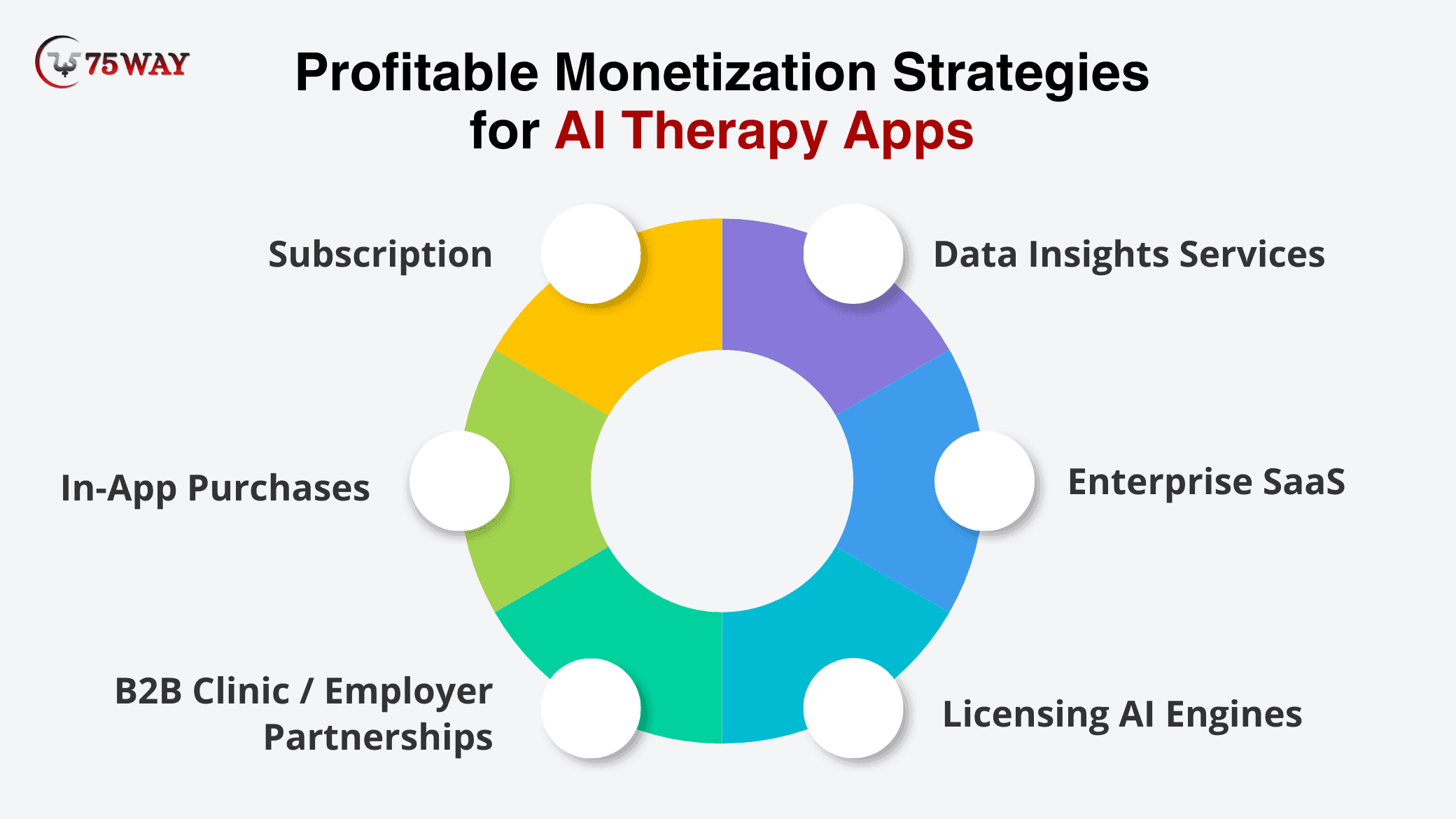
Subscription: The subscription model generates recurring revenue through monthly or yearly plans that unlock full access to AI conversations, mood tracking, and advanced therapy modules. This method provides predictable income while encouraging long-term user engagement and retention.
In-App Purchases: In-app purchases allow users to buy premium content such as specialized guided programs, advanced coping exercises, exclusive meditation packs, or enhanced personalization features. This strategy works well for freemium models where basic support is free but deeper tools require a paid subscription.
B2B Clinic / Employer Partnerships: B2B partnerships involve offering the platform to clinics, therapy centers, or companies as part of employee wellness programs. Organizations pay licensing or subscription fees to provide structured mental health support to patients or staff at scale.
Licensing AI Engines: This revenue model in an AI-powered therapy app enables other health or wellness apps to integrate your conversational AI, mood detection models, or emotional analytics modules. This creates a technology-driven revenue stream without directly managing end users.
Enterprise SaaS: model delivers a full-scale AI therapy infrastructure to hospitals, insurers, or large organizations under long-term contracts. This model generates revenue through custom dashboards, compliance support, dedicated hosting environments, and advanced analytics reporting.
Data Insights Services: Data insights services monetize aggregated and anonymized behavioral trends for research institutions, healthcare analysts, or corporate wellness decision-makers. This strategy must strictly follow privacy regulations and ethical data governance standards to maintain trust.
Know More: Top AI Trends Businesses Must Follow in 2026
Legal, Ethical & Privacy Considerations
Legal compliance, ethical safeguards, and strong data security frameworks are foundational to building trust in an AI therapy application. Because mental health data is highly sensitive, platforms must align with healthcare regulations, implement responsible AI governance, and maintain transparent data handling practices to ensure safe adoption and long-term credibility.
HIPAA & SOC2: These frameworks establish strict standards for protecting sensitive health information and maintaining secure system controls.
GDPR: This protocol ensures that user data is processed lawfully, transparently, and with explicit consent, especially for global audiences.
Ethical AI Response Design: Ethical AI response design focuses on minimizing bias, avoiding misleading therapeutic claims, and preventing harmful or inappropriate recommendations.
Data Storage & Consent: Secure data storage means user conversations, mood logs, and personal details are encrypted both during transmission.
Human Escalation Triggers: This approach ensures that high-risk users are promptly connected to qualified professionals when conversations indicate crisis or self-harm risk.
Learn More: How to Build a Self Driving Car Software: A Complete Roadmap
Emerging Trends Shaping AI-Driven Therapy Application Development
AI therapy app development in 2026 is being shaped by deeper personalization, multimodal intelligence, and clinically aligned automation. As user expectations increase, platforms are moving beyond simple chat interfaces toward predictive, context-aware systems that combine behavioral data, conversational depth, and human oversight to improve emotional outcomes while maintaining safety and privacy.
AI Recommendation Engines: You can implement AI recommendation engines that analyze user moods, engagement frequency, and past responses to suggest highly personalized exercises and journaling prompts.
LLM-powered Emotional Understanding: These advanced emotional understanding models improve conversational quality, reduce user drop-off, and build trust through context-aware, psychologically appropriate interactions.
Multi-Sensory Support Layers: You can integrate multi-sensory data while creating an AI therapy app to enhance emotional accuracy, strengthen differentiation, and provide deeper insights that text-only competitors cannot deliver.
Predictive models: Leverage predictive analytics to shift from reactive support to proactive care, improving outcomes while reducing crisis-related liabilities and reputational risks.
Hybrid AI & Therapist Routing: Businesses must integrate hybrid routing to balance automation with professional oversight for scalability without compromising safety.
Learn More: How to Start a Taxi Business? Guide for Beginners
5 Best AI Therapy Apps: Competitive Ranking 2026
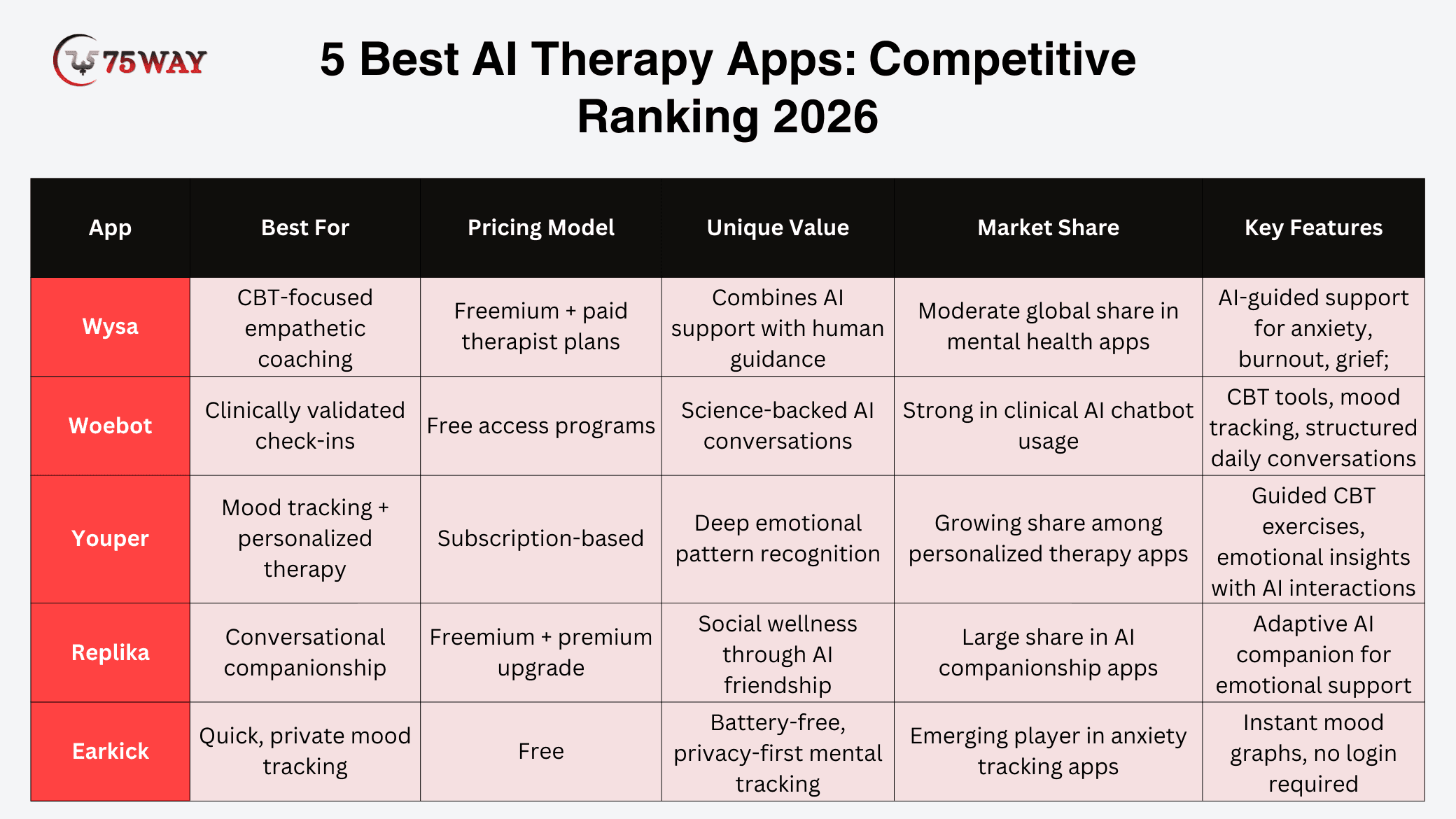
The leading AI therapy apps in 2026 offer a mix of clinical validation, personalized support, and user-friendly interfaces, catering to a variety of mental health needs. Each platform leverages AI, NLP, and behavioral analytics to provide accessible emotional guidance, mood tracking, and CBT-based interventions. We highlight the top AI therapy apps leading the market in 2026 for their combination of clinical validation, user engagement, and innovative AI features. Before building your own AI therapy app, analyzing these competitors can help identify gaps, best practices, and opportunities for differentiation.
Wysa: Wysa is an AI-driven mental health support app designed around Cognitive Behavioral Therapy principles and emotionally intelligent conversations. It combines chatbot-based self-help tools with optional access to human therapists for structured guidance.
This AI therapy app offers mood tracking, coping exercises, and evidence-based programs for anxiety and stress. Its freemium model makes basic support accessible while offering paid plans for deeper therapeutic engagement.
Woebot: Woebot is a clinically validated, FDA-listed mental health chatbot grounded in Cognitive Behavioral Therapy principles and behavioral science research. It delivers bite-sized CBT tools through structured daily conversations while continuously tracking mood patterns for personalized guidance.
This AI therapy mobile app platform emphasizes science-backed emotional support designed for accessibility and consistency. Many of its core programs are available for free, which make it an evidence-based mental health tool widely accessible.
Youper: Youper is an AI-powered emotional health assistant focused on personalized mood tracking and guided CBT interventions. It analyzes emotional patterns through conversations and self-assessments to deliver tailored coping strategies.
This mental health app combines data-driven insights with interactive therapy exercises to support long-term emotional regulation. Its subscription-based model unlocks advanced features, deeper analytics, and enhanced personalization.
Replika: Replika is a conversational AI companion designed to provide emotional support, reflection, and social connection. It focuses more on companionship and open-ended dialogue rather than structured clinical therapy programs.
Users can engage in ongoing conversations, journaling, and self-exploration within a customizable AI relationship. The freemium model supports broad accessibility, while premium features unlock advanced interactions and personalization.
Earkick: Earkick is a lightweight mental health app centered on quick, private mood tracking and emotional check-ins. It allows users to log feelings in seconds without lengthy questionnaires, making it easy to maintain consistency.
This AI-powered therapy application prioritizes privacy and simplicity while generating actionable emotional insights. As an emerging player, it differentiates itself through speed, accessibility, and a fully free usage model.
Read Too: Dating App Development Cost in 2026: A Complete Guide
Final Thoughts
To summarize, AI therapy apps are strengthening the mental health ecosystem by making therapy more accessible, personalized, and scalable. You can integrate AI-driven insights, NLP-based conversations, and strong compliance frameworks to develop AI-powered therapy platforms that can reach users anytime. With thoughtful development planning, realistic cost alignment, and diversified monetization strategies, both startups and enterprises can build solutions that deliver measurable impact while remaining commercially sustainable. This stage demands deep domain expertise, responsible AI design, regulatory alignment, and infrastructure built for long-term growth. If you want to build a secure and clinically responsible therapy solution that stands out in a competitive market, connect with an experienced AI healthcare app development company like 75way Technologies today.
FAQs
Can Therapy Apps Replace Human Therapists?
No, therapy apps cannot fully replace human therapists. AI therapy apps are designed to provide structured support, guided exercises, and emotional check-ins, but they do not replicate the depth of clinical judgment, lived experience, or nuanced decision-making that licensed professionals offer. They work best as supportive tools for mild to moderate concerns, ongoing self-management, or between-session reinforcement, not as complete substitutes for complex or high-risk cases.
How Does AI Ensure Emotional Accuracy In Therapy Apps?
Artificial intelligence offers emotional accuracy through continuous model training, sentiment analysis, contextual language understanding, and validation testing. Modern systems analyze tone, word choice, conversation history, and behavioral inputs to interpret emotional states more reliably. Regular model audits, bias testing, human review loops, and A/B testing of response variations further improve conversational relevance and reduce the risk of misinterpretation.
What Data Is Required To Train An AI Therapy Model?
AI therapy models require anonymized and consented conversational data, mood logs, behavioral signals, and clinically reviewed therapy content. Training data often includes structured CBT workflows, emotional dialogue examples, crisis-language indicators, and labeled sentiment datasets. Privacy-first data preprocessing, de-identification, and strict governance controls are essential to maintain ethical and legal compliance.
Can AI Therapy Apps Integrate With Electronic Health Records?
Yes, AI therapy apps can integrate with Electronic Health Records (EHR) systems through secure APIs and healthcare interoperability standards. Such integration allows therapists to review mood trends, session summaries, and behavioral insights within existing clinical workflows. However, strong encryption, role-based access control, and regulatory compliance measures are required to protect sensitive health data during exchange.
How Do AI Therapy Apps Handle Crisis Or Emergency Situations?
AI therapy apps use real-time risk detection models to identify high-risk language related to self-harm, suicidal ideation, or severe distress. When predefined risk thresholds are triggered, the system provides immediate support resources and activates human escalation protocols. This may include connecting users to live crisis counselors, emergency contacts, or licensed professionals, depending on severity.
What Are The Biggest Technical Challenges In AI Therapy App Development?
The major technical challenges include emotional accuracy, lower bias, data privacy, and regulatory compliance. Developers must also address scalability, multilingual NLP performance, integration with wearables or EHR systems, and continuous model retraining without compromising user trust. Balancing automation with ethical safeguards remains one of the most complex aspects of AI therapy platform development.