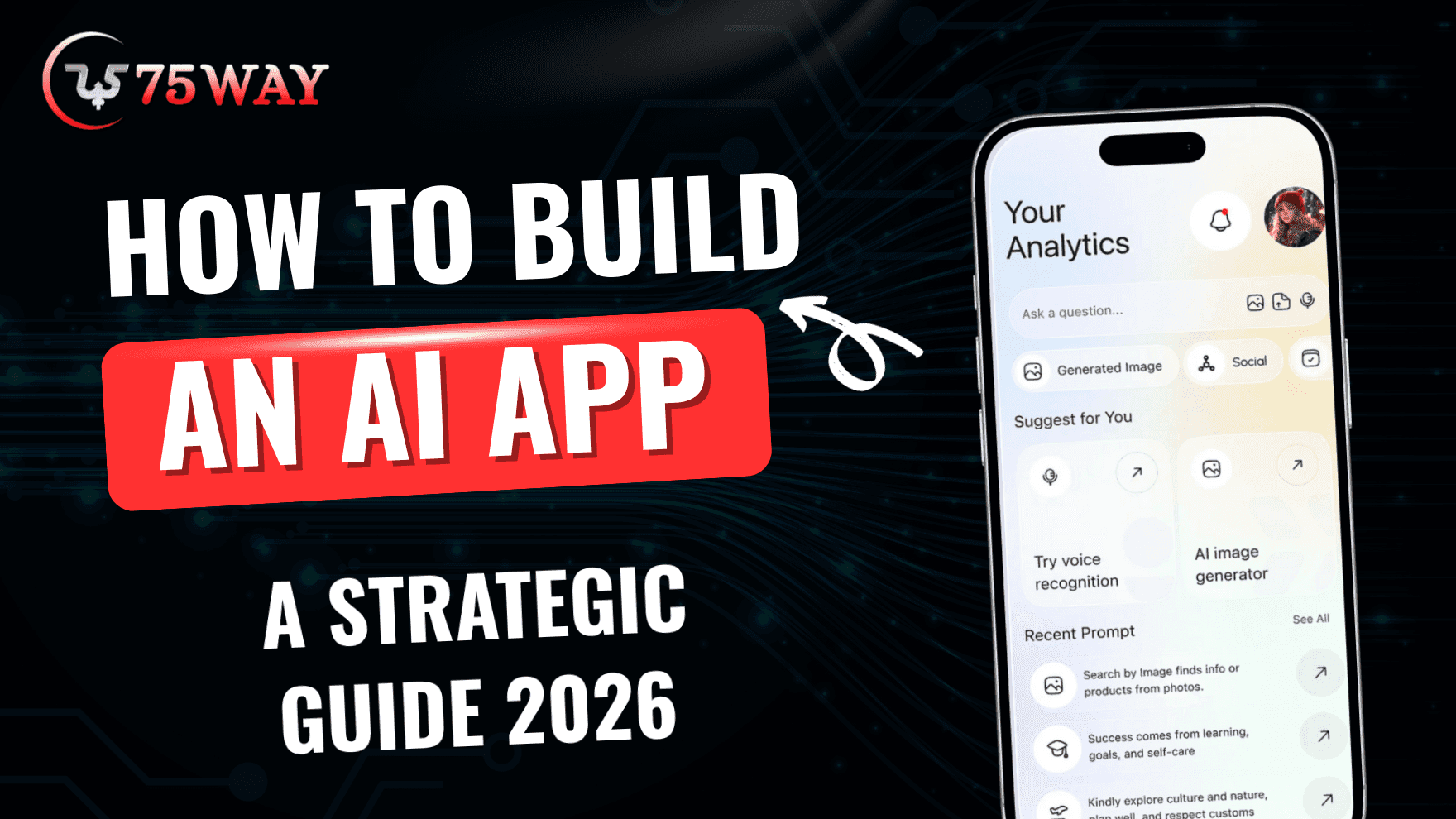
AI-powered applications are no longer experimental tools in businesses. They become core business infrastructure across the USA in 2026. Startups, founders, and enterprises are no longer asking if AI should be adopted. They even focus on how fast AI-driven applications can be built, validated, and scaled without risking capital or compliance. An AI app development today directly helps US businesses generate revenue growth, improve operational efficiency, retain customers, and gain competitive positioning.
But how do you develop an AI app? Why businesses invest in AI-driven apps in 2026? This guide will answer every query, from a step-by-step roadmap for developing AI apps to their working process, core components, key technologies, cost, applications, and future trends. Hence, decision-makers can move forward with clarity and confidence.
What Is an AI App?
While developing a mobile application, founders often have common questions. Do I need AI for my app? How are AI apps different from traditional apps? So, before knowing the complete process of creating an AI app, let’s know what an AI app means.
An artificial intelligence application is software in which innovative technologies like machine learning, agentic AI, NLP, and computer vision are utilized. These technologies enable apps to perform tasks that require human-like intelligence, such as learning, reasoning, and decision-making. Different from conventional software, AI apps are able to analyze data, automate complex processes, provide personalized experiences, and improve efficiency.
What is The Difference Between AI Apps and Traditional Apps?
AI apps are different from traditional apps mainly in how they think and respond. Traditional apps operate on fixed logic, which means every action follows predefined rules and delivers the same outcome each time. On the other hand, AI apps behave differently. They consider data, user behavior, and past interactions to provide responses over time.
With these apps, decisions feel more contextual, recommendations feel more personal, and automation feels more adaptive than rigid. While traditional apps excel at predictable tasks, AI apps handle uncertainty, patterns, and continuous improvement, which makes them far more suitable for modern, data-driven business needs.
Read More: Top AI Trends Businesses Must Follow in 2026
How Does AI Work?
AI works through a structured process in which data becomes intelligence over time. Every AI system starts with information, then learns to interpret it, and finally uses those learnings to make decisions or predictions. Accuracy improves naturally as more data flows into the system, which explains why AI applications become smarter over time.
The entire process follows a logical sequence. The raw data is entered into the system from users, business platforms, devices, or sensors. After that, clean, well-structured data then moves through preprocessing, where inconsistencies, noise, and gaps are resolved. Machine learning models are deployed to analyze this refined data to identify patterns that humans usually miss. Performance checks and fine-tuning ensure reliable outcomes before real-world usage begins. Once deployed, the model delivers predictions or responses in real time, while feedback continuously feeds future improvements.
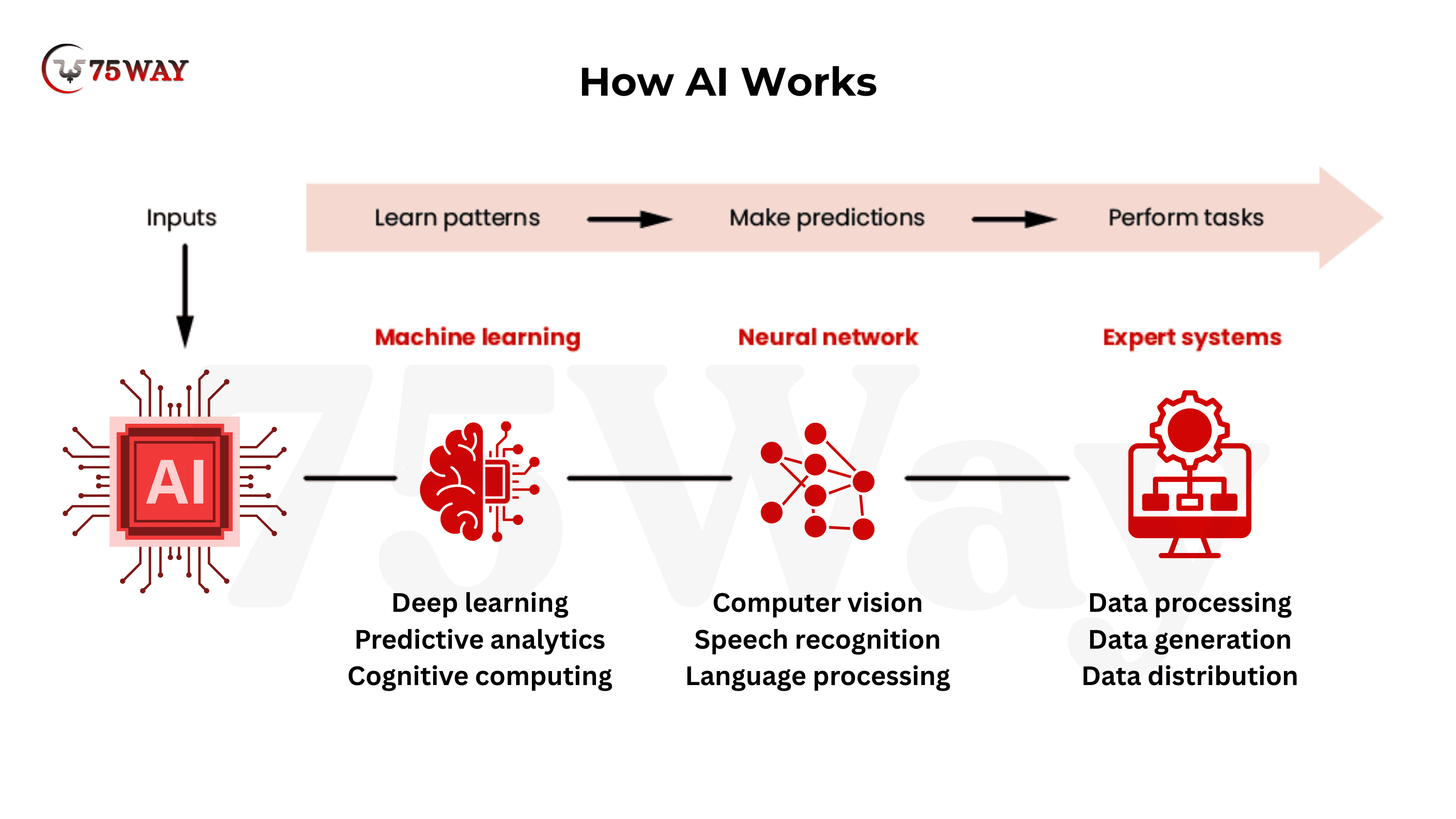
- Data collection: Initially, data is collected from users, enterprise systems, devices, and external data sources.
- Data Pre-Processing: Afterwards, the data is cleaned, normalized, labelled, and structured for model readiness.
- Model Training: In the next step, patterns are learned through machine learning or deep learning algorithms.
- Model Evaluation: When the patterns are predicted, accuracy is checked, bias is reduced, and performance is optimized.
- Decision-Making: Real-time or batch predictions are performed based on learned intelligence.
- Continuous Feedback Loop: Ongoing retraining using new data to improve outcomes over time.
Quick Snapshot: How AI Development Help US Companies Scale Faster
A Strategic Roadmap To Build An AI App: From Ideation to Launch
Now that you have learned about artificial intelligence and its working. So, it is time to understand the process of building an AI app. A structured methodology is required to develop an AI-powered mobile app that aligns with business goals, technical feasibility, data readiness, and compliance. A step-by-step approach can reduce risk, enhance time-to-market, and provide scalable growth.
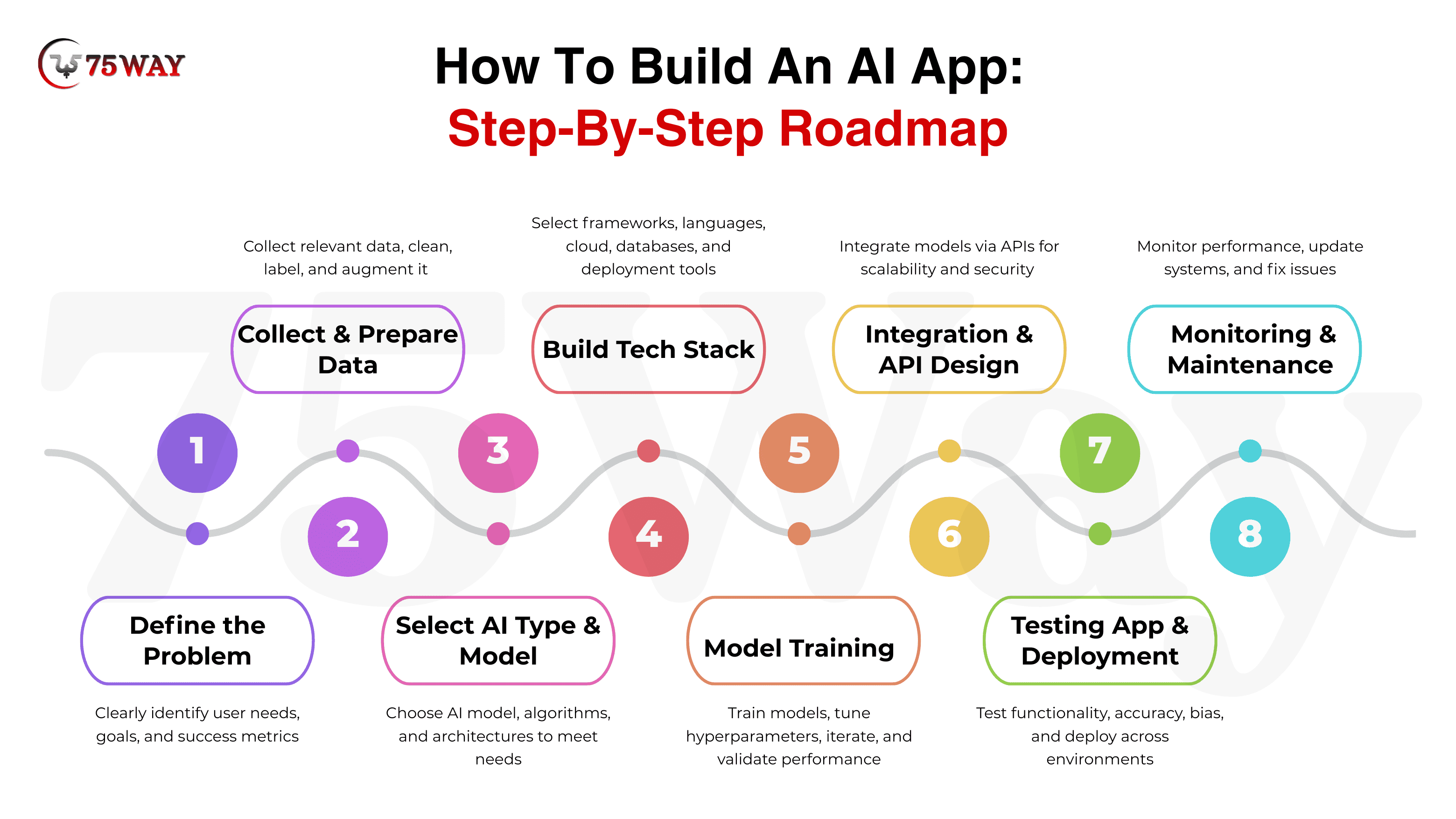
Step 1: Define the Problem & Validate Idea With Users
Every successful AI app begins with a problem that already exists among users. It must be a real pain point and issue that costs time, money, or opportunity. Most AI projects collapse because their focus stays on “what AI can do” rather than “what the business actually needs solved.”
A clear problem definition provides a direction for building an AI-powered mobile app. Operational inefficiencies, customer drop-offs, slow decision-making, or inconsistent outcomes usually signal where AI adds value. For this, you can establish conversations with real users, which matter more than assumptions. Moreover, you can conduct interviews and surveys to create simple prototypes and reveal whether the problem is urgent or optional.
Another significant aspect of this stage is that your goals need clarity, too. While developing an AI-driven app, vague expectations like “improve experience” rarely succeed. Measurable targets such as reducing support tickets, improving prediction accuracy, or increasing conversions give AI a purpose. The most important question deserves an honest answer, “Does this problem truly need AI?” Or, “Can traditional logic solve it better?” AI earns its place only when outcomes improve meaningfully.
Clear objectives keep the development journey focused and aligned. As Tony Robbins once said, “Setting goals is the first step in turning the invisible into the visible.” Well-defined goals serve as a guide for all stakeholders to work toward the same outcome.
Once the primary objective is established, key performance indicators (KPIs) provide measurable checkpoints. AI-specific KPIs, such as model accuracy, precision, recall, and F1-score, help evaluate effectiveness throughout the app development process. The development and deployment milestones provide structure, while agile methodologies such as Scrum support continuous progress and adaptability.
Resource readiness also matters before development begins. AI models often demand significant infrastructure for training, deployment, and long-term maintenance. In the end, the clarity of SMART goals defined at the beginning influences every decision that follows.
Step 2: Collect and Prepare Data
The next stage in creating an AI app is to gather and prepare the data. Well-structured data allows AI models to learn meaningful patterns, while poorly structured data quietly leads to an impact on accuracy and reliability. A strong data foundation also offers compliance, scalability, and long-term performance across real-world business scenarios.
Data Selection: The right datasets determine how well an AI model understands its task. Internal business data often provides context, while external sources add scale. Platforms like Common Crawl, Kaggle, and AWS Data Exchange provide structured datasets for training, fine-tuning, and experimentation across AI use cases.
Data Cleaning: Clean data protects models from learning incorrect patterns. Duplicate records, missing values, and inconsistent entries quietly reduce accuracy if left unresolved. Tools such as OpenRefine and Tibco Clarity help correct inaccuracies, ensuring datasets remain trustworthy and suitable for reliable AI decision-making.
Data Preprocessing: Preprocessing improves data usability beyond basic cleaning. The datasets must be transformed, normalized, integrated, smoothed, and reduced to align with consistent formats. Each step improves signal quality, reduces noise, and prepares data for efficient learning across various AI and machine learning techniques.
Data Structuring: Thai process refers to organizing prepared datasets into consistent, machine-readable formats suitable for AI training. Proper structuring, labeling, and formatting improve learning efficiency, reduce processing errors, and support accurate model performance during deployment and ongoing optimization.
Step 3: Select AI Type & Model Approach
The right AI type and model determine the effectiveness and scalability of your mobile application. Every use case demands a different level of intelligence, control, and flexibility, which explains why AI model selection should align closely with business goals, data availability, and expected outcomes.
Model Selection: A well-defined selection criterion simplifies decision-making. You must define use case complexity, data volume, accuracy expectations, and latency requirements in this process. Simple problems often perform well with existing models, while complex scenarios require deeper customization and long-term optimization.
Pre-trained Models: Pre-trained models accelerate development and reduce costs. These models already understand common patterns and language, making them ideal for MVPs and fast launches. Fine-tuning allows customization without full retraining, which balances speed with performance.
Custom Models: Tailored models offer greater control and differentiation. Training from scratch suits businesses with proprietary data, strict compliance needs, or unique workflows. This approach requires more time and resources but delivers tailored intelligence aligned with specific operational goals.
AI Model Types: Different problems require different AI types. Natural language processing supports text and speech tasks, computer vision handles images and video, predictive models forecast trends, and generative AI creates content, recommendations, or automated responses across applications.
Training vs APIs: APIs work well during early stages when speed matters more than ownership. Training models becomes valuable once scale, customization, and data privacy become priorities. The right choice balances speed, cost, performance, and long-term control.
Step 4: Build the Right Tech Stack
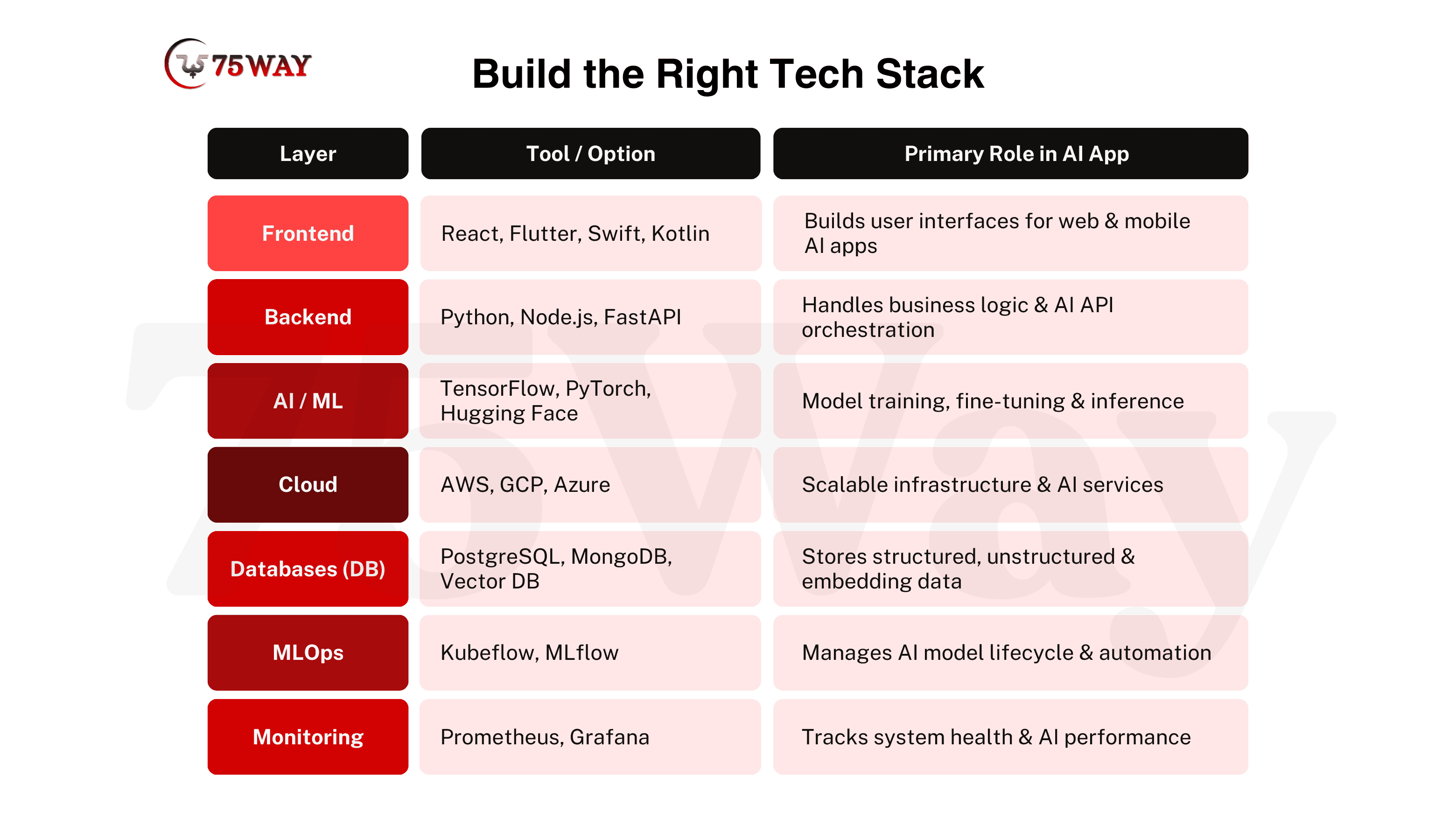
Once you decide on the AI model, the next step is to select the right technologies and tools to ensure the success of an AI app. Your tools, frameworks, and platforms must align with your business goals and integrate smoothly with your existing systems. The right stack is required to speed up development and improve the model performance and scalability. Some frameworks have become industry standards for good reasons:
TensorFlow: A highly versatile open-source library that excels in building and deploying machine learning models. It handles complex tasks like image recognition efficiently and includes tools like TensorFlow Extended (TFX) to manage the full lifecycle of AI models.
PyTorch: This model is known for flexibility and ease of experimentation. PyTorch is a major framework among researchers and teams prototyping advanced models. While it is excellent for development, its commercial support is limited, which may affect enterprise-grade deployments.
Google AutoML: Perfect for teams new to AI, AutoML enables quick, minimal-code model training, ideal for simpler AI applications or MVPs.
Cloud Platforms: Cloud platforms are essential for AI apps because they provide ready-to-use environments for development, training, and deployment, reducing setup time and simplifying scalability. They also integrate well with existing infrastructure, making it easier for startups to manage AI workflows efficiently.
Google Cloud AI: It offers a full suite of AI and machine learning tools. It supports training, deployment, and model monitoring, and comes with pre-built APIs for NLP, vision, and translation tasks, allowing teams to focus on solving business problems rather than infrastructure.
Amazon SageMaker: This system provides a managed environment for building, training, and deploying machine learning models at scale. It includes built-in algorithms, model hosting, and automated workflows, making it ideal for startups that want speed without sacrificing flexibility or control.
Azure Machine Learning: This platform combines cloud compute, MLOps, and AI services into a single platform. It simplifies model management, supports both code-first and low-code approaches, and integrates with Microsoft tools, making it convenient for businesses already using Azure services.
Step 5: Model Training & Development
Model training is the core of any AI application, turning data into actionable intelligence. The way a model learns, adapts, and generalizes directly determines how well your AI app performs in real-world scenarios. Choosing the right training approach ensures the system captures meaningful patterns rather than noise. This stage connects the problem definition and tech stack to tangible AI outcomes.
Training Approach: A precise learning method is the foundation to train any model. Supervised learning is ideal when outcomes are labeled and measurable, such as sentiment analysis or GPT-based text classification. Unsupervised learning uncovers hidden patterns, useful in clustering, anomaly detection, or discovering relationships in large datasets. Reinforcement learning is suited for decision-making tasks, especially when AI interacts with dynamic environments, such as robotics or adaptive recommendation systems. Each method links the data to the app’s business objectives, ensuring meaningful insights.
Model Architecture: The architecture defines how effectively a model processes information. Convolutional Neural Networks (CNNs) excel at recognizing images or visual patterns, while Recurrent Neural Networks (RNNs) handle sequential data, crucial for text, speech, and LLM-based applications. Generative Adversarial Networks (GANs) generate realistic synthetic data, enhancing AI creativity in content generation or simulation. The architecture must align with both the problem type and the dataset to maximize learning efficiency and output reliability.
Data Preparation: High-quality data defines successful model training. Dividing datasets into training, validation, and test sets ensures models learn effectively while being evaluated objectively. Feature engineering enhances the dataset by creating or refining variables that help the model detect critical patterns. Proper preparation also minimizes bias, improves fairness, and ensures that outputs from GPT, LLMs, or other AI models are accurate and trustworthy.
Evaluation & Integration: Evaluation transforms training into measurable performance. Testing the model on unseen data reveals real-world effectiveness and highlights areas for improvement. Key metrics such as accuracy, precision, recall, F1-score, and ROC-AUC provide quantitative insights into model performance. Cross-validation and hyperparameter tuning further refine the model, making it robust and reliable. Once evaluated, integrating the model into the application allows real-time or batch inference, connecting AI intelligence with user-facing features.
Step 6: Model Integration & API Design
Integration of an AI model into an application defines whether the technology delivers real value or remains underutilized. Proper placement ensures efficiency, responsiveness, and user satisfaction. Each decision in this phase directly affects performance, scalability, and overall app reliability.
Frontend Integration: AI components enable users to interact with the model instantly. Features like chat interfaces, recommendations, or content suggestions rely on immediate responses. Frontend integration improves engagement by providing real-time, visible results that connect directly with user actions.
Backend Integration: Heavy computation and data-intensive tasks are best handled in the backend. Functions such as speech recognition, GPT-based content generation, or predictive analytics require centralized processing power. Backend integration enhances accuracy, supports complex workflows, and ensures models operate efficiently under high demand.
Cloud and Edge Processing: Cloud infrastructure provides scalable resources, flexible deployment, and seamless integration with AI services. On-device processing, also known as edge AI, reduces latency, protects sensitive data, and supports mobile and IoT applications. Balancing cloud and edge processing delivers performance, privacy, and operational efficiency.
API Implementation: Prebuilt AI APIs simplify integration and accelerate development. Tools like Google Cloud Vision, OpenAI APIs, and Microsoft Cognitive Services allow access to advanced capabilities without building models from scratch. APIs maintain consistent performance, reduce errors, and make AI features accessible across platforms.
Feedback and Transparency: User feedback helps in continuous improvement by highlighting strengths and weaknesses in predictions. Clear explanation of AI functionality builds trust, helping users understand the technology’s benefits. Transparent interaction fosters confidence, while iterative refinement keeps the model aligned with real-world needs.
Model integration is more than connecting code; it bridges intelligence with usability. Correct frontend and backend placement, combined with cloud resources, APIs, and feedback loops, ensures AI features remain accurate, scalable, and meaningful for end users.
Step 7: Testing AI Apps & Deployment
The testing and deployment phase defines whether an AI application performs reliably in real-world conditions. Unit testing evaluates individual features like chat responses or recommendations to confirm they work as intended. Integration testing verifies that models, databases, and interfaces communicate seamlessly, preventing errors and maintaining stability across the app. User acceptance testing gathers feedback from real users, highlighting improvements to align the application with practical expectations.
Deployment transforms the tested AI model into an operational application. Platforms are selected based on the target audience, whether cloud servers, app stores, or web environments. Proper configuration, including databases and third-party services, is verified. Continuous integration, automated pipelines, and containerization ensure consistent releases, scalability, and smooth transitions between development and production.
Monitoring and maintenance sustain long-term performance. Key metrics, such as response times, error rates, and resource usage, are continuously tracked. User behavior and feedback are collected to guide improvements. Regular updates enhance features, optimize performance, and address security. Continuous retraining of AI models prevents performance decay, ensuring the application remains accurate, relevant, and valuable over time.
Step 8: Monitoring and Maintenance
Continuous monitoring ensures that an AI application remains accurate, efficient, and relevant over time. Performance tracking allows early detection of issues such as errors, latency, or unexpected behavior. You must observe model outputs in real-world scenarios to identify gaps and opportunities for improvement and maintain system reliability.
Model Refinement: AI models receive regular updates using new data to improve accuracy and performance while adapting to evolving user behavior and changing real-world patterns.
Feedback Incorporation: User input is systematically gathered and analysed to enable targeted improvements that resolve pain points and enhance overall app functionality.
Privacy Compliance: Strong security measures, regulatory adherence, and anonymization protect user data while maintaining trust and aligning with global privacy standards.
Ethical Audits: Regular assessments of bias, fairness, and societal impact ensure responsible AI use and maintain credibility with stakeholders and end users.
Also Read: How to Build an Astrology App Like Co-Star? A Strategic Guide 2026
Why Develop an AI-Powered App in 2026?
AI-powered applications transform how businesses operate by improving decision-making and delivering tailored user experiences. Growing adoption in North America highlights the value of intelligent automation. Companies that implement AI now gain operational efficiency, uncover hidden opportunities, and maintain a clear advantage in a competitive landscape.
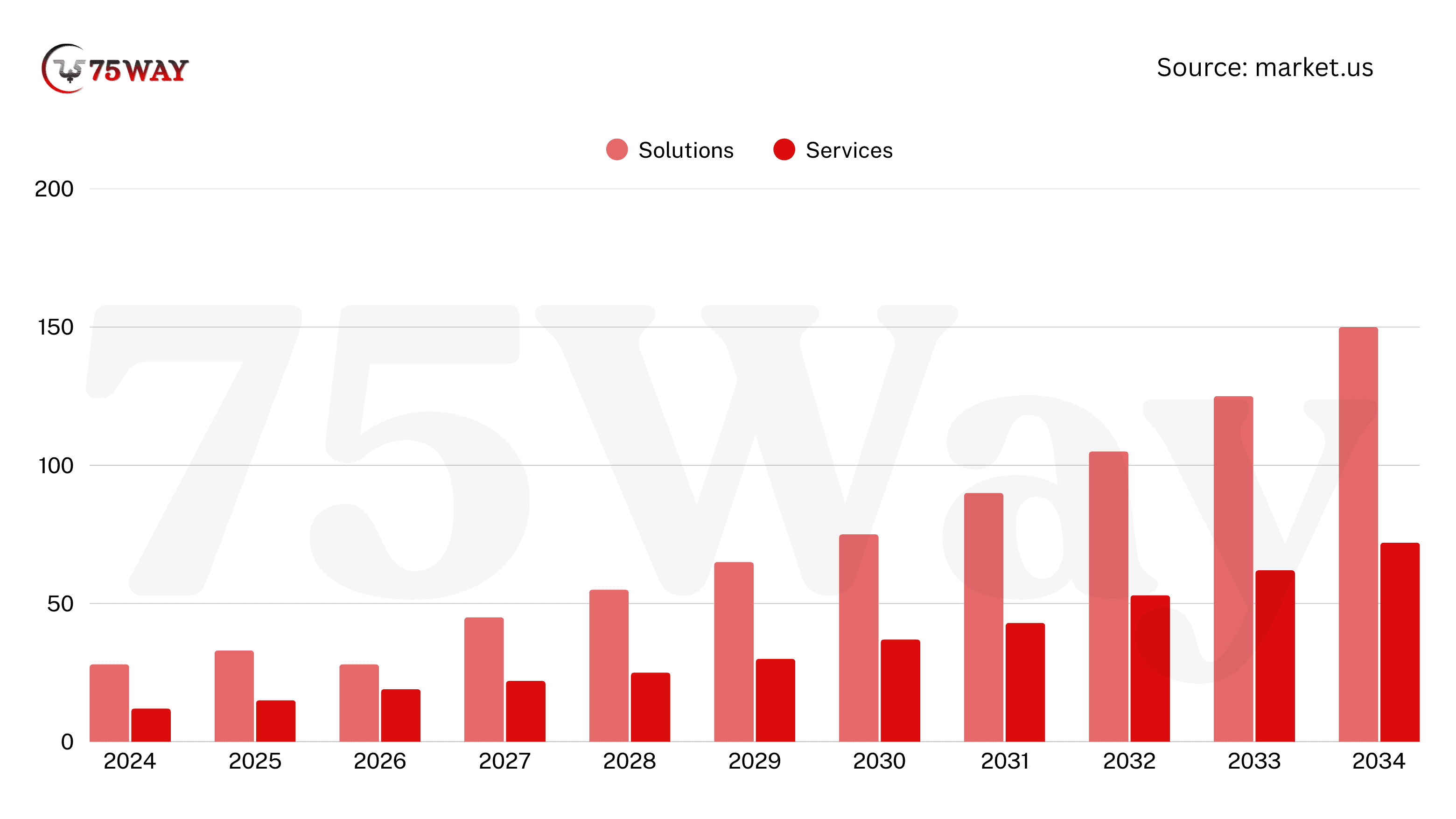
- The AI application market is expected to expand significantly over the coming years, reaching an estimated $32.26 billion by 2029, with a compound annual growth rate of 44.9%. (technavio).
- Furthermore, the global market for AI apps could reach over $426 billion by 2030, growing at a CAGR of 38.7%. (Grand View Research).
- Looking further ahead, the AI app development sector is projected to reach around $221.9 billion by 2034, with a steady 18.6% annual growth rate. (market.us)
Quick Read: How to Build IoT Apps in 2026: A Guide for Startups, Founders & Business Owners
Major Components of Artificial Intelligence in Mobile Apps
Artificial intelligence relies on a combination of cognitive capabilities that work together to enable learning, reasoning, decision-making, and human-like understanding. Each component interacts with the others to create intelligent behavior that allows AI applications to operate effectively across industries and use cases.
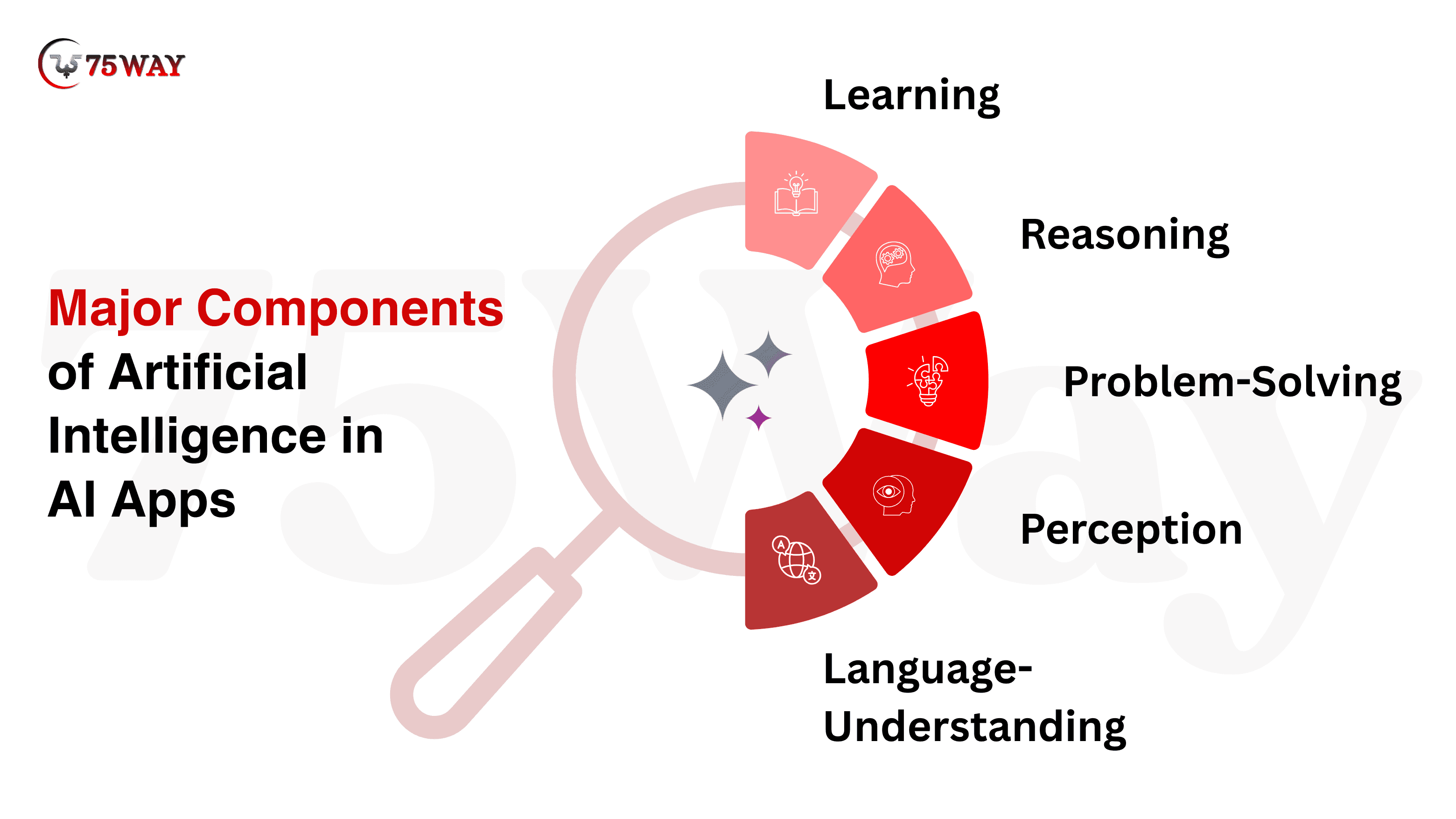
Learning: AI systems extract insights from historical and current data, gradually improving predictions and outcomes. This ability ensures that models adapt to patterns in real-world scenarios, enhancing both accuracy and efficiency. Data-driven learning supports continuous improvement across tasks, from recommendation engines to predictive maintenance.
Reasoning: In the next stage, these systems evaluate multiple possible outcomes, estimate probabilities, and select the most appropriate course of action. This capability allows systems to make informed decisions under uncertainty. Reasoning ensures that outputs align with business objectives and user needs, maintaining reliability across diverse environments.
Problem-Solving: Artificial intelligence models decompose complex challenges into smaller, manageable steps and automate processes that would otherwise require human effort. By addressing each subtask logically, systems achieve faster results and reduce errors, supporting scalable solutions for operational and strategic problems.
Perception: After that, these systems interpret information from visual, audio, and sensor inputs to understand their surroundings. This capability allows systems to recognize objects, detect anomalies, or monitor activities, forming the basis for applications in security, healthcare, robotics, and autonomous systems.
Language-Understanding: AI processes, interprets, and generates human language to facilitate communication and automation. From AI chatbots to transcription services, natural language processing enables machines to interact meaningfully with users, which bridges the gap between technical intelligence and practical human use.
Also Read: Top 10 AI Consulting Companies in 2026
Foundational Technologies Behind AI Mobile Applications
Modern AI applications rely on a set of foundational technologies that work together to enable intelligence, automation, and scalability. Each technology brings unique capabilities and enables apps to deliver smarter experiences, process complex data, and adapt to evolving user needs.
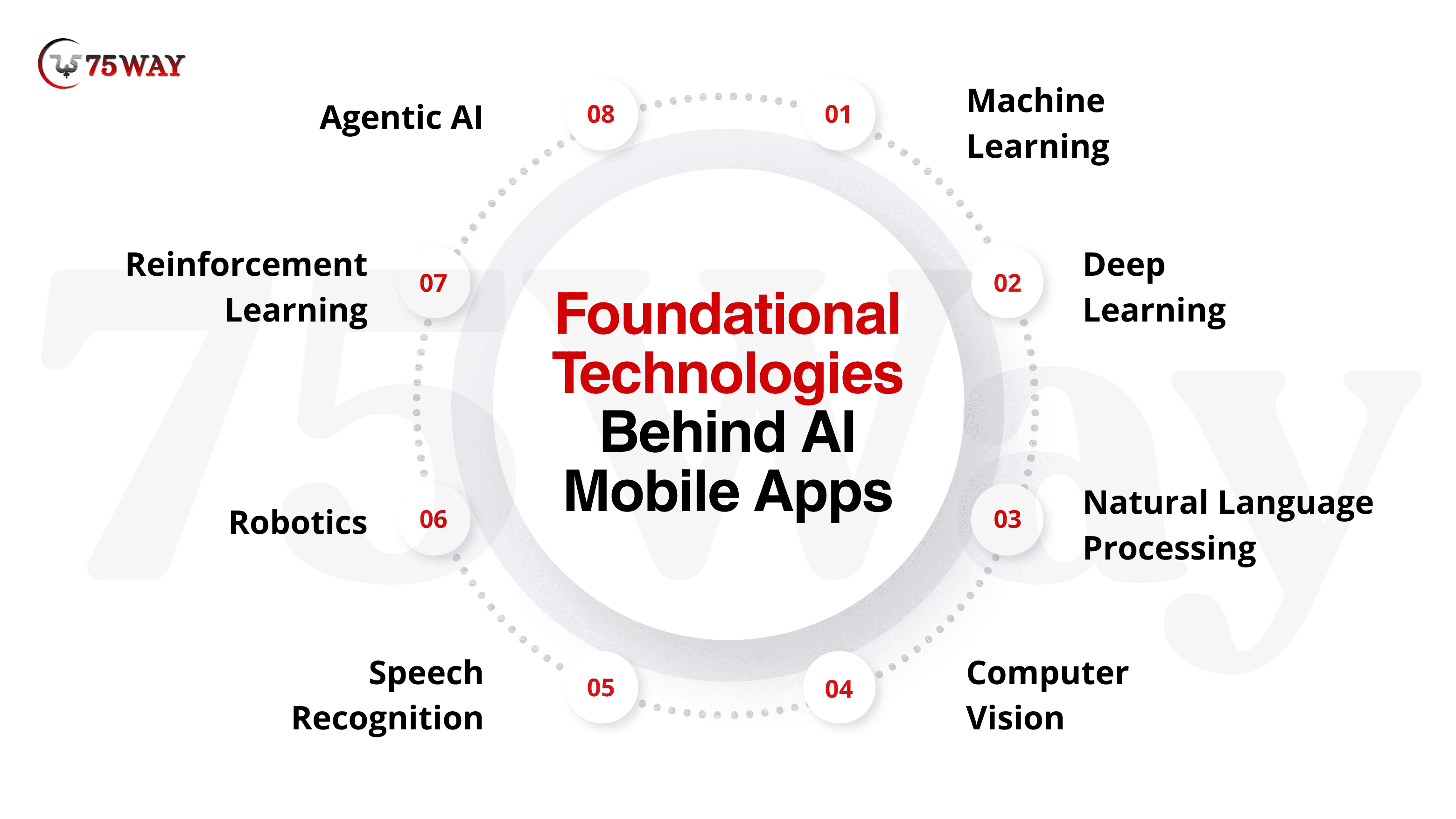
Machine Learning: ML algorithms detect patterns within data and generate predictions or recommendations. By continuously learning from new information, these systems enhance accuracy over time. Machine learning solutions form the backbone of most AI applications, supporting analytics, personalization, and predictive insights.
Deep Learning: Artificial neural networks can be deployed to develop an AI-powered app that handles complex, high-dimensional data such as images, audio, and video. Deep learning enables feature extraction without manual intervention and makes it essential for computer vision, speech recognition, and autonomous systems that require nuanced understanding.
Natural Language Processing: NLP in AI app development allows machines to interpret, analyze, and generate human language. Applications range from AI chatbots and virtual assistants to sentiment analysis and automated transcription, enabling communication that feels natural and human-centered.
Generative AI: AI models create original content, including text, images, and code, by learning patterns from large datasets. Generative AI apps enhance creative workflows, supports content automation, and drive personalized experiences in real time.
Computer Vision: You can deploy computer vision while developing an artificial intelligence app to process and interpret visual data to identify objects, detect patterns, and recognize environments. This technology powers applications in healthcare imaging, autonomous vehicles, security systems, and augmented reality.
Speech Recognition: Speech-to-text systems in AI mobile app development convert spoken language into commands or written content. This capability facilitates hands-free control, voice assistants, agentic AI, and real-time transcription to bridge communication between humans and machines.
Robotics: AI integrates with physical systems to automate repetitive or complex tasks. Robotics applications extend from manufacturing and logistics to healthcare, enabling efficiency, precision, and operational scalability.
Reinforcement Learning: You can implement AI models in mobile apps to learn through reward-based mechanisms and to optimize behavior over time. Reinforcement learning is critical in dynamic environments such as gaming, robotics, and autonomous navigation, where decision-making improves through experience.
Agentic AI: Autonomous AI agents in AI mobile app development plan and execute tasks independently, combining reasoning, learning, and perception. Agentic AI empowers applications to perform complex operations with minimal human supervision, driving efficiency and innovation in enterprise and consumer solutions.
Also Read: How to Build an App Like SpicyChat AI From Scratch
Business-Centric Use Cases of Artificial Intelligence Apps
Artificial intelligence mobile applications create consistent business value by automating processes, enhancing decision-making, and personalizing experiences across industries. Companies leverage AI to reduce costs, improve efficiency, and gain competitive advantages, transforming how they operate while delivering more meaningful outcomes to users.
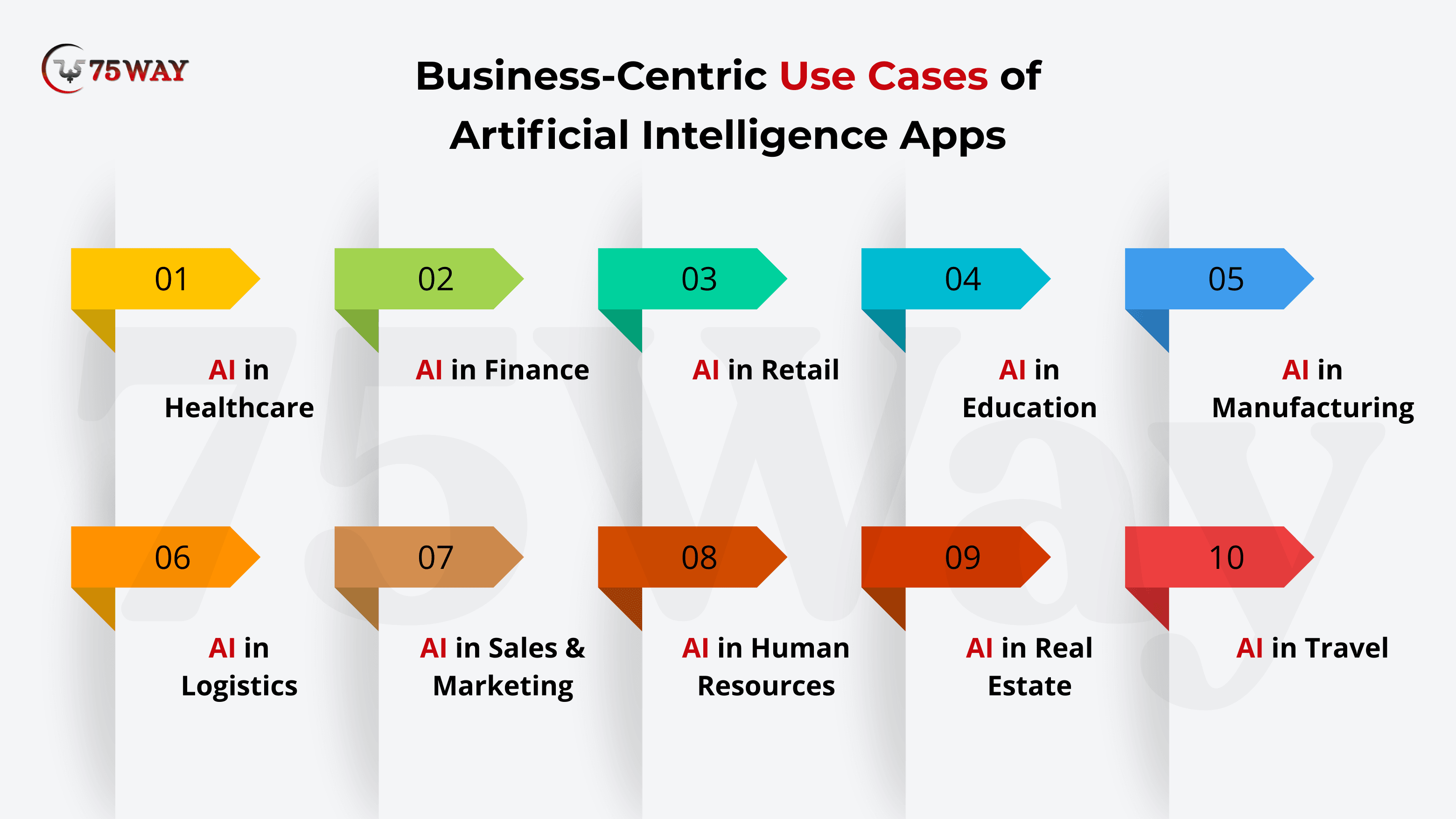
AI in Healthcare: You can build AI-powered healthcare apps to support faster and more accurate diagnostics, continuously monitor patient vitals, and provide actionable insights to clinicians. These capabilities improve treatment outcomes, streamline hospital workflows, and reduce human errors, allowing healthcare providers to focus on patient care.
AI in Finance: AI fintech app development solutions help finance businesses detect unusual patterns for fraud prevention, assess risk in real time, and predict market trends with precision. Financial institutions gain faster insights, minimize losses, and improve customer trust through proactive and intelligent decision-making.
AI in Retail: Retailers can develop AI-powered e-commerce mobile apps to personalize shopping experiences, forecast demand accurately, and optimize inventory. These applications ensure products are available when needed, enhance customer satisfaction, and increase sales efficiency across online and offline channels.
AI in Education: AI-powered educational apps enable adaptive learning platforms that adjust to individual student needs and deliver tailored content. Educators gain insights into student performance, allowing personalized guidance that enhances engagement, learning outcomes, and retention.
AI in Manufacturing: AI-driven mobile applications help businesses with predictive maintenance, prevent equipment failure, and improve production efficiency. Quality control systems detect defects early, reducing waste and operational costs, while ensuring consistent product standards across manufacturing processes.
AI in Logistics: Logistics companies optimize delivery routes, manage fleets effectively, and gain real-time supply chain visibility with AI logistics apps. AI minimizes delays, reduces operational costs, and ensures faster and more reliable service for customers.
AI in Sales & Marketing: AI apps allow sales and marketing teams to score leads, personalize messaging, and refine ad campaigns based on customer behavior. Businesses increase conversion rates, improve customer targeting, and maximize ROI by aligning strategies with actionable insights.
AI in Human Resources: Companies can build and launch AI-driven HR apps to automate candidate screening, support unbiased hiring decisions, and analyze workforce data. HR teams can enhance efficiency, reduce recruitment timelines, and make strategic workforce planning decisions with accurate analytics.
AI in Real Estate: AI-powered real estate app development help property dealers evaluate property values, predict market trends, and analyze investment opportunities. Real estate professionals can make informed decisions, streamline transactions, and deliver better recommendations to clients.
AI in Travel: Businesses can develop AI-driven travel apps enhance pricing strategies, generate personalized travel recommendations, and improve customer experience. Travel businesses optimize bookings, tailor services to individual preferences, and increase satisfaction across the customer journey.
Build an In-House Team or Hire a Partner For Developing An AI App?
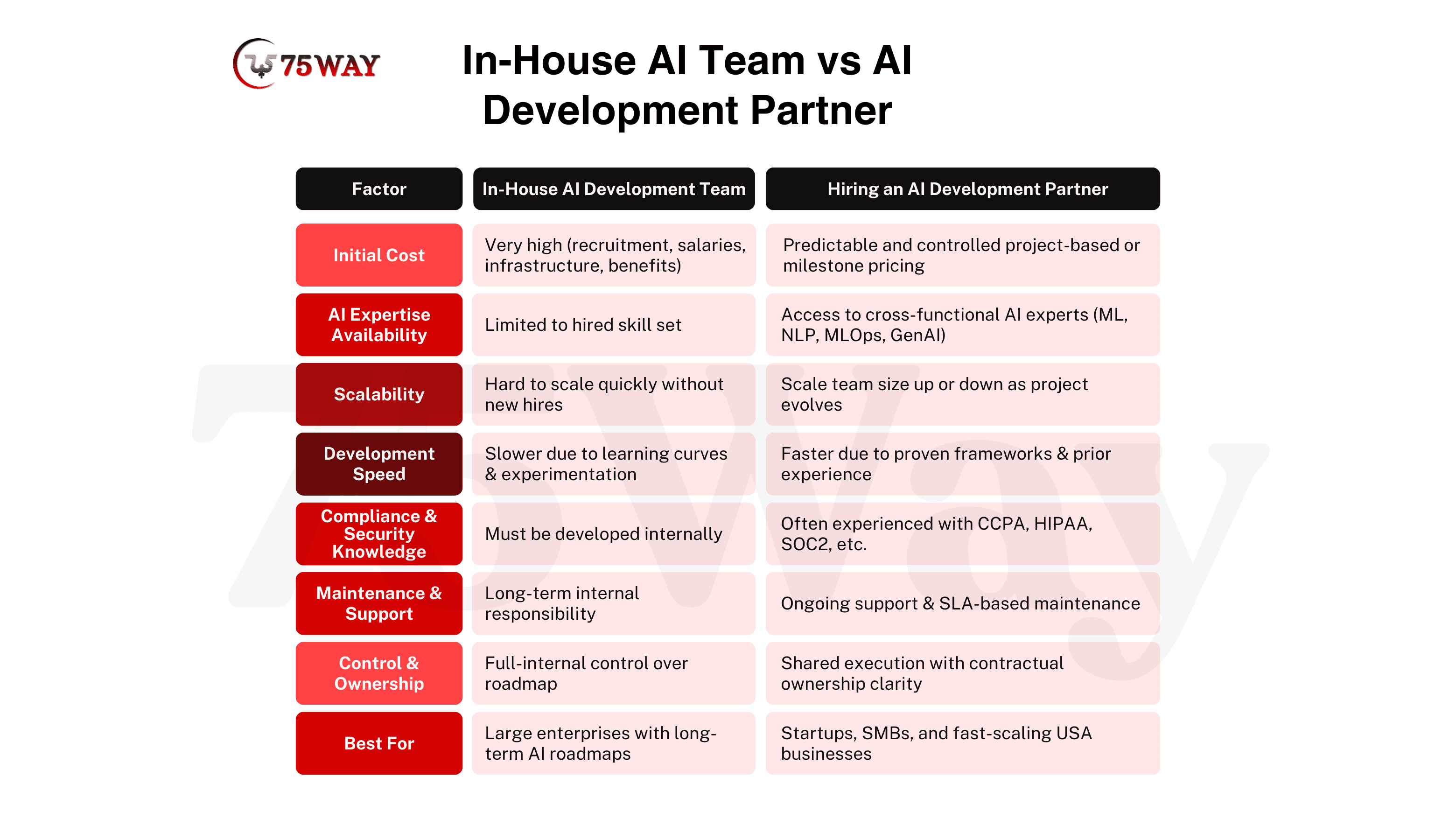
When you create an artificial intelligence app, you have two options: whether to hire an in-house team or partner with an AI development company in USA. An AI app demands careful consideration of resources, expertise, and long-term goals.
An in-house team offers full control over the development process and enables tailored solutions, but requires significant investment in talent, infrastructure, and ongoing management. Conversely, partnering with an experienced AI development firm provides access to specialized skills, proven frameworks, and faster delivery. It enables startups and fast-growing businesses to scale efficiently while ensuring compliance, robust performance, and alignment with market needs.
Read More: How to Build an AI-Driven Anonymous Messaging App?
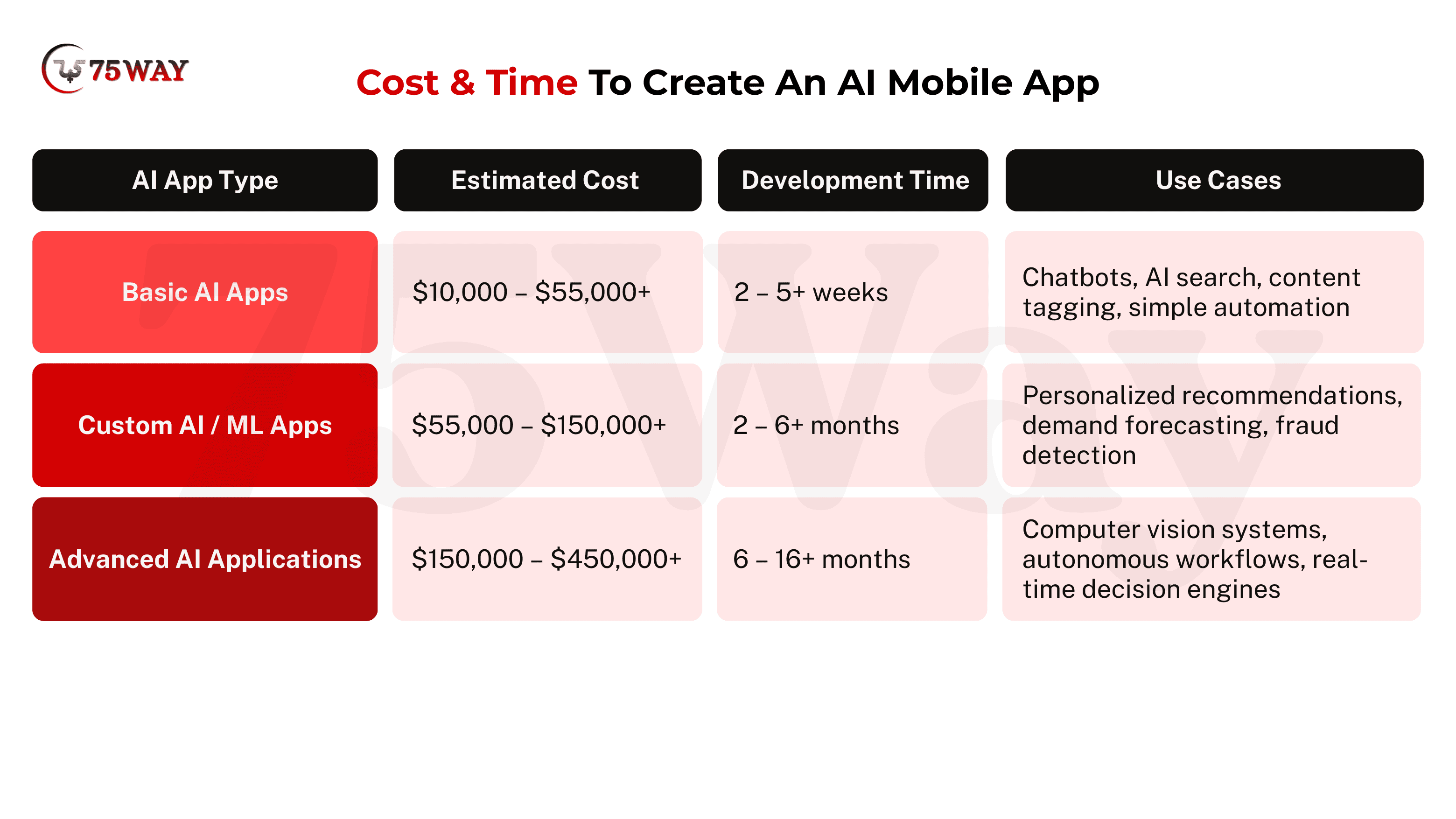
Cost & Time To Create An AI Mobile App: A Complete Breakdown
The cost and timeline to create an AI application vary based on complexity, data requirements, and scalability. Businesses must choose the right type depending on their goals, budget, and operational needs. Understanding these distinctions helps startups and enterprises maximize ROI while implementing AI solutions effectively.
Basic AI Applications: These entry-level AI solutions cost between $10,000 and $55,000 and can be developed in 2 to 5 weeks. They are ideal for small businesses or startups aiming to implement chatbots, AI search, content tagging, or simple automation to improve efficiency without heavy investment.
Custom AI/ML Applications: Tailored AI solutions range from $55,000 to $150,000 and take 2 to 6 months to develop. They suit growing businesses seeking personalized recommendations, demand forecasting, or fraud detection, providing more sophisticated intelligence while maintaining flexibility for scaling.
Advanced AI Applications: These high-end AI solutions typically cost between $150,000 and $450,000 and take 6 to 16 months to develop. They target large enterprises or tech-intensive startups needing real-time decision systems, computer vision, or autonomous workflows for complex business operations.
How 75way Helps You in Creating AI-Powered Apps?
75way Technologies, a trusted AI development company in the United States, provides support for building AI applications that align with business needs. Our solutions combine advanced AI expertise, practical development strategies, and scalable infrastructure. From initial planning to deployment, we develop effective AI-powered mobile applications to cater to all business requirements.
End-to-End AI App Solution: We manage the entire AI development cycle, including ideation, design, model selection, integration, and deployment. This comprehensive approach guarantees seamless delivery, reduces risks, and ensures all components work together to meet performance and reliability standards.
Custom Model Development: AI models are designed and fine-tuned to fit specific business challenges. We build solutions that optimize predictive accuracy, improve decision-making, and deliver personalized experiences to ensure the models perform effectively in real-world conditions.
Cost-Effective Solutions: We provide transparent commercial models, and our projects are structured to maximize value without unnecessary expenses. We leverage pre-trained models, cloud infrastructure, and optimized workflows to control costs while maintaining high-quality outputs and accelerated development timelines.
Security-First Approach: User data and model integrity are protected through encryption, secure access controls, and compliance with regulations like CCPA, HIPAA, and GDPR. This approach safeguards sensitive information and builds trust with both businesses and users.
Post-Deployment Support: Our ongoing maintenance, monitoring, and model updates ensure apps remain accurate and relevant. We offer technical support, performance optimization, and continuous feedback integration, keeping AI applications adaptive and aligned with evolving business needs.
Read Too: How AI Agents Automate Sales, Support & Operations in US Companies
Future Trends of AI Apps Every Business Should Know in 2026 & Beyond
Artificial Intelligence is evolving faster than ever, creating new opportunities for businesses to innovate and stay competitive. Emerging trends in AI applications are reshaping workflows, customer engagement, and decision-making. Companies that adopt these trends can utilize smarter solutions, enhance operational efficiency, and deliver more personalized experiences to users.
Autonomous AI Agents: AI agents are increasingly capable of making decisions and executing tasks independently. They can manage workflows, schedule operations, and interact with users without constant human input, reducing operational load and enabling faster, more accurate outcomes.
Multimodal AI Applications: Applications that process text, image, audio, and video simultaneously are gaining ground. These multimodal systems improve context understanding, offer richer insights, and enable more natural interactions across diverse platforms and devices.
Edge AI: Processing AI on devices rather than centralized servers reduces latency and improves privacy. Edge AI enhances responsiveness in real-time applications such as IoT devices, mobile apps, and autonomous systems, and reduces reliance on cloud infrastructure.
Quantum Computing in AI: Quantum computing promises to accelerate complex calculations for AI models. This enables faster training of large models, optimization of resource-heavy workflows, and tackling problems that were previously too computationally intensive.
Explainable & Ethical AI: Transparency in AI decision-making builds user trust. Ethical AI frameworks help prevent bias, maintain fairness, and ensure regulatory compliance, and explainable AI provides insights into how models generate predictions and recommendations.
AI & Blockchain Convergence: The integration of AI with blockchain, while creating an app, can increase data security, transparency, and accountability. It enables trustworthy AI operations in decentralized systems, enhances smart contracts, and supports secure data-sharing networks across industries.
AI and IoT: AI can be integrated in IoT app development and devices to monitor, analyze, and act on real-time sensor data. This integration improves automation, predictive maintenance, and operational efficiency across smart homes, factories, and connected vehicles.
No-Code, Low-Code AI Development: Platforms that enable AI development without extensive coding democratise innovation. Businesses can quickly prototype, deploy, and iterate AI applications, reducing time-to-market and lowering barriers for teams without deep technical expertise.
Final Thoughts
To summarize, building an AI app in 2026 requires a strategic approach that combines structured data, technical expertise, and compliance awareness. From ideation to deployment, each stage, problem definition, data preparation, model training, integration, and monitoring, impacts long-term app success. Startups and enterprises that invest in structured AI app development can experience automation, intelligence, and measurable competitive advantage. Furthermore, the right tech stack, whether in-house or with development partners, and effective cost management for scalable and high-performing AI applications. Businesses can partner with an experienced AI application development company in USA to accelerate growth, reduce risk, and deliver robust AI solutions tailored to business goals.
FAQs
What Is The Difference Between Pre-Trained And Custom AI Models?
Pre-trained models have been trained on large datasets and can be integrated quickly, making them ideal for MVPs or general tasks. Custom models are built from scratch or fine-tuned for your specific business needs, offering better control, higher accuracy, and the ability to handle unique data patterns for specialized applications.
How Do I Ensure AI App Security And Compliance?
Security measures include encryption, secure authentication, and regular audits. Compliance with regulations such as CCPA, HIPAA, or GDPR is essential, alongside minimizing sensitive data collection. Ethical practices involve bias monitoring, transparent communication with users, and continuous evaluation to ensure fair and responsible AI usage.
What Are The Major Challenges In AI App Development?
Challenges include securing high-quality data, avoiding bias in datasets, selecting appropriate models, ensuring scalability, maintaining user privacy, and complying with regulations. Each stage requires careful planning, rigorous testing, and iterative improvements to ensure AI performance aligns with business goals.
Data Quality: High-quality data is the foundation of any AI app. Inaccurate, incomplete, or inconsistent data can lead to poor model performance. Ensuring proper cleaning, preprocessing, and labeling is critical to achieve reliable predictions and insights.
Model Selection: Choosing the right AI model affects accuracy, efficiency, and scalability. Developers must decide between pre-trained models, custom models, or APIs, and match architectures to specific business goals and data availability for optimal results.
Scalability: AI apps must handle increasing data volumes and user demand. Poorly designed infrastructure or models can slow performance. Planning for scalable cloud architecture, efficient pipelines, and flexible APIs ensures growth without degradation.
Data Privacy and Security: Protecting user data is crucial to maintain trust and meet legal requirements. Compliance with regulations such as CCPA, GDPR, and HIPAA requires encryption, secure authentication, and limited data access across all stages of AI development.
Integration Complexity: Integrating AI models into existing systems or mobile apps can be challenging. Ensuring seamless API connections, real-time inference, and consistent performance across platforms requires careful design, testing, and ongoing monitoring.
Can AI apps improve business efficiency?
Yes, AI apps automate repetitive tasks, provide predictive insights, optimize workflows, and personalize user experiences. These capabilities reduce operational costs, improve decision-making, and enhance customer satisfaction, giving businesses measurable performance and competitive advantages.
What Is AI App Development?
AI app development refers to the process of designing and building applications that utilize artificial intelligence to perform tasks that require human intelligence. These AI-powered mobile apps rely on data, algorithms, and trained models to analyze information, recognize patterns, and deliver intelligent outcomes.Unlike traditional apps that follow fixed rules, AI-powered applications adapt over time. They improve accuracy through learning, support automation, and enable features such as predictions, recommendations, language understanding, and visual recognition. This approach allows businesses to deliver smarter user experiences and data-driven decisions at scale.