AI Disease Diagnosis
Detect diseases earlier and improve clinical decision-making with AI-powered diagnostic solutions. Accelerate patient care, enhance accuracy, and deliver actionable insights to physicians, supporting faster, more precise healthcare outcomes across hospitals and clinics.
What Is AI Disease Diagnosis Solution?
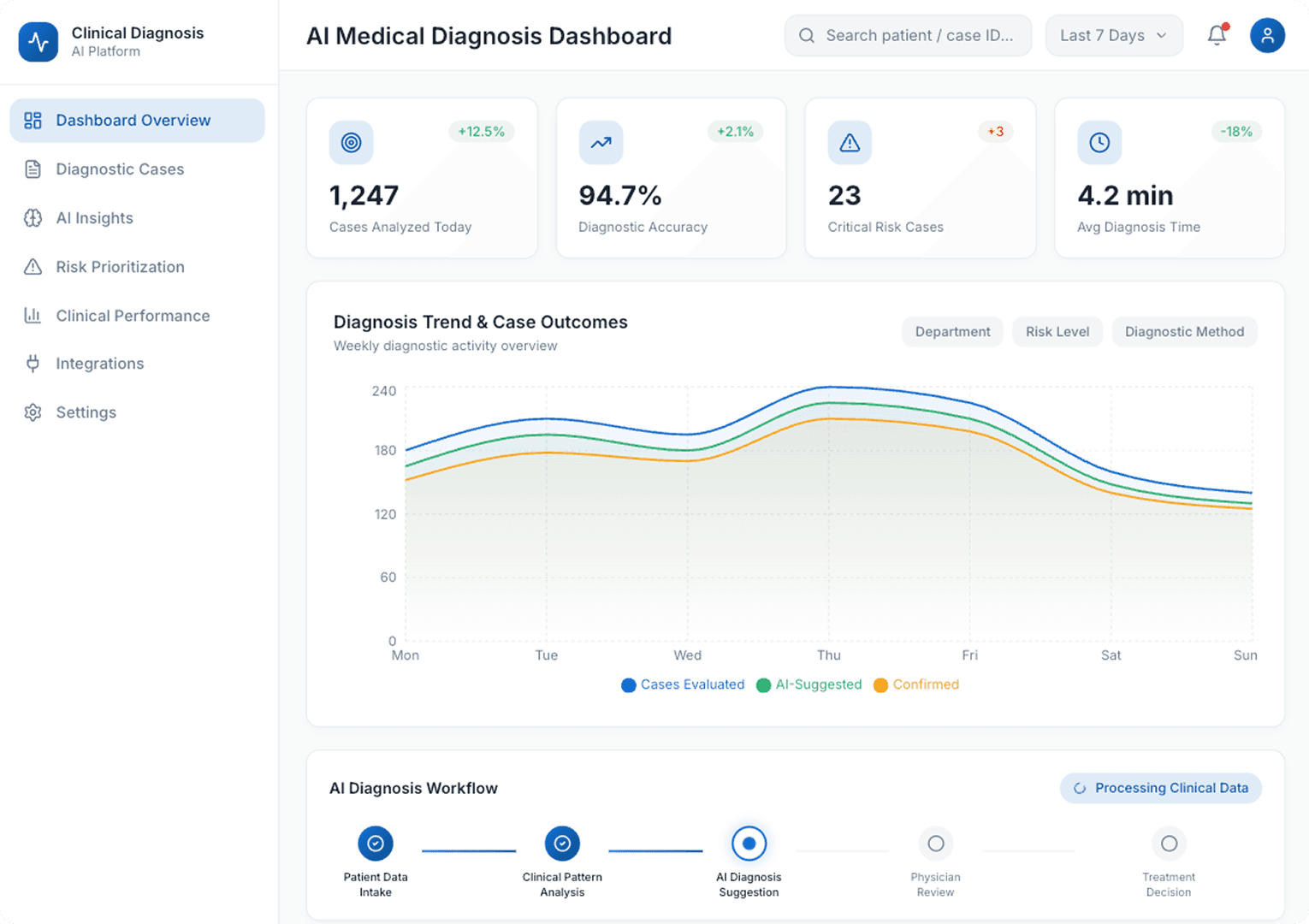
AI disease diagnosis solution uses machine learning, GPT-powered LLMs, and hybrid AI agents to analyze patient records, symptoms, and lab data for rapid disease detection. It empowers healthcare providers to make faster, evidence-based decisions. It integrates structured and unstructured healthcare data, including imaging, lab results, and patient history. The solution predicts disease progression, identifies potential complications, and prioritizes high-risk cases, improving clinician efficiency, diagnostic accuracy, and patient outcomes. It also supports personalized treatment recommendations for individual patients. With secure cloud deployment, continuous model refinement, and scalable architecture, the solution delivers real-time insights, streamlined workflows, and adaptive learning for better decision-making across healthcare facilities. Hospitals and clinics can easily integrate it into existing systems for seamless operation.
See How Our AI Disease Diagnosis Solutions Improve Diagnostic Speed
AI Disease Diagnosis Solution accelerates detection, reduces errors, and provides predictive recommendations. Clinicians gain actionable insights, streamlined workflows, and improved patient care quality.
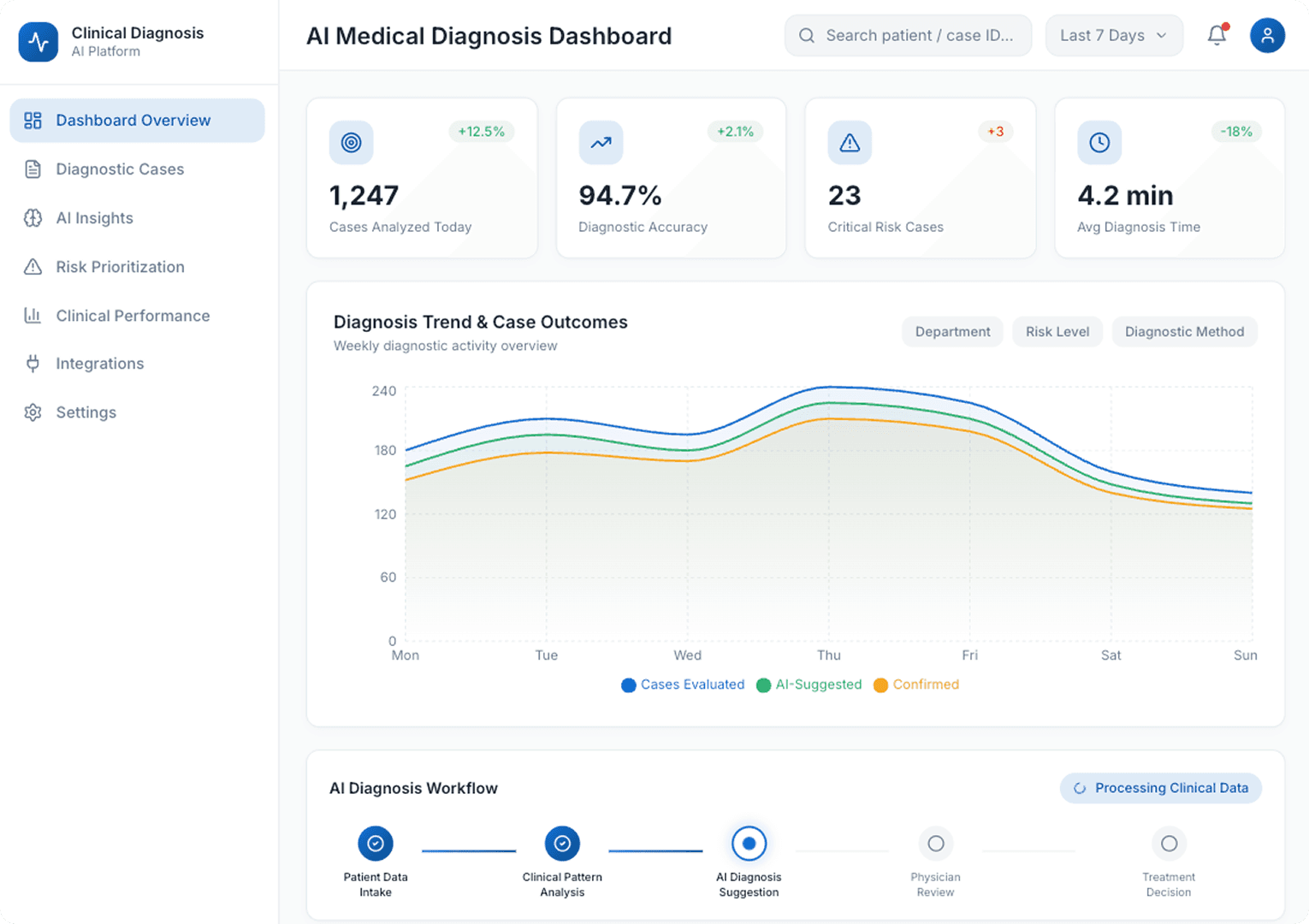
The system works by analyzing structured and unstructured patient data with hybrid AI agents and GPT-powered models. Estimated results include 50% faster disease identification, 40% higher diagnostic accuracy, and 35% improved patient prioritization efficiency.
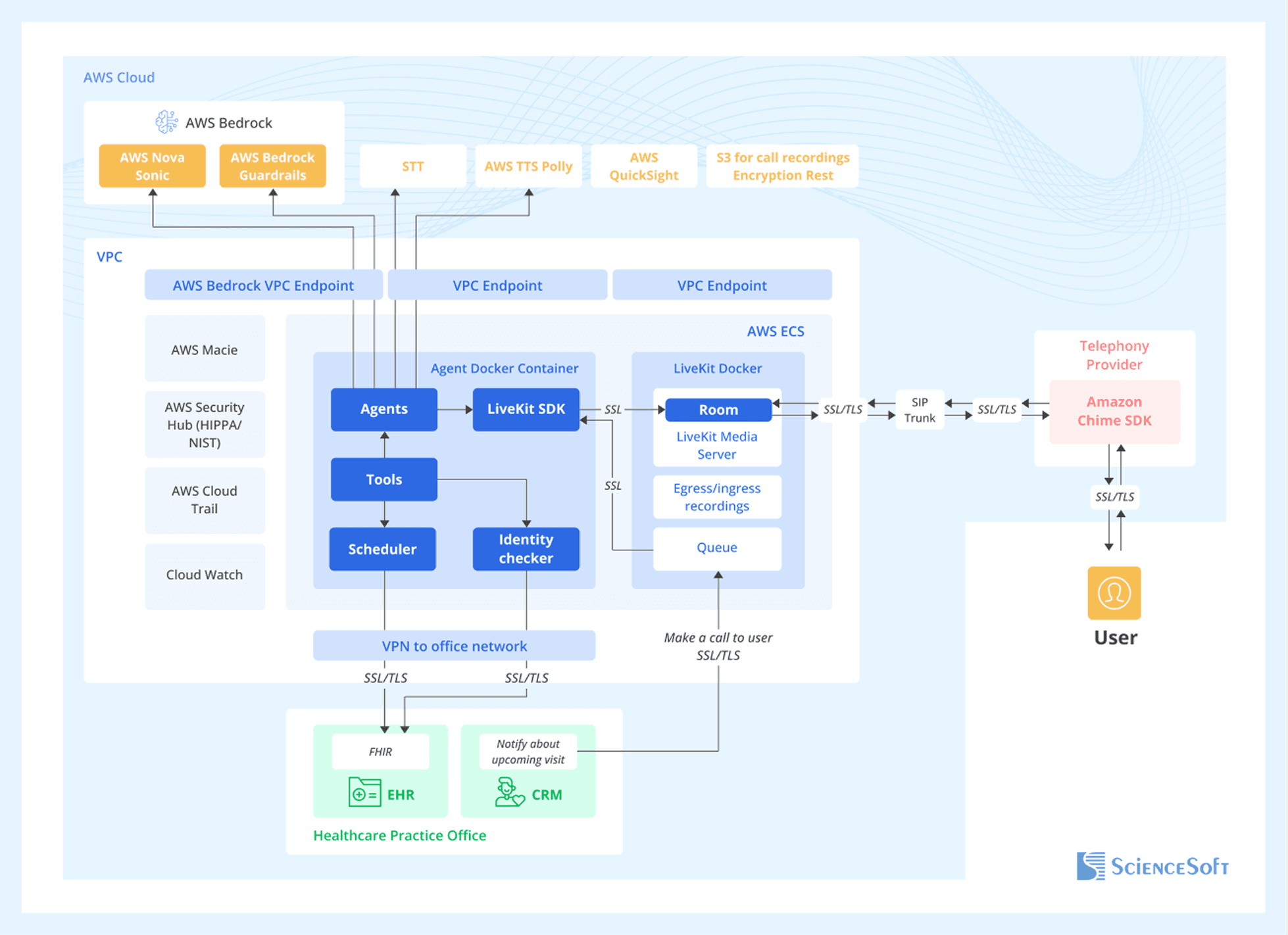
It uses hybrid AI agents with deep learning architectures and LLMs. Continuous refinement improves predictive reliability, symptom analysis, and integration with clinical workflows. This enables faster detection of rare conditions and supports proactive patient management. Cloud-based, modular architecture ensures secure, scalable deployment, seamless EHR integration, and adaptive learning for continuous diagnostic improvements. It also facilitates collaboration across departments, providing clinicians with actionable insights in real time.