Summary
Learn how medicine delivery apps are transforming healthcare with AI-driven features, seamless delivery, and digital pharmacy integration. This guide covers the complete medicine delivery app development process, cost factors, and key challenges in detail. The global online pharmacy market is projected to surpass $200 billion, showing strong growth and rising demand for digital healthcare solutions.
Key Takeaways
- Medicine delivery apps improve access, speed, and convenience for healthcare users.
- AI-powered features enhance efficiency, accuracy, and personalized patient care experiences overall.
- Development cost ranges from $15,000 to $300,000+, depending on complexity.
- The global online pharmacy market is projected to surpass $200 billion soon.
- The medicine delivery industry is growing at approximately 15%–20% CAGR worldwide.
- The blog covers features, challenges, monetization, and the development process in detail.
Sometimes, you are in a situation where you need urgent medication, but stepping out is not an option. Maybe it’s late at night, maybe it’s a chronic condition, or maybe it’s just the need for convenience in a fast-moving world. What used to be a stressful experience is now solved in just a few taps with medicine delivery apps.
It is not just a trend. But it becomes a massive business opportunity. The medical supply delivery sector, led primarily by B2C services, is already valued at $358.17 billion and is projected to grow at a steady CAGR of 9.4% through 2031. This rapid expansion clearly signals one thing: digital pharmacy solutions are the future of healthcare accessibility.
For startups and business owners, this opens the door to building healthcare platforms like pharmacy delivery app development solutions that solve real-world problems related to healthcare while generating consistent revenue. But what is the right strategy to build a medical supply delivery app? Which technology stack is required? What’s the cost of a medicine delivery app development?
Your every doubt will be answered in this guide. We prepare a complete guide after catering to 100s of healthcare organizations. This detailed handbook describes the structured approach to building a medical delivery app, how medicine delivery apps actually work, the core features, key cost factors, and monetization strategies. If you’re planning to launch or scale a healthcare solution, this guide will provide you with a clear and practical roadmap to build a powerful, scalable, and future-ready medical delivery app.
What Is Medical Delivery App Development?
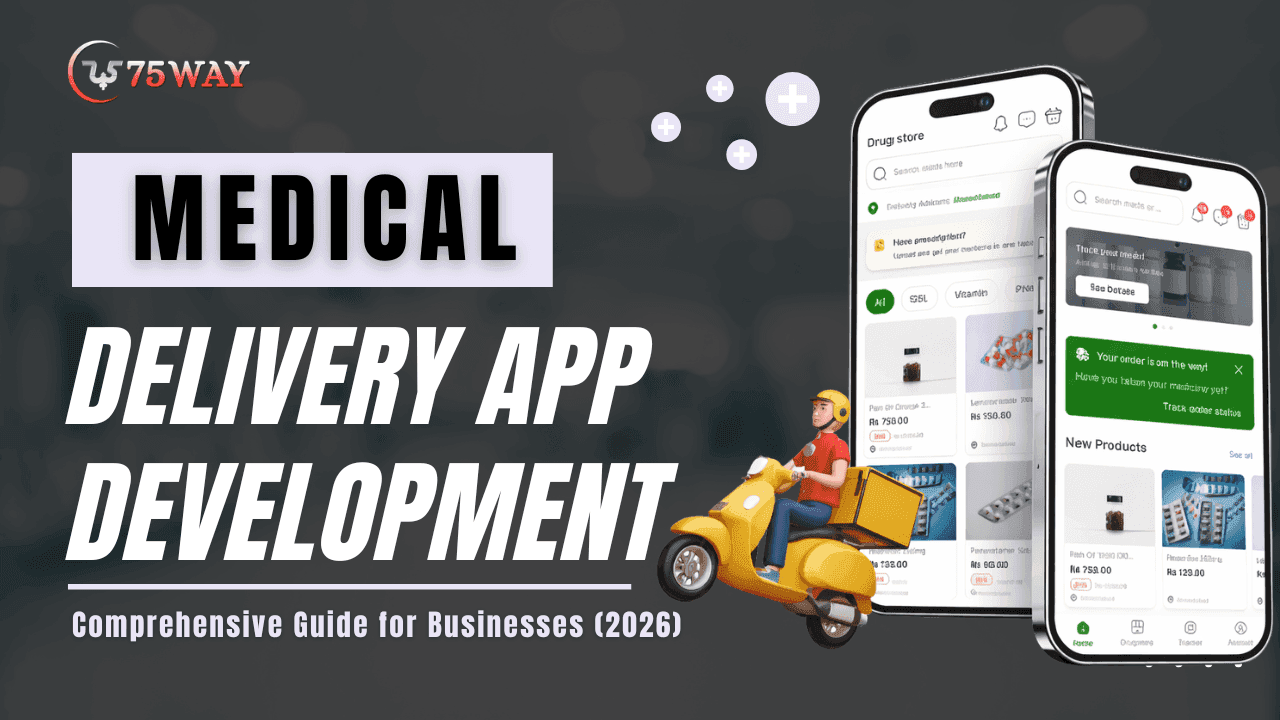
Medical delivery app development refers to the process of designing, building, and deploying a digital platform that enables users to order medicines online and get them delivered directly to their doorstep. These applications connect customers, pharmacies, and delivery agents within a single ecosystem, ensuring a seamless and efficient medicine ordering experience.
At its core, a medical delivery app simplifies the traditional pharmacy model by integrating essential functionalities such as prescription uploads, real-time order tracking, secure payment options, and automated inventory management. This not only enhances user convenience but also helps pharmacies expand their reach and streamline operations.
rom a business perspective, developing a mobile app for medicine delivery involves a combination of user-centric design, robust backend systems, third-party integrations, and strict compliance with healthcare regulations. Whether built as a multi-vendor marketplace or a standalone pharmacy app, these platforms are designed to deliver speed, accuracy, and trust, three critical factors in the healthcare industry.
How The Medical Delivery App Works?
A medical delivery app operates through a streamlined, multi-step process that connects users, pharmacies, and delivery agents on a single platform. The goal is to ensure that medicines are ordered, verified, processed, and delivered efficiently while maintaining accuracy and compliance. Here’s how the complete workflow typically functions:
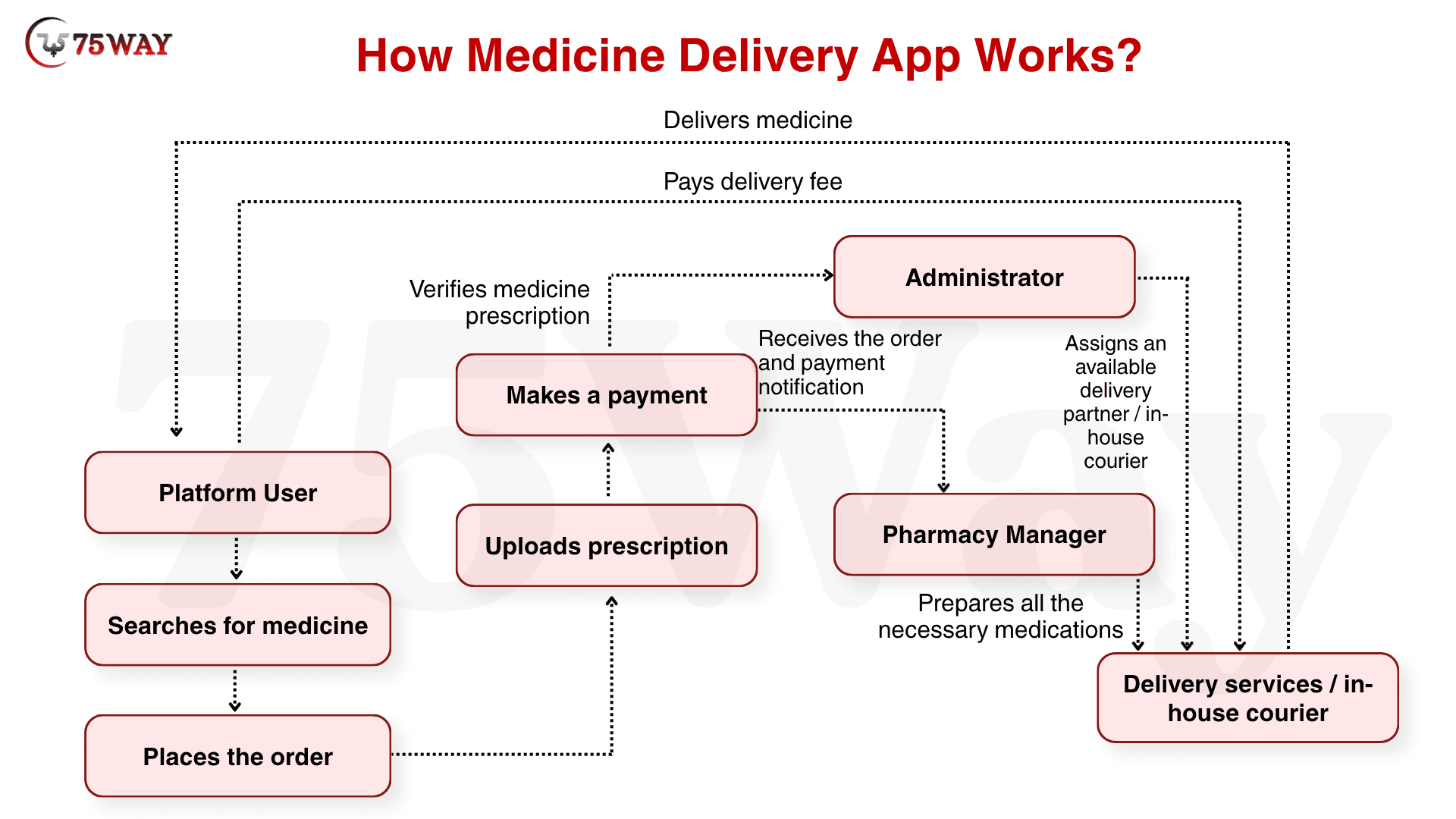
User Registration & Medicine Search: The process begins when a user signs up on the app and searches for required medicines using keywords, categories, or prescriptions. Advanced apps also offer smart suggestions and medicine alternatives.
Prescription Upload & Verification: For prescription-based drugs, users upload a valid prescription. The pharmacy or a licensed professional then verifies it to ensure compliance with healthcare regulations before processing the order.
Order Placement & Payment: Once the medicines are selected and verified, users place the order and choose a preferred payment method, such as online payment, wallets, or cash on delivery.
Pharmacy Order Processing: The pharmacy receives the order, checks inventory availability, validates the prescription (if required), and prepares the package for dispatch.
Delivery Assignment & Tracking: A delivery agent is assigned to pick up the order and deliver it to the customer. Users can track the order in real-time, ensuring transparency and convenience.
Order Delivery & Confirmation: The medicine is delivered to the user’s doorstep, and confirmation is provided through the app. Some platforms also allow feedback or ratings for service improvement.
Medicine Delivery App Market Insights: Growth & Opportunity
Medicine delivery applications are transforming the healthcare landscape by enabling fast, dependable access to essential medications without the need to visit a physical pharmacy. What began as a convenience-driven service has now become a critical component of modern healthcare delivery systems, improving accessibility and patient experience.
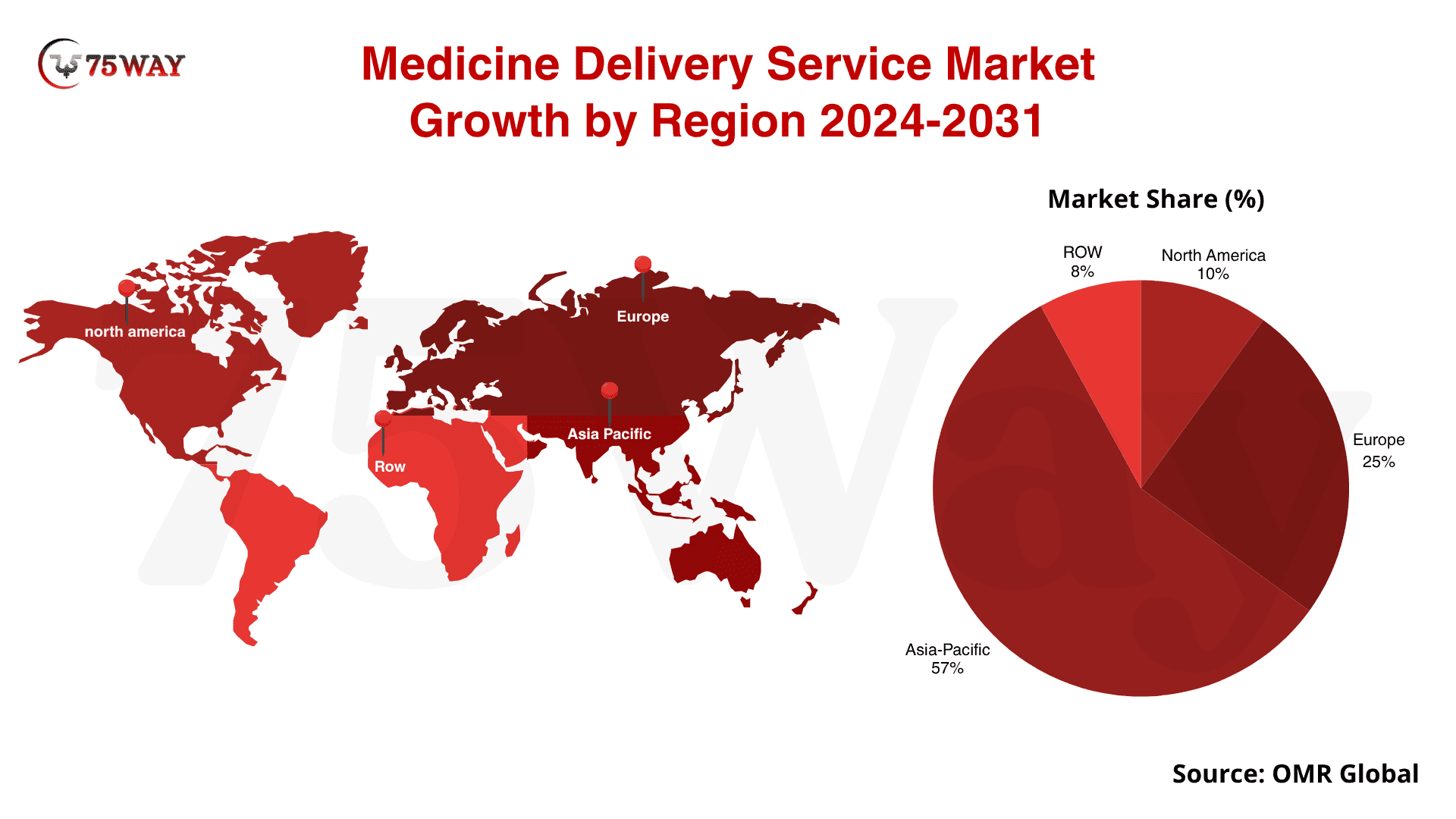
- The mobile medical app industry is projected to grow significantly, increasing from $6.89 billion in 2022 to approximately $50.94 billion by 2030, with a strong CAGR of 28.4%.
- The telemedicine industry is forecasted to reach around $380.33 billion by 2030, fueled by the rising demand for remote healthcare consultations and digital medical services.
- The medicine delivery service market is anticipated to reach $132.56 billion by 2030, growing at a CAGR of 10.7% during the forecast period.
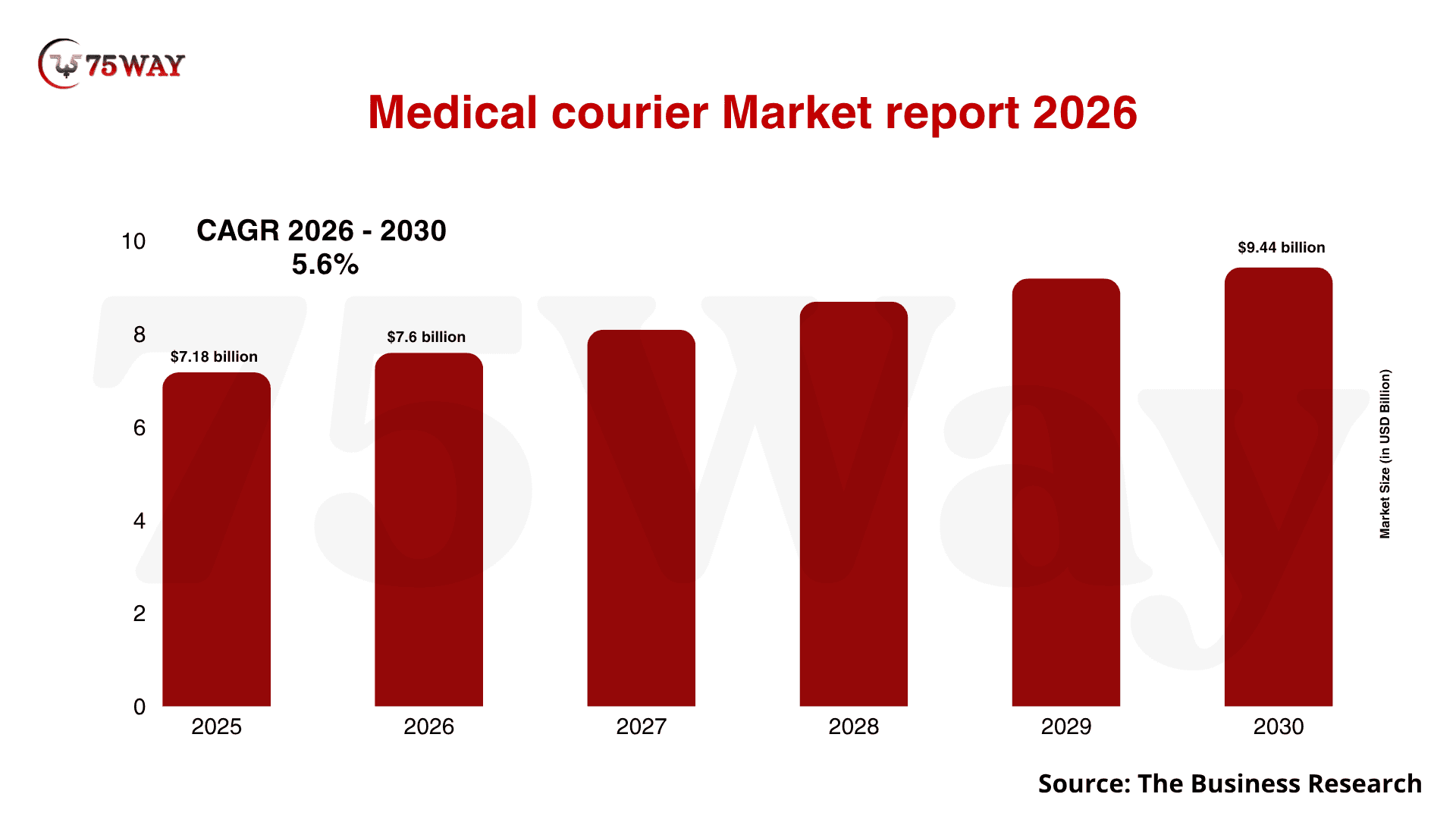
- The medical courier market is estimated to be worth $7.6 billion in 2026 and is expected to grow at a CAGR of 5.9% in the coming years, as reported by The Business Research Company
Why These Apps Are Gaining Popularity?
The growing adoption of medicine delivery apps is largely driven by the increasing demand for convenience and accessibility in healthcare. Features such as doorstep delivery, easy prescription uploads, multiple payment options, and real-time order tracking have significantly enhanced the overall user experience, making these platforms highly attractive to a wide range of users. These apps eliminate the need for physical pharmacy visits by enabling users to order medicines from anywhere at any time.
Even the online pharmacy sector is projected to generate approximately $97.18 billion in revenue by 2025, with a steady annual growth rate of 7.64%, reaching around $130.46 billion by 2029. This consistent growth reflects increasing consumer reliance on digital healthcare solutions.
How to Build a Medicine Delivery App? From Idea to Launch
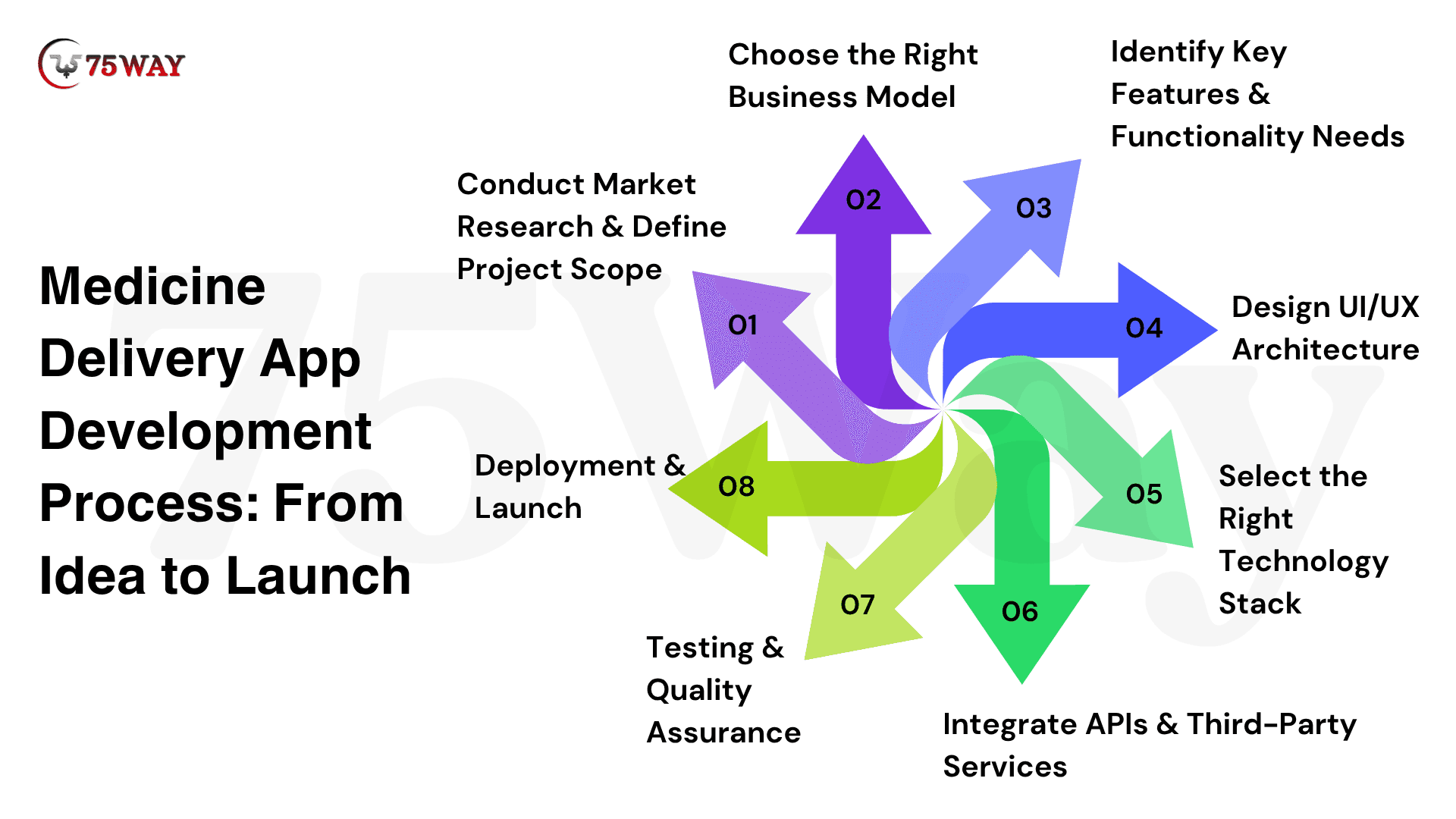
A custom medicine delivery app development requires a structured approach that aligns with the needs of both users and healthcare providers. Before initiating development, it is essential to clearly define the user journey and understand how users will interact with the platform. This ensures a smooth and intuitive experience. Once the workflow is outlined, the focus shifts to planning the design and technical aspects of the application. Below is a step-by-step process that demonstrates how a medicine delivery app is built and launched.
Conduct Market Research & Define Project Scope
Begin by researching the market to understand current trends, user expectations, and competitor strategies. Instead of just reviewing competitors, focus on what they offer, where users face issues, and what is missing in their solutions. This allows you to identify real gaps you can target. As you move forward, clearly define your app’s purpose, audience, and goals, so you build a solution aligned with both user needs and business objectives.
- Review competitor apps, ratings, and negative user feedback
- Compare features to identify missing or weak functionalities
- Study user complaints to uncover real pain points
- Analyze pricing models to find competitive positioning gaps
- Evaluate service areas to identify underserved market segments
Choose the Right Business Model
Once you have clearly defined your project scope and identified market opportunities, the next step is to select the right business model. This decision is critical, as it directly shapes how your medicine delivery app operates and generates revenue. You need to evaluate how you want to connect users with pharmacies, whether by managing your own inventory, acting as a marketplace, or combining both approaches. Different business models for medical delivery mobile applications are:
- Inventory-Based Model: Manage your own medicine stock, ensuring quality control, faster delivery, and higher margins, but it requires significant investment and inventory management.
- Marketplace Model: Connect users with multiple pharmacies, earning commissions on each order while minimizing inventory costs and focusing on platform scalability and partnerships.
- Subscription-Based Model: Users pay recurring fees for benefits like free delivery, discounts, or priority services, ensuring predictable revenue and improved customer retention over time.
- Hybrid Model: You combine inventory control with marketplace flexibility, allowing better scalability, diversified revenue streams, and improved service availability across different locations.
As you move forward, align your chosen model with scalability and user convenience. A well-defined business model not only helps you streamline operations but also ensures consistent revenue generation. By choosing the right approach early, you set a strong foundation for growth, competitive positioning, and efficient service delivery.
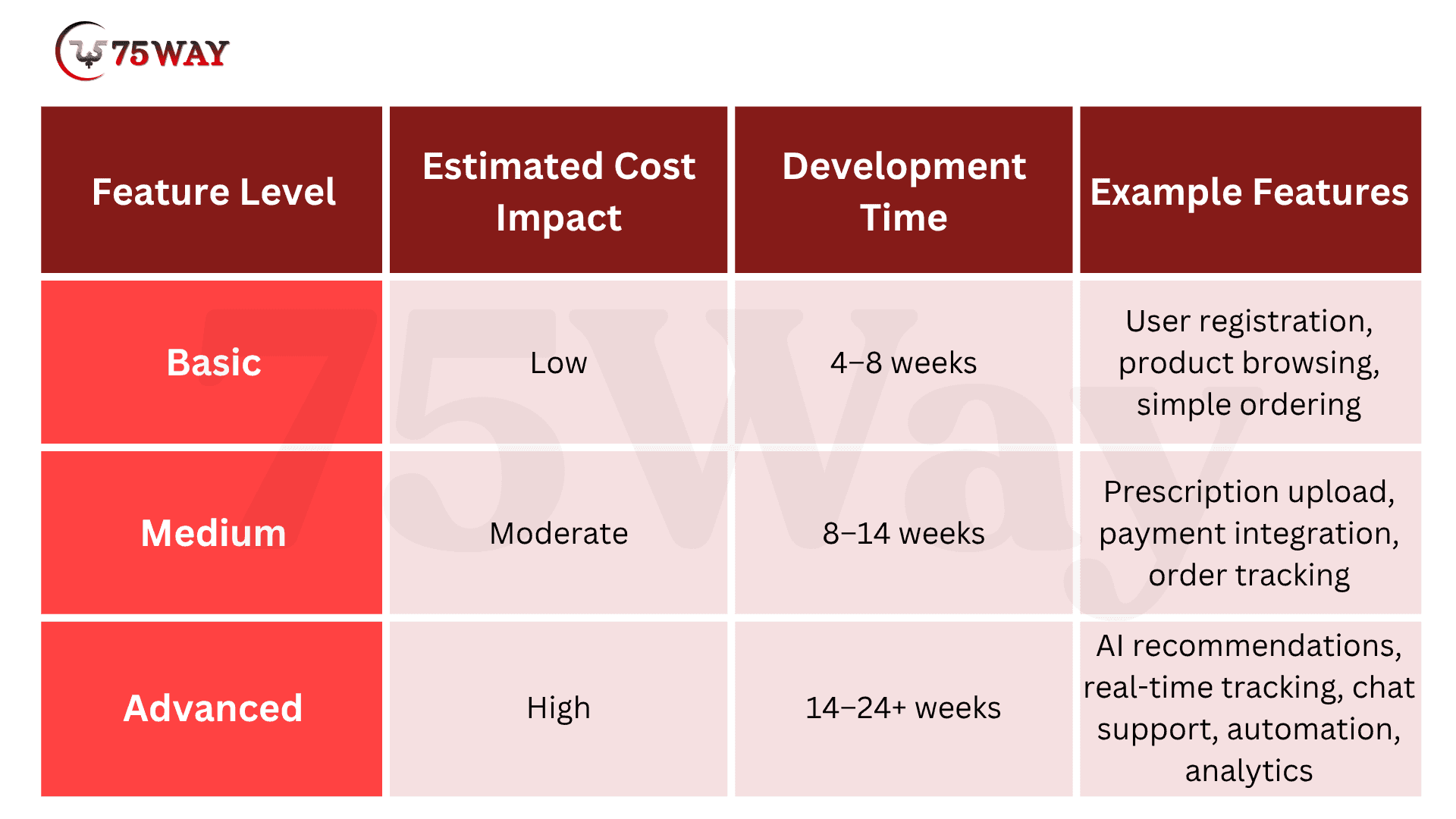
Identify Key Features & Functionality Needs For Medicine Delivery Application
The next step is to decide the major features and functionality requirements that will shape the medicine delivery application. This process ensures that every function in the app is directly aligned with user needs and business objectives, resulting in a practical and value-driven solution.
At the same time, the application must be designed to enable seamless interaction between customers, pharmacies, delivery agents, and administrators. Each module should work in coordination to ensure accurate order processing, timely deliveries, and effective system management while maintaining scalability and a consistent user experience across the entire platform.
Design UI/UX Architecture
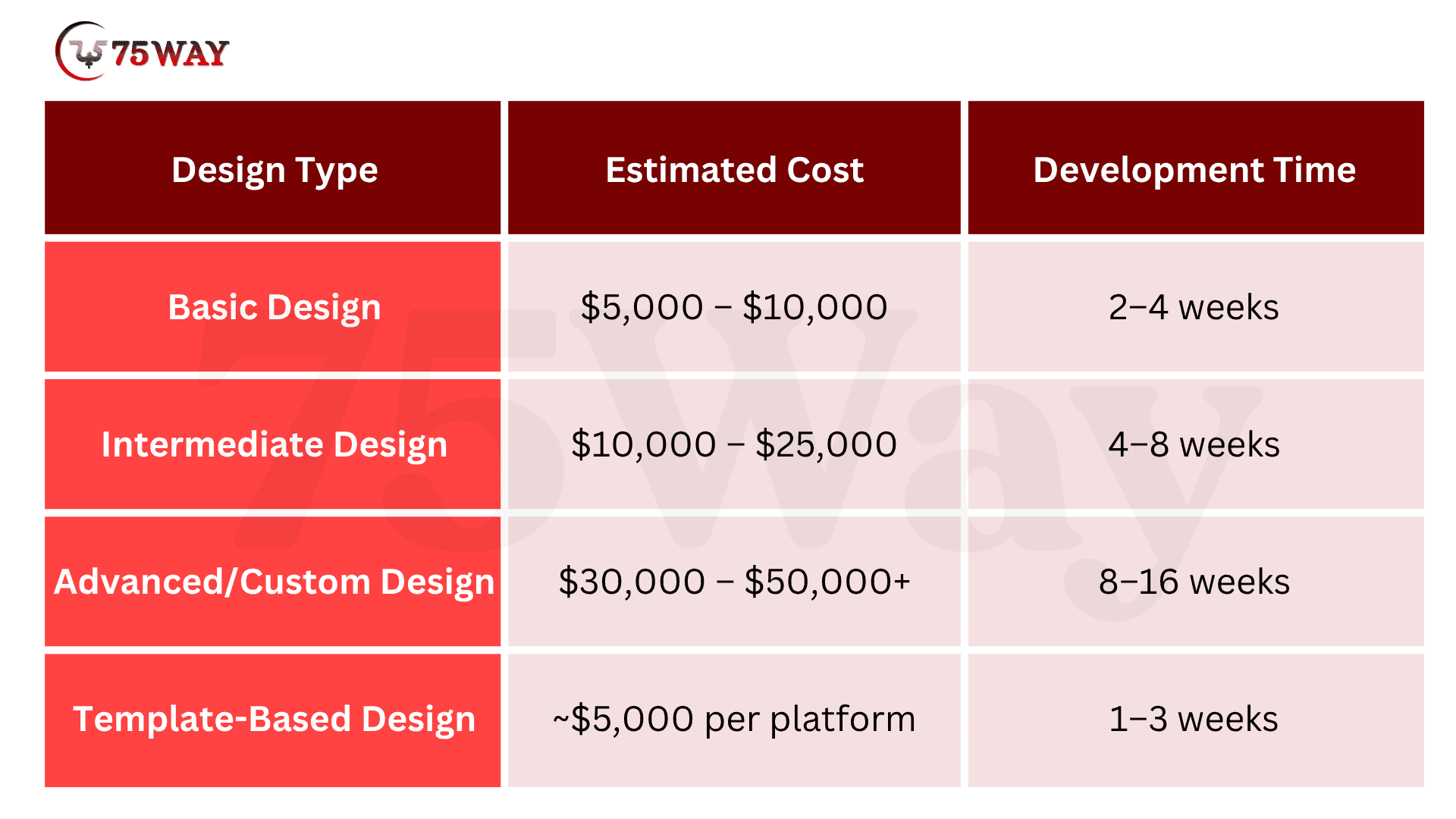
Once you have defined the features and functionality, the next step is to design an interface that ensures a smooth and intuitive user experience. The UI/UX design architecture should make it easy for users to navigate the app, search for medicines, upload prescriptions, and complete orders without confusion. A well-structured design reduces friction and directly improves user engagement.
In addition, the design should focus on consistency, clarity, and accessibility across all user touchpoints. Every element from layout to navigation flow should align with user behavior and expectations. A thoughtfully planned UI/UX not only enhances usability but also supports better retention and long-term platform success.
Select the Right Technology Stack
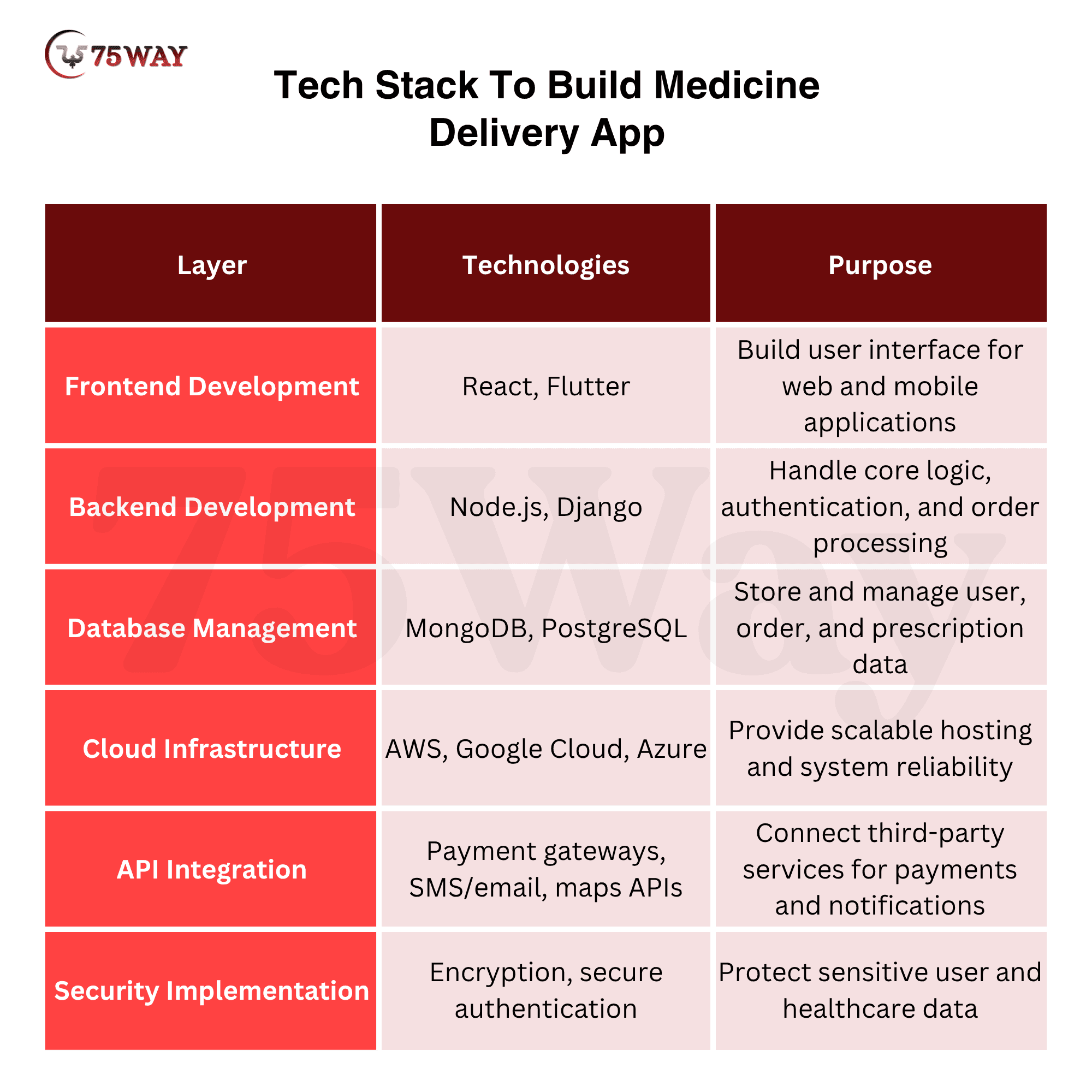
After defining features and finalizing UI/UX architecture, the next step is selecting the technology stack that will power the entire application. This decision determines how efficiently your medicine delivery platform will handle user requests, process orders, manage data, and scale as demand grows.
- Frontend Development: Frontend development involves creating the user interface of the application using technologies like React for web applications and Flutter for mobile apps. It ensures users can easily search medicines, place orders, and track deliveries with a smooth and responsive experience.
- Backend Development: It handles the core system logic using frameworks like Node.js or Django. It manages order processing, user authentication, prescription validation, and communication between all application components.
- Database Management: This layer involves storing and organizing critical application data such as user information, prescriptions, orders, and payment history using databases like MongoDB or PostgreSQL, ensuring fast retrieval and data accuracy.
- Cloud Infrastructure: It provides the hosting environment for the application using platforms like AWS, Google Cloud, or Microsoft Azure. It ensures system scalability, high availability, and reliable performance during peak usage.
- API Integration: It enables the application to connect with external services such as payment gateways, SMS/email notifications, pharmacy systems, and mapping services, ensuring smooth end-to-end functionality.
- Security Implementation: This layer focuses on protecting sensitive healthcare and user data through encryption, secure authentication systems, and compliance-ready architecture.
Integrate APIs & Third-Party Services
After setting up the core technology stack, the next step is to integrate APIs and third-party services to extend the functionality of the medicine delivery app. This includes connecting external systems that enable essential features such as secure payments, real-time notifications, map-based tracking, and pharmacy inventory synchronization. These integrations ensure the app delivers a complete and seamless user experience without building every feature from scratch.
In addition, API integration helps improve scalability and efficiency by allowing the application to communicate with trusted external platforms. Services like payment gateways, SMS/email notification systems, and geolocation tools enhance performance while maintaining reliability and security. Proper integration ensures smooth data flow between all components, making the platform more robust and user-friendly.
Testing & Quality Assurance
After completing development and integrations, testing and quality assurance ensure the medicine delivery app functions smoothly, securely, and without errors across all user flows, devices, and real-world usage conditions.
- Verify all features work correctly across different user roles
- Identify and fix bugs before the final production deployment release
- Test application performance under normal and high traffic conditions
- Ensure data security and proper encryption across all modules
- Validate payment flows and third-party API integrations thoroughly
- Confirm compatibility across devices, browsers, and operating systems accurately
Deployment & Launch
After successful testing and quality assurance, the application is prepared for deployment and launch. This stage involves hosting the backend on secure servers, publishing the app on relevant platforms, configuring live environments, and ensuring all systems function smoothly. Proper monitoring and support are set up to handle real-time user activity and ensure a stable launch experience.
Must-Have Features To Develop Medical Supply Delivery App
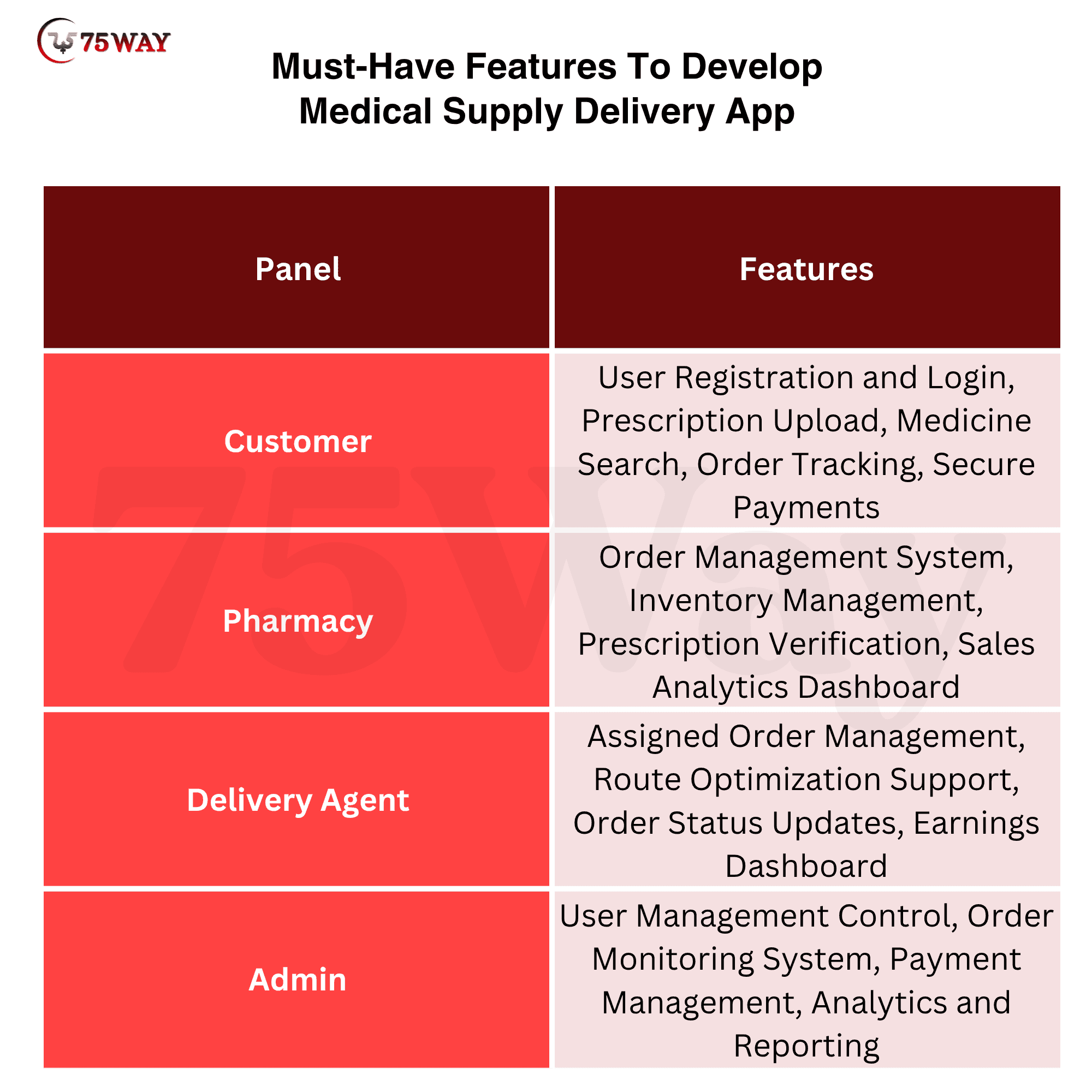
A seamless and reliable medical supply delivery application depends on a well-structured set of features designed for customers, pharmacists, and administrators. These features play a crucial role in enabling smooth order placement, secure prescription management, real-time tracking, and efficient backend coordination across the entire system.
Core Customer Features Required in a Medicine Delivery App
- User Registration and Login: Enable secure account creation using email, phone, or social authentication methods for a quick onboarding flow.
- Prescription Upload: Allow users to upload prescriptions for verification before the medicine order processing and validation workflow system.
- Medicine Search: Help users find medicine quickly using name, category, or health filters, ensuring an efficient search experience.
- Order Tracking: Provide real-time updates on order status from dispatch to delivery confirmation, ensuring full tracking visibility.
- Secure Payments: Support multiple payment options, including cards, wallets, and online banking systems for secure transaction processing.
- Pharmacy Dashboard: Enable pharmacists to manage incoming orders and update medicine availability efficiently through a centralized dashboard control system.
- Inventory Management: Manage medicine stock levels and update availability in real time for accurate inventory control and monitoring.
- Delivery Management: Assign and monitor delivery agents for efficient order fulfillment and tracking, ensuring smooth logistics coordination.
- Notifications System: Send alerts for order updates, confirmations, and delivery status changes instantly through an integrated communication system.
- Admin Control Panel: Manage users, pharmacies, deliveries, payments, and overall system performance effectively through a centralized administration interface.
MajorPharmacy Panel Features In Medical Supply Delivery Mobile App
- Pharmacy Registration and Verification: Enable secure onboarding and validation of pharmacy business details before platform access.
- Order Management System: Allow pharmacies to receive, accept, or reject incoming medicine orders efficiently.
- Prescription Verification: Support review and validation of uploaded prescriptions before order fulfillment begins.
- Inventory Management: Track medicine stock levels and update availability in real time for accuracy.
- Medicine Catalog Management: Add, update, or remove medicines with detailed pricing and dosage information.
- Pricing Control: Set and manage medicine prices dynamically based on demand and business strategy.
- Sales Analytics Dashboard: Provide insights into sales performance, revenue trends, and order history.
- Notification Alerts: Send instant alerts for new orders, prescription uploads, and system updates.
- Delivery Coordination: Manage assigned delivery agents and track order dispatch status efficiently.
- Payment Tracking: Monitor payments, settlements, and transaction history for complete financial transparency.
Delivery Agent Panel Features
- Delivery Agent Registration & Verification: Enable secure onboarding with an identity and document verification process for authentication.
- Assigned Order Management: Allow delivery agents to view, accept, and manage assigned medicine delivery orders efficiently.
- Route Optimization Support: Provide optimized delivery routes for faster and more efficient order completion.
- Real-Time Navigation: Enable GPS-based navigation for accurate and timely delivery to customer locations.
- Order Status Updates: Allow agents to update order progress from pickup to final delivery confirmation.
- Delivery History Tracking: Maintain complete record of past deliveries for performance monitoring and reference.
- Earnings Dashboard: Display daily, weekly, and monthly earnings with detailed payout summaries.
- Notification Alerts: Send instant updates for new assignments, delivery changes, and urgent instructions.
- Customer Communication: Enable direct or masked communication with customers for delivery coordination and updates.
- Performance Metrics: Track delivery speed, completion rate, and customer feedback for performance evaluation.
Admin Dashboard Features
- User Management Control: Enable administration of customers, pharmacies, and delivery agents with secure access control.
- Pharmacy Approval System: Allow review and approval of pharmacy registrations before platform activation.
- Order Monitoring System: Provide real-time visibility of all orders from placement to successful delivery completion.
- Prescription Management: Enable verification oversight of uploaded prescriptions for compliance and accuracy assurance.
- Inventory Oversight: Monitor medicine stock levels across all pharmacies to ensure availability consistency.
- Payment Management: Track all transactions, settlements, refunds, and commission flows in one centralized system.
- Analytics and Reporting: Provide detailed insights on revenue, orders, user activity, and platform performance trends.
- Commission Management: Configure and manage commission structures for pharmacies and delivery partners efficiently.
- Notification Control System: Manage system-wide alerts, promotional messages, and operational updates for users.
- System Configuration Settings: Control platform settings, security parameters, and feature access across all modules.
Next-Gen Features for High-Performing Pharmacy Delivery App Development
The online medicine delivery industry is expanding rapidly, and businesses must focus on building features that improve user experience, increase accessibility, and ensure seamless service delivery. The following key features can help your medicine delivery app stand out and gain a strong competitive advantage.
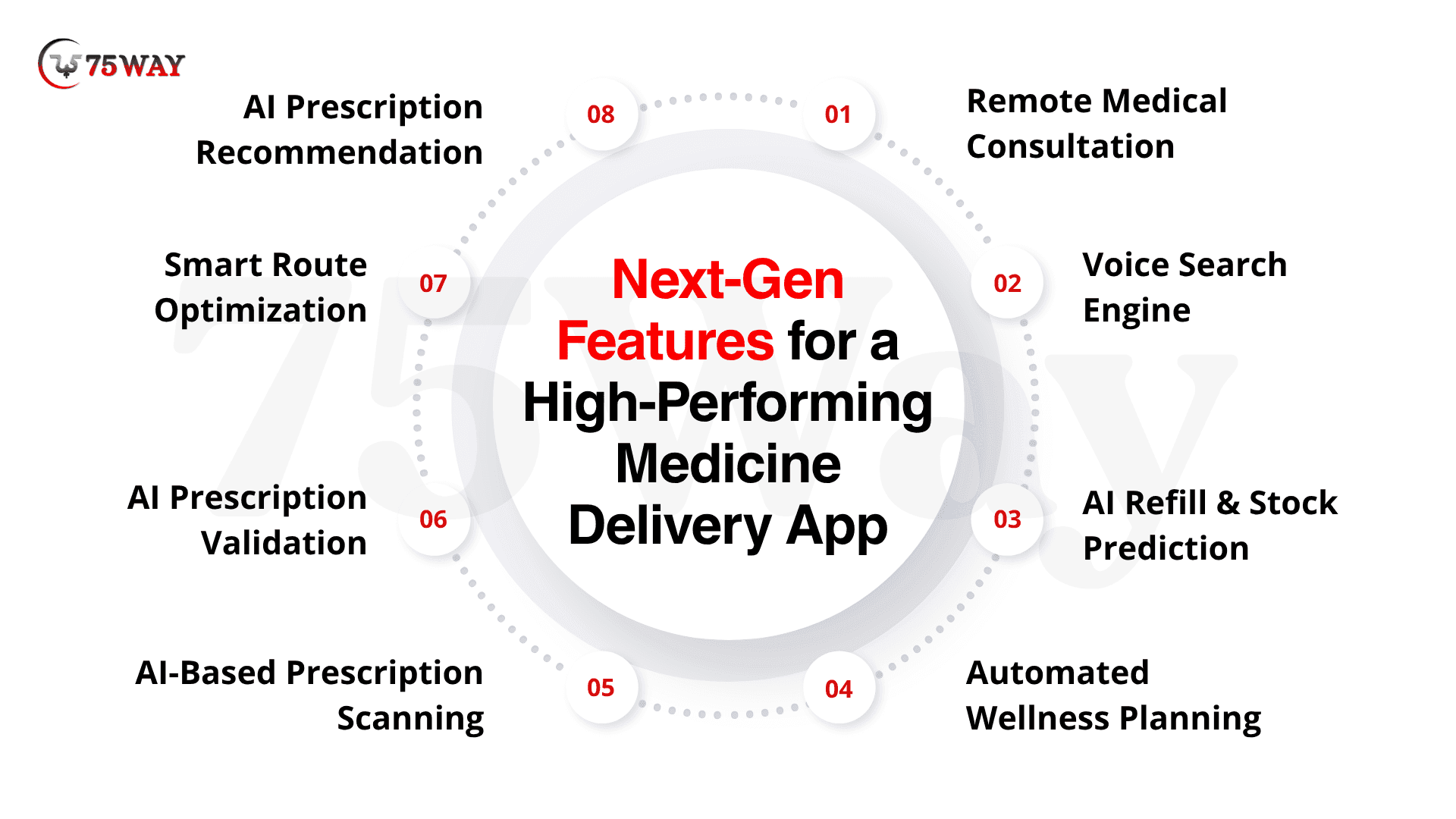
Remote Medical Consultation/Teleconsultation: Remote medical consultation allows patients to connect with healthcare professionals through digital channels such as video calls, voice calls, or secure messaging platforms. Instead of visiting a clinic physically, users can receive medical advice, follow-up guidance, and preliminary diagnosis from qualified doctors. Teleconsultation approach improves accessibility, reduces waiting time, and supports patients in areas where healthcare facilities are limited.
How Remote Medical Consultation Works?
Step 1: Patient Registration and Appointment Booking
The process begins when patients schedule a consultation through a digital platform or healthcare service.
- Mobile Applications: Users select doctors, time slots, and consultation types through dedicated apps.
- Healthcare Websites: Hospitals and clinics offer online booking through their official portals.
- Support Channels: Some platforms also provide phone-based booking for users with limited digital access.
Step 2: Sharing Medical Information Before Consultation
Patients provide essential health details to help doctors prepare for an accurate diagnosis and advice.
- Medical History: Includes past illnesses, ongoing treatments, and current medications.
- Symptoms Description: Patients explain health concerns and reasons for consultation.
- Reports and Test Results: Upload of lab reports, scans, or previous prescriptions when required.
Step 3: Consultation Through Digital Communication Channels
Doctors and patients connect using different communication methods based on need and convenience.
- Video Consultation: Enables real-time face-to-face interaction for better understanding.
- Voice Consultation: Allows discussion through phone calls when video is not possible.
- Chat Consultation: Supports text-based communication for follow-ups and minor health concerns.
Voice Search Engine
Voice search engine in medicine delivery app enhances accessibility in healthcare applications by allowing patients to search medicines, book services, and interact with the platform using spoken commands. It improves convenience for users who may face difficulties in typing and supports faster, more natural interaction through AI voice search and speech recognition technologies.
Workflow of Voice Search Engine
Step 1: Speech Capture and Audio Processing
Voice search begins when the system captures and processes user speech into a usable digital format.
- Audio Input Capture: The device microphone records the user's voice clearly
- Signal Conversion: Sound waves convert into digital signals for processing
- Speech Recognition: AI-based systems like ASR convert speech into text
Step 2: Natural Language Understanding and Processing
After conversion, the system interprets user intent using AI and language models.
- Keyword Detection: The system identifies important terms like medicine or symptoms
- Context Understanding: AI interprets meaning based on user intent and history
- Query Interpretation: System refines request for accurate search results
Step 3: Response Generation and Action Execution
The system delivers relevant results or performs actions based on processed input.
- Search Results Display: Shows relevant medicines, services, or information
- Direct Answers: Provides instant responses to simple healthcare queries
- Action Execution: Supports tasks like booking appointments or placing orders
AI Prescription Refill & Stock Prediction
It uses artificial intelligence and data-driven insights to anticipate when patients will require medication refills. By analyzing usage patterns, prescription history, and pharmacy inventory data, these systems help ensure timely medication availability, reduce missed doses, and improve overall treatment continuity.
How Prescription Refill Works?
Step 1: Data Collection and Continuous Monitoring
The system gathers patient and pharmacy data to understand medication usage patterns and stock availability.
- Prescription Records: Stores detailed information about patient medications and dosage plans
- Patient Adherence Tracking: Monitors medicine intake patterns through apps or connected health devices
- Inventory Monitoring: Tracks real-time stock levels available in pharmacies
Step 2: Predictive Analytics for Restock Planning
AI algorithms analyze collected data to forecast future medication refill needs accurately.
- Refill Pattern Analysis: Studies historical refill cycles to estimate next refill dates
- Patient Behavior Analysis: Considers early, late, or missed refill behaviors for accuracy
- Medication Lifecycle Tracking: Evaluates drug duration and usage cycle in the patient’s system
Step 3: Automated Refill and Restocking Actions
Once predictions are generated, the system initiates automated workflows for continuity of care.
- Patient Notifications: Sends alerts before the refill date for approval or confirmation
- Pharmacy Refill Requests: Automatically notifies pharmacies to prepare and process orders
- Dosage Adjustment Sync: Updates refill schedules based on prescription changes in real time
Step 4: Inventory and Supply Optimization
The system also helps pharmacies maintain optimal stock levels and prevent shortages or overstocking.
- Demand Forecasting: Predicts medicine demand based on seasonal and historical trends
- Stock Level Optimization: Ensures balanced inventory across high-demand and low-demand medicines
- Supply Chain Coordination: Aligns procurement schedules with supplier delivery timelines for efficiency
Automated Wellness Planning
Smart health intelligence systems use artificial intelligence, predictive analytics, and behavioral data modeling to reshape personal wellness management. These solutions generate health recommendations by analyzing medical history, daily habits, and real-time health inputs to support better long-term health decisions.
How AI Wellness Systems Operate?
Step 1: Unified Health Data Aggregation Layer
This stage focuses on collecting and combining health data from multiple digital and clinical sources to build a complete health profile.
- Clinical Record Integration: Consolidates diagnoses, prescriptions, and treatment history
- Wearable Device Syncing: Captures activity levels, sleep quality, and vital signals
- Lifestyle Behavior Tracking: Records nutrition patterns, fitness activity, and daily routines
Step 2: Intelligent Health Risk Mapping Engine
At this stage, AI processes collected data to identify possible health risks and early warning signals.
- Cardiometabolic Risk Evaluation: Detects early indicators of heart-related conditions
- Emotional Wellbeing Analysis: Assesses stress levels, anxiety trends, and mental fatigue patterns
- Metabolic Disorder Prediction: Identifies risk patterns linked to diabetes and metabolic imbalance
Step 3: Predictive Wellness Guidance System
This stage enables AI models to forecast potential health issues and suggest preventive actions before conditions worsen.
- Chronic Illness Trend Tracking: Monitors long-term health conditions for early intervention signals
- Critical Health Alert System: Triggers notifications during abnormal or risky health readings
- Preventive Lifestyle Recommendations: Suggests actionable improvements for healthier living habits
AI-Based Prescription Scanning
Computer vision powered by artificial intelligence plays a vital role in modern medicine delivery systems by enabling automated prescription reading, extraction, and validation. It improves accuracy, reduces manual errors, and ensures that prescriptions are verified quickly and securely before medication is processed.
How AI-Based Prescription Scanning Works?
Step 1: Image Capture and Enhancement Stage
This stage focuses on capturing prescription images and improving their quality for accurate processing.
- Mobile Image Capture: Users scan prescriptions using smartphones or digital devices
- Image Quality Enhancement: Adjusts brightness, contrast, and sharpness for clarity
- Noise and Blur Removal: Eliminates distortions to improve text visibility
Step 2: Text Extraction and Digitization Stage
At this stage, AI converts prescription images into readable and structured digital data using OCR technology.
- Optical Character Recognition (OCR): Converts handwritten or printed text into digital format
- Drug Name Identification: Extracts medicine names from prescription content
- Dosage Information Extraction: Captures usage instructions and prescription details accurately
Step 3: Prescription Verification and Validation Stage
This stage ensures that extracted prescription data is accurate, safe, and medically valid before processing.
- Drug Database Matching: Cross-checks medicines with approved pharmaceutical records
- Dosage Accuracy Validation: Ensures prescribed quantities align with medical standards
- Doctor Credential Verification: Confirms the authenticity of the prescribing medical professional
Step 4: Anomaly Detection and Risk Flagging Stage
This final stage identifies potential issues, errors, or suspicious prescription patterns for safety assurance.
- Forgery Detection: Identifies edited, unclear, or tampered prescription images
- Data Mismatch Alerts: Flags inconsistencies between extracted and database records
- Risk Pattern Analysis: Detects unusual prescription combinations or dosage anomalies
AI Prescription Validation
AI-powered prescription validation systems play a critical role in ensuring safety, authenticity, and regulatory compliance in medicine delivery platforms. These systems help identify fake prescriptions, prevent unauthorized drug distribution, and build trust between patients, pharmacies, and healthcare providers. Even when automation supports prescription checks, human clinical oversight remains important for reviewing complex cases and maintaining patient trust. In similar healthcare models, Fresh Clinics medical oversight reflects how doctor-led guidance and compliance support can complement digital health workflows.
How AI-Powered Prescription Validation Works?
Step 1: Prescription Digitization Via OCR and Vision Systems
This stage focuses on converting uploaded prescription images into structured and readable digital data for further processing.
- Prescription Image Upload: Users submit prescriptions using mobile or web applications
- OCR-Based Text Extraction: Optical Character Recognition extracts handwritten and printed medical details
- Key Detail Identification: System captures doctor information, medicine names, and prescription validity
- Structured Data Conversion: Converts extracted text into standardized digital format for processing
Step 2: Fraud Pattern Detection Using Machine Intelligence
At this stage, AI systems analyze prescriptions to detect suspicious, altered, or potentially fake documents.
- Pattern Recognition Analysis: Identifies inconsistencies in format, handwriting, or structure
- Fraud Signature Detection: Compares input against known fraudulent prescription patterns
- ML-Based Risk Scoring: Assigns fraud probability score based on detected irregularities
Step 3: Secure Validation and Trust Verification Layer
This stage ensures prescriptions are verified and stored securely to maintain transparency and compliance.
- Database Cross Verification: Matches prescriptions with verified medical and drug databases
- Authenticity Confirmation: Validates doctor credentials and prescription legitimacy
- Blockchain-Based Tracking: Ensures immutable and traceable prescription history records
- Compliance Validation: Ensures adherence to healthcare and regulatory standards
Smart Route Optimization
AI-based delivery route optimization improves medicine delivery efficiency by using intelligent algorithms to calculate the fastest, most reliable, and cost-effective delivery paths. It ensures the timely delivery of prescriptions, enhances customer satisfaction, and reduces operational delays, especially in urgent healthcare situations.
How Smart Route Optimization Works?
Step 1: Live Traffic Intelligence and Road Condition Analysis
This stage focuses on analyzing real-time external conditions to determine the most efficient delivery routes.
- Real-Time Traffic Monitoring: Evaluates live traffic flow to avoid congestion
- Road Condition Tracking: Identifies road closures, accidents, and disruptions
- Weather Impact Analysis: Adjusts routes based on rainfall, storms, or visibility issues
Step 2: Adaptive Routing and Real-Time Replanning System
This stage enables continuous route adjustments based on changing delivery conditions.
- Dynamic Route Adjustment: Automatically recalculates paths during unexpected delays
- Delivery Re-Routing Logic: Redirects agents to faster alternative routes instantly
- Delay Minimization System: Reduces delivery time through smart route switching
Step 3: Multi-Delivery Route Sequencing Optimization
This stage focuses on planning the most efficient order of multiple deliveries in a single trip.
- Stop Sequence Optimization: Arranges delivery points in the fastest order
- Fuel Efficiency Planning: Reduces travel distance and operational cost
- Batch Delivery Coordination: Groups nearby deliveries for faster completion
Step 4: Predictive Delivery Timing and Demand Positioning
This stage uses historical data to improve delivery planning and resource allocation.
- Delivery Time Prediction: Suggests optimal delivery time slots for customers
- Demand Heat Mapping: Identifies high-order zones for better agent positioning
- Agent Pre-Positioning Strategy: Moves delivery partners closer to demand-heavy areas
AI Prescription Recommendation
AI-powered smart prescription recommendation systems assist healthcare platforms by analyzing patient health records, symptoms, and medical history to suggest relevant medicines and treatment options. This improves decision-making, reduces prescription errors, and enhances patient care efficiency across digital healthcare ecosystems.
How AI Prescription Recommendation Works?
Step 1: Patient Data and Health Profile Analysis
This stage focuses on building a complete understanding of the patient’s health condition.
- Medical History Evaluation: Reviews past illnesses, treatments, and prescriptions
- Symptom Input Processing: Analyzes reported symptoms for initial assessment
- Lifestyle Data Review: Considers habits, allergies, and ongoing conditions
Step 2: AI-Based Medical Intelligence Processing
This stage uses machine learning models to interpret health data and identify suitable recommendations.
- Condition Matching: Links symptoms with possible medical conditions
- Drug Database Mapping: Matches conditions with approved medications
- Allergy and Risk Filtering: Eliminates unsafe or incompatible drug suggestions
Step 3: Personalized Prescription Recommendation Engine
This stage generates tailored treatment suggestions based on analyzed health insights.
- Customized Medicine Suggestions: Recommends suitable drugs for specific conditions
- Doctor-Assisted Validation: Enables healthcare professionals to review AI suggestions
What Is the Medicine Delivery App Development Cost?
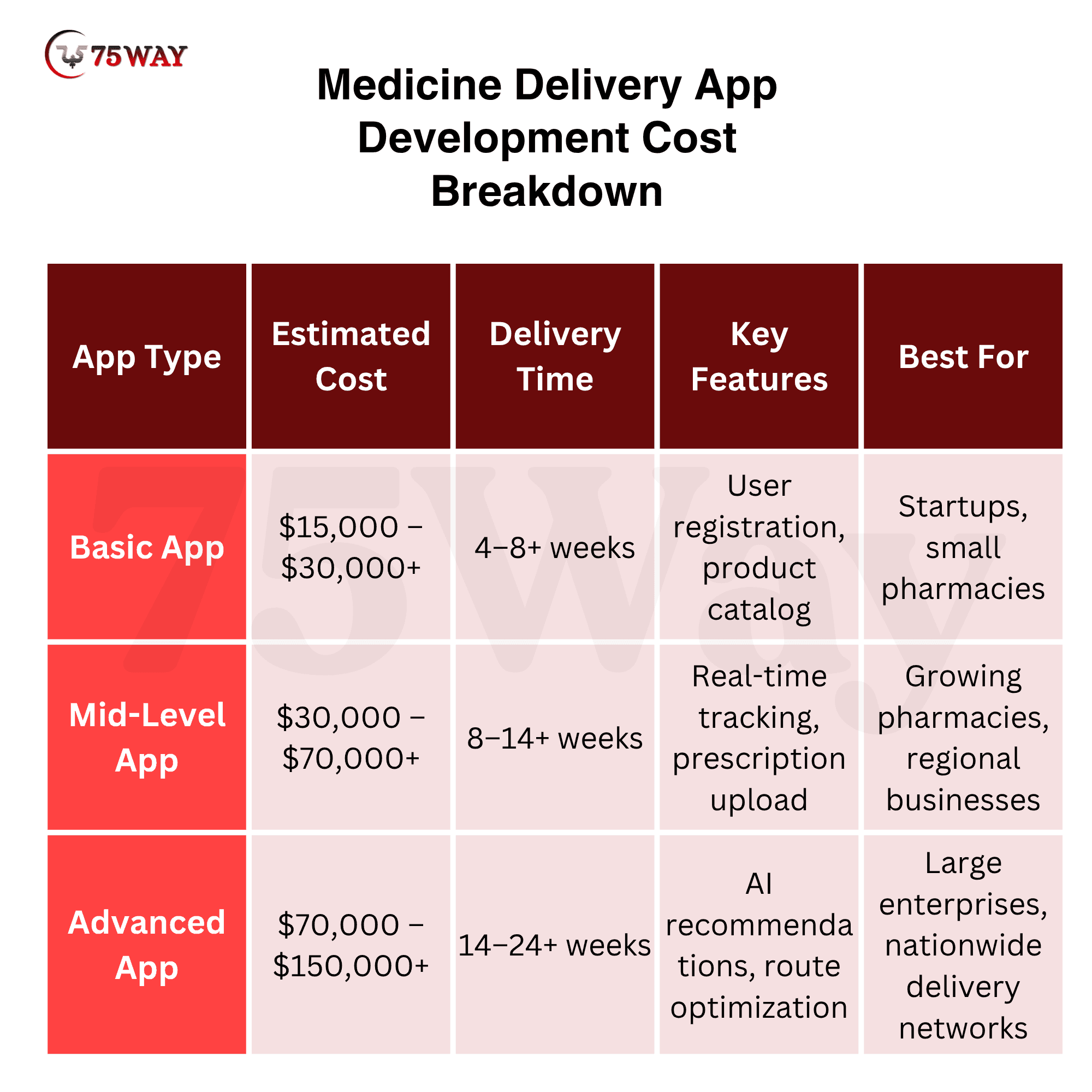
The development of a medicine delivery app varies based on the level of features and complexity. On average, the cost typically ranges from $15,000 – $300,000+, depending on whether the app is basic, mid-level, or advanced with AI-driven and scalable enterprise-grade features.
Basic App Cost: $15,000–$30,000+
Best suited for simple healthcare solutions with essential features like symptom tracking, reminders, and basic user management, enabling quick market entry with minimal complexity.
Mid-Level App Cost: $30,000–$70,000+
Ideal for growing businesses requiring features like teleconsultation, scheduling, and basic integrations, offering a balanced mix of functionality, scalability, and user experience.
Advanced App Cost: $70,000–$150,000+
Designed for complex healthcare platforms with AI, EHR integration, and real-time monitoring, ensuring high performance, security, and scalability for large user bases.
How to Estimate The Cost To Build a Medicine Supply App?
Estimating the cost of developing a medicine delivery app generally depends on two main factors: the total number of development hours required and the hourly rate of the development team. A simple way to calculate the overall cost is:
Total Cost = Development Hours × Hourly Rate
OR
App Development Cost = (Estimated Time to Build × Developer Hourly Rate)
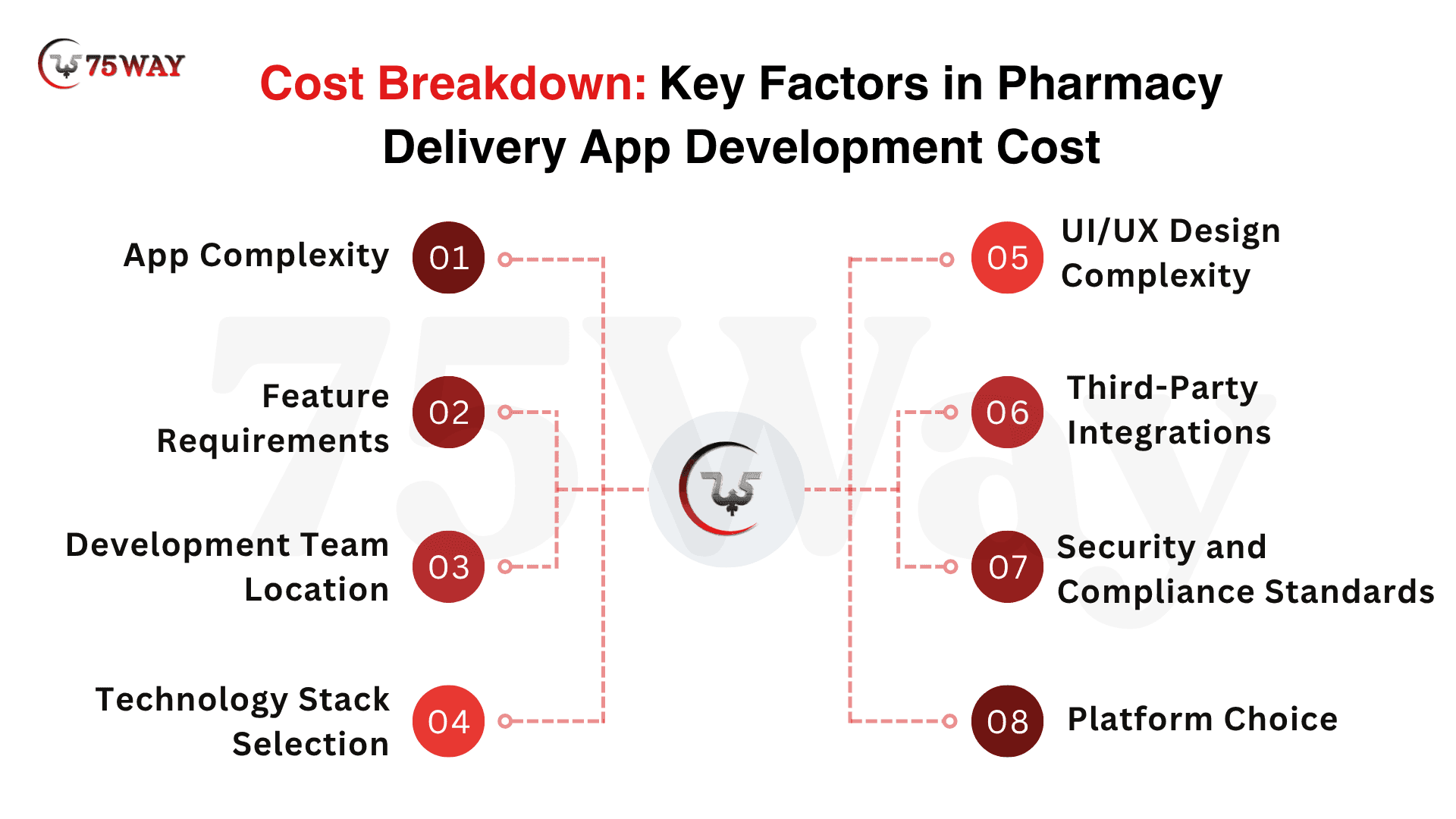
Cost Breakdown: Key Factors in Pharmacy Delivery App Development Cost
The overall cost of building a medicine delivery app can differ widely depending on multiple important aspects. These factors determine the level of effort, time, and resources required for development. Here are the main elements that impact the total cost:
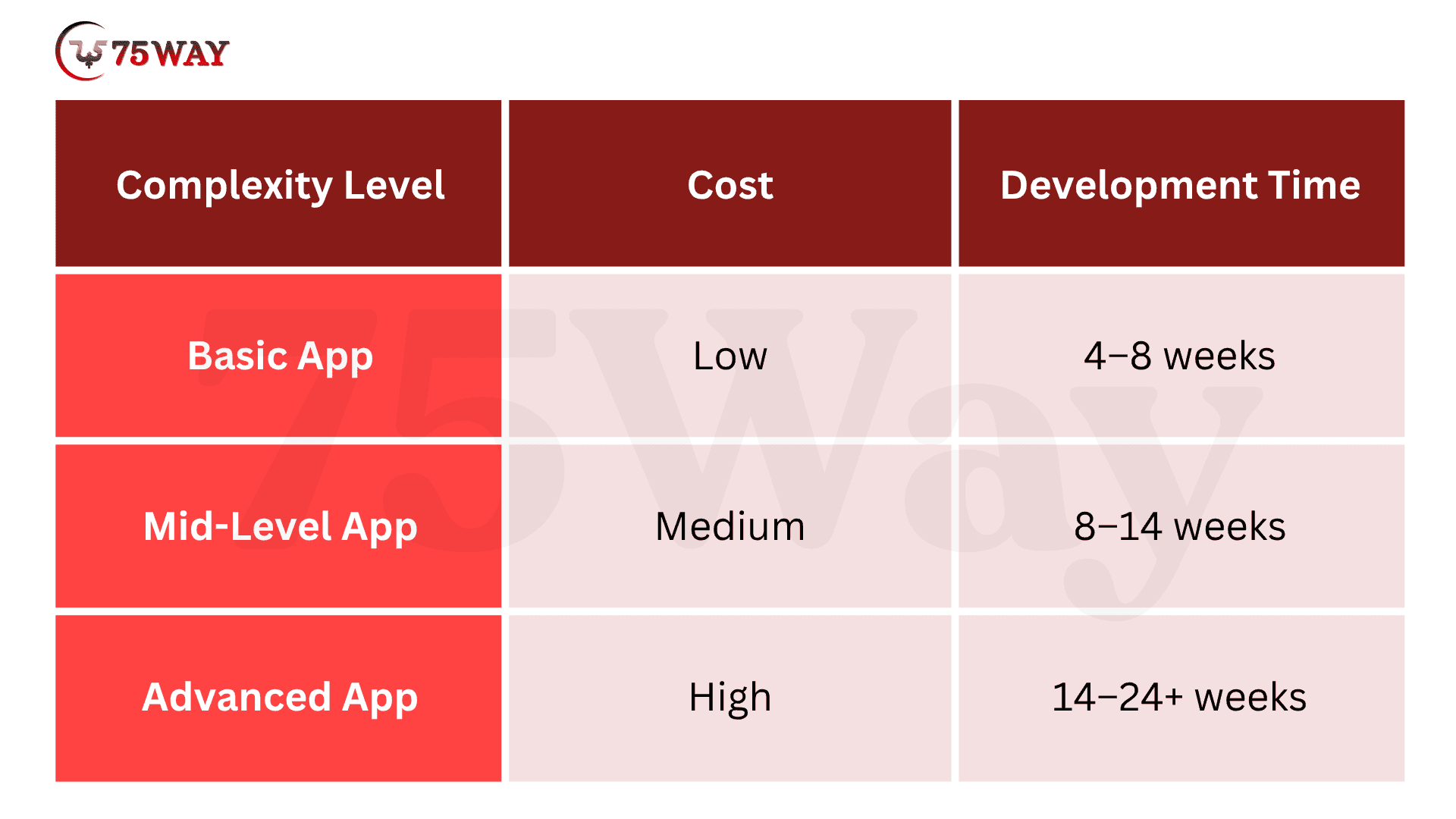
App Complexity Impacting Medicine Delivery App Cost
App complexity plays a major role in determining the overall development effort and budget. A simple app requires fewer features and basic workflows, while complex apps include advanced functionalities like real-time tracking, automation, and integrations, which increase development time, resources, and overall implementation effort.
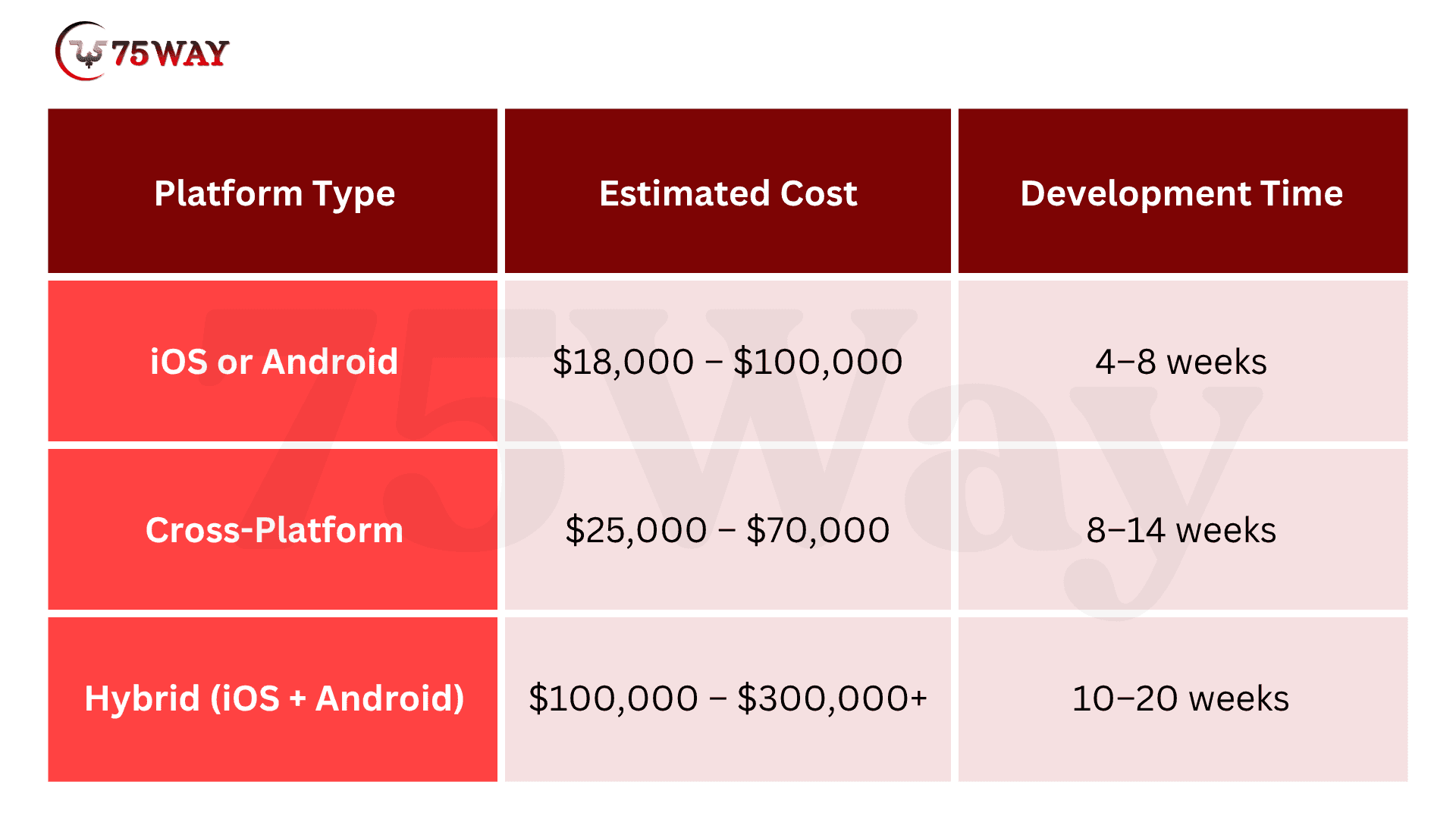
How Platform Choice Affects Cost of Medicine Delivery Application?
Platform choice significantly influences the development cost and performance of a medicine delivery app. Selecting between Android, iOS, or cross-platform development affects coding effort, maintenance, user reach, and overall scalability, making it a key decision in the development process.
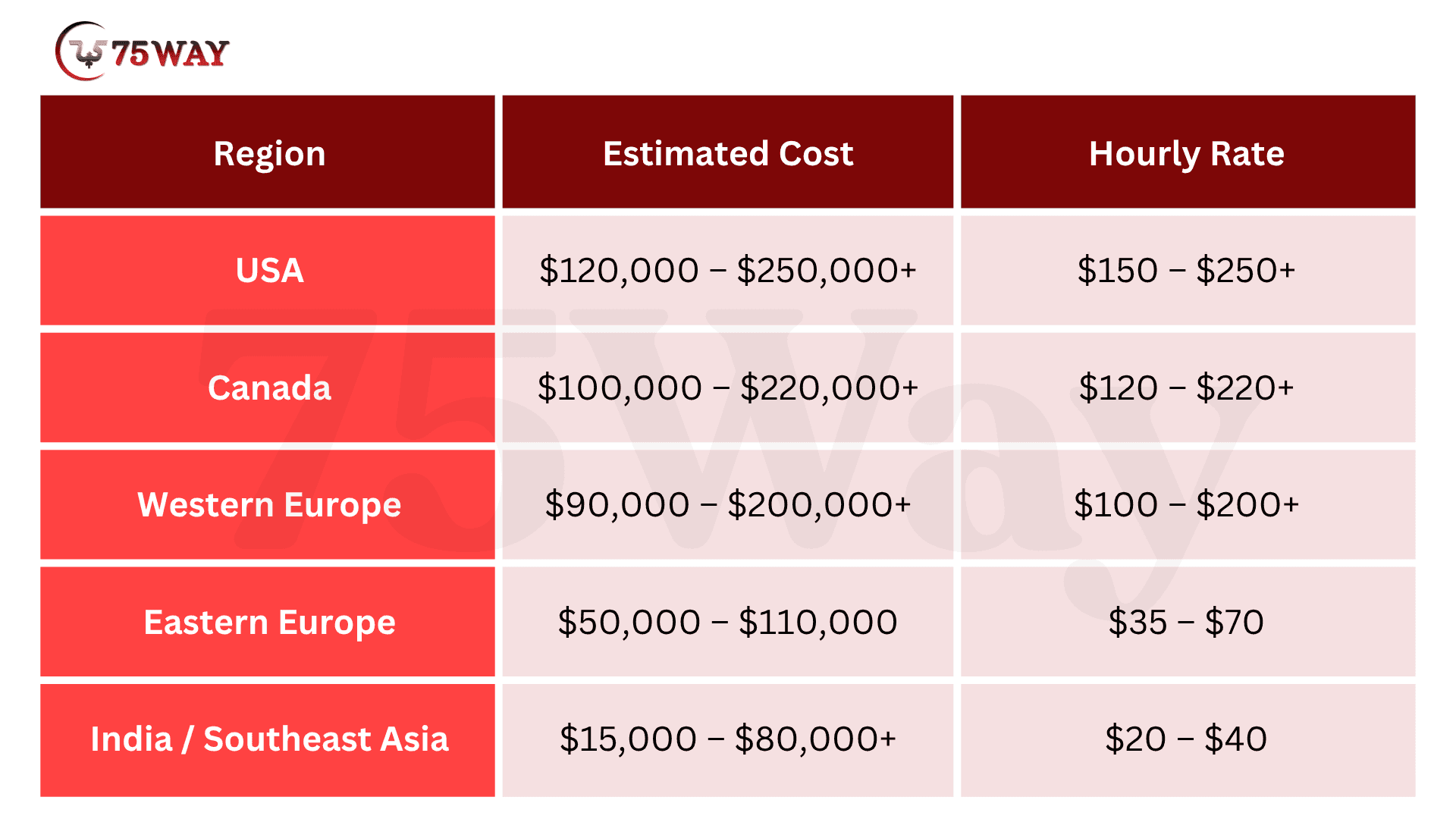
Development Team Location Cost for Medicine Delivery App
The location of the development team is a key factor that significantly influences the overall cost of building a medicine delivery app. Teams based in different regions have varying hourly rates, experience levels, and operational costs, which directly affect the total project budget. Offshore teams are generally more cost-effective, while onshore teams may charge higher rates but often provide closer collaboration, better communication, and faster response times.
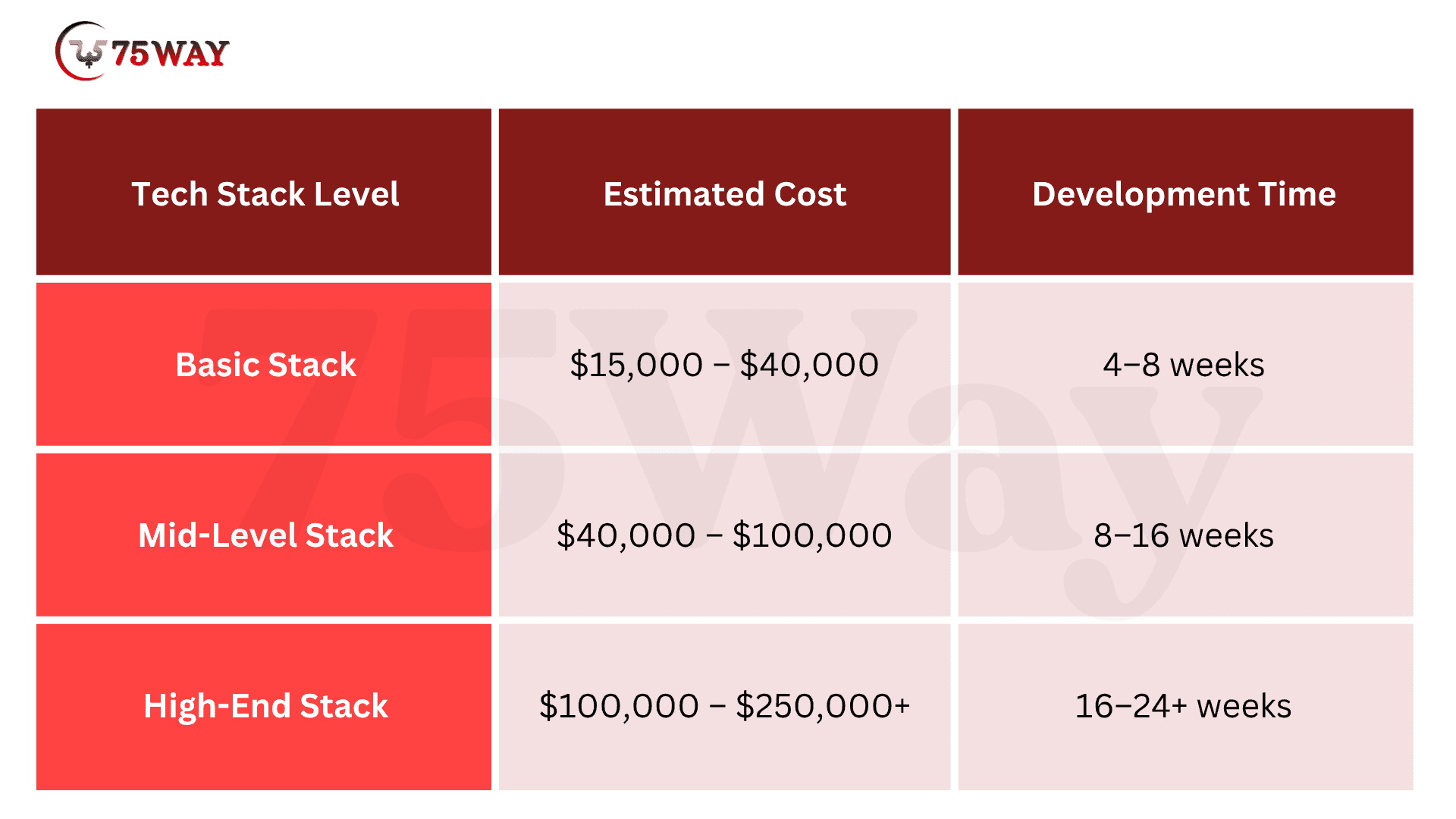
Tech Stack Cost To Build Medicine Delivery App
The choice of technology stack plays a crucial role in determining the overall cost and development timeline of a medicine delivery app. Modern and scalable technologies like React, Flutter, Node.js, and cloud platforms can speed up development but may increase initial setup cost. On the other hand, simpler stacks may reduce upfront cost but can limit scalability and performance in the long run.
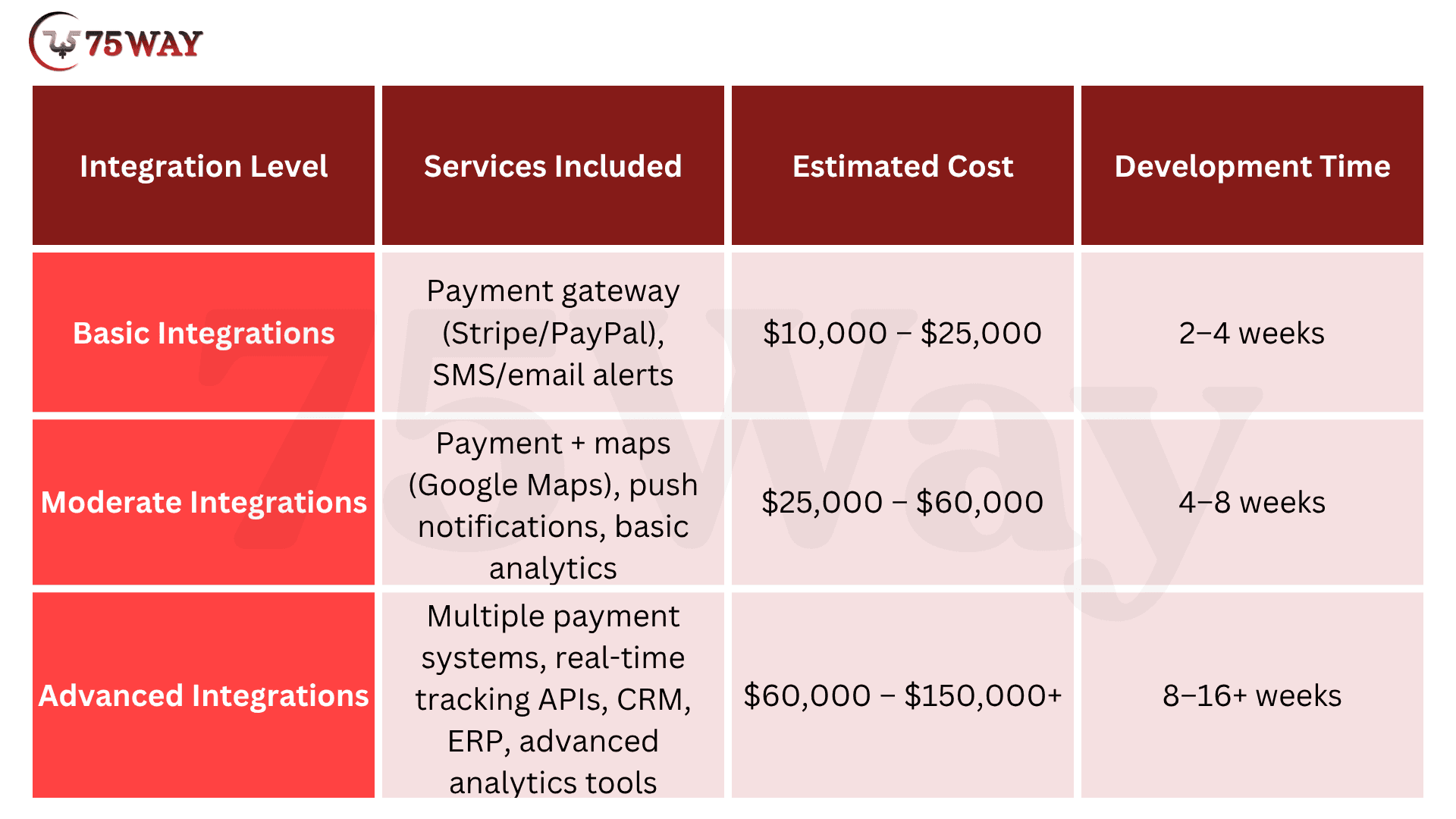
Impact of Third-Party Integrations While Building a Medicine Delivery App
Third-party integrations play a key role in enhancing the functionality of a medicine delivery app by connecting external services like payment gateways, SMS/email notifications, maps, and analytics tools. The number and complexity of these integrations directly affect both development cost and time, as each integration requires proper setup, testing, and maintenance to ensure smooth and secure performance.
Security and Compliance Standards' Effect on Cost
Security and compliance requirements significantly influence the overall development cost of a medicine delivery app. Implementing strong data protection measures such as encryption, secure authentication, HIPAA/GDPR compliance, and fraud prevention systems requires additional development effort, specialized expertise, and continuous monitoring. As the level of security increases, so does the complexity, testing requirements, and overall project cost to ensure safe handling of sensitive healthcare data.
Revenue-Generating Strategies for Medicine Delivery Apps
Medicine delivery apps can generate revenue through multiple channels that ensure steady income and business scalability. These strategies help platforms earn from users, pharmacies, and service partners while maintaining affordable healthcare access and smooth operations.
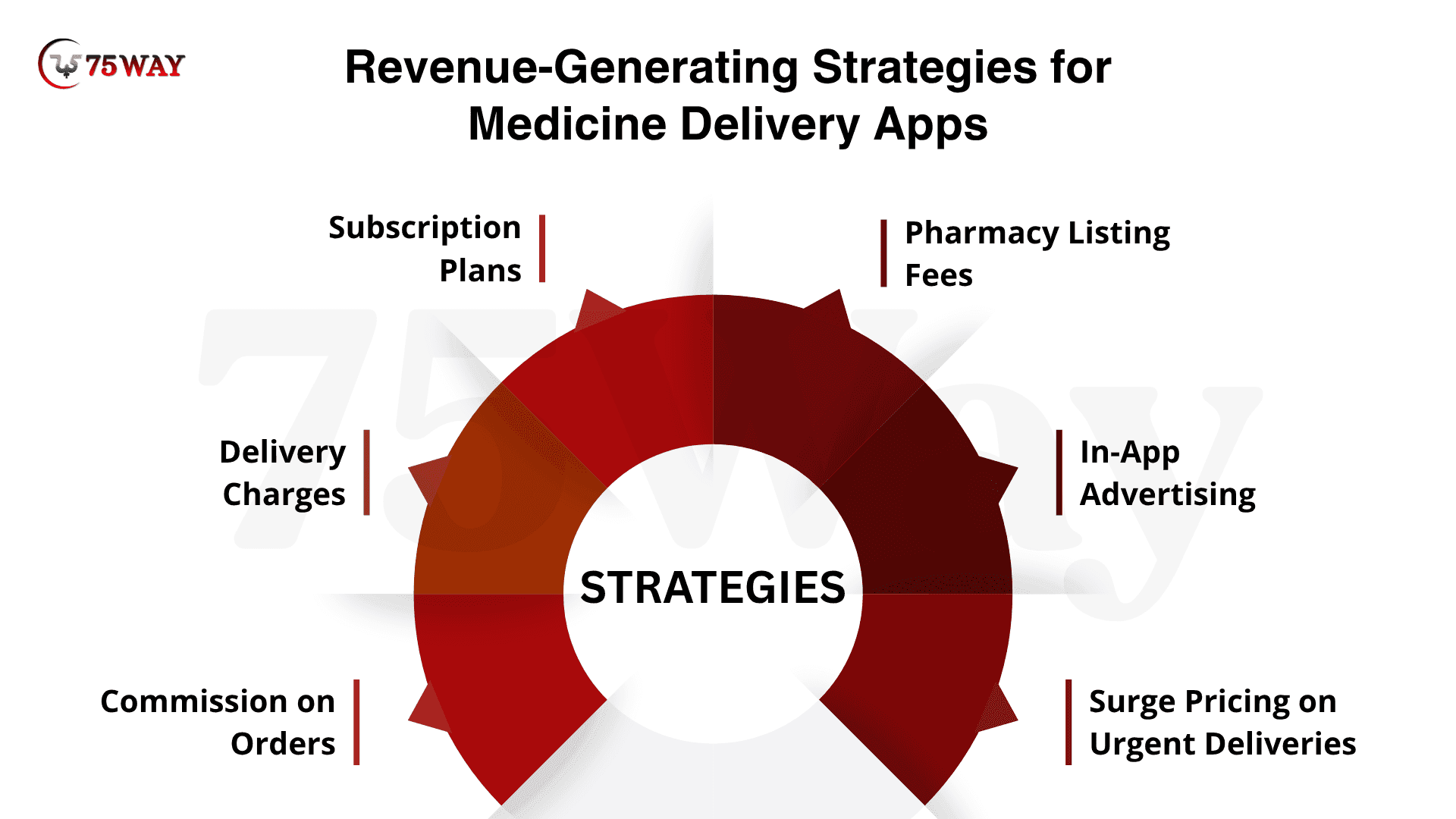
Commission on Orders: The platform earns a percentage fee on every medicine order placed through the app, making it a primary and consistent revenue source from partnered pharmacies and sellers.
Delivery Charges: Customers are charged a fee for medicine delivery based on distance, urgency, or order value, helping cover logistics costs and generating additional platform revenue.
Subscription Plans: Users can subscribe to premium plans offering benefits like free delivery, discounts, and priority service, ensuring recurring monthly or yearly income for the platform.
Pharmacy Listing Fees: Pharmacies pay a listing fee to feature their store on the platform, improving visibility and attracting more customers while generating platform-based revenue.
In-App Advertising: Healthcare brands and pharmacies can promote their products or services within the app through banners or sponsored listings, creating a strong advertising revenue stream.
Surge Pricing on Urgent Deliveries: Additional charges are applied for emergency or fast delivery requests, helping optimize logistics costs and increasing revenue during high-demand situations.
Why You Should Build a Medicine Delivery App in 2026?
The medicine delivery industry is rapidly evolving with digital healthcare adoption, making 2026 an ideal time to invest in this space. Growing customer demand, improved technology, and strong market competition are driving pharmacies and startups to go online. This shift creates high opportunities for scalable, profitable, and user-friendly medicine delivery platforms.
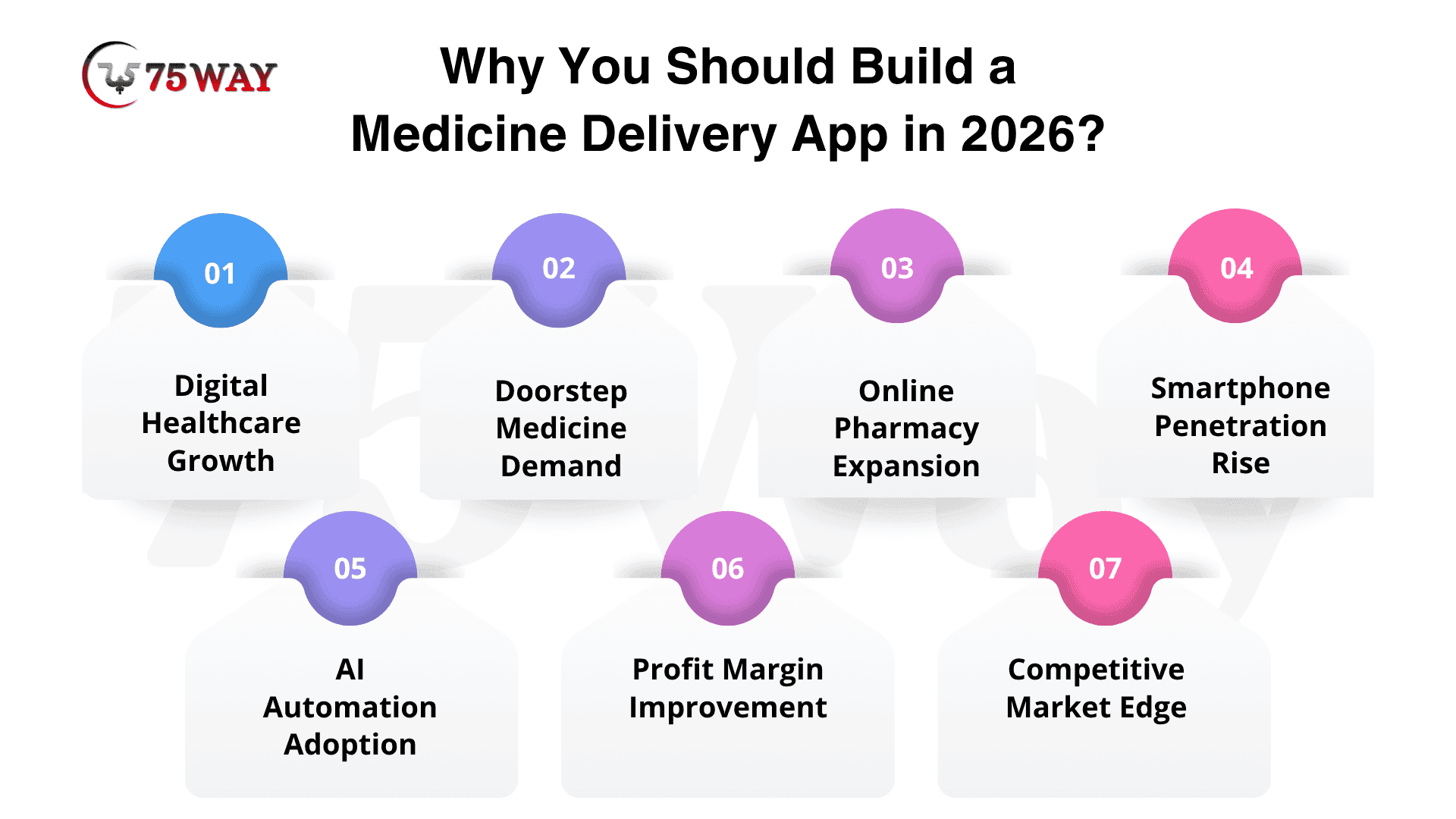
Digital Healthcare Growth
Digital healthcare is growing rapidly as more patients shift toward online consultations, e-prescriptions, and home-based medical services. This transformation is improving accessibility, reducing hospital visits, and making healthcare more efficient and patient-friendly. Medicine delivery apps are becoming a key part of this ecosystem by connecting pharmacies, doctors, and users through a single digital platform, enabling faster and more reliable healthcare access.
This growth is also supported by government initiatives, telemedicine app adoption, and increasing trust in digital solutions. As healthcare continues to move online, medicine delivery platforms are no longer optional but essential. They help streamline the entire process from prescription to delivery while improving convenience and patient care outcomes.
Doorstep Medicine Demand
Doorstep medicine delivery is becoming highly popular, especially among elderly patients, chronic illness cases, and busy professionals. People prefer receiving medicines at home instead of visiting pharmacies, as it saves time and ensures uninterrupted treatment. This demand has significantly increased post-pandemic, making delivery-based healthcare services a normal expectation rather than a luxury.
The convenience of ordering medicines anytime and receiving them quickly has transformed customer behavior. Emergency needs, repeat prescriptions, and long-term treatments all benefit from doorstep delivery. This growing expectation is pushing pharmacies and startups to invest in efficient medicine delivery apps.
Online Pharmacy Expansion
Online pharmacies are expanding quickly as traditional stores adopt digital platforms to increase their reach. By moving online, pharmacies can serve a larger customer base, manage inventory more effectively, and improve order handling efficiency. Medicine delivery apps play a key role in connecting users with nearby pharmacies in real time.
This expansion is also helping small and medium pharmacies compete with large chains. With digital tools, they can offer discounts, track demand, and build stronger customer relationships. The shift toward online pharmacy systems is creating a more connected and competitive healthcare market.
Smartphone Penetration Rise
The rise in smartphone usage and affordable internet access has made healthcare services more accessible than ever before. Users can now easily order medicines, upload prescriptions, and track deliveries through mobile apps. This digital convenience is driving the adoption of medicine delivery platforms globally.
Smartphones have become a primary tool for managing daily healthcare needs. From reminders to refill notifications, everything is now available at users’ fingertips. This widespread accessibility is one of the strongest reasons behind the rapid growth of medicine delivery applications.
AI Automation Adoption
Artificial intelligence is transforming medicine delivery apps by automating key processes such as order management, prescription validation, and delivery optimization. AI helps reduce manual errors, improve efficiency, and provide faster services to users. It also supports predictive analytics for better inventory and demand forecasting.
Additionally, AI enables personalized healthcare recommendations based on user behavior and medical history. This improves patient engagement and ensures better treatment adherence. As AI technology continues to evolve, it will play a major role in shaping the future of digital healthcare systems.
Profit Margin Improvement
Medicine delivery apps create multiple revenue streams such as commissions, delivery fees, subscriptions, and advertising. These models help businesses generate consistent income while reducing operational costs. Compared to traditional pharmacies, digital platforms offer better scalability and higher profit potential.
By automating processes and reducing physical infrastructure costs, businesses can improve overall margins. Partner pharmacies also benefit from increased sales volume and customer reach. This makes medicine delivery apps a financially attractive business opportunity.
Competitive Market Edge
Launching a medicine delivery app provides a strong competitive advantage in the growing digital healthcare market. Early adoption helps businesses build brand recognition, attract loyal customers, and secure market share before competition intensifies.
It also allows companies to innovate faster by integrating advanced technologies like AI, real-time tracking, and telemedicine. This positions the business as a modern healthcare provider, ensuring long-term growth and sustainability in a rapidly evolving industry.
Solving Key Issues in Custom Medicine Delivery App Development
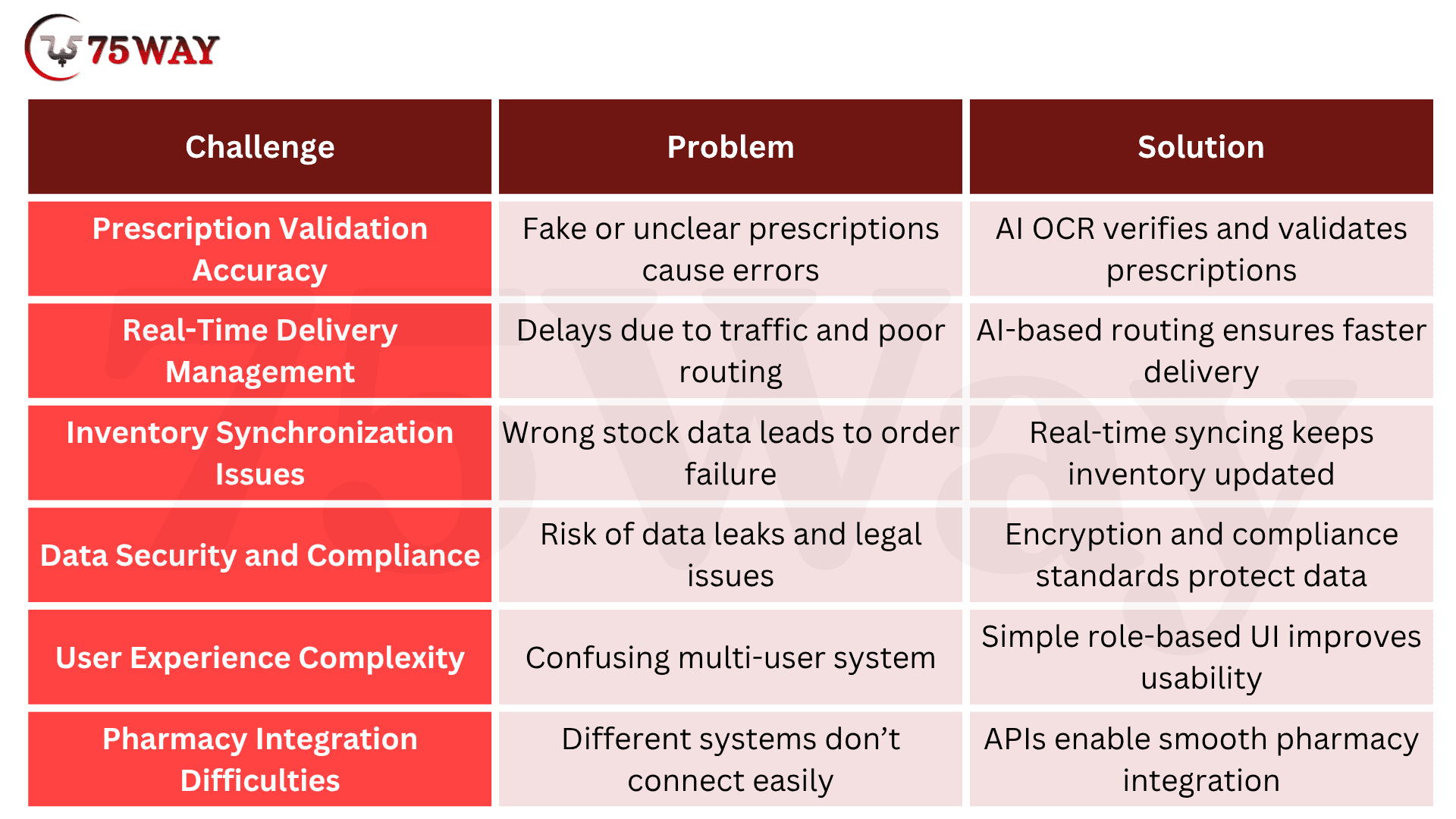
Online medicine delivery apps are transforming healthcare by making medicines accessible anytime and anywhere. However, building such platforms comes with several technical, operational, and regulatory challenges. These challenges must be carefully addressed to ensure safety, reliability, and a smooth user experience while maintaining compliance with healthcare standards and customer expectations.
Prescription Validation Accuracy
Problem
One of the biggest challenges is ensuring prescriptions are genuine and correctly interpreted. Poor image quality, handwritten notes, or forged prescriptions can lead to errors in medicine dispensing. This increases the risk of incorrect medication delivery and regulatory issues.
Solution
Advanced OCR (Optical Character Recognition) and AI-based validation systems can accurately scan prescriptions. Machine learning models help detect fraud, verify doctor details, and cross-check medicine databases to ensure safe and correct order processing.
Real-Time Delivery Management
Problem
Managing timely deliveries is difficult, especially during high demand, traffic delays, or emergency orders. Without proper tracking and routing, customers may experience delays, leading to dissatisfaction and trust issues.
Solution
AI-powered route optimization and GPS tracking systems help assign the fastest delivery paths. Real-time updates and dynamic rerouting ensure medicines reach customers quickly, even in changing traffic conditions.
Inventory Synchronization Issues
Problem
Pharmacies often face mismatched stock data, where apps show available medicines that are actually out of stock. This leads to order cancellations and poor customer experience.
Solution
Real-time inventory management systems integrated with pharmacy databases ensure automatic stock updates. Predictive analytics also helps forecast demand and prevent stock shortages.
Data Security and Compliance
Problem
Medicine delivery apps handle sensitive patient data, making them a target for cyber threats. Non-compliance with healthcare regulations can lead to legal issues and loss of trust.
Solution
Strong encryption, multi-factor authentication, and compliance with standards like HIPAA/GDPR ensure data protection. Regular audits and secure cloud infrastructure further strengthen system security.
User Experience Complexity
Problem
Managing multiple users, such as patients, pharmacies, and delivery agents, makes the app complex. Poor navigation or confusing interfaces can reduce user engagement.
Solution
A clean, role-based UI/UX design ensures each user type gets a simple and personalized experience. Intuitive workflows and smart dashboards improve usability and satisfaction.
Pharmacy Integration Difficulties
Problem
Integrating multiple pharmacies into a single system can be challenging due to different software systems, pricing models, and operational workflows.
Solution
Using standardized APIs and middleware solutions allows smooth integration. Cloud-based platforms also help unify pharmacy operations, making data sharing and order processing seamless.
How 75way Technologies Helps You Build a Medicine Delivery App?
75way Technologies helps businesses build advanced and scalable medicine delivery apps with a strong team of 150+ experts. The team delivers secure, user-friendly, and high-performance healthcare solutions designed to ensure smooth interaction between users, pharmacies, and delivery agents across the platform.
With over 10+ years of industry experience, the company focuses on integrating modern technologies like AI, real-time tracking, secure payment systems, and prescription management tools. This helps improve speed, accuracy, and overall user experience while ensuring compliance with healthcare standards and data security requirements.
Additionally, 75way Technologies provides continuous support, maintenance, and regular upgrades to keep the application future-ready. Their goal is to deliver reliable and scalable medicine delivery solutions that help businesses grow and succeed in the competitive digital healthcare market.
Final Thoughts
Medicine delivery apps are rapidly transforming the healthcare industry by making access to medicines faster, easier, and more convenient for users. With increasing demand for doorstep healthcare services, businesses have a strong opportunity to build scalable and innovative digital solutions. However, success depends on integrating advanced technologies. A well-designed medicine delivery platform not only improves customer experience but also increases operational efficiency and profitability for pharmacies and healthcare providers. Don’t wait for competitors to lead the market. Start building your healthcare solution today. Connect with a trusted pharmacy delivery app development company to create and launch a high-performing medicine delivery app now.
Frequently Asked Questions (FAQs)
What Is A Medicine Delivery App?
A medicine delivery app is a digital healthcare platform that enables users to order prescription and over-the-counter medicines online. It connects patients with nearby pharmacies and delivery partners, ensuring quick, convenient, and safe doorstep delivery of medicines with proper prescription validation.
Is Real-Time Tracking Important In Delivery Apps?
Yes, real-time tracking is crucial as it increases transparency, builds customer trust, and allows users to monitor their order status from pharmacy dispatch to doorstep delivery in real time.
How Is Data Security Handled In Medicine Delivery Apps?
Medicine delivery apps use encryption, secure cloud storage, and compliance standards like HIPAA-like practices to protect patient data. Access control and authentication ensure only authorized users can view sensitive medical information.
Can Medicine Delivery Apps Work Without A Physical Pharmacy?
Yes, some models operate using centralized warehouses or partner networks instead of physical pharmacies. These apps source medicines directly from distributors and deliver them through integrated logistics systems.
How Do Medicine Delivery Apps Handle Emergency Orders?
Emergency orders are prioritized through fast-track processing, nearby pharmacy allocation, and real-time delivery routing to ensure medicines reach users as quickly as possible.
How Do Medicine Delivery Apps Ensure Medicine Authenticity?
Apps verify medicines through licensed pharmacy networks, barcode scanning, and supplier validation systems to ensure only genuine and approved drugs are delivered to customers.