Summary
Multi-agent AI systems are reshaping lead generation and outreach by automating prospect discovery, personalization, and communication workflows. These systems improve efficiency across sales and marketing teams by coordinating multiple intelligent agents. This guide explains architecture, use cases, development process, benefits, and implementation strategy for scalable AI-driven outreach systems.
Quick Overview
- Multi-agent systems automate lead generation, outreach, and sales pipeline workflows
- AI agents collaborate to improve personalization, targeting, and conversion rates
- Businesses reduce manual sales effort while scaling outreach across multiple channels
- Intelligent orchestration improves prospect engagement and response accuracy
- Multi-agent AI systems transform traditional marketing and sales operations
Modern sales and marketing teams operate in an environment where attention is limited, competition is intense, and personalization decides conversion. Traditional outreach methods struggle to scale without increasing headcount, leading to inefficiencies and inconsistent lead quality.
This challenge has accelerated the adoption of multi-agent AI systems that replicate and enhance human-like sales workflows. Instead of relying on a single automation layer, these systems deploy multiple intelligent AI agents, each responsible for specialized tasks such as prospect research, messaging, follow-ups, and qualification.
The result is a coordinated intelligence layer that continuously generates, nurtures, and converts leads with minimal manual intervention. Businesses using these AI agent development solutions are moving beyond automation into autonomous growth systems. This guide explains how multi-agent AI systems transform lead generation and outreach into a scalable, data-driven revenue engine.
What Is a Multi-Agent AI Lead Generation System?
A multi-agent AI lead generation system is an interconnected network of intelligent agents designed to work together across the sales funnel. Each agent performs a specific function such as identifying prospects, analyzing intent, generating personalized messages, or managing follow-ups.
Unlike traditional automation tools, these agents collaborate dynamically, sharing data and refining decisions in real time. This creates a structured workflow where each stage of outreach becomes more intelligent and context-aware.
The system functions like a digital sales team, operating continuously to build sales pipelines, engage prospects, and improve conversion outcomes without linear scaling of human effort.
Why Businesses Are Adopting Multi-Agent Outreach Systems?
Sales pipelines have become more complex, requiring deeper personalization and faster response cycles. Manual outreach limits scalability and introduces inconsistency in messaging and follow-ups.
Building multi-agent systems solves this by distributing tasks across specialized AI units, improving speed, accuracy, and engagement quality. This allows teams to focus on strategy while automation handles execution.
Organizations adopting these systems gain stronger pipeline control, reduced operational burden, and more predictable revenue outcomes.
Core Architecture of Multi-Agent AI System
A multi-agent AI system is built on a distributed architecture in which multiple intelligent agents collaborate to achieve complex goals. The core architecture focuses on coordination, communication, and scalability, enabling agents to handle dynamic workflows, adapt to changing inputs, and optimize outcomes efficiently.
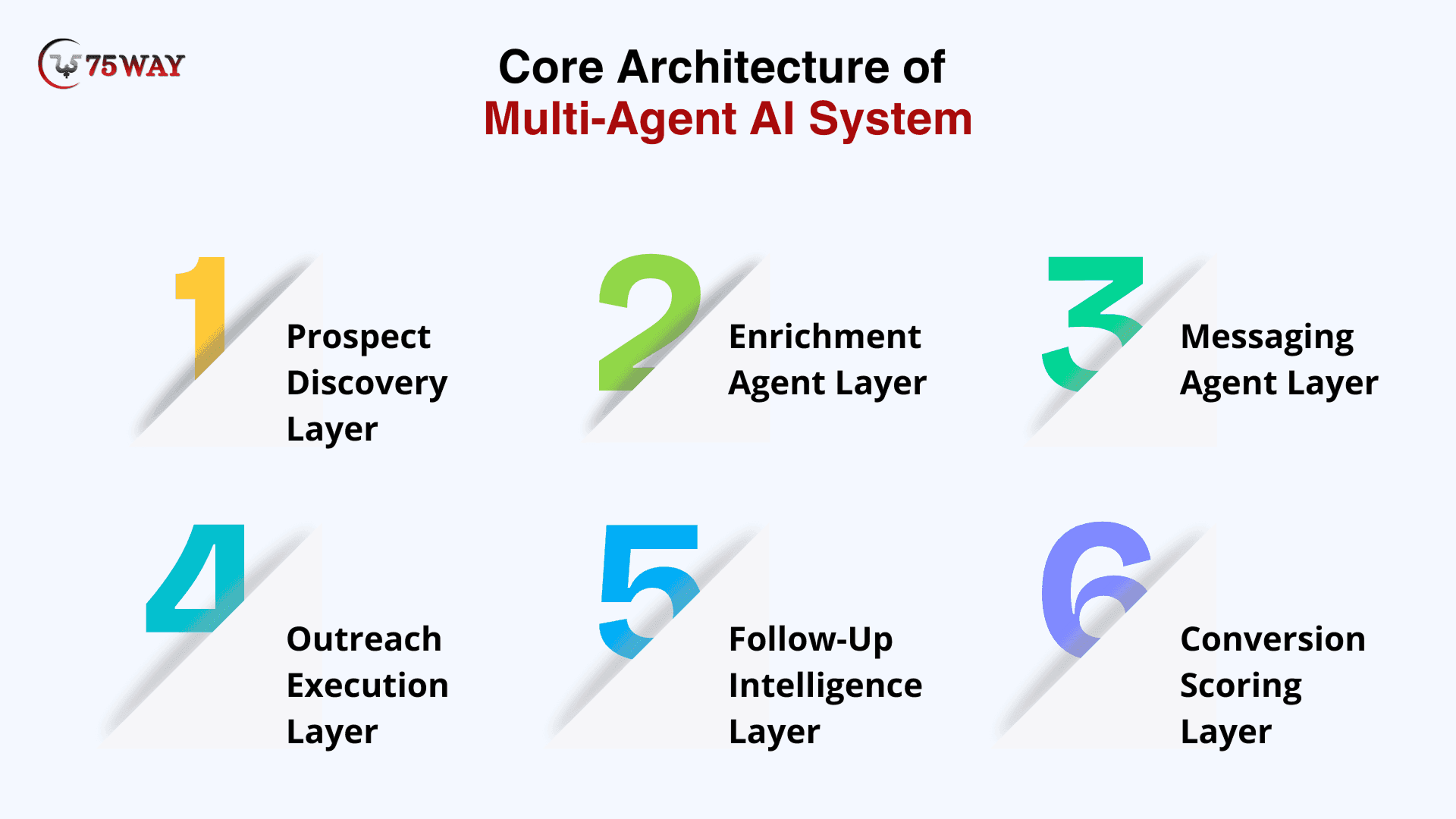
1. Prospect Discovery Layer
Identifies and collects potential leads from multiple data sources using intelligent filtering and segmentation.
2. Enrichment Agent Layer
Enhances lead profiles with behavioral, demographic, and intent-based data for better targeting.
3. Messaging Agent Layer
Generates personalized outreach messages tailored to industry, role, and engagement context.
4. Outreach Execution Layer
Handles communication across email, LinkedIn, and other channels with automated scheduling.
5. Follow-Up Intelligence Layer
Manages sequences, timing, and response-based adjustments to improve engagement rates.
6. Conversion Scoring Layer
Evaluates lead quality and prioritizes high-intent prospects for sales teams.
How Multi-Agent Lead Generation Systems Work?
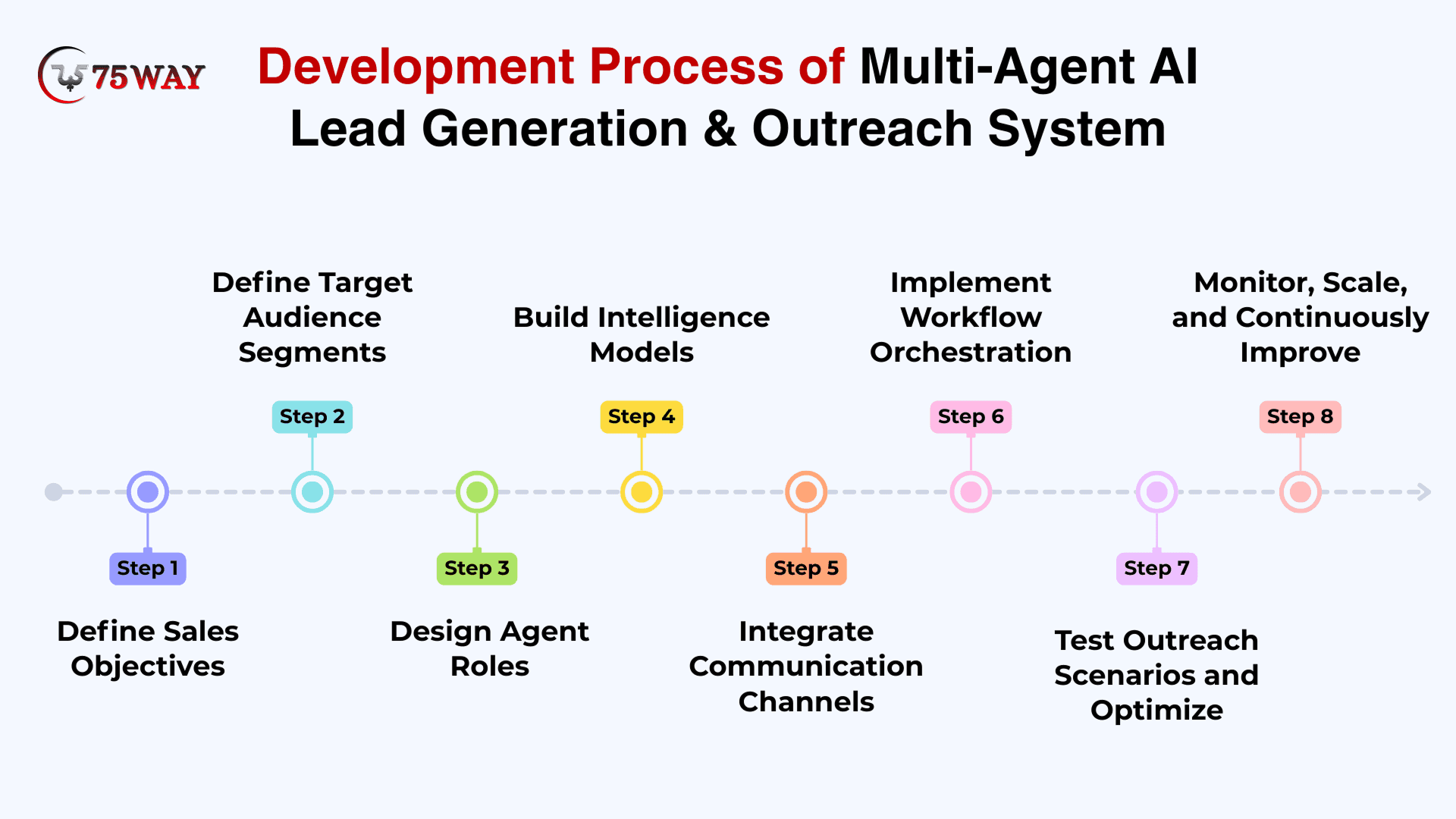
Traditional lead generation relies on manual research, list building, and outreach execution, which limits speed and consistency as volume increases. Multi-agent systems replace these fragmented efforts with a coordinated framework where specialized agents handle each stage of the pipeline.
The process begins with data collection and prospect identification, followed by enrichment, during which the lead data enrichment agent adds additional insights such as role, behavior, and intent signals. Prospecting outreach agents then create personalized outreach tailored to this context, while execution agents manage communication across channels such as email and professional networks.
As interactions happen, response data flows back into the system, allowing scoring and decision agents to prioritize high-quality leads. This continuous feedback loop improves targeting, timing, and messaging, enabling businesses to generate qualified leads efficiently while maintaining personalization at scale.
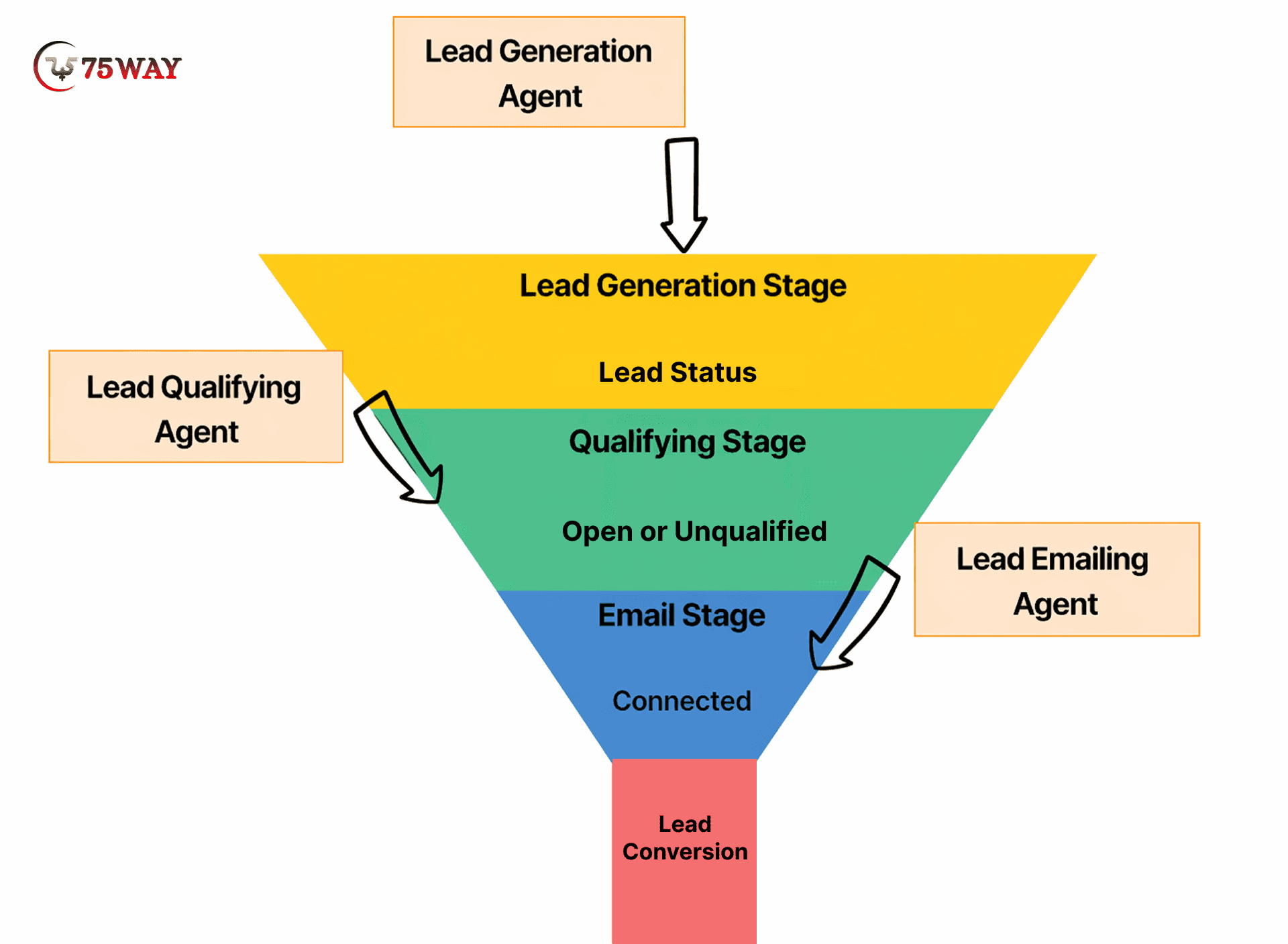
Development Process of Multi-Agent AI Lead Generation & Outreach System
Building a multi-agent AI system requires a structured approach that connects strategy, data, and execution into a unified workflow. Each stage focuses on clarity, coordination, and continuous improvement, ensuring agents work together to deliver scalable lead generation and outreach outcomes aligned with business goals.
Step 1: Define Sales Objectives
A strong multi-agent system starts with clearly defined sales objectives that guide every decision, workflow, and outcome. This stage aligns business goals with automation strategy, ensuring each agent contributes to measurable pipeline growth and targeted outreach performance.
Clarity at this stage determines how effectively the system performs later. Teams identify ideal customer profiles, target industries, deal sizes, and sales cycles to create a focused direction for lead generation and outreach efforts.
Defined objectives shape how agents operate across the system. Goals such as lead volume, response rates, and meeting bookings help structure workflows, prioritize actions, and align every interaction with desired business outcomes.
Step 2: Define Target Audience Segments
Break down your audience into clear segments based on industry, role, company size, and intent signals. This segmentation shapes how agents personalize messaging and prioritize outreach across different prospect groups.
- High Intent Segments: Identify prospects with strong buying intent by analyzing behavior, engagement signals, and consistent activity across digital channels.
- Audience Segmentation: Group prospects by industry, role, company size, and authority to align messaging with decision-making priorities.
- Pain Points Mapping: Map challenges and goals for each segment to craft personalized messaging that connects and drives meaningful responses.
Step 3: Design AI Agent Roles
A multi-agent system works only when each agent has a clearly defined responsibility. Instead of a single system handling everything, distribute tasks across specialized agents such as research, enrichment, messaging, outreach, and scoring.
- Define market prospect research agent for data collection and lead identification tasks, collect leads from sources, filter relevance, and build initial prospect lists.
- Assign a messaging agent for creating personalized outreach content across channels, and generate tailored communication based on audience segment, behavior, and intent signals.
- Create a follow-up AI agent to manage sequences and response-based engagement, handle timing and follow-up, and adjust the outreach flow based on prospect interaction.
- Establish an AI lead scoring agent to prioritize leads based on intent and engagement data, rank prospects and identify high-value leads ready for sales interaction.
Step 4: Build Intelligence AI Agent Models
After defining audience segments and agent roles, the system moves beyond basic automation into intelligent decision-making. At this stage, AI models are designed to understand context, intent, and behavior, enabling agents to respond with insights rather than fixed rules.
To achieve this, AI agent engineers train models using historical outreach data, engagement patterns, and industry-specific signals. Natural language capabilities and AI voice agents are integrated to make messaging feel relevant and human-like, while response analysis helps refine future interactions.
As the system processes more data, adaptability becomes critical. Continuous learning improves personalization, strengthens response quality, and enables smarter decisions across outreach workflows, directly influencing conversion outcomes and overall system performance.
Step 5: Integrate Communication Channels
Outreach success depends on how well different communication channels work together. A unified system connects platforms, aligns data, and enables engagement intelligence agents to execute coordinated outreach across multiple touchpoints without losing context or continuity.
- Platform Integration
Connect email platforms, CRM systems, and messaging tools into a single environment where agents can execute outreach workflows, track interactions, and manage communication without switching between disconnected systems or losing valuable engagement data.
- Data Synchronization
Align prospect data across all platforms so every interaction reflects updated information. This prevents repetitive messaging, maintains context accuracy, and allows agents to deliver relevant communication based on the latest engagement and behavioral signals.
- Multi-Channel Outreach
Enable outreach via email, professional networks, and direct messaging platforms to connect with prospects through their preferred channels, increasing visibility, engagement opportunities, and the likelihood of timely responses.
- Centralized Tracking
Track all outreach activities, responses, and engagement metrics within a unified dashboard. This visibility helps teams monitor performance, refine strategies, and ensure every agent action contributes to overall pipeline growth and conversion goals.
Step 6: Implement Workflow Orchestration
After integrating agents and communication channels, the next step brings everything together through orchestration. This layer connects individual components, allowing them to operate as a unified system rather than isolated functions across the outreach workflow.
To achieve this, workflows are defined for lead progression, message triggers, follow-up timing, and scoring updates. Real-time data exchange between agents enables each action to reflect the current context, ensuring interactions remain relevant and aligned with prospect behavior.
With this coordination in place, the system functions as a connected engine, with every agent contributing to a shared goal. Structured orchestration improves efficiency, maintains consistency, and strengthens overall outreach performance across the entire pipeline.
Step 7: Test Outreach Scenarios and Optimize
Before full deployment, simulate real outreach scenarios to evaluate system behavior. Test different messaging styles, sequences, and targeting strategies to identify what works best.
- Test multiple outreach sequences to identify high-performing messaging and engagement patterns
- Compare variations to find approaches that generate better responses and conversions.
- Analyze response data to refine messaging tone, personalization, and timing strategy
- Adjust targeting criteria based on performance and lead quality insights generated
- Focus on segments that deliver better engagement and higher conversion potential.
Step 8: Monitor, Scale, and Continuously Improve
After deploying a multi-agent AI lead-generation system, consistent monitoring and refinement become essential to sustain performance and growth. Tracking key metrics, analyzing outcomes, and adapting strategies help the system evolve, expand into new segments, and maintain strong alignment with changing market dynamics.
- Performance Tracking
Track key metrics such as open rates, response rates, conversion rates, and lead quality to evaluate system effectiveness and identify areas where outreach strategies require adjustment or improvement.
- Strategic Scaling
Expand outreach across new segments, industries, or markets by using proven workflows, refined targeting, and optimized messaging strategies to increase reach while maintaining engagement quality
- Continuous Refinement
Analyze real-time insights to adjust targeting, messaging, and workflows, allowing the system to adapt to behavior changes and maintain relevance across evolving market conditions.
Key Use Cases of Multi-Agent AI Lead Generation & Outreach System
Modern businesses require scalable and intelligent prospecting outreach agents to manage growing pipelines and diverse audience segments. Multi-agent AI systems enable coordinated execution across prospecting, engagement, and conversion stages, allowing organizations to expand outreach efforts while maintaining personalization and operational control across multiple channels.
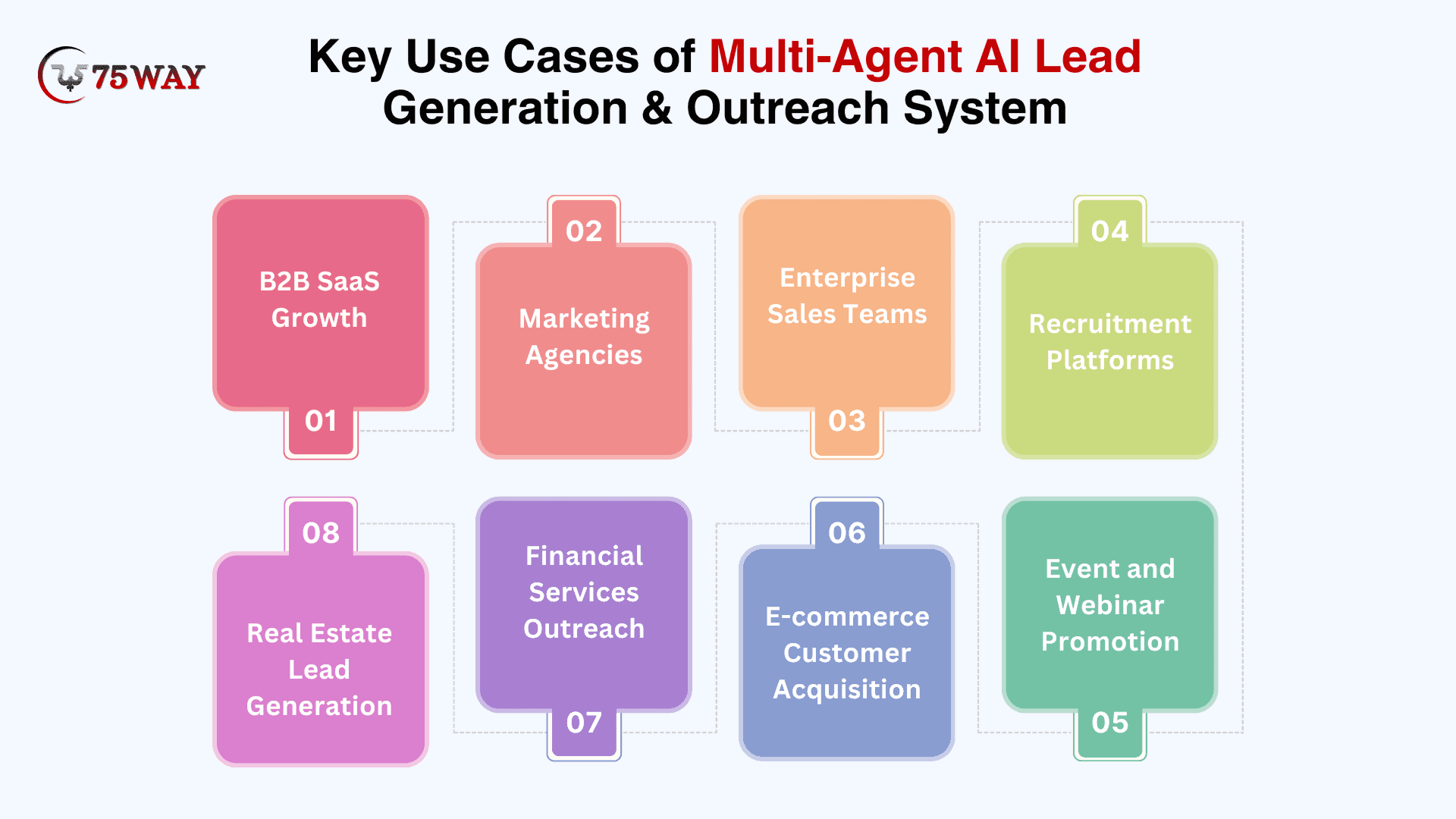
- B2B SaaS Growth
Automate outbound campaigns, manage demo scheduling, and engage decision-makers with personalized messaging across different stages of the sales funnel.
- Marketing Agencies
Manage multi-client outreach campaigns, handle segmentation, and execute personalized communication across industries with improved targeting and campaign performance.
- Enterprise Sales Teams
Enhance pipeline tracking, improve lead qualification processes, and support coordinated outreach across channels for better engagement outcomes.
- Recruitment Platforms
Identify potential candidates, analyze profiles, and engage them through personalized outreach workflows to improve hiring efficiency.
- Real Estate Lead Generation
Identify property buyers and sellers, analyze intent signals, and manage outreach campaigns to generate qualified real estate leads.
- Financial Services Outreach
Target potential clients, manage advisory outreach, and support engagement workflows for financial products and services effectively.
- E-commerce Customer Acquisition
Track user behavior, identify high-intent buyers, and execute outreach campaigns to convert prospects into paying customers.
- Event and Webinar Promotion
Identify relevant audiences, manage invitations, and follow up with prospects to increase registrations and engagement rates.
Benefits of Adopting Multi-Agent Systems To Generate Leads
Multi-agent AI systems bring structured intelligence into lead generation and outreach by distributing tasks across specialized agents. This approach improves execution quality, reduces operational pressure, and enables businesses to scale outreach efforts while maintaining precision, control, and consistent engagement across the entire sales pipeline.
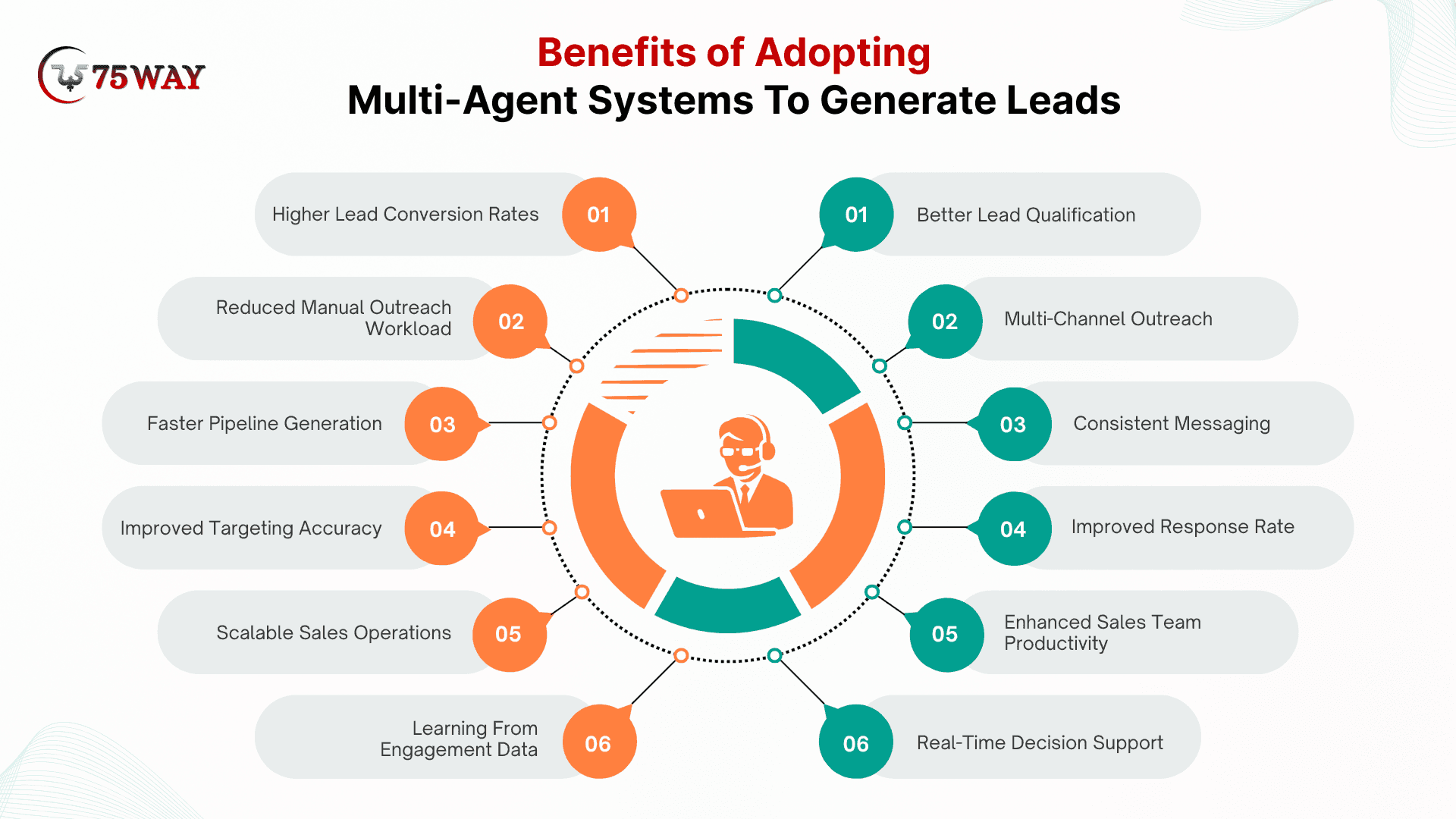
- Higher Lead Conversion Rates: Tailored messaging based on data and intent increases engagement and drives more qualified conversions.
- Reduced Manual Outreach Workload: Automate repetitive sales tasks, allowing teams to focus on strategy, relationships, and closing deals.
- Faster Pipeline Generation: Accelerate prospect identification, outreach execution, and follow-ups to build pipelines in shorter timeframes.
- Improved Targeting Accuracy: Use data-driven insights to reach the right audience with relevant messaging across multiple channels.
- Scalable Sales Operations: Support outreach expansion without requiring proportional hiring or increasing operational expenses.
- Learning From Engagement Data: Analyze responses and interaction patterns to refine outreach strategies and improve future performance.
- Better Lead Qualification: Evaluates prospects based on behavior and intent, helping sales teams focus on high-potential opportunities.
- Multi-Channel Outreach: Manage communication across email, social platforms, and messaging tools for broader reach and engagement.
- Consistent Messaging: Maintain a uniform communication tone and structure while tailoring personalization to different audience segments.
- Improved Response Rate: Adjust timing, sequencing, and messaging based on engagement data to increase reply rates.
- Enhanced Sales Team Productivity: Reduce time spent on manual tasks and support teams with ready-to-convert qualified leads.
- Real-Time Decision Support: Process live data to guide outreach actions, prioritization, and engagement strategies across campaigns.
Challenges in Implementing a Multi-Agent Lead Generation System
Building a multi-agent lead-generation system involves technical and operational challenges that affect performance. Structured planning and execution help address these issues and support reliable, scalable outreach workflows.
- Data Fragmentation Across Systems
Disconnected data sources create incomplete lead profiles and reduce targeting accuracy across outreach campaigns. Centralizing data through unified pipelines and syncing systems ensures consistent information flow and better decision-making.
- Complex Integration With CRM Platforms
Connecting multiple agents with CRM systems can create inconsistencies and disrupt workflow execution. Using standardized APIs and well-defined integration layers helps maintain smooth communication between systems and ensures reliable data exchange.
- Maintaining Message Quality At Scale
High-volume outreach often leads to generic messaging that reduces engagement and response rates. Training models on contextual data and refining messaging logic helps maintain personalization and relevance across large campaigns.
- Ensuring Compliance In Outreach Workflows
Regulatory requirements and data privacy rules increase complexity in automated communication processes. Implementing compliance checks within workflows and monitoring communication for adherence to regulations reduces risk exposure.
- Training Models for Industry-Specific Behavior
Generic models may fail to capture industry-specific nuances, resulting in less effective outreach and engagement. Using domain-specific datasets and continuous learning improves model understanding and aligns messaging with industry expectations.
Cost To Develop Multi-Agent AI Lead Generation And Outreach System
The cost to build an AI agent for lead generation and outreach varies based on complexity, integrations, data requirements, and level of automation. On average, multi-agent AI system development costs range from $10,000 to $500,000+, depending on the scale, intelligence, and customization required.
- Basic Multi-Agent Lead Generation System Cost: $10,000 – $30,000
Ideal for startups, offering simple automation for capturing and qualifying leads.
- Mid-Market Multi-Agent Lead Generation System Cost: $50,000 – $150,000
Includes advanced workflows, integrations, and smarter lead nurturing capabilities.
- Enterprise Multi-Agent Lead Generation System Cost: $150,000 – $500,000+
Delivers highly scalable, AI-driven systems with deep integrations and full automation.
Future of Multi-Agent AI in Sales
Multi-agent systems are evolving toward fully autonomous revenue engines capable of managing entire sales funnels. Future systems will not only generate leads but also negotiate, qualify, and close deals with minimal human intervention.
- Autonomous Selling Systems: Handle complete sales cycles from prospecting to closing deals with minimal human involvement.
- Predictive Lead Intelligence: Analyze behavioral data to identify high-intent prospects for better targeting and outreach.
- Hyper Personalization Engines: Create highly tailored messages using deep data insights across channels for stronger engagement outcomes.
- Voice Interaction Agents: Enable conversational sales through voice-based communication channels for real-time engagement with prospects.
- Cross-ChannelOrchestration: Coordinate outreach across email, social, and messaging platforms to enable unified, seamless communication workflows.
- Self-Learning Systems: Improve performance by leveraging interaction data and adapting strategies to changing market behavior.
Final Remarks
Multi-agent AI systems are reshaping how businesses approach lead generation and outreach by introducing structured intelligence across the entire sales funnel. Instead of relying on isolated tools or manual execution, organizations now deploy coordinated agents that manage prospecting, messaging, engagement, and conversion workflows.
This creates a continuous, self-optimizing system that improves efficiency and output quality over time. As competition intensifies, the ability to scale outreach without increasing operational complexity becomes a key advantage. Businesses adopting this model gain stronger pipeline control, higher engagement rates, and improved conversion performance.
If you want to create multi-agent systems tailored to specific sales and marketing goals, you can reach a reliable AI development company that enables seamless implementation for sustainable growth and operational efficiency.
Frequently Asked Questions (FAQs)
How Does Multi-Agent AI Improve Lead Generation?
Multi-agent AI improves lead generation by dividing tasks across specialized agents that handle research, segmentation, messaging, and follow-ups. This structured approach increases targeting accuracy, delivers personalized outreach at scale, and speeds up execution. As a result, businesses generate higher-quality leads while reducing their reliance on manual prospecting and outreach.
Can Multi-Agent Systems Replace Sales Teams?
Yes, multi-agent systems do not replace sales teams but enhance their effectiveness by handling repetitive and time-consuming tasks. Sales professionals can focus on relationship building, strategy, and closing deals while AI manages prospecting and engagement workflows. This collaboration leads to higher productivity, better pipeline management, and improved overall sales performance.
What Industries Benefit From Multi-Agent AI Systems?
Industries such as SaaS, marketing agencies, recruitment firms, real estate, and enterprise sales benefit significantly from multi-agent systems. These sectors rely heavily on outreach and lead generation, where automation improves scalability, targeting precision, and engagement. Multi-agent systems help manage large pipelines while maintaining personalized communication across different audience segments.
Is Multi-Agent AI Expensive To Build?
The cost of building a multi-agent AI system depends on factors such as complexity, integration requirements, data requirements, and the level of customization. While initial investment may seem high, these systems reduce long-term operational costs by automating outreach and improving efficiency. Businesses often achieve strong returns by improving lead quality and reducing manual workload.
How Do AI Agents Personalize Outreach?
AI agents personalize outreach by analyzing prospect data such as industry, role, behavior, and engagement history. Based on these insights, they generate tailored messages that align with specific needs and pain points. This level of personalization improves response rates, builds stronger connections, and increases the chances of converting prospects into customers.
What Tools Integrate With Multi-Agent Systems?
Multi-agent systems integrate with a wide range of tools, including CRM platforms, email marketing systems, messaging applications, and data enrichment tools. These integrations allow seamless data flow and coordinated execution across outreach channels. As a result, businesses gain a unified system that manages prospecting, engagement, and lead tracking.