Summary
This blog explores AI sales agents for healthcare systems and how they transform patient inquiry handling and engagement. It also covers automated qualification, appointment scheduling, and conversion optimization strategies used in modern healthcare systems. At the end, you will find deployment architecture, benefits, cost structures, and real-world use cases shaping healthcare patient acquisition and digital transformation in 2026.
Quick Overview
- AI sales agents automate healthcare inquiry-to-patient conversion.
- Intelligent workflows improve engagement and reduce manual workload.
- Healthcare AI systems enhance appointment booking and follow-ups.
- Integration with CRM improves lead tracking and conversions.
- Compliance-driven AI ensures secure healthcare communication systems.
Healthcare growth is heavily influenced by automation, conversational AI agents, and intelligent patient engagement systems in 2026. Among these innovations, sales AI agents for healthcare have emerged as a powerful solution that transforms how hospitals, clinics, and healthcare providers manage patient acquisition.
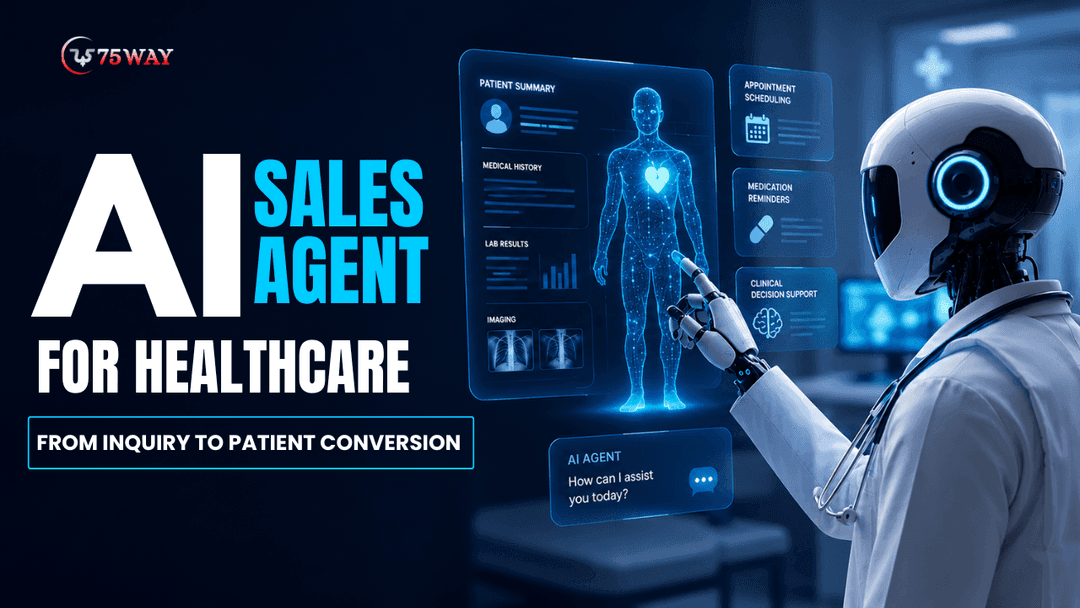
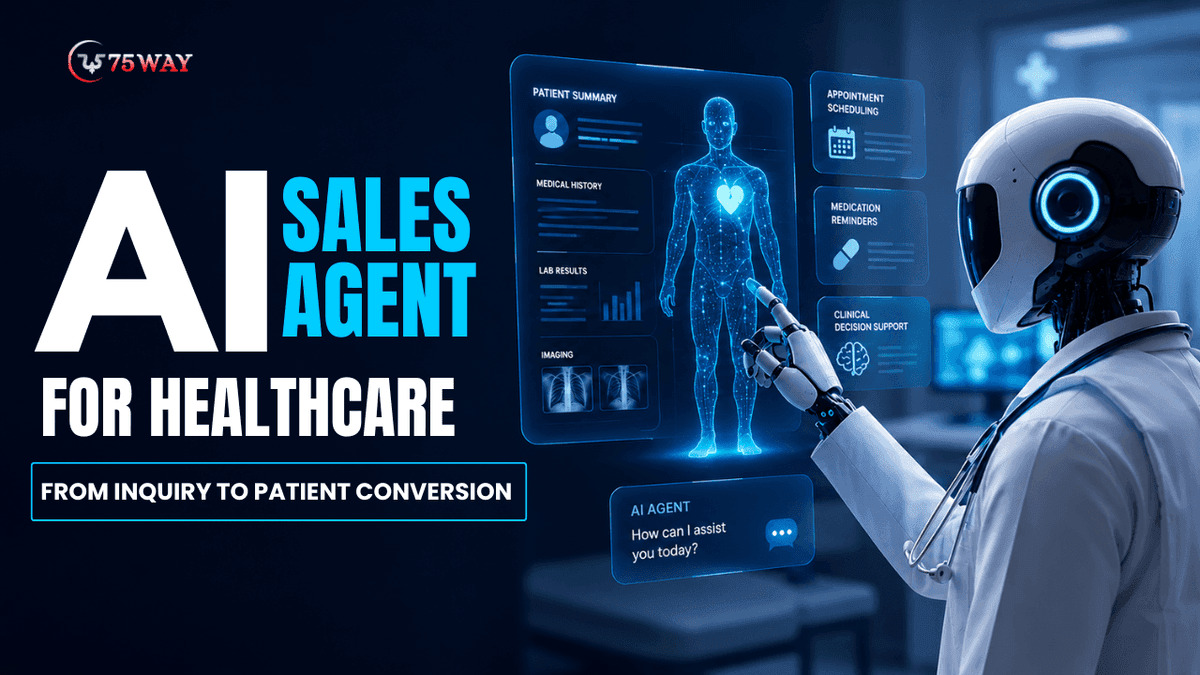
An AI sales agent is not just a chatbot. It is an intelligent AI automation system capable of handling inquiries, qualifying patients, scheduling appointments, sending reminders, and nurturing leads until conversion. These systems integrate with CRMs, hospital management software, and communication platforms to create a seamless patient journey.
From the first inquiry to final appointment booking, sales AI agents for healthcare ensure every interaction is optimized for conversion, accuracy, and patient satisfaction.
This guide explores how AI sales agents work in healthcare, their architecture, benefits, use cases, implementation process, cost, challenges, and future potential in 2026.
What Is an AI Sales Agent for Healthcare?
An AI sales agent for healthcare is an intelligent digital system designed to automate patient acquisition and engagement processes. It uses artificial intelligence, machine learning, natural language processing (NLP), and workflow automation to manage:
- Patient inquiries
- Appointment scheduling
- Lead qualification
- Follow-up communication
- Treatment guidance
- CRM data updates
Unlike traditional chatbots, AI sales agents are goal-driven systems designed specifically to convert inquiries into booked consultations. They operate across multiple channels including:
- Hospital websites
- Healthcare mobile apps
- Social media platforms
- Voice AI assistants
The primary objective is simple: increase patient conversion rate while reducing operational workload.
Why AI Sales Agents Are Essential for Healthcare Growth in 2026?
Healthcare continues to evolve rapidly, and patients now expect instant responses, accurate information, and seamless booking experiences across digital channels. Healthcare AI sales agents help healthcare providers meet these expectations while improving efficiency, reducing costs, and increasing patient conversions in a highly demanding service environment.
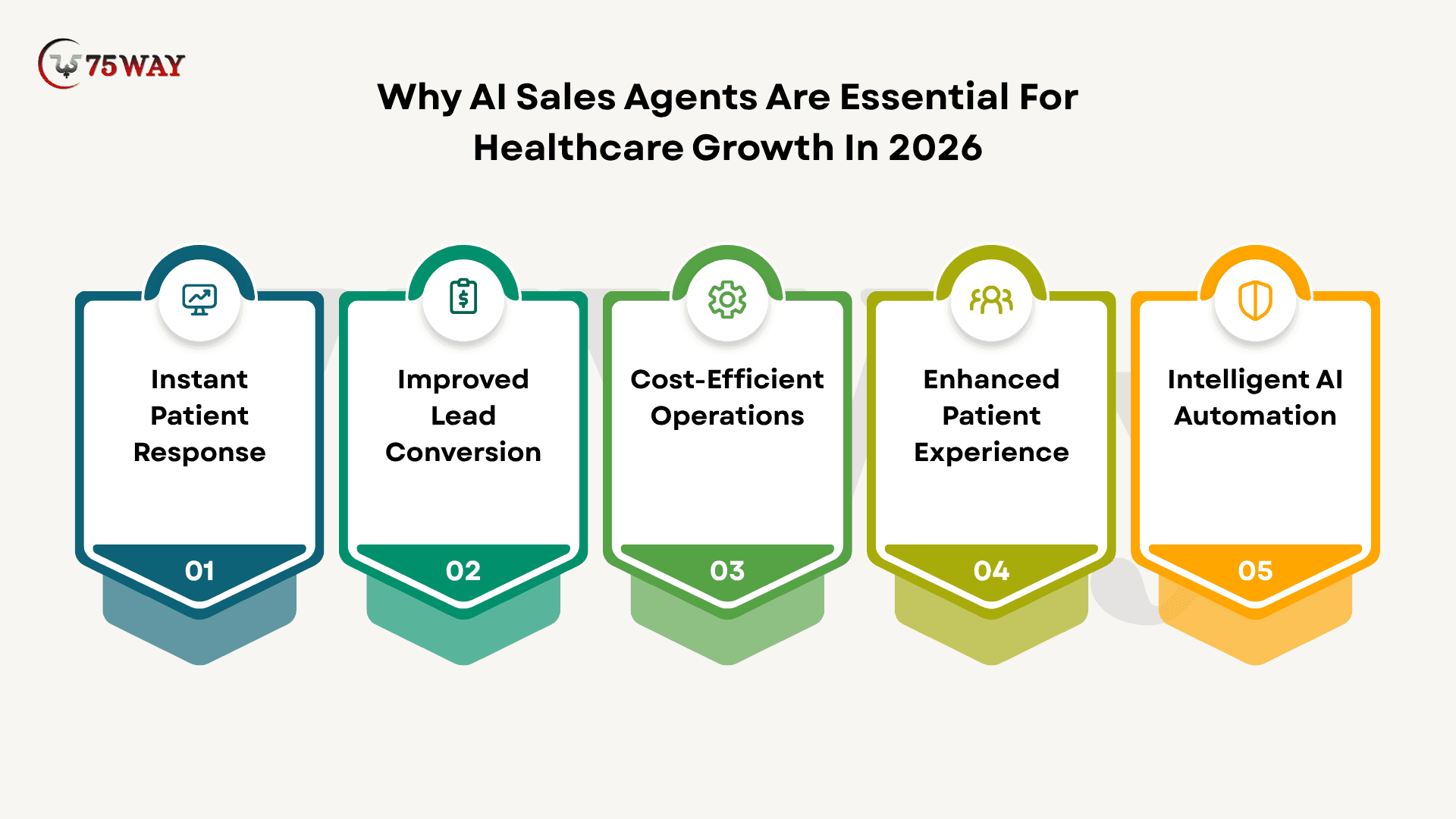
- Instant Patient Response: AI systems deliver real-time replies to patient inquiries, ensuring faster engagement, improved trust, and higher chances of appointment conversion.
- Improved Lead Conversion: Automated follow-ups and intelligent qualification help convert more patient inquiries into confirmed appointments without delays or missed opportunities.
- Cost-Efficient Operations: AI reduces dependency on large call center teams, lowering operational expenses while maintaining consistent service quality at scale.
- Enhanced Patient Experience: Personalized and consistent communication improves patient satisfaction, builds trust, and strengthens long-term engagement with healthcare providers.
- Intelligent AI Automation: AI sales agents streamline scheduling, communication, and workflow management while ensuring accurate, scalable, and always-available patient support.
How Healthcare AI Sales Agents Work?
The system operates through a structured pipeline that connects patient inquiries with intelligent processing, qualification, and healthcare service delivery. Each step ensures smoother communication between patients and providers while improving speed, accuracy, and overall care coordination across digital healthcare systems.
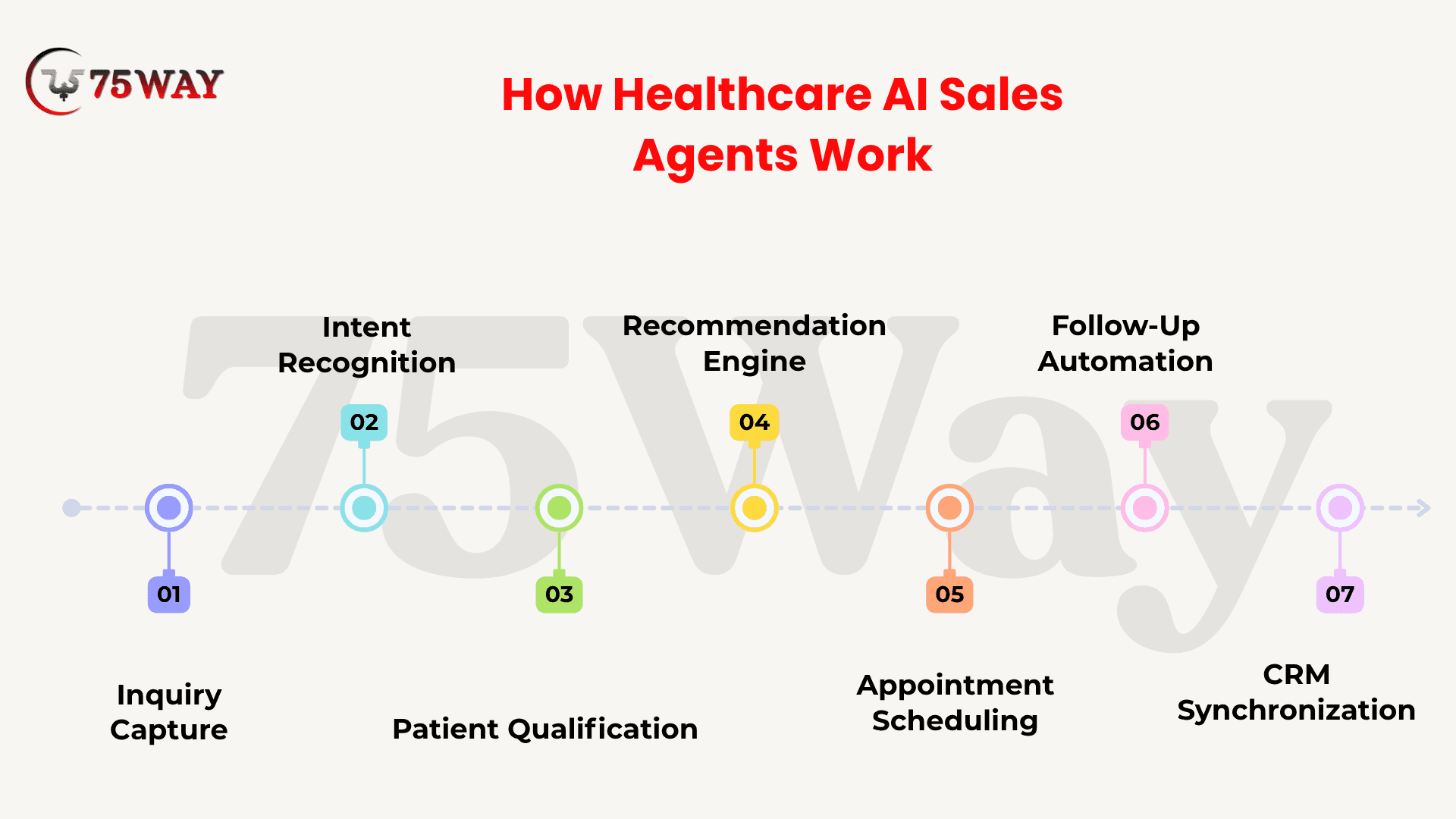
Step 1: Inquiry Capture
Patient inquiries are collected from websites, ads, or messaging platforms and immediately entered into the system. This ensures no request is missed and every patient interaction is tracked for further processing and response handling.
Step 2: Intent Recognition
AI analyzes patient intent using NLP to identify whether the request is for consultation, emergency, or general information. This helps categorize cases accurately and ensures appropriate handling from the beginning of the interaction.
Step 3: Patient Qualification
The system evaluates urgency, budget, location, and required service type to prioritize patients. This ensures healthcare providers focus on critical or high-value cases while maintaining efficient resource allocation across departments.
Step 4: Recommendation Engine
AI suggests relevant doctors, departments, or healthcare services based on patient needs and historical data. This improves decision-making for patients and reduces time spent searching for the right medical support.
Step 5: Appointment Scheduling
Automated booking is integrated with hospital calendars to confirm appointments instantly. It reduces manual scheduling efforts, avoids conflicts, and ensures smoother coordination between patients and healthcare providers.
Step 6: Follow-Up Automation
The system sends reminders and follow-ups before and after appointments to patients. This reduces missed visits, improves treatment adherence, and enhances overall patient engagement and continuity of care.
Step 7: CRM Synchronization
All patient interactions and data are stored in healthcare CRM systems for tracking and analysis. This enables better reporting, personalized communication, and long-term patient relationship management across healthcare organizations.
How Healthcare AI Sales Agents Improve Patient Outreach & Increase Conversions?
Healthcare AI sales agents improve patient outreach by automating communication, personalizing engagement, and ensuring faster responses across digital channels. They help healthcare providers connect with more patients, reduce missed opportunities, and guide users efficiently through consultation and appointment booking processes, ultimately increasing conversion rates and improving overall patient acquisition performance.
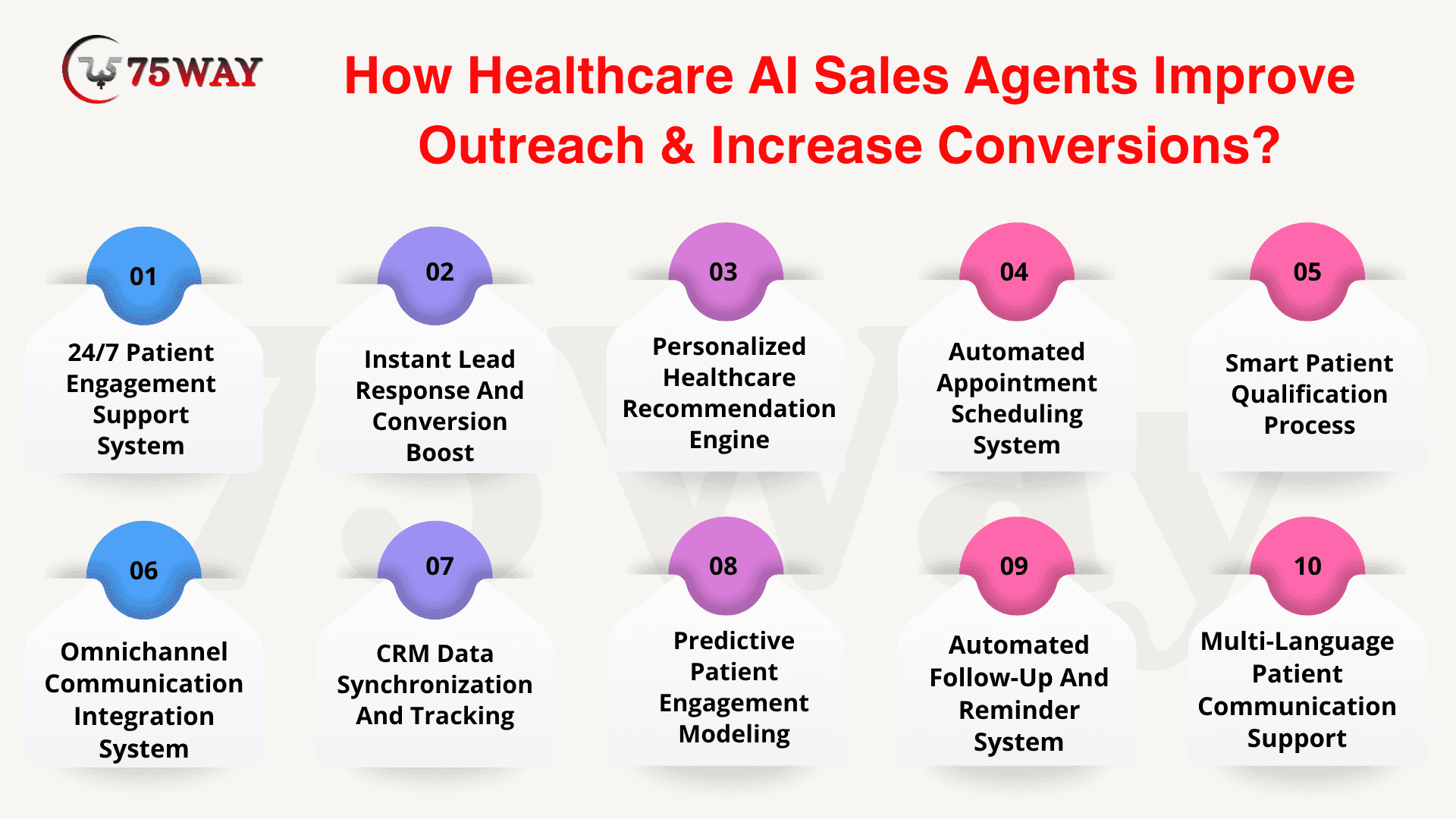
- 24/7 Patient Engagement Support System
Continuous availability allows patients to receive instant responses across all communication channels. Queries are handled at any time without delay. This builds trust and reduces waiting frustration significantly. Patients feel supported throughout their healthcare journey. Inquiry handling becomes more efficient across systems. Appointment conversions improve due to uninterrupted engagement coverage across digital healthcare touchpoints.
- Instant Lead Response And Conversion Boost
Immediate responses to patient inquiries prevent lead drop-off and improve engagement speed. Quick interaction strengthens confidence in healthcare providers. Patients receive timely guidance without communication delays. Faster response cycles increase appointment booking probability. Competitor switching is reduced significantly due to quick engagement. Conversion rates rise because patients get immediate attention during critical decision moments.
- Personalized Healthcare Recommendation Engine
Patient data, symptoms, and preferences are analyzed to generate tailored healthcare suggestions. Each recommendation matches individual needs more accurately. Communication feels relevant, improving trust in medical guidance. Patients feel understood during decision-making processes. This strengthens consultation intent and treatment acceptance. Conversion performance improves through highly personalized healthcare interaction experiences across digital platforms.
- Automated Appointment Scheduling System
Integration with hospital calendars enables instant booking without manual effort. Scheduling errors and delays are significantly reduced. Patients confirm consultations quickly through automated systems. Hospital operations become more organized and efficient. Coordination between departments improves consistently. Appointment completion rates rise due to simplified booking and reduced friction in scheduling workflows.
- Smart Patient Qualification Process
Patient urgency, condition type, and service needs are evaluated for prioritization. High-intent cases are identified for faster attention. Healthcare teams focus on critical patients efficiently. Low-quality leads are filtered out effectively. Resource allocation improves across departments. Conversion success increases through structured prioritization and better patient categorization systems within healthcare workflows.
- Omnichannel Communication Integration System
Communication operates across websites, apps, WhatsApp, and messaging platforms. Consistency is maintained across all interaction channels. Patients choose preferred communication methods easily. Engagement improves due to accessibility and convenience. Communication gaps are eliminated throughout the journey. Outreach effectiveness increases through unified interaction across multiple digital healthcare platforms.
- CRM Data Synchronization And Tracking
Patient interactions are stored and updated within CRM systems. Centralized visibility of leads and conversations improves data management. Reporting accuracy becomes more reliable for healthcare providers. Actionable insights support better decision-making. Follow-ups become more personalized and timely. Long-term patient relationships strengthen through structured tracking and organized healthcare data systems.
- Predictive Patient Engagement Modeling
Behavioral patterns are analyzed to predict patient intent and future actions. This helps prioritize outreach for high-conversion opportunities. Engagement strategies become more targeted and effective. Healthcare providers can act before patients drop off. Marketing efficiency improves significantly. Conversion rates increase through proactive and data-driven patient engagement strategies across digital platforms.
- Automated Follow-Up And Reminder System
Automated messages are sent before and after consultations. This reduces missed appointments and improves patient adherence. Patients receive timely reminders for bookings and checkups. Engagement remains active throughout the healthcare journey. Administrative workload decreases for staff. Overall conversion improves through consistent communication and structured follow-up processes across systems.
- Multi-Language Patient Communication Support
Patients can interact in their preferred language across digital platforms. This removes communication barriers and improves accessibility. Understanding between patients and providers becomes clearer. Engagement increases across diverse demographic groups. Miscommunication risks are reduced significantly. Conversion rates improve as more patients can comfortably interact with healthcare systems globally.
Must-Have Features of Clinical AI Sales Agents for Healthcare Systems
AI sales agents in healthcare systems require advanced capabilities to manage patient engagement, improve operational efficiency, and ensure accurate communication across digital platforms. These features go beyond basic automation and focus on delivering intelligent, compliant, and patient-centric healthcare interactions that support both providers and patients.
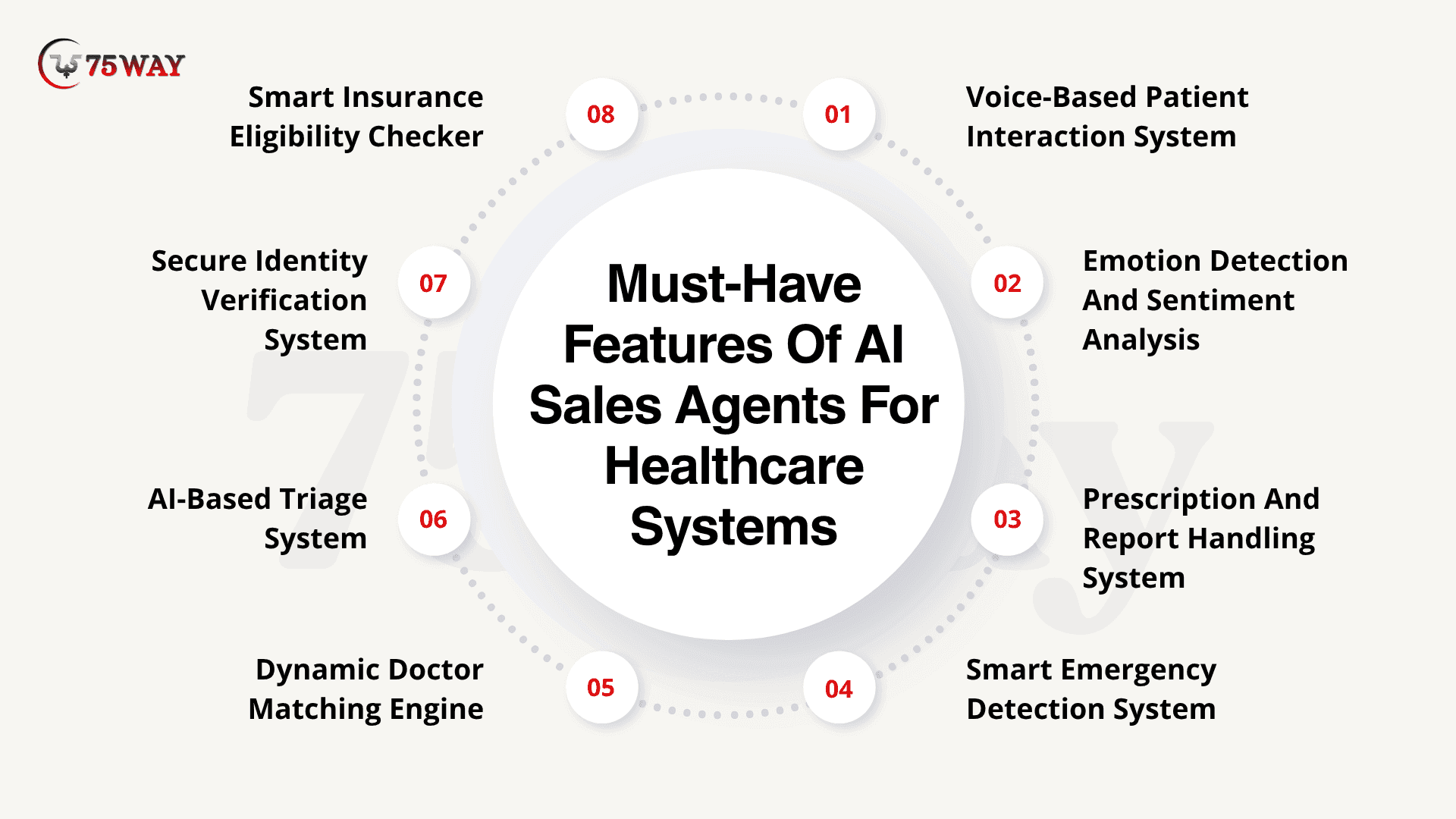
- Voice-Based Patient Interaction System: Enables patients to interact through voice commands for booking appointments, asking queries, and receiving healthcare information. It improves accessibility for elderly users and enhances engagement through natural conversational experiences across healthcare platforms.
- Emotion Detection And Sentiment Analysis: Analyzes patient tone, sentiment, and emotional state during interactions. It helps identify urgent or distressed patients quickly, allowing healthcare providers to prioritize responses and improve patient care sensitivity.
- Prescription And Report Handling System: Allows patients to upload, view, and manage medical prescriptions and diagnostic reports securely. It streamlines access to medical documents and improves continuity of care between patients and healthcare providers.
- Smart Emergency Detection System: Identifies emergency-related keywords and symptoms in real-time conversations. It triggers instant alerts to healthcare teams or emergency services, ensuring faster response during critical medical situations and improving patient safety.
- Dynamic Doctor Matching Engine: Automatically matches patients with the most suitable doctors based on symptoms, specialization, availability, and location. It improves consultation accuracy and reduces time spent searching for the right healthcare provider.
- AI-Based Triage System: Classifies patients based on severity of condition and urgency level. It helps healthcare providers prioritize critical cases first, improving resource allocation and reducing delays in urgent care treatment.
- Secure Identity Verification System: Verifies patient identity using multi-factor authentication methods such as OTP, biometrics, or government ID validation. It ensures data security and prevents unauthorized access to sensitive healthcare information.
- Smart Insurance Eligibility Checker: Evaluates patient insurance coverage in real time during booking or consultation requests. It helps patients understand coverage limits instantly and reduces friction in payment and approval processes.
How Agentic AI In Healthcare Sales Impacts Multiple Industries?
Agentic AI in healthcare sales is reshaping how organizations attract, engage, and convert patients by introducing autonomous decision-making, intelligent automation, and real-time personalization. Its influence extends beyond healthcare, impacting multiple industries by improving customer acquisition systems, reducing operational inefficiencies, and enabling scalable digital engagement models across complex service ecosystems.
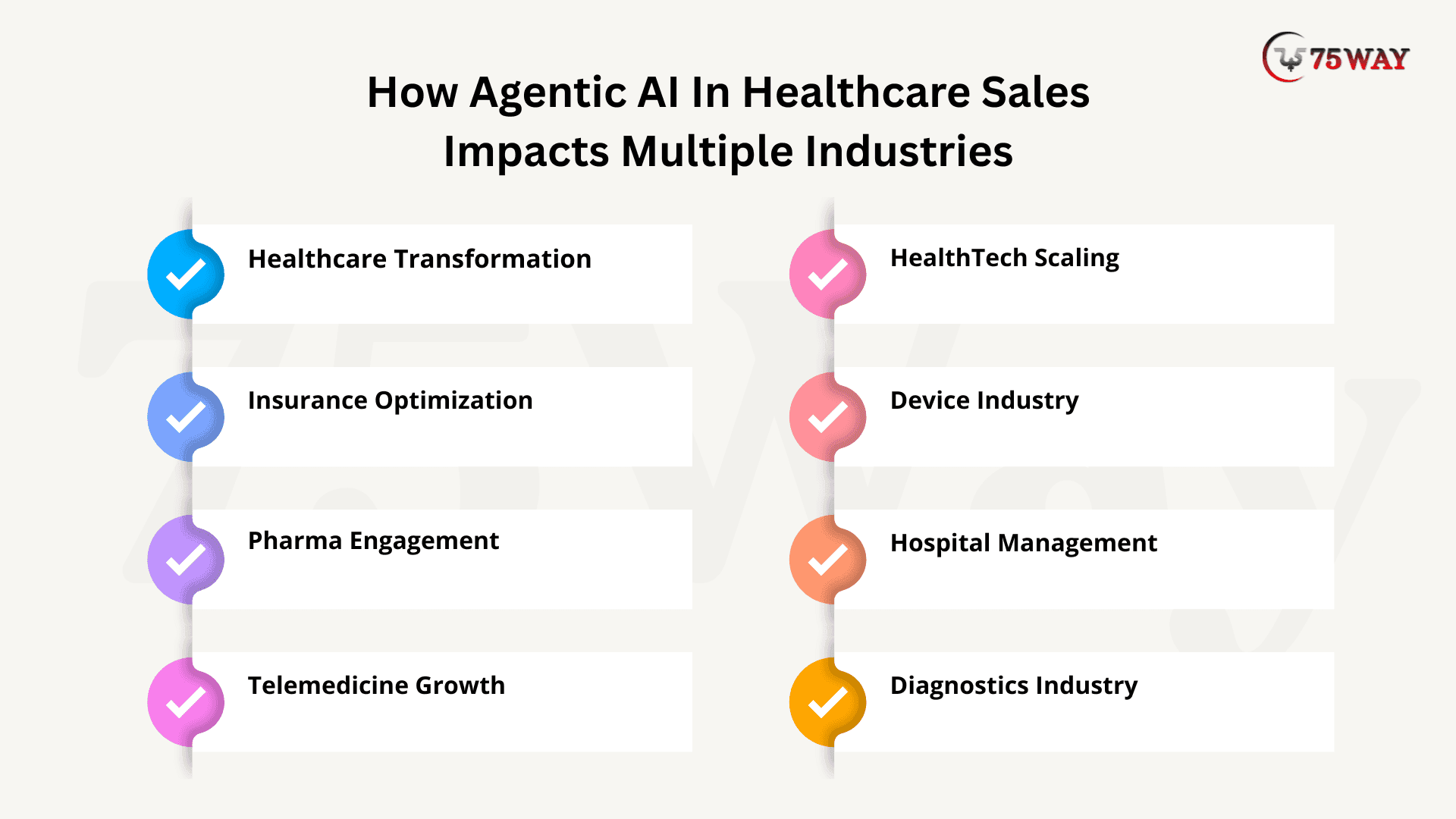
- Healthcare Transformation
Healthcare providers benefit from faster patient onboarding, automated appointment scheduling, and intelligent lead qualification. This improves operational efficiency, reduces administrative burden, and enhances patient satisfaction through seamless digital engagement and faster access to medical services across hospitals and clinics.
- Insurance Optimization
Insurance companies use healthcare AI sales systems to streamline policy recommendations, claims inquiries, and customer onboarding. It improves conversion rates, reduces response time, and enhances personalized policy matching based on patient health data and risk profiles effectively.
- Pharma Engagement
Pharmaceutical companies leverage AI-driven healthcare sales systems to engage doctors, clinics, and patients more efficiently. It supports product education, prescription tracking, and targeted communication strategies that improve awareness and adoption of medical products across healthcare networks.
- Telemedicine Growth
Telemedicine platforms benefit from automated patient acquisition, intelligent triage, and real-time consultation booking. It increases platform scalability, reduces no-show rates, and improves access to remote healthcare services through continuous digital engagement systems.
- HealthTech Scaling
HealthTech startups use Agentic AI to build scalable patient engagement systems without large operational teams. It enables faster go-to-market strategies, reduces infrastructure costs, and improves user acquisition through automated healthcare workflows.
- Device Industry
Medical device companies utilize AI-driven healthcare sales systems to educate hospitals and practitioners about new technologies. It improves lead qualification, product demonstrations, and adoption rates across healthcare institutions.
- Hospital Management
Hospitals benefit from reduced workload on front-desk staff through automated patient handling systems. It improves scheduling efficiency, reduces waiting times, and enhances overall patient flow management across departments.
- Diagnostics Industry
Diagnostic centers use AI sales systems for automated test booking, report delivery, and patient reminders. It increases test adoption rates, reduces missed appointments, and improves operational efficiency across diagnostic workflows.
AI Sales Agent Workflow in Patient Conversion Funnel
AI sales agents guide patients through a structured conversion journey by engaging them at every stage of interaction. From initial awareness to long-term retention, the system ensures personalized communication, faster responses, and improved healthcare decision-making, ultimately increasing appointment bookings and patient loyalty.
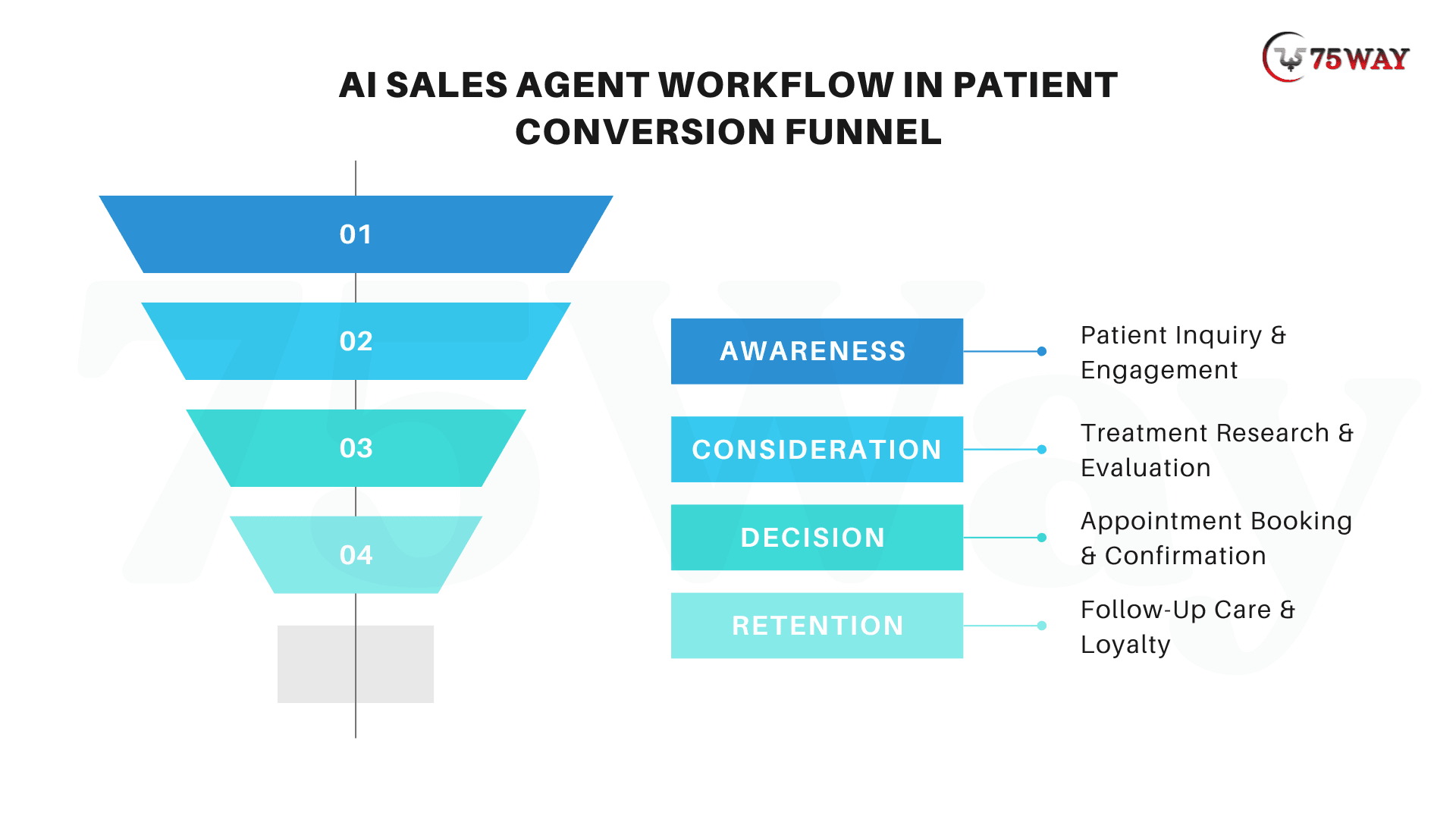
- Awareness: Patient Inquiry & Engagement
Patient inquiries from ads, websites, and social media are responded to instantly through automated systems. Quick replies capture attention and generate initial interest in healthcare services. This stage builds early trust and ensures no lead is missed. Engagement begins immediately, increasing chances of converting visitors into potential patients.
- Consideration: Treatment Research & Evaluation
Doctor recommendations, treatment details, and healthcare information are provided based on patient needs. Options are compared clearly to support informed decision-making. Personalized guidance improves confidence in healthcare providers. Patients receive relevant insights that match their conditions. This stage helps users evaluate services and move closer toward booking decisions effectively.
- Decision: Appointment Booking & Confirmation
Appointment confirmations are encouraged through reminders, availability updates, and simplified booking options. Scheduling becomes smooth and friction-free for patients. Preferred doctors can be selected easily without delays. Trust increases through timely communication and clear instructions. This stage focuses on converting interested users into confirmed healthcare appointments successfully.
- Retention: Follow-Up Care & Loyalty
Follow-up messages, reminders, and post-treatment instructions are shared with patients regularly. Continuous communication improves engagement after consultations. Patients feel supported throughout their recovery journey. This builds long-term relationships and encourages repeat visits. Healthcare providers maintain stronger connections. Retention improves through consistent communication and ongoing patient care support systems.
Step-By-Step Process To Implement AI Agents For Sales In Healthcare
Implementing AI sales agents in healthcare requires a connected system that moves from planning to deployment and continuous optimization. Each step builds logically on the previous one to ensure smooth patient engagement, accurate data handling, and improved conversion outcomes across healthcare platforms.
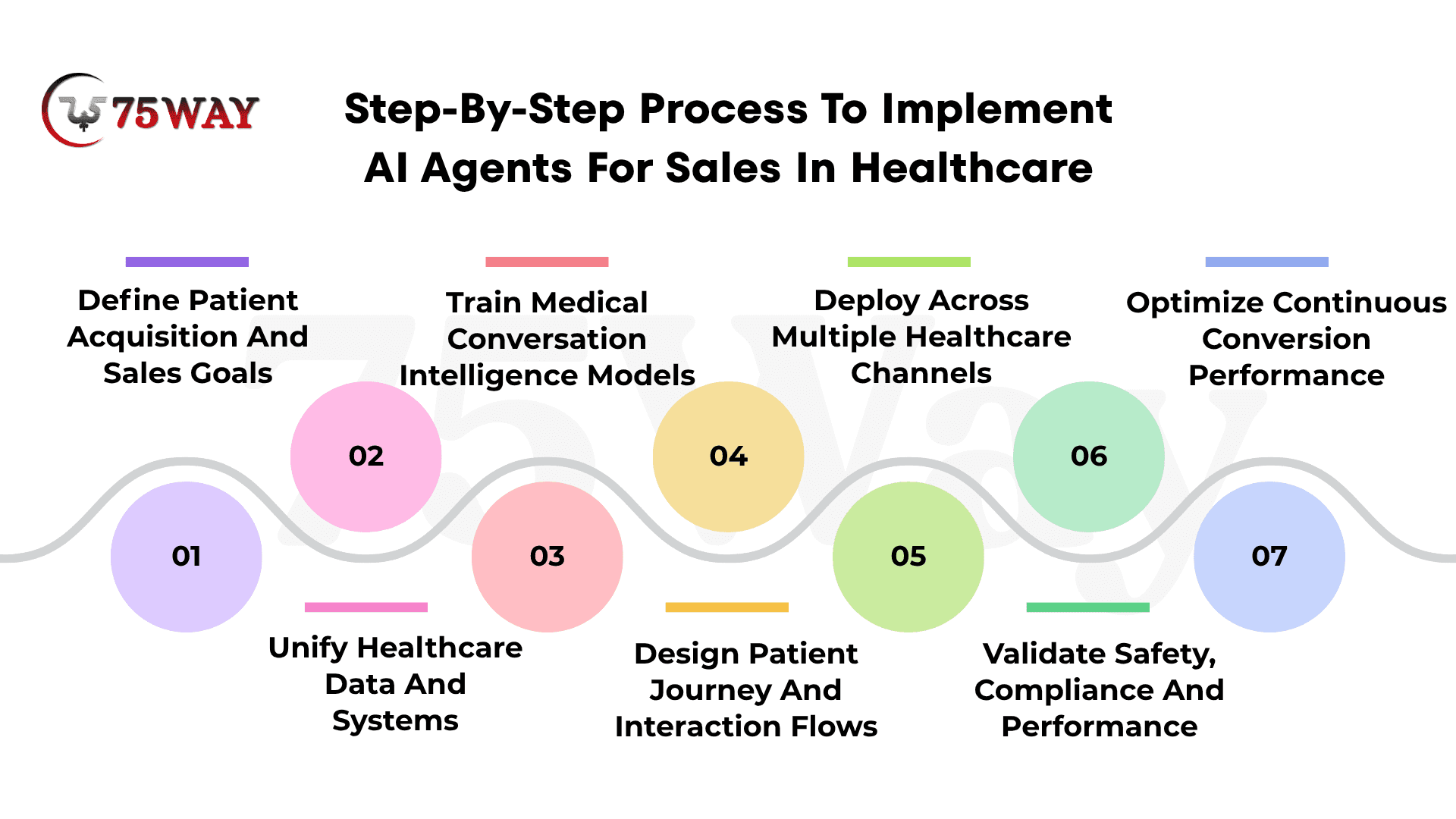
1. Define Patient Acquisition And Sales Goals
The process begins by clearly identifying what the healthcare organization wants to achieve, such as more appointment bookings, better lead conversion, or faster patient response times. These goals define how the AI system will operate and what outcomes it must deliver. Clear objectives also help align medical teams, administrators, and technology stakeholders. This ensures the AI solution directly supports measurable healthcare business growth.
2. Unify Healthcare Data And Systems
Next, all patient-related systems such as CRM, hospital databases, websites, and messaging platforms are connected. This creates a single information flow so AI agents can access complete patient context for better personalization and accurate communication. It also eliminates data silos that slow down decision-making. Unified data improves coordination between departments and enhances real-time response accuracy.
3. Train Medical Conversation Intelligence Models
AI models are trained using healthcare-specific data to understand patient symptoms, intent, urgency, and queries. This helps the system respond in a more human-like and medically relevant way while maintaining accuracy and clarity. Training also improves the system’s ability to handle complex medical conversations. Over time, it becomes more reliable in guiding patients toward appropriate care options.
4. Design Patient Journey And Interaction Flows
After intelligence setup, structured conversation paths are created from first inquiry to final appointment booking. This ensures patients are guided step-by-step without confusion, improving engagement and increasing conversion probability. It also reduces drop-offs during the decision-making process. Well-designed flows create a smooth and predictable patient experience across digital touchpoints.
5. Deploy Across Multiple Healthcare Channels
The AI system is integrated into websites, mobile apps, WhatsApp, and hospital systems. This allows patients to connect through any channel while receiving consistent responses and seamless booking support. It also ensures accessibility for different user preferences and behaviors. Multi-channel deployment increases reach and improves overall patient engagement rates.
6. Validate Safety, Compliance And Performance
Before going live, the system is tested for accuracy, response quality, compliance standards, and real-world performance. This ensures patient data safety and reliable communication in healthcare environments. It also helps identify system gaps before deployment. Proper validation reduces risks and improves trust in AI-driven healthcare interactions.
7. Optimize Continuous Conversion Performance
After deployment, system performance is continuously monitored using engagement metrics, response speed, and conversion data. These insights are used to refine conversations, improve accuracy, and increase patient acquisition efficiency over time. Continuous learning ensures the system adapts to changing patient behavior. This leads to sustained improvement in healthcare sales performance.
What’s the Cost of Building an AI Sales Agent For Healthcare?
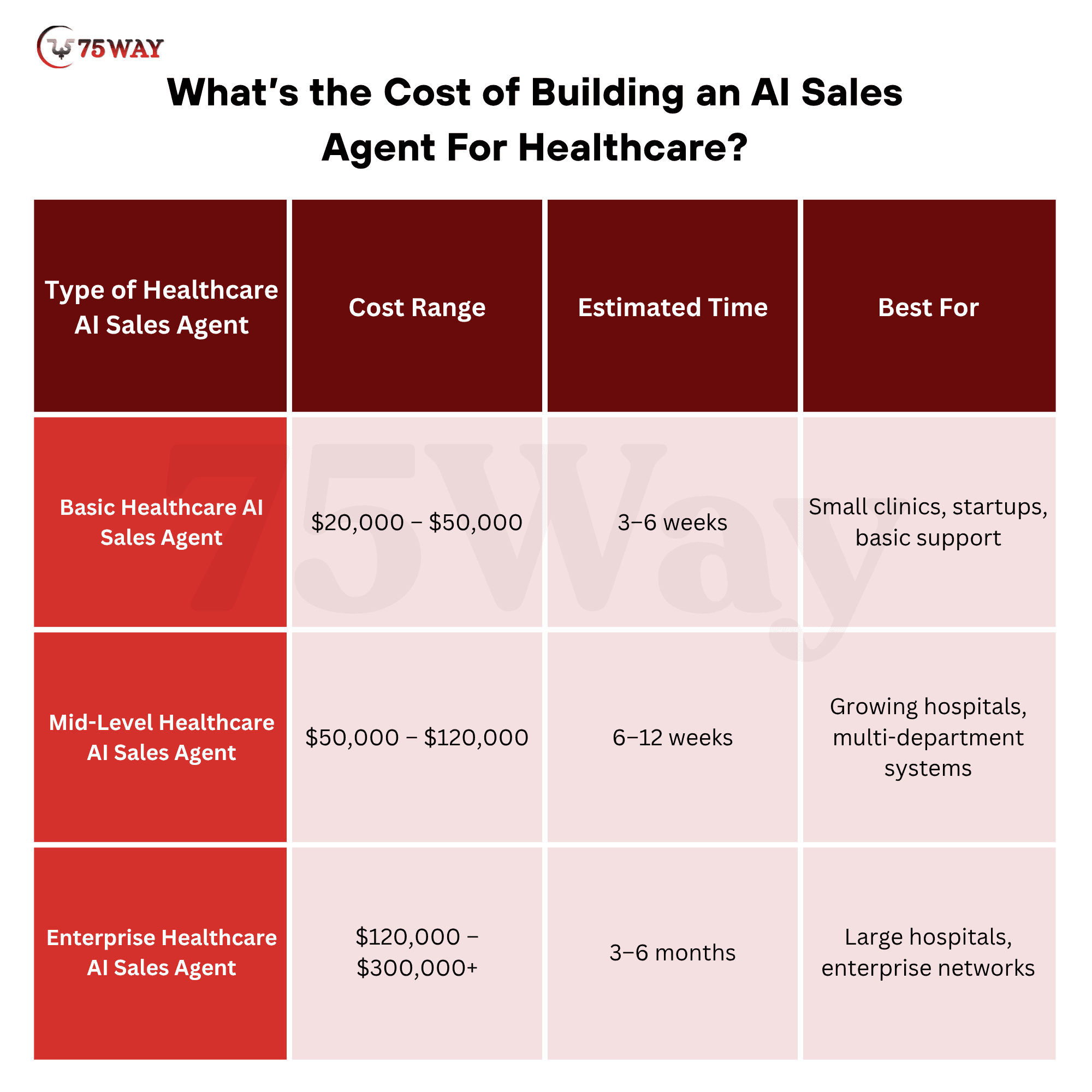
The cost of building an AI sales agent for healthcare typically ranges from $20,000 – $300,000+, depending on system complexity, AI capabilities, integrations, and scalability requirements. On average, most healthcare organizations invest around $85,000 – $150,000 for a balanced system with automation, CRM integration, and intelligent patient engagement features. Pricing varies based on whether the solution is a basic chatbot or a fully enterprise-grade AI healthcare sales platform.
- Basic Healthcare AI Sales Agent: $20,000 – $50,000
Simple chatbot + scheduling system designed for handling basic patient inquiries, appointment booking, and limited automation workflows with minimal integration requirements.
- Mid-Level Healthcare AI Sales Agent: $50,000 – $120,000
Includes AI workflows, CRM integration, patient data handling, and automated follow-ups, enabling better engagement and improved conversion tracking across healthcare systems.
- Enterprise Healthcare AI Sales Agent: $120,000 – $300,000+
Advanced AI capabilities with multi-channel automation, predictive analytics, real-time personalization, and full-scale integration across hospital systems for maximum efficiency and scalability.
Final Remarks
AI sales agents for healthcare are transforming how providers manage patient acquisition and engagement. By automating inquiry handling, qualification, scheduling, and follow-ups, these systems significantly improve conversion rates while reducing operational costs. Healthcare organizations adopting AI-driven engagement models gain a competitive advantage through faster response times, better patient experiences, and scalable operations. As healthcare becomes more digital, AI sales agents will evolve into essential infrastructure for patient management systems. To implement this transformation effectively, businesses can reach out to a trusted AI agent development company to build a custom AI sales sgent tailored to their healthcare workflows. They can adopt ready-made solutions from AI agent marketplaces such as 75AI Agent Store for faster deployment and scalability.
Frequently Asked Questions (FAQ)
How Does AI Improve Patient Conversion Rates?
AI improves conversion rates by providing instant responses, personalized recommendations, and automated follow-ups. It reduces delays in communication, which helps more inquiries convert into confirmed appointments.
Is an AI Sales Agent Safe For Healthcare Use?
Yes, AI sales agents are safe when built with compliance standards like HIPAA or GDPR. They ensure secure handling of patient data and maintain privacy through encryption and controlled access systems.
Can AI Replace Human Staff In Hospitals?
AI does not fully replace human staff but supports them by automating repetitive tasks. It allows healthcare professionals to focus more on critical patient care and complex decision-making processes.
How Long Does It Take To Build AI Sales Agent For Healthcare?
Development time varies from 4 weeks to 6 months depending on complexity. Basic systems take less time, while enterprise-grade solutions require longer development and integration cycles.
What Technologies Are Used In AI Healthcare Systems?
AI healthcare systems use technologies like NLP, machine learning, cloud computing, and APIs. Common tools include OpenAI models, Python frameworks, and cloud platforms like AWS or Azure.
Can AI sales agents Work On WhatsApp?
Yes, AI sales agents can integrate with the WhatsApp Business API. This allows hospitals to engage patients, answer queries, and manage appointments directly through messaging platforms.