Summary
This guide explores hiring AI automation specialists for e-commerce platforms, focusing on workflow automation using n8n, Make, and Zapier. It covers system architecture, use cases, integration strategies, order processing automation, CRM synchronization, marketing automation, inventory workflows, benefits, cost models, challenges, and future trends shaping intelligent e-commerce operations in 2026.
Quick Overview
- AI automation specialists streamline complex e-commerce workflows efficiently.
- n8n, Make, Zapier enable scalable cross-platform automation systems.
- Automated workflows reduce manual errors and operational costs significantly.
- E-commerce businesses improve conversion rates using AI automation tools.
- The cost of hiring an AI automation specialist typically ranges from $30 – $300+/hour
- Hiring specialists accelerates automation implementation and system optimization.
E-commerce businesses are rapidly shifting toward automation-first operations to manage increasing customer demands, high order volumes, and multi-channel marketing systems. Manual workflows are no longer sustainable for scaling digital commerce platforms in 2026.
AI automation specialists play a critical role in transforming e-commerce platforms by implementing intelligent workflows using tools like n8n, Make (Integromat), and Zapier. These platforms enable seamless integration between storefronts, payment gateways, CRM systems, inventory management tools, and marketing platforms.
From order processing to customer segmentation and abandoned cart recovery, AI in e-commerce reduces operational workload while increasing speed, accuracy, and revenue efficiency.
This guide explains how hiring an AI automation specialist can transform your e-commerce platform into a fully automated, scalable, and intelligent system.
Why AI Automation Becomes Essential for E-commerce Growth in 2026?
E-commerce growth brings complexity across operations, including inventory management, customer engagement, order fulfillment, and marketing campaigns.
Key challenges include:
- Manual order processing delays
- Inventory mismatches
- Poor customer follow-up systems
- Inefficient marketing workflows
- Fragmented data across platforms
AI automation solves these problems by creating unified workflows that operate in real time without manual intervention.
What Does an AI Automation Specialist Do?
An AI automation specialist builds and manages intelligent systems that connect tools, automate workflows, and optimize business operations. Their work focuses on removing manual tasks, improving system communication, and creating scalable automation frameworks that support digital business growth.
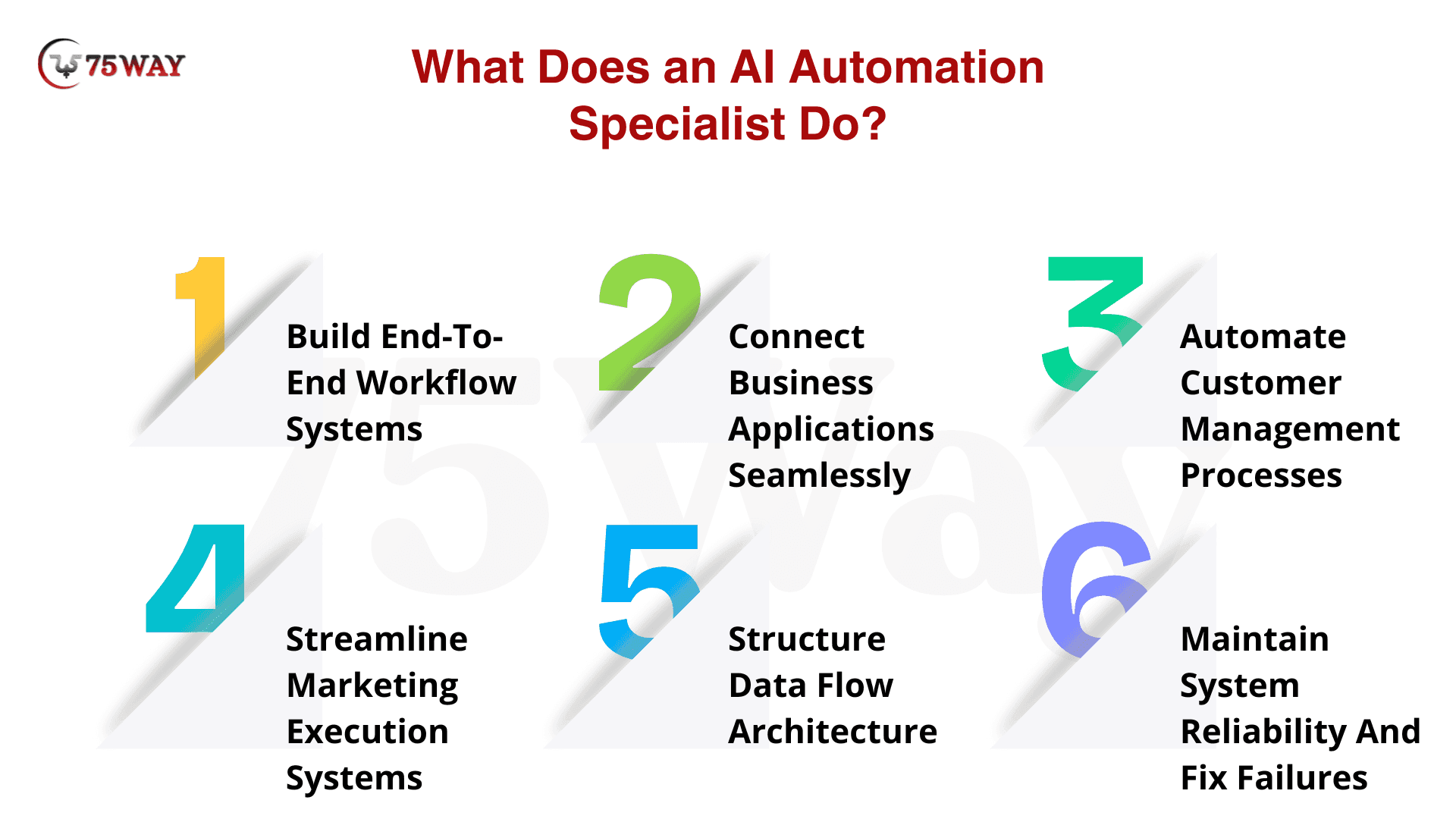
- Build End-To-End Workflow Systems
Designs complete automation flows that connect multiple business processes from start to finish. These systems replace manual operations with structured digital workflows, improving speed, consistency, and operational efficiency across departments.
- Connect Business Applications Seamlessly
Integrates tools like CRM, ERP, and SaaS platforms to ensure smooth data exchange. This allows different systems to communicate in real time, reducing delays and eliminating data silos across business operations.
- Automate Customer Management Processes
Sets up automated systems for lead handling, customer onboarding, and engagement tracking. This improves response times, increases conversion rates, and ensures consistent communication throughout the customer lifecycle.
- Streamline Marketing Execution Systems
Creates automation for email campaigns, social media workflows, and personalized messaging. This helps businesses reach the right audience at the right time without manual intervention, improving marketing performance.
- Structure Data Flow Architecture
Builds systems that collect, process, and transfer data efficiently between tools. This ensures clean, organized, and reliable data is available for reporting, analytics, and decision-making.
- Maintain System Reliability And Fix Failures
Monitors automation workflows and resolves issues when systems break or fail. This ensures uninterrupted business operations and maintains stability across all connected tools and processes.
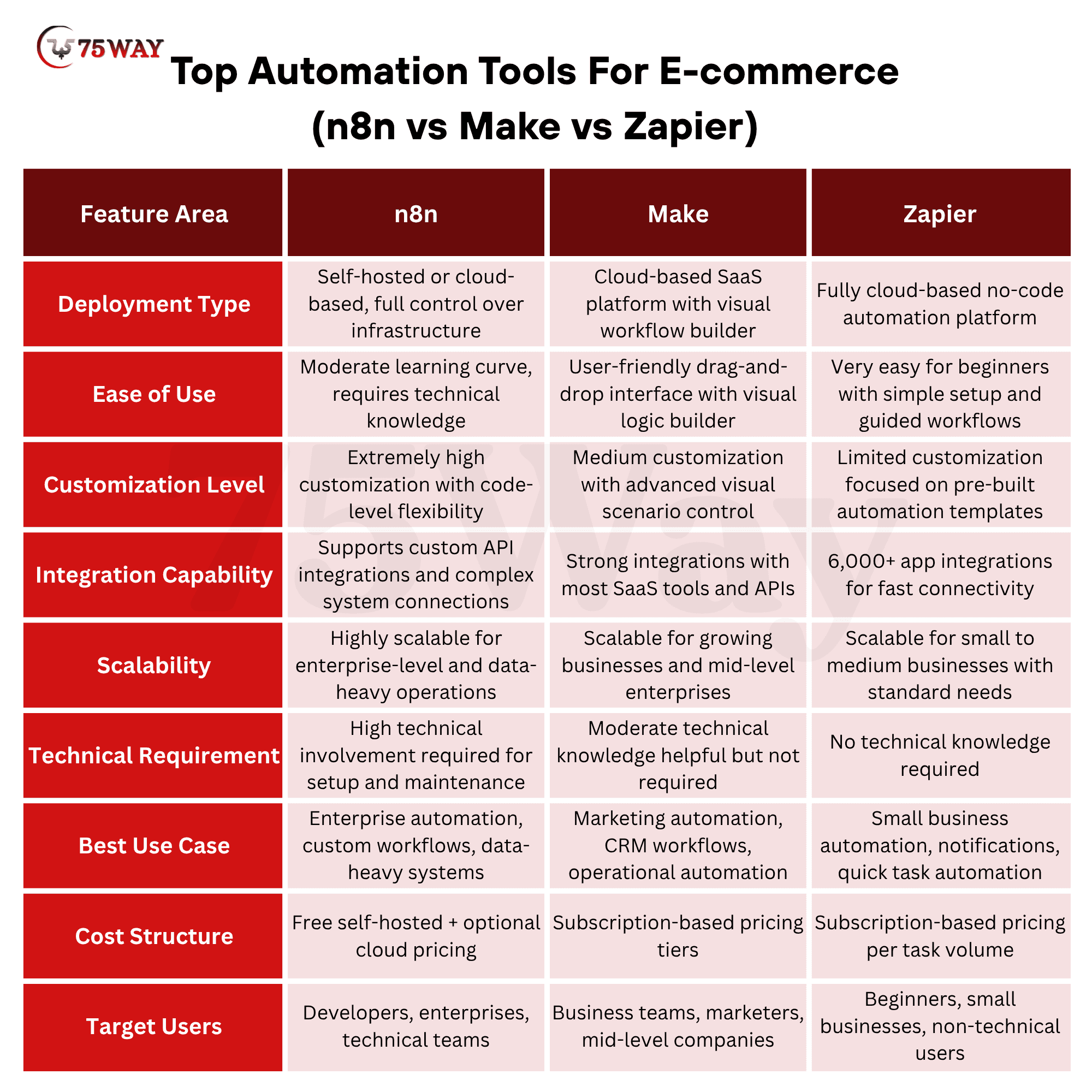
Top Automation Tools For E-commerce (n8n vs Make vs Zapier)
E-commerce businesses rely on automation tools to streamline operations, connect applications, and improve efficiency across sales, marketing, and customer management workflows. Tools like n8n, Make, and Zapier serve different business needs depending on complexity, scalability requirements, and technical expertise, making them essential for modern digital commerce systems.
1. n8n (Open-Source Automation Platform)
n8n is a powerful open-source automation platform designed for businesses that need full control over workflow customization and data handling. It is widely used in advanced e-commerce systems where flexibility, scalability, and secure data management are critical for operational efficiency.
n8n supports self-hosted automation, allowing businesses to maintain full data control within their own infrastructure. It enables custom API integrations for connecting multiple systems and services. The platform offers scalable workflow logic that can handle complex automation requirements. Its developer-friendly architecture makes it suitable for building advanced, customized automation solutions.
Best For: n8n is ideal for enterprise-level automation systems that require high flexibility and control. It works best for businesses building custom workflows tailored to specific operational needs. It is also suitable for data-heavy environments where performance, security, and scalability are important priorities.
2. Make
Make is a visual automation platform designed for creating complex workflows through an intuitive drag-and-drop interface. It is widely used by businesses that need advanced automation without deep technical coding requirements.
Make offers a powerful visual scenario builder that allows users to design workflows easily. It supports advanced multi-step automation processes and real-time data processing across different applications. The platform enables seamless integration between multiple tools, making it suitable for complex operational workflows.
Best For: Make is best suited for mid-level e-commerce automation needs. It works effectively for marketing automation, CRM integration, and operational workflows that require flexibility without heavy technical complexity. It is ideal for teams managing growing digital operations.
3. Zapier
Zapier is a beginner-friendly automation tool designed for quick and simple workflow automation across thousands of applications. It focuses on ease of use and fast deployment rather than deep customization.
Zapier offers a simple setup process that allows users to create automation without technical knowledge. It supports over 6,000 integrations with popular business tools. The platform enables fast automation deployment and provides no-code workflows that are easy to manage and scale for basic use cases.
Best For: Zapier is best suited for small businesses that need quick automation solutions. It is ideal for marketing notifications, lead management, and simple repetitive tasks. It works well for teams looking for fast implementation without technical complexity.
Top Skills Required for AI Automation Engineers in E-commerce Growth
An AI automation engineer plays a critical role in building scalable e-commerce systems that connect tools, automate workflows, and improve operational efficiency. This role requires a balanced mix of technical expertise, system integration knowledge, and business understanding to design automation solutions that directly support growth, customer experience, and revenue optimization.
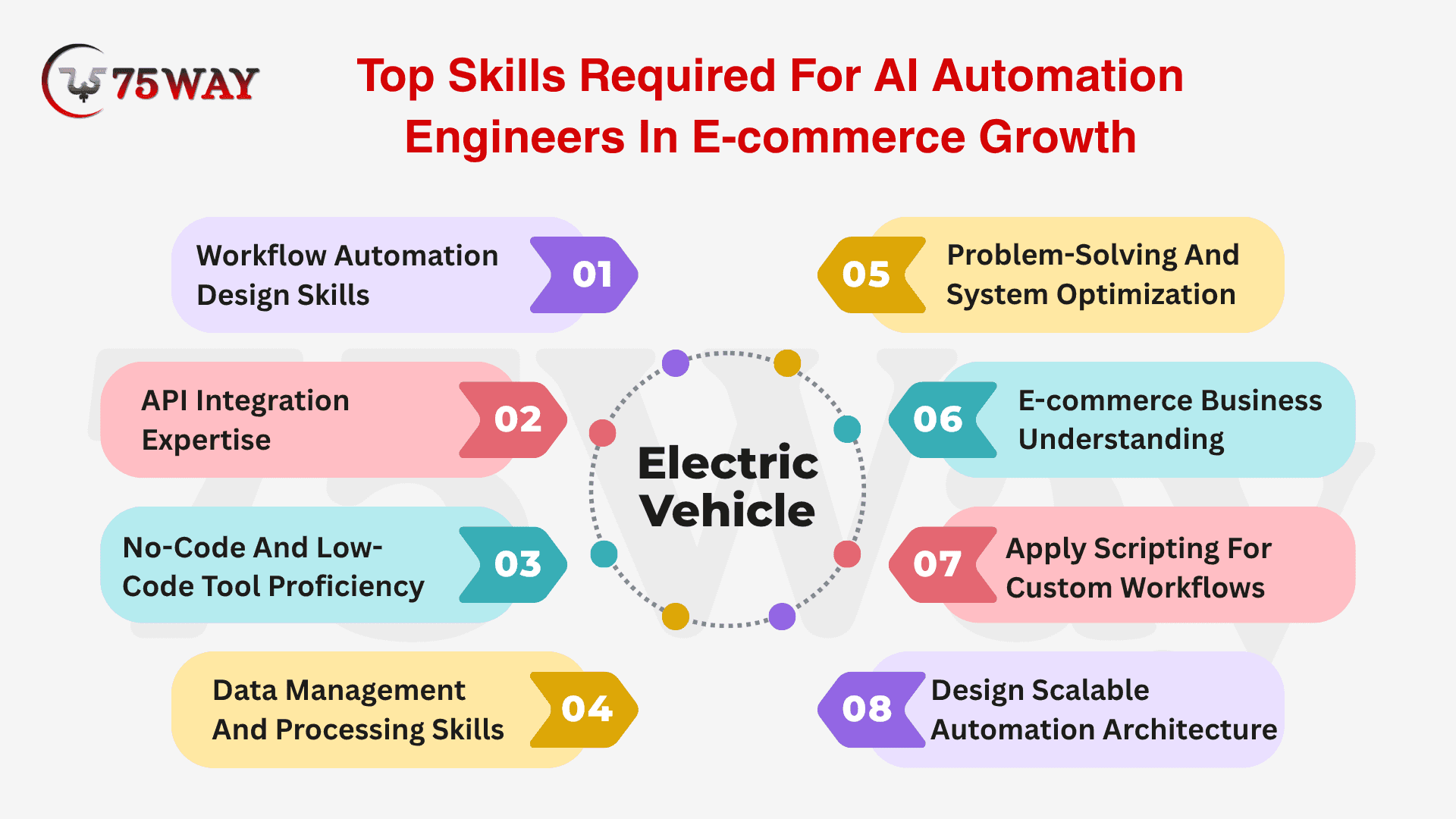
- Workflow Automation Design Skills: Ability to design structured automation workflows that connect different business processes. Engineers must understand how to map e-commerce operations into automated sequences that reduce manual effort, improve speed, and ensure consistent execution across sales, marketing, and fulfillment systems.
- API Integration Expertise: Strong knowledge of APIs is essential for connecting platforms like CRMs, payment gateways, and inventory systems. This skill ensures seamless data exchange between tools, enabling real-time synchronization and smooth operation of automated e-commerce workflows.
- No-Code And Low-Code Tool Proficiency: Familiarity with tools like n8n, Make, and Zapier is important for rapid automation development. These platforms help engineers build scalable workflows without extensive coding, allowing faster deployment and easier maintenance of business automation systems.
- Data Management And Processing Skills: Engineers must handle data pipelines that collect, process, and organize e-commerce information. This includes ensuring data accuracy, structuring workflows for analytics, and enabling businesses to make informed decisions based on clean and reliable data.
- Problem-Solving And System Optimization: Strong analytical thinking is required to identify inefficiencies in business processes. Engineers optimize workflows, reduce system bottlenecks, and improve automation performance to ensure smooth and reliable e-commerce operations.
- E-commerce Business Understanding: Understanding how online stores operate is essential for designing relevant automation solutions. This includes knowledge of order management, customer journeys, inventory flow, and marketing processes that directly impact business growth and conversions.
How AI Automation Is Transforming E-commerce Operations?
AI automation is reshaping e-commerce by streamlining repetitive workflows, improving customer experience, and enabling real-time decision-making. It connects sales, marketing, logistics, and support systems into a unified ecosystem that reduces manual effort and increases operational efficiency across online retail businesses.
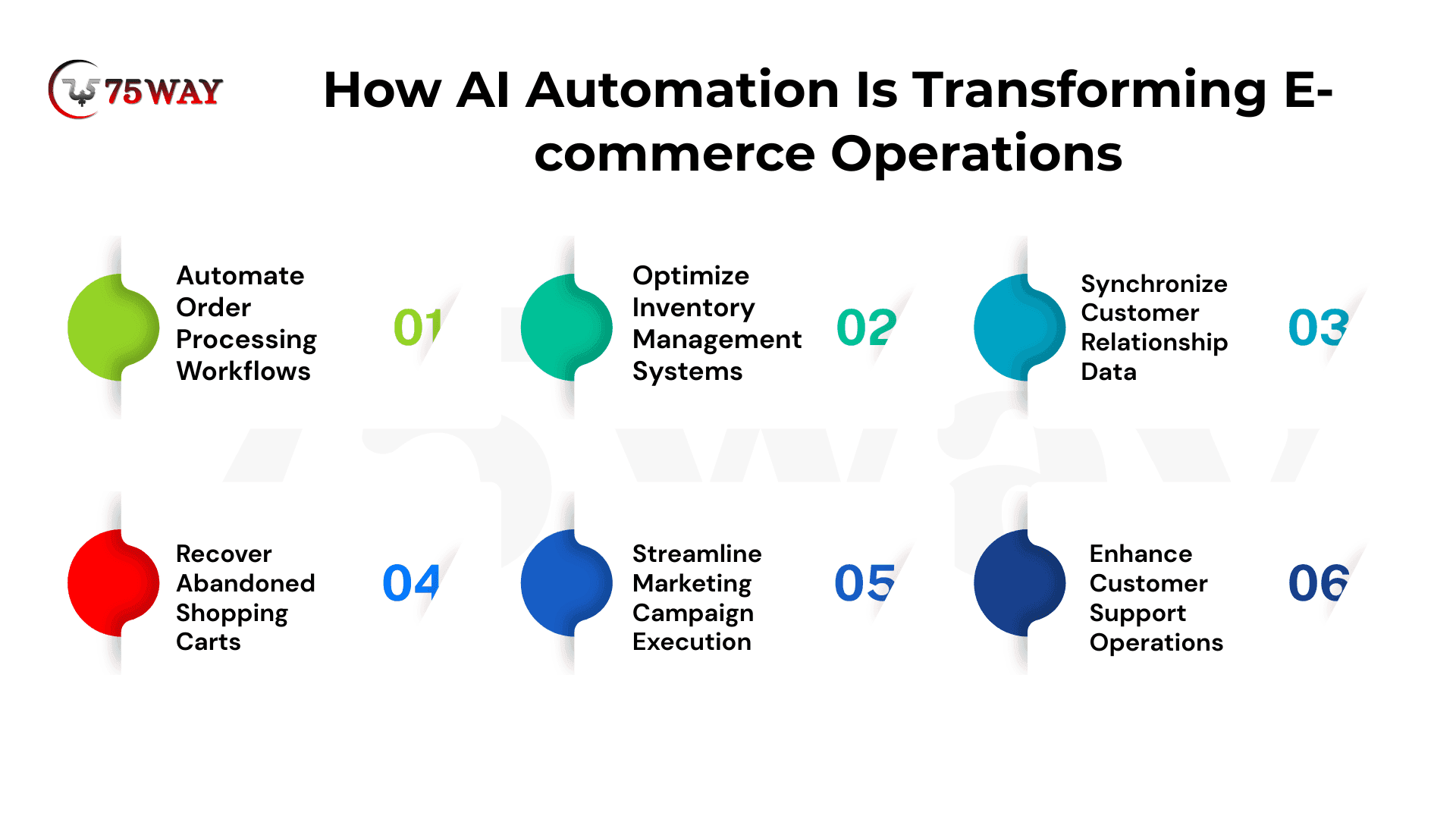
- Automate Order Processing Workflows
Order processing becomes faster through automation of confirmation messages, invoice generation, and shipping updates. This reduces manual intervention, minimizes errors, and ensures customers receive real-time order status updates, improving trust and overall post-purchase experience.
- Optimize Inventory Management Systems
Inventory tracking is automated to monitor stock levels in real time. The system triggers alerts for low stock and can initiate reorder workflows automatically, helping businesses avoid stockouts and overstocking issues while maintaining supply chain efficiency.
- Synchronize Customer Relationship Data
Customer data is automatically synced across CRM platforms like HubSpot, Zoho, or Salesforce. This ensures consistent customer profiles, improves personalization, and enables sales and marketing teams to access accurate, up-to-date information for better decision-making.
- Recover Abandoned Shopping Carts
Automated systems detect abandoned carts and send timely reminders or discount offers to customers. This helps recover lost sales, increases conversion rates, and improves revenue by re-engaging users who did not complete their purchase journey.
- Streamline Marketing Campaign Execution
Marketing workflows are automated for email campaigns, SMS notifications, and personalized product offers. This ensures timely communication with customers, improves engagement rates, and increases the effectiveness of promotional strategies across multiple digital channels.
- Enhance Customer Support Operations
AI-powered chatbots handle frequently asked questions, order tracking queries, and support tickets. This reduces response time, lowers support workload, and ensures customers receive instant assistance, improving satisfaction and overall service quality.
- Apply Scripting For Custom Workflows: Basic knowledge of JavaScript or Python is required to build custom automation logic. This helps extend platform capabilities, handle complex conditions, and create tailored workflows for specific business requirements.
- Design Scalable Automation Architecture: Engineers must create automation systems that can scale with business growth. This includes designing error-free workflows, optimizing performance, and ensuring reliability under increasing data loads and user activity.
How To Choose The Right AI Automation Specialist For Your Business
Selecting the right AI automation specialist is essential for building reliable, scalable, and efficient e-commerce automation systems. A well-qualified expert ensures smooth workflow execution, proper system integration, and long-term stability, while poor selection can lead to broken automations, data inconsistencies, and operational disruptions.
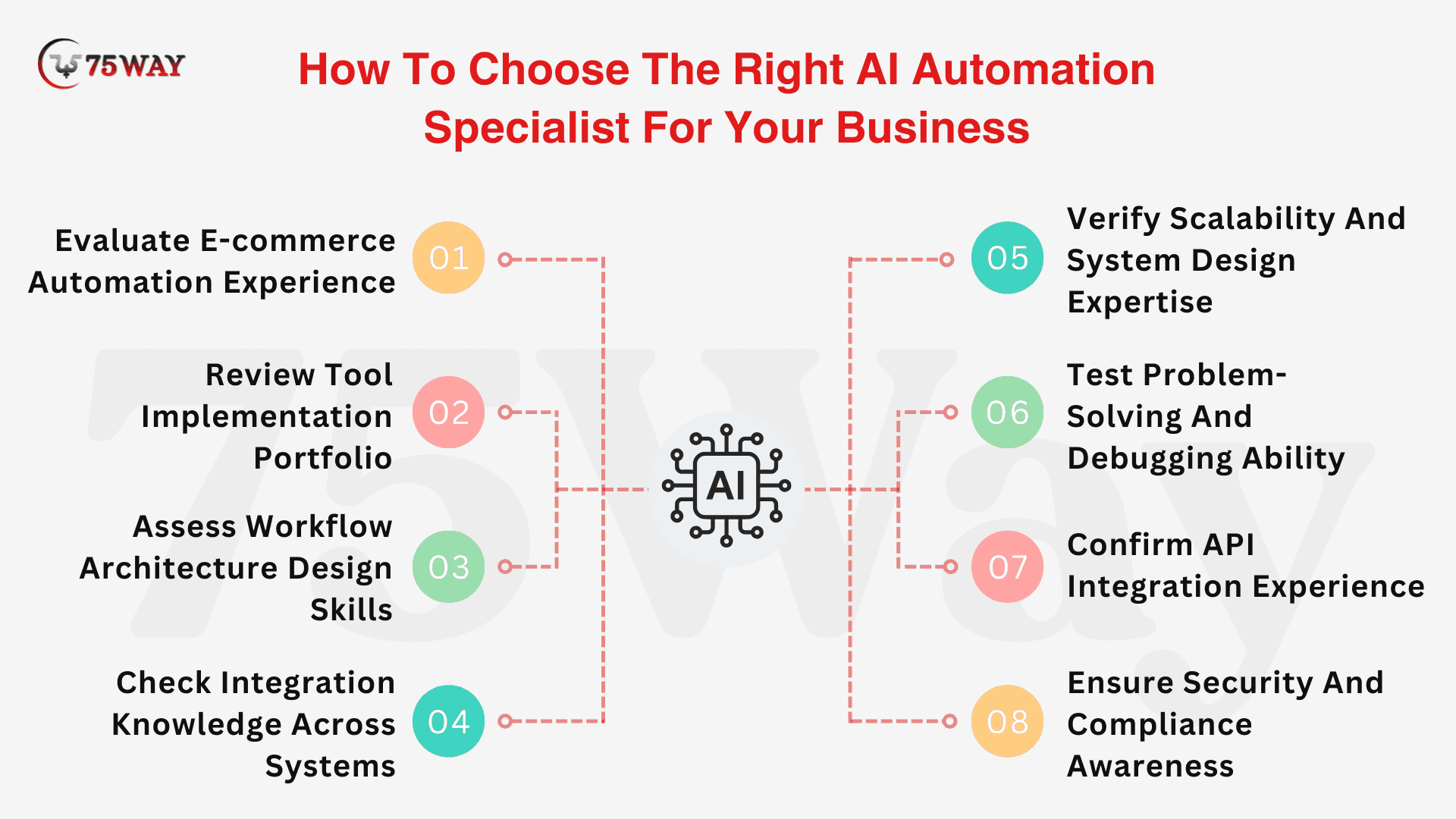
- Evaluate E-commerce Automation Experience
Look for proven experience in building automation systems for e-commerce businesses. This ensures the specialist understands real-world workflows like order processing, customer journeys, and marketing automation, leading to more practical and effective implementations.
- Review Tool Implementation Portfolio
Check past work involving tools like n8n, Make, or Zapier. A strong portfolio demonstrates the ability to design real automation workflows and shows how effectively the specialist has implemented solutions across different business scenarios.
- Assess Workflow Architecture Design Skills
The specialist should be capable of designing complete end-to-end automation systems. This includes mapping business processes, structuring workflows, and ensuring seamless coordination between different tools and platforms without performance issues.
- Check Integration Knowledge Across Systems
Strong understanding of CRM, ERP, and payment gateway integrations is essential. This ensures smooth data flow between systems and prevents operational gaps in sales, finance, and customer management processes.
- Verify Scalability And System Design Expertise
The specialist must be able to design automation systems that scale with business growth. This includes handling increasing data loads, user activity, and expanding operational requirements without system breakdowns.
- Test Problem-Solving And Debugging Ability
Effective specialists quickly identify and fix workflow errors or system failures. Strong debugging skills ensure minimal downtime and maintain smooth business operations across automated processes.
- Confirm API Integration Experience
Experience with API-based integrations is crucial for connecting multiple e-commerce tools. This allows seamless communication between platforms like CRMs, inventory systems, and payment gateways in real time.
- Ensure Security And Compliance Awareness
The AI engineer should understand data protection, privacy standards, and secure workflow design. This ensures safe handling of customer data and compliance with business and regulatory requirements.
Benefits of Hiring An AI Engineer to Automate Ecommerce Platforms
Hiring an AI automation specialist helps e-commerce and digital businesses streamline operations, reduce manual workload, and implement scalable automation systems. These professionals design intelligent workflows that connect tools, improve efficiency, and ensure smooth data flow across business processes.
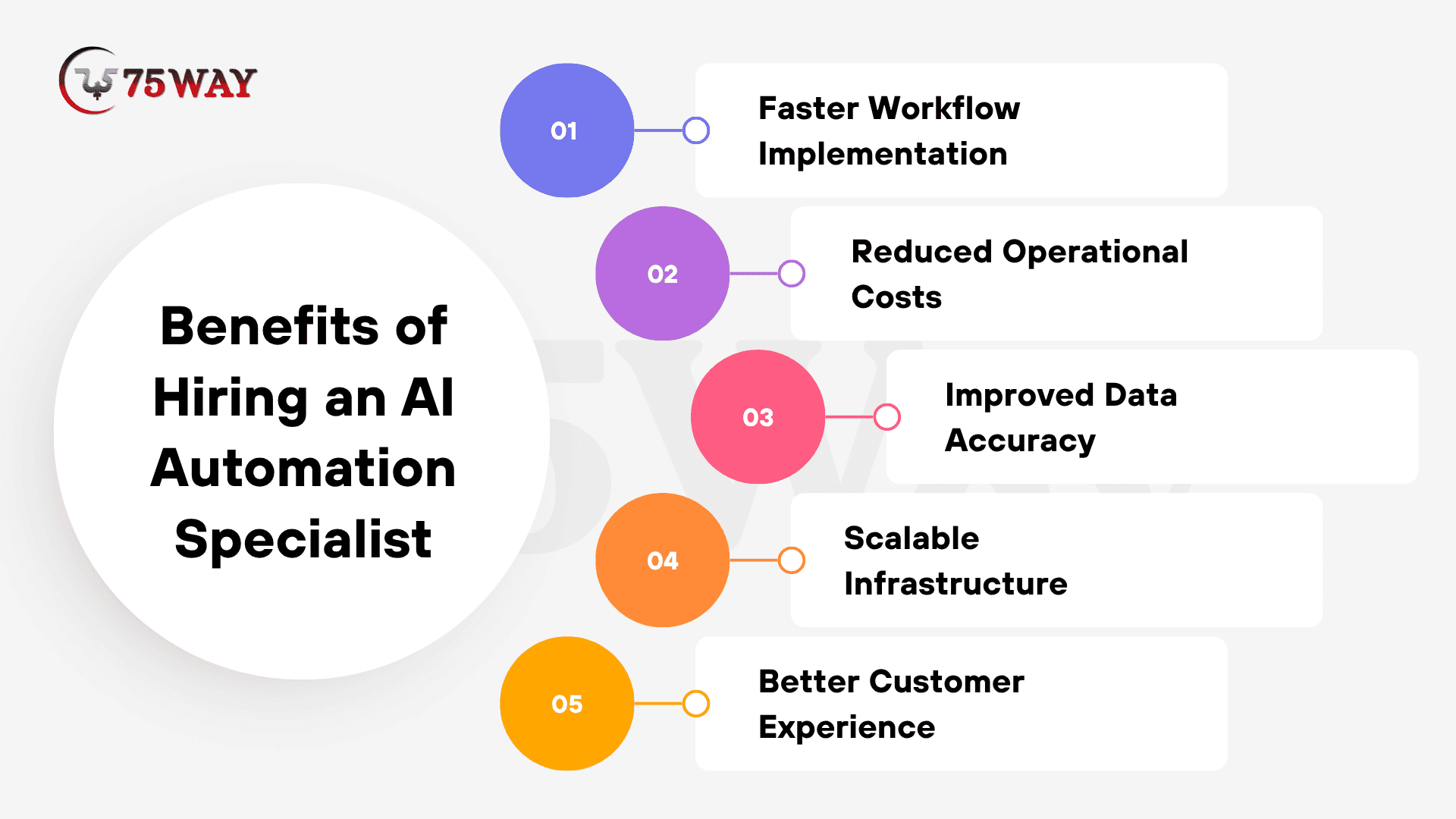
- Accelerate Workflow Implementation: Specialists build automation systems quickly using pre-built logic, tested frameworks, and integration tools. This reduces development time, speeds up deployment, and allows businesses to start benefiting from automation without long setup delays or technical complexity.
- Reduce Operational Costs Effectively: Automation specialists eliminate repetitive manual tasks by designing efficient workflows. This reduces dependency on large operational teams, lowers labor costs, and improves overall productivity across business functions such as sales, marketing, and customer support.
- Improve Data Accuracy And Reliability: By automating data handling processes, specialists reduce human errors in order processing, reporting, and customer management. This ensures cleaner datasets, more reliable insights, and better decision-making across business operations and analytics systems.
- Enable Scalable Business Infrastructure: Automation systems designed by specialists can grow with business demand without performance breakdowns. This ensures smooth handling of increased workloads, higher transaction volumes, and expanding customer bases without requiring major system redesigns.
- Enhance Customer Experience Quality: Faster response times, automated communication, and personalized engagement improve overall customer satisfaction. Businesses can deliver consistent support experiences, timely updates, and better service quality across all digital touchpoints.
Cost of Hiring AI Automation Developer For Ecommerce Platform
The cost of hiring an AI automation specialist typically ranges from $30 – $300+/hour, depending on experience level, project complexity, and the depth of automation required. Pricing also varies based on whether businesses need simple workflow setup, advanced system integrations, or enterprise-grade AI automation architecture for scalable e-commerce operations.
- Hourly (Freelancers): $30 – $150+/hr
Freelancers are typically hired for setup, troubleshooting, and basic workflow optimization. They are best suited for small automation tasks, quick integrations, and lightweight e-commerce workflow improvements.
- Hourly (Consultants): $150 – $300+/hr
Consultants focus on complex system design, enterprise-level automation strategy, and advanced API integrations. They are ideal for businesses requiring high-level architecture planning and mission-critical automation systems.
- Project-Based Pricing: $5,000 – $25,000+ per project
This model is used for clearly defined automation systems such as AI customer support agents, lead scoring models, or multi-step e-commerce workflows with fixed deliverables and timelines.
- Monthly Retainer: $2,000 – $8,000/month
Retainers cover ongoing maintenance, workflow monitoring, performance improvements, and continuous optimization of automation systems. This is suitable for businesses needing long-term support and scaling assistance.
AI Automation Specialist Cost Breakdown
The cost of hiring AI automation specialists varies significantly based on expertise, technical depth, and system complexity. On average, hourly rates range from $25 – $350+/hour, while monthly full-time equivalents can go much higher for enterprise-level AI architecture and machine learning systems used in advanced e-commerce and recommerce platforms.
Junior AI Automation Specialist / No-Code Integrator:
- Hourly Rate: $25 – $50
- Full-Time Equivalent (Monthly): $2,000 – $4,500
Setting up basic workflows using drag-and-drop tools like Make.com, n8n, and Zapier. Handles API connections, simple chatbot deployment, and routine automation tasks such as product listing scraping and basic e-commerce workflow setup.
Mid-Level AI Engineer
- Hourly Rate: $50 – $120
- Full-Time Equivalent (Monthly): $5,000 – $8,500
Designing and implementing custom API integrations, optimizing automation workflows, and working with AI models. Focuses on advanced e-commerce functions such as dynamic pricing systems, recommendation engines, and structured data automation across platforms.
Senior AI / Machine Learning Architect
- Hourly Rate: $150 – $350+
- Full-Time Equivalent (Monthly): $10,000 – $15,000+
Building complex AI systems and large-scale architectures. In recommerce, this includes computer vision models for automated product grading, fraud detection systems, predictive analytics, and enterprise-grade AI infrastructure design.
E-commerce Automation Use Case Costs
- Tier-1 Support Automation: $30,000 – $60,000
Automates 40–70% of customer support tickets using AI agents connected to order history, FAQs, and CRM systems. It reduces support workload and improves response speed and customer satisfaction.
- Marketing & Email Personalization: $2,000 – $5,000
Automates personalized product recommendations, abandoned cart emails, and targeted campaign flows. It increases conversions by delivering timely and relevant customer engagement across multiple channels.
- Dynamic Review Responses & Sentiment Analysis: $1,500 – $5,000
Analyzes customer reviews and feedback to generate contextual responses and sentiment insights. It improves brand reputation management and helps businesses respond to customers.
Why Hire AI Automation Expert For E-commerce?
Hiring an AI automation specialist ensures businesses build reliable, scalable, and efficient systems that improve operations, reduce manual workload, and increase revenue. These experts design structured automation workflows that connect tools, eliminate inefficiencies, and support long-term digital growth.
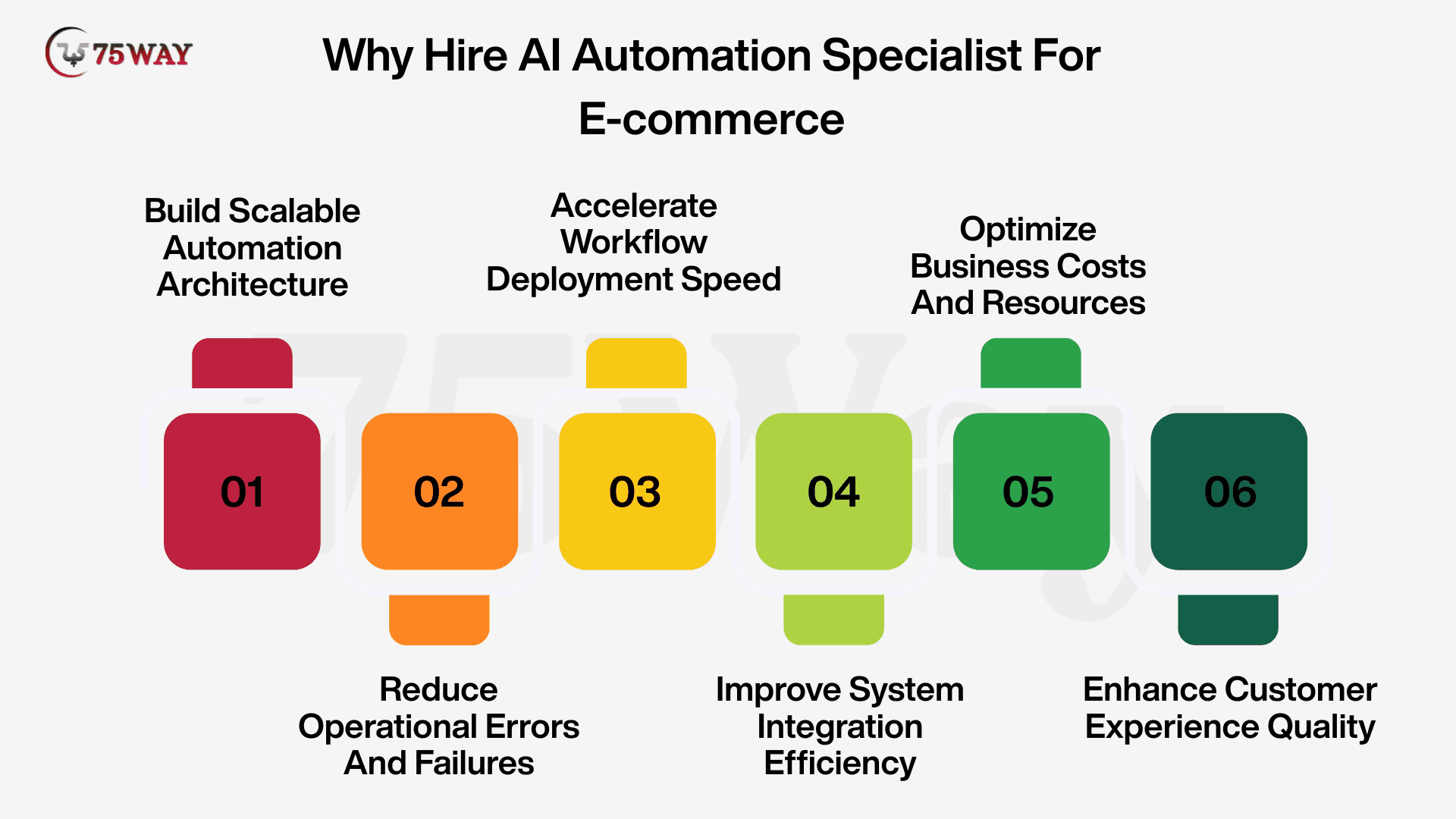
- Build Scalable Automation Architecture: Specialists design systems that can grow with business demand without breaking workflows. This ensures smooth handling of increased orders, traffic, and data as the e-commerce business expands.
- Reduce Operational Errors And Failures: Automation experts minimize human errors in processes like order management, inventory updates, and customer communication, ensuring higher accuracy and system reliability.
- Accelerate Workflow Deployment Speed: Specialists use proven tools and frameworks to implement automation quickly, reducing development time and allowing businesses to benefit from faster system rollout.
- Improve System Integration Efficiency: A Braze agency connects Braze with CRMs, payment gateways, e-commerce platforms, and other business tools to ensure seamless data flow and real-time synchronization. These integrations create a unified customer data ecosystem, enabling personalized cross-channel campaigns, improved operational efficiency, and more accurate customer engagement strategies.
- Optimize Business Costs And Resources: Automation reduces dependency on manual labor, helping businesses lower operational costs while improving productivity and efficiency across departments.
- Enhance Customer Experience Quality: Faster responses, automated support, and personalized engagement improve customer satisfaction, leading to higher retention rates and increased conversions.
Conclusion
AI automation is redefining e-commerce operations by eliminating manual processes and enabling intelligent workflow systems. Hiring an AI automation specialist allows businesses to integrate tools like n8n, Make, and Zapier into scalable, efficient, and high-performing digital ecosystems. These systems improve order processing, marketing automation, CRM synchronization, and customer engagement. As e-commerce continues evolving, automation specialists play a key role in building future-ready digital commerce infrastructures that support sustainable business expansion. If you want to scale your online store with intelligent automation, hire a trusted AI development company with a team of expert AI automation developers to build AI-powered e-commerce apps and solutions using n8n, Make, and Zapier to transform your e-commerce operations into a fully automated revenue engine.
Frequently Asked Questions (FAQ)
What Does An AI Automation Specialist Do In E-commerce?
An AI automation specialist designs and implements automated workflows for e-commerce platforms. They integrate tools like n8n, Make, and Zapier to streamline operations such as order processing, marketing, and customer management systems.
Why Should E-commerce Businesses Use Automation Tools?
Automation tools reduce manual workload, improve accuracy, and increase operational efficiency. They help businesses manage large volumes of orders, customer interactions, and marketing campaigns without increasing human resources significantly.
Which Is Better For E-commerce Automation: n8n, Make, Or Zapier?
n8n is best for advanced custom workflows, Make is ideal for mid-level automation, and Zapier is suitable for beginners. The choice depends on business size, complexity, and integration requirements.
How Much Does It Cost To Hire An Automation Specialist?
Costs vary based on experience and project complexity. Freelancers charge lower hourly rates, while enterprise specialists charge higher rates for large-scale automation systems and integrations.
Can Automation Improve E-commerce Sales?
Yes, automation improves sales by optimizing customer engagement, recovering abandoned carts, and personalizing marketing campaigns. Faster workflows also improve customer satisfaction and retention rates.
Is Coding Required For Using n8n, Make, Or Zapier?
Zapier and Make require minimal coding, while n8n may require technical knowledge for advanced workflows. AI automation specialists handle technical complexities for businesses.