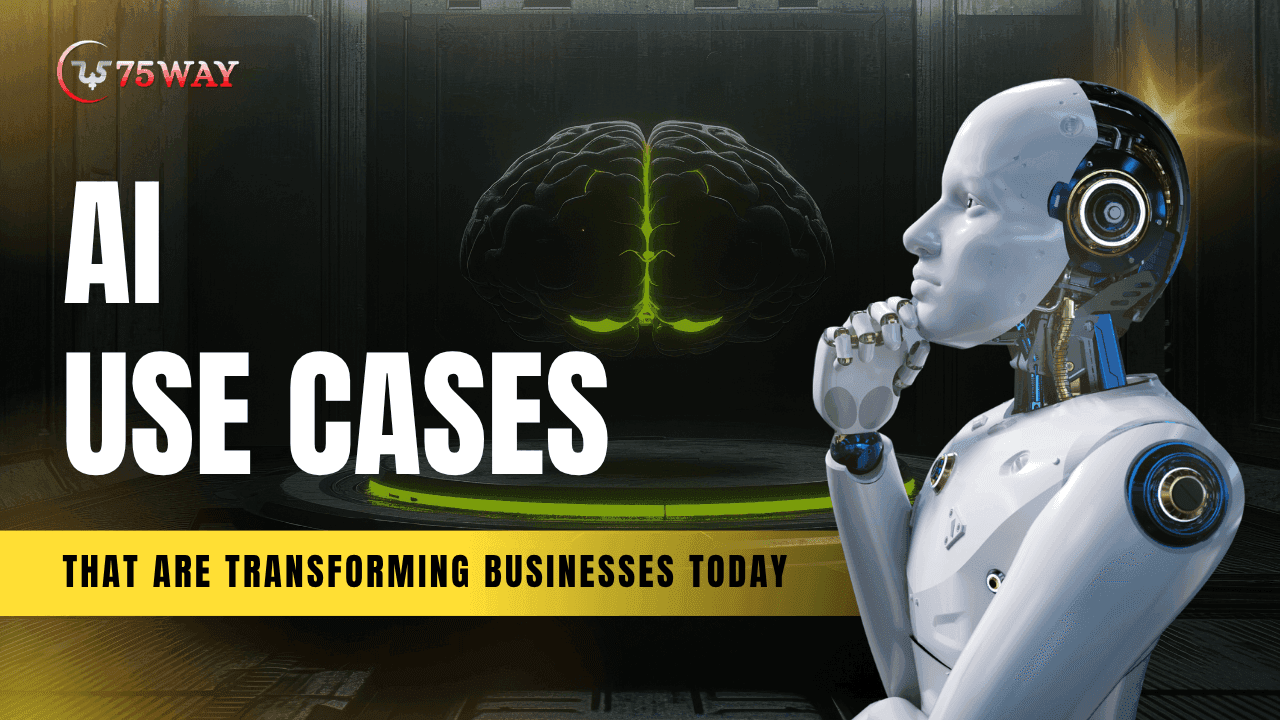
Blog Title: AI Use Cases That Are Transforming Businesses Today
Summary
Artificial intelligence is reshaping how modern organizations operate, from automating repetitive workflows to enabling predictive decision-making and hyper-personalized customer experiences. Across industries such as healthcare, finance, retail, logistics, and manufacturing, AI is improving efficiency, reducing operational costs, and unlocking new growth opportunities. This content explores practical, real-world AI applications that are actively transforming how businesses compete and scale today.
Key Takeaways
- AI adoption is accelerating rapidly across industries with measurable business impact.
- Generative AI alone is driving significant investment and enterprise transformation globally.
- Successful AI implementation depends on strategy, not just advanced technology adoption.
- Industries like healthcare, finance, and retail see the fastest AI-driven efficiency gains.
- Choosing the right AI use case is critical for maximizing ROI and scalability outcomes.
- Over 74% of enterprises report positive ROI from generative AI initiatives globally.
Did you know? The global AI market is projected to surpass $1.8 trillion by 2030, growing at a CAGR of 36.6%. At the same time, generative AI alone is attracting nearly $33.9 billion in investment, reflecting an 18.7% surge in adoption momentum.
This rapid expansion signals a major shift. But here’s a problem. A myriad number of businesses fail to adopt AI development solutions strategically and risk falling behind in efficiency, customer experience, and innovation capability. From startups to large enterprises, organizations are now integrating AI models into decision-making, business automation, and customer engagement systems at scale.
But, how are AI solutions beneficial for businesses related to diverse industries? How can they integrate and implement AI into their existing workflow? This guide answers high-impact AI use cases across industries, practical implementation strategies, and how organizations can choose the right AI applications to maximize growth, efficiency, and return on investment.
What Are AI Use Cases in Business?
AI use cases in business refer to practical, real-world applications where artificial intelligence is used to solve operational challenges, automate processes, improve decision-making, and enhance customer experience. These use cases translate AI capabilities, such as machine learning, natural language processing, and predictive analytics, into measurable business outcomes like cost reduction, revenue growth, and efficiency improvement across industries.
Still unable to understand the meaning of AI use cases in business. Let’s make it easy with an example. When you shop online and see product recommendations based on your past searches, that is artificial intelligence analyzing your behavior to suggest what you are most likely to buy. It helps businesses increase sales while improving their shopping experience.
High-Impact AI Use Cases For Divrese Industries
AI is transforming industries by enabling automation, prediction, and personalization at scale. From healthcare diagnostics and fraud detection to retail recommendations and supply chain optimization, AI improves accuracy and operational speed. Businesses use generative AI, machine learning, agentic AI, and predictive models to streamline workflows, enhance customer engagement, and make data-driven decisions. Its impact spans every sector, reshaping how organizations innovate, compete, and deliver value efficiently.
AI Use Cases In Healthcare
Artificial intelligence is transforming healthcare by improving diagnosis accuracy, enabling early disease detection, and supporting data-driven clinical decisions that enhance patient care outcomes. AI-powered diagnostic markets are projected to reach $35 billion by 2027, and around 65% of U.S. hospitals already use AI-assisted predictive models. Further, healthcare and wellness platforms, AI-powered healthcare apps, and software improve accuracy, reduce errors, and enhance patient outcomes.
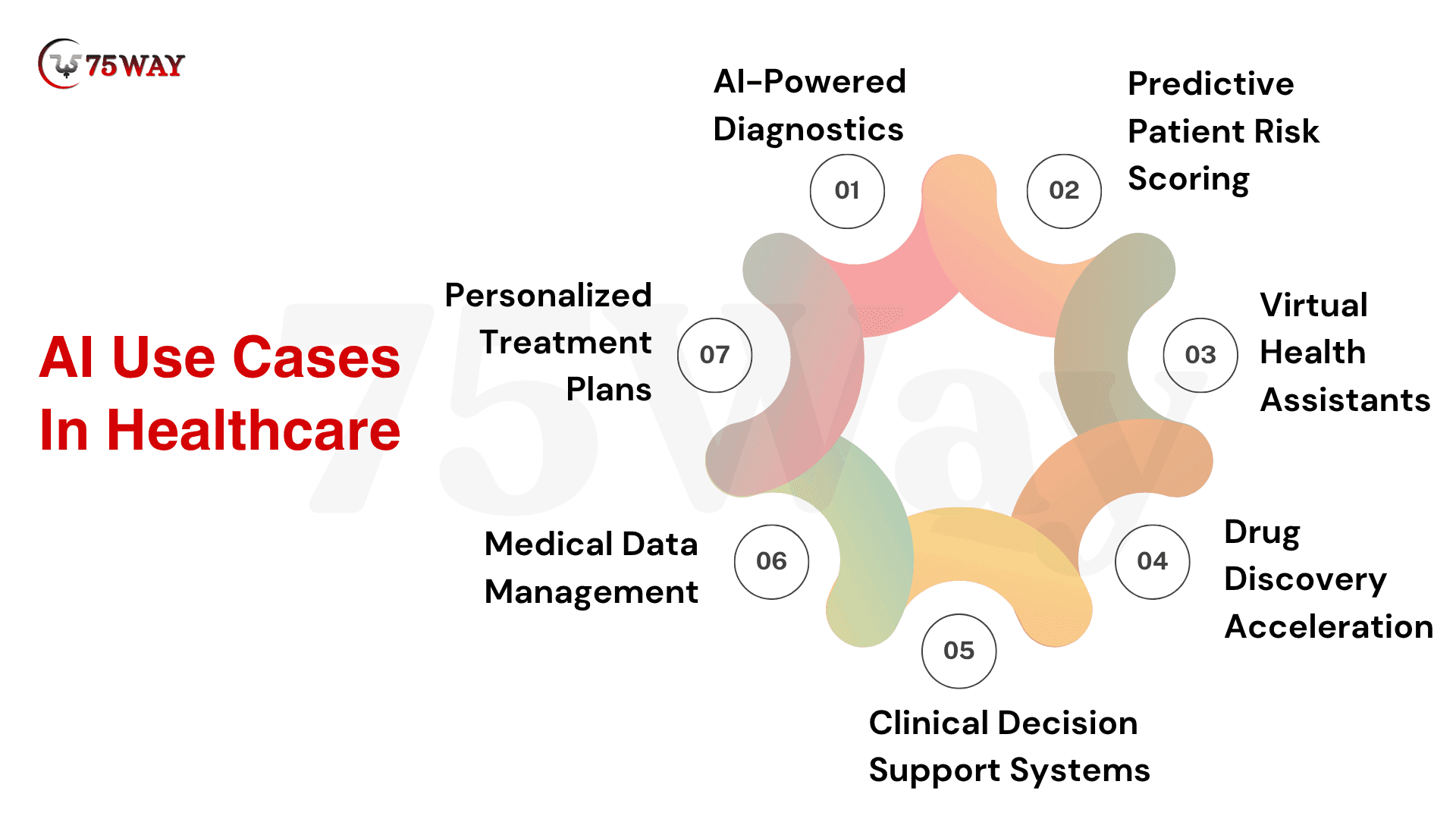
AI-Powered Diagnostics: AI for healthcare analyze medical imaging, laboratory reports, and patient history to identify diseases at an earlier stage with higher accuracy and consistency. This improves clinical decision-making, reduces diagnostic delays, and supports healthcare professionals in high-pressure environments such as radiology and oncology, leading to faster, safer, and more reliable patient outcomes.
Predictive Patient Risk Scoring: Advanced AI models process historical records and real-time health data to detect patients who are more likely to develop severe medical conditions. This allows healthcare providers to take preventive action early, reduce emergency admissions, and improve long-term recovery rates while optimizing hospital resources and enhancing overall patient safety and care efficiency.
Virtual Health Assistants: You can build AI assistants and copilots to provide patients with instant responses for medical queries, appointment scheduling, and basic symptom assessment through chat or voice interfaces. This reduces workload for healthcare staff, improves accessibility to healthcare support, and ensures patients receive timely assistance even outside hospital hours, improving engagement and service efficiency.
Drug Discovery Acceleration: Intelligent algorithms and AI software for healthcare simulate molecular interactions and analyze biological data to identify potential drug candidates more efficiently. This reduces research time and development costs while increasing the probability of clinical trial success, helping pharmaceutical companies bring safe and effective treatments to market faster and improving global healthcare innovation.
Clinical Decision Support Systems: AI copilots and tools assist healthcare professionals by analyzing patient data, symptoms, and clinical guidelines to recommend possible diagnoses and treatment options. This reduces human error, improves diagnostic accuracy, and ensures more consistent and informed medical decisions, especially in complex or time-sensitive healthcare environments across hospitals and clinics.
Medical Data Management: Advanced systems organize and analyze large volumes of patient records to improve accessibility, accuracy, and compliance. This enables healthcare providers to retrieve critical information quickly, streamline administrative processes, and make better data-driven decisions that enhance operational efficiency and overall quality of patient care delivery.
Personalized Treatment Plans: AI in healthcare evaluates genetic, lifestyle, and medical history data to design highly customized treatment strategies for individual patients. This improves treatment effectiveness, reduces side effects, and ensures care is tailored to each patient’s unique health profile, leading to better recovery outcomes and more precise medical interventions.
Use Cases of AI in Retail & E-commerce
AI-powered ecommerce apps and software transform the retail industry by enabling personalized shopping experiences, smarter inventory control, and data-driven sales strategies that improve customer satisfaction and revenue growth. More than 40% of customers prefer buying from brands offering personalized experiences. Even nearly 90% of retailers are already adopting or evaluating AI e-commerce software and tools to enhance personalization, operations, and sales growth.
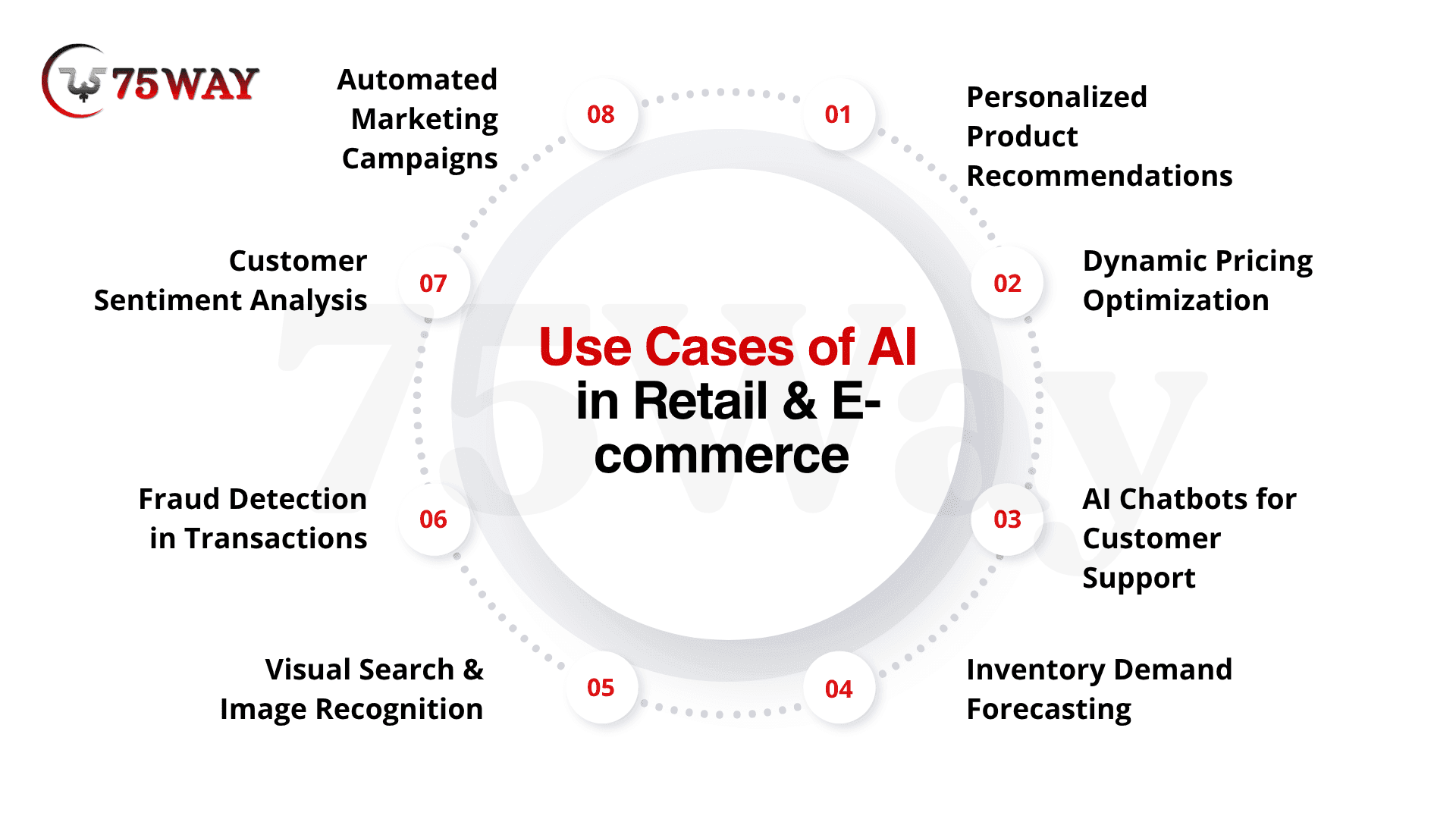
Personalized Product Recommendations: AI systems analyze customer behavior such as browsing history, search patterns, and past purchases to understand individual preferences. These solutions then suggest relevant products in real time that match user interests. This helps businesses increase sales, improve customer satisfaction, and boost conversion rates through more personalized shopping experiences.
Dynamic Pricing Optimization: AI in retail adjusts product prices based on demand, competition, inventory levels, and customer behavior in real time. This ensures businesses stay competitive while maximizing profit margins. It helps companies respond quickly to market changes and sell products at the most effective price without manual intervention.
AI Chatbots for Customer Support: AI chatbot development solutions handle customer queries related to orders, refunds, tracking, and product information instantly. They work 24/7 without human intervention, ensuring faster response times and consistent support. This reduces operational costs, improves customer satisfaction, and allows human agents to focus on complex issues.
Inventory Demand Forecasting: The AI solutions predict future product demand using historical sales data, seasonal trends, and market behavior. They help businesses maintain optimal inventory levels and avoid overstocking or shortages. As a result, companies improve supply chain efficiency and reduce unnecessary storage and operational costs.
Visual Search & Image Recognition: This technology allows users to search for products using images instead of text. AI identifies visual elements like color, shape, and texture to find similar items instantly. It makes shopping faster and more intuitive. This improves product discovery, enhances user experience, and increases purchase likelihood through better search accuracy.
Fraud Detection in Transactions: AI in ecommerce continuously monitors financial transactions to identify unusual patterns and suspicious behavior in real time. It helps detect and prevent fraudulent activities before they cause damage. This protects customer data, reduces financial losses, and strengthens trust in digital payment systems by ensuring safer and more secure online transactions.
Customer Sentiment Analysis: The AI ecommerce system processes customer reviews, ratings, and social media feedback to understand public opinion about products or services. It identifies satisfaction levels and detects issues early. This helps businesses improve product quality, refine marketing strategies, and build stronger customer relationships based on real user insights.
Automated Marketing Campaigns: AI automates marketing processes for retail, such as audience targeting, message personalization, and campaign scheduling across channels. It ensures marketing messages reach the right audience at the right time. This increases engagement, saves time, improves campaign efficiency, and maximizes return on investment for businesses.
AI Use Cases in Real Estate
AI improves real estate operations by enhancing property search accuracy, pricing decisions, and customer engagement through data-driven insights. The AI-powered real estate apps and software help buyers discover suitable properties faster while improving agent efficiency. The industry is expected to gain nearly $34 billion in efficiency benefits by 2030, while AI-powered virtual assistants enable 24/7 support and personalized property recommendations for better decision-making.
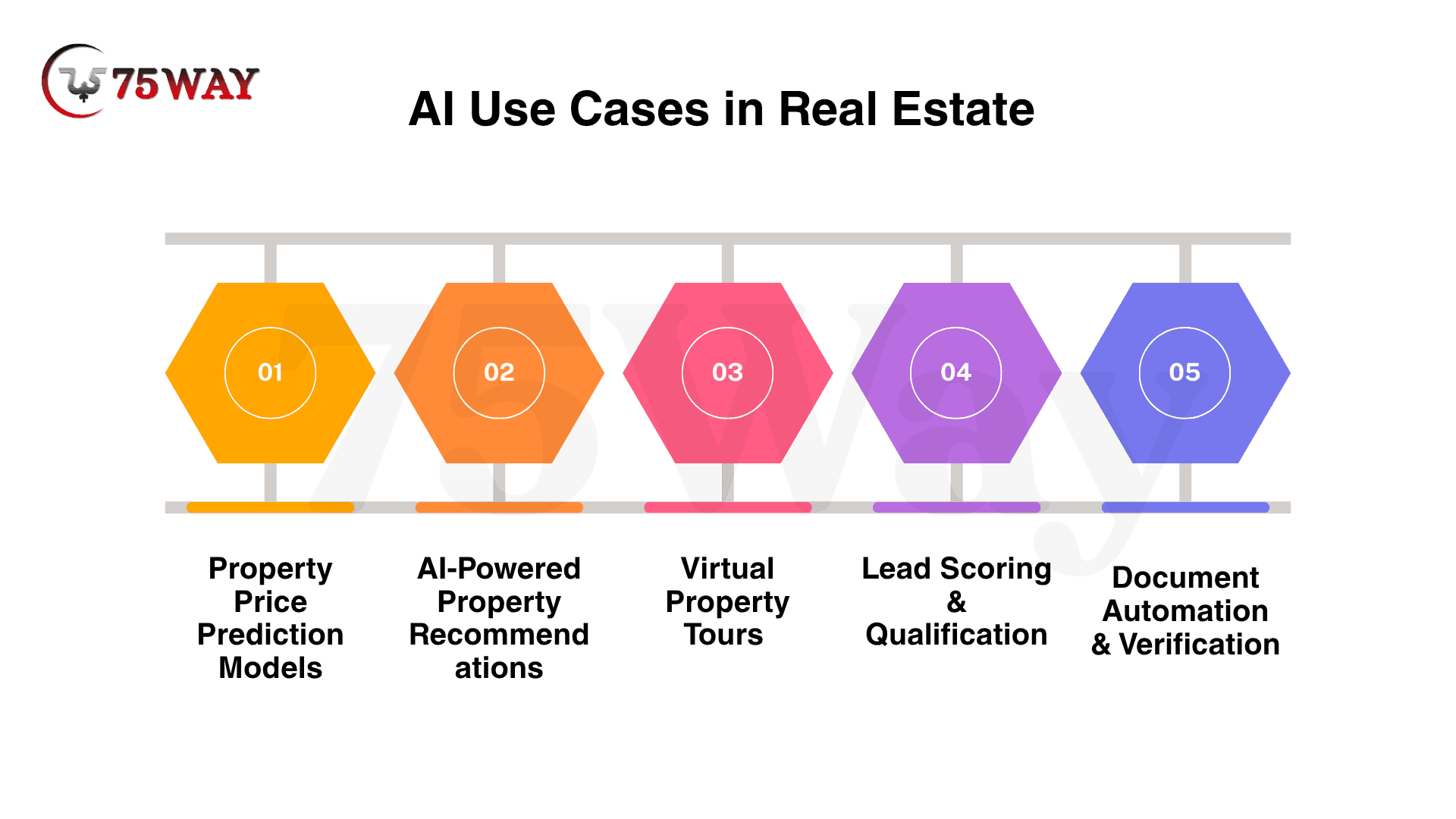
Property Price Prediction Models: AI-powered real estate software estimates property values by analyzing historical sales data, location factors, and current market trends. These solutions assist buyers, sellers, and investors in making more accurate pricing decisions. This reduces uncertainty in the market and supports better financial planning for real estate transactions and long-term investments.
AI-Powered Property Recommendations: AI in real estate analyzes user preferences, budget range, and browsing behavior to suggest highly relevant property listings. It helps users discover suitable homes faster and more efficiently. It also increases engagement for real estate platforms and supports agents in converting more qualified leads into successful property sales with better targeting and personalization.
Virtual Property Tours: Advanced AI combined with AR and VR allows users to explore properties remotely through immersive digital experiences. Buyers can view interiors, layouts, and surroundings without physical visits. This reduces travel time, improves convenience, and helps users evaluate properties more confidently, leading to faster and more informed property decision-making processes.
Lead Scoring & Qualification: AI in real estate evaluates user activity such as inquiries, clicks, and engagement levels to identify serious property buyers. It helps real estate agents prioritize high-quality leads and avoid spending time on unqualified prospects. This improves sales efficiency, increases conversion rates, and ensures better use of marketing and sales resources across platforms.
Document Automation & Verification: AI for real estate automates property document checking and verification by analyzing records for accuracy and consistency. It reduces manual effort, minimizes human errors, and speeds up processing time. This improves transaction security, ensures compliance, and creates a smoother experience for buyers, sellers, and real estate professionals during property deals.
AI Use Cases for Logistics & Supply Chain
AI logistics software and tools automate supply chain operations by optimizing delivery routes, predicting demand, and enhancing inventory management efficiency. It helps businesses reduce operational delays, improve cost control, and increase overall accuracy in supply chain planning. Nearly 70% of transportation and logistics companies are already adopting AI solutions, while the generative AI logistics market is expected to surpass $23.1 billion by 2034.
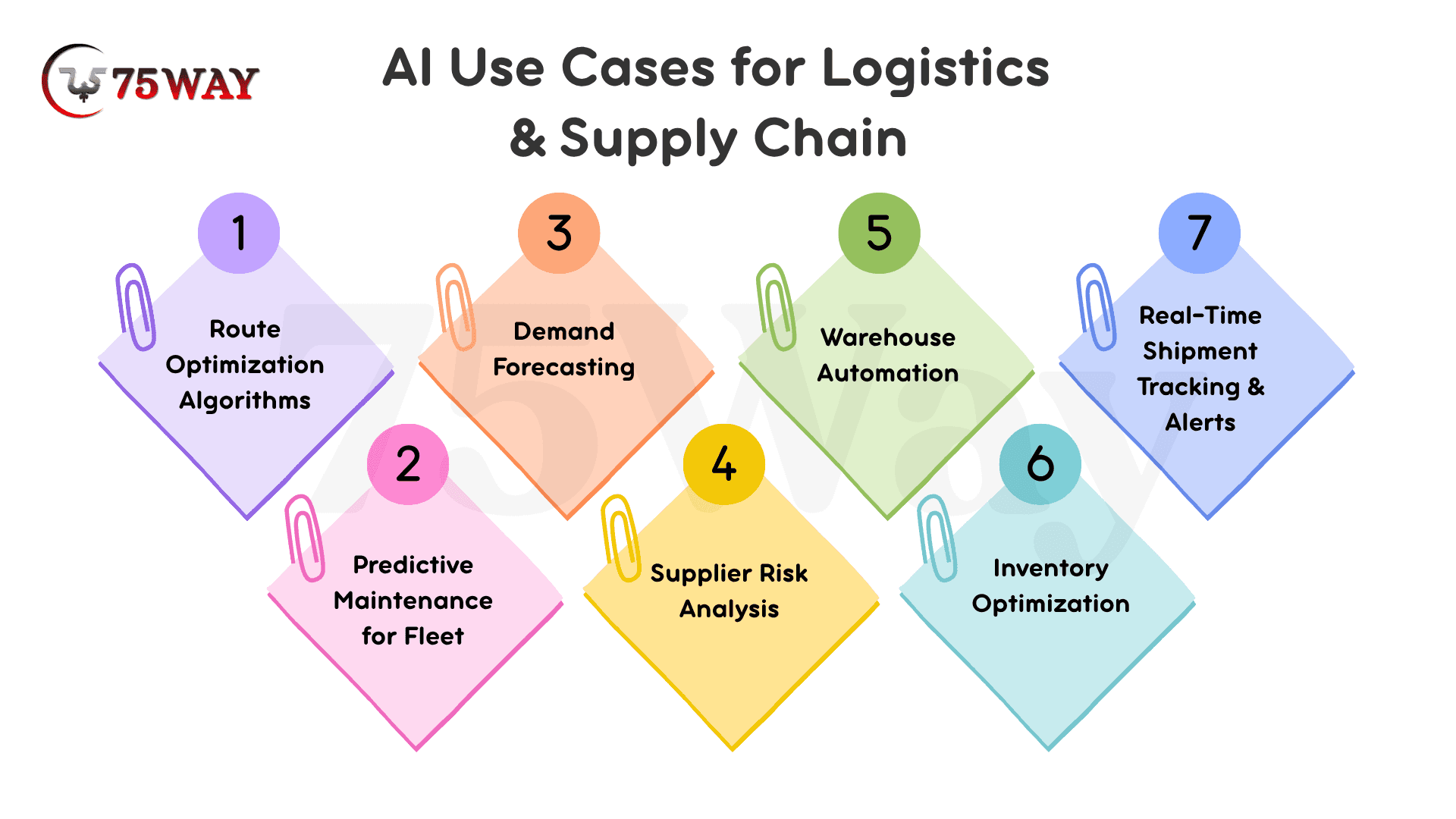
Route Optimization Algorithms: AI in supply chain calculates the most efficient delivery routes by analyzing traffic conditions, distance, delivery schedules, and fuel consumption. This helps logistics companies reduce travel time and operational expenses. It also improves delivery accuracy, enhances fleet utilization, and ensures faster, more reliable supply chain performance across multiple locations and distribution networks.
Demand Forecasting: AI studies historical sales data, seasonal patterns, and market behavior to predict future product demand. This allows businesses to plan production and inventory more effectively. It reduces overstocking and shortages, improves resource allocation, and helps companies maintain a balanced supply chain while meeting customer demand more consistently.
Warehouse Automation: AI-powered robotics streamlines warehouse operations such as sorting, packing, and inventory handling. This reduces manual labor, improves speed, and increases accuracy in order fulfillment. It also enhances productivity, minimizes errors, and enables warehouses to operate more efficiently with lower operational costs and faster processing times.
Real-Time Shipment Tracking & Alerts: AI enables continuous monitoring of shipments with real-time tracking and automated notifications. This improves visibility across the supply chain and keeps customers informed about delivery status. It enhances transparency, reduces uncertainty, and increases customer satisfaction by ensuring timely updates and better delivery communication.
Predictive Maintenance for Fleet: AI in logistics analyzes vehicle performance data to predict maintenance needs before breakdowns occur. This helps reduce unexpected failures, improves vehicle lifespan, and ensures smoother logistics operations. It also lowers repair costs, minimizes downtime, and keeps delivery fleets operating efficiently and reliably.
Supplier Risk Analysis: AI in logistics evaluates supplier performance using data such as delivery history, quality consistency, and financial stability. This helps businesses identify potential risks early and choose more reliable partners. It strengthens supply chain stability, reduces disruptions, and ensures smoother procurement and production planning processes.
Inventory Optimization: These toolsadjust stock levels by analyzing demand patterns, sales trends, and supply conditions. This helps businesses maintain the right inventory balance at all times. It reduces storage costs, prevents stockouts, and improves overall efficiency in supply chain management while ensuring better product availability for customers.
Artificial Intelligence (AI) Use Cases in Finance
Artificial Intelligence is improving the financial industry by strengthening fraud detection, automating regulatory compliance, enhancing credit evaluation, and supporting better investment decisions through real-time data insights. Fintech software development solutions help financial institutions reduce risks and streamline operations more efficiently. Nearly 62% of organizations using or testing AI agents have reported cost savings of around 20–30%, highlighting significant operational benefits.
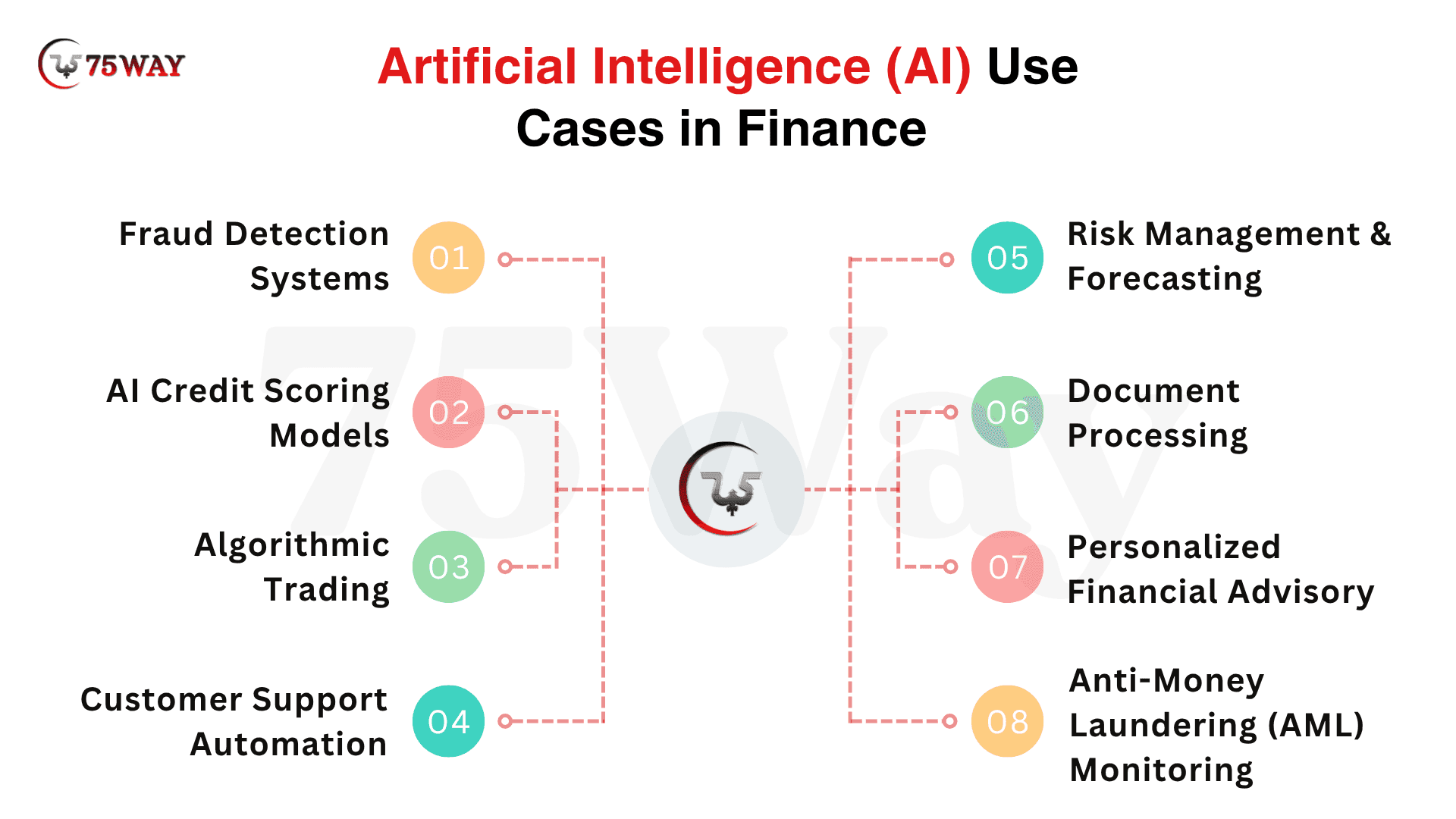
Fraud Detection Systems: AI in banking and finance services monitors financial transactions in real time to detect unusual patterns and suspicious activities. It identifies anomalies such as abnormal spending behavior or unauthorized access attempts. This helps financial institutions prevent fraud early, reduce financial losses, and build stronger trust among customers using digital banking and payment systems.
AI Credit Scoring Models: Advanced systems assess borrower eligibility using alternative data like transaction history, spending patterns, and digital behavior. This improves accuracy in loan approvals and reduces reliance on traditional credit scoring methods. It also expands access to credit for more users, enabling faster, fairer, and more inclusive financial decision-making processes.
Algorithmic Trading: AI in finance analyzes large volumes of market data to identify trends and execute trades at high speed. It minimizes emotional decision-making and improves trading accuracy. This allows investors to respond instantly to market changes, optimize returns, and manage risks more effectively through automated, data-driven trading strategies.
Customer Support Automation: AI chatbots handle banking and financial queries such as account details, transactions, and service requests instantly. They operate 24/7, improving response time and reducing operational costs. This ensures customers receive quick, consistent support while allowing human agents to focus on complex financial issues.
Risk Management & Forecasting: AI in finance services evaluates financial risks by analyzing market trends, economic indicators, and historical data. It helps institutions anticipate potential volatility and make better investment decisions. This improves risk control, enhances financial stability, and supports more strategic planning across banking and investment operations.
Document Processing: AI in banking automates identity verification by extracting and validating data from documents during onboarding. This reduces manual effort, speeds up customer registration, and minimizes errors. It also ensures regulatory compliance and improves efficiency in financial institutions handling large volumes of verification requests.
Personalized Financial Advisory: AI in finance and banking solutions provides tailored financial guidance based on user goals, income patterns, and spending behavior. It helps individuals make better investment and savings decisions. This makes financial planning more accessible, improves customer engagement, and supports smarter long-term wealth management strategies.
Anti-Money Laundering (AML) Monitoring: AI detects suspicious transaction networks and patterns linked to money laundering activities. It analyzes large datasets to identify hidden risks and unusual activities. This strengthens regulatory compliance, improves financial security, and helps institutions prevent illegal financial operations more effectively.
Use Cases of AI In Agriculture
AI solutions improve agriculture by enabling precision farming, crop monitoring, and yield prediction using real-time data from sensors, drones, and satellite imaging. AI in agriculture aids farmers in optimizing irrigation, reducing resource waste, and detecting crop diseases early. Nearly 50–60% of modern farms are adopting AI-based solutions to improve productivity, reduce costs, and support more sustainable and data-driven farming practices.
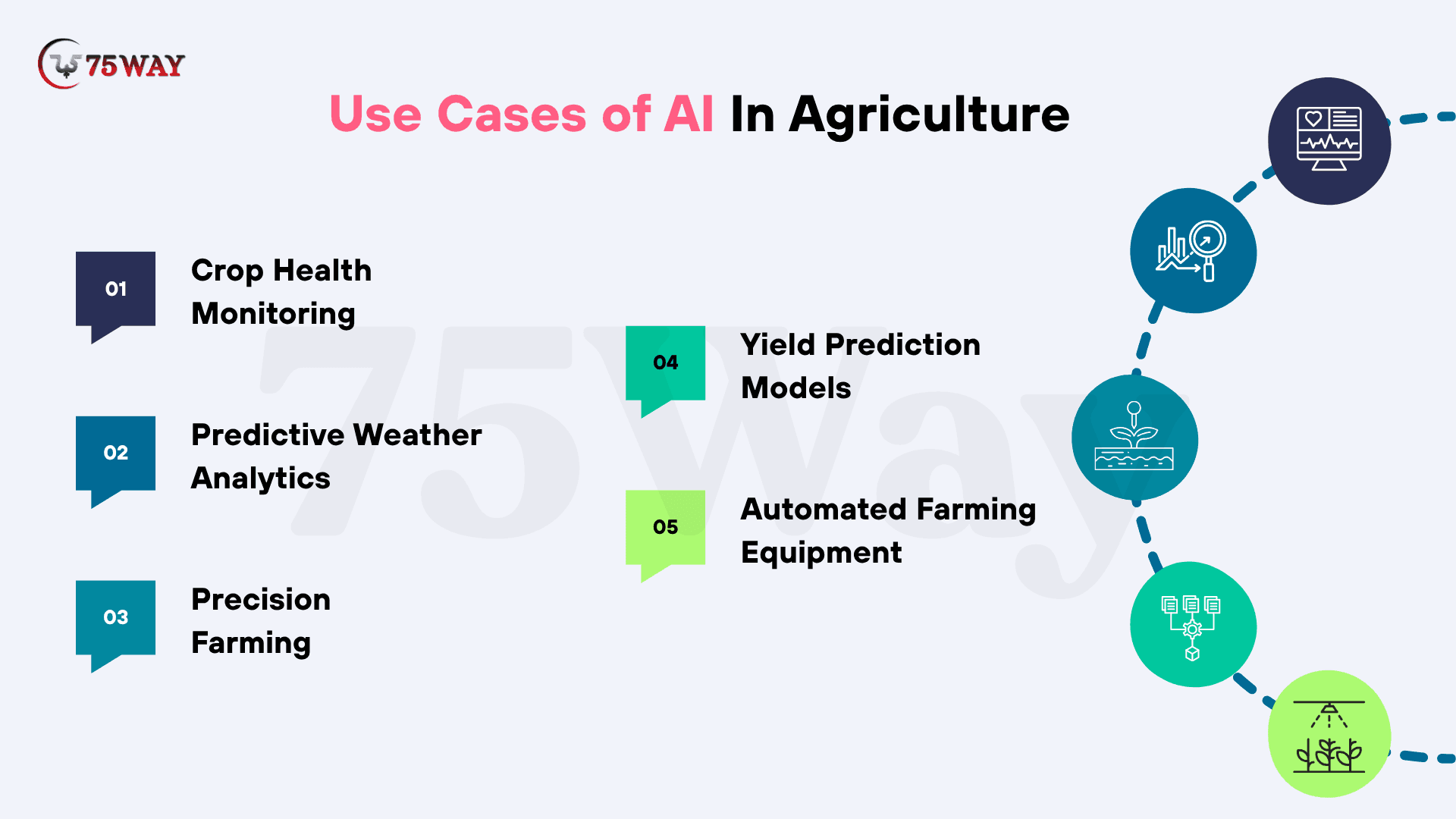
Crop Health Monitoring: AI-enabled drones capture and analyze crop images to identify diseases, pest infestations, and nutrient deficiencies at an early stage. This allows farmers to respond quickly with targeted actions. It improves crop quality, reduces losses, and ensures healthier yields through timely monitoring and precision-based agricultural interventions.
Predictive Weather Analytics: AI in agriculture processes large sets of weather and climate data to forecast upcoming conditions and seasonal patterns. This helps farmers make better decisions about planting, irrigation, and harvesting schedules. It reduces risks caused by unpredictable weather and improves overall farm planning and productivity.
Precision Farming: Artificial intelligence for agriculture uses data from soil sensors, satellites, and field conditions to optimize water, fertilizer, and pesticide usage. This ensures crops receive the exact resources they need without excess. It increases agricultural productivity, reduces environmental impact, and supports more efficient and sustainable farming practices.
Yield Prediction Models: AI analyzes historical yield data, soil quality, and environmental conditions to estimate future crop production. These solutions are useful for farmers to plan storage, distribution, and sales more effectively. They reduce uncertainty, improve supply chain planning, and support better financial decision-making in agriculture.
Automated Farming Equipment: AI-powered machines handle tasks like planting, irrigation, and harvesting with minimal human involvement. This reduces labor dependency, increases operational efficiency, and ensures consistent farming quality. It also helps farmers save time, lower costs, and manage large-scale agricultural operations more effectively.
Use Cases of AI in Education and EduTech
AI is enhancing education and EdTech by enabling personalized learning, automating administrative tasks, and supporting smarter content creation for students and teachers. AI-powered education apps improve lesson planning, simplify information delivery, and boost engagement through adaptive tools. Approximately 60% of K-12 public school teachers use AI tools, with around 38% using them for lesson planning and content summarization tasks.
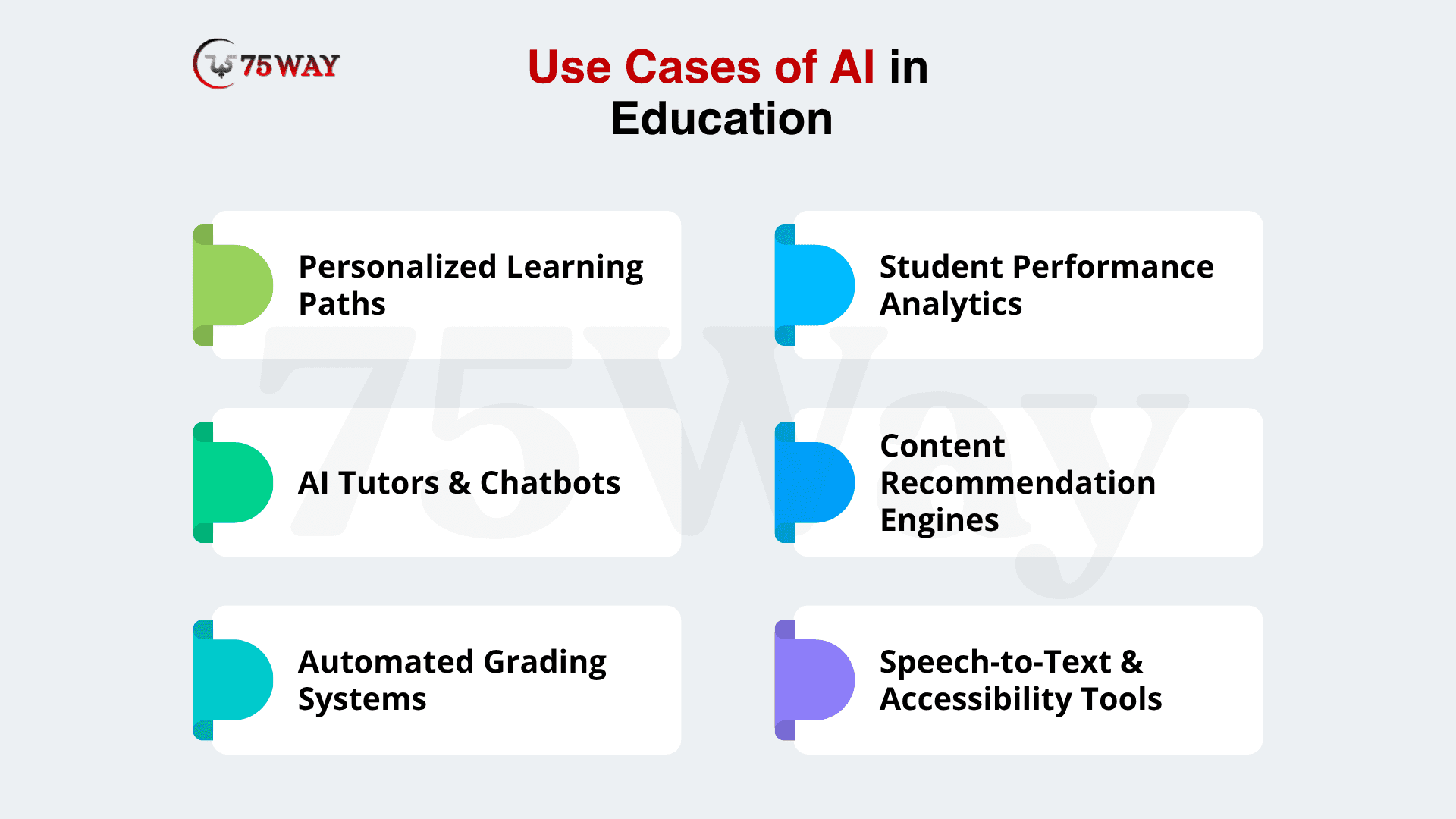
Personalized Learning Paths: AI designs individualized learning journeys by analyzing student performance, behavior, and progress patterns. It helps educators deliver tailored content that matches each learner’s pace and understanding level. This improves engagement, strengthens knowledge retention, and leads to better academic performance through more focused and adaptive learning experiences.
AI Tutors & Chatbots: AI-powered assistants provide instant academic guidance by answering student queries and simplifying complex topics. They support learning anytime, reduce dependency on traditional classroom hours, and enhance accessibility. This ensures students receive continuous help, improving understanding and boosting overall learning efficiency across different subjects.
Automated Grading Systems: AI-driven e-learning software evaluates academic work quickly and consistently, reducing teacher workload and ensuring fair assessment. These tools minimize human bias and improve grading accuracy across assignments, quizzes, and exams. This allows educators to focus more on teaching quality, student engagement, and improving overall learning outcomes.
Student Performance Analytics: AI in education solutions tracks student learning progress and analyzes performance patterns to identify strengths and weaknesses. It provides actionable insights that help educators adjust teaching strategies effectively. This enables targeted support, improves academic results, and ensures personalized learning interventions for each student.
Content Recommendation Engines: AI for education suggests relevant educational materials based on student behavior, interests, and performance history. It enhances engagement by delivering personalized learning content at the right time. This improves comprehension, encourages self-paced study, and supports more effective and focused learning experiences.
Speech-to-Text & Accessibility Tools: AI in education converts spoken words into written text and supports learners with disabilities through adaptive learning tools. It improves accessibility, inclusivity, and participation in education. This ensures students with diverse learning needs can engage effectively and benefit equally from academic resources.
Artificial Intelligence (AI) Use Cases for SaaS
AI is reshaping SaaS platforms by enabling automation, predictive analytics, and personalized user experiences across applications. It helps businesses reduce churn, optimize pricing strategies, and improve customer engagement through intelligent insights and workflow automation. More than 70% of SaaS companies are adopting AI SaaS development solutions to enhance product performance, streamline operations, and support faster decision-making, leading to improved retention and scalable revenue growth.
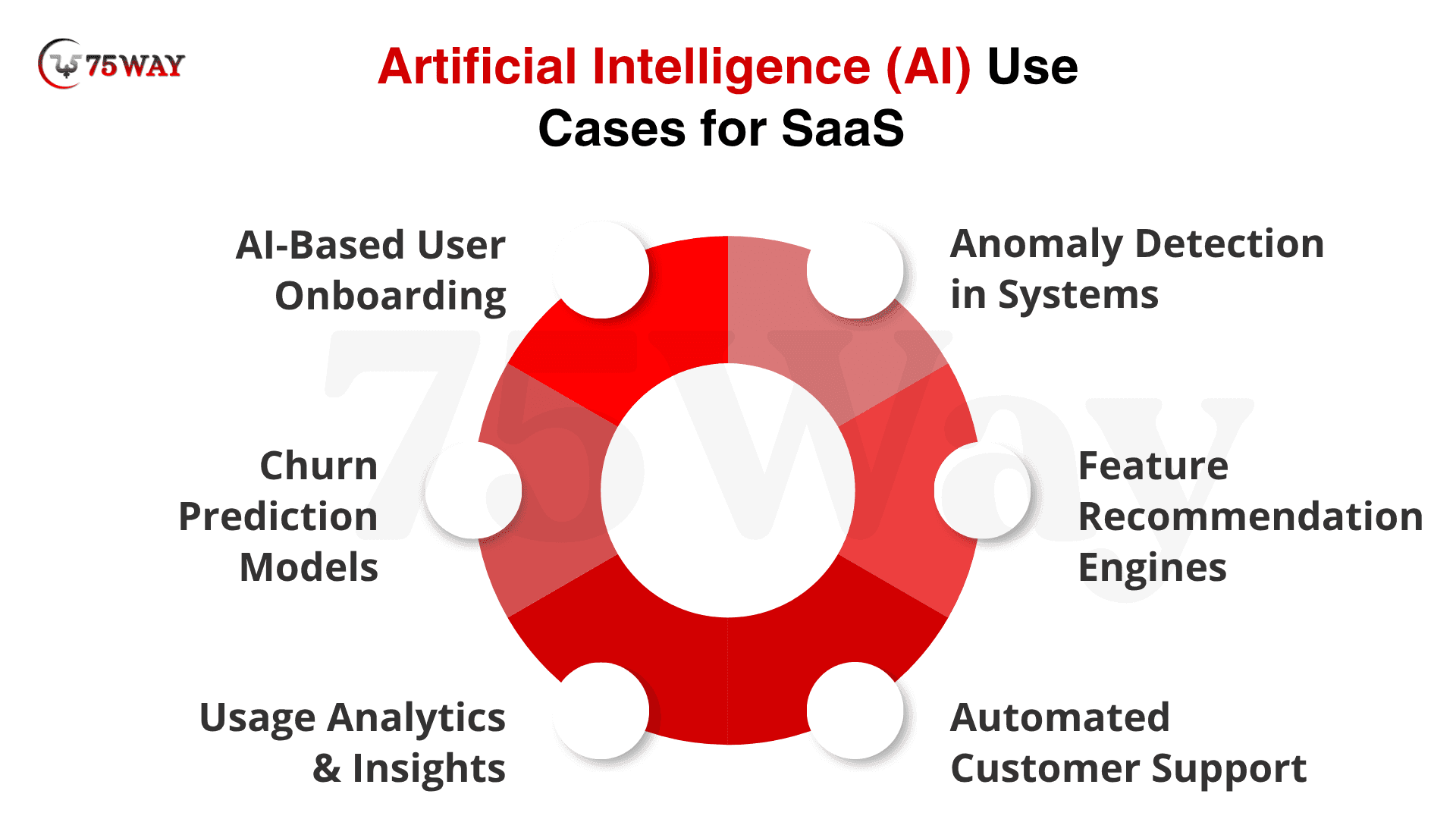
AI-Based User Onboarding: AI simplifies onboarding by guiding new users through personalized workflows based on their goals, behavior, and usage patterns. It reduces confusion during initial setup and helps users quickly understand platform value. This improves activation rates, enhances early engagement, and significantly reduces churn in SaaS platforms.
Churn Prediction Models: AI for SaaS analyzes user behavior, login frequency, feature usage, and engagement signals to identify customers likely to stop using a service. It enables proactive retention actions such as targeted messaging or incentives. This helps SaaS companies reduce churn, protect recurring revenue, and improve long-term customer loyalty.
Usage Analytics & Insights: AI solutions evaluate how users interact with SaaS products and transform raw data into actionable insights. They highlight usage trends, feature adoption, and drop-off points. This helps product teams improve functionality, enhance user experience, and make data-driven decisions for sustainable platform growth.
Automated Customer Support: AI-powered support systems handle user queries instantly across chat, email, and in-app channels. They provide accurate responses, resolve common issues, and operate 24/7 without human intervention. This improves response time, reduces support costs, and increases overall customer satisfaction in SaaS platforms.
Feature Recommendation Engines: AI tools recommend relevant features to users based on their behavior, preferences, and usage history. They help users discover valuable functionalities they might otherwise miss. This increases product adoption, boosts engagement, and enhances overall platform value and user retention.
Anomaly Detection in Systems: AI continuously monitors SaaS systems to detect unusual behavior, bugs, or performance issues in real time. It alerts teams before problems escalate, ensuring faster resolution. This improves system reliability, reduces downtime, and enhances trust in SaaS platform stability.
AI Use Cases for Enterprises
AI is transforming enterprises by enabling intelligent automation, data-driven decision-making, and improved operational efficiency across large-scale business functions. Enterprise AI solutions help organizations streamline workflows, enhance customer experiences, and reduce operational costs through predictive analytics and smart systems. Studies show that over 80% of enterprises are adopting AI solutions to improve productivity, strengthen competitiveness, and drive long-term digital transformation and innovation.
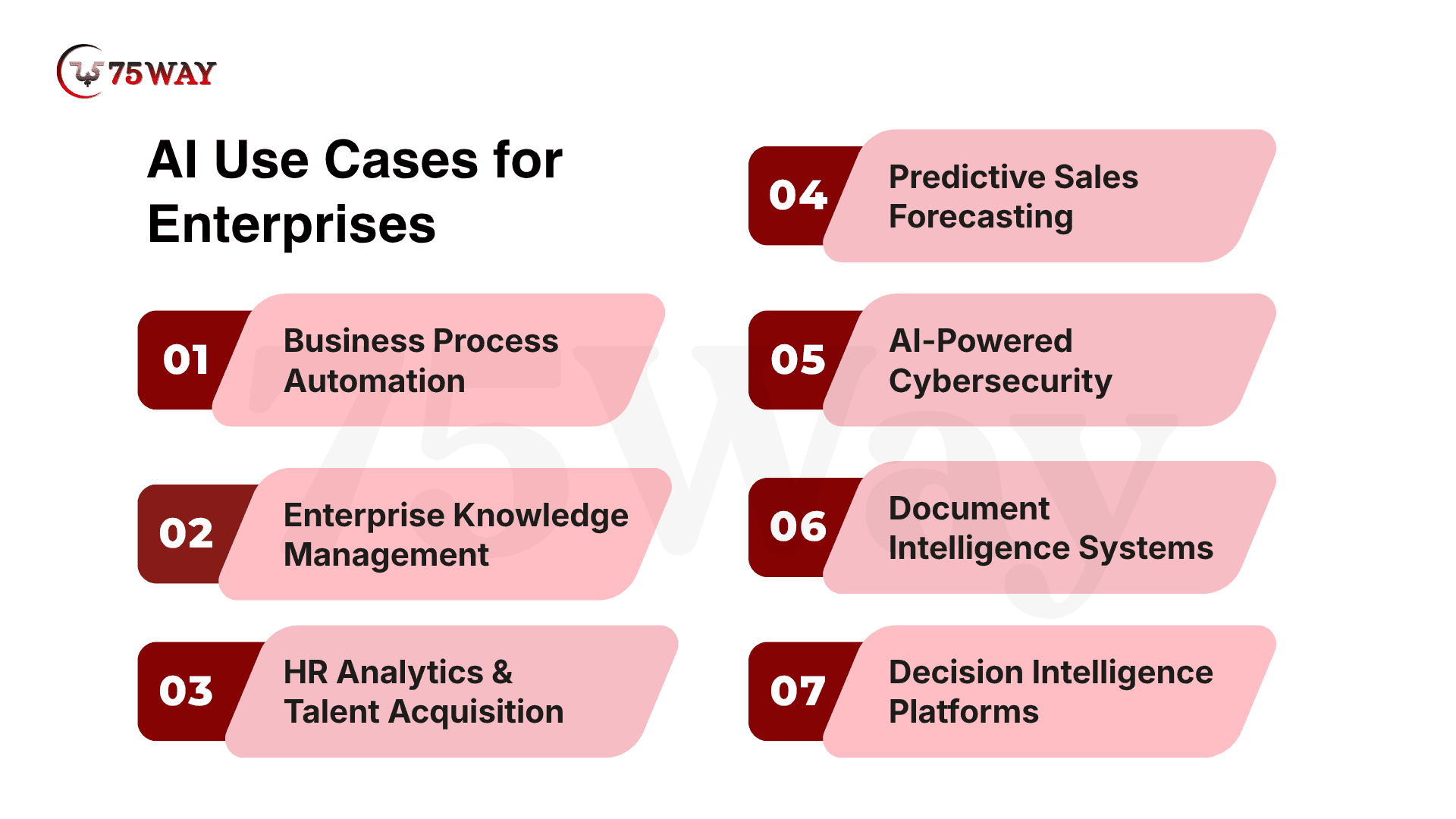
Business Process Automation: AI combined with RPA development solutions automates repetitive enterprise workflows such as data entry, approvals, and reporting. It reduces manual effort, minimizes errors, and significantly improves operational efficiency. This allows enterprises to save costs, streamline processes, and focus more on strategic and high-value business activities.
Enterprise Knowledge Management: AI organizes and connects enterprise data from documents, emails, and systems into a searchable knowledge base. It enables employees to quickly access relevant information, reduces time spent searching for data, and improves decision-making speed. This enhances collaboration, productivity, and overall organizational efficiency across departments.
HR Analytics & Talent Acquisition: AI evaluates candidate profiles, resumes, and behavioral data to identify the best-fit talent for roles. It also predicts employee performance and retention risks. This helps HR teams improve hiring accuracy, reduce recruitment time, and build stronger, more efficient workforce planning strategies.
Predictive Sales Forecasting: AI analyzes historical sales data, market trends, and customer behavior to forecast future revenue patterns. It helps enterprises plan inventory, marketing, and resource allocation more effectively. This improves revenue accuracy, reduces uncertainty, and supports better strategic decision-making for business growth.
AI-Powered Cybersecurity: AI monitors enterprise networks in real time to detect suspicious activity, malware, and potential cyber threats. It responds quickly to security incidents and prevents data breaches. This strengthens enterprise security systems, reduces risks, and ensures the protection of sensitive business information.
Document Intelligence Systems: Artificial Intelligence tools extract, classify, and process enterprise documents such as invoices, contracts, and reports automatically. They reduce manual workload, improve accuracy, and speed up document handling processes. This enhances operational efficiency and ensures better compliance and data management.
Decision Intelligence Platforms: AI combines advanced data analytics and predictive modeling to support enterprise decision-making. It provides real-time insights and scenario analysis for leaders. This helps organizations make faster, more accurate, and data-driven strategic decisions that improve overall business performance and competitiveness.
Use Cases of Artificial Intelligence (AI) in Telecom
AI redefines the telecom industry by improving network performance, strengthening customer experience, and supporting intelligent automation across operations. It optimizes bandwidth usage, reduces network downtime, and predicts failures before they impact users. Industry studies indicate that over 65% of telecom operators are actively adopting AI to improve service quality, reduce operational costs, and support scalable digital connectivity.
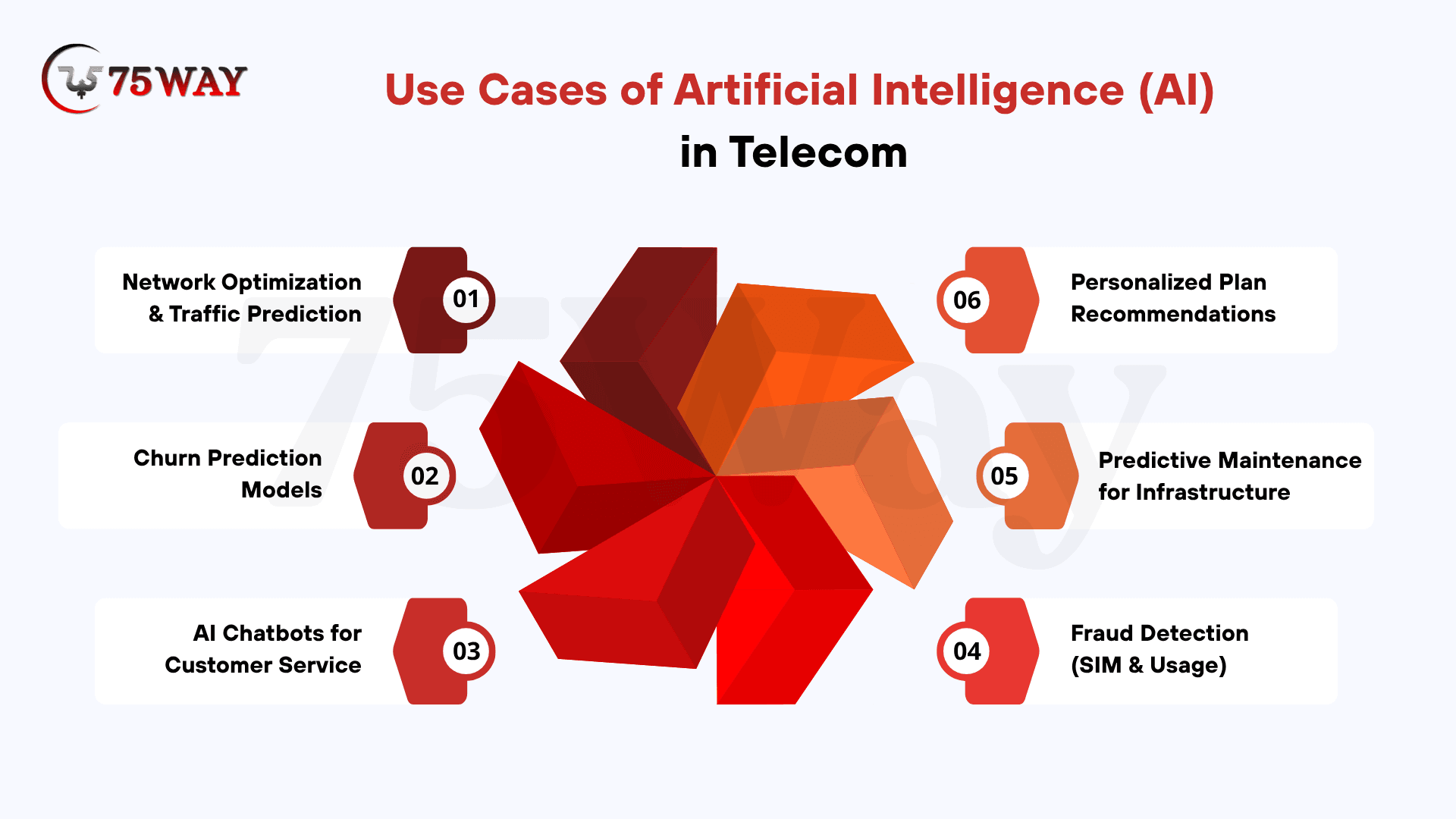
Network Optimization & Traffic Prediction: AI analyzes telecom network traffic patterns to manage bandwidth distribution more efficiently and maintain stable connectivity. It helps reduce congestion during peak usage and minimizes service interruptions. This improves overall network performance, ensures a smoother user experience, and supports reliable communication services across regions.
Churn Prediction Models: AI for telecoms studies customer usage behavior, service interactions, and satisfaction levels to identify users likely to switch providers. It supports telecom companies in taking timely retention actions, such as offers or improved plans. This reduces customer loss and improves long-term subscriber loyalty.
AI Chatbots for Customer Service: AI-powered chat systems handle customer queries related to billing, network issues, and service plans instantly. They provide quick responses without waiting time and operate continuously. This improves customer support efficiency, reduces workload on human agents, and enhances user satisfaction across telecom services.
Fraud Detection: AI monitors SIM activity and usage patterns to detect unusual or unauthorized behavior in real time. It identifies fraud attempts such as SIM cloning or abnormal usage spikes. This strengthens security, prevents revenue loss, and ensures safer telecom services for users.
Predictive Maintenance for Infrastructure: AI analyzes telecom infrastructure data to detect early signs of equipment failure. It helps service providers address issues before they cause outages. This reduces downtime, improves network reliability, and ensures uninterrupted communication services for customers.
Personalized Plan Recommendations: AI evaluates user data, call usage, data consumption, and preferences to suggest suitable telecom plans. It helps customers choose cost-effective options while improving satisfaction. This increases plan adoption rates and enhances overall customer experience in telecom services.
Artificial Intelligence (AI) Use Cases in Manufacturing
AI is improving manufacturing by increasing production efficiency, strengthening quality control, and supporting predictive maintenance through data-driven automation and intelligent systems. It reduces machine downtime, improves supply chain coordination, and enhances accuracy across production processes. Over 52% of manufacturers have adopted AI in some capacity, while nearly 23% are scaling advanced agentic AI systems to achieve higher productivity, agility, and industrial innovation.
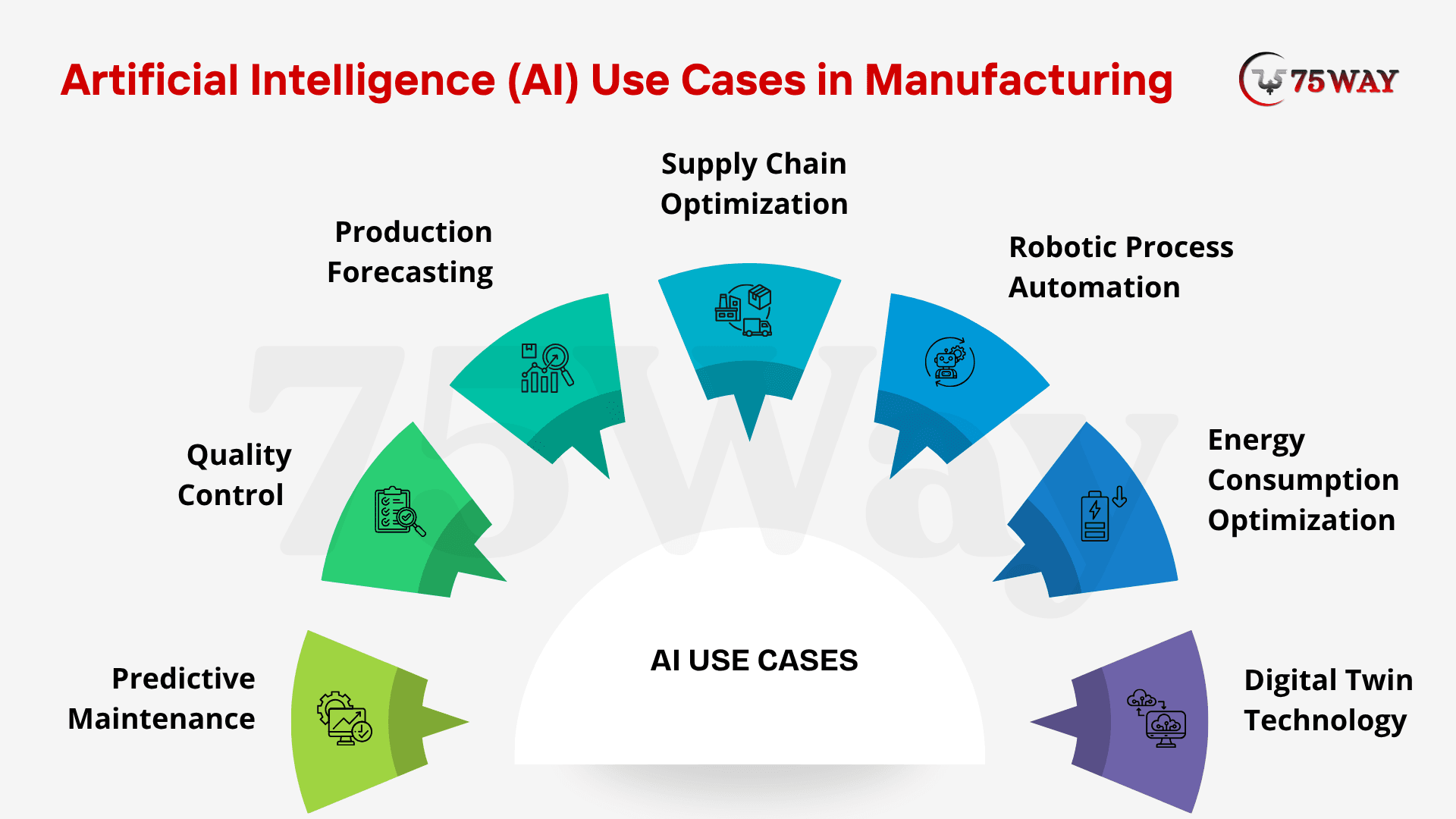
Predictive Maintenance: AI analyzes machine data to identify early signs of equipment failure before breakdowns occur. It helps manufacturers schedule maintenance at the right time, reducing unexpected downtime and repair costs. This improves machine lifespan, ensures smoother production flow, and increases overall operational reliability in manufacturing environments.
Quality Control: AI in manufacturing solutions inspects products during and after production using computer vision and sensor data to detect defects with high accuracy. It reduces human error in inspection processes and ensures consistent product standards. This improves manufacturing quality, reduces waste, and increases customer satisfaction, while meat processing software can help food processors better track production, yields, and inventory.
Production Forecasting: AI studies historical production data, market demand, and operational trends to estimate future manufacturing requirements. It helps companies plan production schedules more efficiently and avoid overproduction or shortages. This improves resource utilization and supports better planning across manufacturing operations.
Supply Chain Optimization: AI for manufacturing analyzes supply chain data to improve material flow, supplier coordination, and delivery timelines. It helps reduce delays, minimize inventory issues, and ensure the timely availability of raw materials. This strengthens production efficiency and supports smoother manufacturing operations.
Robotic Process Automation: AI-powered robots handle repetitive and manual manufacturing tasks such as assembly, packaging, and sorting. This reduces human effort, increases speed, and improves accuracy in production lines. It also enhances workplace safety and allows workers to focus on higher-value tasks.
Energy Consumption Optimization: AI monitors machine operations and adjusts energy usage to reduce unnecessary consumption in manufacturing plants. It identifies inefficiencies and optimizes power distribution across equipment. This lowers operational costs, improves energy efficiency, and supports sustainable manufacturing practices.
Digital Twin Technology: AI creates virtual replicas of physical manufacturing systems to simulate, monitor, and optimize factory operations. It helps identify performance issues before they occur in real environments. This improves decision-making, reduces risks, and enhances production planning and efficiency.
AI Use Cases for Travel & Hospitality Industry
AI grows the travel and hospitality industry by enhancing customer experience, optimizing operations, and enabling personalized service delivery at scale. It supports demand forecasting, dynamic pricing, and intelligent booking systems to improve efficiency and revenue performance. Studies show that over 60% of travel companies are adopting AI to improve guest satisfaction, reduce operational costs, and deliver more seamless travel experiences.
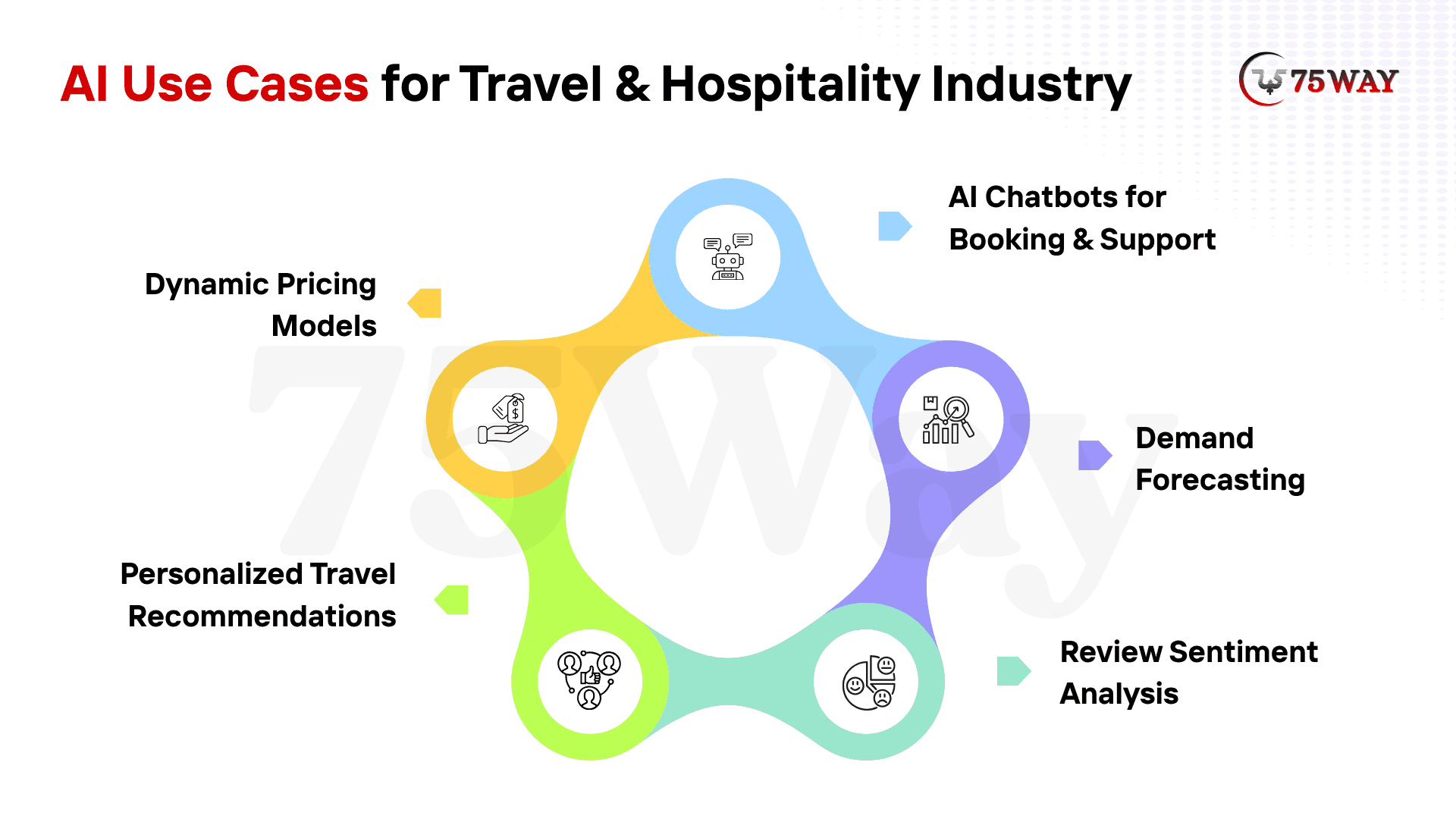
Dynamic Pricing Models: AI evaluates demand patterns, seasonal trends, competitor pricing, and booking behavior to adjust hotel and flight rates in real time. This helps travel businesses maximize revenue and maintain optimal occupancy levels. It also ensures pricing remains competitive while improving overall profitability and resource utilization.
AI Chatbots for Booking & Support: AI systems handle booking requests, cancellations, and travel-related queries instantly through chat or voice interfaces. They provide quick responses, reduce waiting time, and assist customers throughout the travel journey. This improves service efficiency, lowers support workload, and enhances customer satisfaction across platforms.
Personalized Travel Recommendations: AI studies user preferences, past bookings, and browsing behavior to suggest suitable destinations, hotels, and experiences. It improves trip planning by offering relevant and tailored options. This increases engagement, boosts bookings, and creates more enjoyable and customized travel experiences for users.
Demand Forecasting: AI analyzes historical travel data, booking patterns, and market trends to predict future travel demand. It helps businesses optimize staffing, pricing, and inventory planning. This reduces inefficiencies, improves resource allocation, and ensures smoother operations during peak and off-season periods.
Review Sentiment Analysis: AI evaluates customer reviews, ratings, and feedback to understand traveler satisfaction and sentiment trends. It identifies service gaps and areas for improvement. This helps hospitality providers enhance service quality, build stronger reputations, and deliver better guest experiences over time.
AI Use Cases In Oil And Gas
AI improves operational efficiency in oil and gas by enabling predictive maintenance, reservoir modeling, and leak detection. It enhances safety through workforce monitoring, improves production forecasting accuracy, and optimizes supply chain management. AI-driven systems help reduce operational risks while increasing energy output efficiency across exploration and production processes.
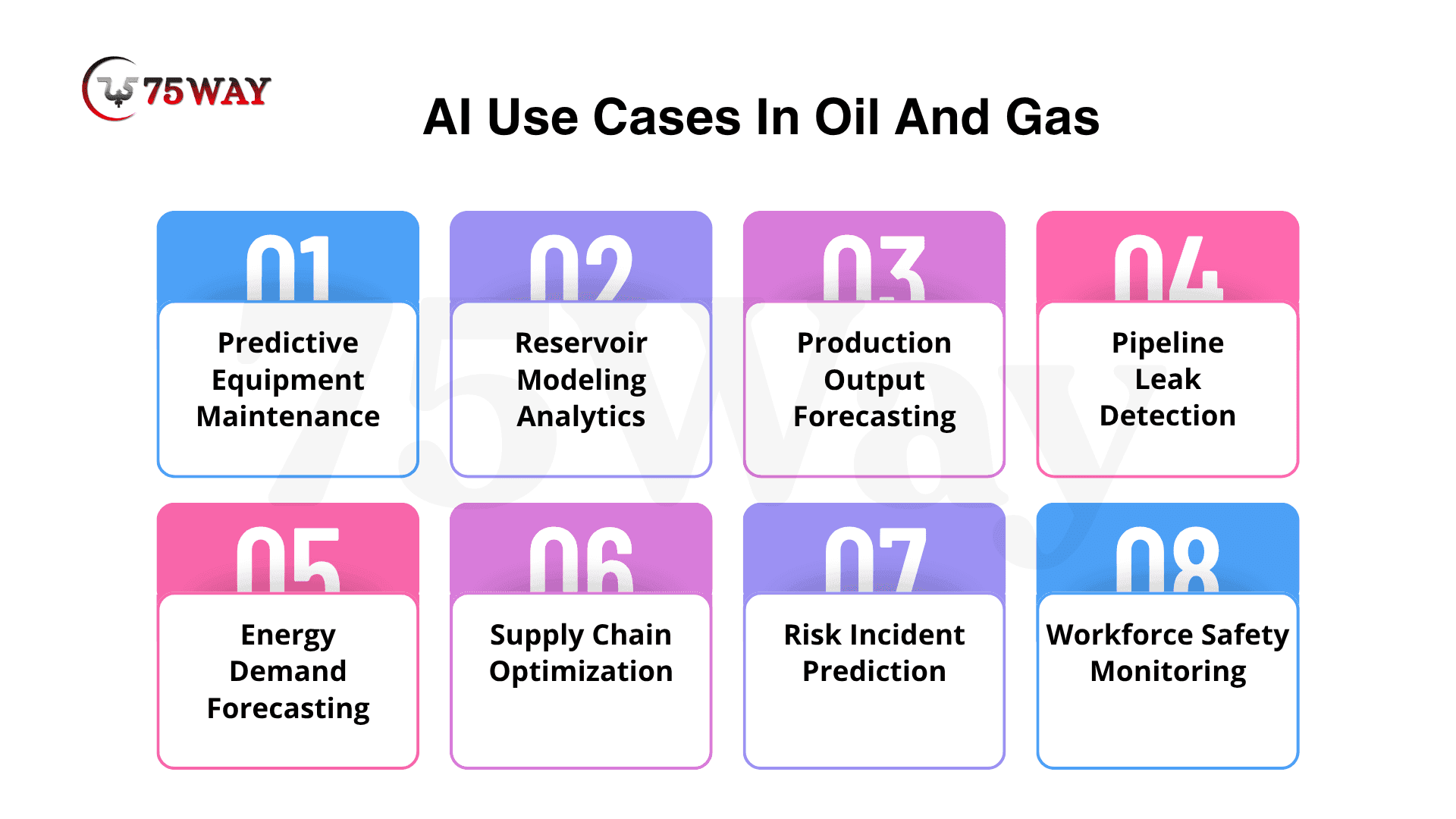
Predictive Equipment Maintenance: AI solutions in predictive equipment maintenance help oil and gas companies monitor machinery health using real-time sensor data and machine learning models. These AI systems detect early signs of wear, corrosion, or failure, reducing downtime and repair costs. AI tools analyze vibration, temperature, and pressure patterns to schedule maintenance proactively, improving asset life and operational efficiency.
Reservoir Modeling Analytics: AI systems in reservoir modeling analytics enable accurate simulation of underground oil and gas reservoirs using geological and seismic data. AI tools process large datasets to predict fluid behavior, reservoir capacity, and extraction efficiency. AI in oil and gas services improves exploration accuracy, reduces drilling risks, and enhances decision-making for optimal resource extraction strategies and long-term production planning.
Production Output Forecasting: AI solutions in production output forecasting analyze historical drilling data, equipment performance, and market demand trends to predict future oil and gas output. These AI systems help companies optimize production schedules, reduce operational inefficiencies, and improve revenue planning. AI tools enhance forecasting accuracy, enabling energy firms to align supply with demand and maximize resource utilization effectively.
Pipeline Leak Detection: AI systems in pipeline leak detection use advanced sensors, IoT integration, and machine learning algorithms to identify leaks in real time. AI tools continuously monitor pressure changes, flow irregularities, and environmental factors to detect potential hazards early. AI in oil and gas services reduces environmental risks, prevents financial losses, and ensures safety compliance across extensive pipeline networks.
Energy Demand Forecasting: AI solutions in energy demand forecasting analyze historical consumption data, weather patterns, and economic indicators to predict future energy needs. These AI systems help oil and gas companies balance supply and demand efficiently. AI tools improve grid stability, reduce wastage, and support strategic planning for energy production, distribution, and storage optimization in dynamic market conditions.
Supply Chain Optimization: AI systems in supply chain optimization enhance logistics efficiency by analyzing procurement, transportation, and inventory data. AI tools identify bottlenecks, reduce delays, and optimize resource allocation across oil and gas operations. AI solutions improve cost efficiency, ensure timely delivery of materials, and strengthen end-to-end supply chain visibility for better operational performance and decision-making accuracy.
Risk Incident Prediction: AI solutions in risk incident prediction analyze operational data, environmental conditions, and historical accident records to identify potential hazards. These AI systems help oil and gas companies prevent safety incidents before they occur. AI tools improve risk assessment accuracy, enhance emergency preparedness, and support compliance with safety regulations, reducing workplace accidents and operational disruptions.
Workforce Safety Monitoring: AI systems in workforce safety monitoring use computer vision, wearable devices, and real-time analytics to ensure employee safety in hazardous environments. AI tools detect unsafe behaviors, monitor fatigue levels, and identify potential risks instantly. AI in oil and gas services enhances compliance, reduces workplace injuries, and creates a safer operational environment through continuous intelligent monitoring systems.
AI Use Cases For Marketing Teams
Advanced AI-driven solutions empower marketing teams to transform raw customer data into precise, actionable audience clusters. By analyzing behavior, demographics, purchase history, and engagement signals, AI enables hyper-personalized targeting at scale. This leads to improved campaign accuracy, higher conversion rates, and reduced ad wastage. Ultimately, it strengthens customer relationships by delivering the right message to the right audience at the right time.
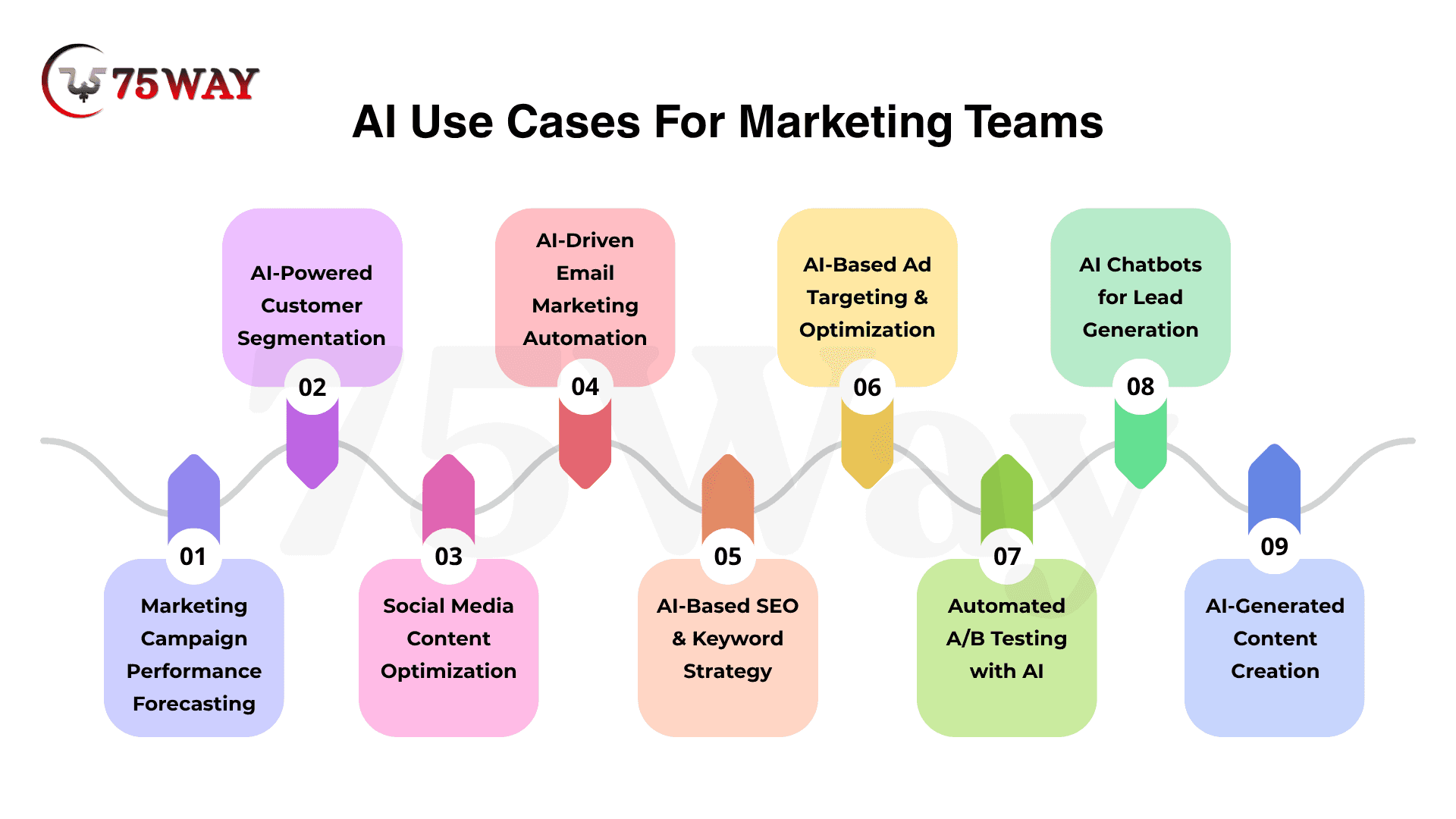
AI-Powered Customer Segmentation: AI solutions for marketing teams enable advanced customer segmentation by analyzing behavior, demographics, purchase history, and engagement patterns. These AI systems group audiences into highly specific clusters for better targeting. AI tools improve campaign precision, increase conversion rates, and reduce wasted ad spend by delivering personalized messaging that aligns with customer intent and lifecycle stages.
AI-Driven Email Marketing Automation: AI systems in email marketing automation personalize content, subject lines, and send times based on user behavior and preferences. AI tools analyze open rates, click patterns, and engagement history to optimize campaign performance. AI solutions help marketing teams increase engagement, improve retention, and drive higher ROI by delivering the right message to the right audience at the right time.
AI-Based Ad Targeting & Optimization: AI solutions in ad targeting and optimization analyze user behavior, interests, and real-time interactions to deliver highly relevant ads. AI systems continuously optimize bidding strategies, audience selection, and creative performance. AI tools help marketing teams maximize ad efficiency, reduce acquisition costs, and improve return on ad spend through intelligent, data-driven campaign adjustments.
AI Chatbots for Lead Generation: AI chatbots for lead generation engage website visitors in real time, answer queries, and capture qualified leads automatically. AI tools qualify prospects based on intent, behavior, and responses. AI solutions help marketing teams improve conversion rates, reduce response time, and scale lead generation efforts without increasing human resource dependency.
Marketing Campaign Performance Forecasting: AI solutions in campaign performance forecasting analyze historical campaign data, market trends, and audience behavior to predict future outcomes. AI systems help marketing teams allocate budgets effectively and optimize strategies before campaign launch. AI tools improve decision-making accuracy, reduce risk, and enhance overall marketing ROI through predictive insights and performance simulations.
Social Media Content Optimization: AI systems in social media content optimization analyze engagement metrics, trending topics, and audience behavior to recommend high-performing content formats. These tools help marketing teams optimize posting times, captions, hashtags, and visuals. AI solutions increase reach, engagement, and brand visibility by ensuring content aligns with platform algorithms and audience preferences.
AI-Based SEO & Keyword Strategy: AI solutions in SEO and keyword strategy analyze search trends, competitor content, and user intent to identify high-ranking opportunities. AI systems help marketing teams discover low-competition, high-volume keywords and optimize content structure. AI tools improve organic visibility, search rankings, and long-term traffic growth through data-driven SEO planning.
Automated A/B Testing with AI: AI systems in automated A/B testing continuously experiment with headlines, creatives, landing pages, and CTAs to identify top-performing variations. AI tools analyze user responses in real time and adjust campaigns automatically. AI solutions help marketing teams improve conversion rates, reduce manual testing effort, and accelerate optimization cycles for better marketing performance.
AI-Generated Content Creation: AI solutions in content creation generate high-quality marketing copy, visuals, and campaign assets at scale. Beyond visuals, businesses are using AI for video creation to develop marketing videos, product showcases, advertisements, social media content, and campaign assets faster while maintaining brand consistency across channels. AI systems analyze brand tone, audience preferences, and performance data to produce optimized content. AI tools help marketing teams save time, maintain consistency, and increase content output while improving engagement and marketing efficiency across multiple channels.
How To Choose The Right AI Strategy For Your Business?
The selection of an ROI-driven AI strategy requires evaluating business maturity, data availability, budget, and expected returns. Companies should start with high-impact, low-complexity use cases that solve immediate operational challenges. The ideal AI strategy aligns with long-term business goals, ensuring scalability, measurable outcomes, and seamless integration with existing systems.
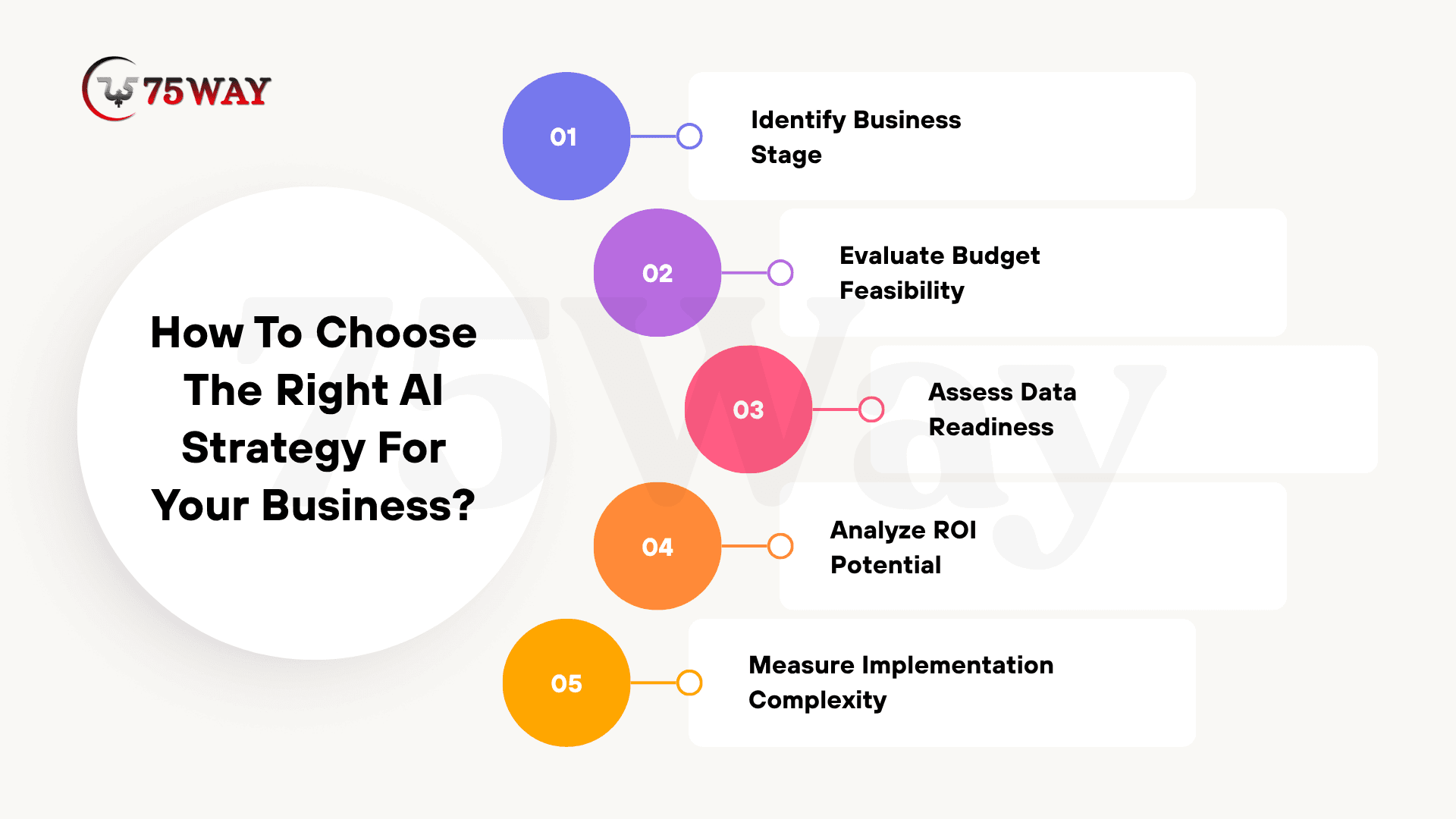
Identify Business Stage: The initial step evaluates whether the organization is in the startup, growth, or enterprise stage. It helps determine AI maturity, readiness for adoption, and suitable use cases that align with current business goals and long-term digital transformation strategy.
Evaluate Budget Feasibility: Once the business stage is clear, the next focus is on financial capacity for AI adoption, including development, tools, and maintenance costs. This alignment ensures the selected solution fits within budget limits while still delivering meaningful business value and ROI.
Assess Data Readiness: After budget alignment, attention shifts to data availability and quality, since AI depends heavily on reliable inputs. Evaluating whether data is structured, clean, and accessible ensures the system can generate accurate predictions and effective outcomes.
Analyze ROI Potential: With data readiness confirmed, the focus moves to expected business impact by comparing investment against benefits such as cost savings, efficiency gains, and revenue growth. This helps prioritize AI use cases with the highest measurable value.
Measure Implementation Complexity: Finally, the practical effort required for deployment is assessed, including integration challenges, technical requirements, and resource needs. This ensures the chosen AI solution can be realistically implemented within existing systems without unnecessary operational disruption.
A Complete Roadmap To Deploy AI for Business Growth
Successful AI adoption for business expansion starts by selecting high-value opportunities that align with core objectives. It then requires reviewing available data, choosing suitable technologies, and embedding them into current operations. After deployment, solutions are tested, refined, and expanded for wider use. This structured process improves efficiency, reduces costs, and supports long-term, scalable business performance growth.
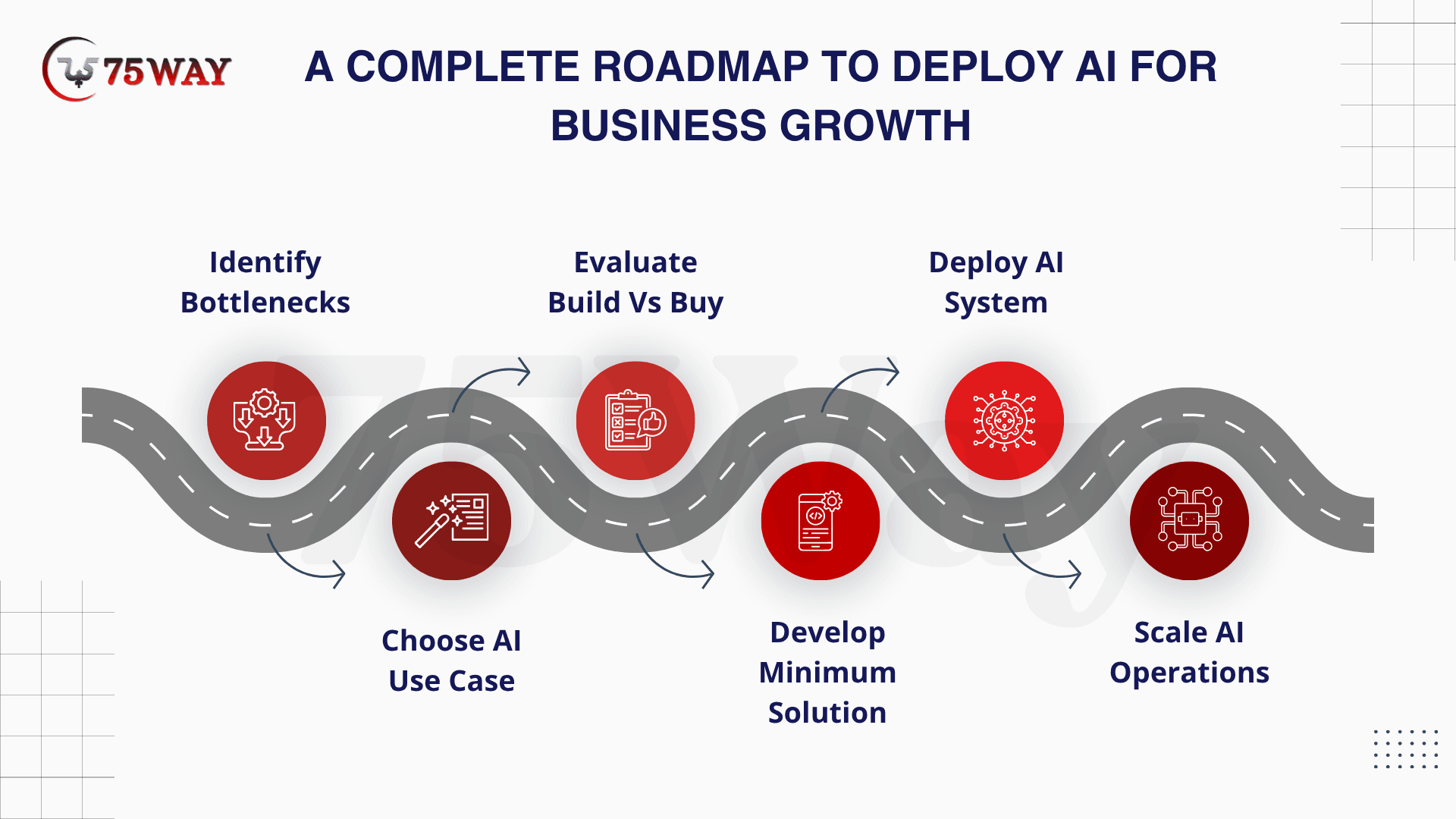
Identify Bottlenecks: The process begins by analyzing existing workflows to detect inefficiencies, delays, and operational challenges. Understanding these bottlenecks helps prioritize areas where AI can create the highest impact and improve overall business performance.
Choose AI Use Case: After identifying challenges, the most suitable AI use case is selected based on business goals and expected outcomes. This ensures the solution directly addresses real problems and delivers measurable value to operations.
Evaluate Build Vs Buy: Once the use case is finalized, organizations decide whether to develop a custom AI solution or adopt an existing platform. This decision depends on budget, delivery speed, internal expertise, and long-term scalability needs to ensure efficient implementation and sustainable results.
Develop Minimum Solution: A simplified version of the AI system is created to test core functionality and validate assumptions. This approach helps reduce risks, identify gaps early, and collect user feedback before investing in full-scale development and enterprise deployment.
Deploy AI System: After validation, the AI solution is integrated into real business workflows for practical use. Proper deployment ensures smooth transition, minimal operational disruption, and alignment with existing systems, enabling improved efficiency and consistent performance across processes.
Scale AI Operations: At last, the AI system is expanded across multiple departments or use cases to maximize impact. Continuous monitoring, optimization, and upgrades ensure better performance, higher productivity, and long-term business value generation through sustained AI adoption.
Conclusion
AI is no longer an optional upgrade. It has become a core driver of efficiency, innovation, and competitive advantage across industries. From healthcare to logistics, finance, SaaS, and manufacturing, organizations are using AI to automate operations, improve decision-making, and unlock new growth opportunities. The real impact comes not just from adoption, but from choosing the right use cases, ensuring data readiness, and scaling intelligently with clear business outcomes in mind. Businesses that act early are positioning themselves ahead in performance, cost efficiency, and customer experience. What’s stopping you from turning AI into real business growth? Build AI solutions with a leading AI development company to reduce costs, increase revenue, and scale faster than competitors.
Frequently Asked Questions (FAQs)
What Industries Benefit Most From Artificial Intelligence Adoption?
Industries with high data usage and repetitive decision-making benefit the most from AI. This includes healthcare, finance, retail, manufacturing, logistics, telecom, education, and SaaS. These sectors use AI for automation, forecasting, personalization, risk detection, and operational efficiency improvements that directly impact cost savings and revenue growth.
What Are Common Challenges In AI Integration Projects?
Common challenges include poor data quality, lack of skilled talent, high implementation costs, and integration issues with legacy systems. Many organizations also face unclear objectives, weak governance, and difficulty scaling AI solutions from pilot to production, which slows down overall adoption success.
What Skills Are Required To Implement AI Solutions?
AI implementation requires skills in data science, machine learning, programming (Python or similar), and data engineering. Knowledge of cloud platforms, APIs, and model deployment is also essential. Additionally, business understanding and problem-solving skills help align AI solutions with real-world organizational needs.
How Can Small Businesses Start Using Artificial Intelligence?
Small businesses can begin by identifying simple, high-impact use cases such as customer support chatbots, marketing automation, or sales forecasting tools. Using low-code AI platforms or SaaS-based AI tools allows quick adoption without heavy investment. Starting small and scaling gradually ensures lower risk and better ROI.
What Is Difference Between AI, Machine Learning, and Automation?
AI is the broad concept of machines simulating human intelligence. Machine learning is a subset of AI that learns patterns from data to make predictions. Automation refers to rule-based systems that perform repetitive tasks without learning. AI and ML are adaptive, while automation follows predefined instructions.
How Do Companies Measure ROI From AI Investments?
Companies measure ROI by comparing AI implementation costs with financial and operational gains such as cost reduction, productivity improvement, revenue growth, and time savings. Key metrics include efficiency increase, customer retention rate, error reduction, and process speed, helping evaluate the overall business impact of AI solutions.