A familiar feeling already exists across boardrooms and startup floors due to emerging AI technologies in 2026. Several businesses found that their competitors move faster, serve customers better, and reduce costs, while their existing systems still feel heavy. Is not it relatable? Yes! It is.
By 2026, the latest advancements in artificial intelligence (AI) will no longer be optional. They become operational where AI shifts from “nice to have” into a real competitive weapon. So, if you want to optimize your operations and expand your ROI, you must be aware of the major AI trends of 2026.
This guide will help direct founders, CXOs, product leaders, and decision-makers who want clarity on market opportunities with emerging AI technologies, current AI trends, how they assist diverse industries' needs, and the future scope of new developments in AI.
Why AI Trends Matter for Business Growth in 2026?
Now, many of you are thinking, "What is the use of these trends in our business?" "How do these trends enhance our business growth and ROI?" Well! We have an answer for this. The new developments in AI
increase its adoption in diverse markets, and the early adoption of this new technology creates an advantage.
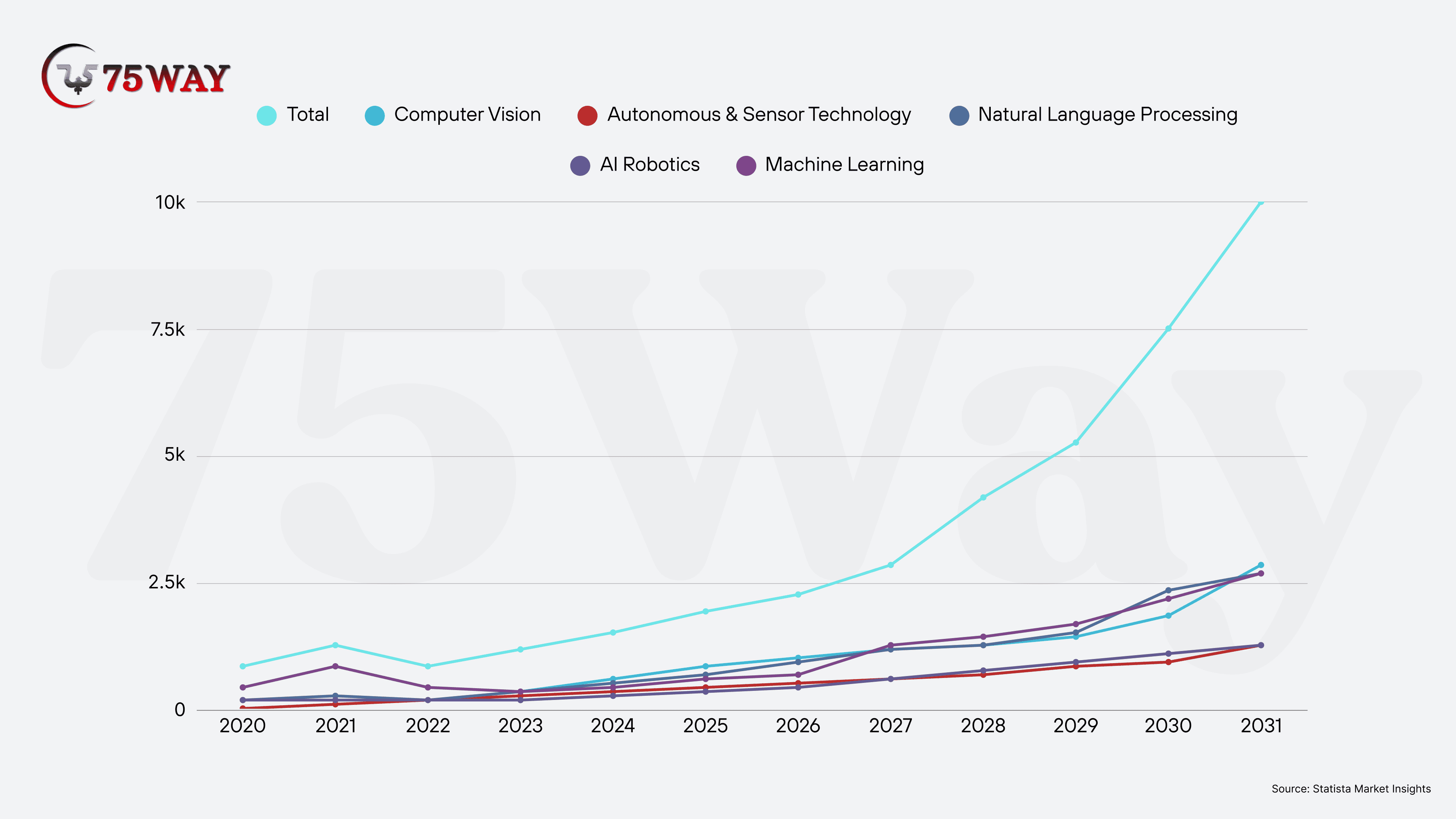
According to a Statista report, "the global Artificial Intelligence (AI) market is projected to grow US$1.68T by 2031 with a strong CAGR of 36.89% during this period.
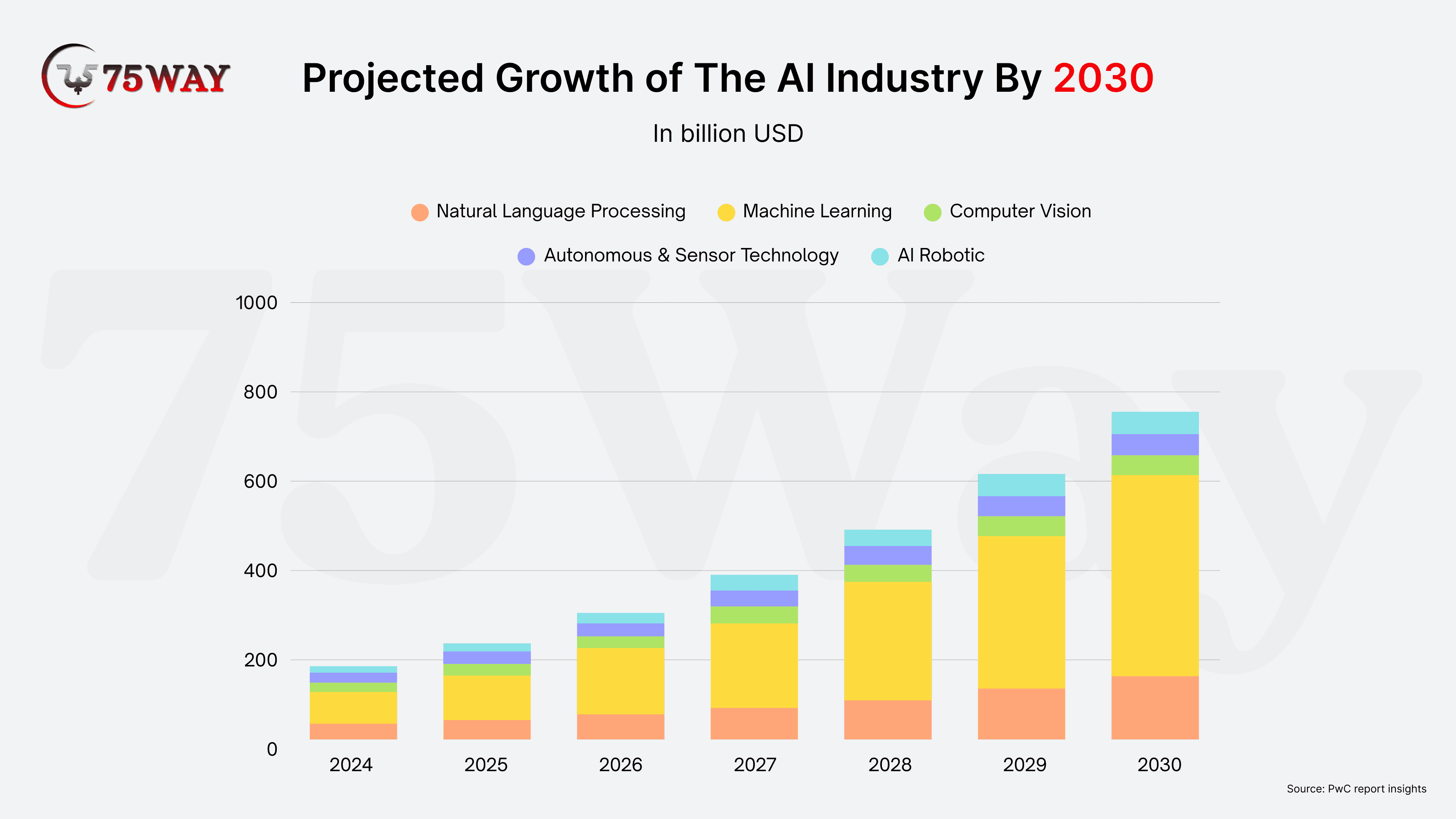
Moreover, PwC report states, “Artificial Intelligence has the potential to add nearly $15.7 trillion in value to the global economy and market reach approximately $830 billion by 2030.” These projections indicate that the latest AI advancements are a core growth driver to improve team productivity, enhance business operations, and drive innovation. By adopting current AI trends and investing in AI application development, you can achieve measurable gains in scalability and long-term advantage across industries.
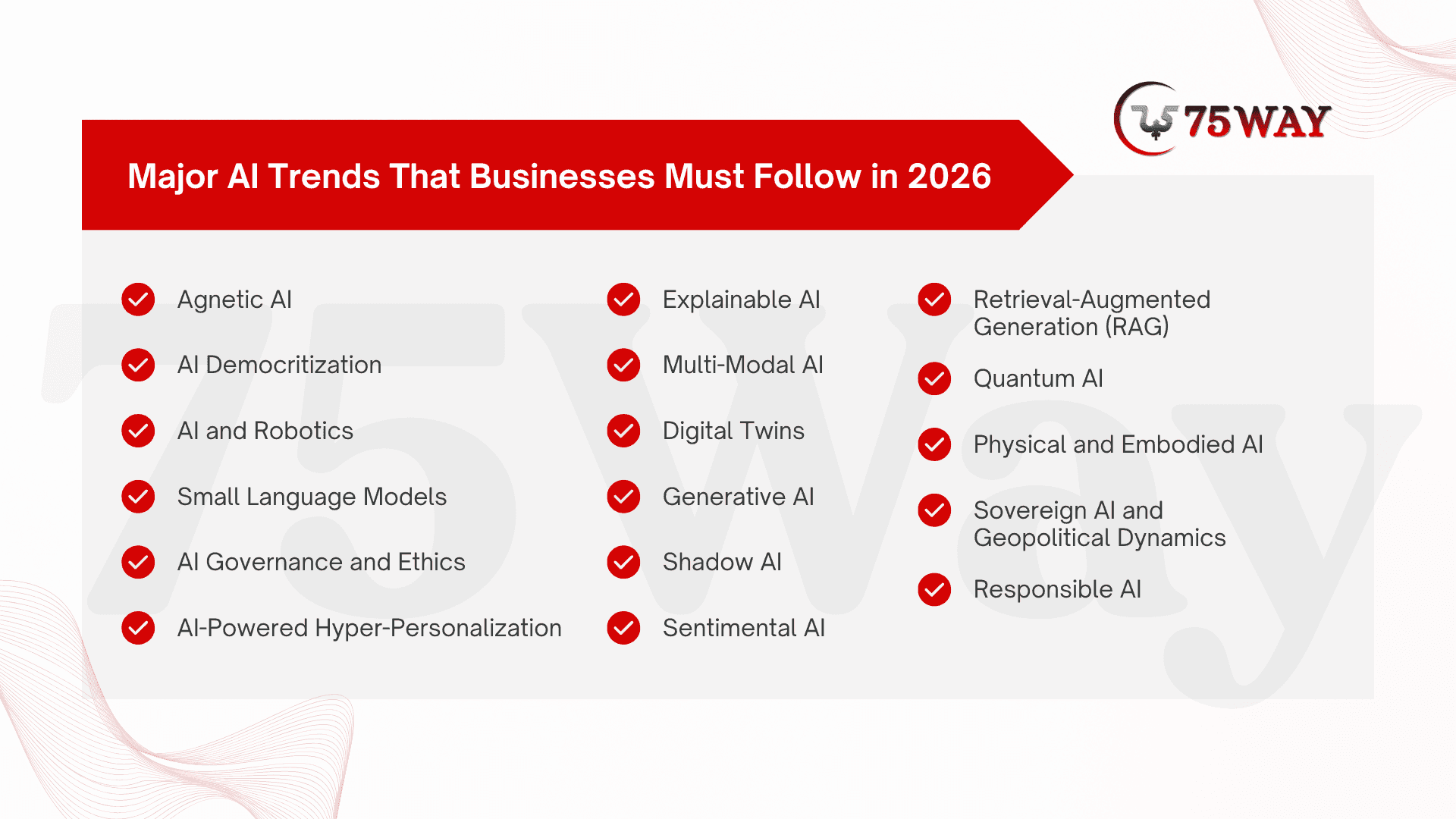
Major AI Trends That Businesses Must Follow in 2026
In 2026, the latest advances in artificial intelligence replace tools with modern automated systems powered by AI, ML and NLP models. These tools can think, act, and collaborate to handle customer support, sales, and other tasks. The primary focus of large enterprises and startups is on how AI applications and products help them grow and scale. So, without wasting your time, let’s move to know the emerging AI trends in 2026 that are creating real impact and long-term value across industries.
Agnetic AI:
Businesses are entering a new era with Agentic AI, where systems actually plan and execute complex workflows across departments as teammates. Agentic AI is one of the major trends of AI in 2026. Its multi-agent collaboration allows AI assistants in HR, finance, and other business operations to work together. On the other hand, these Agnetic AI solutions can be integrated with your existing ERP, CRM, and RPA platforms to maintain workflow stability in real time.Safety and oversight remain central as AI autonomy grows. Agentic AI, as a new technology of AI, supports human-in-the-loop (HITL) models that guide critical decision-making. Its TRiSM (Trust, Risk, and Security Management) frameworks are used to execute secure and compliant operations. In addition, Agentic AI marketplaces allow businesses to adopt hyperautomation, improve efficiency, and find strategic value.
AI Democritization :
AI is no longer limited to experts or data scientists. Recent AI advances in democratization are enabling low-code and no-code platforms like Google’s AutoML, allowing anyone to build and customize AI applications with simple drag-and-drop interfaces. Generative AI tools such as GPT-4, Microsoft Copilot, etc., can be integrated into apps for content creation, translation, and basic data analysis.As AI spreads across organizations, new challenges emerge due to AI technology advancements. However, shadow AI risks arise when employees are unable to use these tools, and make governance frameworks and responsible-use policies essential. Updated infrastructure ensures smooth deployment, security, and compliance. Inclusive innovation grows as non-technical founders, startups, and social enterprises gain access to AI capabilities.
AI and Robotics
AI robotics is one of the major current AI trends that allows businesses to adopt more autonomous systems. Collaborative robots, or Collaboration of Humans and Robots (CoBots) are able to perceive human presence, predict movements, and work safely. Moreover, autonomous mobile robots (AMRs) handle logistics tasks with minimal supervision. Moreover, humanoid robots are used to complete complex activities like assembly, loading, and unloading.
Moreover, Generative AI-based virtual agents and robot behaviors enable AI systems to serve as “virtual coworkers” for handling multi-step workflows. Wearable robotics, such as exoskeletons, help human workers perform lifting and mobility tasks, reducing fatigue and risk. These AI advancements allow manufacturing, healthcare, and retail industries to adopt hyper-personalized services for smoother workflows and new business models.
Small Language Models (SLMs)
Another AI trend is the rise of SLMs, which are becoming a practical choice for businesses seeking cost-effective AI solutions. These models are able to perform specialized tasks such as customer support, report generation, and sentiment analysis for higher ROI. Companies appreciate the ability to fine-tune SLMs on proprietary data, which boosts accuracy and ensures sensitive information stays private.
The lightweight design of SLMs is used in smartphones and IoT devices to reduce latency and enhance offline AI usage. In 2026, enterprises can use these models alongside larger models to maintain general-purpose AI while maintaining task-based efficiency. These models automate routine tasks, protect internal data, and implement a pragmatic AI strategy.
AI Governance and Ethics
The recent advancements in AI give rise to AI governance and ethics in business. At present, decision-makers are now directly accountable and treat ethics as both risk management and a way to stand out in the market. Companies are developing specialized frameworks to address the unique challenges of generative AI, including hallucinations, intellectual property concerns, and data leakage.
The embedded ethics throughout the AI lifecycle, from design to deployment, scale with authorized practices alongside products and teams. Transparency is becoming a key differentiator in current AI trends. Risk management now includes environmental considerations like energy use and model efficiency. As a result, organizations that integrate ethics, oversight, and accountability early are better prepared to navigate the evolving AI landscape safely.
AI-Powered Hyper-Personalization
Hyper-personalization in business is another new technology in artificial intelligence. Autonomous AI agents, generative AI, and omnichannel integration help businesses predict customer needs, emotions, and intent in real time. These systems respond like real human and make decisions based on their behaviors.
AI swarms coordinate behind the scenes to share data and automatically optimize user experiences. Moreover, context-aware personalized suggestions use location, time, and even IoT data to make every interaction. From immersive AR/VR experiences to smooth omnichannel journeys, hyper-personalization drives loyalty, revenue, and customer satisfaction like never before.
Explainable AI
Explainable AI (XAI) is not just a “nice-to-have” for businesses. It has become essential as one of the crucial emerging AI technologies. With growing regulatory scrutiny, the need to build explainable AI tools arises to enhance trust. XAI moves beyond simple correlations to uncover real cause-and-effect relationships that help decision-makers act with confidence.
Model-agnostic techniques such as LIME and SHAP enable businesses to predict trends across any AI model, including complex neural networks and ensemble systems. Causal inference enhances reliability, and bias detection ensures responsible AI deployment. This AI trend allows businesses to comply with regulations and gain a strategic edge for confident decision-making.
Multi-Modal AI
Multi-modal AI trend transforms the way businesses understand and interact with data. This technology combines text, images, audio, and video to give AI agents a richer perspective for smarter decision-making and more effective human-AI collaboration. Frontier video models show how fast this is moving: Seedance 2.5 generates multi-shot video with synchronized audio from a single text prompt, collapsing an entire production pipeline into one model call.
Customer service becomes more empathetic with this AI advancement, as AI agents read tone of voice, facial expressions, and text together. Product development accelerates by analyzing mixed-media feedback. Businesses can gain actionable insights, improve efficiency, and strengthen customer engagement with multimodal AI.
Digital Twins
Digital twins are not used just as experimental tools. They become core to modern business operations. Cognitive digital twins now learn from outcomes and simulations to refine their decisions over time and optimize processes. Generative AI helps businesses to generate code and models faster and enables hyper-personalized experiences for customers. Across industries like manufacturing, logistics, and healthcare, this new AI technology helps predict maintenance needs, optimize designs, and enhance operations.
Human-centric twins are also gaining ground, simulating real human behaviors to train teams, improve customer service, and understand user interactions. The industrial metaverse combines IoT, 5G, and AI for real-time monitoring. On the other hand, cloud-based Twin-as-a-Service (TaaS)platforms make these advanced tools accessible to even smaller businesses.
Generative AI
Generative AI is another of the latest developments in artificial intelligence. The gen AI systems are integrated directly into workflows across finance, HR, and engineering to streamline tasks. Autonomous decision-making for these products helps teams manage complex areas such as supply chain management, predictive maintenance, and risk assessment.
Moreover, multimodal AI now combines text, images, and video to enable more contextual interactions, such as analyzing video calls or generating marketing content. With this AI trend, data analytics and BI become faster. Businesses are finally unlocking real value from AI at scale.
Shadow AI
Shadow AI is one of the latest advances in artificial intelligence. This technology is spreading rapidly across businesses, including marketing, engineering, and finance, that adopt AI tools. Many companies now use user-friendly generative AI tools, such as ChatGPT or Gemini, for quick solutions. This results in increased AI adoption in workplaces to enhance productivity and scalability.
However, tension between speed and safety is fundamental. While employees enjoy efficiency, corporate data frequently flows into personal AI accounts without encryption. This uncontrolled use of GenAI accelerates the growth of shadow AI. The shadow AI solutions protect data and maintain trust.
Retrieval-Augmented Generation (RAG)
RAG, a well-known approach in new AI applications, transforms how businesses make AI trustworthy and precise. It connects large language models to proprietary company data, so AI solutions can produce correct answers based on facts rather than guesses. This means AI chatbots provide accurate, personalized support; decision-making becomes faster and wiser; and content creation becomes more efficient.
Companies are using vector databases and multi-source retrieval to integrate RAG into enterprise workflows. AI agents can handle complex tasks in real time that bridge the gap between generic AI and specific organizational needs. Overall, RAG makes AI more reliable, auditable, and effective, turning large-scale language models into practical tools that drive measurable business value.
Sentimental AI
The latest advancements in artificial intelligence now aim at sentiment analysis. Businesses are now using AI to capture the full spectrum of customer emotions across text, voice, and video, creating a deeper, more human-like understanding of interactions. AI-powered predictive analytics enable teams to forecast future moods and identify churn risks.
Integration with large language models and generative AI helps interpret sarcasm, tones, and emotional states to make customer support more personalized. Ethical AI practices ensure transparency and privacy, help prevent bias, and strengthen trust. The sentiment AI trend makes sentiment analysis not just reactive but a tool for creating more engaged customers and satisfied employees.
Quantum AI
Among emerging AI technologies, quantum AI is opening doors to solve problems that traditional AI struggles with. Businesses now combine classical AI with quantum computing to tackle complex challenges. Above all, quantum Machine Learning (QML) is leading this charge to train model faster, spot patterns with higher accuracy, and enable hyper-personalized solutions across industries.
Hybrid systems allow classical AI and quantum processors to work together smoothly to make deployment more practical. In healthcare, this means accelerated drug development and personalized treatment plans. Supply chains can benefit from real-time forecasting, inventory management, and logistics efficiency. This AI advancement even helps design quantum algorithms to create a loop where both technologies enhance each other.
Physical and Embodied AI
Physical and Embodied AI is emerging as one of the key AI advancements in 2026. Businesses now adopt AI-powered robots and autonomous systems to handle complex tasks across manufacturing, healthcare, logistics, and agriculture. Advances in multimodal AI, edge computing, and sensor technologies enable these machines to learn and adapt, improving efficiency and creating new service models.
Additionally, flexible autonomous mobile robots (AMRs) help warehouses and production lines replace rigid systems with adaptable machines. In healthcare, AI-assisted surgery becomes more precise, and digital twins train robots to operate safely alongside humans. Collaborative robots, or cobots, bridge the digital-physical gap and work side by side with people to enhance productivity.
Sovereign AI & Geopolitical Dynamics
Recent AI technology advancements have given birth to sovereign AI that enables businesses to navigate global risks and opportunities. Companies are shifting from chasing the cheapest compute to demanding resilient systems that provide them with control over data and models. AI sovereignty serves as a strategic advantage rather than merely compliance.
Furthermore, hybrid ecosystems of global AI platforms, local providers, and private clouds meet regulatory requirements while scaling operations. Now, “sovereign by design” architectures and control planes are developed to secure data. Sectors that handle sensitive or critical data, such as banking, defense, and utilities, can adopt this latest AI trend to turn regulatory challenges into revenue-generating opportunities.
Responsible AI
Among the latest developments in artificial intelligence, responsible AI has become a real business driver. Businesses now realize that ethics and transparency directly impact trust, ROI, and long-term growth. Responsible AI converts high-level principles into repeatable processes, using tech-enabled feedback loops and automation to keep AI accountable across workflows.
Explainable AI tools, dashboards, and model cards allow teams and customers to understand AI reasoning and meet regulations. Continuous bias audits, diverse datasets, and fairness-focused algorithms mitigate risks in areas such as hiring and lending. The robust risk frameworks prepare businesses for global regulations and enhance measurable value and trust.
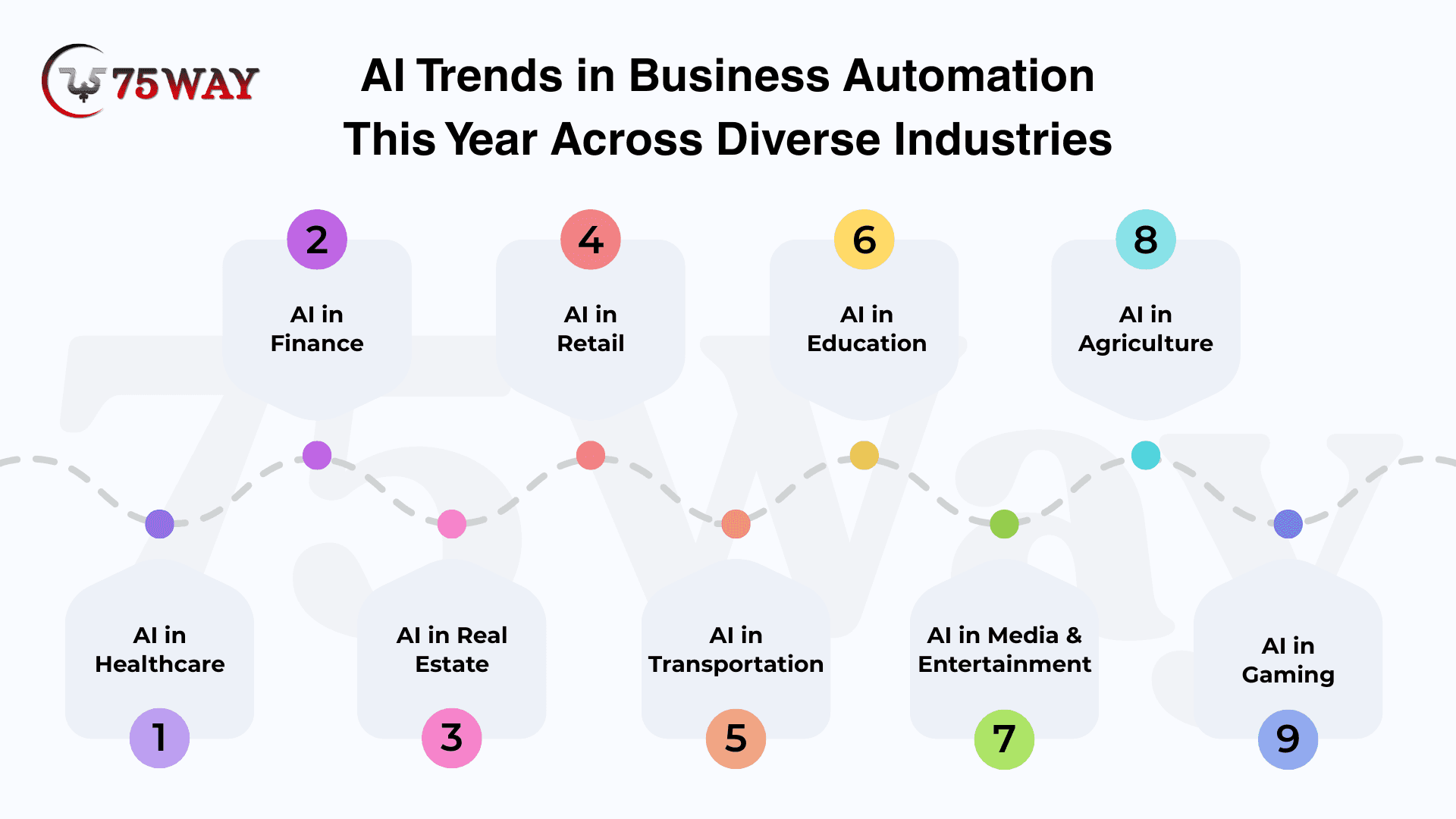
AI Trends in Business Automation This Year Across Diverse Industries
Now, you learn about trends. It is time to explore the industries that are transforming with these AI trends in 2026. AI technology advancements and trends reshape diverse industries with automation, accuracy, and consistency. Each sector applies AT applications and tools differently, yet their benefits remain measurable and immediate. Let’s know
AI in Healthcare: Clinical institutions benefit from AI-powered healthcare apps and software that enhance diagnostics, patient record analysis, and scheduling. Providers spend less time on administrative tasks and focus on patient care quality to improve overall outcomes.
AI in Finance: AI-enabled fintech software and tools detect fraud, forecast trends, and ensure compliance. Decisions based on accurate data insights, rather than intuition, help institutions reduce risk and optimize investment and operational strategies.
AI in Real Estate: Real estate agencies can leverage AI-driven property management tools and real estate apps for pricing accuracy, lead scoring, and virtual property experiences. Buyers and sellers enjoy smoother journeys to make more informed decisions and transactions faster with reliable market insights.
AI in Retail: Retail businesses can benefit from AI-based ecommerce apps and platforms in inventory management, demand prediction, and personalized offers. Smarter planning improves margins, reduces overstock, and enhances customer satisfaction through tailored shopping experiences.
AI in Transportation: Transportation and logistics businesses can adopt AI applications to optimize fleet routing, fuel usage, and vehicle health. Logistics software development solutions minimize delays and operational costs, and offer clear visibility into supply chain efficiency.
AI in Education: AI-powered educational apps and software support personalized learning by adapting study paths and assessments. Students receive guidance aligned with their pace and maximize understanding and retention without relying on uniform teaching methods.
AI in Media & Entertainment: Media and entertainment agencies adopt AI applications for content discovery, audience engagement analysis, and editing assistance. Advanced data analytics tools help creators connect with viewers and improve content performance without relying on guesswork.
AI in Agriculture: Agriculture uses AI-enabled tools and software to monitor crops, predict yields, and reduce waste. Farmers can achieve precise predictive insights into soil, weather, and crop health and boost productivity and resource efficiency with these advanced tech solutions.
AI in Gaming: Gaming experiences improve with AI that enhances realism, adapts to player behavior, and supports dynamic storytelling. With artificial intelligence, games feel more immersive, responsive, and engaging for players at every level.
How Businesses Can Prepare for AI Trends in 2026
Businesses can adopt these AI trends in 2026 with a strategic approach to determine whether AI becomes a game-changer or just another tool. Their success depends on aligning strategy, people, and governance rather than chasing every new technology. Organizations that plan carefully can turn AI trends into measurable growth, efficiency, and customer impact.
AI-First Strategy: Businesses need a clear AI-first approach where every initiative addresses real challenges. They can connect with the AI consulting team to adopt technology that solves pressing problems, enhances productivity, and drives revenue. Alignment with core business goals ensures AI investments deliver tangible results across teams and departments.
Data-Driven Culture: Reliable AI depends on clean, organized, and accessible data. Employees must trust the data they use and know insights come from accurate sources. A culture that prioritizes evidence over assumptions empowers smarter decisions, faster problem-solving, and consistent performance improvements.
Automation Readiness Framework: Decision-makers can analyze processes to identify areas ready for AI-driven automation. A structured framework prevents disruption and identifies opportunities to save time, reduce errors, and improve efficiency. Precise planning ensures automation enhances workflows rather than creating bottlenecks or confusion.
Skilled AI Workforce: Teams need proper training to embrace AI confidently. A trusted AI development team can help them upskill to ensure co-pilots and tools translate into lasting adoption. Employees who can manage, interpret, and collaborate with AI systems turn technology into a strategic advantage rather than relying solely on external experts.
Ethical AI Governance: Trust is critical in AI adoption. Responsible governance frameworks define clear guidelines for transparency, accountability, and compliance. Ethical oversight aligns AI decisions with company values, regulatory requirements, and customer expectations to prevent risks.
Conclusion
To summarize, AI trends in 2026 are not just tools but drivers of business transformation. With the latest advancements in artificial intelligence like agentic AI, hyper-personalization, and responsible governance, the stage is set for real competitive advantage. Organizations can adopt these AI trends early to gain agility and stronger trust with customers and partners. Businesses that view AI as a strategic partner rather than a side tool will thrive, identify new opportunities, and deliver measurable value. To enhance your business growth and returns, you can partner with a reliable AI development company to make this transformation real.
FAQs
What AI Trend Will Impact Businesses Most In 2026?
The rise of agentic AI is set to change everything. These AI systems assist by planning, executing, and optimizing workflows across departments. From supply chain to customer service, businesses using agentic AI will see faster decisions, higher efficiency, and a competitive edge.
Are AI Agents Replacing Employees?
Not exactly. AI agents handle repetitive or complex tasks and free up employees for creative, strategic, and high-value work. These tools enhance human-AI collaboration as a co-worker rather than a replacement. Productivity rises when people and machines complement each other.
How Can Small Businesses Adopt AI in 2026?
Startups and growing businesses can adopt low-code platforms, small language models (SLMs), and pre-built AI tools to make adoption accessible. Even startups can leverage AI for customer insights, automation, and marketing without massive budgets, while keeping governance and data privacy top of mind.
How Secure Are AI-Driven Systems?
Security of AI tools depends on governance and design. Responsible AI frameworks, human-in-the-loop oversight, and Sovereign AI strategies ensure data stays protected, compliance is met, and AI decisions remain trustworthy across business operations.