Summary
The global online dating market has already crossed $10 billion and continues growing steadily, with the USA remaining one of the largest revenue contributors. This guide covers step-by-step strategy, features, tech stack, MVP planning, monetization, and scaling insights to build a Tinder clone app. Development costs typically range from $10,000 to $145,000+, depending on complexity and scale.
With increasing market demand for matchmaking apps, a dating app idea can sound exciting at first. But when it comes to popularity and revenue generation, competition feels unbeatable. Moreover, Tinder clone app development costs look confusing, which makes founders feel overwhelmed. Here, some questions arise, like “How to build your own app similar to Tinder?” And “How much does a Tinder clone cost?” That starts to feel bigger than the opportunity itself.
Many founders in the USA already see the demand for dating apps like Tinder as millions of users scroll, swipe, and match daily. The global online dating market has already surpassed $10 billion and continues to grow steadily. Yet most startup teams struggle to identify the right features that matter most, which tech stack works best, and where to even start. Not to worry! We have curated this detailed guide that breaks down everything from strategy and features to tech stack, cost structure, and revenue models for building a Tinder clone app in 2026.
What is Tinder Clone?
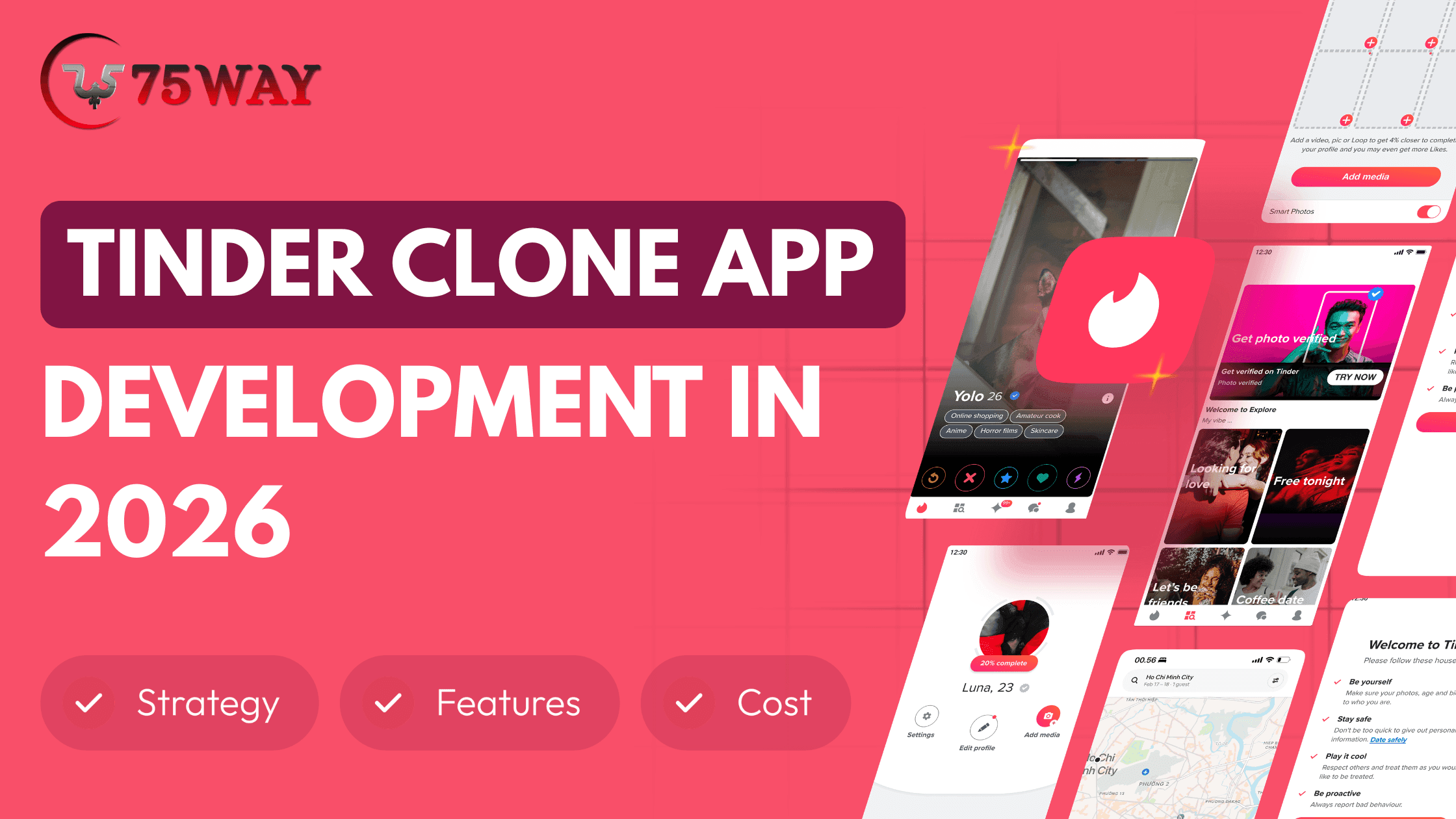
A Tinder clone is a custom-built dating application that replicates the core functional architecture of Tinder. This clone app primarily includes swipe-based matching, profile discovery, real-time messaging, and subscription monetization. Tinder clone scripts allow businesses to tailor their products to specific audiences, geographies, or niches.
To clarify the terminology, the word “clone” in digital application development does not mean illegal copying or trademark infringement. Instead, it refers to recreating a proven business model and core user flow, and enhancing them with differentiated features, branding, technological improvements, and market positioning. In other words, it is about adapting a validated framework rather than duplicating intellectual property.
This distinction is important for founders in the USA, where compliance, IP protection, and brand differentiation directly impact scalability and investor confidence. A professionally developed Tinder clone app focuses on original design systems, a proprietary codebase, and unique user value for legal safety and long-term brand equity.
Learn More: How to Build a Self Driving Car Software: A Complete Roadmap
Why Invest in Tinder Clone Development in 2026?
Investing in Tinder clone app development in 2026 makes strong business sense with consistent market demand, predictable monetization models, and scalability. The dating app industry continues to expand in the USA, reaching $4.22 billion by 2032, with a CAGR of 8.1%, driven by younger users who want digital-first relationship platforms.
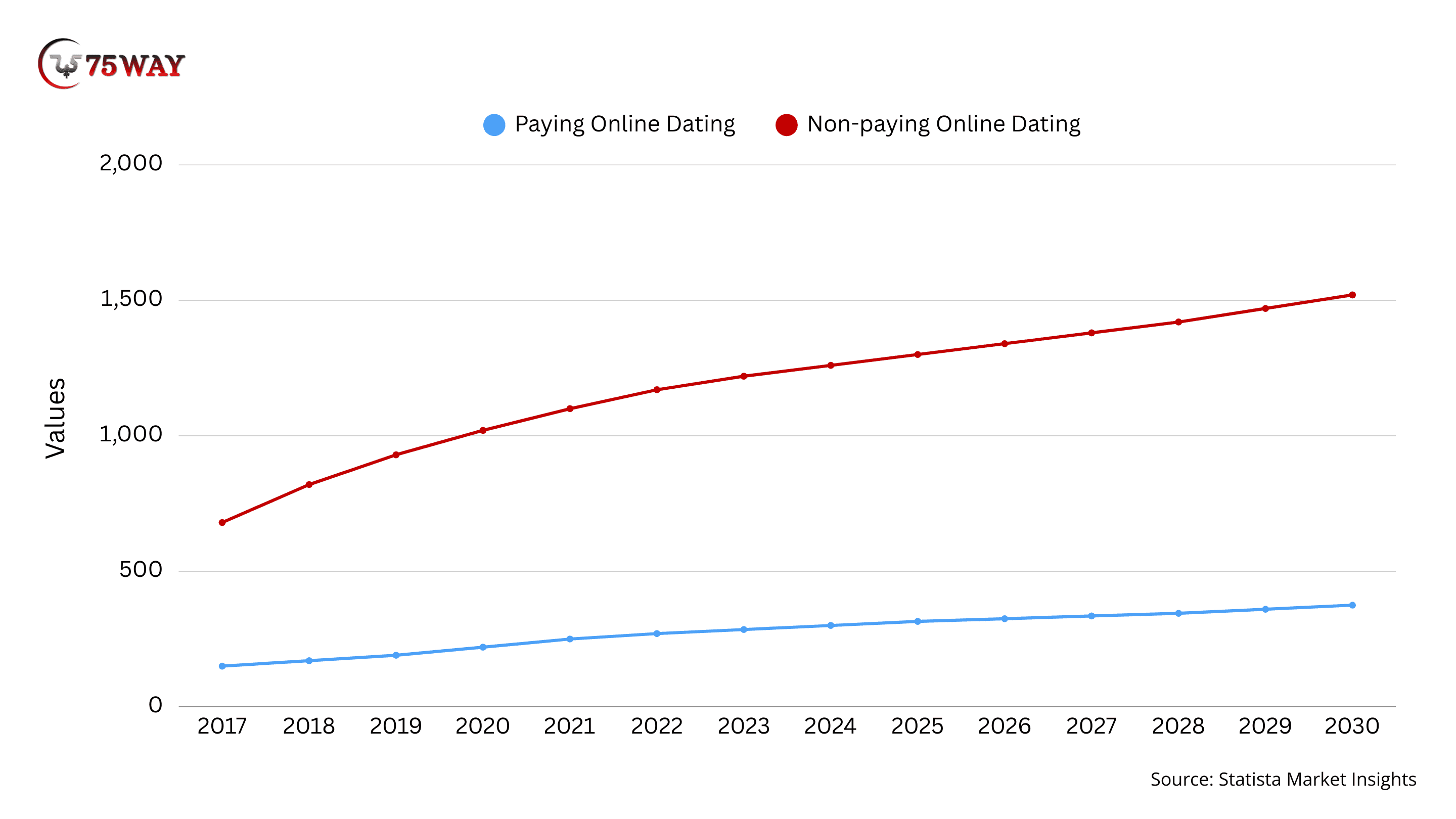
Explosive Market Growth: Online dating app usage continues rising in North America. Millions of users prefer digital interactions over traditional meetups. However, increased smartphone penetration and improved internet speeds make dating apps a daily habit rather than an occasional experiment.
Proven Revenue Model: Subscription tiers, boosts, in-app purchases, and advertising models already generate billions in annual revenue. Subscription-based models accounted for 72% of market revenue. In addition to this, predictable recurring income creates strong investor confidence and stable cash flow opportunities.
High User Demand: The platform attracts around 60 million active users each month, with nearly 60% of its audience under 35. Moreover, younger users in the United States and around the globe prefer swipe-based interactions, instant messaging, and gamified dating experiences.
AI-Driven Matching: Artificial intelligence improves compatibility scoring and user retention. Moreover, generative AI enables profile enhancement, chat suggestions, and behavioral predictions. Personalized match algorithms increase engagement rates and reduce churn, which directly improves revenue performance.
Scalable Business Opportunity: Cloud infrastructure enables rapid expansion across states and countries. Niche targeting allows expansion into professional, faith-based, LGBTQ+, or elite communities. A scalable backend ensures that millions of concurrent users can access it without performance issues.
Get More Insights: How to Build IoT Apps in 2026: A Guide for Startups, Founders & Business Owners
Step-by-Step Process To Build A Tinder Clone App
A successful Tinder clone app development requires structured planning, technical precision, and growth-focused execution. A strategic roadmap reduces development risk and improves product-market fit. Each stage builds on the previous one to create a strong foundation for scalability.
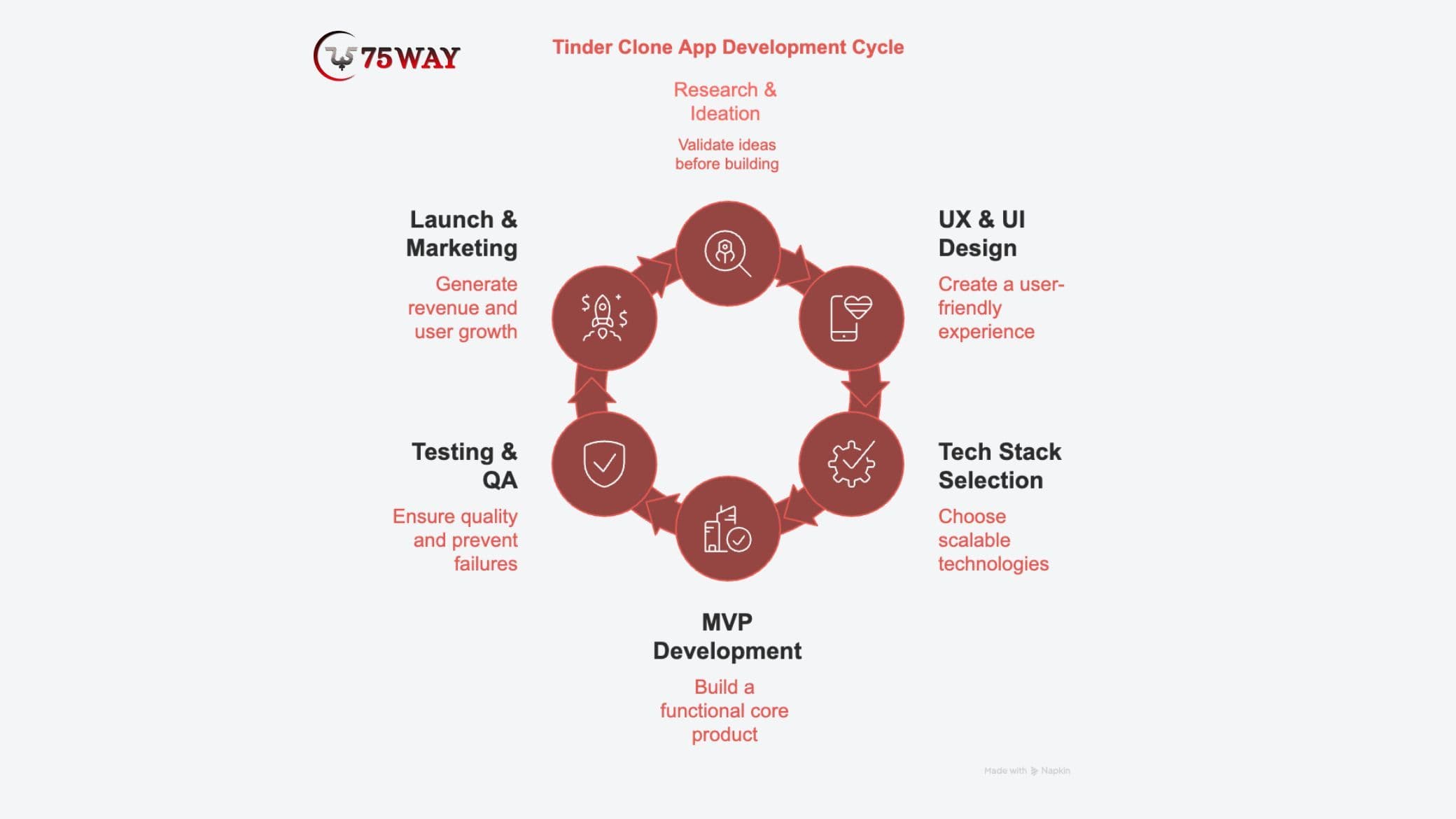
Step 1. Research & Ideation: Validate Before You Build
Before writing a single line of code, you have to validate the market opportunity and define your differentiation strategy to create a Tinder clone. Market validation prevents expensive mistakes and provides long-term direction.
Define Your Target Audience: Niche dating apps often scale faster than generic clones. You have to identify who your app serves:
- Age group (18–25, 25–35, 35+)
- Geographic focus (USA nationwide or niche cities)
- Interests or niche focus (professionals, LGBTQ+, faith-based, elite dating)
- Behavioral expectations (casual vs serious relationships)
Conduct Competitor Analysis: The next stage is to conduct competitor research to identify opportunities and weaknesses in building a Tinder clone. You have to analyze Tinder, Bumble, Hinge, and niche apps to identify the feature gaps and pricing models. Moreover, you can analyze App Store reviews, UX strengths, and weaknesses to find user frustrations.
Define Unique Value Proposition (UVP): Your app must explain why users should download it instead of Tinder. You can add AI-based compatibility scoring to improve match quality and video-first experiences to increase authenticity. A compelling UVP influences roadmap decisions and marketing positioning.
Step 2: UX & UI Design: Build a Swipe Experience Users Love
If technology is the engine of a Tinder clone, then UX/UI design is the heartbeat. In dating apps, users do not just interact with features. They respond emotionally to the smooth user experience. A smooth, intuitive interface keeps them swiping. That is why this stage is about designing an experience that feels exciting and natural from the very first tap.
Create Wireframes: You must start with wireframes to map user flow before designing the visuals. A clear onboarding process reduces drop-offs, while a simplified profile setup improves completion rates. The swipe screen must remain distraction-free. Match confirmation should feel rewarding, and the chat interface intuitive, ensuring a seamless user journey.
Develop High-Fidelity UI Designs: Once the structure is validated, move to polished visuals that build trust and emotional connection. You can use modern card layouts, clean typography, and balanced spacing to reduce cognitive load. Smooth animations and consistent branding enhance engagement. A refined interface makes your Tinder app clone feel premium.
Implement Swipe UX Best Practices: The swipe system forms the heart of a Tinder clone app. Clear visual feedback after each swipe builds confidence and control. This sense of clarity increases engagement over time. An undo option is available with premium upgrades, while fast loading and smooth transitions ensure uninterrupted browsing.
Step 3: Tech Stack Selection: Build for Scale from Day One
Once the design is completed for Tinder clone script, the next stage is to decide the technology choice made at the beginning influence app speed, long-term costs, and future expansion. A strong technical base supports growth across multiple states in the USA without frequent rebuilds. For startups aiming at serious traction, the right stack supports performance, security, and steady feature expansion from day one.
Choose Between Native vs Cross-Platform
Platform strategy connects directly to budget, launch timeline, and performance goals. Native development with Swift for iOS and Kotlin for Android delivers strong device integration and smooth performance across American smartphone ecosystems. This approach provides advanced features such as push notifications, location tracking, and camera access with greater stability. On the other hand, cross-platform frameworks such as Flutter and React Native reduce development time and overall costs by sharing a single codebase. This decision aligns with early-stage founders in the USA who prioritize testing product demand before scaling investment.
Select Backend Architecture
Backend systems power authentication, user profiles, swipe logic, match algorithms, and messaging. Node.js allows you implement live features such as instant match updates and chat synchronization across devices. Whereas Python enables AI-driven compatibility scoring and behavioral matching to maximize user engagement and premium positioning. A precise backend selection reduces hosting expenses and enhances security and long-term scalability across growing user bases.
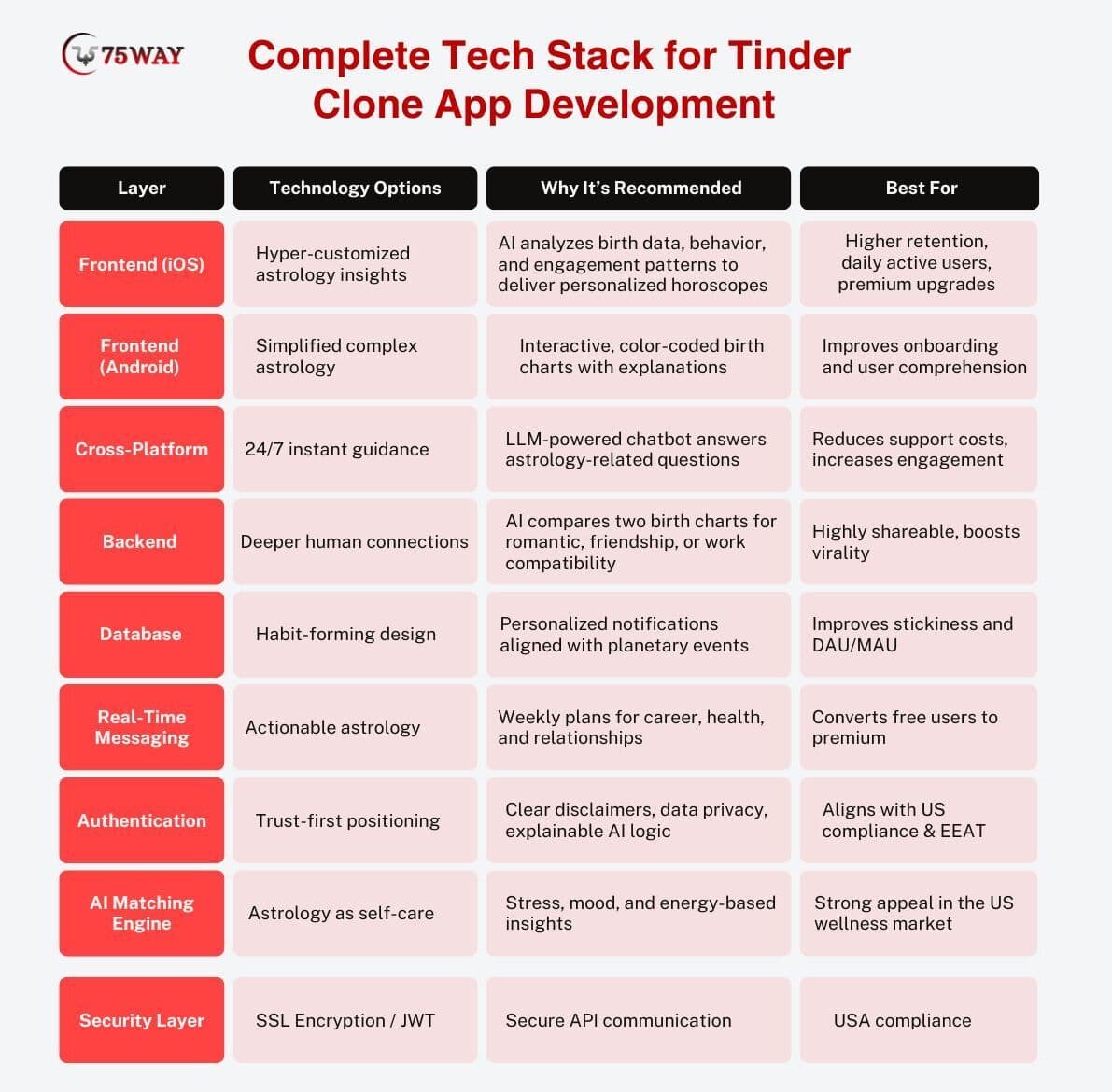
Configure Cloud & Real-Time Infrastructure: Cloud infrastructure supports traffic growth across major US regions without downtime. Providers such as AWS, Google Cloud, and Azure offer scalable deployment environments with strong data protection standards aligned with US compliance requirements. Real-time messaging depends on WebSockets or Firebase to deliver instant chat notifications and match alerts. Databases such as MongoDB and PostgreSQL manage user profiles, preferences, and conversations in a structured manner, supporting steady expansion as user numbers increase.
A technology stack selected with long-term growth in mind supports stronger investor confidence, smoother scaling, and better user retention across competitive US markets.
MVP Development: Build Smart, Not Big
Early-stage founders in the USA often feel pressure to launch with every possible feature. That pressure usually leads to extra development costs and delayed releases. A smarter path begins with an MVP development, where validation comes before expansion. Lean execution protects capital and allows founders to study user behavior in real time.
Prioritize Core Features for MVP
The first version of a Tinder clone app does not need advanced AI or live streaming. Strong foundations matter more than feature volume. You can add user registration to open the journey, swipe functionality to create engagement, and match confirmation for emotional reward. Basic chat allows connection, and push notifications bring users back into the app. Revenue validation from the beginning shows investors that the model works within the USA subscription economy.
Develop in Iterative Sprints: A structured sprint cycle keeps Tinder clone app development measurable. For example, two-week sprints break the roadmap into focused milestones, and weekly reviews offer alignment among product, design, and engineering teams. Additionally, real user feedback collected after launch becomes the most valuable asset.
A well-executed MVP does more than launch a full-fledged app. It builds confidence among founders, developers, and early users and sets the stage for sustainable growth across the competitive US dating market
Step 5: Testing & Quality Assurance: Prevent Costly Failures
A dating app idea may look powerful on paper, yet one unnoticed bug can damage user trust overnight. Quality assurance protects reputation, revenue, and retention from day one. After building a Tinder clone app, thorough testing is required to reduce legal risk and make long term platform credibility.
Functional Testing: Imagine a user swiping for the first time and facing a broken screen. Thus, functional testing reviews login, profile setup, swipe logic, match confirmation, chat delivery, payments, and push notifications. Stable interactions in the Tinder clone app build credibility, which directly improves retention and subscription conversions.
Load & Performance Testing: Rapid user growth often follows targeted marketing campaigns across major US cities. So, must conduct load and performance testing to evaluate your app's behavior during traffic spikes and high concurrency. Stable uptime, fast response time, and reliable media delivery offer uninterrupted engagement during peak usage hours.
Security Testing: Personal data is always at the center of every dating app development. You have to examine encryption standards, secure authentication, payment gateway protection, and API vulnerability exposure. Your Tinder clone app must align with US data privacy expectations builds credibility, and reassure users about platform safety.
Step 6: Launch & Marketing: Turn Product Into Revenue
A great product alone does not create revenue. Their timing for launch, positioning, and visibility decides early traction in the USA. A strong launch execution attracts early users, builds investor confidence, and lays the foundation for recurring subscription revenue in a competitive dating app landscape.
App Store Deployment: The App Store presence is the first public impression of a Tinder clone app. Optimized descriptions with intent-driven keywords improve search visibility. You can add compelling screenshots and short demo videos so users can make installation decisions easily. Transparent privacy policies and strong ratings improve credibility among US users.
Execute a Digital Marketing Plan: You can promote your Tinder clone app across diverse digital channels to reach the right audience at the right time. Influencer partnerships on Instagram and TikTok introduce the app to younger demographics who already use dating platforms daily. This awareness helps you run paid social campaigns targeting specific US cities to drive faster installs. As traffic increases, SEO-focused landing pages capture high-intent users searching for terms like “Tinder clone app” or “dating app development.”
Implement Early Traction Strategies: Early traction signals demand from investors and future users. You can provide invite-only access during beta, which creates curiosity and positions the app as exclusive rather than experimental. Moreover, limited-time premium trials encourage feature exploration to increase emotional connection with the platform. This layered approach supports retention, builds credibility in the USA market, and increases subscription conversions over time.
Learn More: How to Build an Astrology App Like Co-Star? A Strategic Guide 2026
Must-Have Advanced Features for Building A Tinder App Clone
It’s 2026, an era of automation and artificial intelligence, including agentic AI, so modern users expect more than simple swiping and chatting in dating apps. Competitive dating platforms in the USA rely on intelligent personalization, interactive media, and revenue-focused enhancements. Advanced features create differentiation, increase retention, and open multiple monetization channels beyond basic subscription models.
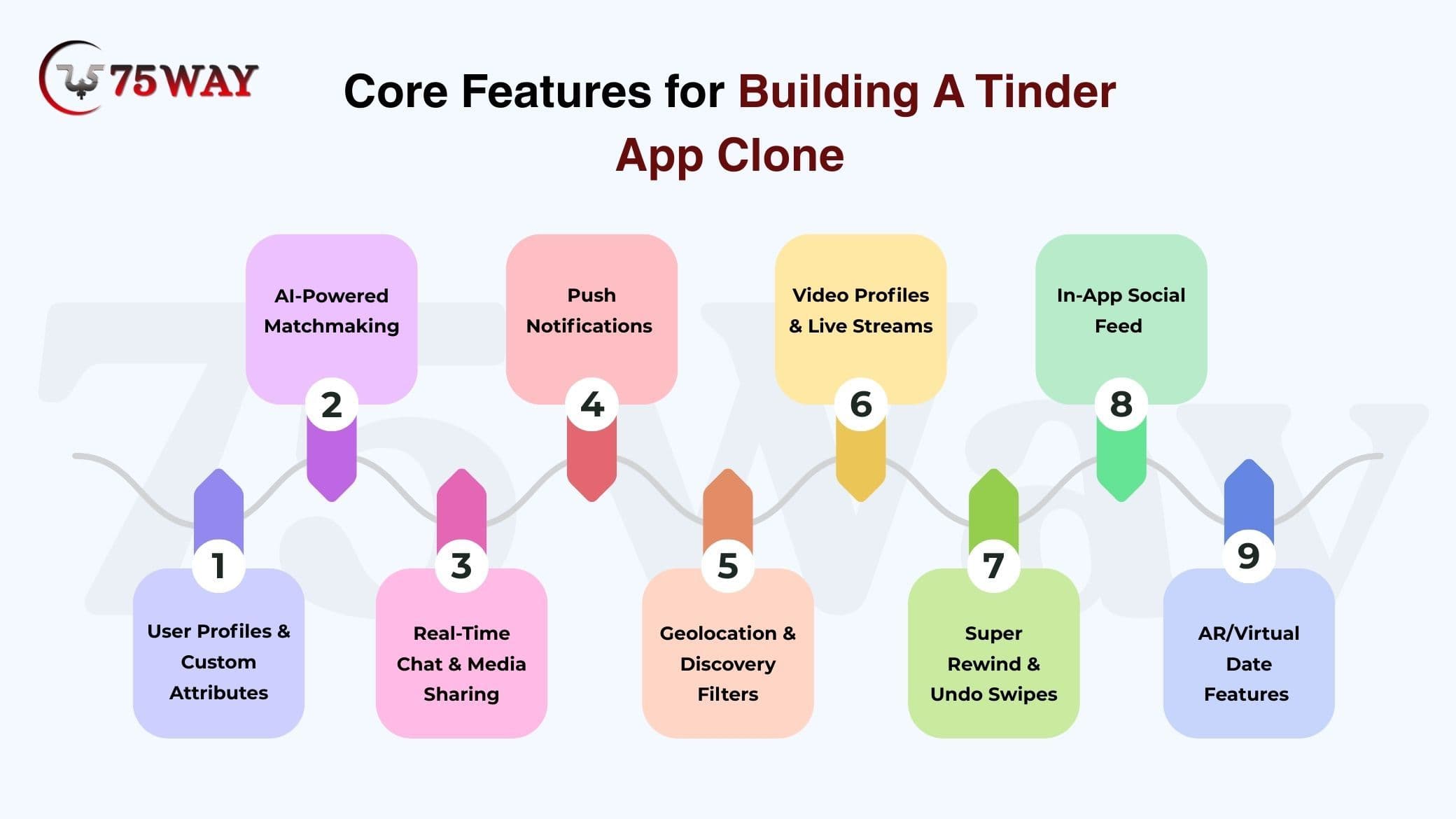
User Profiles & Custom Attributes: Rich user profiles improve match relevance and interaction quality. Custom interests, lifestyle tags, and preference filters support niche targeting. Structured profile data also strengthens compatibility scoring and personalized recommendation systems.
AI-Powered Matchmaking: Artificial intelligence models analyze user behavior, preferences, and engagement patterns. Predictive compatibility scoring improves match accuracy. Automated chat suggestions offer deeper personalization and steady engagement across diverse user segments.
Real-Time Chat & Media Sharing: Instant messaging in your Tinder app clone builds an emotional connection between matched users. Media sharing, such as images, voice notes, and short videos, increases interaction depth. You must add reliable chat systems to directly enhance retention and match conversion rates.
Push Notifications: Timely notifications and alerts remind users about new matches, messages, and profile views. Smart frequency control prevents irritation. Personalized alerts improve re-engagement and encourage consistent daily activity.
Geolocation & Discovery Filters: Location-based matching in dating apps increases relevance and user satisfaction. Distance filters, city selection, and interest-based discovery refine search results. Geographic precision supports urban-focused launches across major US markets.
Video Profiles & Live Streams: Short video profiles increase authenticity and reduce fake accounts. Live streaming options encourage real-time interaction. Visual transparency builds trust and improves match confidence among safety-conscious users.
Super Rewind & Undo Swipes: Undo swipe functionality reduces regret and improves user satisfaction. You can add premium rewind options to create monetization opportunities. Small control-based features often increase subscription upgrades and paid feature adoption.
In-App Social Feed: A built-in social feed extends engagement beyond one-to-one matches. Community posts, updates, and reactions create interaction loops. Broader participation increases session duration and platform stickiness.
AR/Virtual Date Features: Augmented reality filters and virtual date environments introduce immersive interaction. Digital date rooms create memorable experiences. Innovative engagement models differentiate the platform from standard swipe-based competitors.
Gamification & Rewards: Points systems, badges, and activity streaks motivate consistent usage. Achievement-based rewards encourage daily interaction. Structured gamification increases engagement duration and improves user retention metrics.
Learn More: How to Start a Taxi Business? Guide for Beginners
How Much Would It Cost To Build An App Like Tinder?
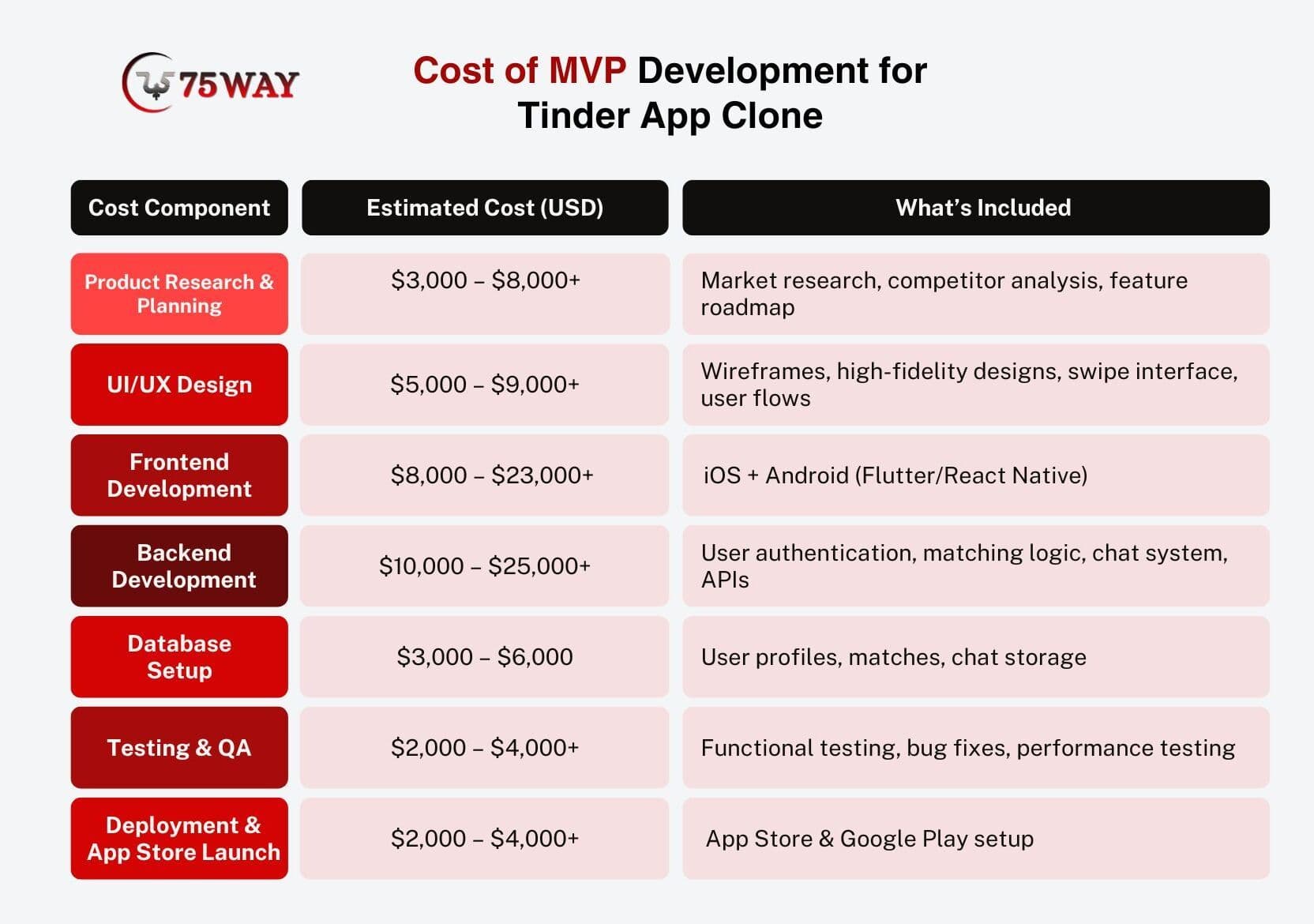
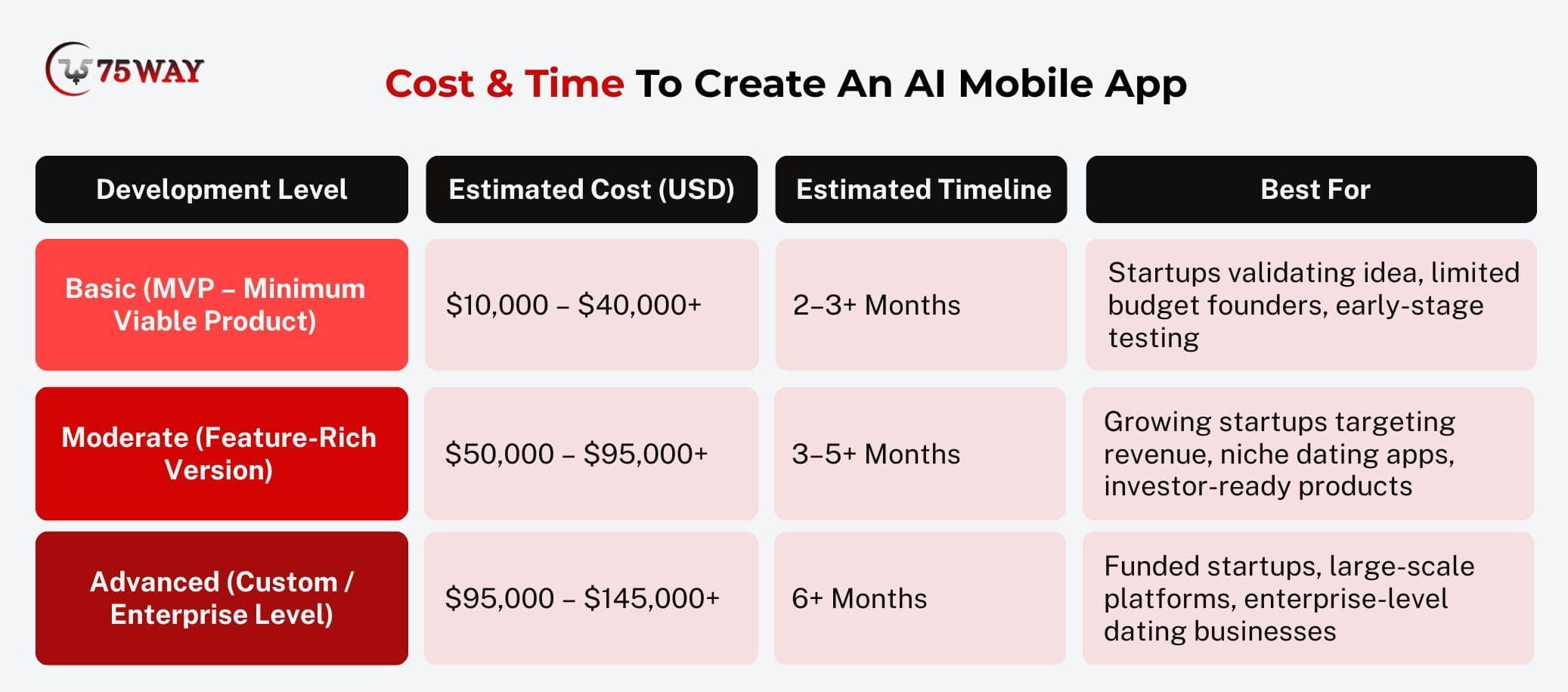
Tinder clone app development cost depends on feature depth, technology choices, and business goals in the USA market. A basic MVP typically ranges from $10,000 to $40,000+, with a development timeline of about 2-3 months. This level suits founders validating an idea, testing user response, and preparing for early investor discussions without heavy upfront spending.
A moderate feature-rich version of Tinder app clone typically costs between $50,000 and $95,000+ and requires 3-5 months of development. This stage fits revenue-focused startups ready to compete in niche dating markets. An advanced or enterprise-level platform ranges from $95,000 to $145,000+, with 6 months or more of development, as it requires large user bases, AI-powered matchmaking, and high-concurrency infrastructure.
Other Costs For Tinder Clone App Development
Maintenance & Updates: Ongoing maintenance typically ranges between $3,000–$6,000 per month. This covers bug fixes, performance optimization, security patches, and regular iOS/Android OS updates to ensure a smooth user experience and app store compliance.
Server & Infrastructure: Server and cloud infrastructure costs range from $1,000–$3,000+ monthly, depending on active users. Expenses include AWS or Google Cloud hosting, database scaling, storage, CDN services, and real-time messaging infrastructure.
Marketing & User Acquisition: Launching a dating app requires $11,500–$86,000 monthly for marketing. This includes paid ads, influencer campaigns, social media promotion, app store optimization, and referral programs to rapidly acquire and retain users.
How To Generate Revenue from A Tinder Clone App
Revenue from a Tinder clone app does not come from downloads alone. Sustainable income depends on layered monetization built around user behavior and engagement patterns in Tinder clone development. A balanced revenue model combines subscriptions, micro transactions, partnerships, and integrations to create recurring and scalable income in the competitive USA dating market.
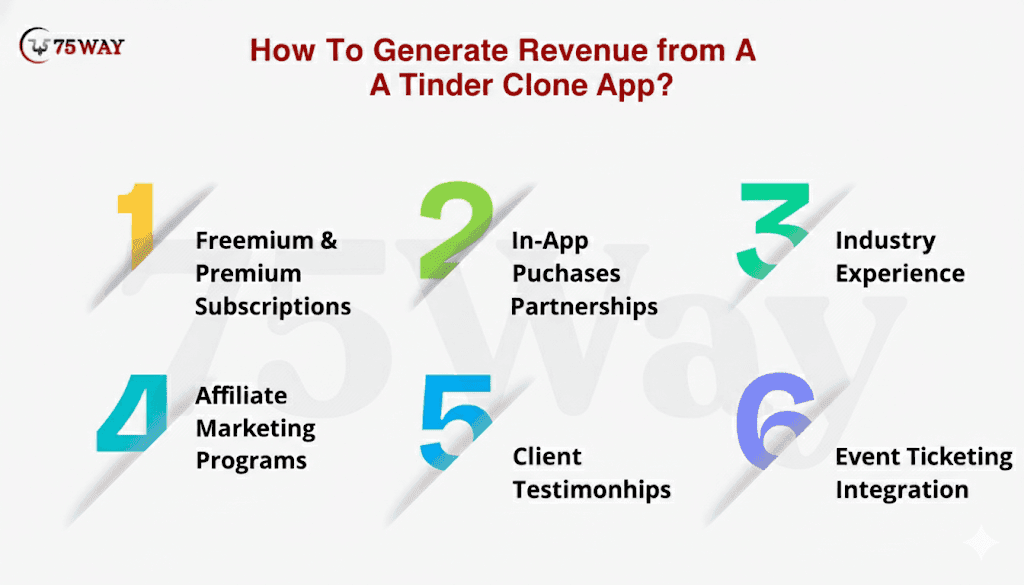
Freemium & Premium Subscriptions: A freemium model attracts large user volumes with basic swipe and chat access. On the contrary, premium subscriptions offer advanced filters, unlimited swipes, profile boosts, rewind options, and visibility controls. Recurring monthly or yearly plans create predictable revenue and improve business valuation over time.
In-App Purchases (Boosts, Gifts): Micro transactions generate immediate revenue from active users. You can implement profile boosts while building a Tinder clone app to increase visibility within local discovery feeds. Further, virtual gifts and spotlight features enhance interaction and emotional engagement. These small purchases often convert free users into paying customers without a full subscription. Users may also discover lifestyle-related content, such as tattoo ideas, through relevant promotional or discovery features.
Ads & Partnerships: Brand collaborations open additional income opportunities beyond subscriptions for your Tinder app clone. Sponsored placements within discovery feeds introduce lifestyle or event promotions. Strategic partnerships with fashion, travel, or entertainment brands align naturally with dating audiences and support diversified revenue streams.
Affiliate Marketing Programs: Affiliate promotions connect users with relevant services such as restaurants, travel packages, or event bookings. Commission-based partnerships reward the platform for successful referrals. Contextual recommendations based on user interests improve conversion rates and increase non-subscription revenue.
Enterprise API Partnerships: API integrations allow third-party services to connect with the platform ecosystem. Payment providers, identity verification services, or AI analytics tools create indirect monetization opportunities. Enterprise collaborations position the Tinder clone app as part of a broader digital relationship network.
Event Ticketing Integration: Offline and hybrid dating events expand revenue beyond digital interactions. In-app ticket purchases for curated meetups increase brand engagement. Community-driven gatherings create deeper emotional connections and generate additional cross-channel income streams.
Know More: How AI Development Help US Companies Scale Faster
Final Remarks
A successful Tinder clone app in 2026 requires more than swipe mechanics. In Tinder clone app development, market validation, strategic differentiation, AI integration, and structured monetization drive sustainable growth. You must have clear planning to prevent overspending. A lean MVP execution reduces risk, and strong marketing accelerates early traction in competitive US cities. The opportunity already exists in the USA market. Smart execution determines who captures it. If you are ready to turn your dating app idea into a scalable, revenue-driven platform, partner with an experienced app development company that understands performance, compliance, and scale monetization.
FAQ
How To Build A Tinder Clone Without Code?
Building a Tinder clone without coding is possible using modern no-code platforms, automation tools, and third-party integrations. Here are the clear, structured steps to follow:
Define Your Niche & Target Audience: Identify who your app is for (college students, professionals, LGBTQ+, pet lovers, etc.). Clear positioning helps you select the right features and branding.
Choose No-Code App Builder: Select platforms like Bubble, Adalo, Glide, or FlutterFlow (low-code) that support user authentication, databases, and swipe-based UI.
Design Core Screens: Create essential screens, including signup, profile setup, swipe interface, match confirmation, and chat. A simple, intuitive layout improves the user experience and reduces drop-offs during onboarding.
Set Up Database Structure: Create a database schema for user profiles, photos, preferences, and match records. Organized data management supports smooth performance and accurate matching logic.
Configure Swipe & Match Logic: Set rules that trigger a match when two users swipe right on each other. Automated workflows within the platform handle real-time match creation.
Integrate Chat & Payments: Connect built-in messaging tools for real-time chat. Add payment gateways such as Stripe to enable premium subscriptions and in-app purchases.
Test, Optimize & Launch: Conduct beta testing with a small user group to identify gaps. Refine your app's design and performance before publishing it on Google Play and the App Store.
How Can I Differentiate My Tinder Clone From Competitors?
You can differentiate your Tinder clone by focusing on a specific niche, integrating AI-driven personalization, and offering verified profiles that build trust and authenticity. Community-driven features beyond simple swiping increase engagement, retention, and long-term user value.
What Are The Legal Requirements For Dating Apps In The USA?
Dating apps in the USA must comply with federal and state privacy, consumer protection, and online safety regulations. Compliance with laws such as CCPA and other state privacy acts governs data collection, storage, and user rights. Clear Terms of Service and a transparent Privacy Policy must explain subscriptions, refunds, and platform responsibilities.
Strong data security standards, including encrypted storage, secure authentication, and breach response protocols, are essential. PCI DSS compliance applies to subscription and in-app payment processing. Content moderation systems must address harassment, impersonation, and illegal behavior. Marketing campaigns must follow FTC advertising and influencer disclosure guidelines to avoid penalties.
What Are The Biggest Challenges In Dating App Development?
Dating app development presents complex business and technical obstacles in the USA market. Competition, trust issues, scalability pressure, monetization balance, and regulatory compliance demand careful planning, strong infrastructure, and user-focused strategies for sustainable growth.
User Trust & Safety: Fake profiles, scams, and harassment undermine credibility, so verification systems, moderation tools, and reporting mechanisms are needed.
User Acquisition: High competition increases marketing costs, requiring niche positioning and engagement features to reduce churn.
Scalability & Performance: Real-time chat, swipe logic, and geolocation demand strong backend infrastructure during traffic spikes.
Monetization Strategy: Overly aggressive paywalls hurt engagement, yet weak premium value limits sustainable revenue growth.
Regulatory Compliance: US data privacy laws require secure authentication, encryption standards, and age verification systems.
How Do Tinder-Like Apps Scale To Millions of Users?
Tinder-like apps scale to millions of users through cloud-based infrastructure, distributed system design, and real-time data processing. A strong backend architecture supports high traffic volumes, instant messaging, and location-based discovery across multiple US regions without performance breakdown during peak usage.
Scalability also depends on microservices architecture, load balancing, scalable databases such as MongoDB or PostgreSQL, and real-time messaging systems like WebSockets or Firebase. Content delivery networks speed up media loading, and continuous monitoring helps maintain stable performance as user numbers grow rapidly.