
Summary
Travel app development is revolutionizing the travel and hospitality industry by improving customer experience, boosting operational efficiency, and driving loyalty. AI-powered personalization, predictive analytics, and contactless check-in enhance engagement while strategic app features ensure higher conversions and a competitive edge for businesses in a fast-growing market.
Quick Overview
- Travel app adoption continues growing rapidly, with the market projected at $1,445.1 billion.
- Travel app development enhances customer engagement, satisfaction, and long-term business growth.
- AI-powered personalization boosts loyalty while increasing conversion rates and revenue significantly.
- Contactless check-in and in-app booking improve convenience and customer safety.
- Mobile apps transforming travel & hospitality drive competitive advantage for startups.
With over 70% of travelers now using mobile devices to plan trips, businesses in the travel and hospitality sector are shifting toward smarter digital solutions that deliver faster and more convenient services.
The growth of travel mobile apps has opened new opportunities for travel agencies, airlines, hotels, and tourism companies to improve customer engagement and operational efficiency. Travelers can now search destinations, compare prices, book accommodations, receive real-time travel updates, and manage entire itineraries directly from their smartphones.
As smartphones continue to dominate travel planning and booking behavior, travel mobile app development has become an essential tool for businesses seeking long-term growth and competitive advantage. Being a business owner, you must have a question, “But, how do these mobile apps redefine travel and hospitality industries?” “Is it worth investing in travel app development in 2026?” But don’t worry. This guide will answer all your doubts. This guide will reveal technologies, features, and strategies of mobile app development for travel and hospitality app businesses can adopt to transform travel through travel mobile applications.
What Is Travel App Development?
Travel app development refers to the process of designing, building, and deploying mobile applications that help users plan, book, manage, and enhance their travel experiences through digital platforms. These applications integrate services such as flight reservations, hotel bookings, itinerary management, navigation, payment systems, and real-time travel updates into a single mobile interface.
In the travel and hospitality ecosystem, travel app development connects travelers with airlines, hotels, tour operators, and transportation providers. A well-developed travel app allows users to search destinations, compare prices, receive personalized recommendations, and access travel information instantly from their smartphones.
Learn More: How to Build a Self Driving Car Software: A Complete Roadmap
Benefits Travel Mobile Apps Deliver For Modern Travelers
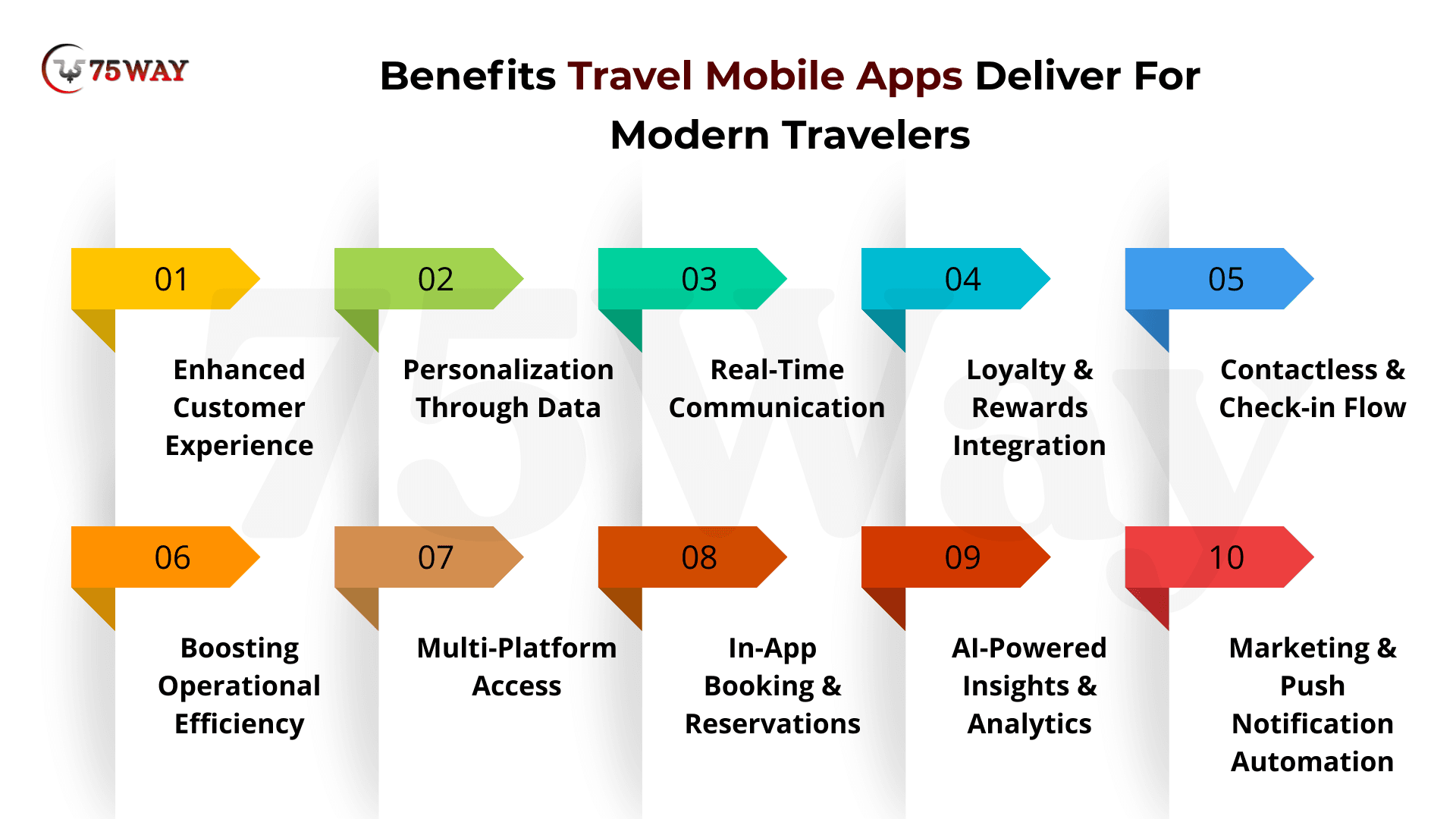
Travel mobile apps provide a unified digital environment where planning, reservations, communication, and personalized services remain accessible on a single platform. Real-time updates, secure transactions, and intelligent recommendations simplify travel decisions. Hospitality businesses gain stronger engagement, deeper customer insights, and higher booking conversions through integrated mobile experiences that support modern traveler expectations.
Enhanced Customer Experience
A traveler searching for flights or hotels expects instant results and simple navigation. Mobile travel apps make this possible through intuitive interfaces and organized information. Destinations, accommodations, reviews, and booking options appear within seconds. A seamless digital experience reduces friction during planning and builds stronger confidence in travel platforms, encouraging travelers to return for future bookings.
Personalization Through Data
Every search, booking, and interaction inside a travel app generates valuable insights about traveler preferences. These insights help platforms recommend destinations, hotels, and activities aligned with personal interests. Travelers receive curated suggestions instead of generic options. Customized recommendations improve satisfaction and help hospitality brands deliver experiences that feel relevant and meaningful.
Real‑Time Communication
Travel plans rarely remain static. Flight delays, gate changes, and reservation updates require quick communication. Mobile travel apps keep travelers informed through instant notifications and in-app alerts. Immediate access to updates reduces uncertainty during trips and allows travelers to respond quickly to changes, creating a more reliable and stress-free travel experience.
Loyalty & Rewards Integration
Frequent travelers value recognition and incentives. Many travel apps include reward programs that allow users to earn points, unlock discounts, and access exclusive travel deals. Loyalty programs encourage repeat bookings and strengthen relationships between travelers and brands. A well-designed rewards system transforms occasional customers into long-term platform users.
Contactless & Check‑in Flow
Airport queues and hotel reception lines often slow down the travel experience. Mobile applications simplify these processes by allowing travelers to complete check-ins digitally. Digital boarding passes, mobile room keys, and contactless verification reduce waiting time. Faster entry into flights and accommodations improves convenience and creates a smoother journey for travelers.
Boosting Operational Efficiency
Behind every successful travel service lies a complex operational system. Mobile apps help travel businesses organize reservations, customer communication, and service management in one centralized platform. Automated processes reduce manual workload and allow staff members to focus on service quality. Improved operational structure results in faster response times and better guest experiences.
Multi‑Platform Access
Travel planning rarely happens on a single device. Travelers move between smartphones, tablets, and desktops during research and bookings. Mobile travel platforms that support multiple devices provide uninterrupted access to reservations, itineraries, and travel documents. Continuous accessibility increases convenience and builds stronger trust in digital travel services.
In‑App Booking & Reservations
Convenience remains one of the biggest advantages of mobile travel apps. A single application allows travelers to reserve flights, hotels, transportation, and experiences without switching platforms. Simplified booking flows reduce time spent searching and increase the likelihood of completed reservations. Travel businesses benefit from higher booking conversion rates through integrated mobile booking systems.
AI‑Powered Insights & Analytics
Data collected through mobile apps reveals valuable patterns in traveler behavior. Travel companies analyze these insights to understand seasonal demand, popular destinations, and booking preferences. Data-driven decisions allow businesses to adjust pricing, improve services, and plan resources more effectively. Thus, advanced analytics plays an important role in delivering relevant travel experiences.
Marketing & Push Notification Automation
Travel decisions often depend on timing and attractive offers. Push notifications allow travel apps to deliver personalized deals, destination suggestions, and booking reminders directly to users. Timely messages encourage travelers to return to the platform and complete reservations. Automated campaigns therefore help maintain engagement and increase overall booking activity.
Quick Snapshot: What Is The Cost To Develop A Mobile App in 2026?
Why Mobile Apps Are The Future of Travel & Hospitality?
The global travel ecosystem is experiencing rapid digital transformation. Mobile technology has become a key driver of this growth, enabling businesses to deliver smarter, faster, and more personalized services across booking, customer engagement, and travel management platforms. The market statistics below clearly highlight the growing importance of travel mobile applications.
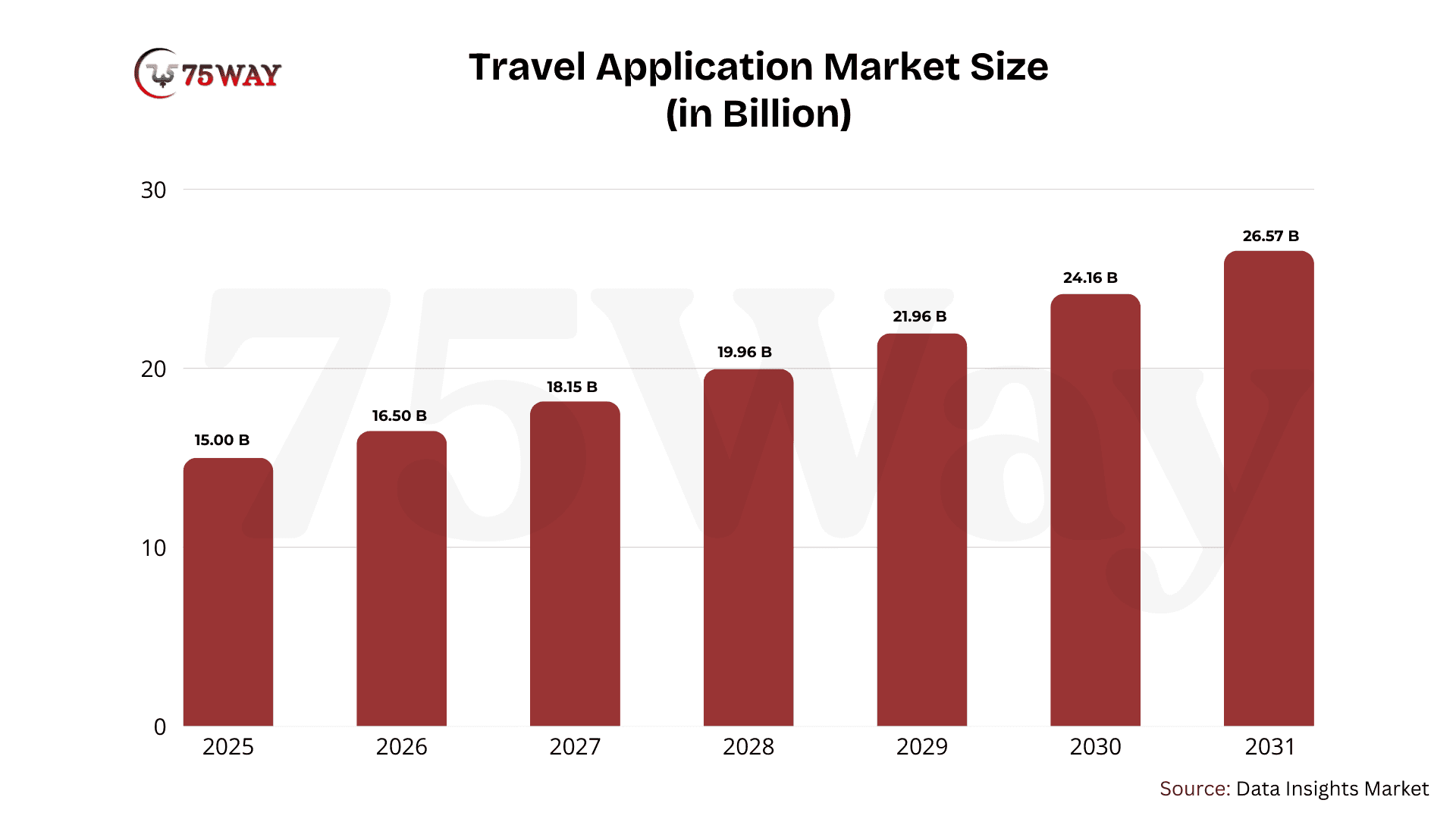
- The global travel planner app market is projected to reach approximately $1,445.1 billion by 2032, expanding at a CAGR of 11.9% during the forecast period, according to Market.us.
- The digital travel sector is expected to continue strong growth, reaching around $550.15 billion by 2026 at a 13.9% CAGR.
- The travel app market is forecasted to increase from $650.7 billion in 2024 to over $3.5 trillion by 2034, accompanied by a 17% rise in app downloads.
Read More: How AI Agents Automate Sales, Support & Operations in US Companies
Emerging AI & Smart Technologies in Travel & Hospitality Apps
Artificial intelligence and smart digital systems now play a central role in modern travel platforms. Mobile applications no longer function only as booking tools. Advanced technologies, used to build AI-powered apps, can understand user behavior, deliver personalized recommendations, automate support services, and simplify trip planning. For travel businesses that are building mobile apps for travelling, these technologies unlock valuable data insights that support smarter service delivery and better customer engagement. Below are some of the most influential technologies currently powering modern travel and hospitality applications.
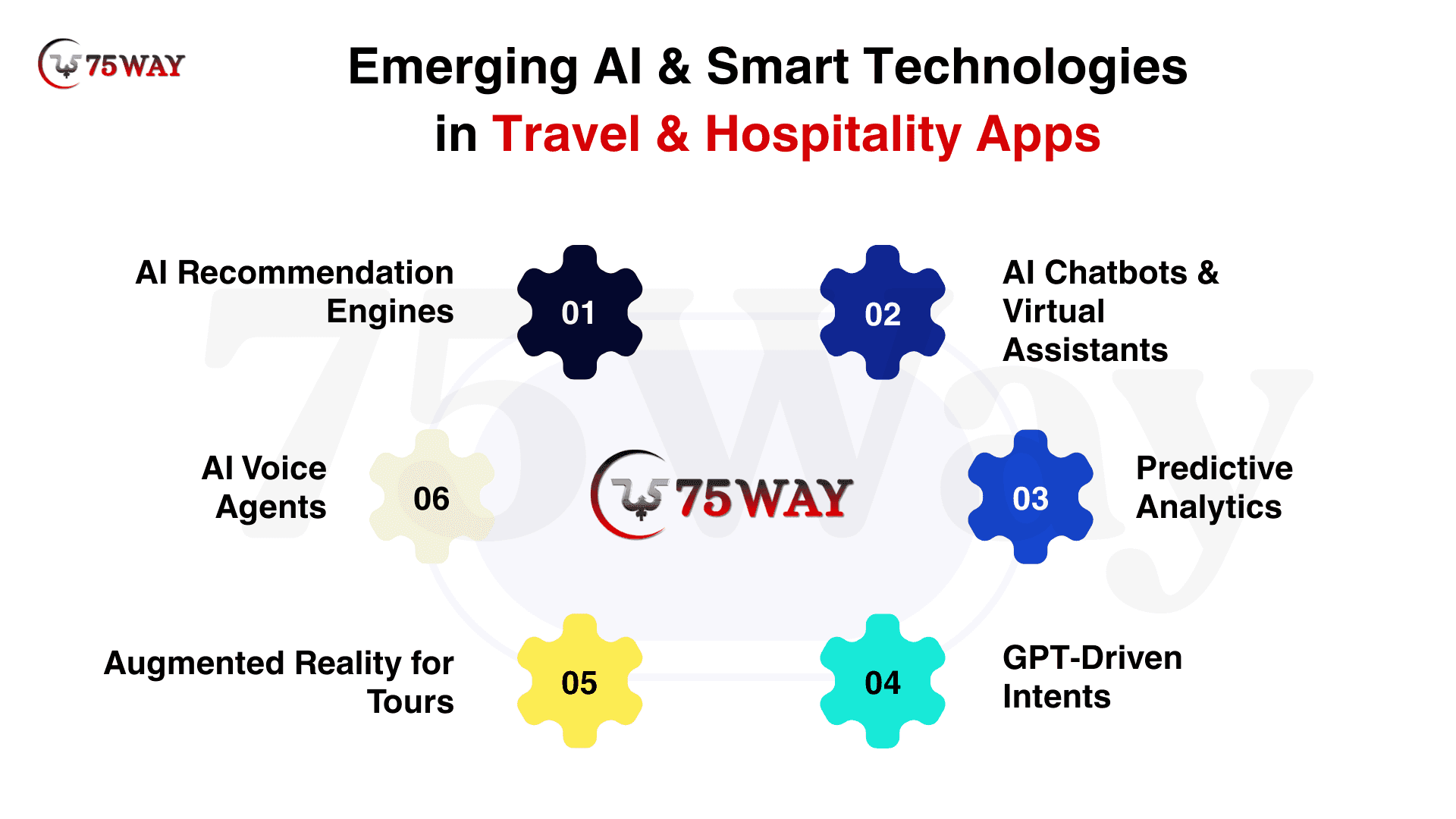
AI Recommendation Engines: Travel planning often involves hundreds of choices, from destinations and hotels to local experiences. AI recommendation engines and machine learning reduce this complexity by analyzing user behavior such as search history, past bookings, preferred locations, and travel budgets. Based on these patterns, the system suggests destinations, accommodations, and activities that align with individual interests.
For example, a traveler who frequently searches for beach destinations may receive suggestions for tropical resorts, coastal activities, and nearby attractions. This level of personalization improves the overall planning experience and helps users discover options they might otherwise overlook.
AI Chatbots & Virtual Assistants: Customer support remains a crucial part of the travel experience, especially during unexpected situations such as delays, cancellations, or itinerary changes. AI chatbot development solutions in travel apps allow travelers to receive immediate assistance at any time of day.
Within a travel app, these virtual AI assistants can answer questions about bookings, modify reservations, provide travel guidelines, and suggest nearby services such as restaurants or transportation. Instant responses improve traveler confidence and reduce the pressure on human support teams, allowing businesses to manage large volumes of customer requests efficiently.
Predictive Analytics: Predictive analytics uses historical travel data and user behavior patterns to anticipate future demand. Travel companies use this AI-powered analytics to forecast peak seasons, estimate booking trends, and adjust pricing strategies accordingly.
For travelers, predictive insights often appear in the form of fare alerts, price predictions, or recommendations about the best time to book flights and accommodations. These insights help users make more informed travel decisions and avoid unnecessary expenses.
GPT‑Driven Intents: Modern travel apps increasingly use natural language processing powered by large language models to understand user queries in a conversational format. Users can type or speak requests in everyday language rather than entering structured search terms.
For instance, a traveler might ask for “family-friendly resorts near mountains in December.” The system interprets the intent behind the request and generates relevant results instantly. This conversational search experience simplifies the planning process and makes travel apps more accessible to a broader range of users.
Augmented Reality for Tours: Augmented reality adds an interactive layer to travel exploration. Through AR-enabled travel apps, users can point their smartphone cameras at landmarks, streets, or historical sites and instantly receive information, visual overlays, or guided tours.
A traveler visiting a historical monument, for example, might see a virtual reconstruction of the site as it appeared centuries ago. This immersive approach transforms sightseeing into an engaging learning experience and encourages deeper exploration of destinations.
AI Voice Agents: Voice-based technology is becoming increasingly popular among users who prefer hands-free interaction with digital services. Businesses can build an AI voice agent and integrate them in their apps. These AI voice agents allow users to search for flights, reserve hotel rooms, or request travel information through spoken commands.
Instead of navigating through multiple menus, travelers simply ask the app for assistance. This technology improves accessibility, especially during busy travel moments such as airport transfers or driving through unfamiliar cities. Voice-enabled interfaces, therefore, add another layer of convenience to the modern travel experience.
To summarize, these AI-driven technologies are redefining the capabilities of travel and hospitality applications. As innovation continues to advance, mobile travel platforms will increasingly act as intelligent digital companions that guide users through every stage of their journey.
Read Too: How to Build A Social Media App Like Upscrolled: 2026 Playbook
Strategic Mobile App Features Every Travel & Hospitality Business Should Include
A ROI-driven travel mobile application combines intelligent search, seamless transactions, personalized experiences, and automated support within a single platform. These features improve user satisfaction, simplify trip planning, and help hospitality businesses increase engagement, bookings, and long-term customer relationships.
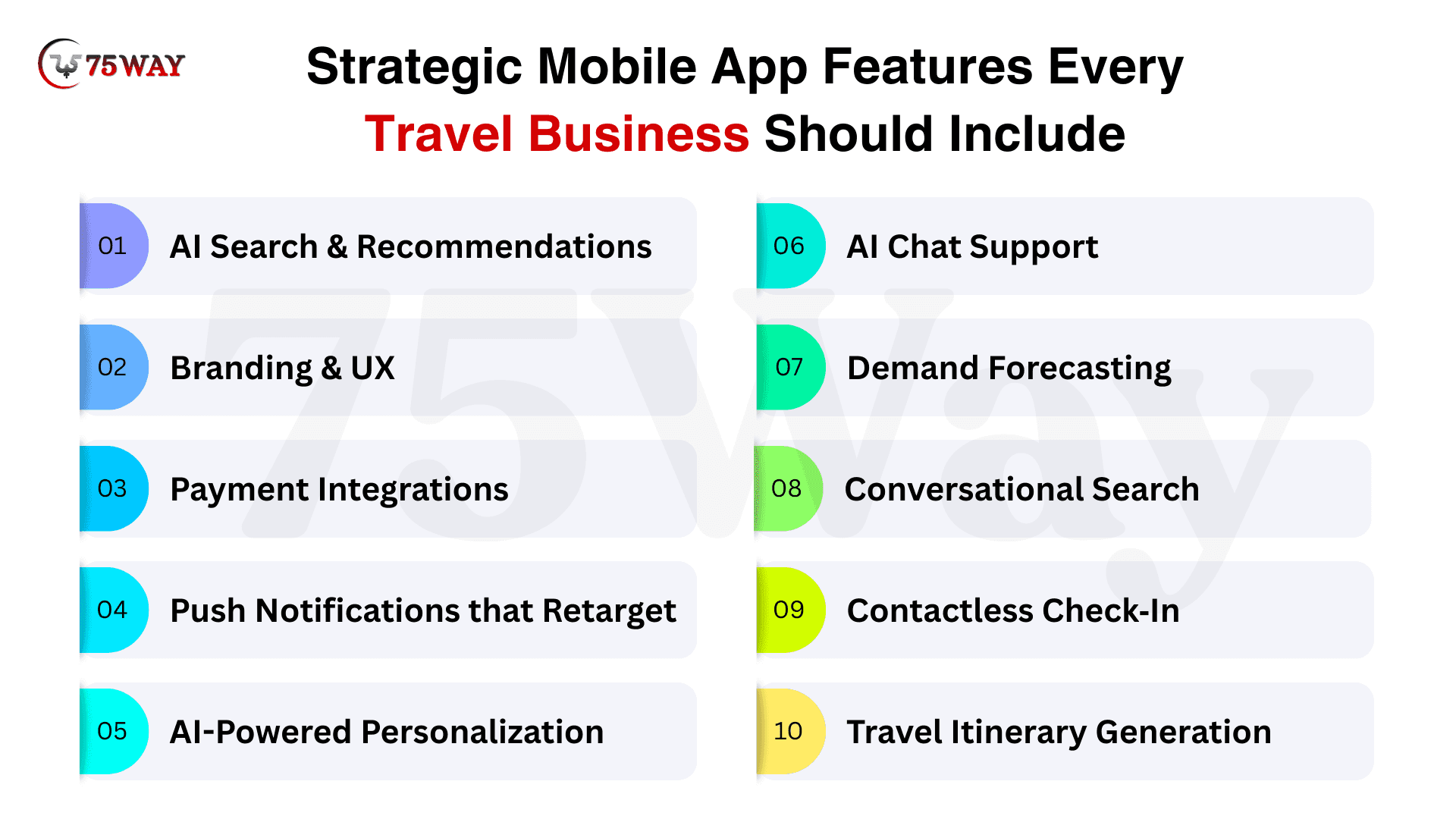
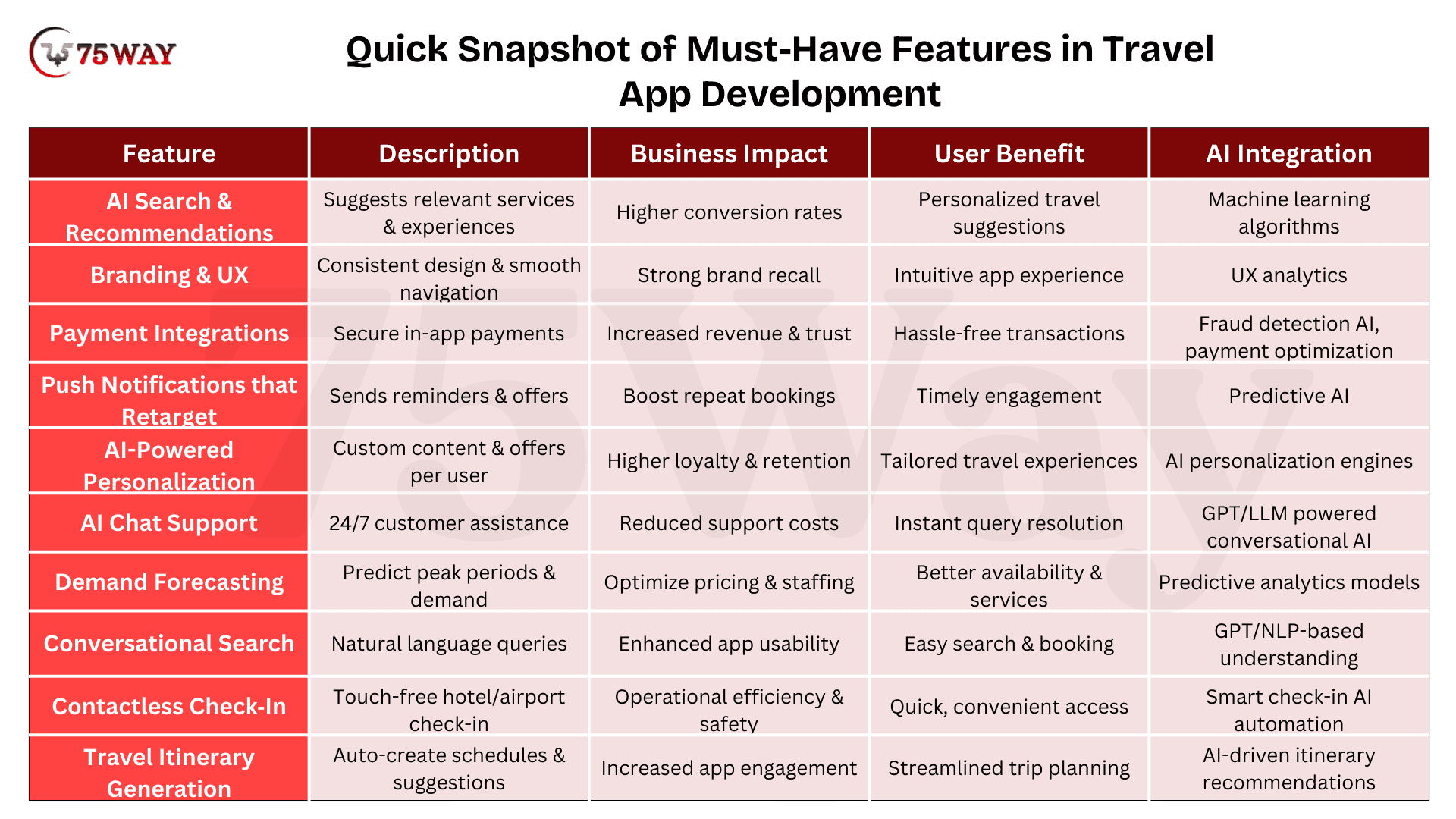
AI Search & Recommendations: AI-powered search analyzes behavior, previous bookings, and preferences to present relevant destinations, hotels, and activities. Personalized suggestions reduce search time and help users discover suitable options faster, improving booking conversions and delivering more meaningful travel experiences within mobile applications.
Branding & UI/UX: Strong branding combined with an intuitive user experience builds trust and encourages continued app usage. Clean navigation, consistent visual UI/UX design, and simple booking flows help users locate information quickly. A well-designed interface strengthens brand identity and improves overall engagement with travel platforms.
Payment Integrations: Secure payment integrations allow travelers to complete bookings quickly through multiple payment options such as cards, digital and e-wallets, and online banking. Smooth transactions reduce checkout friction and build confidence among users, encouraging faster reservations and improving revenue opportunities for travel businesses.
Push Notifications that Retarget: Smart push notifications keep users engaged after their first interaction with the app. Personalized alerts about price drops, destination deals, or booking reminders encourage users to revisit the platform. Timely communication increases engagement and helps travel companies convert interest into confirmed bookings.
AI-Powered Personalization: AI-powered engines analyze preferences to deliver customized experiences. Travel apps can recommend destinations, hotels, local attractions, and travel packages based on past activity. Tailored suggestions improve relevance and encourage users to explore more services within the platform.
AI Chat Support: AI chat support provides travelers with instant assistance directly inside the app. Virtual assistants and AI agents answer questions related to bookings, cancellations, travel policies, and destination details. Continuous support improves user satisfaction and allows travel companies to manage large volumes of inquiries.
Demand Forecasting: These tools analyze booking trends, seasonal travel patterns, and user behavior to predict future demand. Travel companies use these insights to adjust pricing strategies, manage inventory, and plan services effectively, ensuring better availability and optimized business performance.
Conversational Search: Conversational AI models allow users to interact with the app using natural language queries. Instead of navigating complex filters, users can type requests such as destination ideas or travel plans. The app interprets intent and delivers relevant options instantly.
Contactless Check‑In: Mobile check-in systems help to complete arrival procedures digitally through smartphones. Hotel guests can receive room access, and airline passengers can obtain boarding passes without waiting in queues. Contactless systems improve convenience and create smoother travel experiences.
Travel Itinerary Generation: This feature helps users organize their entire trip in one place. Travel apps can combine flight schedules, hotel bookings, transportation details, and local activity suggestions into a structured plan. Organized itineraries simplify travel management and improve overall trip experiences.
Quick Snapshot of Must-Have Features in Travel App Development
Read More: Best iOS App Development Companies in USA Founders Must Know
A Step‑by‑Step Process to Build A Travel Mobile App
Successful travel mobile applications emerge from careful planning, strong technical architecture, and a deep understanding of traveler expectations. Each development stage contributes to creating a reliable platform that supports seamless bookings, personalized experiences, and consistent performance across devices. A structured process also helps travel businesses avoid costly development errors and deliver a mobile product that attracts users and encourages repeat engagement.
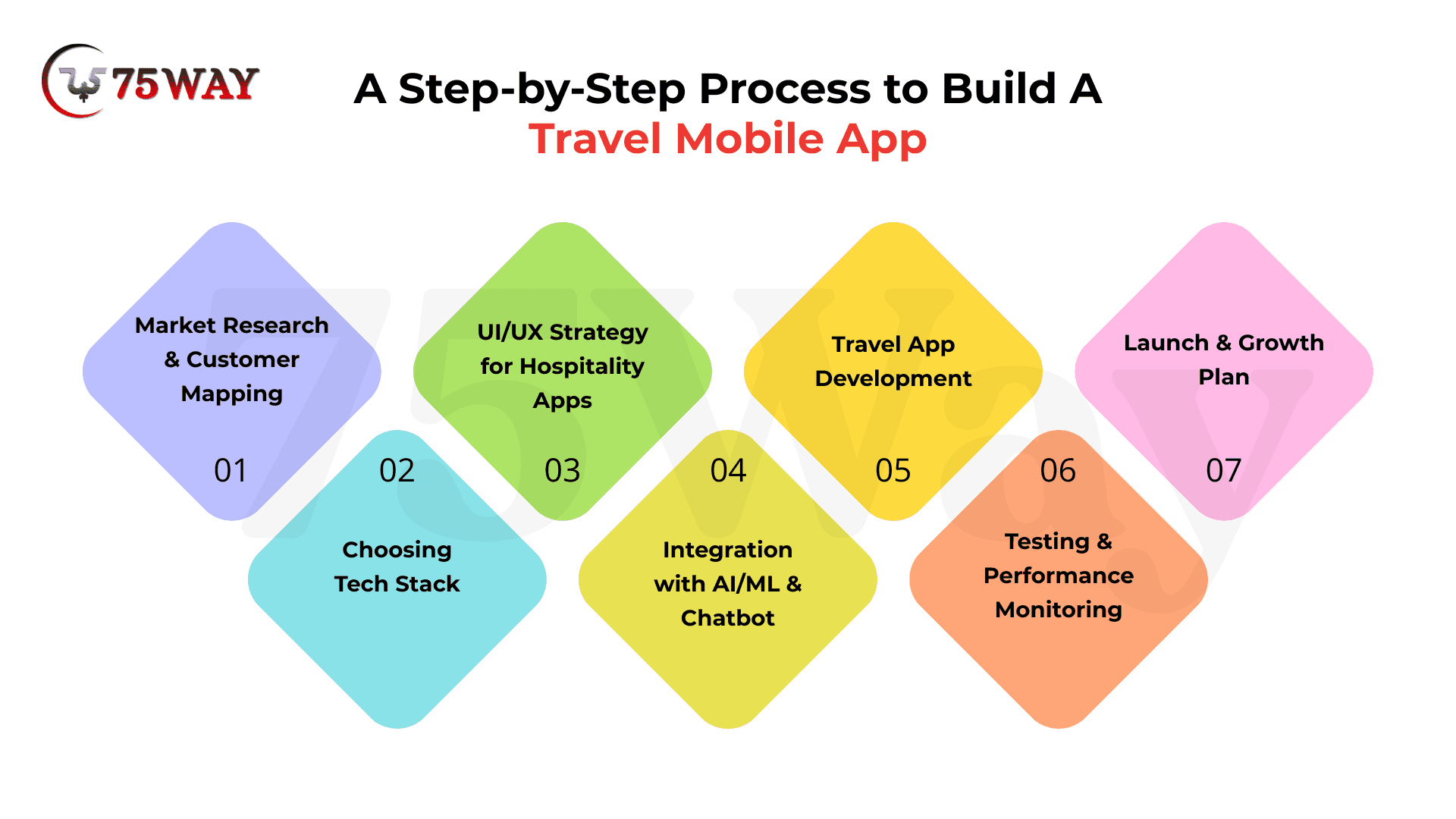
Market Research & Customer Mapping
Every travel app begins with understanding the travelers it intends to serve. Research reveals how people search for destinations, compare prices, and finalize bookings. Leisure travelers, business travelers, and digital nomads often look for different features. Mapping these user journeys highlights the services the application must provide. Once these expectations become visible, technology choices can be made with greater precision.
Choosing Tech Stack
The insights gathered during research guide the technical foundation of the application. A travel platform must process large volumes of searches, reservations, and user interactions without delays. Therefore, developers select frameworks, databases, and cloud infrastructure that can support real-time data exchange. Integration capabilities also become important because travel apps rely on airline systems, hotel databases, mapping services, and payment gateways. After the technical base is finalized, attention naturally moves toward creating an interface travelers can navigate comfortably.
UI/UX Strategy for Hospitality Apps
The technology foundation enables functionality, but design determines whether travelers actually enjoy using the app. Clear navigation, organized destination listings, and simple booking flows reduce confusion during trip planning. Visual consistency strengthens brand identity and helps users locate essential features quickly. Once the experience feels intuitive, the platform becomes ready for intelligent capabilities that enhance convenience during the travel journey.
Integration with AI/ML & Chatbot
At this stage, artificial intelligence development adds intelligence to the travel platform. Machine learning systems analyze user preferences, previous searches, and booking behavior to recommend destinations or accommodations that match individual interests. Chatbots assist travelers with reservation updates, travel guidelines, and itinerary details. These capabilities transform the app from a booking tool into a digital travel assistant. With intelligent features integrated, developers can then focus on building the complete operational structure of the application.
Travel App Development
Enterprise app development for travel and hospitality brings together the planning, technology, and design decisions into a working product. Core modules such as destination search, booking engines, payment processing, and itinerary management are implemented during this phase. Integration with external travel service providers allows users to access flights, accommodations, and local experiences within a single platform. Once the functionality becomes complete, the application must be tested to confirm reliability.
Testing & Performance Monitoring
Before release, the travel application undergoes extensive testing to confirm that every feature works smoothly. Quality assurance teams evaluate speed, security, compatibility across devices, and the stability of booking systems. Simulated traffic loads reveal how the platform behaves during peak travel seasons. Addressing these technical details prepares the application for real users and reduces the risk of service interruptions after launch.
Launch & Growth Plan
With a stable product ready, the focus turns toward introducing the application to travelers. App store optimization improves visibility, digital marketing attracts early users, and partnerships with travel services increase reach. Usage analytics then reveal how users interact with the platform. These insights guide continuous improvements, allowing the app to evolve alongside changing travel expectations.
Also Read: How to Build an AI-Driven Anonymous Messaging App?
How to Select the Right Travel App Development Partner?
The success of a travel mobile app depends not only on the idea but also on the expertise of the development partner behind it. A skilled team understands the complexities of travel platforms, including booking engines, payment integrations, real-time data connections, and app design. Therefore, selecting the right partner becomes an important step for businesses planning to build a reliable travel application.
A practical starting point involves asking the right questions about the company’s technical capabilities and industry exposure. Teams with prior experience in travel technology usually understand how airline APIs, hotel inventory systems, and secure payment gateways operate together. Familiarity with advanced technologies such as artificial intelligence, predictive analytics, and conversational interfaces also indicates whether the partner can build a modern application that matches current traveler expectations.
Evidence of past work offers another valuable indicator. Case studies and client success stories reveal how the development team handled real projects, managed integrations, and delivered results for travel businesses. This evaluation naturally leads to another important factor: long-term collaboration. Travel apps require continuous updates, performance monitoring, and feature improvements after launch. Development partners who provide ongoing technical support help businesses maintain stability as user demand grows. Pricing transparency also plays a role in decision-making, since clear cost structures allow companies to plan investments with a realistic expectation of long-term return.
Get More Insights: How to Build IoT Apps in 2026: A Guide for Startups, Founders & Business Owners
What’s Next? Future Trends in Travel Mobile App Development
Digital innovation continues to influence the direction of the travel and hospitality industry. New technologies allow travel apps to understand traveler preferences, simplify planning, and deliver more immersive experiences. As these innovations mature, travel businesses that adopt them early will gain stronger engagement and higher customer retention.
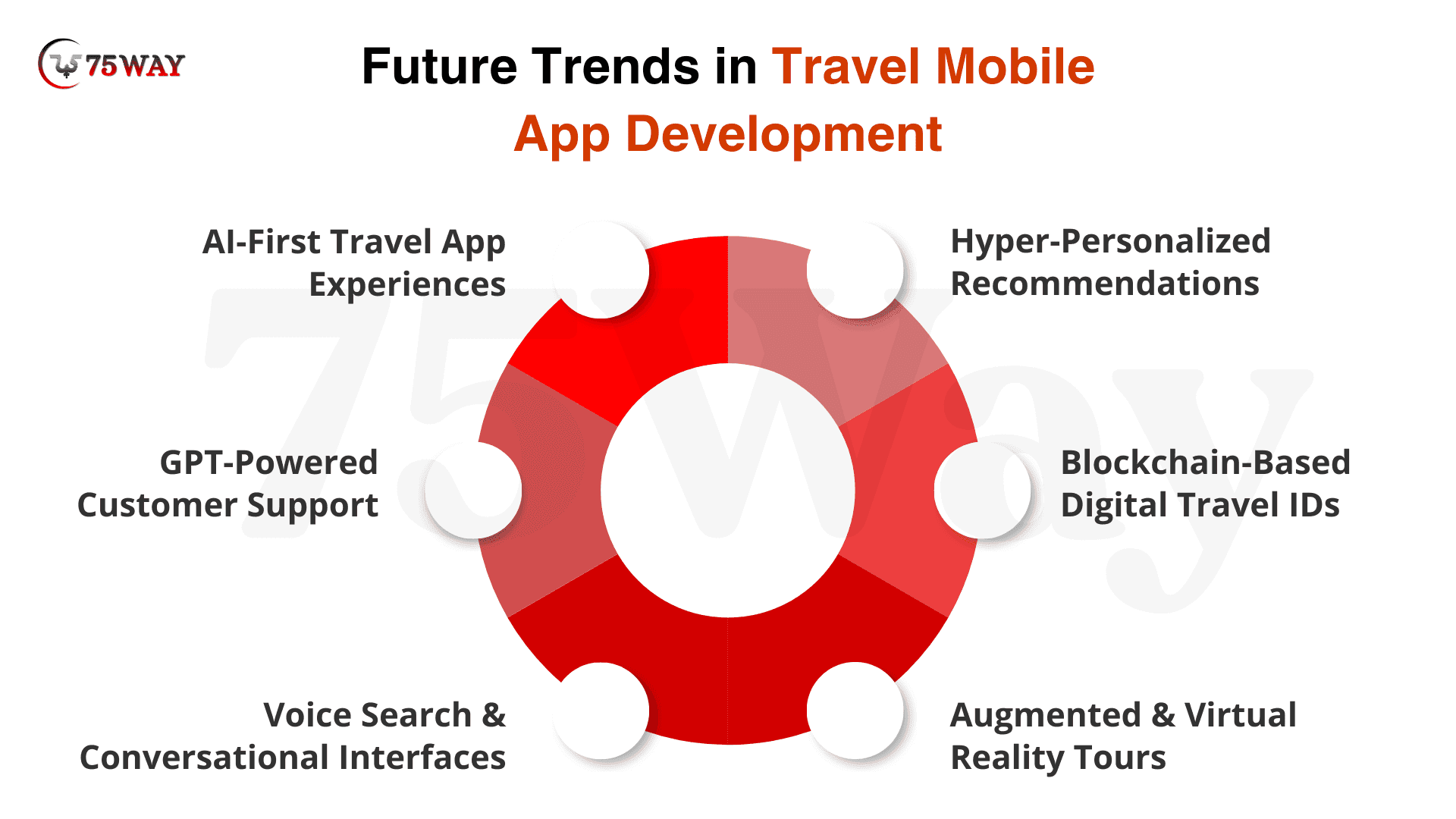
AI-First Travel App Experiences: Artificial intelligence is expected to play a central role in future travel applications. Smart systems examine preferences, previous bookings, and browsing patterns to generate relevant suggestions. Travel planning becomes easier as apps recommend destinations, accommodations, and activities based on personal interests.
GPT-Powered Customer Support: Customer support in travel apps is becoming more responsive through advanced conversational AI. GPT-powered systems understand natural language queries and provide detailed responses related to reservations, cancellations, or destination guidance. Travelers receive assistance instantly without waiting for human agents.
Voice Search & Conversational Interfaces: Voice interaction is gradually becoming a preferred method for accessing digital services. Users can search for flights, hotels, or nearby attractions simply by speaking to their devices. Conversational interfaces interpret these requests and provide relevant travel options. This interaction method simplifies navigation, particularly when travelers need quick information during busy travel situations.
Augmented & Virtual Reality Tours: Virtual exploration technologies allow travelers to preview destinations before confirming bookings. Augmented and virtual reality features enable users to view landmarks, hotels, and attractions through immersive visual experiences. A traveler can explore a hotel room, walk through historical sites, or view nearby attractions virtually. This interactive exploration supports confident travel decisions.
Blockchain-Based Digital Travel IDs: Identity verification often creates delays during international travel procedures. Blockchain technology offers a secure system for storing and verifying digital travel identities. Users can maintain encrypted identity credentials within mobile apps, allowing faster verification during airport check-ins or border control processes. Secure digital identities also help reduce documentation errors and improve convenience.
Hyper-Personalized Recommendations: Future travel apps will increasingly focus on highly personalized experiences. Data collected from traveler behavior, preferences, and trip history allows platforms to deliver tailored recommendations for destinations, accommodations, dining options, and local experiences. Personalized travel suggestions not only simplify trip planning but also create more meaningful and enjoyable journeys for users.
Read More: Top AI Agent Development Companies in USA in 2026
Final Thoughts
Mobile technology now sits at the center of modern travel experiences. Mobile applications also support stronger customer engagement, simplified operations, and data-driven decision making for hospitality brands. As digital travel demand continues to grow, companies that adopt advanced mobile solutions position themselves ahead of competitors. A well-built travel application not only improves traveler convenience but also creates new opportunities for revenue growth, brand loyalty, and service innovation. Ready to turn your travel business idea into a powerful digital platform? Connect with a trusted travel app development company that understands travel technology and can create a mobile solution tailored to your business goals.
Frequently Asked Questions (FAQs)
How Do Mobile Apps Increase Customer Loyalty?
Mobile apps strengthen customer loyalty by creating consistent and personalized travel experiences. Users receive tailored recommendations, exclusive discounts, and loyalty rewards based on their preferences and booking history. Regular engagement through push notifications, custom offers, and seamless booking experiences encourages users to return to the same travel platform for future trips.
Why Should Travel Businesses Invest in Apps?
Mobile applications help travel businesses connect directly with customers and simplify the entire booking process. A dedicated app allows travelers to search destinations, reserve accommodations, and manage trips in one place. Businesses benefit from improved customer engagement, stronger brand visibility, valuable user data insights, and higher booking conversion rates.
What Features Do Users Want Most in Travel Apps?
Travelers expect convenience and reliability from travel mobile apps. Popular features include fast booking systems, personalized destination recommendations, secure payment options, itinerary management, real-time travel alerts, and integrated customer support. Features that simplify planning and provide instant access to travel information significantly improve user satisfaction.
How Will AI Change Travel & Hospitality in 2026?
Artificial intelligence will continue enhancing travel planning and customer service. AI systems will analyze traveler preferences to recommend destinations, optimize pricing based on demand, and automate customer support through intelligent chat assistants. These capabilities will help travel platforms deliver faster responses, personalized travel suggestions, and more efficient service management.
How Can Travel Apps Boost Operational Efficiency?
Travel mobile apps help businesses manage reservations, customer communication, and service coordination through centralized digital systems. Automated booking processes reduce manual work for staff members, while data insights help businesses understand demand patterns and adjust services accordingly. Organized digital operations improve service speed and overall operational performance.
What Are The Emerging Trends in Hospitality Mobile Apps?
Hospitality mobile apps are evolving through advanced technologies such as artificial intelligence, voice search interfaces, augmented reality tours, and predictive analytics. Contactless services, digital identity verification, and highly personalized travel recommendations are also gaining popularity. These innovations allow travel businesses to deliver more engaging and convenient experiences for modern users.