AI Summary
An AI workflow developer helps companies design, build, and optimize intelligent systems for ChatGPT, Claude Code, and custom AI projects. This guide explains the role of an AI workflow developer, why businesses hire these experts, what skills to evaluate, and how they help create scalable AI solutions that support real business goals.
Key Takeaways
- Understand the role of an AI workflow developer in business automation.
- Learn how expert AI workflow developers build ChatGPT, Claude Code, and AI solutions.
- Discover essential skills before hiring an AI workflow developer.
- Explore benefits of custom AI workflow development for companies.
- Know how AI experts transform ideas into scalable systems.
A common mistake we see businesses make is treating artificial intelligence as just another software tool they can add to their workflow. They connect ChatGPT or Claude, test a few prompts, and expect AI automation to happen. In reality, useful AI systems require careful planning around data, processes, integrations, and decision-making logic.
The difference between an AI demo and a business-ready solution comes down to workflow design. Whether you want to build an AI assistant, automate internal processes, or develop a custom AI project, the right expert can help turn your idea into a working solution.
An experienced AI workflow developer understands how to structure and build AI agents, connect multiple tools, create reliable automations, and ensure the system delivers consistent results.
Whether you want to automate internal operations, build AI-powered products, or improve team productivity, choosing the right developer can save months of trial and error.
In this guide, we will discuss how to hire an AI workflow developer for ChatGPT, Claude Code, and other AI projects, along with the expertise you should look for before starting development.
What Does An AI Workflow Developer Do?
An AI workflow developer designs and builds automated processes where artificial intelligence can handle tasks, analyze information, and support business operations.
Think about a customer support team receiving hundreds of queries every day. Instead of manually sorting every request, an AI workflow can classify messages, suggest responses, update records, and send important issues to the right team member.
The developer creates the system behind this process. Their work usually includes understanding business requirements, selecting suitable AI models, connecting APIs, building automation flows, testing performance, and improving the workflow over time.
Unlike a traditional software developer who mainly focuses on application features, an AI automation developer works on creating intelligent systems that can adapt, process information, and assist human teams.
For businesses, the goal is simple: create AI workflows that save time, reduce manual effort, and improve decision-making.
Why Companies Hire AI Workflow Engineers For Automation in 2026?
A business does not gain much value from AI by simply giving employees access to ChatGPT or Claude. The real impact comes when AI is built into workflows that handle repetitive tasks, improve decision-making, and support business goals. Below are the main reasons companies are choosing AI workflow developers for their AI initiatives.
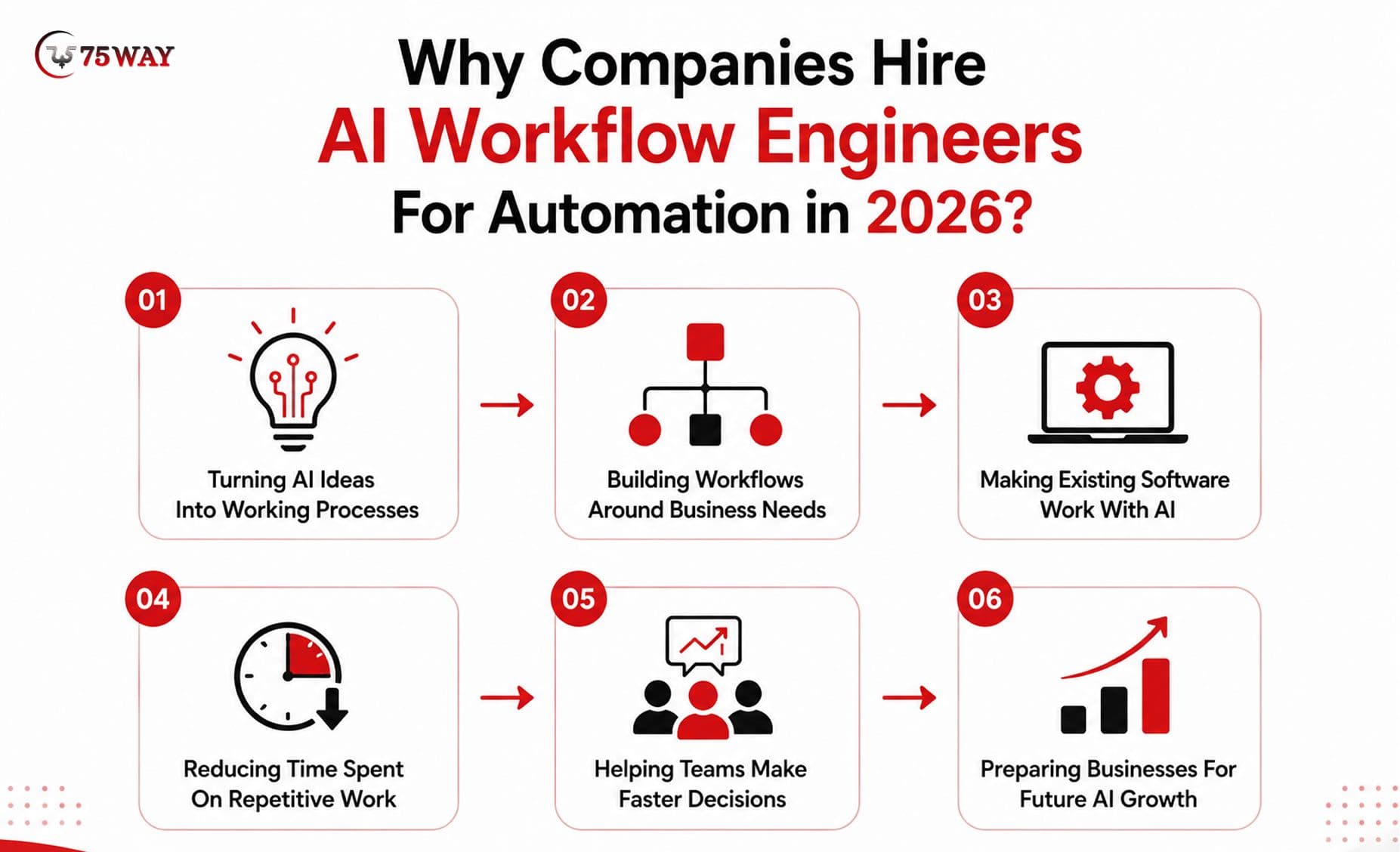
- Turning AI Ideas Into Working Processes
Many companies have AI goals but lack a clear implementation path. AI workflow developers study existing operations, identify where AI can add value, and design workflows that solve real business challenges.
- Building Workflows Around Business Needs
A ready-made AI tool follows general use cases, but businesses often require industry-specific solutions. Developers create workflows based on unique requirements, such as handling customer queries for ecommerce brands or automating document reviews for healthcare organizations.
- Making Existing Software Work With AI
Businesses rarely start from scratch. Their operations already depend on CRMs, databases, ERP systems, and other platforms. AI workflow developers connect these tools with AI models to create smoother and more automated processes.
- Reducing Time Spent On Repetitive Work
Employees often spend hours completing routine tasks like sorting information, responding to common questions, or preparing reports. AI workflows handle these repetitive activities so teams can spend more time on strategic work.
- Helping Teams Make Faster Decisions
Data is valuable only when businesses can use it effectively. AI workflow developers build systems that analyze information, identify patterns, and provide useful insights that support better decisions.
- Preparing Businesses For Future AI Growth
AI needs change as companies grow. A well-designed workflow allows businesses to add new capabilities, integrate additional tools, and expand automation without rebuilding everything from the beginning.
AI Workflow Developer For ChatGPT, Claude Code, & AI Projects
Modern AI projects often involve advanced language models, automation platforms, APIs, and business applications. An AI workflow developer helps companies use these technologies in practical ways.
For ChatGPT-based projects, developers can create custom assistants, knowledge-based solutions, and automated communication workflows.
For Claude Code projects, they can support advanced coding workflows, software automation, and AI-assisted development processes.
For broader AI projects, developers can build solutions such as:
- AI customer support assistants
- Internal knowledge management systems
- Automated reporting workflows
- AI-powered business process automation
- Custom AI agents
The important part is not the AI model alone. The real value comes from designing a workflow that solves a specific business challenge.
Skills To Look For When Hiring Dedicated AI Workflow Expert
Hiring an AI workflow developer is not only about finding someone who understands AI tools. The right expert should know how to connect technology with real business requirements. Here are the important skills businesses should evaluate.
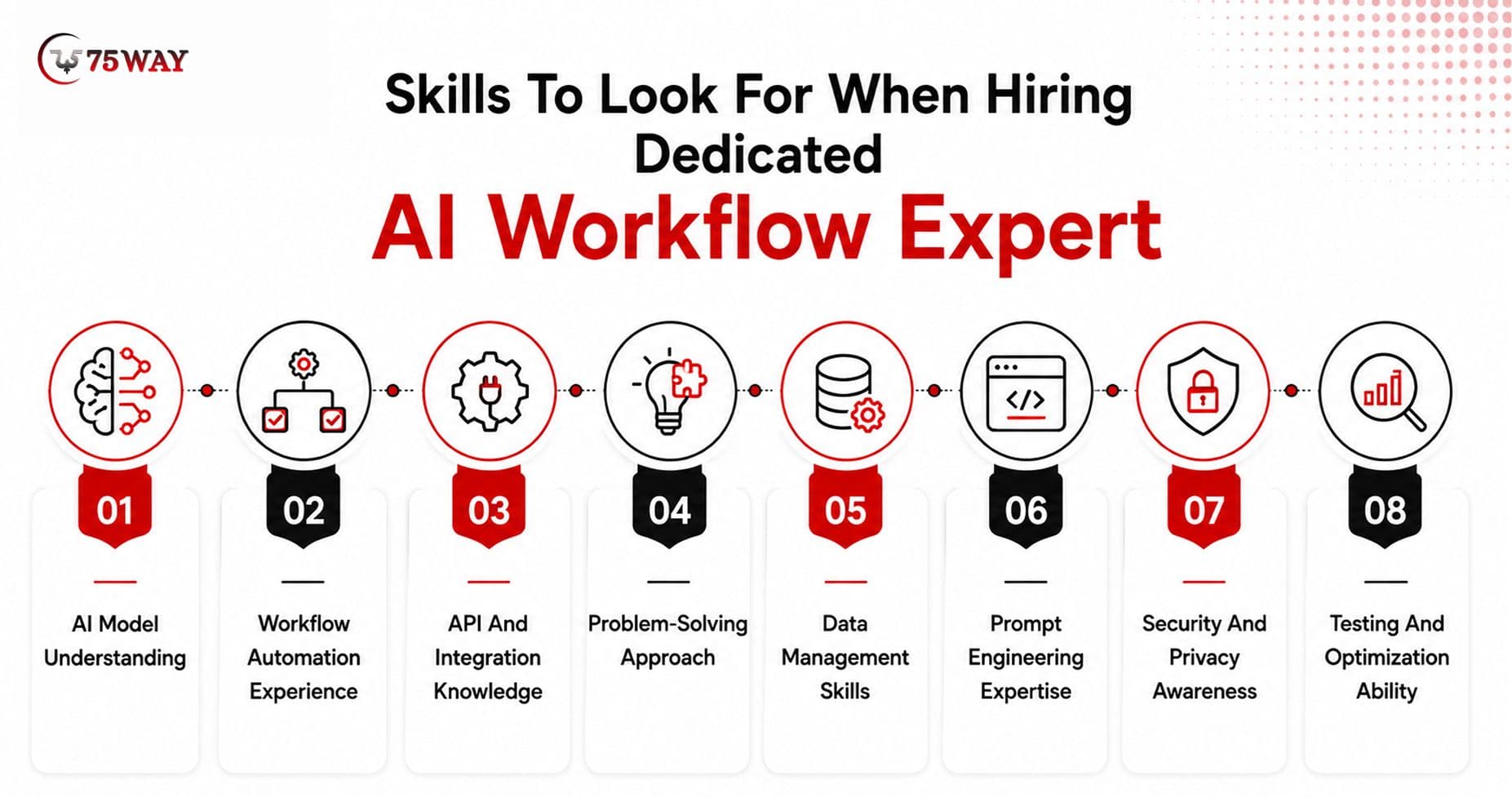
- AI Model Understanding
An AI workflow developer should understand how different AI models work and where they fit best. They should know when to use large language models, automation tools, APIs, or custom solutions based on project needs.
The right approach is not choosing the newest AI technology. It is selecting the technology that solves the business problem.
- Workflow Automation Experience
AI workflows often involve multiple steps. A developer should know how to automate these processes and connect different systems.
For example, an AI workflow may collect customer information, analyze requests, generate responses, and update a CRM system. Experience with automation platforms, APIs, and system integrations helps developers create workflows that work.
- API And Integration Knowledge
Most business AI projects require connections between different applications.
An experienced AI workflow developer should understand API integrations, databases, cloud platforms, and software connections. This allows them to connect AI solutions with existing business tools instead of creating isolated systems.
- Problem-Solving Approach
Every business has different challenges. A good developer does not start by suggesting technology. They first understand the workflow, identify bottlenecks, and then design an AI solution.
This approach helps avoid unnecessary complexity and creates solutions that teams can actually use.
- Data Management Skills
Reliable automation depends on reliable information. An experienced workflow specialist should know how to collect, clean, organize, and process data so AI systems can deliver accurate results.
For example, a customer support workflow needs structured product details, customer history, and previous conversations to generate useful responses instead of incorrect answers.
- Prompt Engineering Expertise
The quality of AI output often depends on how instructions are designed. Strong prompt engineering skills help create clear workflows, improve response accuracy, and make AI interactions more consistent.
A skilled professional should know how to test different prompts, refine instructions, and adapt them according to business requirements.
- Security And Privacy Awareness
Business workflows often involve confidential information, including customer records, internal documents, and company data. Professionals should understand security practices such as access controls, encryption methods, and privacy standards.
This knowledge helps companies deploy AI workflows safely without creating unnecessary data risks.
- Testing And Optimization Ability
Launching an AI workflow is only the beginning. Continuous testing helps identify inaccurate responses, workflow errors, and performance issues.
A capable professional should monitor results, analyze feedback, and improve the system over time so the workflow remains effective as business needs evolve.
How To Hire The Right AI Workflow Developer For Your AI Project
The success of your AI project depends heavily on choosing a developer who understands both technology and business requirements. The right AI workflow developer can help you design practical solutions, avoid costly mistakes, and build workflows that deliver long-term value. Here is a practical hiring process businesses can follow.
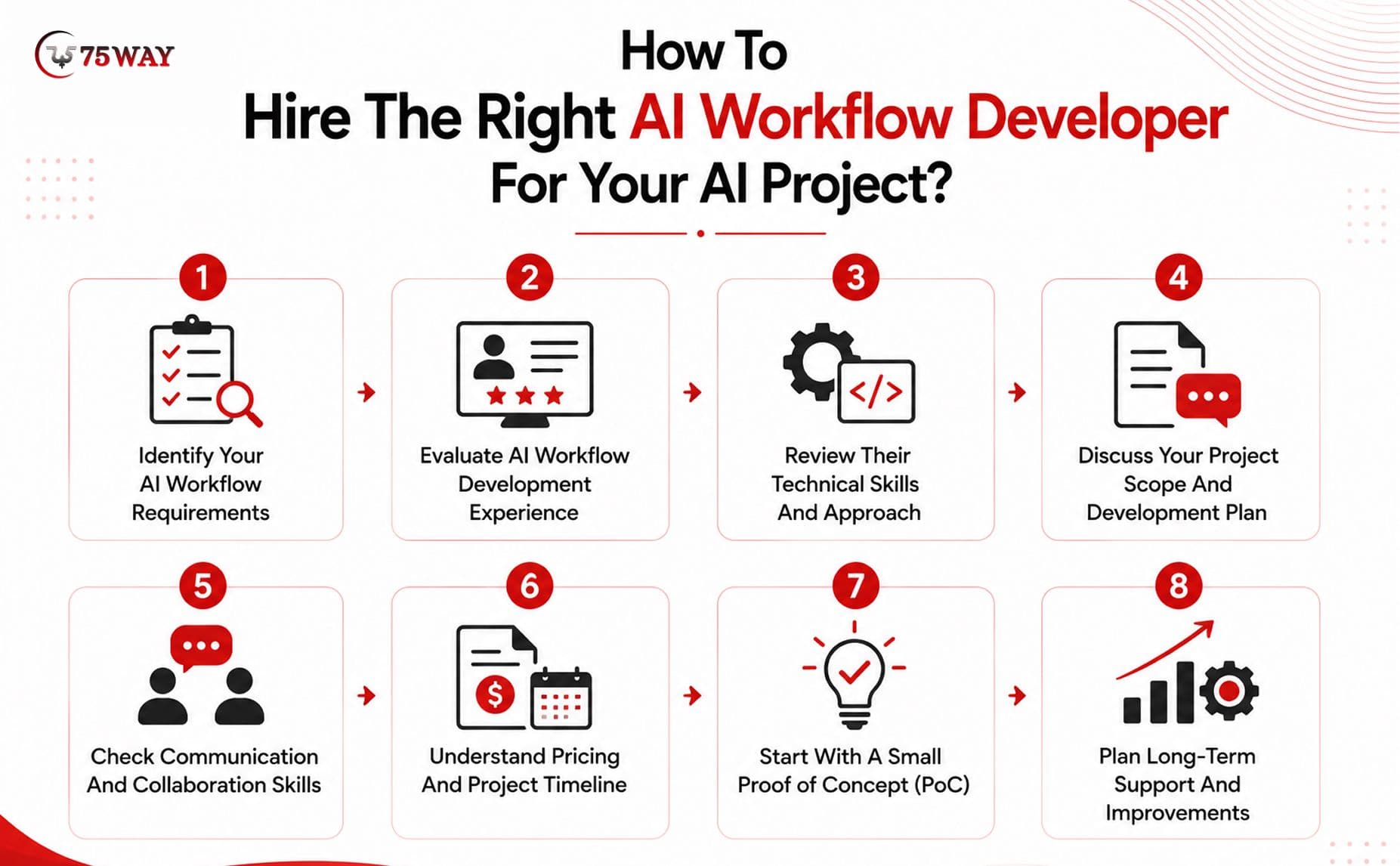
1. Identify Your AI Workflow Requirements
Before contacting developers, understand what you want AI to achieve for your business.
A clear project requirement helps you find a developer with relevant experience and avoids investing in unnecessary solutions.
- Define the Business Problem: Identify the task, process, or challenge where AI can create value. This could include reducing manual work, improving customer support, automating reports, or organizing business data.
- Decide Your Expected Outcome: Determine what success looks like. For example, faster response times, improved team productivity, reduced operational costs, or better customer experiences.
- Understand Your Existing Systems: Review the software, databases, and tools your business currently uses. This helps the developer plan proper AI integrations.
2. Evaluate AI Workflow Development Experience
Not every AI developer has experience building complete workflows. Look for someone who understands how different technologies work together. A qualified AI workflow developer should have experience with:
- AI agent development
- Large language model applications
- ChatGPT workflow solutions
- Claude Code development projects
- API integrations
- Automation platforms
- Business software integrations
Review their previous projects to understand whether they have built solutions similar to your requirements.
3. Review Their Technical Skills And Approach
Technical knowledge matters, but the developer’s approach matters equally. A reliable AI workflow developer should understand:
- AI Model Selection: They should know how to choose the right AI models based on accuracy, cost, speed, and business requirements.
- Workflow Architecture: They should be able to design how information moves between AI systems, applications, databases, and users.
- Data Handling And Security: They should understand how business data is processed, stored, and protected during AI implementation.
- Testing And Optimization: They should have a clear method for improving workflow performance after deployment.
4. Discuss Your Project Scope And Development Plan
Before hiring, have a detailed discussion about how the developer will approach your project. Ask questions such as:
- What steps will you follow to build the AI workflow?
- Which technologies will you recommend and why?
- How will the solution connect with existing systems?
- How will you measure workflow performance?
- What support will be available after launch?
A professional developer should explain the process clearly instead of only focusing on technical terms.
5. Check Communication And Collaboration Skills
AI projects usually involve continuous discussions, feedback, testing, and improvements. A developer may have strong technical knowledge, but poor communication can create delays and misunderstandings.
Choose an AI workflow developer who can explain technical decisions in simple terms and understands your team’s goals. Strong collaboration ensures the final workflow matches your business expectations. Good communication helps with:
- Sharing project updates clearly
- Explaining technical limitations
- Collecting feedback during development
- Making faster decisions when changes are needed
A developer who works like a technology partner can make the entire AI implementation process smoother.
6. Understand Pricing And Project Timeline
Before finalizing a developer, discuss the expected investment and delivery timeline. The cost depends on factors such as:
- Workflow complexity
- Number of AI integrations
- Custom development requirements
- Data requirements
- Testing and maintenance needs
A lower price does not always mean better value. Focus on the developer’s ability to deliver a reliable AI solution that supports your business goals.
7. Start With A Small Proof of Concept (PoC)
For complex AI projects, starting with a small prototype can reduce risks. A proof of concept helps you evaluate:
- AI response quality
- Workflow performance
- Integration challenges
- User experience
Once the solution meets expectations, the developer can expand it into a complete production-ready system.
8. Plan Long-Term Support And Improvements
Launching an AI workflow is not the end of the process. AI systems often need updates, monitoring, and improvements as your business grows.
Before hiring, discuss how the developer will support the solution after deployment. This includes fixing issues, improving workflow performance, updating integrations, and adapting the system to new business requirements.
Long-term support helps ensure your AI workflow continues delivering value instead of becoming outdated after launch. A reliable AI workflow developer focuses on building solutions that can evolve with your business needs.
What Can An AI Workflow Developer Build For Your Business?
An AI workflow developer can create solutions that support different business functions. The final workflow depends on your goals, industry, and existing systems. Some common AI solutions include:
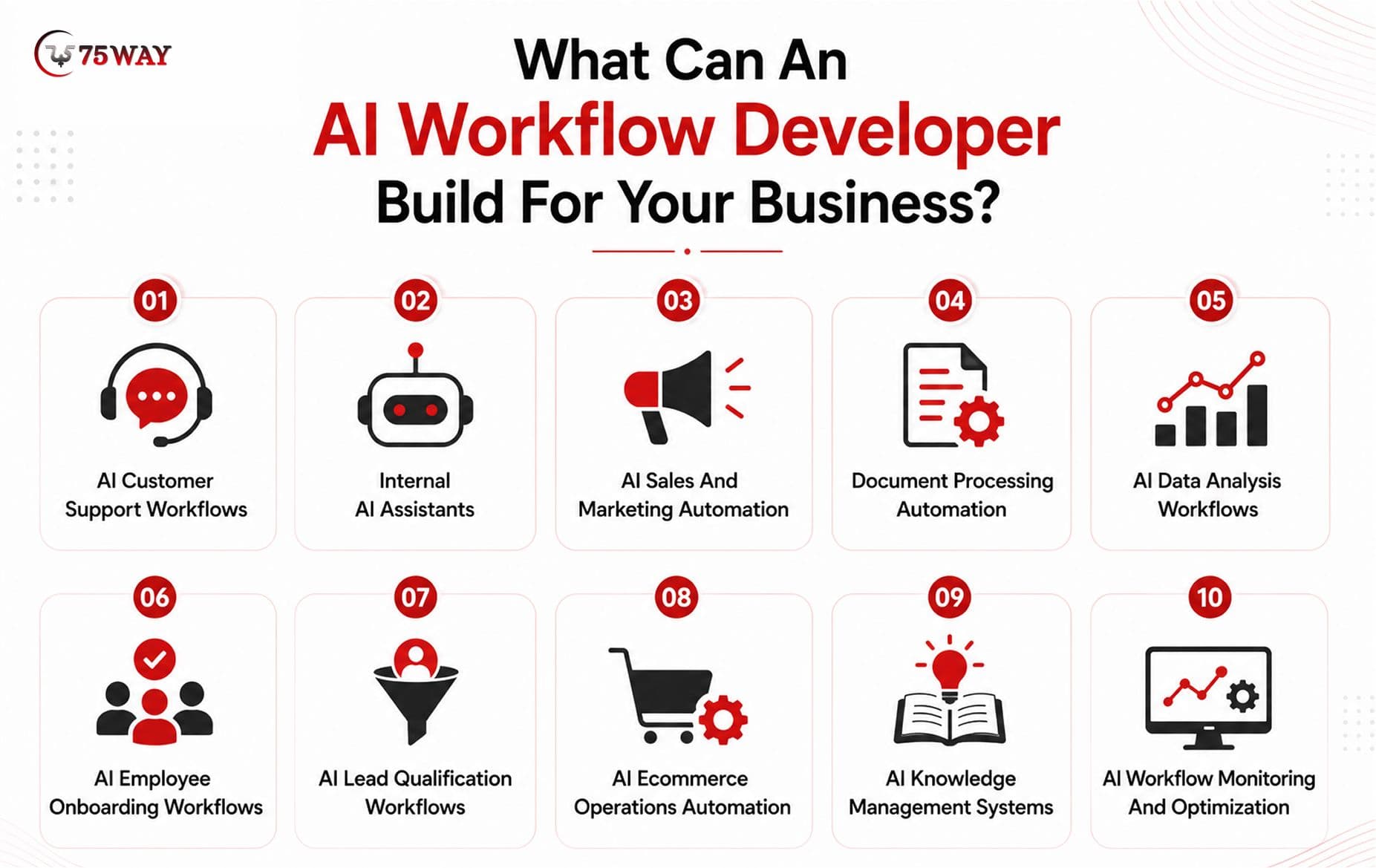
- AI Customer Support Workflows: Businesses can use AI-powered customer support systems to handle common questions, provide instant responses, and assist customer service teams.
The workflow can connect customer conversations, company knowledge bases, and support platforms to create faster service experiences.
- Internal AI Assistants: Many companies build internal AI assistants to help employees find information, summarize documents, and complete repetitive tasks.
These assistants can improve team efficiency by reducing time spent searching through large amounts of data.
- AI Sales And Marketing Automation: AI workflows can help sales teams analyze leads, personalize communication, and organize customer information.
Marketing teams can also use AI sales agents and marketing automation solutions for content support, customer insights, and campaign analysis.
- Document Processing Automation: Companies dealing with large amounts of documents can use AI workflows to extract information, classify files, and generate summaries.
This is especially useful for industries where employees spend hours handling manual documentation.
- AI Data Analysis Workflows: Businesses collect large amounts of information but often struggle to turn it into useful insights.
AI workflows can analyze customer data, sales reports, and operational information to identify patterns and support better decision-making.
- AI Employee Onboarding Workflows: Companies can automate parts of the employee onboarding process by creating AI workflows that manage documents, answer common HR questions, share training resources, and guide new employees through required steps.
- AI Lead Qualification Workflows: Sales teams often spend significant time reviewing and prioritizing leads.
AI workflows can analyze customer interactions, evaluate lead quality, and automatically route promising prospects to the right sales representatives.
- AI E-commerce Operations Automation: Online businesses can use workflow AI automation for ecommerce to manage product recommendations, customer queries, inventory updates, order tracking, and feedback analysis.
These systems help ecommerce teams improve operations without increasing manual workload.
- AI Knowledge Management Systems: Companies often store valuable information across multiple platforms, making it difficult for employees to find what they need.
AI-powered knowledge systems can organize internal data and provide quick answers from company resources.
- AI Workflow Monitoring And Optimization: Businesses can build AI systems that track workflow performance, identify inefficiencies, and suggest improvements.
These solutions help teams understand where processes slow down and where automation can create more value.
Step-By-Step Process To Build An AI Workflow Automation Solution
Building an effective AI workflow requires more than connecting an AI tool and expecting results. A structured development process helps create reliable solutions.
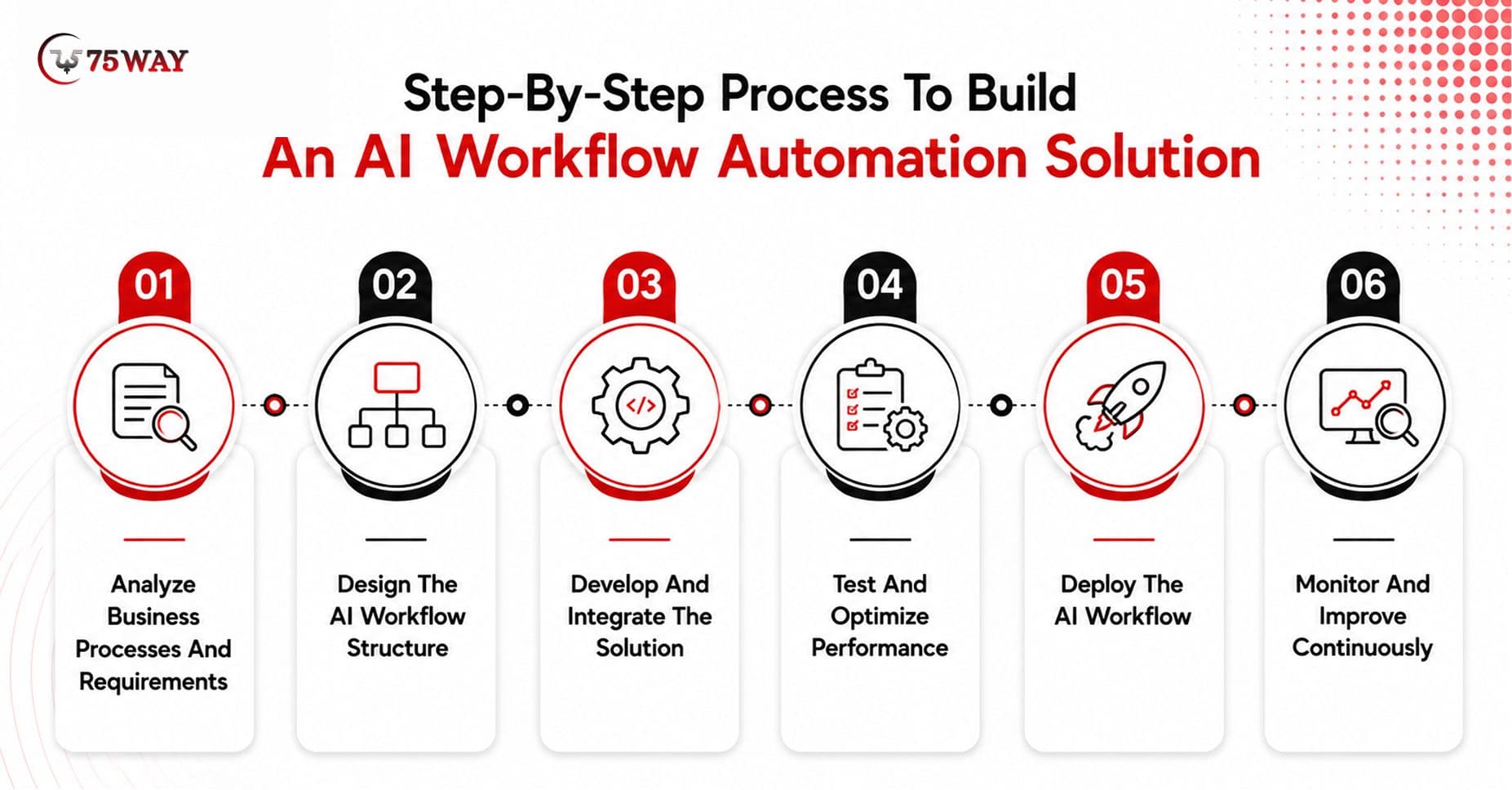
Step 1: Analyze Business Processes And Requirements
The first stage focuses on understanding how the business operates and where AI can create real improvements. Developers study existing workflows, identify repetitive tasks, and analyze operational challenges that slow down teams.
This step helps define the purpose of the AI workflow, the expected outcomes, and the processes that need automation. A clear understanding of business requirements prevents companies from investing in solutions that do not solve actual problems.
Step 2: Design The AI Workflow Structure
Once the requirements are clear, developers plan how the AI workflow will function from beginning to end. This includes selecting suitable AI models, defining automation logic, planning data movement, and deciding how users and systems will interact with the workflow.
For example, an AI customer support workflow may understand customer messages, search relevant information, generate responses, and update customer records automatically.
Step 3: Develop And Integrate The Solution
The development stage turns the planned workflow into a functional system. Developers connect AI models with existing business software, databases, APIs, and automation platforms to create a connected workflow.
The focus is on ensuring that AI works alongside current business operations instead of operating as an isolated tool. Proper integration allows information to move smoothly between different systems and improves overall efficiency.
Step 4: Test And Optimize Performance
Before deployment, the workflow goes through detailed testing to check accuracy, reliability, and performance. Developers review AI responses, identify errors, and improve workflow logic to ensure consistent results.
Testing also helps businesses understand whether the workflow handles real-world situations effectively and whether any adjustments are required before launch.
Step 5: Deploy The AI Workflow
After successful testing, the AI workflow is introduced into the business environment. Developers ensure the system is properly configured, connected with required tools, and ready for daily usage.
The deployment stage focuses on creating a smooth transition so teams can adopt the new workflow without disrupting existing operations.
Step 6: Monitor And Improve Continuously
AI workflows need ongoing improvement because business requirements, customer expectations, and data patterns continue to change. Developers monitor performance, review results, and make updates to improve accuracy and efficiency.
Continuous optimization helps businesses get more value from their AI investment and ensures the workflow remains effective as operations grow.
Key Benefits of Working With An AI Workflow Developer
The success of an AI project depends on how well the technology works within your existing operations. Working with an AI workflow developer gives businesses the expertise needed to build smarter workflows, avoid common implementation challenges, and create AI systems that deliver practical results.
- Build Customized AI Solutions: Every business has different processes, challenges, and goals. A ready-made AI tool may solve common problems, but it cannot always match your specific requirements.
An AI workflow developer creates customized solutions based on your workflow, data, and business objectives. They design systems that fit your operations instead of forcing your team to adjust around a generic tool.
- Improve Business Efficiency: Many businesses spend valuable time on repetitive tasks such as data entry, document reviews, customer responses, and reporting. AI workflows can automate these activities and allow employees to focus on more important work.
A skilled AI developer identifies tasks that can be optimized and creates workflows that improve speed, accuracy, and overall productivity.
- Connect AI With Existing Business Systems: Most businesses already use different platforms for customer management, communication, operations, and data storage.
An AI workflow developer helps connect AI solutions with these existing systems through APIs and integrations. This creates a connected workflow where information moves smoothly between different tools without requiring manual effort.
- Reduce Implementation Challenges: Starting an AI project without proper planning can lead to unclear goals, poor workflow design, and unnecessary costs. An experienced developer understands common AI implementation challenges and helps avoid mistakes during development.
They evaluate your requirements, select suitable technologies, and build a practical approach for successful deployment.
- Create Scalable AI Workflows: Business needs change over time. The AI workflow that works today should also support future growth. Expert developers build solutions with scalability in mind.
They consider future integrations, increased data volume, and changing business requirements while designing the workflow. This allows businesses to expand their AI capabilities without rebuilding everything from the beginning.
- Improve AI Accuracy & Reliability: AI solutions need proper configuration, testing, and optimization to deliver consistent results.
An AI workflow developer improves system performance by refining workflows, adjusting AI responses, and ensuring the solution handles different scenarios. This helps businesses create AI systems they can depend on for daily operations.
How Much Does It Cost To Hire An AI Workflow Developer?
The cost to hire an AI workflow developer depends on your project requirements, workflow complexity, integrations, and the level of customization needed. A simple AI automation workflow may require a smaller investment, while advanced AI projects involving custom agents, multiple systems, and enterprise-level requirements need more development effort.
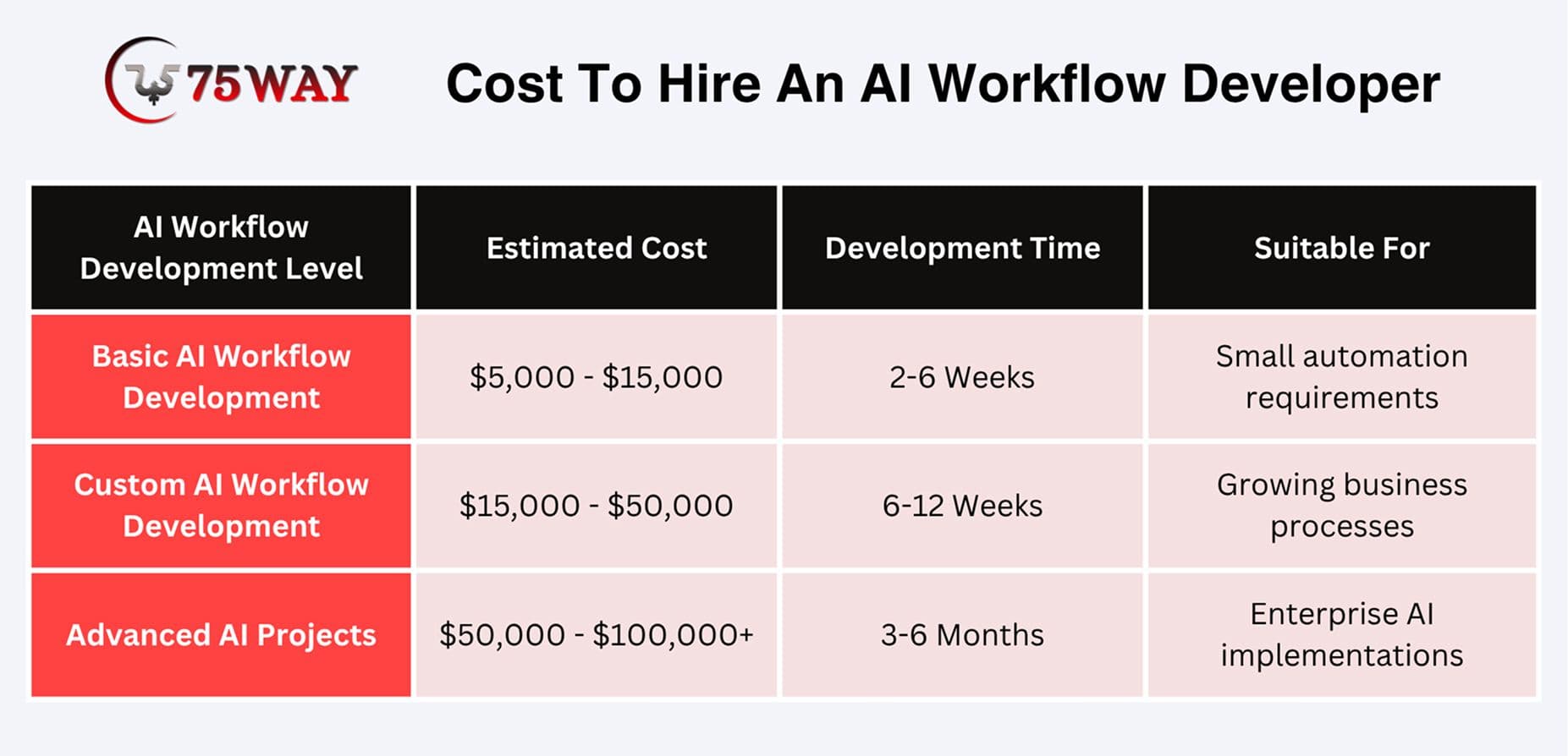
For most businesses, AI workflow development can range from $5,000 to $100,000+ depending on the scope of work. The final cost to build AI automation project is determined by the technology stack, development time, testing requirements, and ongoing support needs.
Average Cost Based On Project Complexity
Basic AI Workflow Development: $5,000 - $15,000
Basic AI workflows are suitable for businesses that need simple automation solutions. These projects usually involve connecting AI tools with existing platforms and automating specific repetitive tasks.
Custom AI Workflow Development: $15,000 - $50,000
Mid-level AI projects require more customization, integrations, and workflow design. These solutions are built around specific business processes and often involve multiple tools working together.
Advanced AI Projects: $50,000 - $100,000+
Complex AI implementations require deeper technical expertise, advanced integrations, and ongoing optimization.
These projects may include:
- Custom AI agents
- Enterprise AI automation systems
- Multi-platform AI workflows
- Advanced data processing solutions
Does Location Affect The Cost of Hiring An AI Workflow Developer?
Yes, the location of an AI workflow developer can influence the overall project cost. Developers from different regions may charge different rates based on market demand, technical expertise, experience level, and operating costs. However, businesses should not choose a developer only based on location. The right expertise, experience with AI projects, and ability to deliver reliable solutions often matter more than hourly rates.
- United States: $100 - $250+/hour
- Western Europe: $80 - $200/hour
- Eastern Europe: $40 - $120/hour
- India And Asia: $25 - $100/hour
Cost of Hiring AI Workflow Engineer Based On Experience Level
The experience level of an AI workflow developer also affects the overall development cost. Junior developers may charge less and work well for basic automation tasks, while senior experts are better suited for complex AI projects requiring advanced architecture, integrations, and strategic guidance.
- Junior AI Workflow Developer: $25 - $75/hour
- Mid-Level AI Workflow Developer: $75 - $150/hour
- Senior AI Workflow Developer: $150 - $250+/hour
- AI Development Consultant/Expert: $200 - $400+/hour
Factors That Influence AI Workflow Development Cost
Several factors determine the final investment required for your AI workflow project.
- Project Scope & Complexity: The number of workflows, features, and automation steps directly affects development time and cost. A simple task automation project requires less effort than a complete AI-powered business system.
- AI Model Selection & Customization: Different AI models have different capabilities, costs, and implementation requirements. Customizing AI behavior for specific business needs may require additional development work.
- Third-Party Integrations: Connecting AI workflows with CRM systems, databases, communication platforms, or enterprise software increases development complexity.
- Data Preparation & Security Requirements: Businesses handling large amounts of internal data may need additional work related to data organization, privacy, access control, and security.
- Maintenance & Continuous Optimization: AI workflows require regular improvements to maintain accuracy and performance. Businesses should consider ongoing support when planning their investment.
Is Hiring An AI Workflow Developer Worth The Investment?
For businesses planning long-term AI adoption, hiring an experienced AI workflow developer can provide significant value. A properly designed workflow can reduce manual work, improve team efficiency, and create better ways to manage business operations.
Instead of investing only in AI tools, businesses benefit from having an expert who can build solutions that match their specific goals and deliver measurable outcomes.
How To Choose The Best AI Workflow Developer For Your Business
The developer you hire should not only understand AI technology but also know how to apply it to solve real business challenges. Many businesses focus only on technical skills, but successful AI implementation requires a combination of experience, communication, problem-solving ability, and business understanding. Here are the key factors to consider before making your decision.
1. Review Their AI Development Experience
Start by reviewing the developer’s previous AI projects and practical experience. A strong portfolio can help you understand whether they have worked on solutions similar to your requirements.
Look for experience in areas such as:
- AI workflow automation
- Custom AI assistants
- AI agent development
- ChatGPT-based solutions
- Claude Code projects
- API integrations
- Business process automation
Previous project experience shows whether the developer can handle real-world implementation challenges.
2. Evaluate Their Understanding Of Business Needs
A skilled AI workflow developer should focus on your business goals before suggesting technology.
They should take time to understand your current processes, challenges, and expected outcomes. This helps them design workflows that solve actual problems instead of adding unnecessary complexity.
The right developer acts as a problem solver who uses AI as a solution, not as a technology experiment.
3. Check Their Technical Capabilities
AI workflows often require multiple technologies working together. Make sure the developer has experience with the technical areas needed for your project.
Important skills include:
- Large language model integration
- API development
- Automation platforms
- Cloud technologies
- Database management
- AI testing and optimization
A strong technical foundation helps create workflows that are reliable and easier to scale.
4. Ask About Their Development Process
Before hiring, understand how the developer approaches AI workflow development. A professional developer should have a clear process that includes requirement analysis, workflow design, development, testing, deployment, and improvements. Ask how they handle:
- Project planning
- Data requirements
- Security considerations
- Testing methods
- Future updates
A transparent process helps you understand what to expect throughout the project.
5. Consider Communication And Support
AI projects require collaboration between business teams and technical experts. Choose a developer who communicates clearly, provides regular updates, and explains technical decisions in a simple way.
Also, discuss post-launch support. AI workflows may require improvements as your business changes, so ongoing assistance can be valuable.
6. Compare Value Instead Of Only Pricing
Cost is an important factor, but it should not be the only deciding point. A developer offering a lower price may not always provide the experience needed for a successful AI implementation.
Compare developers based on:
- Relevant experience
- Technical expertise
- Problem-solving approach
- Previous results
- Long-term support
The right AI workflow developer should provide value that supports your business growth.
Common Mistakes Businesses Make When Hiring An AI Workflow Developer
Many businesses rush into AI development without proper planning. This often leads to solutions that fail to deliver expected results. Understanding common mistakes can help you make better hiring decisions.
- Choosing Based Only On AI Tool Knowledge
Knowing how to use ChatGPT or other AI tools is not enough to build business-ready workflows. A developer should understand workflow design, integrations, automation logic, and how AI fits into your operations.
- Ignoring Business Requirements
Some companies start development without clearly defining their goals. Without proper requirements, the final workflow may not solve the actual business problem.
- Overlooking Security And Data Handling
AI workflows often process valuable business information. Ignoring data security can create unnecessary risks. Always discuss how the developer handles data privacy, access control, and system security.
- Focusing Only On Initial Development
AI workflows need continuous improvement after launch. Businesses should consider long-term optimization, maintenance, and support when selecting a developer.
Conclusion
Hiring an AI workflow developer helps businesses move from AI experimentation to practical solutions that improve daily operations. The right expert can design custom workflows, integrate AI systems, and build scalable solutions for ChatGPT, Claude Code, and other AI projects. However, success depends on choosing a developer who understands both technology and business goals. A trusted AI development company can help you plan, build, and optimize AI workflows that create real value. If you are ready to implement AI automation for your business, hire AI workflow developers from a trusted AI development company and turn your ideas into reliable AI solutions.
Frequently Asked Questions (FAQs)
What Should I Look For Before Hiring An AI Workflow Developer?
Look for experience in AI workflow development, automation, integrations, and business-focused problem-solving. A strong developer should understand your goals and create solutions that deliver measurable results.
Can I Hire An AI Workflow Developer For A Specific AI Project?
Yes, businesses can hire developers for specific AI projects based on their requirements. They can help build custom AI assistants, automation systems, agents, and workflow solutions.
Should I Hire A Freelancer Or An AI Development Company For Workflow Projects?
The choice depends on project complexity, budget, and long-term requirements. Companies often prefer AI development partners for complex projects requiring dedicated expertise, support, and scalability.
How Do I Know If An AI Workflow Developer Understands My Business Needs?
A capable developer asks detailed questions about your processes, challenges, and expected outcomes. They focus on solving business problems instead of recommending unnecessary AI technologies.
Can An AI Workflow Developer Work With My Existing Development Team?
Yes, AI workflow developers can collaborate with internal teams, developers, and technology partners. They can provide specialized AI expertise while supporting your existing development process.
What Makes An AI Workflow Developer Different From A Regular Developer?
An AI workflow developer focuses on intelligent automation, AI integrations, and workflow optimization. They combine software development skills with AI knowledge to create adaptive business solutions.