Summary
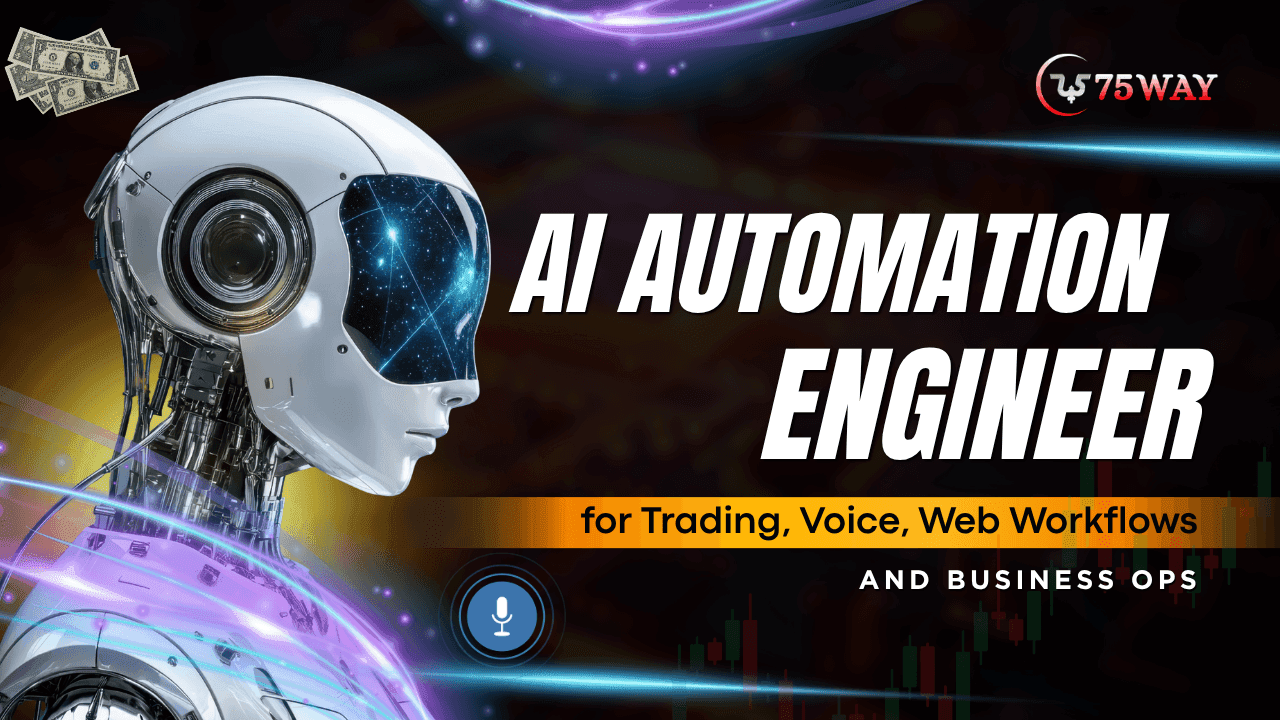
AI automation engineers and agent builders create intelligent agents for trading, voice interactions, and workflow automation. This guide delineates their role, use cases, development process, costs, and benefits. It helps decision-makers understand how to implement scalable AI systems that drive efficiency, reduce operational friction, and unlock sustainable growth opportunities across industries.
Quick Overview
- AI automation engineers build systems that streamline workflows and increase efficiency.
- Intelligent agents improve trading accuracy and reduce human-driven operational errors.
- Voice automation enhances customer experience while lowering support and service costs.
- AI-driven workflows enable scalable operations without increasing team size significantly.
- Strategic AI adoption helps businesses gain a competitive advantage through automation innovation.
Being a startup owner and a founder, sometimes you find that your team is busy all day but somehow the real work still keeps getting pushed, delayed, or just lost in the chaos. Isn't it? Yes, you are right! At this stage, you might have questions, whether to hire a new workforce or what if I gotta a magic stick that works 24/7.
This is where AI automation engineers step in, not as a trend, but as a structural shift in how modern businesses operate. They offer custom AI development solutions that actively execute and adapt across trading environments, including virtual assistants, web workflows, AI voice agents for customer conversations, and internal workflows.
Instead of hiring more people to manage repetitive tasks, organizations are now building AI agents that learn, respond, and improve continuously. The result is not just efficiency. It’s a complete transformation in how decisions are made and executed.
This guide will highlight how AI automation engineers build intelligent agents for trading, voice, workflows, and operations. It also breaks down the strategies, costs, and real-world impact of implementing AI automation across business systems.
What Is an AI Automation Engineer?
An AI automation engineer is a specialist who designs, builds, and deploys intelligent systems that automate complex business processes. Unlike traditional developers, the AI developers' focus is not limited to writing code but extends to creating adaptive systems that can make decisions, process data, and execute workflows independently.
The AI agent developers combine expertise in machine learning, system architecture, APIs, and business logic to create agents that function as digital workers. These agents can analyze market signals, handle customer conversations 24/7, manage backend workflows, and coordinate operations across platforms. The role is both technical and strategic. It requires understanding how businesses operate and identifying where automation can create the highest impact.
Why Businesses Are Investing in AI Agent Builders?
Most businesses didn’t jump into AI because it sounded exciting. They did it because things started breaking at scale. More data, more tools, more decisions… but not enough time or people to handle it all.
That’s where AI agents start making sense. Instead of teams constantly reacting to problems, these systems quietly handle repetitive tasks, monitor patterns, and take action in real time. Think of it less like “automation” and more like having a reliable digital workforce running in the background.
Another big shift is speed. Decisions that used to take hours, or even days, can now happen instantly. Whether it’s responding to customers, analyzing trends, or triggering workflows, AI agents remove delays that slow businesses down.
Core Areas Where AI Automation Engineers Deliver Impact
AI automation engineers help understand how core business functions actually run. Instead of handling one task at a time, they design systems that can operate across multiple areas simultaneously, improving speed. From executing trades in milliseconds to managing customer conversations and internal workflows, their impact is seen wherever operations need to be faster, smarter, and less dependent on manual effort.
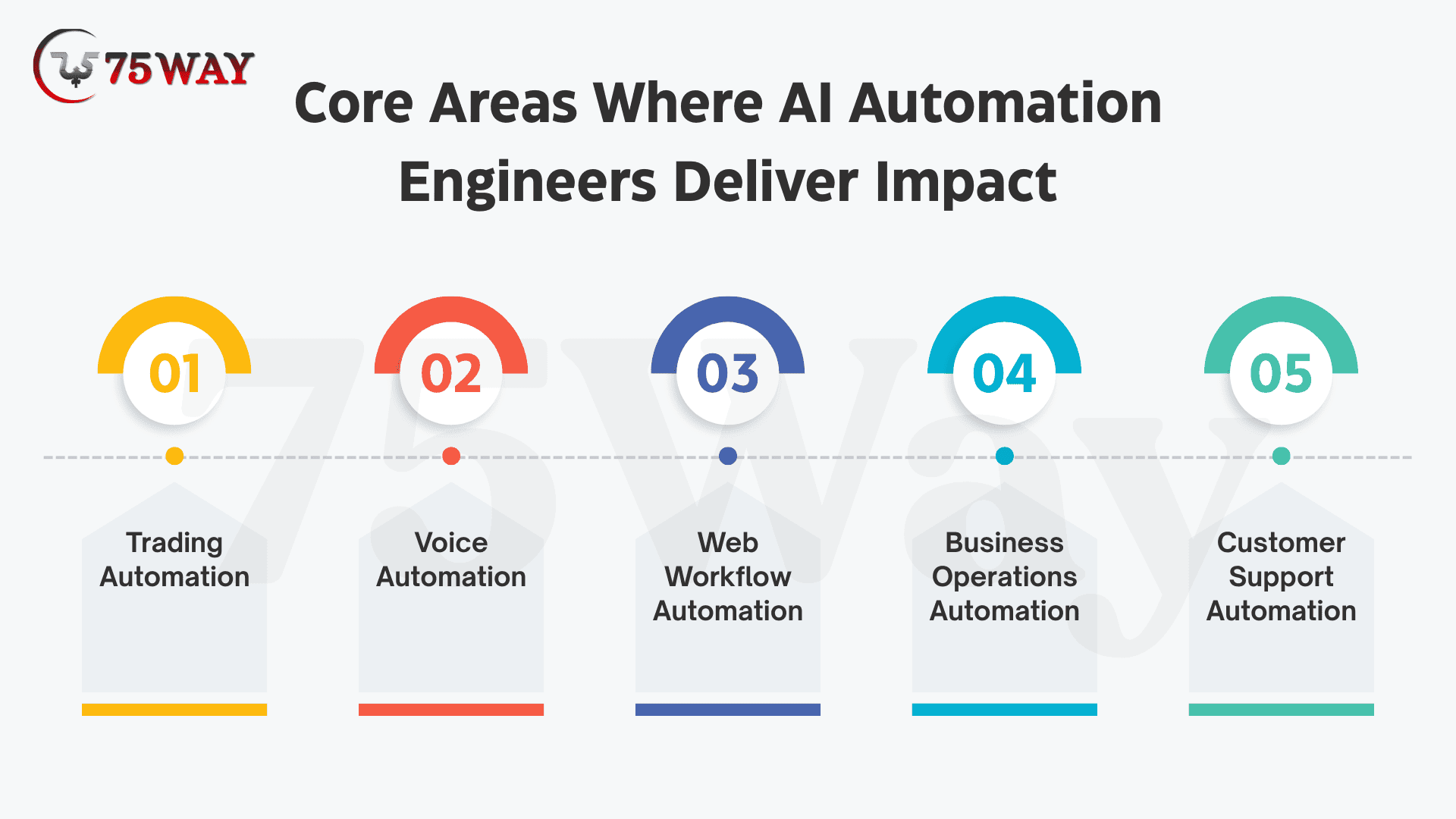
Trading Automation
AI agents in trading environments analyze vast datasets, identify patterns, and execute trades based on predefined strategies. These systems reduce emotional decision-making and improve execution speed.
They can monitor multiple markets simultaneously, adapt to changing conditions, and optimize strategies based on historical and real-time data. To evaluate performance accurately, these systems often rely on standardized timeframes, making it important for analysts to understand the number of trading days in a month when comparing returns, testing strategies, or measuring volatility.
Voice Automation
Voice-enabled AI agents are transforming how businesses interact with customers. These systems handle inquiries, provide support, and guide users through processes without human intervention.
They improve response times, ensure consistency, and operate around the clock, significantly enhancing customer experience.
Web Workflow Automation
AI automation engineers build systems that streamline internal workflows, such as data entry, approvals, reporting, and tool integrations.
These agents eliminate repetitive tasks, reduce errors, and enable teams to focus on strategic work rather than routine operations.
Business Operations Automation
From supply chain coordination to financial reporting, AI agents manage complex operational processes. They integrate across systems, ensure data accuracy, and provide real-time insights for decision-making.
And then there’s the scaling problem. Hiring more people isn’t always the answer. It’s expensive, slow, and hard to manage. AI agents reduce that pressure by handling routine operations, so teams can focus on work that actually needs human thinking.
Customer Support Automation
Customer support AI agents handle customer queries across chat, email, and support systems, ensuring quick and consistent responses without overwhelming human teams.
They reduce response time, improve support quality, and allow businesses to scale customer service without constantly increasing team size.
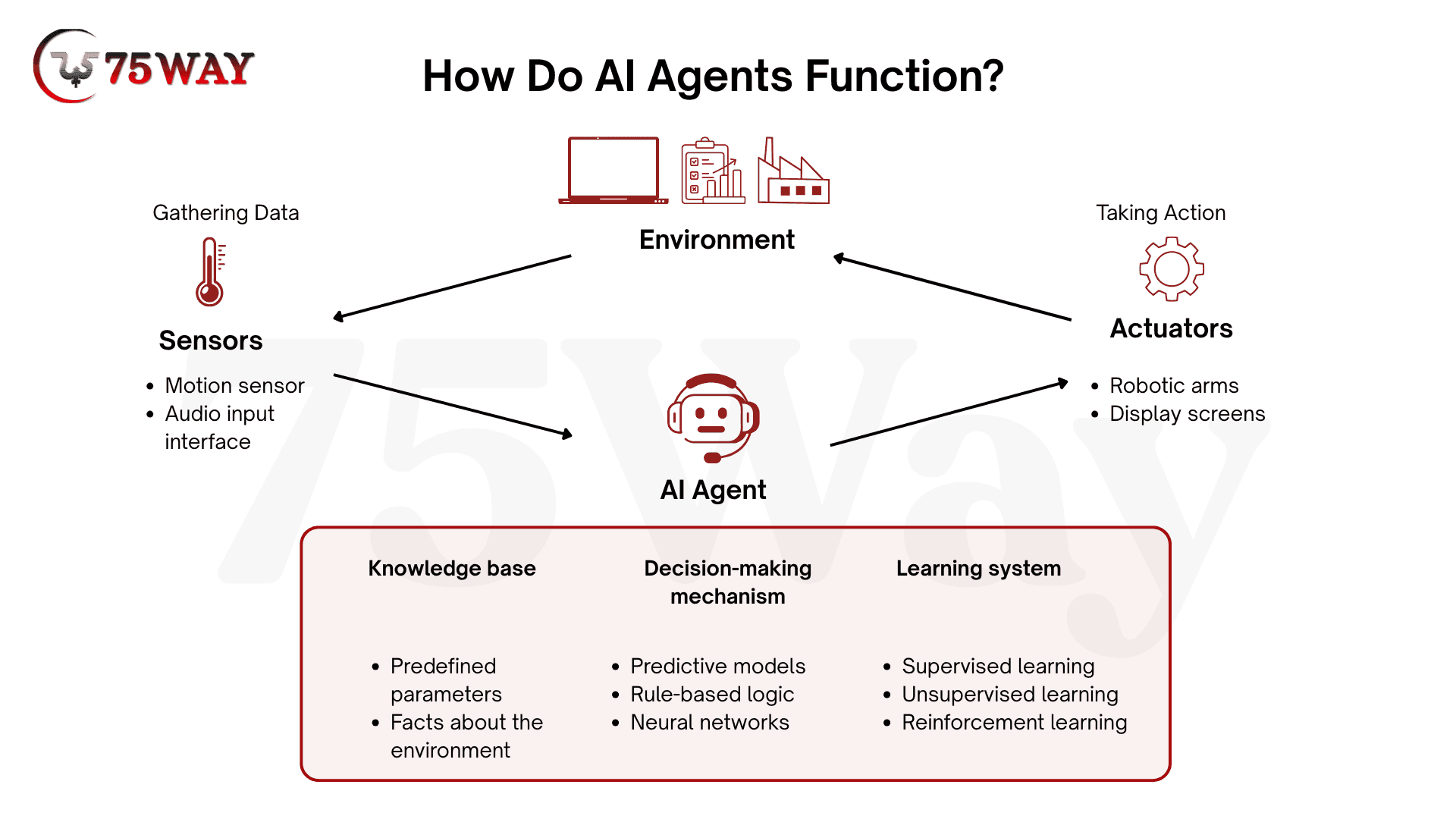
How AI Agents Work Across Systems?
AI agents don’t just “run tasks”. They connect data, decisions, and actions into a continuous loop that works across different systems without constant human input.
It usually starts with data. These agents pull information from multiple sources like APIs, databases, apps, or user interactions. Instead of looking at one input, they combine everything to understand what’s actually happening in real time.
Next comes the decision layer. Based on the data, the agent uses machine learning models or predefined rules to decide what should happen next. This could be identifying a pattern, flagging an issue, or choosing the best possible action.
Then comes execution. The agent doesn’t stop at insights. It acts. It might trigger a workflow, send a response, update records, or connect with another system to complete a task automatically.
What makes AI agents powerful is how they improve over time. As they process more data and outcomes, they learn what works better, refine their decisions, and become more accurate and efficient without needing constant manual adjustments.
In simple terms, AI agents turn scattered systems into a connected, intelligent workflow that runs continuously in the background.
Key Benefits of AI Automation Engineering
AI automation engineering helps businesses run faster, reduce manual workload, and scale operations efficiently. It connects systems, automates decisions, and ensures continuous execution, allowing teams to focus on high-impact tasks instead of repetitive operational work.
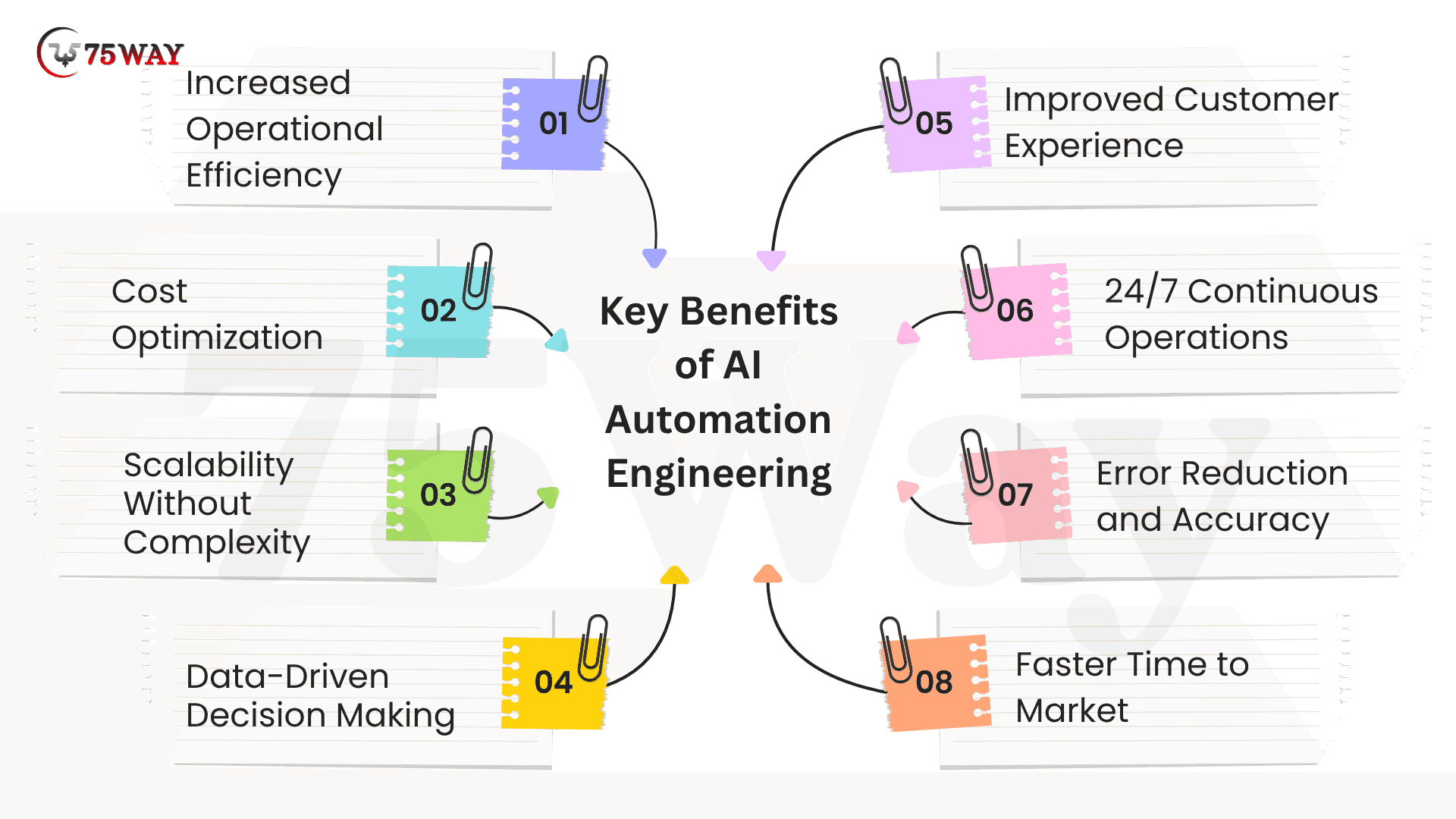
- Increased Operational Efficiency: AI agents handle repetitive tasks quickly and accurately, reducing manual workload across teams. This leads to faster execution, smoother workflows, and more consistent results across daily operations.
- Cost Optimization: Automation reduces reliance on large teams by managing routine processes efficiently. As a result, businesses lower operational expenses while maintaining quality and using resources more strategically.
- Scalability Without Complexity: AI systems handle growing workloads without requiring major system changes or additional hiring. Businesses can expand operations smoothly without adding unnecessary complexity or operational pressure.
- Data-Driven Decision Making: AI agents analyze real-time data to generate meaningful insights. This enables teams to make quicker, well-informed decisions based on actual trends and performance rather than assumptions.
- Better Customer Experience: Automation delivers faster responses and consistent interactions across all touchpoints. Customers receive timely, personalized support, creating a more reliable and seamless experience.
- 24/7 Continuous Operations: AI agents run continuously without breaks, keeping workflows active at all times. This ensures consistent service availability and reduces delays in time-sensitive business processes.
- Error Reduction and Accuracy: Automation minimizes human errors in repetitive and data-heavy tasks. This strengthens accuracy, enhances reliability, and supports compliance across critical business operations.
- Faster Time to Market: AI automation accelerates development and execution cycles. Businesses can launch products and services more quickly, helping them stay competitive in fast-moving markets.
Building AI Agents: Step-by-Step Approach
Building AI agents requires a structured approach focused on understanding business processes, designing intelligent systems, and continuously improving performance. Each stage plays a critical role in ensuring the system delivers measurable value, integrates smoothly with existing infrastructure, and supports long-term operational efficiency.
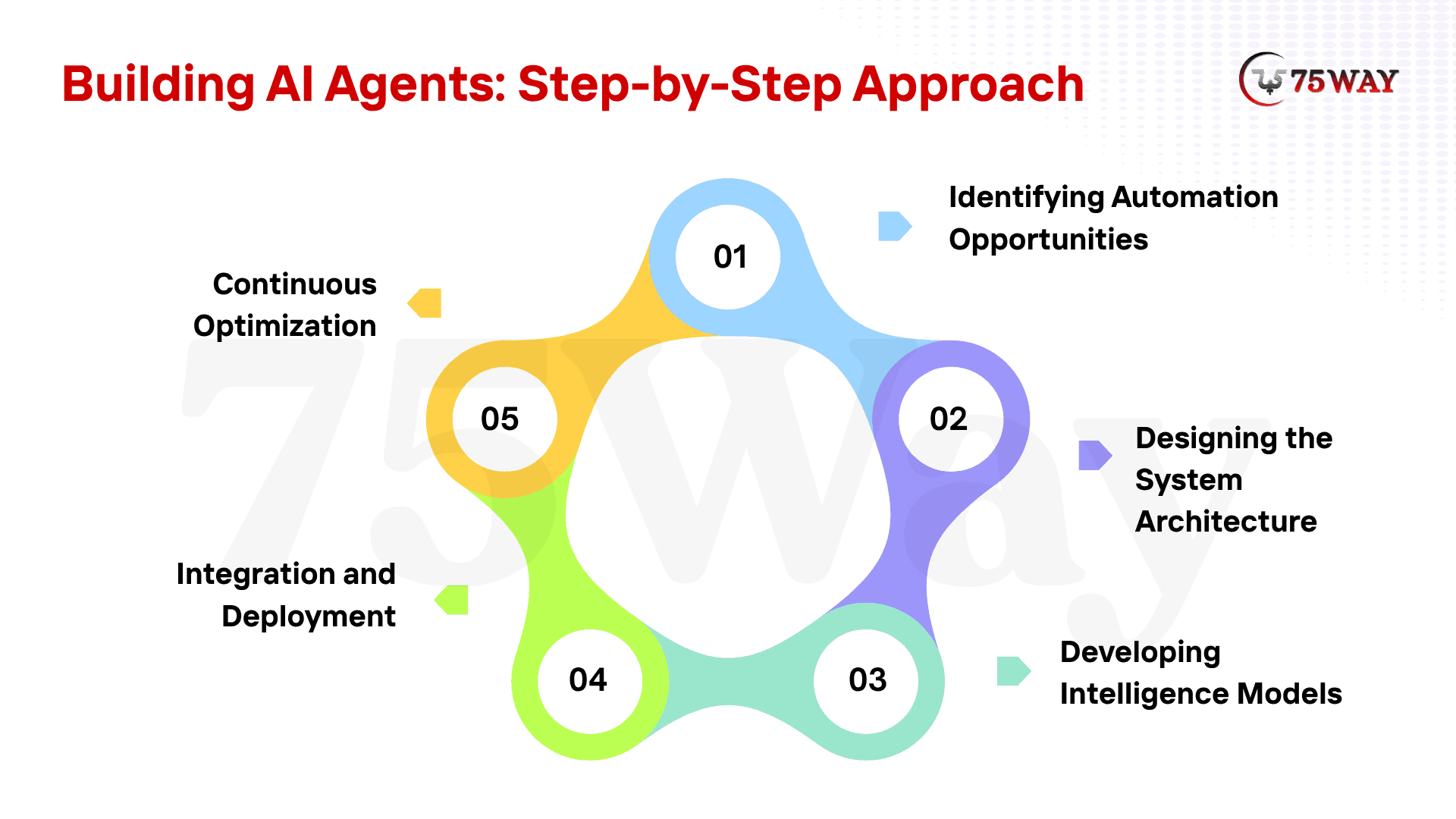
1. Identifying Automation Opportunities
This stage involves analyzing business workflows to identify processes that are repetitive, time-consuming, or prone to errors. The objective is to determine where automation can deliver the highest impact in terms of efficiency, accuracy, and cost reduction. Careful evaluation ensures that only meaningful use cases are selected for automation.
2. Designing the System Architecture
At this stage, engineers define how the AI agent will interact with existing systems, databases, and external tools. The architecture is designed to ensure scalability, security, and seamless integration. A strong foundation here reduces future technical challenges and supports stable system performance.
3. Developing Intelligence Models
This phase focuses on building the logic or machine learning models that enable the AI agent to make decisions. These models process data inputs and generate outputs based on predefined rules or learned patterns. The emphasis is on accuracy, consistency, and reliability in real-world conditions.
4. Integration and Deployment
Once development is complete, the AI agent is integrated into existing business systems. Deployment is carried out in a controlled environment to ensure stability and minimize disruption. This stage includes testing interactions with live data and verifying system performance under operational conditions.
5. Continuous Optimization
After deployment, the system is continuously monitored to evaluate performance and identify improvement areas. Updates are made based on data insights, user feedback, and changing business requirements. This ensures the AI agent remains effective, efficient, and aligned with evolving operational goals.
How Agentic AI Solutions Help Businesses In Real Time?
Agentic AI solutions are changing how businesses operate by enabling systems that can act, decide, and respond instantly across different functions. Instead of waiting for manual input, these agents continuously process data and execute tasks in real time, improving speed, consistency, and operational control.
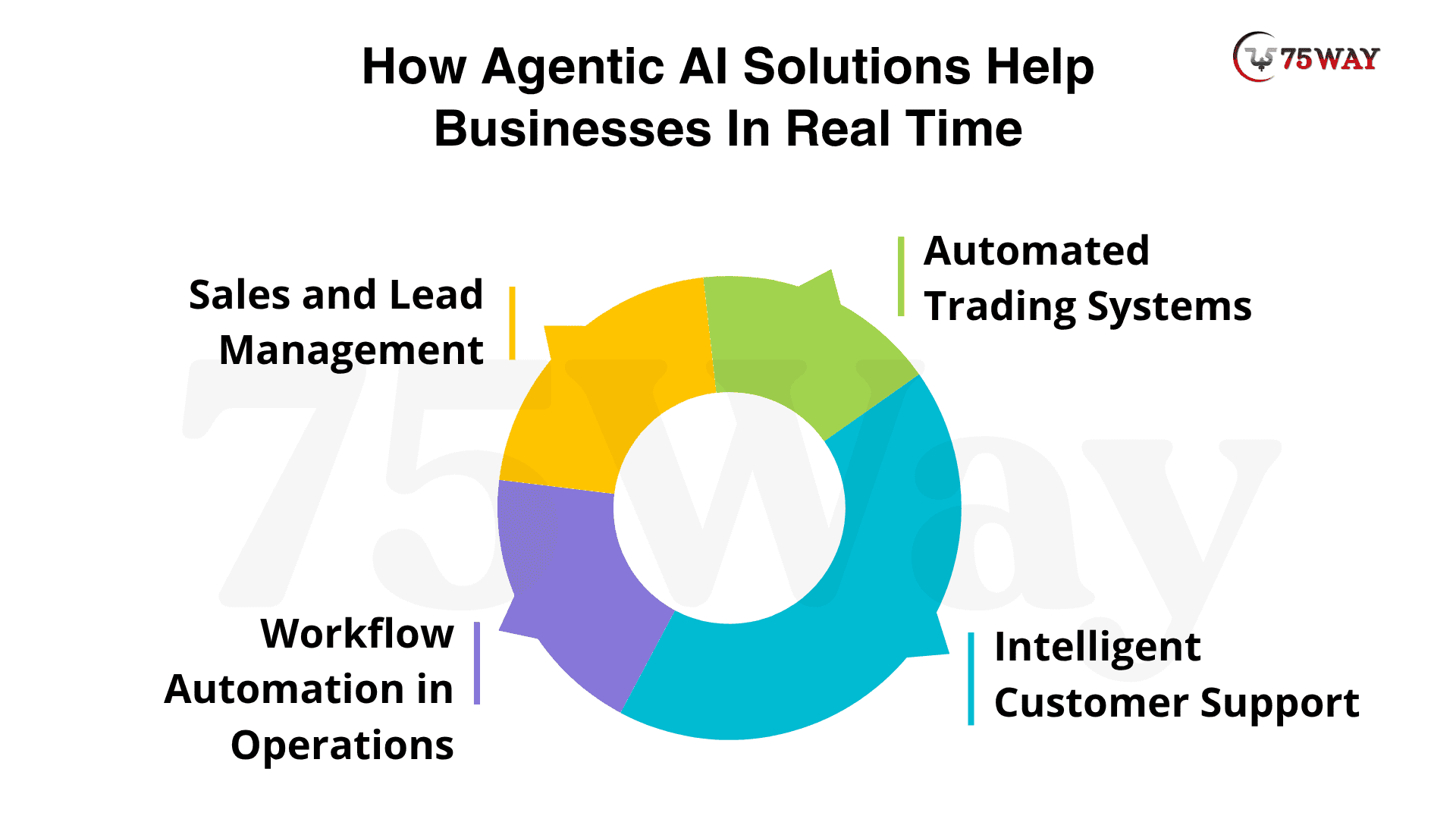
- Automated Trading Systems: AI agents execute trades based on predefined strategies and real-time market signals. This reduces reliance on human intervention and improves execution speed, accuracy, and consistency in fast-moving financial environments.
- Intelligent Customer Support: AI-powered voice and chat agents handle customer queries, resolve common issues, and escalate complex cases when required. This ensures faster response times and consistent support availability across all channels.
- Workflow Automation in Operations: AI systems streamline internal operations by managing approvals, processing data, and generating reports. This reduces manual effort, minimizes errors, and improves overall process efficiency within organizations.
- Sales and Lead Management: AI agents assist sales teams by qualifying leads, scheduling meetings, and maintaining follow-ups with prospects. This improves pipeline efficiency and helps increase overall conversion rates through timely and structured engagement.
Cost of Building AI Automation Systems
The cost of developing AI agents varies based on complexity, integrations, and functionality.
- Basic automation systems may cost between $5,000 and $25,000, focusing on simple workflows and limited integrations.
- Mid-level systems with advanced workflows, APIs, and analytics can range from $25,000 to $100,000.
- Advanced AI agents with predictive capabilities, real-time processing, and multi-system integration can exceed $100,000.
Ongoing costs include maintenance, updates, and infrastructure, which are essential for long-term performance and scalability.
Future of AI Automation Engineering
AI automation engineering is evolving at a rapid pace, moving beyond simple task automation toward more intelligent and adaptive systems. Future solutions will be capable of understanding context, learning from real-time data, and making decisions with minimal human intervention, making them far more powerful and flexible than current systems.
As these technologies mature, AI systems will be able to manage increasingly complex business functions across industries. This shift will enable organizations to operate faster, more accurately, and at greater scale while reducing their reliance on manual processes and traditional operational structures.
Businesses that invest early in AI automation will gain a strong competitive advantage in efficiency and innovation. At the same time, the role of AI automation engineers will become more critical, as they will be responsible for designing, integrating, and managing the intelligent systems that drive modern digital operations.
Final Remarks
AI automation engineering is no longer an optional investment for forward-thinking businesses. It represents a fundamental shift in how organizations operate, scale, and compete in increasingly complex environments. By building intelligent agents for trading, voice interactions, workflows, and operations, businesses can reduce inefficiencies, enhance decision-making, and unlock new growth opportunities.
The real value lies not just in automation itself, but in creating systems that continuously learn and improve. As markets evolve and customer expectations rise, companies that embrace AI-driven automation will be better positioned to adapt and lead. Investing in the right strategy, tools, and expertise today ensures long-term resilience, operational excellence, and sustainable competitive advantage in the future. To bring these capabilities into your business, partnering with an experienced AI automation development company can help you design, build, and scale intelligent systems.
Frequently Asked Questions (FAQs)
How Does AI Automation Improve Business Decision Quality?
AI automation improves decision quality by analyzing large datasets quickly and identifying patterns that humans may miss. It provides real-time insights, reduces bias in decision-making, and ensures choices are based on accurate, updated information rather than assumptions or delayed reports from manual systems.
What Skills Are Required To Build AI Automation Systems?
Building AI automation systems requires skills in machine learning, data engineering, system architecture, and programming languages like Python. Knowledge of APIs, cloud platforms, and workflow design is also important. Strong analytical thinking helps engineers design systems that are efficient, scalable, and reliable.
Why Is Data Important In AI Automation Engineering?
Data is the foundation of AI automation systems because it trains models and drives decision-making processes. High-quality, structured data improves accuracy and performance, while poor data leads to unreliable outcomes. Continuous data flow ensures systems remain adaptive and effective over time.
Can Small Businesses Use AI Automation?
Yes, small businesses can use AI automation effectively by starting with focused use cases like customer support, marketing automation, or simple workflow optimization. This allows them to improve efficiency, reduce manual effort, and scale operations gradually without requiring large infrastructure or complex systems.
How Do AI Agents Handle Errors Or Uncertainty?
AI agents manage errors by using fallback logic, confidence scoring, and continuous learning mechanisms. When uncertainty arises, they can escalate decisions or request additional data. Over time, feedback loops help improve accuracy and reduce mistakes in similar future situations.
What Is The Role Of Human Oversight In AI Automation?
Human oversight ensures AI systems remain aligned with business goals and ethical standards. While automation handles execution, humans monitor performance, validate decisions, and intervene when necessary. This balance helps maintain reliability, accountability, and trust in automated systems across critical operations.