Summary
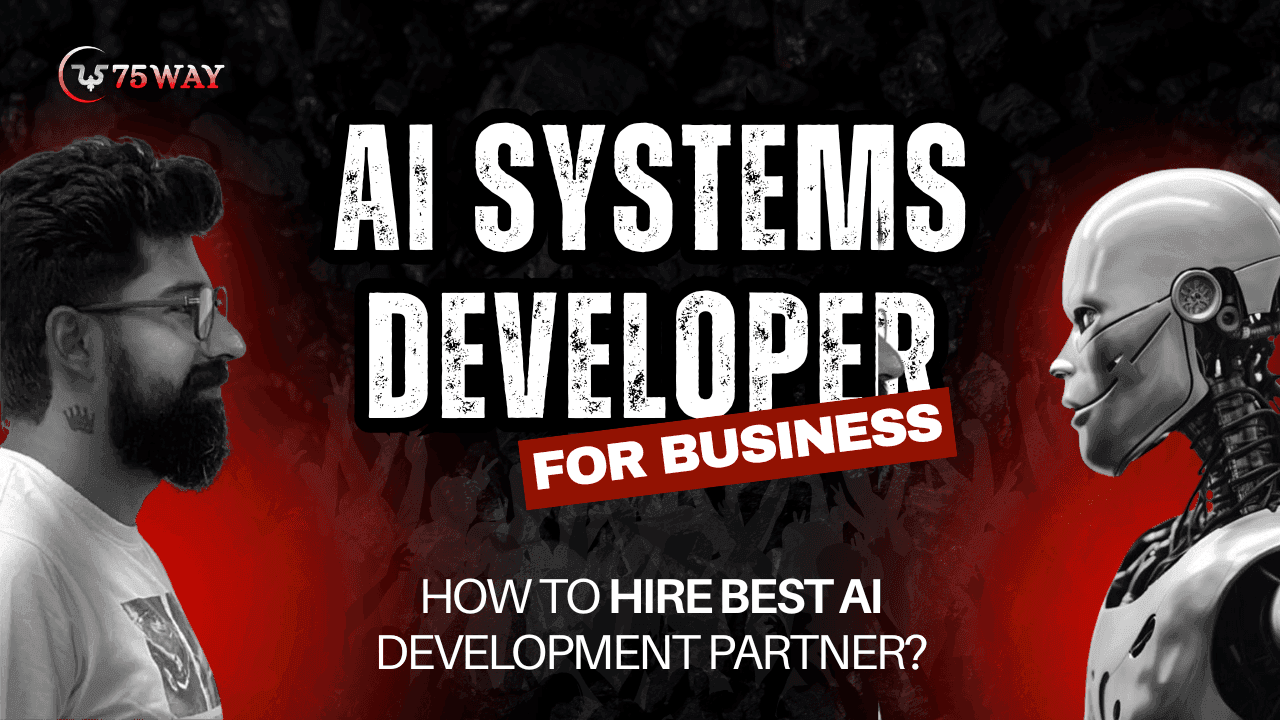
Hiring an AI systems developer is a strategic decision that directly impacts scalability, efficiency, and long-term ROI. This guide explains how businesses can evaluate technical expertise, domain understanding, and execution capability while selecting the right AI development partner. It also covers risks, selection frameworks, and business alignment strategies for success.
Quick Overview
- The right systems developer determines scalability and long-term business success.
- Technical expertise alone is insufficient without strong domain understanding alignment.
- Evaluation must include architecture capability, data handling, and integration strength.
- AI developer hiring costs average $50 to $150 hourly based on requirements
- Structured hiring process improves ROI and reduces implementation risks.
Choosing the right AI systems developer can feel less like a hiring decision and more like picking the backbone of your future business growth. The challenge is not just finding someone who “builds AI,” but finding a partner who understands how AI actually fits into your operations, goals, and customer experience.
Most businesses today are surrounded by corporate jargon, like AI automation, machine learning, predictive systems, but very few translate those ideas into real, revenue-driving solutions. That is where the right AI development partner makes all the difference. The wrong choice can lead to wasted budgets, poor AI integration, and systems that never move beyond the pilot stage.
Before you invest in AI, it is worth asking a simple question: “Are you hiring a dedicated AI developer, a coder, or a long-term AI agency that can scale with your business?” Because the impact of that decision shows up not just in technology, but in efficiency, cost savings, and competitive advantage.
In this guide, you’ll learn how to identify, evaluate, and hire the best AI development partner. So you don’t just build AI systems, but build systems that actually work for your business.
What Do You Mean By AI Systems Developer?
An AI systems developer is a technology professional or team that designs, builds, and deploys artificial intelligence solutions that help businesses automate tasks, analyze data, and improve decision-making. Unlike traditional software developers who focus on fixed instructions, AI software developers create systems that can learn from data and improve over time.
These developers work with technologies such as machine learning, natural language processing, and data engineering to build AI mobile applications, including AI chatbots, recommendation engines, fraud detection systems, and advanced analytics tools. Their role is not just coding but also training models, optimizing algorithms, and ensuring the AI system performs accurately in real business environments.
In simple terms, an AI systems developer acts like an architect for intelligent software. They build AI models and virtual assistants that think, learn, and adapt based on how your business operates and how your customers behave.
Why Choosing the Right Artificial Intelligence Creation Partner Matters?
Selecting the right AI programming partner is not just a technical decision. It directly influences how efficiently your business operates, scales, and competes in the market. A strong partner ensures your AI systems are aligned with business goals, built for long-term growth, and designed to deliver measurable ROI. On the other hand, the wrong choice can lead to wasted investment, poor performance, and limited scalability.
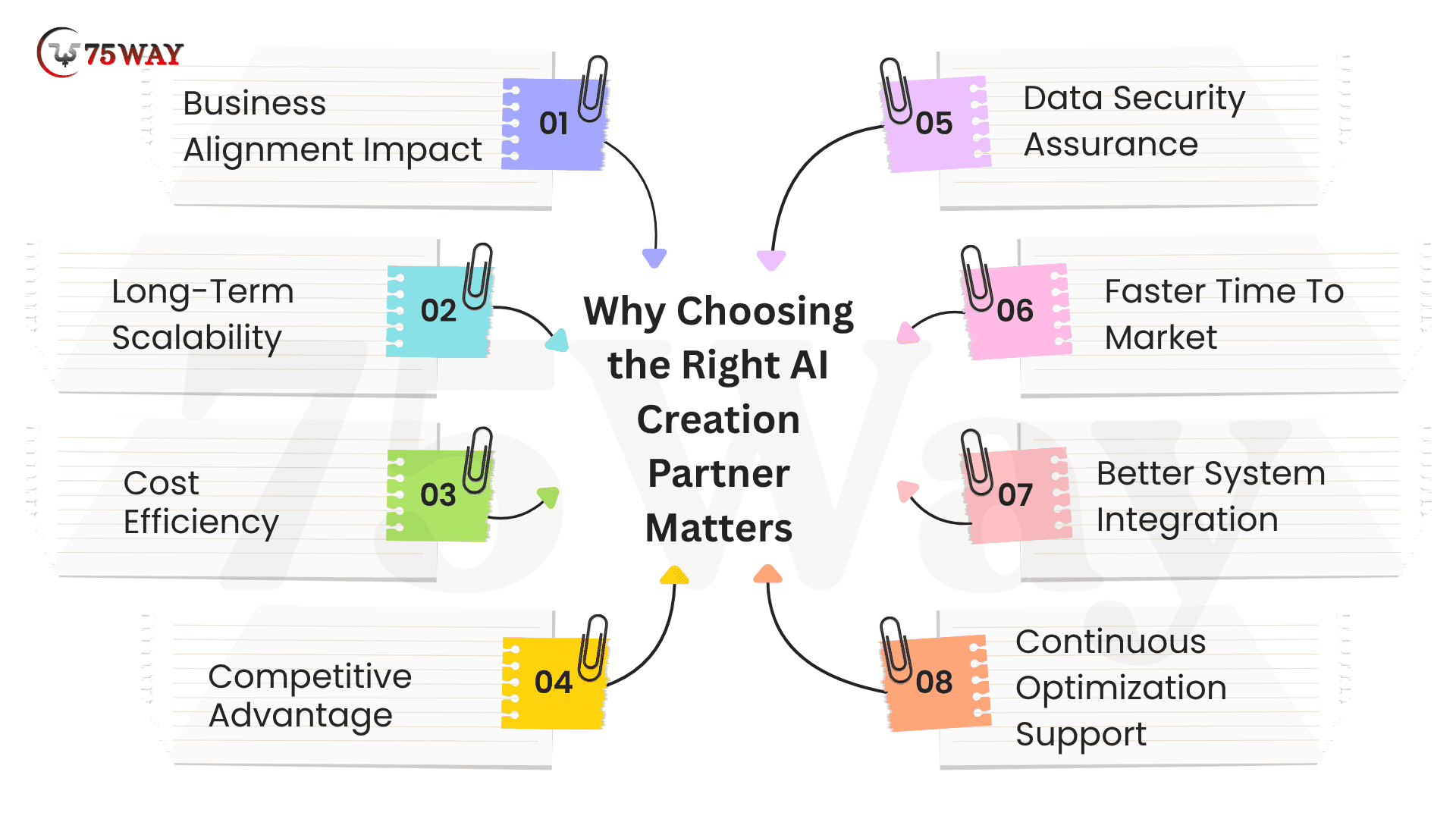
- Business Alignment Impact
AI solutions must align with business goals to deliver real value. Without proper alignment, systems may solve the wrong problems, creating inefficiencies instead of improving operations and decision-making.
- Long-Term Scalability
A strong AI partner builds systems that can grow with your business. Poor architectural choices can restrict future expansion, making it difficult to add new features or handle increased data loads.
- Cost Efficiency
The right partner minimizes rework, delays, and unnecessary complexity during development. This reduces overall project costs and ensures faster deployment with fewer long-term maintenance expenses.
- Competitive Advantage
Well-designed enterprise AI systems improve speed, accuracy, and decision-making across business functions. This enables companies to respond faster to market changes and stay ahead of competitors.
- Data Security Assurance
A reliable AI partner ensures proper handling of sensitive business and customer data. They implement strong security measures that reduce risks and ensure compliance with industry regulations.
- Faster Time To Market
Experienced developers streamline the development process using proven frameworks and tools. This helps businesses launch AI-powered solutions faster and start realizing benefits sooner.
- Better System Integration
The right partner ensures seamless integration of AI solutions with existing business systems. This avoids operational disruptions and enables smooth data flow across departments.
- Continuous Optimization Support
A good AI partner provides ongoing monitoring and improvements after deployment. This ensures systems remain accurate, efficient, and adaptable to changing business needs over time.
Key Qualities of a Strong AI System Development Partner
A skilled AI system creation partner not only builds AI systems but also ensures they are scalable, secure, and aligned with real-world business needs. The right qualities can determine whether your AI investment becomes a success or a costly failure.
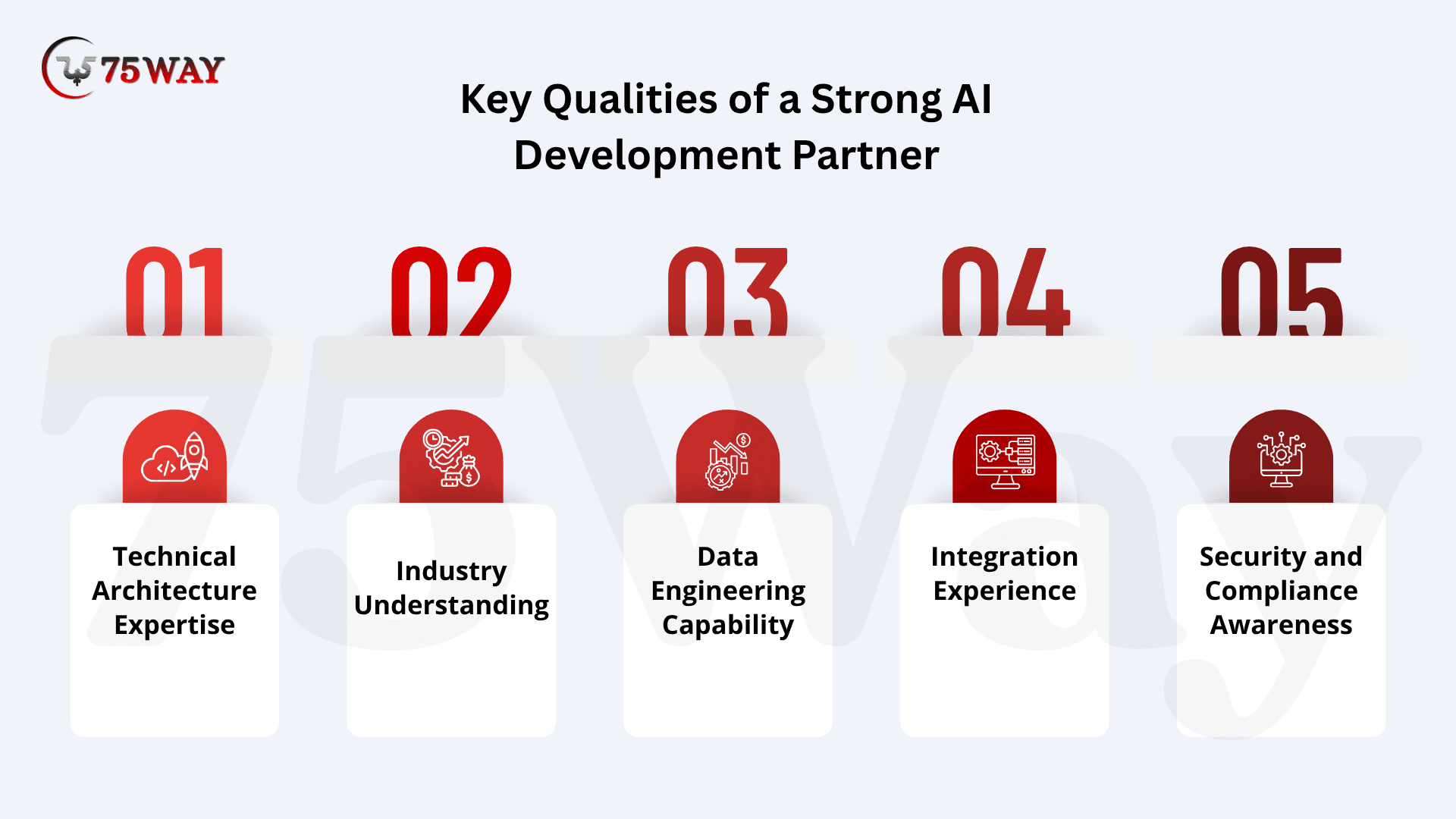
- Technical Architecture Expertise: A strong AI partner should have deep expertise in designing scalable and reliable system architectures. This includes cloud infrastructure, distributed systems, and efficient AI model deployment strategies. They must ensure that solutions are built to handle growing data volumes, user demands, and complex workflows. Proper architecture design also reduces downtime, improves performance, and ensures long-term system stability.
- Industry Understanding: Industry-specific experience allows AI developers to design solutions that match real business challenges. A partner familiar with your domain understands workflows, customer behavior, and regulatory needs. This leads to faster implementation and more relevant AI models. Without industry knowledge, even advanced technology may fail to deliver practical business value or align with operational requirements.
- Data Engineering Capability: Strong data engineering capability is essential for preparing, cleaning, and structuring large volumes of data. AI systems depend heavily on high-quality data to function accurately. A capable partner ensures seamless handling of both structured and unstructured data from multiple sources. This improves model accuracy, reduces errors, and ensures that AI systems generate reliable and meaningful insights.
- Integration Experience: An effective AI system creation partner must have experience integrating AI solutions with existing enterprise systems. This includes CRMs, ERPs, databases, and other business tools. Smooth integration ensures uninterrupted workflows and avoids operational disruption. It also enables real-time data exchange between systems, improving efficiency and decision-making across departments while ensuring the AI solution fits naturally into existing infrastructure.
- Security and Compliance Awareness: Security is critical when dealing with sensitive business and customer data. A strong AI system partner follows industry standards for data protection, encryption, and regulatory compliance. They ensure that AI systems are built with privacy and security in mind from the start. This reduces legal risks, builds customer trust, and ensures safe handling of all critical information.
How to Evaluate an AI Systems Developer?
Evaluating an AI systems developer requires looking beyond technical skills and focusing on real-world experience, problem-solving ability, and business understanding. The right evaluation ensures you choose a partner who can build scalable, efficient, and ROI-driven AI solutions that truly align with your business goals.
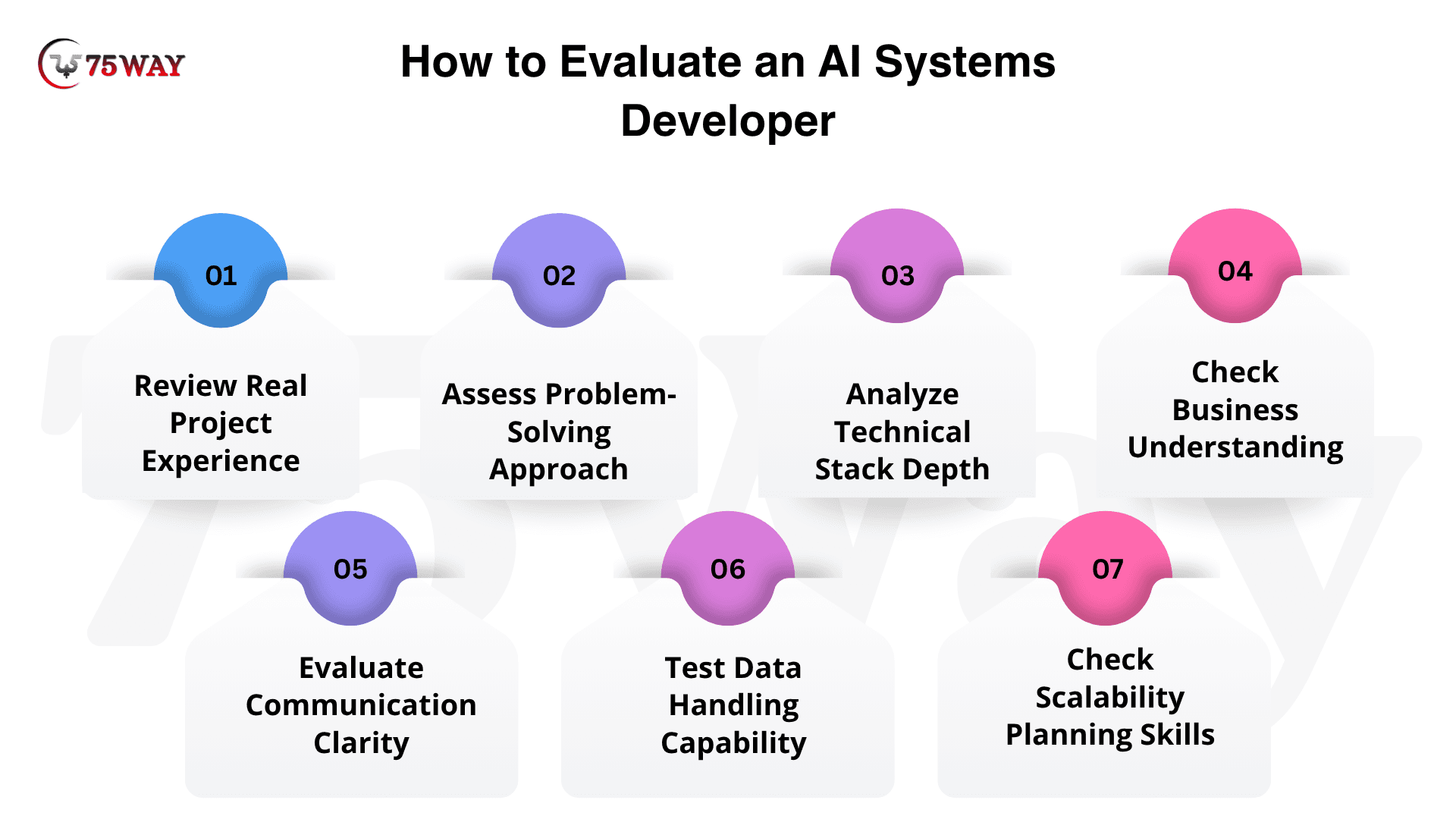
- Review Real Project Experience
Past projects show practical capability in solving real business problems using AI systems. They demonstrate how effectively a developer can deliver working, scalable solutions beyond theory or experimentation alone.
- Assess Problem-Solving Approach
Focus on how they break down complex business challenges into structured AI solutions. A strong developer prioritizes logic, system design, and outcomes rather than just writing functional code.
- Analyze Technical Stack Depth
Check their experience with modern AI frameworks, cloud platforms, and scalable infrastructure tools. Strong technical depth ensures they can build reliable, future-ready AI systems.
- Check Business Understanding
A good AI developer understands business workflows, ROI goals, and operational efficiency. They should align technical solutions with measurable business outcomes, not just algorithm performance.
- Evaluate Communication Clarity
Clear communication ensures smooth collaboration throughout the development process. It helps avoid misunderstandings, keeps expectations aligned, and ensures project requirements are implemented correctly.
- Test Data Handling Capability
Evaluate how they manage, clean, and structure large datasets for AI models. Strong data handling ensures accurate predictions and reliable system performance in real-world applications.
- Check Scalability Planning Skills
Assess their ability to design systems that grow with business needs. Scalable planning ensures AI solutions continue performing efficiently as data volume and user demand increase over time.
Read Too: Top Features Every AI-Powered Ecommerce App Must Have
Step-by-Step Roadmap To Hire An AI Systems Expert
A careful selection process is important when hiring an AI system expert, focusing on clear business goals, capability assessment, and validation of real-world results. Instead of moving quickly into development, businesses should evaluate potential partners step by step to confirm technical strength, strategic alignment, and measurable return on investment from AI implementation.
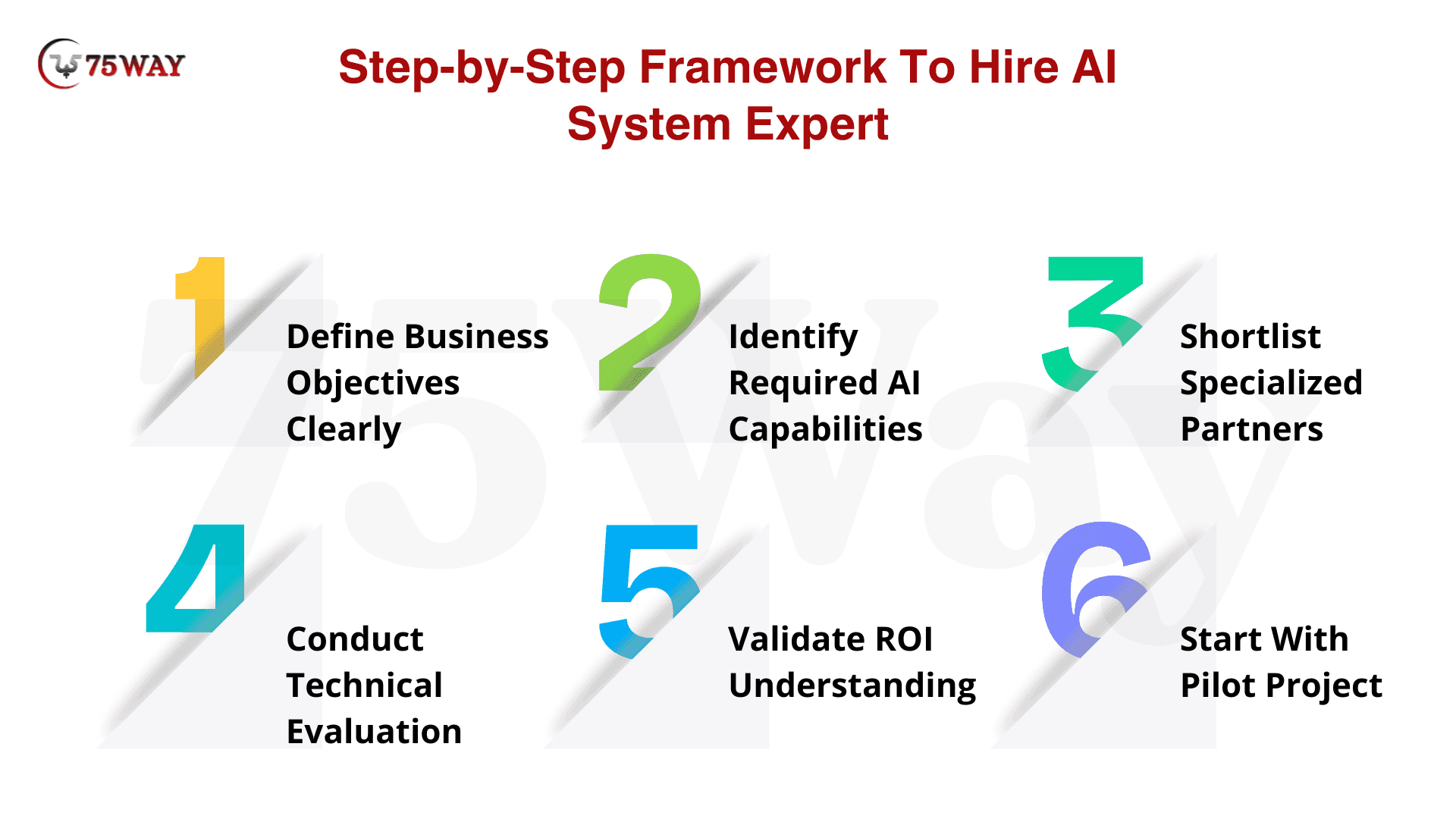
1. Define Business Objectives Clearly
Start by clearly identifying the exact business problem you want AI to solve. Avoid focusing on tools or technology at this stage. Clear objectives ensure better alignment between expectations and final AI solution outcomes.
2. Identify Required AI Capabilities
Determine whether your business needs automation, predictive analytics, or intelligent decision-making systems. Each capability serves a different purpose and impacts design choices. This step ensures you select the right type of AI solution from the beginning.
3. Shortlist Specialized Partners
Focus on AI developers or companies with proven experience in building real-world AI systems. Review their portfolio and industry relevance. Specialized partners are more likely to deliver scalable and effective solutions tailored to business needs.
4. Conduct Technical Evaluation
Evaluate their technical approach, system architecture, and problem-solving methodology. Review case studies to understand how they design and implement AI solutions. Strong technical evaluation ensures the partner can build reliable, scalable, and efficient systems.
5. Validate ROI Understanding
Ensure the AI partner understands how technical solutions translate into measurable business outcomes. They should be able to explain cost savings, efficiency gains, and revenue impact clearly. This alignment ensures the project delivers real business value.
6. Start With Pilot Project
Begin implementation with a small-scale pilot project before full deployment. This helps test performance, identify gaps, and refine the solution. A pilot reduces risk and ensures better scalability in later stages of development.
Quick Snapshot: How To Build Enterprise AI: From Pilot to Full-Scale Deployment
Things To Avoid When Hiring An Expert AI System Engineer
Hiring the right AI system engineer is as much about avoiding the wrong traits as it is about identifying the right skills. Many AI projects fail not because of technology limitations, but due to unrealistic promises, poor understanding of business context, and lack of scalable planning. Careful evaluation helps businesses avoid costly mistakes and ensures long-term success.
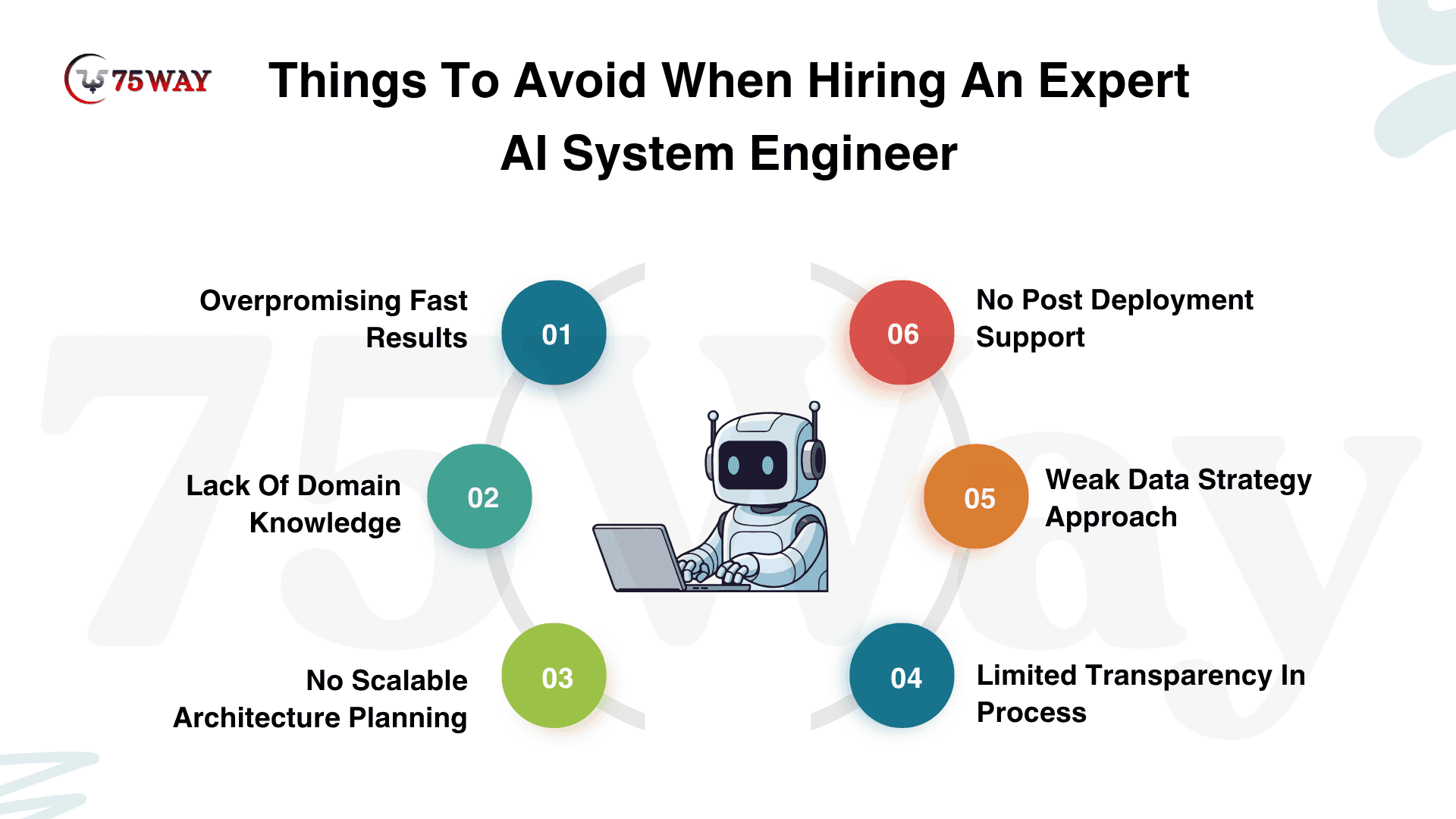
- Overpromising Fast Results: Avoid engineers who promise complete AI systems in unrealistically short timelines without proper development, testing, and validation stages.
- Lack of Domain Knowledge: Developers without industry understanding often build generic solutions that fail to solve real business problems effectively.
- No Scalable Architecture Planning: Systems built without scalability planning struggle with growth, causing performance issues when data volume and usage increase rapidly.
- Limited Transparency In Process: Lack of visibility into development methods, data usage, and decision logic reduces trust and creates serious operational risks.
- Weak Data Strategy Approach: Poor handling of data quality, structure, and governance leads to inaccurate models and unreliable AI system outputs.
- No Post-Deployment Support: Without ongoing support, AI systems become outdated quickly, leading to performance issues and missed optimization opportunities over time.
Cost Considerations in Hiring AI Solutions Developers
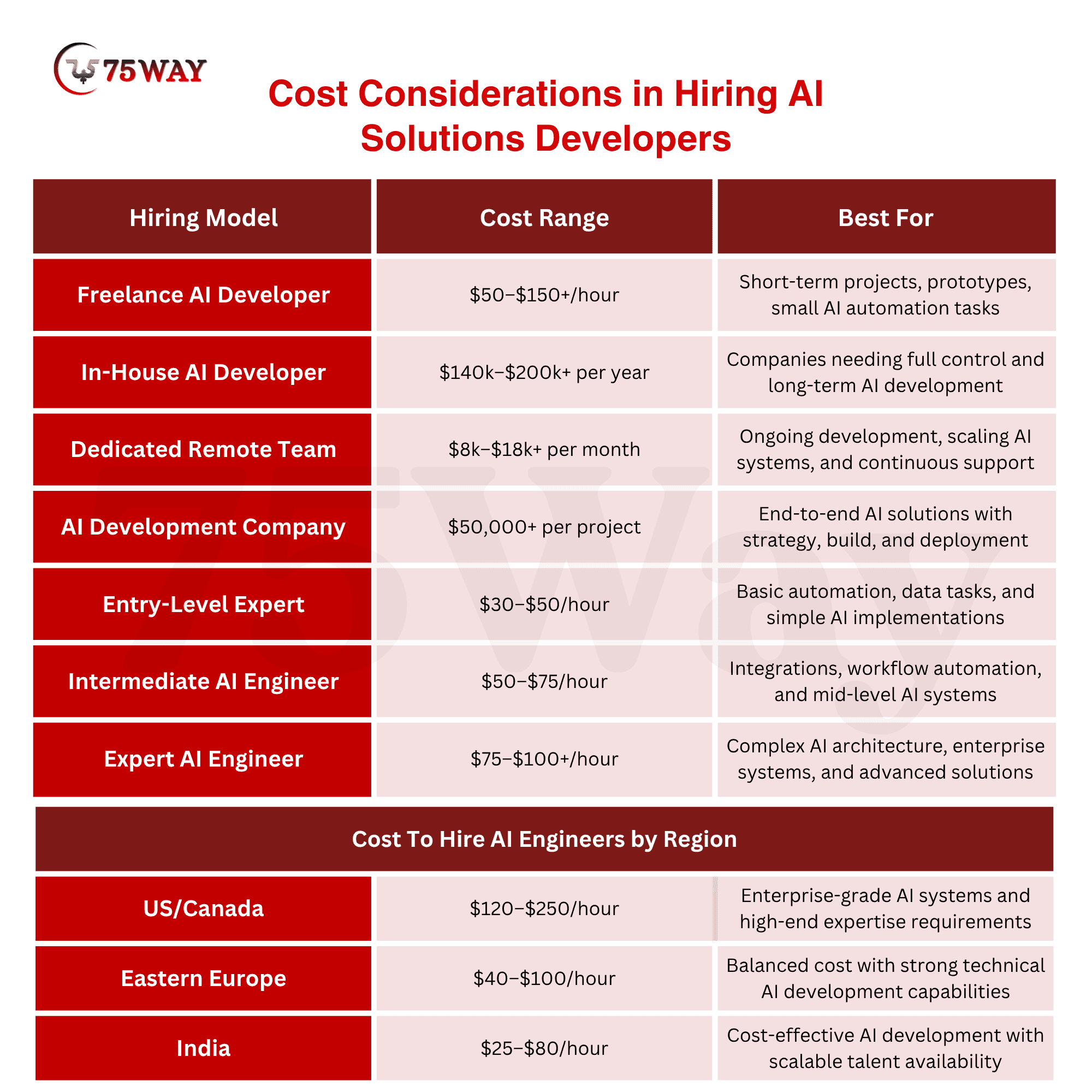
Costs vary depending on system complexity, integration depth, and customization needs. However, the real cost should be measured not only in development investment but also in long-term operational efficiency, reduced manual effort, and improved decision accuracy. A strong AI partner often reduces overall business costs over time, despite a higher initial investment.
- Freelance AI Developer: Typically costs around $50–$150+/hour, making it a flexible option for short-term AI work, MVPs, or specific automation tasks without long-term commitments.
- In-House AI Developer: Usually ranges from $140k–$200k+ per year, including benefits, best suited for companies needing full control, internal collaboration, and continuous AI system development.
- Dedicated Remote Team: Costs approximately $8k–$18k+ per month, providing a managed team structure ideal for ongoing development, maintenance, and scalable AI execution.
- AI Development Company: Project-based pricing often starts at $50,000+, covering end-to-end AI delivery from strategy and architecture to deployment and optimization.
Costs by AI Developer Experience Level
- Entry-Level Developers: Around $30–$50/hour, typically handling basic automation, data handling tasks, and simple AI implementations under supervision.
- Intermediate Developers: Around $50–$75/hour, capable of managing integrations, workflow automation, and moderately complex AI system development.
- Expert Developers: Usually $75–$100+/hour, specializing in advanced AI architecture, complex problem-solving, and enterprise-grade system design.
Cost To Hire AI Engineers by Region
- US/Canada: Approximately $120–$250/hour, reflecting high-end expertise, enterprise experience, and advanced AI system capabilities.
- Eastern Europe: Roughly $40–$100/hour, offering strong technical skills with balanced cost and reliable AI engineering output.
- India: Around $25–$80/hour, providing cost-efficient development with scalable talent and strong global delivery experience.
Conclusion
To hire a dedicated AI systems developer is not a procurement decision. Every layer of your AI ecosystem, from architecture to deployment, depends on the capability of the partner you choose. When this choice is made with clarity, evaluation discipline, and long-term thinking, businesses unlock systems that not only automate processes but also enhance decision intelligence and operational resilience.
At the same time, organizations that rush this decision often face integration failures, cost overruns, and limited scalability. A structured hiring approach ensures alignment between business goals and technical execution, which ultimately defines the success of any AI initiative. Hence, the right AI development partner becomes a critical growth enabler rather than just a service provider.
Frequently Asked Questions (FAQs)
Can AI Systems Work Without Large Data Sets?
AI systems perform better with large datasets, but some models can work with limited data using pre-trained models or transfer learning. However, accuracy and reliability improve significantly as more quality data becomes available for training and continuous model improvement over time.
Are AI Systems Difficult To Maintain After Deployment?
AI systems require ongoing monitoring, updates, and optimization to maintain performance. While they are not overly difficult to maintain, regular data updates and model tuning are essential. Proper maintenance ensures accuracy, stability, and adaptability to changing business conditions and new data patterns.
What Is The Difference Between AI And Traditional Software?
Traditional software follows fixed rules and logic, while AI systems learn from data and improve over time. AI can make predictions, recognize patterns, and adapt to new inputs, whereas traditional software only performs predefined tasks without learning or evolving capabilities.
Do AI Systems Require Cloud Infrastructure?
Most modern AI systems rely on cloud infrastructure for scalability, storage, and processing power. Cloud platforms enable faster deployment, real-time data processing, and flexible resource management, making them essential for handling complex AI workloads efficiently and cost-effectively across businesses.
How Do Businesses Measure AI Success?
Businesses measure AI success using key performance indicators such as cost reduction, process efficiency, improved accuracy, and revenue growth. Additional metrics include customer satisfaction, time savings, and ROI. These indicators help evaluate whether AI systems are delivering meaningful and measurable business value.
What Risks Should Businesses Consider Before Using AI Systems?
Businesses should consider risks such as data privacy concerns, model bias, integration challenges, and dependency on data quality. Poor implementation can lead to inaccurate predictions or operational disruptions. Proper governance, regular audits, and strong security practices help minimize risks and ensure safe, reliable performance of AI systems.