Summary
AI-powered e-commerce apps are transforming online shopping through intelligent features like personalised recommendations, smart search, predictive analytics, and automated support systems. This article explores how AI enhances customer experience, improves product discovery, optimises operations, and helps businesses increase conversions and achieve sustainable growth.
Key Takeaways:
- AI e-commerce apps deliver personalised shopping experiences with intelligent recommendations.
- Smart search, visual search, and voice integration significantly improve product discovery.
- AI chatbots provide instant customer support, reducing workload and improving response time.
- Predictive analytics helps forecast demand, optimise inventory management, and prevent stock shortages.
- Dynamic pricing strategies enable businesses to remain competitive and maximise revenue opportunities
The e-commerce industry is evolving rapidly as businesses adopt intelligent technologies to enhance the digital shopping experience. Today’s online consumers expect faster product discovery, personalised recommendations, and seamless interactions across mobile and web apps. As competition intensifies, e-commerce businesses are seeking smarter ways to enhance customer engagement and streamline operations.
An AI-powered e-commerce app enables businesses to deliver these advanced shopping experiences by integrating technologies such as machine learning, natural language processing, and predictive analytics. These intelligent systems analyse browsing behaviour, purchase history, and customer preferences to recommend relevant products and automate key e-commerce operations.
By using AI e-commerce apps, businesses can move beyond traditional online stores and create dynamic platforms that adapt to customer needs in real time. AI technologies help improve product discovery, optimise pricing strategies, and provide instant customer support through automated systems. As the e-commerce market continues to grow, AI-powered apps are becoming the foundation of modern online retail. Businesses that adopt AI-driven ecommerce solutions can deliver smarter, faster, and more personalised shopping experiences that increase conversions and build long-term customer loyalty
What is an E-commerce App?
An e-commerce app is a mobile or web-based application that allows businesses to sell products or services directly to customers online. These apps are designed to provide a smooth shopping experience on smartphones, tablets, and desktops. A typical e-commerce app includes features like product browsing, shopping carts, secure payment processing, and order tracking.
Modern ecommerce apps go beyond basic functionality by integrating AI-powered features, including smart product recommendations, personalised shopping experiences, and automated customer support. These intelligent capabilities help businesses improve customer engagement, increase conversions, and deliver a faster, more efficient online shopping experience
How AI is Transforming E-Commerce Apps?
The e-commerce industry is rapidly evolving as artificial intelligence becomes a core component of modern online platforms. AI technologies are replacing traditional manual processes by automating key functions such as product recommendations, inventory management, pricing optimisation, and customer support. This shift allows e-commerce apps to operate more intelligently and respond to customer needs in real time. AI-powered systems analyse user behaviour, browsing patterns, and purchase history to deliver personalised shopping experiences. Instead of showing the same products to every visitor, ecommerce apps can dynamically adjust content, highlight relevant items, and provide tailored offers based on individual preferences. This level of personalisation improves customer engagement and encourages repeat purchases.
In addition, AI enhances operational efficiency by forecasting demand, detecting fraud, and optimising stock levels. Businesses can reduce errors, minimise costs, and make faster decisions using predictive analytics. Customer support also becomes more efficient with AI chatbots that provide instant assistance and automatically resolve common queries. Overall, AI is transforming e-commerce apps by combining automation with intelligent data analysis. These capabilities help businesses improve performance, increase customer satisfaction, and achieve sustainable growth in a highly competitive digital marketplace.
Core Features of AI-Powered E-commerce App
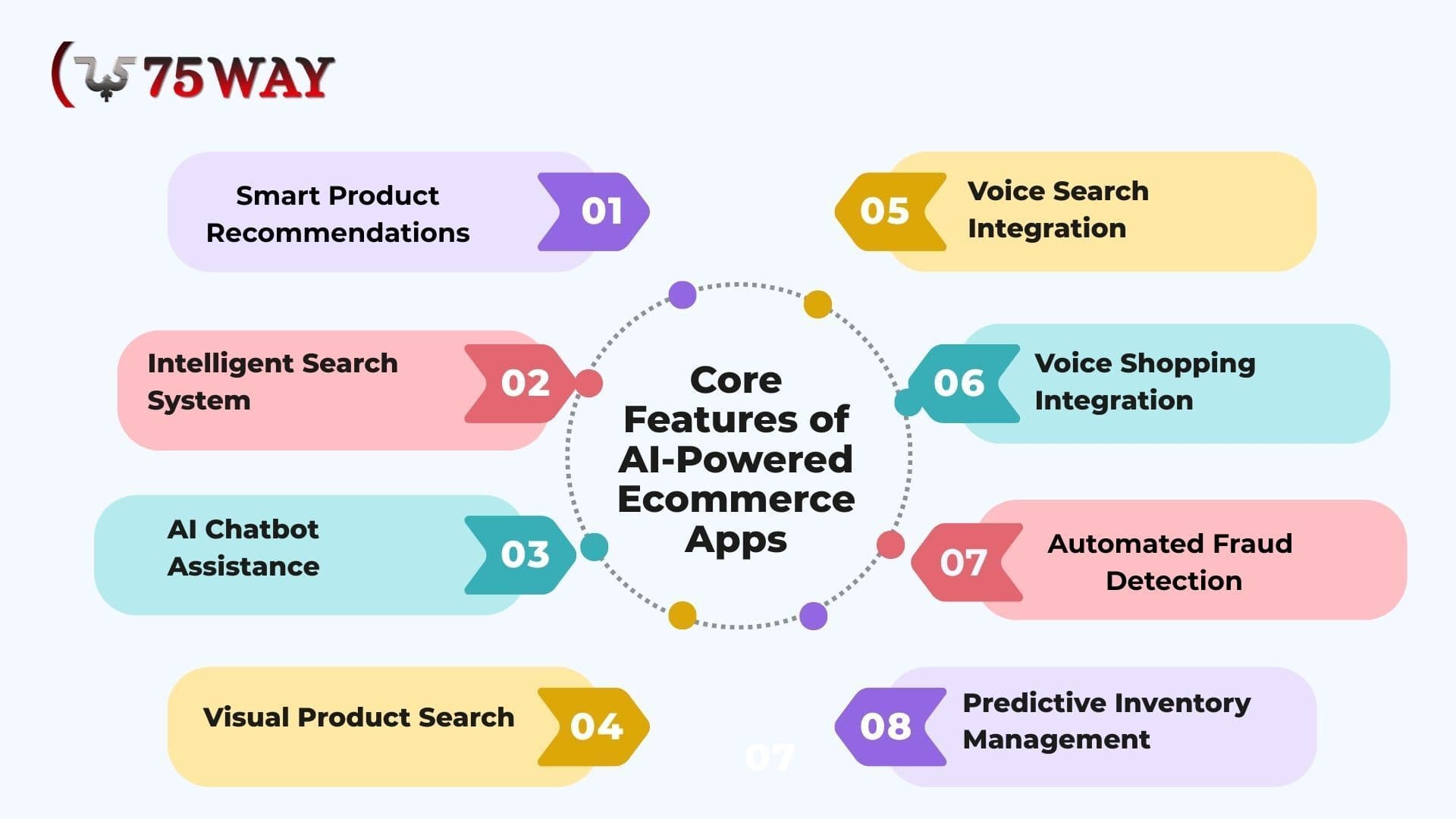
AI-powered e-commerce apps combine intelligent learning, automation, and predictive systems to create personalised shopping experiences. Key features include visual product search, AI chatbots for instant support, smart recommendations by an AI assistant, and dynamic pricing. Together, these capabilities improve customer engagement, streamline operations, enhance product discovery, and help businesses deliver faster, more efficient online shopping experiences.
Smart Product Recommendations
Smart product recommendations use artificial intelligence to analyse browsing behaviour, purchase history, and real-time interactions to suggest relevant items. These systems study customer preferences, trends, and cart activity to deliver highly personalised suggestions. By showing the right products at the right time, they improve product discovery, increase engagement, and help boost overall conversion rates.
Intelligent Search System
An intelligent search system uses AI to understand user intent, context, and natural language queries. It supports visual and voice search, as well as smart suggestions, to deliver accurate results quickly. By interpreting conversational searches and correcting errors automatically, this system enhances product discovery, reduces search time, and creates a smoother shopping experience.
AI Chatbot Assistance
AI chatbots provide instant, round-the-clock customer support within ecommerce apps. They answer common questions, track orders, recommend products, and guide users through purchases. By understanding intent and context, advanced chatbots offer natural conversations. This improves response time, reduces support workload, and enhances customer satisfaction and conversion rates.
Visual Product Search
Visual product search allows customers to upload images or take photos to find similar items instantly. Powered by AI voice and computer vision, the system identifies colours, patterns, shapes, and styles from the image. This feature simplifies product discovery, helps users find hard-to-describe items, and improves overall shopping convenience.
Voice Search Integration
Voice search enables customers to find products using spoken commands. Using AI consulting agents and natural language processing, it understands conversational queries and delivers accurate results. This hands-free feature is especially useful for mobile users, making product search faster, more convenient, and easier during multitasking.
Voice Shopping Integration
Voice shopping allows users to browse products, add items to carts, and complete purchases using voice commands. Generative AI systems recognise preferences and purchase history to provide personalised assistance. This creates a faster checkout experience and improves convenience, especially for repeat purchases and everyday shopping tasks.
Automated Fraud Detection
AI-automation fraud detection monitors transactions in real time to identify suspicious activity. By analysing user behaviour, payment patterns, and device data, it quickly detects anomalies. This helps reduce fraudulent transactions, protect sensitive information, and ensure secure checkout experiences without affecting legitimate customers.
Predictive Inventory Management
Predictive inventory management uses AI to forecast demand based on sales trends, seasonal data, and customer behaviour. This helps businesses maintain optimal stock levels, prevent shortages, and reduce excess inventory. By improving demand planning, e-commerce apps ensure popular products remain available when customers need them
Why AI is Essential for E-commerce Apps
AI adoption is no longer optional for modern e-commerce apps. Businesses using AI-driven personalisation can increase conversion rates and reduce customer acquisition costs. Today’s shoppers expect personalised experiences, instant support, and relevant product suggestions. AI enables real-time decision-making, helping e-commerce apps deliver faster service, smarter recommendations, and better shopping experiences at scale. One practical approach is to view AI as infrastructure rather than a feature: it becomes the foundation that enables everything from intelligent automation to predictive analytics, creating experiences that feel anticipatory rather than reactive.
Enhanced Product Recommendations
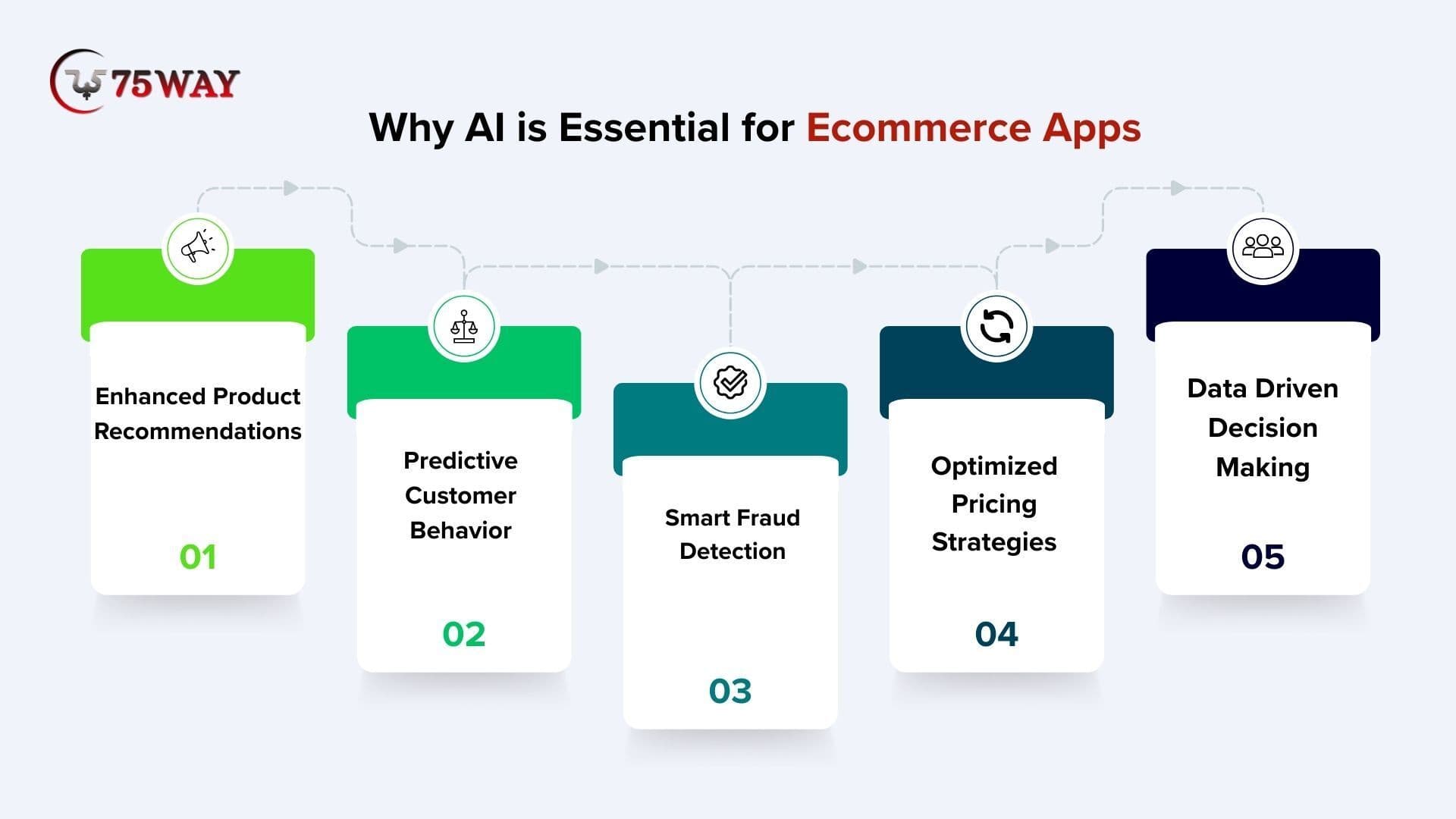
Collaborative filtering analyses user purchase patterns to recommend products that similar customers have bought. By identifying shared browsing and buying behaviours, AI suggests relevant items a shopper hasn’t explored yet, improving product discovery and increasing average order value.
Predictive Customer Behaviour
AI analyses browsing activity, purchase history, and engagement data to predict future actions. This enables e-commerce apps to deliver personalised offers, improve marketing targeting, and increase customer retention effectively.
Smart Fraud Detection
AI models in taxi booking apps monitor transactions in real time to detect suspicious behaviour and prevent fraud. It protects e-commerce platforms from unauthorised payments while ensuring a secure, smooth, and trustworthy checkout experience for customers.
Optimised Pricing Strategy
AI-powered pricing systems automatically adjust product prices based on demand, competition, and user behaviour. This helps e-commerce apps stay competitive, improve profit margins, and maximise overall revenue performance.
Data-Driven Decision-Making
AI processes large datasets to uncover customer trends, sales insights, and market opportunities. These insights help e-commerce businesses make faster, smarter, and more strategic decisions for sustainable growth
Why AI Features Are Crucial for E-commerce
AI has shifted from a competitive advantage to a baseline expectation in modern ecommerce, 82% of retailers now incorporate AI into their operations, fundamentally reshaping how digital commerce functions. What separates successful ecommerce platforms from struggling ones is their effective use of AI across customer touchpoints. Traditional static systems cannot match AI’s ability to personalise product discovery, optimise inventory, and improve customer support, helping businesses reduce cart abandonment and deliver smoother shopping experiences.
Improving Customer Experience
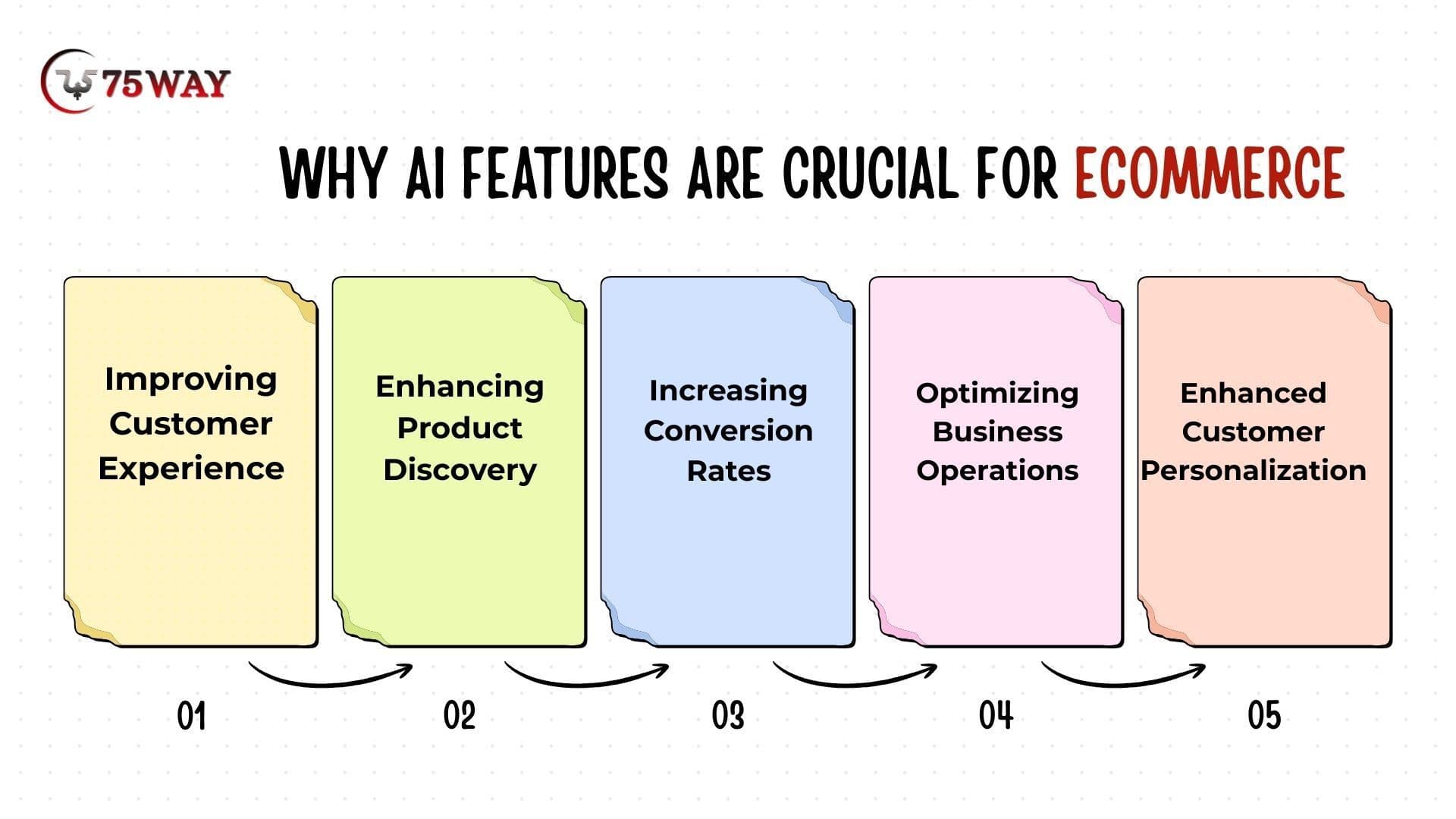
AI helps e-commerce apps deliver faster, more personalised shopping experiences. By analysing browsing behaviour and purchase history, AI suggests relevant products, improves search results, and provides instant support, making the overall shopping journey smoother and more engaging for customers.
Enhancing Product Discovery
AI improves product discovery by helping users find products quickly through smart search, visual search, and personalised recommendations. These features understand customer intent and display relevant products, making it easier for shoppers to explore and purchase items.
Increasing Conversion Rates
AI-powered recommendations, personalised offers, and smart checkout systems help convert visitors into buyers. By understanding customer behaviour and preferences, ecommerce apps can present the right products at the right time, encouraging faster purchasing decisions.
Optimising Business Operations
AI automates key e-commerce operations such as inventory management, demand forecasting, and pricing optimisation. This helps businesses reduce manual work, maintain proper stock levels, and improve overall operational efficiency.
Enhanced Customer Personalisation
AI enables e-commerce apps to deliver personalised shopping experiences based on user behaviour, preferences, and purchase history. This helps businesses recommend relevant products, show targeted offers, and build stronger customer relationships.
Importance of AI in E-commerce Growth
AI has shifted from experimental technology to essential infrastructure for competitive e-commerce growth. Businesses that integrate intelligent automation achieve measurable advantages in revenue, operational efficiency, and customer retention. According to AI Statistics for 2026, Companies adopting AI-powered ecommerce features see major improvements in key metrics, including higher conversions through personalisation. AI also enables scalable growth by automating operations such as support, inventory management, and marketing, allowing businesses to serve more customers more efficiently while reducing operational costs.
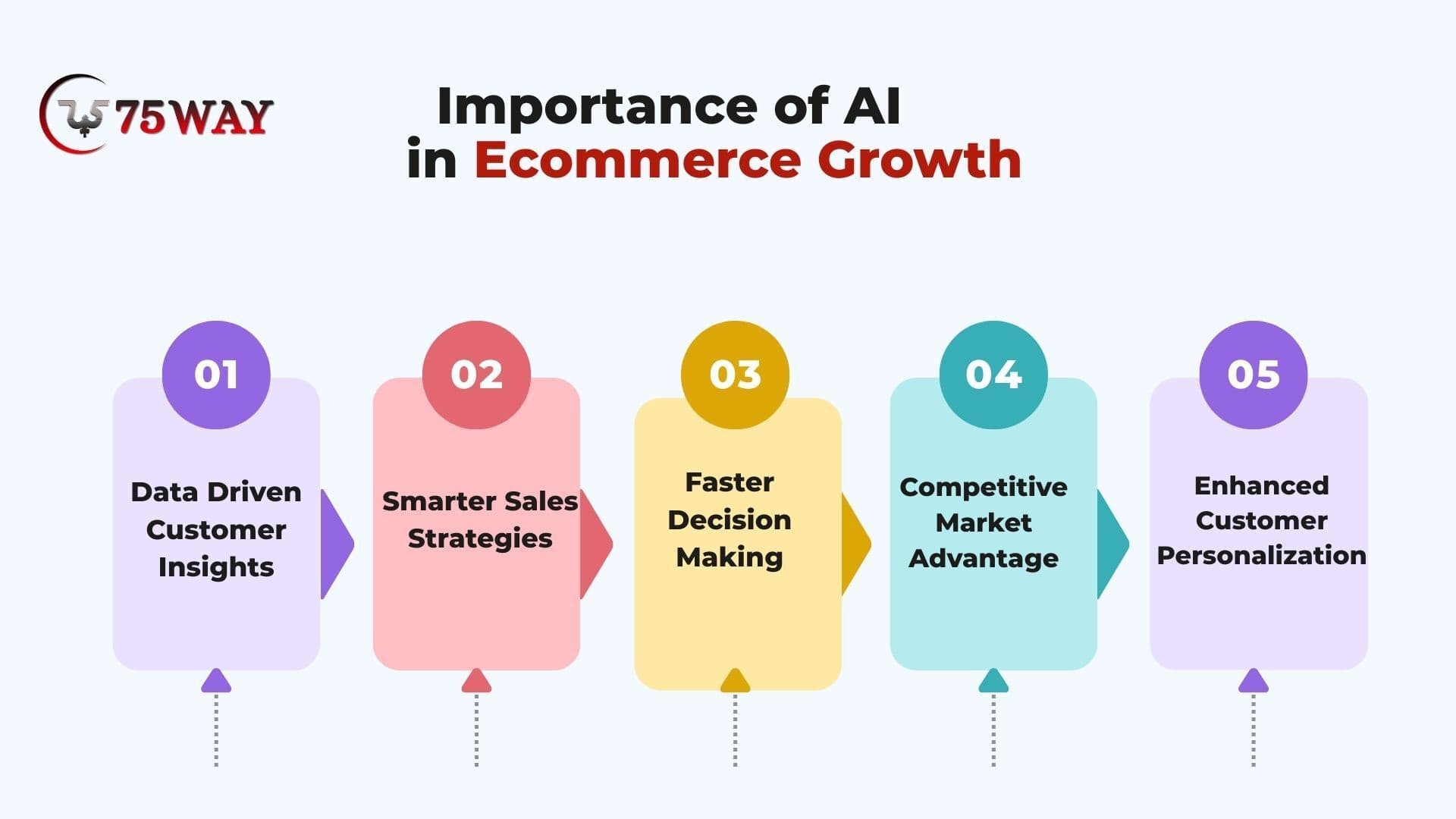
Data Driven Customer Insights
AI analyses customer data to identify behaviour patterns, preferences, and emerging trends. These insights help ecommerce businesses refine marketing strategies, optimise product offerings, and improve overall performance through informed decision-making.
Smarter Sales Strategies
AI identifies high-value customers, predicts purchase intent, and delivers targeted offers. This enables e-commerce businesses to improve sales performance, increase engagement, and convert more visitors into loyal customers effectively.
Faster Decision Making
AI processes large volumes of data in real time to generate actionable insights. This allows e-commerce businesses to make quicker decisions regarding inventory management, pricing adjustments, and marketing campaign strategies.
Competitive Market Advantage
AI-powered e-commerce apps deliver personalised experiences, intelligent recommendations, and automation. These capabilities help businesses stay competitive, adapt quickly to market changes, and outperform traditional retail platforms.
Enhanced Customer Personalisation
AI analyses user behaviour, preferences, and purchase history to deliverpersonalisedd product suggestions. This improves engagement, enhances shopping experiences, and increases the likelihood of higher conversions and repeat purchases.
Conclusion
AI-powered e-commerce apps are reshaping digital retail by combining intelligent automation, data-driven insights, and personalised shopping experiences. By integrating technologies such as machine learning, predictive analytics, and natural language processing, businesses can enhance product discovery, optimise pricing strategies, and deliver faster customer support. These intelligent capabilities help e-commerce platforms understand customer behaviour, forecast demand, and streamline operations more effectively. Investing in advanced AI technologies not only improves the shopping experience but also enables scalable and sustainable business expansion in the evolving online retail landscape. Partner with a trusted AI e-commerce app development company to build intelligent shopping platforms that drive higher conversions and long-term growth.
Frequently Asked Questions
What Are AI-Powered E-Commerce Apps?
AI-powered e-commerce apps are online shopping platforms that use artificial intelligence technologies such as machine learning, predictive analytics, and natural language processing to personalise experiences, automate processes, and improve business performance.
How Does AI Improve E-Commerce Platforms?
AI improves e-commerce platforms by delivering personalised product recommendations, enabling intelligent search, automating customer support, optimising pricing, detecting fraud, and analysing customer behaviour in real time.
What AI Features Are Essential For E-Commerce Apps?
Essential AI features include smart product recommendations, intelligent search systems, AI chatbots, visual search, voice integration, predictive analytics, fraud detection, and personalised user experiences.
Does AI increase Conversion Rates In E-Commerce Apps?
Yes. AI increases conversion rates by showing relevant products, delivering personalised offers, improving search accuracy, and reducing checkout friction, encouraging faster purchasing decisions.
How Long Does It Take To Implement AI Features In The E-Commerce App?
Implementation time depends on complexity. Basic features like chatbots can take a few weeks, while advanced systems such as predictive analytics and inventory forecasting may require several months.