Agentic AI In Healthcare
Reimagine healthcare operations with agentic AI in healthcare that act autonomously, make informed decisions, and streamline complex workflows. Enhance patient outcomes, accelerate clinical processes, and unlock intelligent automation across care delivery and administrative functions.
What Is Agentic AI In Healthcare?
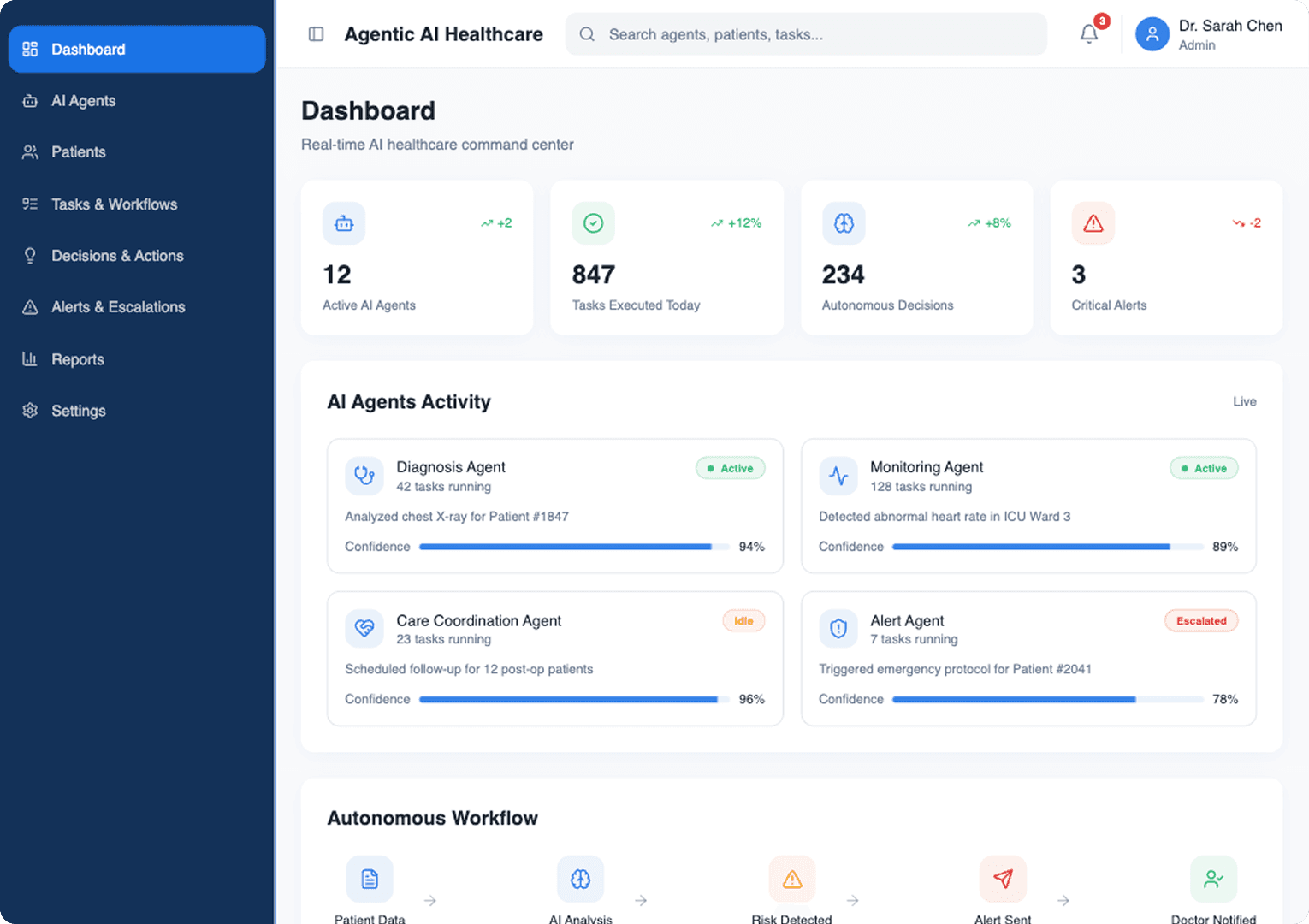
Agentic AI in healthcare refers to autonomous AI systems powered by GPT-based LLMs and intelligent agents that can perceive, decide, and act across clinical and operational workflows without constant human intervention. These systems coordinate tasks such as diagnostics support, care planning, scheduling, and administrative operations by analyzing real-time and historical data. Agentic AI adapts to changing conditions, makes context-aware decisions, and collaborates with healthcare professionals to improve outcomes, reduce delays, and optimize workflows across complex healthcare environments. Built on modular architectures, agentic AI integrates with EHRs, monitoring systems, and healthcare platforms. Continuous learning capabilities allow these systems to evolve, deliver personalized insights, and support scalable, intelligent healthcare operations.
Enable Autonomous Healthcare Operations With Intelligent AI
Explore how agentic AI in healthcare transforms operations through autonomous decision-making and workflow execution. Our AI solution manages complex processes, coordinates tasks, and adapts dynamically to changing conditions, improving care delivery and operational performance across healthcare systems.
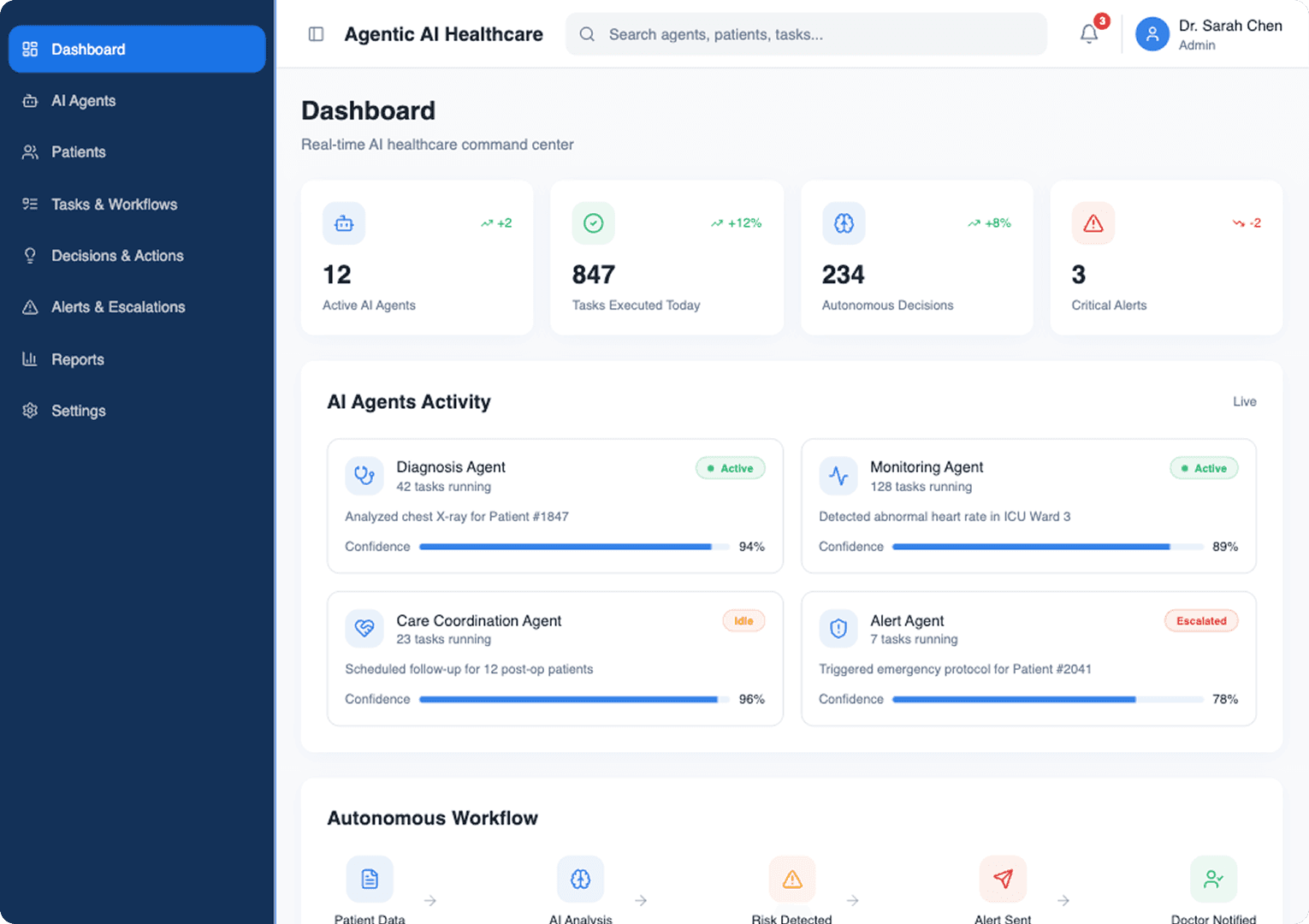
Healthcare providers adopting agentic AI are witnessing measurable operational improvements. Many experience up to 50% faster task execution, 45% improved workflow coordination, and 35% reduction in operational delays, enabling more responsive and streamlined healthcare delivery across departments.
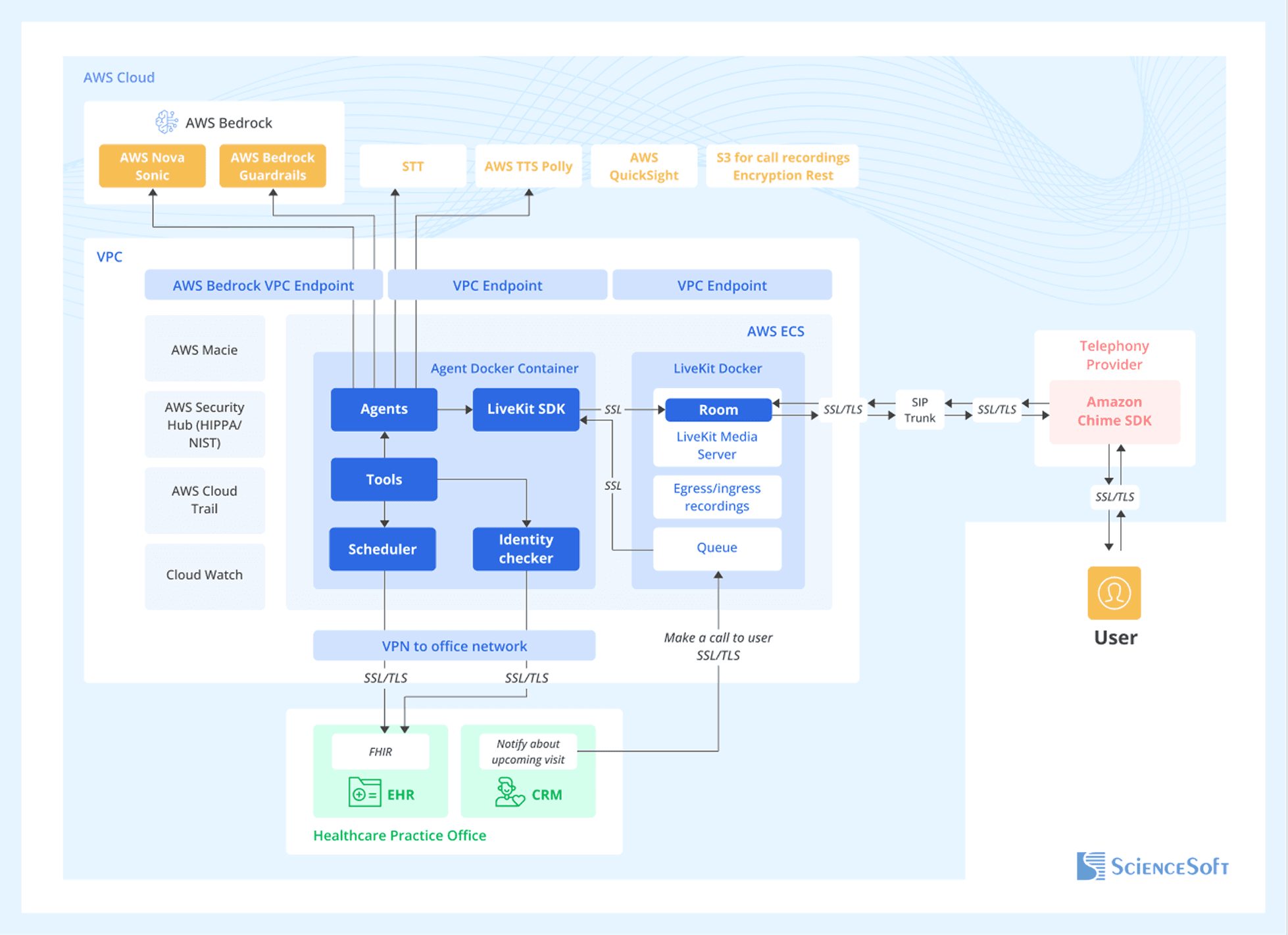
The solution uses GPT-powered LLMs, multi-agent systems, and intelligent orchestration frameworks to process healthcare data. It enables AI agents to perform tasks such as scheduling, diagnostics support, and workflow automation while continuously learning from data and interactions. The architecture is built on cloud-native, modular systems with secure APIs, orchestration layers, and continuous learning capabilities. This allows scalable deployment, seamless integration with healthcare platforms, and adaptive intelligence that evolves with clinical data, operational demands, and care requirements.