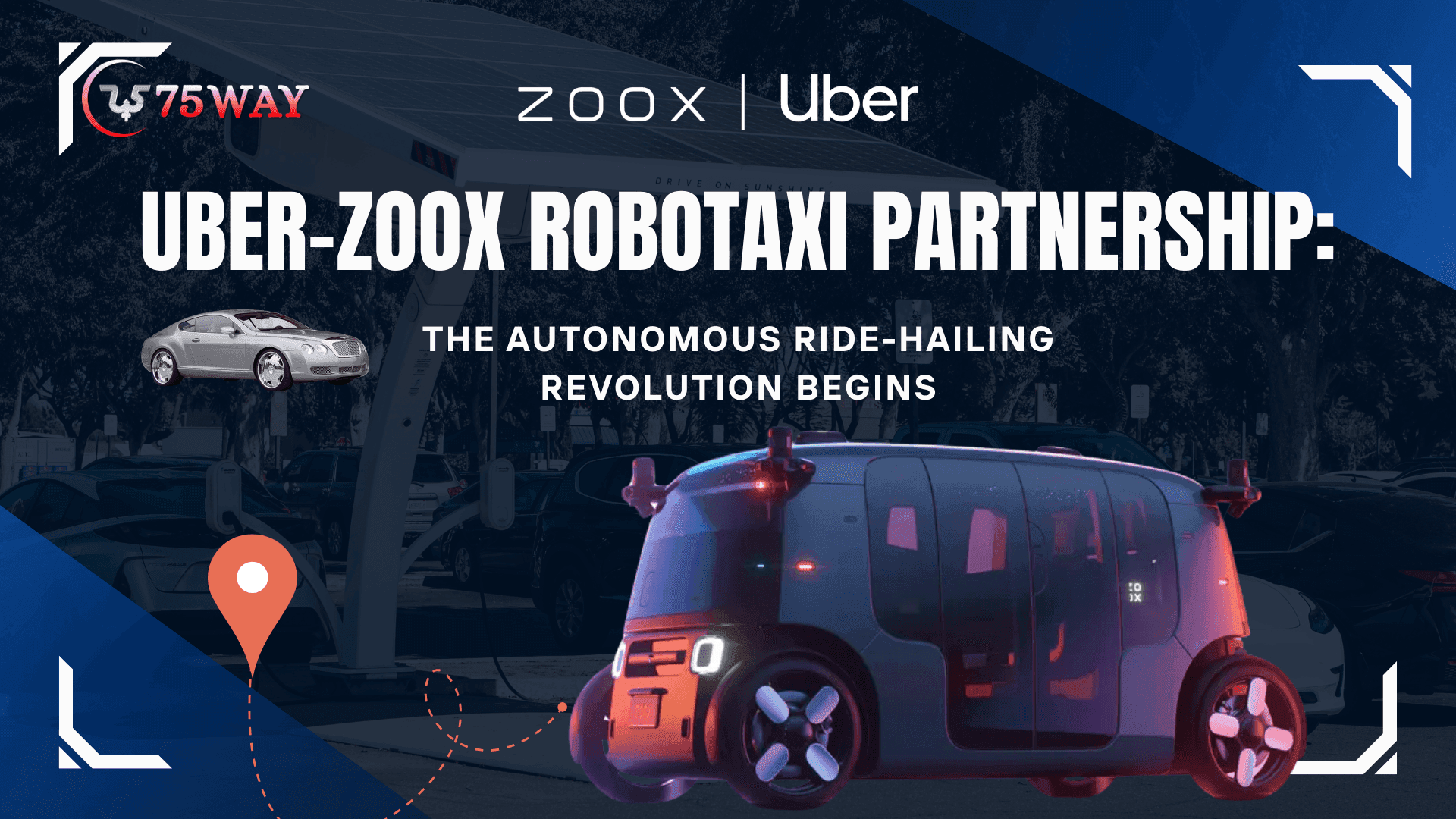
Summary
Uber and Zoox have announced a strategic partnership to deploy fully autonomous robotaxis on a major ride-hailing network. The service is expected to debut in Las Vegas in 2026 with expansion planned for additional cities. Purpose-built driverless vehicles, integrated booking systems, and expanding autonomous partnerships signal a major shift in transportation technology and evolving mobility business models worldwide.
Key Takeaways
- Uber will integrate Zoox autonomous robotaxis into its ride-hailing platform
- First launch planned in Las Vegas in summer 2026
- Zoox vehicles are purpose-built robotaxis with no steering wheel or pedals
- Riders can book trips through both the Uber and Zoox apps
- Uber continues building partnerships with 25+ autonomous vehicle companies
Transportation is entering a new phase where vehicles can move passengers without a driver behind the wheel. The interesting fact is, Uber is not falling behind. Uber has announced a strategic partnership with Zoox to deploy fully autonomous robotaxis on its ride-hailing network. The service is expected to debut in Las Vegas in 2026 and later expand to additional cities, allowing passengers to request autonomous rides directly through the Uber platform.
Zoox, an autonomous vehicle company owned by Amazon, has developed purpose-built robotaxis designed specifically for driverless ride-hailing. Unlike conventional cars adapted for automation, these vehicles operate without steering wheels or pedals and are engineered to transport passengers in a fully autonomous environment.
The guide explains the strategic partnership of Zoox and Uber, how these ride-sharing solutions work, the technology behind Zoox robotaxis, the broader autonomous mobility ecosystem, and the opportunities emerging for startups and enterprises.
What Is the Uber–Zoox Robotaxi Partnership?
The partnership between Uber and Zoox marks a significant milestone in autonomous ride-hailing services. It combines Uber’s global ride-hailing platform with Zoox’s purpose-built autonomous vehicles to bring driverless transportation to commercial operations.
Uber revealed plans to integrate Zoox robotaxis directly into its ride-hailing network. Riders will be able to request autonomous rides using familiar ride-hailing interfaces while the backend system dispatches Zoox driverless vehicles. The first deployment is scheduled for Las Vegas in 2026, with further expansion expected in major urban markets.
Moreover, Zoox contributes to the autonomous vehicle technology and purpose-built robotaxi fleet. The company has been developing advanced self-driving systems designed specifically for ride-hailing operations.
Key characteristics of Zoox robotaxis include:
- Fully autonomous driving system
- Electric powertrain designed for urban mobility
- Passenger-centric cabin design
- Bidirectional driving capability
- Compact vehicle built for dense city environments
How Will The Robotaxi Service Work?
The upcoming robotaxi service will operate through a combination of autonomous driving technology and Uber’s ride-hailing infrastructure. Passengers will request rides through the Uber app, just as they would for traditional rides. The system will then dispatch a Zoox robotaxi if an autonomous vehicle is available in the service area. Once the vehicle arrives:
- Riders unlock the robotaxi through the app
- Passengers enter a driverless cabin designed for comfort and safety
- The vehicle navigates autonomously to the destination
- AI-driven sensors, cameras, radar, and lidar systems monitor the surrounding environment
The entire ride occurs without a human driver, with advanced autonomous systems handling navigation, traffic conditions, and passenger safety. The integration between Uber’s platform and Zoox vehicles enables a seamless transition between traditional ride-hailing and autonomous mobility services.
Why Uber Is Partnering With Autonomous Vehicle Companies?
Uber’s long-term strategy focuses on becoming a mobility platform that connects riders with various transportation technologies, including autonomous vehicles. Instead of building vehicles internally, Uber collaborates with autonomous technology developers to expand its network capabilities. In addition, it already maintains more than 25 autonomous vehicle partnerships globally and aims to enable robotaxi rides in up to 15 cities by the end of 2026, reflecting the growth of autonomous transportation technology.
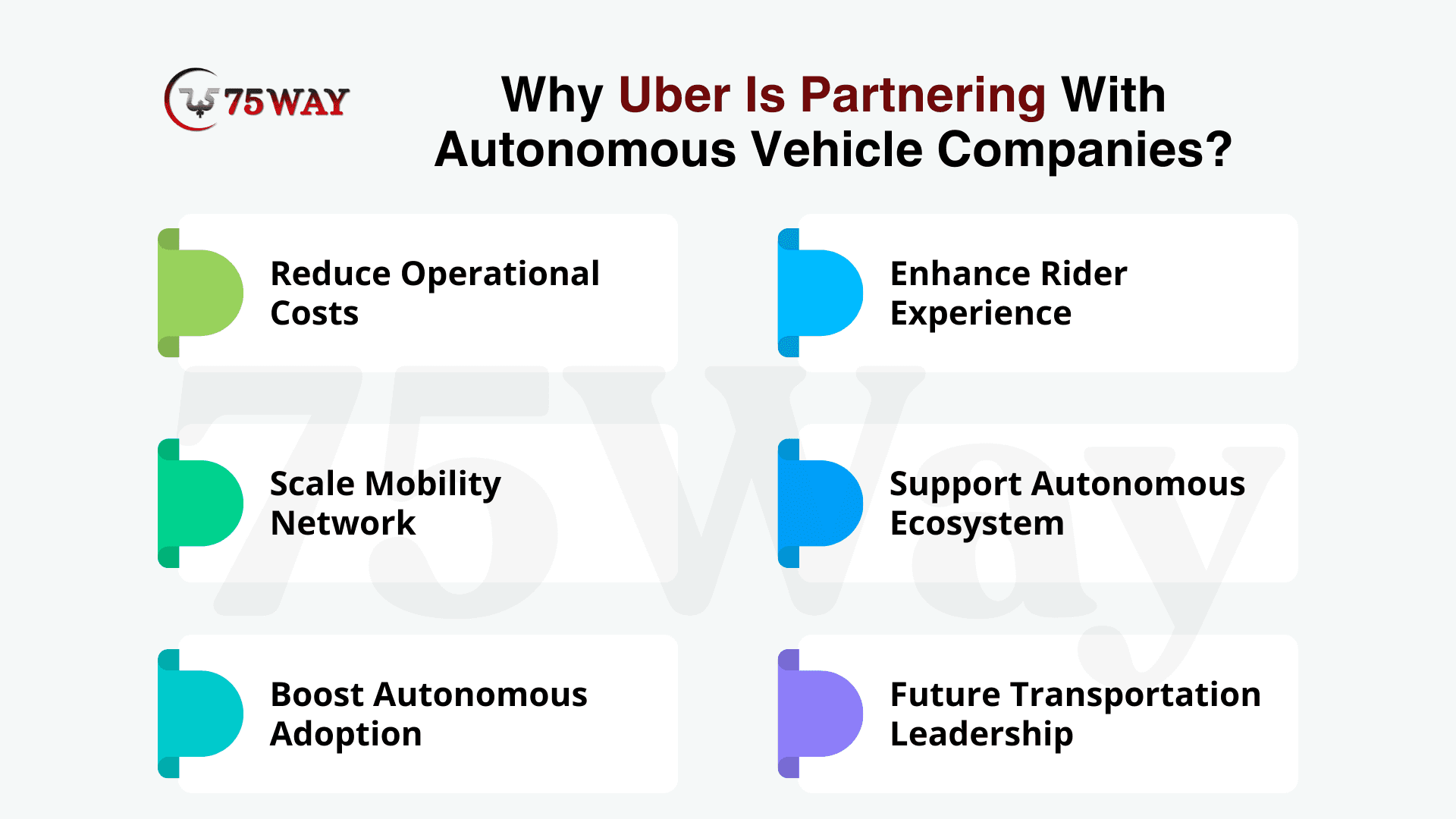
Reduce Operational Costs: Driverless robotaxi fleets can significantly reduce long-term operational expenses for ride-hailing companies. By eliminating driver-related costs such as wages, incentives, and scheduling challenges, autonomous fleets enable companies to optimize operations, improve efficiency, and deliver more affordable transportation services at scale.
Scale Mobility Network: Autonomous vehicles allow ride-hailing platforms to expand their mobility networks rapidly without the challenges of recruiting, training, and managing thousands of drivers. This enables companies to scale services efficiently across cities while maintaining consistent operations and meeting growing transportation demand.
Boost Autonomous Adoption: Strategic partnerships between mobility platforms and autonomous vehicle companies accelerate the adoption of self-driving technology. By integrating robotaxis into established ride-hailing networks, companies can introduce autonomous transportation to millions of users and gradually normalize driverless mobility experiences.
Enhance Rider Experience: Autonomous vehicles offer a more consistent and technology-driven rider experience. With advanced sensors, AI navigation systems, and seamless app integration, passengers can enjoy safer, more reliable rides while benefiting from improved service quality and innovative in-vehicle features.
Support Autonomous Ecosystem: Collaborations between ride-hailing platforms and autonomous vehicle developers help strengthen the broader mobility ecosystem. These partnerships encourage innovation across hardware, software development, infrastructure, and AI development technologies, creating new opportunities for startups and companies developing next-generation e-mobility solutions.
Future Transportation Leadership: Investing in autonomous mobility enables companies to position themselves as pioneers in the future of transportation. By adopting robotaxi technology early and building strategic partnerships, organizations can shape emerging mobility ecosystems and lead the transformation toward smarter urban transportation systems.
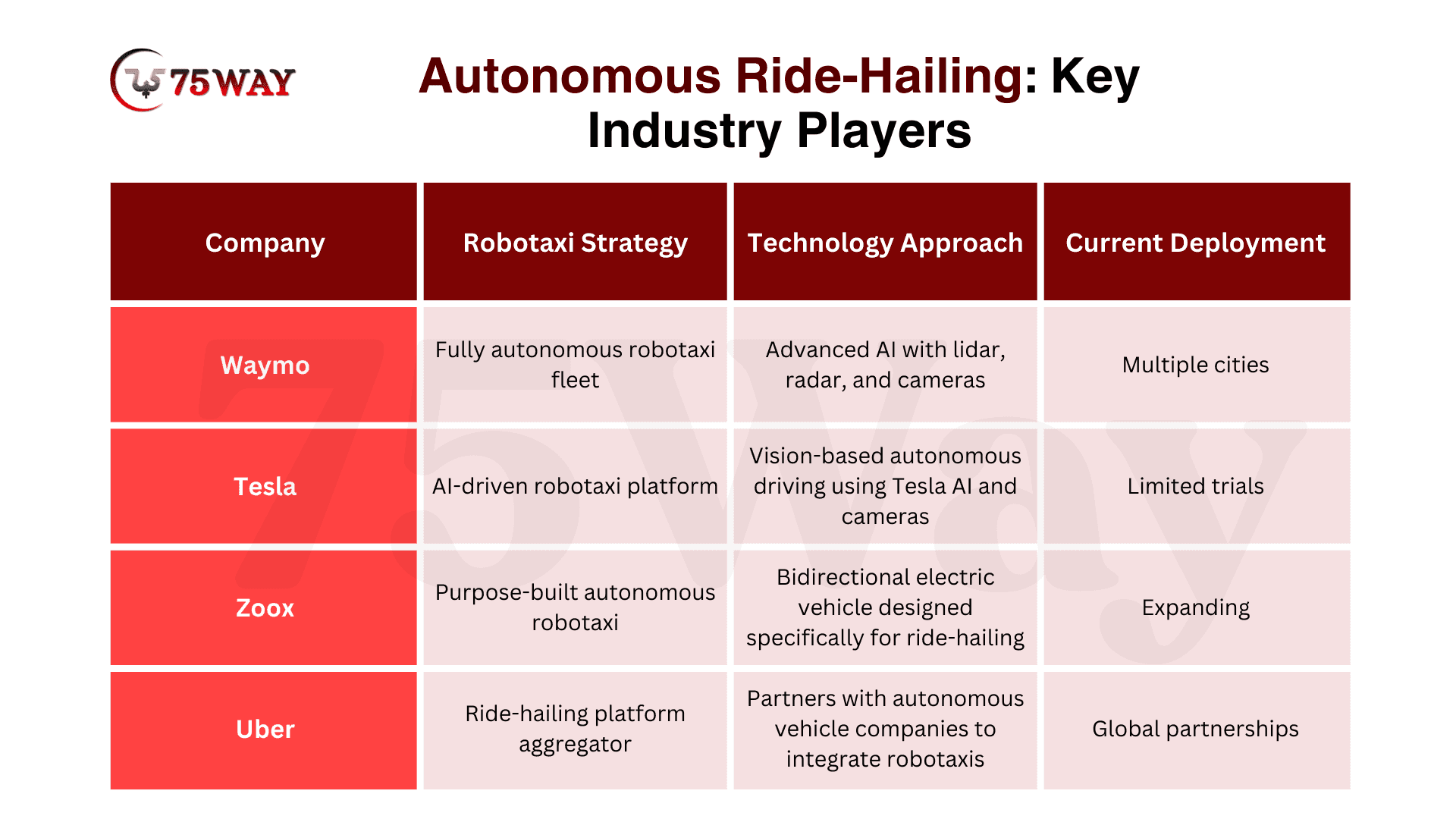
Autonomous Ride-Hailing: Key Industry Players
The autonomous ride-hailing industry is evolving rapidly as leading technology and mobility companies race to deploy driverless transportation services. Firms are investing heavily in artificial intelligence, autonomous vehicle hardware, and smart mobility platforms to gain competitive advantages. As innovation accelerates, strategic partnerships and large-scale testing are shaping the future of autonomous urban transportation and mobility services.
Why This Partnership Matters for Startups and Enterprises?
The rise of robotaxi services is creating an entirely new ecosystem of mobility technologies, digital platforms, and infrastructure solutions. As autonomous transportation becomes more mainstream, startups and enterprises have significant opportunities to build innovative products and services that support this rapidly growing mobility landscape.
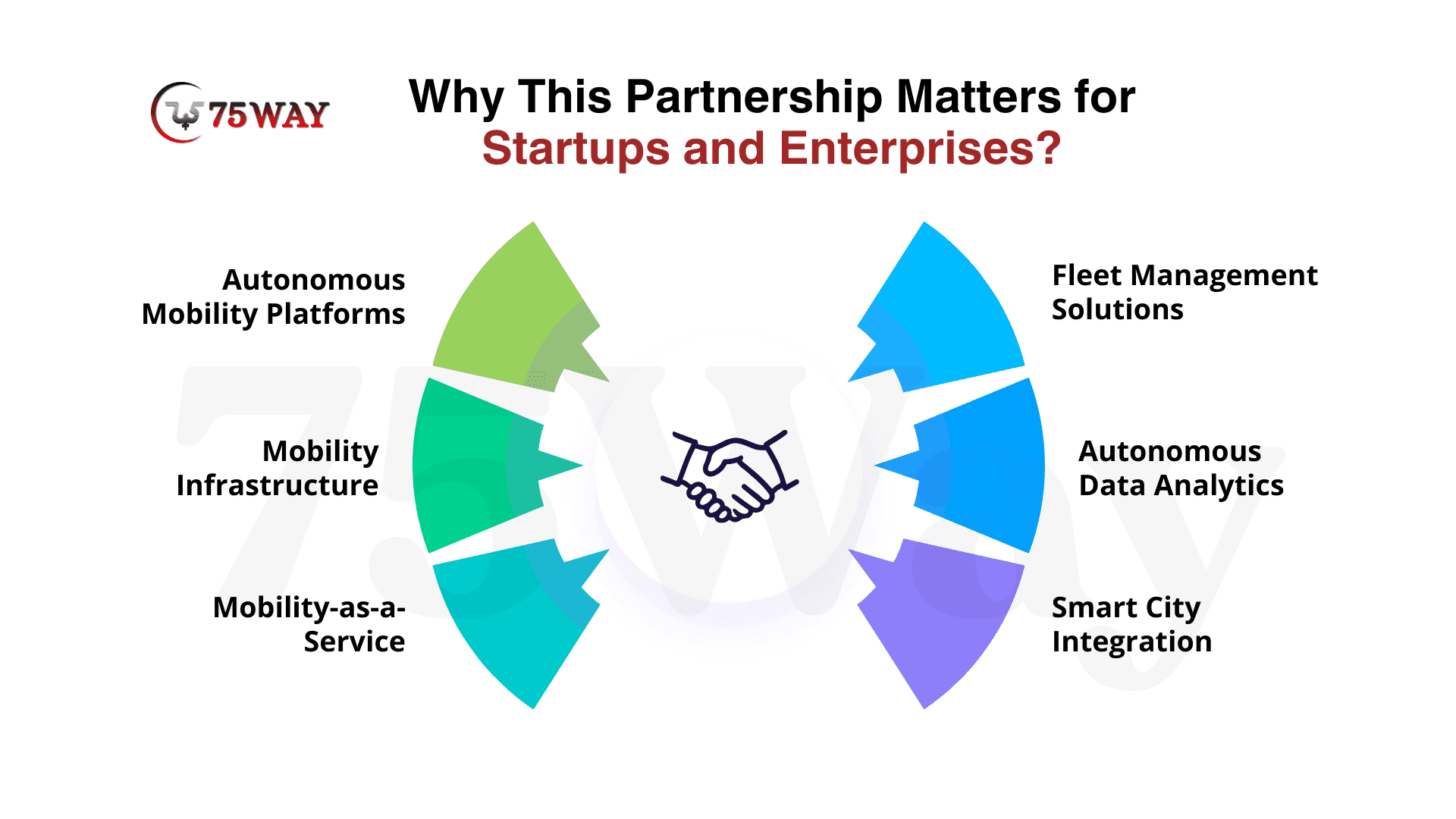
Autonomous Mobility Platforms: Autonomous mobility platforms, such as fleet management software, are emerging as a critical layer in modern transportation networks. These platforms coordinate autonomous fleets, manage ride matching, process real-time mobility data, and optimize route efficiency. Companies developing such platforms can play a vital role in enabling seamless robotaxi operations across urban transportation systems.
Mobility Infrastructure: Large-scale robotaxi deployment requires robust infrastructure support. This includes electric vehicle charging networks, autonomous fleet maintenance systems, dedicated parking hubs, and high-precision mapping technologies. Startups focusing on mobility infrastructure can help build the foundation necessary for reliable and scalable autonomous transportation services.
Mobility-as-a-Service: Urban transportation is rapidly shifting toward Mobility-as-a-Service (MaaS) models that combine multiple transportation options within a single digital ecosystem. Integrating robotaxis into these platforms can create more efficient and flexible mobility for users while enabling businesses to deliver smarter urban transportation solutions.
Fleet Management Solutions: Autonomous fleets require advanced management systems to monitor vehicle health, optimize routing, and maintain operational efficiency. Businesses can develop AI-powered taxi apps, intelligent fleet management platforms, and e-scooter applications that track performance metrics, predict maintenance needs, and ensure smooth robotaxi operations across large urban fleets.
Autonomous Data Analytics: Robotaxi networks generate massive amounts of real-time mobility data. This data can be used for predictive analytics, traffic flow optimization, safety monitoring, and urban transportation planning. Startups specializing in advanced data analytics of mobility can unlock valuable insights that help cities and companies improve transportation efficiency.
Smart City Integration: Autonomous transportation will become a core component of future smart city infrastructure. Robotaxi systems can integrate with digital traffic management networks, public transportation systems, and urban planning platforms to create safer, more connected, and more efficient mobility ecosystems for modern cities.
Why Invest in Robotaxis in 2026?
The robotaxi market is accelerating in 2026 as advances in autonomous driving, artificial intelligence, and electric mobility reshape urban transportation. The growing demand for efficient ride-hailing, supportive regulations, and strategic partnerships between mobility platforms and autonomous vehicle companies are creating scalable opportunities for investors, startups, and enterprises.
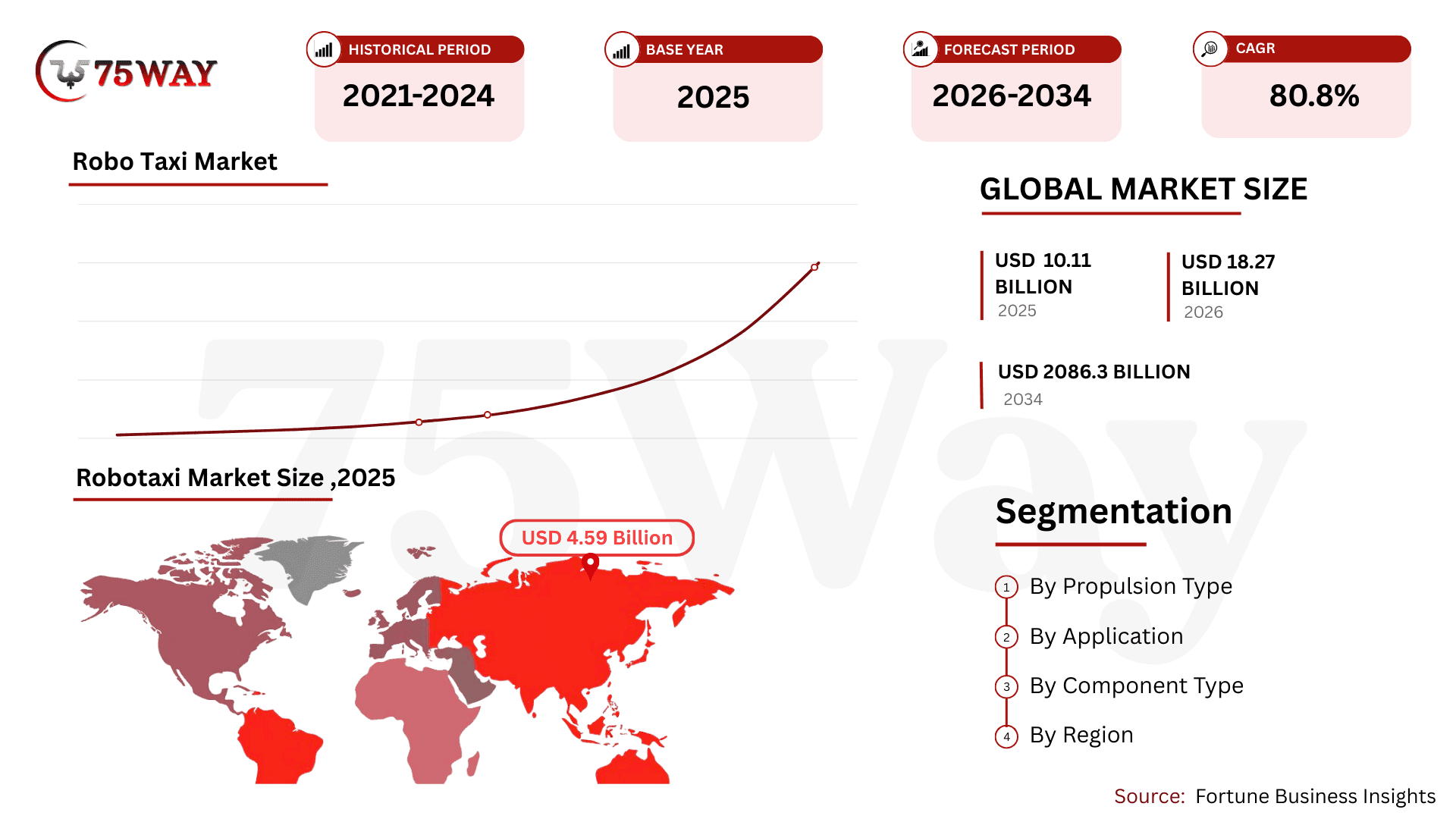
- The global robotaxi market is expected to surge to $2,086.30 billion by 2034, expanding at an impressive CAGR of 80.80% during the forecast period.
- In the United States, the robotaxi sector is anticipated to witness strong growth, reaching an estimated USD 3.30 billion by 2027.
- The robotaxi industry worldwide is projected to climb to USD 147.25 billion by 2033, advancing at a remarkable CAGR of 99.1% between 2026 and 2033, according to Grand View Research.
- According to MarketsandMarkets, the global robotaxi market is forecasted to reach $216.79 billion by 2035, progressing at a compound annual growth rate of 82%.
Challenges & Solutions Robotaxi Industry Still Faces
The robotaxi industry still faces several technical, regulatory, and operational challenges before achieving large-scale commercial deployment. Companies must address safety validation, regulatory compliance, infrastructure readiness, and cost efficiency to successfully integrate autonomous vehicles into modern transportation systems and ensure long-term adoption.
Regulatory Approval Barriers: Autonomous vehicles must obtain regulatory approvals from transportation authorities before operating commercially. This becomes more complex when vehicles operate without steering wheels or human drivers. Clear regulatory frameworks and collaboration with government agencies are essential for enabling safe robotaxi deployment.
Autonomous Safety Concerns: Safety remains a critical priority for autonomous mobility providers. Companies must conduct extensive testing, simulation, and real-world validation to prove that self-driving systems can operate reliably in complex urban environments and handle unexpected road conditions effectively.
High Development Costs: The development of autonomous vehicles requires significant investment in artificial intelligence, advanced sensors, computing hardware, and software engineering. These high research and development costs make partnerships and shared mobility platforms important for scaling robotaxi services economically.
Public Trust Issues: Public acceptance plays a major role in the success of driverless transportation. Riders need confidence that autonomous vehicles are safe, reliable, and capable of handling real-world traffic situations before they widely adopt robotaxi services.
Infrastructure Limitations: Cities must strengthen digital and physical infrastructure to support autonomous fleets. Smart traffic systems, high-precision mapping, electric charging networks, and connected road technologies are necessary to enable efficient and safe robotaxi operations.
Conclusion
The partnership between Uber and Zoox represents a significant milestone in the transition toward autonomous mobility. Integrating purpose-built robotaxis into a global ride-hailing platform demonstrates how technology companies are redefining transportation systems. As autonomous vehicles become commercially viable, businesses have new opportunities to build mobility platforms, intelligent fleet systems, and smart transportation infrastructure. Organizations looking to participate in the evolving mobility ecosystem can leverage AI-powered ride-sharing apps and advanced emobility solutions to develop next-generation transportation and ride service apps and platforms.
Frequently Asked Questions (FAQs)
What Is The Uber Zoox Partnership
The partnership between Uber and Zoox is a strategic collaboration to deploy fully autonomous robotaxis on Uber’s ride-hailing platform. Zoox will provide its purpose-built self-driving vehicles, while Uber will integrate them into its global ride-hailing network, allowing riders to book autonomous trips through the Uber app.
When Will Zoox Robotaxis Launch On Uber?
Zoox robotaxis are expected to begin operating on the Uber platform in 2026, with the first commercial launch planned in Las Vegas. The service is expected to expand gradually to additional cities as testing, infrastructure, and regulatory approvals progress.
Are Zoox Robotaxis Fully Autonomous?
Yes, Zoox robotaxis are designed to be fully autonomous vehicles. Unlike traditional cars adapted for self-driving, Zoox vehicles are purpose-built robotaxis that operate without a steering wheel or pedals, using advanced sensors, artificial intelligence, and autonomous driving systems to navigate urban environments.
Who Owns Zoox?
Zoox is an autonomous vehicle company owned by Amazon. The company focuses on developing fully autonomous electric robotaxis designed specifically for ride-hailing services and future urban mobility systems.
How Will Zoox Robotaxis Work On Uber?
Passengers will be able to request a Zoox autonomous ride through the Uber app, similar to booking a traditional ride-hailing trip. Once requested, a robotaxi will arrive and complete the trip using its self-driving technology, while Uber manages the booking, routing, and rider experience.
Which Cities Will Get Zoox Robotaxis First?
The initial deployment of Zoox robotaxis on the Uber platform is planned for Las Vegas, with future expansion expected in cities such as Los Angeles. Additional locations may be added as the autonomous ride-hailing network expands and regulatory approvals are obtained.