Summary
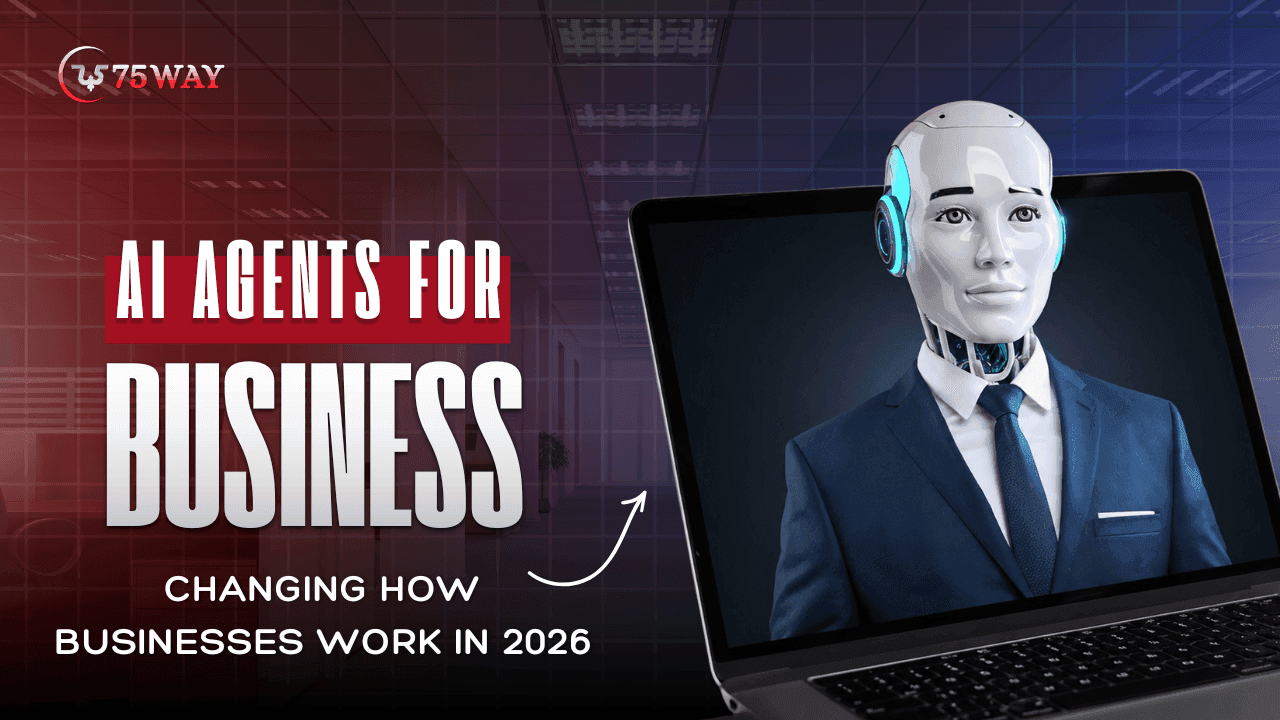
AI agents for businesses are redefining how organizations operate by automating complex workflows, enhancing decision-making, and enabling scalable growth. This guide explores their architecture, benefits, use cases, implementation strategies, and future trends, helping business leaders understand how to adopt and leverage AI agent development solutions in 2026 for measurable operational and strategic advantages.
Quick Overview
- AI agents automate complex workflows, improving speed and accuracy.
- Businesses gain a competitive advantage via data-driven decision-making capabilities.
- Implementation requires a strong data foundation and clear strategic alignment.
- AI agent implementation costs vary from $5000 to $500000.
- AI adoption is growing rapidly, with 45% CAGR and massive enterprise impact
Have you noticed? Tasks that once required hours of manual effort are now completed in minutes. Decisions that relied on human vision are increasingly guided by systems that analyze vast amounts of data in real time. This transformation is not driven by traditional automation but by something far more adaptive and intelligent called AI agents for business.
Business founders are no longer asking whether to adopt artificial intelligence solutions, but how quickly they can integrate them into their operations without disrupting growth. From streamlining internal workflows to redefining customer engagement, AI agent development solutions are becoming the backbone of digital transformation strategies.
This guide explores how AI agents are reshaping business models, improving efficiency, and unlocking new opportunities for innovation. It also breaks down how organizations can implement agentic AI solutions to stay competitive in an evolving landscape.
What Are AI Agents For Business?
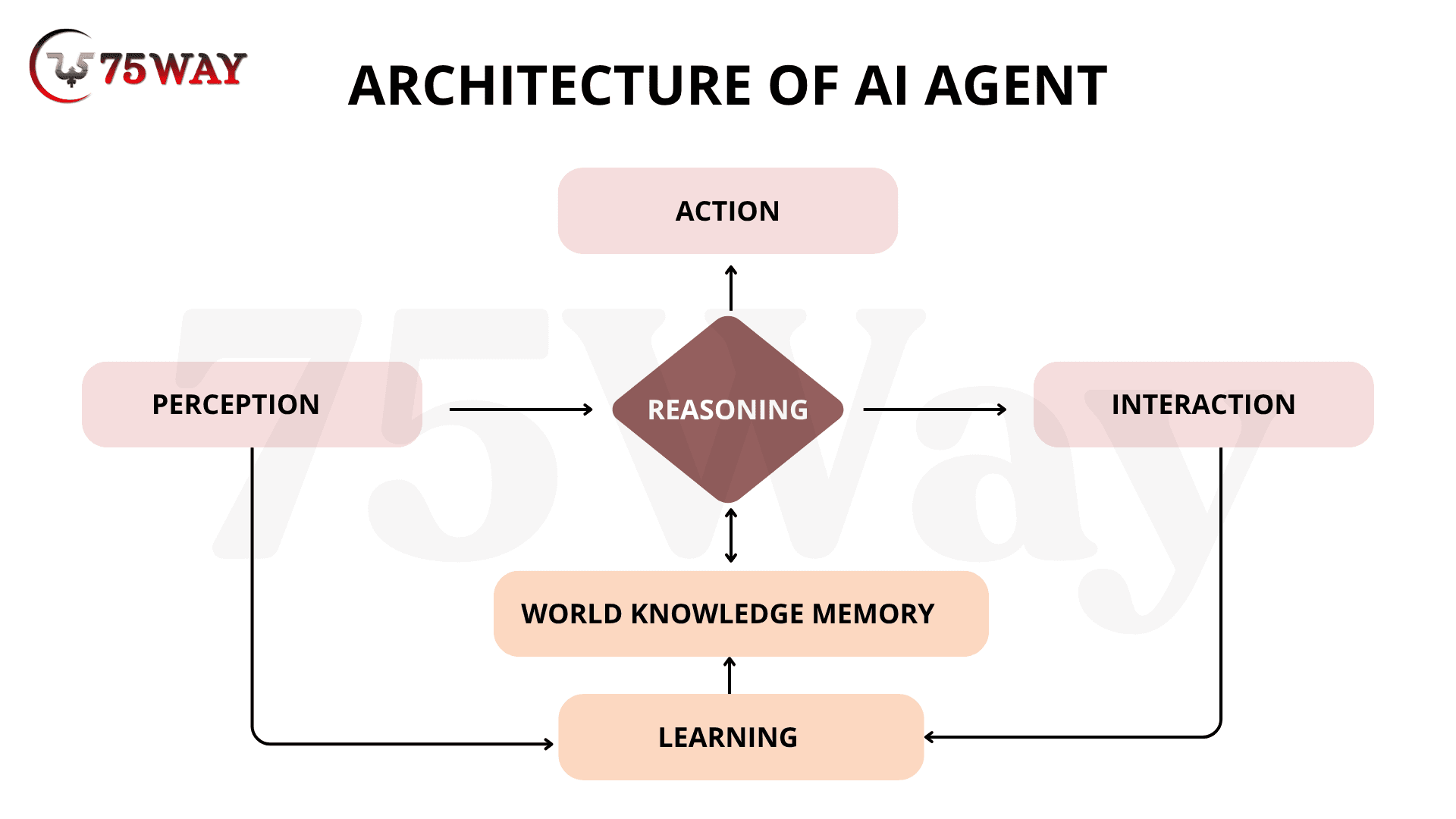
AI agents are autonomous or semi-autonomous systems designed to perform tasks, make decisions, and interact with environments using data, logic, and machine learning models. Unlike simple automation tools, these AI workflow automation agents can learn from patterns, adapt to new inputs, and improve performance over time.
In a business setting, these agents act as digital workers capable of handling repetitive processes, analyzing complex datasets, and supporting decision-making across departments. They can operate independently or collaborate with human teams, creating a hybrid workforce that combines speed with strategic thinking.
Reasons Behind the Rise of AI Agents in 2026
The rise of AI agents is not accidental. Several key factors are accelerating their adoption across industries.
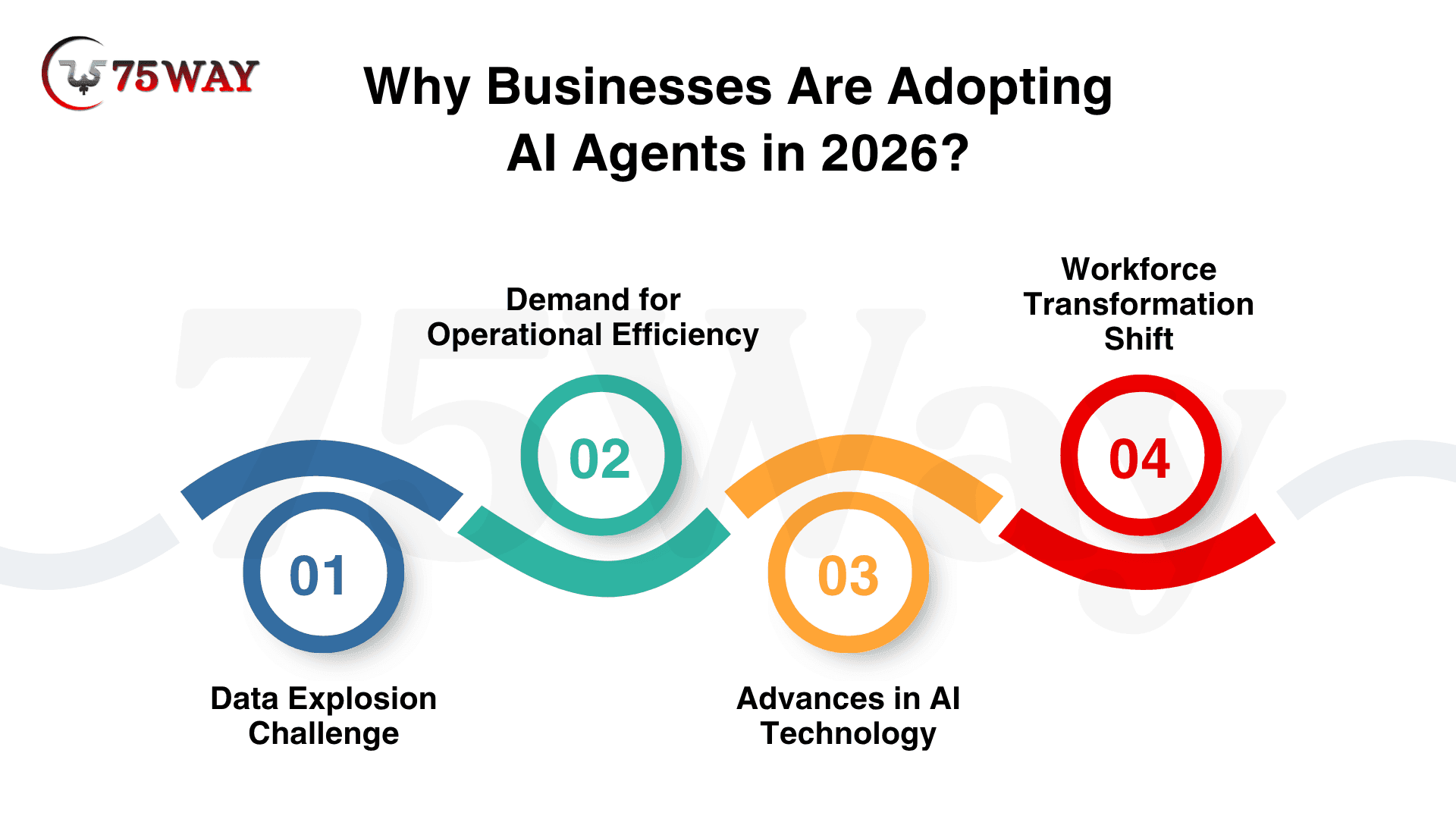
- Data Explosion: Organizations generate more data than ever before. AI agents help process and extract value from this data in real time.
- Demand for Efficiency: Companies are under constant pressure to reduce costs while increasing output. AI agents deliver measurable efficiency gains.
- Advances in AI Technology: Improved natural language processing and machine learning models have made AI agents more reliable and capable.
- Workforce Transformation: Businesses are rethinking how work gets done, shifting toward automation-supported teams.
Types of AI Agents Businesses Can Deploy
AI agents are designed to solve different business challenges depending on their level of intelligence, autonomy, and application area. From handling repetitive operations to enabling strategic decision-making, these agents help businesses improve efficiency, scalability, and overall performance across departments.
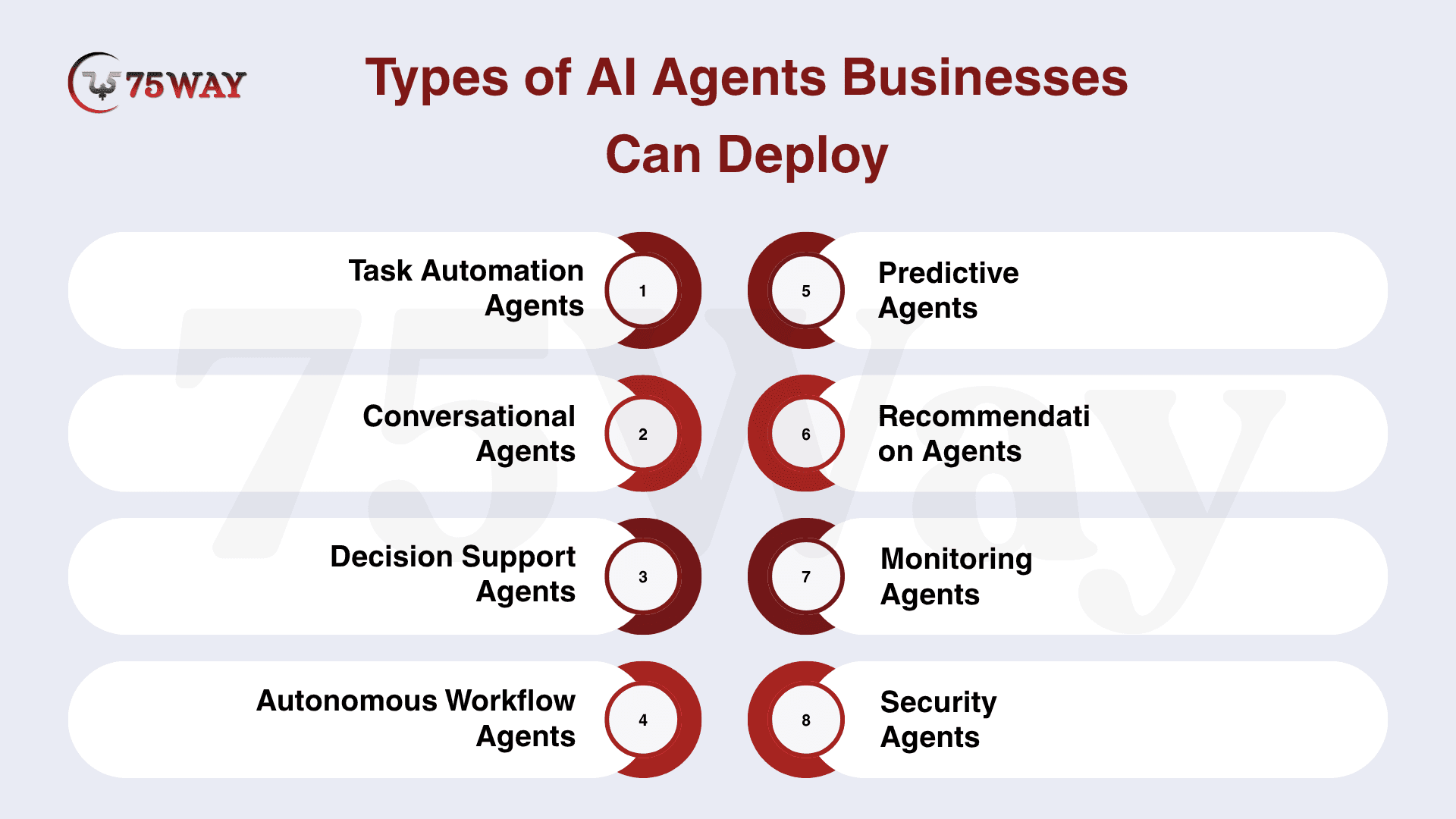
- Task Automation Agents: Routine business operations such as data entry, scheduling, and reporting are handled with high accuracy. Businesses can build AI agents to reduce operational workload. Productivity improves as repetitive tasks are executed faster and more consistently.
- Conversational Agents: Customer and employee interactions are managed through natural language communication across chat or voice channels. Instant responses improve engagement. Support efficiency increases while reducing dependency on human representatives.
- Decision Support Agents: Data analysis and insight generation help leaders make informed business decisions. Complex information becomes actionable. Strategic planning improves through data-driven recommendations and predictive insights.
- Autonomous Workflow Agents: End-to-end business processes are managed by coordinating multiple systems and actions independently. Human intervention has significantly. Operational efficiency increases as workflows execute seamlessly across different platforms.
- Predictive Agents: Historical data is analyzed to forecast trends, customer behavior, and operational risks. Future outcomes become more predictable. Businesses optimize strategies using proactive insights and data-backed forecasting models.
- Recommendation Agents: Personalized suggestions are generated based on user behavior, preferences, and interaction history. Customer experience improves significantly. Conversion rates increase as recommendations align closely with user intent.
- Monitoring Agents: Continuous tracking of systems, performance metrics, and operational activities ensures real-time visibility. Issues are detected early. System reliability improves through proactive alerts and automated monitoring processes.
- Security Agents: Threat detection and risk prevention mechanisms protect systems and data from unauthorized access. Vulnerabilities are identified quickly. Business operations remain secure through continuous monitoring and automated response actions.
Explore More: AI Agents for Software Development: Concepts, Tools, and Guide
How AI Agents Are Beneficial For Your Organization?
AI agents are helping businesses move from manual operations to intelligent, automated systems that improve efficiency, reduce costs, and enhance decision-making. Their ability to handle tasks at scale while maintaining accuracy makes them essential for modern digital operations.
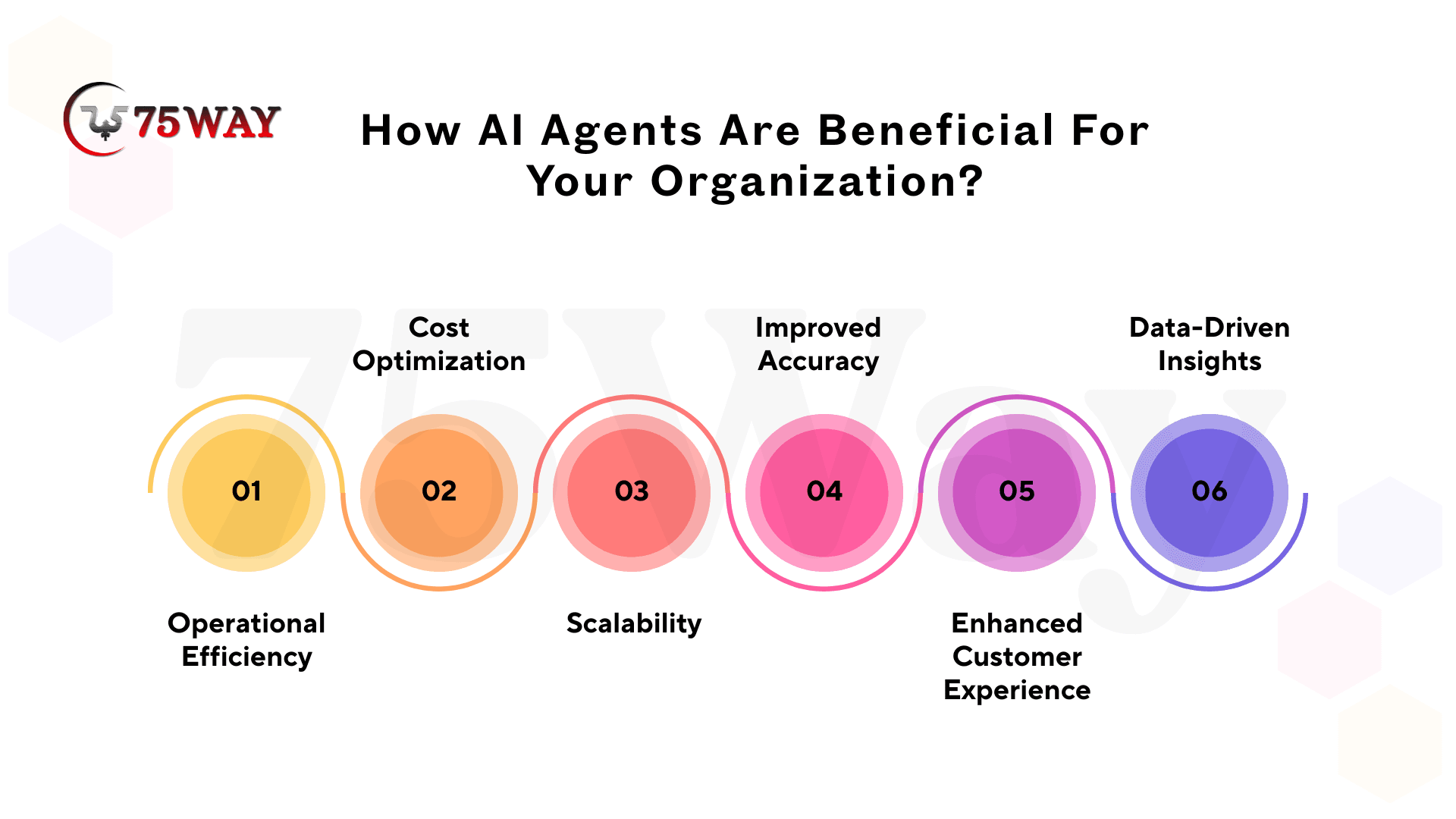
- Operational Efficiency: AI agents reduce manual effort and streamline workflows, allowing teams to focus on strategic tasks. Process execution becomes faster and more consistent across departments, improving overall productivity and reducing operational delays.
- Cost Optimization: Automation lowers operational costs by minimizing errors and reducing dependency on large teams. Resource utilization improves significantly, helping businesses maintain efficiency while controlling long-term operational expenses.
- Scalability: Businesses can handle increased workloads without proportional increases in resources. Growth becomes more manageable as systems adapt to higher demand without compromising performance or service quality.
- Improved Accuracy: AI-driven processes reduce human errors and ensure consistent outcomes. Decision-making becomes more reliable as data processing and execution follow structured and precise logic across operations.
- Enhanced Customer Experience: Faster response times and personalized interactions improve customer satisfaction. Engagement quality increases as users receive timely and relevant support across different communication channels.
- Data-Driven Insights: Business operations generate valuable data that AI agents analyze to provide actionable insights. Strategic decisions improve as organizations leverage real-time information for planning and optimization.
Read Too: Top AI Agent Developers for Healthcare Industry in 2026
How AI Agents Deliver Measurable Results For All Industries?
AI agents are being deployed across industries to automate processes, enhance decision-making, and improve operational efficiency. Their ability to handle complex tasks quickly and accurately makes them valuable across multiple business functions.
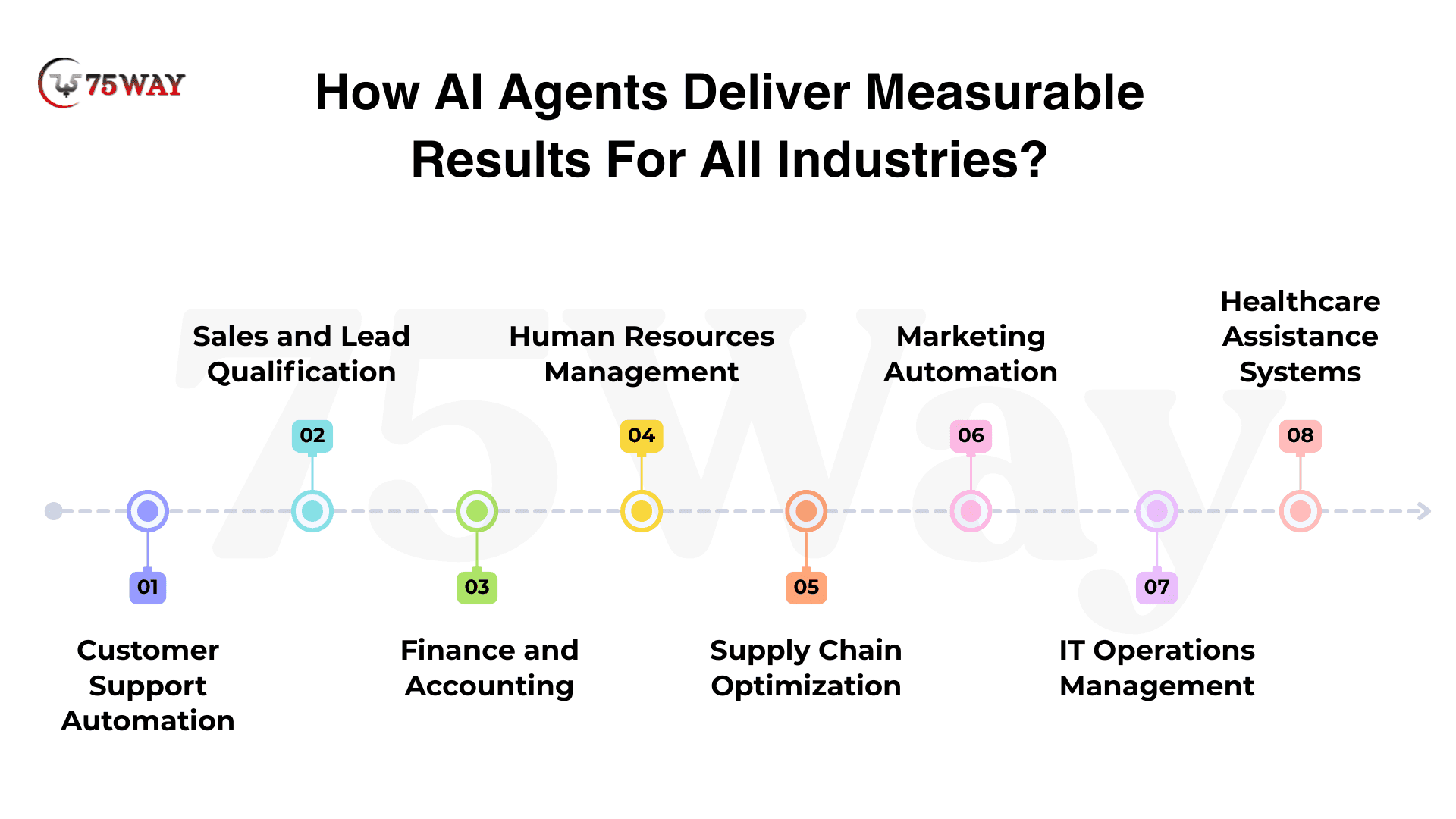
- Customer Support Automation:AI customer support agents handle inquiries, resolve issues, and provide 24/7 assistance without delays.
- Sales and Lead Qualification:Sales AI agents identify potential customers, analyze their behavior, and prioritize high-value leads for sales teams.
- Finance and Accounting:AI finance agents automate invoice processing, detect fraudulent transactions, and support financial forecasting with data-driven insights.
- Human Resources Management:HR AI agents streamline recruitment, onboarding, and employee engagement by automating repetitive HR tasks.
- Supply Chain Optimization: AI agents for logistics predict demand, manage inventory levels, and improve logistics planning using real-time data.
- Marketing Automation:AI marketing agents manage campaigns, segment audiences, and analyze performance to improve targeting strategies.
- IT Operations Management: AI agents monitor systems, detect issues, and automate troubleshooting processes to maintain stability.
- Healthcare Assistance Systems: The agentic AI in healthcare team streamlined processes to improve service delivery while enhancing the overall patient experience.
Quick Read: AI Agent Development: A Step-by-Step Guide For Beginners
Process to Implement AI Agents in Your Business
A structured approach is essential when bringing AI agents into business operations to ensure smooth integration. Clear planning across each step improves accuracy, strengthens system reliability, and supports scalable growth over time.
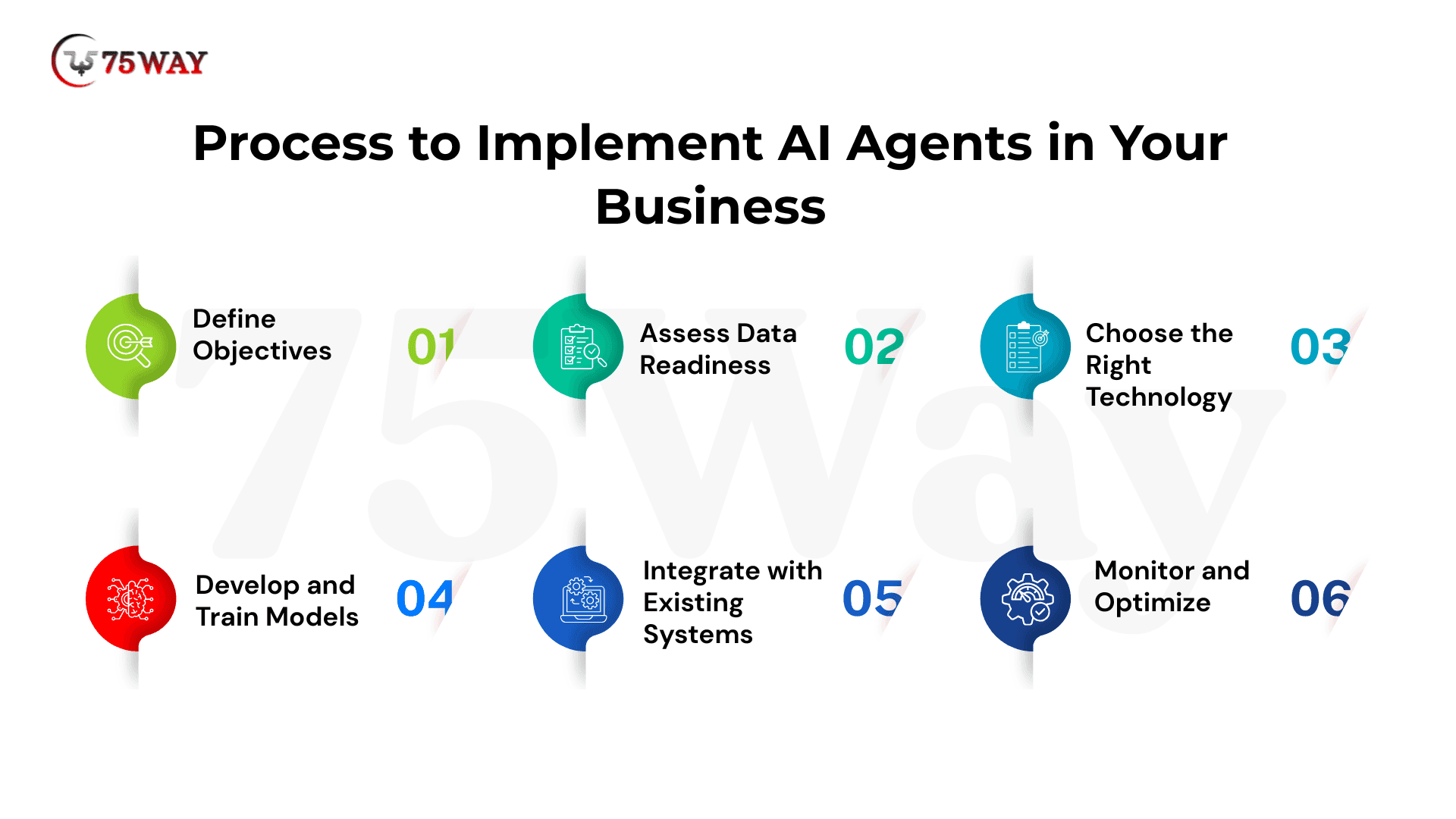
- Define Objectives
Clearly identify the specific problems your business aims to solve using AI agents and outline measurable outcomes. This clarity helps align technology implementation with business goals and ensures focused development efforts that deliver meaningful operational impact.
- Assess Data Readiness
Evaluate whether your existing data is accurate, complete, and accessible for AI model development and training. Well-prepared data improves system reliability and ensures that AI agents generate insights and actions based on trustworthy and relevant information.
- Choose the Right Technology
Select AI tools, platforms, and frameworks that match your business requirements, scalability needs, and integration capabilities. The right technology stack ensures smoother implementation and long-term flexibility as your AI systems evolve.
- Develop and Train Models
Build AI models tailored to your specific use cases using relevant datasets and training techniques. Proper model training improves accuracy, enabling AI agents to perform tasks effectively and deliver consistent, high-quality outputs.
- Integrate with Existing Systems
Connect AI agents with your current business systems, applications, and workflows to ensure seamless operations. Strong integration enables real-time data exchange and ensures that AI-driven processes align with existing business functions.
- Monitor and Optimize
Continuously track AI agent performance using defined metrics and refine models based on insights and feedback. Ongoing optimization ensures that systems remain accurate, efficient, and aligned with changing business needs over time.
More Insights: Best AI Voice Agent Development Agencies You Can Trust
AI Agent Adoption Rate in Businesses: Market Insights The AI agent market is expected to grow at a CAGR of around 45% over the next five years.
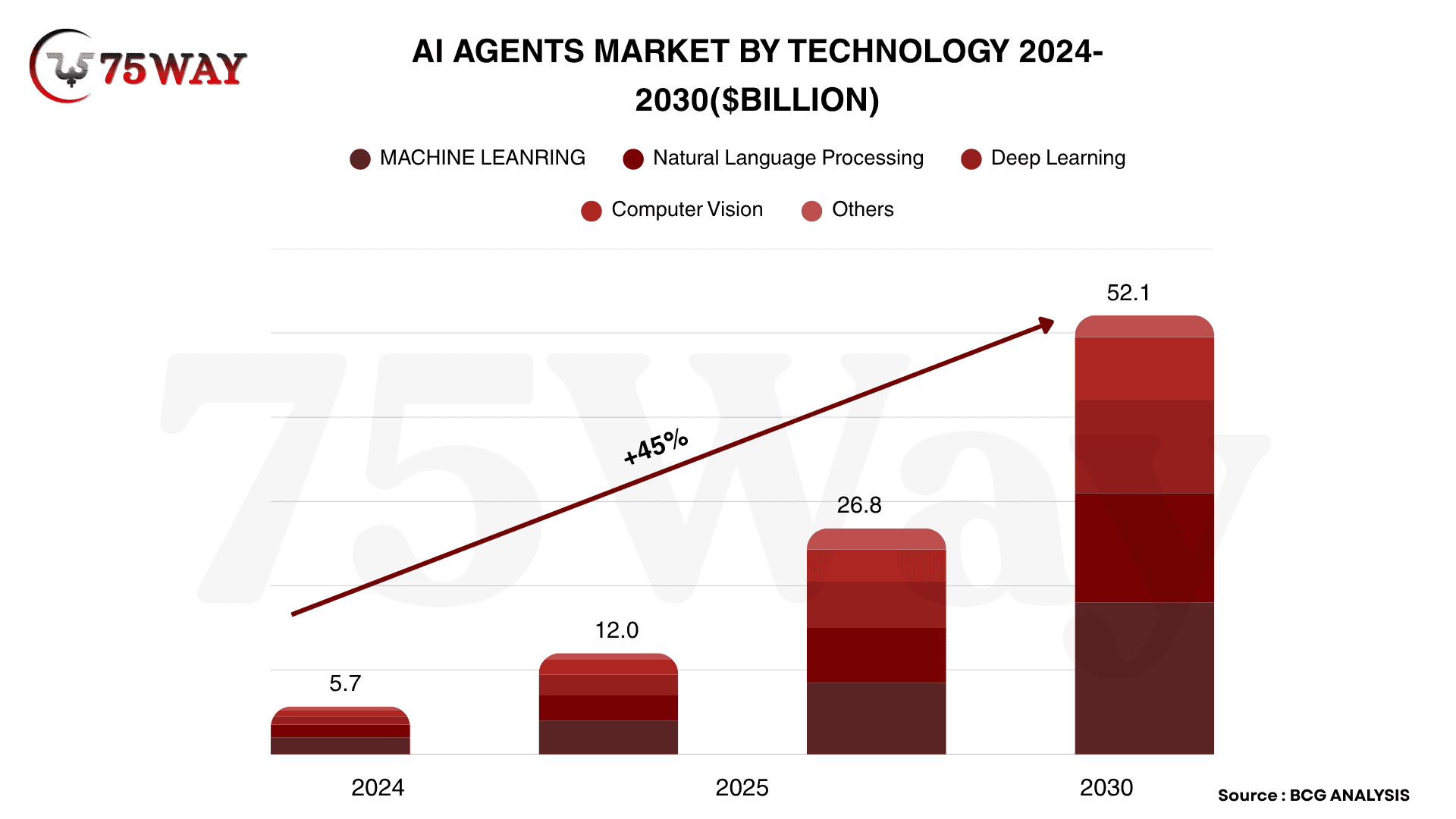
- According to BCC Research, the AI agent market is projected to reach $48.3 billion by 2030, growing at a CAGR of 43.3%.
- Around 8% of executives plan to increase AI budgets due to agentic AI, while 66% of adopters report measurable productivity gains, as per PwC research.
- By 2028, nearly 33% of enterprise software applications are expected to include AI agents.
- Generative AI agents are projected to unlock $2.6–$4.4 trillion in annual value, with 90% of businesses viewing them as a competitive advantage.
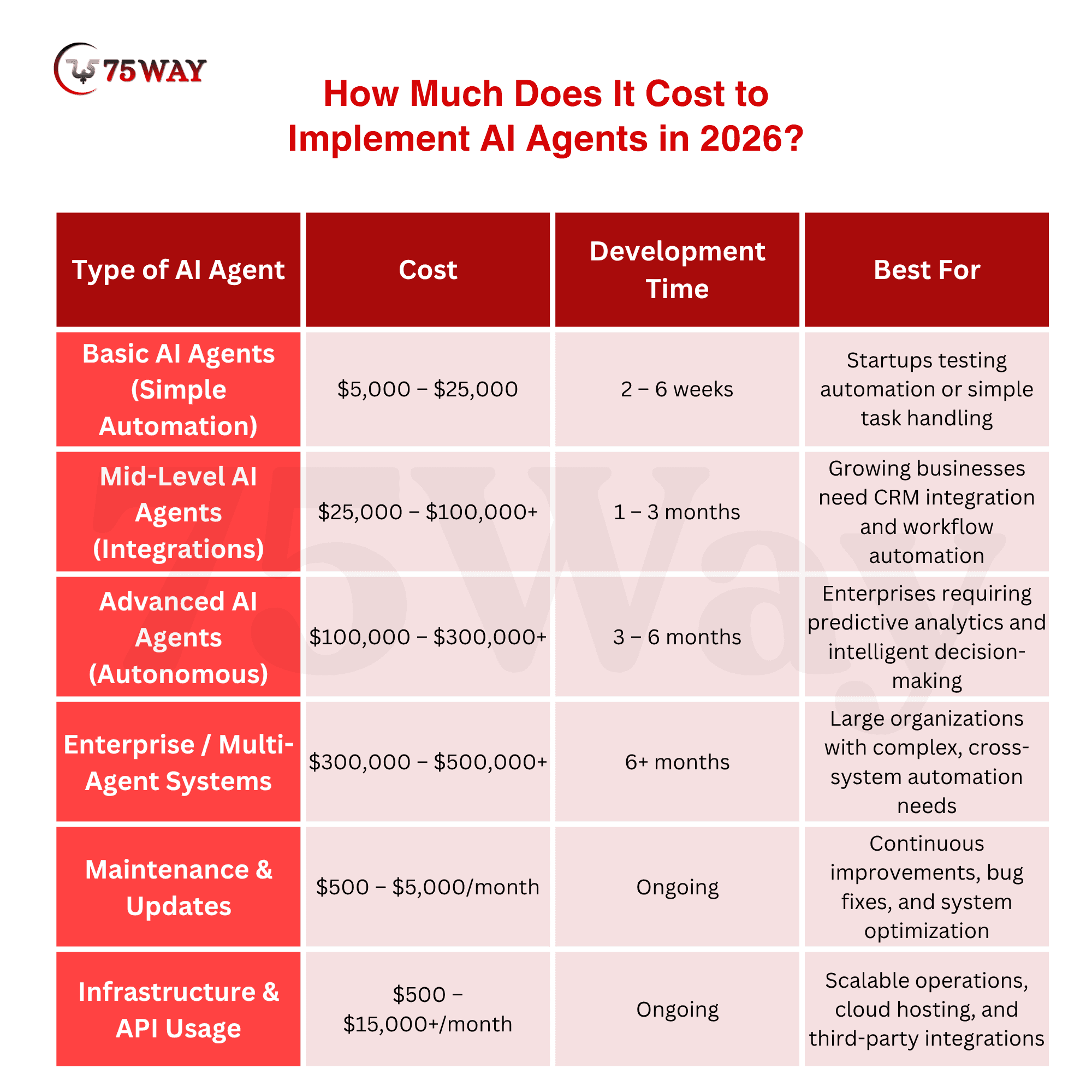
How Much Does It Cost to Implement AI Agents in 2026?
The cost to implement AI agents varies depending on complexity, scale, and customization. Initial investment includes development, infrastructure, and integration. However, long-term savings and efficiency gains often outweigh these costs.
- Basic AI agents (MVP / simple automation): $5,000 – $25,000
- Mid-level AI agents (integrations, workflows): $25,000 – $100,000+
- Advanced AI agents (predictive, autonomous systems): $100,000 – $300,000+
- Enterprise / multi-agent systems: $300,000 – $500,000+
Ongoing Costs:
- Maintenance & updates: $500 – $5,000/month
- Infrastructure & API usage: $500 – $15,000+/month depending on scale
Wrap Up
To conclude, AI agents for businesses are rapidly reshaping how organizations operate, compete, and scale. The real opportunity lies not in replacing people, but in amplifying their capabilities through systems that learn, adapt, and execute with precision. Founders who align strategy, data readiness, and governance will unlock sustainable value while avoiding common pitfalls. As technology matures, the gap between early adopters and late movers will widen significantly. Now is the moment to evaluate, pilot, and expand AI agent initiatives with clarity and purpose. Those who act decisively will build more resilient, future-ready organizations that can thrive in an increasingly dynamic, competitive landscape. So, don’t wait. Hire an AI agent development company now to automate tasks and improve your business growth!
Frequently Asked Questions (FAQs)
Can AI Agents Handle Multiple Tasks Simultaneously?
Yes, AI agents are capable of managing multiple tasks at once by processing large volumes of data in parallel. This ability improves efficiency, reduces delays, and ensures consistent performance across different operations without the limitations faced by human workers.
How Do AI Agents Learn And Improve Over Time?
AI agents learn through training data, feedback loops, and continuous optimization processes. Machine learning models analyze patterns, adjust predictions, and improve accuracy over time as more data becomes available and system performance is regularly monitored and refined.
Are AI Agents Safe For Business Operations?
AI agents can be safe when built with proper security measures, encryption protocols, and access controls. Businesses must ensure data protection, regulatory compliance, and regular monitoring to prevent misuse, unauthorized access, and system vulnerabilities that compromise sensitive information.
Can AI Agents Integrate With Legacy Systems?
Yes, AI agents can be integrated with existing systems using APIs, middleware, or custom connectors designed for compatibility. This allows businesses to enhance existing infrastructure without complete replacement, ensuring smoother transitions while maintaining continuity across operations and minimizing disruption during implementation and scaling processes.
How Much Data Is Required To Build AI Agents?
The amount of data required depends on the complexity and purpose of the AI agent. Simple systems may work with limited datasets, while advanced agents require large, high-quality datasets to ensure accurate predictions, reliable performance, and effective decision-making across diverse scenarios and conditions.
What Are The Risks Of Using AI Agents?
Potential risks include data privacy concerns, biased decision-making, and system errors if not properly monitored. Businesses must implement strong governance, regular audits, and continuous testing to ensure AI agents operate ethically, securely, and accurately within defined operational boundaries and compliance requirements.