AI Summary
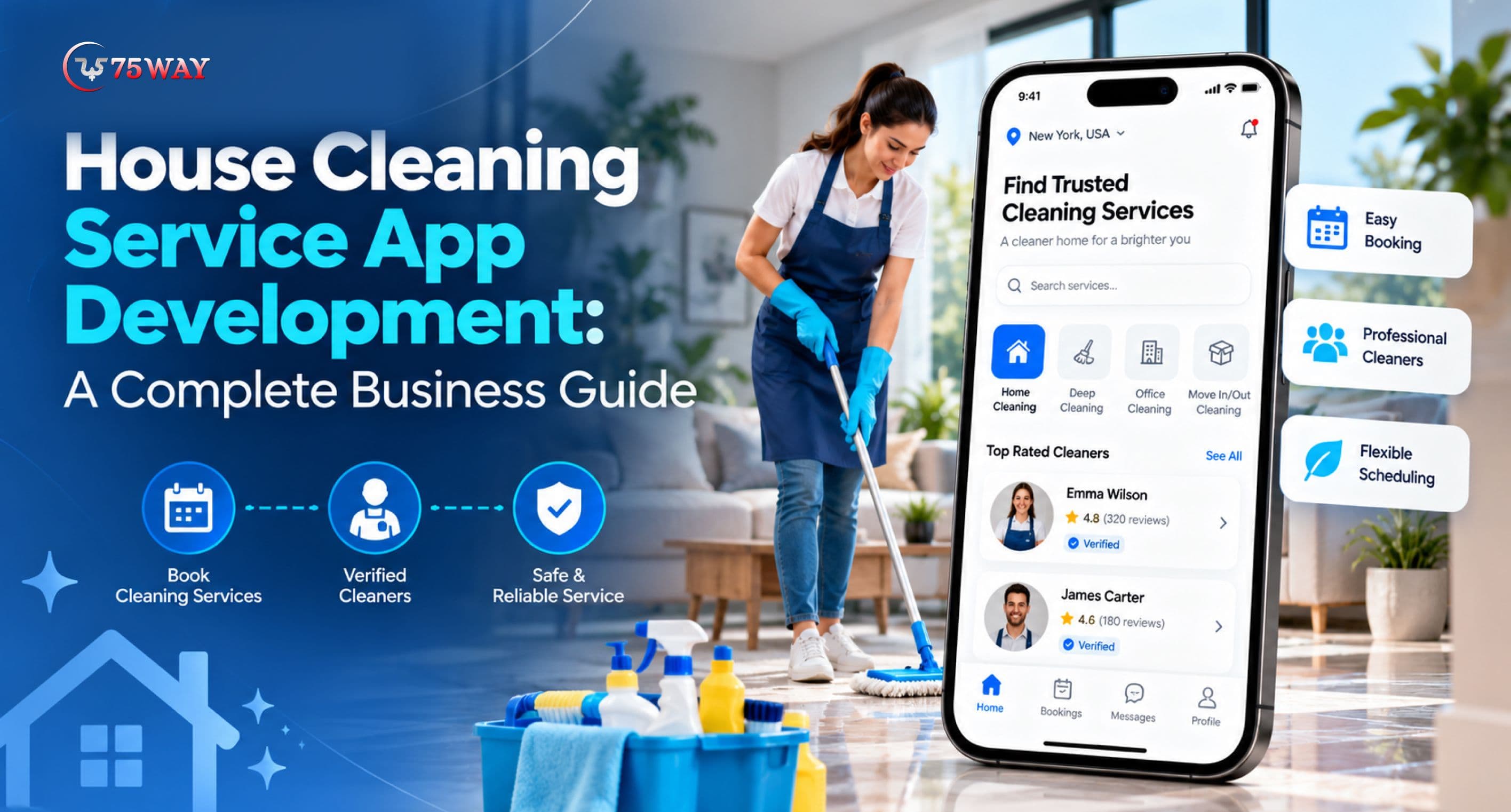
House cleaning service app development requires the right strategy, features, and budget. This guide explores development costs, technology choices, essential functionalities, and revenue models. Learn how to plan your app, streamline cleaning operations, and support business growth.
Key Takeaways
- The global cleaning services market is projected to reach $823.6 billion by 2035.
- House cleaning service app development costs range from $35,000 – $300,000+.
- Essential features include booking, payments, scheduling, cleaner management, and customer notifications.
- Revenue models include service charges, marketplace commissions, recurring plans, and cleaning contracts.
- Successful app launches require market validation, reliable technology, and measurable growth strategies.
If you run a house cleaning business, you already know that getting customers is only half the job. Someone has to answer booking calls, confirm the cleaner’s availability, handle last-minute cancellations, and follow up when a customer has a concern. As your customer base grows, these daily tasks can take time away from finding new business.
A house cleaning service app development solution gives you a way to manage these moving parts without relying on phone calls and scattered records. Customers can book a suitable cleaning service, choose a time slot, and pay online, while your team can manage appointments and cleaner schedules from one platform.
Here, a question arises: “How do you build a house cleaning service app that fits your business instead of paying for features you may never use?” “What’s the exact cost of house cleaning service app development?” This guide walks you through the business model, essential features, home cleaning service development costs, and practical decisions to consider before investing.
Quick Answer: What Is House Cleaning Service App Development?
House cleaning service app development is the process of building software that allows customers to book cleaning services while enabling businesses to manage cleaners, schedules, payments, service requests, and daily operations.
Depending on the business model, the solution may include a customer app, a cleaner app, an administrative dashboard, and a website. A single-company booking app can be relatively straightforward, while a multi-provider marketplace requires additional systems for cleaner onboarding, service-area management, commissions, payouts, and dispute resolution.
The right approach depends on whether you want to digitize an existing cleaning company, launch an on-demand service, or connect independent cleaning professionals with customers.
Why Invest in Home Cleaning Service App Development in USA
A home cleaning service app gives businesses a practical way to manage bookings, coordinate cleaners, accept online payments, and communicate with customers through one platform.
For startups and established cleaning companies, digital booking can reduce manual administrative work, simplify appointment management, and make recurring services easier to organize.
The business opportunity extends beyond one-time residential cleaning appointments. Companies can offer weekly or biweekly plans, specialized cleaning packages, and on-demand services while using booking data to understand customer preferences and plan staffing.
For entrepreneurs, a marketplace model also creates an opportunity to connect customers with independent cleaners and generate revenue through booking commissions.
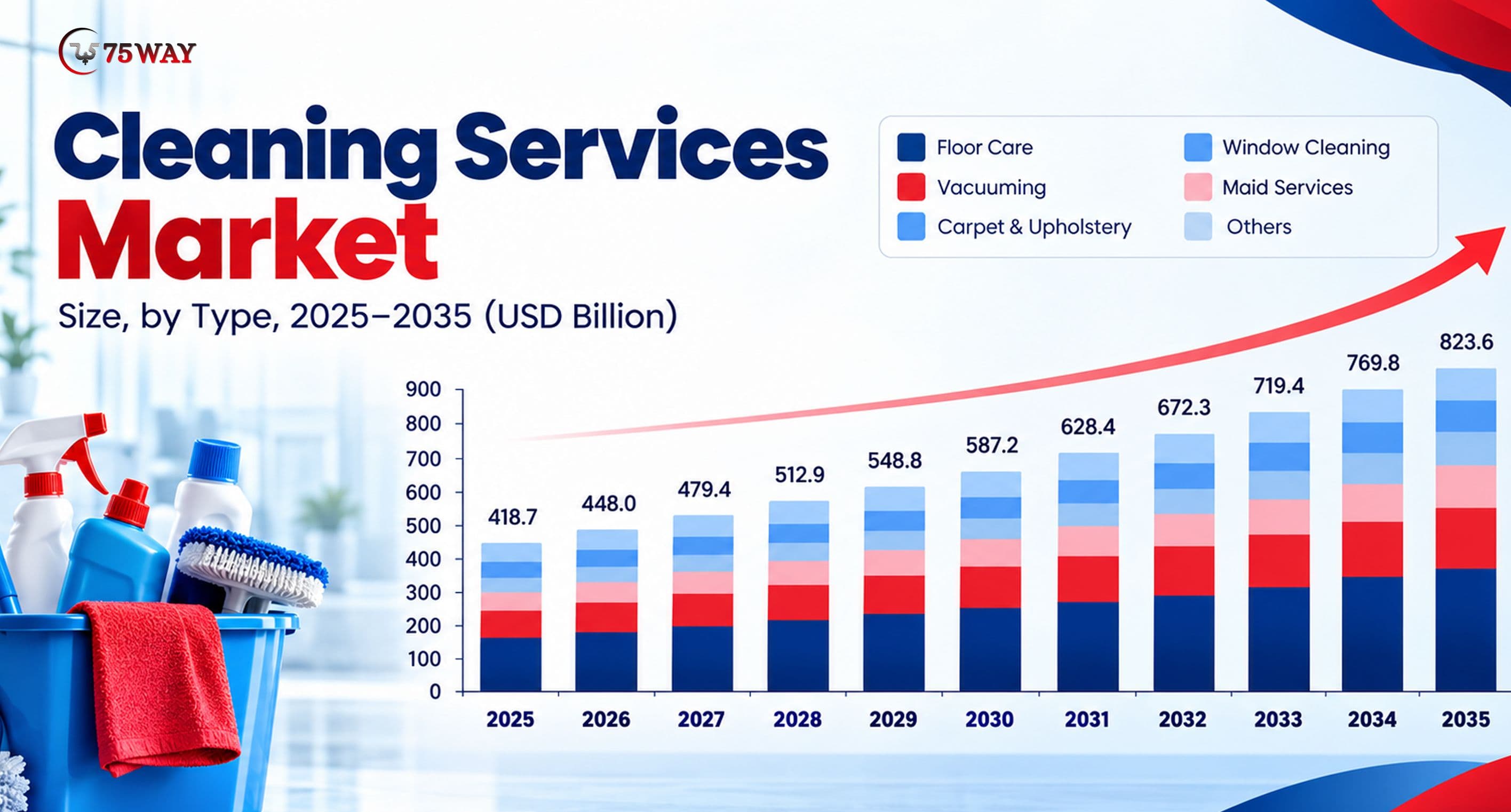
- The global Cleaning Services Market is projected to expand from $418.7 billion in 2025 to $823.6 billion by 2035, registering a 7% CAGR.
- Approximately 78% of local searches on mobile devices lead to service purchases or bookings within 24 hours.
- Commercial spaces represented the largest market segment, accounting for 34.2% of the total market share.
- North America led the regional market with a 36.8% share, valued at USD 154.1 billion.
- Floor care services dominated the cleaning services market by type, capturing 32.8% of the market share.
Quick Read: Elderly Care App Development: A Smart Investment In The Ageing Population
Who Should Build A House Cleaning Service App?
Not every cleaning business needs a complex app with dozens of features. The right solution depends on how you manage bookings, coordinate cleaners, and handle customer requests. For some businesses, a simple booking app is enough. For others, custom software can make daily operations much easier.
1. Established Cleaning Companies
For established cleaning companies, manual bookings and schedule changes can quickly become difficult to manage as the customer base grows.
A house cleaning service app can bring appointments, recurring cleaning requests, customer details, and staff schedules into one place. As a result, business owners can spend less time coordinating bookings and more time improving service quality and retaining customers.
2. Startup Founders Building A Cleaning Marketplace
For startup founders, the challenge is slightly different. A cleaning marketplace must connect customers with available cleaners while keeping bookings, payments, and service expectations clear for both sides.
The app needs features such as provider onboarding, availability management, commission tracking, and dispute handling. A well-planned platform gives founders a practical way to manage these interactions as the marketplace expands.
3. Multi-Location Cleaning Operators
For cleaning businesses operating across multiple cities or service areas, keeping every team on the same page can become a real headache.
A centralized app can help managers coordinate schedules, assign jobs, standardize service packages, and compare performance across locations. This shared view also helps business owners identify scheduling gaps and operational problems before they affect more customers.
4. Property Managers And Short-Term Rental Operators
Property managers and short-term rental operators often work with tight cleaning schedules, especially when one guest checks out shortly before another arrives.
A dedicated cleaning app can help them schedule turnovers, share property-specific instructions, assign cleaning tasks, and confirm when each job is complete. These features make it easier to prepare properties on time and manage multiple locations without relying on endless calls and text messages.
Read Too: Childcare Management App Development: Cost, Features And Benefits
Define Your Ideal Customer Profile Before Custom House Cleaning Service App Development
For a house cleaning app development company targeting US buyers, a useful primary ICP is an established cleaning business or a funded startup with a clear service area, an existing customer acquisition strategy, and a measurable operational problem.
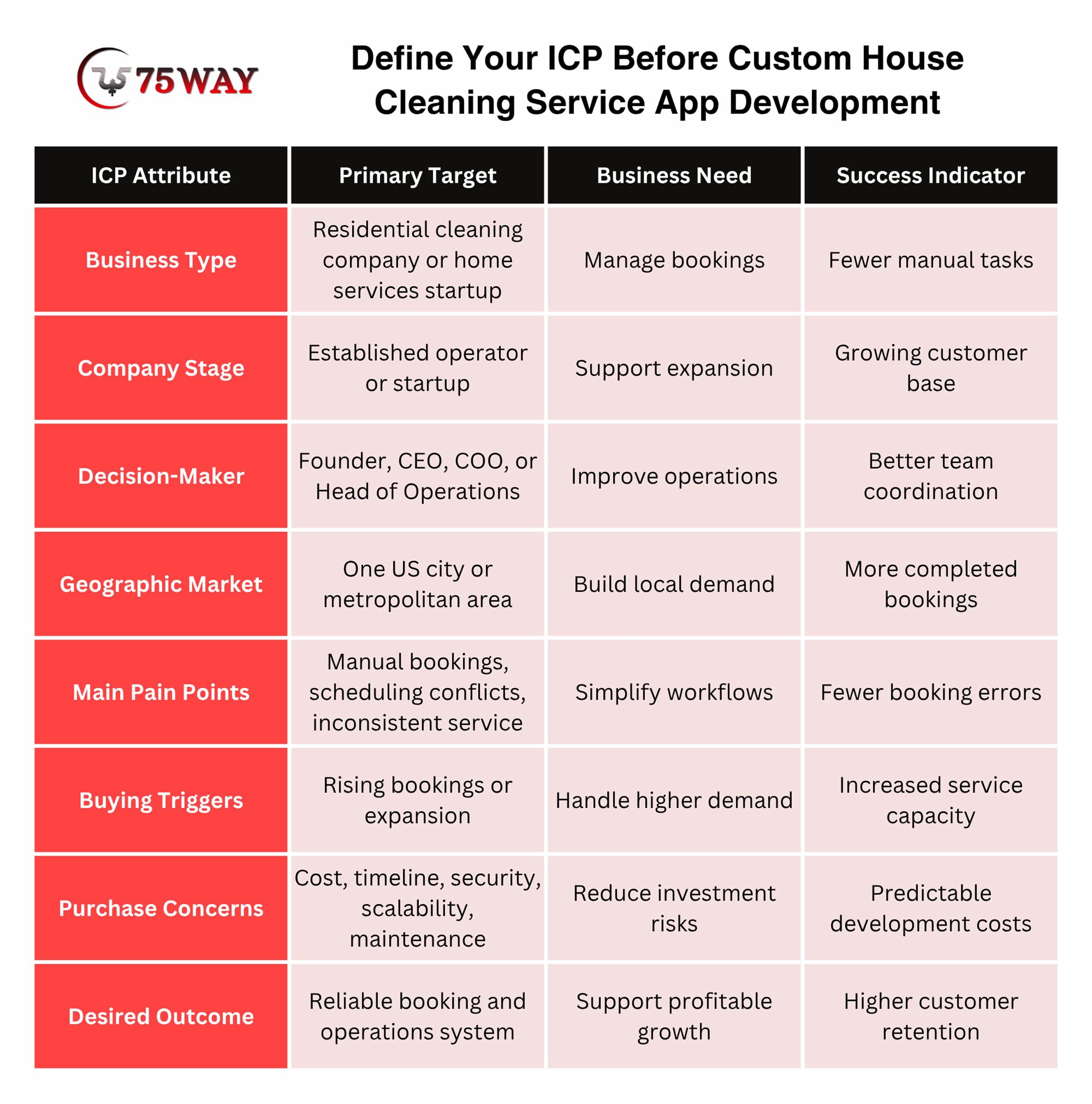
This ICP matters because a founder launching a marketplace has different requirements from a cleaning company replacing spreadsheets. Your sales message, feature recommendations, development estimate, and calls to action should reflect those differences.
Read More:Heart Monitoring App Development: A Guide From Idea To Launch
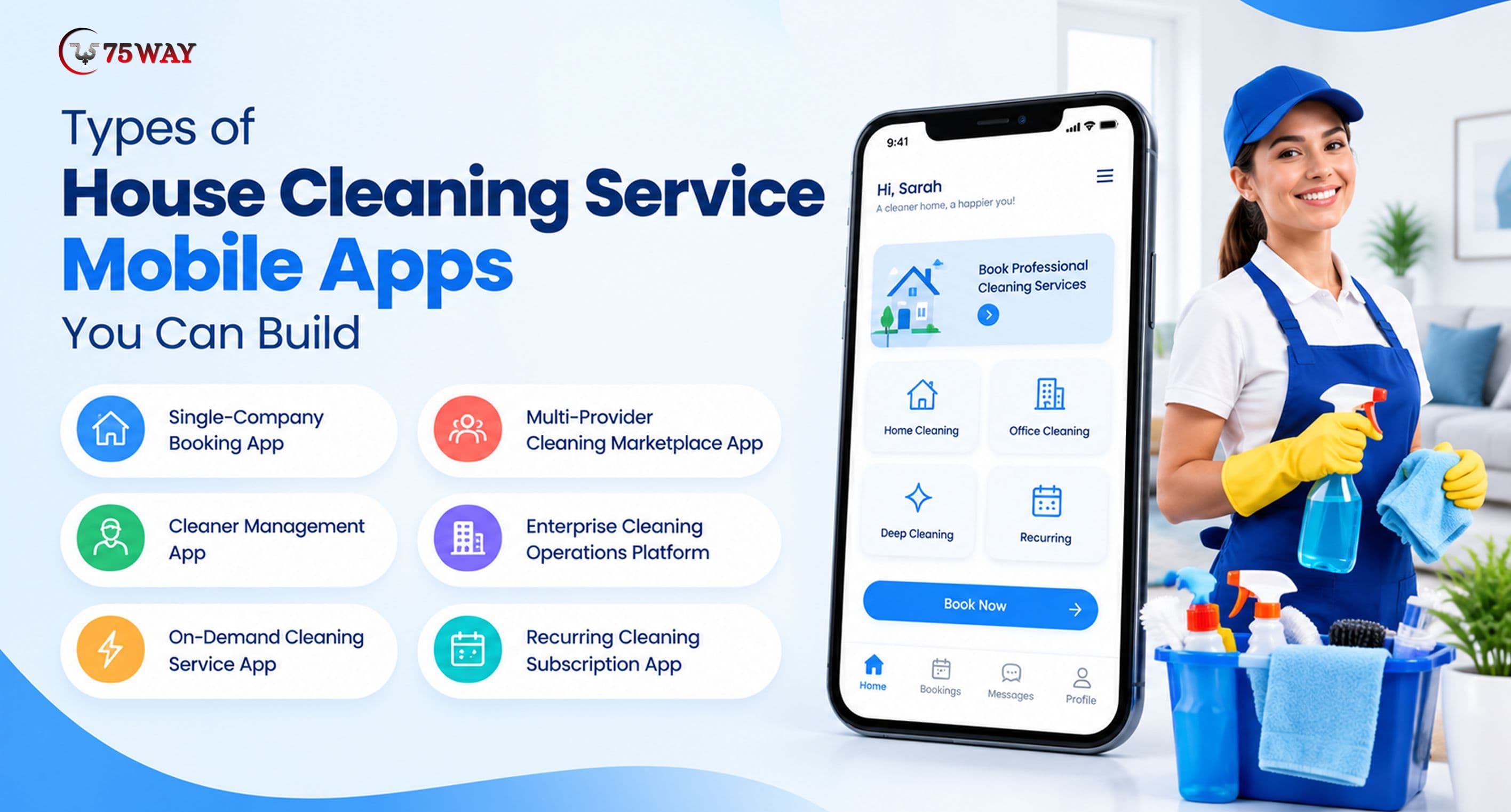
Types of House Cleaning Service Mobile Apps You Can Build
A house cleaning app can do much more than let customers book a cleaner for a particular day. Depending on your business plan, it could manage your in-house team, connect households with local service providers, or support recurring cleaning subscriptions. Exploring these app types will help you identify the model that best suits your customers and growth plans.
1. Single-Company Booking App
A single-company booking app gives customers a convenient way to book cleaning services directly from your business. Customers can choose a cleaning package, enter property details, select an available time, and pay online. Meanwhile, your team manages appointments, pricing, and cleaner assignments through an administrative dashboard.
Benefits of A Single-Company Booking App
- Accepts customer bookings around the clock.
- Reduces manual scheduling and phone calls.
- Simplifies recurring cleaning appointment management.
- Keeps customer details in one place.
- Improves visibility into daily bookings.
Best For: Established cleaning companies that want to replace manual booking processes with a digital system.
Estimated Development Cost: $15,000–$35,000
2. Multi-Provider Cleaning Marketplace App
What if customers could compare available cleaning providers and book a suitable professional through one platform? A multi-provider cleaning marketplace makes that possible. The platform connects customers with independent cleaners or cleaning companies, while the business manages provider onboarding, bookings, commissions, payments, and service disputes.
Benefits of A Cleaning Marketplace App
- Connects customers with multiple cleaning providers.
- Expands service coverage across neighborhoods.
- Generates revenue through booking commissions.
- Offers customers more provider choices.
- Supports marketplace growth across new cities.
Best For: Startup founders who want to build a cleaning marketplace and earn revenue by connecting customers with service providers.
Estimated Development Cost: $50,000–$150,000+
3. Cleaner Management App
For some cleaning businesses, customer acquisition is not the biggest problem. The real challenge is getting the right cleaner to the right property at the right time. A cleaner management app helps teams view assignments, access job instructions, update service statuses, complete cleaning checklists, and report issues. It can also connect with an existing booking website or business management system.
Benefits of A Cleaner Management App
- Simplifies daily job assignments.
- Improves communication between office staff and cleaners.
- Tracks job progress across appointments.
- Standardizes cleaning tasks and checklists.
- Helps managers identify operational delays.
Best For: Cleaning companies with existing customers that need better workforce coordination and job tracking.
Estimated Development Cost: $20,000–$60,000+
4. Enterprise Cleaning Operations Platform
Large cleaning companies often manage multiple branches, recurring contracts, large teams, and different service requirements. An enterprise cleaning operations platform brings these activities into a centralized system. Managers can oversee locations, assign roles, monitor service performance, manage contracts, and connect the platform with accounting or customer relationship management software.
Benefits of An Enterprise Cleaning Platform
- Centralizes operations across multiple locations.
- Standardizes service delivery across branches.
- Improves visibility into business performance.
- Simplifies recurring contract management.
- Connects operational data with existing business systems.
Best For: Large cleaning operators and property service businesses with complex workflows, multiple branches, or enterprise clients.
Estimated Development Cost: $100,000–$300,000+
5. On-Demand Cleaning Service App
Some customers need a cleaner for today or tomorrow rather than a recurring appointment next week. An on-demand cleaning app lets customers request services based on available providers, preferred time slots, and service requirements. The system must account for cleaner availability, job duration, travel time, and last-minute cancellations before confirming an appointment.
Benefits of An On-Demand Cleaning App
- Supports last-minute cleaning requests.
- Matches bookings with available cleaning professionals.
- Provides real-time appointment status updates.
- Helps customers find convenient service slots.
- Creates opportunities for urgent service bookings.
Best For: Startups and cleaning businesses serving customers who value quick booking and flexible appointment availability.
Estimated Development Cost: $40,000–$100,000+
6. Recurring Cleaning Subscription App
Weekly and biweekly cleaning customers can provide a more predictable source of revenue than one-time bookings. A subscription-based cleaning app lets customers choose a recurring plan, manage upcoming visits, update preferences, and handle eligible changes through their accounts. The business can use recurring schedules to plan cleaner availability and forecast demand.
Benefits of A Recurring Cleaning Subscription App
- Encourages repeat cleaning appointments.
- Creates more predictable booking demand.
- Simplifies recurring schedule management.
- Supports customer retention through service plans.
- Helps businesses plan workforce capacity.
Best For: Cleaning companies that specialize in weekly, biweekly, or monthly residential cleaning plans.
Estimated Development Cost: $30,000–$80,000+
Find More:How Much Does Food Truck Pay For Mobile App Development in 2027
Must-Have Features of House Cleaning Service Application Development
When bookings increase, assigning cleaners, predicting busy periods, and responding to customer queries can become difficult to manage manually. AI-powered features can support these tasks through demand forecasting, automated assistance, and smarter job allocation. Here are the features to consider when developing an app that works for both your customers and your cleaning team.
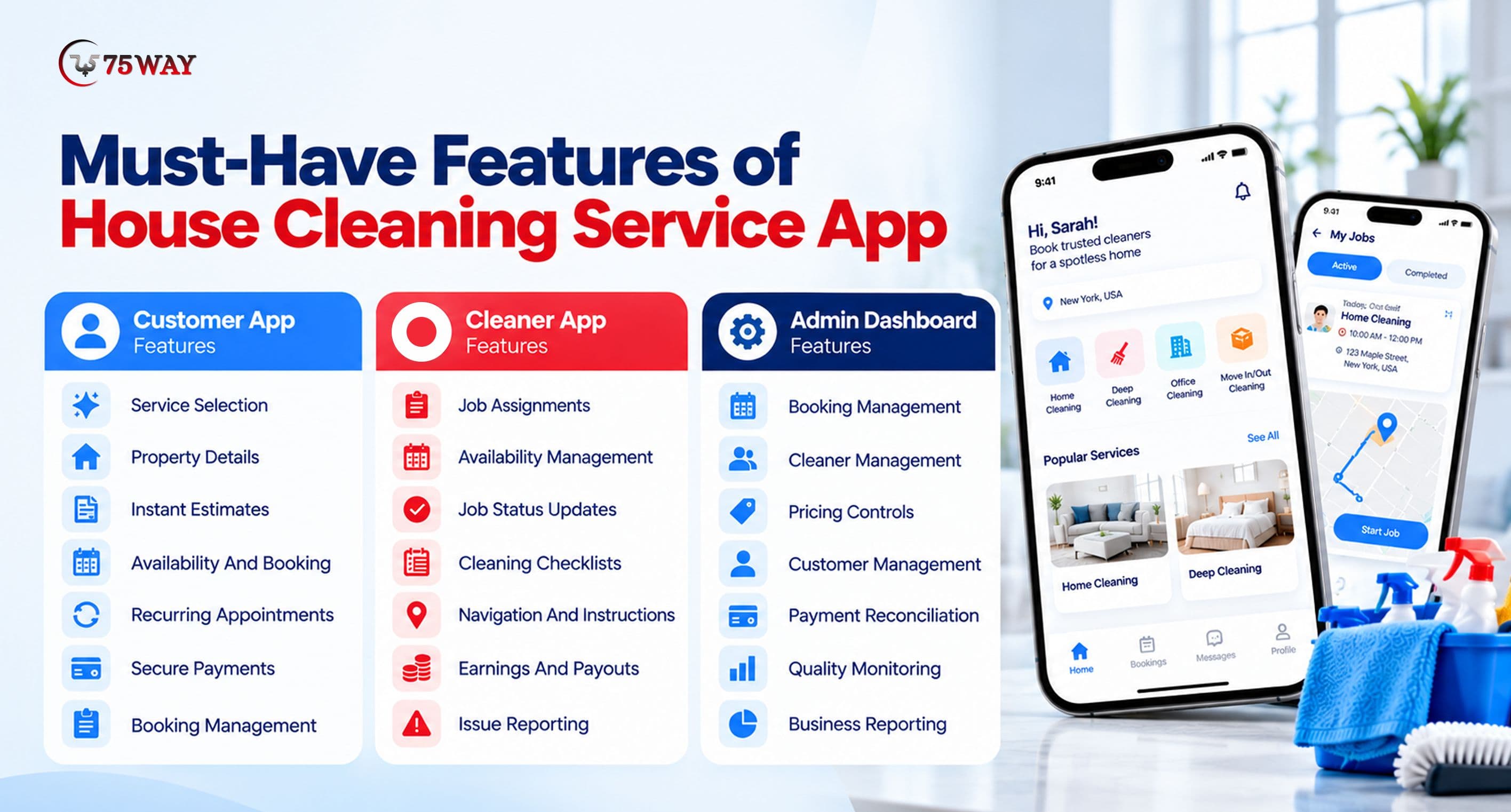
1. Customer App Features
The customer experience should make it easy to understand the service, confirm the price, book a suitable time, and get help when something changes.
- Service Selection: Let customers choose standard cleaning, deep cleaning, move-in or move-out cleaning, and other services the business actually offers.
- Property Details: Collect relevant information such as home size, bedroom and bathroom counts, pets, access instructions, and special cleaning requests.
- Instant Estimates: Calculate an estimated price using defined pricing rules, with clear explanations of any inspection or manual quote requirements.
- Availability And Booking: Display available appointments based on cleaner capacity, service duration, travel time, and the business's operating hours.
- Recurring Appointments: Support weekly, biweekly, or monthly bookings when the business can reliably accommodate recurring demand.
- Secure Payments: Integrate a suitable payment provider for deposits, saved payment methods, receipts, refunds, and applicable taxes.
- Booking Management: Allow customers to reschedule, cancel, review upcoming appointments, and understand the relevant cancellation policy.
2. Cleaner App Features
A booking is only useful if the business can deliver the service at the promised time and quality.
- Job Assignments: Give cleaners access to their assigned jobs, service requirements, and appointment details.
- Availability Management: Let cleaners indicate working hours, time off, and service areas.
- Job Status Updates: Track accepted, scheduled, in-progress, completed, and issue-reported states.
- Cleaning Checklists: Provide task lists tailored to each service package or property.
- Navigation And Instructions: Display job locations, access details, parking notes, and other relevant information with appropriate access controls.
- Earnings And Payouts: Show completed jobs, applicable earnings, adjustments, and payout status where the business model requires it.
- Issue Reporting: Enable cleaners to flag access problems, property conditions, missing supplies, or requests outside the agreed scope.
3. Admin Dashboard Features
The administrative dashboard is where business owners manage the details that customers and cleaners should not have to handle themselves.
- Booking Management: View appointments, cancellations, service changes, and unassigned jobs.
- Cleaner Management: Maintain provider profiles, onboarding records, availability, service areas, and required verification status.
- Pricing Controls: Configure service rates, add-ons, minimum charges, discounts, and travel-related fees.
- Customer Management: Review booking history, recurring schedules, support requests, and customer preferences.
- Payment Reconciliation: Compare charges, refunds, provider payouts, commissions, and outstanding balances.
- Quality Monitoring: Review complaints, customer ratings, missed appointments, and checklist completion.
- Business Reporting: Track booking volume, revenue, cancellations, repeat customers, and operational performance.
Advanced Features of AI-Powered House Cleaning Service App Development to Consider Later
Basic features can get your cleaning app up and running, but advanced AI capabilities can open up new ways to manage growth and improve service delivery. From predicting booking demand to adjusting prices based on availability, these tools become more useful as your operations expand. Here are the advanced features you can consider adding to your house cleaning app later.
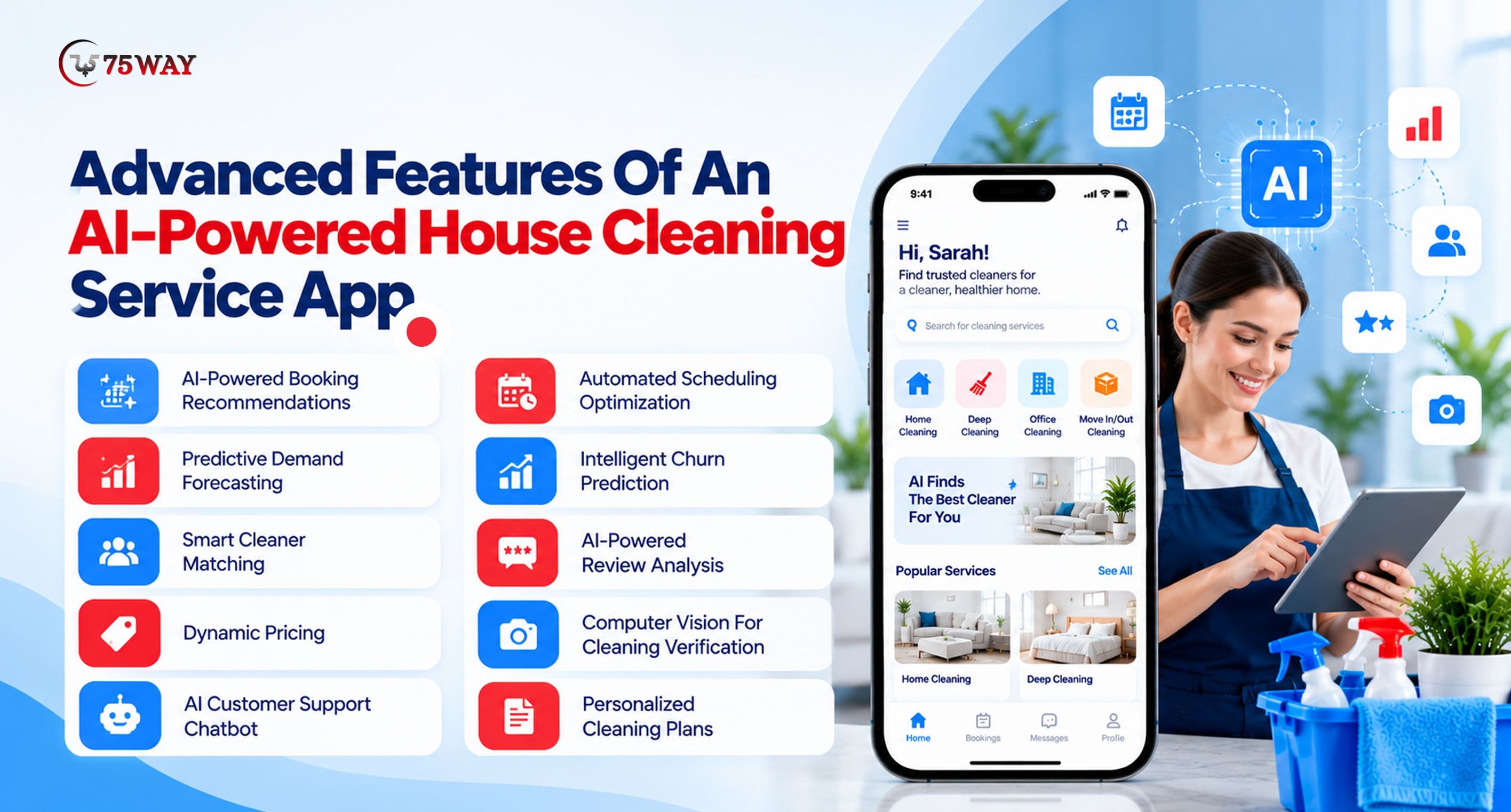
- AI-Powered Booking Recommendations: Suggests suitable cleaning packages based on customer preferences, property size, and previous bookings.
- Predictive Demand Forecasting: Predicts busy periods using historical bookings, seasonal patterns, and local demand trends.
- Smart Cleaner Matching: Recommends cleaners based on availability, skills, location, customer ratings, and job requirements.
- Dynamic Pricing: Adjusts service prices according to demand, cleaner availability, service complexity, and booking time.
- AI Customer Support Chatbot: Answers common questions, explains services, assists with bookings, and handles routine customer requests.
- Automated Scheduling Optimization: Recommends schedules that account for job duration, cleaner availability, travel time, and appointment priorities.
- Intelligent Churn Prediction: Identifies customers who may stop booking and suggests timely retention offers or follow-ups.
- AI-Powered Review Analysis: Analyzes customer reviews to identify recurring complaints, service preferences, and opportunities for improvement.
- Computer Vision: Analyzes permitted before-and-after photos to help assess completed cleaning tasks and flag potential issues.
- Personalized Cleaning Plans: Recommends cleaning frequency and service combinations based on customer preferences, property details, and booking history.
Step-By-Step House Cleaning Service App Development Process
House cleaning service app development requires a clear plan that connects business goals with customer needs and operational requirements. Each stage builds on the previous one, helping you move from business validation to launch and long-term growth.
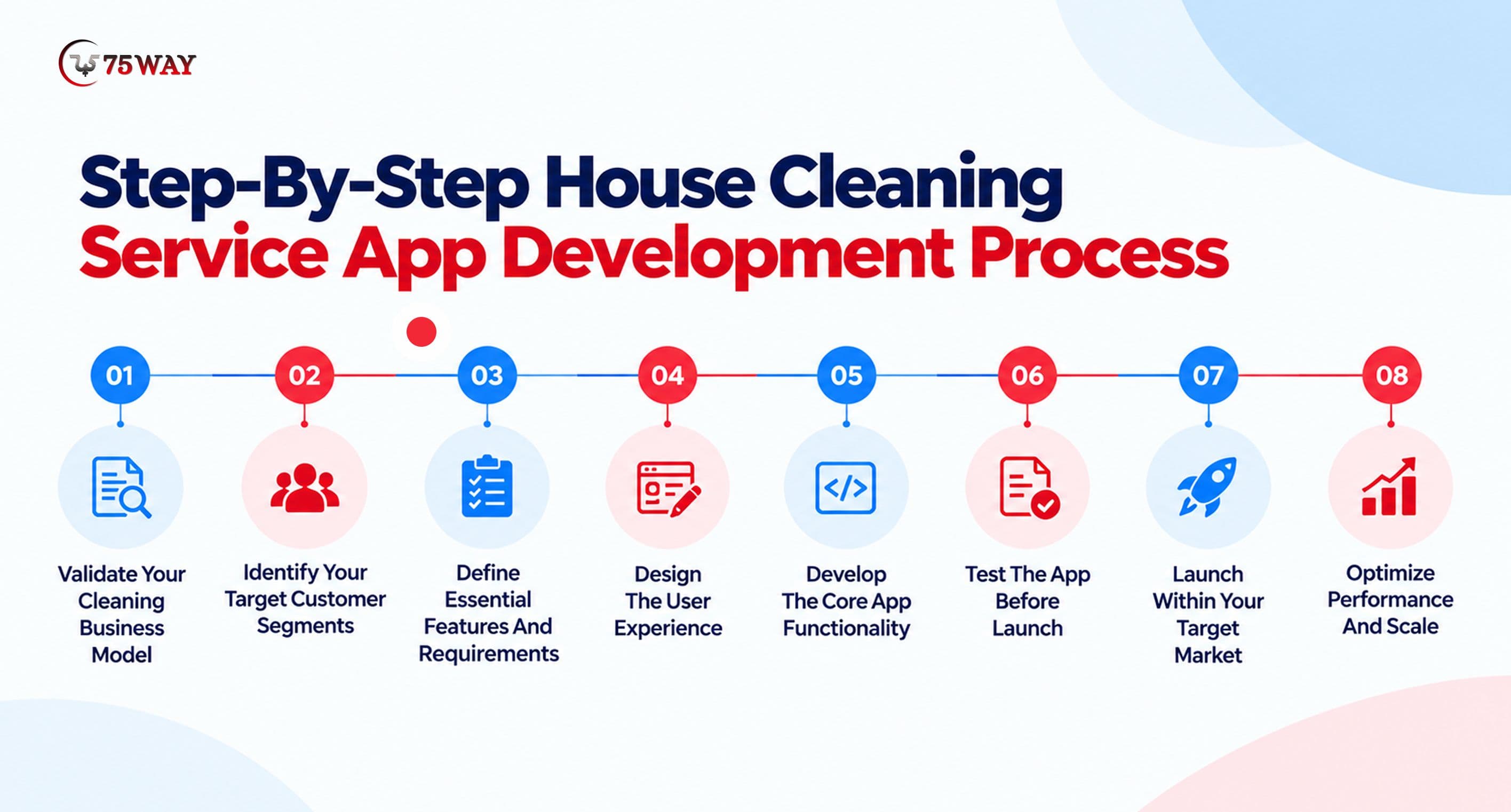
Step 1: Validate Your Cleaning Business Model
Start by deciding how your cleaning business will operate and generate revenue. This decision determines your target market, essential app features, and operational workflows.
- Decide whether to use in-house cleaners, independent contractors, or a multi-provider marketplace.
- Research competitors, local demand, customer expectations, and gaps in existing services.
- Evaluate revenue options, including booking fees, commissions, recurring plans, and commercial contracts.
Step 2: Identify Your Target Customer Segments
After validating your business model, identify the customers your app will serve. Their needs will guide your service offerings, pricing structure, and booking experience.
- Define your primary audience, such as homeowners, renters, landlords, or property managers.
- Research preferred cleaning schedules, service expectations, and common booking challenges.
- Select an initial service area based on demand, cleaner availability, and operational capacity.
Step 3: Define Essential Features And Requirements
With your audience and business model established, determine the functionality required for launch. Separate essential features from advanced additions to keep the initial development scope manageable.
- Customer Features: Registration, service selection, booking, payments, rescheduling, and notifications.
- Cleaner Features: Job assignments, availability management, service checklists, and completion updates.
- Admin Features: Booking oversight, customer management, pricing controls, refunds, and performance reporting.
Step 4: Design The User Experience
The feature requirements now provide a foundation for designing the app. Create simple, connected journeys that help customers book services and cleaners manage assignments without unnecessary steps.
Prepare wireframes and interactive prototypes for customer, cleaner, and administrator interfaces. Test these designs with potential users, then refine confusing screens before development begins.
Step 5: Develop The Core App Functionality
Once the designs are approved, developers build the customer app, cleaner interface, backend, and administrative dashboard. Each component must work together to support bookings, payments, scheduling, and daily service operations.
- Develop the prioritized features and connect the required backend services.
- Integrate payment gateways, maps, notifications, and scheduling tools.
- Implement authentication, role-based permissions, and appropriate data security measures.
Step 6: Test The App Before Launch
Before releasing the app, test its essential workflows across supported devices and operating conditions. Check bookings, cancellations, refunds, payment failures, overlapping appointments, and cleaner availability to identify problems that could disrupt service delivery.
Step 7: Launch Within Your Target Market
After testing, introduce the app in your selected service area rather than expanding everywhere immediately. Monitor early bookings, customer feedback, cleaner performance, and operational issues to determine whether the business is ready to scale.
Step 8: Optimize Performance And Scale
The initial launch provides real data about customer behavior and business performance. Use these insights to improve the booking experience, strengthen retention, refine operations, and expand into new locations when demand supports growth.
- Track Key Metrics: Monitor booking conversions, repeat bookings, cancellations, customer acquisition costs, and completed jobs.
- Improve Customer Retention: Refine service packages, reminders, and recurring plans using customer feedback.
- Expand Strategically: Add service areas, integrations, or AI-powered features when operational capacity and revenue justify the investment.
What Should Your MVP Include?
A minimum viable product (MVP) should prove that customers will book, cleaners can deliver the service, and the business can make the unit economics work.
For a single cleaning company, the MVP may include:
- A service catalog with transparent pricing rules.
- Customer registration and appointment booking.
- Availability and schedule management.
- Payment collection and booking confirmations.
- Cleaner job assignments and status updates.
- An admin dashboard for bookings and customer support.
- Basic reports for completed jobs, revenue, cancellations, and repeat bookings.
A marketplace MVP requires additional provider onboarding, commission handling, payout workflows, and a way to manage service disputes. If those requirements are central to the business model, include them from the beginning.
Do not remove security, payment correctness, or essential operational controls simply to meet an aggressive launch date. Reduce nonessential scope instead.
Recommended Technology Stack For A Cleaning Service App
A cost-effective technology stack should support essential booking workflows, secure payments, cleaner scheduling, and future expansion without adding unnecessary development costs. The right combination depends on your budget, target platforms, integration needs, and expected user volume.
1. Frontend Development: React Native or Flutter can reduce costs by supporting both iOS and Android through a shared codebase. React.js is a practical option for building the web-based admin dashboard.
2. Backend Development: Node.js with NestJS or Python with Django can support booking management, scheduling, payments, and user accounts. The choice should depend on your developers’ expertise and the complexity of your workflows.
3. Database: PostgreSQL is a strong option for storing customer profiles, bookings, payments, and cleaner schedules. Its relational structure suits the connected data used by cleaning service platforms.
4. Cloud Hosting: AWS, Google Cloud, or Microsoft Azure offers scalable infrastructure as your app grows. Start with a suitable managed hosting setup and expand resources as actual usage increases.
5. Third-Party Integrations: Use established services for essential functions instead of building everything from scratch.
- Payments: Stripe for online payments and refunds.
- Maps And Location: Google Maps Platform for addresses, distance calculations, and navigation.
- Push Notifications: Firebase Cloud Messaging for booking updates and reminders.
- Authentication: Firebase Authentication or a suitable managed identity service to simplify secure sign-in.
6. Admin Dashboard: React.js can support booking oversight, cleaner management, service pricing, and business reporting through a single web interface.
7. Cost-Saving Approach: Begin with a minimum viable product (MVP), use cross-platform development where appropriate, and integrate reliable third-party services. Add advanced features and infrastructure only when customer demand and operational requirements justify the additional expense.
Should You Choose Native Or Cross-Platform House Cleaning Service App Development?
Native home cleaning service app development uses platform-specific technologies, such as Swift for iOS and Kotlin for Android. Cross-platform frameworks, such as Flutter and React Native, allow teams to share a substantial portion of the application code.
For a typical cleaning booking product, cross-platform development may be a sensible starting point because customer booking, cleaner scheduling, and account management usually do not require deeply platform-specific functionality.
Native development may be appropriate when the product depends on specialized device capabilities, complex background location behavior, or platform-specific performance requirements.
The decision should follow technical requirements and total ownership cost, not assumptions that one approach is always faster or cheaper.
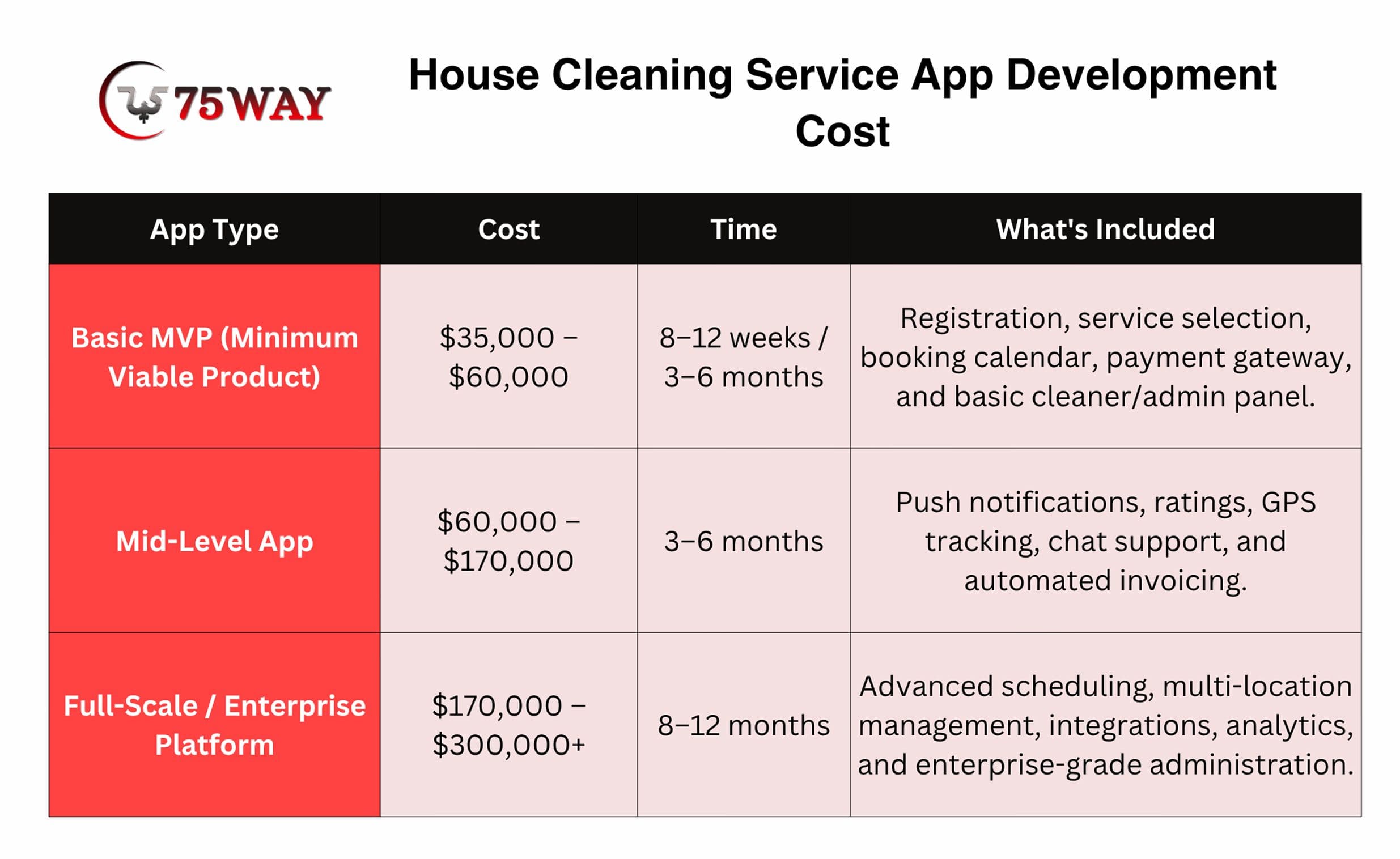
House Cleaning Service App Development Cost: Pricing Breakdown
House cleaning service app development typically costs $35,000–$300,000+, depending on the app’s features, AI capabilities, platform choice, and overall complexity. A basic booking app costs less than a multi-vendor platform with real-time tracking, automated scheduling, and advanced AI features.
1. Basic MVP House Cleaning Service App: $35,000 – $60,000
Timeline: 8–12 weeks
Suitable For: Startups and small cleaning businesses launching with essential booking features.
2. Mid-Level House Cleaning Service App: $60,000 – $170,000
Timeline: 3–6 months
Suitable For: Growing cleaning businesses that need greater automation and operational control.
Cleaner management, recurring bookings, notifications, reporting, and third-party integrations.
3. Full-Scale Enterprise Cleaning App: $170,000 – $300,000+
Timeline: 8–12 months
Suitable For: Multi-location cleaning operators and marketplaces with complex workflows.
What Affects The Cost of AI House Cleaning Service Mobile App Development?
- Number of Applications: A customer app, cleaner app, admin dashboard, and public website each require their own interface, testing, and maintenance. Shared backend services can reduce duplicated work.
- Booking And Pricing Rules: A simple fixed-price booking flow is easier to build than an estimator that handles property sizes, add-ons, recurring discounts, travel fees, and minimum booking values.
- Payment Workflows: Taking a customer's payment is different from collecting funds, calculating commissions, issuing refunds, and paying independent providers through a marketplace.
- Scheduling Complexity: Recurring appointments, cleaner availability, travel buffers, service durations, and reassignment rules increase development and testing requirements.
- Third-Party Integrations: Maps, messaging, payment gateways, identity verification, accounting software, and customer relationship management tools may require additional implementation and recurring fees.
- Security And Reliability: Access permissions, audit logs, secure authentication, backups, monitoring, and payment-related safeguards require deliberate engineering rather than last-minute additions.
Explore More:E-Commerce Mobile App Development Cost: What Should Businesses Budget?
Example: How A Feature Choice Changes The Budget of Home Cleaning Service App Development
Suppose you are launching a cleaning company in one metropolitan area. You already have cleaners, established prices, and a way to acquire customers.
Your first release might need online booking, recurring appointments, payment collection, a cleaner schedule, notifications, and an admin dashboard. A provider marketplace, automated matching, and advanced analytics may be unnecessary at this stage.
The key decision is not whether a feature sounds impressive. It is whether the feature solves a launch-critical problem or can wait until the business has evidence that it needs it.
How To Calculate The Cost of a Building Cleaning Service App
Use the estimator below to create an initial planning budget. These are adjustable assumptions for budgeting purposes, not a development quote.
👉 Development Budget Estimator You Can Try Before
Change the assumptions to see how scope, platform choices, and hourly rates affect your preliminary budget.
Project Type
- Basic Booking App
- Custom Cleaning Business App
- Multi-Provider Marketplace
- Advanced Cleaning Platform
Platform Scope
- Responsive Web App
- Cross-Platform Mobile App
- Separate Native Mobile Apps
Workflow Complexity
- Simple
- Moderate
- Complex
Blended Development Rate of House Cleaning Service App
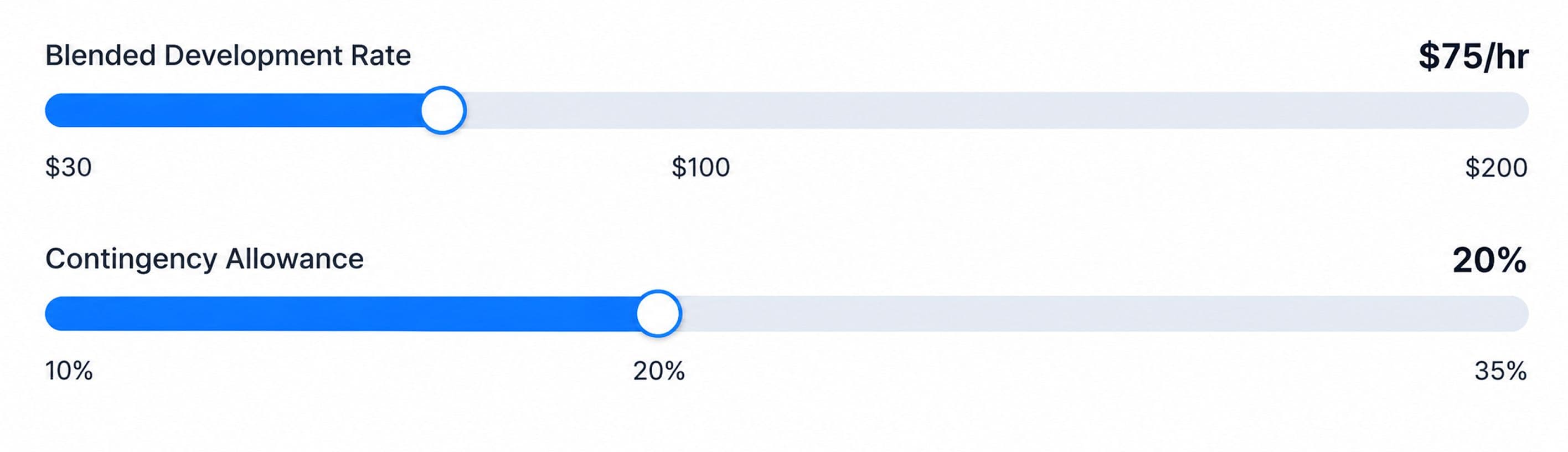
Estimated Project Budget
$49,500
Estimated Effort: 550 hours
Formula: assumed effort × hourly rate + contingency.
This simplified model excludes separately quoted third-party charges and ongoing operating costs. Actual effort may differ considerably.
👉 Get House Cleaning App Cost Estimate
The estimate becomes more useful when a development team validates it against actual user stories, integrations, acceptance criteria, and release requirements.
How Can A Cleaning Service App Make Money?
Your revenue model should reflect who pays, what value the business provides, and how much it costs to deliver each cleaning job.
1. Revenue From Cleaning Services
A cleaning company charges customers for completed jobs. Revenue depends on the booked price, completed appointments, discounts, refunds, and the business's ability to control labor and operating costs.
Example: A company completing 400 jobs at an average collected service price of $150 generates $60,000 in gross service revenue before expenses.
2. Marketplace Commission
A marketplace can earn a fee or percentage from eligible completed bookings. Its economics depend on customer acquisition costs, provider payouts, payment processing, refunds, support, and repeat booking behavior.
Example: A 15% commission on $60,000 in eligible completed bookings produces $9,000 in commission revenue before marketplace expenses.
3. Recurring Cleaning Plans
Weekly, biweekly, or monthly plans can create more predictable demand and help businesses plan staffing. Discounts should be based on actual delivery costs and the value of repeat business.
Example: A company may offer recurring packages with defined visit frequency, cancellation terms, and included services.
4. Business Contracts And Add-On Services
Operators may offer cleaning packages to landlords, property managers, vacation rental operators, or commercial clients. Add-ons such as interior appliance cleaning can increase order value when they are operationally feasible.
Example: A property manager may book scheduled turnovers across several properties under an agreed service contract.
Security, Payments, & Compliance Considerations In The US
Cleaning apps handle personal information, home addresses, access instructions, payment-related records, and potentially worker verification documents. These details deserve attention from the start of the design process.
1. Protect Customer And Cleaner Information
Use role-based access, secure authentication, encrypted connections, sensible data retention rules, and audit logs for sensitive administrative actions. Restrict access to property access instructions and expose them only to authorized people who need them for an assigned job.
Do not store raw payment card details unless the architecture and compliance requirements explicitly support that approach. A qualified payment provider can reduce the amount of sensitive payment data your system handles, although it does not eliminate all compliance responsibilities.
2. Design Payment And Refund Rules Clearly
Your payment workflow should define when a customer is charged, what happens when a cleaner cancels, how partial refunds are handled, and when providers receive payouts.
Marketplace operators should confirm their payment provider's requirements for connected accounts, identity verification, payout eligibility, and dispute management before development begins.
3. Review Worker Classification And Local Requirements
A marketplace that uses independent cleaners may face different obligations than a business that employs its own staff. Worker classification, licensing, insurance, tax treatment, and local business requirements can vary according to the operating model and jurisdiction.
Obtain advice from qualified legal, tax, and insurance professionals before launching. The app's terms and technical workflows should reflect the actual business arrangement rather than assuming every cleaner can automatically be treated as an independent contractor.
How To Launch A Cleaning Service App In The USA
A focused launch helps you test demand, maintain service quality, and understand customer acquisition costs before expanding into multiple markets. These steps provide a practical starting point for entering the US cleaning services market.
- Choose One Initial Service Area
A single city or metropolitan area makes it easier to reach target customers and recruit enough cleaners. Evaluate local competition, service pricing, travel distances, and potential demand before expanding.
- Build Supply And Demand Together
A successful marketplace needs enough qualified cleaners to fulfill customer bookings. Recruit suitable providers, verify required credentials, establish service standards, and ensure adequate availability before investing heavily in customer acquisition.
- Run A Controlled Pilot
A limited selection of services and appointment slots helps you identify operational problems before a wider release. Track failed bookings, late arrivals, cancellations, complaints, payment issues, and customer support resolution times.
- Expand Based On Evidence
Strong completion rates, positive customer feedback, and healthy contribution margins can indicate readiness for expansion. Add neighborhoods, providers, or service categories when your existing operations can maintain service quality and support additional demand.
Common Mistakes To Avoid During Cleaning App Development
Many cleaning apps struggle not because the idea is weak, but because the product is built around features instead of the real work required to complete a cleaning appointment.
- Building Too Much Before Validating Demand: Expensive features cannot compensate for a business model that customers do not want. Validate the service, pricing, and booking experience before committing to a large release.
- Ignoring Cleaner Availability: An app that accepts bookings without accounting for staff availability, travel time, and service duration can create scheduling conflicts and missed appointments.
- Using Unclear Pricing: Customers may abandon a booking when the final price differs unexpectedly from the initial estimate. Define how property size, add-ons, minimum charges, and exceptional requests affect the price.
- Treating Payments As A Simple Checkout: Refunds, cancellations, provider payouts, failed transactions, and disputes require explicit workflows, especially in a marketplace.
- Launching Without Operational Testing: Test actual cleaning scenarios, not just whether buttons work. An appointment may be technically successful but operationally unworkable if the cleaner lacks access instructions or the booking duration is unrealistic.
- Expanding Before Unit Economics Work: Entering more cities can increase support requirements, travel costs, and provider recruitment expenses. Confirm that the existing market can support profitable growth before scaling.
Final Remarks
House cleaning service app development can help cleaning businesses manage bookings, coordinate cleaners, improve customer communication, and build a foundation for expansion. The right product, however, depends on the business model, operational requirements, target market, and financial goals.
Start by validating customer demand and defining the booking workflow. Build the features needed to deliver a reliable service, test the product with real users, and track contribution margins alongside customer growth. Add advanced automation only when it solves a demonstrated business problem.
If you want to build a house cleaning service app for the US market, partner with a reliable on-demand home services app development company to discuss your requirements.
Frequently Asked Questions (FAQs)
How Much Does It Cost To Develop A House Cleaning Service App?
A basic booking app may require a planning budget of $15,000–$30,000, while a custom cleaning business app may cost $30,000–$60,000. A multi-provider marketplace or advanced platform can require $60,000–$250,000 or more, depending on scope, integrations, and development rates. These are illustrative estimates, not fixed market prices.
How Long Does It Take To Build A Cleaning Service App?
A basic app may take a few months, while a marketplace with customer and cleaner applications, payment workflows, and administrative tools may take several months or longer. The actual timeline depends on requirements, team size, integrations, testing, and feedback cycles.
Should I Build A Cleaning App Or A Marketplace?
Build a cleaning app if you operate your own company and need to digitize bookings and operations. Choose a marketplace if your business depends on connecting customers with multiple independent providers and managing their onboarding, availability, payments, and commissions.
How Can I Get More Customers For My Cleaning Service App?
Start with a clearly defined service area, optimize local landing pages, establish relevant business listings, build referral programs, and test paid acquisition channels. Track completed bookings and customer acquisition costs rather than relying solely on downloads or website traffic.
Is AI Necessary For A Cleaning Service App?
No. Most first releases can operate with conventional booking, scheduling, pricing, and notification systems. AI may become useful for support automation, demand forecasting, or job-duration predictions after the business has sufficient reliable data and a clear use case.
How Can I Make My Cleaning App Scalable?
Use a maintainable architecture, clear service boundaries, reliable database design, monitoring, automated testing, and secure access controls. Measure actual usage and performance before introducing complex infrastructure. Scaling should respond to demonstrated traffic and operational needs rather than hypothetical demand.