AI Summary
Heart monitoring apps create new opportunities for US healthcare businesses to deliver connected cardiac care. Explore their clinical and operational benefits. Discover remote monitoring, patient engagement, and data-driven insights. Learn how these solutions can support growth and better care coordination.
Key Takeaways
- Heart monitoring apps help healthcare businesses support cardiac patients beyond traditional clinical settings.
- Real-time heart data can support timely intervention and informed clinical decisions.
- Remote monitoring improves patient engagement and helps reduce unnecessary in-person visits.
- Secure integrations connect heart monitoring apps with existing healthcare systems and workflows.
- Strategic app development creates opportunities for scalable cardiac services and sustainable business growth.
A patient experiences an irregular heartbeat at home, but the next cardiology appointment is still days away. What if their healthcare provider could review relevant heart data remotely and identify when further evaluation may be needed? That possibility is changing how cardiac care can be delivered.
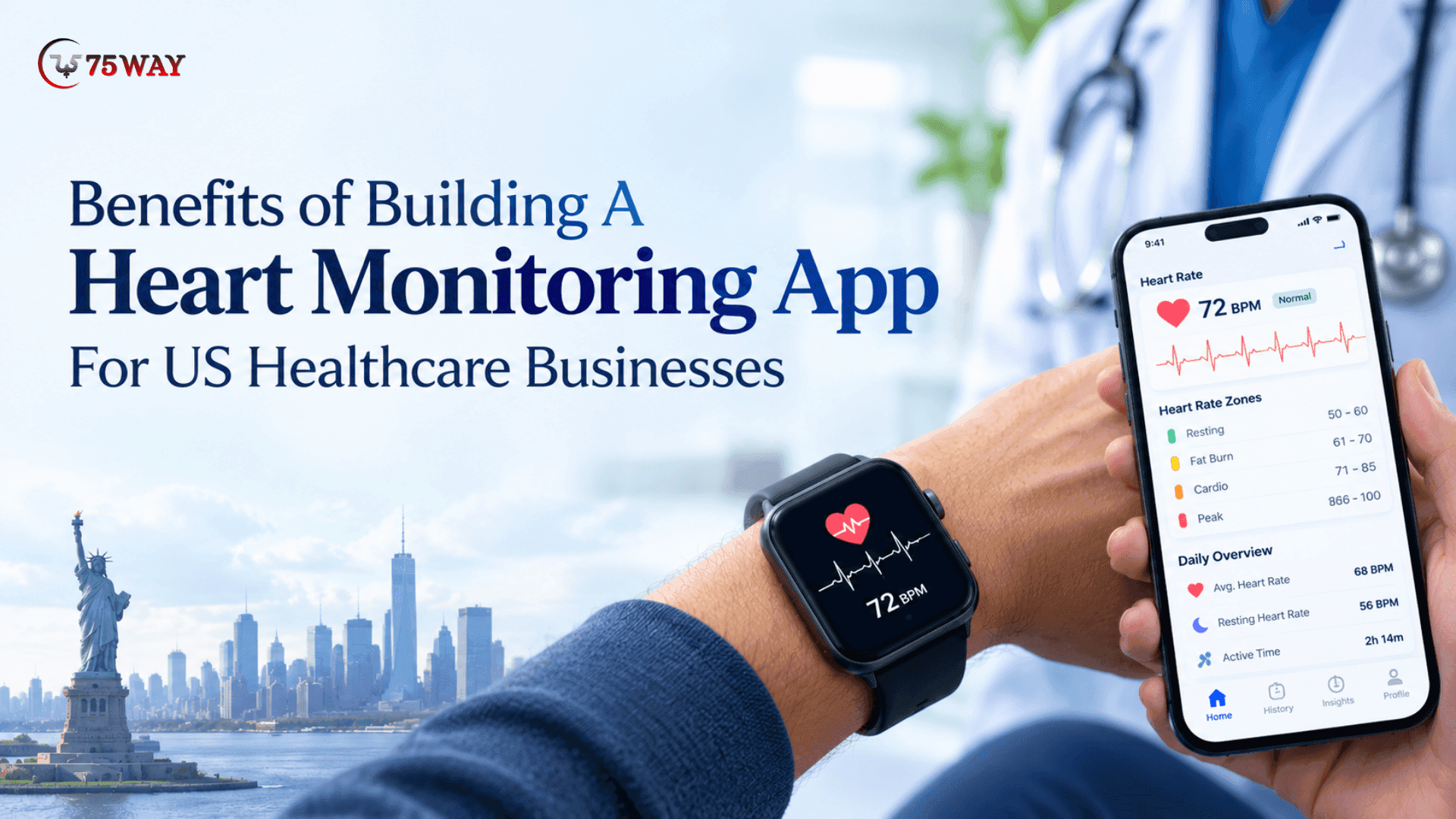
For healthcare businesses in the US, heart monitoring app development solutions offer an opportunity to extend care beyond hospital visits. These mobile applications can help patients track heart rate and related measurements, share readings with healthcare professionals, and stay connected with their care teams between appointments.
However, the opportunity goes beyond digital convenience. The right app can support remote patient monitoring, improve clinical workflows, and create new service opportunities for healthcare providers. This guide will define important benefits, along with the business case for investing in heart monitoring app development.
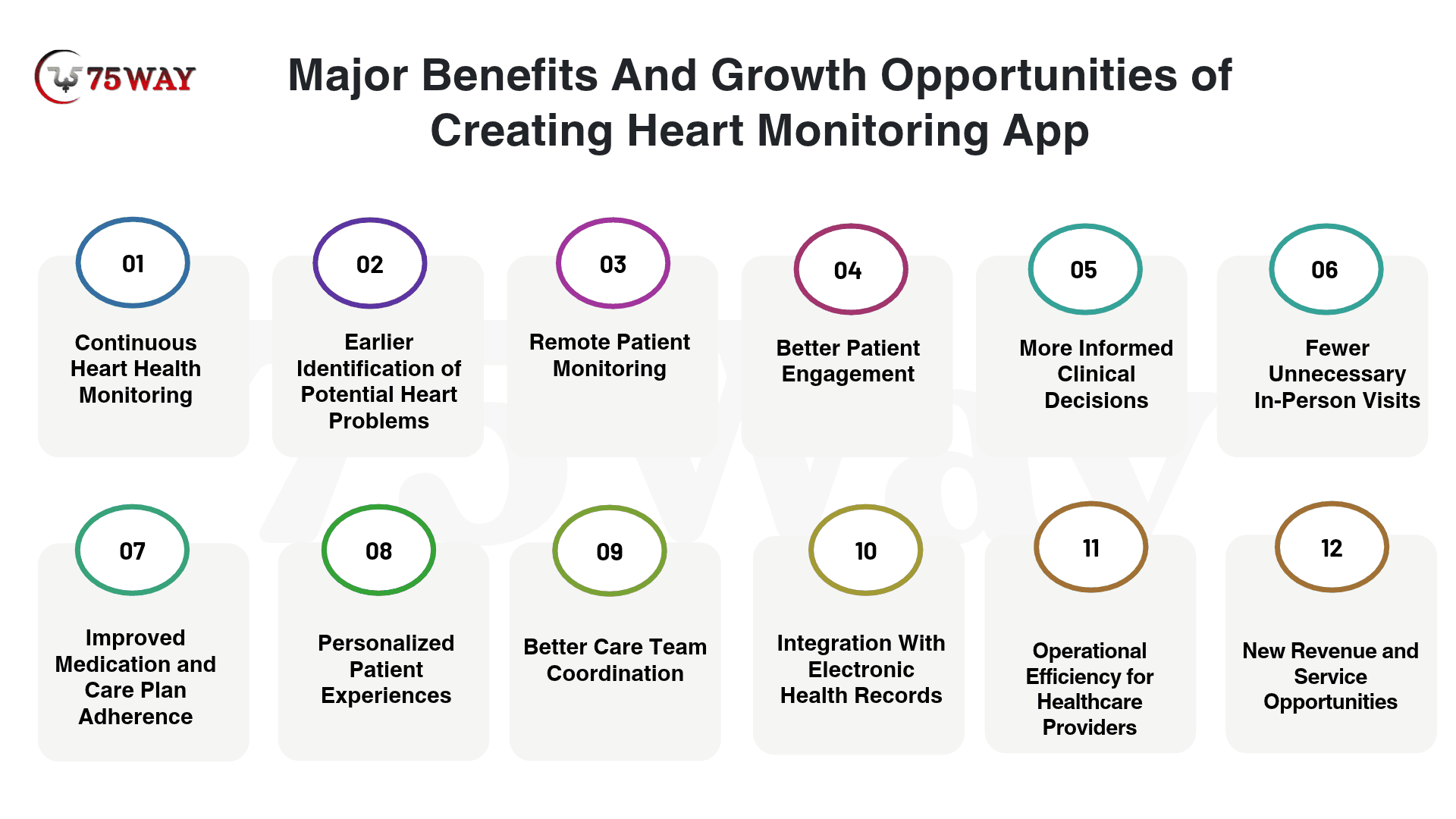
Major Benefits And Growth Opportunities of Creating Heart Monitoring App
For healthcare businesses, a heart monitoring app can extend cardiac care beyond hospital walls and routine checkups. Remote monitoring features can help providers track heart activity, identify concerning changes, and stay connected with patients between visits. The benefits and market opportunities make this app category worth exploring for healthcare startups and established providers.
1. Continuous Heart Health Monitoring
Heart monitoring apps can help patients track heart rate and, when supported by compatible devices, other cardiac measurements throughout daily life. This provides additional information between clinical appointments and helps patients observe changes over time.
- Track heart rate through compatible wearables and sensors.
- Review historical readings and measurement trends.
- Record symptoms alongside relevant health data.
- Share supported measurements with healthcare professionals.
The available monitoring capabilities depend on the connected device, sensor accuracy, and app design. A heart rate reading alone cannot diagnose a cardiac condition.
2. Earlier Identification of Potential Heart Problems
An app can help identify readings that fall outside configured thresholds or patterns that may warrant clinical review. When appropriately validated, these alerts can help healthcare teams prioritize follow-up and determine whether further assessment is needed.
- Configure alerts for selected heart rate thresholds.
- Notify users about readings requiring attention.
- Route relevant alerts to authorized care teams.
- Maintain records for clinical review.
An alert does not confirm a diagnosis. Clear escalation procedures and clinical oversight are necessary to prevent missed warnings, unnecessary alarms, and delayed care.
3. Remote Patient Monitoring
Remote patient monitoring allows healthcare providers to review eligible patient data without requiring every measurement to take place during an office visit. Heart monitoring apps can support this approach by transmitting readings from compatible devices to approved clinical systems.
- Collect measurements outside traditional healthcare settings.
- Share relevant readings with authorized providers.
- Support follow-up between scheduled appointments.
- Help clinicians review patients who need additional attention.
For US healthcare businesses, remote monitoring may expand access to follow-up care. Reimbursement eligibility, however, depends on applicable payer rules, services delivered, documentation, and other requirements.
4. Better Patient Engagement
Patients may find it difficult to stay involved in their care when health information is available only during occasional appointments. A well-designed app gives them a more accessible way to review their measurements and understand their monitoring routine.
- Display readings through clear, easy-to-understand dashboards.
- Provide reminders for scheduled measurements.
- Help patients maintain symptom and activity logs.
- Explain monitoring instructions in accessible language.
Engaged patients may be better prepared for clinical discussions and more aware of their health patterns. App design should avoid overwhelming users with unnecessary notifications or difficult-to-interpret medical information.
5. More Informed Clinical Decisions
Clinical decisions benefit from relevant information collected across different points in time. Heart monitoring apps can organize readings, symptom logs, and measurement histories so healthcare professionals have additional context when evaluating a patient's condition.
- Present historical readings and trends.
- Organize patient-reported symptoms and observations.
- Support review before follow-up consultations.
- Share data through approved clinical workflows.
These records complement professional assessment rather than replace it. Data quality, device limitations, and the patient's overall clinical context remain important when interpreting results.
6. Fewer Unnecessary In-Person Visits
Some follow-up appointments may be handled remotely when the patient's condition, care plan, and provider's judgment make that appropriate. Heart monitoring apps can support these interactions by allowing selected readings to be reviewed outside the clinic.
- Support remote review of eligible measurements.
- Help prepare patients for virtual consultations.
- Reduce travel for certain follow-up interactions.
- Keep relevant information accessible between appointments.
The app does not eliminate the need for physical examinations or emergency care. Healthcare providers must determine which patients can be monitored remotely and when an in-person assessment is necessary.
7. Improved Medication and Care Plan Adherence
Managing a cardiac care plan often involves multiple daily responsibilities. Heart monitoring apps can help patients remember prescribed routines and record relevant information, making it easier to discuss adherence concerns with their healthcare providers.
- Send reminders for prescribed medication schedules.
- Record symptoms and possible medication-related concerns.
- Provide reminders for scheduled heart measurements.
- Display personalized care instructions approved by clinicians.
Medication reminders should reflect the patient's prescribed plan and must not independently recommend dosage changes. The purpose is to support adherence and communication, not replace medical guidance.
8. Personalized Patient Experiences
Cardiac patients have different monitoring needs, routines, and care plans. A personalized app can present relevant information and reminders based on clinician-approved settings, helping users focus on the measurements and tasks that matter to them.
- Customize dashboards for individual monitoring needs.
- Set reminders based on approved care plans.
- Display relevant measurement trends and summaries.
- Adapt accessibility settings to user preferences.
Personalization can make the experience more useful, but clinical recommendations must remain evidence-based. Healthcare businesses should also ensure that personalized interfaces do not hide important warnings or create misleading health interpretations.
9. Better Care Team Coordination
Cardiac care may involve primary care physicians, cardiologists, nurses, and other healthcare professionals. A heart monitoring app can make relevant patient information easier to share among authorized team members when supported by appropriate integrations and permissions.
- Provide access to authorized patient monitoring records.
- Share relevant readings with designated care teams.
- Support follow-up tasks and clinical communication.
- Maintain records of data access and activity.
Better coordination can reduce information gaps between interactions. The app must establish clear access controls and workflows so that important alerts reach the appropriate team without creating unrealistic expectations about response times.
10. Integration With Electronic Health Records
Healthcare professionals often rely on electronic health records (EHRs) to review patient histories and document care. Connecting a heart monitoring app with compatible clinical systems can reduce fragmented information and help authorized teams access relevant measurements within existing workflows.
- Transfer supported measurements to compatible EHR systems.
- Reduce duplicate manual data entry.
- Connect readings with relevant patient records.
- Support standardized healthcare data exchange where available.
Integration depends on the provider's systems, vendor capabilities, and technical requirements. US healthcare businesses should assess interoperability, data accuracy, patient matching, and applicable privacy obligations before deployment.
11. Operational Efficiency for Healthcare Providers
Reviewing scattered readings, collecting information manually, and coordinating routine follow-ups can consume valuable staff time. A well-designed heart monitoring app can organize selected tasks and information, allowing healthcare teams to focus more attention on clinical priorities.
- Organize readings in centralized monitoring dashboards.
- Automate selected reminders and data collection tasks.
- Flag readings requiring review under approved protocols.
- Generate summaries for appropriate clinical workflows.
Automation should reduce administrative friction without creating excessive alerts or additional documentation burdens. Healthcare businesses should measure actual workflow improvements during implementation rather than assume that every digital process saves time.
12. New Revenue and Service Opportunities
Heart monitoring apps can help healthcare businesses develop digital cardiac care services alongside traditional consultations. Depending on their business model and applicable regulations, providers may offer remote monitoring programs, virtual follow-ups, or ongoing patient support.
- Introduce eligible remote patient monitoring services.
- Offer virtual follow-up and care coordination programs.
- Support partnerships with compatible wearable device providers.
- Develop subscription-based services where legally and commercially appropriate.
Revenue depends on patient demand, service delivery costs, payer contracts, and applicable reimbursement rules. Healthcare businesses should validate the financial model before launch rather than treat app development as a guaranteed source of income.
Why Should Healthcare Businesses Invest in Heart Monitoring App Development?
The case for investing in a heart monitoring app comes down to how healthcare businesses can deliver care, connect with patients, and build sustainable digital services.
1. Growing Demand for Connected Cardiac Care
Patients increasingly expect convenient ways to access health information and communicate with healthcare providers. Heart monitoring apps can support this demand by extending selected monitoring and follow-up activities beyond traditional clinical settings.
For healthcare businesses, this creates an opportunity to develop digital services around established cardiac care programs rather than relying exclusively on in-person interactions.
2. Opportunities in Remote Patient Monitoring
Remote patient monitoring can help eligible providers collect and review patient measurements outside the clinic. A dedicated app may support the data collection, patient communication, and monitoring workflows required for these services.
However, reimbursement is not automatic. Businesses must verify current Medicare, Medicaid, and commercial payer requirements, including applicable service criteria, documentation, consent, and billing rules.
3. Stronger Patient Relationships
Regular access to relevant health information can create more opportunities for communication between patients and care teams. Reminders, monitoring summaries, and remote follow-ups can help healthcare businesses maintain contact beyond scheduled appointments.
The objective should be meaningful care engagement, not simply increasing app usage. A successful product should help patients understand their monitoring responsibilities and know when to contact a healthcare professional.
4. Differentiation in a Competitive Healthcare Market
A well-designed heart monitoring service can help a healthcare business distinguish its patient experience from providers offering only traditional appointments. Useful features, accessible design, reliable support, and clear clinical workflows can make the service more attractive to suitable patient groups.
Before investing, businesses should assess local demand, competitor offerings, target patient populations, and the clinical resources required to deliver the service.
5. Opportunities to Expand Digital Healthcare Services
A heart monitoring app can become part of a broader digital health strategy. Once the core platform is established, a business may explore compatible wearable integrations, telehealth workflows, patient education, and additional monitoring capabilities.
Expansion should follow clinical validation, privacy reviews, and evidence of patient demand. Adding more features without a clear need can increase costs and make the product harder to use.
Essential Considerations Before Developing a Heart Monitoring App
A promising business case is only one part of a successful healthcare product. US healthcare businesses must also consider clinical safety, privacy, interoperability, and regulatory requirements.
- HIPAA and Privacy: Determine whether HIPAA applies to the business and the app's data flows. Implement appropriate safeguards, access controls, and agreements where required.
- FDA Requirements: Evaluate whether the app's intended purpose and functions fall under medical device regulations. Software that diagnoses, predicts, or guides treatment may face requirements that differ from general wellness tracking.
- Data Security: Protect sensitive information through appropriate encryption, authentication, audit logging, and security testing.
- Device Compatibility: Verify the accuracy, supported measurements, and limitations of connected wearables and sensors.
- Clinical Oversight: Define alert thresholds, escalation processes, response responsibilities, and emergency instructions.
- Interoperability: Assess integration requirements for EHRs and other clinical systems before selecting the technology stack.
- Accessibility: Design for different ages, abilities, and levels of digital literacy.
- Reimbursement Validation: Confirm applicable payer requirements before building the business model around remote monitoring revenue.
These considerations should shape product planning from the beginning, not become a checklist after development is complete.
Conclusion
To sum up, heart monitoring apps give US healthcare businesses an opportunity to extend cardiac care beyond traditional appointments, improve patient engagement, and support more informed clinical decisions. Features such as remote monitoring, personalized reminders, EHR integration, and secure data sharing can help providers develop more connected patient experiences.
However, long-term success depends on more than building an app. Healthcare businesses must prioritize clinical safety, data privacy, regulatory compliance, device reliability, and a sustainable service model. A focused development strategy can help turn a promising digital health concept into a practical solution for patients and providers.
If you want to build a revenue-driven heart monitoring app, you can partner with a professional healthcare app development firm in the USA.
Frequently Asked Questions (FAQs)
How Does A Heart Monitoring App Help Healthcare Providers?
A heart monitoring app can help providers review patient readings, track measurement trends, coordinate follow-ups, and collect relevant information between appointments. Its usefulness depends on data accuracy, clinical workflows, and appropriate oversight.
Can Heart Monitoring Apps Generate Revenue For Healthcare Businesses?
Yes. Depending on the business model, an app may support remote monitoring programs, virtual follow-ups, or subscription-based services. Revenue depends on patient demand, operating costs, payer requirements, and applicable regulations.
How Much Does It Cost To Develop A Heart Monitoring App?
Development costs depend on feature complexity, wearable integrations, EHR connectivity, security requirements, and regulatory needs. A basic tracking app generally requires less investment than a clinically oriented platform with advanced analytics and extensive integrations.
Are Heart Monitoring Apps Subject To FDA Regulations?
Some are. FDA oversight depends on the app's intended use, functionality, and associated medical claims. General wellness features may be treated differently from software intended to diagnose, monitor, or guide treatment for medical conditions.
Do Heart Monitoring Apps Need To Comply With HIPAA?
HIPAA applies to covered entities and business associates when the relevant requirements are met. Healthcare businesses should evaluate how the app collects, stores, processes, and shares protected health information and implement appropriate safeguards.
Can A Heart Monitoring App Integrate With Electronic Health Records?
Yes. Depending on the EHR vendor and available interfaces, an app can exchange supported measurements and patient information with clinical systems. Integration planning should address interoperability, patient matching, data accuracy, and access permissions.