AI Summary
E-commerce mobile app development costs depend on your features, technology, and business goals. This guide explores pricing from $20,000 to $450,000+, including hidden expenses and maintenance. Compare development approaches, plan budgets, and understand ROI before investing in your shopping app.
Key Takeaways
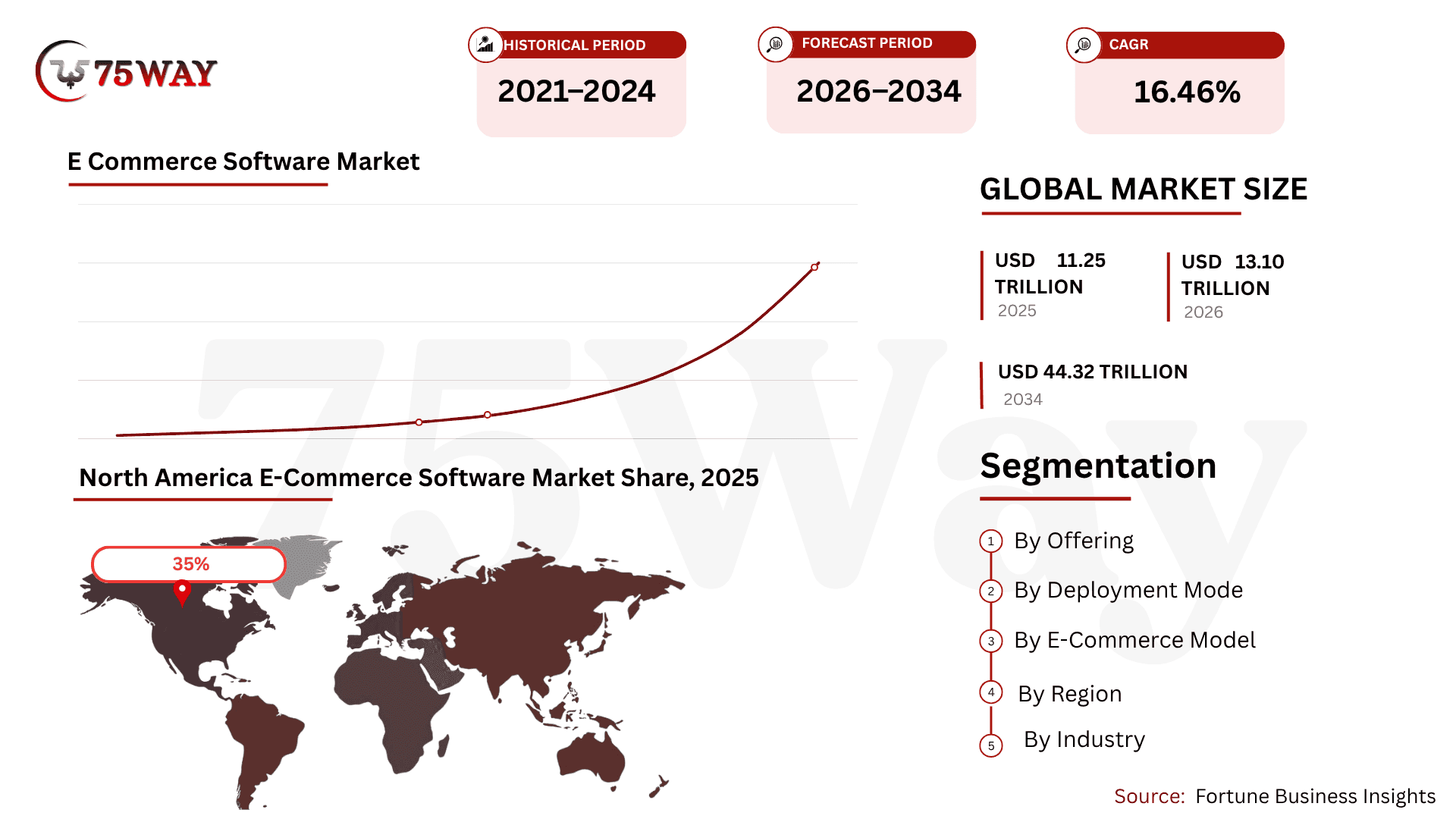
- The global e-commerce software market is projected to grow from $13.10 billion in 2026 to $44.32 billion by 2034.
- E-commerce mobile app development can cost $20,000 to $450,000+, depending on features, integrations, and complexity.
- Custom features, platform selection, and backend integrations significantly influence total development costs.
- Maintenance, hosting, third-party services, and enhancements increase long-term app ownership expenses.
- Strategic MVP planning helps control budgets while prioritizing essential shopping and checkout experiences.
The cost of e-commerce mobile app development ranges between $20,000 and $450,000+, depending on your business model, required features, technology choices, and integration needs.
For founders and business owners, the challenge is not simply finding a development company with competitive pricing. It is understanding the complete investment, avoiding hidden expenses, and choosing features that support business growth.
A basic shopping app connected to an existing e-commerce platform has different requirements from a custom marketplace with advanced inventory management, personalized recommendations, and multiple payment integrations. Understanding these differences helps you set a realistic budget before app development begins.
This guide explains e-commerce mobile app development costs, feature-wise pricing, technology options, maintenance expenses, and return on investment (ROI). You will also learn how to estimate your project budget and choose a development approach that aligns with your business goals.
What's The Cost of Developing An E-Commerce Mobile App
E-commerce mobile app development can cost $20,000 to $60,000+ for a basic MVP, $60,000 to $150,000 for a customized shopping app, and $150,000 to $450,000+ for complex commerce platforms and multi-vendor marketplaces.
These figures are indicative budgeting estimates for custom development, not fixed prices or guaranteed vendor quotes. Your actual investment will depend on the application's scope, design requirements, backend architecture, integrations, testing needs, and the development team's rates.
1. Simple/Basic Ecommerce App Cost: $20,000 – $60,000+
- Includes product catalogs, search, cart, and checkout.
- Supports essential customer accounts and basic order tracking. Estimated Timeline: 2 to 4+ months
2. Mid-Level/Growth-Focused Ecommerce App Cost: $60,000 – $150,000+
- Adds loyalty programs, analytics, and personalized recommendations.
- Integrates shipping providers, payment gateways, and marketing tools. Estimated Timeline: 4 to 6+ months
3. Enterprise/Advanced Ecommerce App Cost: $150,000 – $300,000+
- Supports complex inventory, ERP integrations, and automation.
- Handles high traffic, advanced analytics, and security. Estimated Timeline: 6 to 9+ months
4. Complex/Multi-Vendor Marketplace App Cost: $300,000 – $450,000+
- Includes seller dashboards, commissions, payouts, and vendor management.
- Supports marketplace administration, disputes, and multiple fulfillment workflows.
Estimated Timeline: 8 to 12+ months
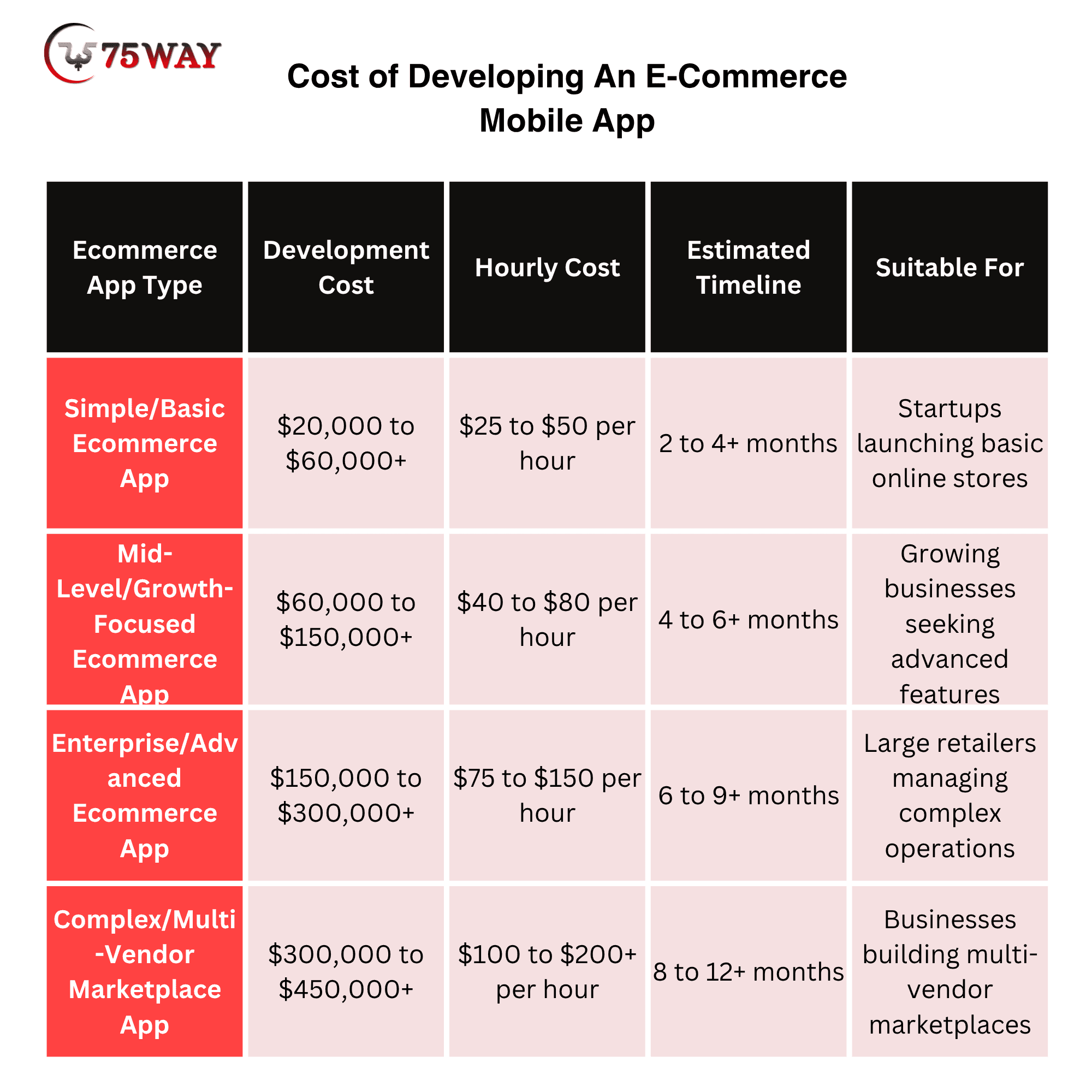
These categories can overlap. A marketplace with limited functionality may cost less than a highly customized single-brand shopping app. The ranges are intended to help with initial planning rather than represent a verified average of US development contracts.
Before comparing proposals, confirm whether the quoted price includes discovery, UI/UX design, backend development, quality assurance, deployment, and post-launch support. Two companies can quote very different amounts because their scopes and assumptions are not the same.
Stage-Wise Cost of E-Commerce Mobile App Development
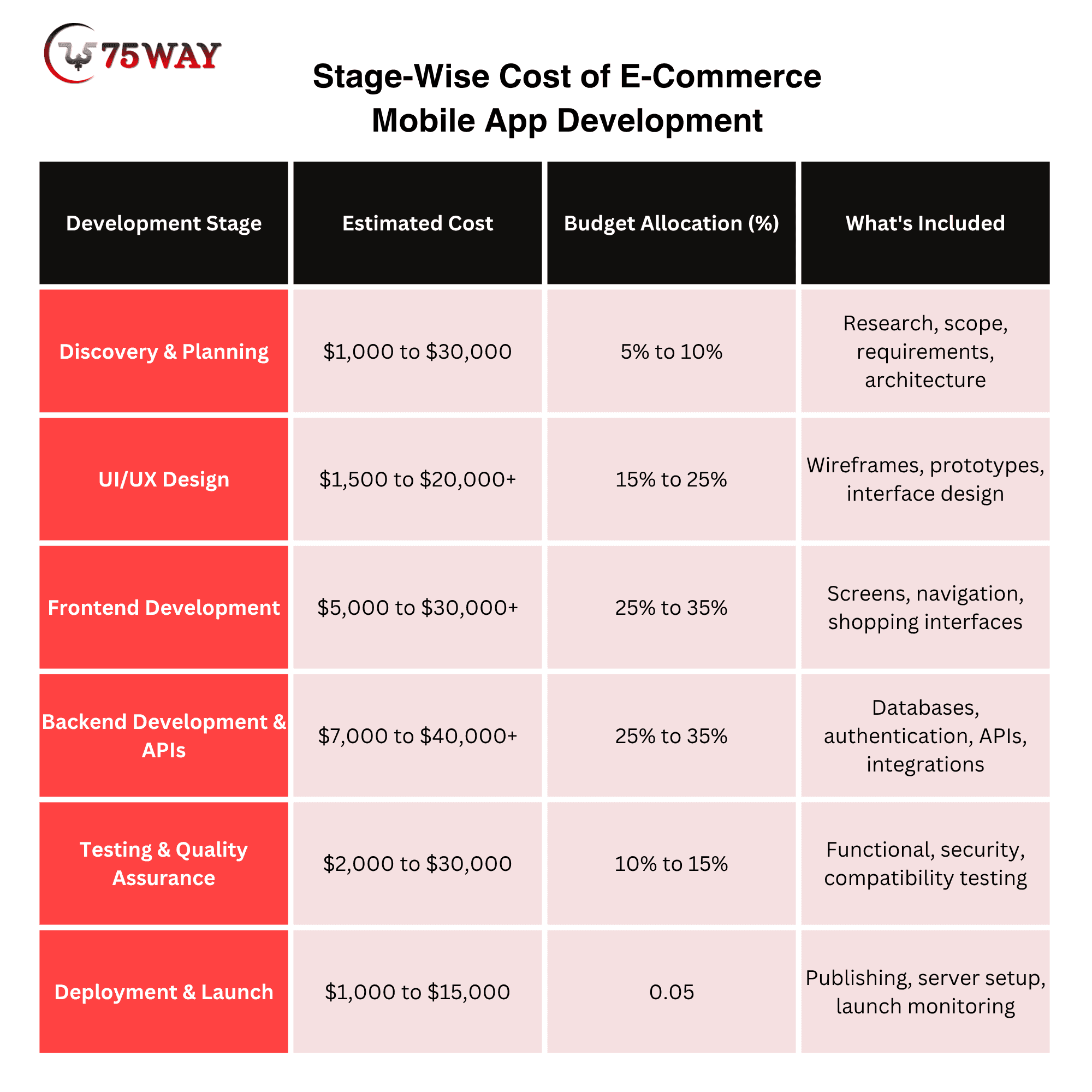
A successful e-commerce app requires more than an attractive storefront, and every development stage adds to the overall investment. Design, coding, payment integration, and testing each come with different cost considerations. The breakdown below explores the cost of each stage to help you prepare a realistic budget for your app.
1. Discovery & Planning: 5% to 10%
Defines project goals, target users, requirements, scope, and technical direction.
Estimated Cost: $1,000 to $30,000
2. UI/UX Design: 15% to 25%
Creates user journeys, wireframes, prototypes, and visually appealing app interfaces.
Estimated Cost: $1,500 to $20,000+
3. Frontend Development: 25% to 35%
Builds interactive customer-facing screens for browsing, shopping, and checkout.
Estimated Cost: $5,000 to $30,000+
4. Backend Development & APIs: 25% to 35%
Develops databases, authentication, inventory management, payment processing, and integrations.
Estimated Cost: $7,000 to $40,000+
5. Testing & Quality Assurance: 10% to 15%
Checks app functionality, fixes bugs, and verifies security and device compatibility.
Estimated Cost: $2,000 to $30,000
6. Deployment & Launch: 5%
Publishes the app, configures servers, and monitors initial performance.
Estimated Cost: $1,000 to $15,000
How To Calculate Cost of E-Commerce Application Development
To estimate your e-commerce mobile app development cost, calculate the total development hours, multiply them by the development team's hourly rates, and add expenses for integrations, testing, deployment, and other requirements.
Total E-Commerce App Development Cost = (Total Development Hours × Hourly Rate) + UI/UX Design Cost + Third-Party Integration Cost + Testing and Deployment Cost + Other Expenses
Suppose your e-commerce app requires 1,000 development hours at a developer hourly rate of $50.
- Development Cost = 1,000 × $50 = $50,000
- UI/UX Design Cost = $8,000
- Third-Party Integration Cost = $5,000
- Testing Cost = $5,000
- Deployment Cost = $2,000
- Other Expenses = $5,000
Total E-Commerce App Development Cost = $50,000 + $8,000 + $5,000 + $5,000 + $2,000 + $5,000 = $75,000
Key Factors That Determine Your E-Commerce Mobile App Development Cost
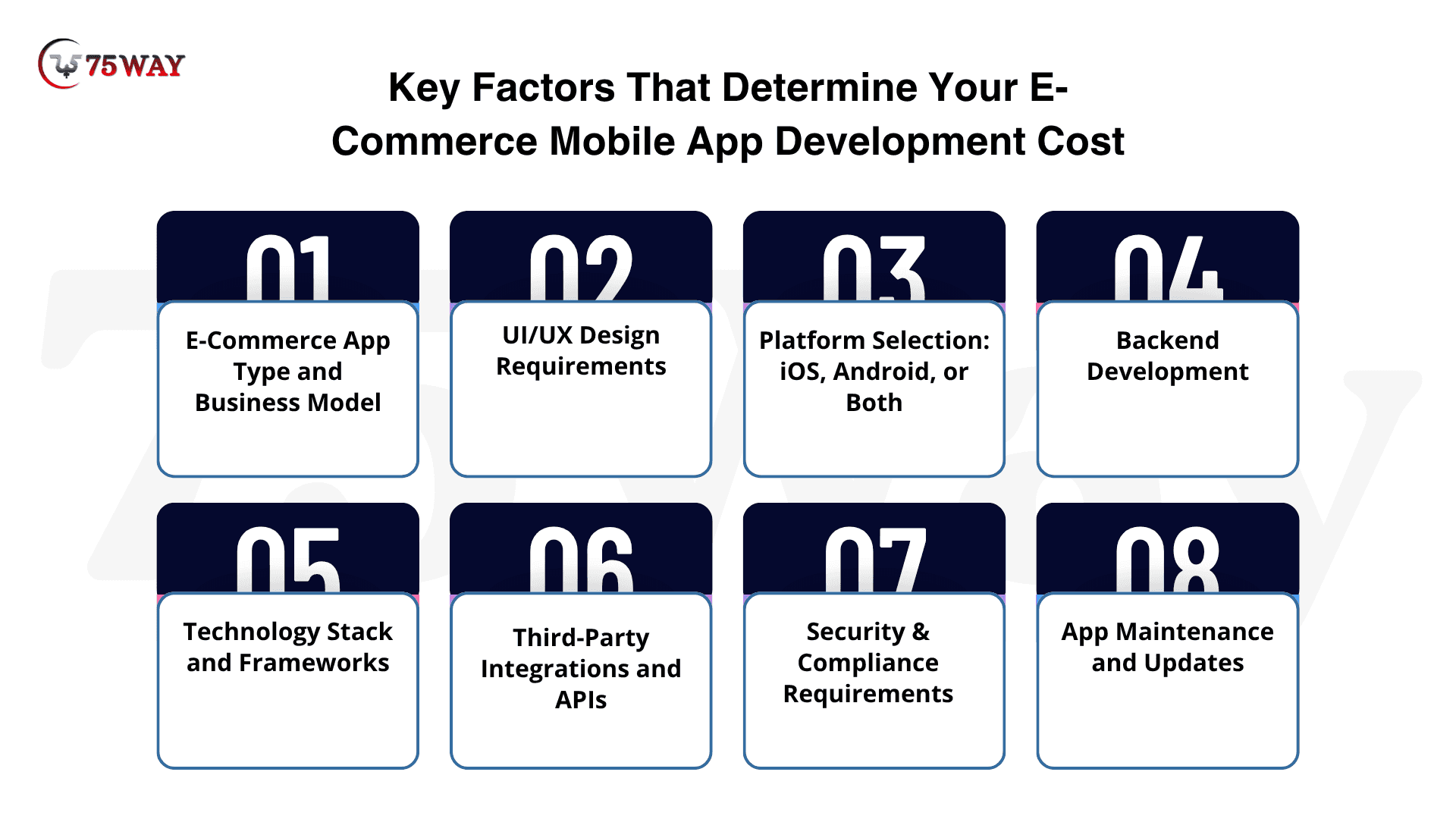
Your e-commerce app budget depends on more than the number of screens or products you plan to offer. Custom features, payment systems, security requirements, and scalability needs can significantly affect development expenses. The major cost factors listed below will help you understand these variables and make informed budgeting decisions.
1. E-Commerce App Type and Business Model
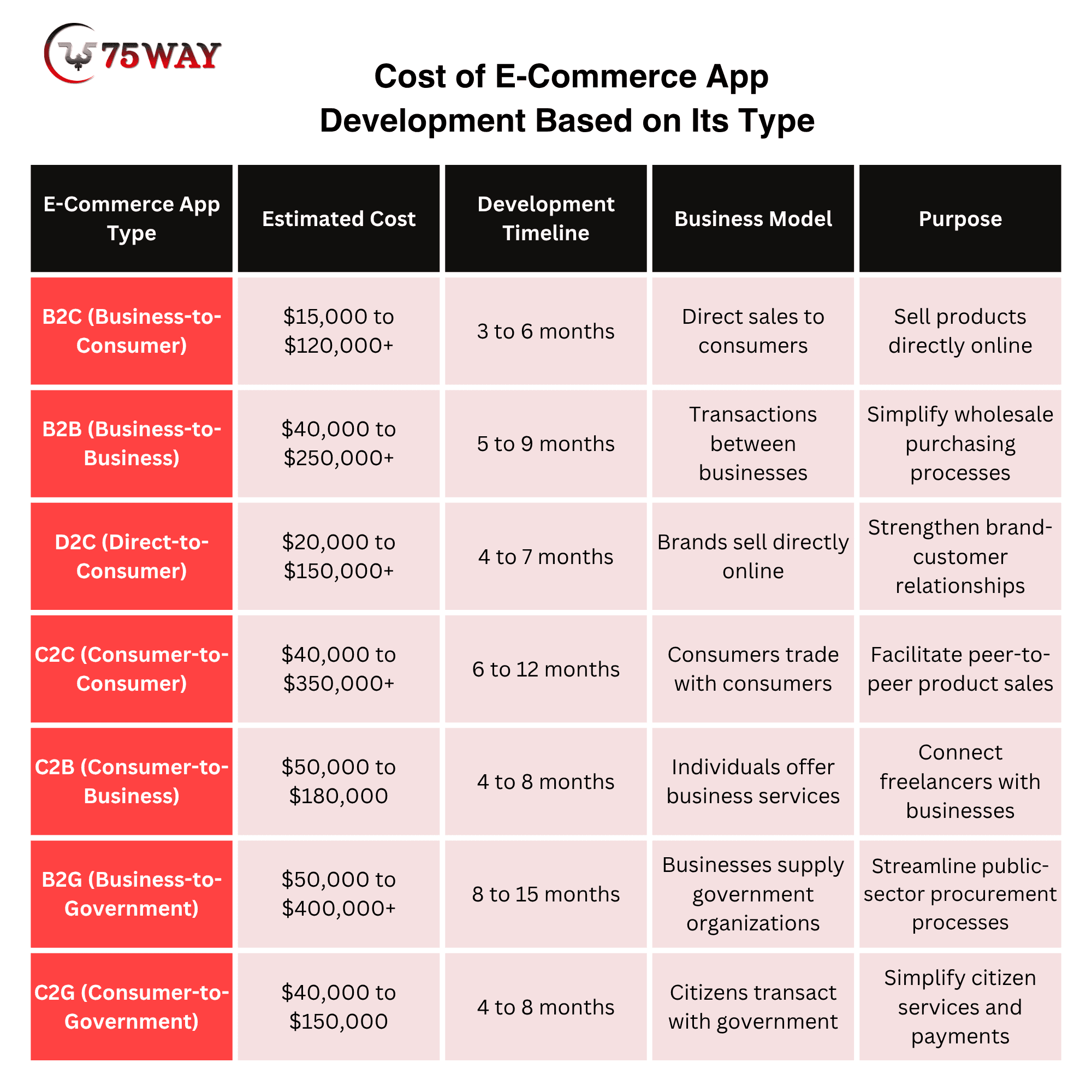
Your app’s cost depends on whether you are building a single-vendor store, a multi-vendor marketplace, or a subscription-based platform. Each model requires different features, workflows, and management tools, which directly affect development expenses.
- B2CEcommerce App: $15,000 to $120,000+
- B2BEcommerce App: $40,000 to $250,000+
- D2C Ecommerce App: $20,000 to $150,000+
- C2CEcommerce App: $40,000 to $350,000+
- C2BEcommerce App: $50,000 to $180,000
- B2G Ecommerce App: $150,000 to $400,000+
- C2G Ecommerce App: $40,000 to $150,000
2. UI/UX Design Requirements
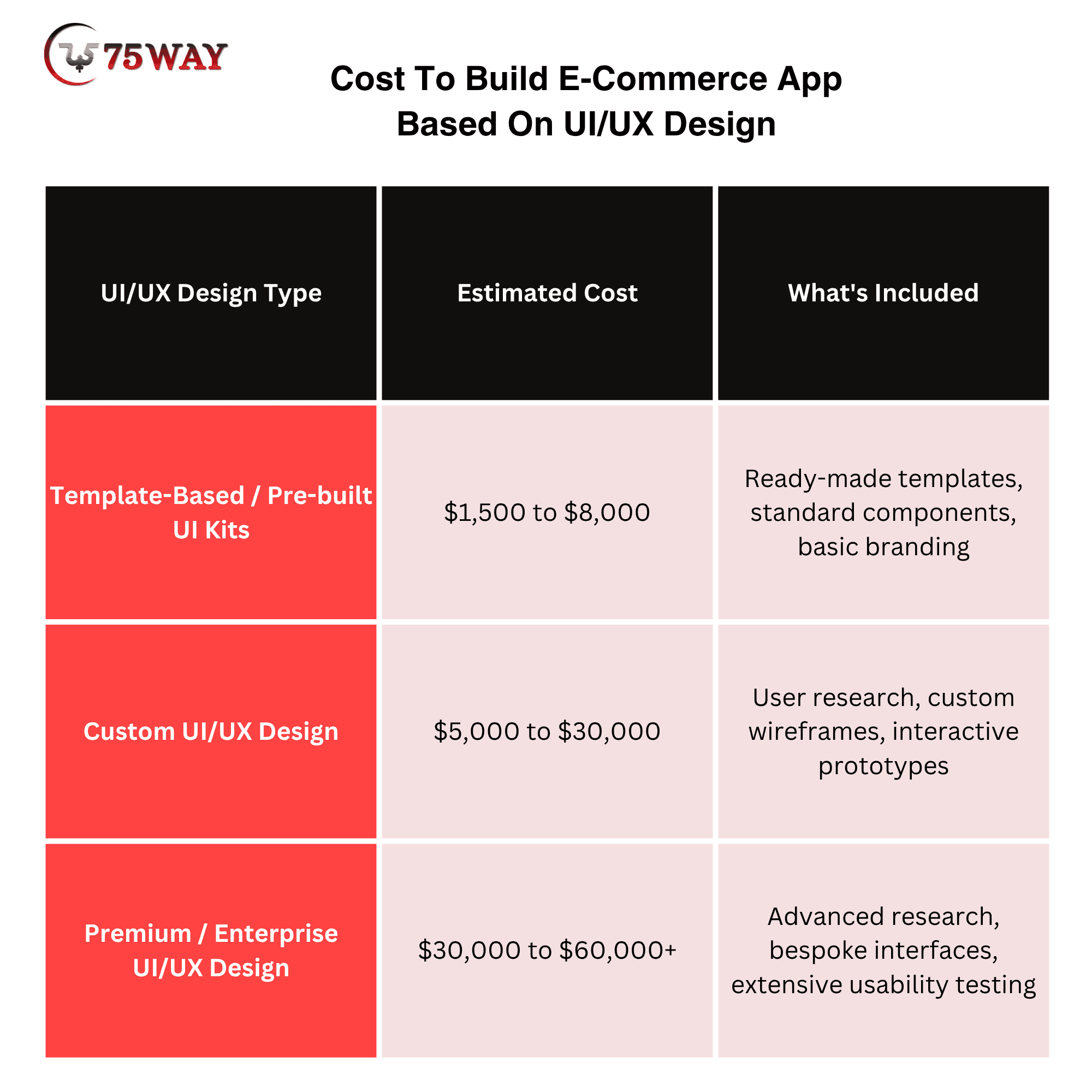
A simple shopping interface costs less than a customized design with personalized recommendations, interactive elements, and advanced animations. Investing in intuitive navigation and a smooth checkout experience can improve customer engagement and conversion rates.
- Template-Based/Pre-built UI Kits: $1,500 to $8,000
Use ready-made templates and standard components to reduce design time and costs. They suit startups and MVPs that need a functional shopping interface with minimal customization.
- Custom UI/UX Design: $5,000 to $30,000
Focuses on brand identity, customer preferences, and intuitive shopping journeys. It includes user research, tailored wireframes, interactive prototypes, and usability testing to create a distinctive shopping experience.
- Premium/Enterprise UI/UX Design: $30,000 to $60,000+
Delivers sophisticated interfaces for large businesses with complex customer journeys and advanced requirements. It involves extensive research, personalized experiences, detailed prototyping, and comprehensive usability testing.
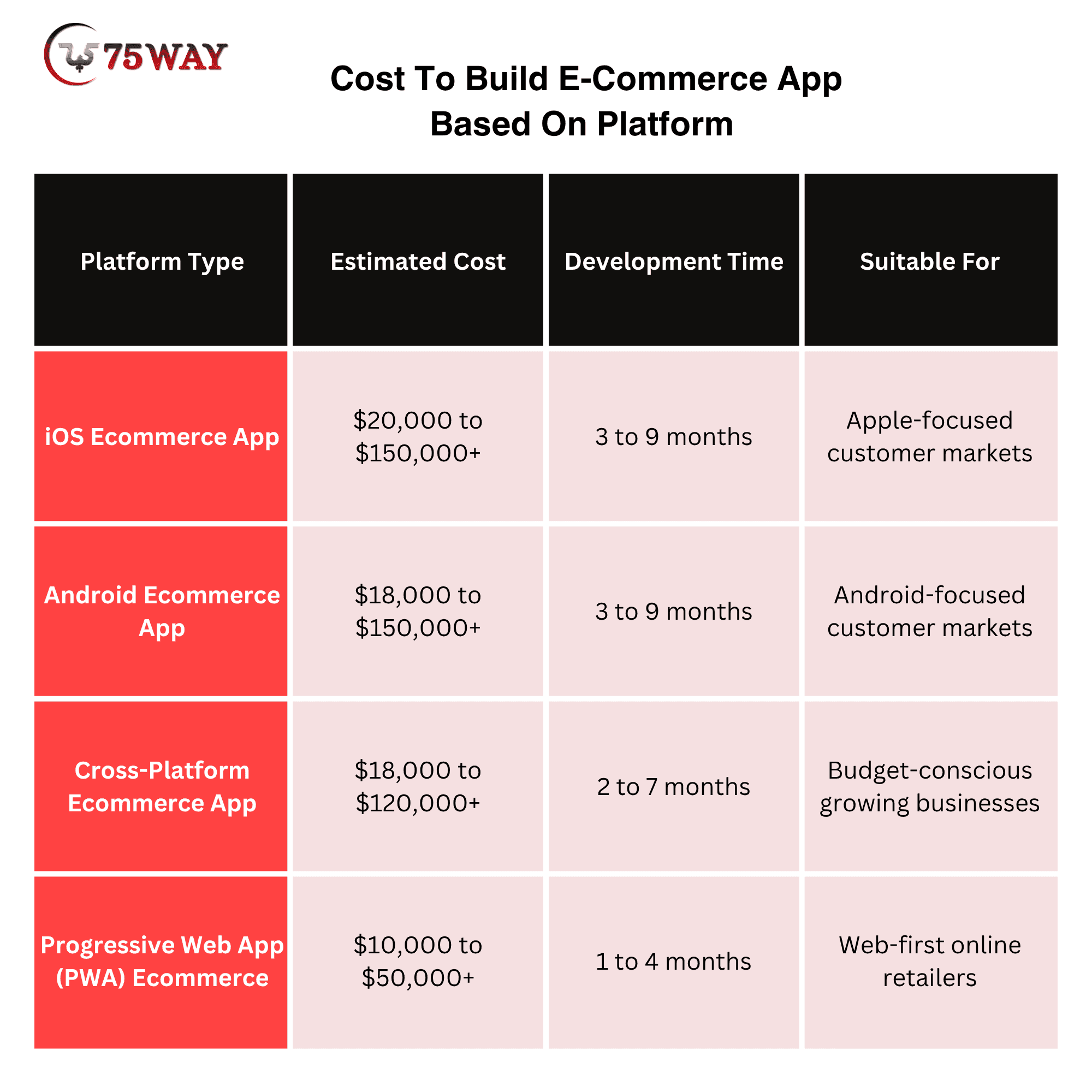
3. Platform Selection: iOS, Android, or More
Developing separate native apps for iOS and Android generally requires more resources than using a cross-platform framework. Your platform choice affects development time, testing requirements, and the overall project budget.
- iOS Ecommerce App: $25,000 to $150,000
- Android Ecommerce App: $20,000 to $150,000
- Cross-Platform Ecommerce App: $20,000 to $120,000
- Progressive Web App (PWA) Ecommerce: $10,000 to $50,000
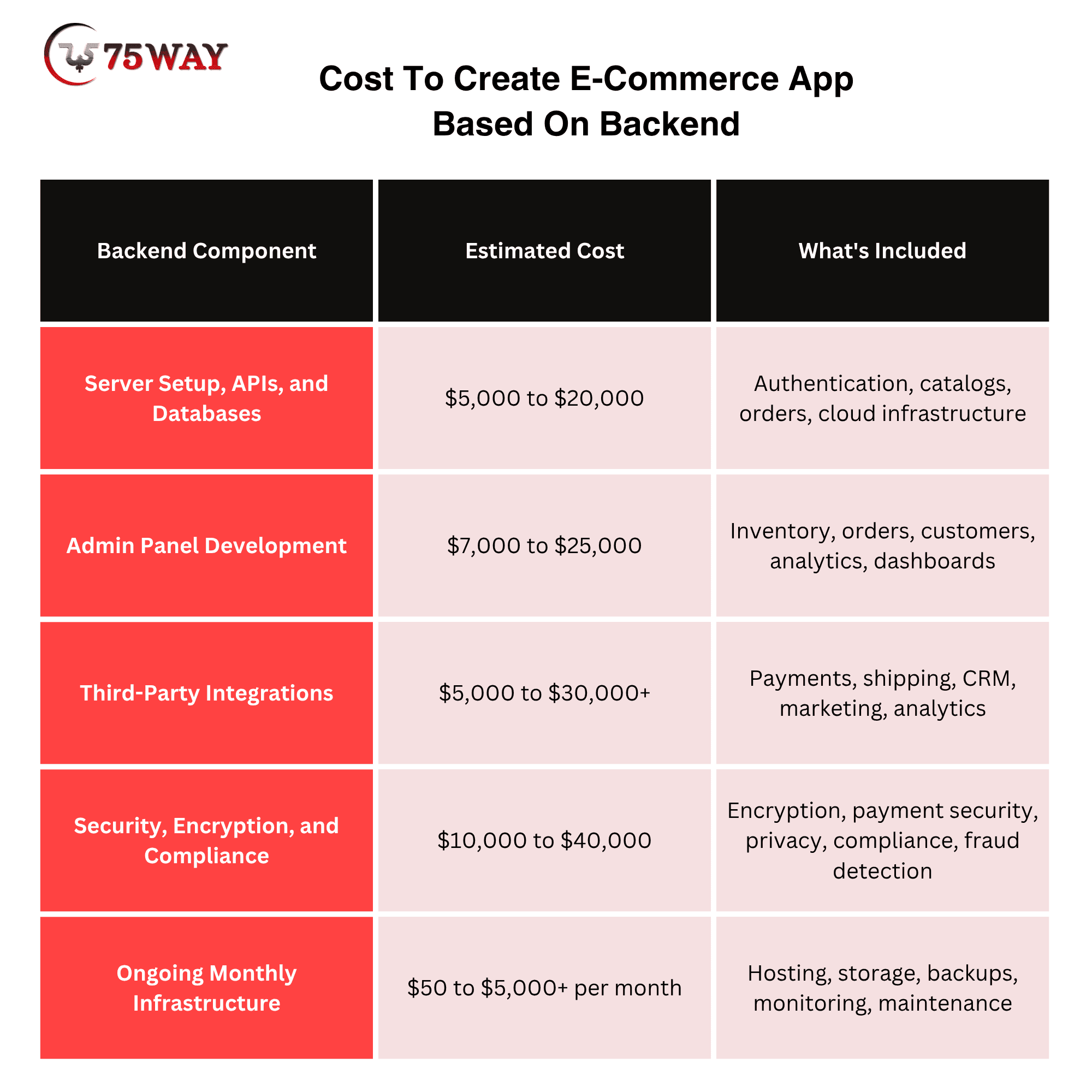
4. Backend Development
The backend manages essential operations, including user accounts, product catalogs, inventory, orders, and payments. Advanced requirements, such as real-time synchronization, automated workflows, and complex databases, increase development costs.
- Server Setup, APIs, and Databases: $5,000 to $20,000
- Admin Panel Development: $7,000 to $25,000
- Third-Party Integrations: $5,000 to $30,000+
- Security, Encryption, and Compliance: $10,000 to $40,000
- Ongoing Monthly Infrastructure: $50 to $5,000+ per month
5. Technology Stack and Frameworks
The programming languages, frameworks, databases, and cloud services you choose influence development expenses and long-term scalability. Specialized technologies or complex architectures may require experienced developers, increasing hourly rates and implementation costs.
Estimated Cost: $5,000 to $30,000+
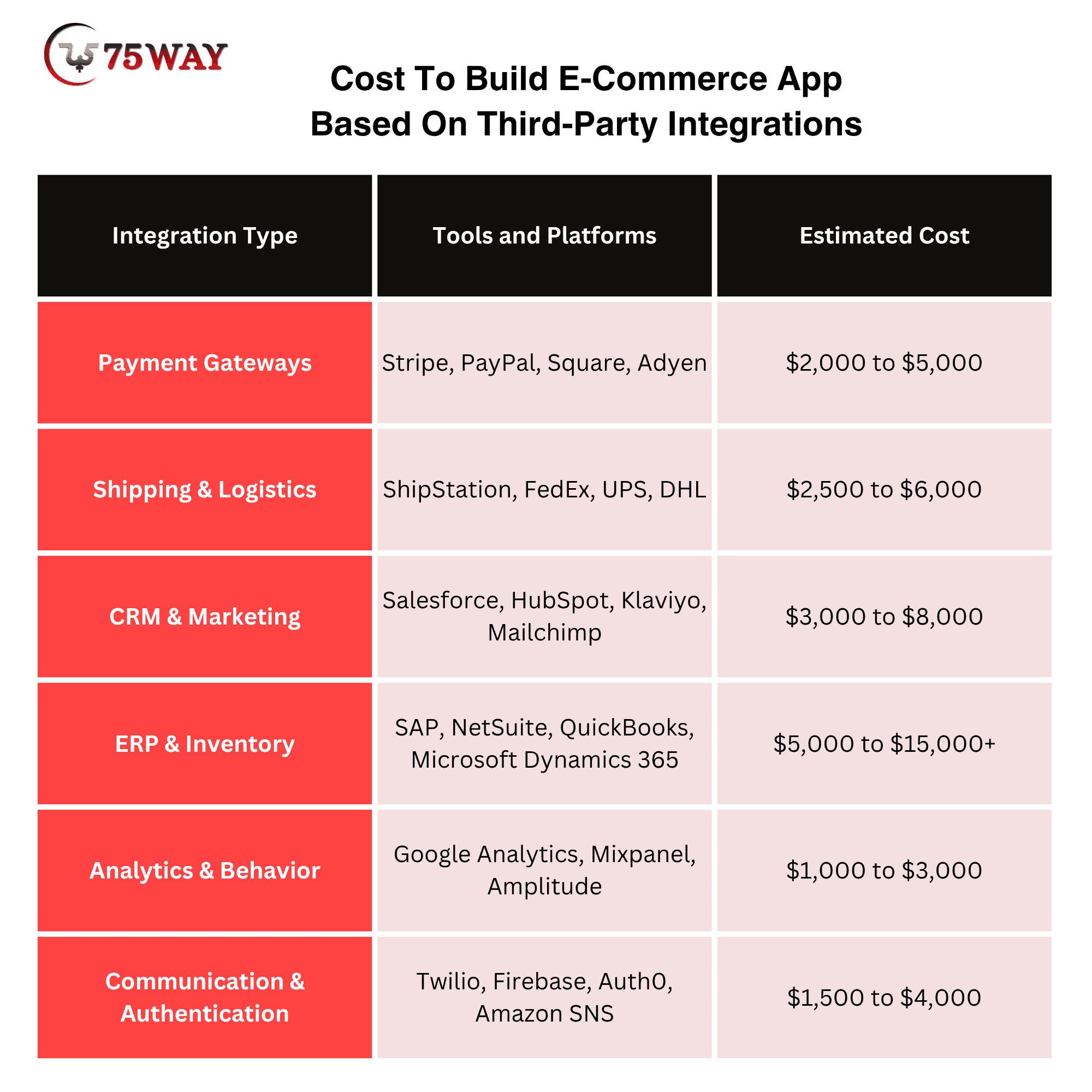
6. Third-Party Integrations and APIs
Integrations with payment gateways, shipping providers, CRM systems, analytics tools, and marketing platforms add functionality to your app. Development complexity, API licensing fees, and ongoing subscription charges can increase the overall cost.
- Payment Gateways: $2,000 to $5,000
Integrates secure payment processing for seamless customer transactions.
- Shipping & Logistics: $2,500 to $6,000
Connects shipping providers for automated order fulfillment.
- CRM & Marketing: $3,000 to $8,000
Supports customer management, email campaigns, and personalized promotions.
- ERP & Inventory: $5,000 to $15,000+
Synchronizes inventory, finances, orders, and business operations.
- Analytics & Behavior: $1,000 to $3,000
Tracks customer behavior, sales performance, and conversion trends.
- Communication & Authentication: $1,500 to $4,000
Enables secure logins, notifications, and customer communication.
7. Security & Compliance Requirements
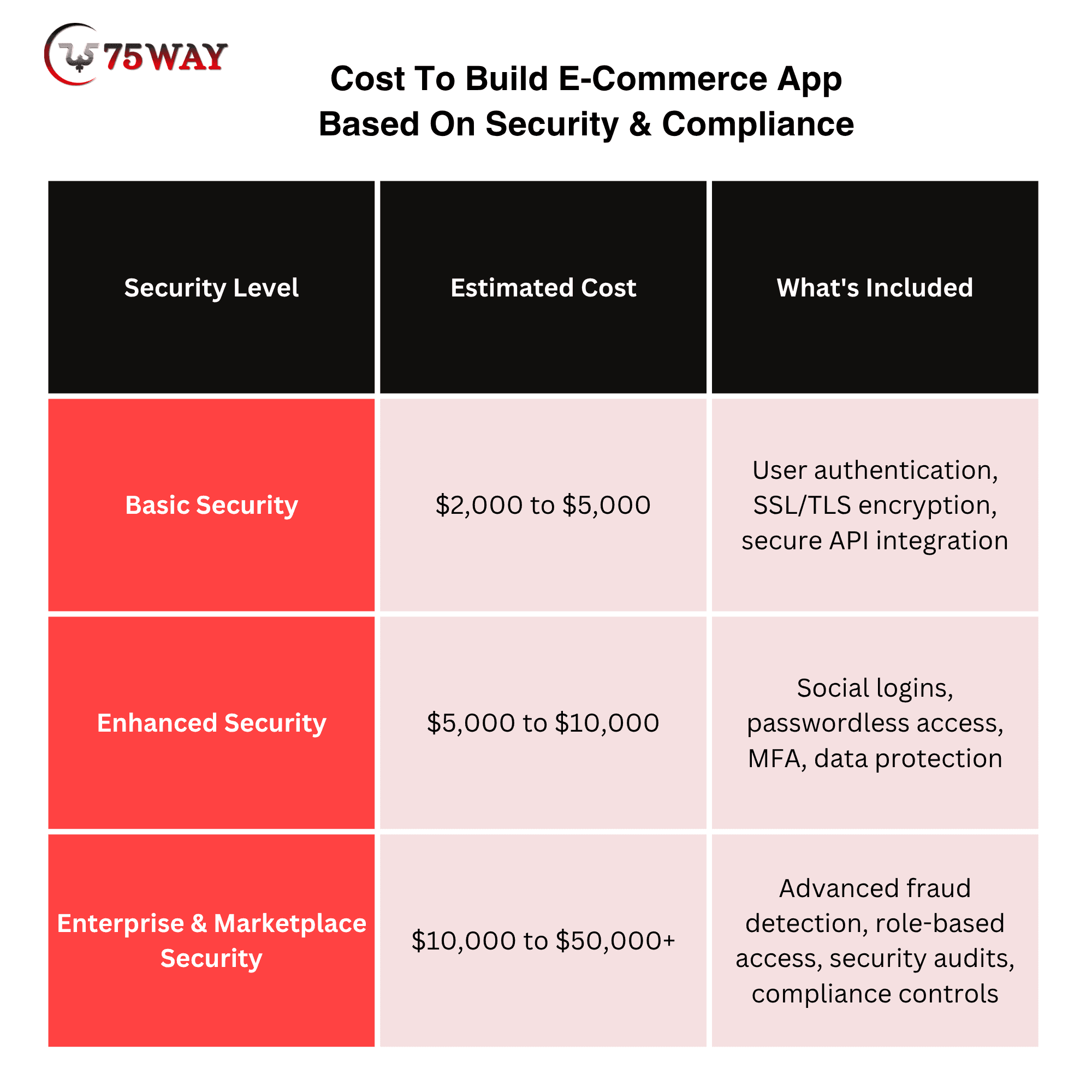
E-commerce apps must follow applicable privacy laws, payment security standards, consumer protection rules, and data-handling requirements. Compliance-related development, documentation, security assessments, and legal consultations can add to the project budget.
8. App Maintenance and Updates
Regular maintenance keeps your e-commerce app secure, compatible with new operating system versions, and free from technical issues. Ongoing expenses include bug fixes, performance improvements, feature upgrades, and server maintenance to ensure reliable app performance.
Estimated Cost: $500 to $5,000+ per month
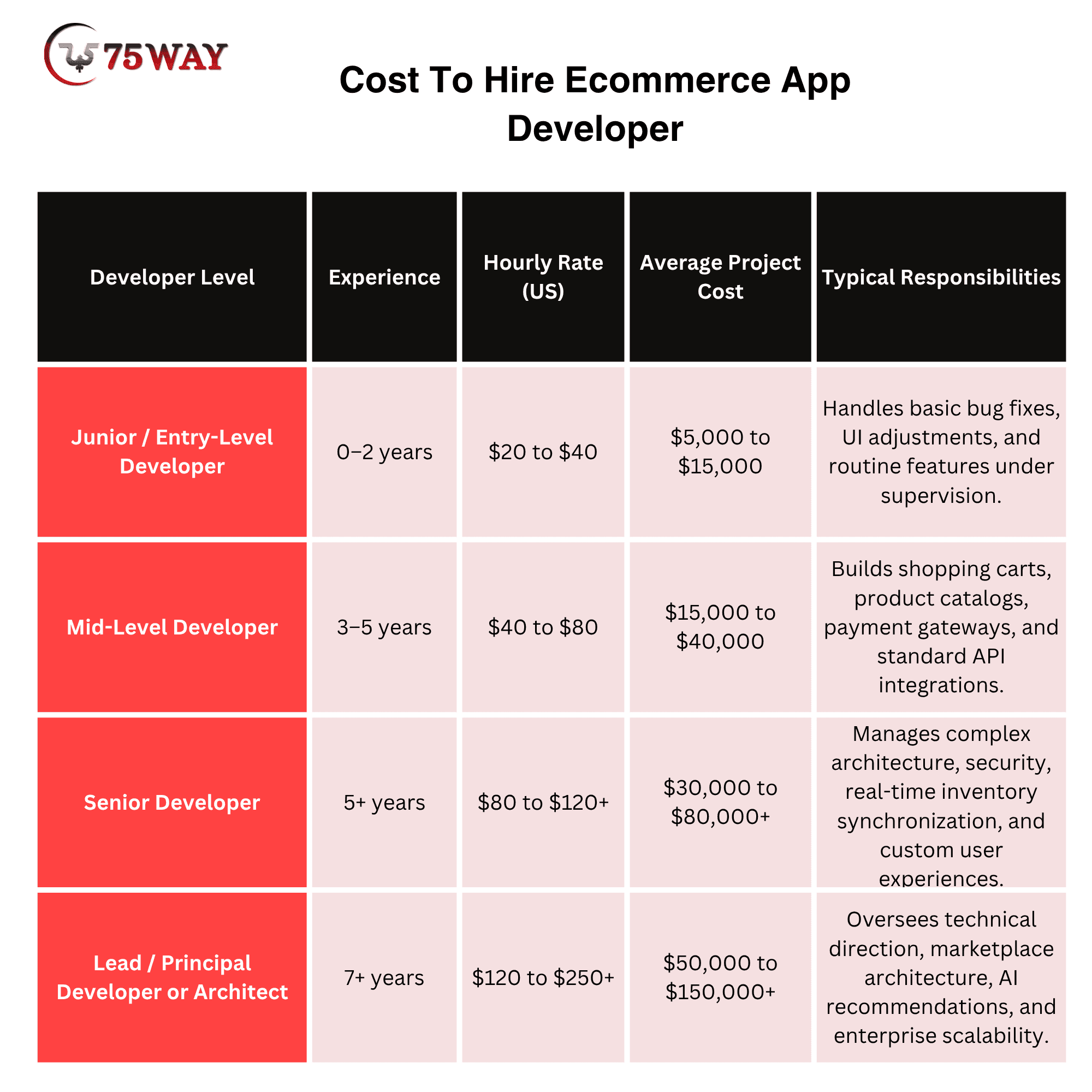
Cost To Hire Ecommerce App Developer
Hiring the right e-commerce app developer can make a significant difference to your project budget, delivery timeline, and final product quality. Rates vary depending on the developer’s experience, location, technical expertise, and hiring model. The cost breakdown below explains what you may pay to hire an e-commerce app developer and which factors influence those rates.
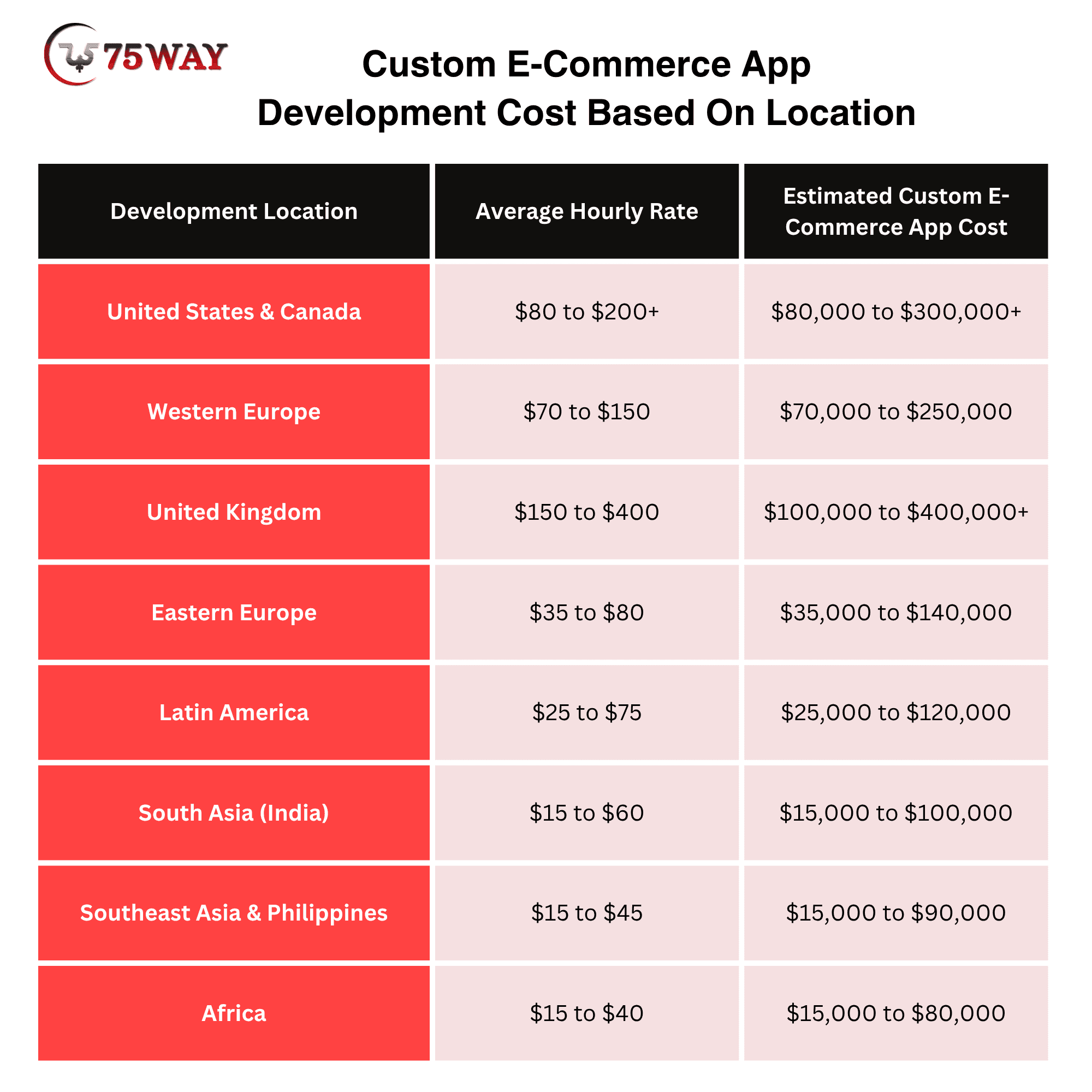
Custom E-Commerce App Development Cost Based On Location
Your e-commerce app budget may look very different depending on whether you hire developers locally or work with an overseas team. Regional hourly rates, communication requirements, and project management needs can influence the overall investment. The location-based cost breakdown below highlights these differences to help you choose a development destination that fits your budget and requirements.
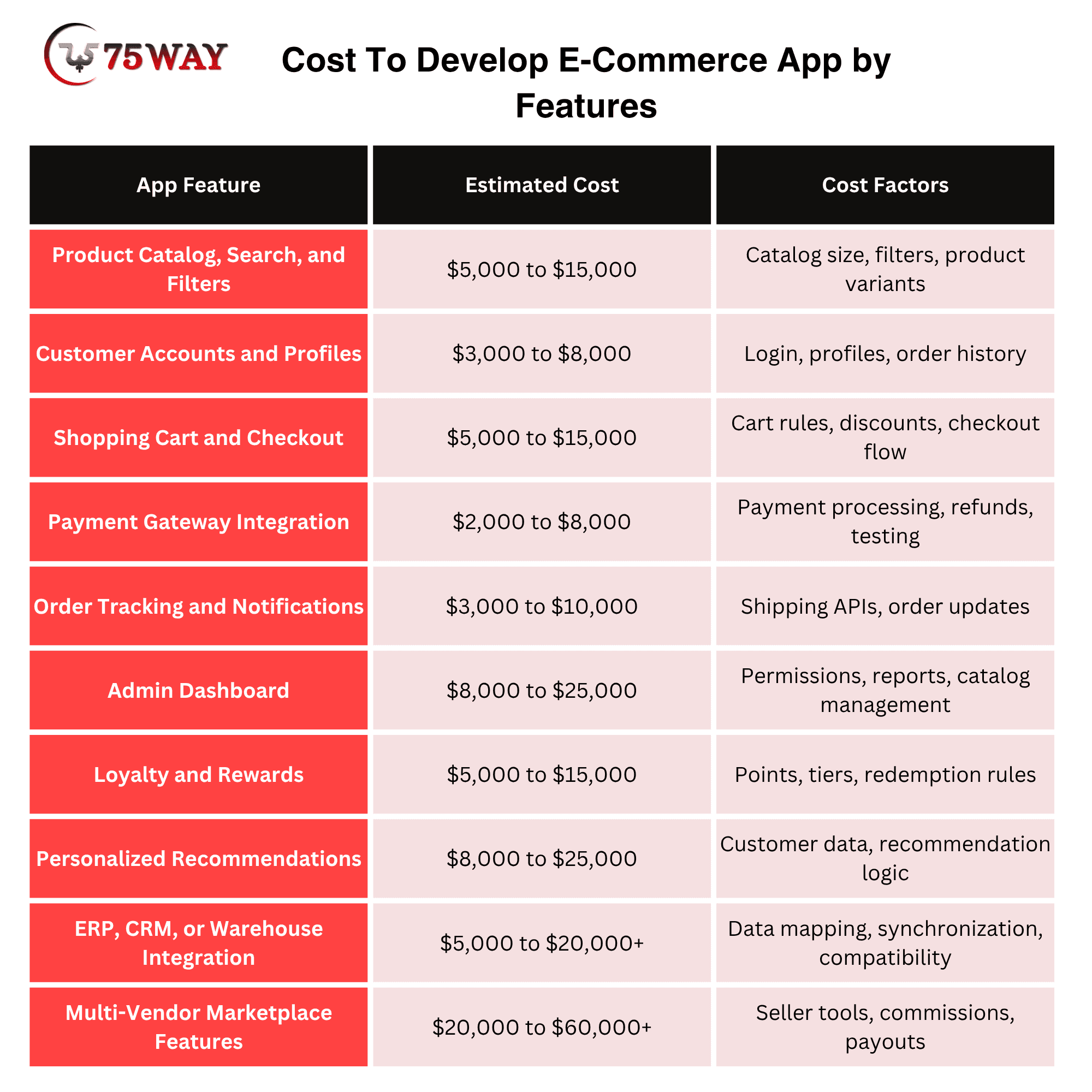
What’s The Cost To Develop E-Commerce App by Features
Every feature added to an e-commerce app shapes the shopping experience, but it also affects your development budget. Basic functions such as product search and checkout require a different investment than advanced tools like AI recommendations and real-time inventory updates. The cost estimates below compare common e-commerce app features to help you prioritize your budget.
Some ecommerce app development packages already include reusable components, basic administration, authentication, and standard integrations.
For example, an app that connects to an existing commerce platform may reuse its product and order management capabilities. A fully custom commerce platform may require those services to be developed separately.
Which Features Should You Build First?
For most businesses launching a new shopping app, the first release should support the complete purchasing journey and the essential operational workflows.
Phase 1: Essential Shopping Features
- Product catalog, search, and product details.
- Shopping cart and checkout.
- Payment processing and order confirmation.
- Customer accounts, where required.
- Order history and basic status notifications.
- Essential administration and analytics.
Phase 2: Customer Retention Features
- Loyalty programs and rewards.
- Personalized product recommendations.
- Advanced search and merchandising.
- Customer segmentation and marketing automation.
Phase 3: Advanced Commerce Features
- Complex ERP and warehouse integrations.
- Multi-vendor marketplace workflows.
- Advanced inventory allocation.
- AI-assisted product discovery and visual search, where justified.
This approach helps you validate demand and improve the shopping experience before investing in features that may not provide sufficient business value.
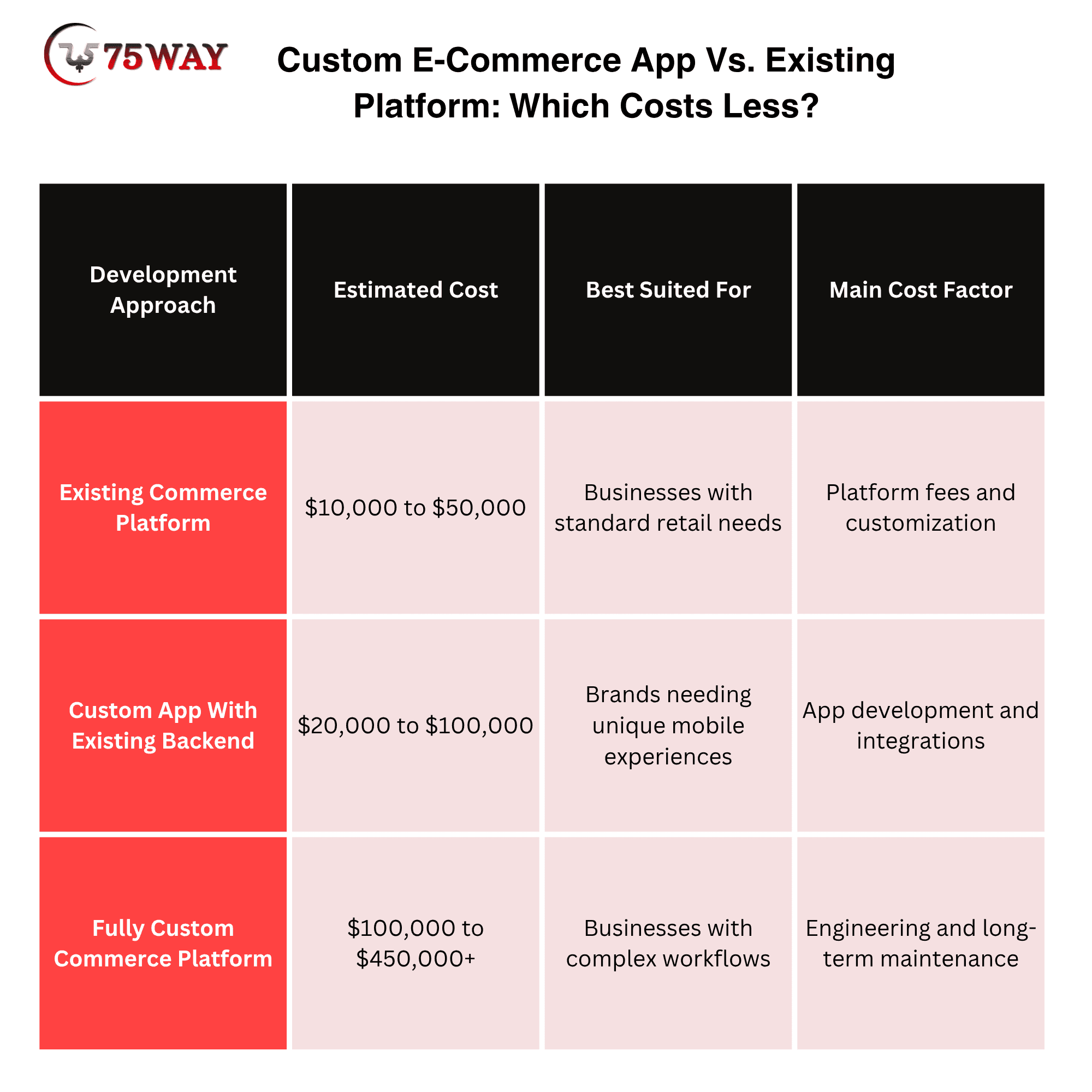
Custom E-Commerce App Vs. Existing Platform: Which Costs Less?
Your development approach determines how much functionality must be built, configured, or maintained. The right choice depends on your existing systems and how much customization your business needs.
Existing e-commerce platforms usually cost less upfront because they provide ready-made features, hosting, and payment integrations. They suit businesses launching quickly without extensive customization.
Custom e-commerce apps require higher initial investment but offer greater flexibility, tailored shopping experiences, and scalable features. For businesses with unique workflows or long-term growth plans, custom development can deliver greater value over time.
An existing platform may be more economical when your product catalog, pricing, checkout, and order management follow conventional retail workflows.
This approach can allow your team to focus spending on customer experience, mobile-specific functionality, and retention instead of rebuilding capabilities that already work.
Before selecting a platform, confirm that it supports your required checkout process, inventory rules, customer accounts, analytics, and distribution requirements.
On the other hand, custom ecommerce app development becomes more attractive when standard platforms cannot support important business requirements.
Examples include specialized product configuration, complex subscription rules, unique fulfillment processes, multi-vendor operations, or extensive enterprise integrations.
Evaluate the cost of custom functionality against the limitations of existing platforms and the potential commercial value of a differentiated shopping experience.
E-Commerce Mobile App Development Cost: A Sample Budget
Consider a growing US retailer that already operates an e-commerce website and wants a custom mobile app for iOS and Android. The app needs product browsing, checkout, customer accounts, order history, basic analytics, and integration with its existing commerce backend.
The following example illustrates a hypothetical budget for planning purposes. It is not a record of a completed client project.
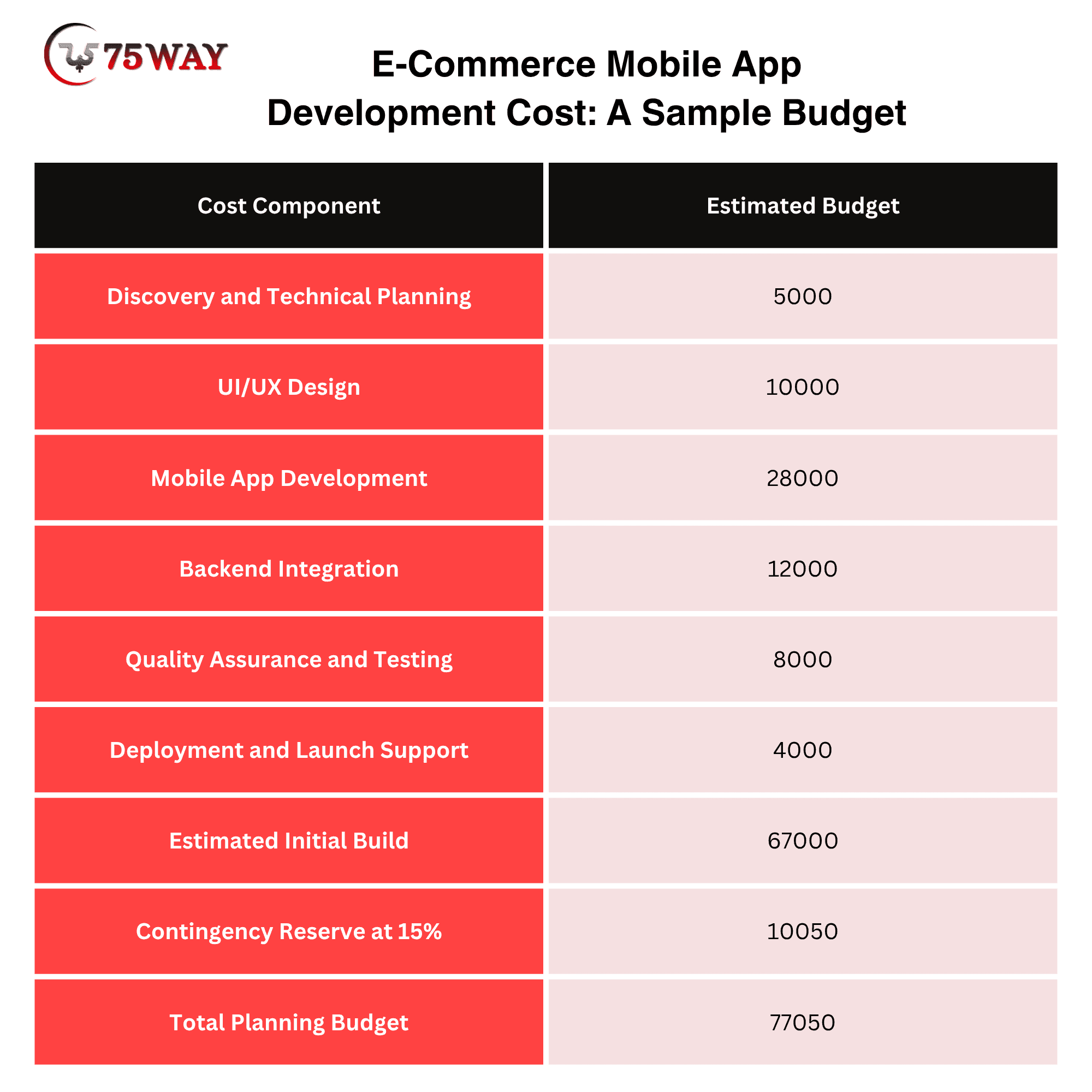
The contingency reserve accounts for uncertainty and is not a guaranteed expense. Do not add it again if the development estimate already includes the same allowance.
This example assumes an existing commerce backend. It excludes maintenance, cloud services, third-party subscriptions, payment processing, taxes, and substantial post-launch enhancements.
A project requiring a custom backend, extensive ERP integrations, or marketplace capabilities may require a significantly larger investment.
How to Calculate the Three-Year Cost of Ownership
A development budget becomes more useful when you estimate the total cost of running the app over several years.
Use this formula:
Three-Year Total Cost of Ownership = Initial build + Maintenance + Hosting + Third-party services + Enhancements + Internal operating costs
Suppose the retailer spends $67,000 on the initial build and budgets $10,000 annually for maintenance, $6,000 annually for infrastructure and software, and $12,000 annually for enhancements.
Its simplified three-year estimate would be:
- Initial Build: $67,000
- Maintenance: $30,000
- Hosting and Third-Party Services: $18,000
- Enhancements: $36,000
- Three-Year Total: $151,000
This example excludes transaction fees and internal operating costs, which should be calculated using the retailer's actual business assumptions. It also assumes the same annual recurring expenses for simplicity.
The key takeaway is that a $67,000 development project can require a substantially larger commitment over three years. Business owners should evaluate the total cost of ownership, not just the initial quote.
How to Estimate the ROI of an E-Commerce Mobile App
An app should solve a measurable business problem. Higher engagement alone does not prove that the investment is worthwhile.
Before development begins, establish a baseline for the metrics that matter to your business:
- Mobile conversion rate.
- Average order value.
- Repeat purchase rate.
- Customer acquisition cost.
- Contribution margin per order.
- Checkout abandonment rate.
- Customer retention and purchase frequency.
Use this formula to estimate ROI:
ROI = (Incremental contribution profit − Total app investment) ÷ Total app investment × 100
For example, suppose the app generates $120,000 in additional annual contribution profit and costs $80,000 to build and launch during the same evaluation period.
The illustrative first-year ROI would be:
($120,000 − $80,000) ÷ $80,000 × 100 = 50%.
This is a hypothetical calculation, not a forecast. Incremental contribution profit should account for relevant variable costs, and the analysis should separate app-generated improvements from sales that would have occurred through the existing website anyway.
For a more credible business case, estimate conservative, expected, and optimistic scenarios. Account for customer migration, possible cannibalization of web sales, marketing expenses, and the time required to reach adoption targets.
How to Reduce AI E-Commerce Mobile App Development Costs Without Sacrificing Quality
Reducing costs should mean eliminating unnecessary work, not removing the safeguards that protect transactions and customer data.
- Start With A Defined MVP: Identify the smallest release that lets customers browse, purchase products, receive order updates, and complete essential business workflows.
- Reuse Suitable Existing Infrastructure: Evaluate whether your commerce platform already handles products, payments, orders, and inventory before commissioning replacements.
- Choose Technology Based On Requirements: Compare native and cross-platform approaches according to user experience, platform capabilities, engineering skills, and long-term maintenance.
- Prioritize Integrations By Business Value: Connect the systems required for launch first, and defer lower-priority automation until you can justify the additional expense.
- Agree On Acceptance Criteria: Define expected behavior for checkout, failed payments, refunds, inventory changes, and order synchronization before development starts.
- Test Early: Validate critical customer journeys throughout development so that major usability or integration problems do not emerge immediately before launch.
- Plan for Ownership: Confirm who maintains the source code, infrastructure, app-store accounts, third-party services, and technical documentation after delivery.
These decisions help control project scope while preserving the reliability and quality a commercial shopping app requires.
Revenue Models For An E-Commerce App
E-commerce apps can generate revenue through different monetization strategies based on their business models, target customers, and product offerings. Here are five common revenue models to consider.
Direct Sales Model
The business earns revenue by selling products directly to customers through its e-commerce app. Profit comes from the difference between product selling prices and the total costs of sourcing, manufacturing, and fulfillment.
Subscription Model
Customers pay recurring fees monthly or annually to access premium services, exclusive products, or membership benefits. This model provides predictable revenue and encourages long-term customer relationships.
Commission-Based Model
Multi-vendor marketplaces can charge sellers a percentage of each completed order. The platform earns as transactions grow, without needing to manufacture, purchase, or maintain ownership of every listed product.
Advertising Model
The app generates revenue by displaying sponsored product listings, banner ads, or promotional placements for brands. Advertisers pay based on impressions, clicks, or agreed campaign rates.
Freemium Model
The app offers basic shopping services for free while charging for premium features, memberships, or exclusive benefits. This approach attracts a broad user base while creating opportunities to convert engaged customers into paying users.
Final Thoughts
The right e-commerce app budget depends on your business model, existing technology, customer expectations, and growth plans. A focused MVP can help validate demand, while an advanced platform may be justified when complex workflows or differentiated shopping experiences create measurable business value.
Before investing, define your launch requirements, estimate three-year ownership costs, and compare vendors against the same technical scope. A well-planned project should provide a clear view of the investment, delivery risks, and outcomes you intend to measure.
Ready to estimate your e-commerce mobile app development cost? Contact our team to discuss your requirements, evaluate the right technology approach, and get a project estimate aligned with your business goals.
Frequently Asked Questions (FAQs)
How Much Does It Cost To Build An E-Commerce Mobile App?
A focused custom e-commerce MVP may cost $20,000 to $60,000, while a more customized app may cost $60,000 to $150,000. Complex marketplaces and enterprise platforms can cost $150,000 to $450,000+, depending on scope and integrations.
How Long Does E-Commerce App Development Take?
A focused MVP may take approximately 3 to 5 months, while a customized shopping app may require 5 to 8 months or longer. Marketplace functionality, complex integrations, unclear requirements, and delayed approvals can extend the timeline.
Is It Cheaper To Build An E-Commerce App With Flutter Or React Native?
Both frameworks can reduce duplicated development work by sharing code across iOS and Android. Actual savings depend on platform-specific requirements, integration complexity, testing, developer experience, and ongoing maintenance.
Can I Build An E-Commerce App For $10,000?
A $10,000 budget may support a narrowly scoped solution using existing commerce infrastructure, a prebuilt app framework, or limited customization. A fully custom, production-ready shopping platform with extensive integrations is unlikely to fit that budget.
What Is The Biggest Hidden Cost of An E-Commerce App?
Ongoing maintenance, third-party services, integration changes, and post-launch enhancements are frequently overlooked. Their combined impact depends on transaction volume, technical complexity, service requirements, and the number of systems the app depends on.
Should I Build A Custom App or Use Shopify?
An existing commerce platform may be more economical when your business uses standard retail workflows and needs a mobile shopping experience. Custom development is worth evaluating when your requirements exceed the platform's capabilities or require a differentiated customer experience.
How Much Should I Budget For E-Commerce App Maintenance?
As an initial planning assumption, consider 15% to 25% of the initial development cost per year for maintenance and support. Confirm the actual amount against your service-level requirements, infrastructure, technical complexity, and planned feature releases.
How Can I Measure The ROI of An E-Commerce Mobile App?
Measure incremental contribution profit, conversion rate, average order value, repeat purchases, and retention against a documented baseline. Account for development, operating, marketing, and transaction costs before deciding whether the app delivers a positive return.