Summary
This blog explains how to hire agentic AI developers to build autonomous systems in 2026. It covers skills, architecture, tech stack, cost, and hiring process. Readers learn how AI agents enable automation, decision-making, and scalability. It also highlights benefits, challenges, and future trends for businesses adopting intelligent autonomous AI solutions globally.
Quick Overview
- Agentic AI developers build autonomous systems that learn, adapt, and scale efficiently across complex enterprise workflows today.
- These systems use LLMs, memory, tools, and reasoning to enable intelligent automation.
- Hiring requires evaluating technical skills, portfolios, system design thinking, and real-world AI experience.
- The average cost ranges from $25/hour for freelancers to $220,000/year for senior developers globally.
- Agentic AI reduces operational costs while improving speed, accuracy, and decision-making efficiency.
The demand for intelligent systems is evolving rapidly as businesses move from simple automation to fully autonomous decision-making systems. In 2026, organizations are no longer satisfied with traditional AI models that only respond to prompts. Instead, they are investing in agentic AI development solutions capable of reasoning, planning, executing tasks, and learning from outcomes.
This shift has created strong demand for agentic AI developers who can design and build autonomous systems that operate with minimal human intervention while maintaining accuracy, safety, and scalability.
Agentic AI systems are transforming industries such as healthcare, finance, logistics, eCommerce, customer support, and software development. These systems combine large language models, tool usage, memory modules, and decision loops to create intelligent agents that behave like digital workers.
What Are Agentic AI Developers?
Agentic AI developers are specialized engineers who design and build autonomous AI systems capable of independent reasoning and action. Unlike traditional AI developers who focus on predictive models, these professionals build multi-step intelligent agents that can plan, execute, evaluate, and adapt.
They work with frameworks that enable goal-driven behavior, AI integration, and continuous feedback loops. Their expertise lies in combining machine learning, natural language processing, reinforcement learning, and orchestration systems to build real-world autonomous applications.
Key responsibilities include:
- Designing AI agent-based architectures
- Integrating large language models into workflows
- Building tool-using AI systems
- Implementing memory and reasoning layers
- Ensuring safety and controllability
Why Businesses Are Moving Toward Autonomous Agentic AI Systems?
Organizations are increasingly shifting toward agentic systems to achieve efficiency, speed, and scalability. Traditional automation tools require rigid instructions, while autonomous systems adapt dynamically to changing environments.
Major drivers include:
- Reduction in operational costs
- Faster decision-making processes
- Improved customer experience
- Scalable AI workforce
- Reduced dependency on manual workflows
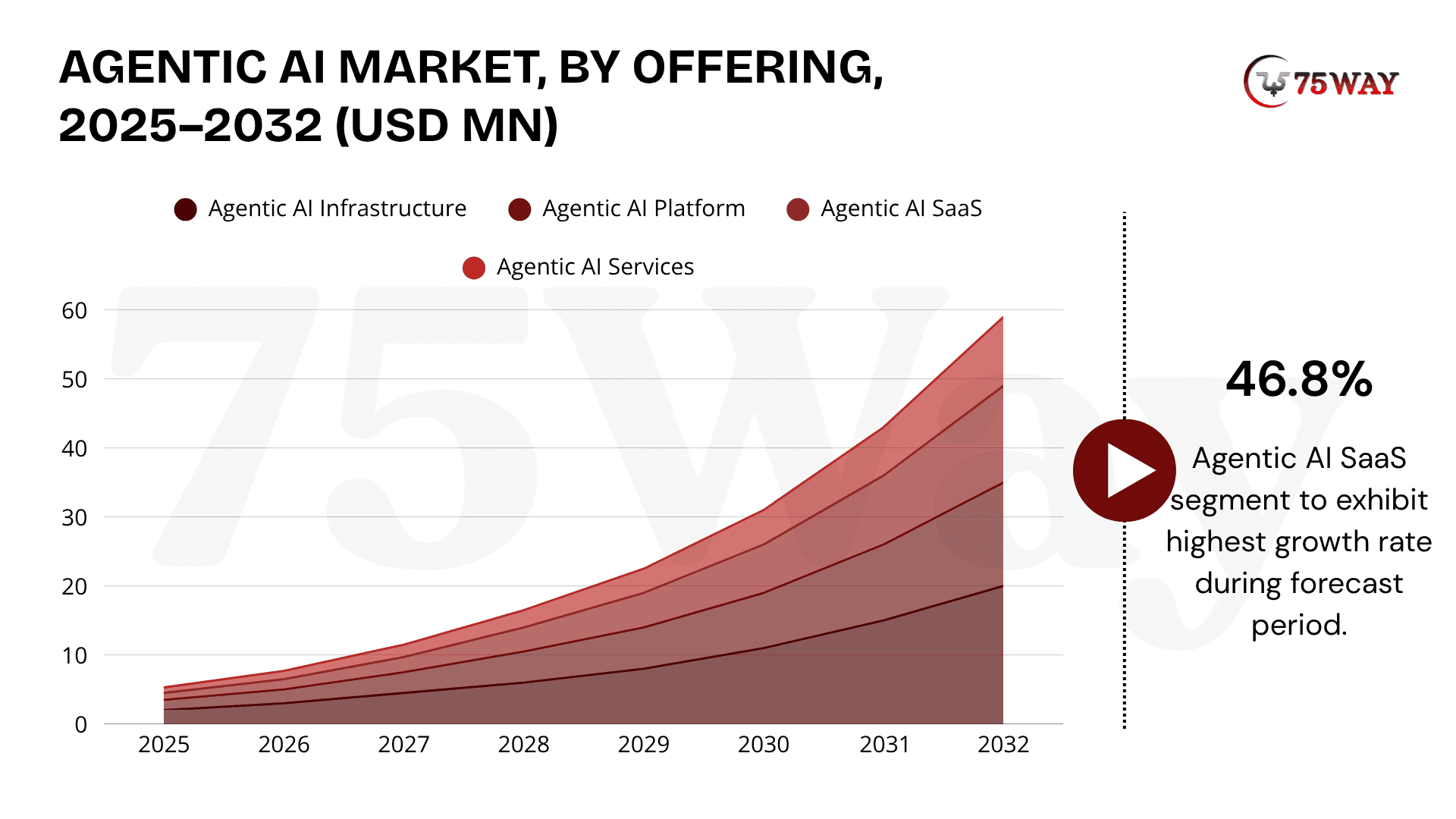
- The global enterprise agentic AI market is expected to grow significantly, reaching nearly $24.50 billion by 2030, with a strong CAGR of 46.2%.
- The broader agentic AI market is forecasted to surge to approximately $93.20 billion by 2032, expanding at an impressive 44.6% CAGR.
- Businesses are increasingly adopting agentic AI solutions to optimize operations, achieving up to 30% reduction in customer service expenses and cutting fraud-related losses by as much as 40%.
Agentic AI systems act as digital employees capable of performing complex tasks such as research, coding, analysis, and customer engagement.
Key Skills of Agentic AI Engineers
To build advanced agentic AI systems, developers must possess a strong combination of technical and architectural skills.

Machine Learning Expertise
Understanding deep learning models, transformers, and reinforcement learning.
LLM Integration
Ability to work with large language models and prompt orchestration.
Backend Development
Strong knowledge of scalable backend systems and APIs.
System Design
Designing distributed and modular AI architectures.
Data Engineering
Handling data pipelines, storage systems, and real-time processing.
Why Hire Agentic AI Developers?
Hiring agentic AI developers enables businesses to build adaptive, autonomous systems that continuously learn, optimize, and scale operations efficiently. These experts design intelligent workflows that reduce manual effort, enhance decision-making, and create long-term competitive advantage in evolving markets across global industries.

Faster Automation: Agentic AI developers build systems that automate complex workflows, reducing manual intervention and increasing operational efficiency across teams.
Smart Decisions: They create intelligent agents capable of analyzing data, reasoning through tasks, and making accurate, real-time business decisions efficiently.
Cost Reduction: Agentic systems reduce operational costs by minimizing human workload, optimizing resources, and streamlining repetitive business processes.
Scalable Systems: They design scalable AI architectures that grow with business needs, handling increased workloads without performance degradation.
Continuous Learning: Agentic AI developers enable systems that learn continuously from feedback, autonomously improving accuracy, efficiency, and adaptability over time.
Faster Innovation: They accelerate innovation by building intelligent systems that experiment, optimize, and deploy solutions rapidly across industries globally.
Future-Ready Solutions: Agentic AI experts prepare organizations for autonomous ecosystems driven by AI, machine learning, and intelligent automation.
Popular Use Cases of Agentic AI Systems
Agentic AI systems are being deployed across various industries.

- Customer Support Automation: AI agents handle queries, complaints, and troubleshooting automatically.
- Software Development Assistance: AI agents generate code, debug errors, and optimize applications.
- Financial Analysis: Autonomous systems analyze market trends and generate insights.
- Healthcare Support: Agentic AI agents for healthcare assist with diagnosis, patient monitoring, and data analysis.
- Supply Chain Optimization: Agents manage inventory, logistics, and demand forecasting.
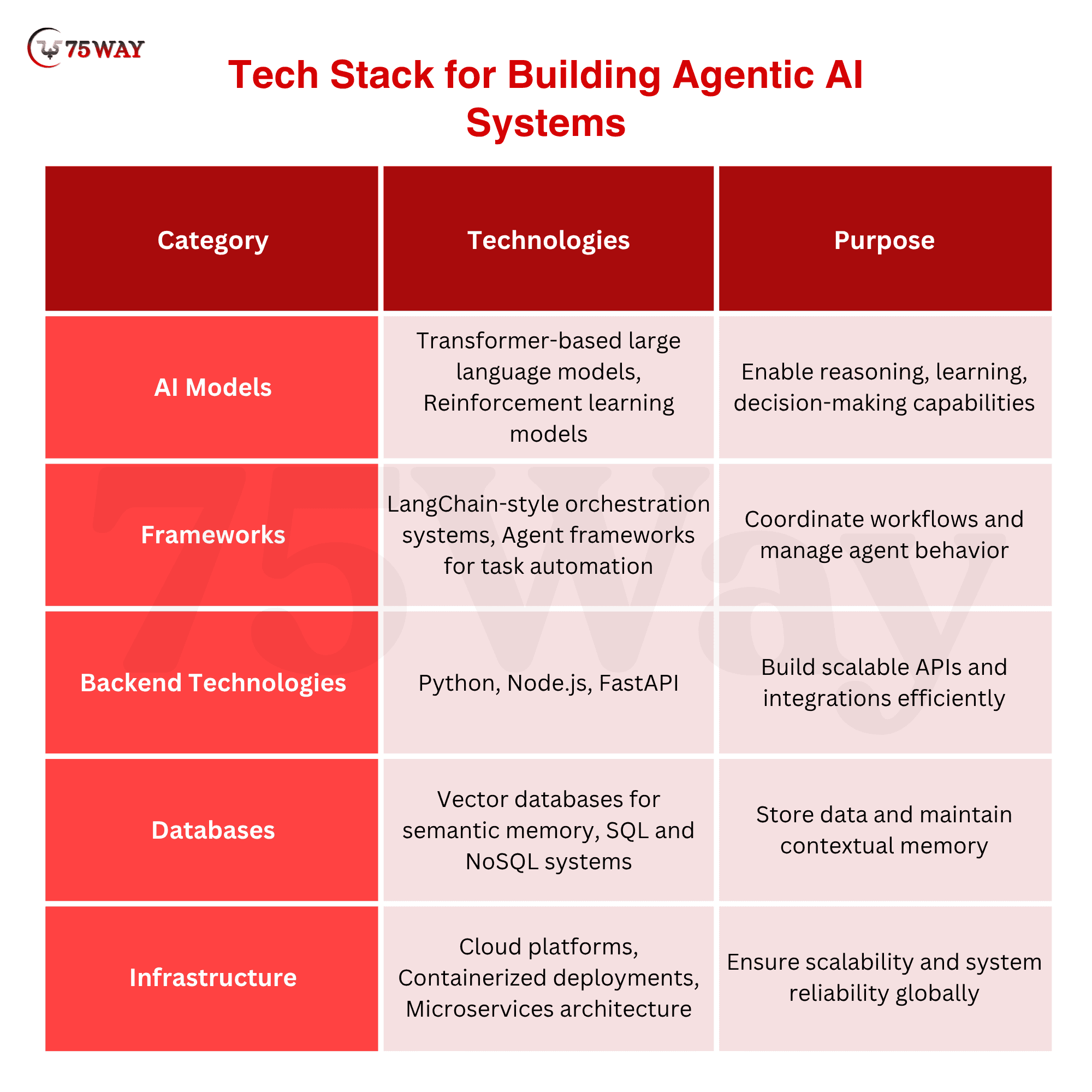
Tech Stack for Building Agentic AI Systems
Developers use a combination of modern tools and frameworks to build autonomous systems.
AI Models
- Transformer-based large language models
- Reinforcement learning models
Frameworks
- LangChain-style orchestration systems
- Agent frameworks for task automation
Backend Technologies
- Python
- Node.js
- FastAPI
Databases
- Vector databases for semantic memory
- SQL and NoSQL systems
Infrastructure
- Cloud platforms
- Containerized deployments
- Microservices architecture
Benefits of Hiring Agentic AI Developers
Hiring skilled developers in this field provides several advantages:
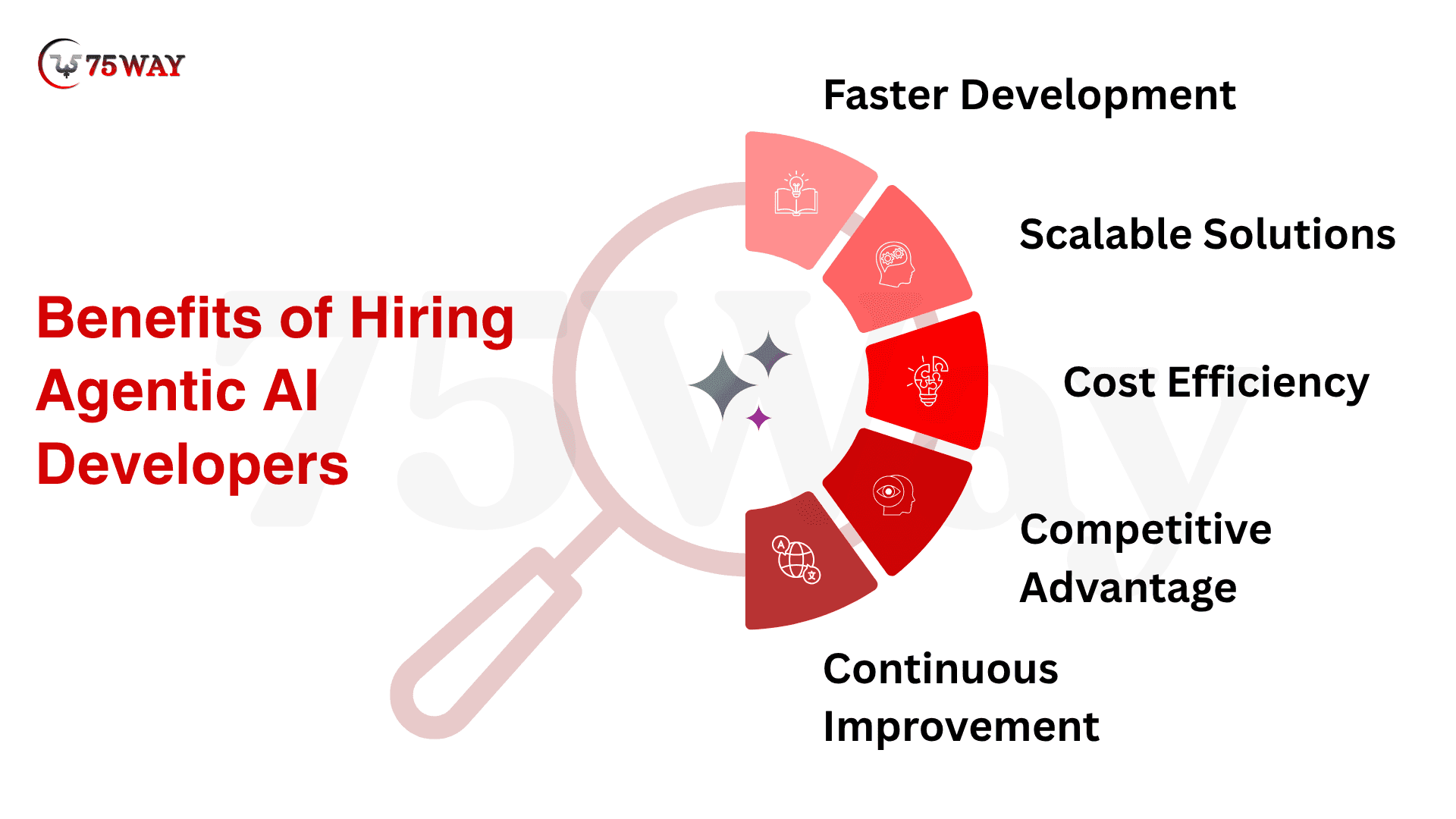
- Faster Development: Accelerates AI system creation with structured frameworks.
- Scalable Solutions: Build systems that grow with business demands.
- Cost Efficiency: Reduces long-term operational expenses through automation.
- Competitive Advantage: Enables early adoption of advanced AI technologies.
- Continuous Improvement: Systems evolve and improve over time without manual updates.
Core Features of Agentic AI Systems
Agentic AI systems include advanced capabilities like planning, memory, tool integration, reasoning, and collaboration. These features enable autonomous agents to perform complex tasks, adapt to environments, learn continuously, and execute workflows efficiently with minimal human intervention across industries today. Modern autonomous systems built by expert developers typically include the following features:
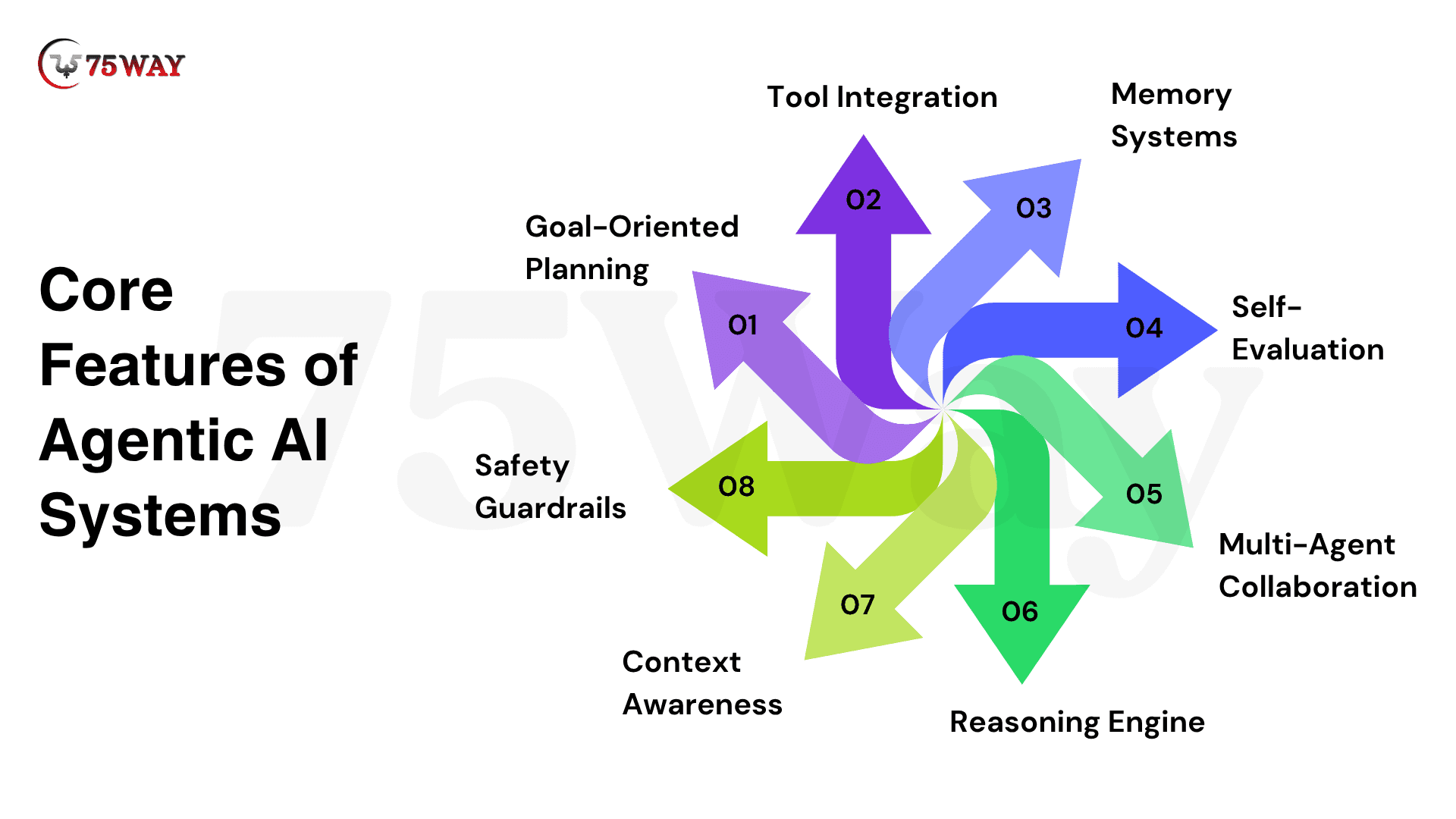
- Goal-Oriented Planning: Agents decompose complex objectives into smaller, actionable steps, prioritize tasks, and execute structured workflows to achieve goals efficiently while dynamically adapting to changing conditions in autonomous environments, enabling scalable enterprise AI-driven operations and the optimization of automation systems.
- Tool Integration: Agents connect to external APIs, databases, SaaS tools, and software systems to seamlessly execute tasks, retrieve data, and support real-time operations across multiple enterprise environments, efficiently and securely at scale, enabling automated workflows and intelligent business integration systems.
- Memory Systems: Agents store and retrieve short-term and long-term memory, enabling contextual understanding, personalized responses, and improved decision-making across repeated interactions and workflows over time, with persistent adaptive intelligence layers built in, supporting continuous learning and enterprise knowledge retention systems globally deployed.
- Self-Evaluation: Systems evaluate their own outputs, detect errors, refine responses, and improve performance through iterative correction cycles to achieve higher accuracy, reliability, and alignment with user goals and expectations over time, reducing errors and improving autonomous system performance in production.
- Multi-Agent Collaboration: Multiple autonomous agents collaborate, communicate, and coordinate tasks to solve complex problems efficiently by distributing workloads, sharing insights, and optimizing collective decision-making processes across dynamic environments in real time today, enabling scalable distributed intelligence across enterprise AI systems globally operating.
- Reasoning Engine: Advanced reasoning engines enable agents to analyze data, infer patterns, make logical decisions, and plan multi-step actions for complex problem-solving in autonomous environments, with structured cognitive decision frameworks that today support enterprise intelligence and adaptive reasoning capabilities at scale.
- Context Awareness: Context-aware systems understand user intent, maintain conversation history, and adjust responses based on situational awareness, enabling more accurate, relevant, and personalized interactions across dynamic environments in real-world systems today, continuously evolving to improve contextual intelligence and adaptive response quality.
- Safety Guardrails: Built-in safety mechanisms ensure agentic AI systems operate within defined boundaries, prevent harmful outputs, enforce compliance rules, and maintain ethical decision-making across all autonomous operations in enterprise environments safely, ensuring responsible AI deployment and governance at scale globally enforced.
Challenges in Building Autonomous Systems
Despite their benefits, agentic AI systems come with challenges:
- Hallucination Risks: AI may generate incorrect or misleading outputs.
- Complex Debugging: Multi-agent systems are harder to troubleshoot.
- Data Privacy Concerns: Sensitive data must be handled securely.
- High Infrastructure Costs: Advanced systems require significant computing resources.
How to Hire Agentic AI Developers?
Finding skilled agentic AI developers requires a structured hiring process that ensures technical capability, system design expertise, and practical experience in building autonomous AI systems aligned with business goals.

- Define Project Requirements
Clearly define project requirements by outlining system objectives, target users, expected outcomes, and integration needs. This step ensures alignment between business goals and technical development, helping developers understand the scope, complexity, and desired performance of the agentic AI system accurately today.
- Evaluate Technical Skills
Assess candidates’ technical skills in machine learning, deep learning, large language models, and system design. Evaluate their ability to build scalable autonomous systems, integrate APIs, and implement reasoning frameworks required for modern agentic AI development projects effectively with strong expertise.
- Check Portfolio
Review candidate portfolios to evaluate real-world experience in building agentic AI systems, autonomous workflows, and intelligent applications. Focus on past projects, the complexity handled, the tools used, and measurable outcomes demonstrating capability in delivering production-ready AI solutions with a proven level of expertise.
- Conduct Technical Interviews
Conduct structured technical interviews to test problem-solving ability, system design thinking, coding skills, and understanding of agentic AI architectures. Include scenario-based questions that evaluate reasoning, adaptability, and practical knowledge of building autonomous AI systems under real conditions effectively in practice.
- Start with a Pilot Project
Start with a pilot project to validate developer skills, system architecture, and real-world performance. This approach reduces risk, ensures quality delivery, and provides insights into scalability before committing to full-scale agentic AI system development across the organization and business success.
Cost of Hiring Agentic AI Developers
The cost of hiring agentic AI developers varies based on experience, project complexity, technology stack, and engagement model. Since these developers work on advanced autonomous systems involving LLMs, multi-agent frameworks, and scalable architectures, pricing is generally higher than traditional AI development roles.
- Freelance Developer (Junior): $25 – $60/hourSuitable for basic AI tasks, simple model implementation, and small-scale projects with limited complexity and guidance.
- Freelance Developer (Senior): $60 – $150/hourIdeal for complex AI development, advanced model building, and projects requiring deep expertise and independent execution.
- In-House Developer (Mid-Level): $90,000 – $140,000/yearBest for ongoing development needs, offering consistent support, moderate experience, and the ability to handle evolving AI requirements.
- In-House Developer (Senior): $140,000 – $220,000/yearProvides high-level expertise, leadership, and the ability to manage large-scale AI systems and strategic technical decisions.
- AI Development Company (Project-Based): $15,000 – $150,000+Offers end-to-end AI solutions with a full team, structured processes, and scalability for businesses seeking complete project delivery.

Future of Agentic AI in 2026 and Beyond
The future of autonomous systems is moving toward fully self-operating digital ecosystems. Agentic AI will increasingly replace repetitive human tasks while enhancing decision-making processes across industries. We will see:
- Fully autonomous enterprise workflows
- AI-driven product development cycles
- Intelligent business operations
- Multi-agent collaborative ecosystems
Businesses that adopt early will gain a significant strategic advantage.
Final Thoughts
Agentic AI is redefining how businesses operate by introducing autonomous systems capable of reasoning, planning, and executing complex workflows. Hiring skilled agentic AI developers is no longer optional but a strategic necessity for organizations aiming to stay competitive in 2026 and beyond.
By investing in the right expertise, businesses can build intelligent systems that reduce costs, increase efficiency, and unlock new opportunities for innovation. If you are ready to transform your business with autonomous AI systems, now is the time to hire expert agentic AI developers from a trusted AI development company. Build scalable, intelligent, and future-ready solutions that take your organization to the next level of automation and innovation.
Frequently Asked Questions (FAQs)
How Does Agentic AI Development Work?
Agentic AI development works by combining perception, reasoning, memory, and action layers. Developers design systems that break tasks into steps, use tools to execute actions, store contextual memory, evaluate outputs, and continuously refine performance through feedback-driven learning cycles in real time.
Why Is Agentic AI Development Important?It is important because it enables businesses to automate complex decision-making processes, reduce manual effort, and improve operational efficiency. Agentic AI systems can adapt dynamically, scale easily, and handle tasks that traditional automation tools cannot manage effectively in modern digital environments.
What Technologies Are Used In Agentic AI Development?Common technologies include transformer-based language models, reinforcement learning frameworks, Python, Node.js, FastAPI, vector databases, and orchestration tools. These technologies work together to build autonomous systems capable of reasoning, retaining memory, using tools, and making intelligent decisions across applications.
What Industries Use Agentic AI Development?Industries such as healthcare, finance, eCommerce, logistics, customer service, and software development use agentic AI development. These systems help automate workflows, improve decision accuracy, enhance customer experience, and optimize large-scale operations through intelligent autonomous agents.
How Is Agentic AI Development Different From Traditional AI Development?Traditional AI focuses on predictive models and fixed outputs, while agentic AI development focuses on autonomous decision-making systems. Agentic AI can plan, act, use tools, and learn continuously, making it more adaptive and suitable for complex real-world applications.
How Can Businesses Start With Agentic AI Development?Businesses can start by identifying automation goals, selecting suitable use cases, and partnering with skilled agentic AI developers. Beginning with small pilot projects helps validate performance, reduce risks, and gradually scale autonomous systems into full enterprise workflows for long-term operational efficiency and growth.