Summary
ERP AI chatbots are transforming the way enterprises work. From automating repetitive tasks to delivering real-time insights, these intelligent assistants allow businesses to cut costs, increase productivity, and make smarter decisions. For startups, founders, and business owners, understanding ERP AI chatbots is no longer optional—it’s essential for staying competitive.
Key Takeaways:
- ERP AI chatbots simplify complex enterprise processes and accelerate decision-making.
- Nearly 78% of companies worldwide have adopted conversational AI in at least one area of operations.
- Different types of chatbots serve unique operational needs, from predictive analytics to self-service automation.
- Developing an enterprise ERP AI chatbot can range from $10,000 for startups to $450,000+ for large enterprises.
- Businesses adopting ERP AI chatbots see measurable gains in productivity, cost reduction, and data accuracy.
- Implementation requires clear planning, integration with existing ERP systems, and ongoing optimization.
Modern enterprises often feel trapped in complex ERP systems as they are complicated to handle. Their employees spend several hours to navigate menus, fill forms, and wait for approvals. However, manual workflows slow everything down, and IT teams get buried in tickets.
That is where ERP AI chatbot development comes into existence.
These AI-powered chatbots for ERP software are changing that story. With simple conversational commands, users can extract data, approve requests, and generate reports instantly. These ERP AI virtual assistants help teams focus on strategic work, while AI bots handle repetitive, time-consuming tasks.
So, how exactly do ERP AI chatbots transform enterprise operations? How fast can businesses implement them? This guide covers everything, from understanding what these ERP AI chatbots are, their types, and benefits, to real-world use cases and costs.
What Is ERP AI Chatbot?
An ERP AI chatbot is a smart virtual assistant integrated into an enterprise’s ERP system. Just like an AI agent, it understands natural language, interacts with employees or customers, automates tasks, and provides real-time analytics.
These autonomous AI chatbots act as a bridge between humans and complex ERP systems to eliminate manual data entry and reduce errors. They integrate AI, agentic AI potential, natural language processing, and machine learning to execute enterprise workflows quickly.
How An ERP AI Chatbot Works?
ERP AI chatbots might seem like magic. But they operate on a structured flow that makes enterprise operations smooth. At their core, these AI chatbots connect directly to your ERP system, understand natural language, and take action without human intervention. Here's the complete workflow of an ERP AI chatbot.
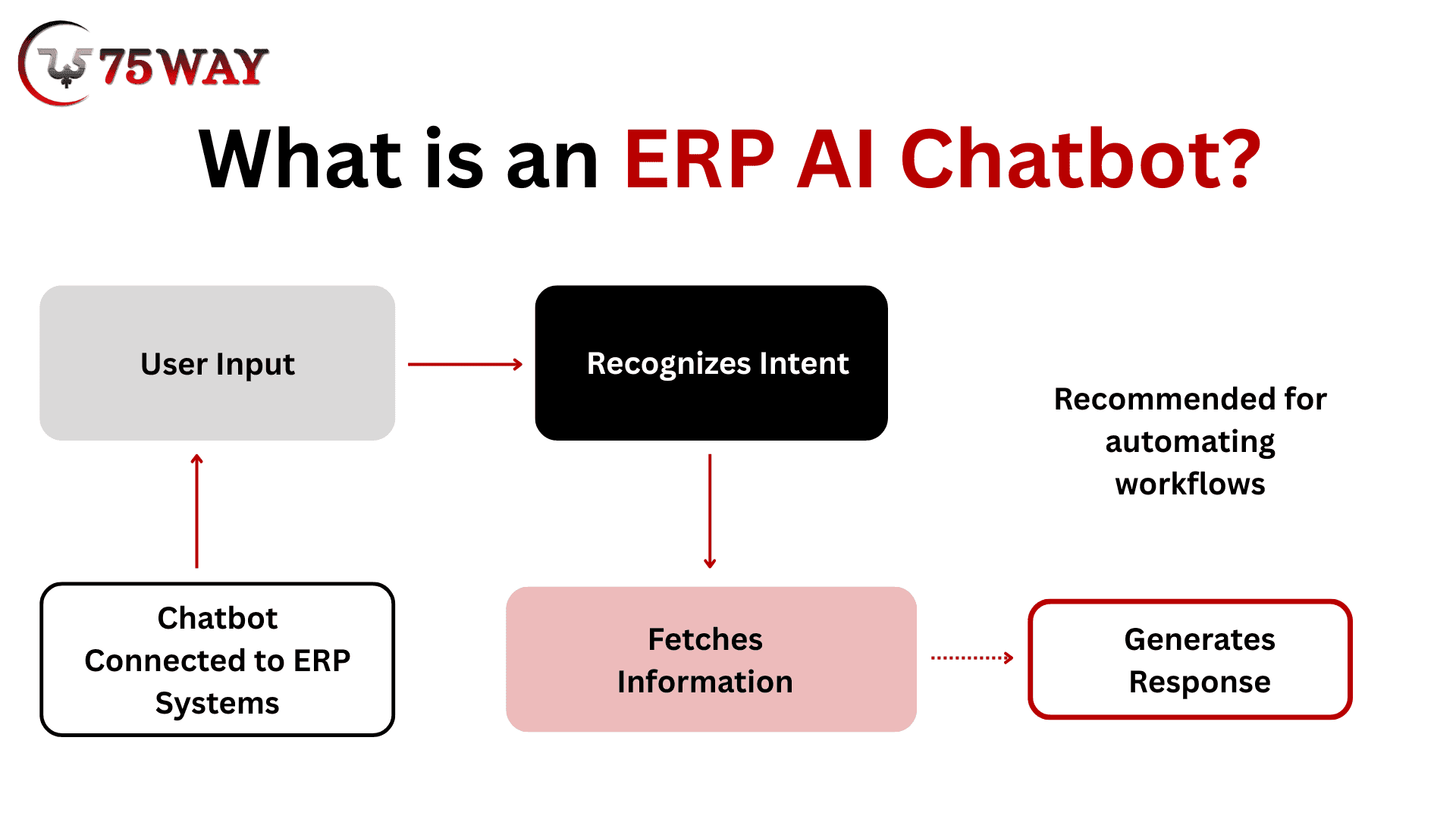
- Data Integration: This AI chatbot links with ERP modules such as Finance, HR, Sales, Procurement, and Inventory. It can access live, accurate data whenever needed, without delays or errors.
- NLP Understanding: These AI assistants integrate advanced natural language processing to interpret human queries in plain English. You can ask it, “Show me pending invoices,” or “Approve this purchase order,” and it understands exactly what needs to be done.
- Task Execution: Once it understands the request, the chatbot performs the action automatically. It can approve workflows, generate reports, update records, or send notifications, all in real time.
- Continuous Learning: These AI chatbots use machine learning to improve their predictions and responses. So, they become smarter and more efficient over time. This means your ERP AI chatbot executes tasks as well as supports your enterprise better every day.
Learn More: How to Build a Self Driving Car Software: A Complete Roadmap
Understanding Different Types of ERP AI Chatbots
There is nothing new. Different businesses have different requirements, tasks, and capabilities. Fortunately, these AI-powered chatbots for ERPs come in several types. Each is designed to solve specific enterprise challenges. A deep understanding of these types can help you choose the right AI assistant for your operations.
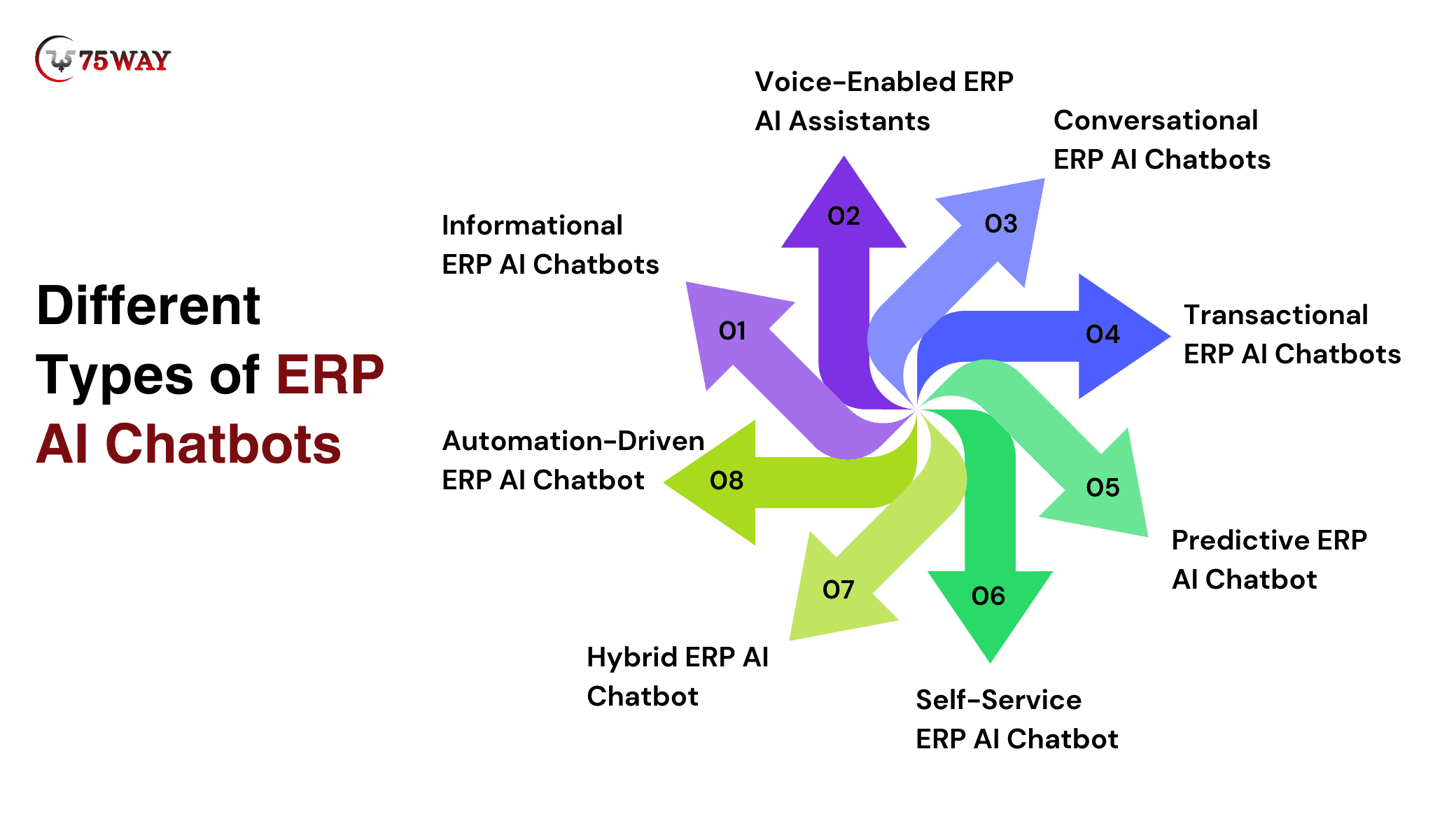
Informational ERP AI Chatbots: These chatbots fetch ERP data instantly and deliver precise answers without human intervention. They are perfect for generating quick reports, dashboards, or status updates, and save employees from digging through complex ERP menus every time they need information.
Voice-Enabled ERP AI Assistants: These voice AI agents are built on informational capabilities and allow employees to interact hands-free using voice commands. These chatbots are especially useful in field operations or warehouse environments, where multitasking is common and real-time updates are crucial.
Conversational ERP AI Chatbots: Conversational bots take things further by engaging users in step-by-step dialogue. These ERP AI chatbots guide employees through complex processes like onboarding, approvals, or workflow completion, reduce errors, and execute tasks correctly and efficiently.
Transactional ERP AI Chatbots: While conversational ERP AI bots guide users, transactional chatbots execute actions automatically. From processing sales orders to generating invoices, these virtual assistants reduce manual effort, speed up operations, and free employees to focus on strategic tasks rather than repetitive work.
Predictive ERP AI Chatbot: Transactional efficiency meets insights with predictive AI chatbots. These ERP AI chatbots forecast trends, flag anomalies, and suggest smart decisions by analyzing historical data. They help enterprises plan ahead rather than reacting to problems after they arise.
Self-Service ERP AI Chatbot: Self-service ERP AI-powered chatbots empower enterprises directly. Employees and even customers can resolve common queries independently. These AI bots are helpful for reducing pressure on IT and HR teams while keeping operations smooth and responsive.
Hybrid ERP AI Chatbot: The hybrid ERP AI chatbot combines capabilities ranging from transactional execution to conversational guidance and predictive insights. This versatility makes them ideal for complex enterprises that need a single solution to handle diverse operational challenges.
Automation-Driven ERP AI Chatbot: Automation-driven ERP AI-enabled chatbots focus on end-to-end workflow optimization. They integrate across departments, manage approvals, and ensure consistent processes, making enterprise operations scalable, efficient, and almost entirely hands-free.
Get More Insights: How to Build IoT Apps in 2026: A Guide for Startups, Founders & Business Owners
Key Benefits of ERP AI Chatbots in Enterprise Operations
ERP AI chatbots bring tangible advantages that transform enterprise operations from the ground up. By combining real-time data access, workflow automation, and AI-driven insights, these chatbots help teams make faster decisions, reduce errors, and focus on strategic tasks, all while keeping operations smooth, scalable, and cost-efficient.
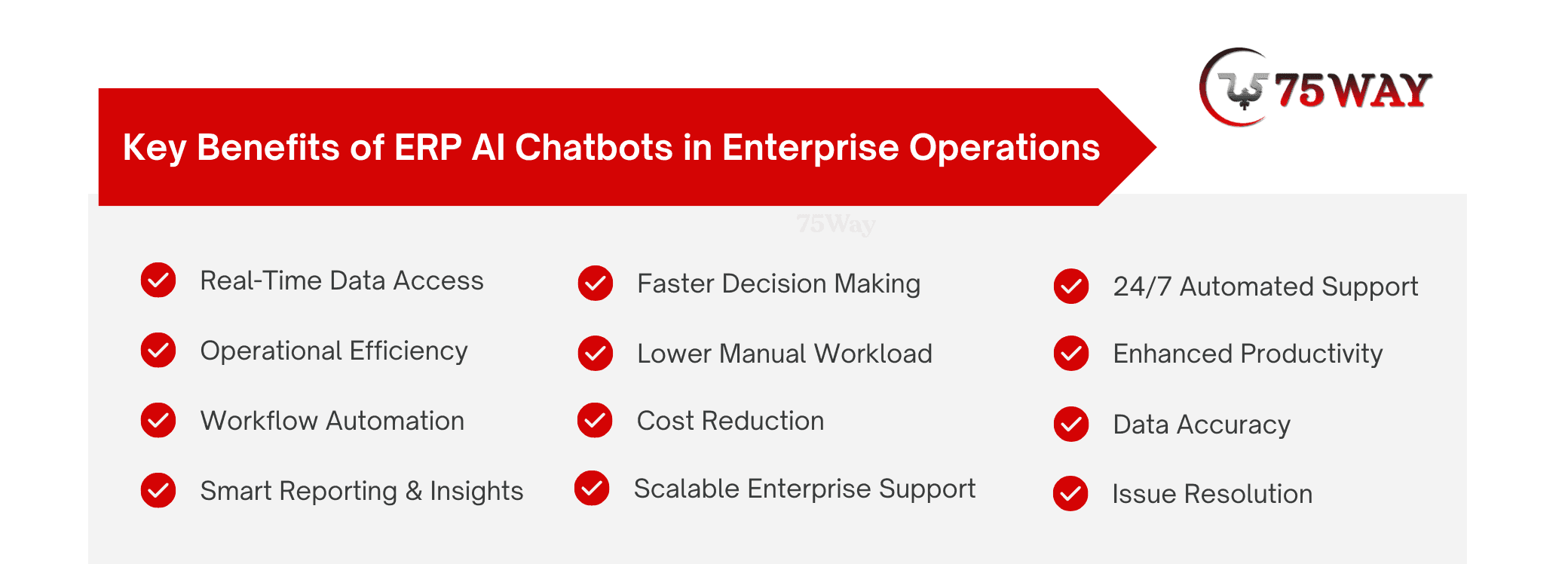
Real-Time Data Access: ERP AI chatbots fetch live, accurate information from multiple ERP modules instantly. Employees no longer wait for manual updates, which make it easier to track performance, monitor KPIs, and respond quickly to emerging issues across Finance, HR, Sales, or Inventory.
Faster Decision Making: With instant insights at their fingertips, decision-makers can act immediately. ERP AI chatbots eliminate the delays caused by manual reporting. They allow teams to respond to market changes, approve workflows, and drive business outcomes faster than ever before.
24/7 Automated Support: ERP AI chatbots work around the clock and provide continuous assistance to employees and customers alike. These ERP virtual assistants ensure that operations never stop, questions are answered promptly, and teams can maintain productivity even outside regular office hours.
Operational Efficiency: Every workflow has its slow spots, redundant steps, repeated approvals, or data that gets stuck in limbo. ERP AI chatbots streamline these processes, eliminating bottlenecks and making operations run smoothly. Teams can finally focus on outcomes instead of busywork.
Lower Manual Workload: These AI chatbots for ERP handle all the repetitive tasks that employees handle daily, such as data entry, follow-ups, and invoice checks. These chatbots take over these chores quietly in the background, freeing employees to tackle strategic, high-value activities that actually move the business forward.
Enhanced Productivity: ERP AI chatbots enable teams to focus on high-value activities by handling routine, repetitive tasks. Employees can dedicate more time to strategic initiatives, problem-solving, and innovation. These bots drive overall organizational performance without distractions from manual processes.
Workflow Automation: These bots help automate approvals, notifications, and reporting to ensure consistent, timely task completion. The ERP AI-powered chatbots streamline enterprise processes across departments, reduce the need for manual intervention, and maintain operational efficiency.
Cost Reduction: ERP AI chatbots significantly reduce operational expenses by automating repetitive tasks and minimizing errors. Less manual intervention leads to fewer mistakes, less rework, and smoother workflows. Over time, this translates into measurable cost savings, better resource allocation, and more efficient use of both time and budget across the enterprise.
Data Accuracy: Maintaining clean and reliable data is critical for any enterprise. Enterprise AI chatbots automatically validate and manage ERP information for higher accuracy and consistency across departments. With trustworthy data at hand, leaders can make informed decisions, reduce operational risks, and maintain compliance with internal policies and regulatory standards.
Smart Reporting & Insights: Beyond handling tasks, ERP AI assistants analyze the data they manage to generate actionable insights. They provide clear visibility into trends, performance metrics, and potential opportunities. With timely intelligence, these AI chatbots enable proactive decision-making and help enterprises stay ahead rather than reacting to issues after they arise.
Scalable Enterprise Support: As your business grows, operational demands increase, and manual processes can become bottlenecks. AI chatbots scale effortlessly to manage higher volumes of queries, support multiple departments, and adapt to evolving workflows. This flexibility allows enterprises to expand quickly.
Issue Resolution: ERP AI chatbots act as vigilant monitors for enterprise operations. They detect anomalies, flag potential problems, and often resolve routine issues automatically before they escalate. This proactive approach reduces downtime, keeps workflows running smoothly, supports uninterrupted operations, and allows teams to focus on strategic priorities.
Read More: AI Automation vs AI Agents: A Complete Guide
Real-World Use Cases of ERP AI Chatbots
ERP AI chatbots are no longer a futuristic concept. A number of enterprises are actively using them across operations to improve efficiency, reduce errors, and free employees to focus on strategic work. These AI assistants act like intelligent team members, seamlessly handling repetitive tasks and providing actionable insights in real time. Here’s how businesses are leveraging them today:
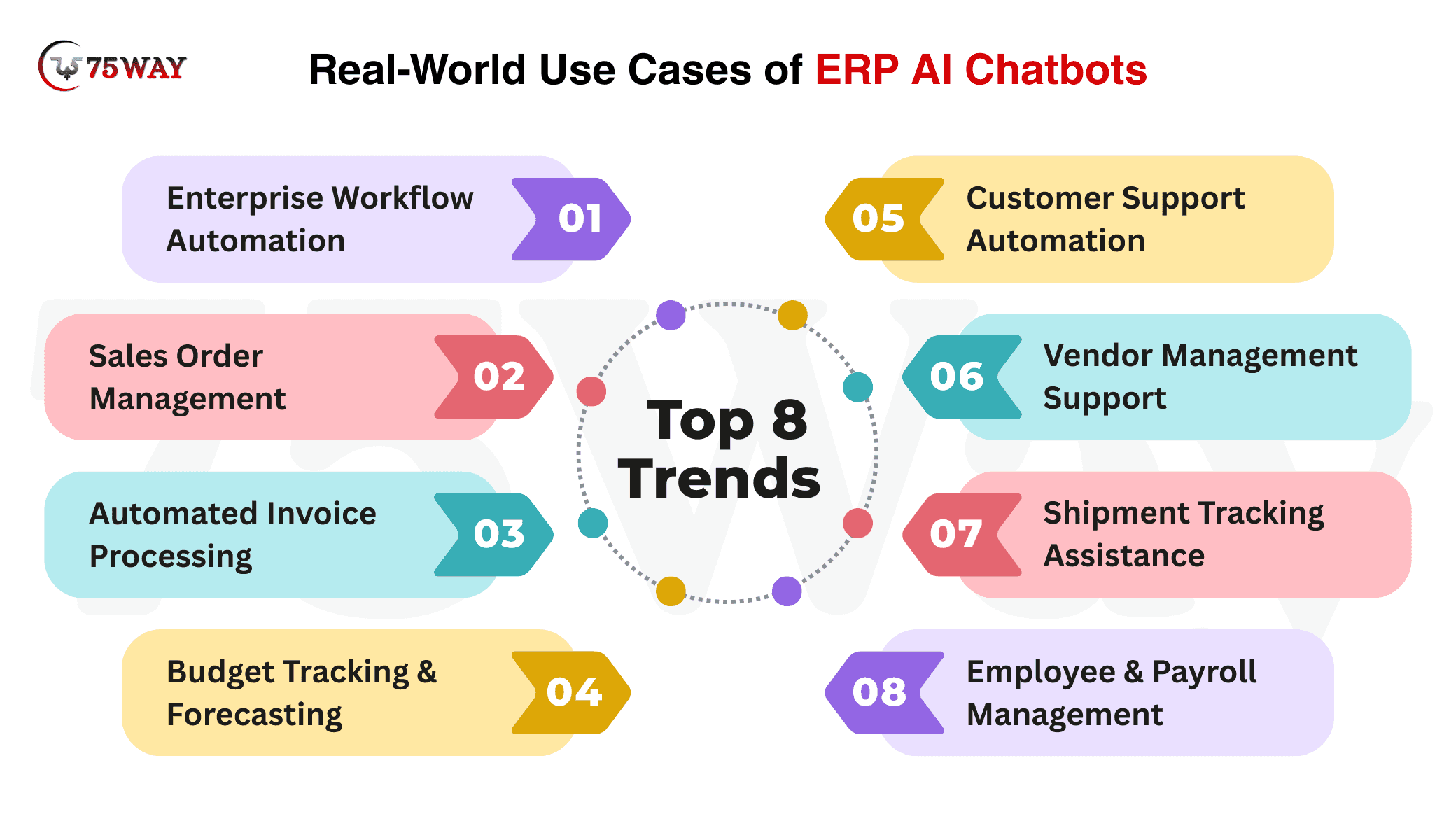
Enterprise Workflow Automation: Complex workflows can slow operations and create bottlenecks. ERP AI chatbots streamline approvals, notifications, and task routing across departments, ensuring processes run smoothly. Teams spend less time managing tasks manually and more time focusing on impactful projects.
Sales Order Management: It is quite time-consuming to keep track of orders manually and is prone to errors. ERP AI bots automatically track, approve, and update sales orders, ensuring accurate and timely processing. Sales teams can respond faster, reduce delays, and keep customers satisfied.
Automated Invoice Processing: Invoice generation and verification often take hours of repetitive work. ERP AI chatbots automate invoice processing, reconcile payments, and notify relevant teams to accelerate billing cycles and reduce mistakes. Hence, these bots save time and improve accuracy across finance operations.
Budget Tracking & Forecasting: Monitoring budgets and predicting trends requires constant attention. AI chatbots analyze ERP data to provide real-time budget tracking, generate forecasts, and highlight potential financial risks. Managers gain actionable insights that help them make proactive, data-driven decisions.
Customer Support Automation: AI-powered ERP chatbots can instantly handle common customer queries, providing accurate responses without human intervention. This reduces response times, improves customer satisfaction, and allows support teams to focus on complex issues that require human expertise.
Vendor Management Support: Maintaining supplier communications and approvals can be challenging at scale. ERP AI chatbots streamline vendor interactions, track approvals, and manage follow-ups automatically. These assistants execute smooth operations and make stronger supplier relationships.
Shipment Tracking Assistance: Real-time visibility is critical for logistics and supply chains. ERP AI virtual assistants provide instant shipment updates to both employees and customers, flagging delays and ensuring transparency in supply chain operations. This proactive communication reduces operational risks and improves customer experience.
Employee & Payroll Management: HR teams benefit from chatbots handling payroll processing, leave requests, and employee queries. This automation reduces administrative workload, ensures accurate payroll management, and delivers quick support, allowing HR staff to focus on strategic workforce initiatives.
Read More: Best iOS App Development Companies in USA Founders Must Know
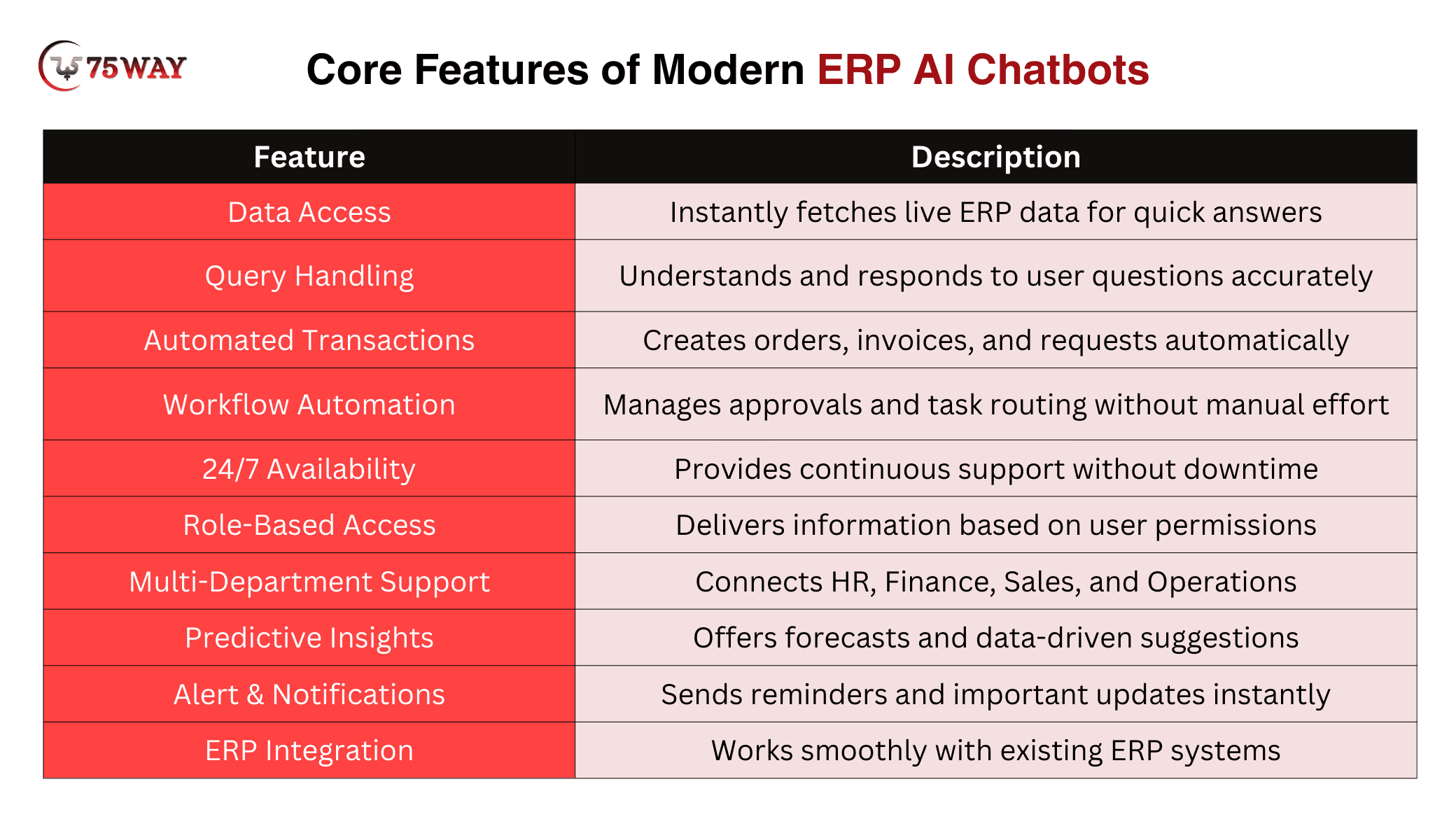
Core Features of Modern ERP AI Chatbots
Modern ERP AI chatbots go far beyond simple automation. They integrate seamlessly with enterprise systems to provide real-time access to critical data, allowing employees and managers to make informed decisions instantly. By understanding natural language, these automated chatbots can execute complex tasks, streamline workflows, and provide insights that drive operational efficiency. From enhancing collaboration to reducing errors and boosting productivity, modern ERP AI chatbots act as intelligent digital assistants that transform everyday business operations into smoother, faster, and more strategic processes.
Explore More: AI App Development Partner for Health and Wellness Startup
How To Develop An ERP AI Chatbot?
The process to create an ERP AI chatbot starts with clear planning and defined objectives. It involves analyzing existing ERP systems, designing intelligent conversational flows, integrating AI models, and rigorously testing. A well-structured approach ensures the chatbot delivers accurate, automated support, enhances workflows, and provides actionable insights across enterprise operations.
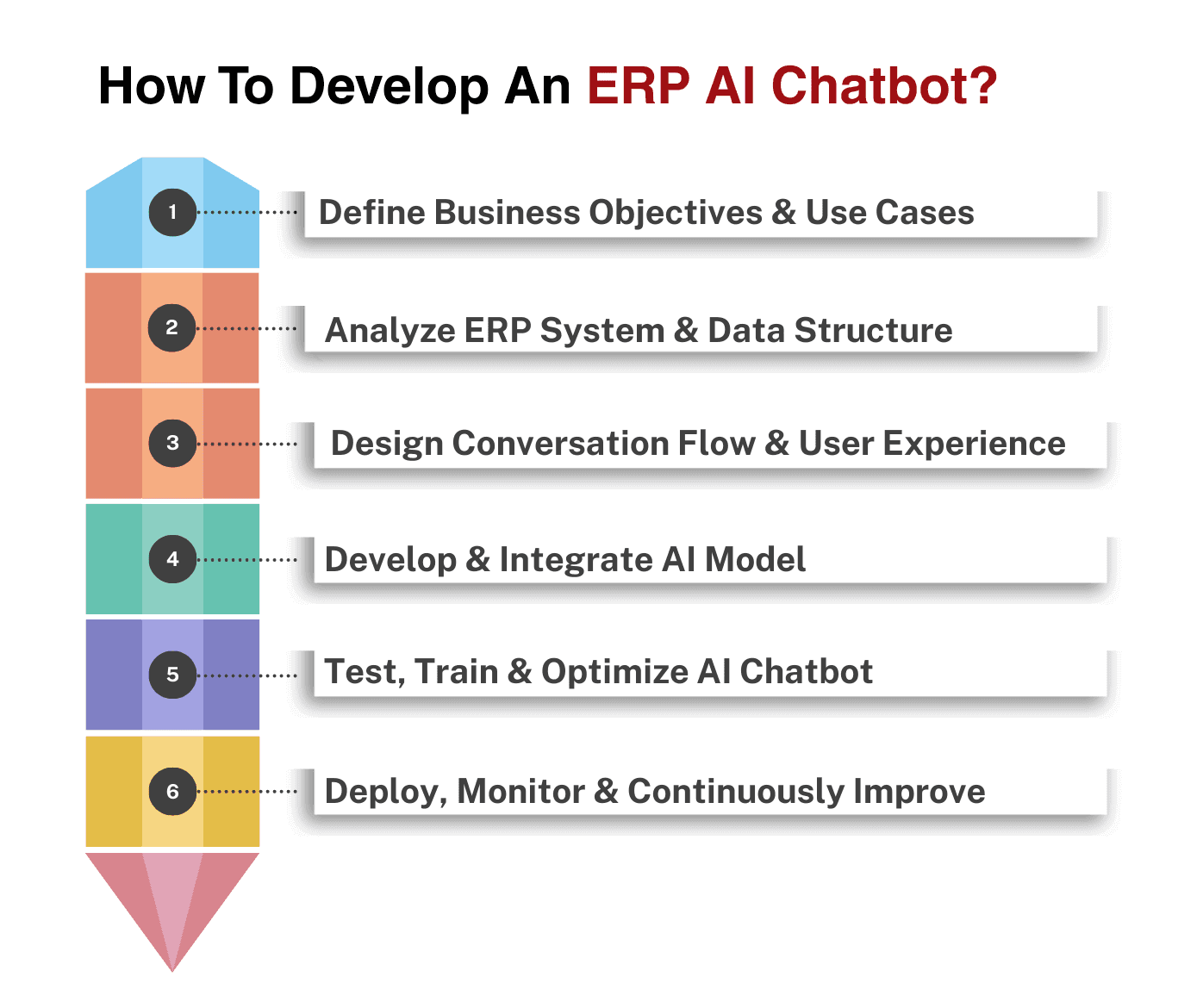
Define Business Objectives & Use Cases
Before building a chatbot, you need to understand exactly what problems it should solve. Identify repetitive tasks, bottlenecks, or slow approval processes in your workflows. By clarifying your objectives and use cases upfront, you ensure the chatbot addresses real business needs, saves time, and improves your team's efficiency.
Analyze ERP System & Data Structure
Once objectives are clear, take a close look at your ERP system. The next step is to map out data sources, integration points, and how information flows across Finance, HR, Sales, and Inventory. This stage helps you understand what the chatbot can access, where automation will have the most impact, and how to avoid errors during deployment.
Design Conversation Flow & User Experience
Your team will interact with the chatbot daily, so the experience needs to be intuitive. You must plan conversational prompts, response patterns, and user interface elements carefully. A well-designed flow ensures employees can get answers quickly, complete tasks efficiently, and feel confident using the chatbot without extensive training.
Develop & Integrate AI Model
With the flow mapped, the AI model is built using NLP and machine learning. Integration with your ERP ensures the chatbot can retrieve data, process requests, and execute tasks automatically. Over time, the AI learns from interactions, making it smarter and more accurate for your team’s specific needs.
Test, Train & Optimize AI Chatbot
Before full deployment, testing is critical. Simulate real-life scenarios to see how the chatbot responds, and refine its answers based on feedback. This step ensures accuracy, reliability, and a smooth experience for users, preventing disruptions in everyday operations.
Deploy, Monitor & Continuously Improve
Deployment is only the beginning. Continuous performance monitoring, collecting feedback from your team, and updating features keep the chatbot effective and relevant. As your business grows, the AI adapts to new workflows, supporting scalability while maintaining operational efficiency.
Read Too: Top 10 Decentralized Crypto Wallets: Revenue Models & Development
Why Businesses Need ERP AI Chatbots?
Businesses need ERP AI chatbots to streamline operations, reduce repetitive tasks, and improve decision-making. These intelligent assistants offer real-time data access, automate workflows, and deliver actionable insights to enhance productivity, minimize errors, and support scalable growth, helping enterprises stay competitive in fast-paced, data-driven environments.
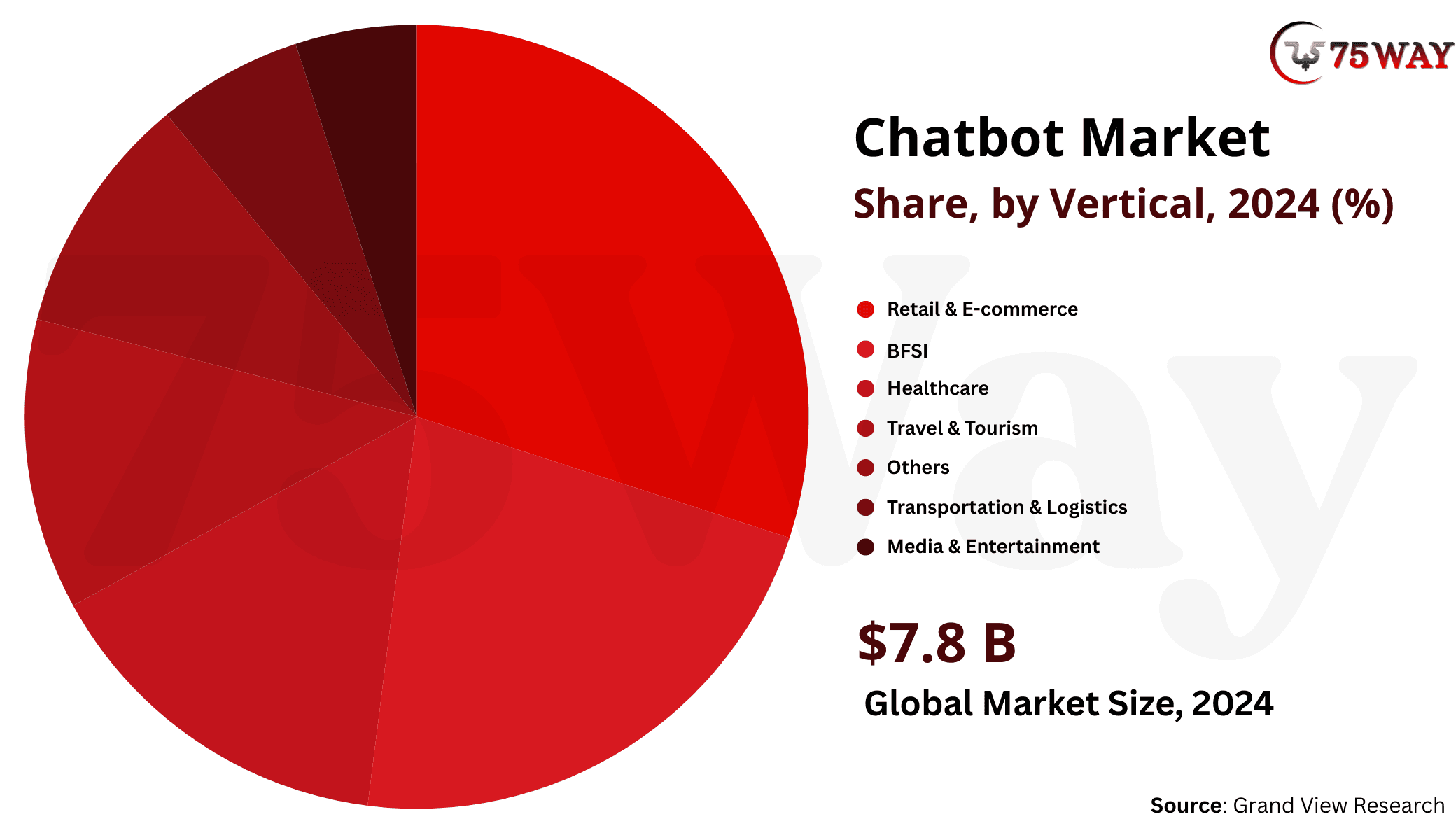
- According to Grand View Research, the global chatbot market is expected to reach USD 27.29 billion by 2030, expanding at a 23.3% CAGR from 2025 to 2030.
- Around 78% of companies worldwide have adopted conversational AI within at least one area of their operations.
- Nearly half of enterprises generating over $5 billion annually have successfully scaled AI agent deployments.
- By 2027, more than 50% of AI-enabled ERP systems are expected to integrate generative AI for advanced contextual insights.
- AI-driven ERP chatbots can increase task efficiency by 27% while lowering operational expenses by 30%.
Read More: What is Character AI? Everything You Need To Know
What Is The Cost To Create an Enterprise AI Chatbot?
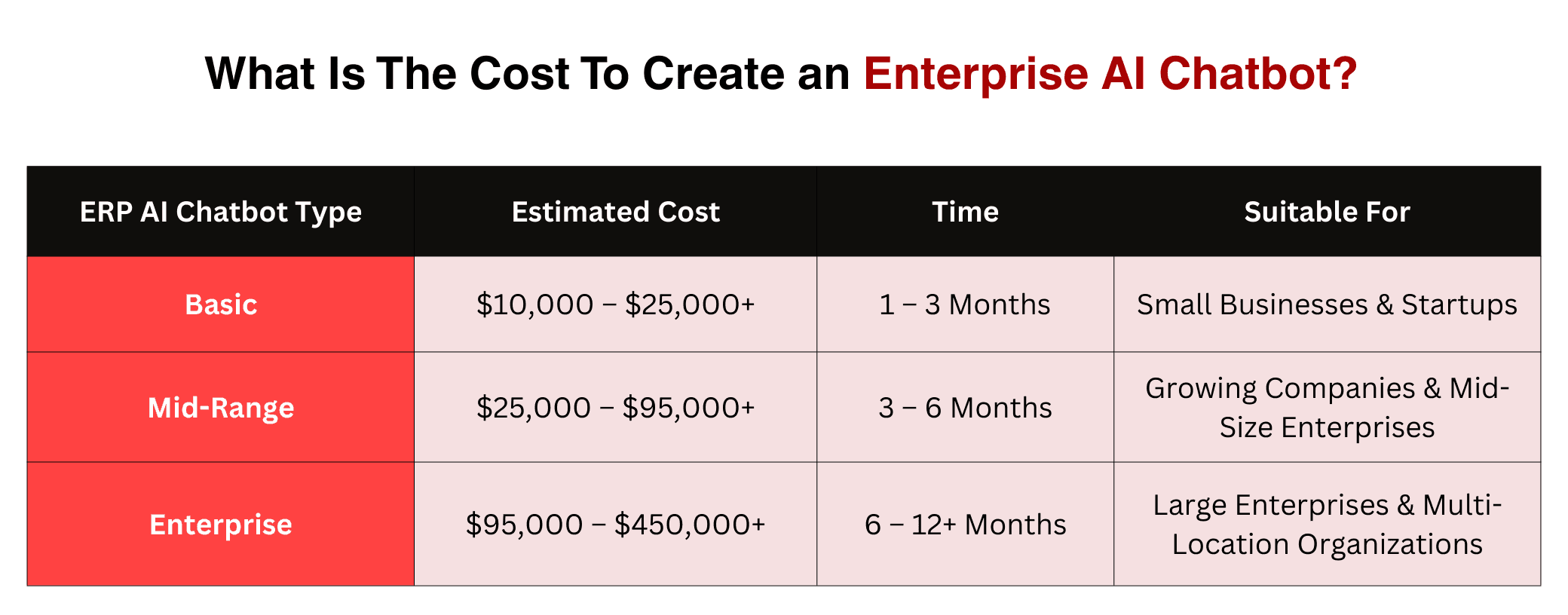
The cost to develop an ERP AI chatbot varies depending on complexity, features, and business size. Basic chatbots typically range from $10,000 to $25,000 and can be implemented within 1–3 months, making them ideal for small businesses and startups. Mid-range solutions, designed for growing companies or mid-size enterprises, cost between $25,000 and $95,000, with development timelines of 3–6 months. Enterprise-level chatbots for large organizations or multi-location operations require larger investments, ranging from $95,000 to $450,000+, and can take 6–12 months or more to fully deploy and integrate with existing systems.
Other Factors Affecting Cost to Develop ERP AI Chatbot
- Simple rule-based bots cost $5,000–$30,000, while advanced GenAI agents require significantly higher investments.
- Integrating ERP or CRM systems adds $5,000–$50,000 per connection, depending on customization level.
- Planning and design phases typically cost between $3,000 and $8,000 overall.
- Development and testing expenses range from $5,000 to $50,000 or more.
- Deployment and system integration generally require $3,000 to $7,000 investments.
- Enterprise AI maintenance costs range from $3,000 to $10,000+ monthly, including hosting.
Also Read: How to Build an AI-Driven Anonymous Messaging App?
Challenges of ERP AI Chatbots and How to Solve Them?
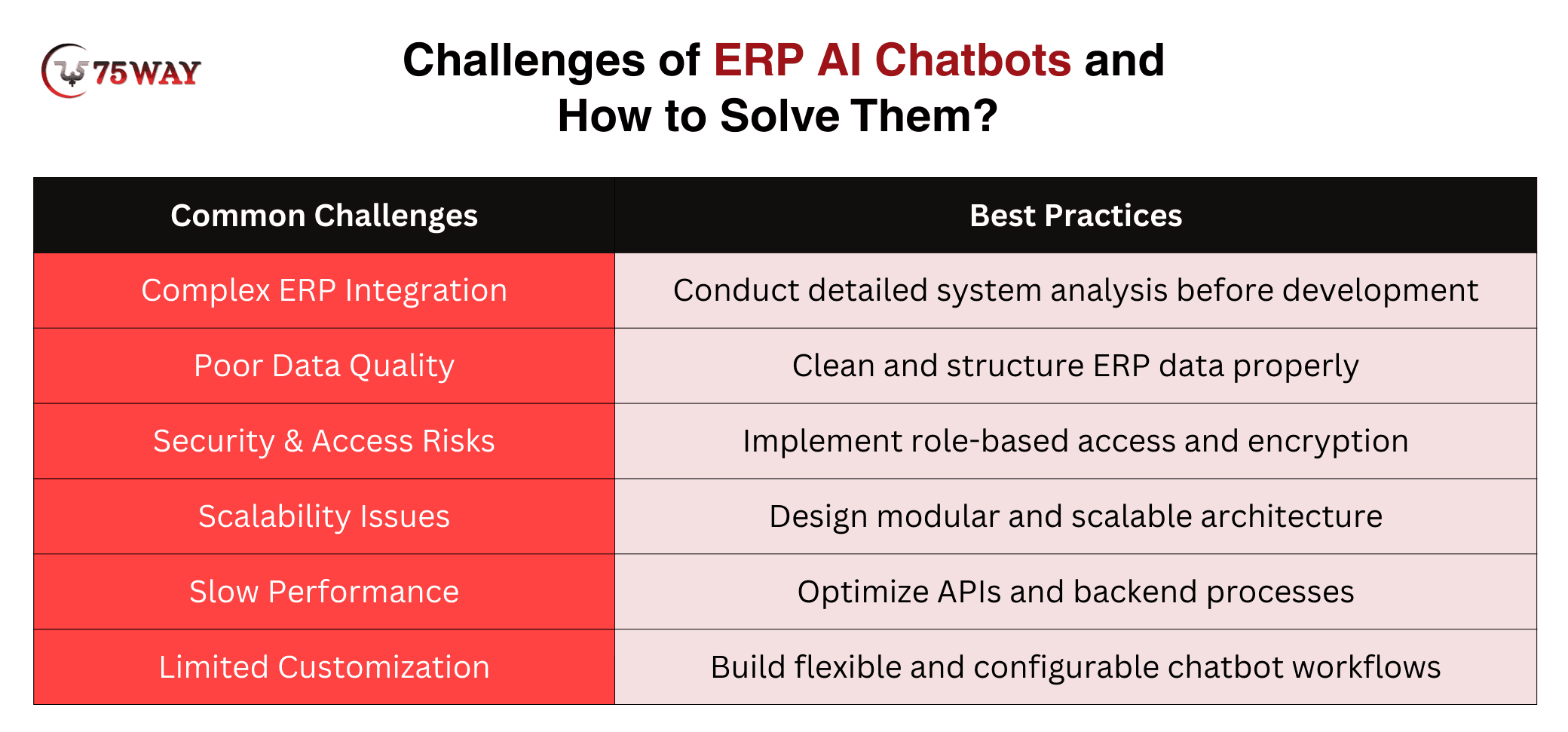
ERP AI chatbots face challenges such as complex system integration, poor data quality, security risks, scalability issues, and limited customization. To address these challenges, you require thorough system analysis, structured and clean data, robust security measures, modular architecture, and flexible workflows. A proactive planning ensures chatbots deliver reliable performance, enhance efficiency, and support enterprise growth effectively.
Read Too: How to Build an Astrology App Like Astra in 2026: Step-by-Step Guide
How 75way Assist Enterprises in Building An ERP AI Chatbot?
75way is a leading AI chatbot development company. We follow a structured methodology to create an ERP AI chatbot. Our process begins with a detailed consultation to understand your business goals and identify pain points within your ERP systems. We analyze your workflows and operational challenges to ensure that the AI chatbot addresses real needs and delivers measurable value across your enterprise.
Once objectives are clear, our team focuses on designing a custom chatbot tailored to your organization. The conversation flows, prompts, and interface are created to be intuitive, user-friendly, and aligned with how your employees interact with ERP systems daily, making adoption smooth and effective.
Integration comes next, with secure connections to existing ERP modules across Finance, HR, Sales, and Inventory. This ensures that the chatbot can access accurate data, execute tasks automatically, and operate seamlessly within your enterprise environment without disrupting ongoing workflows.
Continuous support and optimization form the final step. Our team monitors performance, updates AI models, and scales features as your business grows. This ongoing partnership allows enterprises to achieve faster ROI, higher productivity, and smarter insights, turning the chatbot into a long-term strategic asset.
Final Remarks
ERP AI chatbots are transforming the way enterprises operate by reducing manual workloads, streamlining processes, and empowering smarter decision-making across departments. These intelligent assistants go beyond automation to offer predictive insights, actionable analytics, and seamless workflow management that help businesses work faster. In 2026, startups and large enterprises alike cannot afford to overlook this innovation. So, you can partner with a trusted AI chatbot development company to avail custom AI chatbots tailored to your unique needs, that drive productivity and long-term business growth.
Frequently Asked Questions (FAQs)
How Do AI Chatbots Integrate With ERP?
AI chatbots can be integrated with ERP systems via APIs, secure connectors, or middleware. These AI assistants enable you to access real-time data and perform tasks across modules such as Finance, HR, Sales, and Inventory. This integration ensures that information stays consistent across the system, workflows are automated, and employees can interact with ERP data through natural conversations without switching platforms.
What Are The Risks of ERP AI Chatbots?
While ERP AI chatbots bring efficiency, several risks exist. Data privacy concerns arise if sensitive information is mishandled. Integration challenges can occur when systems are complex or customized. Scalability issues may appear as the business grows. These risks can be mitigated through proper planning, secure architectures, data encryption, and phased deployment strategies.
How Long Does Implementation Take?
The time to implement an ERP AI chatbot varies based on complexity, features, and enterprise size. Basic ERP chatbots for small businesses or startups can be deployed in 1–3+ months, while mid-range solutions for growing companies typically take 3–6+ months. Enterprise-level chatbots integrated across multiple departments or locations can require 6–12+ months or more to fully implement, test, and optimize.
Do Chatbots Work With SAP/Oracle/Microsoft ERP?
Yes, AI chatbots can integrate with major ERP systems such as SAP, Oracle, and Microsoft Dynamics. Integration is typically achieved through APIs, middleware, or custom connectors, enabling chatbots to access module data, automate tasks, and deliver real-time insights. Proper integration ensures seamless performance and consistent data across all platforms.