Summary
Character AI is transforming how startups and enterprises engage customers through human-like digital personalities. This comprehensive guide explains how Character AI works, its components, features, business use cases, implementation strategy, and how it compares to traditional AI systems.
Key Overview:
- Character AI delivers human-like conversations, boosting engagement and conversions for startups and businesses.
- AI memory retention personalizes interactions, increasing customer satisfaction and long-term brand loyalty.
- By saving over $11 billion annually, AI chatbots reduce customer support operational costs.
- Multi-platform support enables integration across websites, apps, and CRM systems.
- Businesses can automate lead generation, marketing, and internal workflows efficiently with AI.
It is a common scenario that a potential prospect lands on your website at 11:47 PM. They are ready to buy, but no one is available to respond. Within seconds, they leave and choose your competitor. This is a common reality that many startups and growing businesses in the USA face every day.
But we have a solution for this. In the era of artificial intelligence, nothing is impossible. AI chatbots and agentic AI solutions now handle customer queries 24/7. You do not need to be available round-the-clock.
That’s where Character AI comes. Instead of traditional scripted bots, Character AI allows businesses to create intelligent digital assistants that remember conversations, adapt tone based on user behavior, and respond naturally.
If you are investing in AI chatbot development or considering working with a generative AI development company, understanding Character AI becomes a competitive advantage in a digital economy where customer experience directly impacts revenue, retention, and brand trust. And in this guide, we will break down what Character AI exactly is, how it works, and how your business can use it strategically.
What is Character AI?
Character AI is an advanced type of conversational artificial intelligence tool that enables businesses to create interactive digital personalities. These characters are able to understand human language, maintain conversation context, express a defined personality, and respond in a human-like way.
Unlike traditional rule-based AI chatbots, Character AI adapts in real time. It remembers previous interactions, adjusts tone based on user intent, and delivers personalized responses that feel more conversational. For startups and businesses in the USA, this means higher engagement, better customer experiences, and stronger brand differentiation.
How Character AI Works?
The working process of Character AI has several stages. It combines large language models, ML algorithms, contextual memory, and dialogue systems to simulate intelligent human-like conversations. This conversational AI agent processes user inputs, understands user intent, generates responses, and improves itself based on the feedback loops and interaction data.
Collect Data: :
First of all, Character AI systems collect structured and unstructured data such as conversation logs, behavioral patterns, knowledge bases, and user preferences. After that, it uses this data to train the model. This model understands different contexts and industry-specific interactions, especially important for businesses targeting customers.Understand Language (NLP): :
The next stage aims to adopt Natural Language Processing (NLP) to understand the grammar, intent, tone, and sentiment. NLP algorithms enables the AI to understand complex queries, slang, and business terminology. Hence it becomes suitable for real-time AI chatbot development across industries like SaaS, healthcare, and eCommerce.Learn Patterns: :
In this stage, Character AI deploys machine learning algorithms analyze past interactions to detect patterns in language, intent, and customer behavior. This pattern recognition allows Character AI to anticipate user needs, personalize replies, and improve engagement quality over time.Generate Response: :
After analyzing input and context, the AI generates a response using probabilistic language modeling. These responses are dynamic rather than pre-written and follow the natural conversation flow for improved engagement and realistic persona-based interactions.Improve Over Time: :
After giving responses, Character AI continuously refines itself by analyzing feedback, conversation success rates, and performance metrics. This adaptive learning helps businesses achieve long-term improvement in accuracy, engagement, and conversion outcomes.Core Components of Character AI
Character AI is built on several advanced technological layers that work together to create realistic digital personalities. These components enable conversation flow, memory retention, emotional detection, and seamless integration with business systems.
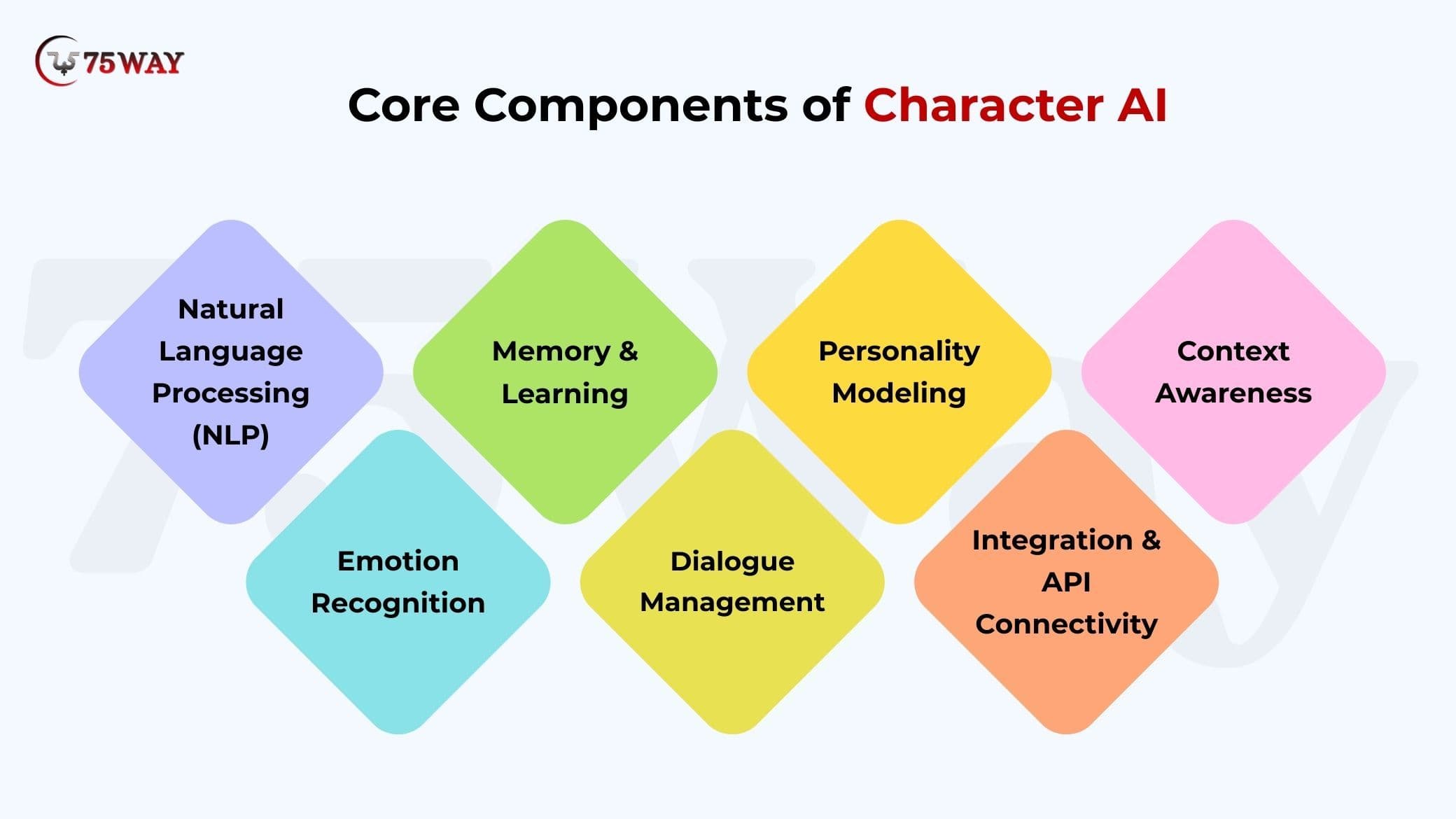
Natural Language Processing (NLP): :
Character AI integrates NLP to interpret text, understand user intent, and generate contextually relevant responses. It forms the foundation for human-like conversations and ensures accurate understanding across different industries and user segments.Memory & Learning: :
Memory systems allow this AI voice chatbot to retain contextual information across sessions. This enables personalized experiences and long-term engagement strategies, particularly beneficial for subscription-based and SaaS businesses.Personality Modeling: :
One of the most powerful aspects of Character AI is personality modeling. Instead of sounding generic or robotic, AI characters can be designed with specific tones, communication styles, and behavioral traits. Whether your brand voice is professional, friendly, authoritative, or supportive, this AI can reflect it consistently across every interaction.Context Awareness: :
This component allows Character AI to remember what a user has already said within a session and respond accordingly. Instead of repeating information or losing track of the discussion, it maintains logical flow and progression. For businesses, this creates smoother customer journeys and reduces the frustration of repetitive responses.Emotion Recognition: :
Modern Character AI systems can detect emotions such as frustration, urgency, or satisfaction through sentiment analysis. This emotional intelligence enables the AI to adjust tone and response style appropriately. For example, it can become more empathetic when handling complaints or more enthusiastic during product inquiries.Dialogue Management: :
Behind every smooth conversation is a structured dialogue management system. This component controls the flow of interaction, manages multi-step conversations, and provides a logical sequence to questions and responses. It is particularly valuable for lead qualification, onboarding processes, and customer support scenarios where structured conversations are essential.Integration & API Connectivity: :
Character AI connects with CRM systems, SaaS platforms, websites, mobile apps, and other business tools through APIs. This integration capability allows businesses across the USA to scale their AI deployments and maintain centralized data and operational consistency.Various Types of Character AI Platforms
Each type of Character AI serves a specific purpose based on how businesses want to engage users, automate workflows, or enhance customer experience. Below are the main categories and what they actually do.
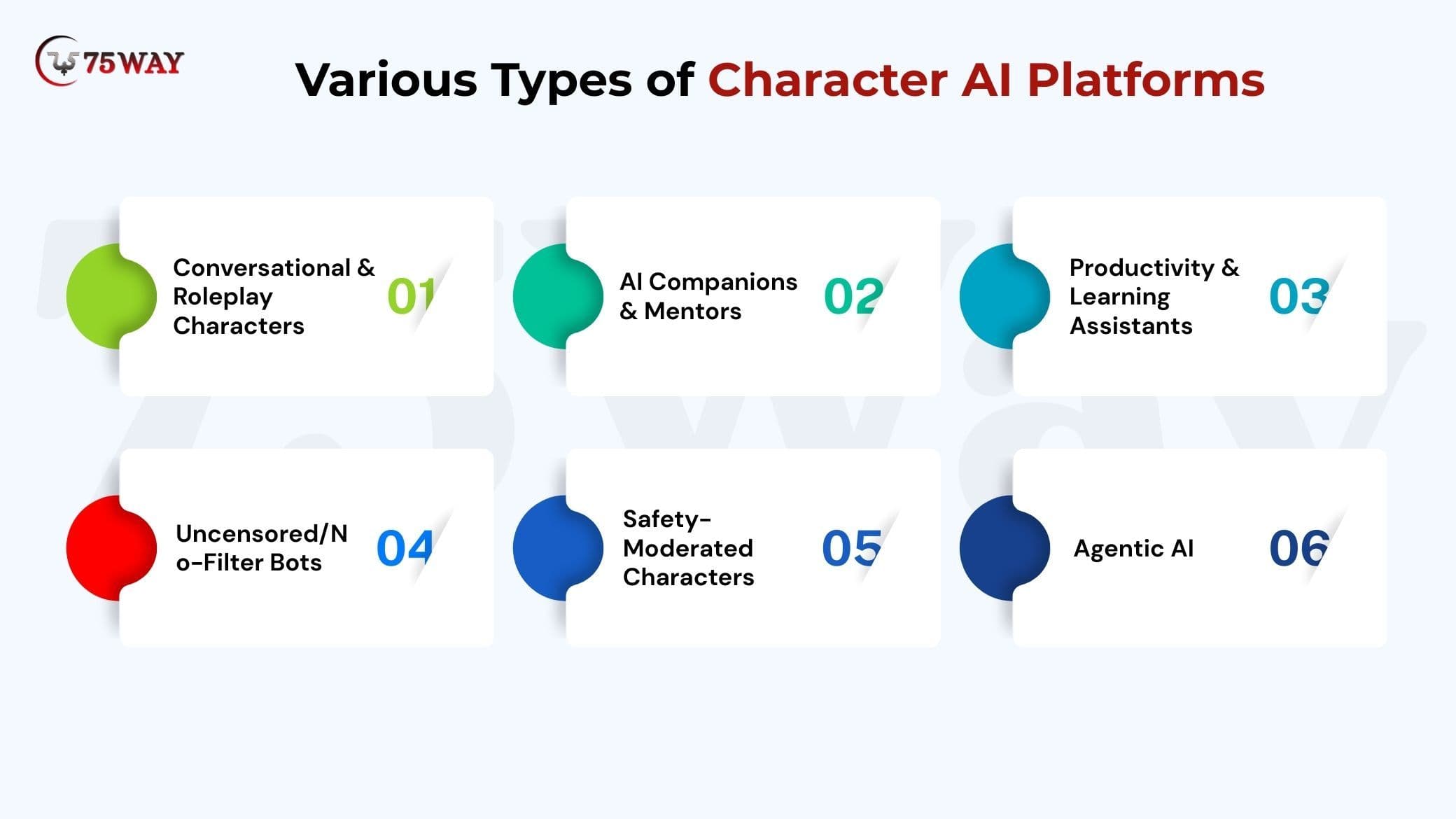
Conversational & Roleplay Characters::
These platforms create AI characters for interactive conversations and simulated dialogue experiences. They allow users to engage in storytelling, role-based discussions, or entertainment-driven interactions. Businesses use them to increase engagement, gamify experiences, and build immersive digital environments.AI Companions & Mentors: :
AI companions help in ongoing conversations and relationship-based engagement. They provide guidance, coaching, onboarding assistance, or emotional support through continuous conversations. Companies use them in health and wellness apps, training platforms, and customer retention strategies.Productivity & Learning Assistants: :
These AI characters are useful to complete tasks, research information, automate workflows, and access knowledge. They act as virtual assistants inside SaaS platforms, internal tools, or educational systems to improve efficiency and decision-making.Uncensored/No-Filter Bots: :
These bots are used for open-ended conversations without strict moderation filters. While they provide flexibility and creative freedom, they can present compliance and reputational risks if deployed in business environments without governance controls.Safety-Moderated Characters: :
These characters have built-in content filters, compliance safeguards, and monitoring systems. They are designed for business use cases where brand safety, legal compliance, and customer protection are critical. These kinds of AI characters are helpful in regulated industries.Agentic AI: :
Agentic AI goes beyond answering questions. It can take actions, execute workflows, access external systems, and complete tasks autonomously. For example, it can schedule meetings, update CRM records, process requests, or trigger automated sequences. This represents the next evolution of AI-driven business automation.How to Create Characters with Character AI?
When you develop virtual assistants or characters from Character AI, you have to follow a structured approach.
- Identify what the AI character will do. Whether it will handle customer support, lead generation, onboarding, or engagement.
- Afterward, set tone, communication style, behavior rules, and brand voice alignment.
- Provide FAQs, scripts, product information, support scenarios, and past customer interactions.
- Once it is trained, testing and iterative adjustments are executed to fine-tune the character's responses to different situations.
- At last, launch live, track performance, gather feedback, and optimize continuously.
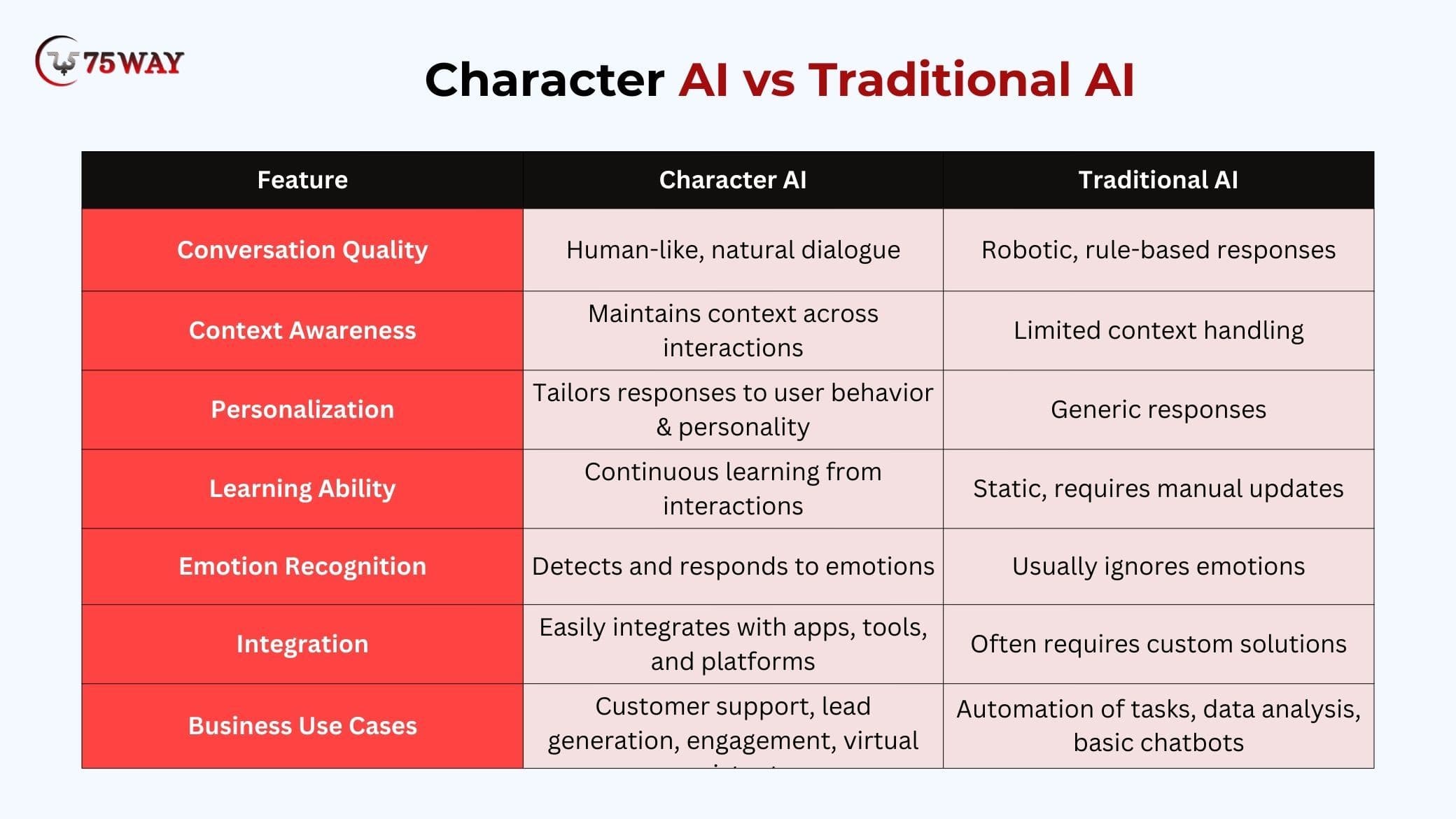
Character AI vs Traditional AI: Key Differences Explained
Traditional AI is mainly built to perform tasks, analyze data, or follow set rules. It responds in a fixed, mechanical way and does not adapt much to the user.
On the other hand, Character AI focuses on real conversations and personalization. It can understand context, remember previous interactions, and respond naturally, making users feel like they’re talking to a human.
For startups and businesses, this means better customer engagement, stronger brand presence, and higher chances of converting visitors into customers.
Core Features & Capabilities of Character AI
Character AI systems are designed to deliver advanced conversational experiences that go beyond scripted responses. These features make them highly valuable for startups and growing businesses in the USA.
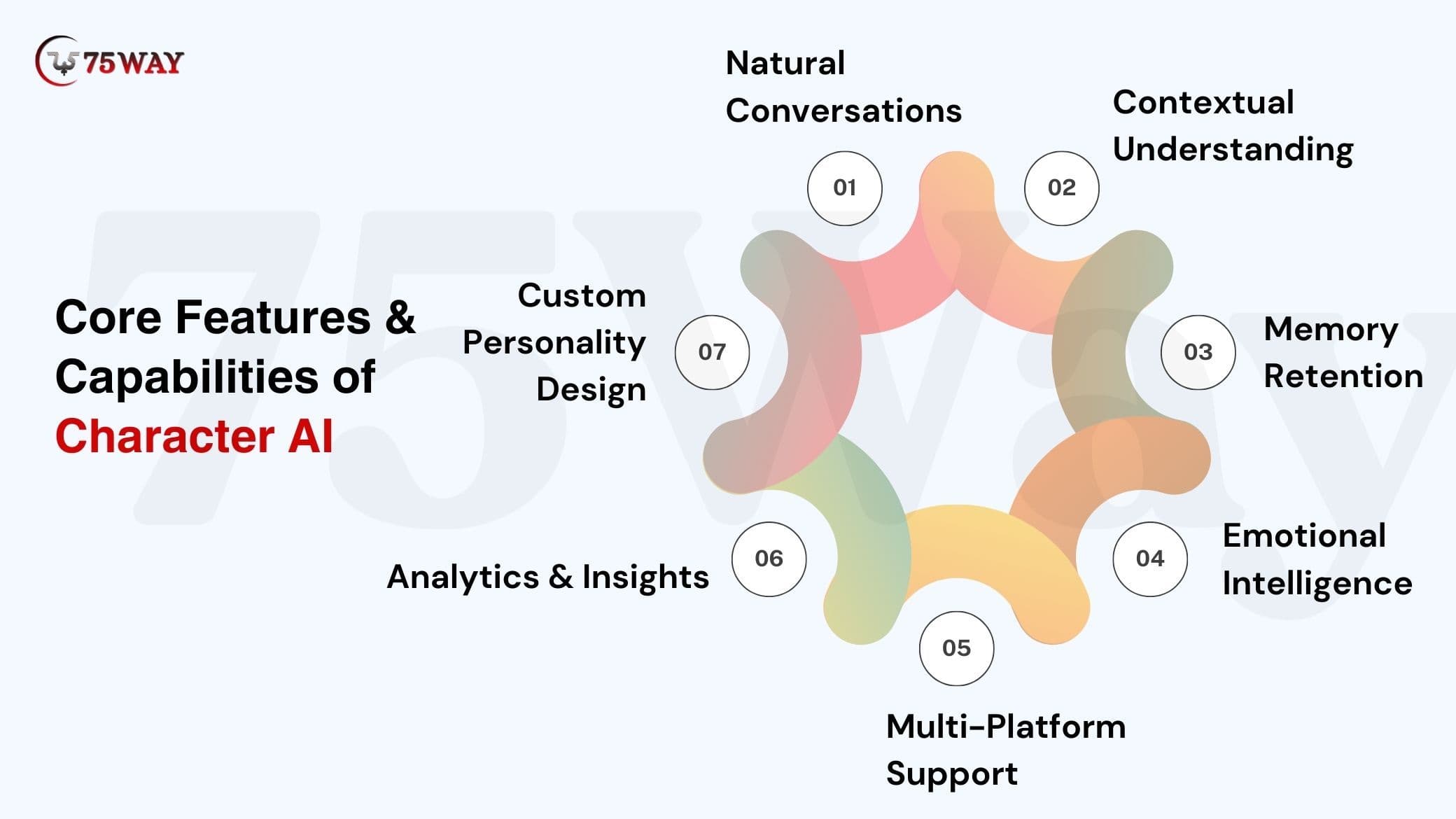
Natural Conversations: :
Character AI delivers fluid, human-like interactions that adapt to tone and context, creating a realistic conversational experience.Contextual Understanding: :
The system understands multi-turn conversations and maintains relevance throughout interactions.Memory Retention: :
AI characters remember preferences and past interactions, enabling personalization.Emotional Intelligence: :
It analyzes empathetic and emotionally appropriate responses using sentiment analysis.Multi-Platform Support ::
Character AI works across websites, apps, messaging platforms, and CRM systems.Analytics & Insights: :
This conversational AI chatbot includes advanced analytics track conversation quality, engagement, and conversion metrics.Custom Personality Design: :
Businesses can tailor AI personalities to match brand voice and market positioning.How Businesses Can Benefit From Character AI
Character AI offers businesses a powerful way to improve efficiency, engagement, and customer satisfaction across multiple areas. AI-powered chatbots generate approximately $11 billion in yearly savings for customer service operations. By creating intelligent digital personas, companies can automate interactions without losing the personal touch, helping both startups and established enterprises scale their operations effectively. Here’s how different business functions can benefit:
Customer Support::
Character AI enables 24/7 automated assistance, allowing customers to get instant answers to their queries anytime, without waiting for a human agent. It can handle repetitive tasks, resolve common issues, and escalate complex problems to humans when needed.Lead Generation: :
AI characters can qualify leads automatically by asking relevant questions, gathering contact information, and tracking user intent. They can nurture prospects through personalized conversations, guiding them through the sales funnel without constant human supervision.Marketing & Engagement: :
Character AI can deliver interactive marketing campaigns by recommending products, offering personalized promotions, and engaging users in dynamic conversations. Unlike traditional marketing messages, AI characters make interactions feel natural, increasing engagement ratesInternal Assistants: :
For organization, Character AI can act as a virtual internal assistant, helping employees access knowledge bases, manage schedules, automate repetitive workflows, and provide onboarding guidance.How to Implement Character AI in Your Business
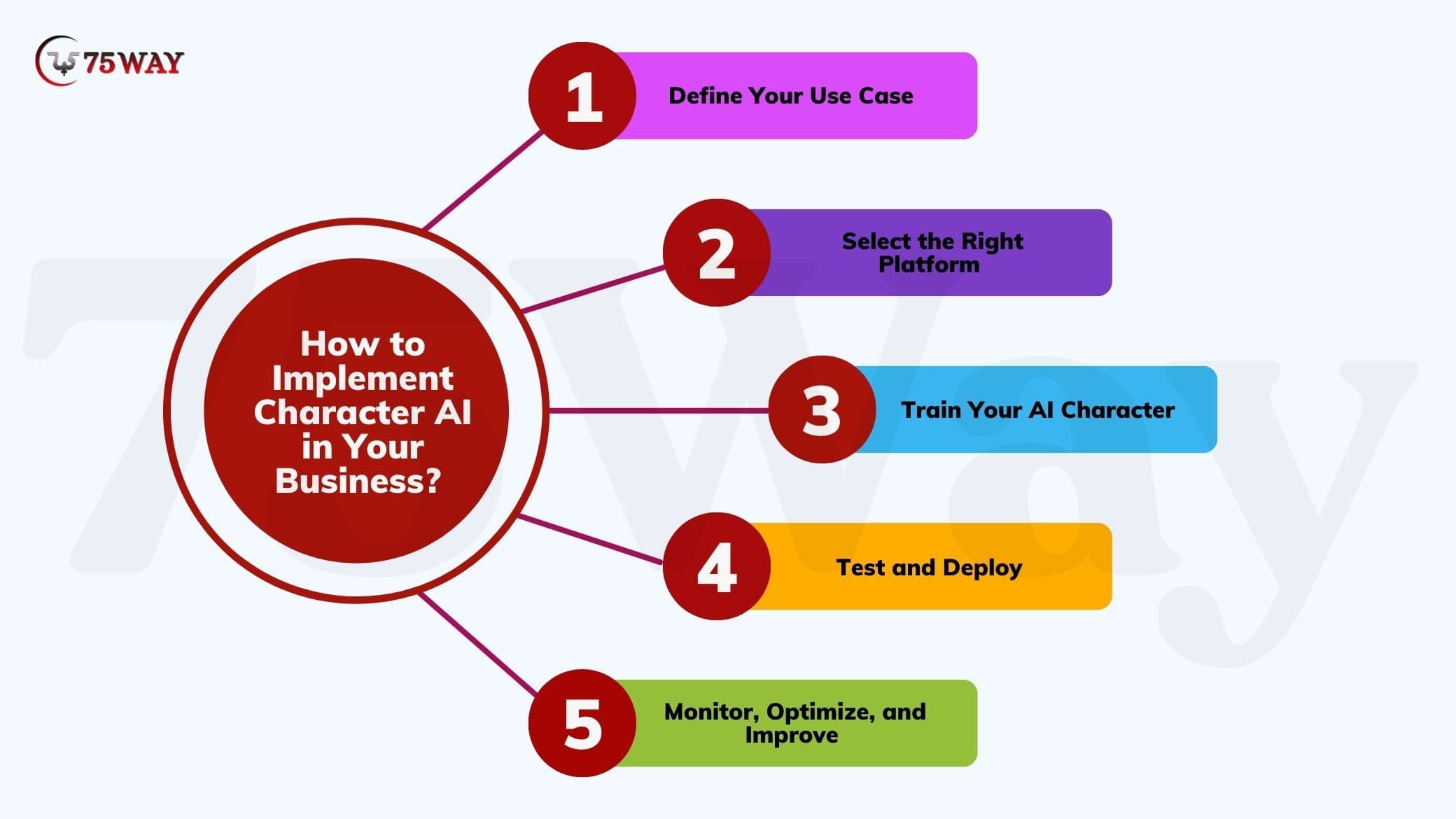
Successful implementation of Character AI requires careful planning and a structured approach. By following clear steps, businesses can ensure that AI characters deliver maximum value while aligning with brand goals and customer needs.
Step 1: Define Your Use Case :
Start by identifying the main purpose of your AI character. You need to decide whether it will handle customer support, run marketing campaigns, generate leads, or automate internal operations. You can define the use case to create the character’s personality, conversation style, and functionality.Step 2: Select the Right Platform :
The next stage is to choose a Character AI tool or platform that fits your startup or business needs. You can look for options that support integration with your systems, scalability, and compliance so your AI can grow with your business.Step 3: Train Your AI Character :
Insert data, conversation scripts, and example interactions in the AI model to create its personality. The more relevant and structured the input, the smarter and more natural your AI character will respond.Step 4: Test and Deploy :
The next stage focuses on thorough testing to spot errors or awkward responses before going live. Once everything works smoothly, deploy the AI for real interactions with your customers or team.Step 5: Monitor, Optimize, and Improve :
You must continuously track performance, analyze interactions, and gather feedback. Regular updates and refinements help your AI improve over time, becoming more effective, accurate, and engaging.Other Tools & Platforms for Conversational AI Experiences
Character.ai is ideal for startups looking to build interactive AI characters and branded conversational personas. It allows users to create custom personalities, experiment with conversational AI, and share models within a community. With a free plan and an affordable paid tier, it’s excellent for early-stage experimentation, engagement-based products, and prototype AI experiences without heavy development costs.
Google Dialogflow: Ot is a scalable conversational AI platform designed for chatbot automation and customer support. Powered by Google’s NLP engine, it supports multi-channel deployment across websites, apps, and messaging platforms. Its pay-as-you-go pricing makes it flexible for growing startups that need structured automation while maintaining cost control.
IBM Watson Assistant: This AI chatbot is built for enterprise-grade AI assistant solutions. It offers advanced NLP capabilities, strong enterprise integrations, and AI-powered search features. While pricing starts higher than most competitors', it’s best suited for funded startups or enterprises that require structured workflows, security, and large-scale deployment.
Amazon Lex: This conversational AI is a cost-effective solution for building text and voice-based bots, especially for startups already using AWS infrastructure. With built-in speech recognition and scalable cloud architecture, it supports voice-enabled applications and intelligent chat systems. Its pay-per-request pricing model makes it flexible for startups managing variable traffic.
Botpress: This open-source conversational AI platform gives technical teams full control over customization. It offers developer-friendly workflows, integrations, and advanced conversational design flexibility. While the paid version is higher priced, it’s a strong choice for technically skilled startup teams that want complete ownership of their AI chatbot architecture.
Poe: It is a multi-model AI platform that lets users access and experiment with various AI models in one place. It supports chatbot creation and conversational testing, making it suitable for small teams exploring AI use cases. Affordable premium plans work well for testing AI personas and early product ideation.
Perplexity AI: This tool focuses on research-driven conversational AI with real-time search and cited answers. It is particularly useful for knowledge-based applications where accuracy and references matter. While not primarily a chatbot-building platform, it serves startups that require AI-powered research tools or information-driven assistant features.
Conclusion
To summarize, Character AI is more than a chatbot that brings human-like conversations, personalization, and intelligence to your business. For startups and enterprises in the USA, implementing Character AI can improve customer engagement, boost conversions, and streamline operations across multiple functions. You must define use cases, select the right platform, train your AI, and continuously optimize it to create digital characters that truly reflect your brand and deliver consistent value.
Whether you’re handling support, generating leads, or running interactive campaigns, Character AI offers a scalable, smart solution for modern business challenges. If you want to launch an AI chatbot like Character AI, reach a reliable AI chatbot development company now!
FAQ (Frequently Asked Question)
Is Character AI safe for handling customer data in the United States?
Yes, Character AI can be safe for handling customer data if proper security measures are in place. Many platforms comply with US data privacy regulations, such as the CCPA, and implement encryption, access controls, and anonymization to protect sensitive information. Choosing a reputable provider ensures your data and customer interactions remain secure.
How can Character AI improve Customer Experience and Retention?
Character AI is valuable across industries that rely on customer interaction, personalization, or internal automation. Key sectors include SaaS, eCommerce, healthcare, fintech, education, and customer service-driven businesses. Any business that wants to improve engagement, streamline workflows, or provide 24/7 support can benefit from AI-powered characters.
Can Character AI Integrate with CRM, Websites, and SaaS platforms?
Not necessarily, many modern Character AI platforms are no-code or low-code, allowing business owners to set up AI characters without deep technical knowledge. However, for advanced customization, integrations, or complex workflows, working with a generative AI development company or technical team may be beneficial.
What Industries Benefit The Most From Character AI solutions?
Character AI is valuable across industries that rely on customer interaction, personalization, or internal automation. Key sectors include SaaS, eCommerce, healthcare, fintech, education, and customer service-driven businesses. Any business that wants to improve engagement, streamline workflows, or provide 24/7 support can benefit from AI-powered characters.
Do I Need Technical Expertise To Implement Character AI In My Business?
Not necessarily, many modern Character AI platforms are no-code or low-code, allowing business owners to set up AI characters without deep technical knowledge. However, for advanced customization, integrations, or complex workflows, working with a generative AI development company or technical team may be beneficial.