Summary
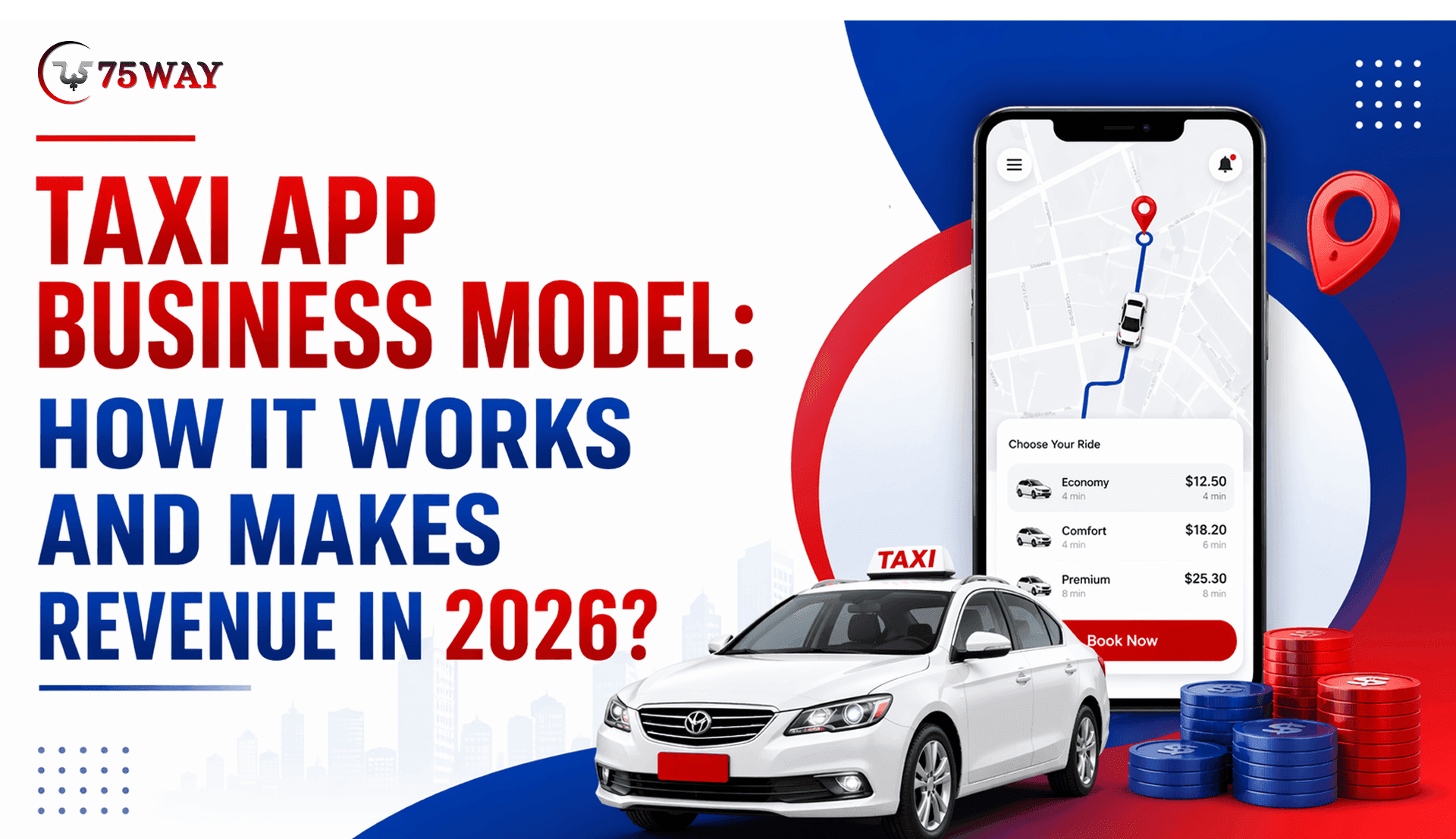
Taxi apps generate revenue through multiple streams, including ride commissions, surge pricing, subscriptions, and partnerships. This blog breaks down the complete taxi app business model and how modern ride-hailing platforms monetize, scale operations, and maximize profits. It also explores emerging strategies, helping businesses understand what drives success in the evolving on-demand mobility ecosystem.
Quick Overview
- Taxi apps primarily earn through commissions on every completed ride booking.
- Dynamic pricing increases revenue during high-demand periods like peak traffic hours.
- Subscription models create predictable income from drivers and frequent riders.
- In-app advertising and partnerships unlock additional non-ride revenue streams.
- Combining multiple revenue streams ensures scalability and long-term business sustainability success.
The ride-hailing industry has evolved from a simple booking solution into a multi-layered digital ecosystem. What started as a convenient way to book rides has now become a sophisticated revenue-generating engine. Now, taxi app development solutions are powered by data, pricing intelligence, and diversified monetization strategies.
In 2026, taxi apps will no longer depend solely on ride fares. They operate with multiple revenue streams that ensure consistent profitability, scalability, and long-term sustainability. Whether you are planning to build a taxi app or start a taxi business, or simply want to understand how these platforms generate revenue, this guide breaks everything down in detail. So, without wasting a single unit of time, let’s know how the taxi app business model works.
What Is a Taxi App Revenue Model?
A taxi app revenue model defines the structured approach a ride-hailing platform uses to generate income while connecting passengers with drivers. It outlines how value is created, delivered, and monetized across the entire ecosystem.
This includes multiple income streams such as ride commissions, dynamic pricing, subscription plans, in-app advertising, and strategic partnerships. Each component contributes to the platform’s ability to scale revenue while maintaining operational efficiency.
Unlike traditional taxi businesses that rely solely on fares, modern ride-sharing platforms operate on hybrid revenue models. These models combine transactional and recurring income streams to ensure consistent cash flow and reduced financial risk.
By leveraging data-driven pricing, user behavior insights, and diversified monetization strategies, taxi apps can optimize profitability while balancing driver earnings and customer affordability.
To understand the taxi app model in simple terms, you can consider a taxi app revenue model as running a busy neighborhood marketplace where you do not sell products yourself. You simply connect buyers and sellers and earn from every interaction.
Why Understanding Taxi App Revenue Models Matters?
If you are entering the ride-hailing space, understanding the revenue model is not optional. It’s critical. The success of your taxi app development solution depends on how well you balance pricing, driver incentives, and customer satisfaction. A poorly structured model can lead to:
- Low driver retention
- High customer churn
- Unsustainable operational costs
On the other hand, a well-designed model creates a scalable, profitable business that grows with demand.
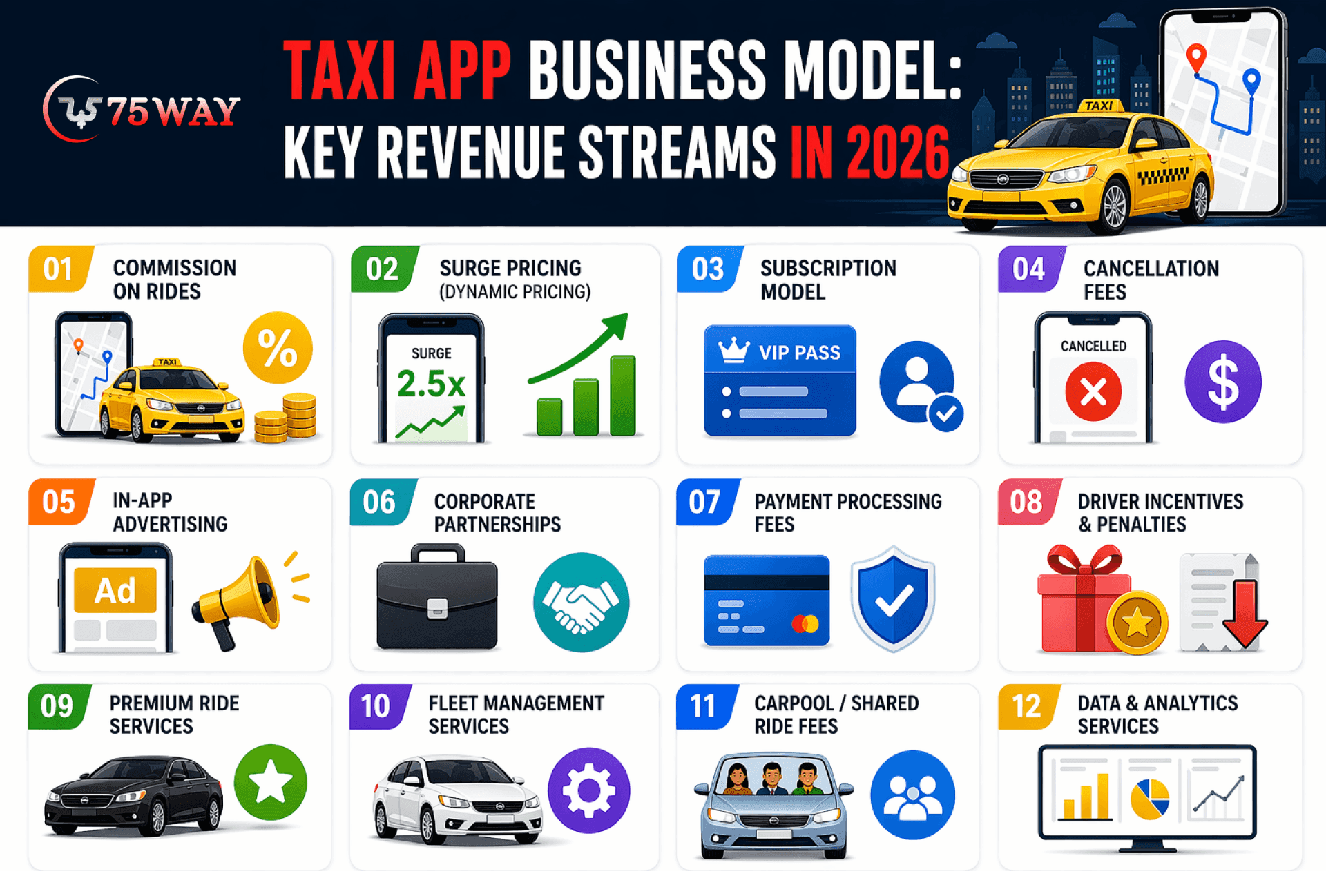
Taxi App Business Model: Key Revenue Streams in 2026
Taxi apps rely on diversified revenue streams to ensure consistent profitability and scalability. From ride commissions to subscriptions and partnerships, each stream contributes to a balanced business model that maximizes earnings across different user interactions.
1. Commission on Rides
The commission model is the backbone of most taxi apps. Every time a ride is completed, the platform takes a percentage of the total fare. This percentage typically ranges between 15% to 30%, depending on the platform, region, and service type.
Why it works:
- Directly tied to ride volume
- Scales automatically with growth
- Requires minimal additional effort
This model ensures that as the number of rides increases, revenue grows proportionally.
When a rider pays ₹300 for a trip, you keep a small portion, let’s say, ₹60, as your earnings, and the rest goes to the driver. Now imagine you help arrange 100 such rides in a day. Even if you earn a small amount from each ride, by the end of the day, it adds up to a good income without you driving a single car.
This approach is highly effective because it aligns the platform’s earnings with actual usage. The more value the platform delivers by connecting riders and drivers efficiently, the more it earns, without introducing complex pricing structures or additional charges.
2. Surge Pricing (Dynamic Pricing)
Surge pricing is a strategy in which ride fares automatically increase during high-demand periods, such as rush hours, heavy rain, or major events.
When more people are booking rides than there are drivers available, the system adjusts prices in real time to balance demand and supply.
What happens during this time:
- Ride fares go higher than usual
- More drivers come online to take advantage of better earnings
- The platform earns more from each completed ride
If you are running a taxi platform and suddenly 50 people request rides at the same time, but only 20 drivers are available, you increase the fare slightly. This encourages more drivers to accept trips, and you earn more per ride without doing any extra work.
This taxi app business modelhelps you maximize revenue during peak demand while keeping the system balanced. Hence, it becomes one of the most effective ways to increase earnings without adding operational costs.
3. Subscription Model
Taxi apps are increasingly adopting subscription-based plans to create a more stable and predictable revenue stream. Instead of relying solely on per-ride earnings, platforms offer monthly or weekly plans for both drivers and riders, ensuring consistent income while boosting long-term engagement and loyalty.
For Drivers:
- Fixed monthly fee instead of commission
- Higher earnings per ride
For Riders:
- Discounts on rides
- Priority bookings
- Loyalty benefits
If you run a platform, you can offer drivers a plan where they pay ₹1,000 per month and keep all their ride earnings. So even if a driver completes 200 rides, you still earn your fixed fee without taking commission on each trip.
On the rider side, you can offer a monthly plan where users pay ₹199 and get discounted rides or faster bookings. Once they’ve paid, they are more likely to book rides frequently to get full value from their subscription.
This model creates predictable, recurring revenue and strengthens retention on both sides by encouraging continuous usage.
4. Cancellation Fees
Cancellation fees are applied when a user cancels a ride after a specific time window, especially when the driver has already started moving toward the pickup location. This ensures that neither the driver’s time nor effort is wasted while maintaining discipline across the platform.
Purpose:
- Compensate drivers for lost time
- Reduce unnecessary cancellations
- Add an additional revenue stream
If you are running a taxi app and a rider books a trip but cancels after the driver has already driven halfway to the pickup point, you charge a small fee, ₹30–₹50. This amount is split between the driver for their time and your platform earnings.
While each cancellation fee may seem small, when such situations occur multiple times daily across the platform, they contribute steadily to overall revenue. At the same time, it encourages users to book rides more responsibly, thereby improving system efficiency.
5. In-App Advertising
Taxi apps attract high user engagement because people open them frequently and spend time browsing, booking, and tracking rides. This makes them a valuable space for brands looking to reach active users at the right moment.
Businesses pay to display ads within the app, such as:
- Booking Screens
- Ride Tracking Interfaces
- Notifications
If you run a taxi app and thousands of users check their rides daily, you can show a restaurant ad while they’re waiting for their driver. Every time someone views or clicks that ad, the business pays you, creating an additional income stream without changing ride prices.
This generates revenue without affecting user experience, making it a high-margin and scalable monetization strategy.
6. Corporate Partnerships
Taxi apps partner with businesses to manage daily transportation needs for employees, clients, or operations. Instead of relying only on individual bookings, these partnerships bring consistent and large-scale ride demand to the platform.
Benefits:
- Bulk Ride Bookings: Companies schedule rides for multiple employees daily, that increase booking volume and consistent demand for drivers.
- Long-Term Contracts: Businesses sign agreements for ongoing transportation needs, providing steady revenue streams and reducing dependency on fluctuating individual ride bookings.
- Stable & Predictable Income: Regular corporate usage ensures consistent earnings, helping platforms forecast revenue accurately and maintain financial stability during low-demand periods.
If you run a taxi platform and a company needs daily rides for 100 employees, you can secure a contract to handle all those trips. This means you get guaranteed bookings every day, rather than depending only on random user requests.
Corporate solutions provide steady revenue flow, reduce demand uncertainty, and make it easier to scale operations with confidence.
7. Payment Processing Fees
Many taxi apps charge a small convenience fee for handling digital transactions such as card payments, wallets, or online banking. While the fee per ride is minimal, it becomes a consistent revenue stream due to the high number of daily transactions.
If you run a taxi platform and a rider pays $200 online, you can add a small processing fee, ₹5, for handling the payment. Individually, this amount seems small, but when hundreds or thousands of users pay digitally every day, it adds up to a steady income.
Although minimal per transaction, the volume of rides ensures this becomes a reliable and continuous revenue source over time.
8. Driver Incentives & Penalties
While incentives are typically used to motivate drivers and improve service quality, structured penalty systems can also contribute to revenue while maintaining platform discipline.
Examples include:
- Late acceptance penalties
- Service quality violations
For instance, if you run a taxi platform and a driver repeatedly delays accepting rides or cancels at the last moment, you can charge a small penalty, $2 to $5 per instance. Similarly, if service ratings drop due to poor behavior, additional charges may apply.
Individually, these amounts are small, but across many drivers and daily operations, they add up while encouraging better performance and accountability on the platform.
9. Premium Ride Services
Premium or luxury ride categories allow you to charge higher fares for enhanced comfort, better vehicles, and improved service quality. These rides typically include executive cars, SUVs, or chauffeur-driven experiences.
If you run a taxi platform and a standard ride costs $15, a premium ride for the same distance might cost $30 or more. Since your commission is based on a percentage, you earn significantly more per premium trip.
Where you can use this:
- Airport transfers and business travel
- High-income urban areas
- Special occasions like weddings or events
This increases overall margins while attracting high-value customers.
10. Fleet Management Services
Some taxi platforms expand by managing vehicles for drivers or businesses, creating an additional income stream beyond ride commissions.
You can charge drivers or companies for services such as:
- Vehicle leasing
- Maintenance
- Insurance
If you provide a car to a driver and charge $150 per week, you earn consistently regardless of ride volume.
11. Carpool / Shared Ride Fees
Shared ride options allow multiple passengers heading in the same direction to share a single trip, increasing efficiency and earnings. If you charge two riders $10 each, you collect $20 total, higher than a single $15 ride, while using the same driver.
Where you can use this:
- Daily office commute routes
- High-traffic urban areas
- Cost-sensitive user segments
This improves vehicle utilization and boosts per-trip revenue.
12. Data & Analytics Services
Taxi apps naturally collect a large amount of real-time mobility data every day, including travel patterns, peak hours, route demand, and user behavior. When analyzed properly, this data becomes a powerful asset that goes far beyond ride bookings and can be transformed into a separate revenue stream.
Key data offerings include:
- Travel demand and traffic pattern insights
- Peak-hour and zone-based mobility reports
- Customer behavior and route optimization data
- Heatmaps for high-demand locations
If you run a taxi platform and notice that certain areas consistently have high ride demand during office hours, that insight becomes valuable not only for your own operations but also for external organizations. Urban planners can use it to improve road infrastructure, logistics companies can optimize delivery routes, and businesses can choose better locations based on movement patterns.
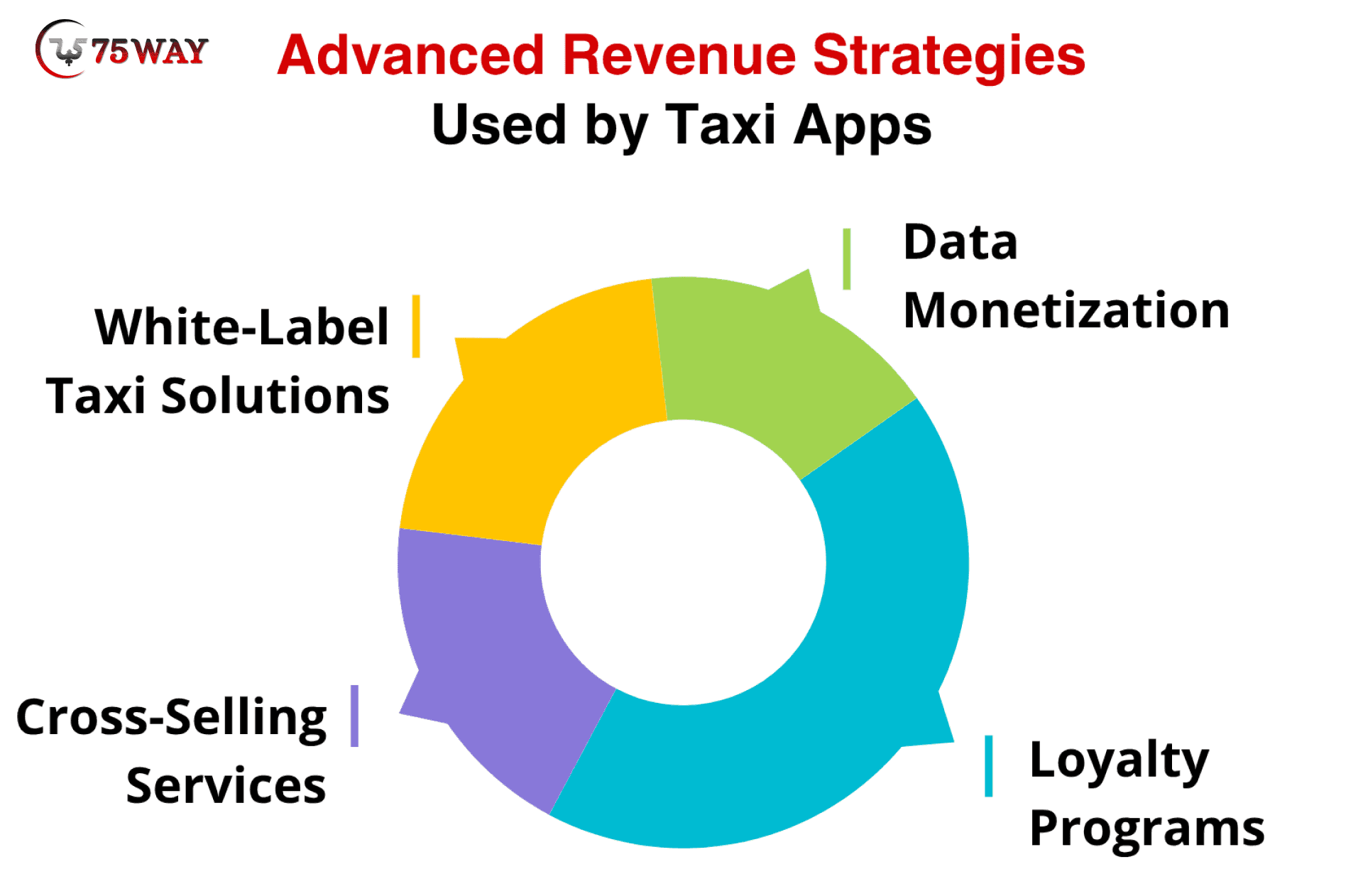
Advanced Revenue Strategies Used by Taxi Apps
To stay competitive in the evolving ride-hailing industry, taxi apps are expanding beyond traditional monetization models. They now focus on innovative, technology-driven strategies that maximize revenue, improve efficiency, and create long-term sustainable business growth opportunities.
1. White-Label Taxi Solutions
White-label solutions allow you to license your taxi app technology to other businesses instead of operating only your own platform. This approach lets other companies launch their own branded apps using your ready-made system.
Key revenue components include:
- One-time setup or licensing fee
- Monthly subscription for maintenance and updates
- Optional customization or feature upgrade charges
If a local business wants to launch its own branded taxi app, you can charge a one-time setup fee of $5,000 and an ongoing monthly fee of $500 for maintenance and support.
Where you can use this:
- Local taxi companies are going digital
- Startups entering the ride-hailing market
- Enterprises needing branded mobility solutions
This creates SaaS-style recurring revenue without managing daily operations while allowing you to scale without operational complexity.
2. Cross-Selling Services
Taxi apps are no longer limited to just ride-hailing. As the user base grows and trust builds over time, platforms can expand into a broader ecosystem of on-demand services. This strategy helps turn a single-purpose app into a multi-service platform where users can book rides, order deliveries, and access everyday essentials, all in one place. By doing this, the app increases how often users open it, how long they stay engaged, and how many transactions occur daily, thereby directly strengthening overall revenue potential.
You can introduce:
- Food delivery
- Package delivery
- Grocery delivery
If users already trust your app for safe and reliable rides, they are far more likely to use it for other services as well. This naturally increases engagement and opens multiple earning channels without needing to rebuild customer trust from scratch.
Where you can use this:
- Existing user base with high app activity
- Cities with strong delivery demand
- Businesses looking for logistics solutions
This multiplies revenue opportunities without acquiring entirely new users, making growth faster and more cost-efficient.
3. Data Monetization
Taxi apps generate a continuous stream of valuable data through daily user activity, ride bookings, and location tracking. When this information is properly structured and analyzed, it becomes a powerful business asset that can improve decision-making and unlock new revenue opportunities.
Key data points include:
- User behavior and booking preferences
- Travel routes and movement patterns
- Demand trends across locations and time periods
If you operate a taxi platform, you can use this data to understand when and where demand is highest, helping you optimize pricing, driver availability, and service efficiency. Beyond internal use, this data can also be shared in anonymized form with external partners such as logistics companies, researchers, or mobility planners who need real-world transportation insights.
4. Loyalty Programs
Loyalty programs are designed to encourage users to keep coming back to the platform by rewarding consistent usage. Instead of treating every ride as a one-time transaction, taxi apps build long-term relationships with users through structured reward systems. These programs increase engagement, improve user satisfaction, and significantly boost customer lifetime value by making the platform more rewarding to use over time.
Users earn:
- Points
- Discounts
- Exclusive benefits
If you run a taxi app and a user regularly books rides, you can reward them with points for each trip. For example, after completing 10 rides, they might receive a $5 discount on their next trip or unlock priority booking during peak hours.
Cost Structure of Taxi Mobile Apps
Understanding how taxi apps make money is only one side of the equation. To evaluate real profitability, it is equally important to understand the cost structure behind building and running the platform. A successful taxi business depends on balancing revenue with controlled, scalable expenses across development, operations, and growth activities.
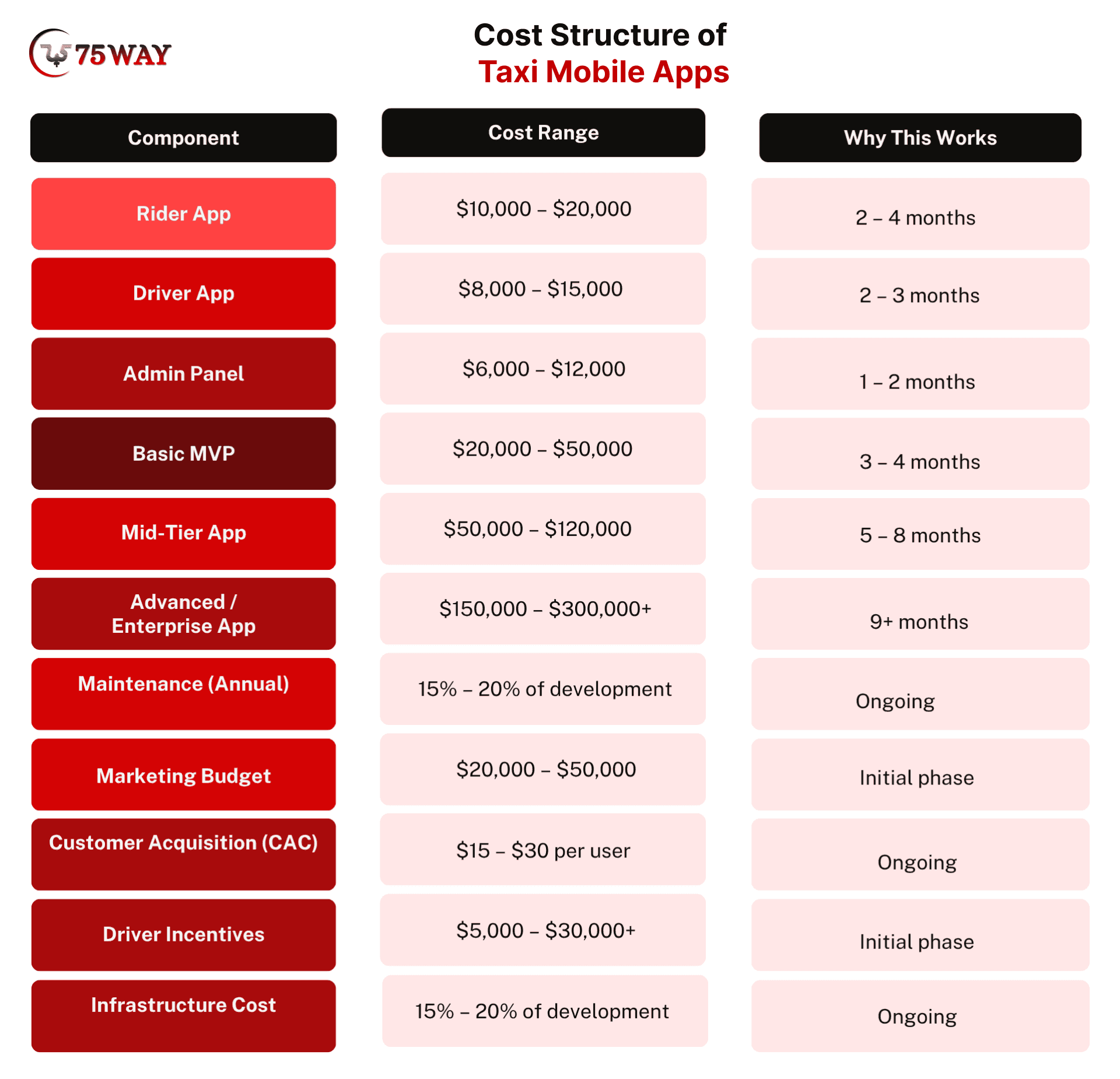
1. Development Costs
Building a taxi app requires multiple interconnected systems, each with its own development cost and timeline.
- Rider App Cost: $10,000 – $20,000This app is designed for passengers and includes features like ride booking, live tracking, fare estimation, and payment integration. It focuses heavily on user experience and is usually developed within 2–4 months.
- Driver App Cost: $8,000 – $15,000This application helps drivers accept rides, navigate routes, track earnings, and manage availability. It is typically simpler than the rider app and takes around 2–3 months to develop.
- Admin Panel Cost: $6,000 – $12,000The admin dashboard acts as the control center of the platform, managing users, drivers, rides, payments, and analytics. It is web-based and generally takes 1–2 months to build.
2. Overall App Complexity Cost
The total investment depends on how advanced the platform is and what features are included.
- Basic MVP Cost: $20,000 – $50,000
A minimum viable product includes essential features like user login, ride booking, basic mapping, and a single payment option. It is ideal for testing the market within 3–4 months.
- Mid-Tier App Cost: $50,000 – $120,000
This level includes advanced features such as live ride tracking, in-app chat, multiple payment gateways, and improved UI/UX design. Development usually takes 5–8 months.
- Advanced / Enterprise Cost: $150,000 – $300,000+
A fully scalable solution with high-end architecture, advanced analytics, third-party integrations, and strong security systems. This level is built for large-scale operations and may take 9+ months.
3. Maintenance & Updates
Once the app is launched, ongoing maintenance becomes essential to ensure smooth performance. Maintenance typically includes:
- Bug fixes and system improvements
- Performance optimization
- New feature additions
- Security updates
Estimated Cost: 15% – 20% of development cost annually.
4. Marketing & User Acquisition
Attracting both riders and drivers is one of the most expensive parts of running a taxi app.
- Initial Marketing Budget: $20,000 – $50,000
- Customer Acquisition Cost (CAC): $15 – $30 per user
Marketing efforts usually include:
- Digital advertising campaigns
- Referral and discount programs
- Social media promotions
- Launch offers and incentives
This is often one of the highest recurring expenses in the early growth stage.
5. Driver Acquisition & Retention
A taxi platform cannot function without an active driver network, making driver acquisition a critical cost area.
To ensure availability and retention, platforms invest in:
- Signup bonuses and onboarding incentives
- Weekly or monthly performance rewards
- Training and support programs
Estimated Cost: $5,000 – $30,000+ (initial phase)
6. Infrastructure Costs
Behind the scenes, taxi apps rely on strong technical infrastructure to operate smoothly and securely.
Estimated Cost: 15–20% of the initial development price
This includes:
- Cloud servers for data storage and scalability
- Payment gateway integrations for secure transactions
- Security systems to protect user data and prevent fraud
These costs scale with usage and platform growth, making them an ongoing operational requirement.
How Taxi Apps Maximize Profitability?
Taxi apps maximize profitability by improving efficiency across pricing, operations, expansion, and customer retention. Instead of focusing only on generating revenue, they strategically optimize every part of the ecosystem to increase margins, reduce waste, and scale sustainably.
- Smart Pricing Algorithms
Smart pricing systems use real-time data to dynamically adjust fares. They analyze demand patterns, traffic conditions, and user booking behavior to set the most efficient price at any given moment. This ensures maximum earnings during peak demand while maintaining balanced supply and demand across the platform.
- Efficient Driver Allocation
This factor ensures that the nearest available driver is matched with the rider quickly. This reduces waiting time, lowers fuel consumption, and minimizes driver idle time. Faster matching improves customer satisfaction while increasing the number of completed rides per hour, directly boosting platform profitability.
- Geographic Expansion
Expanding into new cities or regions increases the platform’s reach and unlocks new demand sources. As the user base grows, ride volume increases, brand visibility improves, and overall revenue potential expands. Strategic expansion allows taxi apps to scale faster and reduce dependency on a single market.
- Customer Retention Strategies
Customer retention focuses on keeping existing users active and engaged. Instead of constantly spending on acquiring new customers, platforms encourage repeat usage through discounts, personalized offers, and a smooth booking experience. Higher retention leads to more consistent bookings, increased lifetime value, and stronger long-term profitability.
How to Build a Profitable Taxi App?
Building a profitable taxi app requires a strategic approach that balances technology, user satisfaction, operational efficiency, and diversified revenue planning for long-term sustainable growth.
Step 1: Choose The Right Revenue Mix
Selecting the right combination of revenue streams is essential for stability. A strong mix includes commissions, subscriptions, advertising, and partnerships to reduce dependency on a single income source and ensure consistent profitability across changing market conditions.
Step 2: Prioritize User Experience
User experience directly impacts retention and growth. A simple interface, fast booking process, accurate navigation, and reliable service encourage users to return frequently, increasing ride volume and overall platform revenue through improved satisfaction and trust.
Step 3: Invest In Scalable Technology
Scalable technology ensures the app performs smoothly as user demand increases. Cloud infrastructure, efficient backend systems, and real-time processing capabilities help manage growth without performance issues, supporting long-term expansion and uninterrupted service delivery.
Step 4: Build Strong Driver Relationships
Drivers are the backbone of a taxi platform, so maintaining strong relationships is critical. Fair earnings, timely payouts, incentives, and support systems help retain drivers, ensuring consistent ride availability and better service quality for users.
Step 5: Continuously Optimize Pricing
Dynamic pricing optimization helps maximize revenue while maintaining competitiveness. By analyzing demand, traffic, and user behavior, platforms can adjust fares effectively, ensuring balanced supply and demand while improving overall profitability and operational efficiency.
Challenges in Taxi App Monetization
Despite strong revenue potential and multiple income streams, taxi apps operate in a highly competitive and complex environment. Success is not guaranteed, as platforms must navigate market pressure, operational difficulties, and changing user expectations while maintaining profitability and growth.
- High Competition
The ride-hailing industry is highly saturated, with many platforms offering similar services. This makes it difficult for any single app to stand out purely on features or pricing. Platforms overcome this by building stronger brand identities, improving user experiences, and offering unique value, such as faster pickups, better incentives, or additional services.
- Regulatory Issues
Taxi apps must comply with regional transportation laws, safety regulations, and licensing requirements. These rules can vary widely and often change, affecting how platforms operate. Companies manage this by adapting their operations to local guidelines and building flexible systems that can adjust quickly to regulatory updates.
- Driver Retention
Maintaining a reliable driver base is essential, but drivers often switch platforms in search of better earnings or incentives. This creates a constant challenge in balancing driver satisfaction with platform profitability. Apps address this by offering fair payouts, bonuses, flexible working models, and support systems that encourage long-term engagement.
- Price Sensitivity
Users are highly sensitive to pricing and frequently compare fares across different apps before booking. Even small price differences can influence their choice, making loyalty difficult to maintain. Platforms respond by combining competitive pricing with loyalty rewards, discounts, and consistent service quality to encourage repeat usage.
Future Trends in Taxi App Revenue Models
Taxi app revenue models are rapidly evolving with technology advancements, shifting user behavior, and increasing focus on efficiency, sustainability, and integrated mobility ecosystems.
- AI-Driven Pricing: Artificial intelligence improves fare accuracy using demand, traffic, weather, and behavior data for optimized pricing decisions.
- Electric Vehicle Integration: Electric vehicles reduce operational costs, improve sustainability, and attract eco-conscious users seeking affordable and greener transportation options.
- Autonomous Vehicles: Self-driving technology reduces dependency on drivers, lowers long-term costs, and transforms future revenue structures.
- Subscription-Based Ecosystems: Users pay fixed fees for bundled mobility services, creating predictable income and increasing platform engagement.
- Multi-Service Mobility Platforms: Platforms combine rides, delivery, and logistics services, expanding revenue streams and reducing dependence on ride-only income.
- Hyper-Personalized Mobility Experiences: Advanced data enables customized ride options, pricing, and recommendations, improving engagement and increasing customer lifetime value.
Final Remarks
Taxi apps in 2026 are no longer single-stream businesses. They operate as complex digital ecosystems powered by multiple revenue channels, advanced pricing strategies, and data-driven decision-making.
From ride commissions and surge pricing to subscriptions and partnerships, every component plays a role in building a sustainable business. The key lies in balancing profitability with user satisfaction and driver engagement.
If you are looking to build a taxi app, focus on creating a flexible, scalable revenue model that evolves with market demand. That’s what separates short-term success from long-term dominance. You can contact a trusted taxi app development company for scalable ride-hailing solutions that help you grow your taxi business.
Frequently Asked Questions (FAQs)
What Is The Most Profitable Taxi App Revenue Model?
The commission-based model remains the most profitable because it scales directly with ride volume. As bookings increase, revenue grows without high additional costs. Many successful platforms combine commissions with other streams like subscriptions and surge pricing to maximize profitability and ensure consistent earnings.
How Do Taxi Apps Set Pricing For Rides?
Taxi apps calculate pricing using factors like distance, time, demand, and traffic conditions. Advanced systems also apply dynamic pricing during peak hours to balance supply and demand. This ensures availability while maximizing revenue opportunities for both drivers and the platform.
Can A Taxi App Be Profitable Without Surge Pricing?
Yes, profitability is achievable without surge pricing by relying on commissions, subscriptions, and partnerships. Some platforms even avoid surge pricing to build customer trust and retention while generating consistent revenue through diversified monetization strategies and operational efficiency improvements.
How Do Drivers Earn In Taxi Apps?
Drivers earn through ride fares after the platform deducts its commission. Additional income may come from incentives, bonuses, and surge pricing benefits. Some platforms also offer subscription models in which drivers pay fixed fees rather than commissions to maximize their overall earnings.
What Are The Main Costs Of Running A Taxi App?
Major costs include app development, server infrastructure, payment processing, customer support, marketing, and driver acquisition. Ongoing expenses also involve updates, compliance, and operational management. Efficient cost control is crucial to maintaining profitability as the platform scales.
Do Taxi Apps Earn From Advertising?
Yes, many taxi apps generate revenue through in-app advertising and promotions. Businesses pay to display targeted ads to users during ride booking or travel. This creates an additional revenue stream without affecting ride pricing, enhancing overall profitability.
How Do Taxi Apps Scale Their Revenue Quickly?
Taxi apps scale by increasing ride volume, expanding into new markets, and adding services like deliveries or corporate rides. Leveraging multiple revenue streams and optimizing pricing strategies helps accelerate growth while maintaining operational efficiency and user satisfaction.
What Role Do Partnerships Play In Taxi App Revenue?
Partnerships with fuel companies, insurance providers, and businesses generate referral income and improve service offerings. These collaborations help reduce costs for drivers and create additional revenue streams for the platform, strengthening long-term profitability and ecosystem growth.