Summary
This blog explains taxi app development step by step, including planning, features, technology stack, cost structure, and challenges. It highlights MVP to enterprise development levels, monetization strategies, and real-time system complexities. The guide helps businesses build scalable ride-hailing apps with strong user experience, efficient operations, and long-term growth potential.
Quick Overview
- Taxi app development requires structured planning from idea validation to scalable deployment.
- A successful ride-hailing platform depends on core features like real-time tracking and driver management.
- Strong architecture and technology choices ensure smooth performance and scalability.
- User experience, retention strategies, and driver onboarding are essential for long-term success.
- Development cost ranges from $20,000 to $300,000+, depending on complexity.
The ride-hailing industry has transformed urban mobility, making transportation faster, more convenient, and highly accessible. Businesses entering this space are not just building apps. They’re creating scalable ecosystems that connect riders and drivers in real time.
If you're planning to develop a taxi app, you need more than just coding knowledge. You need a clear strategy, the right features, a scalable tech stack, and a cost-efficient development approach.
Success in taxi app development goes beyond just launching a mobile application. It requires a deep understanding of user behavior, real-time logistics, and scalable architecture that can handle growing demand. From seamless booking experiences to efficient driver allocation systems, every component must work together to ensure reliability, speed, and customer satisfaction in a highly competitive digital mobility market.
This guide walks you through everything from idea validation to launch and scaling step by step, helping you build a competitive taxi booking platform that drives revenue and growth.
What is a Taxi App?
A taxi app is a mobile-based platform that connects passengers with drivers, enabling seamless booking, real-time tracking, digital payments, and ride management.
It typically includes three core components:
- Rider App
- Driver App
- Admin Panel
Together, they create a real-time, location-based service ecosystem.
Market Size & Growth Insights of Taxi Booking Apps
The on-demand transportation market continues to expand due to:
- Increasing smartphone penetration
- Demand for convenience
- Growth in urban mobility solutions
- Shift toward digital payments
For startups and enterprises, taxi app development presents a high ROI opportunity when executed with the right strategy.
- The ride-hailing market is forecasted to generate approximately $188.60 billion in revenue by 2026, reflecting its strong global demand.
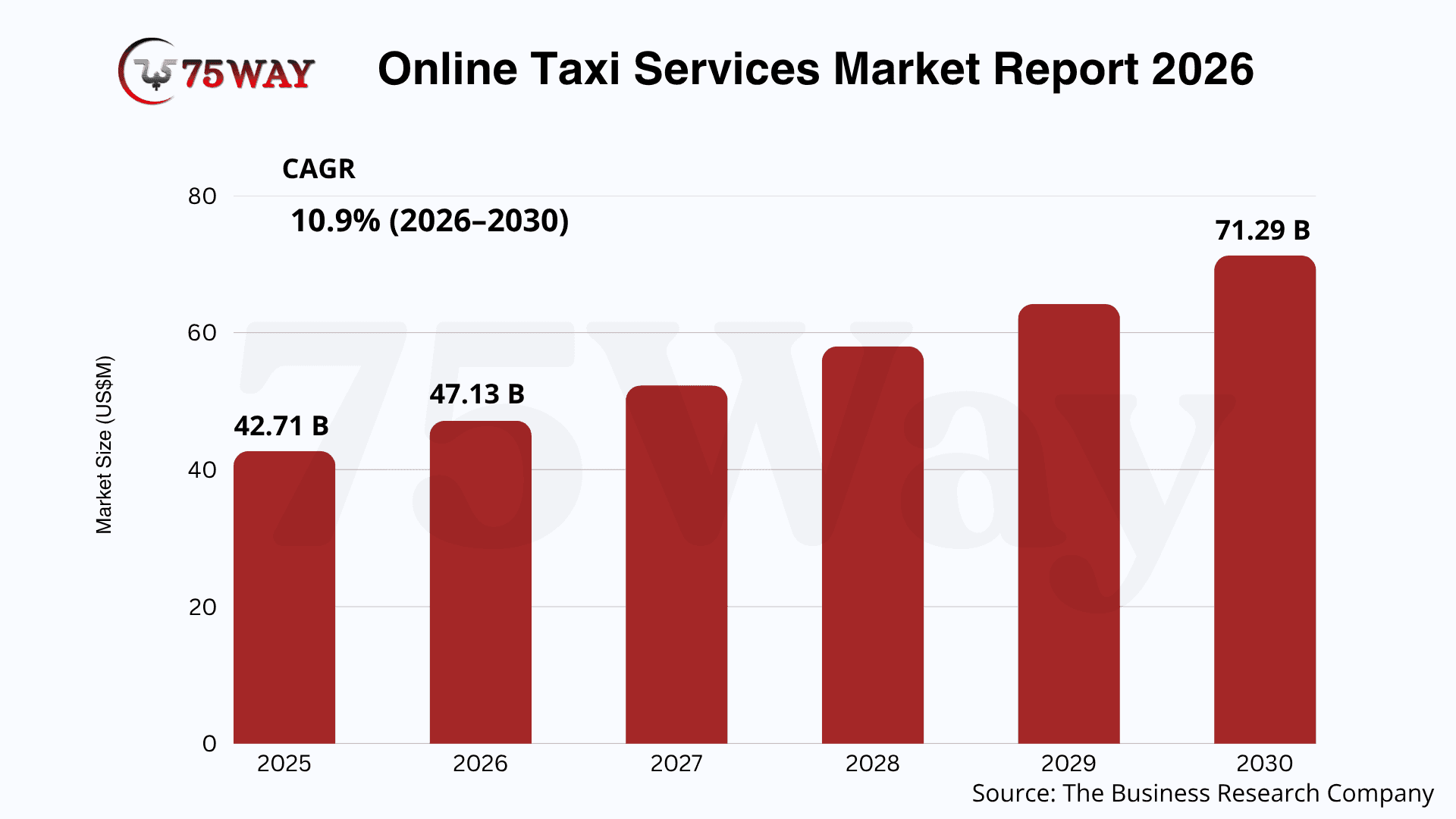
- The online taxi services market increased from $42.71 billion in 2025 to $47.13 billion in 2026 with a CAGR of 10.3%.
- With an expected CAGR of 5.08% from 2026 to 2030, the market is projected to reach a total value of approximately US$229.98 billion worldwide by 2030.
- User adoption is set to grow rapidly, with the number of ride-hailing users anticipated to hit about 2.34 billion by 2030.
- More than 75% of companies are leveraging AI-powered pricing strategies and predictive analytics, particularly for improving fleet management efficiency.
Step-by-Step Taxi App Development Process
Building a successful ride-hailing platform requires a structured, strategic approach that turns an idea into a fully functional product. Each stage, from planning and design to development and deployment, plays a critical role in ensuring performance, scalability, and user satisfaction. A well-defined process helps reduce risks and improve long-term success.
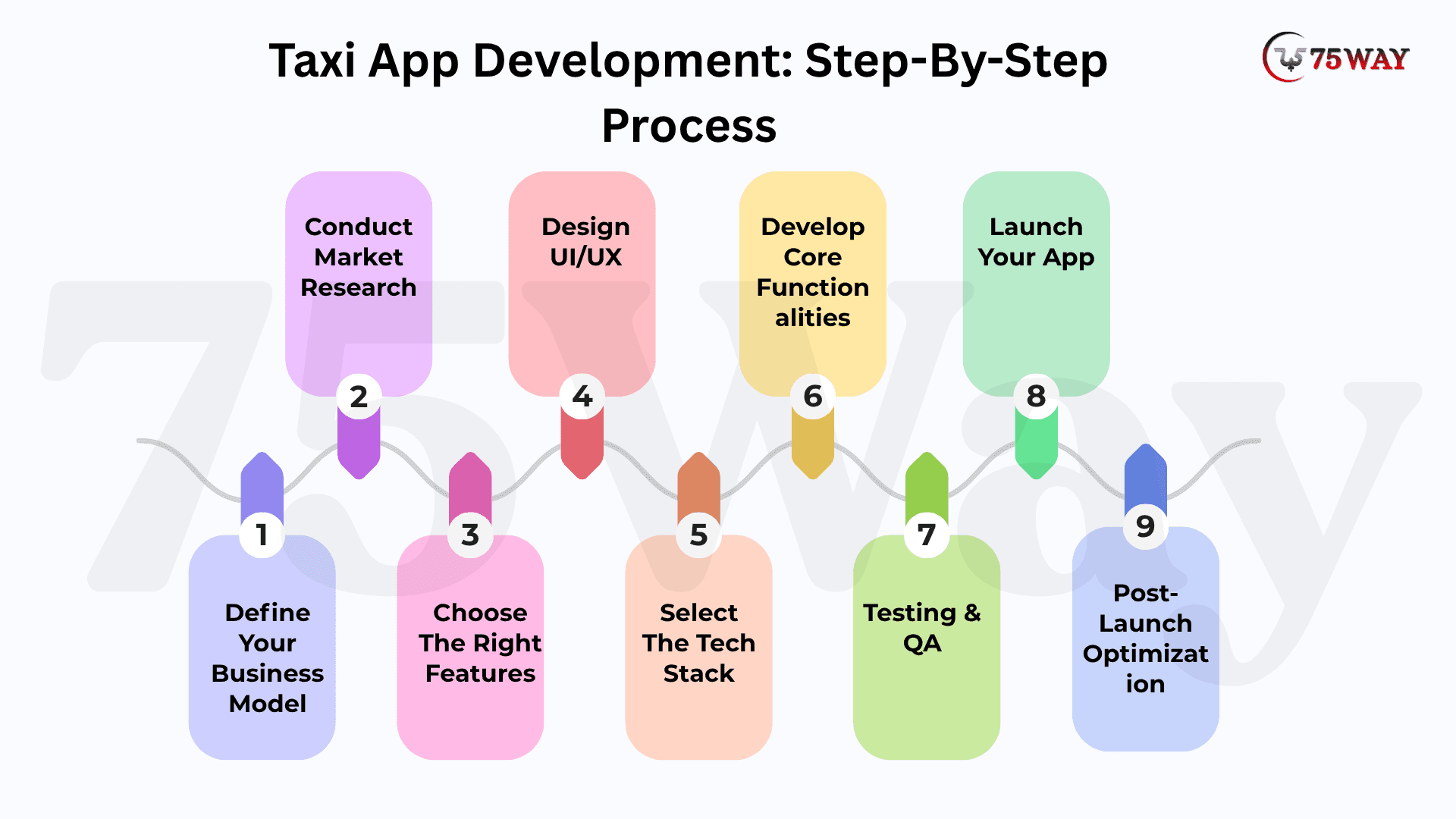
Step 1: Define Your Business Model
A well-structured taxi app begins with a clear understanding of how the platform will function and generate revenue. This involves selecting the right approach such as ride-hailing, subscriptions, or corporate transport services. A strong business model ensures strategic clarity, efficient planning, and sustainable long-term growth in a competitive mobility industry. Start by identifying:
- Target audience
- Geographic focus
- Revenue model (commission, subscription, surge pricing)
- Unique selling proposition
Step 2: Conduct Market Research
Understanding the market landscape is essential before starting development, as it helps identify user needs, competitor strategies, and industry gaps. By analyzing demand patterns, pricing models, and customer expectations, businesses can make informed decisions that improve product relevance, strengthen positioning, and increase the chances of building a successful taxi app. This helps you build a user-centric product that stands out.
- Competitor features
- Pricing strategies
- User pain points
- Regional demand
Step 3: Choose the Right Features
Next, selecting the right features becomes a crucial step that directly impacts user experience, functionality, and overall app success. A well-balanced feature set ensures smooth ride booking, efficient driver management, and seamless payments while avoiding unnecessary complexity. Prioritizing essential, scalable features helps create a reliable, user-friendly taxi application.
Rider App Features
- User registration & login
- Ride booking
- Real-time GPS tracking
- Fare estimation
- Payment integration
- Ratings & reviews
Driver App Features
- Driver profile management
- Ride request alerts
- Navigation support
- Earnings dashboard
- Ride history
Admin Panel Features
- User & driver management
- Pricing control
- Analytics dashboard
- Payment tracking
- Customer support system
Step 4: Design UI/UX
After defining core features, focusing on UI/UX design becomes essential to shape how users interact with the taxi app. A clean, intuitive, and visually appealing interface ensures smooth navigation, faster booking, and improved user satisfaction. Good design reduces friction, enhances engagement, and builds trust, making the overall experience seamless and efficient. User experience is critical. Focus on:
- Simple navigation
- Fast booking flow
- Clean interface
- Minimal steps to confirm the ride
A frictionless design improves retention and conversions.
Step 5: Select the Tech Stack
A well-planned technology foundation plays a vital role in determining the performance, scalability, and reliability of a taxi application. The combination of frontend, backend, database, and third-party integrations influences speed, user experience, and long-term stability. Choosing the right tech stack ensures smooth operations and future-ready scalability for growing demand.
Frontend
- Flutter / React Native (cross-platform)
- Swift (iOS)
- Kotlin (Android)
Backend
- Node.js / Python
- Scalable cloud infrastructure
Database
- PostgreSQL
- MongoDB
APIs & Integrations
- Maps & navigation
- Payment gateways
- SMS/notification services
Step 6: Develop Core Functionalities
The development of core functionalities forms the backbone of a taxi application, ensuring all essential operations run smoothly and in real time. These functionalities include ride matching, GPS tracking, payment processing, and notifications. A strong core system enhances performance, improves reliability, and delivers a seamless experience for both riders and drivers. This is the core engine of your taxi app. Focus on building:
- Real-time ride matching algorithm
- GPS tracking system
- Secure payment processing
- Push notification system
Step 7: Testing & QA
Quality assurance and testing play a crucial role in ensuring the taxi application performs reliably across all devices and usage conditions. This phase focuses on identifying bugs, validating functionality, and optimizing performance, security, and speed. A well-tested application ensures a smooth user experience, reduces failures, and builds trust among riders and drivers. You must ensure:
- Bug-free performance
- Fast load times
- Accurate location tracking
- Secure transactions
Testing directly impacts user trust and app ratings.
Step 8: Launch Your App
The launch phase marks the transition from development to real-world deployment, where the taxi application becomes available to users on major platforms. This stage involves app store submission, deployment setup, and initial marketing activities. A well-executed launch ensures visibility, user acquisition, and a strong foundation for early growth and adoption. Deploy on:
- App Store
- Play Store
You must prepare:
- Marketing strategy
- App store optimization
- Initial user acquisition campaigns
Step 9: Post-Launch Optimization
Continuous improvement is key to scaling. It is essential to maintain performance, user satisfaction, and market competitiveness. This phase focuses on analyzing user feedback, fixing issues, enhancing features, and optimizing system performance. Regular updates ensure the taxi application remains reliable, scalable, and aligned with evolving user needs and industry trends. After launch:
- Collect user feedback
- Fix issues quickly
- Add new features
- Optimize performance
Types Of Taxi Apps You Can Build
Different business goals require different taxi app models, each designed to serve specific user needs and operational strategies. Understanding the available types helps in selecting the right approach, whether it is on-demand rides, scheduled bookings, carpooling, or corporate transport solutions. This choice directly impacts features, scalability, and overall business direction.
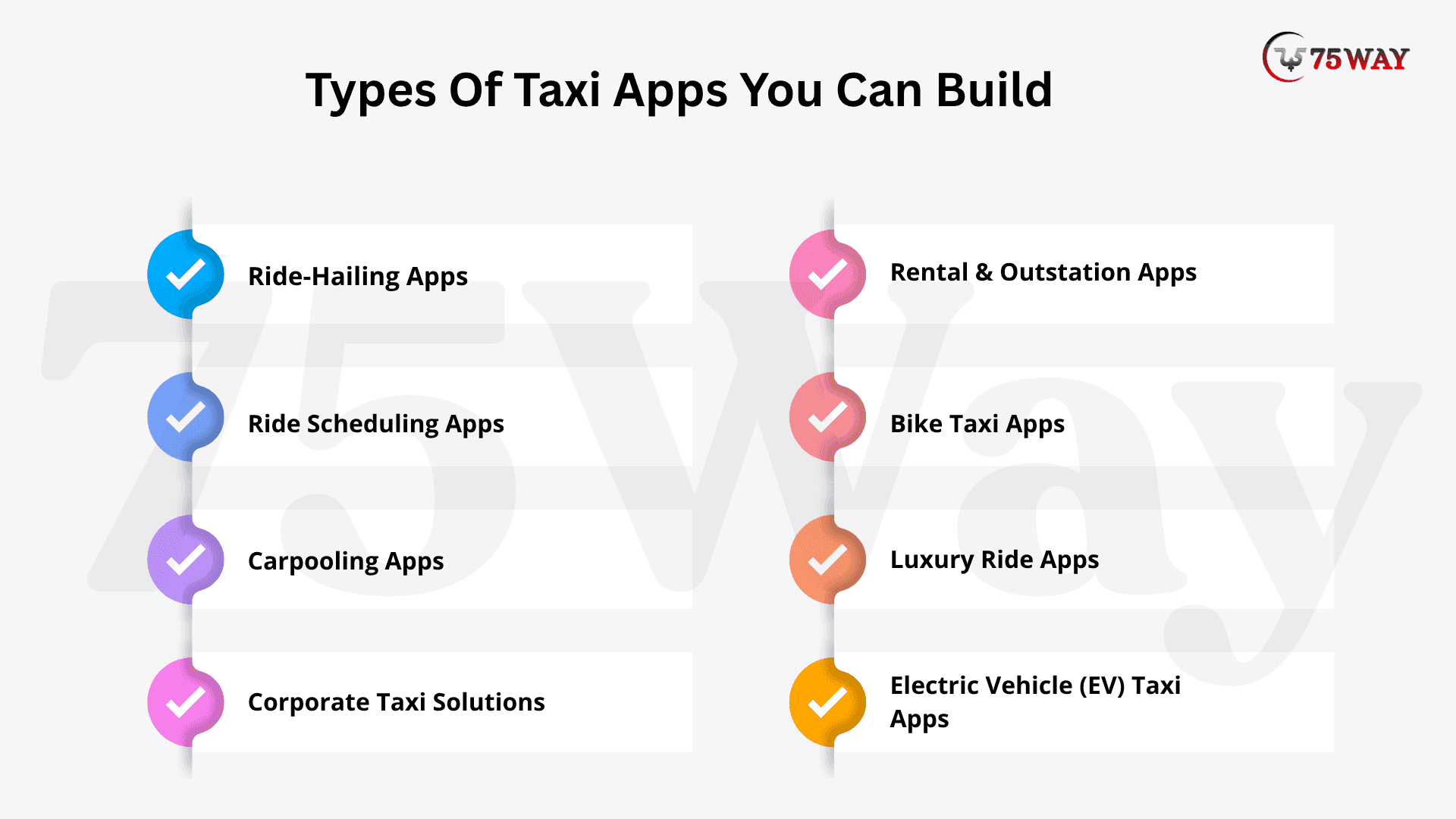
- On-Demand Ride-Hailing Apps: These platforms allow users to book rides instantly using GPS-based driver matching and real-time tracking. They focus on convenience, speed, and seamless payments, making them ideal for urban transportation needs where immediate availability and efficient ride allocation are essential for both riders and drivers.
- Pre-Scheduled Ride Booking Apps: These applications enable users to book rides in advance for specific dates and times. They are designed for planned travel, ensuring availability and reducing last-minute stress. Features include calendar-based booking, automated reminders, and optimized driver allocation for scheduled trips.
- Shared Mobility Carpooling Apps: These apps connect multiple passengers heading in the same direction, reducing travel costs and traffic congestion. They promote eco-friendly transportation, optimize vehicle usage, and provide affordable commuting options, especially for daily office travel or long-distance group journeys with cost-sharing benefits.
- Corporate Transportation Solutions: These platforms are designed for businesses to manage employee travel efficiently. They include centralized billing, ride scheduling, reporting dashboards, and policy controls, helping organizations streamline transportation expenses while ensuring safe, reliable, and organized commuting for employees across locations.
- Long-Distance Rental & Outstation Apps: These applications offer hourly rentals and intercity travel solutions. Users can hire vehicles for extended trips with flexible pricing models. Features include driver availability, route planning, and package-based billing, making them suitable for vacations, business trips, and weekend travel.
- Bike Taxi Services: These apps provide two-wheeler ride options for quick and cost-effective urban commuting. They are ideal for navigating traffic-congested areas, offering faster travel times and affordable pricing. Safety features, helmet provisions, and real-time tracking enhance user trust and convenience.
- Premium Luxury Ride Platforms: These services cater to high-end customers seeking comfort, style, and exclusivity. They offer premium vehicles, professional chauffeurs, and enhanced in-ride experiences. Ideal for business executives, events, and special occasions requiring luxury transportation with superior service quality.
- Electric Vehicle (EV) Taxi Apps: These platforms focus on eco-friendly transportation using electric vehicles. They promote sustainability, reduce carbon emissions, and often include features such as charging-station integration and green-ride incentives, making them ideal for environmentally conscious urban mobility solutions.
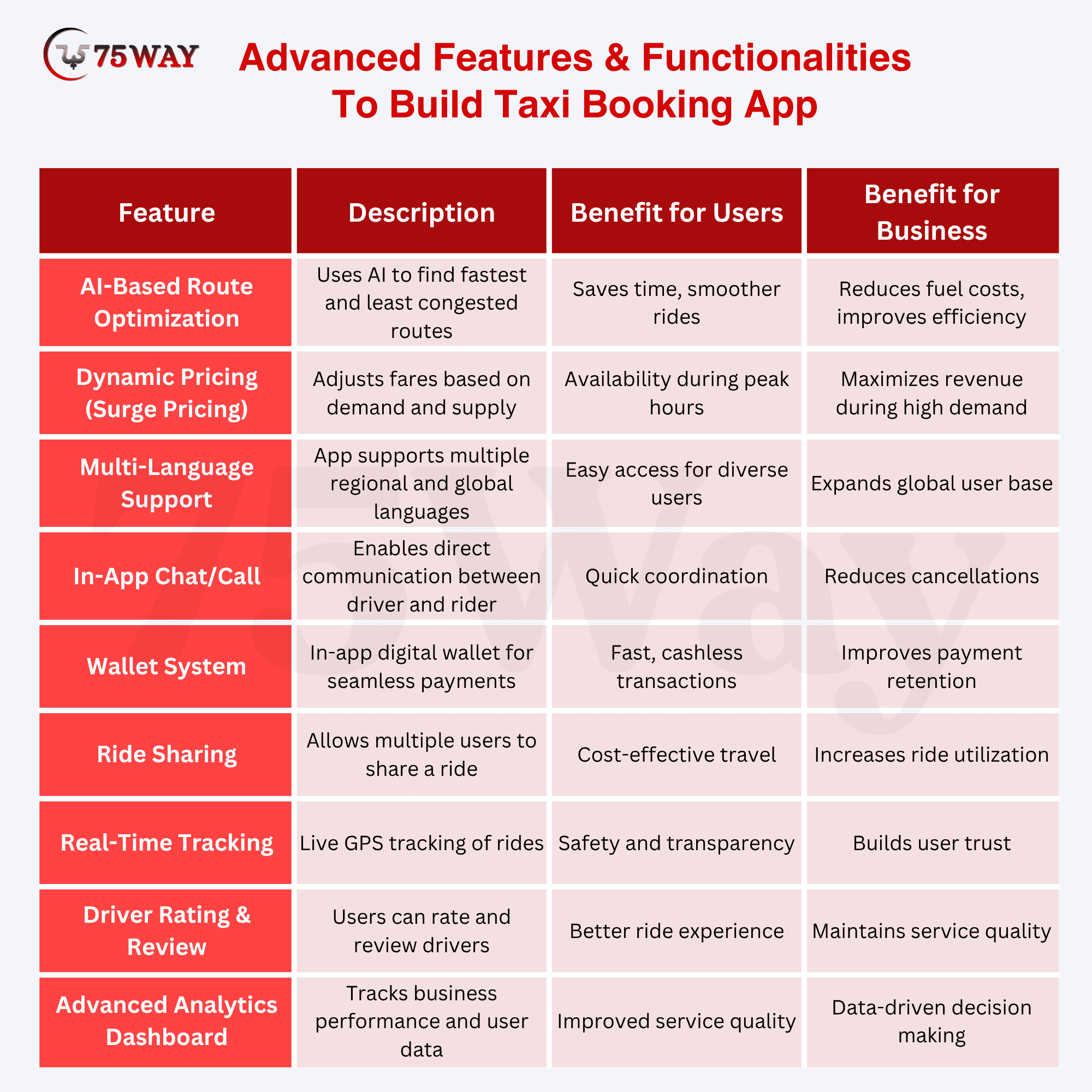
Must-Have Advanced Features To Build Taxi Booking App
As taxi applications evolve to meet growing user expectations, advanced features play a crucial role in enhancing functionality, efficiency, and overall experience. These capabilities go beyond basic booking and payments, enabling smarter ride management, improved safety, and better operational control. Integrating such features helps create a competitive and future-ready mobility platform.
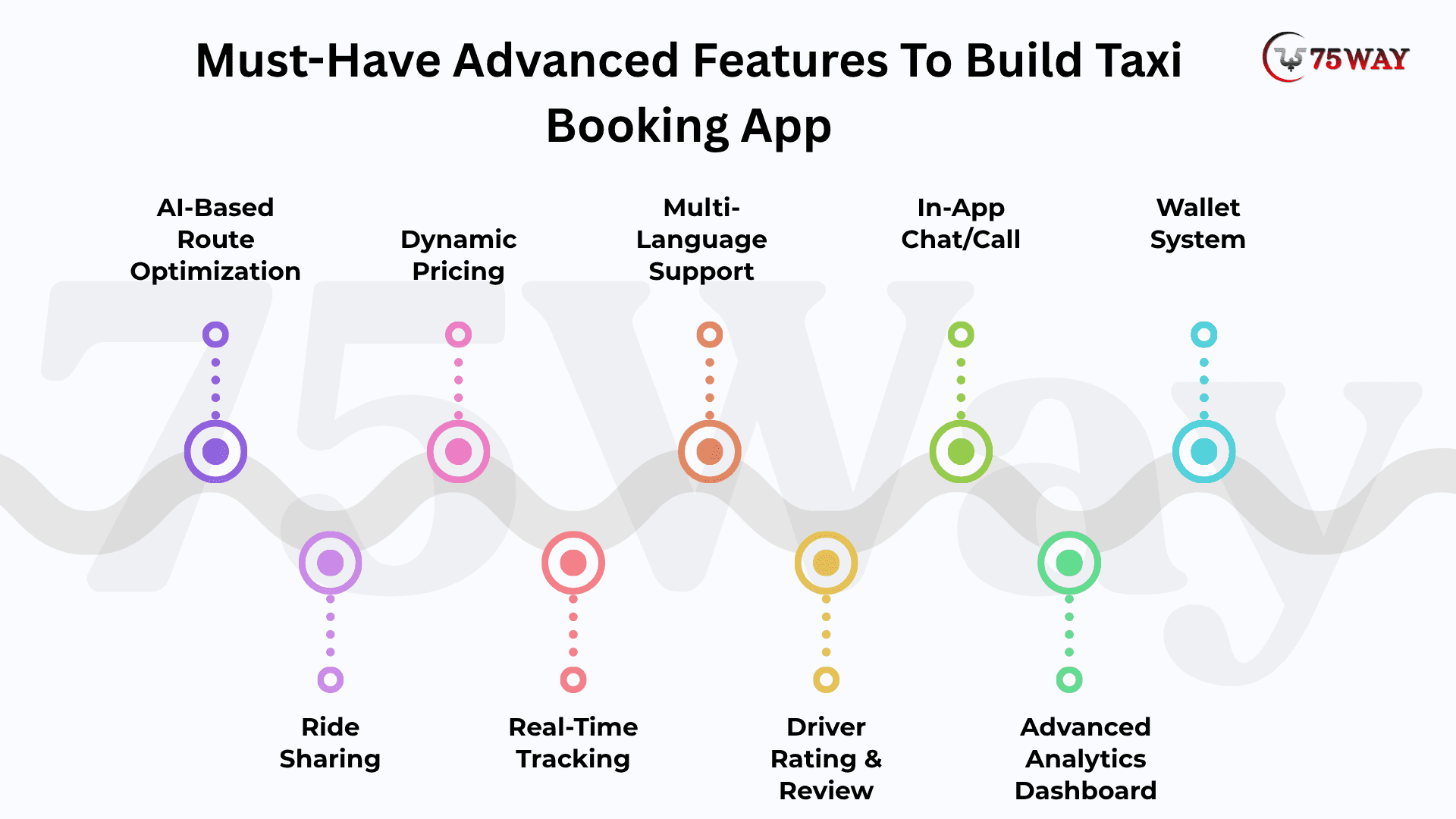
- AI-Based Route Optimization: Uses artificial intelligence to calculate the fastest routes, reduce travel time, and improve fuel efficiency for drivers.
- Dynamic Pricing: Automatically adjusts fares based on demand, traffic conditions, and peak hours to balance supply and maximize revenue.
- Multi-Language Support: Enables users to interact with the app in multiple languages, improving accessibility and user experience across regions.
- In-App Chat/Call: Enables direct communication between drivers and riders via secure messaging and calls without sharing personal contact details.
- Wallet System: Provides digital payment storage enabling users to add funds, pay for rides instantly, and manage transaction history efficiently.
- Ride Sharing: Connects multiple passengers traveling in the same direction, reducing travel costs and improving vehicle utilization for eco-friendly commuting.
- Real-Time Tracking: Offers live GPS tracking of rides, allowing users to monitor driver location, route progress, and estimated arrival time.
- Driver Rating & Review: Enables users to rate drivers and leave feedback, improving service quality, accountability, and overall platform trustworthiness.
- Advanced Analytics Dashboard: Provides detailed insights on rides, revenue, user behavior, and operations to help businesses make data-driven decisions.
Security Considerations For Taxi Booking App Development
Security plays a critical role in taxi booking app development, as it involves sensitive user data, real-time location tracking, and financial transactions. Strong protection mechanisms help prevent data breaches, fraud, and unauthorized access. A secure architecture builds trust among users, drivers, and platform owners, supporting long-term reliability and compliance.
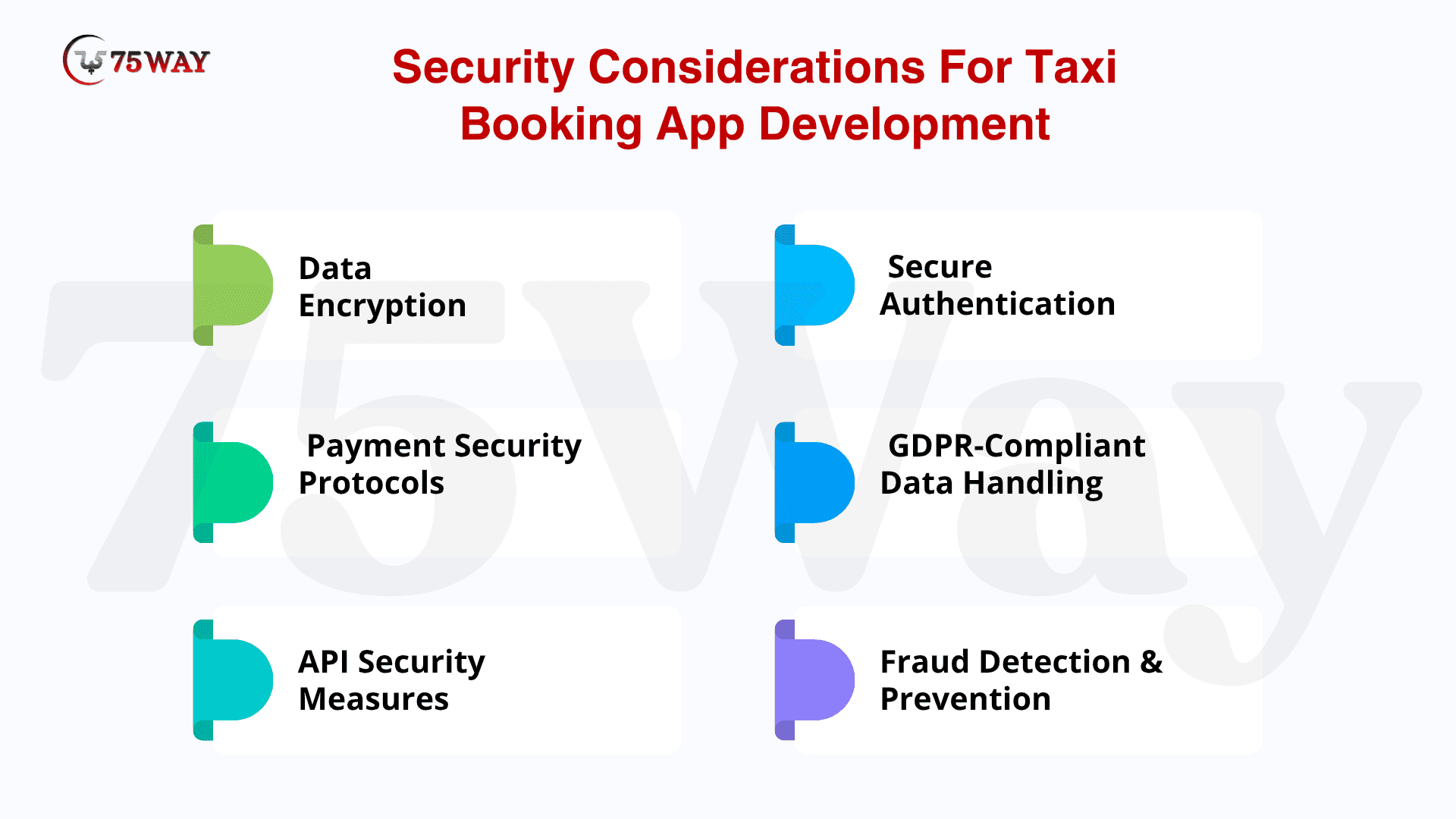
- Data Encryption: Protects sensitive user and driver data by converting it into secure formats during storage and transmission. It ensures unauthorized access is prevented, and information remains safe.
- Secure Authentication: Uses OTP, biometrics, and two-factor verification to ensure only authorized users can access accounts. This reduces the risks of identity theft and unauthorized platform usage.
- Payment Security Protocols: Secures financial transactions through encrypted gateways and PCI-DSS compliance standards. It prevents fraud, chargebacks, and data leaks during payment processing.
- GDPR-Compliant Data Handling: Ensures user data is collected, stored, and processed with full transparency and consent. It also allows users to control or delete their personal information.
- API Security Measures: Protects system communication using secure keys, encryption, and access controls. It prevents unauthorized access and safeguards integrations with third-party services.
- Fraud Detection & Prevention: Uses AI systems to detect suspicious activities and abnormal transactions in real time. It helps maintain platform trust, safety, and operational integrity.
How Taxi Booking Apps Generate Revenue: Monetization Strategies
Taxi booking apps generate revenue through multiple scalable monetization models designed to maximize earnings from every ride and user interaction. These strategies ensure consistent cash flow while balancing affordability for users and profitability for the platform. A well-planned revenue system helps sustain long-term business growth and market competitiveness in the mobility industry.

- Commission Model: Taxi apps earn revenue by taking a percentage of every completed ride between drivers and passengers. This model ensures consistent income as ride volume increases. It is the most common monetization strategy used in ride-hailing platforms globally for sustainable business growth.
- Surge Pricing: During peak demand or limited driver availability, fares automatically increase to balance supply and demand. This dynamic pricing model helps maximize revenue while encouraging more drivers to accept rides. It ensures efficient resource utilization during busy hours and high-traffic conditions.
- Subscription Plans: Users or drivers pay a fixed monthly or annual fee for premium benefits such as reduced commissions or priority bookings. This model creates predictable recurring revenue for the platform. It also improves user loyalty and long-term engagement with the service.
- Cancellation Fees: When users cancel rides after driver assignment, a penalty fee is charged. This compensates drivers for lost time and effort. It also discourages unnecessary cancellations, ensuring better system efficiency and fair earnings for active drivers on the platform.
- In-App Advertising: Third-party businesses pay to display ads within the application interface. These ads can include banners, promotions, or sponsored rides. This strategy generates additional passive revenue while offering businesses targeted exposure to a highly engaged mobility-focused user base.
- Partnership & Affiliate Programs: Taxi apps collaborate with hotels, airlines, or local businesses to earn referral commissions. When users book services through partnered links, the platform earns revenue. This expands business reach while creating mutually beneficial partnerships across industries and services.
- Premium Ride Services: Luxury or executive ride options are offered at higher prices compared to standard rides. These services target high-income users seeking comfort and exclusivity. This model increases average revenue per trip while enhancing brand positioning and service differentiation.
Challenges In Taxi App Development & Solutions
High Competition
The ride-hailing market is saturated, making it difficult for new entrants to stand out and acquire users. To overcome this, focus on niche targeting, offer unique features like eco-rides or subscriptions, and invest in strong branding, referral programs, and localized marketing strategies.
Driver Onboarding
Attracting and retaining reliable drivers is a major challenge, especially in early stages. Simplify onboarding with easy verification, provide competitive incentives, offer flexible earning models, and ensure transparent payment systems to build trust and long-term engagement.
Real-Time System Complexity
Managing real-time ride matching, GPS tracking, and data synchronization requires robust backend infrastructure. Solve this by using scalable cloud services, optimizing algorithms, and implementing efficient load balancing to ensure smooth and accurate real-time performance.
Regulatory Compliance
Different regions have varying legal requirements, including licensing, insurance, and data protection laws. To address this, consult legal experts, implement compliance-ready systems, and ensure your platform adheres to local transportation and privacy regulations.
User Retention & Engagement
Acquiring users is easier than retaining them. Low engagement leads to churn. Improve retention by offering loyalty programs, personalized offers, seamless user experience, and responsive customer support to keep users engaged and satisfied.
Managing Peak-Time Demand
High demand during peak hours can lead to long wait times and poor user experience. Implement dynamic pricing, incentivize drivers during peak hours, and optimize ride allocation algorithms to balance supply and demand efficiently.
Payment & Transaction Issues
Failed transactions or limited payment options can frustrate users and impact trust. Ensure multiple payment gateways, secure transactions, quick refunds, and a reliable wallet system to provide a smooth financial experience.
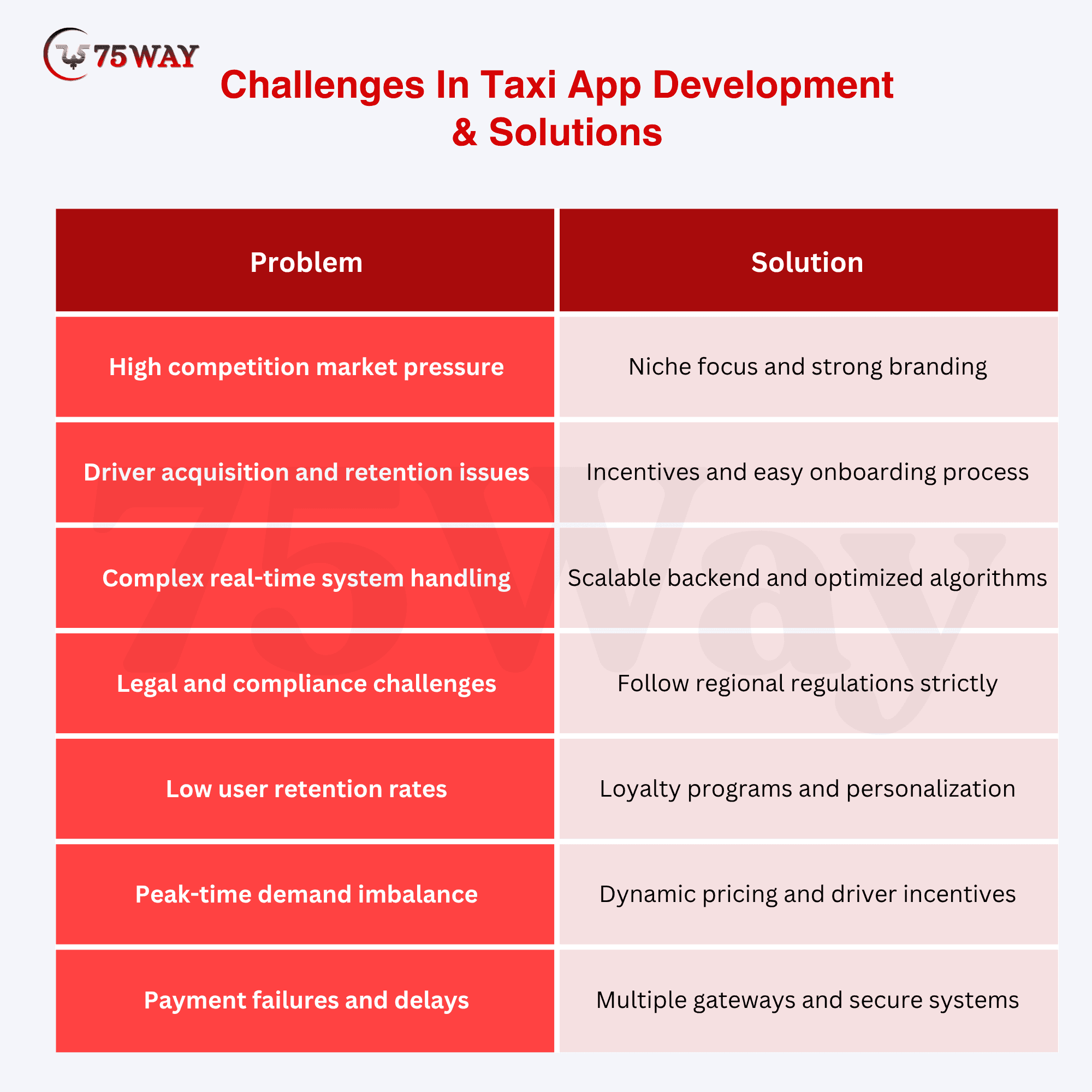
ProblemSolutionHigh competition market pressureNiche focus and strong brandingDriver acquisition and retention issuesIncentives and easy onboarding processComplex real-time system handlingScalable backend and optimized algorithmsLegal and compliance challengesFollow regional regulations strictlyLow user retention ratesLoyalty programs and personalizationPeak-time demand imbalanceDynamic pricing and driver incentivesPayment failures and delaysMultiple gateways and secure systems
Pro Tips for Building a Successful Taxi App
Building a successful taxi app requires more than just development expertise; it demands strategic planning, user-centric design, and continuous optimization. Focusing on scalability, performance, and market needs from the beginning helps create a strong foundation. By following proven industry practices, businesses can improve adoption, retention, and long-term profitability in a competitive market.

- Start With MVP, Then Scale: Begin with a minimum viable product, focusing on core features like booking and payments. Launch quickly, gather user feedback, and gradually add advanced features based on real market demand and performance insights.
- Focus On User Experience: Prioritize simple navigation, fast booking, and seamless interactions for both riders and drivers. A smooth, intuitive interface increases satisfaction, boosts retention rates, and encourages positive reviews and long-term platform loyalty.
- Build Strong Driver Network: Recruit reliable and well-trained drivers with attractive incentives and easy onboarding processes. A strong driver base ensures ride availability, reduces wait times, and improves overall service quality and customer trust significantly.
- Invest In Marketing Early: Start marketing before and after launch using digital ads, referrals, and social media campaigns. Early promotion builds brand awareness, attracts initial users, and accelerates platform growth in competitive ride-hailing markets effectively.
- Use Data For Decision-Making: Analyze user behavior, ride patterns, and operational metrics to optimize performance. Data-driven decisions help improve pricing, features, and efficiency while identifying growth opportunities and reducing operational risks across the platform.
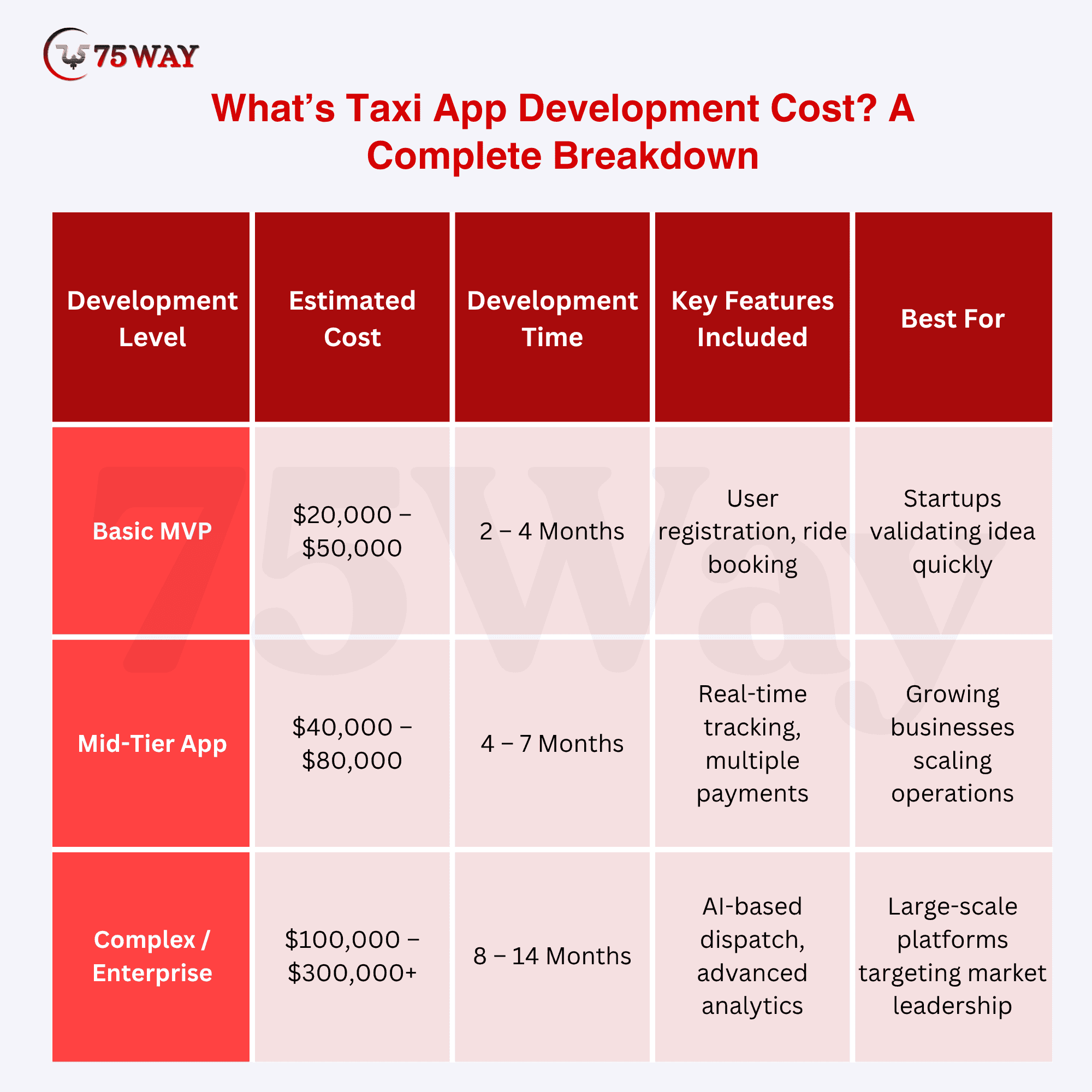
What’s Taxi App Development Cost? A Complete Breakdown
Taxi app development costs depend on multiple factors, including features, platform complexity, design requirements, and the technology stack. From a basic MVP to a full-scale enterprise solution, pricing can vary significantly. Understanding these cost elements helps businesses plan budgets effectively and choose the right development approach for long-term success.
- Basic MVP: $20,000 – $50,000Ideal for early-stage products with core features, enabling quick launch and initial market validation.
- Mid-Tier App: $40,000 – $80,000Suitable for growing apps with enhanced features, better performance, and moderate integrations.
- Complex / Enterprise: $100,000 – $300,000+Built for large-scale solutions with advanced features, high security, and full system integrations.
Cost To Create A Taxi App Based On Stages
- Discovery and Planning: $1,000 – $15,000Covers requirement analysis, roadmap creation, and defining project scope for smooth execution.
- UI/UX Design: $5,000 – $30,000Focuses on intuitive interfaces, user journeys, and visually appealing design experiences.
- Core Development & API Integration: $15,000 – $150,000+Handles backend logic, frontend development, and seamless integration with third-party services.
- Testing & Quality Assurance: $10,000 – $30,000Ensures bug-free performance, security validation, and overall product reliability before release.
- Deployment & Launch: $2,000 – $15,000Includes final setup, hosting configuration, and successful application rollout to users.
- Ongoing Maintenance (Annual): $10,000 – $40,000 per yearSupports updates, performance monitoring, bug fixes, and continuous improvements over time.

Cost To Create A Taxi App Based On Location
- USA/Canada: $80 – $300+ per hour (Highest Cost)Premium pricing due to advanced expertise, strong infrastructure, and high-quality AI development standards.
- UK/Australia: $90 – $140 per hourOffers balanced pricing with skilled professionals, delivering reliable and high-standard AI solutions.
- UAE/Europe: $60 – $120+ per hourCompetitive rates with access to experienced developers and strong technical capabilities across industries.
- Eastern Europe/Latin America: $30 – $70 per hourCost-effective option providing skilled talent, quality development, and efficient project delivery.
- India/Asia-Pacific: $20 – $80 per hour (Lowest Cost)Affordable development with a large talent pool, offering scalable solutions and flexible engagement models.
Conclusion
Taxi app development is a strategic investment that requires careful planning, the right technology choices, and a strong focus on user experience and scalability. From MVP solutions to enterprise-level platforms, the cost varies based on features, complexity, and long-term business goals. By understanding the development process, businesses can make informed decisions and build a competitive ride-hailing platform that delivers value to both riders and drivers. If you are ready to turn your idea into a high-performing mobility platform, partner with a trusted taxi app development company to build a scalable and future-ready solution.
Frequently Asked Questions (FAQs)
What is taxi app development?
Taxi app development is the process of building mobile and web platforms that connect riders with drivers in real time. It includes designing user apps, driver apps, and admin panels with features like booking, tracking, payments, and communication for seamless transportation services.
How do I start a taxi app business?Starting a taxi app business requires defining a clear business model, identifying target users, and planning essential features. Then, choose a reliable development team, build an MVP, test thoroughly, and launch with marketing strategies to attract both riders and drivers effectively.
What technologies are used in taxi app development?Taxi apps typically use technologies like Flutter or React Native for frontend, Node.js or Python for backend, and databases like MongoDB or PostgreSQL. APIs for maps, payments, and notifications are also integrated to enable real-time functionality and smooth user experience.
How do taxi apps ensure real-time tracking?Taxi apps use GPS technology combined with mapping APIs like Google Maps to track drivers and riders in real time. Continuous data updates between devices and servers ensure accurate location sharing, estimated arrival times, and smooth ride coordination throughout the journey.
What is the difference between Uber-like and taxi apps?Uber-like apps focus on dynamic ride-hailing with real-time matching, while traditional taxi apps may include booking, dispatch, and fleet management systems. Modern Uber-like platforms offer advanced features such as pricing algorithms, live tracking, and seamless digital payments.
How can taxi apps improve customer retention?Taxi apps improve retention through loyalty programs, discounts, personalized offers, fast booking experiences, and reliable service. Providing excellent customer support, consistent driver quality, and smooth app performance also encourages users to repeatedly choose the platform over competitors.