Summary
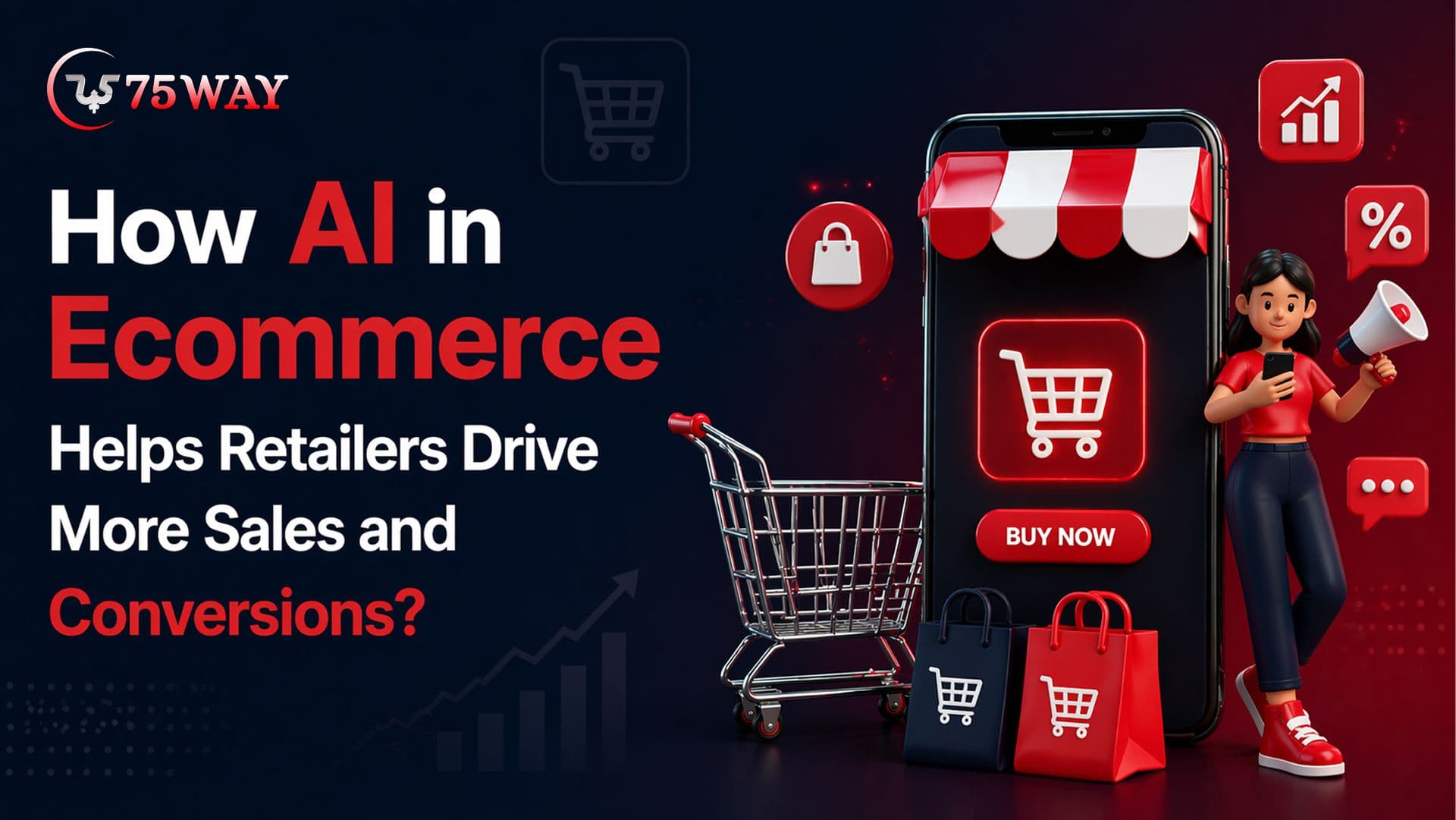
AI in ecommerce assists store owners by improving personalization, automating marketing, and optimizing customer journeys. Retailers use intelligent systems to increase conversions, enhance product recommendations, and streamline operations. This guide explains how AI for ecommerce drives sales growth, improves customer experience, and supports scalable ecommerce strategies across modern digital retail environments.
Quick Overview
- AI improves ecommerce conversions through personalization and smarter product recommendations
- Retailers increase sales using predictive analytics and customer behavior insights
- Dynamic pricing strategies help optimize revenue and competitiveness in real time
- AI-powered automation reduces manual marketing effort and improves efficiency
- Customer experience improves through real-time support and personalized shopping journeys
Shoppers today do not browse the way they used to. Every click, search, and scroll is shaped by intelligent systems that predict what they want before they even decide. This trend has completely changed how online retail grows and competes with ecommerce software, mobile apps, and platforms.
The AI-enabled e-commerce market is projected to reach $22.60 billion by 2032, showing how rapidly retailers are moving toward intelligent commerce ecosystems. AI in e-commerce is no longer optional for competitive retailers. It is embedded in product discovery, pricing, personalization, and customer support, turning static stores into adaptive buying experiences.
Instead of relying on broad marketing and manual segmentation, businesses now use artificial intelligence and real-time data from advanced analytics to understand intent and respond instantly with relevance. This creates a shopping journey that feels personalized at every step, not just optimized.
In this guide, we will delineate how AI in ecommerce improves sales performance, customer experience, and revenue growth through intelligent, data-driven systems. It also shows how retailers use these capabilities to make faster decisions and deliver more personalized shopping journeys.
Why Businesses Are Adopting Ecommerce AI in 2026?
Ecommerce AI maximizes retail growth by analyzing customer behavior in real time and generating actionable insights that improve sales decisions. Retailers gain the ability to predict demand, personalize offers, and respond faster to changing buying patterns with AI-powered ecommerce mobile apps and software.
Machine learning models process browsing history, purchase trends, and engagement signals to optimize product recommendations and pricing strategies. This leads to higher conversions, stronger customer engagement, and continuous improvement in overall retail performance across digital platforms. As a result, ecommerce platforms move from static storefronts to intelligent systems that continuously improve sales performance.
- AI chat tools can boost conversion rates by 4X and accelerate purchasing decisions by 47%.
- AI-driven analysis of browsing behavior increases average order value and delivers 10–12% higher revenue for businesses.
- The Agentic AI Commerce era is projected to influence between $900 billion and $1 trillion in U.S. B2C retail revenue by 2030.
- AI functions as a personal shopping agent, increasing revenue per visit by 37%.
- AI in ecommerce can cut operating costs by up to 60% by automating around 70% of customer interactions.
- The AI in ecommerce market is expected to reach $64 billion by 2034.
How AI in mCommerce Drives Sales and Conversions?
Mobile commerce growth depends heavily on intelligent systems that shape personalized experiences, predict customer intent, adjust pricing strategies, and automate interactions. These capabilities help retailers improve engagement, reduce drop-offs, and strengthen overall revenue performance across digital shopping platforms.
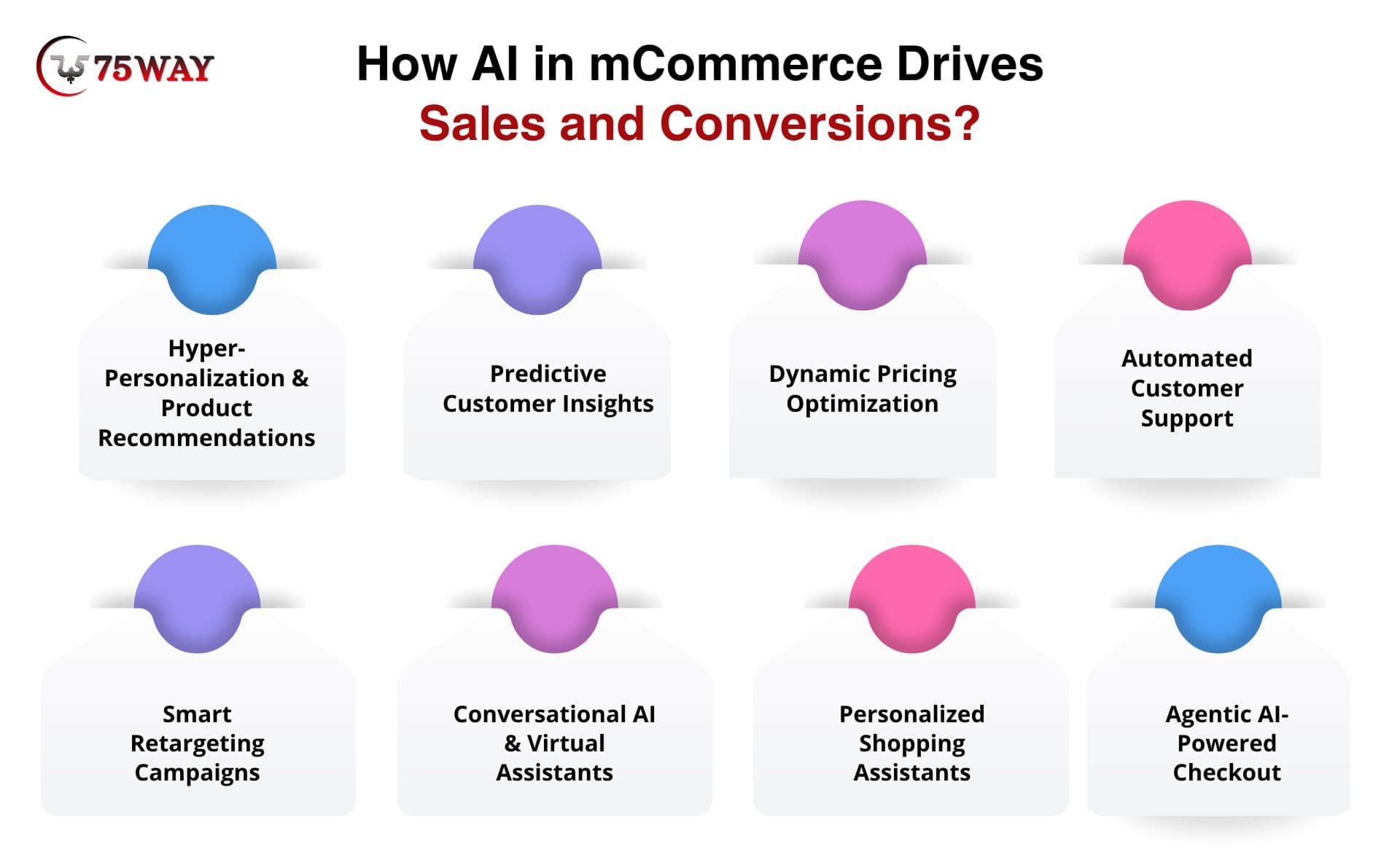
- Hyper-Personalization & Product Recommendations
AI models in studies user behavior, browsing history, and past purchases to suggest relevant products. These suggestions match individual preferences and shopping intent. Customers see items that closely align with their needs, which increases interest, improves engagement, and raises the likelihood of completing higher-value purchases.
- Predictive Customer Insights
Retail systems analyze customer data patterns to understand future buying intent. This helps businesses anticipate demand before customers take action. Marketing teams adjust campaigns and product positioning early. Hence, ecommerce websites and apps lead to better timing, stronger engagement, and improved conversion rates across different customer segments.
- Dynamic Pricing Optimization
Ecommerce AI adjusts product prices based on demand, competitor pricing, and user activity. This allows retailers to stay competitive while protecting profit margins. Customers receive prices that reflect market conditions, which improves purchase likelihood and supports better revenue balance across product categories.
- Automated Customer Support
AI chatbots for ecommerce systems respond to customer queries instantly across shopping platforms. They help users with order tracking, product details, and issue resolution. Faster responses reduce frustration, improve satisfaction, and lower the chances of cart abandonment during the buying process.
- Smart Retargeting Campaigns
AI-driven mobile commerce solutions track users who leave without completing purchases and identify buying intent signals. It then delivers personalized ads and messages to bring them back. These targeted reminders improve conversion recovery and increase overall sales from previously lost opportunities.
- Conversational AI & Virtual Assistants
Conversational AI in ecommerce enables real-time communication between customers and online stores through chat interfaces. It assists with product questions, comparisons, and purchase decisions. These ecommerce AI voice agents create a smoother shopping experience and help users move through the buying journey with less effort.
- Personalized Shopping Assistants
AI shopping assistants guide customers through product selection based on preferences and behavior. They simplify decision-making by filtering options and highlighting suitable choices. These virtual AI assistants improve product discovery, reduce confusion, and increase conversion rates across ecommerce platforms.
- Agentic AI-Powered CheckoutAgentic AI in ecommerce systems performs tasks such as recommendations, support, and campaign execution without constant human input. They coordinate multiple actions across workflows. This helps businesses optimize operations, improve customer experience, and drive higher sales performance with less manual effort.
Use Cases of Artificial Intelligence (AI) in Ecommerce & Retail
Ecommerce and retail ecosystems now rely on data-driven intelligence to shape product discovery experiences, balance demand across operations, and refine marketing execution strategies. Customer behavior patterns, preference signals, and real-time activity streams guide retailers toward more relevant shopping journeys, smoother operations, and stronger conversion outcomes across digital storefronts.
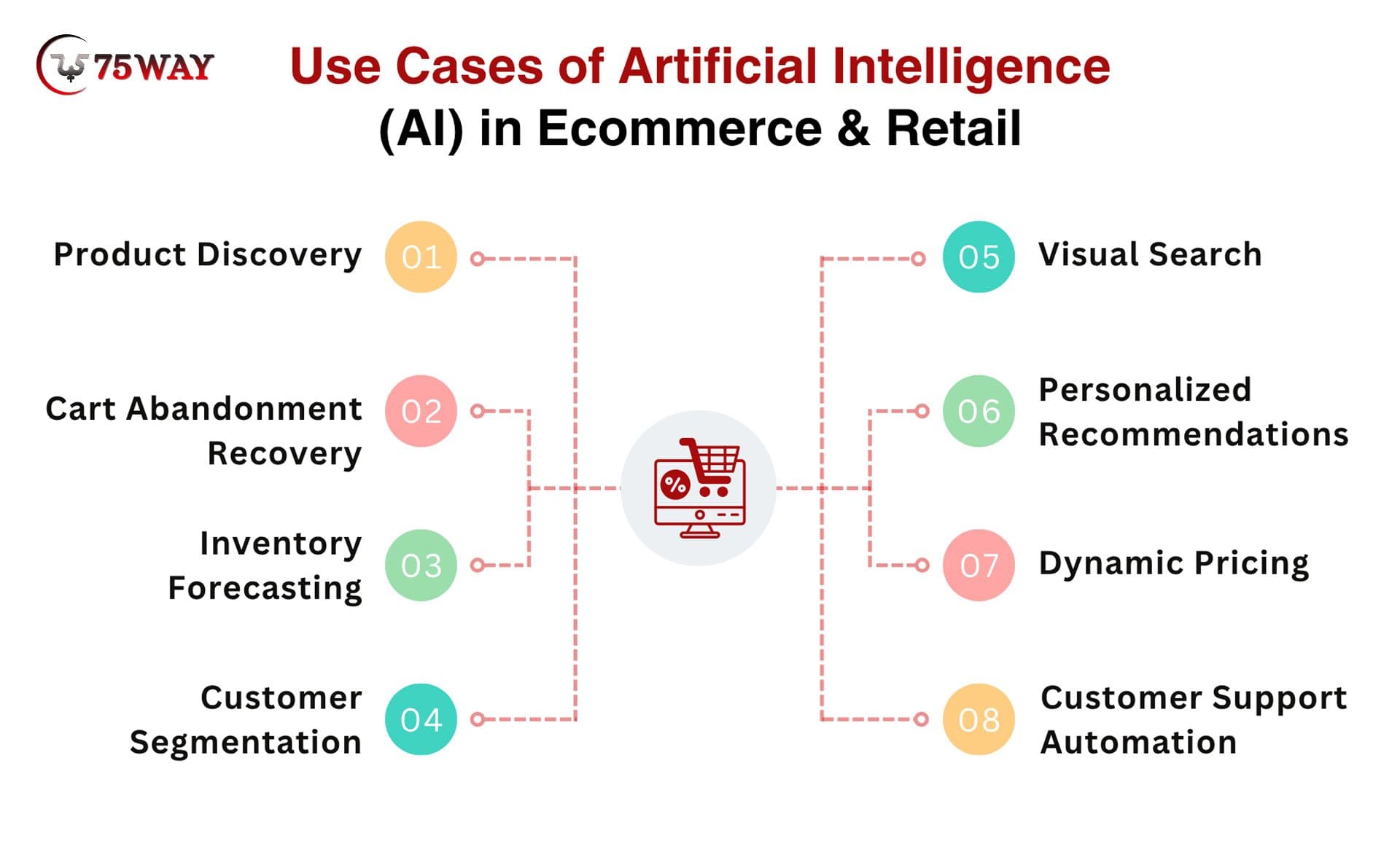
- Product Discovery: Customers reach relevant products faster through intelligent search systems that interpret intent beyond keywords. Results adjust based on browsing behavior and interaction patterns, making product finding more aligned with individual needs.
- Cart Abandonment Recovery: Users who leave items behind are identified through behavioral signals during the checkout flow. Personalized reminders and targeted messages encourage them to return and complete pending purchases.
- Inventory Forecasting: Historical sales data and demand trends inform predictions of future stock requirements. Retailers use these insights to maintain balanced inventory levels and avoid both shortages and excess stock.
- Customer Segmentation: Behavioral activity, interests, and purchase signals divide users into meaningful groups. This segmentation helps businesses design more relevant marketing communication and tailored engagement strategies.
- Visual Search: Image-based input replaces text queries for product discovery across platforms. Customers upload pictures and receive visually similar product options, improving discovery speed and accuracy.
- Personalized Recommendations: Past purchases and browsing activity influence product suggestions shown to users. These recommendations increase engagement by aligning offers with individual preferences and shopping patterns.
- Dynamic Pricing: Market demand and competitor pricing influence real-time price adjustments across products. This approach supports revenue optimization while maintaining competitive positioning in the market.
- Customer Support Automation: Automated systems manage customer queries across channels without manual intervention. Faster response handling reduces support workload and improves overall service experience.
How Retailers Implement AI Tools For in Ecommerce?
Retailers implement AI in ecommerce by integrating intelligent systems across data, marketing, product discovery, and customer experience workflows. The goal is to transform traditional online stores into adaptive environments that respond to customer behavior in real time. This process combines data infrastructure, machine learning models, and automation tools to improve decision-making, personalization, and overall sales performance across digital retail channels.
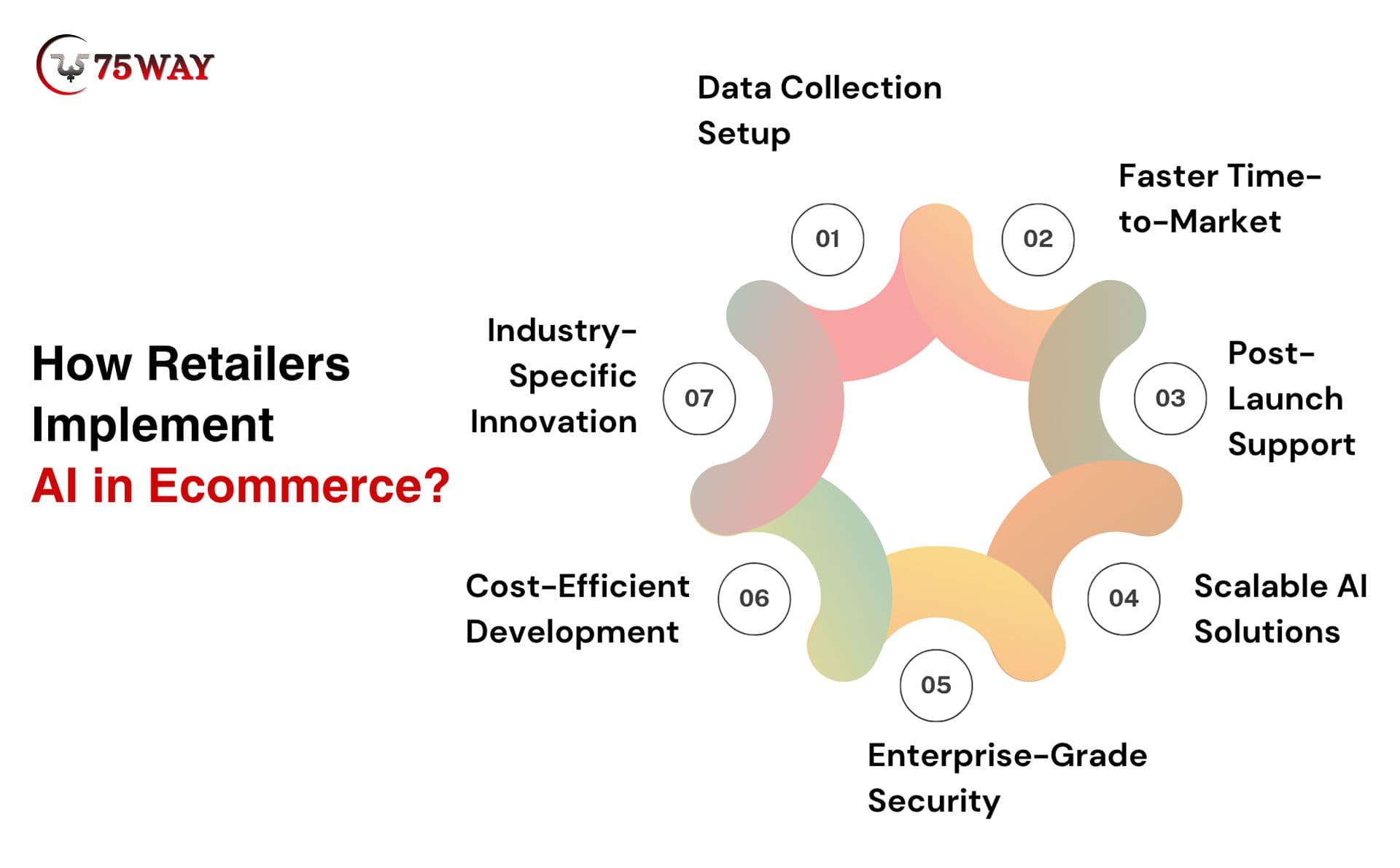
Step 1: Data Collection Setup
Retailers begin by gathering structured and unstructured data from multiple sources, such as website activity, purchase history, search behavior, and customer interactions. This data becomes the foundation for training AI models and understanding buyer intent across different stages of the shopping journey.
Step 2: Data Integration Layer
Collected data is unified across systems like CRM, ecommerce platforms, and marketing tools. This step creates a centralized environment where customer information flows consistently, enabling AI systems to access accurate, complete datasets for analysis and decision-making.
Step 3: AI Model Development
Machine learning and AI models are built to analyze customer behavior, predict demand, and generate recommendations. These models are trained using historical and real-time data to identify patterns that influence purchasing decisions and product engagement.
Step 4: Personalization Engine Setup
Retailers deploy personalization systems that tailor product recommendations, offers, and content based on user behavior. This ensures each customer receives a unique shopping experience aligned with their preferences, interests, and past interactions.
Step 5: Automation of Marketing Systems
AI tools are integrated into marketing workflows to automate campaigns, audience targeting, and engagement strategies. These systems adjust messaging and timing based on customer activity, improving relevance and campaign performance across channels.
Step 6: Customer Experience Optimization
Ecommerce AI agents and tools are applied to enhance customer support, search functionality, and navigation across ecommerce platforms. This includes chat systems, virtual assistants, and intelligent search tools that improve response speed and product discovery.
Step 7: Continuous Learning and Optimization
After deployment, AI systems continuously analyze new data to refine predictions and improve accuracy. This ongoing learning process helps retailers adapt to changing customer behavior and maintain strong performance in dynamic market conditions.
Traditional E-commerce vs. Ecommerce AI
Ecommerce has evolved from static, manually managed online stores into intelligent systems driven by real-time data and automation. Traditional models rely heavily on predefined rules and human intervention, while AI-powered ecommerce continuously adapts to customer behavior, market trends, and purchase intent. This shift has transformed how retailers attract, engage, and convert customers across digital platforms.
- Decision-Making Approach
Conventional ecommerce depends on manual analysis and fixed strategies for pricing, marketing, and product placement. However, AI in ecommerce uses real-time data insights and predictive models to guide automated, context-based decisions across operations.
- Customer Experience Delivery
Earlier systems provide uniform shopping experiences regardless of user behavior or preferences. In contrast, AI-driven ecommerce platforms deliver personalized journeys, adapting product recommendations, content, and offers based on individual customer intent.
- Product Discovery Method
Users in traditional ecommerce rely on keyword searches and category browsing to find products. AI systems enhance discovery through intelligent recommendations, visual search, and behavior-based product suggestions.
- Marketing Execution Style
Traditional ecommerce marketing uses broad segmentation and manual campaign planning across customer groups. In contrast, AI in ecommerce enables dynamic targeting, automated personalization, and real-time campaign optimization based on user engagement patterns.
- Operational Efficiency Level
Existing ecommerce requires significant manual effort for inventory, support, and analytics processes. Whereas AI tools for ecommerce automate these functions, reducing workload while improving accuracy and speed across operations.
- Revenue Optimization Capability
Earlier ecommerce systems relied on static pricing and historical sales data for revenue planning. On the other hand, ecommerce AI tools adjust pricing, predict demand, and optimize conversions for higher revenue performance.
- Scalability and Growth Model
Traditional ecommerce scales by increasing manpower and manually expanding systems. Conversely, ecommerce AI solutions scale through automation, allowing growth without a proportional increase in operational resources.
Challenges of Using Generative AI In Ecommerce
AI adoption in ecommerce brings strong advantages, but it also introduces operational, technical, and organizational challenges that retailers must address to achieve stable performance. These issues typically emerge when businesses attempt to connect AI systems with existing infrastructure, manage large-scale customer data, and maintain accuracy across dynamic shopping environments.
- Data Privacy Concerns
Protecting customer information becomes complex when AI systems process large volumes of behavioral and transactional data. Strong encryption, access controls, and compliance frameworks reduce exposure risks and ensure the secure handling of sensitive information.
- Integration Complexity
Connecting AI tools with existing ecommerce platforms, CRM systems, and marketing tools creates technical challenges. Modular system design and API-based integration improve compatibility and allow smoother data flow across platforms.
- High Initial Setup Effort
AI implementation requires investment in infrastructure, tools, and model development before benefits appear. Phased deployment and prioritization of high-impact use cases help reduce upfront pressure and improve adoption efficiency.
- Model Accuracy Issues
AI predictions may become unreliable when data quality is inconsistent or incomplete. Continuous training with updated datasets improves prediction accuracy and maintains relevance as customer behavior patterns change.
- Skill Gap in Teams
Many organizations lack internal expertise to manage AI systems effectively. Training programs and collaboration with AI specialists help bridge knowledge gaps and improve system utilization.
- System Scalability Challenges
Scaling AI across multiple channels can create performance bottlenecks. Cloud-based infrastructure and distributed architecture support smoother expansion across growing ecommerce operations.
Future of AI in Ecommerce Industry: Latest Trends & Insights
AI is shaping ecommerce into fully intelligent ecosystems where shopping becomes predictive, automated, and highly personalized. Retailers will move beyond traditional funnels toward systems that understand intent, respond instantly, and optimize every interaction in real time across all digital touchpoints.
- Autonomous Shopping Systems: Shopping experiences operate with minimal human input as systems manage discovery, selection, and purchase decisions automatically.
- AI-Driven Funnels Replacement: Traditional marketing funnels shift into intelligent systems where agents guide users through dynamic, personalized buying journeys.
- Predictive Commerce Ecosystems: Retail platforms forecast demand and customer intent to deliver offers, products, and experiences before users actively search.
- Voice Commerce Expansion: Voice-enabled shopping is growing as users interact with ecommerce platforms through conversational, natural-language commands.
- Visual Commerce Growth: Image-based search transforms product discovery, enabling customers to find items using photos rather than text queries.
- Real Time Pricing Intelligence: Pricing systems adjust instantly in response to demand, competition, and user behavior to maximize conversions and revenue.
Final Thoughts
AI in ecommerce changes static online stores into intelligent, adaptive AI ecommerce systems that understand customer intent in real time. Retailers are no longer relying on traditional segmentation or manual marketing efforts. Instead, they are using AI to personalize shopping journeys, predict demand patterns, optimize pricing, and automate customer engagement across multiple channels.
This shift leads to higher conversions, improved customer satisfaction, and stronger revenue performance. As competition intensifies in digital retail, businesses that adopt AI-driven ecommerce systems gain a clear advantage in speed, precision, and scalability. To build such intelligent commerce systems tailored to your business goals, partner with an AI-powered ecommerce development company to gain measurable revenue growth.
Frequently Asked Questions (FAQs)
How Does AI Increase Ecommerce Sales?
AI increases ecommerce sales by analyzing customer behavior and delivering highly relevant product recommendations. It optimizes pricing strategies based on demand patterns and competitor activity. Personalized offers and timely engagement help convert visitors into buyers while improving overall purchase value and repeat transactions.
Is AI Important For Online Stores?
AI plays a critical role in modern online stores by enhancing customer experience and driving higher conversions. It reduces cart abandonment through timely engagement and personalized reminders. Businesses also gain better insights into customer behavior, helping them improve marketing and product strategies effectively.
Can Small Businesses Use AI In Ecommerce?
Small businesses can adopt AI tools to automate marketing, customer support, and product recommendations without heavy investment. These solutions help improve customer engagement and operational efficiency. Scalable AI platforms allow smaller retailers to compete with larger brands through smarter decision-making and personalization.
What Are Examples Of AI In Ecommerce?
Common examples of AI in ecommerce include chatbots for customer support, recommendation engines for product suggestions, dynamic pricing systems, and predictive analytics tools. These technologies work together to improve user experience, increase conversions, and optimize business performance across digital retail platforms.
What Are The Benefits Of AI Tools For Ecommerce?
AI in ecommerce improves sales performance, enhances customer satisfaction, and reduces operational workload. It enables personalized shopping experiences, smarter pricing strategies, and faster decision-making. Businesses also benefit from better customer insights, improved retention rates, and scalable automation across marketing and support functions.
How Secure Is Ecommerce AI?
AI in ecommerce platforms can be highly secure when built with proper encryption, access controls, and compliance frameworks. These systems protect customer data during processing and storage. Regular monitoring, secure integrations, and adherence to data protection standards help reduce risks and maintain trust across digital transactions.