Summary
AI travel agent development is a process to create a travel AI that defines how travel businesses operate, engage customers, and scale services. This guide explores technologies, features, benefits, and implementation strategies for building a booked AI travel agent. It helps decision-makers understand how AI-powered travel agents improve efficiency, personalize experiences, and create competitive advantages in a rapidly evolving digital travel ecosystem.
Quick Overview
- AI travel agents automate bookings while improving customer engagement.
- Personalization via data analysis drives higher conversions and customer satisfaction.
- AI reduces operational costs by automating repetitive manual travel-planning tasks.
- AI travel market projected to reach 13.38 billion dollars by 2030
- Average AI travel agent development cost ranges from $10000 to $100000+.
Travel is no longer just about destinations. It is about experiences, timing, personalization, and seamless coordination across multiple touchpoints. Yet most travel businesses still struggle with fragmented systems, delayed responses, and inconsistent customer journeys.
This gap is where intelligent AI automation begins to redefine expectations. Imagine a traveler planning a trip at midnight, receiving instant recommendations, comparing prices in real time, and completing bookings within minutes.
It’s not magic. But an artificial intelligence tool called travel AI agents that bridges operational gaps while enhancing customer satisfaction at scale. But how to build an AI agent for a travel agency, and what’s the cost to build a travel AI agent?
This guide explores how AI-powered travel agents are built, how they function, and how they can transform travel businesses into customer-centric platforms. It also outlines practical strategies, real-world applications, and key considerations for successful implementation.
What Is an AI Travel Agent?
An AI travel agent is a software system that automates and optimizes travel planning, booking, and customer interaction processes using artificial intelligence. Unlike traditional systems, it continuously learns from user behavior, preferences, and historical data. A virtual travel booking agent AI can:
- Recommend destinations based on user interests
- Suggest itineraries dynamically
- Compare prices across multiple providers
- Handle bookings, cancellations, and modifications
- Provide real-time support through conversational interfaces
These systems combine natural language processing, machine learning, and predictive analytics to deliver highly personalized travel experiences.
Why Travel Businesses Are Adopting Booked AI Travel Agent in 2026?
Most travel and service businesses are dealing with rising customer expectations. Travel AI agents address this issue by handling conversations, recommendations, and tasks. Another major reason is consistency. Human teams can vary in speed, tone, and accuracy, especially during peak demand. Travel agent AI remains stable, delivering the same response every time, which directly improves customer trust and conversion rates.
Cost and scale of AI in travel also play a big role. Instead of increasing headcount to handle growth, businesses launch virtual travel booking agents to handle repetitive work, allowing human teams to focus on higher-value decisions.
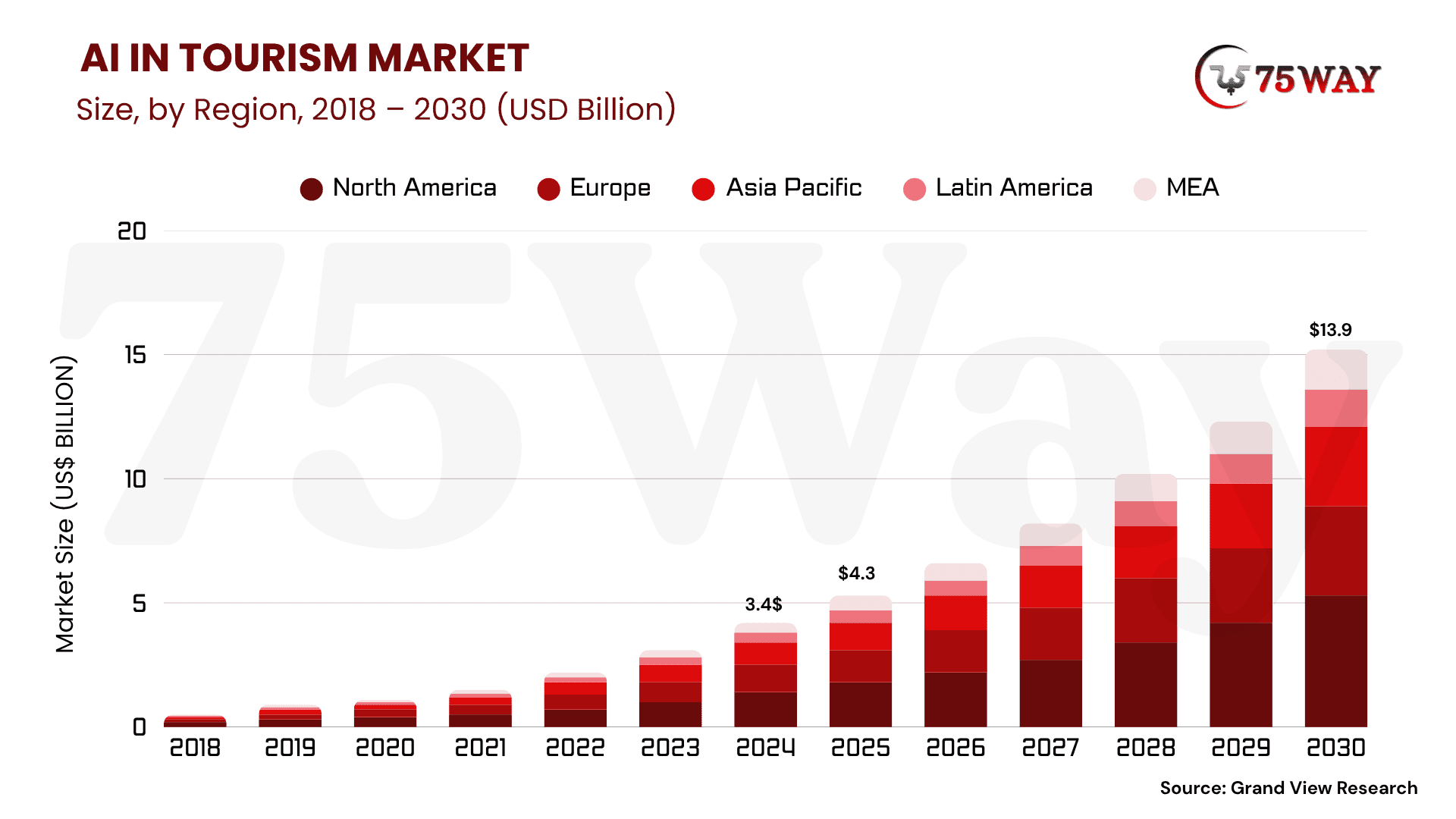
- The AI in the tourism market is projected to reach $13.38 billion by 2030, up from USD 3,373.0 million in 2024, growing at a CAGR of 26.7%.
- Around 40% of global travelers already use AI for trip planning, with adoption rising to 62% among Millennials and Gen Z.
- Travel agencies using AI chatbots report up to 40% business growth within six months.
- About 26% of businesses report cost reductions after implementing AI, according to McKinsey & Company report.
- North America leads the AI in tourism market with a 38.7% revenue share.
A Comprehensive AI Travel Agent Development Process: From Idea To Launch
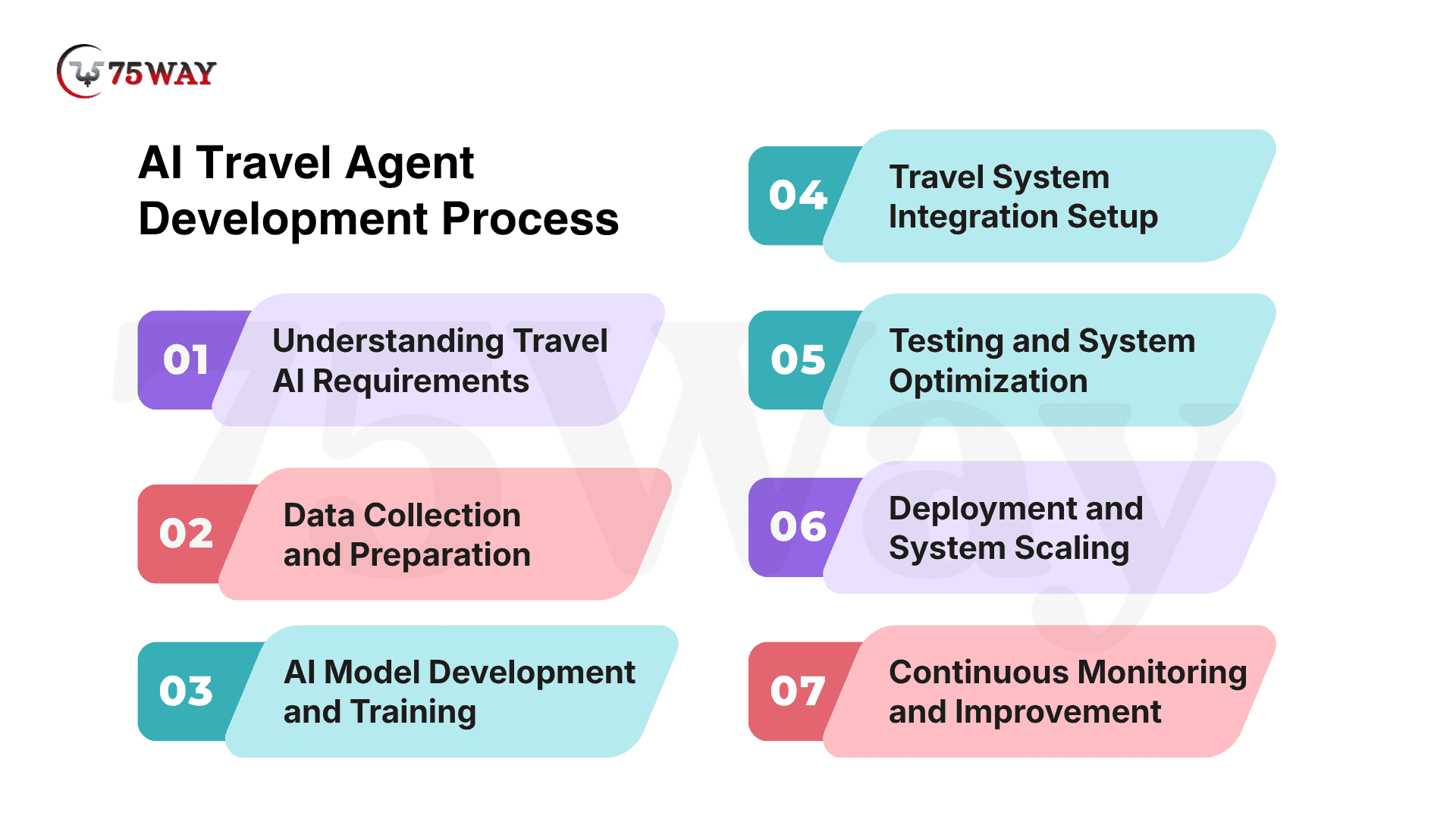
The development of AI travel agents follows a systematic lifecycle that ensures intelligent decision-making, real-time responsiveness, and seamless integration with travel ecosystems. Each stage plays a crucial role in building a scalable and reliable system that enhances user experience and business efficiency.
1. Understanding Travel AI Requirements Phase
Every successful AI travel agent begins with a clear understanding of what the business truly wants to achieve in the travel ecosystem. At this stage, defining business goals, target audience, and core features becomes essential to ensure the system is built with purpose and direction.
This clarity then guides how the entire solution will function in real-world travel scenarios, ensuring alignment between user expectations and technical capabilities. As requirements become structured and well-defined, they naturally shape the foundation for system design, development priorities, and long-term scalability.
2. Data Collection and Preparation
After defining system goals, the next essential stage is collecting and refining data to power intelligent decision-making. Without strong data foundations, even advanced models fail to deliver meaningful travel experiences.
- User Behavior Tracking: Capture browsing patterns, preferences, and booking interaction signals.
- Travel Trend Analysis: Identify seasonal demand shifts and evolving destination popularity patterns.
- Pricing Data Aggregation: Collect real-time fares from airlines, hotels, and booking platforms.
- Data Cleaning & Structuring: Remove inconsistencies and organize datasets for accurate AI model training.
3. AI Model Development & Training
After data preparation, you have to create ML and AI models. Machine learning models get trained to recognize intent, interpret behavior, and generate personalized travel outcomes. This stage transforms raw input into predictive logic that drives a relevant travel experience for each user.
- Build an algorithm foundation using historical travel interaction patterns
- Map user intent with destination and travel preference signals
- Generate prediction output for booking decision and travel choice
- Optimize recommendation logic using an iterative feedback evaluation cycle
- Identify hidden correlation among pricing, demand, and user activity patterns
- Enable scalable personalization across multiple travel platform interfaces
4. Travel System Integrations
At this stage of AI travel agent development, the focus shifts toward creating a fully connected ecosystem. Integration with third-party APIs and internal platforms enables seamless communication between different travel services. This ensures that flight availability, hotel inventory, and pricing data remain updated in real time, reducing delays and improving booking accuracy. This step is critical because it directly impacts system reliability and trustworthiness in live travel environments where decisions must be accurate and immediate.
By linking multiple data sources into a unified system, the AI travel agent can deliver uninterrupted user experiences. Travelers can search, compare, and confirm bookings without switching platforms or facing outdated information. Internal systems handle user data and booking logic, while external APIs provide live travel inventory updates. This combination creates a responsive infrastructure that supports scalable operations and consistent service quality across different travel channels and user touchpoints.
5. Testing and Optimization
This stage focuses on validating AI travel agent performance across accuracy, speed, and user experience. Continuous evaluation ensures the system responds correctly, handles real travel scenarios, and maintains reliability. It strengthens trust, improves decision quality, and supports smooth, error-free booking experiences across all user interactions.
- Function Testing: Validate booking flows, recommendations, and system responses under different travel scenarios and user inputs.
- Performance Testing: Measure system speed, response time, and scalability under high user traffic conditions.
- Accuracy Validation: Compare AI recommendations against real travel data to ensure correctness and relevance.
- User Testing: Collect feedback from real users to improve experience and interface usability.
- Error Optimization: Identify system issues and refine models for improved stability and reliability.
6. Deployment and Scaling
This stage marks the transition of the AI travel agent from a controlled development environment to a live operational system. The focus is on launching the platform in a stable, secure, and monitored setup where real users can begin interacting with it. At this point, reliability becomes critical because even small disruptions can impact booking experience, trust, and conversion performance.
Once deployed, the system begins operating under real-world traffic conditions. It connects fully with live data sources, user interfaces, and backend infrastructure to deliver uninterrupted travel services. Continuous monitoring helps track system behavior, detect anomalies, and ensure smooth performance across all user interactions. Feedback from users becomes a valuable input for ongoing refinement.
As demand increases, scaling ensures the platform remains efficient and responsive. Infrastructure is expanded to handle higher traffic without performance loss, while system components are optimized for speed and stability. This allows the AI travel agent to support growing user bases, maintain consistent service quality, and adapt seamlessly to evolving business needs.
7. Ongoing Optimizations
Continuous improvement becomes essential once the AI travel agent is live in real environments. The system begins learning from actual user interactions, booking patterns, and feedback loops that were not fully visible during development. These insights help refine how the platform responds, recommends, and adapts to changing travel behavior.
Optimization work focuses on improving accuracy, speed, and relevance across all functions. Models are updated with fresh data, performance issues are corrected, and recommendation logic is adjusted to match real-world demand shifts. This ensures the platform remains reliable, responsive, and aligned with evolving travel expectations over time.
Key Features of AI-Powered Travel Agents
AI travel agent systems go beyond basic automation and are designed to deliver measurable impact across customer experience and business performance. Their real value lies in how they combine intelligence, responsiveness, and personalization into a single operational layer that scales easily.
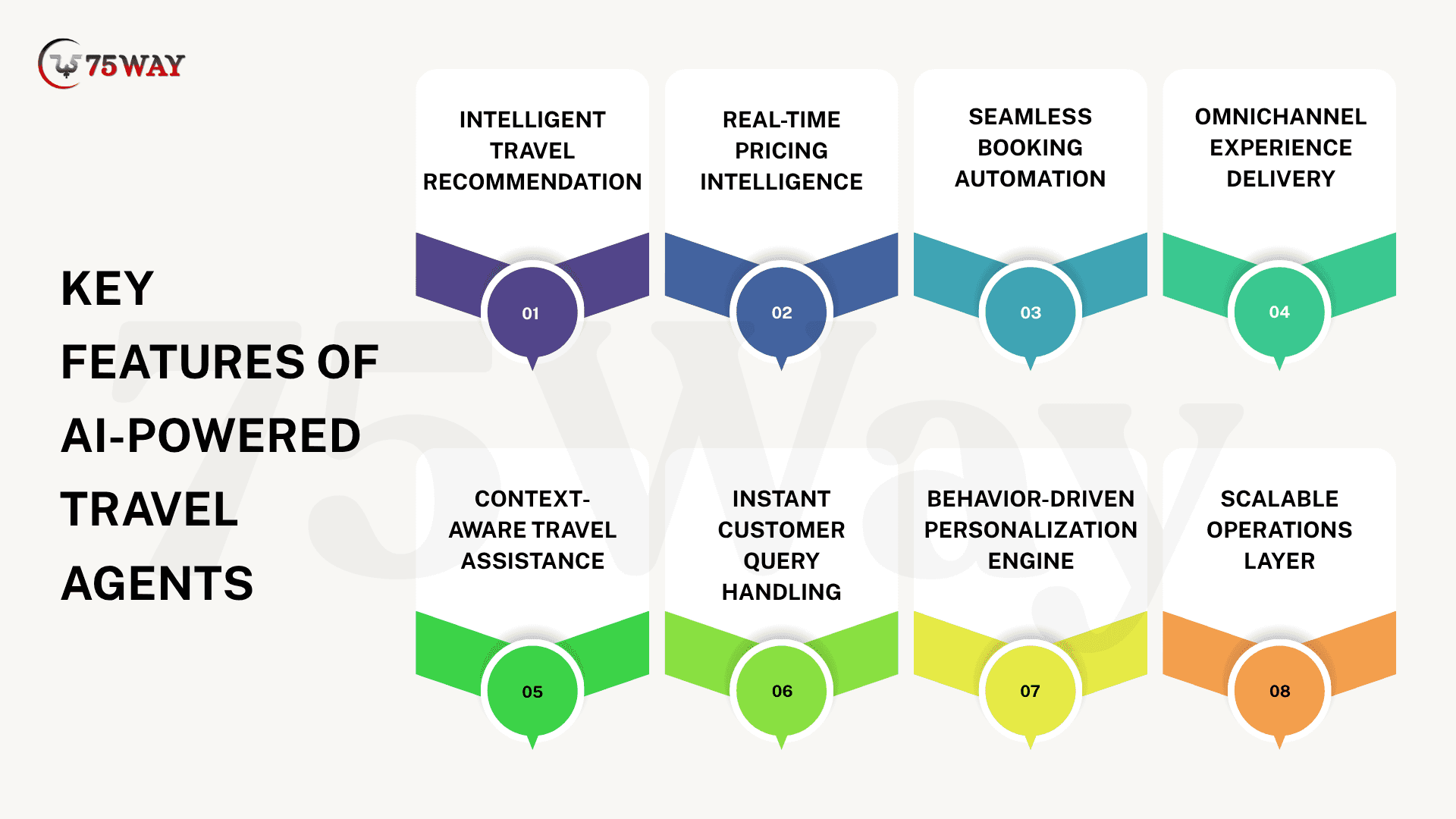
- Intelligent Travel Recommendations: Travel suggestions become more relevant when user behavior, preferences, and past interactions are continuously analyzed to match intent in real time.
- Real-Time Pricing Intelligence: Pricing decisions stay competitive as demand patterns, availability shifts, and market conditions are evaluated instantly without manual intervention.
- Seamless Booking Automation: The entire booking lifecycle, from reservations to changes and cancellations, runs smoothly without requiring human involvement for routine tasks.
- Omnichannel Experience Delivery: Customer interactions remain consistent whether users engage through websites, travel mobile apps, messaging platforms, or voice AI assistants.
- Context-Aware Travel Assistance: A more personalized experience emerges when the system understands intent and provides timely suggestions throughout the journey.
- Instant Customer Query Handling: Response times drop significantly as traveler questions are addressed immediately across all connected communication channels.
- Behavior-Driven Personalization Engine: Every interaction contributes to improving future recommendations, refining each user experience over time.
- Scalable Operations Layer: High-volume interactions are handled without performance loss, allowing travel businesses to grow without operational bottlenecks.
Types of Travel AI Agents For Tourism & Hospitality Businesses Can Build
Different business needs require different implementations. Thus, there are various kinds of travel AI agents that operate as a combination of specialized agents. Each agentic AI solutions designed to handle a specific layer of the travel ecosystem, from customer interaction to backend intelligence and enterprise decision-making.
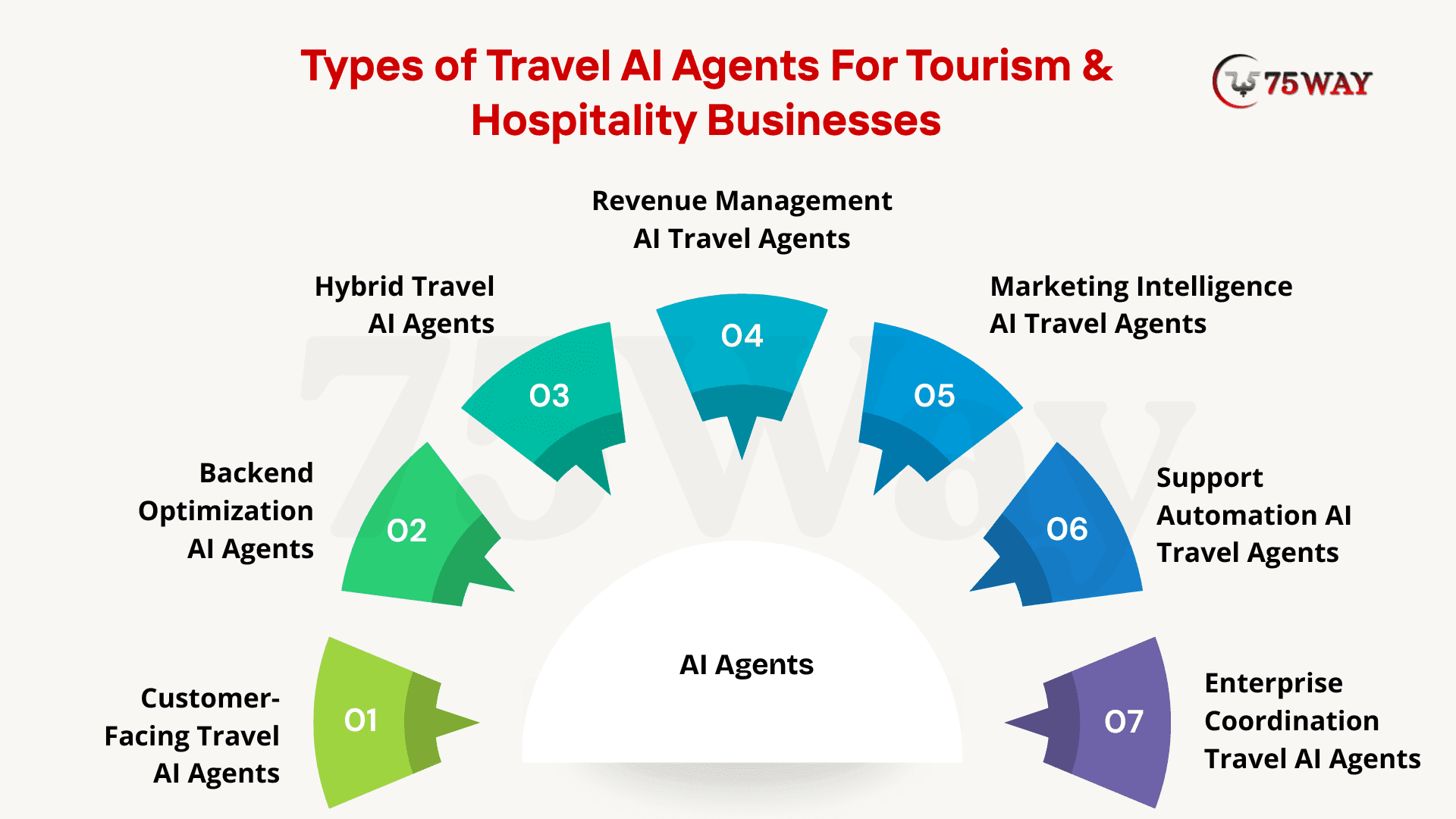
- Customer-Facing Travel AI Agents: Built for direct traveler interaction, these travelling AI agents operate across websites, mobile apps, and messaging platforms. Inquiries, recommendations, and booking assistance are managed in real time, resulting in stronger engagement and higher conversion performance.
- Backend Optimization AI Agents: These systems operate behind the scenes, focusing on pricing optimization, demand forecasting, and inventory control. Their main role is to improve operational efficiency and support data-driven business decisions.
- Hybrid Travel AI Agents: A unified architecture of hybrid AI travel agents combines customer-facing capabilities with backend intelligence in a unified structure. The result is a connected system where user experience and operational logic work together without friction.
- Revenue Management AI Travel Agents: These agents specialize in maximizing profitability through dynamic pricing strategies, occupancy optimization, and yield management. They continuously adjust recommendations based on market demand and competitor behavior.
- Marketing Intelligence AI Travel Agents: These systems analyze customer behavior, segmentation patterns, and campaign performance to improve targeting. Their focus is on increasing acquisition efficiency and driving higher-quality leads.
- Support Automation AI Travel Agents:Customer support AI agents in travel & hospitality handle post-booking support such as modifications, cancellations, FAQs, and issue resolution. The goal is to reduce dependency on human support teams while maintaining service quality.
- Enterprise Coordination Travel AI Agents: These are designed for large-scale hospitality operations, coordinating across departments like sales, operations, and finance. They ensure alignment between business functions through real-time data synchronization.
Benefits of Travel AI Travel Agent Development
AI travel agent development is transforming the travel and hospitality industry by introducing automation, intelligence, and personalization at scale. These systems not only improve customer engagement but also optimize business operations, enabling companies to achieve higher efficiency, better decision-making, and sustainable growth in a competitive digital environment.
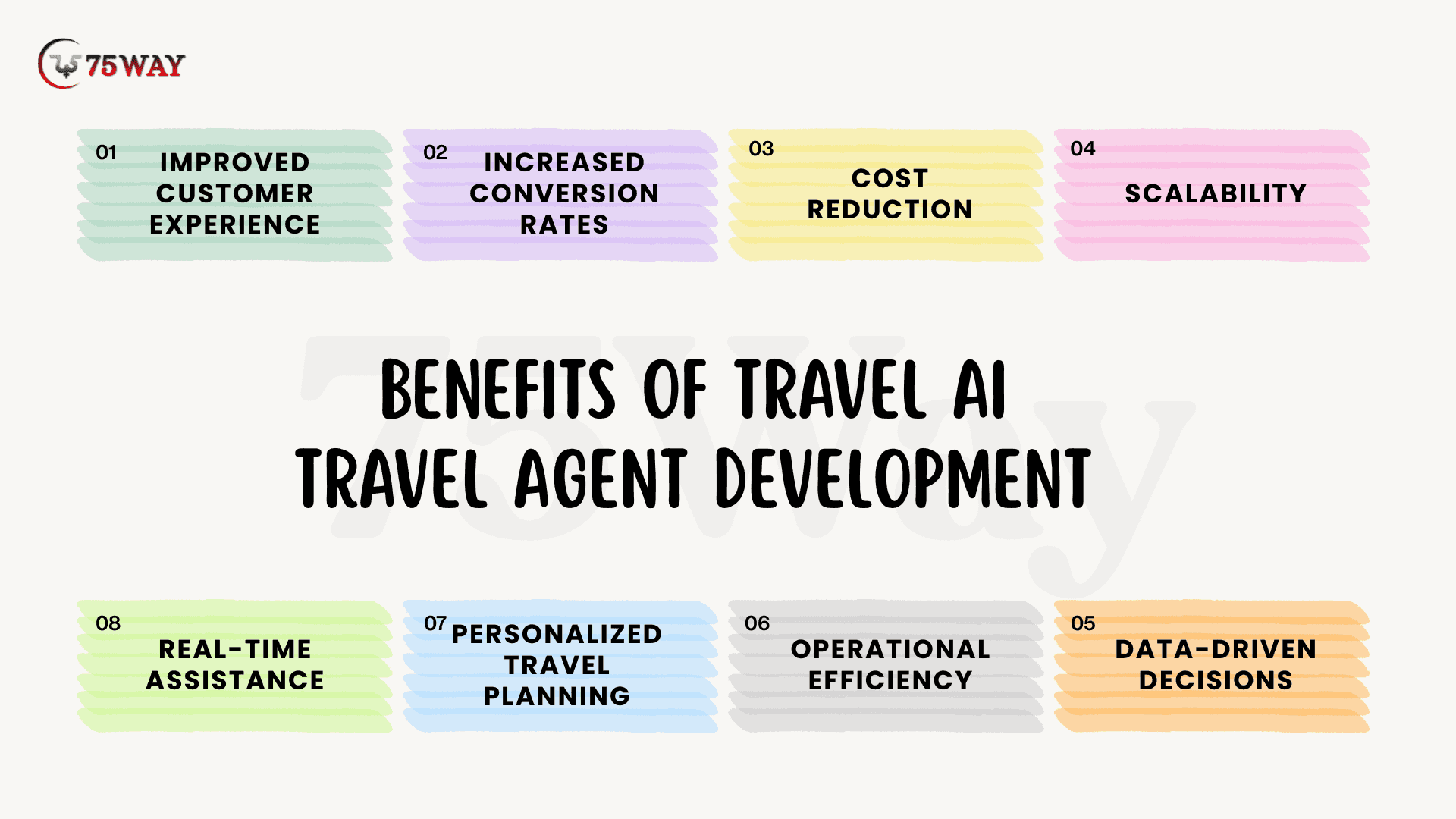
- Improved Customer Experience: AI delivers faster responses and more relevant recommendations, enhancing satisfaction. This leads to smoother booking journeys and reduces friction in customer interactions across multiple travel platforms.
- Increased Conversion Rates: Personalized suggestions encourage users to complete bookings. This helps travel businesses convert more inquiries into confirmed reservations through targeted and behavior-based recommendations.
- Cost Reduction: Automation reduces dependency on large customer support teams. It also minimizes operational overhead by handling repetitive tasks such as queries, bookings, and updates.
- Scalability: Travel AI agents handle thousands of interactions simultaneously without performance issues. This ensures consistent service quality even during peak travel seasons or high-demand periods.
- Data-Driven Decisions: Insights generated by virtual travel booking agent AI help businesses refine strategies. These analytics support better forecasting, marketing optimization, and improved overall business planning for travel companies.
- Operational Efficiency: Workflow automation reduces manual intervention in booking, support, and itinerary management. This improves speed, accuracy, and overall productivity across travel operations.
- Personalized Travel Planning: AI analyzes user preferences and behavior to create tailored itineraries. This enhances user satisfaction by delivering highly relevant travel experiences.
- Real-Time Assistance: Instant support is provided to users during travel planning and booking. This ensures quick issue resolution and improves overall customer trust and engagement.
How AI Is Transforming Travel Booking?
Traditional booking systems rely on static data and manual input. In contrast, an AI-powered travel agent continuously adapts to changing conditions. For example:
- Recommending alternative routes during flight disruptions
- Suggesting off-peak travel options for cost savings
- Offering personalized travel packages
This level of intelligence creates a seamless and adaptive booking experience.
Use Cases of Agentic AI in Travel & Hospitality
AI-powered travel agents are being adopted across different segments of the travel ecosystem to improve efficiency, enhance customer experience, and automate complex workflows. From booking platforms to airlines, these systems help organizations deliver faster, more personalized, and data-driven services. Their adaptability makes them valuable for both customer-facing operations and backend optimization.
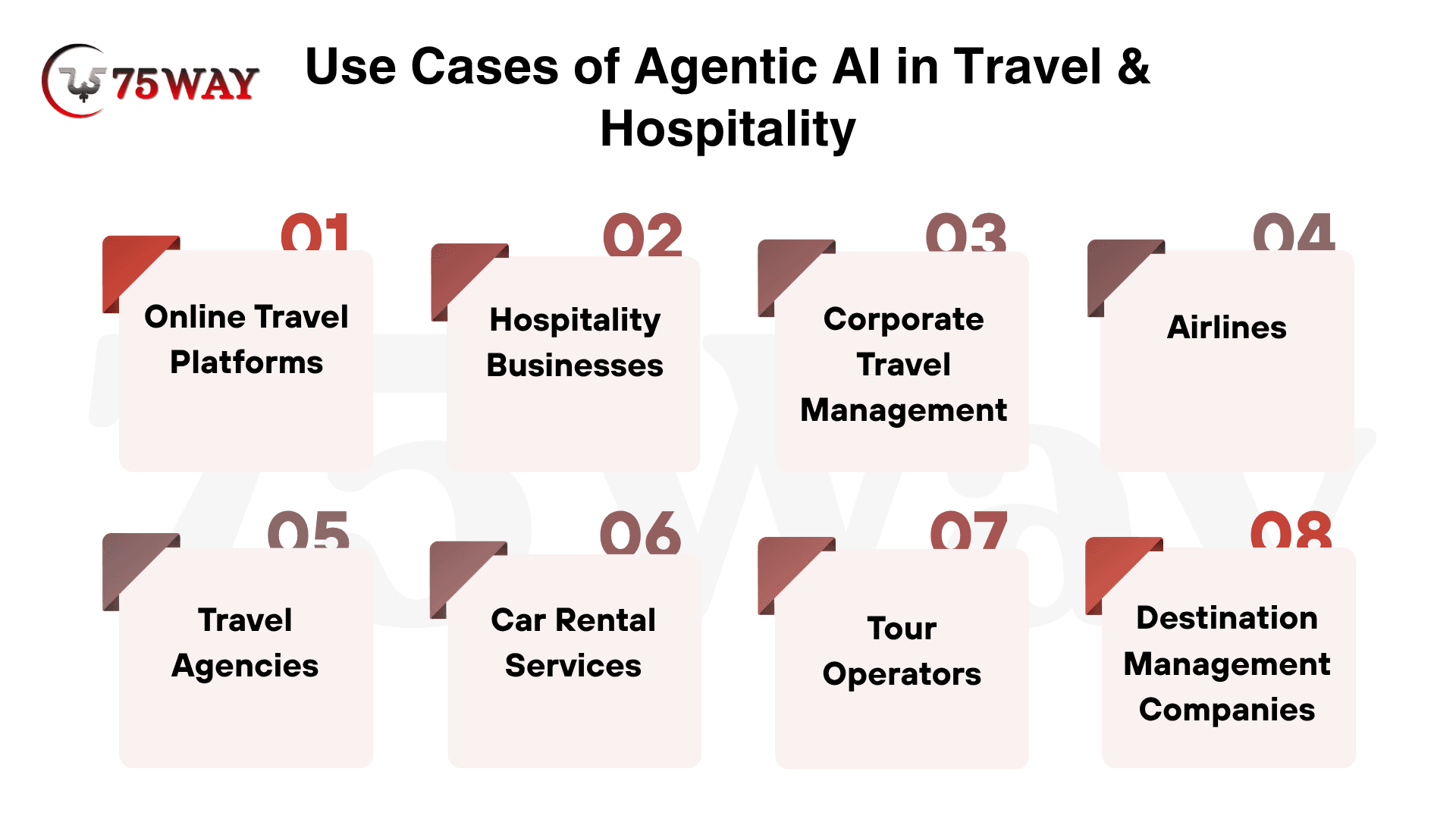
- Online Travel Platforms: Automate bookings and deliver personalized travel recommendations based on user behavior and preferences.
- Hospitality Businesses: Provide AI-driven concierge support for guest requests, services, and local experience suggestions.
- Corporate Travel Management: Streamline business travel planning, approvals, and expense tracking for organizations.
- Airlines: Improve customer engagement through real-time updates, support automation, and operational efficiency.
- Travel Agencies: Assist agents with faster itinerary creation and intelligent package customization for clients.
- Car Rental Services: Optimize vehicle availability, pricing, and booking management using predictive demand insights.
- Tour Operators: Personalize tour packages and automate scheduling based on traveler interests and seasonality.
- Destination Management Companies: Coordinate logistics, bookings, and experiences across multiple service providers.
Core Technologies Used to Build Travel Agent AI
AI travel agents are built on a mix of intelligent technologies that work together to understand users, process data in real time, and deliver decisions at scale. This combination allows travel businesses to move beyond manual systems and operate with speed, accuracy, and personalization.
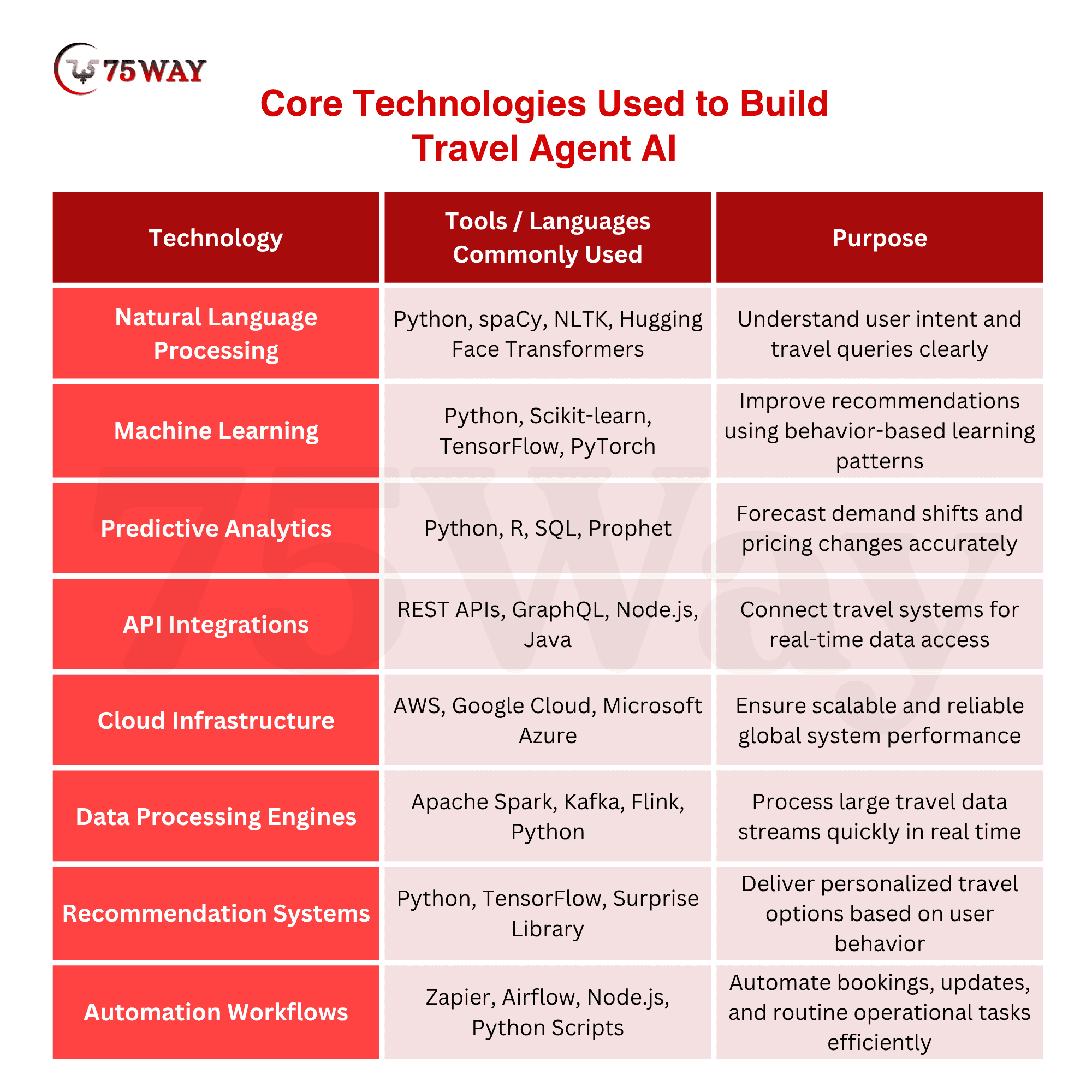
- Natural Language Processing: This enables users to speak or type naturally rather than using fixed commands. It helps the system understand intent, context, and meaning behind travel requests.
- Machine Learning: Over time, the system learns from user behavior and booking patterns. This helps it improve recommendations and make more relevant suggestions with each interaction.
- Predictive Analytics: Instead of just reacting, the system anticipates changes like demand spikes or price shifts. This helps businesses plan better and optimize offerings in advance.
- API Integrations: These connections link airlines, hotels, and booking platforms together. It ensures the AI has access to real-time availability and accurate travel data.
- Cloud Infrastructure: This provides the foundation for scale and reliability. It allows the system to handle large volumes of users without slowing down or breaking performance.
- Data Processing Engines: These handle large streams of travel data in real time. The result is faster responses and smoother decision-making across the system.
- Recommendation Systems: This layer focuses on personalization. It filters options based on user preferences, behavior, and intent to suggest more relevant travel choices.
- Automation Workflows: Routine tasks like confirmations, updates, and booking changes are handled automatically. This reduces manual workload and improves operational efficiency.
What’s The Cost To Build An AI Travel Agent?
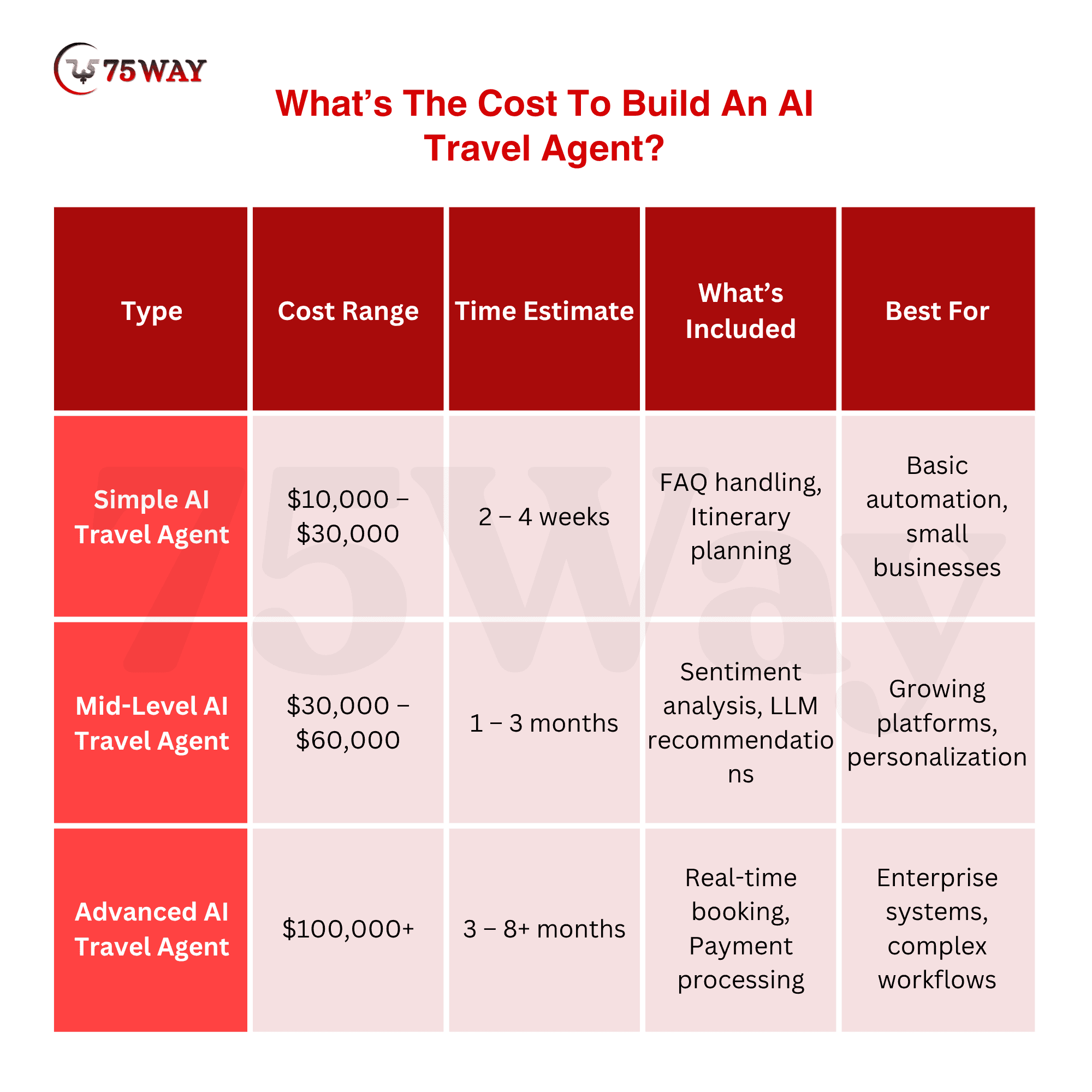
The cost of AI travel agent development depends on system complexity, integrations, and the level of intelligence required. On average, the cost to develop a travel AI agent typically falls within a broad range of $10,000 to $100,000+, based on scope and enterprise requirements. A basic solution with limited automation and simple booking flows requires a lower investment, while advanced systems with personalization, real-time APIs, and predictive intelligence require significantly higher budgets.
- Simple AI Travel Agent Cost: $10,000 – $30,000
Typically developed within 2–4 weeks for basic functionalities and quick deployment.
- Mid-Level AI Travel Agent Cost: $30,000 – $60,000
Usually takes 1–3 months with added features, integrations, and improved user experience.
- Advanced AI Travel Agent Cost: $100,000+
Requires 3–8+ months to build a fully scalable, feature-rich, and intelligent system.
Cost Factors in AI Travel Agent Development
The cost for building an AI agent for travel may vary based on complexity, features, and scale. Key influencing factors are
- Level of AI sophistication
- Integration requirements
- Data infrastructure
- User interface design
- Maintenance and updates
A basic system may require moderate investment, while advanced custom AI travel agents for travel brands demand higher budgets due to complexity.
Cost Breakdown
- Development & Integration: $5,000 – $75,000+
Covers API integrations with GDS systems, booking engines, and CRM platforms for seamless operations.
- Training & Customization: $10,000 – $100,000+
Involves training the model on travel policies, preferred vendors, and brand-specific tone.
- UI/UX Design: $1,000 – $5,000
Focuses on building an intuitive and user-friendly chat interface for better engagement.
- Maintenance: $5,000 – $50,000/year
Includes ongoing monitoring, updates, and model retraining for optimal performance.
Future of AI in Travel & Hospitality
The future of travel is moving toward highly intelligent, adaptive, and autonomous systems that understand traveler intent more deeply. AI travel agents will no longer act as simple booking tools but evolve into continuous travel companions that anticipate needs, resolve disruptions, and personalize every stage of the journey in real time.
Emerging innovations such as hyper-personalized itineraries, voice-driven planning, real-time disruption handling, and fully automated travel ecosystems will redefine how travel experiences are created and managed. As these systems mature, travel AI agents will become more context-aware, proactive, and capable of delivering seamless coordination across multiple services without manual intervention.
Strategic Considerations for Businesses To Launch The Best AI Travel Agent
Before investing in AI travel agent development, decision-makers must evaluate how technology aligns with business direction, operational readiness, and customer expectations. A structured approach ensures that implementation delivers measurable value, supports scalability, and avoids unnecessary complexity while building a sustainable competitive advantage in the travel ecosystem.
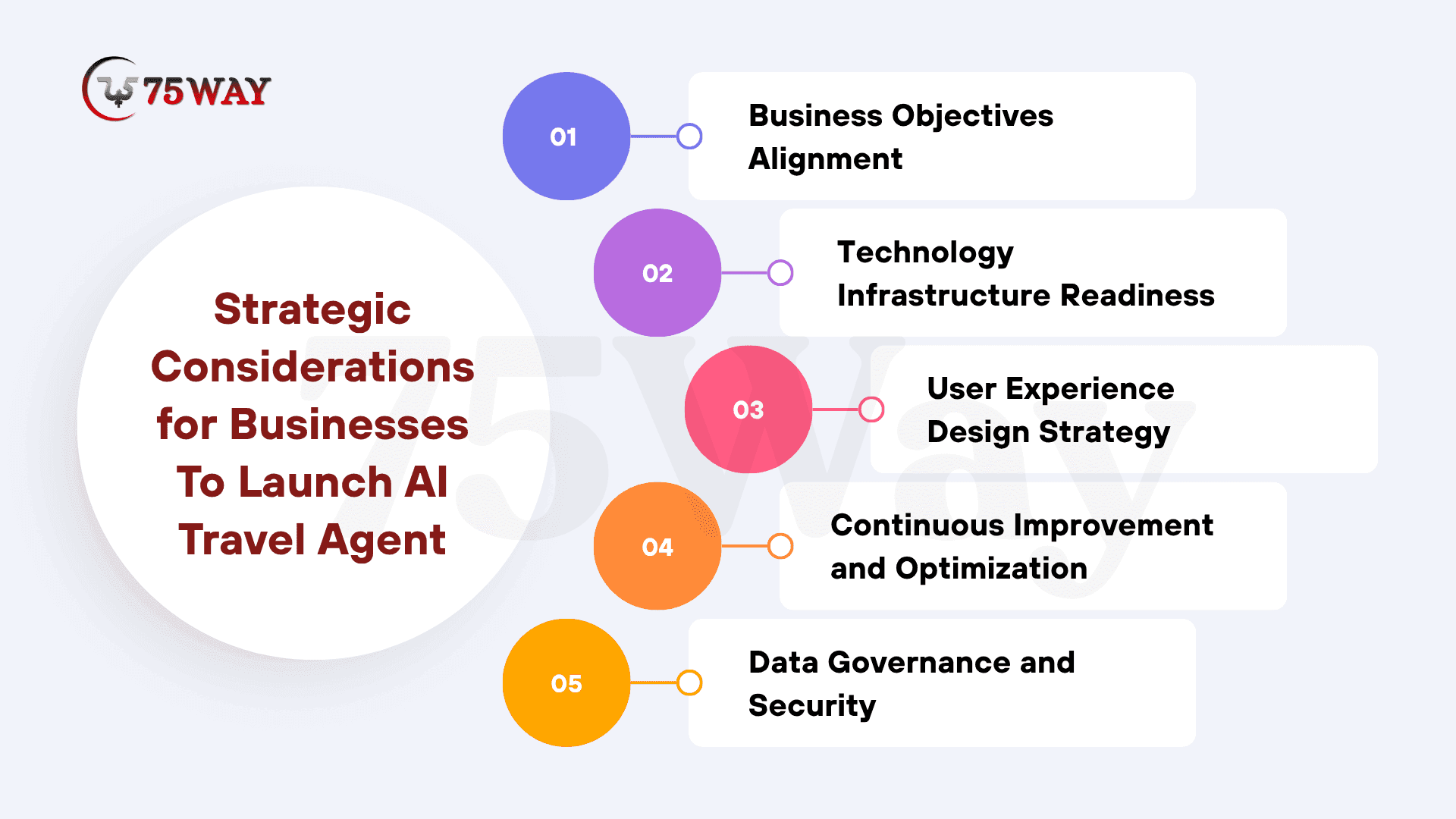
- Business Objectives: Align AI capabilities with long-term growth vision, revenue targets, and customer engagement strategies.
- Technology Readiness: Ensure infrastructure, data systems, and integrations can fully support AI-driven travel agent deployment.
- User Experience Design: Focus on intuitive interfaces, seamless navigation, and simplified booking journeys for travelers.
- Continuous Improvement: Maintain ongoing model updates, performance tuning, and optimization based on real user feedback and data insights.
- Data Governance: Establish strong data privacy, security, and compliance frameworks to ensure trustworthy AI operations.
Final Remarks
AI travel agent development is no longer an optional innovation but a strategic necessity for modern travel businesses. It enables faster decision-making, personalized customer experiences, and scalable operations that traditional systems cannot match.
Businesses that invest in travel AI agents today position themselves ahead of market shifts, gaining both operational efficiency and customer loyalty. The key lies in thoughtful implementation, focusing on real business outcomes rather than just technology adoption. If you want to accelerate this transformation, contact a reliable AI agent development company for structured execution, faster deployment, and scalable AI solutions tailored to real-world travel demands.
Frequently Asked Questions (FAQs)
Why Custom AI Travel Agents Matter?
Generic solutions often fail to meet specific business needs. Custom AI travel agents for travel brands provide:
- Tailored features
- Better integration with existing systems
- Enhanced control over data
- Competitive differentiation
This approach ensures long-term value and scalability.
Will AI Replace Travel Agents?
No, AI will not eliminate human agents entirely. Instead, it will redefine their roles. Routine tasks will be automated, allowing human professionals to focus on complex, high-value interactions. Travel businesses that combine human expertise with agentic AI in travel & hospitality will achieve the best outcomes.
How Do AI Systems Improve Travel Decision Making?
AI systems improve travel decision-making by analyzing large volumes of behavioral, pricing, and preference data. They identify patterns that humans may miss, enabling faster comparisons, smarter recommendations, and more accurate predictions. This leads to better travel planning outcomes and improved customer satisfaction across different booking scenarios.
What Skills Are Needed To Build AI Travel Platforms?
Building AI travel platforms requires expertise in machine learning, data engineering, API integration, cloud infrastructure, and user experience design. Developers must also understand travel industry workflows, pricing systems, and real-time data processing. Strong problem-solving and system architecture skills are essential for scalable and reliable solutions.
How Do Travel Companies Use Data For Personalization?
Travel companies use data from browsing behavior, booking history, and customer preferences to create personalized travel experiences. This information helps generate tailored recommendations for destinations, accommodations, and activities. Advanced analytics further refine suggestions, ensuring each user receives relevant and engaging travel options based on individual interests.
What Role Does Automation Play In Travel Businesses?
Automation reduces manual workload by handling repetitive tasks such as booking confirmations, itinerary updates, and customer inquiries. It improves operational efficiency, minimizes errors, and speeds up service delivery. This allows travel businesses to focus more on strategic growth and improving overall customer experience quality.