AI Summary
Want to build an AI health assistant app? This guide explains how AI healthcare assistant applications are designed, built, and deployed using AI, cloud computing, and secure data systems. It highlights key features like predictive analysis, real-time monitoring, personalized care recommendations, and virtual health support. The guide also helps businesses understand implementation strategies for scalable digital healthcare solutions.
Quick Overview
- Estimated cost to create an AI health assistant app ranges between $40,000-$400,000+.
- The global AI health assistant market may reach USD 106.67 billion by 2033.
- AI integration reduces operational load on medical professionals in hospitals.
- AI health apps reshape patient care through predictive medical intelligence systems.
- Real-time monitoring improves diagnosis accuracy across remote healthcare environments.
What if your patients could get reliable health guidance, schedule appointments, track symptoms, and receive medication reminders without waiting for a phone call or clinic visit?
That is exactly what AI health assistant apps are making possible in 2026. Healthcare AI assistant app development solutions are helping medical care providers deliver faster support and giving patients instant access to personalized assistance whenever they need it.
As demand for digital healthcare continues to grow, hospitals, clinics, startups, and health-tech companies are investing in AI assistant development for healthcare that improves patient engagement and reduces administrative workload.
This guide covers everything you need to know about AI health assistant app development, including key features, benefits, development costs, and the technology required to build a scalable solution.
What is AI Healthcare Assistant App?
AI health assistant app is a smart healthcare application that is designed to mimic human medical assistance using artificial intelligence technologies. It analyzes symptoms of users, monitors health-related data, offers recommendations, and refers patients to healthcare professionals when needed.
Using machine learning models, including conversational AI and predictive analytics, these apps deliver personalized health insights based on user behavior, medical history and real-time inputs. The objective is to enhance accessibility, decrease diagnostic delays, and promote continuity of patient care in non-traditional clinical settings.
How An AI Health Assistant App Works?
Behind every AI health assistant app is a carefully connected workflow that transforms health data into meaningful guidance within seconds. From understanding user symptoms to delivering personalized recommendations, each stage plays an important role in improving the overall healthcare experience. Here's a step-by-step look at how an AI healthcare assistant functions.
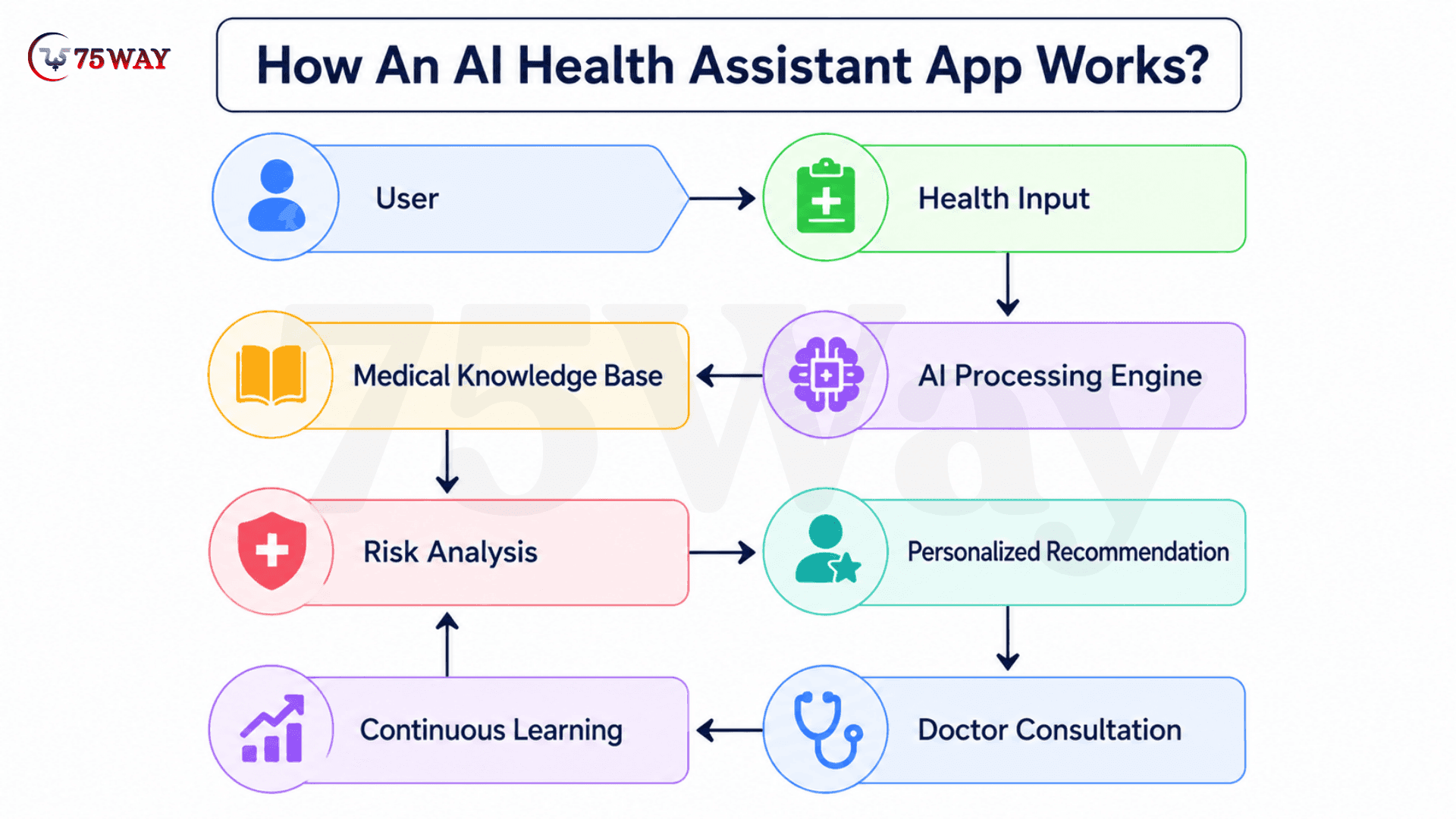
1. User Registration & Health Profile Creation
User creates an account and fills in basic health information such as age, gender, allergies, medical history, current medications, chronic conditions, and lifestyle information. This profile is the basis for providing personalized health recommendations.
2. Health Data Collection
The app collects data from manual symptom entries, wearables, smartwatches, lab reports, connected medical devices, and electronic health records to keep an up-to-date health profile.
3. Natural Language Processing (NLP)
The NLP engine translates users’ intent into structured data for AI analysis by identifying relevant medical terms when they ask questions in everyday language.
4. AI Decision Engine
Machine learning models analyze symptoms, historical information, behavioral patterns, and medical datasets to predict health risks, prioritize issues, and identify the most suitable guidance.
5. Medical Knowledge Retrieval
Evolved applications do not rely only on trained models but also retrieve validated information from reputable medical databases, clinical guidelines, and healthcare resources to generate evidence-based answers.
6. Personalized Health Recommendations
The app, based on the analysis, suggests lifestyle changes, medication reminders, preventive measures or consultation recommendations specific to the user’s condition and health goals.
7. Escalation To Healthcare Professionals
If symptoms are severe or the risk is high, the AI recommends that the user seek immediate medical attention and helps schedule appointments, telemedicine visits or emergency contact notifications.
8. Continuous Learning And Improvement
The AI healthcare assistant learns continuously from user interactions, health outcomes, and feedback to optimize recommendations, improve the accuracy of predictions, and enhance overall user experience over time.
AI Healthcare Assistant App Market Size & Revenue Opportunity
The global AI in healthcare market is estimated to grow from $56.01 billion in 2026 to $1,033.27 billion by 2034, registering a CAGR of 43.96%. Here are some more insights that indicate the greate growth opportunity for investing in AI healthcare assistant apps.
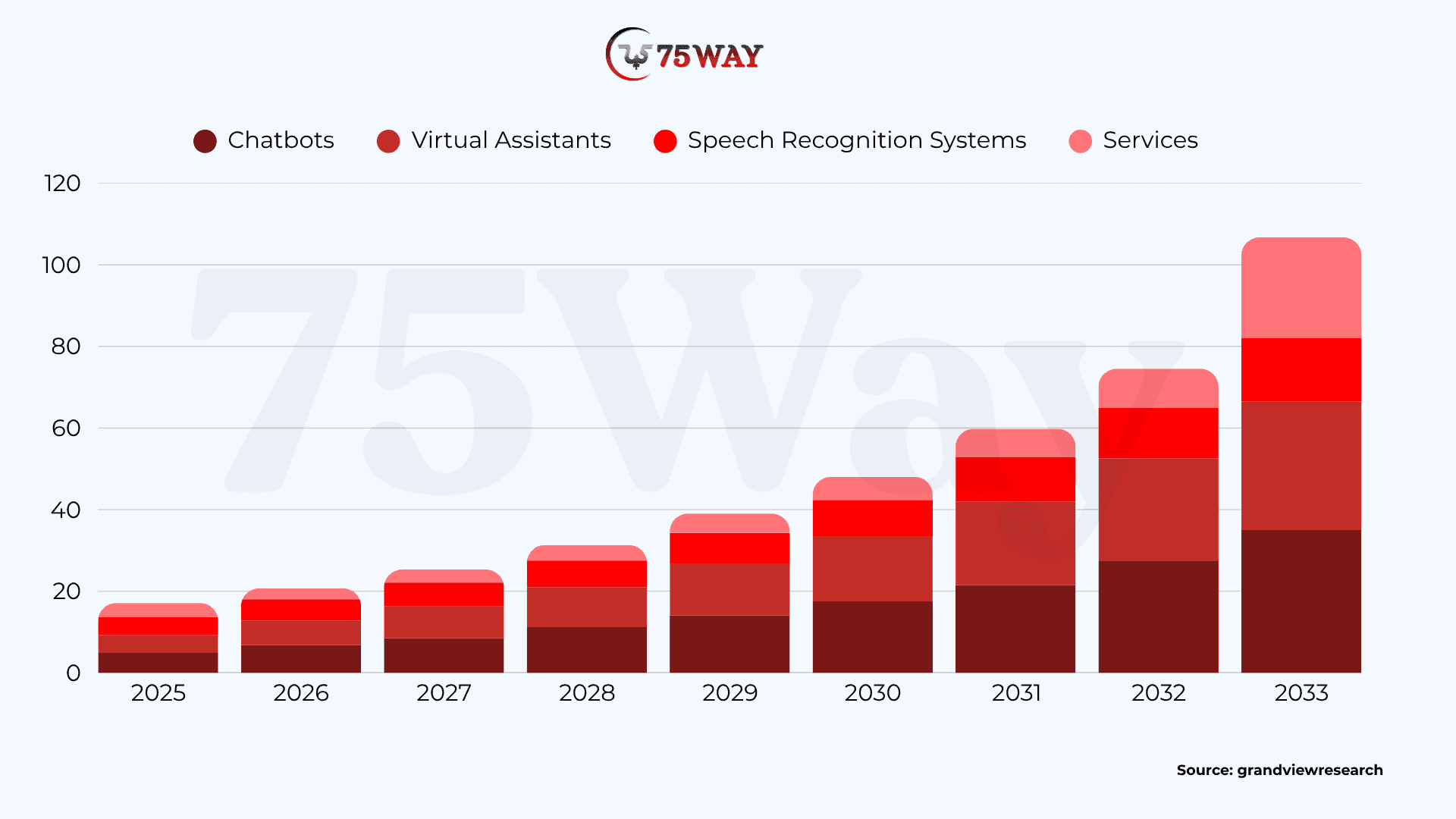
- The global conversational AI in healthcare market is projected to reach USD 106.67 billion by 2033, growing at a CAGR of 25.71%.
- North America leads the AI healthcare market with the largest revenue share of 54.51%.
- The patient engagement and support segment accounts for the highest market share at 29.51%.
- AI-powered remote patient monitoring is expected to generate $200 billion in annual healthcare savings by 2028.
- Globally, more than 70% of healthcare organizations are implementing AI-based clinical decision support systems.
- In March 2024, Johnson & Johnson joined forces with NVIDIA Corporation to speed up the development of AI-enabled digital surgery solutions.
- According to the AHA Futurescan survey, 48% of hospital CEOs and strategy leaders expect AI-driven decision-making infrastructure to be in place by 2028.
Top AI Health Assistant Types Medical Businesses Can Develop
From helping users understand symptoms to supporting chronic disease management and virtual consultations, AI assistants are becoming indispensable across the healthcare ecosystem. The right solution depends on your business model, target audience, and medical services. Below are the most valuable AI health assistant app types that healthcare organizations, startups, and digital health companies are investing in throughout 2026.
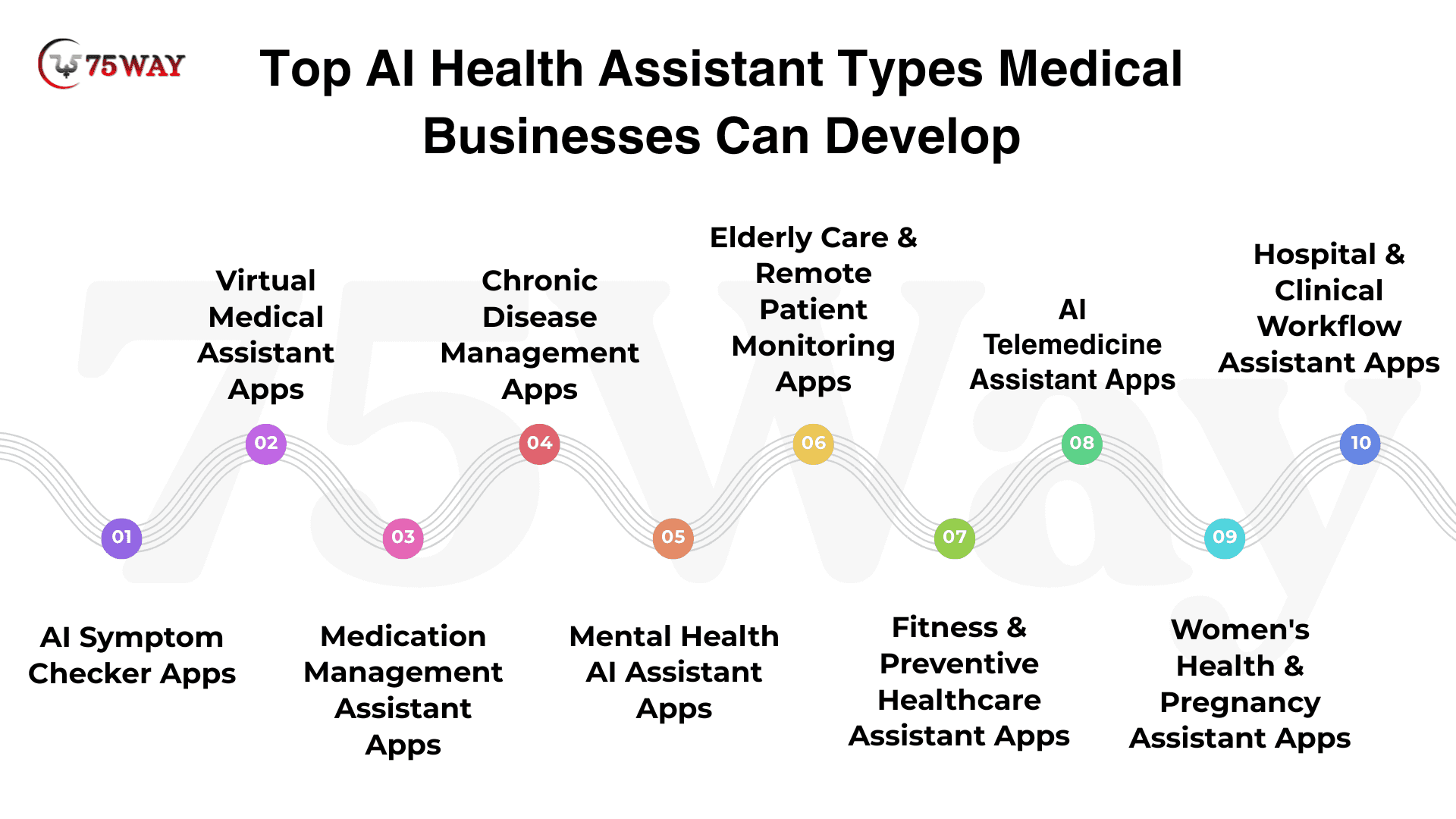
1. AI Symptom Checker Apps
AI symptom checker apps help users evaluate their health problems before visiting a doctor. These applications ask follow-up questions and analyze symptoms along with age, medical history, and lifestyle to suggest next steps and potential health insights. There are similar experiences in symptom assessment platforms like Ada Health that help users make informed healthcare decisions without replacing professional medical advice.
2. Virtual Medical Assistant Apps
Virtual medical assistants are digital healthcare assistants that never sleep. They can have natural conversations to ask health-related questions, understand prescriptions, schedule appointments, get access to medical records, and get personalized wellness guidance. The apps ease the pressure on hospital staff and give patients instant support when they need basic healthcare info or support.
3. Medication Management Assistant Apps
It can be hard to keep up with several prescriptions, especially for older people and those who have chronic illnesses. Medication management apps automate reminders for taking doses, refilling prescriptions, treatment schedules, and adherence monitoring. Some advanced platforms also identify potential drug interactions and warn users so they don’t inadvertently combine medications that might pose health risks.
4. Chronic Disease Management Apps
Patients with diabetes, hypertension, asthma, cardiovascular diseases, and kidney diseases require continuous care and not occasional consultations. Chronic disease management apps powered by AI track daily health data and long-term trends, recommend lifestyle improvements, and notify healthcare providers of abnormal readings. Continued support helps keep patients engaged and reduces unnecessary admissions to the hospital.
5. Mental Health AI Assistants
Mental wellness has become a top priority in the United States, and the demand for AI-powered mental health apps is increasing. These assistants offer features such as mood tracking, guided meditation, stress management exercises, emotional check-ins, conversations based on cognitive behavioral therapy (CBT), and crisis support resources. Apps like Woebot have demonstrated how conversational AI can offer an easily accessible form of emotional support in between therapy appointments, augmenting traditional mental health care.
6. Elderly Care & Remote Patient Monitoring Apps
Older adults frequently require constant supervision while still being independent. They monitor vital signs, medication schedules, fall detection sensors, sleep quality and emergency situations, keeping caregivers in the loop with instant notifications. These apps give peace of mind to families and healthcare providers while allowing seniors to live safely and comfortably at home.
7. Fitness & Preventive Healthcare Assistants
Preventive healthcare models are replacing reactive treatment models at a lightning pace. AI fitness assistants can track activity levels, nutrition habits, sleep patterns, heart rate, and wellness goals to develop customized health plans. Such apps are inspired by fitness trackers like Fitbit. They combine wearable technology and artificial intelligence to help people live healthier lives, spot potential health risks earlier, and motivate users with personalized coaching.
8. AI Telemedicine Assistant Apps
Virtual health care is no longer a convenience but the standard expectation. AI telemedicine assistants simplify online consultations by gathering symptoms before appointments, assembling patient histories, scheduling virtual visits, summarizing previous medical records, and providing pertinent clinical information to doctors. This reduces the time spent on a consultation and makes it more seamless for both patients and healthcare professionals.
9. Women's Health & Pregnancy Assistant Apps
Women’s health care is very individualized and includes counseling at many life points such as fertility planning, pregnancy, postpartum recovery, and menopause management. AI-powered assistants provide cycle tracking, updates on pregnancy progress, nutrition suggestions, appointment reminders, symptom tracking, and educational resources. Personalized insights help users make better decisions while staying connected to their healthcare providers.
10. Hospital & Clinical Workflow Assistant Apps
Not all AI health assistant apps are only for patients. Hospitals and healthcare organizations are increasingly using AI assistants to automate administrative workflows, including patient triage, appointment coordination, electronic medical record management, insurance verification, clinical documentation, and discharge planning. This reduces the redundant administrative work and frees up doctors to spend more time in taking care of patients and less time on paperwork.
Know More:Best Healthcare App Development Firms for Startups and Enterprises
How to Develop an AI Health Assistant App: Key Steps Explained
The difference between a successful AI health assistant app and one that struggles in the market often comes down to the development process behind it. It evolves through careful planning, smart technology choices, rigorous testing, and continuous improvements after launch. The roadmap below walks through each AI health assistant app development phase that healthcare startups and enterprises follow to create reliable AI-powered healthcare applications.
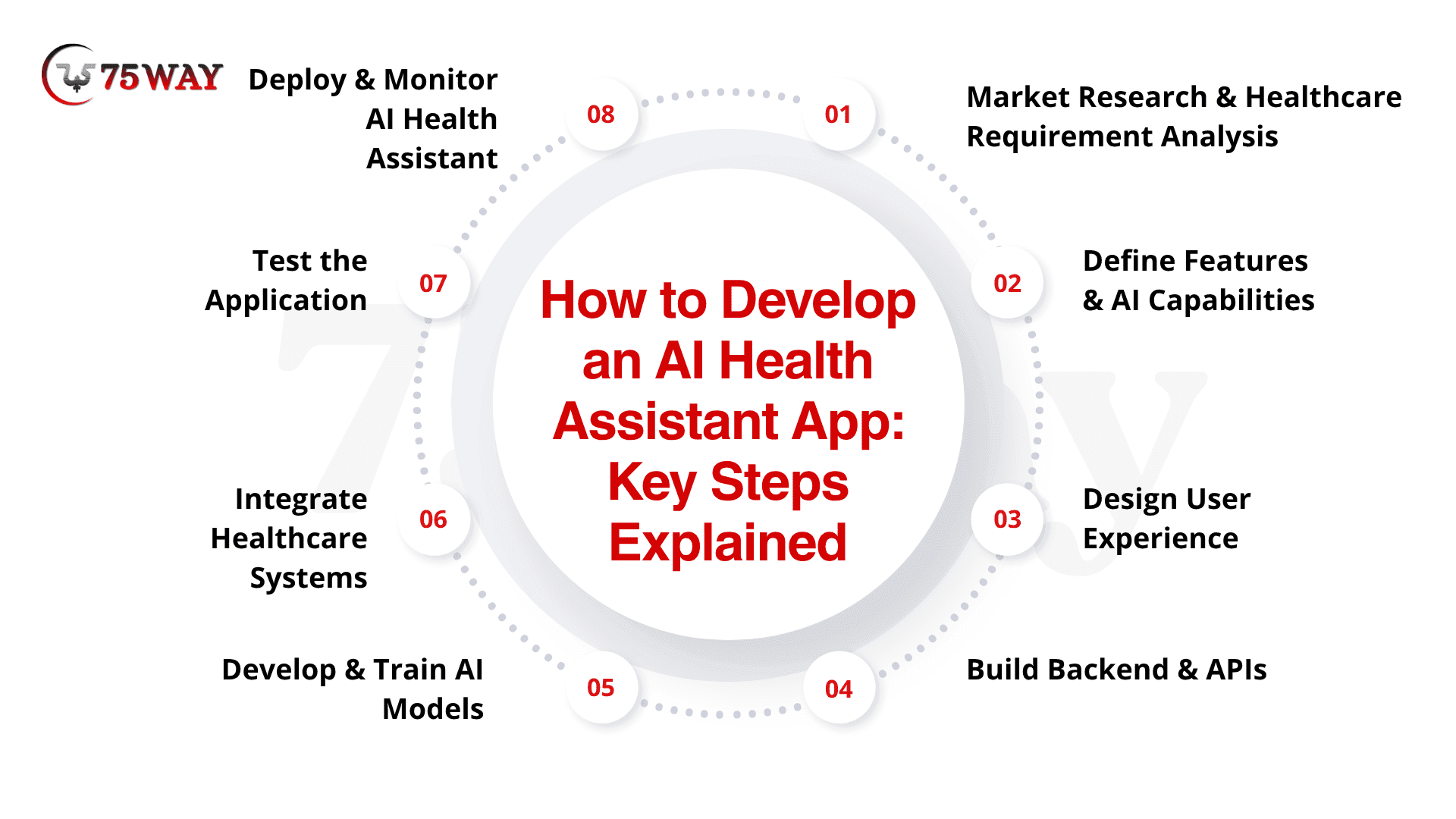
Step 1: Validate The Healthcare Problem Before Writing A Single Line of Code
Instead of jumping directly into development, successful healthcare products begin with extensive market validation. Ask yourself:
- Who will actually use this application?
- Is it designed for hospitals, private clinics, insurance providers, elderly patients, mental healthcare organizations, or consumers looking for preventive healthcare?
Study existing products like Ada Health, Babylon, HealthTap, and other AI-powered healthcare platforms to understand where market gaps still exist.
Conduct interviews with physicians, nurses, healthcare administrators, and potential patients. Their feedback often reveals problems that market reports cannot.
During this phase, your team should also identify applicable regulations such as HIPAA, determine data collection requirements, define measurable business objectives, and prepare a detailed Product Requirements Document (PRD).
Investing more time here dramatically reduces costly feature changes later in development.
What must you consider?
- Market research
- User personas
- Competitor analysis
- Feature roadmap
- Compliance checklist
- Product Requirements Document
Step 2: Define Features And Select The Right AI Technologies
With the product vision finalized, the next step is deciding what your AI health assistant app should actually do. This stage is about balancing user expectations, business goals, and technical feasibility.
A number of growing businesses fall into the trap of adding every trending AI feature out there. In reality, a focused application with well-executed capabilities delivers much more value than a feature-heavy product that confuses users.
Start with essentials like symptom checker, conversational health assistant, medication reminders, appointment booking, health tracking, telemedicine assistance, personalized wellness tips, etc.
Once these features are finalized, select the AI technologies that best support them.
- For conversational experiences, Large Language Models (LLMs) can power natural interactions, while machine learning models handle health predictions and anomaly detection.
- Retrieval-Augmented Generation (RAG) is becoming increasingly important because it allows AI to retrieve answers from verified medical resources instead of relying only on model training.
This significantly improves reliability while reducing inaccurate responses.
During this phase, define user journeys, AI workflows, prompt strategies, fallback mechanisms, multilingual support, and human escalation rules. Every AI response should have clear boundaries, especially when medical guidance is involved.
Step 3: Design An Intuitive And Accessible User Experience
Healthcare applications are used by people of different ages, medical conditions, and levels of digital literacy. A beautifully designed interface is of little use if it is difficult for patients to navigate in stressful situations. Therefore, the user experience should be simple rather than complex.
Begin with patient journeys for routine activities such as checking symptoms, booking appointments, reviewing medical reports, or getting medication reminders. Each screen should reduce unnecessary actions and put important information front and center.
Large typography, simple navigation, readable color contrast, and voice interaction support can dramatically improve accessibility.
Healthcare professionals also require a streamlined dashboard for reviewing patient histories, monitoring alerts, and accessing AI-generated insights without disrupting their workflow.
Prototype every user journey before development begins. Testing clickable wireframes with real users often uncovers usability issues long before coding starts, saving both time and development costs.
Common Mistake: Designing healthcare apps like social media platforms. Healthcare users want clarity, speed, and confidence, not visual complexity.
Step 4: Build A Secure Backend And Cloud Infrastructure
Once the application design is approved, development shifts toward building the backend. The foundation is responsible for security, scalability, and performance.
Although users never see this layer, it determines how reliably the application operates. You must develop authentication systems, user management, secure databases, notification services, appointment management, AI orchestration, and cloud storage.
The backend should also expose APIs that connect the mobile application with AI models, wearable devices, electronic health records, pharmacy systems, laboratory platforms, and payment gateways.
Since healthcare applications process Protected Health Information (PHI), encryption should be implemented for data both in transit and at rest.
Role-based access control, audit logging, secure backups, and disaster recovery planning should be incorporated from the beginning instead of being treated as future enhancements.
Cloud platforms such as AWS, Microsoft Azure, or Google Cloud provide scalable infrastructure capable of handling growing patient volumes without affecting performance.
Step 5: Develop, Train, And Validate AI Models
Artificial intelligence becomes the brain of the application, but only if trained responsibly. Successful healthcare solutions are not based solely on publicly available datasets but rather on validated medical information, domain expertise, and continuous assessment to improve the quality of the response.
Developers train machine learning models to predict, personalize recommendation engines, and fine-tune language models for medical conversations. They can implement RAG pipelines connected to trusted clinical knowledge bases, depending on the app’s purpose.
Before deployment, AI models should undergo rigorous validation to measure accuracy, bias, consistency, and safety.
Responses involving symptoms or treatment recommendations should always include confidence thresholds and escalation rules directing users toward qualified healthcare professionals whenever appropriate.
AI development doesn't end after launch. Continuous learning based on anonymized user interactions, updated clinical guidelines, and model evaluations helps maintain long-term performance.
Step 6: Connect Third-Party Healthcare Systems
The significance of an AI health assistant is much greater when it is integrated into the larger healthcare ecosystem, rather than being a stand-alone application.
Integrate wearable devices for continuous health tracking, Electronic Health Records (EHRs) for medical history access, telemedicine platforms for virtual consultations, pharmacy systems for prescription management, laboratory services for diagnostic reports, insurance providers for claims processing, and payment gateways for secure billing.
Standardized healthcare protocols like FHIR and HL7 enable communication between different systems and increase interoperability. Reliability of each integration requires secure authentication, encrypted data transmission, and detailed error handling.
The goal is simple: create a seamless experience where patients and healthcare providers can access everything they need without switching between multiple platforms.
Step 7: Perform Comprehensive Testing & Compliance Validation
Medical apps need much more testing than typical consumer apps, as even minor issues can affect patient trust and clinical workflow.
Testing should cover functionality, usability, performance, security, compatibility, accessibility, API integrations, and AI response validation and compliance verification. Every part, from screening symptoms to booking appointments, has to work reliably in real-world situations.
Moreover, AI-generated responses should be treated differently. Validate outputs with trusted medical references. Test corner cases. Be alert to hallucinations or misleading recommendations.
Security testing should also verify encryption, authentication, data protection, and regulatory compliance before release. Comprehensive quality assurance reduces deployment risks while increasing confidence among healthcare organizations and end users.
Step 8: Launch, Monitor, And Continuously Improve The Application
Getting the application up and running is the beginning of the journey in the real world, not the end of development. Once in production, continuous monitoring of performance, security, and user satisfaction is critical.
You must track real-time analytics on system performance, application crashes, API response times, AI accuracy, patient engagement, and feature adoption. Then, gather user feedback regularly to pinpoint pain points, streamline workflows, and introduce meaningful updates based on real usage rather than assumptions.
Healthcare regulations, clinical guidelines and AI technologies are constantly evolving throughout the year. Continuous security updates, model retraining, compliance checks, and feature enhancements make sure the application is reliable, competitive, and in sync with changing healthcare needs.
Organizations that view their AI health assistant app as a continuously evolving healthcare platform rather than a one-off software project are much more likely to see long-term adoption and business success.
Read Too: Healthcare Mobile App Development: Strategy and Best Practices
Smart Features Powering AI Health Assistant App Development in 2026
Today's healthcare users expect more than appointment booking or medical record access. That's exactly where AI changes the experience. Instead of acting as another healthcare application, an AI health assistant becomes an intelligent companion that learns from user interactions, health records, and real-time data to deliver meaningful assistance. So, which capabilities actually make these applications valuable in 2026? Let's explore the features businesses should prioritize.
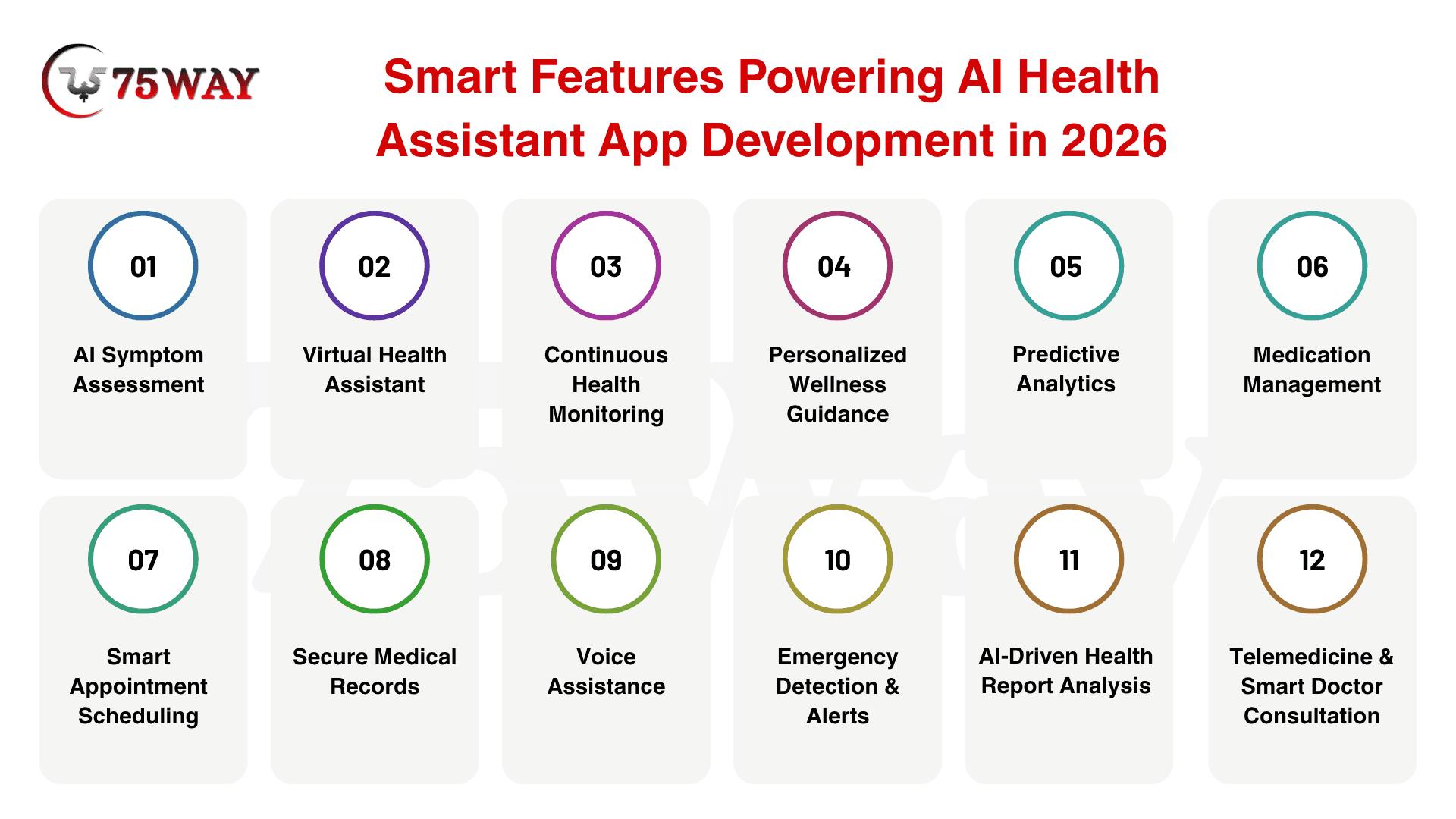
- AI Symptom Assessment
Imagine someone experiencing chest pain at midnight. Searching online can be confusing or alarming, and waiting until the morning isn’t always the safest option. An AI symptom assessment tool bridges this gap by asking further questions that take into account age, medical history, current medications, and pre-existing conditions to identify possible causes.
It does not diagnose but assesses urgency, prescribes appropriate measures, and redirects users to professional care when needed. It’s a much more reassuring experience than a traditional symptom checker and helps healthcare providers get patients with richer preliminary information.
- A Virtual Health Assistant
Nobody wants to navigate complicated menus when they're worried about their health. A conversational AI assistant allows users to ask questions naturally, just as they would speak to a nurse or healthcare representative.
The assistant provides instant answers in plain language, whether someone wants to understand lab results, clarify prescription instructions, find nearby specialists, or get daily wellness guidance. And over time it learns about prior conversations, personal preferences and repeated health issues, so every interaction is more relevant, and it’s not starting from square one every time.
- Continuous Health Monitoring
Traditional healthcare often relies on scheduled appointments, but many health conditions develop gradually between those visits. That's why continuous monitoring has become one of the most valuable capabilities in modern healthcare applications.
The app collects real-time health data from the course of the day by connecting to smartwatches, fitness trackers, glucose monitors, blood pressure machines, and other wearables. It can alert users and healthcare providers if irregular heart rhythms, dropping oxygen levels, or abnormal sleep patterns are detected before minor issues become major medical problems.
- Personalized Wellness Guidance
Every patient’s lifestyle, medical history and healthcare goals are unique. Generic advice seldom leads to lasting results. An AI health assistant analyzes each individual’s habits, diet, exercise, previous diagnoses, medications, and biometric data to provide personalized recommendations for each individual.
Those recommendations automatically change as new health information comes in. This leads to a digital companion that helps with healthier decisions day to day and not static advice that quickly becomes out of date.
- Predictive Analytics
One of the biggest strengths of AI is its potential to recognize patterns that humans may miss. Predictive analytics, however, does not react when symptoms become severe, but instead predicts future health risks by analyzing historical records, wearable data, behavioural trends and laboratory reports.
For healthcare organizations, this enables earlier intervention strategies. For patients, it means receiving reminders, preventive suggestions, or medical evaluations before conditions progress further. Prevention has always been less expensive than treatment, and AI makes that approach more practical.
- Medication Management
Not all missing medication is intentional. A lot of patients, especially those with chronic conditions, struggle to keep up with their treatment plans because of busy schedules, complicated prescriptions, and frequent changes in dosage.
The whole process can be made easier with an AI medication management system that sends smart reminders, keeps track of what doses are taken, alerts users to prescription refills, and can even detect potentially dangerous interactions between medications. Instead of just an alarm, it becomes an active partner in helping you achieve long-term treatment success.
- Smart Appointment Scheduling
Healthcare appointments should not be long phone calls or complex scheduling systems to book. Today, AI assistants make this process much easier by automatically checking on the doctor’s availability, suggesting a good time for the appointment, managing cancellations, sending reminders, and scheduling follow-up visits.
Some prioritize urgent cases depending on the symptoms reported. Patients will spend less time managing appointments, and healthcare providers will be able to reduce administrative workload and improve overall scheduling efficiency.
- Secure Medical Records
Healthcare applications manage some of the most sensitive personal information. That’s why security can’t be an afterthought. AI health assistant apps keep medical histories, prescriptions, laboratory reports, imaging results, and consultation notes in encrypted cloud environments protected by multiple authentication layers.
This gives authorized users secure access to their records whenever they need them and helps healthcare organizations stay compliant with regulations like HIPAA. Confidence is born from strong security, and without confidence, even the most advanced healthcare application will have a hard time gaining user adoption.
- Voice Assistance
Not every user is comfortable with typing detailed health information, especially elderly patients or those with physical disabilities. Voice AI assistants have made healthcare far more accessible. With a few words, users can describe symptoms, ask for medication reminders, book appointments, or get health updates.
This creates a more inclusive experience while making everyday healthcare interactions faster, easier, and far less frustrating.
- Emergency Detection & Alerts
Some situations simply cannot wait. Modern AI health assistant apps can recognize warning signs from wearable devices, location data, or user interactions that may indicate a medical emergency.
When predefined thresholds are exceeded, the application can automatically notify emergency contacts, share the user's live location, and alert healthcare providers within seconds. This rapid response capability adds another layer of protection, especially for elderly individuals, patients with chronic illnesses, and people living alone.
- AI-Driven Health Report Analysis
Medical reports often contain technical terminology that many patients struggle to understand. An AI-powered report analysis feature simplifies blood test results, imaging reports, and diagnostic findings into easy-to-understand explanations without replacing professional medical advice.
It highlights abnormal values, explains why they matter, compares results with previous reports, and suggests relevant follow-up actions. This helps users become more informed before consulting their doctor, while making complex medical information far less overwhelming.
- Telemedicine And Smart Doctor Consultation
Healthcare becomes far more convenient when users can connect with medical professionals without leaving home. An integrated telemedicine feature allows patients to book virtual consultations, share medical records securely, upload reports, and communicate with doctors through video, voice, or chat.
Before the appointment begins, the AI assistant organizes symptoms, recent health data, and previous conversations into a structured summary. Doctors spend less time collecting background information and more time providing meaningful medical guidance, creating a smoother experience for everyone involved.
Quick Read:How AI in Healthcare Reduces Costs & Boosts Hospital ROI in 2026?
Key Benefits: Why Are Businesses Building AI Health Assistants?
Healthcare is becoming more connected, personalized, and data-driven than ever before. Thus, AI health assistant mobile development becomes a strategic investment for healthcare providers, startups, insurance companies, and wellness brands. Let's look at the biggest business and healthcare benefits driving their adoption in 2026.
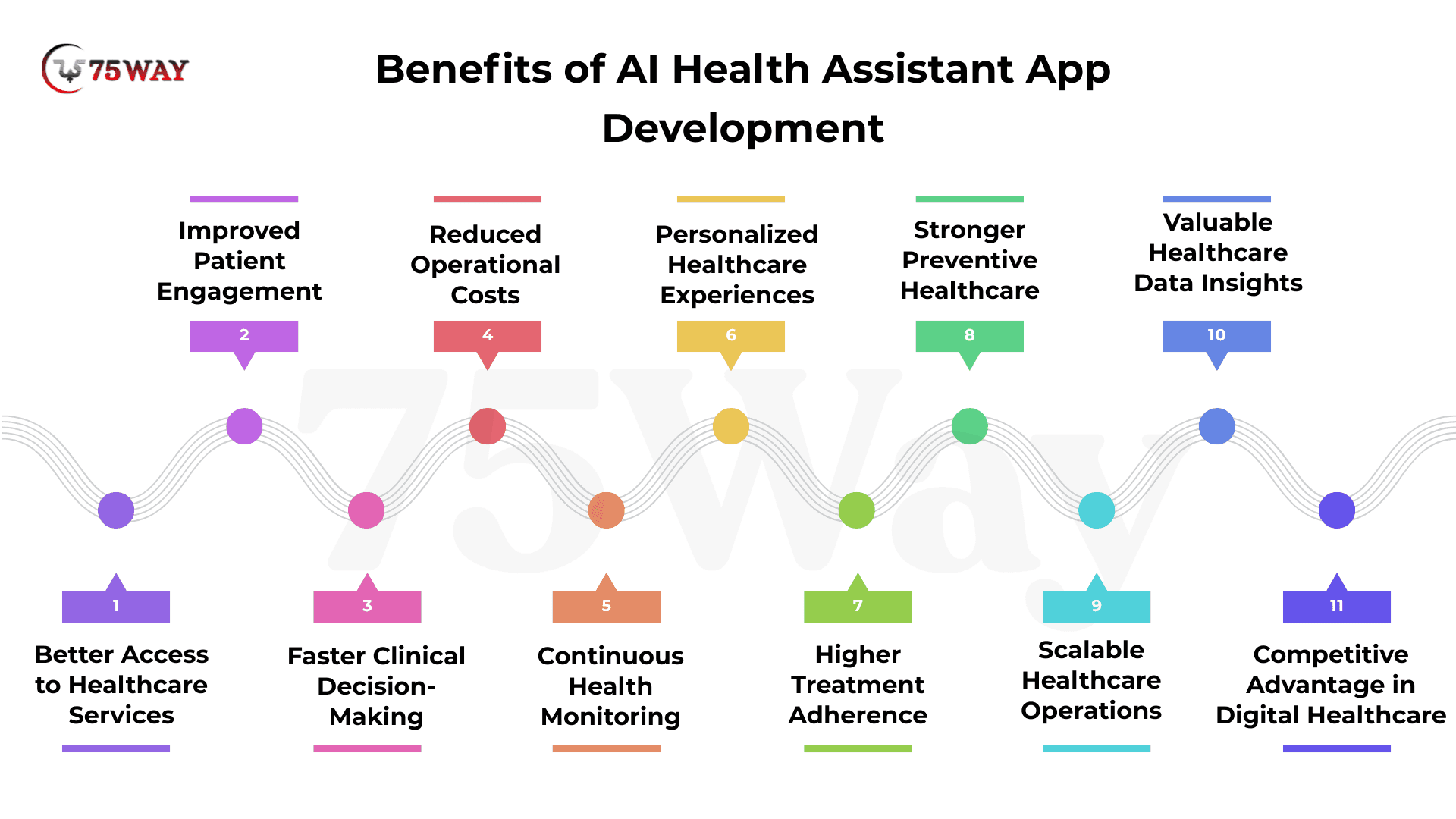
- Better Access To Healthcare Services
One of the biggest advantages of AI health assistant apps is 24/7 healthcare accessibility. Users can receive symptom guidance, wellness recommendations, medication support, and general health information anytime without waiting for clinic hours. This is especially valuable for people living in remote areas or those with limited access to healthcare professionals.
- Improved Patient Engagement
Patients are far more likely to stay committed to their treatment plans when healthcare becomes interactive. AI assistants send personalized reminders, wellness tips, health goals, and follow-up notifications that encourage users to take an active role in managing their health instead of only seeking care during emergencies.
- Faster Clinical Decision-Making
Healthcare professionals deal with enormous amounts of patient information every day. AI organizes medical records, analyzes symptoms, identifies potential risks, and presents meaningful insights in seconds. Doctors still make the final decisions, but having structured information readily available helps reduce delays and supports faster clinical evaluations.
- Reduced Operational Costs
Administrative tasks such as appointment scheduling, patient inquiries, prescription reminders, and follow-up communications consume valuable staff time. AI in healthcare automates many of these repetitive activities, allowing healthcare organizations to reduce operational expenses while enabling medical teams to spend more time delivering quality patient care.
- Continuous Health Monitoring
Unlike traditional healthcare, which depends on occasional appointments, AI health assistant apps monitor health continuously through connected wearable devices and smart sensors. Real-time tracking allows unusual changes in vital signs or health patterns to be identified early, giving users and healthcare providers an opportunity to respond before conditions worsen.
- Personalized Healthcare Experiences
Every patient's health journey is different. AI analyzes lifestyle habits, previous medical history, medications, fitness activities, and ongoing treatments to deliver recommendations tailored to individual needs. This personalized approach improves patient satisfaction while supporting better long-term health outcomes compared to generic healthcare advice.
- Higher Treatment Adherence
Many patients miss medications, forget follow-up appointments, or discontinue treatment plans prematurely. AI health assistant apps reduce these challenges through intelligent reminders, refill notifications, progress tracking, and motivational support. Better treatment adherence often leads to improved recovery rates and reduced hospital readmissions.
- Stronger Preventive Healthcare
Rather than waiting until symptoms become severe, AI encourages preventive care by identifying health risks earlier through predictive analytics and continuous monitoring. Users receive timely recommendations for lifestyle improvements, screenings, or medical consultations, helping prevent minor concerns from developing into serious health conditions.
- Scalable Healthcare Operations
As patient numbers continue growing, healthcare organizations need solutions that can expand without significantly increasing staffing requirements. AI-powered applications handle thousands of simultaneous user interactions, automate routine processes, and support large patient populations while maintaining consistent service quality across healthcare networks.
- Valuable Healthcare Data Insights
Every interaction within an AI Health Assistant App generates useful healthcare data. By analyzing patient behavior, treatment outcomes, symptom trends, and engagement patterns, healthcare organizations can make better business decisions, improve medical services, optimize resource allocation, and develop more effective patient care strategies.
- Competitive Advantage In Digital Healthcare
Healthcare organizations that adopt AI-driven solutions today are positioning themselves for long-term growth. Intelligent healthcare applications improve patient experiences, strengthen brand credibility, support innovation, and attract digitally connected users who increasingly expect convenient, personalized, and technology-driven healthcare services. Early adoption also creates opportunities to stay ahead in an increasingly competitive healthcare market.
Know More:Use Cases of AI in Healthcare: 25 Practical Applications in Modern Healthcare
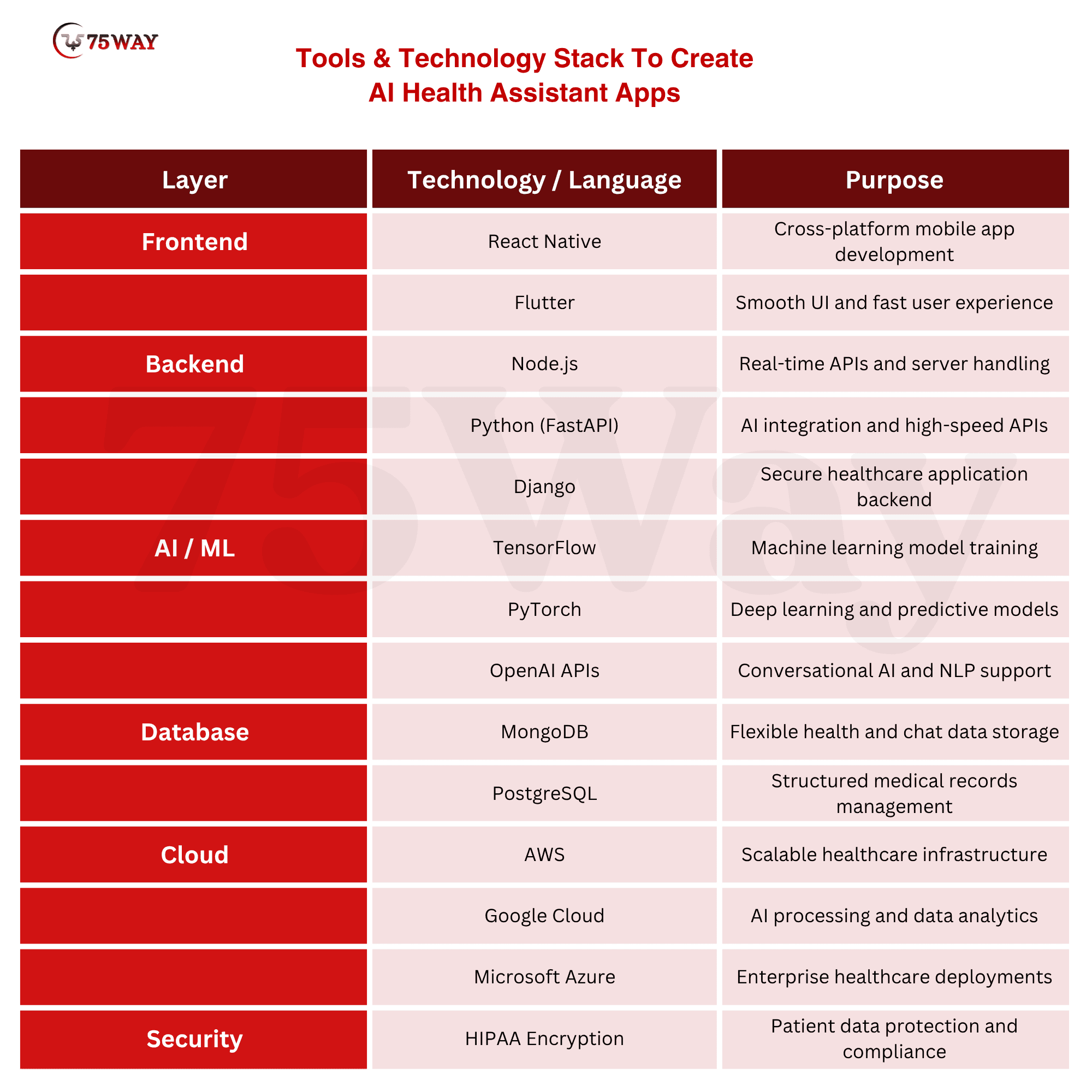
Recommended Tools & Technology Stack To Create AI Health Assistant Apps
The technology stack behind AI Health Assistant Apps is carefully selected to balance performance, scalability, and strict healthcare security requirements. On the frontend, React Native and Flutter are used to build smooth, cross-platform mobile applications that work seamlessly on both iOS and Android devices, ensuring patients and doctors get a consistent experience without device limitations.
On the backend, Node.js is used for handling real-time requests, APIs, notifications, and chat-based interactions, while Python frameworks like FastAPI and Django manage complex healthcare logic, AI workflows, data processing, and secure system operations. This combination helps maintain both speed and reliability in medical-grade applications.
For the AI and machine learning layer, TensorFlow and PyTorch are used to train predictive models that analyze symptoms, detect patterns, and support decision-making, while OpenAI APIs power conversational AI features such as chat-based health assistants, symptom conversations, and intelligent responses. Together, they create a more human-like and responsive healthcare experience.
When it comes to data storage, MongoDB is used for flexible, unstructured data like chat history and wearable inputs, whereas PostgreSQL manages structured data such as patient records, prescriptions, and appointment details, ensuring both flexibility and accuracy in medical data handling.
For deployment and scalability, AWS, Google Cloud, and Microsoft Azure are used to host applications, store sensitive health data securely, run AI models at scale, and support global access with high availability.
Finally, HIPAA-compliant encryption frameworks are implemented to protect sensitive patient information through end-to-end encryption, secure authentication, and strict access control systems, ensuring complete data privacy and regulatory compliance across the entire platform.
AI Health Assistant App Development Cost 2026 Breakdown
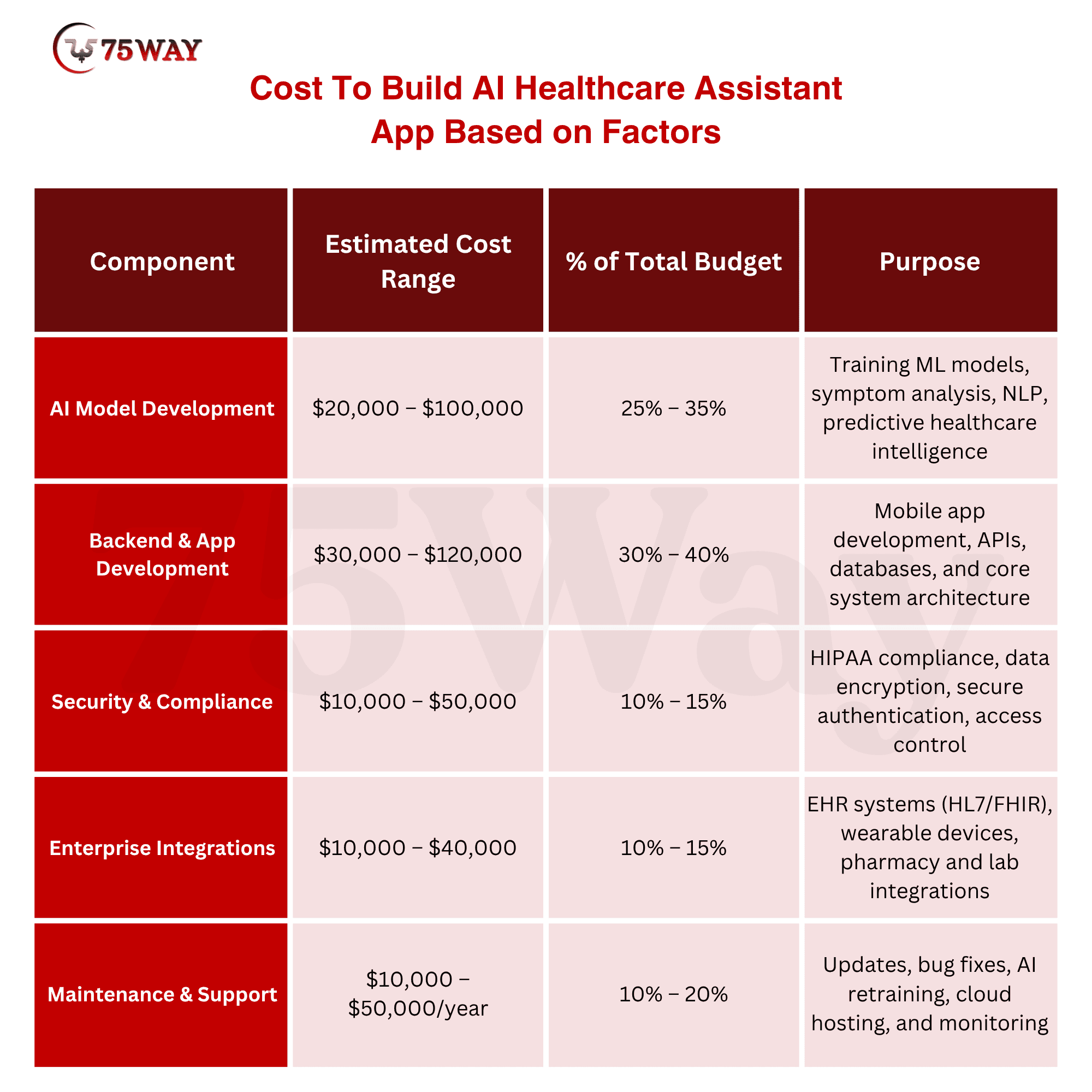
The development cost varies depending on complexity, features, and compliance requirements. The average cost to build an AI-powered health assistant ranges between $ 40,000 and $ 400,000+, based on different factors.
- MVP AI Health Assistant App Cost: $40,000 – $80,000. Basic AI health assistant with symptom checker, chat support, and limited features
Timeline: 3 – 5 months
- Mid-Level AI Health App Cost: $80,000 – $200,000+. Advanced features like predictive analytics, wearable integration, and telemedicine support.
Timeline: 5 – 9 months
- Enterprise AI Health Platform Cost: $200,000 – $400,000+. Full-scale solution with hospital integrations, advanced AI models, and compliance systems.
Timeline: 9 – 15 months
Read Too: How Much Does Healthcare App Development Cost in 2026?
Cost To Build AI Healthcare Assistant App Based on Factors
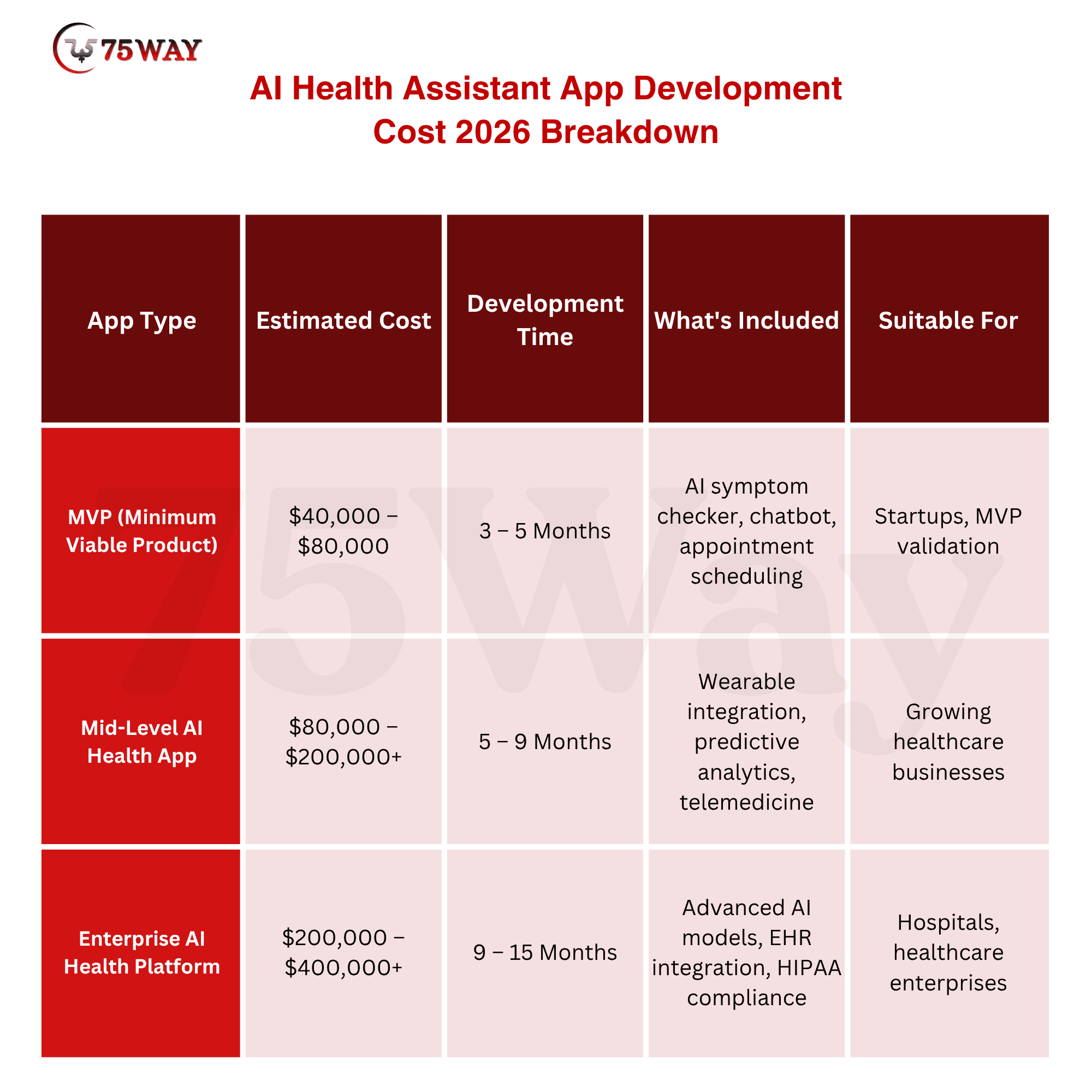
The overall development cost of an AI Health Assistant App is influenced by multiple interconnected factors that go beyond basic coding. From training advanced AI models and ensuring HIPAA-compliant security systems to integrating third-party healthcare APIs and building scalable cloud infrastructure, each element adds both complexity and value.
- AI Model Development: $20,000 – $100,000
- Backend & App Development: $30,000 – $120,000
- Security & Compliance: $10,000 – $50,000
- Enterprise Integrations: $10,000 – $40,000
- Maintenance & Support: $10,000 – $50,000/year
Challenges In AI Health Assistant Development & How To Address Them
AI health assistant apps are powerful, but building them is not as straightforward as it may look from the outside. Thus, developers and healthcare companies often face multiple technical, legal, and user-related challenges during development. Let’s break down the key challenges along with practical solutions used in real-world healthcare AI systems.
1. Medical Data Privacy And Compliance Requirements
One of the biggest challenges is handling sensitive patient data in compliance with strict regulations like HIPAA in the United States and GDPR in Europe. Healthcare apps deal with personal health records, prescriptions, and diagnostic information, which must be fully protected from unauthorized access or breaches.
Solution: To overcome this, AI assistant developers implement end-to-end encryption, role-based access control, secure cloud infrastructure, and continuous audit logging. Regular compliance audits and adherence to healthcare data standards ensure that the application remains legally safe and trustworthy.
2. AI Model Accuracy In Complex Medical Cases
AI systems can perform well with common symptoms, but accuracy often drops in rare or complex medical conditions. Misinterpretation or hallucination in medical responses can lead to serious risks if not handled properly.
Solution: The best approach is combining machine learning models with Retrieval-Augmented Generation (RAG) systems that pull information from verified medical databases. Additionally, AI outputs are designed to support, not replace, medical professionals, with built-in escalation to doctors for high-risk cases.
3. Integration With Legacy Hospital Systems
Many hospitals still use outdated electronic health record (EHR) systems that are not easily compatible with modern applications. This creates major integration challenges for real-time data exchange.
Solution: Using standardized healthcare APIs like HL7 and FHIR helps bridge the gap between old and new systems. Middleware solutions and API gateways are also used to ensure smooth data synchronization without disrupting existing hospital workflows.
4. High Development & Maintenance Costs
AI Health Assistant Apps require significant investment due to AI model training, cloud infrastructure, security compliance, and continuous updates. Costs often increase as the system scales and more features are added.
Solution: A phased development approach helps control expenses. Starting with an MVP, validating user demand, and then gradually adding advanced features reduces financial risk. Cloud-based infrastructure also helps optimize costs through pay-as-you-go models.
5. User Trust And Adoption Barriers
Even the most advanced AI healthcare system can fail if users do not trust it. Patients may hesitate to rely on AI-generated health suggestions, especially for serious conditions.
Solution: Building trust requires transparency in AI responses, clear disclaimers, human-in-the-loop systems, and easy access to real healthcare professionals. Consistent performance, accurate recommendations, and strong security messaging also play a key role in improving user confidence over time.
Future Trends of AI Health Assistant Apps In 2026 And Beyond
In 2026 and beyond, AI health assistant apps won’t just answer health questions or track symptoms. They’ll quietly sit in the background, learning from patterns, understanding lifestyle changes, and helping people stay ahead of health problems instead of reacting to them too late.
- Health Predictions Before Symptoms Appear: Instead of waiting for someone to feel unwell, future AI systems will pick up early warning signs from long-term health data, habits, and even small changes in daily activity. It’s less about reacting and more about quietly preventing issues before they grow.
- Always-Connected Wearable Health Tracking: Wearables are going to become constant health companions. Smartwatches, fitness bands, and medical IoT devices will keep feeding real-time data into AI systems, so health tracking never really “stops,” even when the user isn’t actively checking anything.
- AI That Feels More Natural To Talk To: The conversation between users and AI is also going to feel much smoother. Instead of robotic responses, assistants will understand context better, remember past interactions, and respond in a way that feels more like a real health advisor than software.
- Telemedicine That Feels Faster And Smarter: Virtual consultations will become more efficient because AI will handle a lot of the background work, organizing symptoms, summarizing patient history, and helping doctors get straight to the point instead of starting from zero every time.
- Stronger Trust Through Better Data Protection: As everything becomes more connected, trust will matter even more. Future systems will rely heavily on stronger security layers, better encryption, and tighter compliance so users feel confident that their personal health data is fully protected.
How 75way Offers Successful AI Health Assistant App Development?
An AI health assistant app requires more than technical expertise. It demands a deep understanding of healthcare workflows, data security, regulatory compliance, and user experience. 75way Technologies brings all of these capabilities together to deliver reliable, scalable, and AI-powered healthcare solutions tailored to your business objectives.
Our team works closely with startups, healthcare providers, and enterprises to transform ideas into market-ready applications using modern technologies, secure architectures, and industry best practices. From strategy and UI/UX design to AI implementation, third-party integrations, testing, deployment, and ongoing support, we provide end-to-end app development services that help you launch and scale with ease.
Final Thoughts
To summarize, this guide covered every essential aspect of AI health assistant app development, including its core features, application types, development process, technology stack, estimated development cost, common challenges, and future industry trends. Whether you're a healthcare startup, hospital, or enterprise planning to invest in AI, understanding these areas helps you make informed decisions, minimize development risks, and build a solution that delivers long-term value for both your business and your users.
To build an AI-powered healthcare assistant, partner with a trusted healthcare mobile app development company to turn your healthcare vision into a secure, scalable, and AI-powered application. From product strategy to AI integration, compliance, and deployment, our team delivers end-to-end development services tailored to your business goals. Let's build an intelligent healthcare solution that drives innovation and measurable growth.
Frequently Asked Questions (FAQs)
What Is An AI Health Assistant App Used For?
AI Health Assistant Apps are used to provide digital healthcare support through symptom analysis, health tracking, and personalized medical guidance. They assist patients in managing health conditions while enabling doctors to access structured patient data for better decision-making in real-time healthcare environments.
How Does AI Improve Healthcare Applications?
AI improves healthcare applications by analyzing large medical datasets, identifying patterns, and offering predictive insights. These capabilities help in early diagnosis, treatment recommendations, and patient monitoring. AI also reduces manual workload for healthcare providers and enhances overall accuracy in medical decision processes.
Is AI Health App Development Secure For Patient Data?
Yes, AI health applications can be highly secure when built with proper encryption, authentication layers, and compliance frameworks such as HIPAA. Secure cloud infrastructure and data governance policies protect sensitive patient information from unauthorized access or breaches in digital healthcare systems.
Can AI Health Apps Replace Doctors?
AI health apps cannot replace doctors but act as supportive tools. They assist in data analysis, early detection, and patient monitoring while final diagnosis and treatment decisions remain with licensed medical professionals. These apps enhance, not replace, human medical expertise.
What Industries Use AI Health Assistant Apps?
AI health assistant apps are used in hospitals, telemedicine platforms, insurance companies, fitness organizations, and elderly care services. These industries use AI-driven healthcare systems to improve patient engagement, reduce costs, and enable scalable medical service delivery across digital platforms.
What Makes AI Health Apps Different From Traditional Apps?
AI-powered health apps use machine learning and predictive analytics to deliver personalized healthcare insights, unlike traditional apps that only store or display static information. They continuously learn from user behavior and provide adaptive recommendations for improved health management outcomes.