Summary
AI agents can make outbound calls using natural language processing, speech recognition, and telephony APIs. This guide explains how AI voice agents work, their business use cases, compliance requirements, market growth data, and ROI impact for startups and business owners.
Key Takeaways
- AI agents for outbound calls automate dialing, conversations, qualification, and follow-ups.
- The AI agents market is projected to grow beyond $180 billion by 2033.
- AI-powered outbound calling reduces operational costs while scaling sales outreach.
- Automated CRM logging improves sales pipeline visibility and decision accuracy.
- Compliance-driven deployment ensures lawful, scalable, reputation-safe outbound automation.
Yes, AI agents can make outbound calls. Modern AI voice systems use speech recognition, natural language processing (NLP), and text-to-speech technology to dial contacts, hold conversations, qualify leads, log responses, and trigger follow-ups automatically.
Outbound calling has traditionally required large teams, high operational costs, and manual CRM updates. AI agents now automate sales and outreach processes while maintaining conversation flow, compliance checks, and real-time data capture.
For startups and growing businesses, AI voice agent development solutions shift outbound sales from labor-intensive to scalable and data-driven. This guide highlights how AI outbound calling works, its step-by-step workflow, real-world use cases, compliance considerations, and measurable business impact.
What Are AI Agents?
AI agents are autonomous software systems that perceive input, process information, make decisions, and execute tasks without continuous human control. In outbound calling, AI voice-enabled agents function as virtual voice representatives. They understand spoken responses, interpret intent, follow conversation logic, and respond naturally. Unlike traditional IVR systems, AI agents do not rely on rigid menu trees. Instead, they adapt to dynamic conversation patterns using machine learning models and contextual analysis.
Also Read: How to Build an AI-Driven Anonymous Messaging App?
How AI Agents Work in Outbound Calling?
AI agents make outbound calls by combining telephony infrastructure with speech intelligence and decision engines. When a call connects, speech-to-text converts the recipient’s voice into structured data. NLP interprets intent and sentiment. A response engine generates context-aware replies, which are delivered through natural-sounding text-to-speech systems powered by machine learning. Meanwhile, backend integrations update CRM records, classify outcomes, and trigger next actions. The entire cycle happens in milliseconds.
Discover More: How to Build AI Agents From Scratch? Step-By-Step Guide
Step-by-Step Workflow: How AI Agents Make Outbound Calls?
AI-enabled voice agents follow a structured operational workflow to ensure accurate communication, compliance adherence, and measurable outcomes. From preparing verified contact lists to updating CRM systems and escalating to human representatives, each stage offers consistency and performance tracking across outbound campaigns.
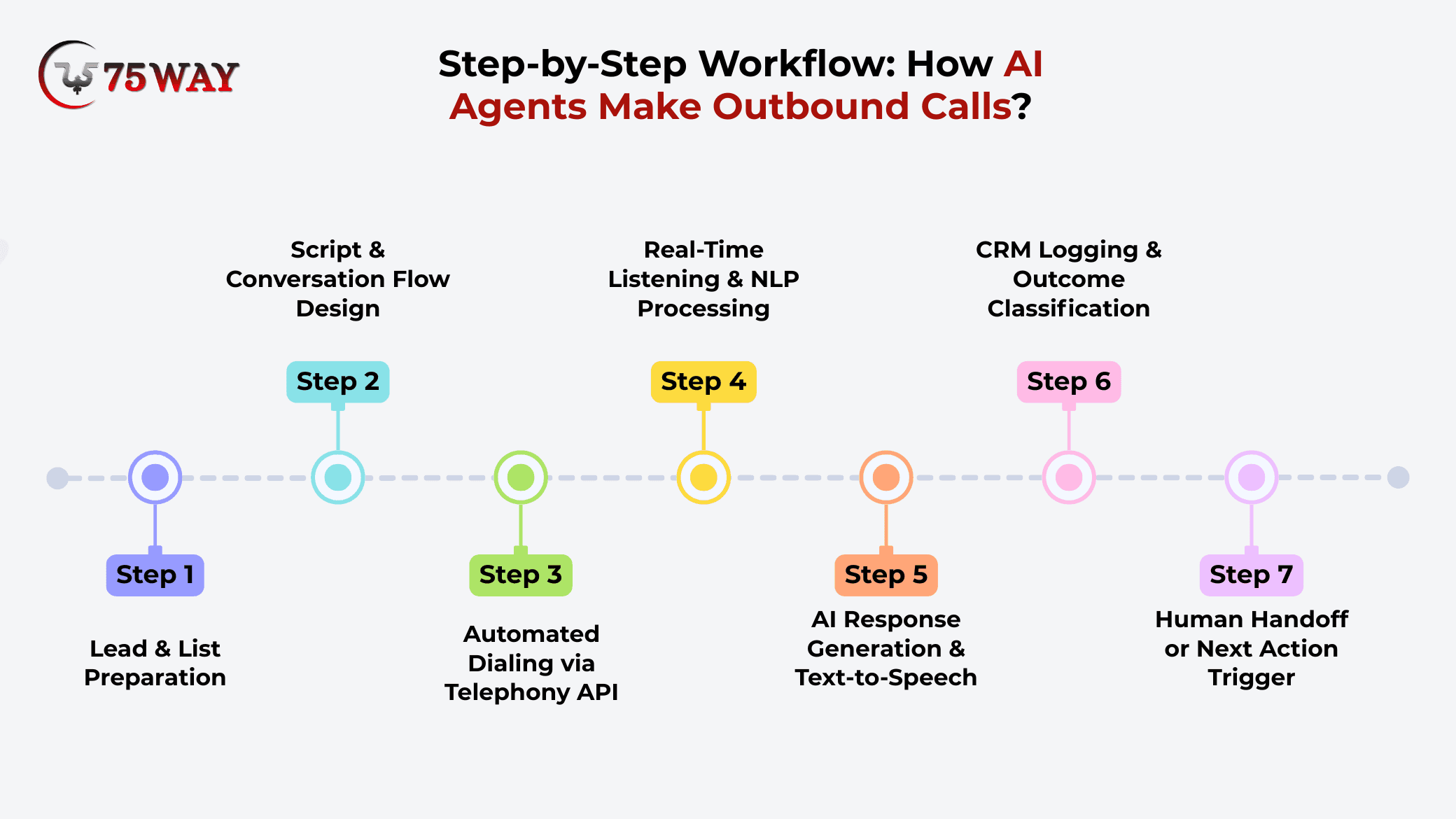
Lead & List Preparation: Every successful outbound campaign begins with structured data preparation. AI solutions import segmented contact databases, verify phone numbers, remove duplicates, and validate consent records against compliance requirements. Contacts are then categorized based on campaign objectives such as lead qualification, reminders, or renewals. This foundational step ensures higher connection rates, accurate targeting, and protection of brand credibility from the very start.
Script & Conversation Flow Design: Once the contact list is ready, the next step is to design the conversation flow. Conversation logic is structured using decision trees and intent-based branching. Greeting lines, qualification questions, objection-handling responses, and escalation triggers are carefully predefined. Conversational AI assistance enhances this structure with dynamic language modeling, enables adaptive and natural conversations, and maintains strategic messaging control.
Automated Dialing via Telephony API: With a strategy in place, the AI model of the voice agent integrates with cloud telephony providers to begin automated dialing. The system intelligently manages time-zone scheduling, detects voicemail, handles retry attempts, and records interaction metadata. This integration allows businesses to scale outreach efforts efficiently without increasing operational workload or manual dialing efforts.
Real-Time Listening & NLP Processing: When a recipient answers the call, real-time processing begins immediately. Speech recognition converts spoken words into text within seconds. Natural Language Processing evaluates context, identifies intent, and detects emotional tone. Based on this analysis, the AI voice agent determines the most relevant response path, ensuring the conversation remains aligned with campaign objectives.
AI Response Generation & Text-to-Speech: After interpreting the prospect’s input, the system generates a context-aware reply. Text-to-speech engines then convert the response into natural, human-like audio. Modern voice models provide realistic pacing and tone, helping maintain conversational continuity and reducing the perception of automation during interaction.
CRM Logging & Outcome Classification: Once the call concludes, the AI agent automatically documents the interaction. Transcripts are stored, outcomes are categorized (such as interested, not interested, or callback requested), and CRM pipelines are updated instantly. This seamless data synchronization eliminates manual entry errors and enhances performance tracking accuracy.
Human Handoff or Next Action Trigger: If the conversation requires deeper engagement or the prospect requests a representative, the AI voice-enabled agent transfers the call to a live agent without disruption. Alternatively, it can schedule follow-ups, trigger email sequences, or update internal task workflows. This final step ensures continuity, responsiveness, and no missed opportunities in the sales process.
Read More: AI Automation vs AI Agents: A Complete Guide
Why Businesses Adopt AI Voice Agents for Outbound Calls?
Businesses adopt AI agents because they reduce cost per call, improve speed-to-lead, and provide measurable performance insights. Automation enables thousands of structured conversations daily without increasing headcount. AI agents operate 24/7, maintain script consistency, log structured data, and scale outreach efficiently. For founders and sales leaders, this transforms outbound calling from an expense center into a predictable revenue engine.
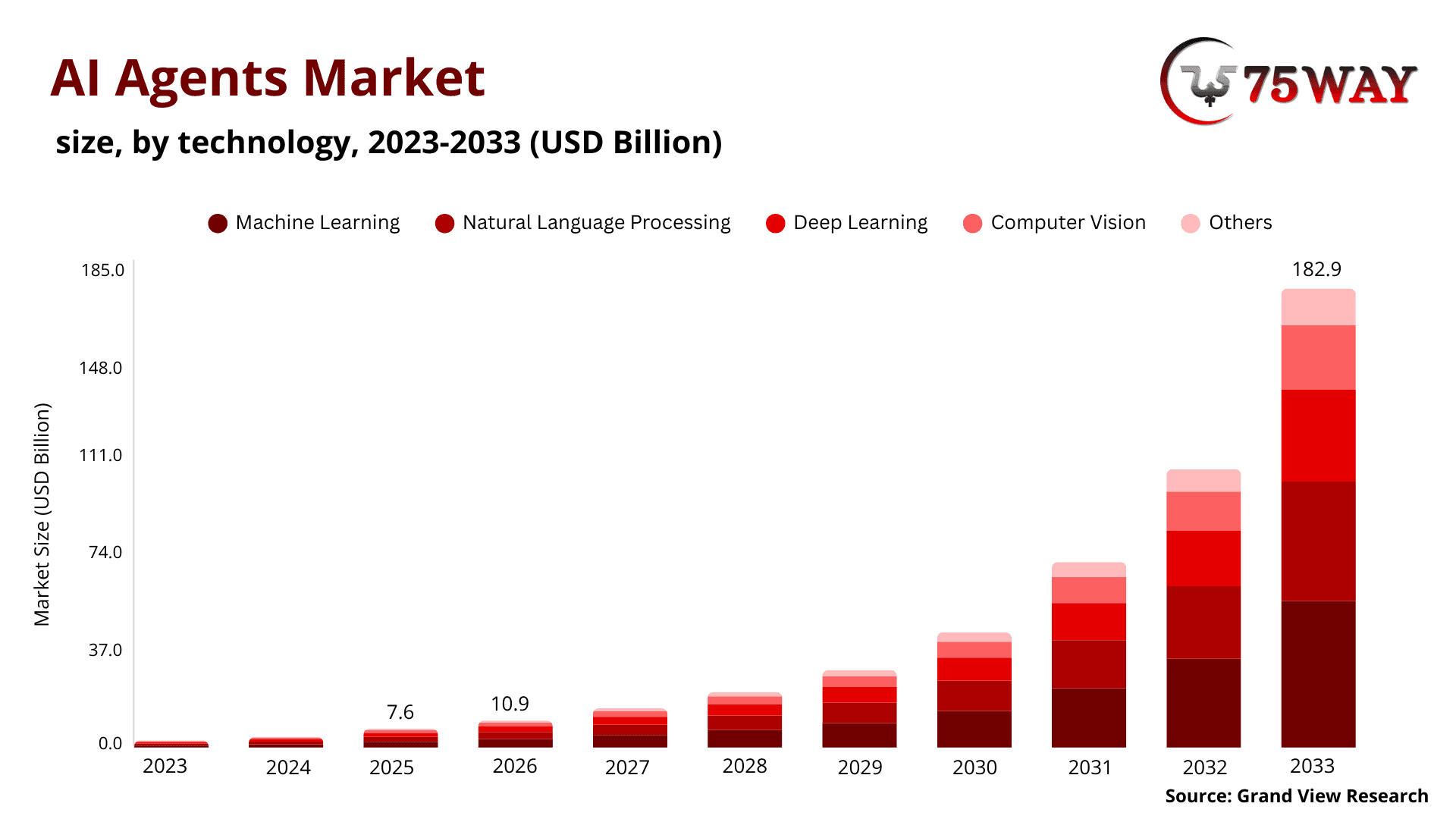
The global AI agents market was valued at USD 7.63 billion in 2025 and is expected to surge to USD 182.97 billion by 2033, expanding at a 49.6% CAGR from 2026 to 2033, as stated in Grand View Research.
According to MarketsandMarkets, the AI agents sector is forecast to grow from USD 7.84 billion in 2025 to USD 52.62 billion by 2030, at a 46.3% CAGR, driven by advancements in foundation models.
The AI agents market is projected to grow from $8 billion in 2025 to $48.3 billion by 2030, with a 43.3% compound annual growth rate, according to the BBC research report.
Know More: Top AI Trends Businesses Must Follow in 2026
Top 10 Business Use Cases of Conversational AI Agents in Sales Calling
AI agents are used across sales, customer success, and operations to automate repetitive outreach while maintaining engagement quality. These agentic AI-based systems enable businesses to increase efficiency, reduce overhead, and scale structured communication without sacrificing data accuracy.
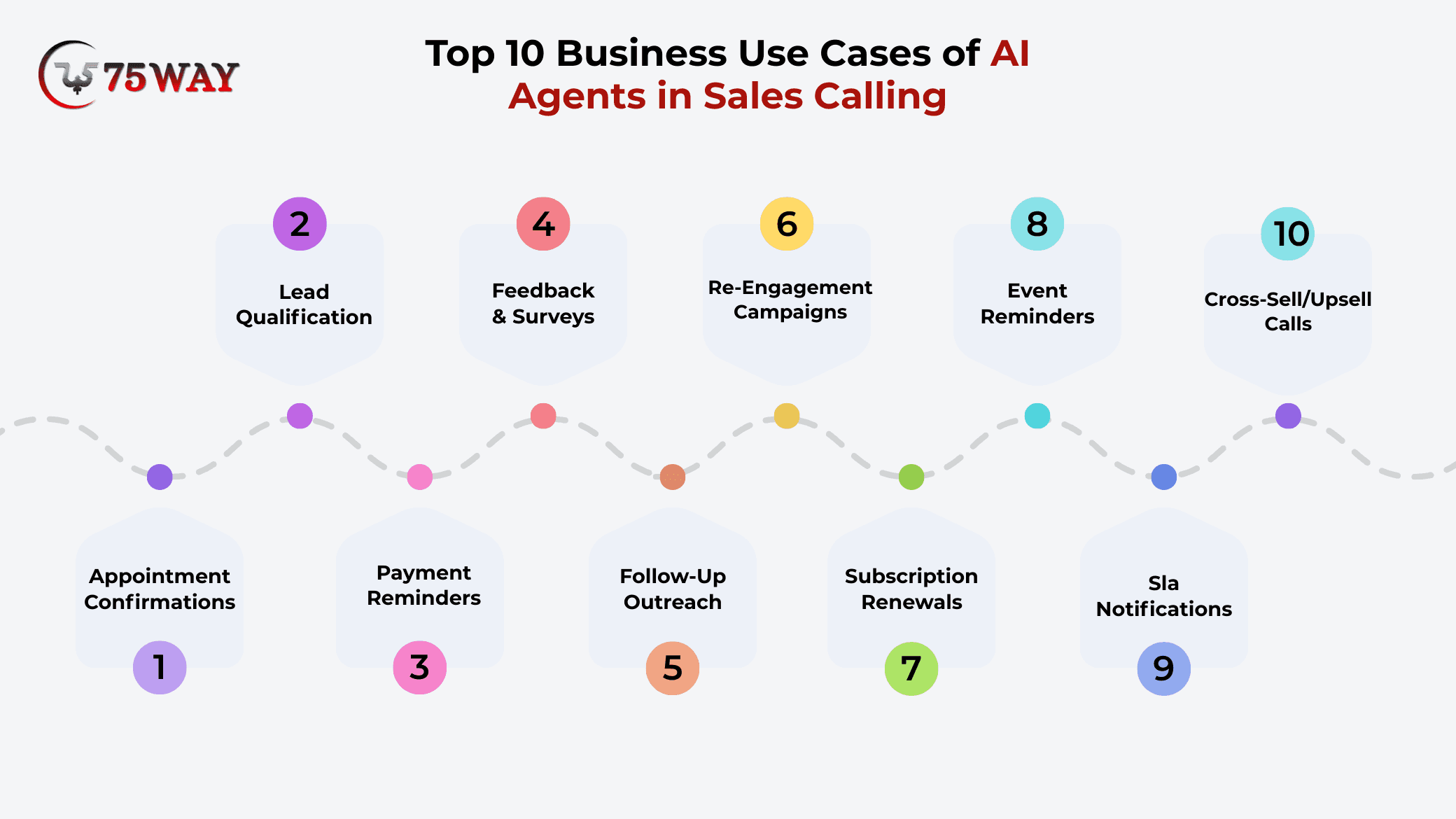
Appointment Confirmations: AI agents reduce no-show rates by automatically confirming upcoming appointments. They can reschedule, capture cancellations, and update calendars instantly. This improves operational efficiency for healthcare providers, service companies, and consultation-based businesses.
Lead Qualification: AI voice agents pre-screen prospects using predefined criteria. They assess interest level, budget, timeline, and decision authority before transferring high-quality leads to human sales teams, increasing conversion efficiency.
Payment Reminders: Automated reminder calls notify customers about upcoming or overdue payments in a timely and structured manner. Conversational AI assistants can securely share payment details, record payment commitments, and send follow-up reminders if needed. This structured automation strengthens cash flow management.
Feedback & Surveys: Post-service outbound calls collect structured customer feedback and satisfaction ratings. AI agents ask targeted questions, capture responses accurately, and categorize sentiment in real time. The collected data support trend analysis, service improvements, and customer experience optimization.
Follow-Up Outreach: Voice-enabled AI copilots reconnect with prospects who did not respond to previous emails or calls. By delivering timely, consistent follow-up messages, they increase contact rates and sustain engagement momentum. Automated follow-ups ensure that sales pipelines remain active without overburdening internal teams.
Re-Engagement Campaigns: Dormant or inactive leads are contacted with targeted outreach messages aligned with prior interactions. AI systems assess renewed interest, capture updated intent signals, and route qualified prospects back into active sales workflows. This approach helps recover missed opportunities and extend lead lifecycle value.
Subscription Renewals: Proactive renewal reminder calls inform subscribers before their plans expire. AI agents can confirm renewals, update payment details, or escalate potential cancellations to human representatives. This structured communication reduces churn rates and supports predictable recurring revenue growth.
Event Reminders: Automated outbound calls increase attendance rates for webinars, product demos, consultations, and in-person events. AI agents confirm participation, provide event details, and send reminders when necessary. This improves turnout while minimizing last-minute cancellations or no-shows.
SLA Notifications: Service-level agreement notifications and operational updates can be delivered automatically to clients. AI agents inform customers about maintenance schedules, outages, or performance updates. This offers transparent communication in B2B environments and strengthens trust through proactive outreach.
Cross-Sell/Upsell Calls: AI agents identify opportunities within existing customer data to introduce complementary products or upgraded services. By delivering personalized recommendations based on CRM insights, they enhance customer lifetime value while reducing the need for expanded sales headcount.
Quick Read: How to Build An AI App: A Strategic Guide 2026
Conclusion
AI agents can make outbound calls effectively, intelligently, and at scale. They combine telephony systems, NLP, and automation to manage conversations, qualify leads, update CRM systems, and trigger follow-ups without manual intervention. Market growth projections confirm accelerating enterprise adoption. Businesses leveraging AI outbound calling gain cost efficiency, data visibility, and scalable engagement. While compliance and strategic oversight remain essential, the technology has matured into a reliable revenue-enablement tool. Organizations aiming to modernize outbound communication should evaluate implementation with a trusted AI agent development company
Frequently Asked Questions (FAQs)
Do AI Agents Replace Human Callers?
No, AI agents do not completely replace human callers. They automate repetitive, high-volume tasks such as lead qualification, reminders, and follow-ups. However, complex negotiations, emotionally intelligent conversations, and relationship-building sales interactions still require human expertise. The most effective outbound strategies combine AI efficiency with human judgment.
Can AI Call Cold Leads?
Yes, AI agents can call cold leads, provided they comply with all regulatory requirements. Businesses must ensure compliance with consent laws, Do Not Call (DNC) lists, and applicable telemarketing regulations. When deployed responsibly, AI cold calling can scale outreach while maintaining legal safeguards and protecting the brand.
Do AI Outbound Calls Need Consent?
Yes, consent is often required before initiating automated outbound calls. In the United States, regulations such as the Telephone Consumer Protection Act (TCPA) mandate prior express consent in many scenarios. Proper opt-in documentation and opt-out mechanisms are essential to avoid penalties and maintain compliance.
Are AI Voice Calls Legal?
Yes, AI voice calls are legal when implemented within regulatory frameworks. Compliance measures must include consent management, opt-out functionality, call disclosure requirements, and adherence to federal and state telemarketing laws. Legal deployment depends on responsible usage and transparent communication practices.
How Long Does AI Outbound Setup Take?
AI outbound implementation typically takes a few weeks to a few months. The timeline depends on CRM integrations, telephony configuration, workflow complexity, script development, compliance setup, and testing requirements. Structured planning significantly reduces deployment delays and ensures operational readiness.
What Industries Benefit Most?
Industries with high call volumes and structured outreach benefit most from AI outbound calling agents. Healthcare, fintech, SaaS, insurance, real estate, e-commerce, education, and customer support-driven sectors often achieve measurable ROI through automation, improved response tracking, and consistent engagement workflows.
Can AI Respond To Complex Questions?
Yes, advanced AI models can interpret contextual questions and generate intelligent responses. However, highly nuanced discussions, negotiation scenarios, or emotionally sensitive conversations should be escalated to human representatives. Hybrid models combining AI automation with live agent support deliver optimal outcomes.
How To Measure ROI From AI Calls?
ROI is measured by tracking key performance indicators such as contact rate, cost per conversation, lead qualification rate, appointment conversion rate, customer acquisition cost, revenue generated per campaign, and operational cost savings. Data-driven evaluation ensures informed scaling decisions.