Summary
AI SaaS sales agents help businesses qualify leads, automate outreach, and manage customer engagement. This guide defines intelligent sales automation strategies that improve productivity, accelerate conversions, and reduce repetitive manual work. It also explains how businesses build stronger pipelines using smarter lead qualification and personalized customer communication.
Quick Overview
- AI SaaS sales agents automate repetitive outreach and lead qualification.
- SaaS sales automation improves response speed, engagement, and conversions.
- AI-driven lead scoring helps teams prioritize high-intent prospects more accurately.
- Automated outreach campaigns create personalized customer communication.
- Businesses improve sales pipeline visibility and productivity with AI SaaS sales agents.
AI SaaS sales agents are becoming essential for businesses aiming to scale outreach, improve lead qualification, and build faster sales workflows. Sales teams now use AI sales agents to prioritize prospects, schedule follow-ups, and analyze buyer behavior.
And honestly, buyers already expect this level of speed. Generic outreach and delayed responses rarely work anymore. That is why companies are adopting AI SaaS systems for sales to manage growing pipelines without sacrificing engagement quality.
So what does a successful AI SaaS sales agent actually look like in practice? And which areas create the biggest impact first? In this guide, you will explore how AI SaaS sales agents help businesses automate lead qualification, optimize outreach strategies, and build scalable sales operations designed for long-term growth.
What Is An AI SaaS Sales Agent?
An AI SaaS sales agent is an intelligent software system designed to automate and optimize different stages of the sales process using artificial intelligence technologies.
Unlike traditional automation tools that follow rigid workflows, AI SaaS sales agents continuously learn from customer interactions, engagement behavior, communication patterns, and historical sales data. AI SaaS sales agents typically operate across multiple sales functions, including:
- Lead qualification
- Email outreach
- Prospect research
- CRM management
- Follow-up automation
- Sales forecasting
- Customer engagement analysis
- Meeting scheduling
- Pipeline management
These systems integrate with CRMs, communication platforms, advanced analytics tools, and customer databases to create a unified sales automation ecosystem.
Why Traditional Lead Qualification No Longer Works?
Lead qualification has always been one of the most time-consuming parts of sales operations. As lead volumes increase, maintaining consistent qualification standards becomes increasingly difficult. Several challenges make traditional lead qualification processes inefficient.
- Large Volumes Of Unqualified Leads: Marketing campaigns generate thousands of leads, but only a small percentage demonstrate genuine buying intent. Manually sorting through these prospects wastes valuable sales resources.
- Delayed Response Times: Modern buyers expect immediate engagement. Delayed responses often result in lost opportunities and declining interest levels.
- Inconsistent Lead Scoring: Different sales representatives may evaluate prospects differently, creating inconsistencies in qualification standards.
- Limited Behavioral Insights: Manual qualification methods often overlook important behavioral signals indicating customer intent or engagement readiness.
- Administrative Overload: Sales representatives spend excessive time updating records rather than engaging qualified prospects directly.
How AI SaaS Sales Agents Automate Lead Qualification?
AI lead qualification agents for sales help businesses identify high-intent prospects more accurately and efficiently. These systems analyse multiple data points simultaneously, including:
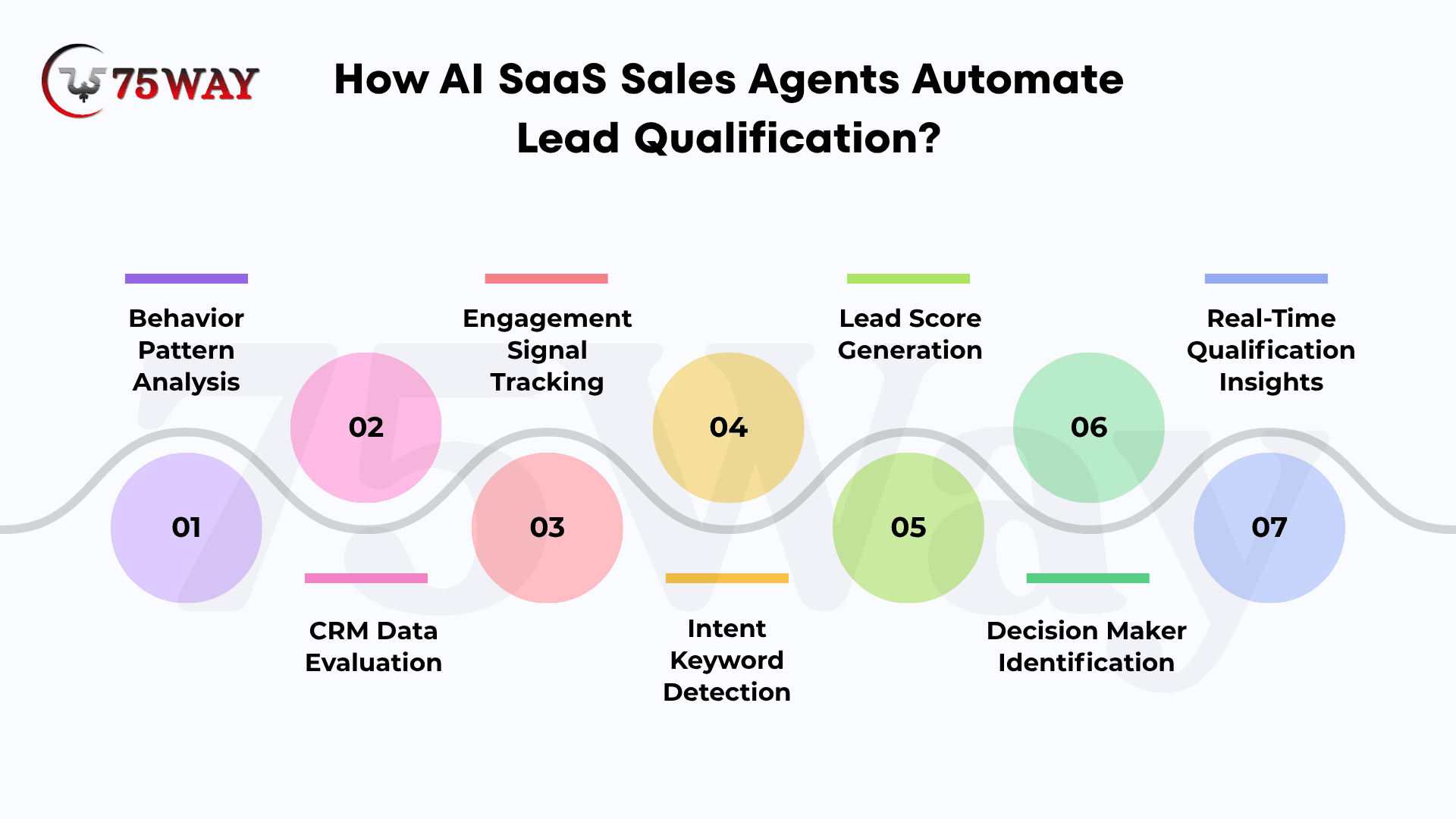
- Behavior Pattern Analysis: AI sales agents analyze browsing activity, content interactions, and engagement frequency to identify purchase intent signals. This helps sales teams prioritize prospects showing stronger buying interest and higher conversion probability.
- CRM Data Evaluation: AI systems review CRM records, historical interactions, and customer profiles to qualify leads more accurately. Businesses gain clearer visibility into prospect quality, communication history, and engagement readiness levels.
- Engagement Signal Tracking: AI agents monitor email opens, reply behavior, meeting participation, and communication consistency across channels. These insights help businesses identify actively interested prospects requiring faster sales engagement and follow-ups.
- Intent Keyword Detection: AI-powered systems detect buying-related keywords from conversations, inquiries, forms, and customer interactions automatically. Sales teams can identify serious prospects earlier and respond with more personalized communication strategies.
- Lead Score Generation: AI sales agents generate dynamic lead scores using behavioral, demographic, and engagement-related business data continuously. This allows teams to focus attention on opportunities with stronger revenue potential and qualification accuracy.
- Decision Maker Identification: AI systems identify important stakeholders involved in enterprise buying processes using communication patterns and organizational data. Sales representatives can target relevant decision-makers faster while improving outreach effectiveness and engagement quality.
- Real-Time Qualification Insights: AI agents provide instant qualification recommendations using live prospect activity, engagement behavior, and intent-based analytics. Businesses gain faster pipeline visibility while reducing delays caused by manual lead evaluation processes.
The Role of AI SaaS Agents In Sales Outreach Automation
Outreach remains one of the most critical elements within modern sales operations. AI SaaS sales agents improve outreach quality significantly through personalization and behavioral analysis. These sales automation agents create highly relevant communication strategies tailored to individual prospects.
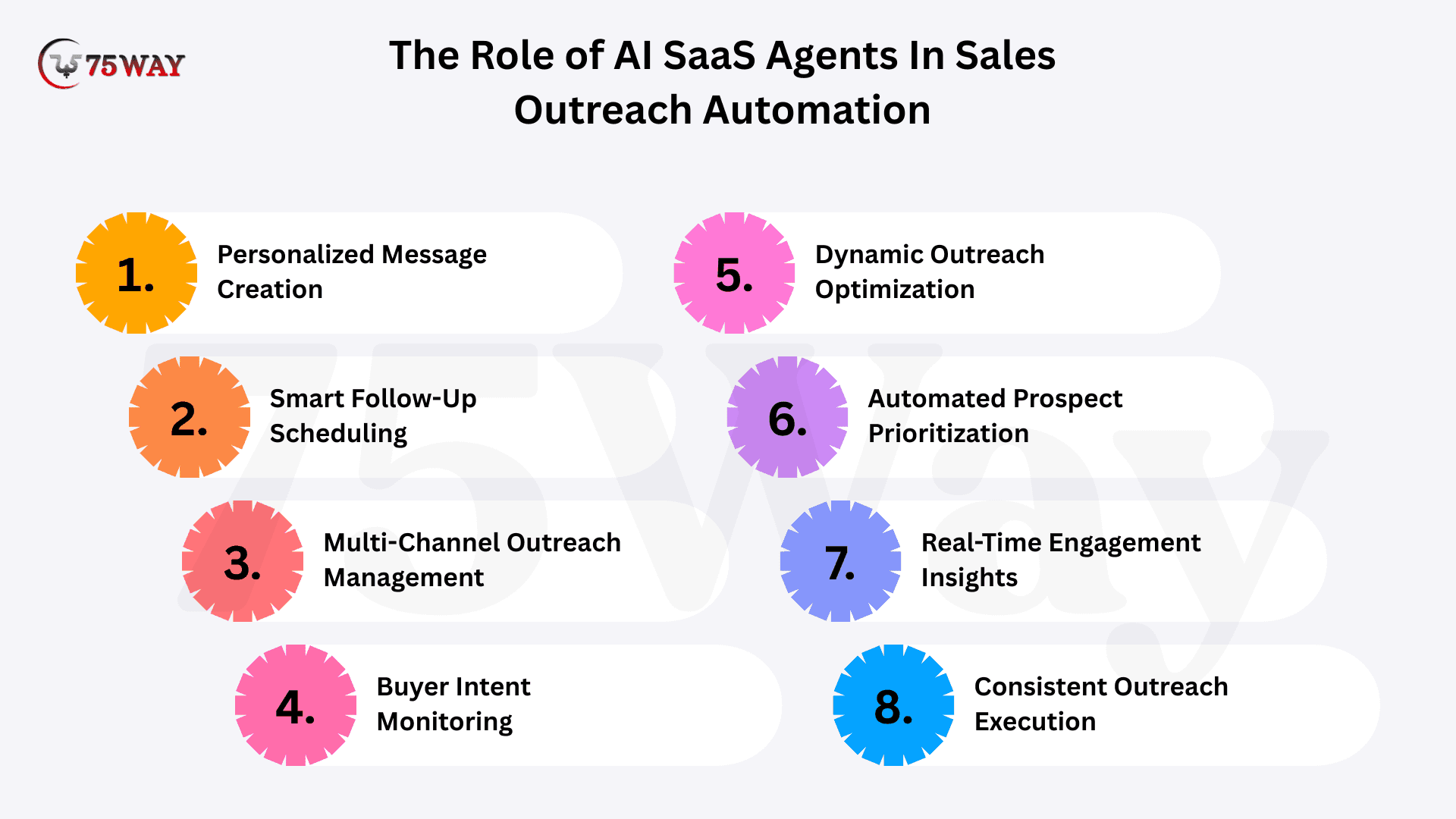
- Personalized Message Creation: AI sales agents create customized outreach messages using prospect behavior, industry trends, and engagement history automatically. Every interaction feels more relevant. Buyers respond better. Sales conversations become more natural and personalized across communication channels daily.
- Smart Follow-Up Scheduling: AI systems schedule follow-ups using engagement timing, buyer activity, and communication responsiveness patterns. AI agents analyze customer data to generate personalized emails based on:
- Industry challenges
- Company growth trends
- Customer interests
- Engagement history
- Previous interactions
- Buying signals
This improves response opportunities significantly. Prospects receive timely outreach. Sales teams maintain stronger communication consistency throughout long buying cycles.
- Multi-Channel Outreach Management: AI SaaS agents coordinate outreach across
- Emails
- Messaging platforms
- Calls
- Customer engagement channels
Businesses maintain consistent communication. Prospects experience unified interactions. Sales workflows become more organized and scalable across growing pipelines.
- Buyer Intent Monitoring: AI-powered systems analyze browsing behavior, email activity, content engagement, and inquiry patterns to identify intent signals accurately. Sales teams prioritize interested prospects faster. Outreach becomes more relevant. Businesses improve engagement quality and conversion opportunities consistently over time.
- Dynamic Outreach Optimization: AI agents continuously optimize outreach messaging using response patterns, engagement analytics, and behavioral insights from previous interactions. Campaign performance improves steadily. Businesses reduce communication gaps. Sales representatives receive better recommendations for prospect engagement and outreach strategies.
- Automated Prospect Prioritization: AI systems rank prospects based on engagement strength, buying behavior, communication frequency, and conversion probability indicators automatically. Sales teams focus on valuable opportunities. Outreach becomes more strategic. Businesses improve pipeline quality and sales productivity across enterprise operations.
- Real-Time Engagement Insights: AI SaaS sales agents deliver live engagement insights using customer interactions, response behavior, and communication activity continuously. Businesses identify active prospects faster. Sales conversations improve significantly. Outreach decisions become smarter and more data-driven during pipeline management activities.
- Consistent Outreach Execution: AI-powered outreach automation maintains communication consistency across large prospect databases without overwhelming internal sales teams. Follow-ups happen regularly. Messaging stays organized. Businesses improve customer engagement quality while scaling outreach operations across competitive sales environments.
Business Growth Opportunities with AI SaaS Sales Agents
The growing adoption of AI sales agents is driven largely by measurable operational improvements. Organizations implementing intelligent sales automation often experience substantial gains across productivity, conversion rates, and pipeline efficiency.
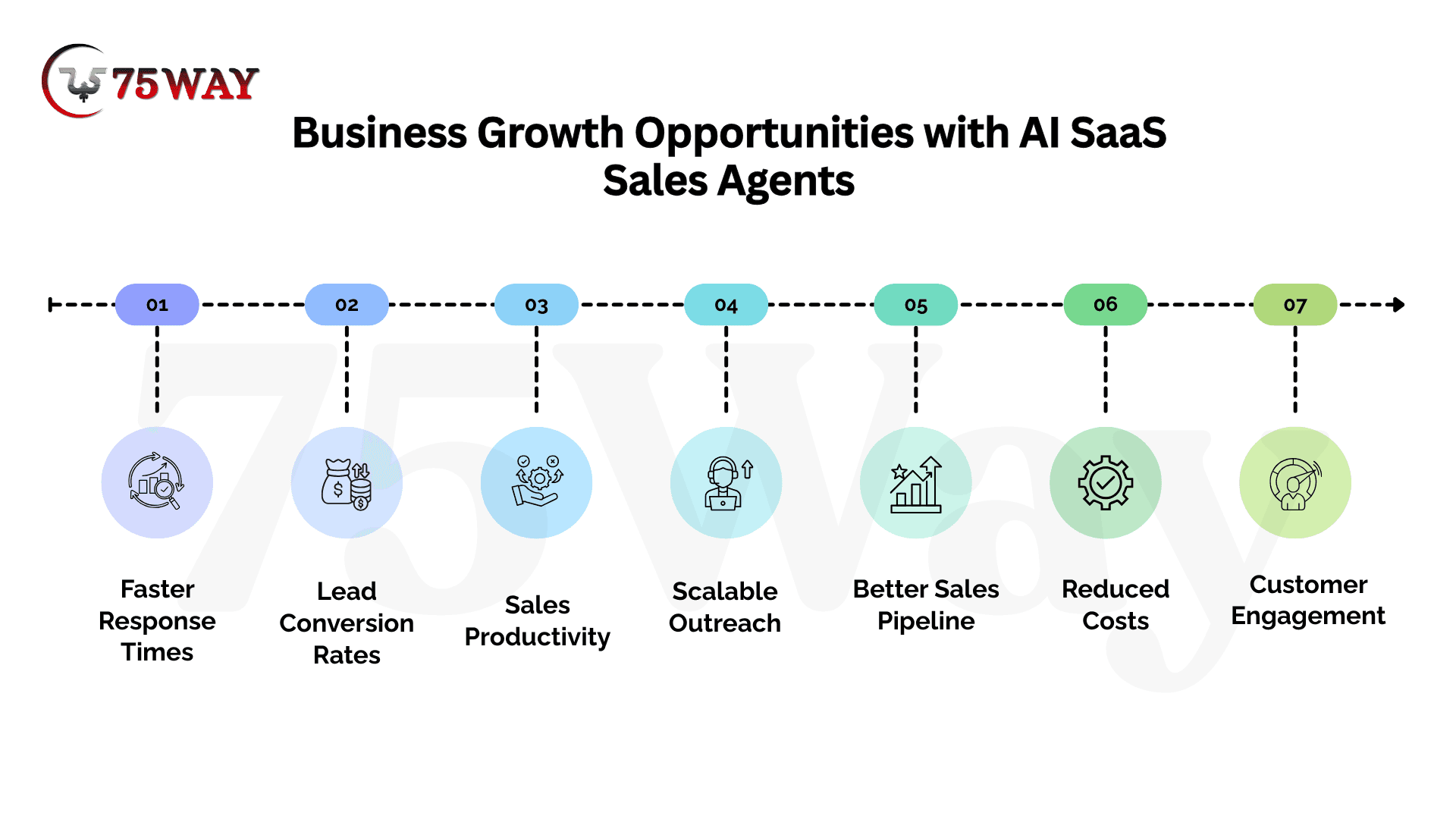
- Faster Response Times: Speed matters in modern sales environments. AI agents engage prospects immediately after interactions occur, improving conversion opportunities.
- Lead Conversion Rates: By prioritizing high-intent prospects and delivering personalized communication, businesses improve overall conversion performance.
- Sales Productivity: Sales representatives spend less time on administrative tasks and more time engaging qualified buyers directly.
- Scalable Outreach: AI automation allows businesses to manage large prospect volumes without dramatically increasing staffing requirements.
- Better Sales Pipeline: Organizations gain clearer visibility into prospect engagement, qualification status, and sales pipeline health.
- Reduced Costs: Automation reduces repetitive manual work, improving overall operational efficiency and resource allocation.
- Customer Engagement: Personalized engagement helps businesses create smoother and more relevant buyer journeys.
How AI Sales Agents Improve Customer Experience?
Customer experience now plays a major role in sales success. Buyers expect quick answers and personalized recommendations. Businesses failing to meet these expectations often struggle with declining engagement and lower conversion rates. AI SaaS sales agents help improve customer experience in several important ways.
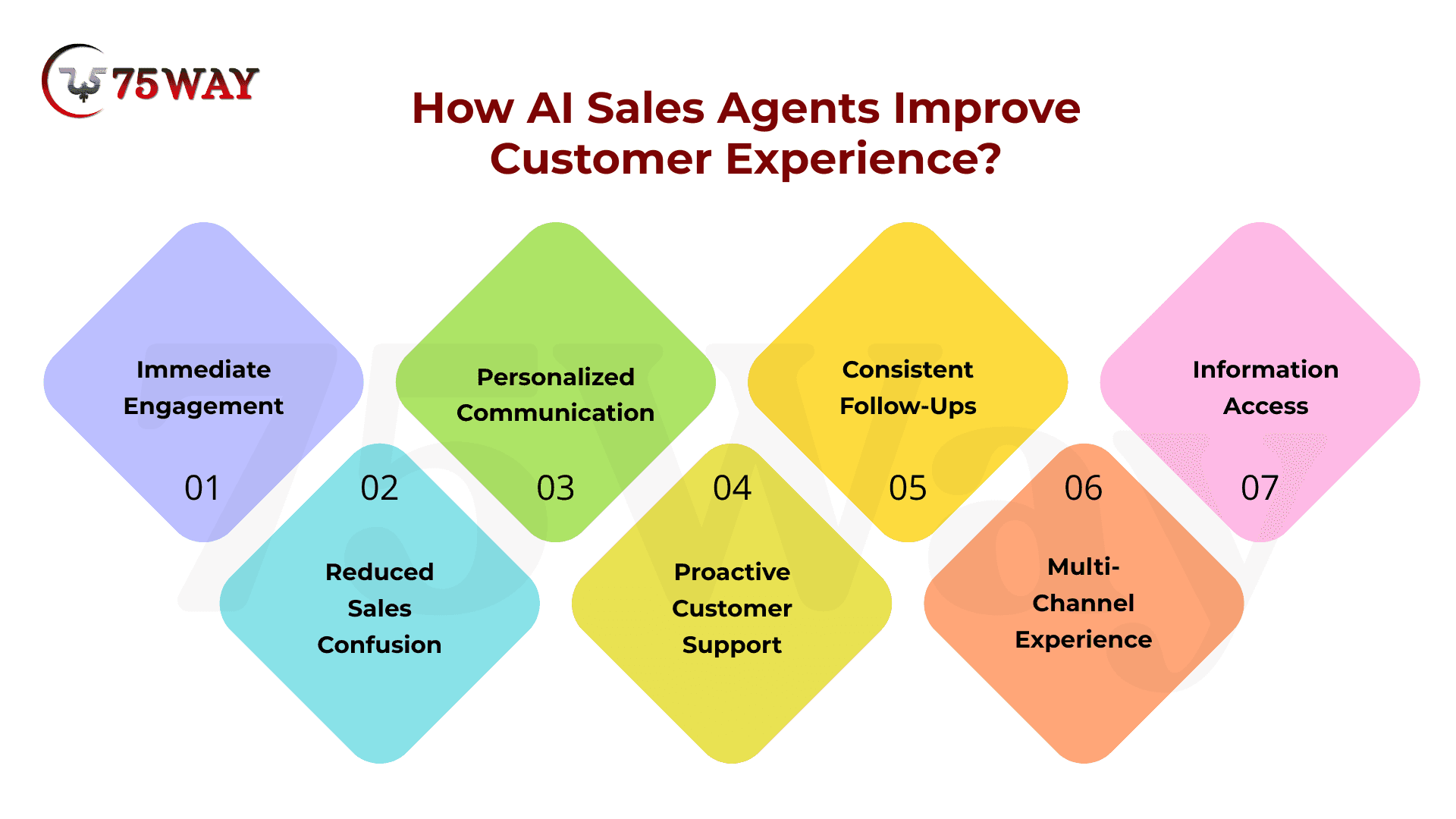
- Immediate Engagement: Prospects receive faster responses instead of waiting hours or days for follow-ups.
- Personalized Communication: AI sales systems tailor messaging based on customer interests and behavior patterns.
- Consistent Follow-Ups: Automated systems ensure prospects never feel ignored or forgotten.
- Information Access: AI agents provide quick responses to common questions and product inquiries.
- Reduced Sales Confusion: Automated scheduling, reminders, and communication workflows create smoother interactions.
- Proactive Customer Support: AI sales agents identify customer concerns early, delivering timely assistance before engagement declines.
- Multi-Channel Experience: Maintain unified communication across platforms to create smoother interactions without repetitive conversations.
Leading Industries Implementing AI SaaS Sales Agents
AI sales automation is expanding rapidly across multiple industries. Several sectors benefit particularly well from intelligent sales agents due to high lead volumes, complex sales cycles, and relationship-driven customer acquisition models.
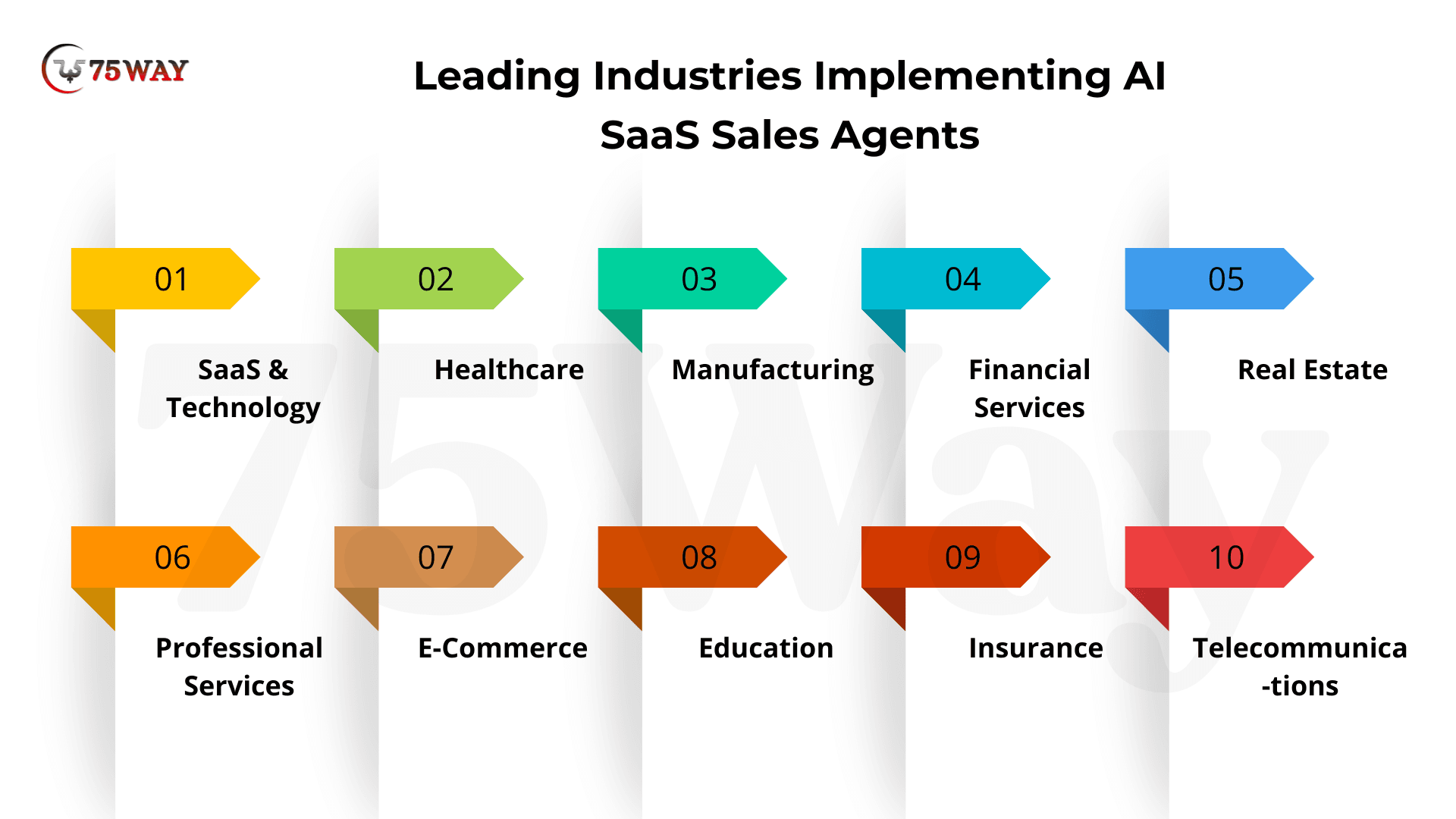
- SaaS & Technology: Technology companies use AI sales agents for lead scoring, outreach automation, demo scheduling, and customer pipeline visibility improvement.
- Healthcare:Agentic AI in healthcare sales automates appointment communication, patient engagement, partnership outreach, and relationship management.
- Manufacturing: Manage distributor communication, supplier engagement, B2B prospecting, and lead qualification.
- Financial Services:AI finance agents improve customer onboarding, advisory communication, prospect engagement, and relationship management.
- Real Estate: AI agents for real estate sales automate property inquiries, client communication, lead nurturing, and follow-up activities.
- Professional Services: Consulting firms and agencies automate prospect communication, client engagement, follow-ups, and business development pipeline management.
- E-Commerce: AI agents in ecommerce sales enhance customer engagement, abandoned cart follow-ups, personalized recommendations, and retention campaigns.
- Education: Educational organizations automate student inquiries, admission follow-ups, course recommendations, and engagement workflows using intelligent AI systems.
- Insurance:AI assistants for insurance improve policy outreach, lead qualification, renewal communication, and customer engagement.
- Telecommunications: Telecom businesses automate customer onboarding, service inquiries, upselling opportunities, and personalized communication.
Features Businesses Should Look For In AI Sales Agents
Choosing the right AI SaaS sales agent requires evaluating both operational needs and long-term scalability. Several important features deserve attention.
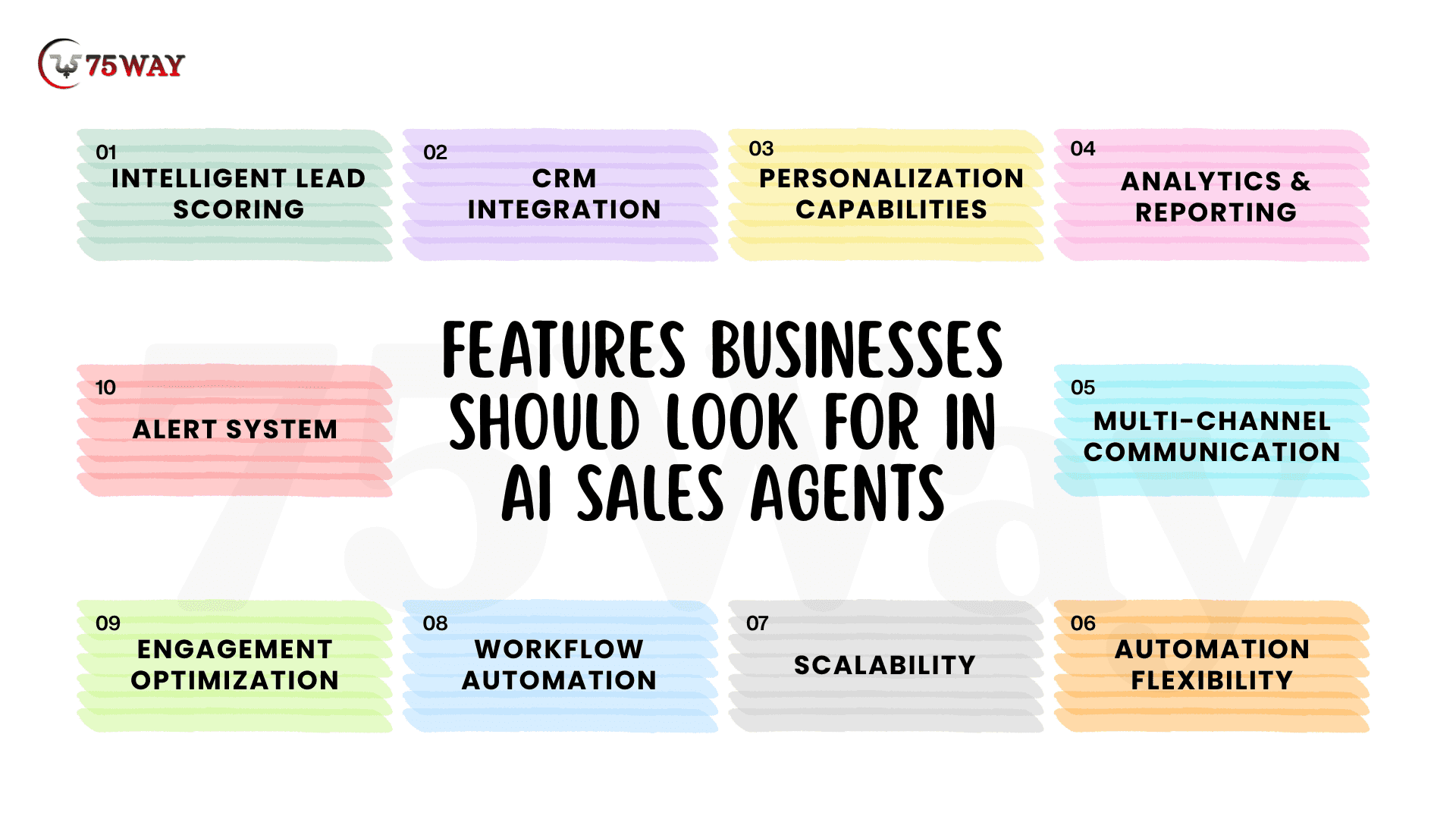
- Intelligent Lead Scoring: Analyze prospect behavior, prioritize high-value leads, predict conversion potential, and guide sales teams toward stronger opportunities efficiently.
- CRM Integration: Connect seamlessly with existing CRM systems, synchronize data automatically, reduce manual entry work, and improve overall sales visibility instantly.
- Personalization Capabilities: Generate tailored outreach messages, adapt communication style to each prospect, and create highly relevant engagement to improve response rates.
- Analytics & Reporting: Track performance metrics, visualize pipeline health, measure outreach effectiveness, and deliver actionable insights for better decision-making clarity.
- Multi-Channel Communication: Manage interactions across email, chat, calls, and social platforms, maintain consistency, and improve engagement across all touchpoints.
- Automation Flexibility: Configure workflows easily, adjust processes based on business needs, streamline repetitive tasks, and support evolving sales strategies efficiently.
- Scalability: Handle increasing lead volumes, maintain system performance, support business expansion, and ensure consistent output without operational limitations.
- Workflow Automation: Automate repetitive sales tasks, streamline processes, reduce manual effort, and allow teams to focus on high-value activities.
- Engagement Optimization: Improve customer interactions, refine outreach timing, enhance message relevance, and increase overall response rates across sales channels.
- Alert System: Notify sales teams instantly, detect critical prospect actions, highlight urgent opportunities, and improve response speed across pipelines.
Why the Human Interface Still Matters?
One important reality often gets overlooked during conversations about AI sales automation. People still buy from people. Even with advanced automation, enterprise buyers continue valuing trust, emotional intelligence, transparency, confidence, and relationship-building capabilities. AI systems can improve efficiency, but they cannot fully replace genuine human understanding.
The most successful businesses use AI agents to support human sales professionals rather than eliminate them entirely. AI handles repetitive operational tasks. Humans build meaningful relationships. This balance creates stronger customer experiences while allowing organizations to scale operations.
Final Remarks
AI SaaS sales agents are reshaping how businesses manage lead qualification and outreach in modern digital environments. By automating repetitive tasks and improving lead scoring accuracy, these systems help organizations build scalable and efficient sales operations.
Sales teams no longer depend fully on manual prospecting, inconsistent qualification methods, or time-heavy administrative work. Instead, they can focus more on meaningful conversations, relationship-building, and high-value opportunities. The real impact comes when businesses balance automation with human understanding and trust.
Explore ready-made AI sales agents from AI agent marketplaces like 75AI Agent Store or partner with a leading AI agent development company to build custom solutions tailored to your business needs.
Frequently Asked Questions (FAQs)
Can AI Sales Agents Work Alongside Existing CRM Platforms?
Yes, AI sales agents integrate with most CRM platforms easily. They centralize data, improve tracking accuracy, enhance workflow automation, and strengthen overall sales visibility across teams.
How Long Does It Take To Train AI Sales Agents Properly?
Training time varies by data quality and complexity. Some systems show results in weeks, while advanced setups need months for optimization and performance refinement.
Do AI Sales Agents Only Benefit Large Enterprise Organizations?
No, businesses of all sizes can use AI sales agents. Small teams benefit through automation, lead qualification, outreach, and improved customer engagement without heavy infrastructure.
Can AI Sales Agents Help Reduce Customer Acquisition Costs?
Yes, AI agents reduce unnecessary outreach and improve targeting accuracy. This leads to higher conversions, lower acquisition costs, and better sales efficiency over time.
How Do AI Sales Agents Handle Large Volumes Of Customer Data?
They process data using machine learning and analytics systems. This organizes behavior patterns, engagement history, and insights for better decision-making and improved sales performance.
Can AI Sales Agents Improve Outbound Prospecting Accuracy?
Yes, AI analyzes intent signals and customer behavior. It identifies high-quality prospects, reduces wasted outreach, and improves response rates and pipeline conversion accuracy.