Summary
Tea-like app development solutions offer digital interaction through anonymous feedback, community insights, and social safety mechanisms. Modern development integrates scalable architecture, mobile-first design, AI moderation, and user trust systems. Businesses adopting this model unlock engagement-driven platforms and high-traffic digital ecosystems.
Quick Overview
- Tea-like apps rely heavily on anonymity-driven user engagement systems.
- Strong backend architecture ensures scalability for viral user growth.
- AI moderation improves safety, trust, and content authenticity levels.
- Mobile-first UX design directly impacts retention and engagement performance.
- Monetization depends on premium features, ads, and verified profiles.
Dating and social discovery apps have completely changed how people connect in 2026. Users no longer rely on traditional profiles alone. They expect safety, verification, real-time interaction, and community-driven trust before engaging with anyone online. Apps like “Tea” are gaining attention because they focus on transparency, user feedback, and safer social connections in a space where trust is often a major concern.
Building a dating app like Tea today is not just about creating profiles and chat features. The Tea-style app development requires strong backend architecture, real-time communication systems, moderation tools, AI-based content filtering, and scalable cloud infrastructure to support growing user engagement.
So how do you actually build an app like Tea in 2026 that is scalable, secure, and engaging enough to compete in a fast-evolving social app market? In this guide, we will break down everything step by step, including features, technology stack, development process, monetization strategies, challenges, and cost estimation.
Understanding The Concept of Apps Like Tea
Apps like Tea belong to a new category of social intelligence platforms that combine anonymity, user-generated feedback, and community validation systems. Unlike traditional social media platforms, they focus on anonymous user experiences, community-driven insights, safety-oriented feedback loops, real-world validation systems, and trust-based social interactions to create a more open communication environment.
The primary goal of these platforms is to provide users with a safe environment where they can share opinions and experiences without identity pressure. This structure encourages honest participation, reduces social bias, and helps users access more authentic community-driven information before making personal decisions or judgments.
Step-by-Step Process To Build An App Like Tea
Building an app like Tea requires a structured engineering and product approach rather than just coding. Each phase contributes directly to scalability, safety, and user trust, which are critical for anonymous social platforms.
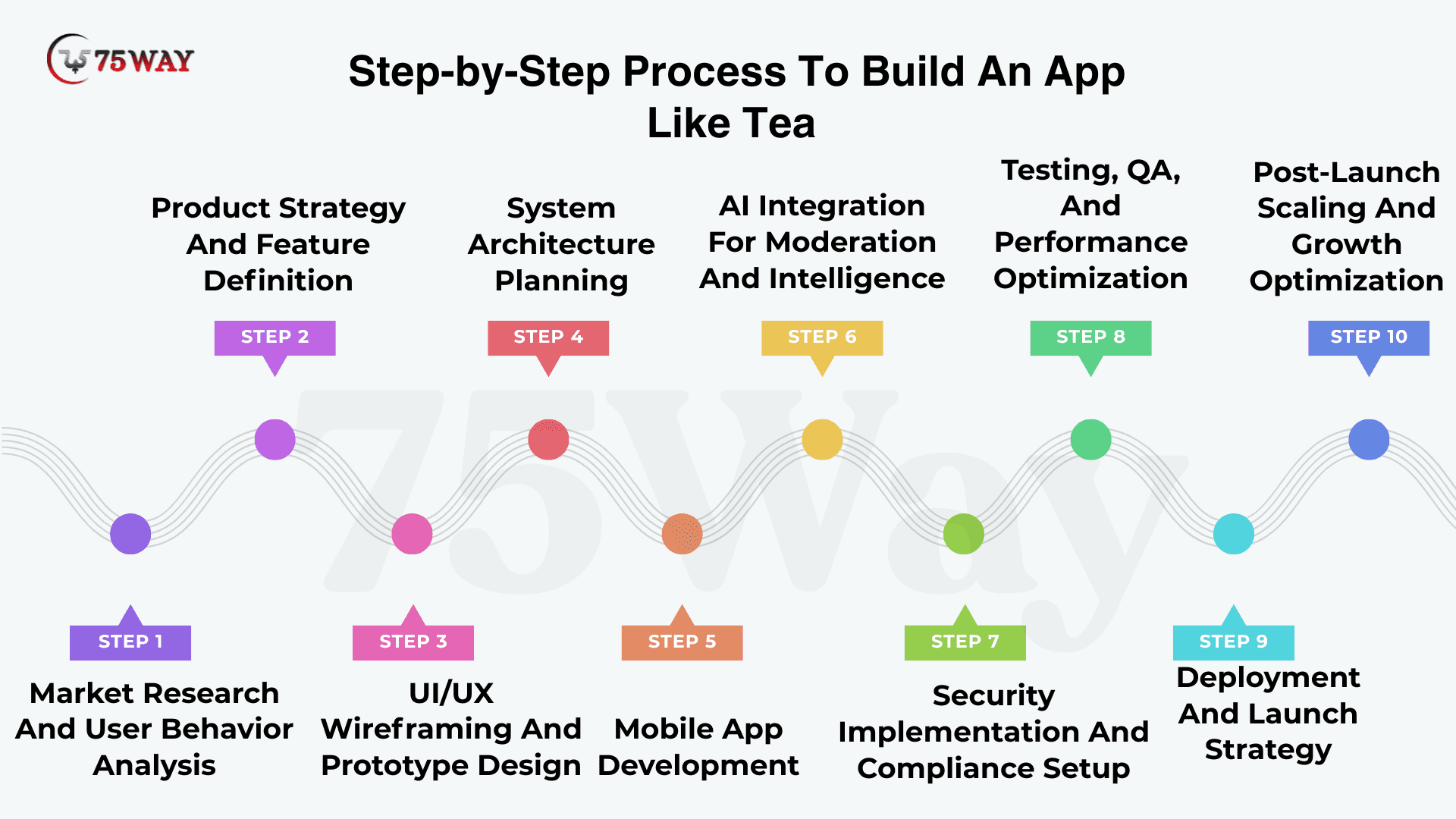
Step 1: Market Research And User Behavior Analysis
The first stage focuses on understanding user expectations, emotional triggers, and engagement patterns within anonymous social ecosystems.
Developers analyze competitor apps, user complaints, engagement gaps, and trust issues in existing social platforms. This helps define the core value proposition of the Tea-like application and ensures product-market alignment before development begins.
Key outputs include user personas, feature requirements, and engagement psychology mapping.
Step 2: Product Strategy And Feature Definition
At this stage, the complete product blueprint is created. The core feature set is finalized, including anonymous posting, community validation, AI moderation, and profile-based insights. Monetization strategy and safety mechanisms are also defined.
This step ensures clarity on what the app will deliver and prevents feature overload during development.
Step 3: UI/UX Wireframing And Prototype Design
Designers create wireframes and interactive prototypes focusing on simplicity, trust, and mobile-first interaction. The UX structure is optimized for:
- Anonymous content posting flow
- Quick browsing experience
- Easy reporting and moderation access
- Minimal cognitive load interface
User testing is conducted on prototypes to refine engagement flow before development.
Step 4: System Architecture Planning
Engineers design the backend architecture, ensuring scalability and real-time performance.
This includes:
- Microservices structure for modular scaling
- API gateway design for request handling
- Database schema for user-generated content
- Cloud infrastructure planning for global scalability
Architecture decisions at this stage define long-term performance and stability.
Step 5: Tea-Like Mobile App Development
Mobile applications are developed using frameworks like Flutter or React Native for cross-platform efficiency. Key implementation areas:
- Anonymous feed interface
- Profile exploration system
- Posting and interaction modules
- Notification system
The focus remains on performance optimization and smooth UX behavior.
Backend Development And API Integration
Backend systems handle data processing, authentication, and business logic. Core functions include:
- User authentication and anonymity management
- Content storage and retrieval systems
- Real-time feed generation
- AI moderation pipeline integration
- Analytics tracking systems
APIs connect frontend apps with backend services seamlessly.
Step 7: AI Integration For Moderation And Intelligence
AI systems are integrated to ensure safety and platform quality.
This includes:
- Content moderation using NLP models
- Toxicity and abuse detection
- Fake content identification
- Behavioral pattern analysis
AI ensures the platform remains safe while scaling user-generated content.
Step 8: Security Implementation And Compliance Setup
Security layers are implemented to protect user anonymity and data integrity.
This includes:
- End-to-end encryption
- Secure authentication systems
- GDPR and privacy compliance frameworks
- Data access control policies
Security is critical for building user trust in anonymous environments.
Step 9: Testing, QA, And Performance Optimization
Before launch, extensive testing is conducted.
Types of testing include:
- Functional testing
- Load testing for scalability
- Security vulnerability testing
- UX testing for engagement flow
Performance optimization ensures the app can handle viral growth.
Step 10: Deployment And Launch Strategy
The application is deployed on cloud infrastructure using CI/CD pipelines.
Launch strategy includes:
- Beta user onboarding
- Gradual traffic scaling
- Feedback loop integration
- Performance monitoring dashboards
A controlled rollout prevents system overload during early growth stages.
Step 11: Post-Launch Scaling And Growth Optimization
After launch, continuous improvements are made based on user behavior.
Focus areas include:
- Feature enhancements based on analytics
- AI model improvements
- Engagement optimization
- Infrastructure scaling
This phase determines long-term success and retention.
AI Integration While Building Tea-Like Apps
AI plays a crucial role in ensuring safety, personalization, and meaningful engagement in Tea-like applications by analyzing user behavior, filtering content, and improving platform trust.
- Content Moderation: Filter harmful or inappropriate content automatically using AI models that detect abusive language, spam, and unsafe posts in real time.
- Sentiment Analysis: Analyze the emotional tone of user posts to understand mood, intent, and context behind shared messages and feedback.
- Recommendation Engine: Suggest relevant content to users based on interests, engagement patterns, and community interactions within the platform.
- Fraud Detection Systems: Identify fake profiles or misleading content using behavioral signals, activity patterns, and AI-based verification techniques.
- User Behavior Tracking: Monitor engagement patterns to understand how users interact with content and improve platform personalization strategies.
- Anomaly Detection: Detect unusual activities such as spam bursts or coordinated fake engagement across the platform in real time.
- Identity Verification AI: Use intelligent verification methods to reduce fake accounts while maintaining user privacy and anonymity standards.
- Real-Time Risk Scoring: Assign risk levels to content and users dynamically to improve moderation accuracy and platform safety decisions.
Core Features For Building A Dating App Like Tea
Building a dating app like Tea requires a strong focus on anonymity, trust systems, moderation, and real-time engagement features. These elements help create a safe, community-driven environment where users can share insights and interact responsibly.
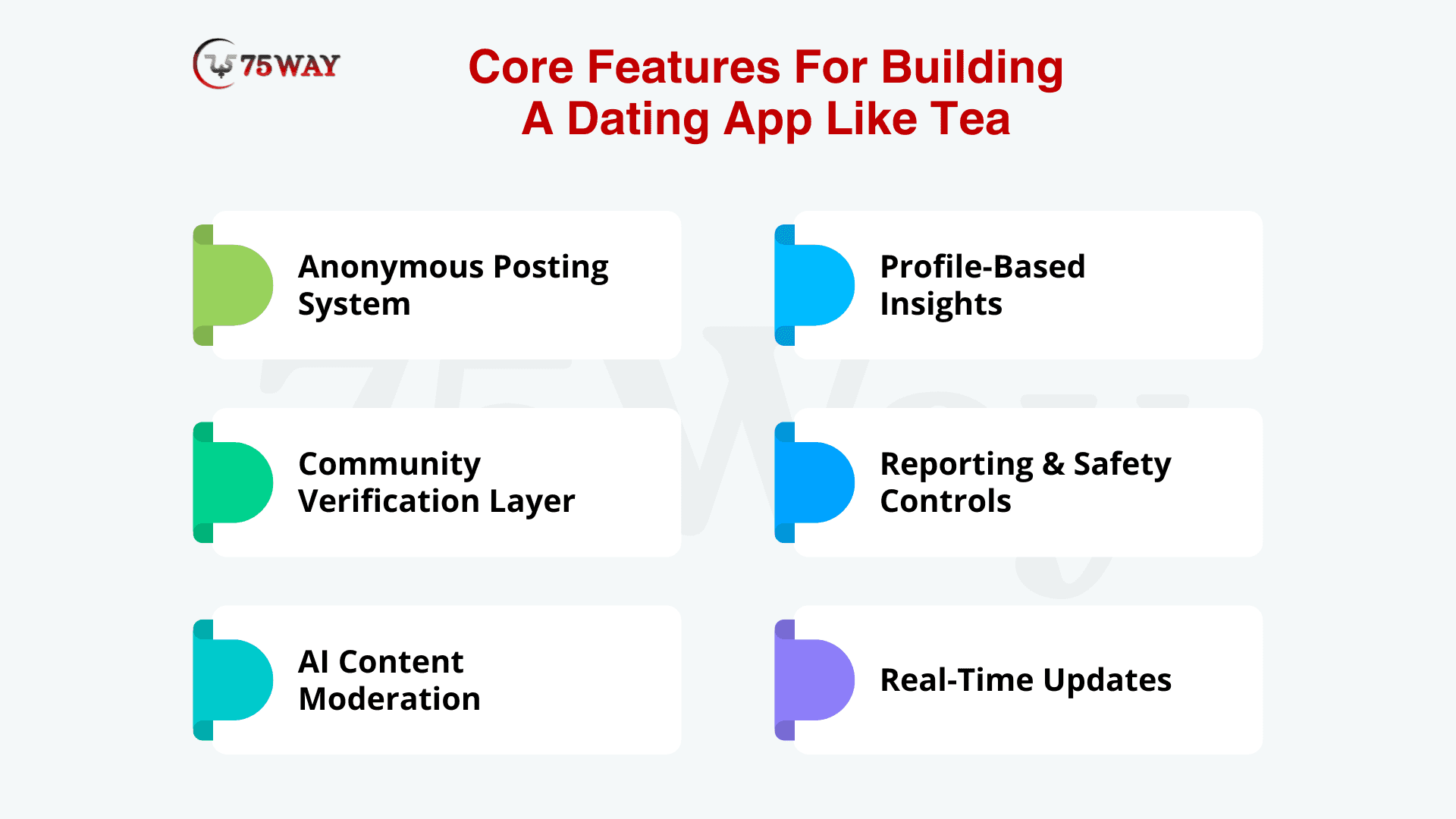
- Anonymous Posting System: Users share feedback and experiences without revealing their identity. This encourages honest communication while protecting user privacy across all interactions and discussions.
- Community Verification Layer: Users validate shared experiences through votes and engagement signals. This helps improve content credibility and reduces misinformation within the platform ecosystem.
- AI Content Moderation: Automated AI systems detect harmful, fake, or inappropriate content in real time. This ensures platform safety and maintains a healthy community environment.
- Profile-Based Insights: Users can view aggregated feedback and insights related to specific profiles. This helps improve decision-making and adds transparency to user interactions.
- Reporting & Safety Controls: Built-in reporting tools allow users to flag misuse or harmful behavior quickly. This supports platform safety and ensures prompt action against violations.
- Real-Time Updates: Content updates instantly across user feeds for seamless engagement. This keeps users informed of the latest interactions and community activity.
Architecture Of A Scalable Tea-Like App
A scalable Tea-like app requires a well-structured architecture that supports high user traffic, real-time interactions, and secure data processing. The system must be designed for flexibility, performance, and long-term growth across multiple user segments.
- Microservices Architecture: Separates system components into independent services for better scalability and easier maintenance. Each service handles a specific function such as authentication, messaging, or content management. This improves development speed and system reliability.
- Load Balancing Systems: Distributes incoming traffic evenly across multiple servers to prevent overload and downtime. It ensures consistent performance during peak usage periods. This improves user experience and system stability under high demand.
- Caching Layers: Stores frequently accessed data temporarily to reduce database queries and improve response speed. It minimizes server load and enhances application performance. This ensures faster content delivery for users.
- API Gateway: Manages communication between frontend and backend services through a single entry point. It handles authentication, routing, and request management efficiently. This improves security and simplifies system architecture.
Technology Stack Required To Build An App Like Tea
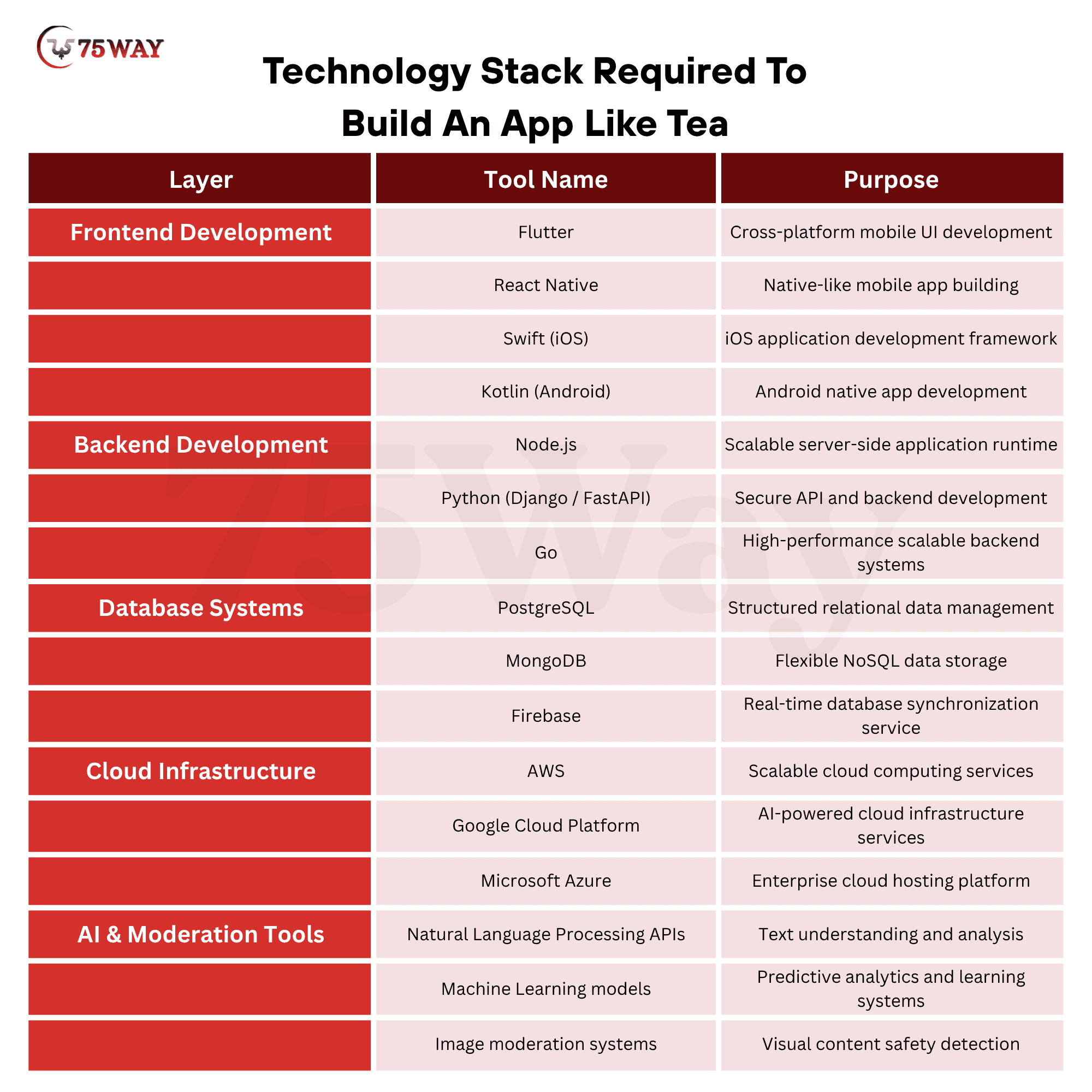
Building an app like Tea requires a scalable, secure, and AI-driven technology stack that supports anonymous interactions, real-time content updates, and intelligent moderation systems. The right combination of frontend, backend, database, cloud, and AI tools ensures smooth performance and safe user experiences.
1. Frontend Development: Handles user interface design and interactive mobile application experiences across platforms.
- Flutter
- React Native
- Swift (iOS)
- Kotlin (Android)
2. Backend Development: Manages server logic, APIs, authentication, and real-time data processing for smooth application performance.
- Node.js
- Python (Django / FastAPI)
- Go for scalability
3. Database Systems: Stores and manages structured and unstructured data securely with fast access and high reliability.
- PostgreSQL
- MongoDB
- Firebase
4. Cloud Infrastructure: Provides scalable hosting, deployment, and storage solutions for high-performance global applications.
- AWS
- Google Cloud Platform
- Microsoft Azure
5. AI & Moderation Tools: Powers intelligent content analysis, automated moderation, and personalization across user interactions.
- Natural Language Processing APIs
- Machine Learning models
- Image moderation systems
Monetization Strategies To Generate Revenue From Tea-Style Dating App
Tea-style dating apps generate revenue through a mix of premium features, trust-based services, and ethical advertising models that balance user privacy with sustainable business growth.
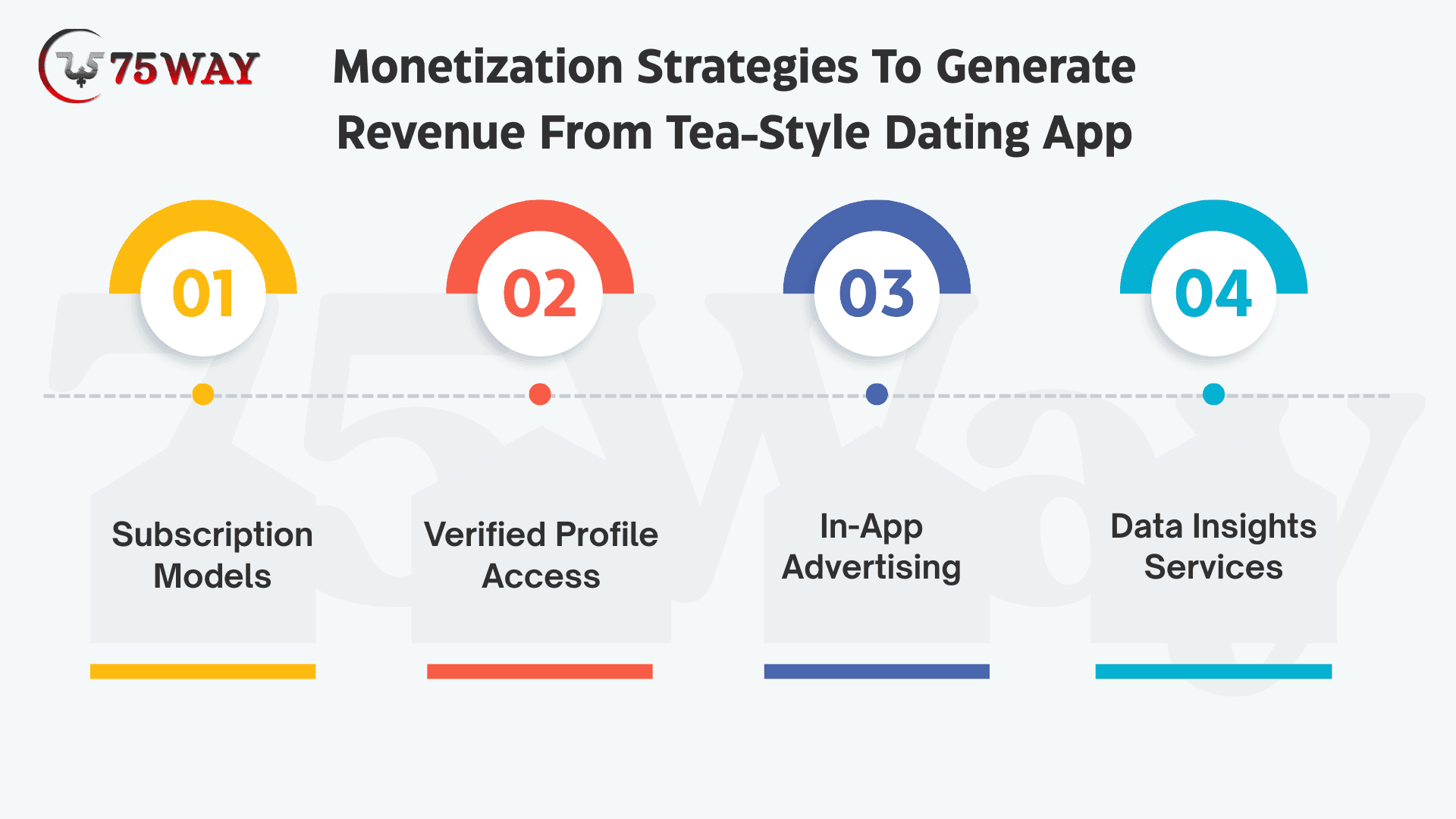
- Subscription Models: Premium subscriptions provide enhanced features such as advanced insights, extended access to community data, and improved interaction capabilities for users seeking deeper engagement.
- Verified Profile Access: Paid verification systems allow users to authenticate their identity, increasing trust and credibility while offering additional visibility and safer interaction experiences.
- In-App Advertising: Non-intrusive and relevant advertisements are displayed within the platform to generate revenue while maintaining a smooth and user-friendly experience.
- Data Insights Services: Aggregated and anonymized user data is analyzed to provide market insights for businesses without compromising individual user privacy or identity protection.
What Is The Cost To Build An App Like Tea?
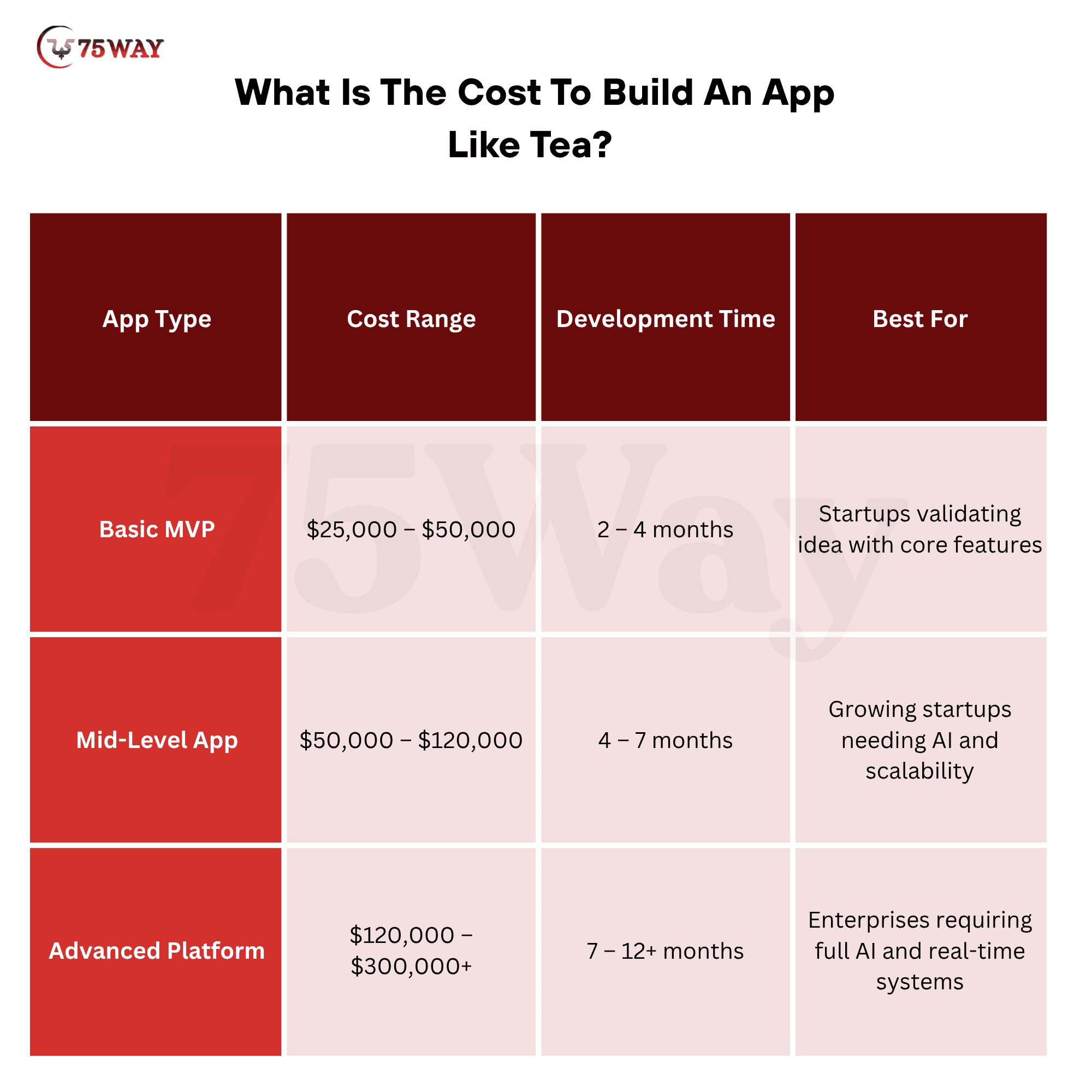
Building an app like Tea requires investment based on feature complexity, AI integration, scalability requirements, and design sophistication. The overall development cost typically ranges from $25,000 – $300,000+, with the average cost depending on whether you are building an MVP, mid-level product, or fully scalable enterprise platform.
Basic MVP: $25,000 – $50,000
Limited features, basic UI, simple backend.
Mid-Level App: $50,000 – $120,000
AI moderation, scalable backend, better UX.
Advanced Platform: $120,000 – $300,000+
Full AI systems, real-time scaling, enterprise architecture.
Security And Compliance Considerations In Building Tea-Like App
Security and compliance are critical for apps like Tea because they handle sensitive user-generated content, identity-related signals, and private conversations. Strong regulatory alignment and technical safeguards help protect user trust, prevent data misuse, and ensure safe platform operations across global markets.
- GDPR Compliance: Ensures user data is collected, stored, and processed with clear consent and transparency. It gives users control over their personal information and supports rights like data access and deletion.
- Data Encryption Standards: Protects sensitive data during transmission and storage using advanced encryption protocols. This reduces risks of unauthorized access, leaks, and cyberattacks across the platform.
- Secure Authentication Systems: Uses multi-factor authentication and secure login mechanisms to verify user identity. This helps prevent account breaches and unauthorized platform access.
- User Consent Frameworks: Ensures users explicitly agree to data usage policies before interacting with the platform. It maintains transparency and builds trust through clear permission-based data handling.
Final Thoughts
Building an app like Tea in 2026 requires a deep combination of advanced mobile engineering, AI-powered moderation systems, scalable backend architecture, and user-centric design principles. These applications are not just social platforms but complex trust ecosystems that balance anonymity, safety, engagement, and real-time interaction. The success of such apps depends heavily on how well developers manage data privacy, content moderation, user trust, and scalability. Startups and businesses that invest in this category early have the opportunity to build highly engaging, viral, and scalable platforms that redefine how users interact online. Looking to build a high-performance, scalable social platform like Tea with advanced AI features and modern architecture? Partner with a leading mobile app development company to design and develop next-generation mobile applications that drive engagement, trust, and long-term digital growth.
Frequently Asked Questions (FAQs)
What Makes Apps Like Tea Go Viral?
User curiosity and anonymous interaction drive rapid sharing across social circles. Strong emotional engagement and community validation create continuous organic growth loops.
Is It Possible To Scale Anonymous Social Apps Globally?
Yes, scalable cloud architecture and modular backend systems support global expansion. Proper infrastructure planning ensures performance stability during high traffic spikes.
How Important Is User Trust In Such Applications?
User trust is critical for retention and engagement in anonymous platforms. Without trust, users quickly abandon the application and reduce activity levels.
What Role Does Data Privacy Play In These Apps?
Data privacy ensures safe anonymous interactions without identity exposure risks. Strong encryption and compliance frameworks protect sensitive user-generated content.
Can Such Apps Work Without AI Systems?
Yes, but performance and safety significantly decrease without AI systems. Manual moderation cannot handle large-scale user-generated content.
Why Do Users Prefer Anonymous Social Platforms?
Users feel more comfortable sharing honest opinions without identity pressure. This freedom encourages authentic communication and higher engagement across communities.
How Do These Apps Maintain Long-Term Engagement?
Continuous content flow and community validation systems keep users active. Regular updates and engagement loops improve retention over time.
Are These Apps Suitable For Startup Businesses?
Yes, they offer strong viral potential and scalable monetization opportunities. Startups benefit from high engagement and rapid user acquisition potential.