AI Summary
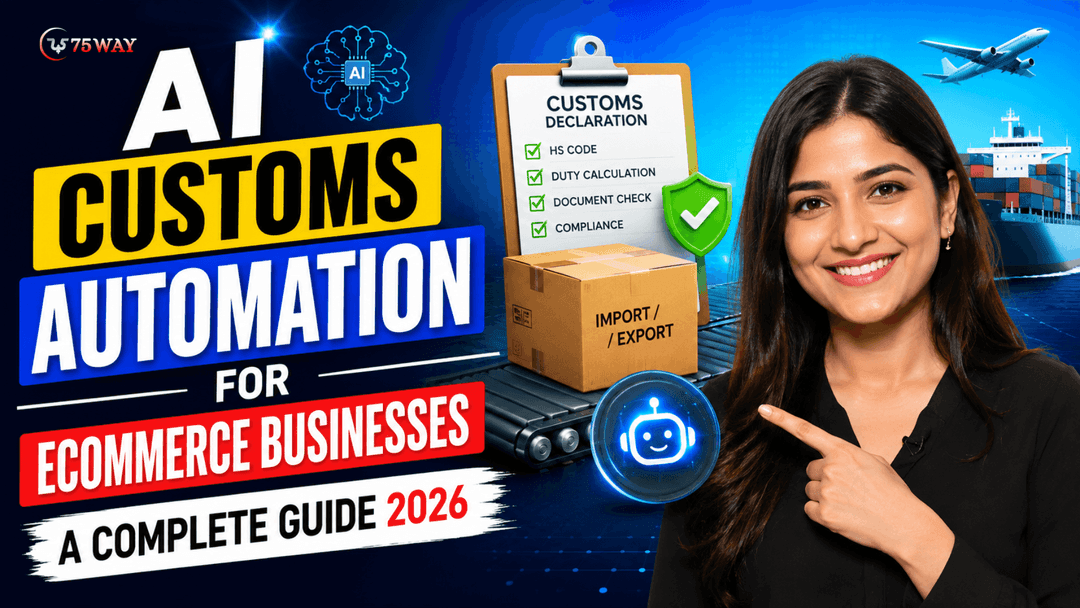
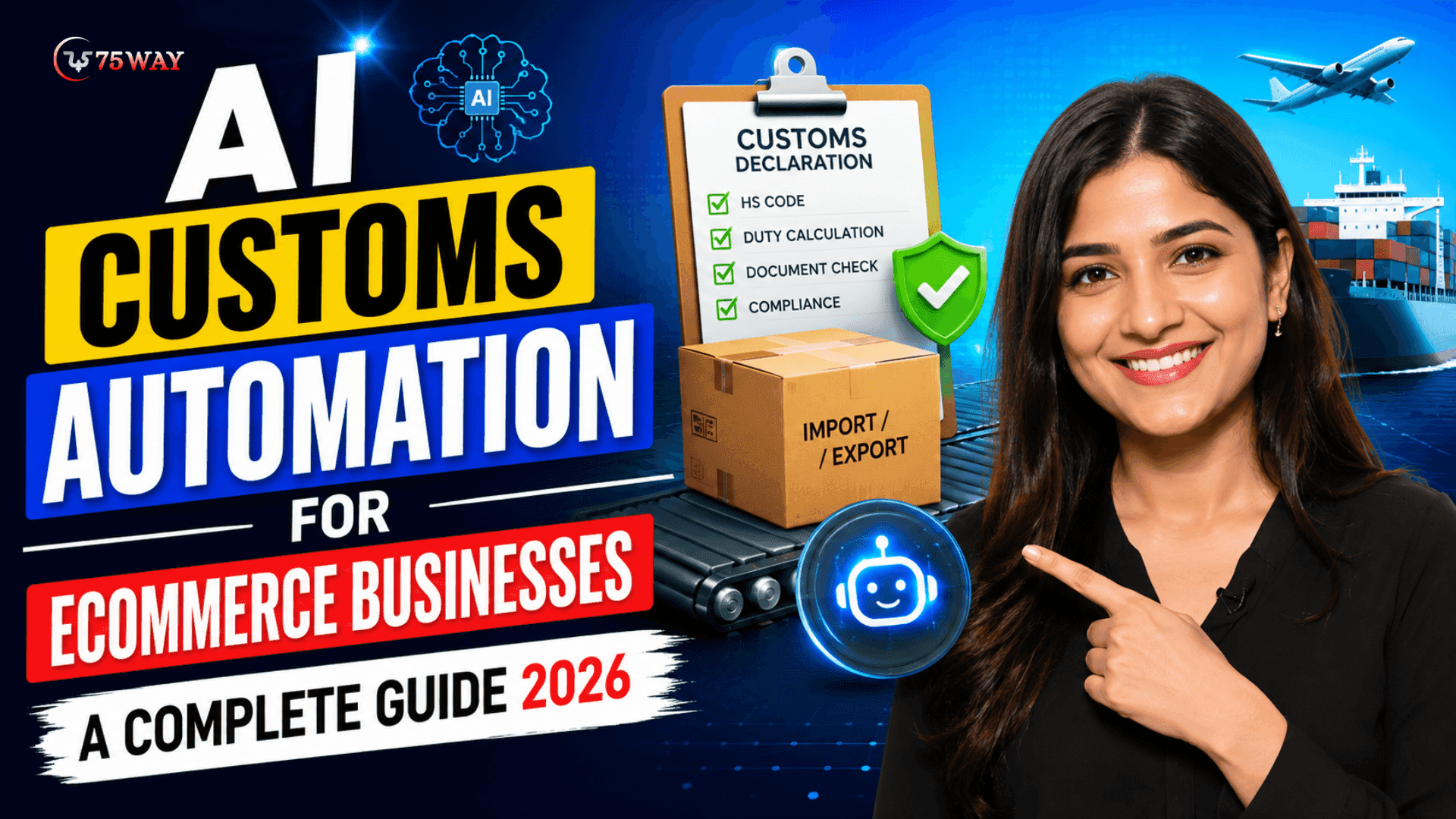
AI customs automation for ecommerce businesses is transforming global trade by helping brands automate customs documentation, compliance verification, and shipment workflows. This complete guide explains how AI-driven workflow automation improves operational efficiency, reduces clearance delays, and enables ecommerce companies to scale international shipping with accuracy.
Key Takeaways
- AI customs automation simplifies complex ecommerce shipping and compliance processes.
- Machine learning improves customs accuracy, speed, and documentation management.
- AI-driven workflows reduce operational costs for ecommerce businesses globally.
- Automated customs solutions enhance customer experiences through faster deliveries.
- Future ecommerce growth depends on intelligent trade automation technologies.
If you run an ecommerce business that ships internationally, you already know that getting an order is only half the job. The real complexity starts when that package reaches customs, where missing documents, incorrect classifications, or compliance issues can slow everything down.
Many businesses still manage these processes manually, which works at a smaller scale but becomes difficult as order volumes grow. AI customs automation helps companies handle these challenges by reducing repetitive work, improving accuracy, and making cross-border operations easier to manage.
In this guide, we will explain how AI customs automation works, why ecommerce businesses are adopting it in 2026, and how AI automation can help create a faster and more reliable global shipping experience.
What Is AI Customs Automation For Ecommerce?
AI customs automation for ecommerce uses artificial intelligence to simplify international shipping and customs processes. It helps businesses automate tasks like product classification, customs documentation, compliance checks, and shipment tracking.
When ecommerce businesses sell products across different countries, they must follow many customs rules. They need to prepare accurate documents, assign correct HS codes, calculate duties, and meet import requirements. Doing these tasks manually takes time and often leads to costly mistakes.
For example, a U.S.-based ecommerce company selling smart watches worldwide may need to ship hundreds of orders every day. The team must identify the correct product category, prepare customs forms, and check country-specific regulations. An AI customs automation system can analyze product details, suggest the appropriate HS code, create the required documents, and highlight potential compliance issues before shipping.
Unlike traditional automation, AI does not only follow fixed rules. It learns from previous shipments, identifies patterns, and improves recommendations over time. If the system has processed thousands of similar products before, it can use that information to suggest better classifications and reduce errors.
AI customs automation also helps businesses detect problems before they delay shipments. For example, if a new import regulation affects electronic products in a specific country, the AI system can notify the business and suggest necessary changes.
Why Invest In AI Customs Automation For Ecommerce In 2026?
AI customs automation is becoming a critical investment for ecommerce businesses that want to improve international shipping performance and compete in global markets. In the U.S., artificial intelligence-powered customs solutions are helping businesses reduce entry filing time by up to 70%, improve government targeting efficiency by nearly 40%, and achieve 85% to 95% accuracy in initial tariff classification decisions.
These improvements show how AI-driven workflow automation can transform customs operations from manual processes into intelligent systems. By automating documentation, classification, compliance checks, and risk analysis, ecommerce businesses can reduce delays, lower operational costs, and create a more predictable cross-border delivery experience. In 2026, adopting AI customs automation is not only about improving efficiency but also about building a scalable foundation for international ecommerce growth.
How AI Customs Automation Works For Ecommerce Businesses?
AI customs automation connects ecommerce platforms, logistics systems, and compliance databases to create a smarter customs workflow. It automatically analyzes shipment information, prepares documents, and identifies potential risks before goods reach customs.
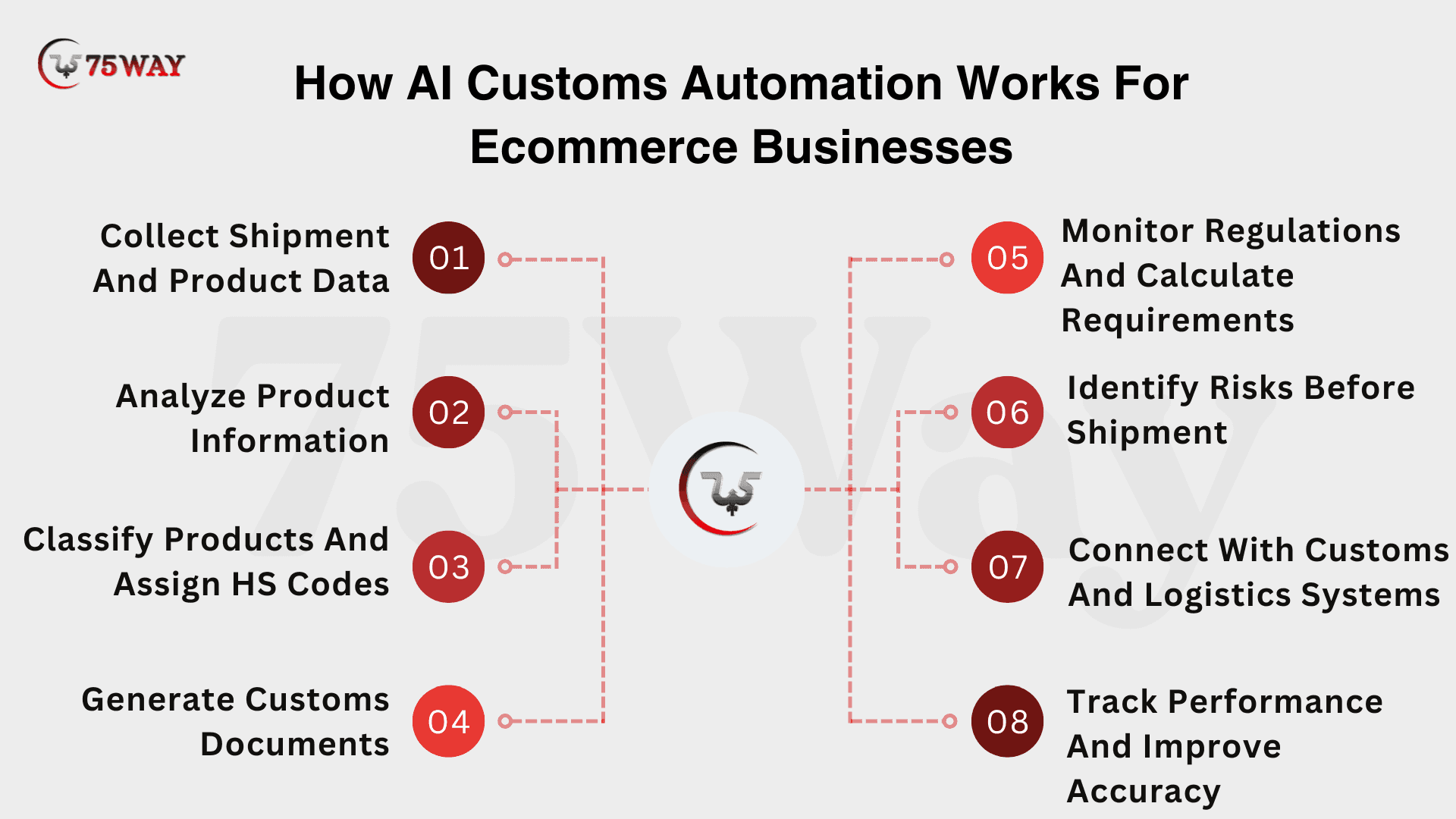
1. Collect Shipment And Product Data
The process begins when AI collects information from ecommerce stores, order management systems, and logistics platforms. It gathers details such as product descriptions, quantities, prices, destination countries, customer information, and shipping details to understand each shipment.
2. Analyze Product Information
After collecting data, AI models review product details to understand what is being shipped and where it is going. The system identifies product categories, compares historical shipment data, and prepares the information needed for accurate customs processing.
3. Classify Products And Assign HS Codes
Incorrect HS codes are one of the common reasons for customs delays. AI analyzes product descriptions, previous classifications, and trade databases to recommend suitable HS codes and reduce classification mistakes.
4. Generate Customs Documents
Once product details are verified, AI solutions automatically prepare required documents such as commercial invoices, customs declarations, and shipping forms. It checks important fields to ensure documents are complete before submission.
5. Monitor Regulations And Calculate Requirements
Customs rules vary by country and change frequently. AI systems monitor regulatory updates, tariff changes, duty requirements, and import restrictions to identify requirements for each destination market.
6. Identify Risks Before Shipment
Before goods reach the border, AI analyzes shipment data to detect possible problems such as incorrect classifications, missing documents, or compliance issues. Businesses receive alerts and can resolve these issues before delays occur.
7. Connect With Customs And Logistics Systems
AI automation for ecommerce can integrate with shipping carriers, logistics providers, and customs platforms to share information smoothly. This creates better coordination between ecommerce businesses, warehouses, and delivery partners.
8. Track Performance And Improve Accuracy
After shipments are processed, AI analyzes results such as clearance time, errors, and recurring issues. This data helps businesses improve future shipments and make their customs operations more efficient over time.
Read More: How AI in Ecommerce Helps Retailers Drive More Sales and Conversions?
How To Implement AI Customs Automation In Your Ecommerce Business?
The success of AI customs automation depends on how well it fits into your existing ecommerce operations. The implementation steps below guide businesses through planning, integration, testing, and scaling an AI-powered customs workflow.
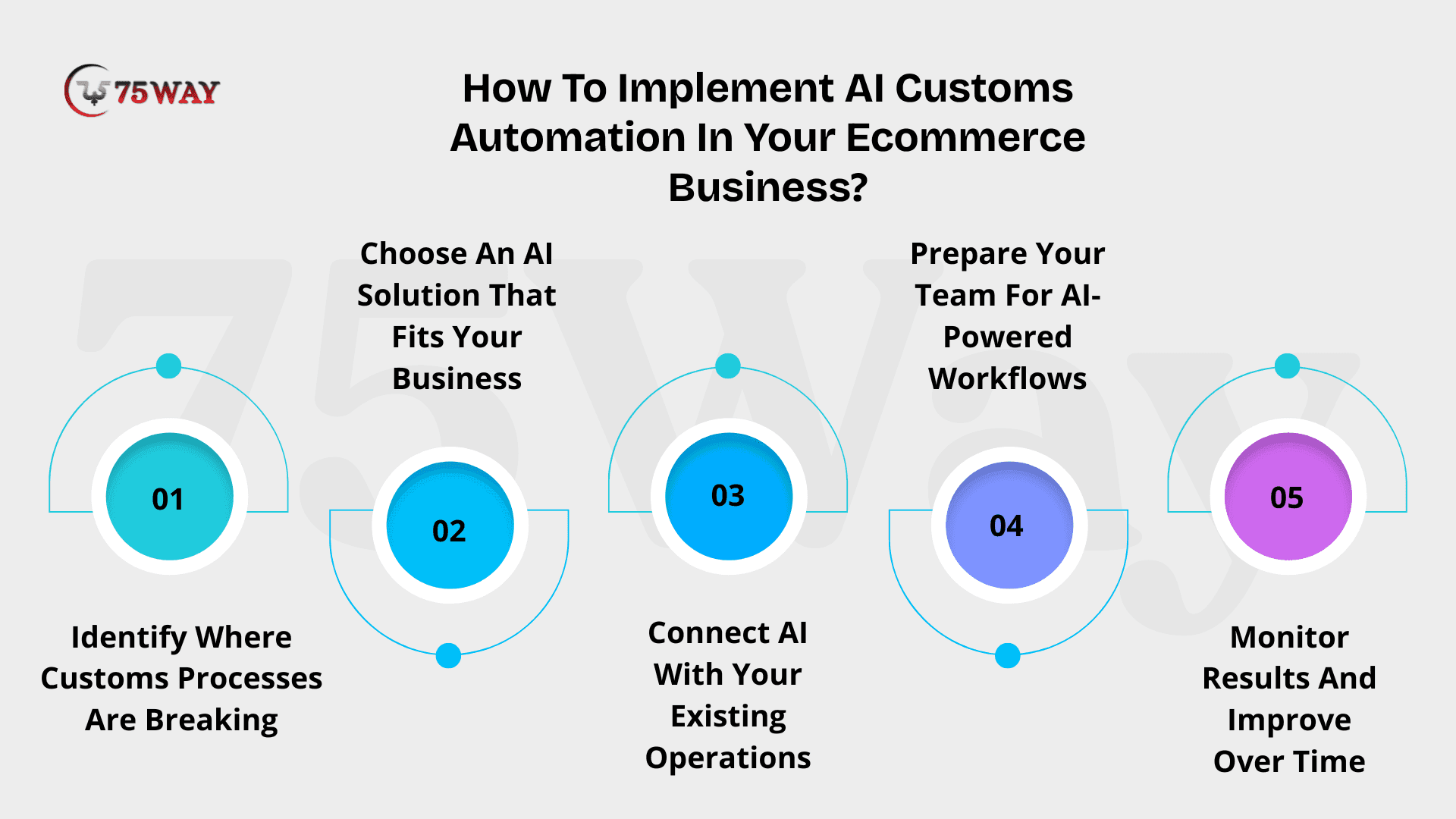
1. Identify Where Customs Processes Are Breaking
Before choosing any technology, ask yourself: Where are customs operations creating the most problems?
Are shipments getting delayed because of documentation mistakes? Is your team spending too much time checking regulations manually? Identifying these challenges helps businesses understand which AI capabilities they actually need instead of investing in unnecessary features.
2. Choose An AI Solution That Fits Your Business
Every ecommerce business has different shipping requirements. A small brand shipping a few hundred international orders will have different needs than a global marketplace managing thousands of shipments daily.
The right AI customs platform should support essential capabilities such as automated documentation, HS code classification, compliance monitoring, analytics, and integrations with existing ecommerce and logistics systems.
3. Connect AI With Your Existing Operations
AI customs automation delivers the best results when it works with the tools your business already uses. Connecting the platform with ecommerce stores, ERP systems, inventory software, and logistics providers creates a smooth flow of shipment data.
For example, when a customer places an international order, product details can automatically move through the system for classification, documentation, and compliance checks without requiring repeated manual entry.
4. Prepare Your Team For AI-Powered Workflows
Technology works best when teams know how to use it effectively. Employees should understand how AI makes decisions, how to review automated outputs, and when human approval is required.
Regular training helps teams handle exceptions confidently while allowing AI to manage repetitive customs tasks more efficiently.
5. Monitor Results And Improve Over Time
AI implementation is not a one-time setup. Businesses should regularly review shipment performance, clearance times, documentation accuracy, and compliance results to identify improvement opportunities.
By analyzing real shipment data and adjusting workflows, companies can continuously improve automation performance and create a more efficient global shipping operation.
Explore More:Ecommerce Application Development: A Practical Guide for Businesses
How AI Customs Automation Benefits Ecommerce Businesses
For ecommerce businesses, customs challenges can quickly turn into shipping delays and higher operational costs. Here are the key ways AI customs automation helps businesses create faster, smoother, and more reliable cross-border workflows.
- Faster Customs Clearance: Border delays often happen because of incomplete documents, incorrect classifications, or missing shipment details. An AI-powered customs system reviews this information before submission and helps businesses fix potential issues before they affect delivery timelines.
- Fewer Documentation Errors: Customs paperwork involves hundreds of small details that need to be accurate. Automated document checks can identify mistakes in product descriptions, invoices, and declarations, reducing the chances of shipment holds or compliance problems.
- Lower Operational Costs: Managing customs manually requires teams to spend significant time reviewing documents and checking regulations. Automation takes care of repetitive tasks, allowing employees to handle more important activities while reducing unnecessary processing costs.
- Improved Regulatory Compliance: Each country follows different import rules, tax requirements, and product regulations. A smart customs system monitors these changes and helps ecommerce companies prepare shipments according to the latest compliance requirements.
- Better Customer Delivery Experience: Customers expect international orders to arrive quickly and without unexpected delays. Smoother customs processing helps brands provide more accurate delivery estimates and create a more reliable shopping experience.
- Easier Global Expansion: Entering new international markets requires strong customs management. With automated workflows in place, ecommerce businesses can handle higher shipment volumes and expand globally without adding excessive operational complexity.
Key Features For Building AI Customs Automation Software For Businesses
A powerful customs automation system needs to solve real operational challenges, not just automate basic tasks. The following capabilities highlight how AI-powered ecommerce software helps businesses improve accuracy, speed, and decision-making across international trade processes.
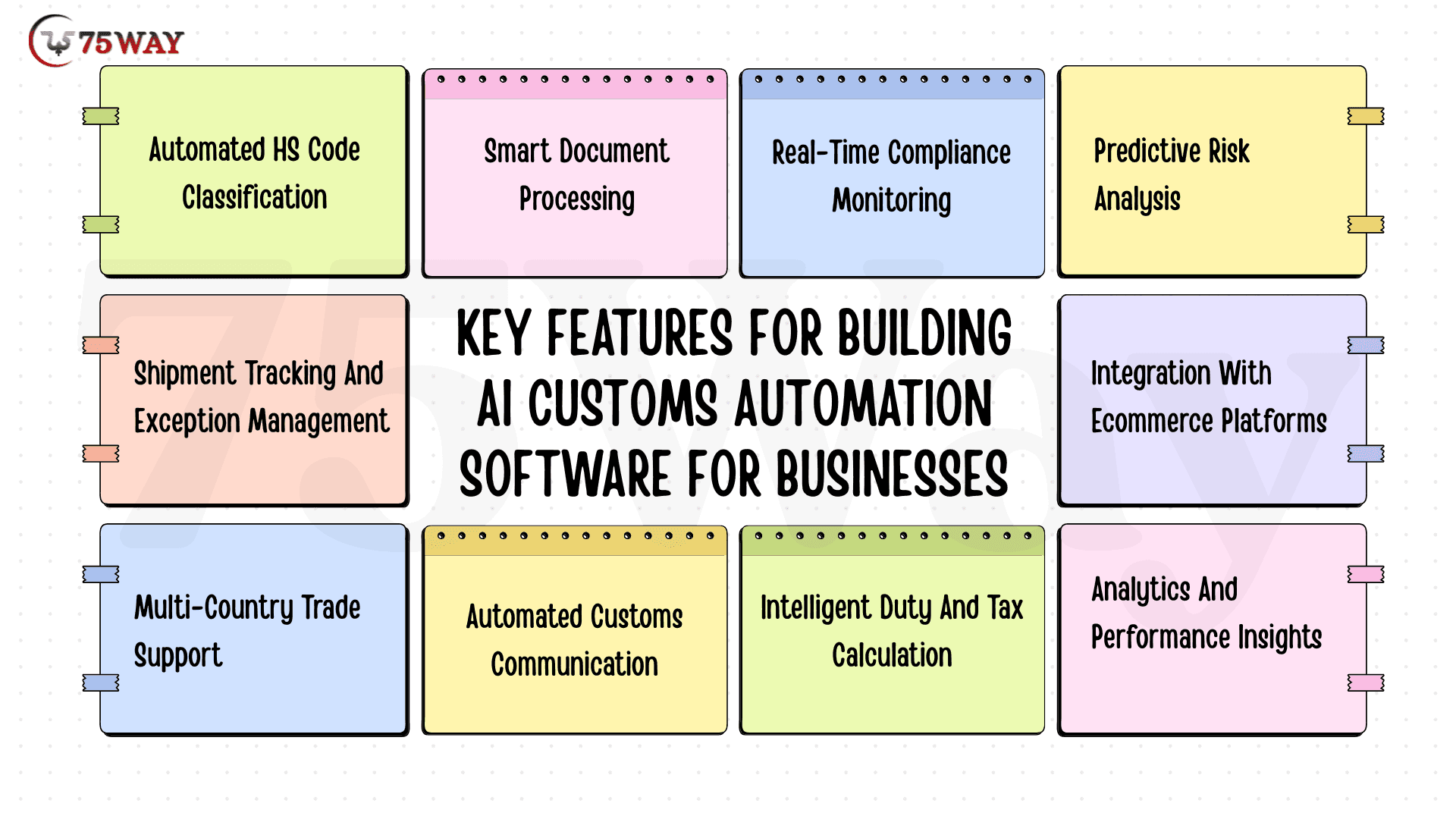
- Automated HS Code Classification
Finding the correct HS code can be challenging, especially for businesses selling thousands of products across different markets. AI software reviews product descriptions, categories, and previous shipment data to suggest accurate classifications, reducing errors that can lead to delays, fines, or incorrect duty calculations.
- Smart Document Processing
Customs paperwork can quickly become overwhelming when shipment volumes increase. The software automatically prepares, reviews, and organizes important documents such as commercial invoices, customs declarations, and shipping forms, helping teams save time and maintain greater accuracy.
- Real-Time Compliance Monitoring
Global trade rules are constantly changing, and missing an update can create unexpected shipping problems. AI-powered systems monitor regulations, tariffs, and country-specific requirements to alert businesses about possible compliance issues before shipments move forward.
- Predictive Risk Analysis
Not every customs problem appears before a shipment is delayed. Machine learning analyzes past shipment data and identifies patterns that may indicate future risks. Businesses can take preventive action instead of reacting after issues occur at the border.
- Integration With Ecommerce Platforms
Customs management becomes easier when all systems work together. AI solutions can connect with ecommerce platforms, marketplaces, ERP systems, and logistics tools to create a connected workflow from order placement to final delivery.
- Analytics And Performance Insights
Understanding why shipments succeed or fail helps businesses improve their global operations. AI-powered dashboards track clearance times, recurring issues, and shipping performance, allowing companies to identify opportunities for faster and more efficient international delivery.
- Intelligent Duty And Tax Calculation
Calculating import duties and taxes manually can be complicated because rates vary by product type and destination country. AI-powered ecommerce applications analyze shipment details, regional regulations, and tariff information to estimate costs more accurately, helping businesses avoid unexpected expenses.
- Automated Customs Communication
Delays often happen when businesses need to exchange information with customs authorities or logistics partners. AI automation can organize required updates, track communication workflows, and ensure important requests are handled without unnecessary back-and-forth.
- Multi-Country Trade Support
Selling internationally means dealing with different customs rules in every market. AI customs platforms support multiple regions by adapting workflows, documentation requirements, and compliance checks based on each country’s regulations.
- Shipment Tracking And Exception Management
A shipment can face unexpected issues even after leaving the warehouse. AI monitors shipment progress, identifies unusual delays, and alerts teams about possible exceptions so they can take action before customers are affected.
Quick Read:Top Features For Ecommerce Mobile App Development Every Business Needs in 2026
Why Ecommerce Businesses Need AI Customs Automation In 2026?
AI customs automation for ecommerce helps businesses overcome these challenges by automating customs documentation, compliance checks, shipment analysis, and risk detection. It enables faster processing while improving accuracy across global supply chains.
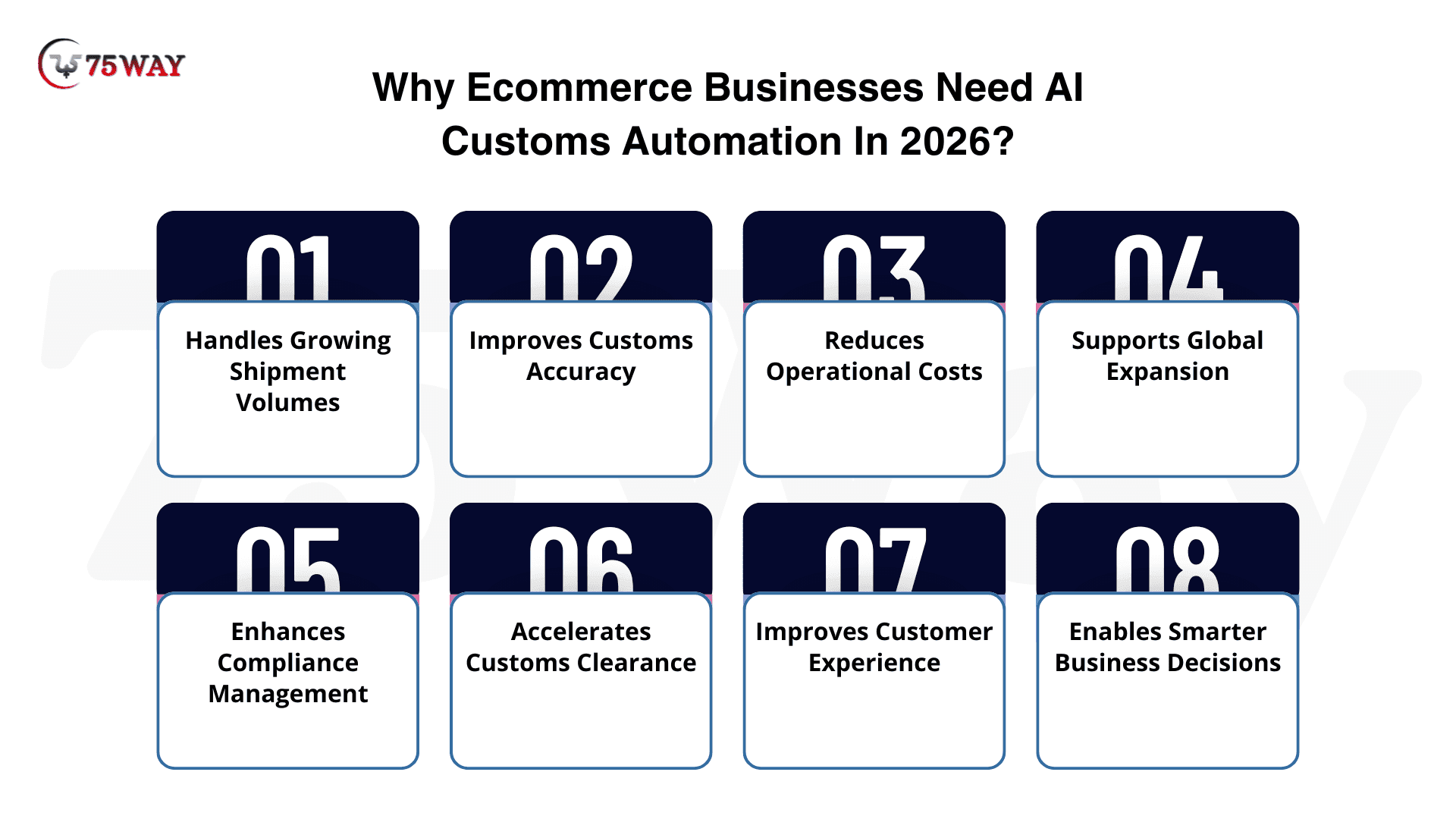
- Handles Growing Shipment Volumes
As ecommerce brands expand globally, managing thousands of international shipments manually becomes difficult. AI-driven workflow automation helps process large volumes of customs data without increasing workload.
- Improves Customs Accuracy
Incorrect HS codes, missing documents, and compliance mistakes can delay shipments. AI analyzes product information and recommends accurate classifications to reduce errors.
- Reduces Operational Costs
Automating repetitive customs tasks allows teams to spend less time on paperwork and focus more on business growth, customer experience, and market expansion.
- Supports Global Expansion
AI-powered customs solutions help ecommerce companies enter new markets by adapting to regional regulations and simplifying international trade requirements.
Real-World Applications of AI Customs Automation In Ecommerce
AI customs automation becomes most valuable when it solves everyday challenges faced by ecommerce teams handling international shipments. The use cases below show how businesses are applying AI to simplify customs workflows, reduce manual effort, and improve delivery operations.
1. Global Online Retailers
Large ecommerce brands managing thousands of international orders use AI to automate customs documentation, product classification, and compliance checks. This helps maintain consistent shipping performance across multiple markets.
2. Marketplace Sellers
Third-party sellers on global marketplaces use AI customs solutions to manage complex import requirements. Automated workflows help sellers reduce errors and deliver products faster to international customers.
3. Fashion And Apparel Ecommerce
Fashion brands often ship products across multiple countries with different labeling and tariff requirements. AI helps classify products and manage changing customs regulations.
4. Electronics Ecommerce Companies
Electronics businesses handle products with complex specifications and regulatory requirements. AI automation helps verify product information, identify compliance risks, and support accurate customs declarations.
5. Subscription Ecommerce Businesses
Subscription-based brands shipping recurring packages internationally use AI to automate repetitive customs tasks. This ensures smoother deliveries and reduces shipment interruptions.
6. B2B Ecommerce Companies
B2B ecommerce businesses managing bulk international shipments use AI to improve trade documentation, supplier coordination, and compliance management across regions.
Challenges of AI Customs Automation For Ecommerce Businesses
AI customs automation can transform international shipping operations, but implementation is not always completely effortless. Businesses need to understand potential challenges and prepare the right solutions to ensure automation delivers accurate, reliable, and long-term value.
1. Data Accuracy Issues
AI systems depend heavily on the quality of product information, shipment details, and historical trade records. If product descriptions are incomplete or incorrect, the system may recommend inaccurate classifications or create documentation errors.
How To Resolve: Businesses should maintain clean product data, regularly update information, and establish data validation processes before feeding information into AI systems.
2. Integration Complexity
Connecting AI customs software with existing ecommerce platforms, ERP systems, inventory tools, and logistics providers can require technical expertise. Poor integration may create disconnected workflows and reduce the benefits of automation.
How To Resolve: Choose platforms with strong API support and work with experienced technology teams to ensure smooth integration with existing business systems.
3. Regulatory Differences Across Countries
International ecommerce involves different customs rules, tax structures, and import regulations in every market. Keeping up with these changes can be challenging for businesses operating across multiple regions.
How To Resolve: Use AI solutions that provide real-time regulatory monitoring and regularly update compliance databases to support accurate international shipments.
4. Initial Implementation Costs
Adopting AI customs automation requires investment in software, system integration, employee training, and process improvements. For some businesses, the upfront cost may seem high compared to manual processes.
How To Resolve: Start with high-impact automation areas, implement features in phases, and measure cost savings from reduced errors, faster processing, and improved efficiency.
5. Human Oversight Requirements
AI can handle many customs tasks, but some situations still require human judgment. Complex shipments, unusual products, and special regulatory cases may need expert review.
How To Resolve: Create a hybrid workflow where AI manages repetitive operations while customs professionals handle critical decisions and exceptions.
6. Continuous System Improvement
AI models need ongoing monitoring to maintain accuracy as products, regulations, and business operations change. Without regular updates, automation performance may decline over time.
How To Resolve: Review AI recommendations regularly, update business rules, and use new shipment data to continuously improve system performance.
How 75way Helps Brands Automate Ecommerce Customs Operations With AI?
International shipping becomes complicated when order volumes grow, and businesses enter new markets. 75way Technologies helps ecommerce businesses identify where manual customs processes slow operations and builds AI-powered solutions that fit their existing workflows.
Instead of forcing businesses to adopt a one-size-fits-all system, our ecommerce app developers focus on creating automation that works with their current ecommerce platforms, inventory systems, and logistics tools.
From automating document reviews and improving HS code accuracy to connecting data across shipping operations, our ecomerce platform creation team helps businesses reduce repetitive work and make better decisions with real-time insights.
We partnered with GlobalCart, a growing ecommerce marketplace expanding across North America and Europe, to automate its customs management process. The company was facing shipment delays due to manual HS code classification, document verification, and changing compliance requirements.
Our team developed an AI-powered customs automation solution that integrated with GlobalCart’s ecommerce platform and logistics systems to automate document checks, identify classification issues, and monitor regulatory updates. After implementation, GlobalCart reduced customs processing time by 60%, improved documentation accuracy, and created a more reliable international delivery workflow without increasing operational workload.
Final Thoughts
To summarize, AI customs automation for ecommerce businesses is transforming how brands manage international trade. With AI-driven workflow automation, companies can streamline documentation, enhance shipment visibility, and deliver faster cross-border experiences. As global ecommerce continues to expand, businesses that adopt intelligent customs solutions will gain a stronger operational advantage and scale more effectively. To build reliable automation systems that support long-term growth, you can contact a trusted AI automation provider helping ecommerce businesses implement smarter AI-powered solutions for global operations.
Frequently Asked Questions (FAQs)
How Does AI Customs Automation Improve Supply Chain Visibility?
AI customs automation provides real-time shipment insights by tracking customs activities, documentation status, and potential delays. Businesses can monitor international operations and make faster decisions.
Can Small Ecommerce Businesses Use AI Customs Automation?
Yes, small ecommerce businesses can adopt scalable AI customs solutions based on their shipping volume. These tools help smaller teams manage global trade requirements efficiently.
How Secure Is Data In AI Customs Automation Systems?
AI customs platforms use security measures such as encryption and access controls to protect sensitive trade information. Businesses can manage customer, product, and shipment data.
What Industries Benefit Most From AI Customs Automation?
Industries handling frequent international shipments benefit significantly from AI customs automation solutions. Retail, electronics, healthcare, manufacturing, and ecommerce sectors can improve trade efficiency.
How Long Does It Take To Implement AI Customs Automation?
Implementation timelines depend on business requirements, system complexity, and integration needs. Most businesses can gradually deploy automation features while minimizing operational disruptions.
Does AI Customs Automation Support Multiple Countries And Regulations?
Modern AI customs platforms are designed to manage international regulations across multiple regions. They continuously adapt workflows according to changing trade requirements and compliance standards.
What Data Does AI Customs Automation Analyze?
AI customs systems analyze product details, shipment records, trade documents, regulations, and historical customs data. This information helps improve accuracy, identify risks, and optimize workflows.
How Can Businesses Measure AI Customs Automation Success?
Businesses can measure success through reduced processing time, fewer errors, lower costs, and improved shipment performance. Analytics provide valuable insights for continuous workflow improvements.