Summary
AI agents automate communication, workflows, decision-making, and operational processes across modern business ecosystems. This guide defines AI agent architecture, features, workflows, development stages, use cases, benefits, challenges, and future trends influencing enterprise automation strategies in 2026. Businesses will discover how intelligent AI systems improve scalability, customer engagement, and operational productivity.
Quick Overview
- AI agents automate repetitive workflows across business operations
- Enterprise AI systems improve productivity and operational scalability
- AI-powered automation reduces manual workloads and response delays
- Autonomous AI agents offer personalized customer engagement on platforms
- Modern businesses can adopt AI agents for long-term digital transformation
Traditional automation tools can only handle predefined rules and repetitive workflows. Being a business founder, decision-maker, and manager, you can relate to this problem. But modern AI agents go far beyond that. They can understand context, interact naturally, make decisions, learn from data, coordinate tasks, and operate continuously with minimal human intervention.
That’s exactly why demand for AI agent development is growing so rapidly in 2026. Businesses are now deploying intelligent conversational AI solutions to manage customer support, automate sales operations, optimize ecommerce workflows, monitor financial processes, and even assist with research and strategic planning.
And the interesting part? AI agents are no longer limited to large enterprises with massive budgets. Startups, mid-sized companies, ecommerce brands, healthcare providers, and logistics firms are already integrating AI agents into their daily operations.
So what exactly are AI agents? How do they actually work behind the scenes? And more importantly, how can businesses build scalable AI agent systems that deliver real operational value instead of becoming another failed AI experiment?
In this guide, we’ll break down everything you need to know about AI agents in 2026. We’ll define architecture, working models, types, real-world business applications, development process, benefits, and future trends shaping the next generation of enterprise AI systems.
What Is An AI Agent?
An AI agent is an intelligent software system designed to perceive information, process data, make decisions, and perform tasks autonomously using artificial intelligence technologies.
Unlike traditional software systems following fixed instructions, AI agents adapt dynamically based on user behavior, business rules, real-time inputs, and machine learning models. These systems can analyze information, respond conversationally, automate workflows, and execute business operations with minimal human intervention.
Why Adopt AI Agent Solutions For Businesses In 2026?
Businesses increasingly operate in highly competitive digital environments requiring faster decision-making, scalable operations, and personalized customer engagement. Agentic AI solutions address these requirements with intelligent automation systems. Key drivers behind AI agent adoption include:
- Rising operational costs
- Growing customer expectations
- Workforce productivity challenges
- Expansion of digital communication channels
- Data-driven decision-making requirements
- AI-powered personalization demand
- Enterprise automation priorities
What’s The Working Process of AI Agents?
AI agents process information, analyze context, automate decisions, and execute workflows across connected digital systems. These intelligent systems continuously improve operational efficiency through automated learning and real-time business interactions.
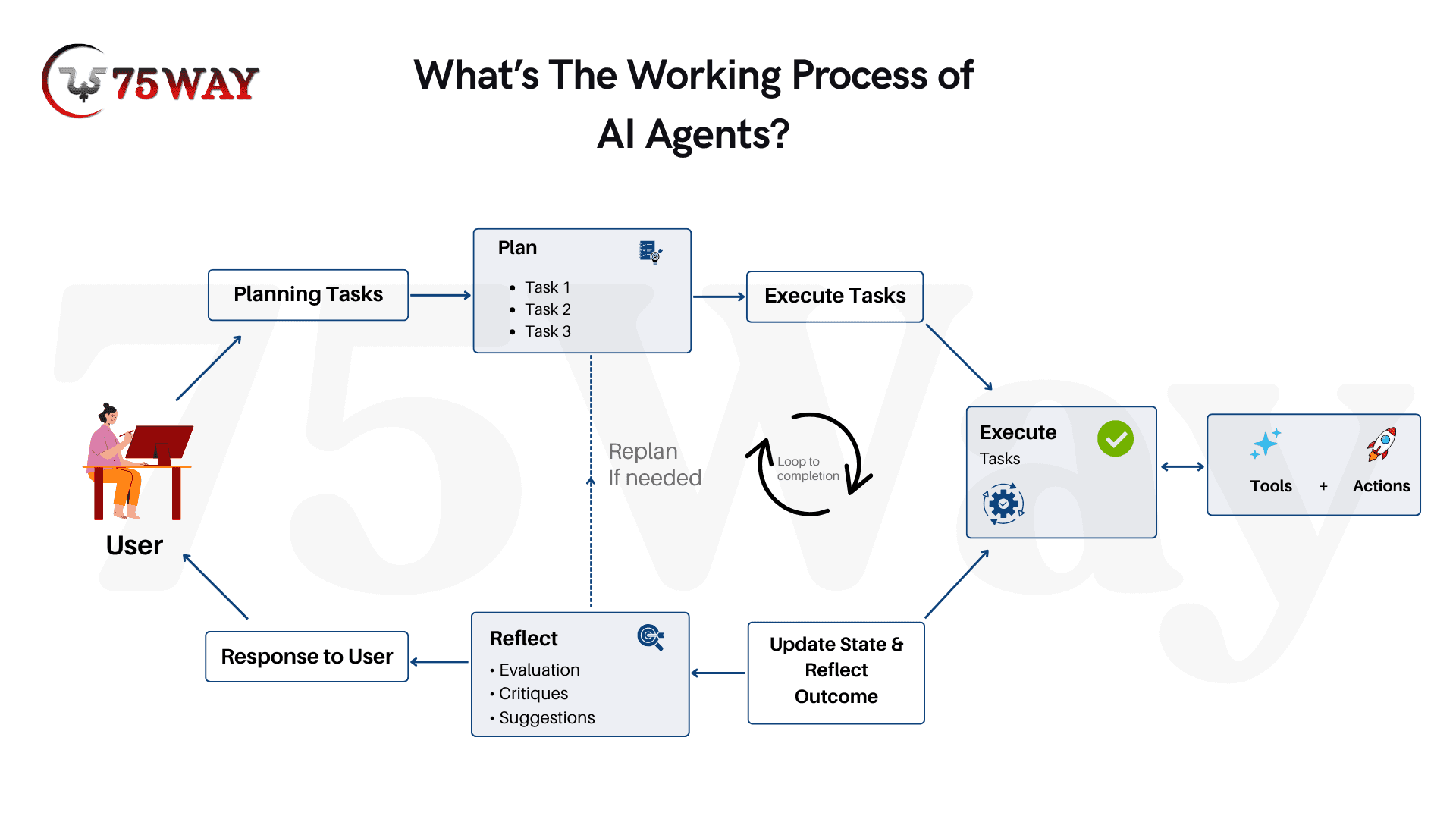
- Data Input Sources: AI agents collect information from conversations, APIs, CRM platforms, websites, and mobile applications. These inputs help systems understand operational activities and customer interactions.
- Context Analysis Engine: Natural language processing helps AI systems understand intent, behavior, and communication patterns automatically. Machine learning models improve contextual understanding using continuous interaction analysis and operational datasets.
- Intelligent Decision Logic: AI agents evaluate available information before selecting the most suitable operational action. Business rules and learned behavior improve decision-making accuracy across workflows continuously.
- Automated Task Execution: AI agents send responses, schedule appointments, process transactions, and update CRM records automatically. These systems reduce manual operational workloads across business environments.
- Continuous Learning Systems: Machine learning models improve AI performance using interaction history and behavioral analytics continuously. Ongoing optimization strengthens workflow accuracy and operational responsiveness across enterprise systems.
Diverse Types of AI Agents Enterprises Can Use to Improve Operations
Modern enterprises deploy multiple types of AI agents depending on operational requirements and automation goals.
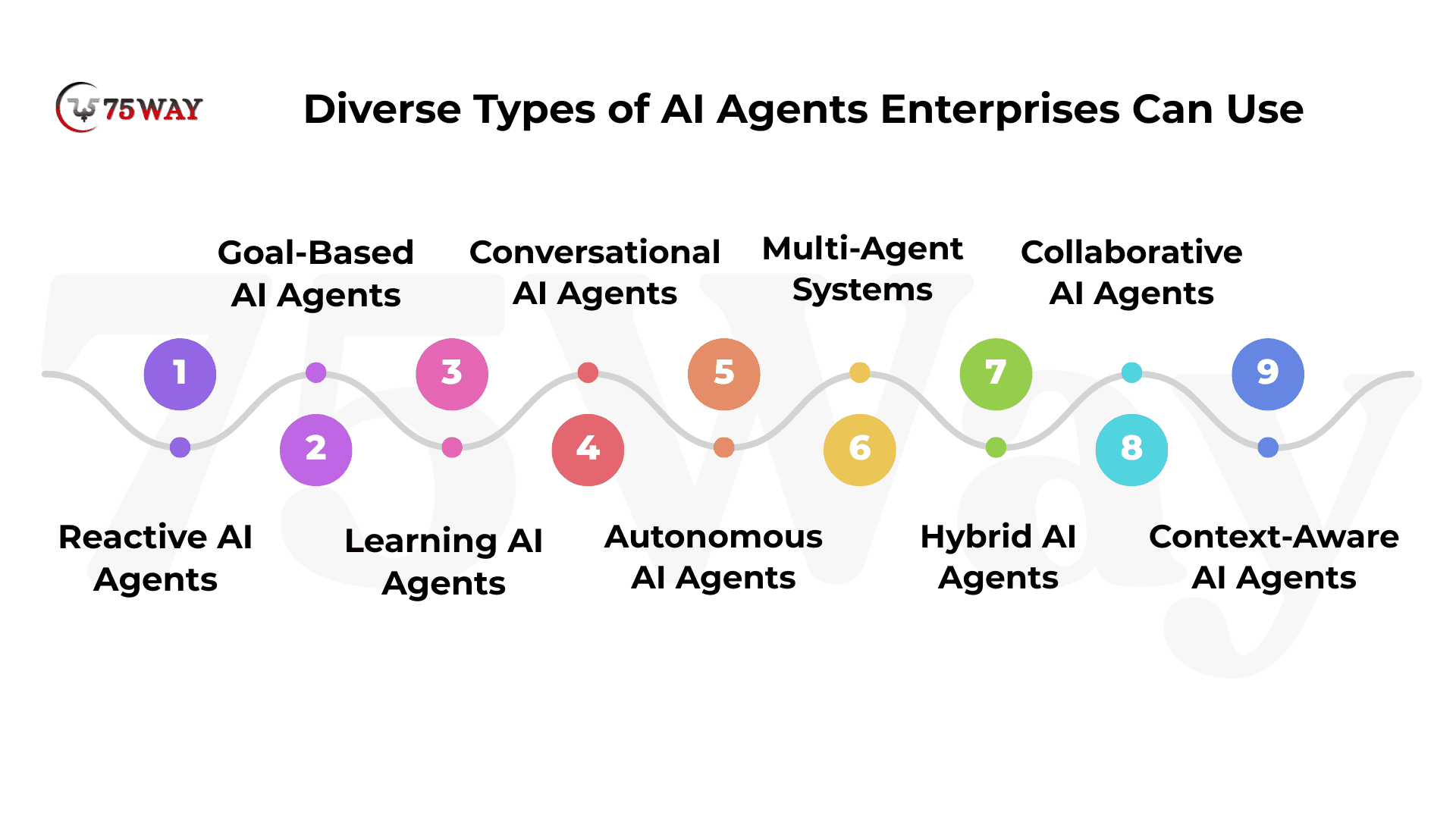
- Reactive AI Agents: Reactive AI agents respond instantly to inputs without storing long-term memory. These systems handle simple automation tasks and deliver fast rule-based outputs across defined operational scenarios.
- Goal-Based AI Agents: Goal-based AI agents evaluate multiple possible actions before selecting outcomes aligned with defined business objectives. They optimize decision-making by comparing results and choosing the most effective action path.
- Learning AI Agents: Learning AI agents continuously improve performance using machine learning models and historical interaction data. They adapt behavior over time to enhance accuracy, efficiency, and decision quality across workflows.
- Conversational AI Agents: Conversational AI agents interact with users through text and voice across digital platforms. They understand intent and deliver contextual responses for customer support, sales, and engagement workflows.
- Autonomous AI Agents: Autonomous AI agents independently execute tasks, manage workflows, and make operational decisions without human intervention. They support complex enterprise automation by handling end-to-end processes.
- Multi-Agent Systems: MASs involve multiple AI agents working together to solve complex problems. They coordinate actions across distributed environments to improve scalability and operational efficiency in enterprises.
- Hybrid AI Agents: Hybrid AI agents combine rule-based logic with machine learning capabilities for balanced decision-making. They improve flexibility by handling structured workflows and dynamic scenarios within business environments.
- Collaborative AI Agents: Collaborative AI agents work alongside humans and other systems to complete shared tasks efficiently. They enhance productivity by integrating human input with automated intelligence for better outcomes.
- Context-Aware AI Agents: Context-aware AI agents analyze real-time environment data to deliver relevant responses and actions. They improve personalization by adapting decisions based on situational and user-specific information.
AI Agents vs Traditional Chatbots: How They Differ in Real Use Cases
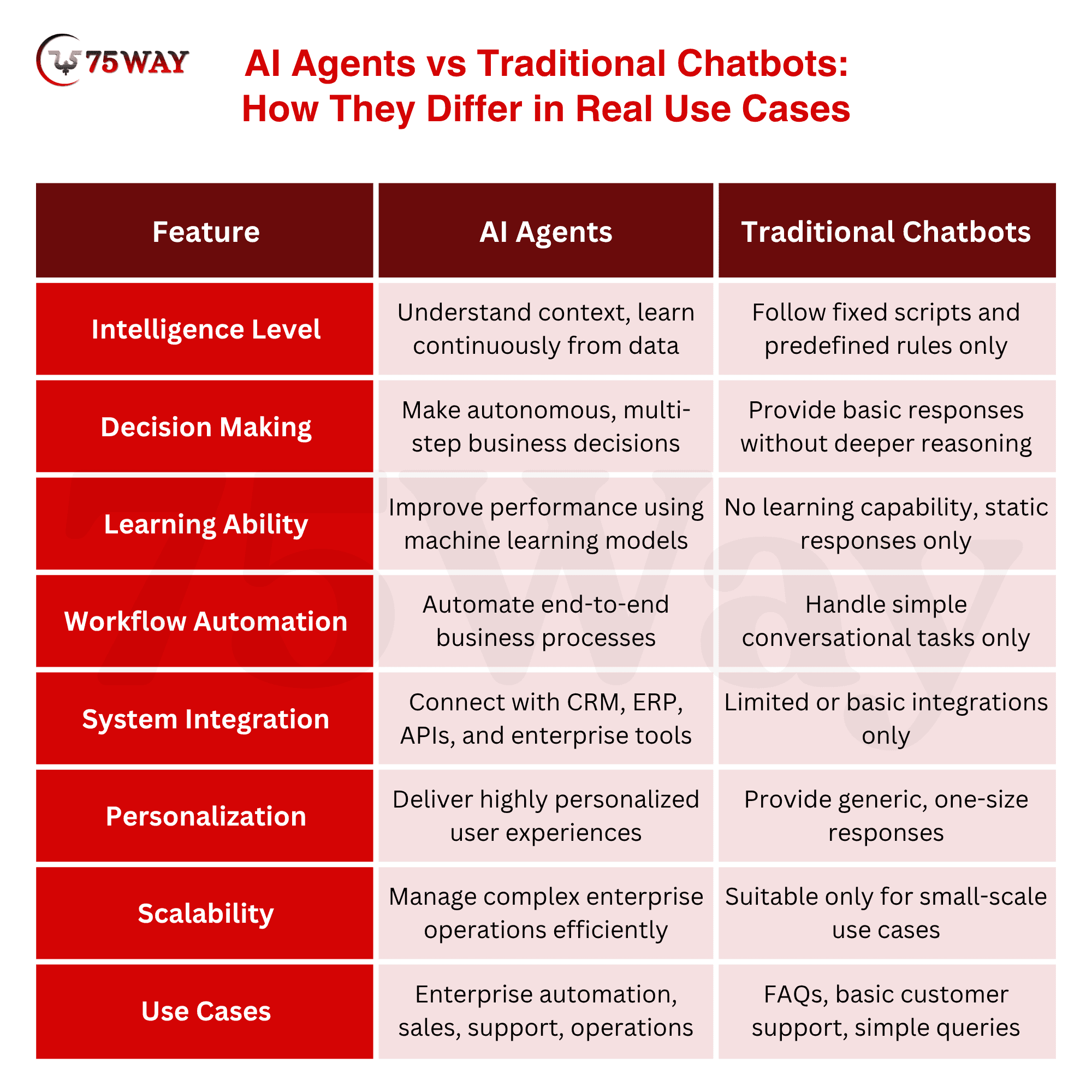
AI agents and traditional chatbots differ mainly in intelligence level, adaptability, and decision-making capability. Traditional chatbots follow predefined scripts and rule-based flows, which limit their ability to handle complex or unexpected user queries. They work well for basic FAQs but struggle with dynamic business scenarios.
AI agents, on the other hand, use machine learning, natural language processing, and contextual reasoning to understand intent and perform multi-step tasks. They can integrate with business systems, automate workflows, and continuously improve through data learning, making them far more suitable for modern enterprise automation.
Must-Have Features of Modern AI Agents for Businesses
AI agents are intelligent automation systems designed to improve business operations through communication, decision-making, and workflow optimization. These capabilities help enterprises streamline processes, enhance customer experiences, and scale operations efficiently using advanced AI technologies.
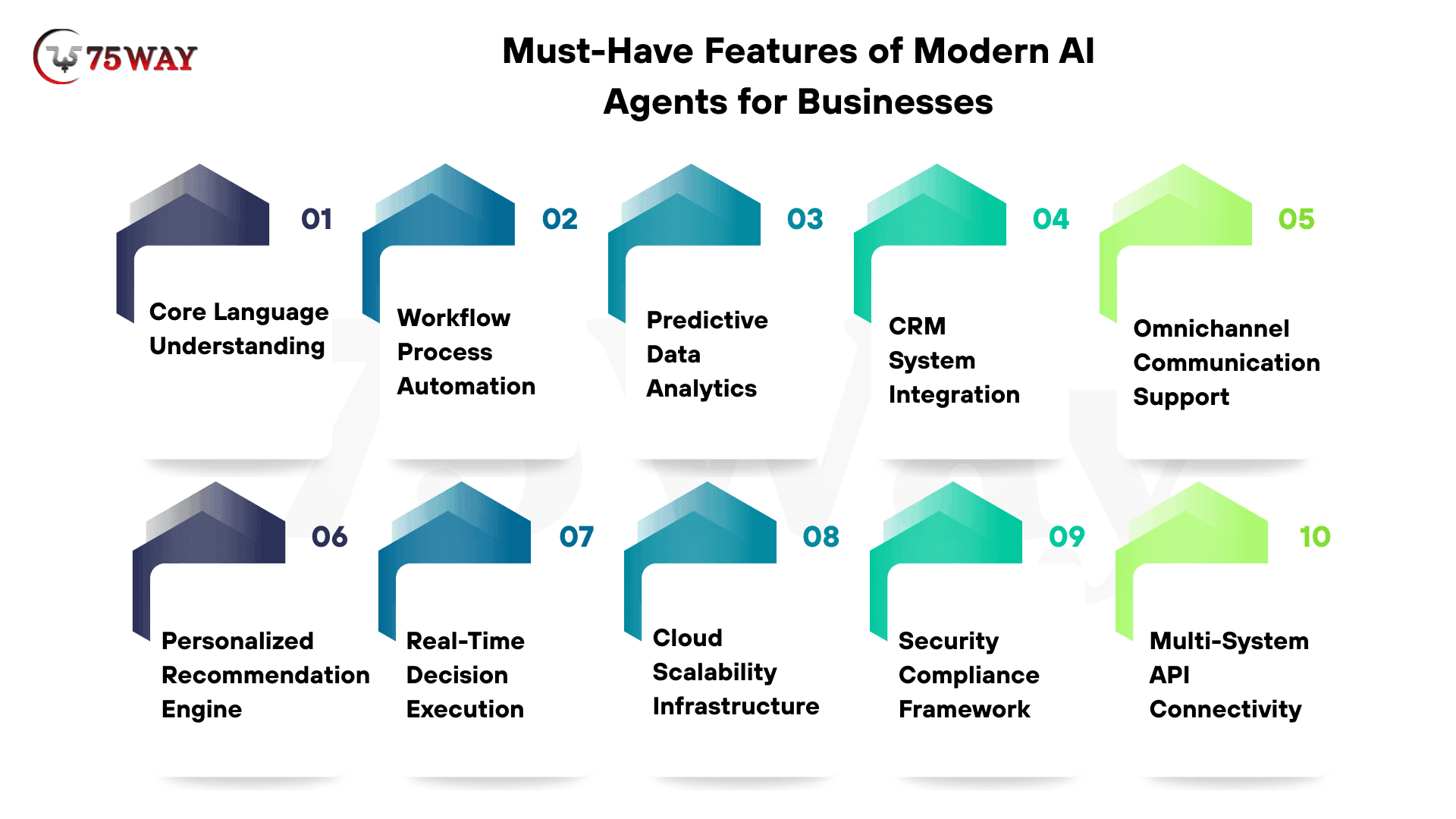
- Core Understanding Language: Human language interpretation allows systems to accurately understand intent, context, and meaning across conversations. This enables smoother interactions and improves communication quality across multiple digital business channels.
- Workflow Process Automation: Repetitive business operations become automated through intelligent task execution and system-driven workflows. This reduces manual workload and increases operational efficiency across departments.
- Predictive Data Analytics: Historical and real-time data is analyzed to forecast user behavior and business outcomes. These insights support better strategic decisions and performance optimization.
- CRM System Integration: Customer data, interactions, and communication history are synchronized across enterprise CRM platforms. Businesses gain centralized visibility and improved customer management efficiency.
- Omnichannel Communication Support: Multiple communication channels, such as web, mobile, email, and messaging platforms, are unified. This ensures consistent engagement across all customer touchpoints.
- Personalized Recommendation Engine: User behavior analysis enables tailored product and service suggestions for each customer. This improves engagement and increases conversion rates.
- Real-Time Decision Execution: Data is processed instantly to trigger appropriate actions within business workflows. Faster responses improve operational agility and service quality.
- Cloud Scalability Infrastructure: Cloud-based systems ensure high availability and support enterprise-level workload expansion. This allows businesses to scale without performance limitations.
- Security Compliance Framework: Sensitive data is protected using strict security protocols and compliance standards. This builds trust and ensures regulatory adherence across industries.
- Multi-System API Connectivity: Different enterprise tools are connected through APIs for seamless data exchange. This improves automation and reduces system fragmentation across operations.
How AI Agents Help Modern Businesses Boost ROI?
AI agents play a crucial role in improving operational efficiency, automating workflows, and enhancing customer interactions across industries. These systems enable businesses to reduce manual effort, improve decision-making, and scale digital operations.
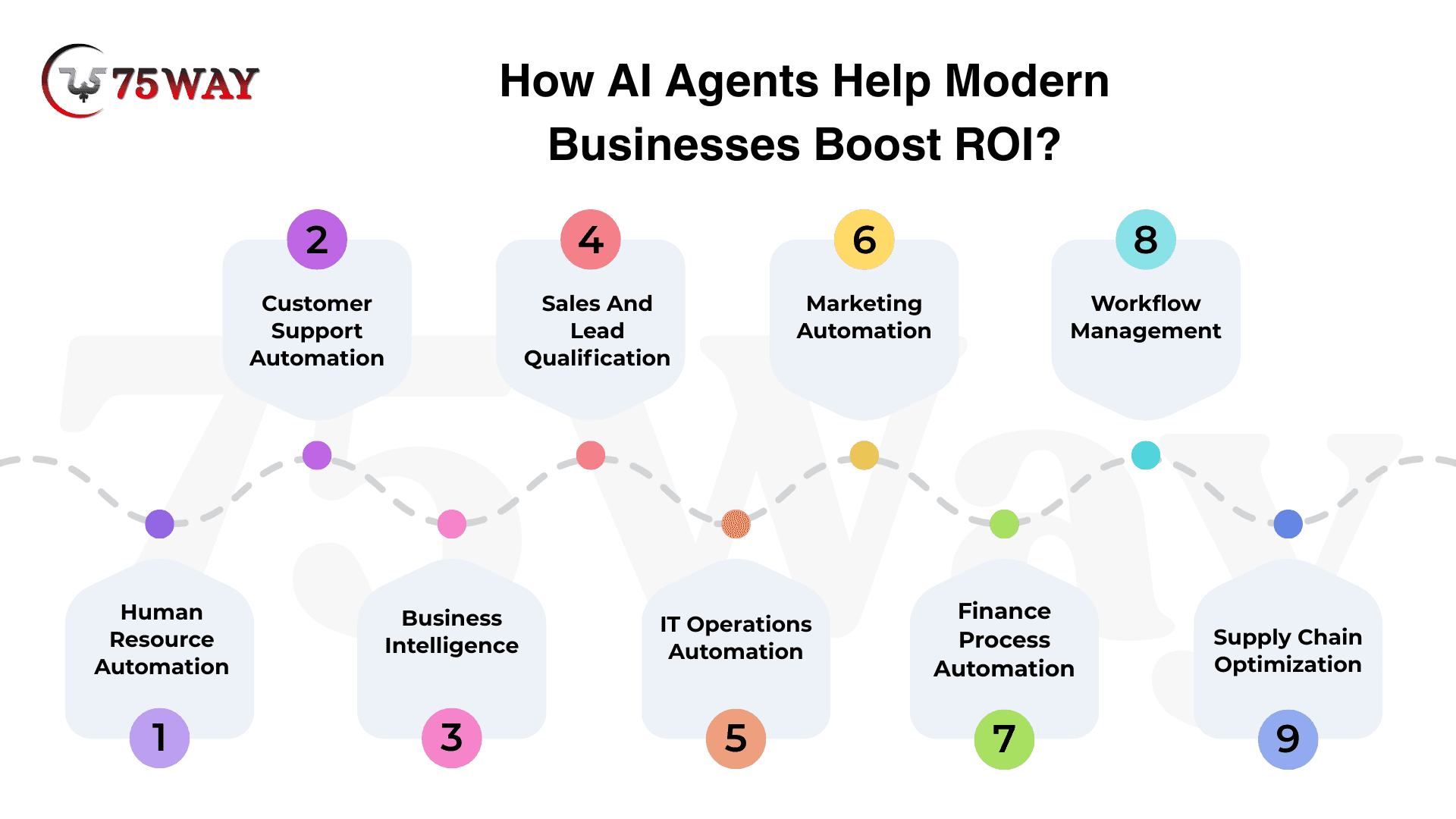
- Customer Support Automation
AI agents handle customer inquiries instantly across multiple channels while reducing dependency on human support teams. Customer support AI agents ensure faster response times and consistent service quality. This improves customer satisfaction and operational efficiency.
- Sales And Lead Qualification
AI systems identify high-intent prospects by analyzing user behavior and engagement patterns. They automatically qualify leads and route them to sales teams for faster conversion. AI sales agents increase sales efficiency and improve revenue generation.
- Marketing Automation
Businesses use AI agents to automate campaigns, audience segmentation, and personalized recommendations. AI marketing agents analyze customer data to deliver targeted marketing messages. This improves engagement rates and campaign performance.
- Workflow Management
AI agents streamline repetitive business operations by automating task execution and coordination across departments. They reduce manual errors and improve operational speed. This helps organizations achieve higher productivity levels.
- Human Resource Automation
Recruitment, onboarding, and employee communication processes become more efficient through AI-driven systems. These tools help HR teams manage large workforce operations with ease. HR AI agent improves hiring speed and employee experience.
- Business Intelligence
AI systems analyze large volumes of business data to generate actionable insights. These insights help leaders make informed strategic decisions. This improves forecasting accuracy and business performance.
- IT Operations Automation
AI agents monitor system performance, detect issues, and automate technical troubleshooting tasks. This reduces downtime and improves system reliability. Businesses benefit from more stable and efficient IT environments.
- Finance Process Automation
AI finance agents manage invoicing, expense tracking, and financial reporting tasks automatically. They reduce manual accounting errors and improve financial accuracy. This strengthens overall financial control and transparency.
- Supply Chain Optimization
AI agents in logistics analyze demand patterns, inventory levels, and logistics data to optimize supply chain operations. They help businesses reduce delays and improve delivery efficiency. This enhances overall operational performance.
AI Agents Driving Advancement Across Diverse Industries?
Modern organizations across sectors use intelligent automation systems to streamline operations, enhance customer interactions, and improve decision-making efficiency. These applications enable businesses to reduce manual effort while achieving scalable digital transformation across core operational areas.
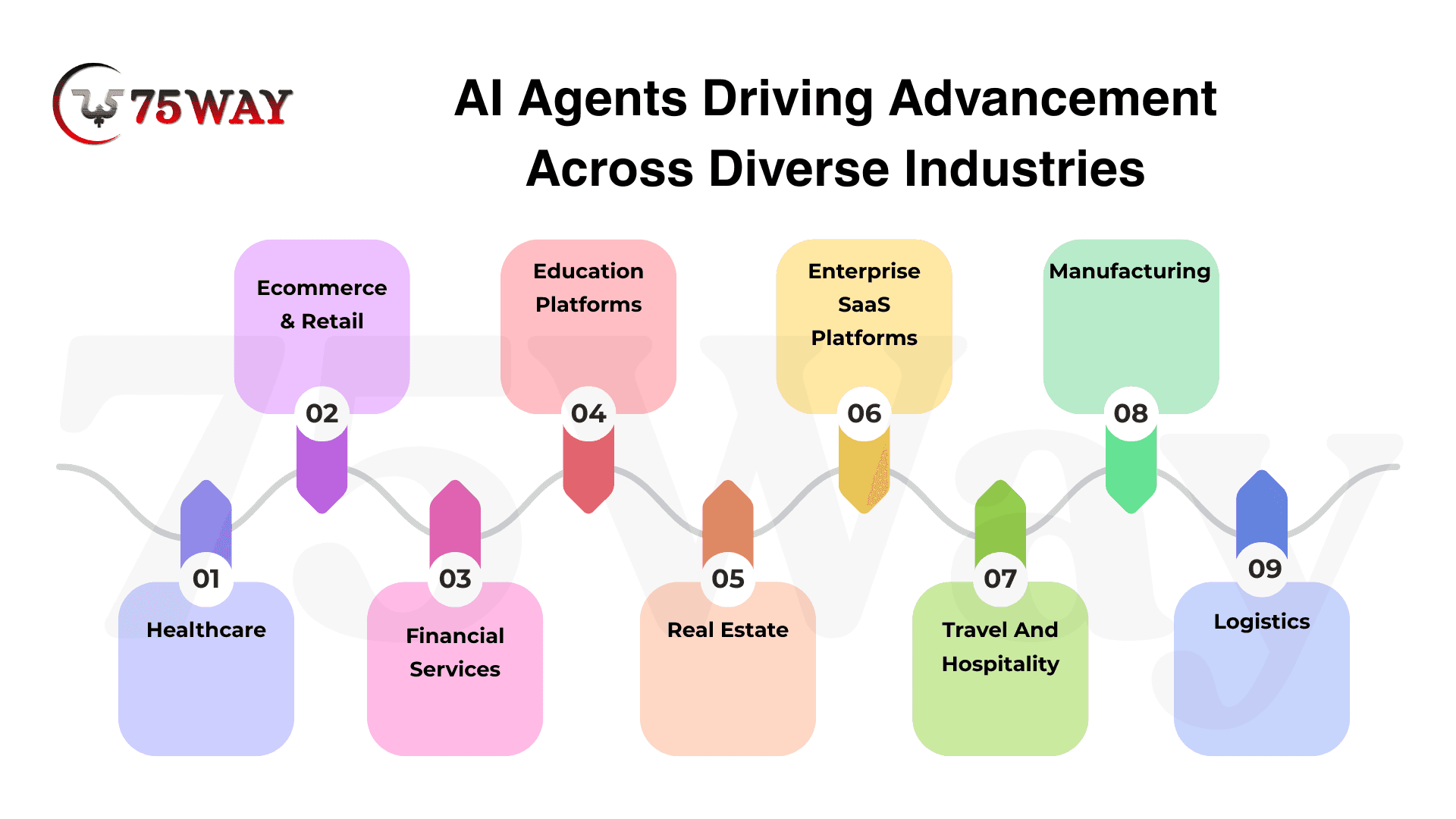
- Healthcare: Intelligent automation tools manage appointments, patient communication, diagnosis support, and workflow coordination. These solutions reduce administrative burden, improve service delivery speed, and enhance overall patient care experiences.
- Ecommerce & Retail: Retail platforms implement automation tools for product recommendations, customer assistance, inventory tracking, and personalized shopping experiences. These capabilities increase conversions, improve engagement, and optimize digital sales performance effectively.
- Financial Services: Banking and fintech organizations deploy intelligent systems for fraud detection, onboarding processes, transaction monitoring, and customer support. These systems strengthen security, reduce risks, and improve financial operational accuracy.
- Education Platforms: Learning institutions use automation tools for admissions processing, student assistance, and personalized learning support workflows. These systems improve academic engagement, streamline administration, and enhance learner outcomes.
- Real Estate: Property companies use intelligent systems for lead management, inquiry handling, virtual assistance, and scheduling coordination. These tools improve response speed, increase conversions, and enhance customer engagement.
- Enterprise SaaS Platforms: Software companies integrate automation systems for onboarding, user support, product guidance, and workflow optimization. These capabilities improve user experience, reduce operational costs, and increase product adoption rates.
- Travel And Hospitality: Automation systems manage bookings, itinerary planning, customer queries, and personalized travel recommendations efficiently. These solutions enhance customer satisfaction, improve booking rates, and streamline service operations.
- Manufacturing: Intelligent systems optimize production workflows, equipment monitoring, and supply chain coordination processes. These technologies reduce downtime, increase efficiency, and improve overall production performance.
- Logistics: Automation tools handle shipment tracking, route optimization, warehouse management, and delivery coordination tasks. These systems improve operational speed, reduce costs, and enhance supply chain efficiency.
Steps To Develop An AI Agent: A Complete Methodology
Building intelligent automation systems requires a structured development approach that aligns business goals with technical execution. Each step ensures the AI agent can process data, make decisions, and execute workflows effectively across enterprise environments.
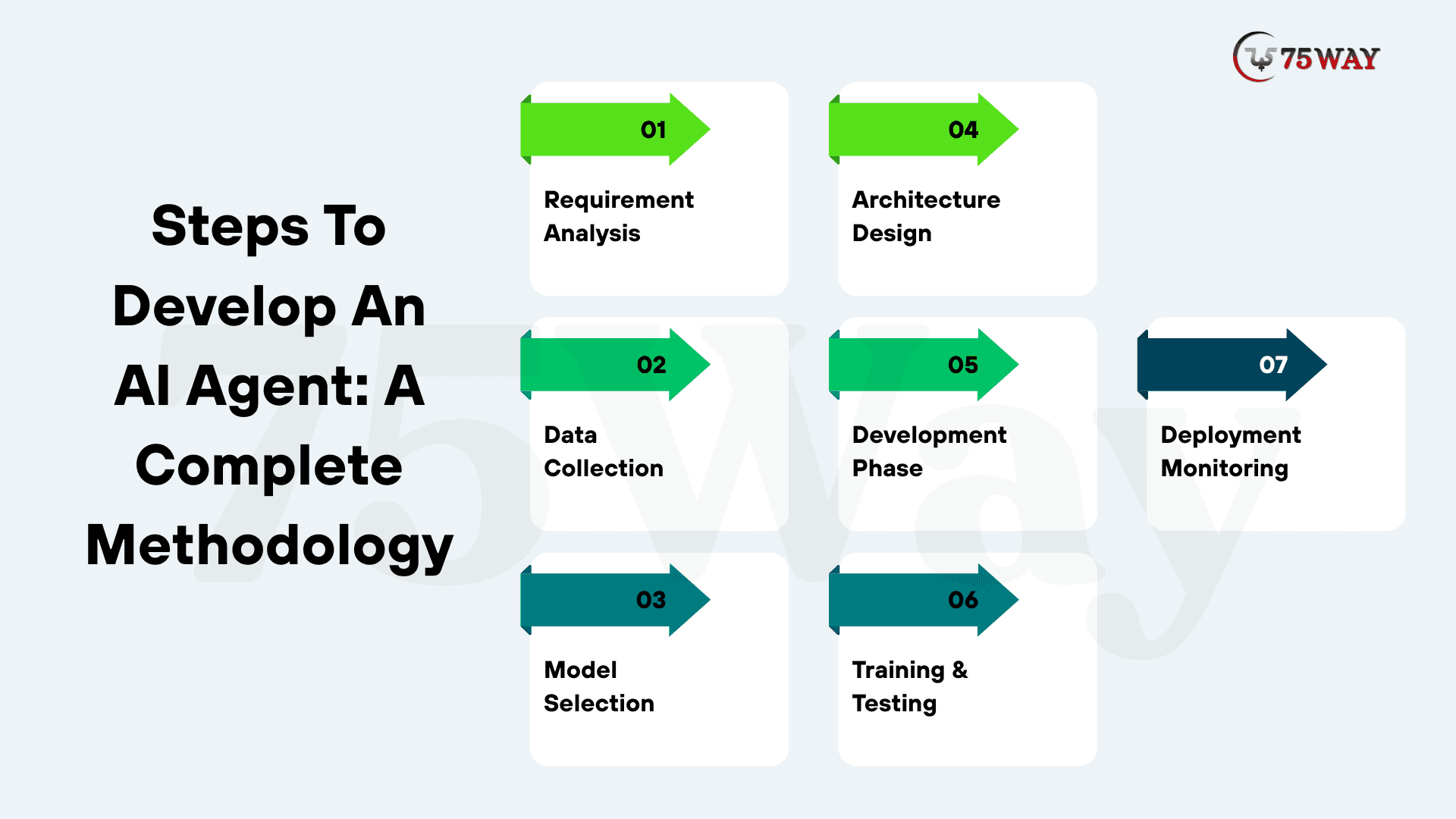
Step 1: Requirement Analysis
Businesses define goals, operational challenges, and automation opportunities before development begins. This step helps identify use cases, system scope, and expected outcomes clearly. It ensures the AI agent is aligned with business objectives and solves real workflow inefficiencies effectively across departments.
Step 2: Data Collection
Relevant structured and unstructured data is gathered from multiple business sources, including CRM, APIs, and databases. This data helps train AI systems accurately. Proper data preparation ensures better learning capability, improved predictions, and more reliable decision-making performance across business operations.
Step 3: Model Selection
Suitable machine learning and natural language processing models are selected based on project requirements. Developers evaluate accuracy, scalability, and performance needs. The right model selection ensures the AI agent can understand context, process language, and perform intelligent reasoning tasks effectively.
Step 4: Architecture Design
System architecture is designed to define workflows, integrations, and communication between components. This step ensures scalability and smooth data flow across modules. A strong architecture supports future upgrades, multi-system connectivity, and efficient execution of AI-driven automation processes.
Step 5: Development Phase
Frontend interfaces and backend systems are built to support AI functionality and user interaction. Developers integrate APIs, databases, and automation logic. This phase ensures seamless communication between users and AI systems with stable and responsive performance across platforms.
Step 6: Training & Testing
AI models are trained using real-world datasets to improve accuracy and reliability. Continuous testing helps identify errors and refine outputs. This process enhances system intelligence, reduces mistakes, and ensures better decision-making across different operational scenarios and workflows.
Step 7: Deployment Monitoring
The AI agent is deployed on cloud infrastructure for scalability and performance stability. Continuous monitoring ensures system efficiency, detects issues, and enables ongoing improvements. This guarantees reliable performance, security, and adaptability in real-time business environments.
Conclusion
AI agents are becoming core operational infrastructure in modern enterprises. Those who integrate AI-driven systems early are building stronger operational efficiency, faster decision cycles, and improved customer engagement models. This shift is creating a clear gap between AI-enabled companies and traditional operating structures. To stay competitive in this evolving landscape, businesses should evaluate how intelligent automation can be integrated into their operations with the right strategy and technical foundation. Partnering with a trusted AI agent development company can help design enterprise-ready agentic AI systems aligned with long-term business goals.
Frequently Asked Questions (FAQs)
What Is The Main Purpose Of An AI Agent In Businesses?
An AI agent helps businesses automate repetitive tasks, manage communication, and support decision-making processes. It improves efficiency by handling workflows such as customer queries, data processing, and operational coordination without constant human intervention.
How Is An AI Agent Different From Traditional Software?
Traditional software follows fixed rules and manual inputs, while AI agents can analyze context, learn from interactions, and make adaptive decisions. This allows them to handle complex and dynamic business tasks.
Can Small Businesses Use AI Agents Effectively?
Yes, small businesses can use AI agents to automate customer support, lead management, and marketing workflows. This helps reduce operational costs and allows small teams to scale faster without increasing workforce size.
Do AI Agents Require Technical Maintenance?
AI agents require periodic updates, monitoring, and optimization to maintain performance. However, modern systems are designed with automation tools that reduce heavy technical maintenance needs for businesses.
Are AI Agents Safe For Business Data?
AI agents can be secure when built with proper encryption, access controls, and compliance frameworks. Businesses must ensure they follow data protection standards and use trusted AI development practices.
Can AI Agents Work With Existing Business Systems?
Yes, AI agents can integrate with CRMs, ERPs, APIs, and other enterprise tools. This allows businesses to automate workflows without replacing their existing infrastructure.