Summary
Meta introduces an enterprise-focused AI Business Agent transforming customer engagement, automation, and sales across messaging platforms. Businesses gain scalable conversational intelligence, streamlined workflows, and enhanced lead conversion systems.
Quick Overview
- Meta integrates AI agents across messaging Whatsapp, Instagram & Messenger
- Enterprises gain 24/7 AI-powered customer engagement capabilities
- Sales funnels become more automated through conversational intelligence
- WhatsApp, Instagram, and Messenger unify under AI-driven ecosystem
- Businesses reduce operational load through intelligent task delegation
The global business ecosystem is undergoing a significant transformation as artificial intelligence moves from experimental use cases into fully operational enterprise systems. In 2026, Meta has taken a decisive step by launching its AI business agent, a system designed to automate core business interactions across its communication platforms.
This development reflects a broader shift in digital infrastructure where AI is no longer a supportive tool but an operational layer embedded directly into customer engagement, sales, and service workflows. Businesses that rely heavily on WhatsApp, Messenger, and Instagram are now entering a new phase where conversational systems can independently handle inquiries, qualify leads, and assist in transactional processes.
Unlike traditional chatbots, Meta’s AI Business Agent is built to act with contextual awareness, integrating business data and customer intent into real-time responses. This marks a transition from reactive customer support systems to proactive digital AI assistants capable of driving revenue outcomes.
This blog explores Meta’s AI business agent, its operational framework, enterprise implications, industry impact, and long-term influence on digital transformation strategies. It also highlights how businesses can adapt to this AI agent to remain competitive in an increasingly AI-driven economy.
Understanding Meta AI Business Agent in 2026
Meta’s AI Business Agent in 2026 is an enterprise-level automation system integrated across WhatsApp, Instagram, and Messenger. It is designed to streamline customer communication, reduce manual workload, and improve conversion efficiency by managing interactions across multiple digital touchpoints within a unified ecosystem. It was rolled out progressively starting in 2024–2025, with broader enterprise availability expanding through 2026.
Unlike traditional chatbots, this system uses advanced AI reasoning and enterprise-grade integrations to perform tasks such as customer query resolution, appointment booking, product recommendations, lead qualification, and transaction support. It is built on Meta’s Llama large language models, combined with proprietary multimodal AI systems, cloud-scale infrastructure, and deep integration APIs across Meta’s messaging platforms.
Reports indicate that over a million businesses are already using its AI agent ecosystem globally, highlighting its rapid adoption across both SMEs and large enterprises. This transition reflects Meta’s shift from an advertising-focused platform to a comprehensive enterprise AI ecosystem.
Core Capabilities of Meta AI Business Agent
Meta’s AI business agent is designed to transform how businesses handle customer communication, sales, and operational workflows across its ecosystem. By combining advanced reasoning models with deep platform integrations, this AI agent enables automated yet highly personalized interactions that improve efficiency, engagement, and conversion outcomes for modern digital businesses.
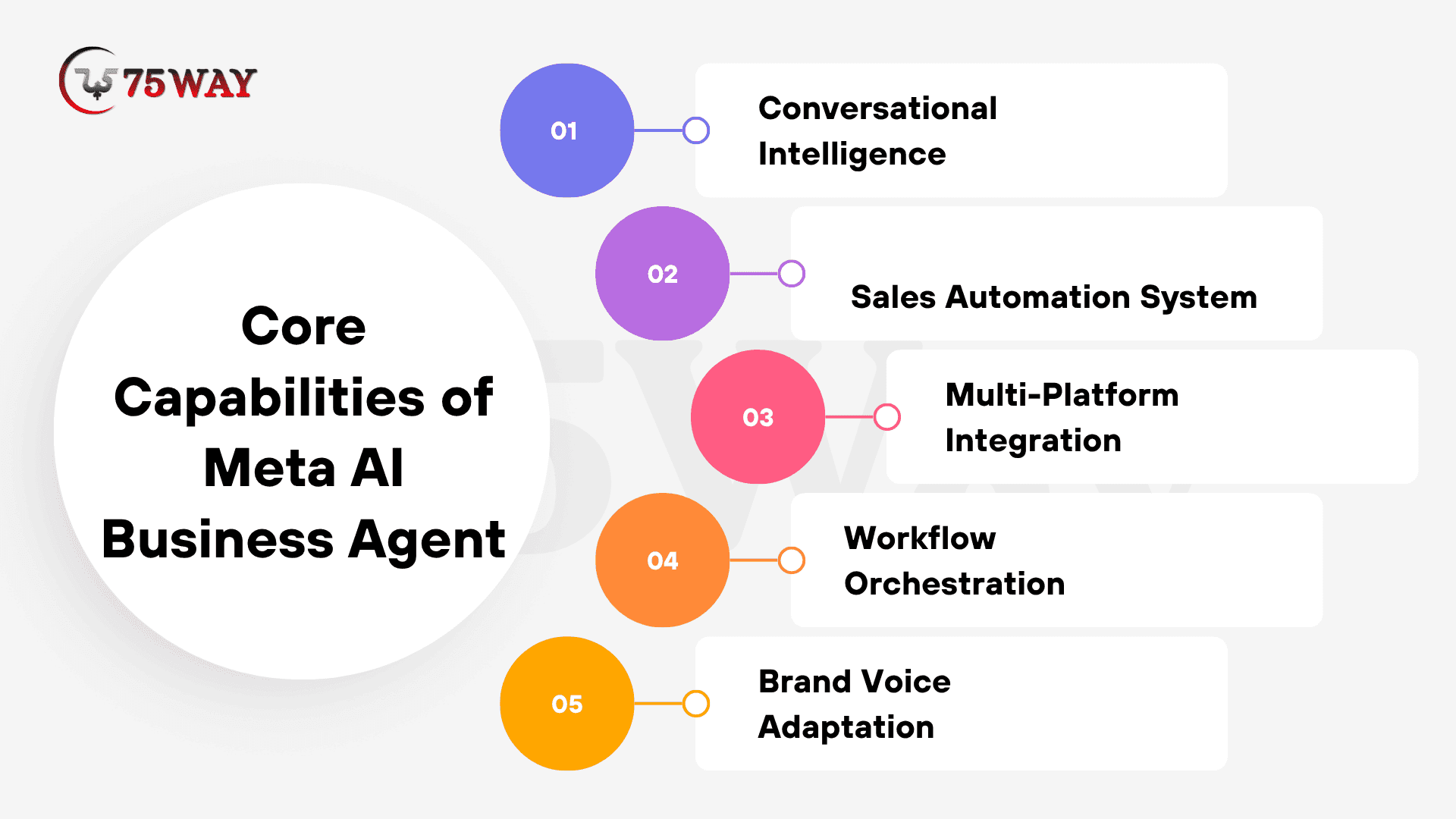
1. Conversational Intelligence
The AI business agent interprets customer messages with contextual understanding. Instead of relying on keyword-based responses, it analyzes intent, urgency, and sentiment to generate relevant and accurate replies. This leads to more natural conversations, improved engagement quality, and significantly reduced response delays across communication channels.
2. Sales Automation System
One of the strongest capabilities lies in automated sales handling. The agent recommends products based on customer behavior, guides users through purchase journeys, handles objections in real time, and even completes transactions within chat interfaces. This creates a seamless buying experience, especially for e-commerce and service-based businesses.
3. Multi-Platform Integration
Meta has unified its ecosystem across WhatsApp Business, Instagram Messaging, and Messenger. This ensures businesses can maintain consistent communication across all customer touchpoints without switching platforms, improving response efficiency and customer experience continuity.
4. Workflow Orchestration
The AI business agent connects with external tools such as CRMs, booking systems, and inventory platforms. This enables automation of backend operations including appointment scheduling, customer data logging, order tracking, and real-time updates, reducing manual effort and operational complexity.
5. Brand Voice Adaptation
Businesses can customize the AI communication style to match their brand identity. This ensures consistency in tone and messaging across automated interactions, helping maintain trust, personalization, and brand alignment throughout the customer journey.
How Is Meta’s AI Agent Useful for Businesses in 2026?
The introduction of this system marks a structural change in enterprise communication.
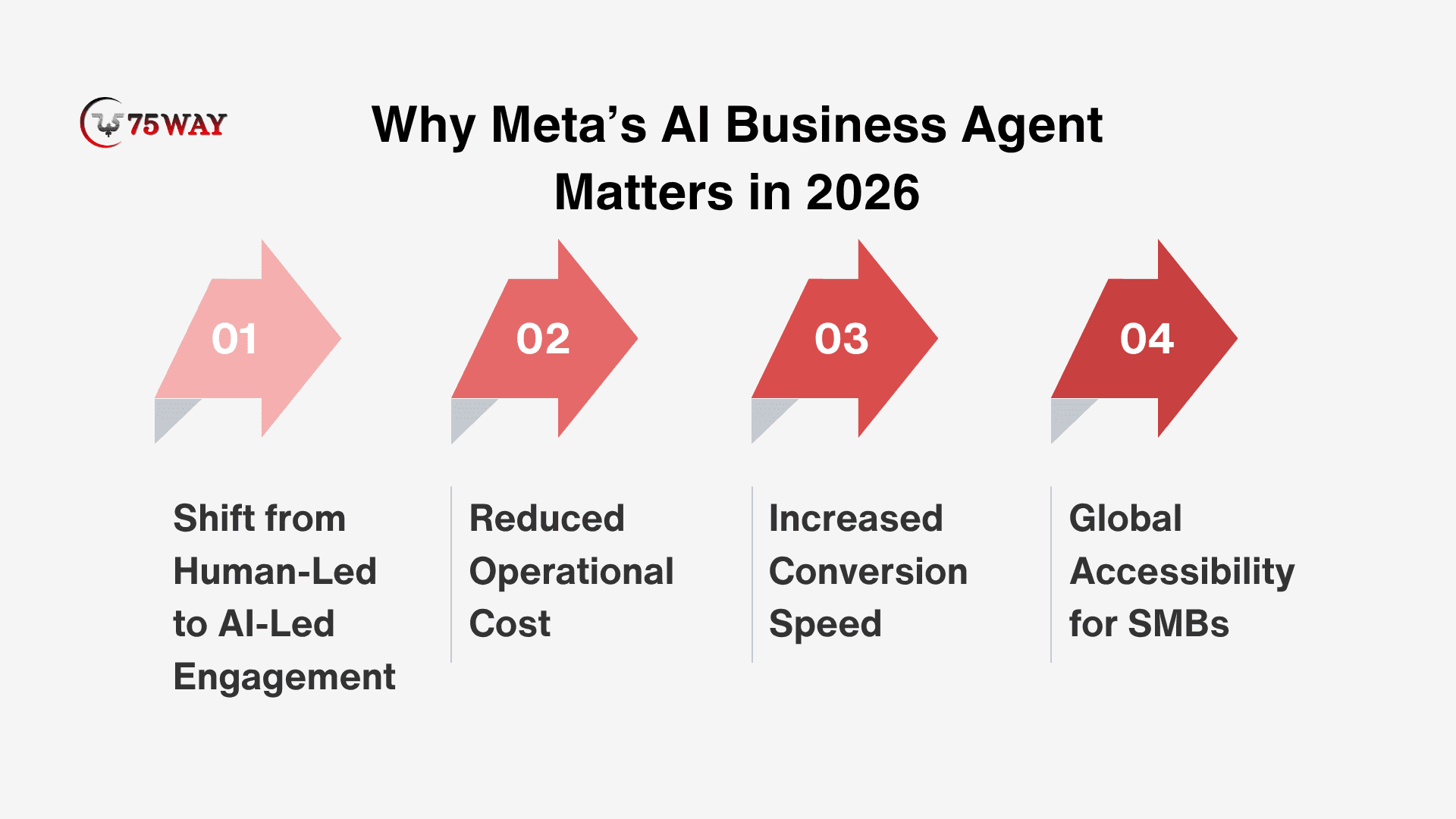
- Shift from Human-Led to AI-Led Engagement: Customer service is no longer dependent on manual teams. AI agents now handle first-level engagement and even mid-funnel conversions.
- Reduced Operational Cost: Businesses reduce dependency on large support teams, allowing resource optimization across departments.
- Increased Conversion Speed: Instant responses significantly reduce lead drop-off rates, improving overall conversion performance.
- Global Accessibility for SMBs: Small and medium businesses gain access to enterprise-grade automation without complex infrastructure.
How This AI Agent Improves Business Performance Across Industries?
Meta’s AI business agent improves business performance by automating customer interactions, streamlining operations, and increasing conversion efficiency across multiple industries. It reduces manual workload while enabling faster response times, better personalization, and consistent engagement throughout the customer journey.
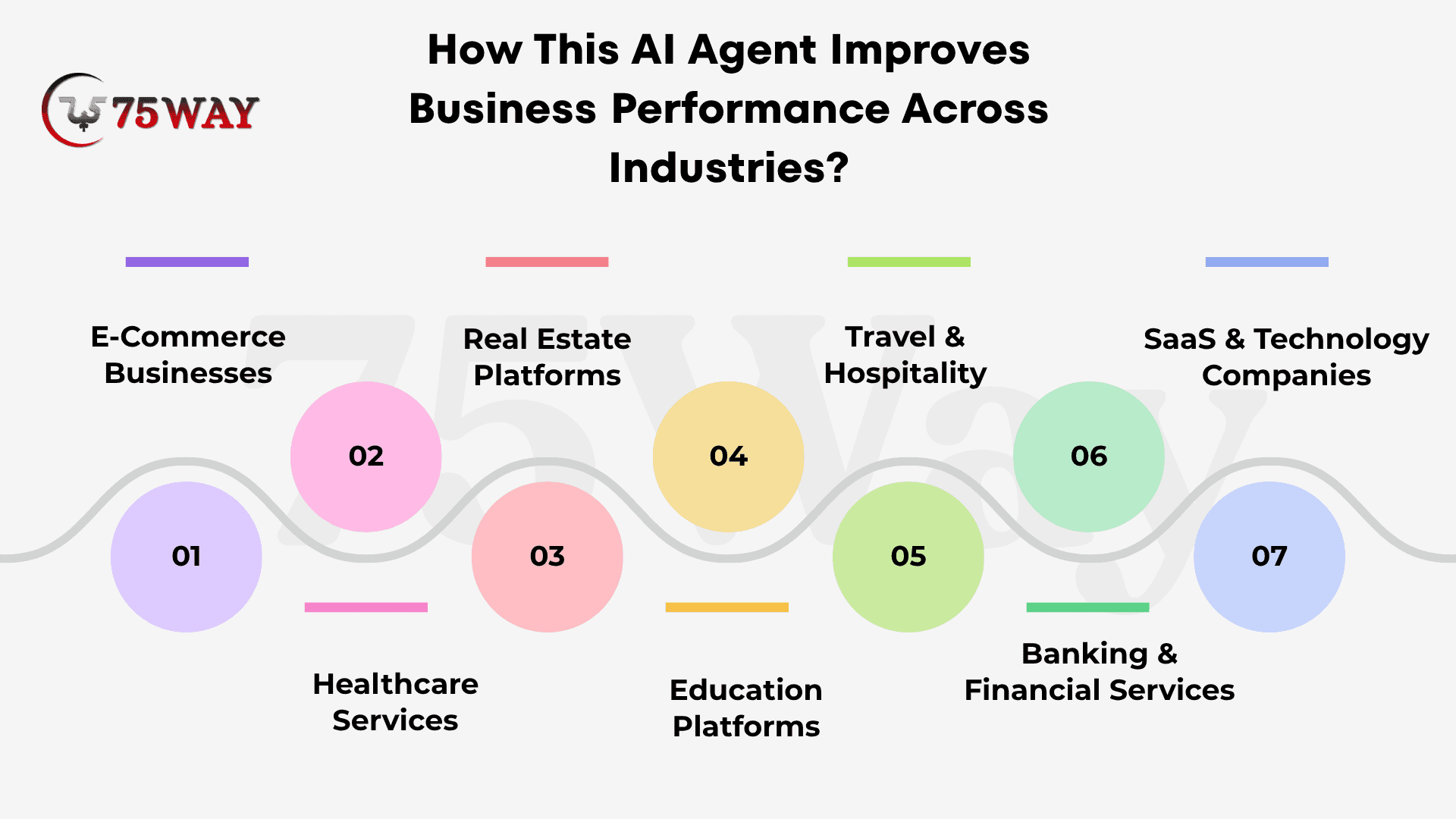
- E-Commerce Businesses
AI agents assist in product discovery, order placement, and customer support by guiding users through the buying journey. This improves user experience, reduces cart abandonment, and increases overall online sales performance through real-time assistance and personalized recommendations.
- Healthcare Services
In healthcare, AI agents automate appointment scheduling, patient inquiry handling, and basic support interactions. This improves accessibility for patients, reduces administrative burden on staff, and ensures faster response times for critical healthcare communication needs.
- Real Estate Platforms
AI agents handle property inquiries, schedule site visits, and qualify buyer intent before involving human agents. This helps real estate businesses focus on high-quality leads while improving response speed and customer engagement efficiency.
- Education Platforms
Educational institutions use AI agents for course enrollment support, student queries, and onboarding processes. This ensures smooth admission workflows, faster information delivery, and improved student engagement throughout the learning journey.
- Travel & Hospitality
In travel and hospitality, AI agents manage booking assistance, itinerary planning, and real-time customer updates. This enhances travel experiences by offering instant support, reducing operational delays, and improving overall customer satisfaction.
- Banking & Financial Services
In banking, AI agents handle account inquiries, transaction support, and loan eligibility checks. This improves customer service efficiency, reduces wait times, and enhances trust through faster and more accurate financial assistance.
- SaaS & Technology Companies
SaaS businesses use AI agents for onboarding new users, resolving technical queries, and guiding product usage. This improves user retention, reduces churn rates, and ensures smoother adoption of complex software platforms.
Technical Foundation Behind Meta AI Business Agent
Meta’s system is built on a layered AI architecture combining:
- Large language models for natural interaction
- Retrieval systems for business data access
- Workflow engines for task execution
- API connectors for third-party integration
This architecture allows scalability across millions of business accounts simultaneously while maintaining response quality.
Security, Trust, and Compliance Considerations
As enterprise AI adoption increases, Meta has implemented several safeguards:
- Data access controls for business systems
- Permission-based integrations
- Human escalation paths for complex queries
- Monitoring layers for AI response accuracy
However, enterprises must still ensure internal compliance alignment when deploying AI-driven customer systems.
Strategic Recommendations For Businesses For Implementing Meta’s Enterprise AI?
To fully leverage Meta’s enterprise AI, businesses must adopt a structured approach that aligns AI capabilities with customer journey design, data readiness, and operational workflows. Effective implementation is not just about deploying AI tools but optimizing how they interact with users, systems, and business processes. These strategies help improve conversions, customer experience, and long-term competitive advantage in a rapidly evolving digital ecosystem.
- Integrate AI Into Early Customer Touchpoints: Businesses should deploy AI agents at the first stage of customer interaction across websites, ads, and messaging platforms. This ensures instant engagement, faster query resolution, and higher chances of converting potential customers into qualified leads effectively.
- Optimize Business Data For AI Readability: Structured and clean data improves how AI systems interpret customer information. Businesses must organize product catalogs, FAQs, and service details properly to enable accurate responses, better personalization, and improved decision-making across automated workflows.
- Align Marketing Funnels With Conversational Workflows: Marketing strategies should be redesigned to match conversational AI journeys. This helps guide users smoothly from awareness to conversion through interactive messaging, improving engagement rates and overall sales performance across digital channels.
- Maintain Human Escalation Systems For Complex Cases: While AI handles routine queries, complex or sensitive cases should be transferred to human agents. This ensures accuracy, builds trust, and maintains high-quality customer service for critical business interactions requiring human judgment.
- Continuously Refine AI Conversation Flows: Businesses should regularly analyze AI interactions and improve conversation design based on user behavior. This helps enhance response accuracy, reduce friction, and continuously improve customer experience and conversion efficiency over time.
Final Thoughts
Meta’s AI business agent signals a decisive shift in enterprise communication, where automation becomes a core operational layer rather than a supporting feature. By integrating intelligent agents directly into messaging platforms, businesses are moving toward faster decision cycles, stronger customer engagement, and scalable digital operations that require less manual intervention. This transformation is not a temporary upgrade but a structural evolution in how enterprises will function in the coming years. Organizations that embrace AI-driven ecosystems early will be better positioned to improve efficiency and reduce operational friction. As this landscape continues to evolve, the demand for specialized expertise is also rising. Partnering with a leading AI agent development company becomes essential for building intelligent systems that align with modern business goals and customer expectations.
Frequently Asked Questions (FAQs)
Why Did Meta Introduce An AI Business Agent In 2026?
Meta introduced this system to expand beyond advertising and strengthen enterprise-level communication tools. The focus is on automating business interactions across messaging platforms and improving monetization opportunities through AI-driven services.
Which Platforms Support Meta AI Business Agent?
The system operates across WhatsApp, Instagram, and Messenger. These platforms allow businesses to manage customer communication, sales interactions, and support workflows within a unified ecosystem.
Can Small Businesses Use Meta AI Business Agent?
Yes, small businesses can use it without complex infrastructure. It provides scalable automation for customer support, lead generation, and sales assistance, making enterprise-level tools accessible to SMBs.
Does Meta AI Business Agent Replace Human Employees?
No, it does not fully replace human teams. Instead, it handles repetitive and initial customer interactions, while complex issues are escalated to human representatives for resolution.
How Does Meta AI Business Agent Improve Sales Performance?
It increases sales performance by providing instant responses, personalized recommendations, and seamless checkout assistance within messaging platforms, reducing customer drop-offs.
Is Customer Data Safe With Meta AI Business Agent?
Yes, Meta implements security protocols and permission-based access controls. However, businesses must ensure compliance with data protection policies while integrating AI systems.