AI Summary
Veterinary app development helps clinics deliver faster, smarter, and more accessible care for pets through modern digital solutions. This guide covers planning, features, technologies, costs, security, compliance, and monetization. Each section below supports successful veterinary app development in 2026.
Quick Overview
- Build veterinary apps using structured AI development planning for lasting scalability.
- Integrate intelligent diagnostics to improve veterinary decision-making through real-time clinical insights.
- Prioritize secure veterinary data management to meet evolving healthcare compliance requirements today.
- Select AI technologies matching veterinary workflows, business goals, and application capabilities.
- Cost to create a veterinary app ranges between $ 20,000 and $ 200,000+, based on needs
A pet owner notices unusual symptoms late at night. Instead of waiting until the next morning, they open a veterinary app, define the problem, get AI-assisted guidance, and book the earliest available appointment within minutes.
With such an advanced AI automation, AI-powered veterinary app development solutions are increasingly becoming a valuable tool for clinics, hospitals, and pet care businesses to grow revenue.
However, an AI-powered veterinary app involves much more than adding a chatbot or symptom checker. Every stage, from identifying user needs and selecting AI models to integrating telemedicine, medical records, appointment scheduling, and compliance, plays a critical role in creating a reliable healthcare platform.
This step-by-step guide for 2026 explains the complete AI-powered veterinary app development process for 2026. It covers strategic planning, essential features, tech stack, vet app development costs, deployment strategies, and the best practices to build a scalable veterinary application.
What Is AI-Powered Veterinary App Development?
AI-powered veterinary app development is all about creating smarter digital solutions for animal healthcare. Instead of handling appointments, medical records, and pet care manually, veterinary clinics can use AI-driven applications that automate everyday work, support clinical decisions, and give pet owners quicker access to veterinary services. The result is a faster, more connected experience for everyone involved.
Real value comes from the way artificial intelligence improves everyday veterinary care. A single application can help assess symptoms, organize patient histories, send medication reminders, analyze diagnostic images, and even support virtual consultations without adding extra workload for veterinarians. As more clinics invest in digital transformation, AI-powered veterinary apps have become practical business tools rather than futuristic concepts.
Veterinary App Market Size, Trends, & Revenue Opportunities
Pet owners no longer want to wait on hold just to book an appointment or ask a simple health question. They expect the same digital convenience they receive from other healthcare services, making veterinary apps one of the fastest-growing segments in pet technology. The latest market trends and revenue opportunities are explored below.
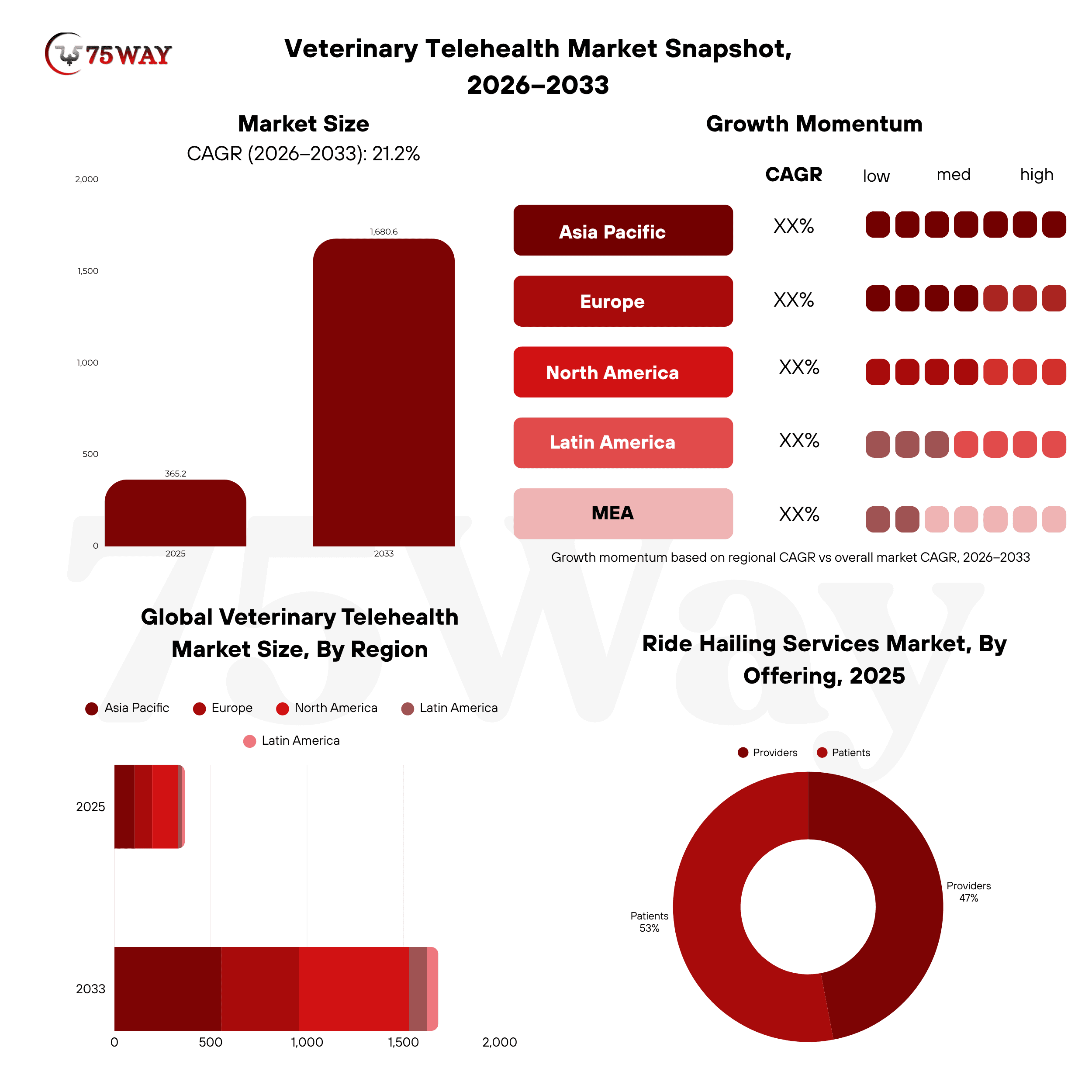
- The global veterinary telehealth market may grow from $436.2 million in 2026 to $1.68 billion by 2033, at a CAGR of 21.2%, as stated by Grand View Research.
- North America leads the veterinary telehealth market with a 41.8% global share.
- The teleconsulting segment holds the largest market share at 36.4%.
- According to IntelMarketResearch, the global vet apps market will reach to $10.44 billion by 2034, registering a 15.4% CAGR.
- Around 53% of pet owners use mobile apps to schedule veterinary appointments, while 64% rely on them for pet health tracking.
- More than 72% of Gen Z and Millennial pet owners prefer online veterinary consultations and teletriage services.
- Over 70% of veterinary practices in North America and Europe use at least one digital practice management solution.
Read More:How to Build a Telemedicine App Like Teladoc: Process & Cost in 2026
Why Do Businesses Invest in Vet App Development In 2026?
Veterinary businesses are no longer investing in mobile apps simply to stay current with technology. They are building digital platforms to improve client experiences, streamline daily operations, and create new ways to deliver pet healthcare. The reasons behind this growing investment are explained below.
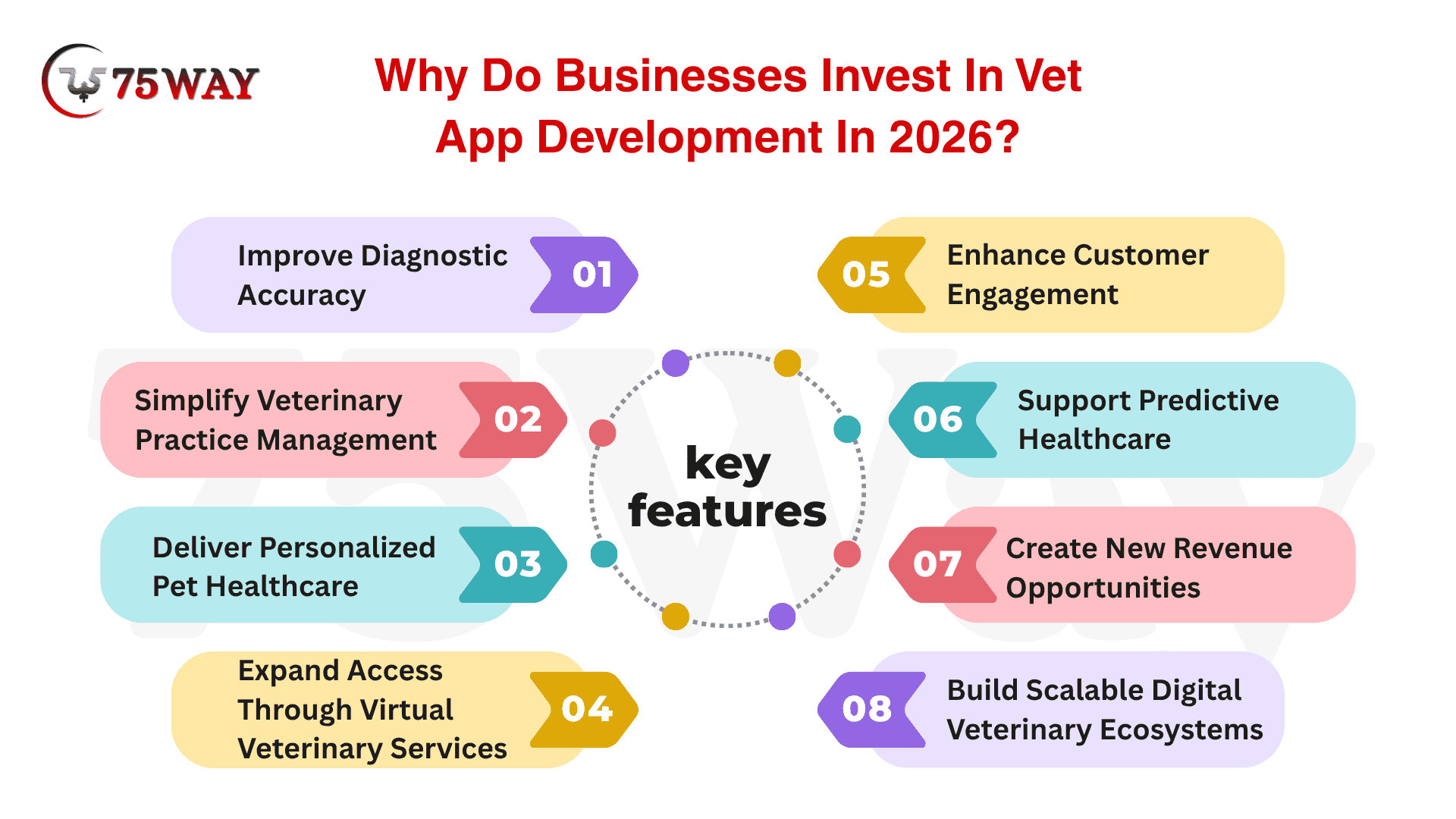
- Improve Diagnostic Accuracy
Artificial intelligence analyzes symptoms, laboratory reports, diagnostic images, medical histories, and treatment outcomes to assist veterinarians in identifying potential health conditions more quickly. While AI supports clinical decisions rather than replacing professional expertise, it helps reduce overlooked patterns and provides valuable diagnostic recommendations during patient evaluations.
- Simplify Veterinary Practice Management
Administrative tasks consume significant time in busy veterinary clinics. AI automates appointment scheduling, patient record management, invoice generation, follow-up reminders, prescription tracking, documentation, and staff coordination. This allows veterinary teams to dedicate more attention to patient care instead of repetitive operational activities.
- Deliver Personalized Pet Healthcare
Every pet has a unique medical history, dietary requirements, vaccination schedules, activity levels, and healthcare risks. AI-powered applications analyze this information to generate personalized wellness reminders, nutrition recommendations, medication schedules, preventive care plans, and long-term health monitoring tailored to individual animals.
- Expand Access Through Virtual Veterinary Services
Integrated telemedicine features allow veterinarians to conduct remote consultations, review symptoms, monitor ongoing treatments, and communicate with pet owners without requiring every visit to occur in person. This increases healthcare accessibility while supporting clinics serving geographically distributed communities.
- Enhance Customer Engagement
AI-powered chatbots, automated notifications, wellness tracking, educational content, and personalized healthcare updates keep pet owners actively involved throughout their pets' care journeys. Regular engagement strengthens trust, improves treatment adherence, and encourages long-term relationships between veterinary providers and their clients.
- Support Predictive Healthcare
Instead of reacting only after symptoms appear, predictive AI analyzes historical health records, wearable device data, breed-specific risk factors, and behavioral patterns to identify potential health concerns earlier. Early intervention supports better treatment outcomes while helping clinics promote preventive veterinary care.
- Create New Revenue Opportunities
Veterinary businesses can introduce premium subscription plans, AI-assisted wellness monitoring, virtual consultations, preventive healthcare packages, digital pharmacy services, insurance integrations, and personalized healthcare programs. These additional services diversify revenue streams while increasing customer lifetime value.
- Build Scalable Digital Veterinary Ecosystems
Modern AI-powered veterinary applications integrate clinics, hospitals, diagnostic laboratories, pharmacies, insurance providers, pet owners, and wearable devices into connected healthcare ecosystems. This unified approach simplifies data sharing, strengthens collaboration, and supports future expansion as veterinary technologies continue evolving.
Explore More:Best Healthcare App Development Firms for Startups and Enterprises
Types of AI-Powered Veterinary Apps Transforming Animal Healthcare
Before beginning AI-powered veterinary app development, it's important to determine the application's primary purpose. Different veterinary businesses serve different audiences, and every use case requires a unique combination of AI capabilities, integrations, and workflows. Diverse kinds of veterinary apps solve different challenges for clinics, veterinarians, pet owners, and animal care providers. Let's explore the major categories.
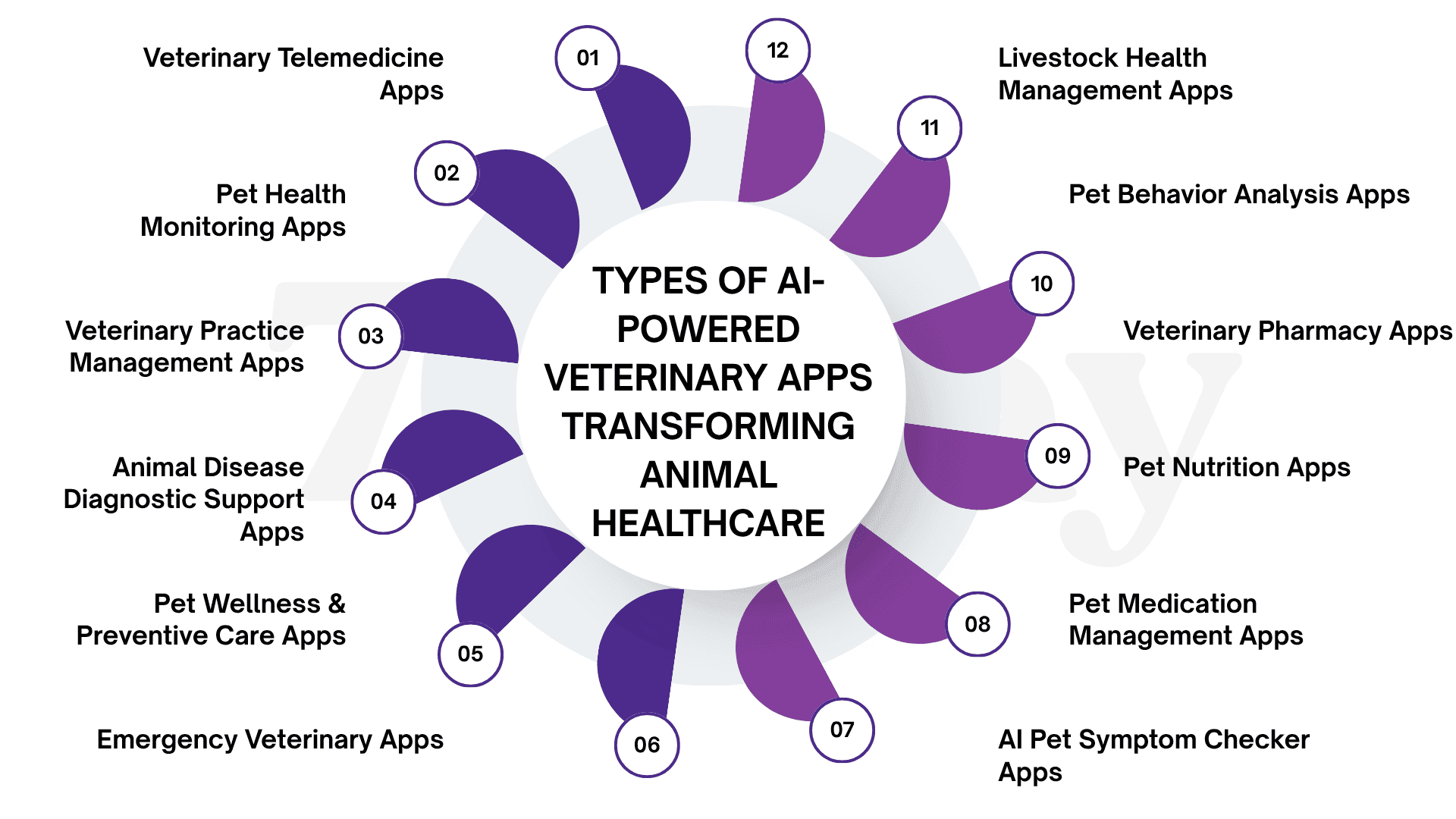
- Veterinary Telemedicine Apps
A trip to the clinic is not always possible, especially when a pet owner lives far away or needs quick advice. AI veterinary telemedicine apps make virtual consultations simple by connecting veterinarians and pet owners through secure video calls, chat, and digital prescriptions. Artificial intelligence gathers symptoms before the appointment, organizes medical information, and helps veterinarians spend more time on diagnosis instead of paperwork. As a result, consultations become faster and more productive for both sides.
- Pet Health Monitoring Apps
Daily health changes often appear long before serious symptoms become visible. AI pet health monitoring apps collect information from smart collars, wearable devices, and owner updates to track activity, sleep, eating habits, heart rate, and overall behavior. Artificial intelligence studies these patterns over time and alerts owners when something unusual appears, allowing potential health problems to receive attention much earlier.
- Veterinary Practice Management Apps
Busy veterinary clinics handle dozens of responsibilities every day, and manual administration quickly becomes overwhelming. AI-powered practice management apps organize appointments, patient records, billing, inventory, staff schedules, and customer communication from one platform. Intelligent automation reduces repetitive work, minimizes scheduling conflicts, and gives clinic managers a clearer picture of daily operations.
- Animal Disease Diagnostic Support Apps
Accurate diagnosis often depends on reviewing large amounts of medical information within a limited time. AI animal disease diagnostic support apps help veterinarians evaluate symptoms, laboratory reports, X-rays, ultrasound images, and previous medical histories in one place. Artificial intelligence highlights possible conditions and risk factors, giving professionals additional clinical support while keeping medical decisions entirely in their hands.
- Pet Wellness & Preventive Care Apps
Healthy pets need consistent care, not just treatment during illness. AI wellness applications help owners stay on top of vaccinations, parasite prevention, nutrition plans, medication schedules, exercise routines, and regular health checkups. Personalized recommendations based on breed, age, weight, and lifestyle make preventive care much easier to maintain throughout a pet's life.
- Emergency Veterinary Apps
Emergencies create panic, and many pet owners struggle to decide what to do first. AI emergency veterinary apps assess reported symptoms, injuries, photos, and behavioral changes within seconds to estimate the urgency of the situation. Immediate first-aid guidance, emergency instructions, and nearby veterinary hospital recommendations help owners respond more confidently while professional care is on the way.
- AI Pet Symptom Checker Apps
Minor symptoms often leave pet owners searching the internet for answers, which can create unnecessary anxiety. AI symptom checker apps for animals ask simple questions about a pet's condition and compare the responses with veterinary knowledge to suggest possible causes. Although these apps never replace a veterinarian, they help owners understand whether immediate care or routine observation is more appropriate.
- Pet Medication Management Apps
Medication schedules become difficult to manage when pets require long-term treatment or multiple prescriptions. AI animal medication management apps send timely reminders, track completed doses, monitor treatment progress, and notify owners about missed medications. Smart recommendations also reduce the chances of accidental dosing mistakes.
- Pet Nutrition Apps
Nutrition affects every stage of a pet's health, yet choosing the right diet is not always straightforward. The pet nutrition apps recommend meal plans based on breed, age, weight, allergies, medical conditions, and activity levels. Continuous analysis allows dietary suggestions to evolve as a pet's health and nutritional needs change over time.
- Veterinary Pharmacy Apps
Prescription management becomes much easier when veterinary clinics and pet owners work through a connected platform. AI veterinary pharmacy apps verify prescriptions, manage medicine inventories, automate refill reminders, and simplify online ordering. Faster medication access improves treatment continuity while reducing administrative effort for veterinary staff.
- Pet Behavior Analysis Apps
Behavior often reveals health or emotional problems before physical symptoms appear. AI behavior analysis apps evaluate movement, vocal sounds, activity patterns, and owner observations to identify signs of anxiety, stress, aggression, or discomfort. Early behavioral insights help owners seek professional advice before small concerns become more serious.
- Livestock Health Management Apps
Large farms require continuous monitoring because even small health issues can affect an entire herd. AI livestock management apps monitor animal movement, feeding habits, reproductive cycles, disease outbreaks, and environmental conditions using sensors and connected devices. Early detection helps farmers improve animal welfare while reducing financial losses and improving productivity.
How to Build AI-Powered Vet Mobile App: A Comprehensive Development Process
Great veterinary apps rarely happen through trial and error. They follow a structured roadmap that balances AI capabilities, veterinary workflows, user experience, and regulatory requirements. The complete development process is explained below.
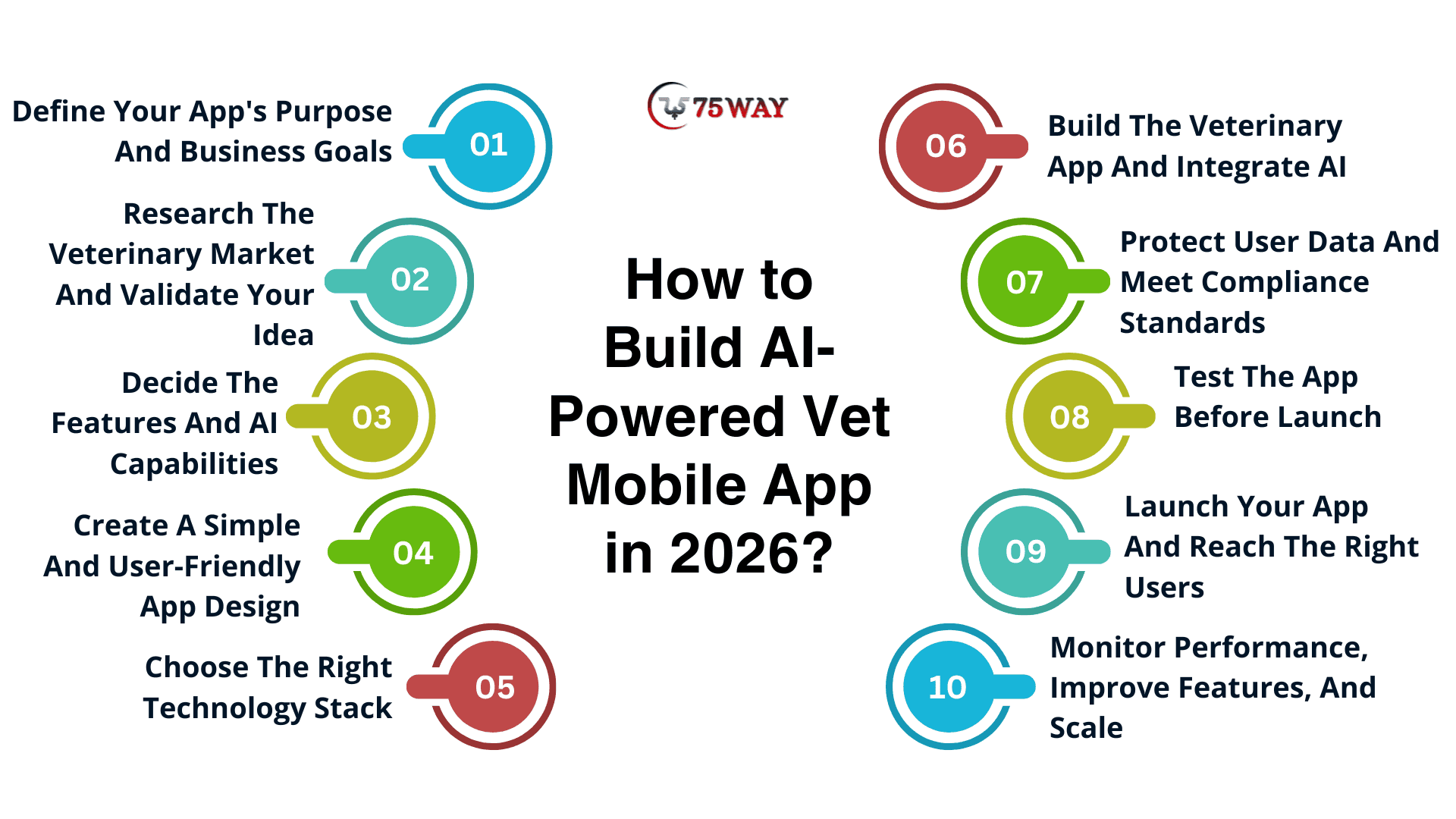
Step 1: Start With A Clear Business Goal
Every successful veterinary app begins with one simple question: What problem are you trying to solve? That answer influences every decision, from feature selection to development priorities and long-term business growth.
Different goals lead to different applications. A telemedicine platform serves different needs than a clinic management or pet wellness app, so defining your objective early keeps the project focused and prevents unnecessary development costs.
A few important decisions deserve attention before development begins.
- Know Your Target Users: Pet owners, veterinarians, clinic managers, shelters, and emergency providers all have different expectations. A clear understanding of your audience helps you build features that solve real problems instead of trying to satisfy everyone.
- Set Measurable Business Goals: Clear objectives such as increasing online consultations, reducing administrative work, improving customer retention, or creating recurring revenue give your project a clear direction from the beginning.
- Map The User Journey: Think through every interaction, from account registration and appointment booking to consultations, payments, and follow-up care. A seamless journey often delivers greater value than adding extra features.
- Focus On An MVP First: Your first release should include only the features users need most. A focused MVP reaches the market faster while providing valuable feedback for future improvements.
Step 2: Research The Market & Understand User Needs
A strong idea becomes even stronger when supported by proper research. Understanding the market before development helps you avoid common mistakes and identify opportunities your competitors may have overlooked.
Research also helps you build an application that addresses genuine user challenges instead of assumptions.
- Study Existing Veterinary Apps: Explore leading veterinary platforms to understand their strengths, weaknesses, pricing models, and user feedback. Real customer reviews often reveal improvement opportunities that competitors haven't addressed.
- Talk To Potential Users: Conversations with veterinarians, clinic managers, and pet owners provide valuable insights into daily challenges. Their feedback helps you prioritize features that people actually want.
- Identify Market Gaps: Every successful product solves a problem better than existing alternatives. Look for underserved areas where AI can improve convenience, efficiency, or healthcare outcomes.
- Define Your Competitive Advantage: A unique feature, better user experience, or specialized AI capability gives users a reason to choose your application over competing solutions.
Step 3: Decide The Features & AI Capabilities
Now that your idea has direction, it's time to decide what your application should offer. Every feature should support your business goals while creating meaningful value for users.
Artificial intelligence should solve practical problems rather than exist simply because it's popular.
- Choose Essential Features: Appointment scheduling, pet profiles, medical records, payments, notifications, and consultation management form the foundation of most veterinary applications.
- Select Practical AI Features: AI-powered symptom assessment, chatbots, predictive health monitoring, and medical image analysis can improve efficiency when applied to the right use cases.
- Plan Third-Party Integrations: Payment gateways, video consultations, wearable devices, pharmacies, laboratories, and mapping services create a more connected user experience.
Step 4: Design A User-Friendly Experience
Powerful technology alone doesn't guarantee success. People continue using applications that feel simple, intuitive, and easy to navigate every day.
A thoughtful design improves user satisfaction while reducing frustration during routine tasks.
- Keep Navigation Simple: Booking appointments, accessing medical records, uploading reports, and contacting veterinarians should require as few steps as possible.
- Create Role-Based Dashboards: Separate interfaces for pet owners, veterinarians, administrators, and clinic staff improve productivity while keeping information organized.
- Prioritize Mobile Accessibility: Most users rely on smartphones to manage appointments and receive healthcare updates. A responsive mobile experience should always remain a priority.
- Present AI Naturally: AI recommendations should support users without interrupting workflows. Veterinary professionals should always retain complete control over medical decisions.
Step 5: Choose The Right Technology Stack
Technology choices influence your application's performance, scalability, security, and maintenance costs. Selecting reliable tools early creates a stronger foundation for future growth.
The right technology stack should support both today's requirements and tomorrow's expansion.
- Select Reliable Development Frameworks: Technologies such as Flutter, React Native, Node.js, Django, or Laravel help build secure and scalable veterinary applications efficiently.
- Choose Suitable AI Technologies: TensorFlow, PyTorch, OpenAI APIs, and computer vision frameworks support features like chatbots, predictive analytics, and diagnostic assistance.
- Build On Scalable Infrastructure: Cloud platforms, secure databases, and flexible storage solutions help maintain reliable performance as your user base continues growing.
Step 6: Build The Veterinary App And Integrate AI
Planning eventually reaches a point where ideas need to become a working product. This stage focuses on building a stable application first, then introducing AI features where they create real value instead of unnecessary complexity.
A structured development process also makes future updates much easier to manage.
- Develop The Core Application: Start with essential modules such as user registration, pet profiles, appointment scheduling, medical records, payments, and notifications. A strong foundation supports every advanced feature you plan to add later.
- Connect AI Capabilities: Integrate AI for symptom assessment, chatbot support, health predictions, or medical image analysis based on your business goals. Every AI feature should improve the user experience rather than complicate it.
- Integrate External Services: Payment gateways, video consultation platforms, pharmacies, wearable devices, and laboratory systems help create a connected veterinary ecosystem that delivers greater convenience.
- Optimize Speed And Performance: Fast loading times, responsive APIs, and smooth navigation improve user satisfaction. Performance testing during development also helps prevent problems after launch.
Step 7: Protect User Data & Meet Compliance Requirements
Pet owners trust your application with personal information, payment details, and medical records. Strong security measures protect that trust while helping your business meet legal requirements.
Security should be part of the development process from the beginning instead of becoming an afterthought.
- Implement Secure Authentication: Multi-factor authentication, encrypted passwords, and role-based access controls reduce the risk of unauthorized access while keeping user accounts protected.
- Encrypt Sensitive Information: Medical records, payment details, consultation history, and personal information should remain protected during storage and data transmission.
- Comply With Applicable Regulations: Standards such as HIPAA for the U.S. market and GDPR for European users help ensure responsible handling of healthcare and personal data.
- Monitor Security Continuously: Regular security audits, vulnerability testing, and software updates help identify risks before they become serious problems.
Step 8: Test The App Before Launch
Even the best-designed application needs thorough testing before reaching real users. Finding issues early saves time, protects your reputation, and creates a smoother experience after launch.
Testing should cover far more than basic functionality.
- Verify Every Core Feature: Test registration, appointment booking, payments, notifications, medical records, and every user workflow across different devices and operating systems.
- Evaluate AI Accuracy: AI-generated recommendations should be reviewed using real veterinary scenarios and validated with experienced veterinary professionals whenever possible.
- Check Performance Under Heavy Usage: Simulate high traffic, multiple consultations, and simultaneous AI requests to confirm the application remains stable during busy periods.
- Collect User Feedback: Early testing with veterinarians, clinic staff, and pet owners often reveals usability improvements that developers may overlook.
Step 9: Launch Your App And Build Early Adoption
Publishing your app is only the beginning. A successful launch introduces your platform to the right audience while creating opportunities to gather valuable feedback from real users.
Early momentum often influences long-term growth.
- Optimize App Store Listings: Clear descriptions, professional screenshots, relevant keywords, and demonstration videos help users understand your application's value before downloading it.
- Promote Your Launch Strategically: Digital marketing, social media, veterinary partnerships, email campaigns, and referral programs help attract your first group of active users.
- Track Early Performance: Downloads, user engagement, retention rates, reviews, and AI performance provide useful insights that guide future improvements.
Step 10: Improve, Scale, And Keep Innovating
A successful veterinary app continues evolving long after its first release. User expectations, technology, and veterinary practices change over time, making continuous improvement essential for long-term success.
Steady updates help your application remain competitive in a growing market.
- Release Regular Improvements: Fix bugs, improve performance, strengthen security, and introduce requested features to keep users engaged while ensuring the application remains reliable over time.
- Expand AI Capabilities: New technologies such as voice assistants, predictive analytics, computer vision, and generative AI can add meaningful value as your platform evolves and user expectations continue to grow.
- Measure Business Performance: Monitor user retention, consultation volume, subscription revenue, customer satisfaction, and feature adoption to identify improvement opportunities and support future business decisions.
Essential Features Every Veterinary Application Development Should Include
A successful AI-powered veterinary application combines healthcare-focused features with intelligent automation. The right feature set improves clinical workflows, enhances pet owner experiences, and creates long-term business value. While feature selection depends on your business goals, several capabilities have become standard for modern veterinary applications in 2026.
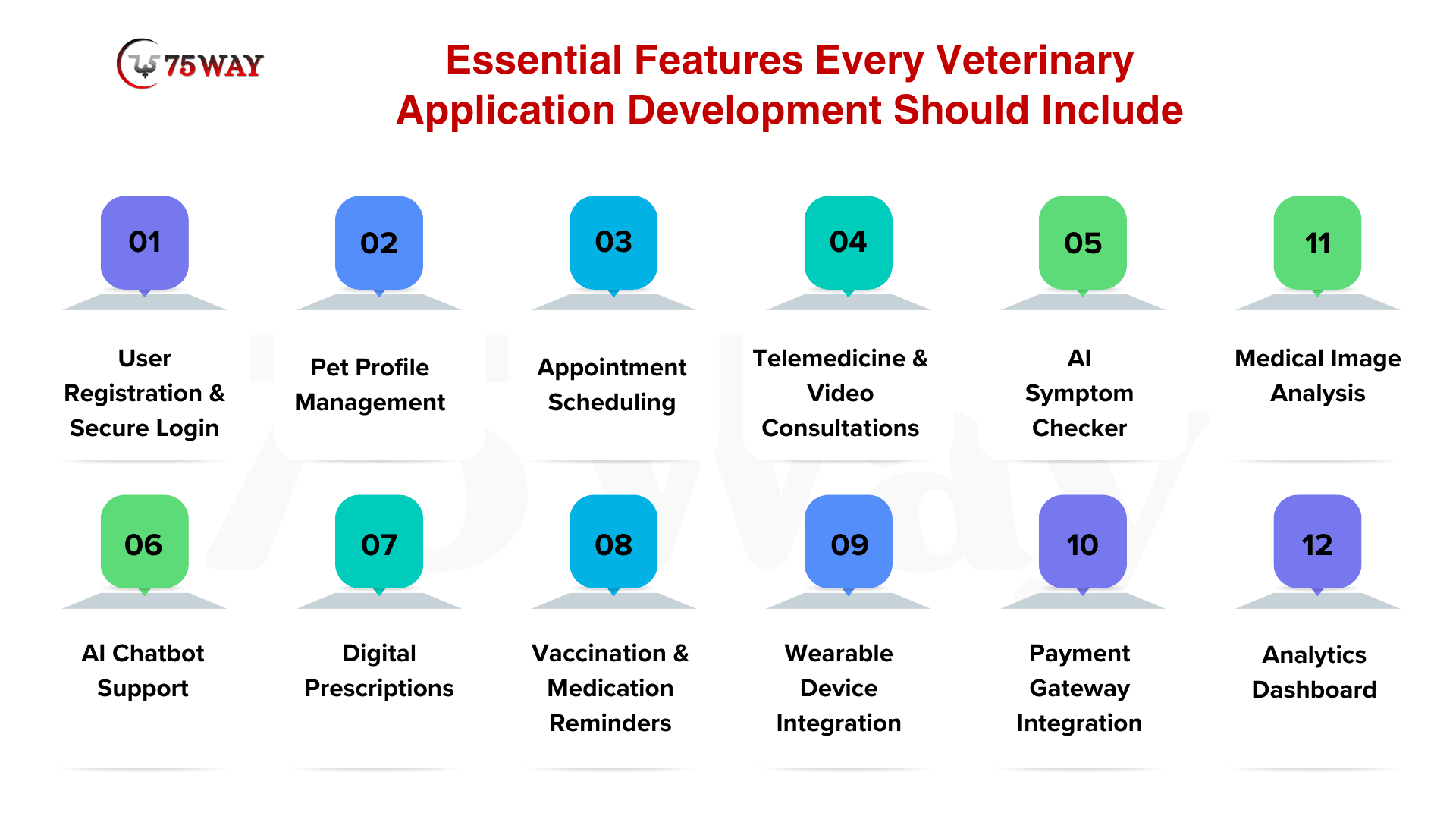
- User Registration & Secure Login: Allow veterinarians, pet owners, and administrators to create accounts securely using email, phone numbers, social logins, or biometric authentication while protecting sensitive information.
- Pet Profile Management: Store complete pet records, including breed, age, medical history, vaccinations, allergies, prescriptions, diagnostic reports, and treatment details in one centralized location.
- Appointment Scheduling: Enable users to book, reschedule, or cancel appointments while AI recommends suitable time slots based on veterinarian availability and consultation priority.
- Telemedicine & Video Consultations: Support secure virtual appointments with video calls, chat, digital prescriptions, file sharing with link tracker, and follow-up consultations for convenient remote veterinary care.
- AI Symptom Checker: Allow pet owners to enter symptoms and receive preliminary AI-generated health insights that help veterinarians prepare before consultations.
- Medical Image Analysis: Assist veterinarians by analyzing X-rays, ultrasound scans, skin conditions, dental images, and other diagnostic reports using AI-powered computer vision.
- AI Chatbot Support: Answer common questions, schedule appointments, send medication reminders, and provide instant assistance to users at any time.
- Digital Prescriptions: Enable veterinarians to issue electronic prescriptions, making medication management faster, more accurate, and paperless.
- Vaccination & Medication Reminders: Send automated reminders for vaccinations, medications, follow-up visits, preventive treatments, and routine health checkups.
- Wearable Device Integration: Connect smart collars and pet wearables to monitor activity, heart rate, sleep patterns, location, and other health metrics in real time.
- Payment Gateway Integration: Support secure online payments through credit cards, digital wallets, insurance providers, and recurring subscription plans.
- Medical Records Management: Organize consultation notes, laboratory reports, prescriptions, diagnostic images, and treatment history for quick and secure access.
- Push Notifications: Keep users informed about upcoming appointments, health reminders, emergency alerts, prescription updates, and important announcements.
- AI-Powered Health Predictions: Analyze historical medical data and behavioral patterns to identify potential health risks before they become serious.
- Analytics & Reporting Dashboard: Provide clinics with valuable insights into appointments, revenue, patient retention, AI usage, and operational performance to support informed business decisions.
Key Tools & Technologies Used In Building Vet Mobile App
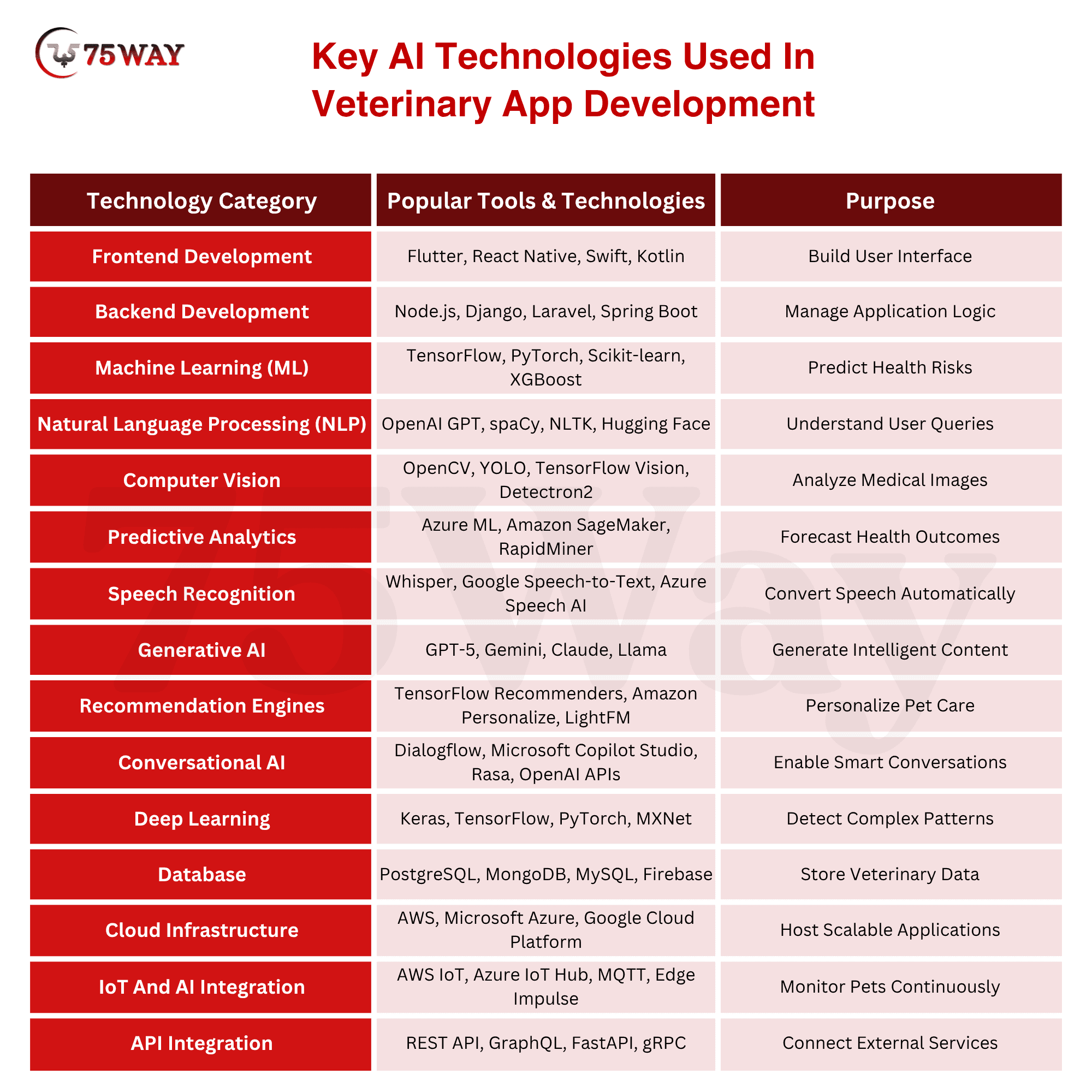
From analyzing X-rays to answering pet owners' questions, different technologies power different capabilities inside a vet app. Knowing what each technology does makes it easier to understand how modern veterinary platforms are developed. The core technologies are explained below.
- Frontend Technologies: Frameworks such as Flutter, React Native, Swift, and Kotlin create responsive, user-friendly mobile applications that deliver a consistent experience across Android and iOS devices.
- Backend Technologies: Node.js, Django, Laravel, .NET, and Spring Boot manage business logic, APIs, user authentication, data processing, and communication between application components.
- Machine Learning (ML): Analyze medical records, treatment history, laboratory reports, and wearable device data to identify patterns, predict health risks, and support clinical decision-making.
- Natural Language Processing (NLP): Enable AI chatbots, symptom assessment, voice assistants, automated documentation, and natural conversations between pet owners and veterinary professionals.
- Computer Vision: Interpret X-rays, ultrasound scans, skin conditions, dental images, and other diagnostic visuals to assist veterinarians during clinical evaluations.
- Predictive Analytics: Evaluate historical health records, breed-specific risks, lifestyle patterns, and real-time health data to identify potential medical concerns before symptoms become severe.
- Speech Recognition: Convert veterinarian conversations into structured consultation notes, reducing manual documentation and improving record accuracy.
- Generative AI: Create consultation summaries, treatment instructions, educational content, personalized care recommendations, and automated client communication.
- Recommendation Engines: Suggest nutrition plans, medication schedules, preventive care routines, wellness activities, and follow-up reminders based on each pet's health profile.
- Conversational AI: Deliver human-like interactions through intelligent virtual assistants that answer questions, schedule appointments, provide updates, and guide users throughout their healthcare journey.
- Deep Learning: Process complex medical datasets and diagnostic images with greater accuracy, helping veterinarians recognize patterns that may be difficult to identify manually.
- IoT And AI Integration: Combine artificial intelligence with smart collars, wearable sensors, and connected devices to monitor pet health continuously and generate real-time alerts when unusual changes occur.
- Database Technologies: PostgreSQL, MySQL, MongoDB, and Firebase securely store user accounts, pet records, consultation history, prescriptions, and operational data while supporting fast information retrieval.
- Cloud Infrastructure: AWS, Microsoft Azure, and Google Cloud provide scalable computing resources, secure storage, AI deployment, backups, and reliable application performance.
- API Integrations: REST APIs and GraphQL connect payment gateways, wearable devices, telemedicine platforms, laboratories, pharmacy systems, maps, and third-party veterinary services into one connected ecosystem.
- Security Technologies: OAuth 2.0, JWT authentication, SSL encryption, multi-factor authentication, and role-based access control protect sensitive user and medical information while supporting regulatory compliance.
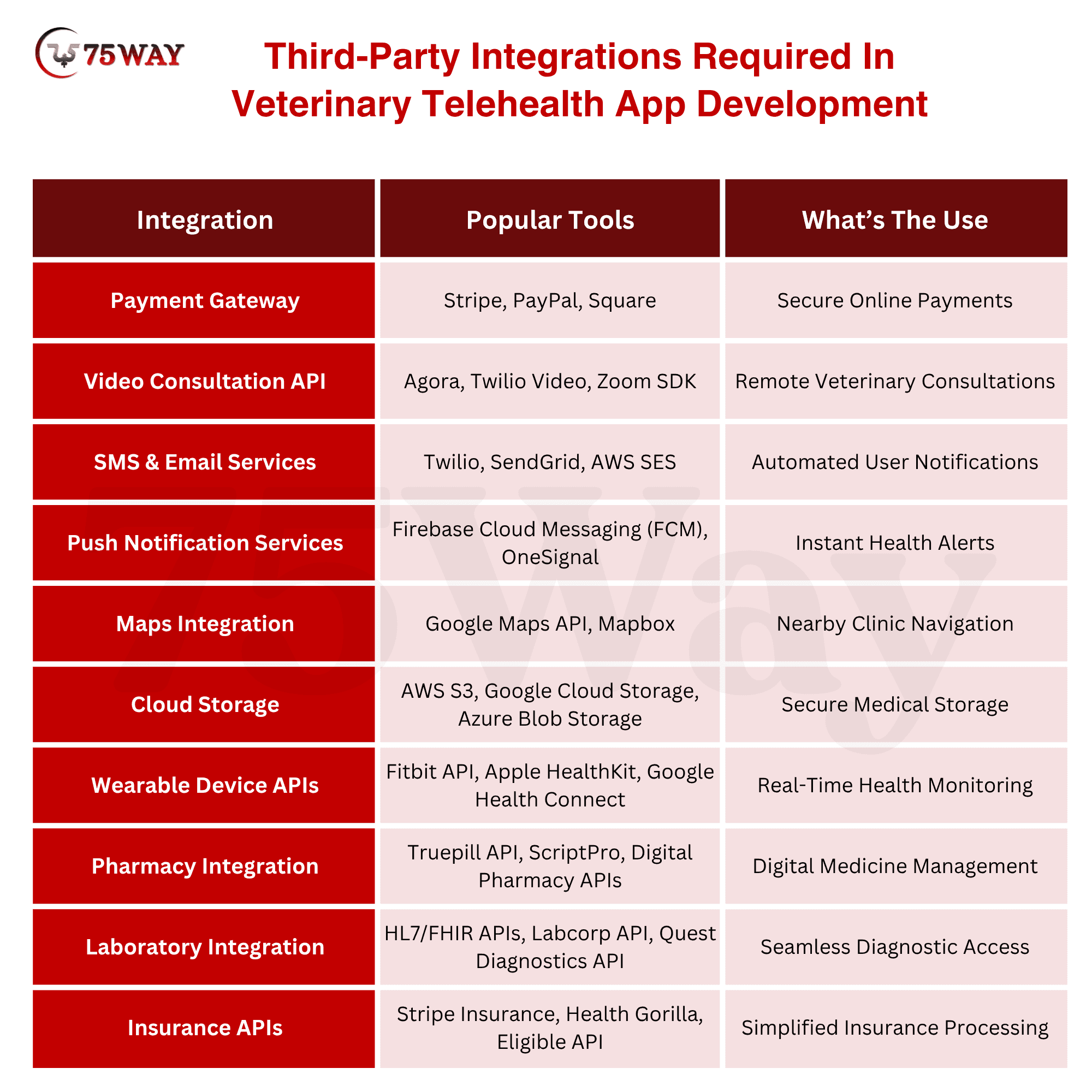
Third-Party Integrations Required In Veterinary Telehealth App Development
Third-party integrations expand application functionality without developing every service from scratch. Selecting reliable integration partners improves user convenience while accelerating development.
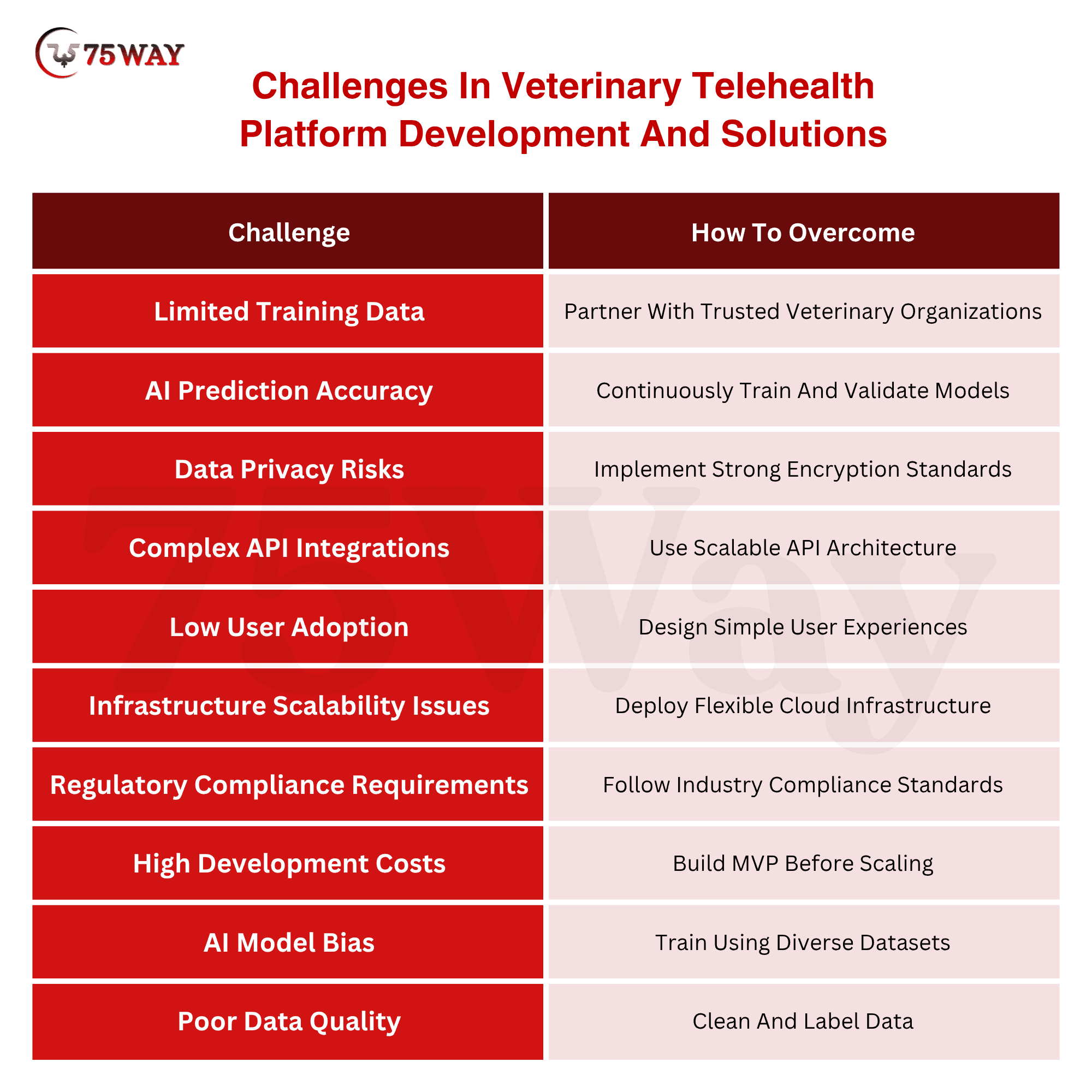
Challenges In Veterinary Telehealth Platform Development And Solutions
Every AI-powered veterinary app faces obstacles before it reaches users. Some challenges appear during development, while others emerge when the app begins handling real veterinary data, clinical workflows, and day-to-day user interactions. The most common ones are discussed below.
- Limited Veterinary Training Data: AI models require large amounts of high-quality data, but veterinary datasets are often limited compared to human healthcare.
How To Overcome: Collaborate with veterinary hospitals, research organizations, diagnostic laboratories, and trusted data providers to build diverse, anonymized training datasets.
- AI Prediction Reliability: Inaccurate recommendations can affect user trust and clinical decision-making if AI models are not properly trained or validated.
How To Overcome: Continuously test AI models using real veterinary cases and involve experienced veterinarians to review outputs before deployment.
- Data Privacy And Security Risks: Veterinary applications store sensitive customer information, medical records, consultation history, and payment details that require strong protection.
How To Overcome: Implement end-to-end encryption, multi-factor authentication, role-based access controls, and regular security audits to safeguard user data.
- Complex Third-Party Integrations: Connecting payment gateways, telemedicine platforms, pharmacies, laboratories, wearable devices, and other services can increase development complexity.
How To Overcome: Build a scalable API architecture, use reliable integration frameworks, and thoroughly test every external connection before launch.
- Low User Adoption: Some veterinarians and pet owners may hesitate to switch from familiar workflows to a new digital platform.
How To Overcome: Design an intuitive interface, provide onboarding tutorials, offer responsive customer support, and introduce AI features gradually to build confidence.
- Scalability Challenges: Growing user traffic, increasing consultations, and AI processing demands can affect application performance over time.
How To Overcome: Choose cloud-native infrastructure, optimize backend performance, and scale computing resources automatically as demand increases.
- Regulatory Compliance: Privacy regulations vary across countries, making compliance challenging for applications serving multiple regions.
How To Overcome: Build the platform around standards such as HIPAA, GDPR, and other applicable regulations from the beginning instead of adding compliance later.
- High Development Costs: Advanced AI capabilities, custom integrations, and ongoing maintenance can significantly increase the overall project budget.
How To Overcome: Launch with a focused MVP, prioritize high-impact features, and expand functionality based on user feedback and business growth.
Best Practices For Successful AI-Powered Veterinary App Development
A successful veterinary app isn't built by adding every new AI technology available. Long-term success usually comes from making practical decisions, listening to users, and improving the product over time. A few proven practices can make that journey much smoother.
- Solve Real Problems: AI should make veterinary care easier, not more complicated. Every feature should save time, improve decision-making, or remove a genuine pain point for veterinarians and pet owners.
- Work With Veterinarians: No amount of technical expertise can replace real clinical experience. Regular feedback from veterinary professionals helps you avoid building features that look impressive but offer little value in practice.
- Launch Small, Then Grow: A complete platform doesn't have to appear on day one. A focused MVP helps you test your idea in the real world, collect feedback, and make smarter decisions before investing in advanced functionality.
- Protect User Trust: Security isn't just about meeting compliance requirements. Pet owners expect their personal information and medical records to remain private, so strong protection should be part of every development stage.
- Treat AI As An Ongoing Process: AI models improve with time, not immediately after deployment. Regular training, fresh veterinary data, and continuous monitoring help maintain reliable recommendations as new cases become available.
- Build For Tomorrow: Business needs rarely stay the same for long. A flexible architecture makes it much easier to add new AI capabilities, integrations, and services without rebuilding the entire platform later.
What’s AI-Powered Veterinary App Development Cost In 2026?
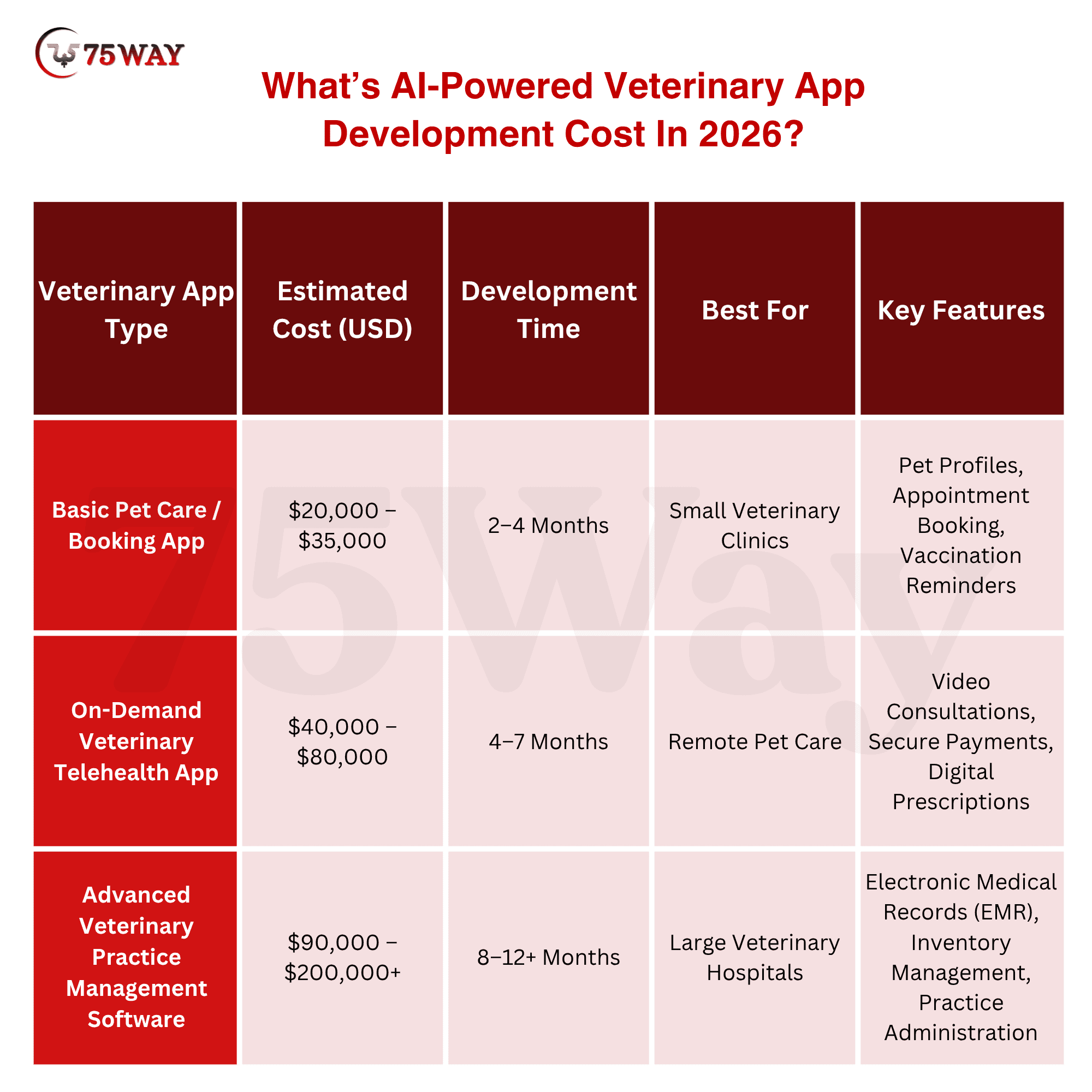
The cost of AI-powered veterinary app development depends on the application's complexity, AI capabilities, platform selection, third-party integrations, and the development team's location. The average cost to create a vet app lies between $20,000-$200,000+.
- Basic Pet Care / Booking App
Estimated Cost: $20,000 – $35,000
Estimated Time: 2–4 Months
Scope: Suitable for small veterinary clinics and pet care startups requiring appointment booking, pet profiles, vaccination reminders, and basic customer management.
- On-Demand Veterinary Telehealth App
Estimated Cost: $40,000 – $80,000
Estimated Time: 4–7 Months
Scope: Designed for businesses offering virtual consultations with features such as video appointments, secure payments, digital prescriptions, AI symptom assessment, and online patient management.
- Advanced Veterinary Practice Management Software
Estimated Cost: $90,000 – $200,000+
Estimated Time: 8–12+ Months
Scope: Ideal for multi-location veterinary hospitals and large practices needing EMR management, inventory tracking, staff administration, billing, AI-powered workflows, reporting, and third-party system integrations.
Cost To Create AI-Powered Vet Telehealth App Based on Development Stages
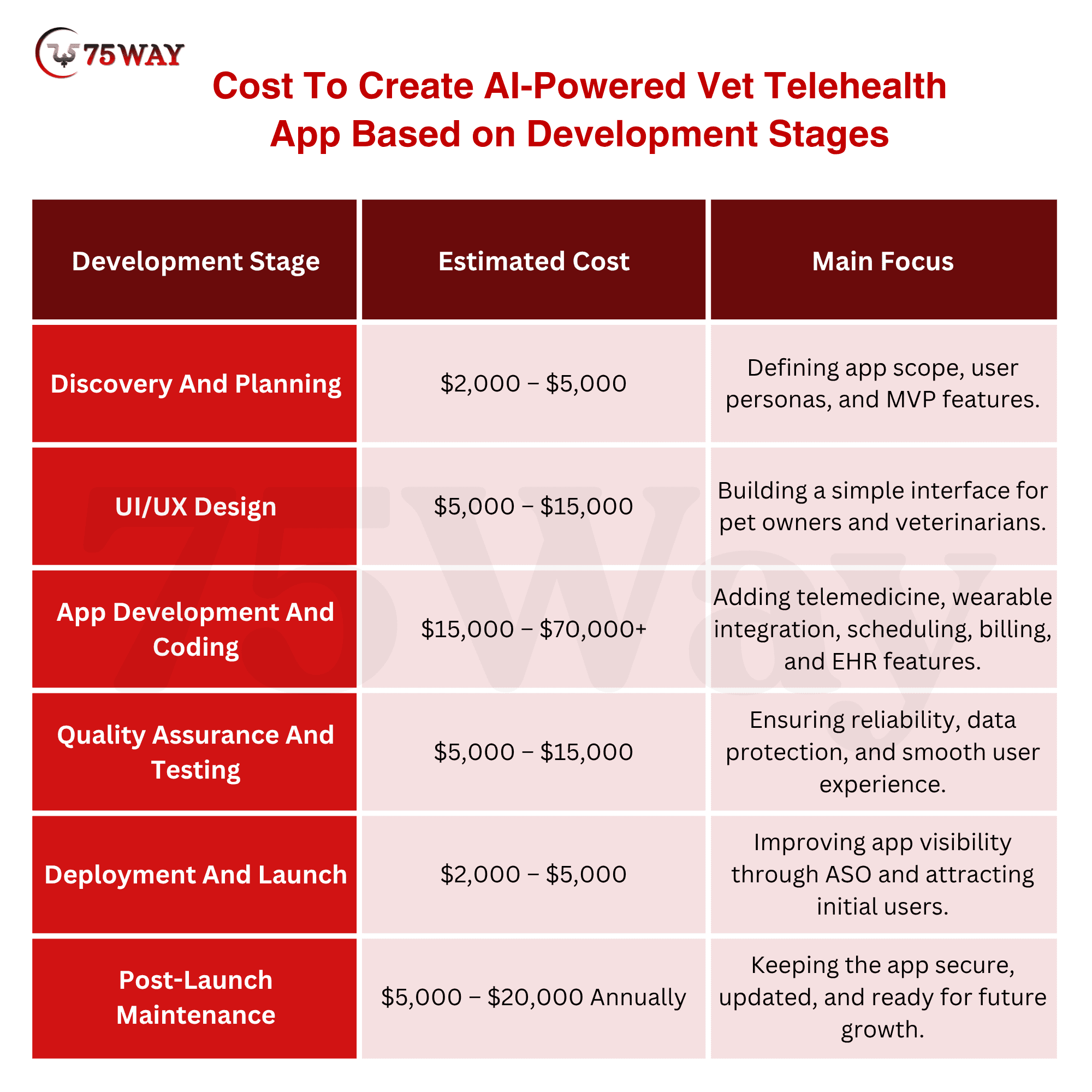
The cost of creating an AI-powered vet telehealth app depends largely on how complex the platform needs to be at each development stage. From initial planning and design to AI integration, testing, and launch, every phase adds different resources and expenses. The estimated cost breakdown by stage is explained below.
- Discovery And Planning: $2,000 – $5,000
- UI/UX Design: $5,000 – $15,000
- App Development And Coding: $15,000 – $70,000+
- Quality Assurance And Testing: $5,000 – $15,000
- Deployment And Launch: $2,000 – $5,000
- Post-Launch Maintenance: $5,000 – $20,000 Annually
Veterinary App Development Cost Breakdown By Development Team Location
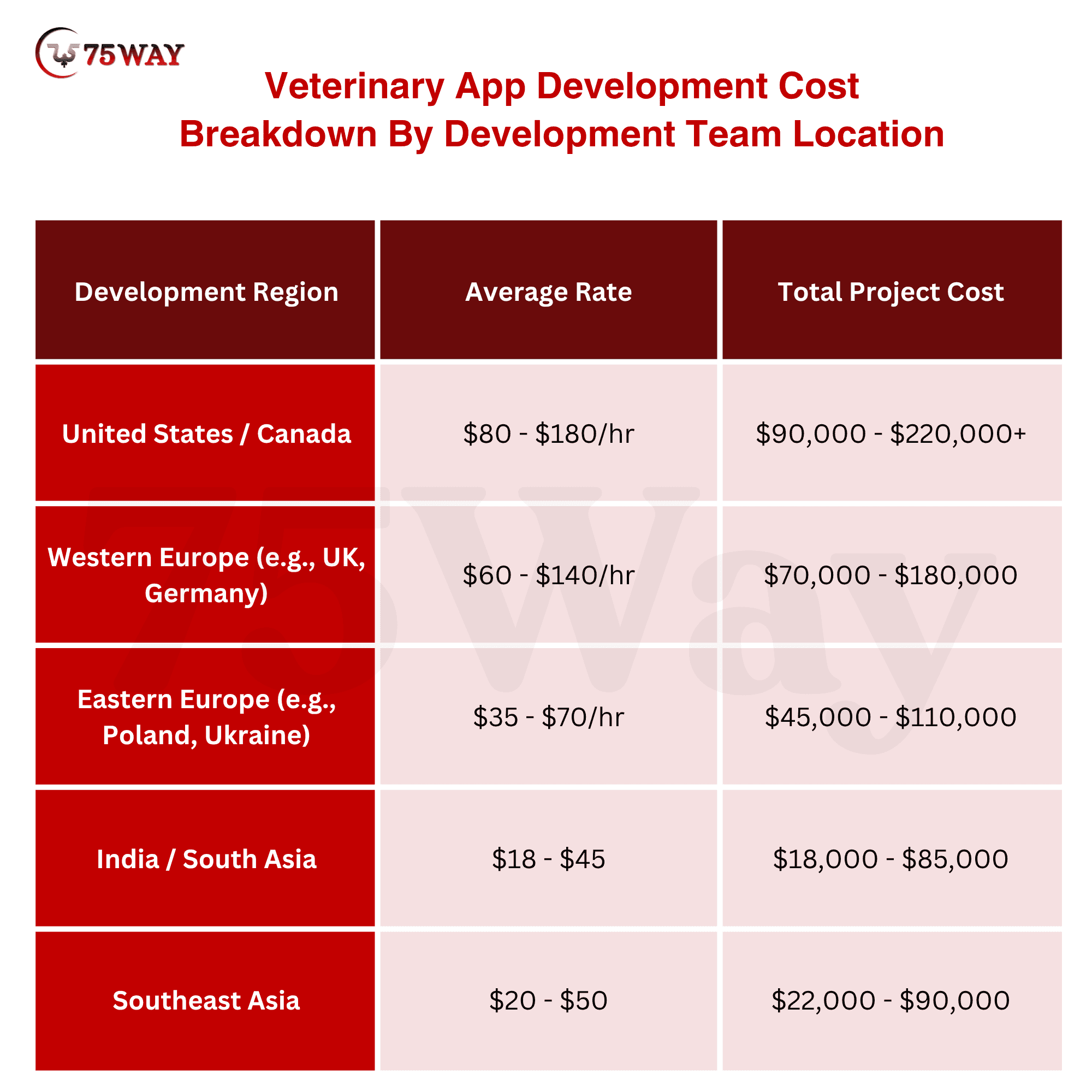
The development team’s location can significantly influence the overall cost of building a veterinary app. Depending on where you hire developers, the average cost can range between $18-$180/hr with differences mainly based on development rates, expertise, and project complexity. The cost breakdown by team location is explained below.
- United States/Canada: $80 - $180/hr
- Western Europe (e.g., UK, Germany): $60 - $140/hr
- Eastern Europe (e.g., Poland, Ukraine): $35 - $70/hr
- India/South Asia: $18 - $45
- Southeast Asia: $20 - $50
Factors Affecting the Development Cost of a Veterinary App
- AI Features: Adding computer vision, predictive analytics, generative AI, conversational AI, and machine learning increases development effort due to model training, testing, and optimization.
- Platform Selection: Building separate Android and iOS applications generally requires a larger investment than developing a cross-platform solution.
- Third-Party Integrations: Payment gateways, telemedicine APIs, wearable devices, pharmacy systems, laboratory platforms, and insurance integrations influence both development time and budget.
- UI/UX Complexity: Custom dashboards, interactive health reports, AI visualizations, and personalized user journeys require additional design and frontend development.
- Security And Compliance: Implementing encryption, role-based access control, audit logs, secure cloud infrastructure, and privacy safeguards contributes to development costs while strengthening application reliability.
Pre-Built Vs Custom Animal Healthcare App Development: Which Is Better?
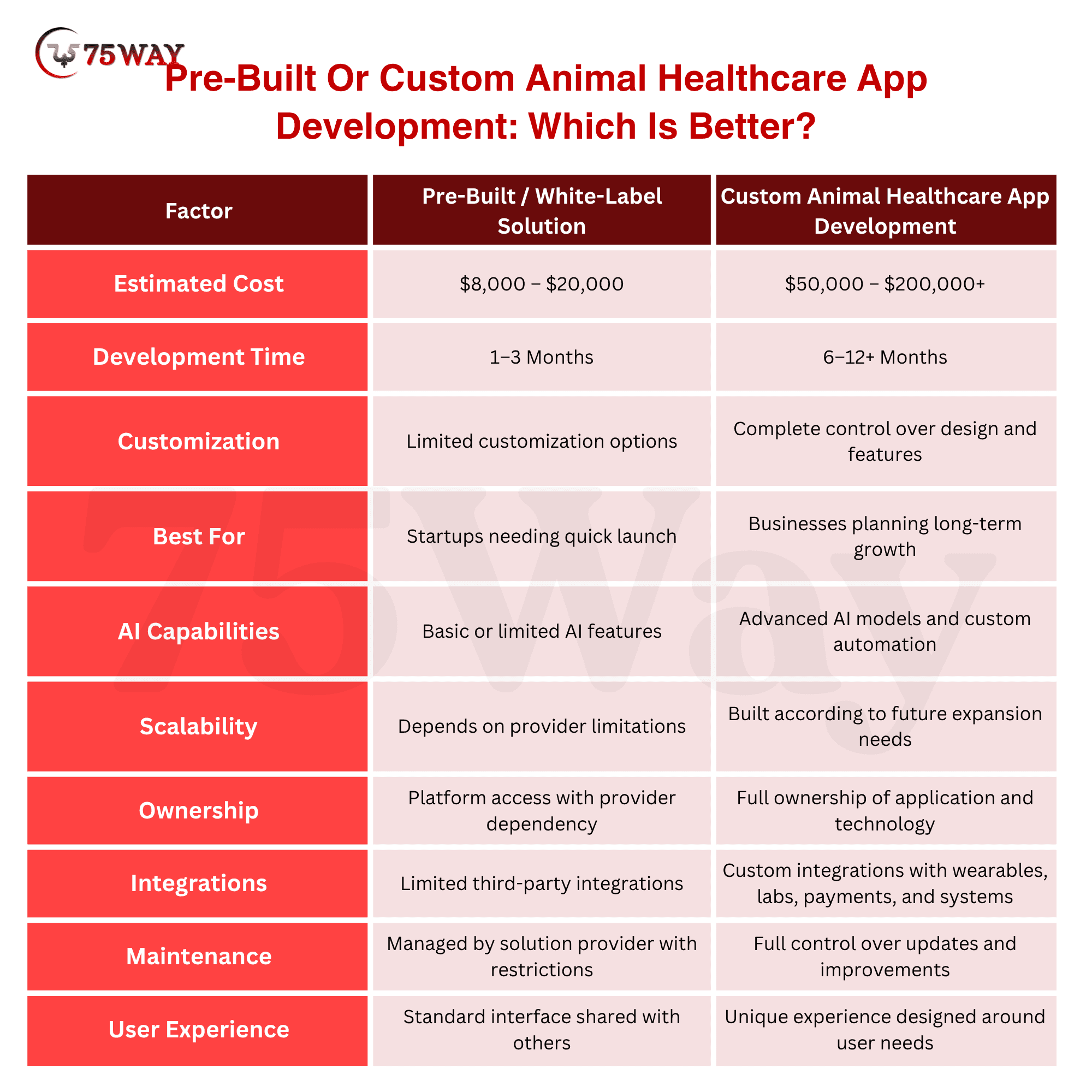
The main difference is that pre-built animal healthcare apps offer faster, affordable solutions with limited flexibility, while custom apps provide complete control, advanced features, and long-term scalability.
Pre-built or white-label solutions usually cost around $8,000 – $20,000 and are suitable for businesses that want to launch quickly using existing features. These platforms reduce development time and initial costs, but customization options are often restricted, making it harder to add unique workflows or advanced AI capabilities later.
Custom animal healthcare mobile applications require a higher investment because every feature, design element, and integration is built according to your business requirements. Although development takes more time, custom solutions offer better ownership, stronger security, seamless AI integration, and the flexibility to expand as your veterinary business grows.
Monetization Strategies: How To Earn Profit From AI-Powered Veterinary Apps
A veterinary app can generate revenue in multiple ways, depending on the services it provides and the users it targets. The most successful apps usually combine two or more monetization models to create a steady income while continuing to improve pet healthcare experiences.
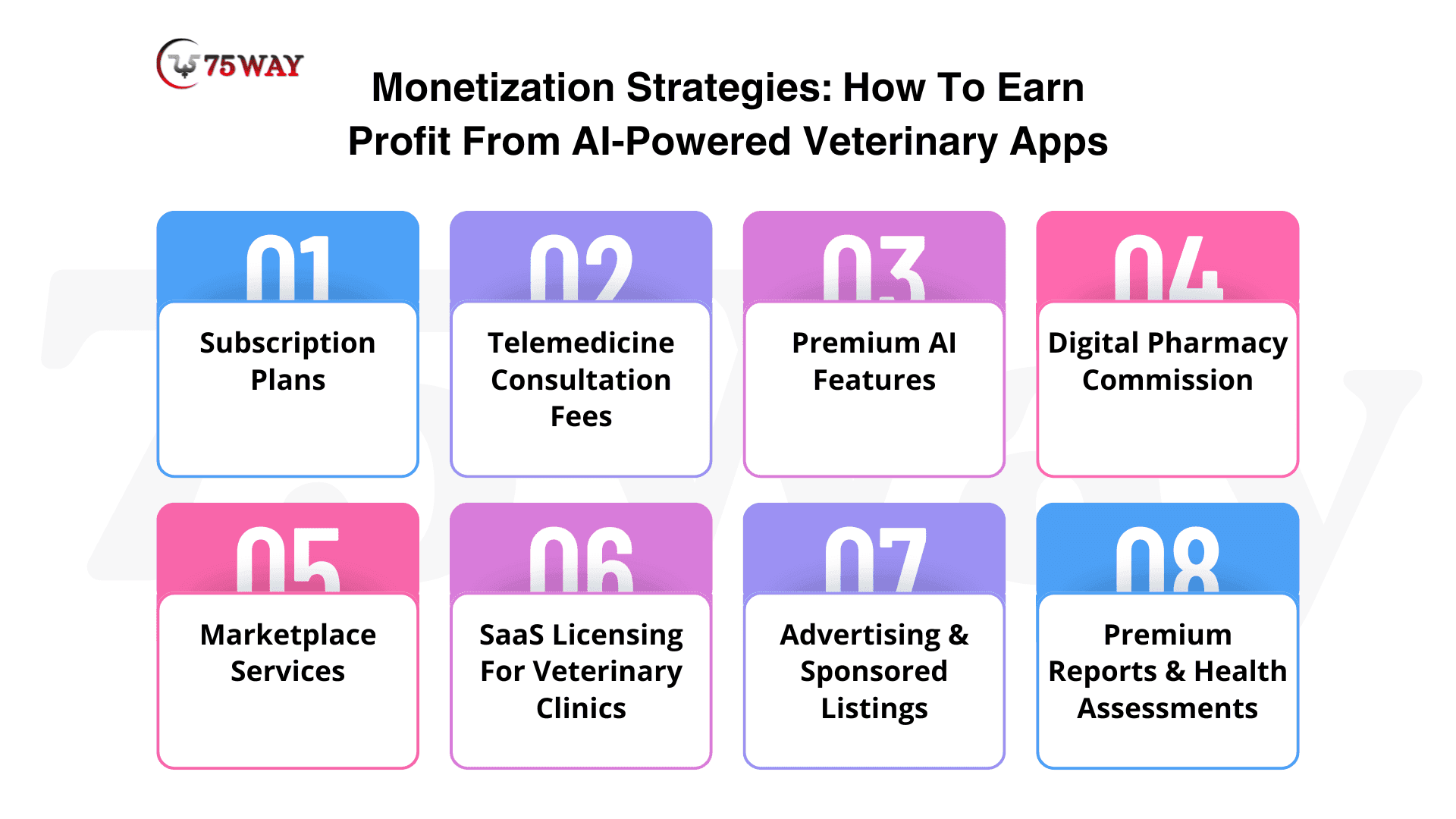
- Subscription Plans: Monthly or yearly memberships allow pet owners to access premium services such as AI health monitoring, unlimited consultations, wellness tracking, and priority support. A pet healthcare app can offer a $9.99/month premium plan for AI health insights or a $99/year wellness package that includes reminders, reports, and personalized care recommendations.
- Telemedicine Consultation Fees: Virtual veterinary consultations create direct revenue by charging users for online appointments with licensed veterinarians. A platform can charge $25–$75 per video consultation, where a portion goes to the veterinarian and the remaining amount becomes app revenue through service fees.
- Premium AI Features: Advanced AI capabilities can be offered as paid upgrades for users who need deeper health insights and personalized recommendations. A pet owner may pay $14.99/month for AI-generated wellness reports, early health risk alerts, and customized nutrition guidance.
- Digital Pharmacy Commission: Partnerships with online pharmacies allow apps to earn commissions from medicine purchases made through the platform. For instance, a pet owner ordering $50 worth of prescribed medication through the app could generate a 5–15% commission for the platform.
- Marketplace Services: Additional pet services such as insurance, grooming, laboratory testing, training, and wellness products can create extra income through partner commissions. A veterinary marketplace may earn $10–$30 per completed service booking depending on the partner agreement.
- SaaS Licensing For Veterinary Clinics: Veterinary clinics can pay recurring fees to use AI-powered practice management tools, appointment systems, and digital records. A clinic may subscribe to a plan costing $199–$999/month based on the number of veterinarians, locations, and features required.
- Advertising And Sponsored Listings: Pet-related brands can pay to display relevant promotions, featured products, or sponsored recommendations inside the application. A pet nutrition company, for example, may pay $500–$5,000/month for targeted visibility among pet owners.
- Premium Reports And Health Assessments: Users can purchase detailed AI-generated health reports, breed-specific assessments, and wellness evaluations as one-time services. A detailed AI health report may cost around $19–$49 per pet, creating additional revenue without requiring a subscription.
How 75way Helps Build AI-Powered Veterinary Applications?
Building an AI-powered veterinary app requires the right combination of healthcare knowledge, AI expertise, and strong development capabilities. 75way Technologies helps businesses transform veterinary app ideas into secure, scalable, and intelligent digital solutions designed around real-world healthcare needs.
Our team focuses on creating customized veterinary applications with features such as AI symptom analysis, virtual consultations, pet health monitoring, automated reminders, digital records, and intelligent practice management tools. From initial planning and UI/UX design to AI integration, development, testing, and post-launch improvements, we support the complete development journey.
With experience in AI, mobile application development, and healthcare technology, 75way helps startups, clinics, and enterprises build reliable platforms that improve veterinary workflows, enhance pet owner experiences, and create long-term business value. Whether you need a veterinary telemedicine solution, an AI diagnostic assistant, or a complete veterinary ecosystem, our experts can help bring your vision to life.
Final Thoughts
To wrap up, AI-powered veterinary app development is creating new possibilities for better animal healthcare through smarter automation, faster services, and personalized pet care experiences. A successful application requires the right combination of AI technologies, user-focused design, secure infrastructure, and a clear business strategy. Businesses that invest in reliable solutions today can improve veterinary workflows while building stronger connections with pet owners. Partnering with an experienced healthcare app development company helps transform your idea into a scalable, secure, and intelligent platform designed for long-term growth. Connect with our experts today to build your next-generation veterinary healthcare solution.
Frequently Asked Questions (FAQs)
Is AI Suitable For Small Veterinary Clinics?
Yes. AI-powered veterinary applications can benefit small clinics by automating appointment scheduling, maintaining digital medical records, improving client communication, supporting virtual consultations, and reducing administrative workloads. Cloud-based deployment also allows smaller practices to adopt AI solutions without investing heavily in on-premise infrastructure.
Can AI Replace Veterinarians During Diagnosis?
No. Artificial intelligence supports veterinarians by analyzing healthcare data, identifying patterns, and generating clinical recommendations. Final diagnoses, treatment decisions, surgical planning, and emergency care should always remain under the supervision of qualified veterinary professionals.
Which Animals Can AI Veterinary Apps Support?
AI-powered veterinary applications can support companion animals, livestock, horses, birds, reptiles, and exotic pets. The application's capabilities depend on available datasets, AI model training, and healthcare workflows designed for each species.
Can Existing Veterinary Software Be Upgraded With AI?
Yes. Existing veterinary management systems can integrate AI features such as conversational assistants, predictive analytics, medical image analysis, appointment automation, and intelligent reporting without replacing the entire software platform.
Does An AI Veterinary App Require Internet Connectivity?
Most AI-powered veterinary applications rely on cloud infrastructure for AI processing, telemedicine, synchronization, and real-time updates. However, selected features such as appointment calendars, stored records, or offline notes can remain accessible without continuous internet access.
Which Businesses Should Invest In AI Veterinary Apps?
Veterinary hospitals, private clinics, telemedicine providers, animal shelters, diagnostic laboratories, pharmaceutical companies, pet insurance providers, livestock healthcare organizations, and pet wellness startups can all benefit from AI-powered veterinary applications.