Summary
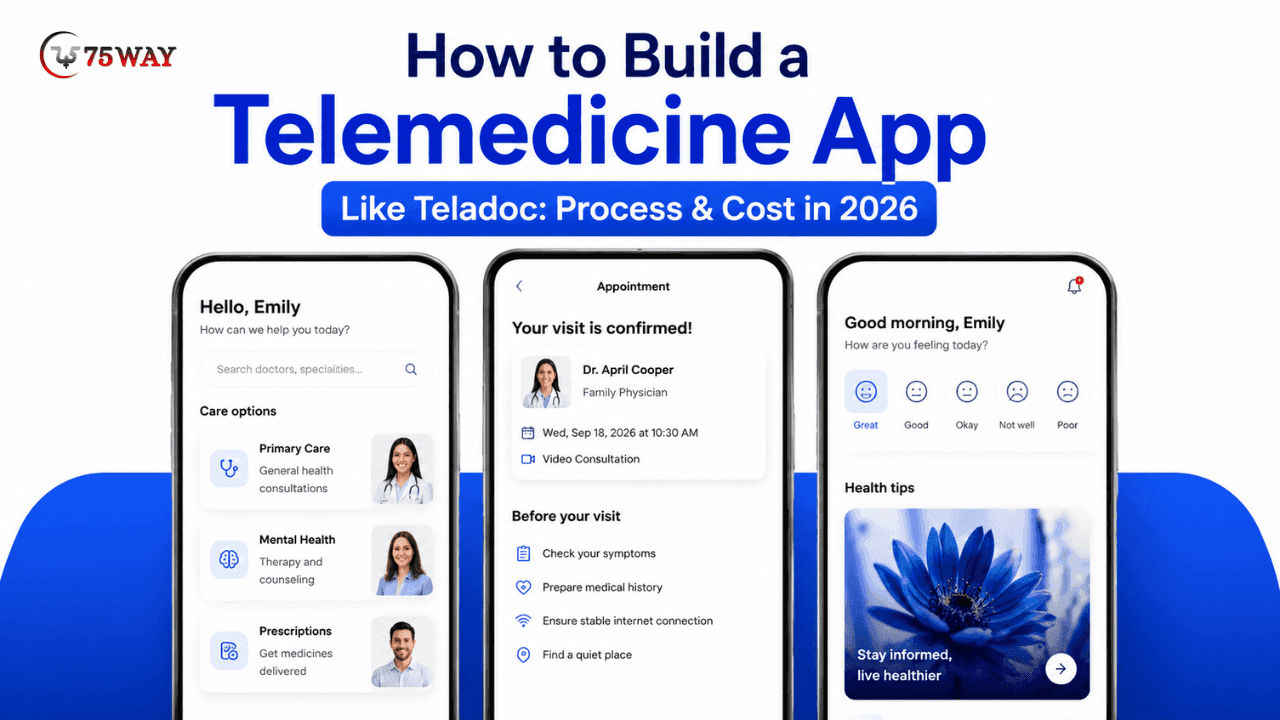
Eager to build a telemedicine app like Teladoc in 2026? Explore Teladoc-inspired features, telemedicine app development process, technology stack, compliance requirements, and cost estimates for building a secure virtual healthcare solution. Learn how to transform healthcare delivery through virtual consultations, digital prescriptions, remote monitoring, and AI-powered patient engagement.
Quick Overview
- Teladoc-style appdevelopment follows phased planning, design, testing, deployment, and continuous optimization.
- Teladoc-inspired platforms require secure architecture and regulatory compliance foundations.
- Patient, doctor, and admin features drive platform usability and growth.
- Artificial intelligence enhances diagnosis support, engagement, and operational workflows.
- Development costs ranges amid $25,000-$150,000+ based on complexity and integrations required.
The growing demand for telehealth services is creating substantial opportunities for organizations entering this market. However, building a telemedicine app like Teladoc involves much more than video calling capabilities. Successful telemedicine app development solutions require secure infrastructure, healthcare compliance, intuitive user experiences, integrated workflows, and scalable technology architecture capable of supporting thousands of consultations and remote patient monitoring.
This guide explores the complete process of building a telemedicine app like Teladoc, including market opportunities, platform functionality, essential features, technology requirements, compliance considerations, development stages, and cost estimates. Businesses evaluating telemedicine investments will gain a clear understanding of the resources, planning, and technology required to launch a successful virtual healthcare application in 2026.
What Is Teladoc? Understanding The Teladoc Business Model
Teladoc is one of the world's leading telehealth platforms, providing virtual healthcare services through mobile applications across iOS, Android, and web. The platform connects patients with licensed healthcare professionals for medical consultations, diagnoses, treatment recommendations, prescription management, and follow-up care.
Instead of requiring patients to visit physical healthcare facilities, Teladoc enables healthcare interactions through secure digital channels. This model improves accessibility while reducing barriers associated with travel, scheduling limitations, and geographic constraints.
The platform supports multiple healthcare services, including primary care consultations, mental health services, chronic disease management, specialist consultations, follow-up appointments, prescription services, and preventive healthcare guidance. Its ability to provide convenient healthcare access has contributed to its growth and popularity.
Telemedicine App Market Size & Revenue Growth in USA
Telemedicine has evolved from a supplementary healthcare service into a core component of modern healthcare delivery. Healthcare organizations worldwide are integrating virtual care capabilities into their service offerings to meet changing patient expectations and improve care accessibility. Several trends are contributing to continued market growth:
- Increased Digital Adoption: Patients are becoming more comfortable using mobile applications and digital platforms for healthcare services.
- Remote Care Demand: Virtual healthcare provides greater accessibility for patients living in rural and underserved regions.
- Healthcare Workforce Challenges: Telehealth apps help healthcare organizations optimize physician availability and patient scheduling.
- Chronic Disease Management: Digital platforms support ongoing monitoring and treatment of chronic conditions through virtual interactions.
- AI Integration: Advanced integration of AI improves healthcare delivery, diagnostics, and patient communication.
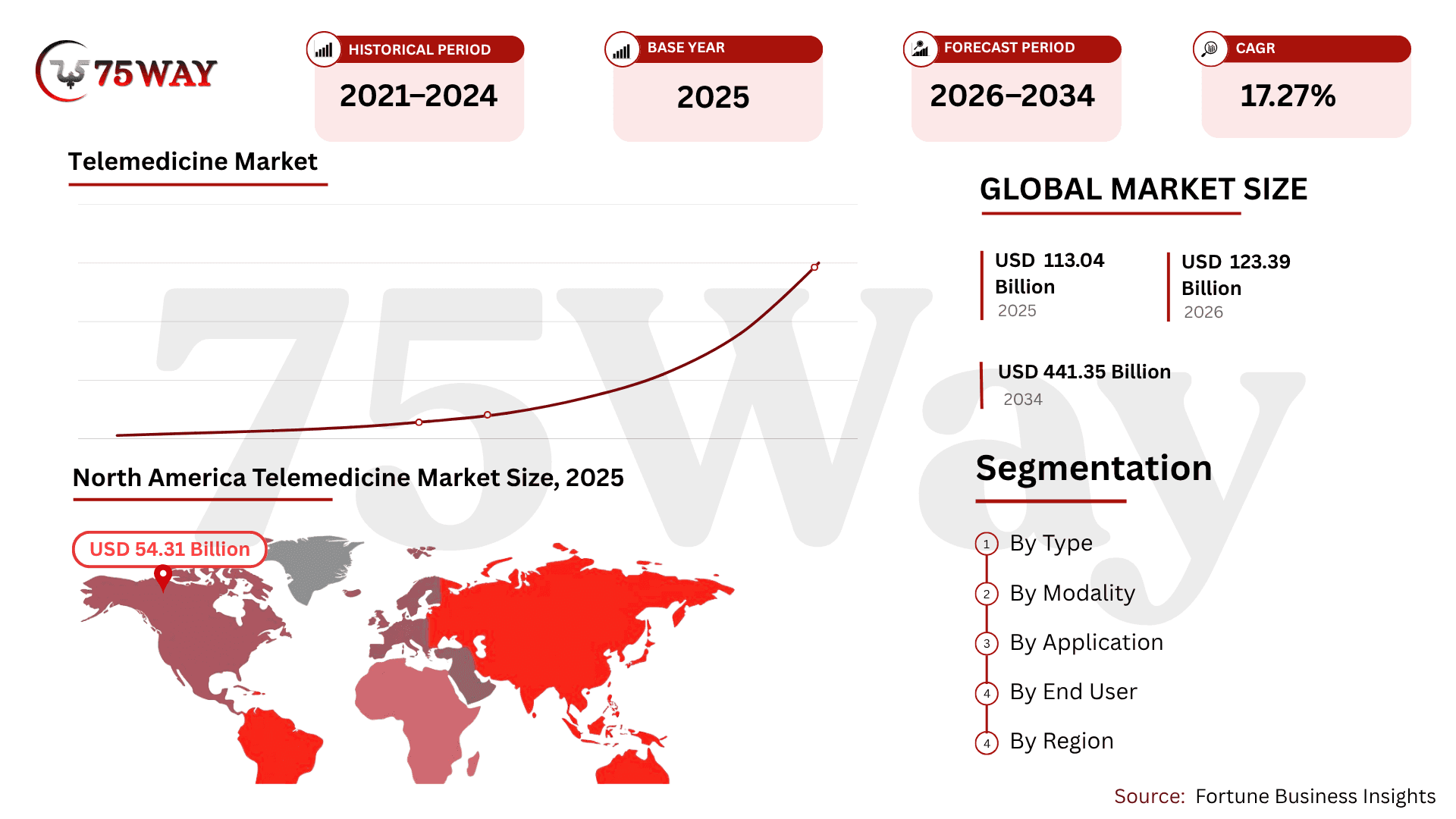
- The global telemedicine market is projected to grow from $123.39 billion in 2026 to $441.35 billion by 2034, at a CAGR of 17.27%.
- North America leads the telemedicine industry with a market share of 48.04%.
- Telemedicine platforms collectively serve more than 116 million active users worldwide.
- Teladoc Health operates in a U.S. addressable market estimated at $261 billion, creating significant growth opportunities.
- According to the Towards Healthcare report, the U.S. telehealth market is expected to reach $358.96 billion by 2034.
- More than 76% of physicians now use telemedicine services, up sharply from 35% before the pandemic.
Why Entrepreneurs Want To Build Apps Like Teladoc?
Entrepreneurs are increasingly investing in telemedicine platforms as digital healthcare adoption grows, creating opportunities to improve accessibility and reduce costs. However, several factors are driving demand for telemedicine application development.
- Expanding Patient Demand: Patients increasingly prefer digital healthcare options because they provide flexibility and convenience.
- Healthcare Accessibility Challenges: Many regions continue facing shortages of healthcare professionals, making virtual consultations an attractive alternative.
- Cost Reduction Opportunities: Virtual care models often reduce operational costs while enabling healthcare providers to serve larger patient populations.
- Growing Digital Health Investments: Healthcare technology remains one of the fastest-growing sectors for venture capital and enterprise investment.
- AI-Powered Healthcare Innovation: Artificial intelligence/AI in healthcare is introducing new capabilities that enhance patient engagement, diagnostics, and healthcare management.
These factors continue to create favorable conditions for telemedicine platform development.
How Does A Telehealth App Like Teladoc Work?
Understanding platform workflows is essential before beginning development. A telemedicine platform typically connects patients, healthcare professionals, and administrators through a centralized system.
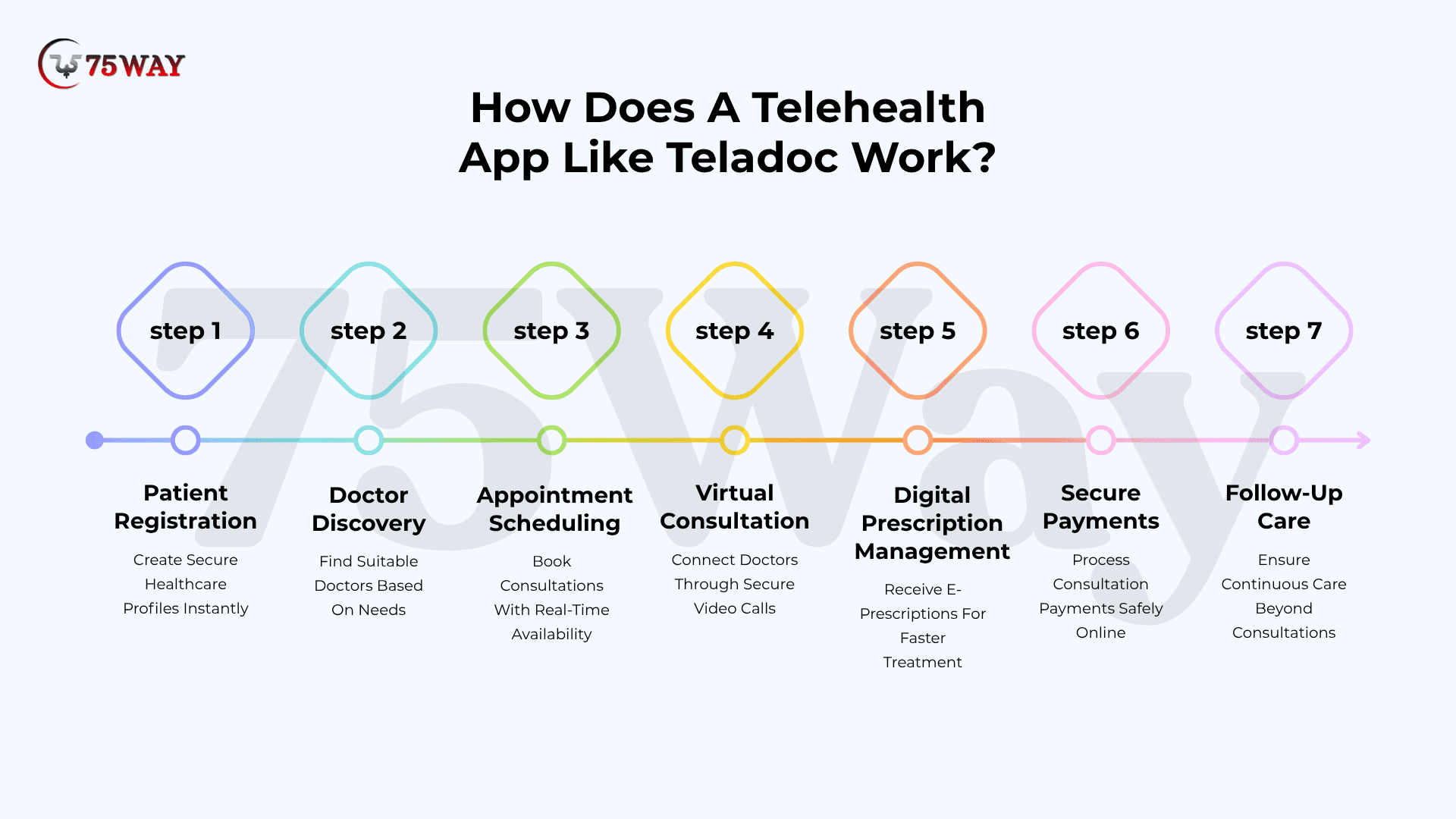
Step 1: Patient Registration
The process begins when patients create an account on the platform. During registration, users provide personal information, contact details, medical history, insurance information, and identity verification data. This information helps create a secure healthcare profile that can be accessed during future consultations and treatments.
Step 2: Doctor Discovery
After completing registration, patients can search for healthcare providers that match their specific needs. The platform allows users to filter doctors based on specialty, availability, ratings, languages, experience, and consultation fees. These search capabilities make it easier to find the most suitable healthcare professional.
Step 3: Appointment Scheduling
Once a doctor is selected, patients can book appointments directly through the platform. The scheduling system provides real-time availability, calendar synchronization, automated confirmations, and appointment reminders. This streamlines the booking process while reducing administrative workload and scheduling conflicts.
Step 4: Virtual Consultation
At the scheduled appointment time, patients and healthcare providers connect through secure video conferencing technology. During the consultation, doctors can discuss symptoms, perform medical evaluations, recommend treatments, and create follow-up care plans. This virtual interaction serves as the core service offered by most telemedicine platforms.
Step 5: Digital Prescription Management
Following the consultation, physicians can generate and share electronic prescriptions directly through the platform. Digital prescriptions enable faster medication access, reduce paperwork, improve convenience for patients, and support better healthcare record management. This feature helps ensure a seamless treatment experience.
Step 6: Secure Payments
The platform processes consultation fees and subscription payments through integrated payment gateways. Patients can pay using credit cards, digital wallets, insurance integrations, or recurring subscription plans. Secure payment processing protects financial information while supporting platform monetization.
Step 7: Follow-Up Care
Healthcare services often extend beyond a single consultation. Telemedicine platforms support ongoing patient engagement through follow-up appointments, prescription renewals, secure messaging, and progress tracking. These features help improve treatment outcomes while strengthening long-term patient relationships.
Must-Have Features In Creating A Telemedicine Mobile App Like Teladoc
A successful telemedicine platform requires more than video consultations. Modern healthcare users expect a seamless experience that simplifies appointment scheduling, communication, treatment management, and ongoing care. To build a scalable platform similar to Teladoc, feature planning should focus on three major user groups:
- Patients
- Doctors
- Administrators
Each user type interacts with the platform differently and requires dedicated functionality. Here is the list of all features used in building a telemedicine app like Teladoc.
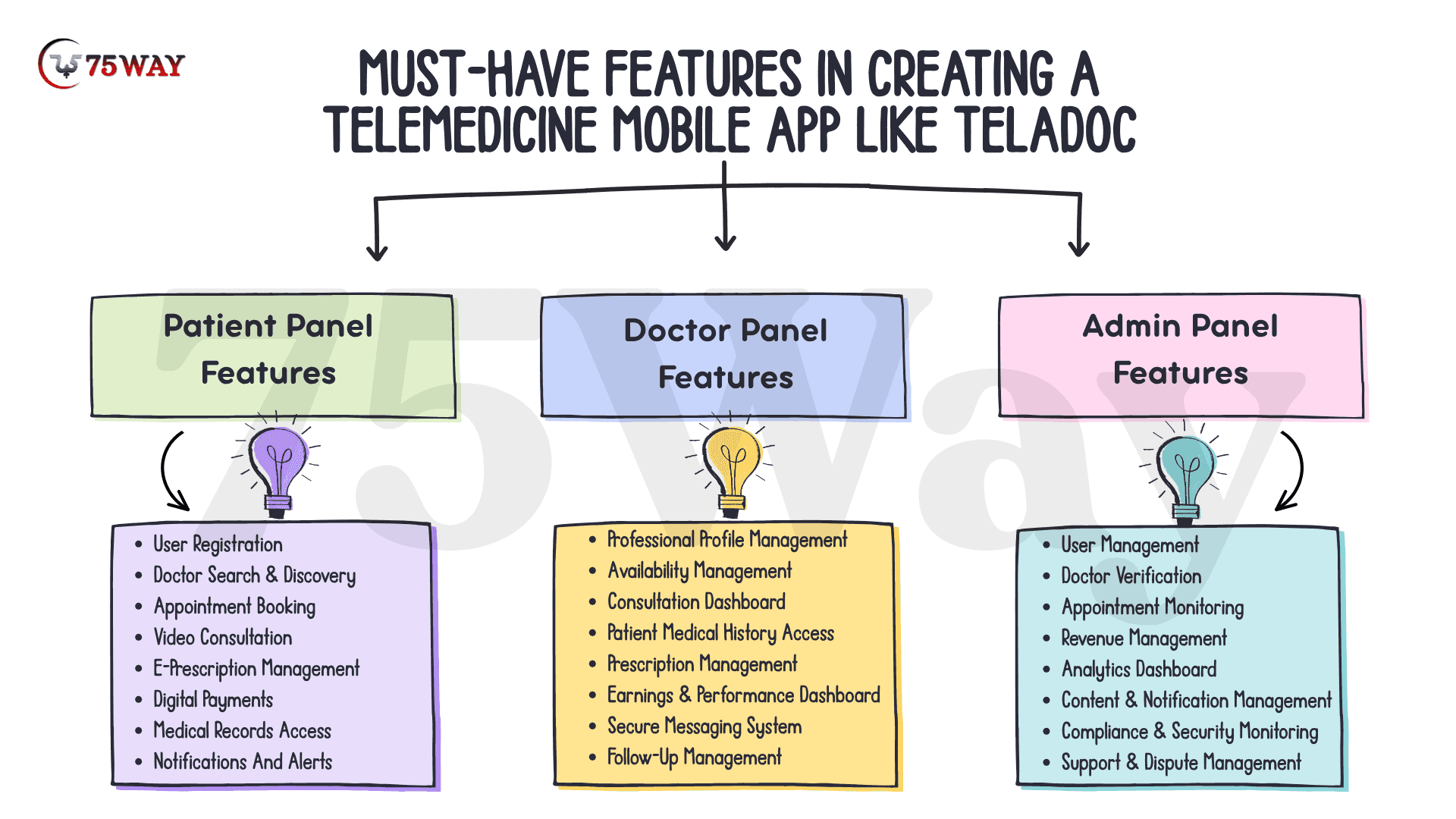
1. Patient Panel Features
- User Registration And Profile Management: This feature enables patients to create secure accounts and manage personal healthcare information. It stores medical histories and insurance details. Identity verification improves platform security. Centralized profiles help doctors access relevant information during consultations.
- Doctor Search And Discovery: Patients can search and compare healthcare professionals based on multiple criteria. Filters simplify provider selection. Ratings and reviews support informed decisions. Advanced discovery features improve appointment bookings and help users find suitable specialists faster.
- Appointment Booking: The appointment system allows patients to schedule consultations conveniently online. Real-time availability reduces conflicts. Automated reminders minimize missed appointments. Rescheduling and cancellation options provide flexibility while improving operational efficiency for healthcare providers and patients.
- Video Consultation: Secure video consultations allow patients and doctors to connect remotely. High-quality communication improves healthcare delivery. Multi-device support enhances accessibility. Features such as screen sharing and secure channels create reliable virtual experiences for medical consultations.
- E-Prescription Management: Patients can receive and manage prescriptions digitally through the platform. Pharmacy integrations streamline medication access. Renewal requests simplify ongoing treatments. Prescription histories improve healthcare continuity while reducing paperwork and administrative effort for both parties.
- Digital Payments: Secure payment processing enables convenient healthcare transactions through multiple payment methods. Patients can use cards, wallets, or insurance billing. Automated invoicing improves transparency. Flexible payment options enhance user satisfaction and support platform revenue generation.
- Medical Records Access: This feature provides patients with centralized access to healthcare documents and records. Users can review treatment plans and reports. Organized information improves continuity of care. Easy access supports better healthcare decision-making and engagement.
- Notifications And Alerts: Automated notifications keep patients informed about important healthcare activities. Appointment reminders reduce no-show rates. Prescription alerts support medication adherence. Health recommendations and updates encourage engagement while strengthening long-term relationships with healthcare providers.
2. Doctor Panel Features
- Professional Profile Management: Doctors can create comprehensive profiles highlighting qualifications and professional expertise. Detailed information builds credibility among patients. Profile customization improves visibility. Strong professional profiles increase appointment bookings and help establish trust within the platform.
- Availability Management: This feature allows healthcare professionals to manage schedules efficiently. Doctors can configure working hours and appointment limits. Calendar controls reduce scheduling conflicts. Flexible availability management improves productivity while supporting better patient access to care.
- Consultation Dashboard: The consultation dashboard provides a centralized workspace for managing daily healthcare activities. Doctors can track appointments and patient interactions. Real-time notifications improve responsiveness. Organized workflows increase efficiency and simplify consultation management processes significantly.
- Patient Medical History Access: Doctors can securely access comprehensive patient records before consultations begin. Historical information supports accurate assessments. Visibility into treatments and medications improves care quality. Better-informed decisions contribute to improved healthcare outcomes and experiences.
- Prescription Management: This feature enables healthcare providers to create and manage digital prescriptions efficiently. Medication recommendations become easier to document. Renewal approvals simplify ongoing treatment plans. Digital prescription workflows reduce administrative burdens and improve healthcare delivery.
- Earnings And Performance Dashboard: Doctors gain visibility into financial and operational performance through analytics dashboards. Revenue tracking supports business planning. Appointment statistics reveal activity trends. Performance insights help healthcare professionals optimize services and improve patient satisfaction levels.
- Secure Messaging System: Secure messaging enables direct communication between healthcare providers and patients. Encrypted conversations protect sensitive information. Quick responses improve patient engagement. Efficient communication strengthens relationships while supporting better healthcare coordination and continuity of care.
- Follow-Up Management: Doctors can monitor treatment progress through dedicated follow-up management tools. Appointment tracking improves continuity. Automated reminders support ongoing care plans. Structured follow-ups enhance patient outcomes while increasing long-term engagement and treatment adherence.
3. Admin Panel Features
- User Management: Administrators can manage patient and doctor accounts from a centralized dashboard. Access controls improve security. Verification workflows ensure platform integrity. Effective user management supports compliance while maintaining smooth platform operations and governance.
- Doctor Verification: This feature validates healthcare provider credentials before platform approval. License verification improves trustworthiness. Compliance documentation supports regulatory requirements. Thorough verification processes protect patients while maintaining healthcare quality and platform credibility standards.
- Appointment Monitoring: Administrators can track consultations and scheduling activity across the platform. Monitoring tools reveal operational trends. Completion and cancellation data improve planning. Comprehensive visibility supports better resource allocation and service optimization decisions.
- Revenue Management: Revenue management tools provide complete visibility into financial performance. Administrators can monitor transactions and subscriptions. Financial reporting improves decision-making. Accurate revenue tracking supports sustainable growth and long-term business success within competitive healthcare markets.
- Analytics Dashboard: The analytics dashboard provides actionable insights into platform performance and growth. User behavior data reveals opportunities. Revenue and retention metrics support planning. Comprehensive analytics enable data-driven decisions that improve business outcomes consistently.
- Content And Notification Management: Administrators can manage notifications, announcements, and healthcare content centrally. Consistent communication improves engagement. Content updates keep users informed. Efficient management strengthens platform experiences while supporting patient education and awareness initiatives.
- Compliance And Security Monitoring: Security monitoring helps maintain regulatory compliance and protect sensitive healthcare information. Administrators can track system activity continuously. Risk detection improves protection measures. Strong security practices build trust and support legal requirements.
- Support And Dispute Management: This feature enables administrators to handle user concerns and resolve disputes efficiently. Centralized support improves response times. Issue tracking ensures accountability. Effective resolution processes enhance satisfaction while maintaining platform reliability and trust.
Advanced Features To Build Modern Healthcare App Like Teladoc
Basic telemedicine functionality is no longer enough to compete in 2026. The most successful platforms leverage artificial intelligence, automation, and connected technologies to create superior patient experiences. Diverse AI-powered features used in telehealth apps are:
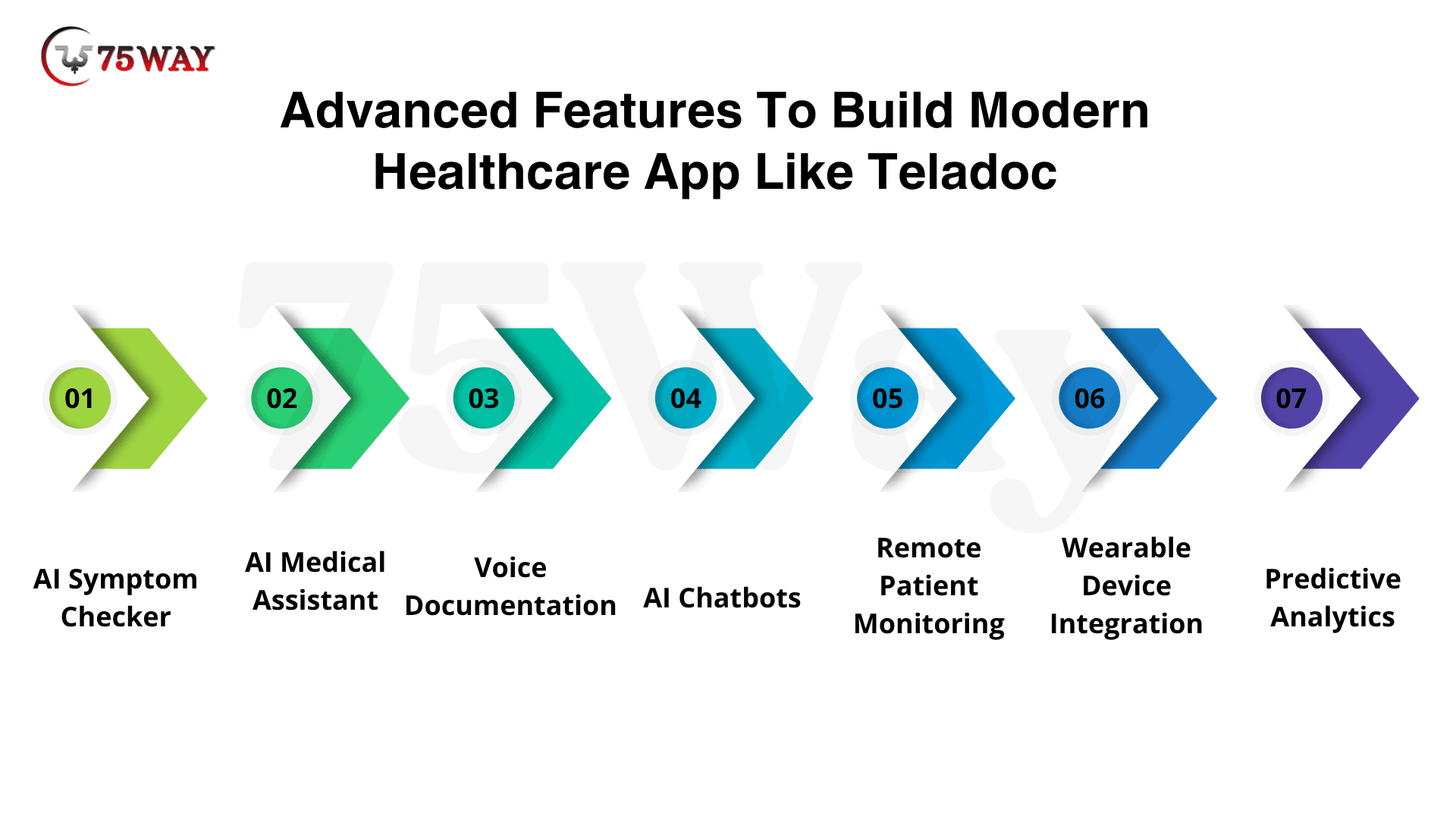
- AI Symptom Checker: AI-powered symptom assessment tools help patients evaluate potential health concerns before consultations. The system analyzes symptoms and provides preliminary guidance. Faster triage improves appointment routing efficiency.
This feature enhances accessibility while reducing workload for healthcare providers. It helps patients determine the urgency of medical attention. Intelligent assessments support more efficient healthcare resource allocation.
- AI Medical Assistant: Virtual healthcare assistants provide instant support throughout the patient journey. They answer common questions and guide users through platform features. Automated assistance improves engagement and accessibility.
Continuous availability ensures support beyond standard healthcare operating hours. Personalized recommendations enhance user experiences and satisfaction. AI assistance reduces response times for routine healthcare inquiries.
- Voice Documentation: Voice-enabled documentation tools automatically convert spoken conversations into structured clinical notes. Physicians spend less time on administrative tasks. Automated summaries improve documentation accuracy.
This allows healthcare professionals to focus more attention on patient care. Real-time transcription minimizes manual data entry requirements. Improved documentation workflows increase operational efficiency across healthcare practices.
- AI Chatbots:AI chatbots in healthcare automate routine interactions between patients and providers. They assist with appointment scheduling, follow-up communication, and information delivery. Instant responses improve user experiences.
Automated support helps healthcare organizations efficiently manage growing patient volumes. Conversational AI in healthcare apps like Teladoc provide consistent communication throughout the patient journey. Scalable support systems reduce operational costs while improving service quality.
- Remote Patient Monitoring: Remote monitoring solutions enable healthcare providers to track patient health outside clinical settings. Continuous data collection supports chronic disease management. Early intervention becomes more achievable.
This feature improves treatment outcomes while strengthening long-term patient care. Real-time monitoring helps identify health concerns proactively. Ongoing visibility supports better preventive healthcare and recovery management.
- Wearable Device Integration: Telemedicine platforms can integrate with connected health devices and wearables. Real-time health metrics improve clinical visibility. Data from smart devices supports informed healthcare decisions.
Continuous monitoring enhances personalized treatment and preventive care strategies. Automated data synchronization improves healthcare accuracy and convenience. Connected devices provide valuable insights into patient wellness trends.
- Predictive Analytics:AI predictive analytics in healthcare solutions analyze healthcare data to identify patterns, trends, and potential risks. Predictive models support treatment optimization and risk assessment. Early insights improve decision-making.
Data-driven strategies contribute to better patient outcomes and operational efficiency. Healthcare organizations can proactively address emerging patient needs. Predictive intelligence supports more effective long-term healthcare planning.
Technology Stack Required To Develop a Teladoc-Style Telemedicine App
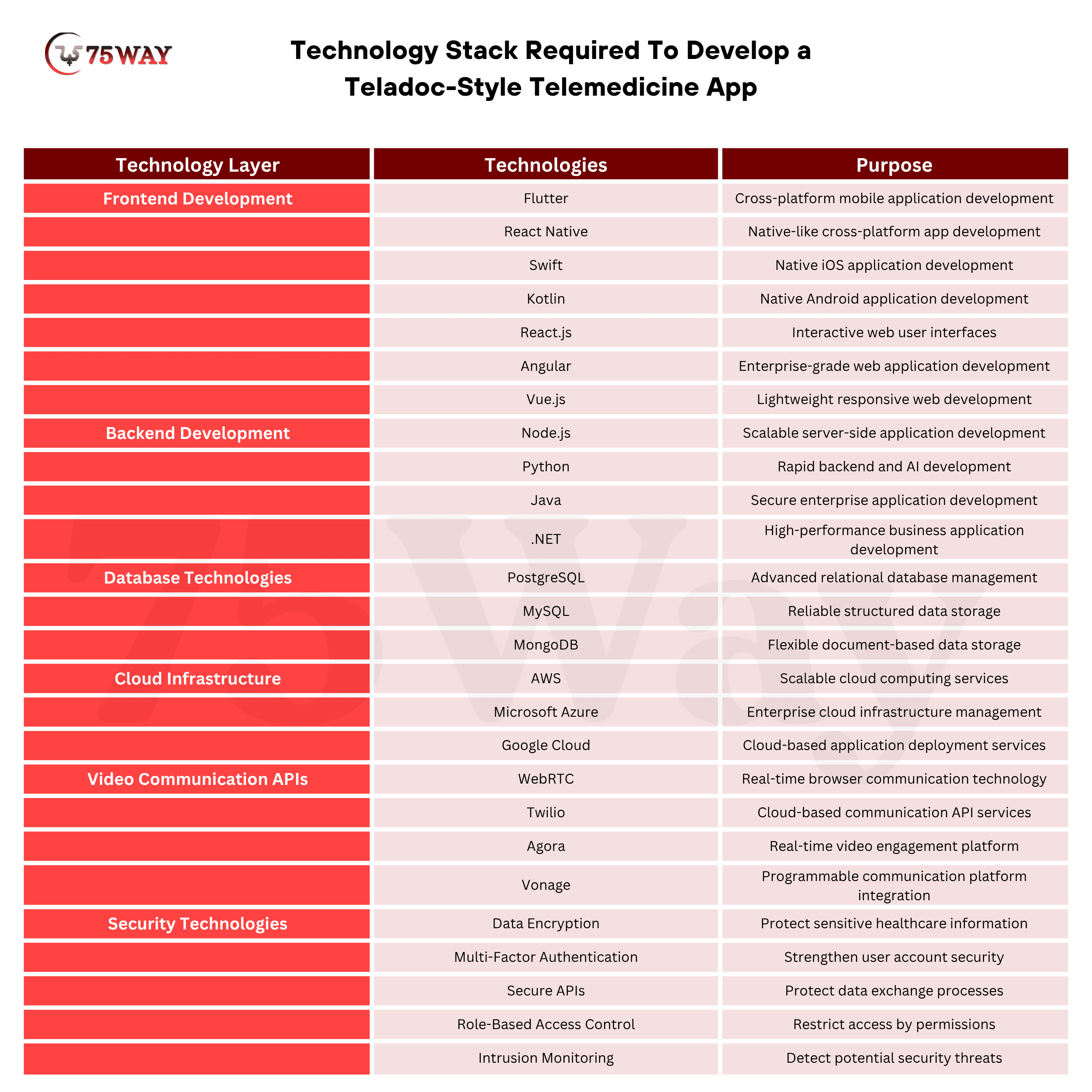
Technology selection directly impacts scalability, performance, security, and long-term maintainability.
- Frontend Development
Responsive interfaces enable patients and healthcare providers to access healthcare services seamlessly across devices. Technologies such as Flutter, React Native, Swift, and Kotlin support mobile application development. React.js, Angular, and Vue.js are commonly used for web platforms. A well-designed frontend improves usability and engagement. Cross-platform frameworks reduce development time and costs. Responsive experiences contribute to higher user satisfaction and retention.
- Backend Development
The backend manages business logic, user authentication, appointment scheduling, and data processing. Popular technologies include Node.js, Python, Java, and .NET for building scalable healthcare applications. Strong architecture ensures reliable performance and system stability. APIs connect various platform components efficiently. Scalable infrastructure supports growing user activity and data volumes. Robust backend systems form the foundation of successful telemedicine platforms.
- Database Technologies
Databases securely store patient records, appointment data, prescriptions, and healthcare information. Common options include PostgreSQL, MySQL, and MongoDB. Database selection depends on performance requirements and scalability objectives. Efficient data management ensures fast access to critical information. Structured storage improves reliability and consistency. Optimized databases support long-term platform growth and operational efficiency.
- Cloud Infrastructure
Cloud platforms provide the resources needed to run telemedicine applications reliably and efficiently. AWS, Microsoft Azure, and Google Cloud are among the most popular choices. Cloud environments support scalability and high availability. Flexible resource allocation helps businesses manage growth effectively. Automated infrastructure management reduces operational complexity. Cloud deployments enable secure and cost-effective application expansion.
- Video Communication APIs
Video communication technology enables secure virtual consultations between patients and healthcare providers. Solutions such as WebRTC, Twilio, Agora, and Vonage support real-time interactions. High-quality video experiences improve consultation effectiveness. Reliable connectivity is essential for uninterrupted healthcare services. Advanced communication features enhance collaboration during appointments. Stable video performance increases patient trust and satisfaction.
- Security Technologies
Strong security measures protect sensitive healthcare information from unauthorized access and cyber threats. Essential technologies include data encryption, multi-factor authentication, secure APIs, role-based access controls, and intrusion monitoring. Security frameworks support regulatory compliance requirements. Continuous monitoring helps identify potential vulnerabilities early. Comprehensive protection safeguards patient privacy and healthcare records. Strong security practices strengthen platform credibility and user trust.
Healthcare Compliance Requirements To Create An App Like Teladoc
Healthcare compliance is essential for protecting patient information, maintaining regulatory standards, and reducing legal risks. Building compliance into development ensures secure, trustworthy, and scalable telemedicine operations.
- HIPAA Compliance: HIPAA establishes standards for protecting patient health information within healthcare applications. It requires encryption, access controls, audit tracking, and risk management to ensure privacy.
- GDPR Compliance: GDPR governs how organizations collect, process, and store personal data for European users. It emphasizes consent management, transparency, security, and user data rights.
- HITECH Requirements: HITECH strengthens healthcare information security and promotes secure electronic health record adoption. It requires breach reporting, security assessments, and enhanced patient data protection measures.
End-To-End Process For Teladoc-Like Telemedicine App Development in 2026
To create a telemedicine app like Teladoc requires a structured development process that balances user experience, healthcare compliance, technical scalability, and business objectives. Following a proven framework helps reduce risks, accelerate deployment, and create a platform capable of supporting long-term growth.
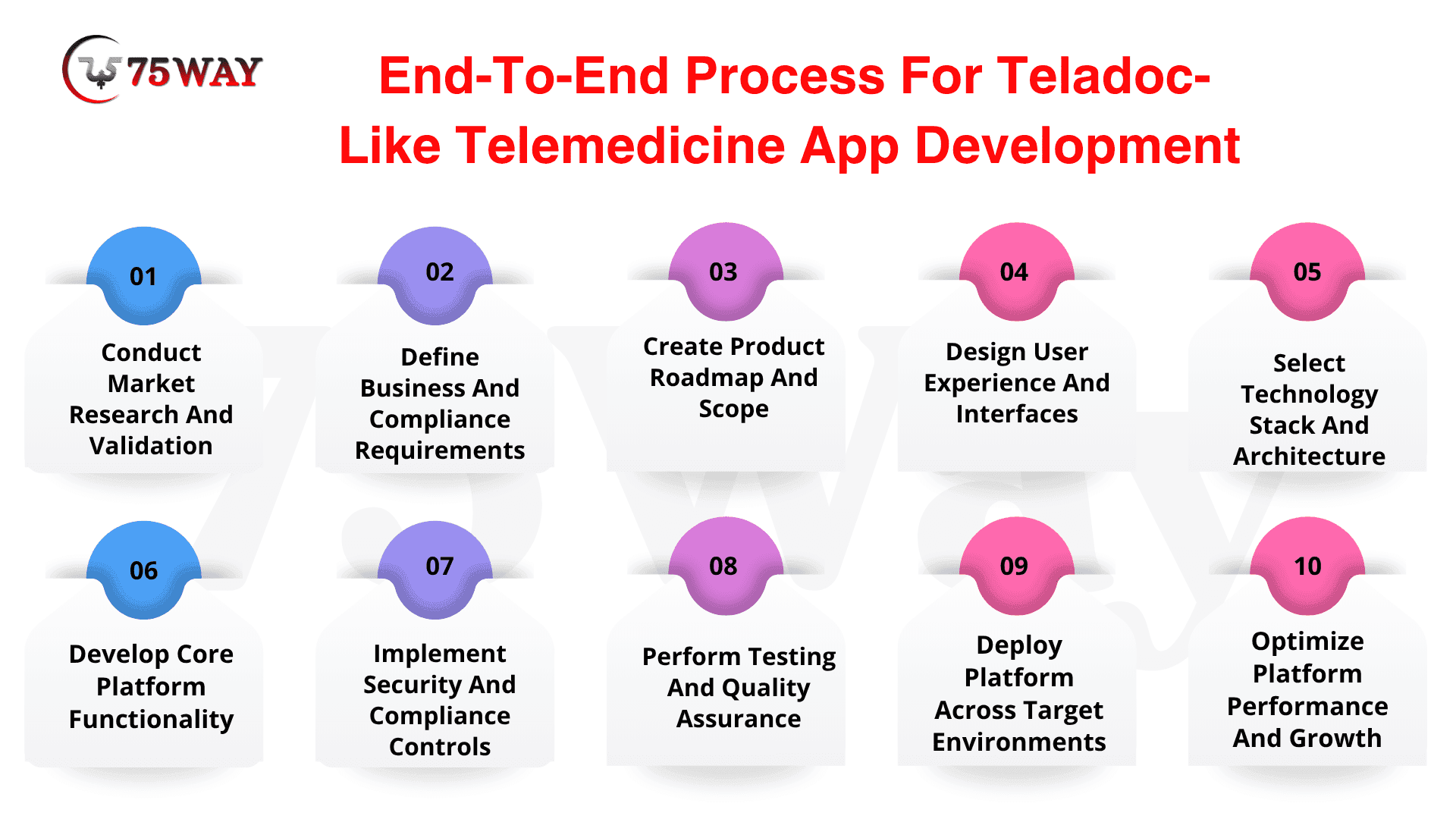
Step 1: Conduct Market Research And Validation
The development process of the Teladoc app begins with analyzing market demand, competitor platforms, user expectations, and healthcare trends. This research helps identify opportunities, validate business ideas, and determine which services and features will deliver the greatest value. Understanding regulatory requirements early also helps prevent costly changes later. A well-researched foundation reduces risk and improves product-market fit.
Step 2: Define Business And Compliance Requirements
Once market validation is complete, define the platform's business model, revenue streams, target audience, and service offerings. Healthcare compliance requirements such as HIPAA, GDPR, and HITECH should also be documented at this stage. Clear requirements help align business goals with technical execution. Early compliance planning minimizes legal and operational risks.
Step 3: Create Product Roadmap And Scope
The next step involves outlining platform features, integrations, user workflows, and development priorities. Businesses should identify essential MVP functionality while planning future enhancements separately. A structured roadmap helps control budgets, manage timelines, and reduce development complexity. Proper scope definition prevents unnecessary feature expansion during development.
Step 4: Design User Experience And Interfaces
User experience design focuses on creating intuitive workflows for patients, doctors, and administrators. The interface should simplify appointment scheduling, consultations, payments, and healthcare record management. Clear navigation improves usability and reduces friction throughout the user journey. Effective design directly influences user adoption and retention.
Step 5: Select Technology Stack And Architecture
Choosing the right technology stack is critical for long-term scalability, security, and performance. Development teams must select frontend frameworks, backend technologies, databases, cloud infrastructure, and communication APIs. The architecture should support growing user demand and future feature expansion. Technology decisions made here influence development speed and maintenance costs.
Step 6: Develop Core Platform Functionality
With planning complete, developers begin building essential telemedicine features and workflows. Core functionality typically includes registration, doctor discovery, appointment scheduling, video consultations, digital prescriptions, payments, and medical records management. Development should prioritize stability, security, and performance. A strong foundation supports future innovation and platform growth.
Step 7: Implement Security And Compliance Controls
Healthcare applications require robust security measures to protect sensitive patient information. Development teams should implement data encryption, role-based access controls, secure APIs, multi-factor authentication, and audit logging. Compliance validation should occur throughout development rather than after completion. Strong security practices build trust while supporting regulatory obligations.
Step 8: Perform Testing And Quality Assurance
Comprehensive testing ensures the platform functions reliably across devices, operating systems, and user scenarios. Teams should evaluate performance, usability, security, integrations, and compliance readiness before launch. Thorough testing helps identify issues that could affect patient experiences or operational efficiency. Quality assurance is essential for delivering a dependable healthcare solution.
Step 9: Deploy Platform Across Target Environments
After successful testing, the platform is deployed to production environments and released to users. Deployment includes configuring cloud infrastructure, monitoring systems, security settings, and application performance tools. A carefully planned launch minimizes disruptions and improves platform stability. Continuous monitoring helps address issues quickly after release.
Step 10: Optimize Platform Performance And Growth
Telemedicine development does not end after deployment. Businesses should continuously monitor analytics, gather user feedback, track healthcare trends, and evaluate operational performance. Regular updates help improve user experiences, maintain compliance, and introduce advanced capabilities such as artificial intelligence. Continuous optimization supports long-term scalability and competitive advantage.
What’s The Teladoc-Style Telemedicine App Development Cost In USA?
One of the most common questions entrepreneurs ask is: "How much does it cost to build a telemedicine app like Teladoc?" The answer depends on platform complexity, features, integrations, compliance requirements, and scalability objectives. However, the app development cost for Teladoc may vary based on business requirements.
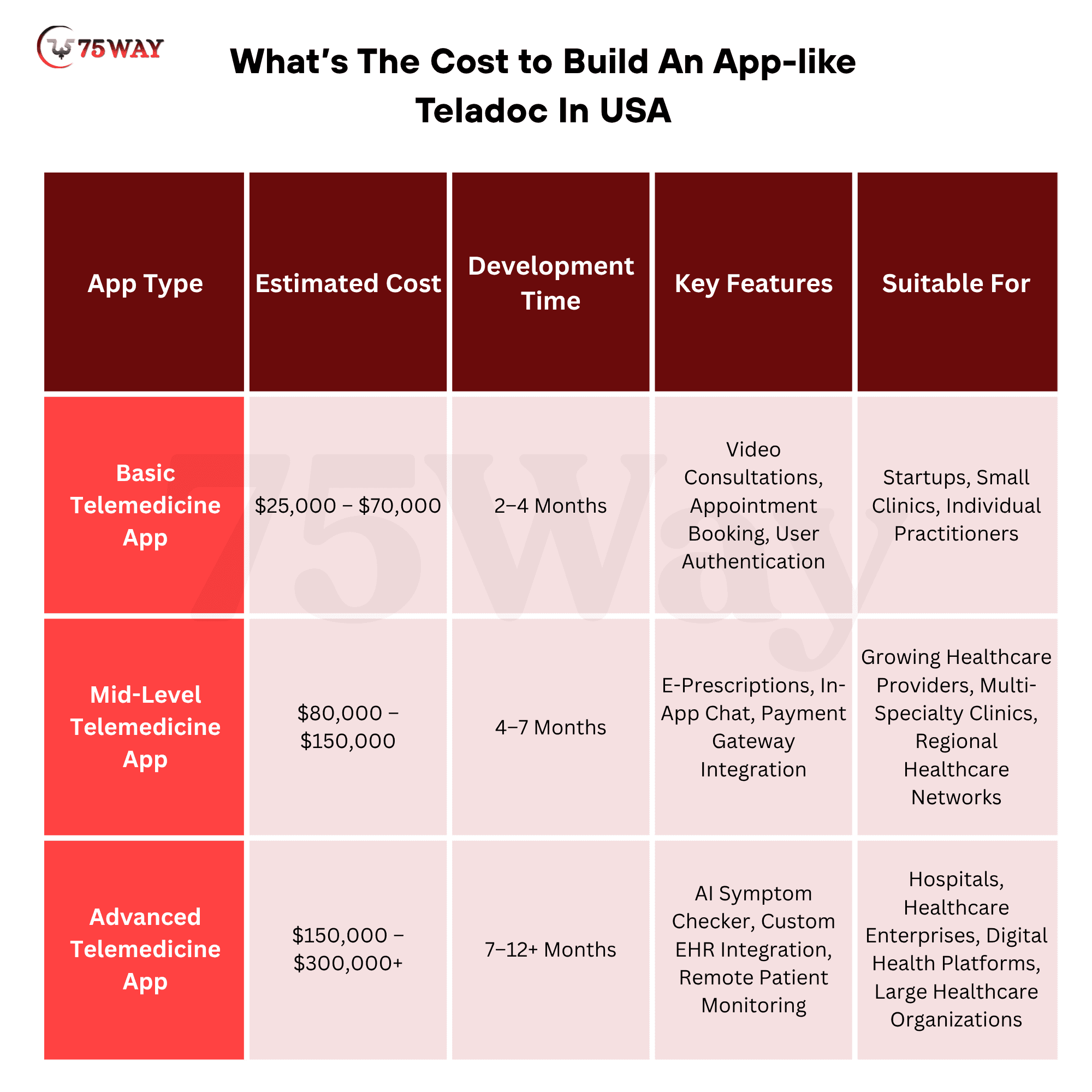
- Basic Telemedicine App: Costs typically range between $25,000 and $70,000, depending on design complexity, platform support, and customization requirements. A basic telemedicine application includes essential features such as user registration, login, appointment booking, and secure video consultations. This type of platform is ideal for startups and healthcare providers looking to launch quickly with core functionality. Development
- Mid-Level Telemedicine App: Development costs generally range between $80,000 and $150,000, based on feature scope and integration requirements. A mid-level telemedicine application expands functionality by incorporating features such as in-app chat, e-prescriptions, payment gateway integration, notifications, and medical record management. These capabilities improve patient engagement and operational efficiency while supporting a broader range of healthcare services.
- Advanced Telemedicine App: An advanced telemedicine platform ranges between $150,000 and $300,000+, depending on complexity, compliance requirements, and technology infrastructure. It includes sophisticated capabilities such as AI-powered healthcare assistants, symptom checkers, custom EHR integration, remote patient monitoring, wearable device connectivity, and predictive analytics. These enterprise-grade solutions support large-scale healthcare operations and personalized patient experiences.
1. Discovery and Planning: $2,000 – $10,000
This phase focuses on defining the foundation of the telemedicine application. It includes understanding business goals, identifying target users, and preparing a clear project roadmap before development begins.
2. UI/UX Design and Prototyping: $5,000 – $20,000
This stage involves designing the overall look, feel, and usability of the platform for patients, doctors, and administrators. The goal is to ensure a smooth and intuitive user experience.
3. Frontend and Backend Development: $25,000 – $150,000
This is the most resource-intensive phase where the actual application is built. It includes both user-facing interfaces and server-side systems.
- Frontend: $20,000 – $70,000
Development of mobile apps (iOS/Android) and web portals used by patients, doctors, and admins.
- Backend: $30,000 – $100,000+
Development of secure APIs, databases, cloud infrastructure, and server-side logic to manage healthcare data safely.
4. Core Feature Integration: $10,000 – $40,000
This stage involves implementing essential telemedicine functionalities that define the platform’s core value and user experience.
5. Compliance and Security Implementation: $15,000 – $50,000+
Healthcare applications require strict compliance with legal and data protection standards, making this one of the most critical development phases.
6. Testing and Quality Assurance: $5,000 – $20,000
This phase ensures the application performs reliably under different conditions, including high traffic and varying device compatibility.
7. Deployment and Maintenance: $5,000 – $15,000 per year
After successful testing, the application is launched on platforms like the App Store and Google Play, followed by ongoing support and improvements.
Factors Affecting Costs To Create An App Like Teladoc
- Feature Complexity: Advanced capabilities increase development effort.
- AI Functionality: Artificial intelligence features require additional expertise and infrastructure.
- Compliance Requirements: Healthcare regulations introduce specialized development considerations.
- Third-Party Integrations: EHR systems, payment gateways, and healthcare databases affect project scope.
- Scalability Requirements: Large-scale platforms require stronger architecture and infrastructure investments.
- Security Architecture: Healthcare applications demand advanced security measures and testing processes.
Monetization Models: How To Drive Revenue From Medical App Like Teladoc
A well-designed telemedicine platform requires a sustainable revenue model to support growth, technology investments, compliance maintenance, and ongoing innovation. The most successful telehealth applications often combine multiple monetization strategies rather than relying on a single revenue source.
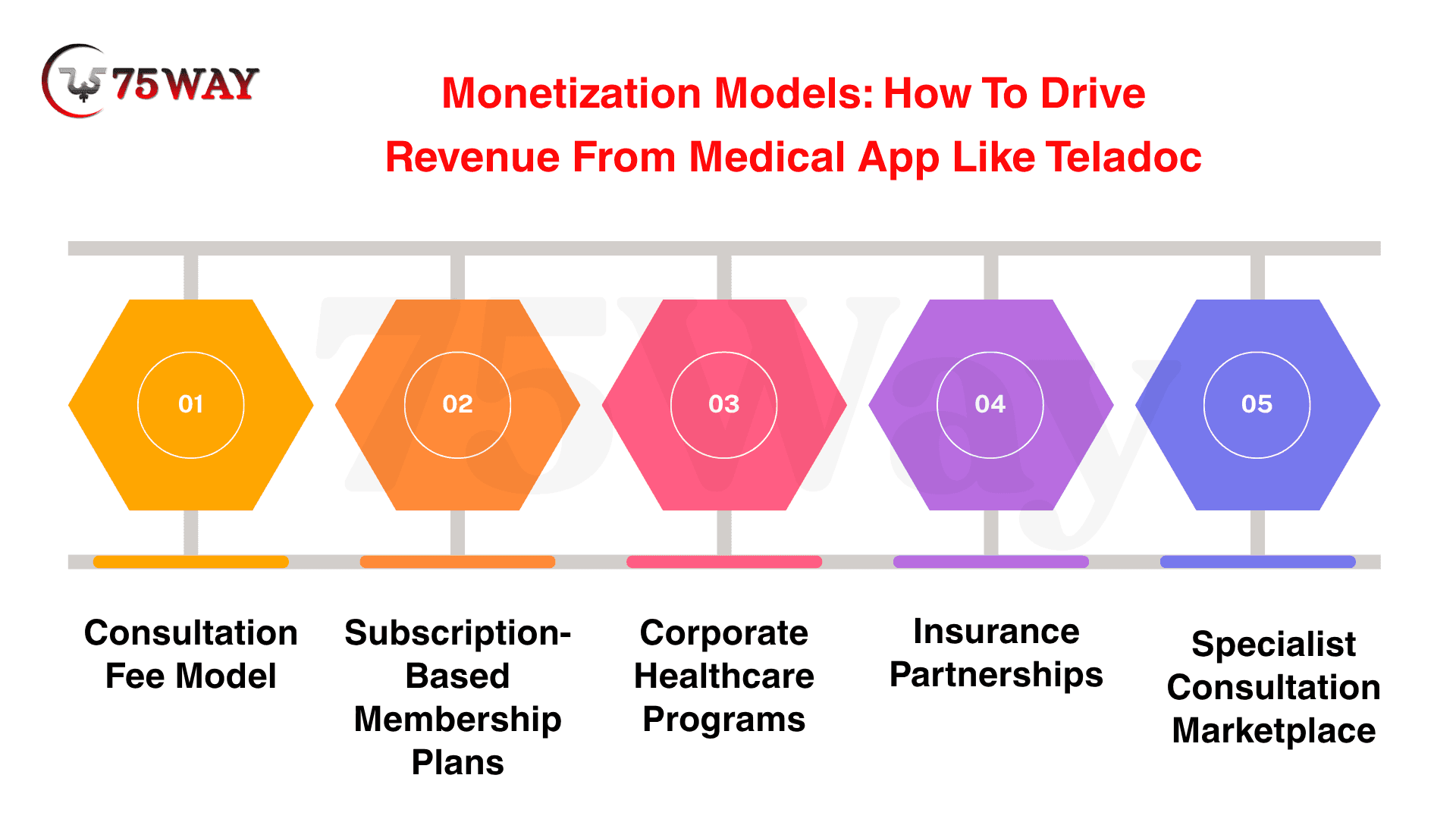
1. Consultation Fee Model
This is one of the most common monetization approaches used by telemedicine platforms.
Patients pay a fee for each consultation based on factors such as:
- Doctor specialization
- Consultation duration
- Service type
- Geographic region
This model is straightforward and allows healthcare providers to generate revenue from every patient interaction.
2. Subscription-Based Membership Plans
Many telemedicine businesses offer monthly or annual subscriptions.
Benefits may include:
- Unlimited consultations
- Reduced consultation fees
- Priority appointments
- Wellness programs
- Chronic care management
Subscription plans create recurring revenue while increasing customer retention.
3. Corporate Healthcare Programs
Businesses are increasingly investing in employee wellness solutions.
Telemedicine providers can partner with organizations to offer:
- Employee healthcare access
- Mental health services
- Preventive care programs
- Virtual health consultations
Corporate healthcare packages create stable long-term revenue opportunities.
4. Insurance Partnerships
Insurance companies continue expanding digital healthcare coverage.
Platforms can generate revenue by:
- Integrating insurance providers
- Processing insured consultations
- Supporting reimbursement workflows
Insurance collaborations help expand patient reach while increasing platform utilization.
5. Specialist Consultation Marketplace
Telemedicine platforms can act as healthcare marketplaces by connecting patients with specialists across multiple disciplines.
Revenue may come from:
- Consultation commissions
- Service fees
- Specialist subscriptions
This model expands service offerings without requiring direct employment of healthcare professionals.
Common Challenges In Telemedicine App Development & Solutions
Building a telemedicine platform involves unique technical, operational, and regulatory challenges. Understanding these obstacles early helps businesses plan.
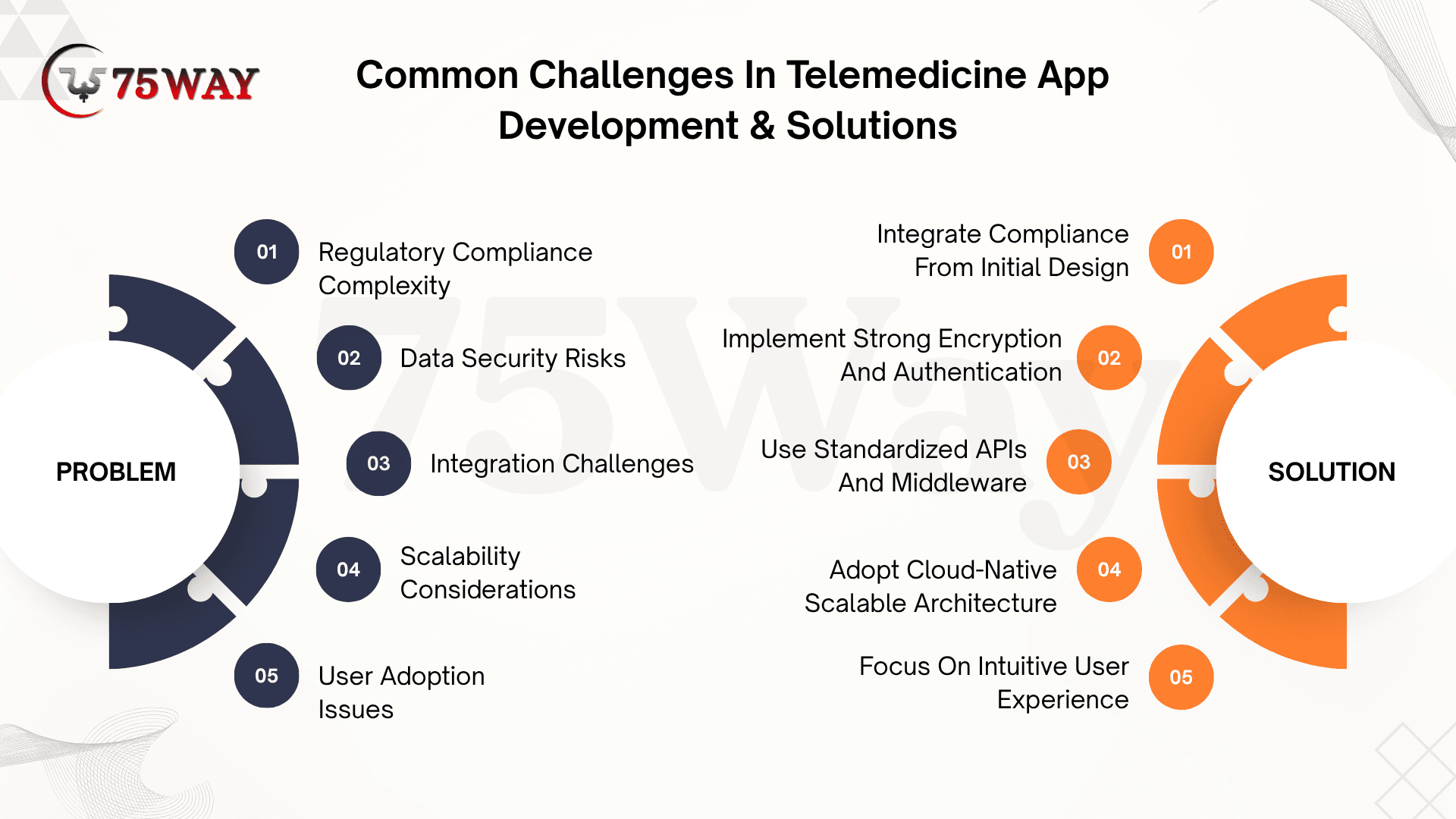
- Regulatory Compliance Complexity
Telemedicine platforms must comply with different healthcare laws depending on the country or region of operation. Regulations such as HIPAA, GDPR, and local medical licensing rules require strict handling of patient data and workflows. Failure to comply can lead to legal penalties and loss of trust. This makes compliance planning a core part of early system design.
Solution: Integrate compliance frameworks from the start, implement audit logs, and work with legal and healthcare compliance experts during development.
- Data Security Risks
Healthcare systems store highly sensitive patient information, making them prime targets for cyberattacks and unauthorized access. Risks include data breaches, identity theft, and violation of privacy laws. A weak security system can severely damage platform credibility and legal standing. Security must therefore be treated as a continuous priority.
Solution: Use end-to-end encryption, multi-factor authentication, secure APIs, role-based access control, and continuous security monitoring.
- Integration Challenges
Telemedicine platforms often need to connect with third-party systems such as EHR platforms, pharmacies, insurance providers, and lab systems. These integrations can be technically complex and time-consuming, especially when dealing with different data formats and APIs. Poor integration can affect system reliability and performance.
Solution: Use standardized APIs (HL7/FHIR), modular architecture, and middleware services to simplify and manage integrations.
- Scalability Considerations
As the number of users increases, telemedicine platforms must handle higher traffic, data volume, and real-time interactions without performance issues. Poor scalability planning can lead to slow response times and system failures during peak usage. Infrastructure design plays a key role in long-term success.
Solution: Use cloud-native architecture, auto-scaling services, load balancing, and optimized database structures to ensure smooth performance at scale.
- User Adoption And Engagement
Even well-built platforms can fail if patients and doctors do not actively use them. Challenges often arise from poor usability, lack of trust, or complicated workflows. High competition in digital healthcare also makes user retention difficult.
Solution: Focus on intuitive UI/UX design, fast performance, onboarding guidance, and continuous feature improvements based on user feedback.
Future of Telemedicine Apps: Key Trends Driving Healthcare Innovation
The future of telemedicine extends far beyond video consultations. Emerging technologies are creating new possibilities for healthcare delivery, diagnostics, patient engagement, and operational efficiency.
- Agentic AI Healthcare Assistants: Agentic AI healthcare assistants go beyond traditional chatbots by independently managing complex healthcare workflows. They can schedule appointments, analyze patient data, coordinate care tasks, and support administrative operations.
These intelligent systems improve efficiency by reducing manual workload for healthcare staff. In the future, they will play a key role in automating end-to-end healthcare processes.
- Predictive Healthcare Analytics: Predictive analytics uses AI and data modeling to identify health risks before they become serious conditions. It helps in early disease detection, treatment optimization, population health monitoring, and readmission prevention.
Healthcare providers can make more proactive decisions based on data-driven insights. This leads to improved patient outcomes and reduced treatment costs.
- AI-Powered Clinical Documentation: AI-driven documentation tools automate the creation of clinical notes and patient summaries. They reduce the administrative burden on doctors by converting voice or consultation data into structured medical records.
This improves accuracy, saves time, and enhances workflow efficiency. It allows healthcare professionals to focus more on patient care.
- Digital Therapeutics: Digital therapeutics deliver evidence-based treatment programs through software applications. These solutions support behavioral health, chronic disease management, and personalized care plans.
They complement traditional medical treatments by improving patient engagement and adherence. This trend is expanding rapidly within modern telemedicine ecosystems.
- Connected Healthcare Ecosystems: Future telemedicine platforms will integrate multiple healthcare stakeholders into a unified system. Hospitals, clinics, pharmacies, laboratories, insurance providers, and patients will be interconnected.
This enables seamless data exchange and coordinated care delivery. It improves efficiency, reduces delays, and enhances overall healthcare experiences.
- IoT-Based Patient Monitoring: IoT-enabled healthcare devices continuously collect and transmit patient health data in real time. Devices such as wearables, glucose monitors, and cardiac sensors support remote monitoring.
This allows doctors to track patient conditions outside clinical environments. It improves early intervention and long-term disease management.
- Metaverse-Based Virtual Healthcare: Immersive technologies like AR and VR are enabling virtual healthcare environments. Doctors can conduct simulated consultations, training sessions, and therapy programs in 3D digital spaces.
This enhances patient engagement and medical training experiences. It represents a new frontier in digital healthcare delivery.
How 75way Helps Build a Secure Telemedicine App Like Teladoc?
Healthcare technology projects require a combination of software engineering expertise, healthcare compliance knowledge, user experience design, and scalable architecture planning. 75way helps healthcare startups, clinics, hospitals, and enterprises build modern telemedicine platforms tailored to their business objectives.
- Custom Telemedicine App Development: We build fully customized telemedicine platforms designed for virtual consultations, patient engagement, healthcare management, and digital care delivery. Each solution is aligned with business goals, workflows, and target users while ensuring scalability and long-term performance.
- HIPAA-Compliant Healthcare Solutions: We develop secure healthcare applications with a strong focus on data privacy and regulatory compliance. Our systems include encryption, role-based access, audit logging, and secure data handling to ensure protection of sensitive patient information.
- AI-Powered Healthcare Applications: We build intelligent healthcare solutions using AI for symptom checking, chatbots, predictive analytics, and workflow automation. These tools improve clinical efficiency, patient engagement, and decision-making accuracy.
- Healthcare App Development: We create high-performance mobile applications for iOS, Android, and cross-platform environments. These apps support telemedicine features such as consultations, booking systems, and healthcare communication tools.
- Healthcare Software Development: We develop end-to-end healthcare systems including patient portals, admin dashboards, and enterprise platforms. These solutions streamline operations and improve healthcare service delivery at scale.
- IoT Healthcare Integration: We integrate IoT devices such as wearables and remote monitoring systems into healthcare platforms. This enables real-time patient tracking and supports advanced remote care models.
- Post-Launch Support And Scalability: We provide continuous support, including updates, performance optimization, security enhancements, and infrastructure scaling. This ensures long-term stability and adaptability of healthcare platforms.
We partnered with a healthcare startup to build a HIPAA-compliant telemedicine platform with video consultations, AI-based symptom checking, and real-time appointment scheduling. The solution improved patient engagement by 60%, reduced operational delays by 35%, and successfully scaled to over 200,000 users within the first year of launch.
Final Thoughts
Building a telemedicine app like Teladoc requires careful planning across multiple areas, including user experience design, healthcare compliance, security architecture, feature development, technology selection, and long-term scalability. From patient registration and video consultations to AI-powered healthcare tools and connected monitoring devices, every component contributes to the platform's success. Businesses entering the telemedicine market in 2026 have significant opportunities to create innovative healthcare experiences. However, success depends on choosing the right development strategy, implementing healthcare best practices, and building technology capable of supporting future growth. Whether you're planning a Teladoc-inspired platform or an AI-powered telehealth application, partnering with a leading telemedicine app development company can accelerate your journey from concept to launch.
Frequently Asked Questions (FAQs)
Can Telemedicine Platforms Support Multiple Healthcare Specialties?
Modern telemedicine platforms can accommodate various specialties, including primary care, dermatology, mental health, pediatrics, cardiology, and nutrition services. Multi-specialty support helps healthcare organizations expand service offerings, attract diverse patient groups, and create a more comprehensive virtual healthcare ecosystem within a single platform.
Are Telemedicine Apps Suitable For Rural Healthcare Services?
Telemedicine applications play a significant role in improving healthcare accessibility for rural and underserved populations. Patients can connect with qualified healthcare professionals without extensive travel, while providers can extend services beyond geographic limitations and reach broader patient communities through digital channels.
Can Telemedicine Platforms Integrate With Pharmacy Networks?
Yes, telemedicine solutions can connect with pharmacy systems to support prescription transmission, medication management, refill requests, and treatment continuity. Pharmacy integrations improve convenience for patients while simplifying workflows for healthcare providers managing prescriptions through virtual consultation platforms.
Do Telemedicine Apps Support Multiple Languages?
Many telemedicine platforms include multilingual capabilities to serve diverse patient populations. Language support improves accessibility, enhances communication between patients and providers, and helps healthcare organizations expand into new regions while delivering more inclusive healthcare experiences across different demographics.
Can Telemedicine Solutions Be Customized For Specific Medical Fields?
Telemedicine platforms can be tailored for specialties such as mental health, chronic disease management, women's health, pediatrics, rehabilitation, and specialist consultations. Customization allows organizations to address unique clinical workflows, patient requirements, and operational objectives within targeted healthcare segments.
What Role Does Cloud Infrastructure Play In Telemedicine Applications?
Cloud infrastructure supports scalability, reliability, data storage, disaster recovery, and performance management. Healthcare organizations benefit from flexible resources that can accommodate growing user bases, increasing consultation volumes, and evolving technology requirements without significant infrastructure limitations.
Can Telemedicine Platforms Be Expanded After Initial Launch?
Most successful telemedicine applications launch with core features and gradually introduce advanced capabilities. Businesses often add AI tools, wearable integrations, analytics dashboards, remote monitoring systems, and specialized healthcare services as user demand grows and platform adoption increases.
Why Is User Experience Important In Telemedicine Platforms?
Healthcare users often seek quick access to care during stressful situations. Clear navigation, streamlined appointment booking, intuitive interfaces, and reliable communication tools contribute to positive experiences, higher engagement levels, stronger retention, and greater trust in virtual healthcare services.