
AI Summary
The ride-sharing market demands more than basic booking functionality from modern platforms. This guide highlights major AI ride-sharing app features, their business value, and practical development considerations in USA.
Key Takeaways
- AI capabilities can help ride-sharing platforms respond to changing customer expectations.
- Competitive apps need strong functionality for both drivers and passengers.
- Intelligent automation can improve operational decisions across mobility services.
- User experience plays an important role in platform retention.
- Market research helps businesses prioritize features before beginning development.
Are you expanding a ride-hailing business in the US? Perhaps you are considering launching your own digital AI-powered ride sharing platform.
However, entering a market where customers already rely on established services requires more than another app with standard booking options. A slightly different interface or an additional booking button will not give riders a compelling reason to switch.
The real opportunity lies in solving problems that riders and drivers encounter during everyday trips, from unreliable pickups to confusing fares and poor driver allocation.
This is where feature selection for a ride-sharing app becomes a business decision, not just a development checklist. Real-time ride tracking, scheduled bookings, fare transparency, driver verification, and intelligent dispatch can shape how people experience your platform.
But which features of a ride-sharing app development solution should come first, and which advanced capabilities can help your platform stand out as it grows?
This guide explores the rider-side, driver-side, and admin features, along with AI integrations that can help build a competitive ride-sharing app for the US market.
Major Features To Build An AI-Powered Ride-Sharing Mobile App
The strength of a ride-sharing app often becomes clear when something unexpected happens, such as a driver cancelling or a route changing mid-trip. Features like automated ride reassignment, live tracking, fare updates, and intelligent dispatch can help manage these situations. Let's examine the major features businesses should consider for their ride-sharing platform.
Essential Ride-Sharing App Features For Users And Riders
Rider-facing features should simplify everything from booking a ride to completing a payment. Here are essential features that can make the passenger experience more convenient.
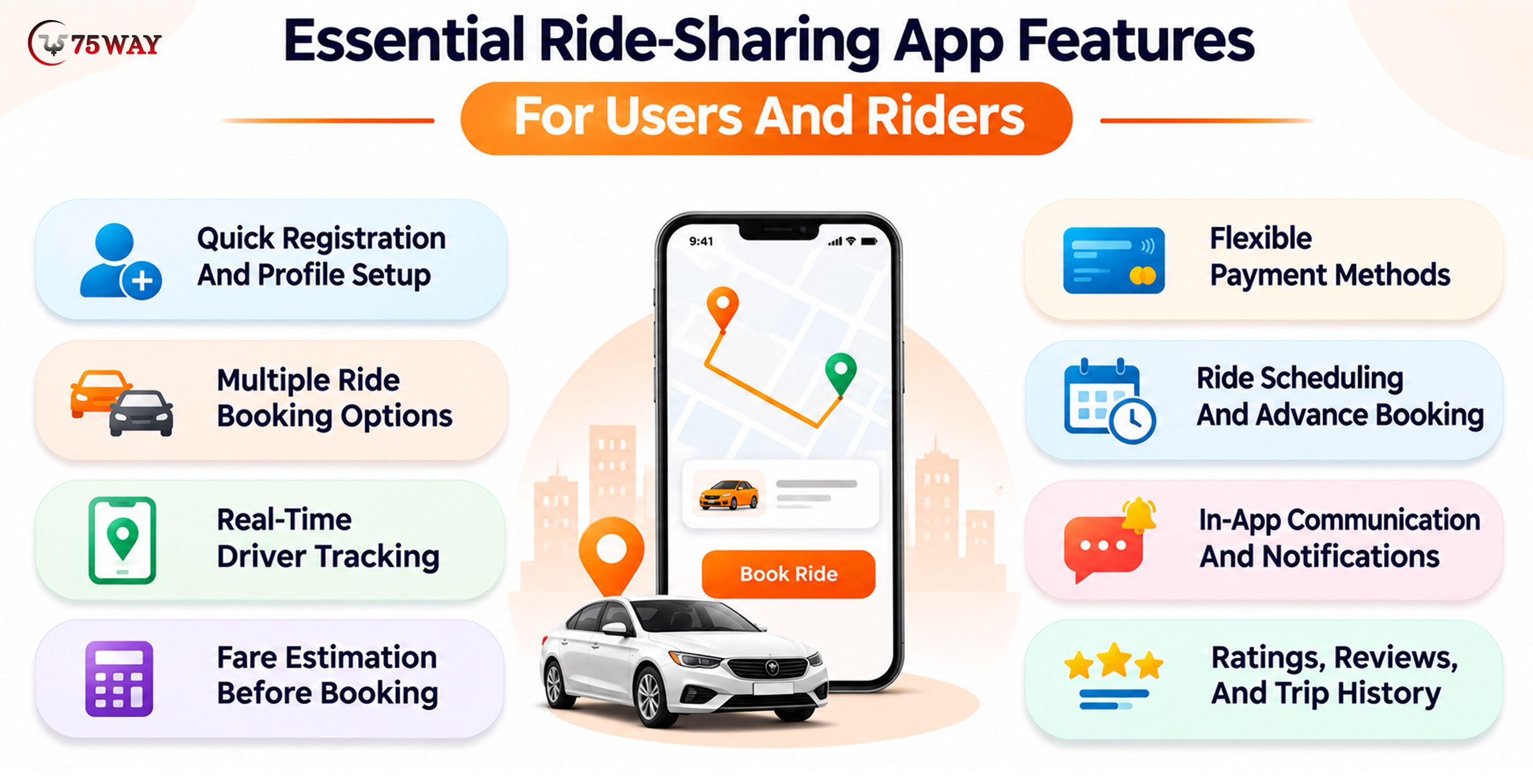
- Quick Registration And Profile Setup
A simple onboarding process helps new users start booking rides without unnecessary steps. Social login, phone number verification, and profile management make account creation easier.
- Multiple Ride Booking Options
Different journeys require different vehicle types and service levels. Options such as economy rides, premium cars, shared trips, and larger vehicles let passengers choose according to their needs and budgets.
- Real-Time Driver Tracking
Passengers want to know exactly where their driver is before pickup. Live GPS tracking displays the driver's location, estimated arrival time, and route progress directly on the map.
- Fare Estimation Before Booking
Unexpected charges can discourage users from completing a booking. An upfront fare estimate helps passengers understand the expected trip cost based on distance, duration, ride category, and applicable pricing.
- Flexible Payment Methods
A convenient payment experience gives passengers more control over how they pay. Integration with cards, digital wallets, cash payments, and other supported methods makes checkout easier.
- Ride Scheduling And Advance Booking
Not every journey needs an immediate pickup. Advance scheduling allows passengers to reserve rides for airport transfers, business meetings, appointments, and other planned trips.
- In-App Communication And Notifications
Passengers need timely updates throughout their journey. In-app chat, masked calling, and push notifications help them coordinate pickup details, receive driver updates, and stay informed about ride status.
- Ratings, Reviews, And Trip History
Feedback helps passengers share their experiences and make informed decisions about future rides. Access to previous bookings, receipts, and driver ratings also gives users a clearer record of their travel activity.
Ride-Sharing App Features For Drivers To Manage Daily Trips
Driver-side functionality should help partners manage bookings, navigate routes, and monitor their earnings. The following features support daily operations and make the driving experience easier to manage.
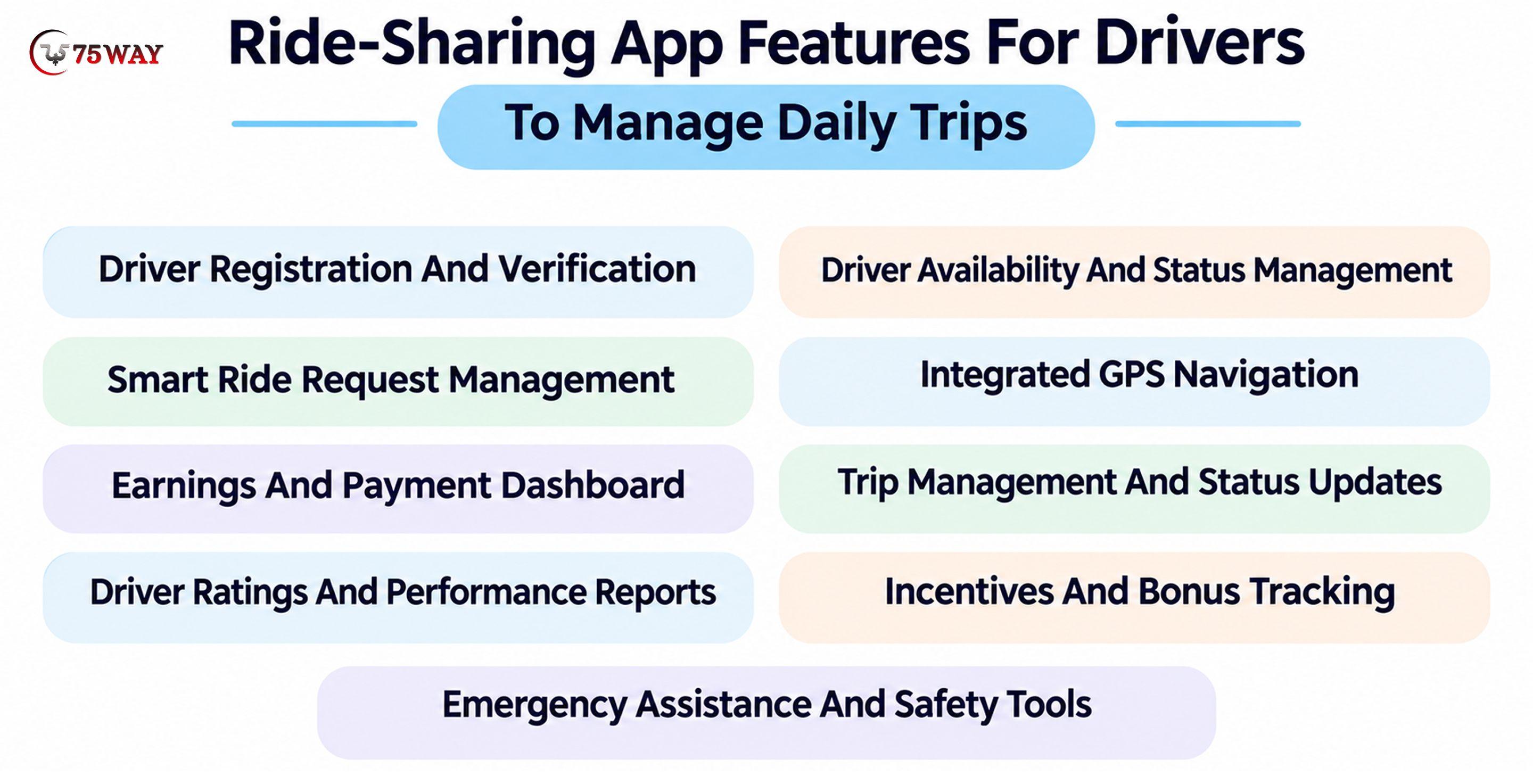
1. Driver Registration And Verification
- Submit personal details and contact information.
- Upload licenses and vehicle registration documents.
- Track verification progress through account notifications.
2. Driver Availability And Status Management
- Switch between available and unavailable modes.
- Set preferred working hours and schedules.
- Pause incoming requests during personal breaks.
3. Smart Ride Request Management
- Receive nearby ride requests with trip details.
- Review pickup locations and estimated earnings.
- Accept or decline requests within defined limits.
4. Integrated GPS Navigation
- View optimized routes to passenger pickup points.
- Access turn-by-turn directions during active trips.
- Receive traffic updates and alternate route suggestions.
5. Earnings And Payment Dashboard
- Monitor daily, weekly, and monthly earnings.
- Review completed trips and individual fare breakdowns.
- Track incentives, bonuses, and pending payouts.
6. Trip Management And Status Updates
- Confirm passenger pickup through the application.
- Update trip progress at important stages.
- Complete rides after reaching final destinations.
7. Driver Ratings And Performance Reports
- Review passenger feedback and submitted ratings.
- Monitor acceptance and trip completion rates.
- Identify service areas needing performance improvements.
8. Incentives And Bonus Tracking
- View active promotional and incentive campaigns.
- Track progress toward available driver rewards.
- Review eligibility conditions and bonus payments.
9. Emergency Assistance And Safety Tools
- Access emergency contacts during active trips.
- Share trip details with trusted contacts.
- Report incidents through dedicated support channels.
Ride-Sharing App Features For Admin Control And Monitoring
The admin panel gives platform owners control over users, drivers, bookings, payments, and service operations. These eight features help administrators monitor platform activity and manage important business processes.
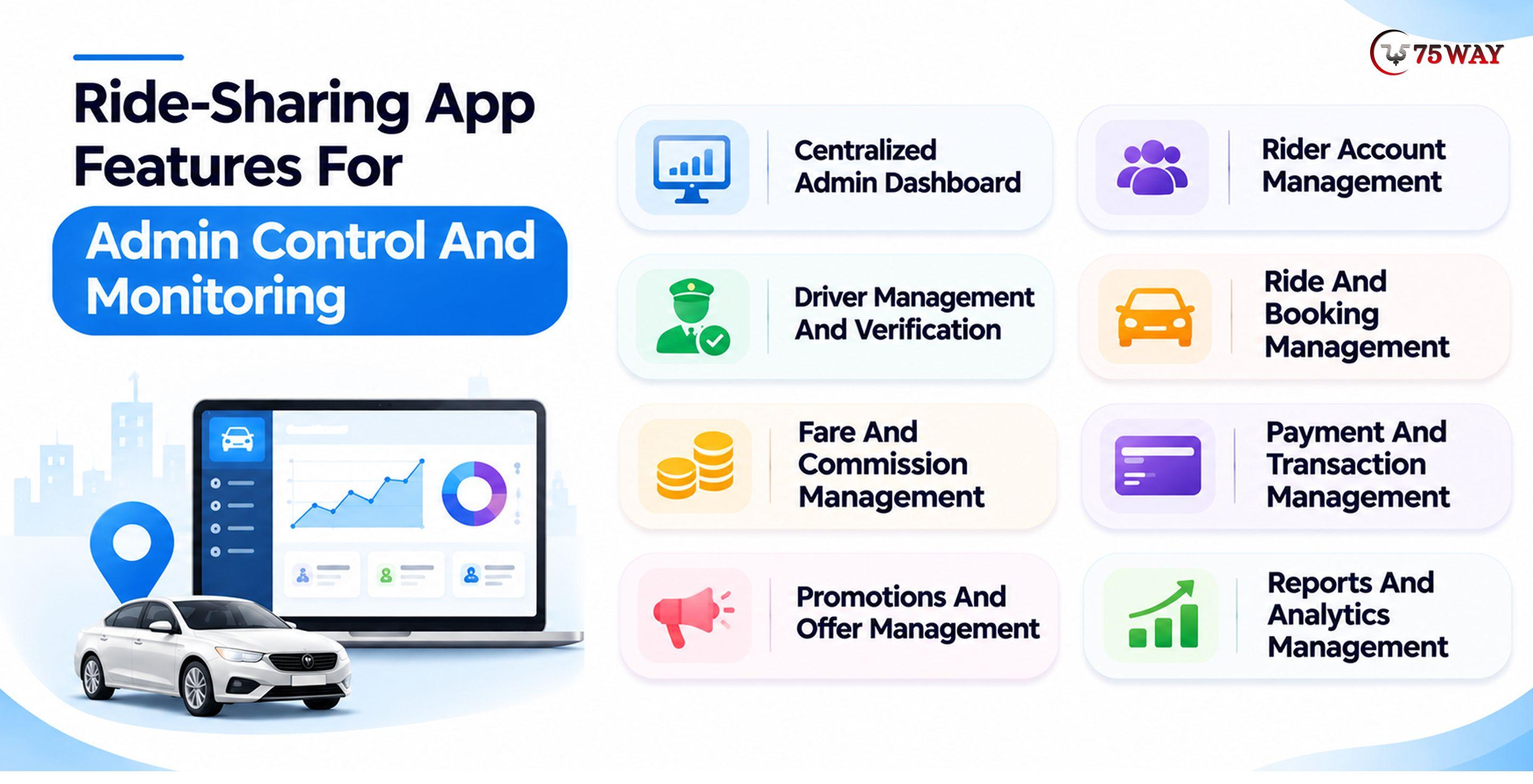
1. Centralized Admin Dashboard
A unified dashboard gives administrators an overview of platform activity. It displays important operational information through organized reports and performance indicators.
- Active users and drivers
- Ongoing and completed rides
- Booking and cancellation statistics
- Revenue and transaction summaries
2. Rider Account Management
Administrators need tools to manage passenger accounts and resolve account-related concerns. Profile controls also help them review suspicious activity and respond to user requests.
- View and update rider profiles
- Manage account verification requests
- Handle complaints and account restrictions
- Review passenger activity records
3. Driver Management And Verification
Driver management tools help administrators review applications and maintain accurate partner records. Verification workflows also support the platform's internal onboarding requirements.
- Review driver registration applications
- Verify submitted vehicle documents
- Update driver account statuses
- Monitor driver activity records
4. Ride And Booking Management
A dedicated booking interface helps administrators oversee trips across the platform. It also provides visibility into booking changes, cancellations, and service-related disputes.
- Monitor active ride requests
- View completed trip details
- Manage booking cancellations and changes
- Resolve ride-related complaints
5. Fare And Commission Management
Pricing controls allow administrators to configure fare structures and platform commissions. These settings help businesses manage revenue across different ride categories and service areas.
- Configure base and distance fares
- Set waiting time charges
- Manage driver commission percentages
- Review fare adjustments and surcharges
6. Payment And Transaction Management
Payment management tools provide visibility into incoming transactions and driver payouts. Administrators can also review failed payments, refunds, and financial records.
- Monitor passenger payment transactions
- Process eligible refunds and adjustments
- Manage driver payout records
- Review payment gateway activity
7. Promotions And Offer Management
Promotional tools help administrators create campaigns for different customer groups. They can configure discounts, referral incentives, and promotional conditions through the admin panel.
- Create promotional discount campaigns
- Configure referral reward programs
- Set offer validity periods
- Track campaign performance reports
8. Reports And Analytics Management
Analytics help business owners understand how the platform performs across different locations and periods. Reports can highlight operational patterns and areas that need attention.
- Generate revenue and booking reports
- Analyze location-based ride demand
- Review driver performance metrics
- Export operational business reports
AI-Powered Ride-Sharing App Features For Competitive Mobility
Peak-hour demand, sudden traffic changes, and uneven driver availability can make ride operations difficult to manage. AI-powered features can help businesses respond to these challenges through predictive analytics, smart dispatch, and route optimization. The following features show how AI can improve a ride-sharing platform beyond standard app functionality.
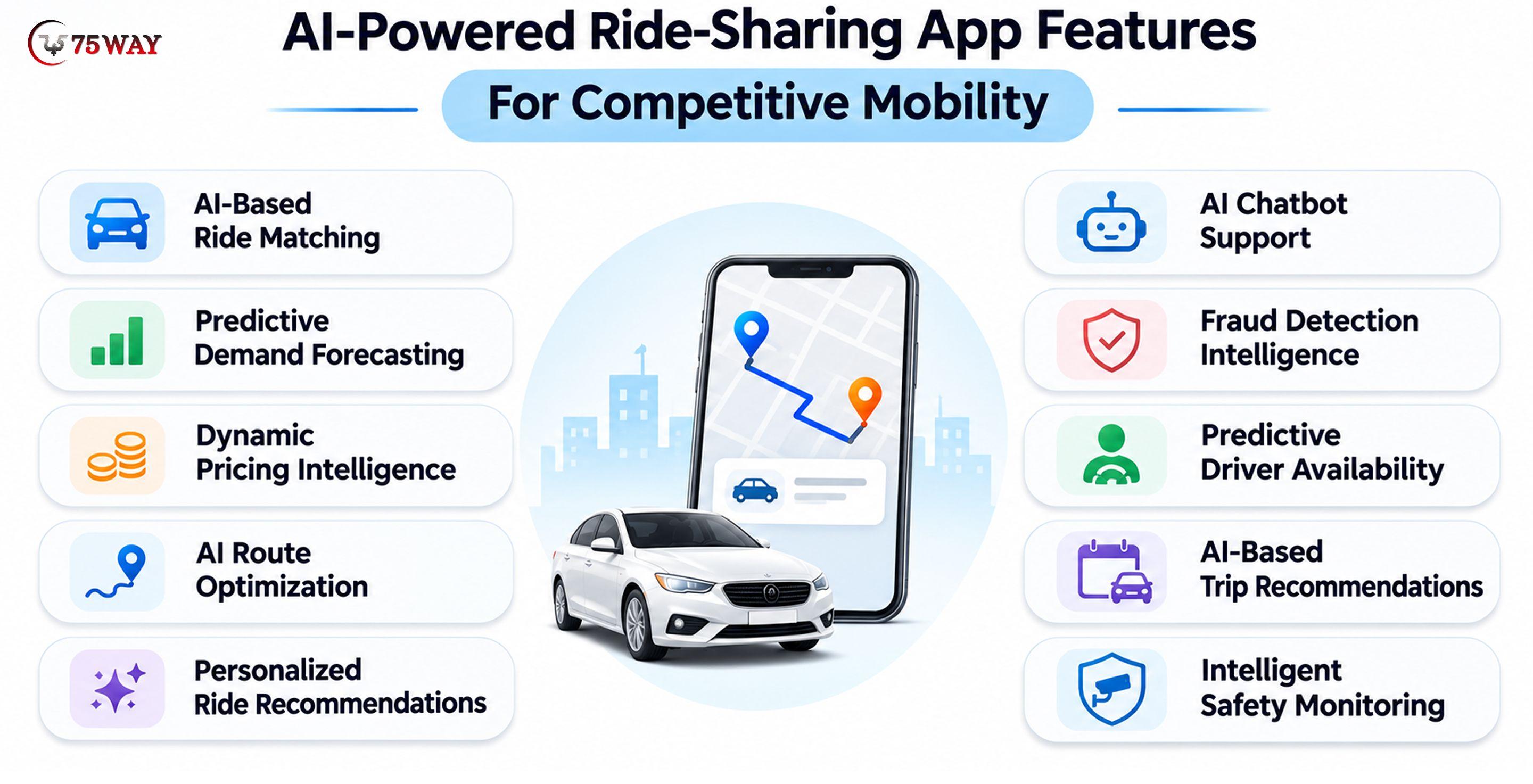
- AI-Based Ride Matching For Faster Passenger Connections
AI algorithms can evaluate rider requests alongside driver availability, location, and trip requirements. This can help platforms identify suitable driver-passenger matches with less manual intervention.
- Predictive Demand Forecasting For Smarter Driver Allocation
Machine learning models can analyze historical bookings, local events, weather patterns, and travel activity. These insights can help operators anticipate busy periods and position drivers in high-demand areas.
- Dynamic Pricing Intelligence For Changing Market Conditions
AI-powered pricing systems can assess demand, driver supply, traffic, and other relevant factors. Platforms can use these insights to adjust fares according to their pricing policies.
- AI Route Optimization For Better Journey Planning
Intelligent routing systems can evaluate traffic conditions, road closures, and alternative travel paths. Drivers can receive route recommendations that support better journey planning and reduce unnecessary detours.
- Personalized Ride Recommendations Based On User Preferences
AI can analyze previous bookings, preferred vehicle categories, and common travel patterns. The application can then suggest relevant ride options based on individual passenger preferences.
- AI Chatbot Support For Automated Passenger Assistance
Conversational AI can answer common questions about bookings, payments, cancellations, and account settings. AI chatbots in ride-sharing apps give passengers access to basic support without waiting for a human representative.
- Fraud Detection Intelligence For Safer Platform Operations
Machine learning models can identify unusual booking patterns, suspicious transactions, and potentially fraudulent account activity. These alerts help administrators review risks and take appropriate action.
- Predictive Driver Availability For Better Fleet Planning
AI can analyze driver activity, historical availability, and location-based demand patterns. These predictions can help platform operators understand potential supply gaps before they affect ride requests.
- AI-Based Trip Recommendations For Regular Commuters
Trip recommendation AI agents can study recurring travel patterns and frequently visited destinations. The application can recommend convenient booking options for passengers who regularly travel between similar locations.
- Intelligent Safety Monitoring For Proactive Risk Detection
AI-powered monitoring can identify unusual trip patterns, unexpected route deviations, or abnormal journey interruptions. When supported by suitable safety workflows, these signals can prompt additional checks or assistance.
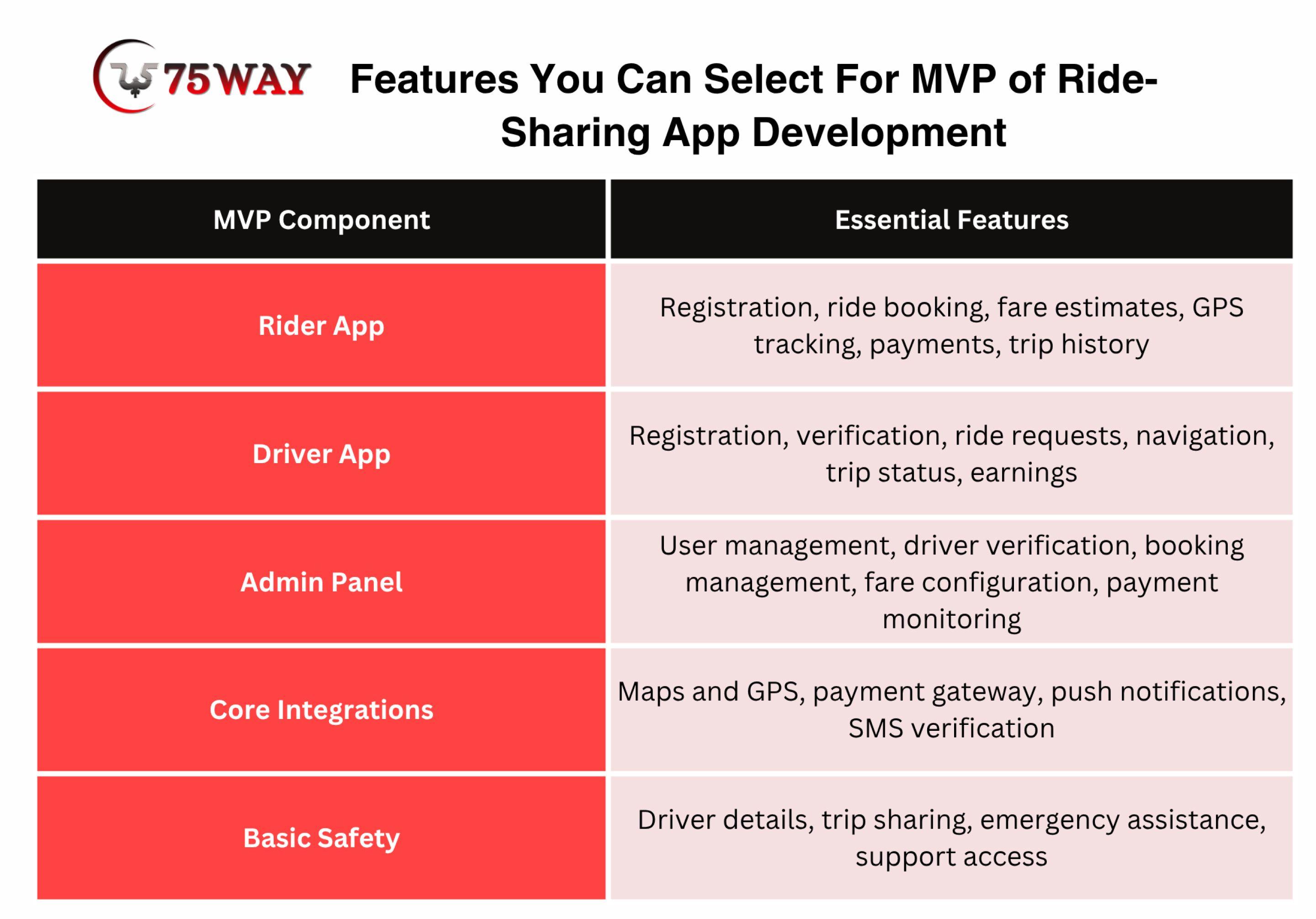
Features You Can Select For MVP of Ride-Sharing App Development
A minimum viable product (MVP) should include the functionality required to launch and test the ride-sharing service. Rather than developing every advanced capability immediately, businesses can start with the features that support essential booking and operational workflows.
Features To Consider After MVP Launch
- AI-based ride matching and driver recommendations.
- Predictive demand forecasting for service areas.
- Advanced route optimization and traffic analysis.
- Personalized offers and passenger recommendations.
- AI chatbot support and fraud detection.
Businesses can introduce these capabilities after reviewing user feedback, booking patterns, operational performance, and actual market requirements.
Final Thoughts
A competitive AI ride-sharing app needs more than a convenient booking interface. Rider-friendly tools, reliable driver workflows, effective admin controls, and intelligent AI capabilities together create a strong mobility platform.
The right development strategy starts with essential MVP functionality and introduces advanced features as the business grows. Careful feature prioritization also helps control development costs while keeping the platform aligned with customer expectations.
If you are eager to build an AI-powered ride-sharing app, you can partner with a prominent taxi booking app development company in the USA to turn your mobility business idea into a scalable digital solution.
Frequently Asked Questions (FAQs)
How Does AI Improve A Ride-Sharing Application?
AI supports intelligent ride matching, demand forecasting, route optimization, personalized recommendations, automated customer support, and suspicious activity detection.
What Features Should A Ride-Sharing App MVP Include?
An MVP should include rider booking, driver registration, ride requests, GPS navigation, payment processing, notifications, and basic admin controls.
How Many Modules Does A Ride-Sharing App Need?
A typical platform includes three primary modules: a rider application, a driver application, and an admin panel.
Can AI Help Reduce Ride-Waiting Times?
AI-based matching and demand forecasting can help platforms connect passengers with suitable available drivers and improve driver distribution.
How Does Dynamic Pricing Work In AI Ride-Sharing Apps?
Dynamic pricing systems evaluate factors such as ride demand, driver availability, traffic, and location to support fare adjustments.
Can Businesses Add AI Features After Launching The App?
Yes. Businesses can introduce advanced AI capabilities after launch by updating the backend, integrating suitable services, and expanding application functionality.
How Can A Ride-Sharing App Improve Driver Retention?
Transparent earnings, timely payouts, fair ride allocation, useful navigation, incentives, and responsive support can improve the driver experience.