AI Summary
The top real estate apps in USA serve different property needs, from home discovery and rentals to commercial listings and market intelligence. This guide explores leading platforms, their features, strengths, limitations, and business value to help property companies compare them.
Key Takeaways
- Compare leading real estate apps across residential and commercial property needs.
- Understand key features that make each platform valuable for businesses.
- Explore platforms supporting property discovery, rentals, brokerage, data, and marketing.
- Evaluate advantages and limitations before selecting suitable real estate platforms.
- Identify real estate apps matching specific business models and audiences.
Millions of people turn to real estate apps before they ever speak with an agent, visit a property, or submit an inquiry. That first digital interaction gives platforms an important advantage. These real estate app development solutions can shape how users search, compare, discover, and eventually act on real estate opportunities.
For a business owner, the interesting question is not simply which app is the most popular. It is what these platforms are doing to attract users, generate leads, retain audiences, support transactions, and create revenue, and which of those approaches could make sense for a new or existing real estate product.
That is why the biggest names in real estate technology deserve a closer look. Their approaches to property search, listings, maps, market information, rentals, agent connections, and user engagement show how leading platforms compete for both attention and transactions.
This guide explores the top real estate apps in USA that property businesses should know about. From Zillow and Realtor.com to LoopNet, Compass, Buildout, and CoStar, the comparison covers their key features, business relevance, advantages, and limitations to make the options easier to evaluate.
What Makes A Real Estate App Valuable For Property Businesses?
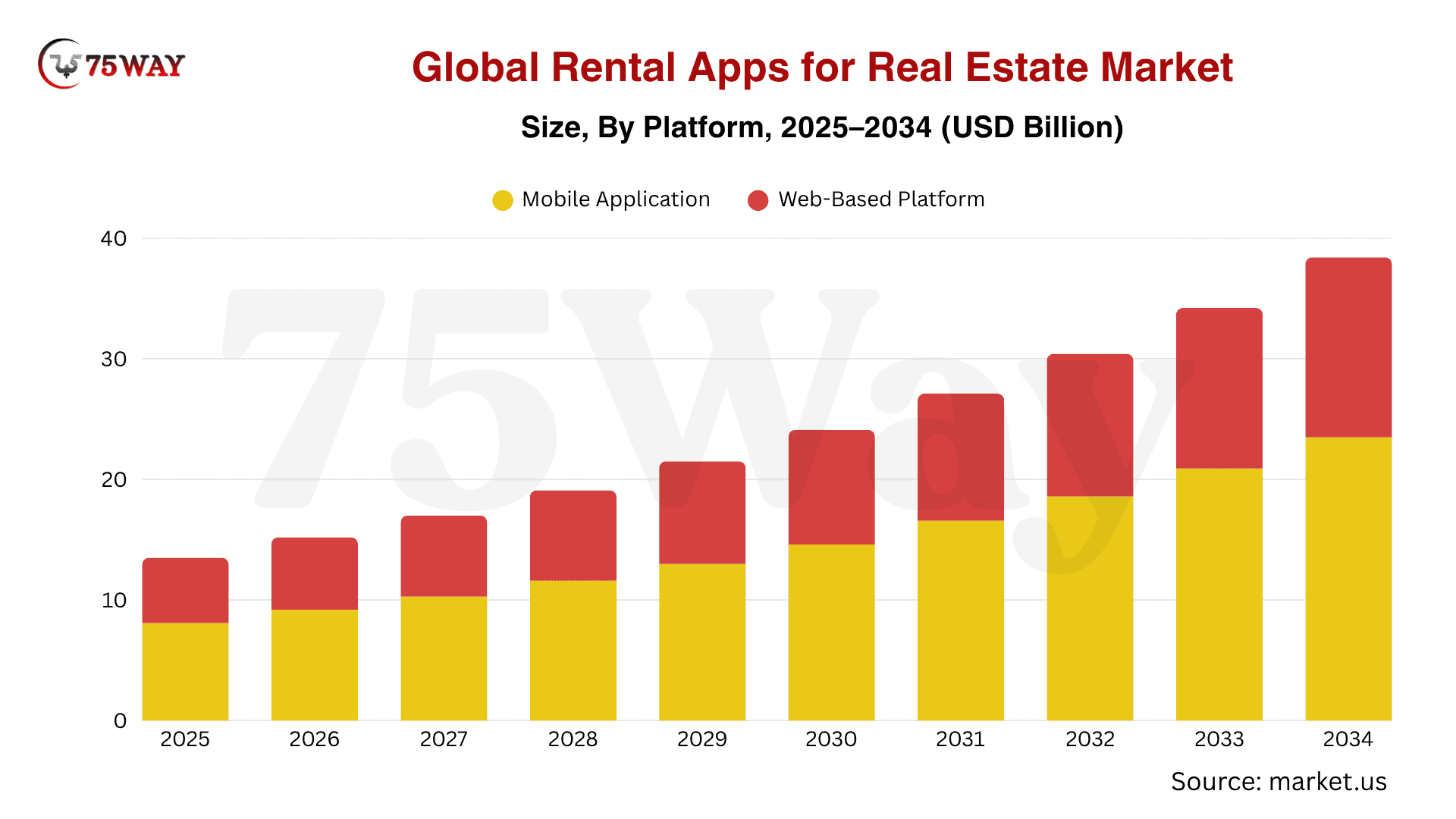
A useful real estate app should do more than display property listings. Its value comes from how well it connects property businesses with the right audience, presents relevant information, supports lead generation, and simplifies research or daily workflows. In fact, the global real estate rental app market is projected to reach $38.4 billion by 2034, growing at a 12.30% CAGR.
The right platform can help businesses:
- Reach buyers, renters, investors, agents, and property managers.
- Showcase residential or commercial properties with detailed information.
- Generate and manage inquiries from interested prospects.
- Provide market, neighborhood, ownership, or valuation insights.
- Support property marketing, brokerage, leasing, or investment activities.
- Give users convenient tools for searching and comparing properties.
The top real estate mobile apps in USA differ considerably in their audience and purpose. Some are consumer-focused marketplaces, while others provide specialized commercial data or professional tools, making it important to evaluate each platform according to the business model it supports.
10 Best Real Estate Apps In USA For Buyers, Sellers, and Agents
The best real estate app for a buyer may not be the best choice for a seller or agent. Some platforms make property discovery easier, while others help professionals generate leads, research properties, market listings, or manage client relationships. This list highlights 10 leading real estate apps and what makes each one useful for different real estate needs.

1. Zillow
Zillow is a major residential real estate platform that brings property discovery, home values, rentals, financing, and agent connections into one ecosystem. Its broad consumer reach makes it relevant to brokerages, agents, property marketers, and businesses looking to connect with people actively researching their next move.
Launch Year: 2006
Rating: 4.8/5
Revenue: $772 million in Q2 2026 (Zillow Group)
Active Users: 239 million average monthly unique users
Free Version: Yes
Platform Availability: iOS, Android, Web
Known For: Property search, Zestimate, rentals, home values, financing, and agent connections
Zillow gives users several tools for exploring the residential property market, from comparing homes and checking estimated values to researching neighborhoods and following market activity. Its combination of property listings, rental options, financing resources, and professional connections makes the platform useful across different stages of the real estate journey.
Key Features
- Property Search: Lets users discover homes using price, location, property type, bedrooms, and other search criteria.
- Zestimate: Provides an estimated market value for eligible properties, giving users a starting point when researching home prices.
- Rental Search: Helps renters find apartments, houses, and other rental options based on location, price, amenities, and preferences.
- Agent Connections: Gives buyers and sellers a way to discover and connect with real estate professionals.
- Market Data: Brings together property details, historical information, valuations, and neighborhood data to support real estate research.
For property businesses, Zillow can serve as a consumer discovery channel as well as a potential source of buyer and seller leads. Its large audience gives agents and brokerages an opportunity to put listings and services in front of people with active real estate needs. That reach is one reason Zillow remains a major name among real estate apps in the USA.
Advantages: Huge consumer reach and a broad collection of residential real estate tools.
Disadvantages: Competition for visibility can be high, and lead costs may vary considerably by market.
2. Realtor.com
Realtor.com connects property seekers with residential listings while giving them information to research homes, neighborhoods, prices, and market conditions. For agents and brokerages, it provides another established channel for reaching people who are actively considering a purchase or move.
Launch Year: 1995
Rating: 4.7/5
Revenue: $167 million in Q4 FY2026 (Move, operator of Realtor.com)
Active Users: 68 million average monthly unique users on Realtor.com web and mobile sites Free Version: Yes
Platform Availability: iOS, Android, Web
Known For: MLS-connected listings, property search, market information, and agent connections
The platform focuses heavily on helping buyers and renters move from initial property research toward a more informed decision. Its listing search, property details, local market information, and professional connections make it useful for both consumers and residential real estate businesses.
Key Features
- Home Search: Allows users to browse available properties by location, price, home type, size, and other criteria.
- Property Details: Gives users information about listings, including photos, descriptions, pricing, and property characteristics.
- Market Information: Provides local housing insights that help users understand prices and market activity.
- Agent Connections: Helps consumers find real estate professionals when they are ready for additional assistance.
- Saved Searches: Lets users keep track of properties and receive updates around their selected criteria.
For brokerages, Realtor.com can provide an additional digital touchpoint beyond an agency's own website. Its large audience can help property listings gain exposure among active buyers and renters. With 68 million average monthly unique users reported for Q4 FY2026, it remains one of the prominent property platforms businesses may consider when evaluating real estate applications in United States.
Advantages: Large residential audience and strong listing-focused search experience.
Disadvantages: Businesses may face strong competition for attention among similar property listings.
3. Redfin
Redfin combines property search with a technology-driven brokerage model, giving consumers access to listings while connecting them with real estate agents. Its approach makes the platform particularly relevant to businesses interested in combining digital property discovery with brokerage services.
- Launch Year: 2006
- Rating: 4.8/5
- Revenue: $2.78 billion in Q2 2026
- Active Users: Monthly active users increased 3.3% year over year in March 2026, although the absolute figure was not publicly disclosed.
- Free Version: Yes
- Platform Availability: iOS, Android, Web
- Known For: Property search, brokerage services, home tours, agent connections, and market information
Redfin is designed around a fairly direct property-search experience, with tools that help users move from browsing homes toward scheduling tours and contacting agents. The connection between its technology platform and brokerage operation gives the service a different position from listing-only property websites.
Key Features
- Property Search: Helps users find homes using location, price, property type, size, and other filters.
- Home Tours: Allows users to request or schedule property tours through the platform.
- Redfin Estimate: Provides estimated home values to help users research potential purchase or sale prices.
- Agent Matching: Connects consumers with Redfin agents for buying and selling assistance.
- Market Insights: Provides information about local prices, listings, sales activity, and market conditions.
For residential brokerages, Redfin demonstrates how a property-search experience can connect directly with professional services. Its technology-led model also shows how real estate apps can support discovery, agent engagement, and transaction-related activity within one ecosystem. Businesses evaluating property search apps can therefore look to Redfin as a useful benchmark for integrating software with brokerage operations.
Advantages: Strong connection between property search, technology, and brokerage services.
Disadvantages: Its integrated brokerage model may make it less suitable as a neutral marketplace for every business.
4. Homes.com
Homes.com focuses on residential property discovery with a strong emphasis on helping buyers explore homes, neighborhoods, and local real estate professionals. Its large property database and consumer-facing experience make it relevant to agents, brokerages, and home sellers seeking online visibility.
Launch Year: 1999
Rating: 4.8/5
Revenue: $925 million in Q2 2026.
Active Users: App-specific active users are not publicly disclosed.
Free Version: Yes
Platform Availability: iOS, Android, Web
Known For: Residential listings, home discovery, neighborhood information, and agent connections
Homes.com gives consumers a straightforward way to explore properties and compare available options before contacting a professional. The platform also places attention on the relationship between homes, local communities, and the agents representing those properties.
Key Features
- Home Discovery: Helps users browse residential properties using location, pricing, home type, and other preferences.
- Property Profiles: Presents photos, descriptions, property details, and other information for individual homes.
- Neighborhood Research: Helps users explore information connected with the areas surrounding available properties.
- Agent Profiles: Gives users a way to learn about real estate professionals associated with properties and markets.
- Search Filters: Allows buyers to narrow listings according to criteria such as price, bedrooms, property type, and location.
For agents and brokerages, Homes.com offers another channel for presenting residential inventory to potential buyers. Its consumer-focused approach can support property discovery before prospects move into direct conversations with professionals. That makes it a relevant option when comparing U.S. real estate apps for residential marketing and lead-generation opportunities.
Advantages: Strong residential focus with useful property and neighborhood discovery tools.
Disadvantages: Listing visibility can depend heavily on local inventory and competition among agents.
5. Apartments.com
Apartments.com is built primarily around rental-property discovery, helping users search for apartments, houses, and other rental options. Its rental-focused positioning makes it especially relevant to property managers, multifamily operators, landlords, and leasing teams.
Launch Year: 1992
Rating: 4.9/5
Revenue: $925 million in Q2 2026
Active Users: App-specific active users are not publicly disclosed.
Free Version: Yes
Platform Availability: iOS, Android, Web
Known For: Apartment search, rental listings, property details, and renter discovery
The platform is designed around the practical needs of renters, including finding available units, comparing properties, reviewing amenities, and contacting rental providers. For property businesses, that focus creates a direct digital channel for presenting rental inventory to people actively looking for housing.
Key Features
- Rental Search: Helps users find apartments, houses, and other rental properties by location and preferences.
- Property Listings: Displays photos, pricing, amenities, floor plans, descriptions, and availability information.
- Map Search: Lets renters explore available properties geographically to compare options across an area.
- Rental Filters: Allows users to narrow results based on price, bedrooms, amenities, property type, and other requirements.
- Property Contact: Gives renters ways to contact property managers or leasing teams about available units.
For multifamily businesses, Apartments.com can function as an important rental marketing channel rather than simply a consumer search tool. Property managers can use rental listings to showcase units, amenities, pricing, and community details to prospective tenants. Its specialized rental focus separates it from broader real estate marketplace apps in the USA that serve buyers and sellers more heavily.
Advantages: Strong rental focus and extensive tools for apartment and property discovery.
Disadvantages: Its value is primarily concentrated in rental markets rather than broader property transactions.
6. Trulia
Trulia takes a more lifestyle-oriented approach to residential property search by combining listings with neighborhood information and local insights. The platform is useful for people who want to understand not only a property but also what living in its surrounding area may be like.
Launch Year: 2005
Rating: 4.8/5
Revenue: Not separately disclosed; Trulia operates as part of Zillow Group.
Active Users: App-specific active users are not publicly disclosed.
Free Version: Yes
Platform Availability: iOS, Android, Web
Known For: Neighborhood insights, property search, local information, rentals, and residential research
Trulia gives users additional context around properties through information about neighborhoods, local conditions, and nearby amenities. That broader view can help buyers and renters compare locations rather than judging homes solely by price or physical features.
Key Features
- Property Search: Helps users discover homes and rentals using location, pricing, property type, and other filters.
- Neighborhood Insights: Provides information that helps users research the character and surroundings of different areas.
- Local Information: Brings together useful details about nearby places and community conditions.
- Rental Search: Supports people looking for apartments, houses, and other rental properties.
- Saved Properties: Allows users to keep track of homes and listings they may want to revisit.
For real estate professionals, Trulia highlights the importance of providing location context alongside property information. Buyers often evaluate neighborhoods, commute considerations, amenities, and local conditions before contacting an agent. That makes Trulia a useful reference point for businesses studying how USA’s real estate platforms can support broader property research.
Advantages: Strong neighborhood-focused experience that goes beyond basic listing information.
Disadvantages: Some businesses may prefer platforms with a stronger direct brokerage or transaction focus.
7. LoopNet
LoopNet is designed specifically for commercial real estate, covering properties such as office buildings, retail spaces, industrial facilities, land, and investment opportunities. Its specialized audience makes it particularly valuable for commercial brokers, investors, landlords, and businesses searching for commercial space.
Launch Year: 1995
Rating: 4.8/5
Revenue: $925 million in Q2 2026.
Active Users: App-specific active users are not publicly disclosed; LoopNet says millions of investors and tenants use the platform each month.
Free Version: Yes, with premium services available
Platform Availability: iOS, Android, Web
Known For: Commercial property listings, investment properties, leasing opportunities, and CRE research
Unlike broad consumer property marketplaces, LoopNet is built around commercial real estate requirements and terminology. Its listings support users who may be looking for a business location, investment property, development opportunity, or commercial lease.
Key Features
- Commercial Search: Helps users find office, retail, industrial, land, and other commercial properties.
- Property Listings: Provides detailed information about available commercial properties, including pricing, size, and property type.
- Investment Properties: Helps investors explore properties available for acquisition and potential investment.
- Map Search: Lets users examine commercial opportunities across specific locations and markets.
- Broker Connections: Provides ways for prospective tenants, buyers, and investors to connect with commercial real estate professionals.
For commercial brokerages, LoopNet offers a focused marketplace where listings reach an audience already interested in commercial property. Its specialized inventory also makes it a strong example of how commercial real estate apps can serve a narrower but highly relevant audience. Businesses researching real estate applications across the United States for investment and leasing should consider LoopNet separately from residential platforms.
Advantages: Strong commercial real estate focus and broad property coverage.
Disadvantages: Less relevant for businesses focused primarily on residential property transactions.
8. Compass
Compass combines residential property search with a technology-enabled brokerage model designed around agents, buyers, and sellers. Its platform places considerable emphasis on the professional relationship behind a property transaction rather than treating listings as standalone inventory.
Launch Year: 2012
Rating: 4.8/5
Revenue: $4.306 billion in Q2 2026 (Compass, Inc.)
Active Users: App-specific active users are not publicly disclosed.
Free Version: Yes
Platform Availability: iOS, Android, Web
Known For: Residential property search, agent services, luxury homes, and technology-enabled brokerage
Compass gives consumers access to residential listings while connecting them with agents who guide the buying and selling process. Its technology ecosystem also supports agents with tools intended to improve how they market properties and manage client relationships.
Key Features
- Property Search: Lets users explore homes using location, price, property type, and other search preferences.
- Agent Discovery: Helps buyers and sellers find Compass agents serving their preferred markets.
- Listing Profiles: Presents property photos, descriptions, pricing, and other information in a polished format.
- Market Research: Provides users with information that can support local property and pricing research.
- Agent Tools: Supports professionals with technology for property marketing, client engagement, and brokerage activities.
For brokerages, Compass demonstrates how a real estate platform can combine consumer discovery with professional services. Its model places agents at the center of the digital experience while using technology to support property marketing and client interactions. This makes Compass a useful benchmark for businesses studying premium residential real estate apps in the USA.
Advantages: Strong combination of residential listings, agent services, and technology.
Disadvantages: Its brokerage-centered model may not fit businesses seeking a completely independent marketplace.
9. Buildout
Buildout is a commercial real estate technology platform focused on helping brokers manage property research, marketing, prospecting, and deals from one connected environment. Rather than serving mainly as a consumer marketplace, it is built around the day-to-day workflows of commercial real estate professionals.
Launch Year: 2010
Rating: 4.9/5
Revenue: $21.7 million annually
Active Users: 50,000+ brokers use Buildout's platform.
Free Version: Selected tools and access options are available; broader platform capabilities are paid
Platform Availability: Web, iOS, Android
Known For: CRE prospecting, property research, marketing, CRM, valuations, and deal workflows
Buildout is aimed more at real estate professionals than consumers searching for a home or apartment. Its platform brings research, property marketing, prospect information, and transaction workflows together, giving commercial teams a more centralized workspace.
Key Features
- Research Maps: Helps brokers research commercial properties and surrounding markets through interactive mapping tools.
- Property Data: Provides information that brokers can use when researching owners, properties, and potential opportunities.
- Valuations: Supports commercial property valuation and analysis during prospecting and deal preparation.
- AI Assistant: Uses AI capabilities to help professionals work with property and prospect information.
- Deal Management: Brings prospecting, marketing, CRM, and transaction-related workflows into one platform.
For commercial brokerages, Buildout is less about attracting casual property browsers and more about supporting the professionals managing real estate deals. Its platform illustrates how specialized real estate technology can combine research, marketing, CRM, and transaction workflows. With more than 50,000 brokers using the platform, Buildout has established a significant professional user base.
Advantages: Strong professional workflow coverage for commercial real estate teams.
Disadvantages: Its specialized CRE focus makes it less useful for residential property businesses.
10. CoStar
CoStar is a commercial real estate information and analytics platform built around property data, market intelligence, research, and professional decision-making. It is particularly relevant to investors, brokers, lenders, developers, and businesses that need deeper commercial property intelligence rather than simple listing discovery.
Launch Year: 1987
Rating: Not publicly disclosed/verified
Revenue: $925 million in Q2 2026 (CoStar Group)
Active Users: App-specific active users are not publicly disclosed.
Free Version: Limited access is available; broader data and professional tools vary by service
Platform Availability: iOS, Android, Web
Known For: Commercial real estate data, analytics, market research, property intelligence, and industry information
CoStar goes beyond basic property listings by giving professionals access to extensive commercial real estate information and analytical resources. Its value is especially relevant when a property decision depends on market conditions, comparable properties, ownership information, or broader industry trends.
Key Features
- Property Database: Provides detailed information on commercial properties across multiple markets and asset types.
- Market Analytics: Helps professionals examine market conditions, trends, and commercial real estate activity.
- Property Research: Supports research into buildings, ownership information, transactions, and other property details.
- Comparable Data: Helps users evaluate properties by comparing relevant market and transaction information.
- Industry Insights: Provides research and intelligence that can support investment, brokerage, development, and business decisions.
For commercial real estate businesses, CoStar represents a data-first approach to property technology rather than a consumer-first listing marketplace. Its tools can support decisions that require deeper research into properties, markets, transactions, and investment conditions. The platform is therefore particularly relevant when comparing commercial real estate apps and data platforms for professional use.
Advantages: Extensive commercial property data and market intelligence for professional users.
Disadvantages: Advanced information and professional tools can require paid access, making it less suitable for casual users.
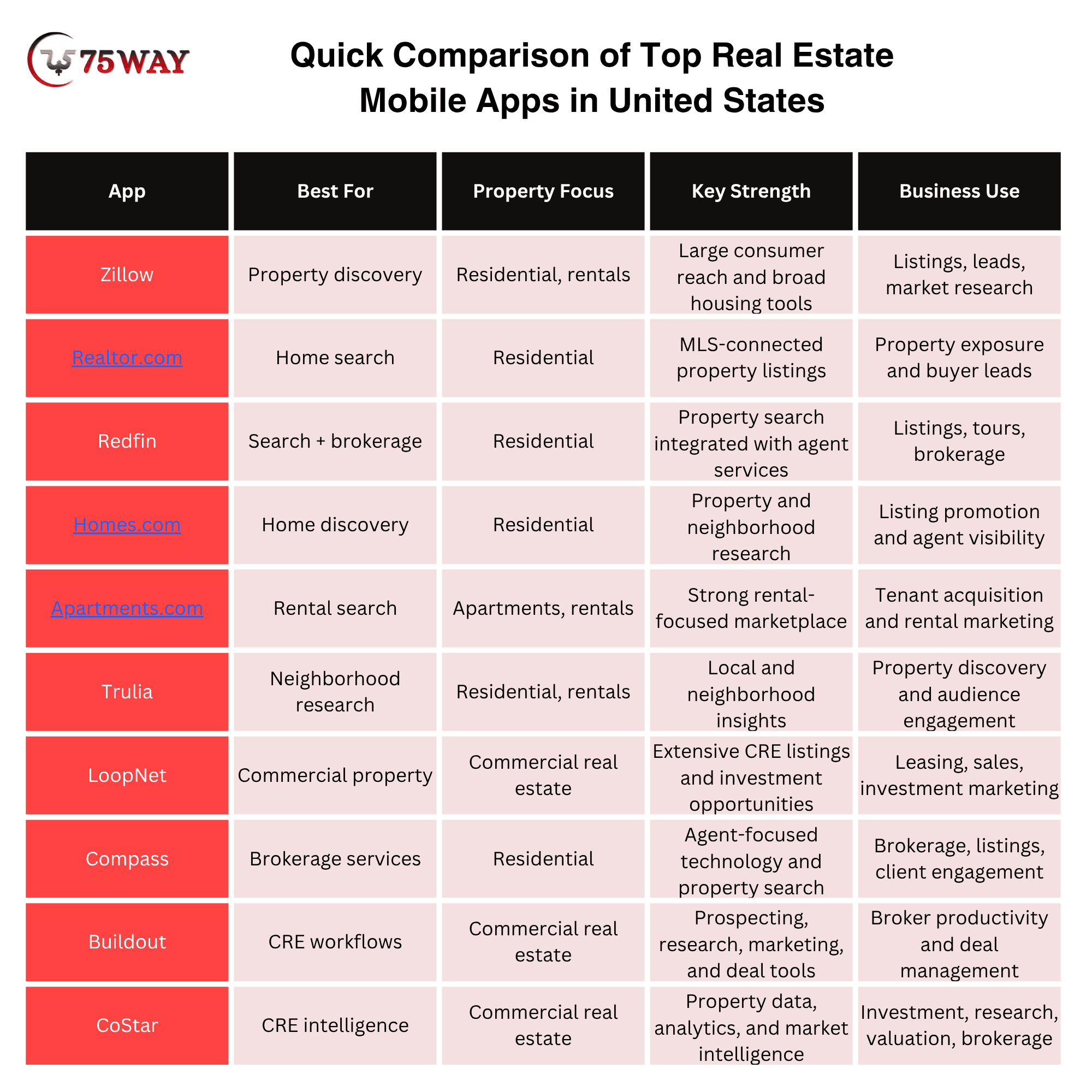
Quick Comparison of Top Real Estate Mobile Apps in United States For Businesses
Not every leading real estate app serves the same business purpose. One platform may offer stronger exposure, while another may provide a better fit for agents, rentals, property discovery, or lead generation. This quick comparison highlights the differences businesses should notice before choosing a platform to study or use.
USA's Leading Real Estate Apps For Realtors And Brokerages
For a Realtor, every property listing needs visibility, but visibility alone does not guarantee a quality lead. The most useful platforms help connect property discovery with buyer intent, agent interaction, and opportunities to move prospects closer to a transaction. The leading real estate apps for Realtors and brokerages are discussed below.
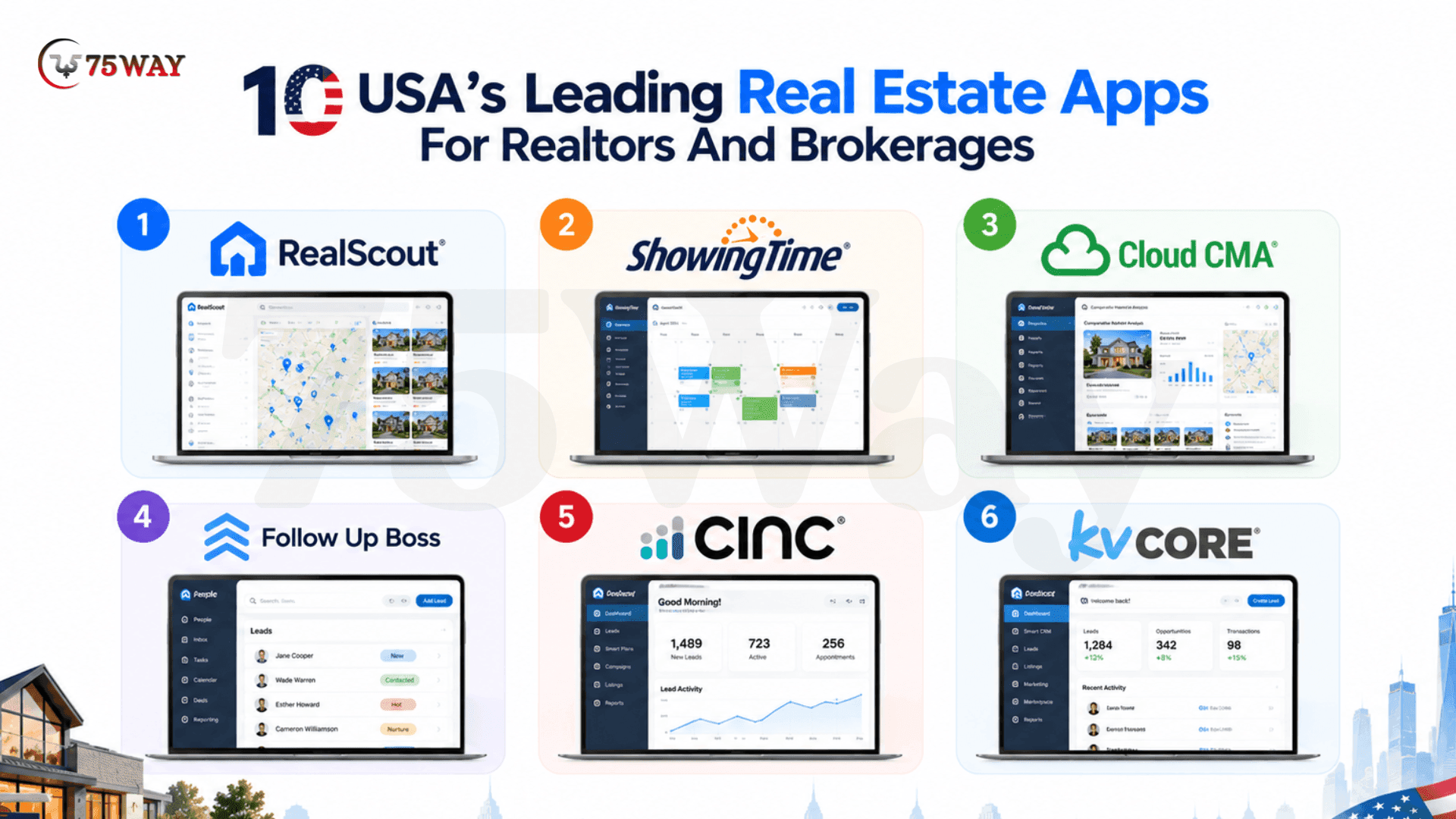
1. RealScout
RealScout is a real estate technology platform built around agent-led property search, client engagement, and lead nurturing. Its branded experience allows brokerages and agents to keep prospects within their own ecosystem instead of sending them to competing property portals.
- Launch Year: 2012
- Rating: Not publicly disclosed/verified
- Revenue: Not publicly disclosed
- Active Users: 100,000+ agents and teams use RealScout
- Free Version: No
- Platform Availability: Web, Mobile
For real estate businesses, RealScout provides a way to combine property search with ongoing client engagement. Its tools are particularly relevant to brokerages that want greater control over their client relationships and lead-nurturing activities.
Major Features
- Branded Search: Gives agents and brokerages a property-search experience that keeps their branding visible throughout the client journey.
- Automated Alerts: Sends personalized property and market updates based on a client's interests.
- Buyer Insights: Provides activity signals that help agents understand what properties and pricing information interest their clients.
- Market Reports: Helps professionals share home-value and local market information with prospective buyers and sellers.
The platform is therefore particularly relevant when comparing professional real estate apps for brokerages that prioritize client ownership and engagement.
Advantages: Strong client engagement, branded search, automation, and brokerage-level capabilities.
Disadvantages: Pricing and availability can vary based on the brokerage, team, or MLS setup.
2. ShowingTime
ShowingTime is designed around one of the most practical responsibilities for real estate professionals: organizing and managing property showings. Its tools help agents, teams, brokers, and MLS organizations coordinate appointments, communicate with participants, and collect feedback.
- Launch Year: 1999
- Rating: Not publicly disclosed/verified
- Revenue: Not separately disclosed
- Active Users: Not publicly disclosed
- Free Version: No
- Platform Availability: Web, Mobile
For brokerages, ShowingTime can reduce the administrative work associated with arranging property visits and monitoring listing activity. Its professional tools are designed to support different participants in the transaction, including listing agents, buyer agents, teams, offices, and brokers.
Major Features
- Appointment Scheduling: Helps agents coordinate property visits and manage incoming showing requests.
- Offer Management: Provides tools for organizing and comparing offers during the transaction process.
- Showing Feedback: Collects feedback from property visits so listing professionals can review buyer responses.
- Activity Reports: Provides reporting around showings and listing activity for professional teams and brokers.
The platform is therefore particularly relevant when comparing real estate apps for brokerages that need stronger coordination around property tours and listing activity.
Advantages: Specialized tools for scheduling, feedback, offer coordination, and brokerage activity management.
Disadvantages: Its primary value is concentrated around professional showing and transaction workflows.
3. Cloud CMA
Cloud CMA is a real estate presentation platform that helps agents create professional comparative market analysis materials for clients. It is aimed at professionals who need to explain property values and market conditions in a clear, presentation-ready format.
- Launch Year: 2010
- Rating: Not publicly disclosed/verified
- Revenue: Not publicly disclosed
- Active Users: Not publicly disclosed
- Free Version: No
- Platform Availability: Web, Mobile
For Realtors and brokerages, Cloud CMA can support listing presentations and client conversations where pricing information needs to be presented clearly. Its professional presentation approach makes it useful for agents who want to turn property and market data into client-facing materials.
Major Features
- Market Analysis: Helps agents prepare comparative information for evaluating property values.
- Listing Presentations: Supports professional presentations that agents can use during seller meetings.
- Property Reports: Organizes relevant property information into client-friendly reports.
- Custom Branding: Allows real estate professionals to incorporate their business identity into presentations and materials.
The platform is therefore particularly relevant when comparing real estate apps for agents who need stronger tools for valuation discussions and listing presentations. Its role complements property-search and lead-management platforms rather than replacing them.
Advantages: Useful for creating professional market analyses and client presentation materials.
Disadvantages: It is more specialized than all-in-one platforms and focuses mainly on presentation and analysis needs.
4. Follow Up Boss
Follow Up Boss is a real estate CRM designed to help teams, brokerages, and agents organize contacts, manage leads, and maintain communication. The platform acts as a central hub where professionals can bring together lead sources, communication tools, and sales activities.
- Launch Year: 2011
- Rating: Not publicly disclosed/verified
- Revenue: Not publicly disclosed
- Active Users: 100,000+ agents use Follow Up Boss daily
- Free Version: No, free trial available
- Platform Availability: Web, iOS, Android
For brokerages, Follow Up Boss focuses on what happens after a prospect enters the business. Its CRM capabilities help teams organize contacts, distribute leads, communicate with prospects, and monitor opportunities across the sales process.
Major Features
- Lead Management: Brings leads and contacts into a centralized system for easier organization.
- Automated Follow-Up: Supports personalized email, text, and call sequences for prospects.
- Lead Distribution: Helps teams assign incoming opportunities to the appropriate agents.
- Team Reporting: Provides reporting and performance tools for team leaders and brokerage managers.
The platform is therefore particularly relevant when comparing real estate apps for brokerages that want to strengthen lead management after generating an inquiry. Its integration-focused approach also allows businesses to connect lead sources and other systems around a central CRM.
Advantages: Strong CRM capabilities with lead distribution, communication automation, and team management.
Disadvantages: It requires a paid subscription and works best for businesses with an established lead-management process.
5. CINC
CINC is a real estate technology platform designed for teams and brokerages that want to combine lead generation, websites, marketing, and customer management. Its broader approach makes it suitable for businesses looking for several marketing and sales functions within one real estate-focused system.
- Launch Year: 2011
- Rating: Not publicly disclosed/verified
- Revenue: Not publicly disclosed
- Active Users: Not publicly disclosed
- Free Version: No
- Platform Availability: Web, Mobile
For Realtors and brokerages, CINC can support the journey from attracting potential clients to nurturing those contacts over time. Its combination of marketing and customer-management capabilities makes it more relevant to teams that want a centralized technology stack.
Major Features
- Lead Generation: Helps real estate businesses attract potential buyers and sellers through digital marketing channels.
- IDX Websites: Provides property-search websites designed around real estate businesses and their markets.
- Lead Nurturing: Supports ongoing communication with prospects who are not ready to transact immediately.
- Performance Tracking: Gives teams tools for monitoring marketing and lead-management activity.
The platform is therefore particularly relevant when comparing real estate apps for brokerages seeking a broader combination of marketing and sales capabilities. Its focus on the full lead journey can be useful for teams managing multiple agents and marketing channels.
Advantages: Combines lead generation, websites, marketing, and customer-management functions.
Disadvantages: Its broader feature set can require more setup and management than simpler real estate tools.
6. kvCORE
kvCORE is a real estate technology platform that brings together websites, lead generation, CRM capabilities, marketing automation, and agent tools. Its all-in-one approach is aimed at real estate teams and brokerages that want to centralize several digital activities within one system.
- Launch Year: 2016
- Rating: Not publicly disclosed/verified
- Revenue: Not separately disclosed
- Active Users: Not publicly disclosed
- Free Version: No
- Platform Availability: Web, iOS, Android
For brokerages, kvCORE provides a broader technology environment for managing online presence, prospect engagement, and agent workflows. Its centralized model can appeal to organizations that prefer fewer disconnected systems across their marketing and sales operations.
Major Features
- Real Estate Websites: Provides customizable websites designed to support property discovery and lead capture.
- CRM Management: Helps agents and teams organize contacts, prospects, and client information.
- Marketing Automation: Supports automated campaigns and communication designed to maintain prospect engagement.
- Lead Intelligence: Provides information that can help agents prioritize prospects and identify potential opportunities.
The platform is therefore particularly relevant when comparing real estate apps for brokerages seeking an integrated technology environment. Its combination of website, CRM, marketing, and lead-management capabilities gives larger teams a way to bring several functions together under one system.
Advantages: Broad combination of CRM, websites, marketing automation, and lead-management tools.
Disadvantages: Its all-in-one structure may be more than smaller independent agents need.
Top AI-Powered Real Estate Apps for US Property Investors
A promising property can become a poor investment when the numbers, location, demand, or future potential are misunderstood. AI-powered real estate apps can help investors process large amounts of property and market information before committing capital. The leading apps that support property investors with AI-driven capabilities are discussed below.
1. DealMachine
DealMachine helps investors discover off-market properties, research owners, evaluate potential opportunities, and manage outreach from one platform. Its AI capabilities now include natural-language search and property intelligence, making it particularly relevant for investors looking to combine property data with automated research.
- Launch Year: 2017
- Rating: Not publicly disclosed/verified
- Revenue: Not publicly disclosed
- Active Users: Not publicly disclosed
- Free Version: No, free trial available
- Platform Availability: iOS, Android, Web
DealMachine is particularly useful for investors pursuing off-market opportunities and building targeted prospect lists. Its combination of property information, owner data, AI-powered search, and outreach tools can support the process from finding a potential deal through initial contact.
Major Features
- AI Property Search: Uses natural-language capabilities to help investors search property and ownership data.
- Off-Market Leads: Helps identify properties based on equity, ownership, property type, and other criteria.
- Owner Intelligence: Provides property values, mortgage information, sales history, and owner contact details.
- Driving For Dollars: Allows investors to identify and save potential properties while prospecting through neighborhoods.
DealMachine is therefore particularly relevant when comparing AI-powered real estate apps for investors focused on direct acquisition strategies. Its mobile and web capabilities also make it practical for investors who combine field prospecting with data-driven research.
Advantages: Strong combination of AI search, property intelligence, lead generation, and investor outreach.
Disadvantages: Its strongest value is centered on off-market acquisition rather than broad portfolio management.
2. PropStream
PropStream combines nationwide property data with AI-powered research and investment analysis tools. The platform is designed for investors who need to identify potential deals, examine property details, estimate returns, and find motivated sellers without switching between multiple systems.
- Launch Year: 2007
- Rating: Not publicly disclosed/verified
- Revenue: Not publicly disclosed
- Active Users: Not publicly disclosed
- Free Version: No, 7-day free trial available
- Platform Availability: Web, Mobile
The platform supports several investment strategies, including wholesaling, fix-and-flip projects, and buy-and-hold portfolios. Its AI tools add another layer of analysis by helping investors evaluate comparables, valuations, market conditions, and potential leads.
Major Features
- AI Property Analysis: Helps investors evaluate properties using automated insights, valuations, and comparable data.
- Predictive Analytics: Uses market information to help investors examine potential property and housing-market trends.
- Lead Generation: Identifies motivated sellers and properties matching selected investment criteria.
- Investment Calculators: Helps estimate profit, cash flow, ROI, and maximum allowable offers.
PropStream is therefore particularly relevant for investors who want one platform covering property research, deal evaluation, lead generation, and outreach. Its nationwide data coverage also makes it useful for investors comparing opportunities across different markets.
Advantages: Broad property data combined with AI analysis, lead generation, and investment calculators.
Disadvantages: The large feature set may require time for new investors to learn and configure.
3. HouseCanary
HouseCanary provides AI-powered property data, valuations, forecasts, and investment analytics for real estate professionals and investors. Its platform is particularly suited to investors who need detailed information for evaluating residential properties and making data-supported acquisition decisions.
- Launch Year: 2016
- Rating: Not publicly disclosed/verified
- Revenue: Not publicly disclosed
- Active Users: Not publicly disclosed
- Free Version: No, paid plans available
- Platform Availability: Web
HouseCanary combines large-scale property datasets with valuation models and investment analysis. Its AI assistant also allows users to ask questions in natural language and receive insights based on its property and market data.
Major Features
- AI Assistant: Lets investors ask property and market questions using natural-language queries.
- Property Valuation: Provides estimated values and related metrics to support investment decisions.
- Market Forecasts: Helps investors examine projected housing and property-market conditions.
- Investment Search: Allows users to identify properties that match specific investment criteria.
HouseCanary is therefore particularly relevant to investors who place greater emphasis on underwriting, valuation, and market intelligence. Its institutional-grade positioning also makes it suitable for larger investment organizations evaluating residential assets at scale.
Advantages: Strong valuation, forecasting, property data, and AI-powered research capabilities.
Disadvantages: Its professional data focus may be more than needed for casual or first-time investors.
4. Mashvisor
Mashvisor is built specifically around real estate investment analysis, helping users compare properties, markets, rental income, and investment performance. Its analytics are particularly useful for investors evaluating traditional rentals and short-term rental opportunities.
- Launch Year: 2014
- Rating: Not publicly disclosed/verified
- Revenue: Not publicly disclosed
- Active Users: Not publicly disclosed
- Free Version: No, free trial available
- Platform Availability: Web, Mobile
The platform focuses on turning property and market information into investment metrics that are easier to compare. Investors can use its search and analytical tools to narrow markets, evaluate potential properties, and assess whether an opportunity fits their investment strategy.
Major Features
- Rental Analytics: Helps investors examine expected rental performance and income potential.
- Investment Property Search: Allows users to filter properties according to investment requirements.
- Market Comparison: Helps compare neighborhoods and markets using relevant investment metrics.
- Cash Flow Analysis: Supports evaluation of potential income, expenses, and returns before purchasing.
Mashvisor is therefore particularly relevant for investors who base acquisition decisions on rental performance and market-level analytics. Its focus on investment metrics gives it a different role from general property-search platforms.
Advantages: Strong focus on rental analytics, investment research, and market comparison.
Disadvantages: Investors seeking extensive off-market lead-generation tools may need another platform.
5. DealCheck
DealCheck is designed around real estate deal analysis, helping investors evaluate potential purchases using financial calculations and investment scenarios. It is particularly useful when an investor already has a property under consideration and wants to determine whether the numbers make sense.
- Launch Year: 2016
- Rating: Not publicly disclosed/verified
- Revenue: Not publicly disclosed
- Active Users: Not publicly disclosed
- Free Version: Yes, with paid plans available
- Platform Availability: iOS, Android, Web
Rather than concentrating primarily on lead generation, DealCheck focuses on the financial side of investment decisions. Investors can use it to compare properties, estimate returns, and test different assumptions before moving forward with a purchase.
Major Features
- Deal Analysis: Helps investors evaluate potential purchases using property and financial information.
- Rental Calculations: Supports analysis of income and expenses for rental investments.
- Flip Analysis: Helps investors estimate potential outcomes for renovation and resale projects.
- Scenario Comparison: Allows investors to compare different assumptions and investment strategies.
DealCheck is therefore particularly relevant when comparing AI-powered real estate apps for investors who need a dedicated analysis layer. It can complement property-data platforms by helping investors turn available property information into financial scenarios.
Advantages: Focused investment analysis with tools for rentals, flips, and financial comparisons.
Disadvantages: It is more specialized for analysis and does not provide the same depth of property lead data as larger platforms.
6. PropertyRadar
PropertyRadar combines property intelligence, owner information, market data, and prospecting tools to help investors identify potential opportunities. Its large property database and filtering capabilities make it useful for investors searching for specific ownership situations or property characteristics.
- Launch Year: 2007
- Rating: Not publicly disclosed/verified
- Revenue: Not publicly disclosed
- Active Users: Not publicly disclosed
- Free Version: No, trial options may be available
- Platform Availability: Web, Mobile
The platform is particularly useful for investors who rely on targeted property research rather than waiting for opportunities to appear through conventional listing channels. Its data-driven approach can help users narrow large property datasets into more specific acquisition prospects.
Major Features
- Property Intelligence: Provides detailed information about properties, owners, and related records.
- Advanced Filters: Helps investors identify properties using ownership, equity, location, and other criteria.
- Prospect Lists: Allows users to build targeted groups of properties and owners for further research.
- Market Monitoring: Supports ongoing tracking of selected properties and market opportunities.
PropertyRadar is therefore particularly relevant for investors who need detailed prospecting and property intelligence. Its data-oriented workflow can support wholesalers, flippers, landlords, and other acquisition-focused investors.
Advantages: Strong property intelligence and highly targeted prospecting capabilities.
Disadvantages: Its advanced data tools are primarily useful for investors with a defined acquisition strategy.
7. PropertyIQ
PropertyIQ uses data and analytics to help investors evaluate real estate markets, compare locations, and identify potential investment opportunities. Its emphasis on market-level intelligence makes it useful for investors who want to screen markets before narrowing their search to individual properties.
- Launch Year: Not publicly disclosed/verified
- Rating: Not publicly disclosed/verified
- Revenue: Not publicly disclosed
- Active Users: Not publicly disclosed
- Free Version: Limited access available
- Platform Availability: Web
The platform focuses on turning housing-market data into comparisons that investors can use during market selection and property research. This can be particularly useful when an investor is deciding where to allocate capital rather than evaluating only one property.
Major Features
- Market Scoring: Helps investors compare locations using property and market indicators.
- Investment Screening: Supports identification of markets that match selected investment criteria.
- Market Data: Provides information for researching housing conditions across different locations.
- Property Analysis: Helps users move from broader market research toward individual investment opportunities.
PropertyIQ is therefore particularly relevant for investors who want market intelligence earlier in the investment process. Its analytical approach complements property-level platforms by helping users determine which markets deserve closer attention.
Advantages: Useful for market comparison, screening, and data-driven investment research.
Disadvantages: Investors focused mainly on direct seller outreach may need a separate lead-generation platform.
Quick Read: AI Voice Agent for Real Estate: Automate Property Inquiries 24/7
How To Choose A Real Estate App For Your Business in USA
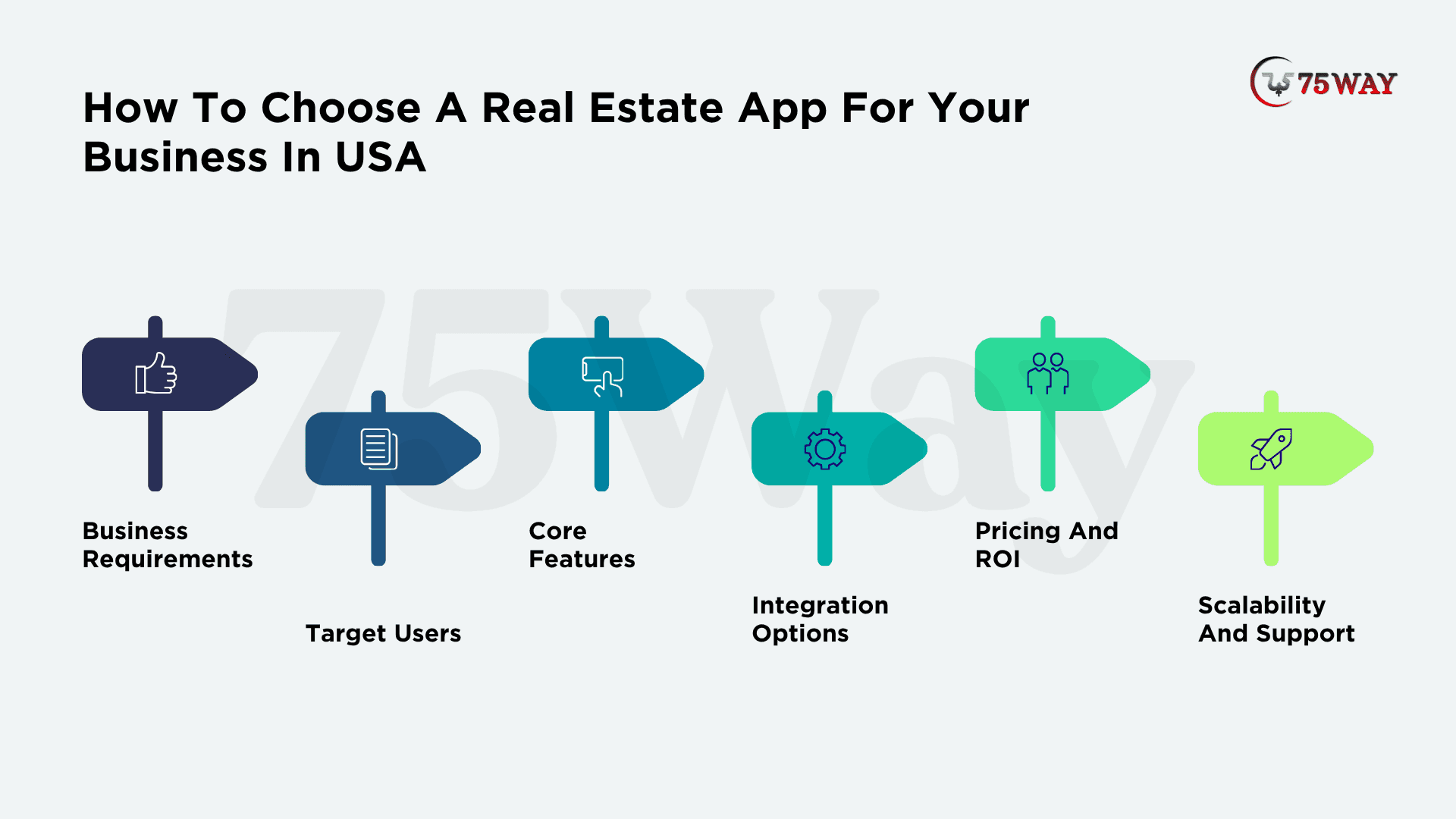
A real estate app becomes a poor business investment when it solves problems your company does not actually have. The right platform should fit naturally into your existing operations while leaving enough room for the business to grow. The process below explains how to assess your options before making the final choice.
- Business Requirements: Your business model determines which real estate capabilities matter most. A brokerage may prioritize lead management and client engagement, while an investor may need property research and financial analysis. Clear requirements make it easier to avoid paying for features your team will rarely use.
- Target Users: Your target audience should closely match the platform's user base. Buyers, sellers, renters, investors, and commercial clients often use different types of real estate platforms. A strong audience match can make your listings, services, or marketing efforts more relevant to potential customers.
- Core Features: The available features should support the activities your business handles regularly. Property search, listing management, CRM, communication, analytics, reporting, and marketing tools can serve different operational needs. A feature comparison can reveal whether a platform genuinely fits your workflow.
- Integration Options: Your existing technology ecosystem also matters when selecting a real estate platform. Connections with websites, CRM systems, MLS databases, marketing software, and other business tools can reduce fragmented workflows. Strong integration capabilities can make information easier to manage across different systems.
- Pricing And ROI: The total cost involves more than the platform's advertised subscription price. Lead fees, premium services, advertising costs, integrations, and additional user charges can affect the overall investment. A realistic ROI assessment can show whether the platform's expected business value justifies its cost.
- Scalability And Support: Your future requirements should receive as much attention as your current needs. Growing listings, users, agents, locations, and customer activity can place new demands on a platform. Reliable support and scalable capabilities can help the technology remain useful as the business expands.
Explore More: Top 10 Real Estate App Development Companies in USA for Realtors & Agencies
How To Build A Successful Real Estate App: A Complete Process
Real estate app development allows businesses to create platforms around specific property, customer, and operational requirements. A custom solution can support property listings, buyer and seller connections, rentals, property management, investments, or brokerage operations. The development process below shows how these real estate requirements can become a functional application.
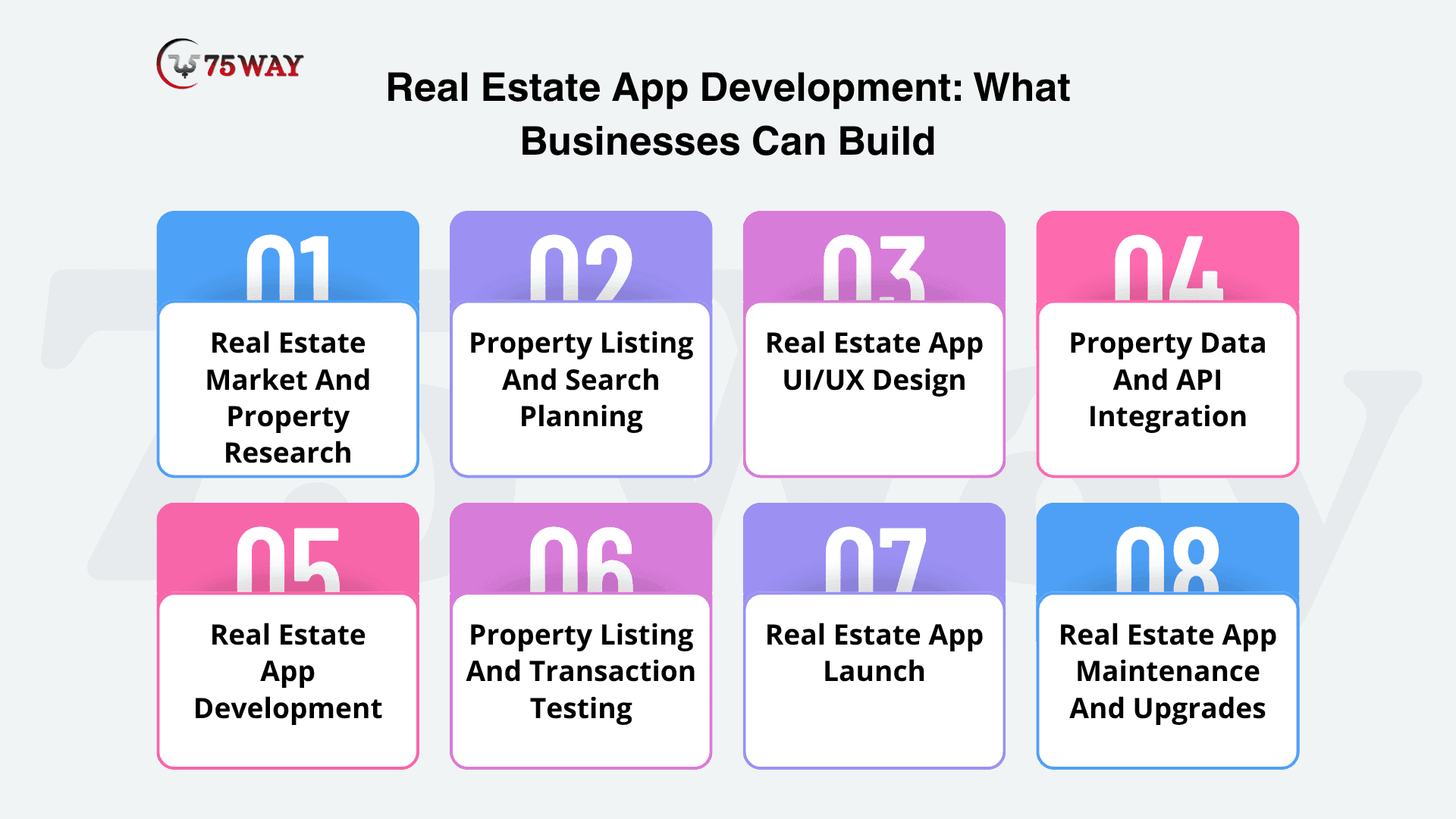
1. Real Estate Market And Property Research
A clear understanding of the target property market provides the foundation for the application.
Research can cover property types, locations, buyer behavior, rental demand, competitors, and gaps in existing real estate apps. These findings help define the app’s audience, purpose, and market positioning.
2. Property Listing And Search Planning
Property discovery is usually one of the core functions of a real estate application.
Requirements may include property listings, advanced filters, location-based search, property categories, pricing ranges, amenities, photos, videos, and saved searches. The search experience should match how the intended users evaluate and compare properties.
3. Real Estate App UI/UX Design
The interface should make property discovery, comparison, communication, and other important actions easy to navigate.
Property cards, map views, listing details, agent profiles, inquiry forms, dashboards, and booking screens can be designed around specific user journeys. Interactive prototypes help businesses review the experience before development begins.
4. Property Data And API Integration
Reliable property information is essential for applications that depend on listings and market data.
MLS connections, property databases, mapping services, geolocation APIs, mortgage APIs, payment gateways, and third-party services may be integrated based on the app’s purpose. Data structures should also support accurate property information and timely updates.
5. Real Estate App Development
The development stage converts the approved real estate features and designs into a working application.
Frontend and backend components can support listings, user accounts, property searches, inquiries, messaging, notifications, agent workflows, and administrative operations. An MVP approach can help businesses launch core functionality before adding advanced capabilities.
6. Property Listing And Transaction Testing
Testing should cover the specific workflows users and real estate professionals will follow inside the application.
Listing creation, property searches, filters, map functionality, inquiries, appointment scheduling, payments, notifications, and account management require thorough validation. Security and performance testing are also important when the app handles personal, financial, or property-related information.
7. Real Estate App Launch
The completed application can be prepared for deployment across the selected platforms and infrastructure.
App Store and Google Play requirements, cloud hosting, databases, analytics, security configurations, and production monitoring need attention before release. A phased launch can provide useful feedback from early users and business teams.
8. Real Estate App Maintenance And Upgrades
Ongoing updates help the application remain compatible with new devices, operating systems, APIs, security requirements, and market expectations.
New capabilities such as AI property recommendations, virtual tours, automated valuations, investment analytics, or smart lead management can be introduced as the business grows. Regular monitoring and improvements can keep the platform aligned with changing real estate needs.
Read Too: Property Management Software Development Guide For Real Estate Businesses
How 75way Supports Your Real Estate App Development in USA?
Real estate apps have very different requirements depending on what they are built to do. A property marketplace needs strong search and listing capabilities, while an investment platform may depend more on property data, calculations, and market insights. 75way Technologies can shape the application around these differences instead of forcing every real estate business into the same product structure.
Our team can build features around the way your business actually operates, from property listings and location-based search to agent profiles, lead management, appointment scheduling, payments, messaging, and admin controls.
Third-party integrations can also connect the app with maps, CRM platforms, property data services, payment systems, and other tools your team already uses. This approach gives businesses room to start with the functions they need most and add more as the platform develops.
The value of working with 75way is not limited to getting an app into the market. We can support the project across planning, UI/UX design, development, testing, deployment, and post-launch improvements, giving businesses one development partner throughout the process.
For companies looking to build a real estate app around a specific audience, workflow, or market opportunity, that flexibility can make a custom solution more practical than adapting an off-the-shelf platform.
Quick Read: How To Choose A Real Estate App Development Company For Your Business?
Final Thoughts
Real estate apps have become practical tools for property discovery, customer engagement, lead generation, investment research, and day-to-day operations. The right platform depends on your audience, property segment, business model, and the problems you want technology to solve. Established property management apps can provide useful channels for reaching customers, while custom solutions offer greater control over features, workflows, branding, and integrations.
A clear understanding of your goals can help you decide whether an existing platform or purpose-built application makes more sense. As real estate technology continues to evolve, businesses that focus on useful experiences and genuine customer needs can create stronger digital opportunities. They can connect with a trusted real estate app development company to build your custom solution.
Frequently Asked Questions (FAQs)
Can A Real Estate App Support Multiple Property Categories?
Yes, a single application can accommodate residential, commercial, rental, and investment properties. Category-based navigation and filters can help users find relevant listings without creating separate applications.
How Can A Real Estate App Generate Revenue?
Common revenue models include subscriptions, listing fees, advertising, featured placements, commissions, lead charges, and premium services. The suitable model depends on your audience, platform purpose, and expected transaction flow.
4how Can A Real Estate App Attract Its First Users?
Early adoption can come from existing customer networks, partnerships, targeted advertising, referral programs, and useful launch content. A focused audience strategy is generally more practical than trying to reach everyone immediately.
What Security Considerations Matter For Real Estate Applications?
User authentication, secure data storage, access controls, encryption, payment protection, and regular security testing are important considerations. Privacy practices should also reflect the type of personal and financial information the application collects.
Can Real Estate Apps Include Calculators And Financial Tools?
Yes, calculators can support mortgage estimates, rental yields, affordability checks, investment returns, and other property-related evaluations. These tools can add practical value for buyers, investors, landlords, and other users.
How Can Businesses Measure A Real Estate App’s Performance?
Important indicators can include registrations, active users, property searches, listing views, inquiries, saved properties, bookings, conversions, and retention. Business-specific metrics can provide a clearer picture of whether the application is meeting its objectives.